PRAISE FOR
The 4-
Hour Workweek
“This is a
whole new bal
game .
Highly recommended.” —Dr.
Stewart D. Friedman, adviser to
Jack
Welch and
former director of the
Work /Life Integration
Program at the Wharton School,
University of Pennsylvania
“It’s about time this book was writ en. It is a long-overdue manifesto for the
mobile lifestyle,
and Tim Ferriss is the
ideal ambassador. This wil be huge.” —Jack Can eld, cocreator of
Chicken Soup for the
Soul ®, 100+ mil ion copies
sold “Stunning and
amazing . From mini-retirements to
outsourcing your life, it’s al
here . Whether
you’re a
wage slave or a
Fortune 500 CEO, this book wil
change your life!” —
Phil Town, New
York Times bestsel ing
author of
Rule #1
“The 4-Hour Workweek is a new way of solving a very old problem: just how can we work to
live and
prevent our
lives from being al about work? A world of in nite options awaits those
who would read this book and be inspired by it!” —Michael E.
Gerber , founder and chairman of
E-
Myth Worldwide and the world’s #1 smal business
guru “
Timothy has packed more lives into his 29
years than Steve
Jobs has in his 51.” —Tom
Foremski, journalist and
publisher of SiliconVal eyWatcher.com
“If you want to live life on your own
terms , this is your blueprint.” —
Mike Maples, cofounder
of Motive Communications (IPO to $260M
market cap) and
founding executive of
Tivoli (sold
to IBM for $750M)
“
Thanks to Tim Ferriss, I have more time in my life to
travel , spend time with family, and write
book blurbs. This is a dazzling and highly useful work.” —A. J. Jacobs,
editor -at-large of Esquire
magazine and author of The
Know -It-Al
“Tim is
Indiana Jones for the
digital age. I’ve
already used his
advice to go spear shing on
remote
islands and ski the
best hidden slopes of Argentina. Simply put, do what he
says and
you can live like a mil ionaire.” —
Albert Pope, derivatives
specialist at UBS World
Headquarters “
Reading this book is like put ing a few zeros on your
income . Tim brings lifestyle to a new
level—
listen to him!” —Michael D. Kerlin,
McKinsey & Company consultant to Bush-
Clinton Katrina Fund and a J. Wil iam Fulbright Scholar
“
Part scientist and part
adventure hunter , Tim Ferriss has created a
road map for an entirely
new world. I devoured this book in one sit ing —I have
seen nothing like it.” —Charles L.
Brock , chairman and CEO of Brock Capital Group; former CFO, COO, and general counsel of
Scholastic, Inc.; and former
president of the Harvard Law School
Association “Outsourcing is no longer just for Fortune 500
companies . Smal and mid-
sized rms, as wel as
busy professionals, can outsource their work to
increase their productivity and free time for
more
important commitments. It’s time for the world to take
advantage of this
revolution .” —
Vivek Kulkarni, CEO of Brickwork India and former IT secretary of Bangalore; credited as the
“
techno -bureaucrat” who helped make Bangalore an IT destination in India
“Tim is the master! I should know. I fol owed his rags to riches
path and
watched him transform
himself from
competitive ghter to entrepreneur. He
tears apart conventional assumptions
until he nds a bet er way.” —Dan Partland, Emmy
Award –
winning producer of American High and
Welcome to the Dol house
“The 4-Hour Workweek is an absolute necessity for those adventurous souls who want to live
life to its ful est. Buy it and read it
before you
sacri ce any more!” —John Lusk, group product
manager at
Microsoft World Headquarters
“If you want to live your dreams now, and not in 20 or 30 years, buy this book!” —Laura
Roden, chairman of the
Silicon Val ey Association of Startup Entrepreneurs and a lecturer in
Corporate Finance at San Jose State University
“With this kind of time
management and
focus on the important things in life, people should be
able to get 15 times as much
done in a normal workweek.” —Tim Draper, founder of Draper
Fisher Jurvetson, financiers to innovators
including Hotmail,
Skype , and Overture.com
“Tim has done what most people only
dream of doing. I can’t believe he is
going to let his
secrets out of the bag. This book is a must read!” —
Stephen Key, top
inventor and
team designer of Teddy Ruxpin and
Lazer Tag and a consultant to the
television show American
Inventor
ALSO BY TIMOTHY FERRISS
The 4-Hour Workweek
Copyright © 2010 by Tim Ferriss
All
rights reserved.
Published in the United
States by
Crown Archetype,
an
imprint of the Crown Publishing Group,
a
division of
Random House, Inc., New York.
www.crownpublishing.com
Crown Archetype with colophon is a registered trademark of Random House, Inc.
All registered trademarks in this book are property of their respective owners.
Library of Congress Cataloging-in-Publication Data
Ferriss, Timothy.
The 4-hour
body / Timothy Ferriss. — 1st ed.
Includes bibliographical references and index.
1. Health. 2.
Physical fitness . 3.
Weight loss. I. Title.
II. Title:
Four -hour body.
RA775.F47 2010
613.7—dc22
2010018533
eISBN: 978-0-307-46365-4
All illustrations by Fred Haynes/Hadel
Studio ,
unless otherwise noted in the
Photo and Illustration Credits
section Jacket
front -flap
photos : (top) (c) Mark Reifkind; (
bottom ) (c) Photos taken by
Inge Cook ,
provided courtesy of Ellington
Darden, PhD
v3.1
For my
parents , who taught a
little hellion that marching to a
different drummer was a
good thing . I love you
both and owe you everything. Mom,
sorry about
all the
crazy experiments.
Support good
science —
10% of all author royalties are donated
to
cure -driven research,
including the excellent work of
St. Jude
Children ’s Research
Hospital .
LIST OF ILLUSTRATIONS
GROUND ZERO —
GETTING STARTED AND SWARAJ
Comparison of Methods for Estimating % Bodyfat
Male Examples —Bodyfat
Female Examples—Bodyfat
Ramit Sethi’s Bet ing
Chart Weight Glide Path
SUBTRACTING FAT
Comparison of Dietary
Fats and Oils
Air Squats
Wal Presses
Chest Pul s
Ray Cornise’s Fat-Loss Spreadsheet
Continuous Glucose
Monitor Glucose Trend: Ferriss, Tim
Modal Day: Ferriss, Tim
Glucose Trend, September 25
Glucose Trend, September 26
Testosterone and Nandrolone
ADDING MUSCLE The Ket lebel
Swing Touch -and-Go Deadlifts
Two-Legged Glute Activation Raises
Flying Dog
The Myotatic
Crunch Abdominal Muscles
Cat Vomit
Exercise Front
Plank Side Plank
Hip
Flexor Stretch
Alpha -Actinin 3 (ACTN3)
Time Ferriss, Before-and-After
Shots Pul -down
Machine Shoulder Press
The
Locked Position Slight Incline/Decline Bench Press
Leg Press
Leg Press
Barbel Overhead Press
Squat
Sample Workouts Calendars
The “Yates”
Bent Row
The
Reverse Drag Curl Sacroplasmic Hypertrophy and Myofibril ar Hyertrophy
IMPROVING SEX
Conventional Missionary and
Improved -Angle Missionary
Improved-
Pressure Missionary
Conventional Cowgirl and Improved-Pressure Cowgirl
The Clitoris
The 15-
Minute Female
Orgasm The Hypothalamus-Pituitary-Testosterone
Axis (HPTA)
The Menstrual
Cycle PERFECTING
SLEEP FitBit Sleep
Analysis WakeMate Sleep Analysis
Zeo—Good Sleep Example
Zeo—Bad Sleep Example
Monophasic Sleep and Polyphasic Sleep
REVERSING
INJURIES Barefoot Walker’s
Feet and Modern Man’s Feet
Static
Back Static Extension Position on Elbows
Shoulder
Bridge with Pil ow
Active Bridges with Pil ow
Supine Groin Progressive in Tower
Alternative : Supine Groin on
Chair Air Bench
ART, Before and After
Thoraco-dorsal
Fascia The
Chop and
Lift Ful and
Half -Kneeling
Ideal Placement on One Line
Tricep
Rope At achment
Single -Leg Flexibility
Assessment Down-
Left Chop Ideal Placement
Down-Left Chop Ideal Placement
Turkish Get-Up
Start and Finish of Two-Arm Single-Leg Deadlift
RUNNING FASTER AND FASTER
Hip Flexors Stretch
Reverse Lunge Demonstration
Untrained and
Trained Start
Positions Reverse
Hyper (extension) on a Bench and
Swiss Bal
Enzyme Activity Graph Super Quad Stretch
Pelvic Symmetry and Glute Flexibility Stretches
Repositioning the
Pelvis Pre-Workout Glute Activation
Running by the
Numbers Video Snapshots
Diagram of Energetic Systems
Taper
Schedule 12-Weeks to 50k Schedules
GETTING STRONGER
How to
Perform the Conventional Deadlift
Brench-Press Plyometrics
The
Torture Twist The
Sumo Deadlift
The
Sharapova Sit-Up: Janda
Bench
Pressing 854
Pounds : Set up
Bench Pressing 854 Pounds: Technique
FROM
SWIMMING TO
SWINGING Ful
Stroke The
Cushion The
Slot Impact Position
Historical CSRs
Area of Impact (AOI)
Angle L
Practicing Your Angles
APPENDICES AND EXTRAS
Weight (Food) Conversions
Body Weight Conversions
Body Weight Conversions
Volume (Food) Conversions
Muscles of the Body (Partial)
Today ’s Random
Medical News
P-
Value Grid
Number of Respondents by Weight Loss
Average Weight
Lost by Number of
Meals Per Day
CONTENTS
LIST OF ILLUSTRATIONS
START HERE
Thinner, Bigger, Faster, Stronger? How to Use This Book
FUNDAMENTALS—
FIRST AND FOREMOST
The Minimum Ef ective
Dose : From Microwaves to Fat-Loss
Rules That Change the Rules: Everything
Popular Is
Wrong GROUND ZERO—GETTING STARTED AND SWARAJ
The Harajuku Moment: The
Decision to Become a
Complete Human
Elusive Bodyfat: Where Are You
Real y?
From Photos to
Fear :
Making Failure Impossible
SUBTRACTING FAT
BASICS
The
Slow -
Carb Diet I: How to
Lose 20 Pounds in 30
Days Without Exercise
The Slow-Carb Diet I : The
Finer Points and Common
Questions Damage
Control : Preventing Fat
Gain When You
Binge The Four Horsemen of Fat-Loss: PAGG
ADVANCED Ice Age: Mastering Temperature to Manipulate Weight
The Glucose
Switch : Beautiful Number 100
The Last Mile: Losing the
Final 5–10 Pounds
ADDING MUSCLE
Building the
Perfect Posterior (or Losing 100+ Pounds)
Six-Minute Abs: Two
Exercises That Actual y Work
From Geek to Freak: How to Gain 34 Pounds in 28 Days
Occam ’s
Protocol I: A Minimalist
Approach to Mass
Occam’s Protocol I : The Finer Points
IMPROVING SEX
The 15-Minute Female Orgasm—Part Un
The 15-Minute Female Orgasm—Part
Deux Sex Machine I: Adventures in Tripling Testosterone
Sex Machine I: Adventures in Tripling Testosterone
Happy Endings and Doubling
Sperm Count PERFECTING SLEEP
Engineering the Perfect
Night ’s Sleep
Becoming Uberman: Sleeping Less with Polyphasic Sleep
REVERSING INJURIES
Reversing “
Permanent ” Injuries
How to Pay for a
Beach Vacation with One Hospital
Visit Pre-Hab: Injury-Proofing the Body
RUNNING FASTER AND FARTHER
Hacking the NFL Combine I: Preliminaries—Jumping
Higher Hacking the NFL Combine I : Running Faster
Ultraendurance I: Going from 5K to 50K in 12 Weeks—Phase I
Ultraendurance I : Going from 5K to 50K in 12 Weeks—Phase I
GETTING STRONGER
Ef ortless Superhuman: Breaking World Records with
Barry Ross Eating the
Elephant : How to Add 100 Pounds to Your Bench Press
FROM SWIMMING TO SWINGING
How I Learned to
Swim Ef ortlessly in 10 Days
The
Architecture of Babe
Ruth How to
Hold Your Breath Longer Than Houdini
ON LONGER AND BETTER LIFE
Living Forever : Vaccines, Bleeding, and
Other Fun
CLOSING THOUGHTS
Closing Thoughts: The
Trojan Horse APPENDICES AND EXTRAS
Helpful Measurements and Conversions
Get ing Tested—From Nutrients to Muscle Fibers
Muscles of the Body (Partial)
The Value of Self-Experimentation
Spot ing Bad Science 101: How Not to
Trick Yourself
Spot ing Bad Science 102: So You Have a Pil …
The Slow-Carb Diet—194 People
The Slow-Carb Diet—194 People
Sex Machine I :
Details and Dangers
The Meatless Machine I:
Reasons to Try a
Plant -
Based Diet for Two Weeks
The Meatless Machine I : A 28-Day
Experiment BONUS
MATERIAL Spot
Reduction Revisited: Removing Stubborn Thigh Fat
Becoming
Brad Pit : Uses and Abuses of DNA
The
China Study : A Wel -Intentioned
Critique Heavy Metal : Your Personal Toxin Map
The Top 10 Reasons Why BMI Is Bogus
Hyperclocking and
Related Mischief: How to Increase
Strength 10% in One Workout
Creativity on
Demand : The Promises and Dangers of
Smart Drugs
An Alternative to Dieting: The Bodyfat Set Point and Tricking the Hypothalamus
ACKNOWLEDGMENTS
PHOTO AND ILLUSTRATION CREDITS
INDEX
TIM’S DISCLAIMER
Please don’t be
stupid and kil yourself. It would make us both
quite unhappy . Consult a
doctor before doing
anything in this book.
PUBLISHER’S DISCLAIMER
The material in this book is for informational
purposes only. As each
individual situation is
unique , you should use
proper discretion, in consultation with a health care practitioner, before
undertaking the diet, exercises, and techniques
described in this book. The author and publisher
expressly disclaim responsibility for any
adverse ef
ects that may
result from the use or
application of the information contained in this book.
ON THE SHOULDERS OF GIANTS
I am not the
expert . I’m the
guide and
explorer .
If you nd anything amazing in this book, it’s thanks to the bril iant minds who helped as
resources,
critics , contributors, proofreaders, and references. If you nd anything
ridiculous in
this book, it’s because I didn’t heed their advice.
Though indebted to hundreds of people, I
wish to thank a few of
them up-front, here listed in
alphabetical
order (stil more in the acknowledgments):
Alexandra Carmichael Andrew Hyde
Ann Miura-ko PhD
Barry Ross
Ben Goldacre MD
Brian
MacKenzie Casey Viator
Chad Fowler
Charles Poliquin
Charlie Hoehn
Chris Masterjohn
Chris Sacca
Club H Fitness
Craig Buhler
Daniel Reda
Dave Palumbo
David Blaine
Dean Karnazes
Dorian Yates
Doug McGuf MD
Dr. John Berardi
Dr.
Justin Mager
Dr. Lee Wolfer
Dr.
Mary Dan Eades
Dr. Michael Eades
Dr. Ross Tucker
Dr.
Seth Roberts Dr.
Stuart McGil
Dr. Tertius Kohn
Dr. Timothy Noakes
Dustin Curtis
Dustin Curtis
El ington Darden PhD
Eric Foster Gary Taubes
Gray Cook
Jaime Ceval os
JB
Benna Jef rey B. Madof
Joe DeFranco
Joe Polish
John Romano
Kel y Starret
Marie Forleo
Mark Bel
Mark Cheng
Marque Boseman
Marty Gal agher
Mat Brzycki
Mat Mul enweg
Michael El sberg
Michael
Levin Mike
Mahler Mike Maples
Nate
Green Neil
Strauss Nicole Daedone
Nina
Hartley Pavel Tsatsouline
Pete Egoscue
Phil Libin
Ramit Sethi
Ray Cronise
Scot Jurek
Sean Bonner
Tal ulah Sulis
Terry Laughlin
The Dexcom Team
(especial y Keri Weindel)
The OneTaste Team
The Kiwi
The Kiwi
Thomas Bil ings
Tracy Reifkind
Trevor Claiborne
Violet Blue Wil iam Llewel yn
Yuri V. Griko PhD
Zack
Even -Esh
START HERE
THINNER, BIGGER, FASTER, STRONGER?
How to Use This Book
How to Use This Book
Does history
record any
case in which the
majority was right?
—Robert Heinlein
I love
fools ’ experiments.
I’m always making them.
—Charles
Darwin MOUNTAIN VIEW,
CALIFORNIA , 10 P.M.,
FRIDAY Shoreline Amphitheater was rocking.
More than 20,000 people had turned out at
northern California’s largest music venue to
hear Nine Inch Nails,
loud and in
charge , on what was
expected to be their last
tour .
Backstage,
there was more
unusual entertainment.
“Dude, I go into the stal to take care of business, and I
look over and see the top of Tim’s
head
popping above the divider. He was doing f*cking air squats in the men’s
room in
complete silence.”
Glenn , a videographer and
friend , burst out laughing as he reenacted my technique. To be
honest, he needed to get his thighs closer to paral el.
“
Forty air squats, to be exact,” I of
ered .
Kevin Rose , founder of
Digg , one of the top-500 most popular websites in the world, joined
in the laughter and raised a
beer to
toast the incident. I, on the other
hand , was
eager to
move on to the main event.
In the next 45 minutes, I consumed
almost two ful -
size barbecue chicken pizzas and three
handfuls of mixed nuts, for a cumulative
total of about 4,400 calories. It was my
fourth meal of
the day,
breakfast having consisted of two
glasses of grapefruit juice, a large cup of co ee with
cinnamon , two
chocolate croissants, and two
bear claws.
The more
interesting portion of the story started wel after Trent Reznor left the stage.
Roughly 72
hours later , I tested my bodyfat percentage with an ultrasound analyzer
designed by a physicist out of
Lawrence Livermore National
Laboratory .
Charting the progress on my latest experiment, I’d
dropped from 11.9% to 10.2% bodyfat, a
14% reduction of the total fat on my body, in 14 days.
How?
Timed doses of garlic,
sugar cane, and tea extracts,
among other things.
The
process wasn’t punishing. It wasn’t
hard .
Tiny changes were al it
took . Tiny changes that,
while smal in isolation, produced enormous changes when used in combination.
Want to
extend the fat-
burning half-life of ca eine? Naringenin, a useful lit le molecule in
grapefruit juice, does just the trick.
Need to increase insulin
sensitivity before bingeing
once per week? Just add some cinnamon
to your pastries on Saturday
morning , and you can get the job done.
Want to blunt your
blood glucose for 60 minutes while you eat a high-carb meal guilt-free?
There are a half-dozen options.
But 2% bodyfat in two weeks? How can that be possible if many general practitioners
claim that it’s impossible to lose more than two pounds of fat per week? Here’s the sad
truth : most of
the one-size-fits-al rules, this being one example,
haven ’t been
field -tested for
exceptions .
You can’t change your muscle
fiber type?
Sure you can. Genetics be damned.
Calories in and calories out? It’s incomplete at best. I’ve lost fat while grossly overfeeding.
Calories in and calories out? It’s incomplete at best. I’ve lost fat while grossly overfeeding.
Cheesecake be praised.
The list
goes on and on.
It’s obvious that the rules
require some rewriting.
That’s what this book is for.
Diary of a Madman
The
spring of 2007 was an
exciting time for me.
My rst book, after being turned down by 26 out of 27 publishers, had just hit the New York
Times bestsel er list and
seemed headed for #1 on the business list, where it landed
several months later. No one was more dumbfounded than me.
One
particularly beautiful morning in San Jose, I had my rst
major media
phone interview with
Clive Thompson of
Wired magazine.
During our pre-interview smal
chat , I apologized if I
sounded buzzed. I was. I had just nished a 10-minute workout fol owing a
double espresso on
an empty stomach. It was a new experiment that would take me to single-digit bodyfat with
two
such sessions per week.
Clive
wanted to
talk to me about e-mail and websites like Twit er. Before we got started, and
as a segue from the workout
comment , I joked that the major fears of modern man
could be
boiled down to two things: too much e-mail and get ing fat. Clive laughed and agreed. Then we
moved on.
The interview
went wel , but it was this o hand joke that
stuck with me. I retold it to dozens
of people over the subsequent
month , and the response was always the
same : agreement and
nodding.
This book, it seemed, had to be writ en.
The wider world thinks I’m obsessed with time management, but they haven’t seen the other
—much more legitimate, much more ridiculous—obsession.
I’ve recorded almost every workout I’ve done
since age 18. I’ve had more than 1,000 blood
tests1 performed since 2004, sometimes as often as every two weeks,
tracking everything from
complete
lipid panels, insulin, and hemoglobin A1c, to IGF-1 and free testosterone. I’ve had
stem cel
growth factors imported from Israel to reverse “permanent” injuries, and I’ve own to
rural tea farmers in China to
discuss Pu-Erh tea’s e ects on fat-loss. Al said and done, I’ve
spent more than $250,000 on
testing and tweaking over the last decade.
Just as some people have
avant -garde furniture or artwork to decorate their
homes , I have
pulse oximeters, ultrasound
machines , and medical
devices for measuring everything from
galvanic
skin response to REM sleep. The
kitchen and
bathroom look like an ER.
If you think that’s craziness, you’re right. Fortunately, you don’t need to be a
guinea pig to
benefit from one.
Hundreds of men and
women have tested the techniques in The 4-Hour Body (4HB) over the
last two years, and I’ve tracked and graphed hundreds of their
results (194 people in this book).
Many have lost more than 20 pounds of fat in the rst month of experimentation, and for the
vast majority, it’s the first time they’ve ever been able to do so.
Why do 4HB approaches work where
others fail?
Because the changes are either smal or
simple , and often both. There is zero room for
misunderstanding, and
visible results compel you to
continue . If results are
fast and
misunderstanding, and visible results compel you to continue. If results are fast and
measurable,2 self-discipline isn’t needed.
I can give you every popular diet in four lines.
Ready ?
• Eat more
greens .
• Eat less
saturated fat.
• Exercise more and
burn more calories.
• Eat more
omega -3 fat y acids.
We won’t be covering any of this. Not because it doesn’t work—it does … up to a point. But
it’s not the type of advice that wil make
friends greet you with “What the #$%& have you been
doing?!”, whether in the dressing room or on the
playing field.
That
requires an altogether dif erent approach.
The Unintentional
Dark Horse
Let’s be
clear : I’m neither a doctor nor a PhD. I am a meticulous data cruncher with
access to
many of the world’s best athletes and scientists.
This
puts me in a
rather unusual position.
I’m able to pul from disciplines and subcultures that rarely touch one
another , and I’m able
to test hypotheses using the kind of self-experimentation mainstream practitioners can’t
condone (though their help
behind the scenes is
critical ). By chal enging
basic assumptions, it’s
possible to stumble
upon simple and unusual
solutions to long-standing problems.
Overfat? Try timed
protein and pre-meal
lemon juice.
Undermuscled? Try
ginger and sauerkraut.
Can’t sleep? Try upping your saturated fat or using
cold exposure .
This book includes the ndings of more than 100 PhDs,
NASA scientists, medical
doctors ,
Olympic athletes, professional
sports trainers (from the NFL to MLB), world-record holders,
Super
Bowl rehabilitation
specialists , and even former
Eastern Bloc coaches. You’l meet some
of the most
incredible specimens, including before-and-after transformations, you’ve ever seen.
I don’t have a publish-or-perish academic
career to preserve, and this is a good
thing . As one
MD from a wel -
known Ivy
League university said to me over
lunch :
We’re trained for 20 years to be risk-averse. I’d like to do the experimentation, but I’d risk
everything I’ve
built over two decades of schooling and training by doing so. I’d need an
immunity necklace. The university would
never tolerate it.
He then added: “You can be the dark horse.”
It’s a
strange label, but he was right. Not just because I have no prestige to lose. I’m also a
former industry
insider .
From 2001 to 2009, I was CEO of a sports nutrition company with distribution in more than
a dozen countries, and while we fol owed the rules, it
became clear that many others didn’t. It
wasn’t the most pro table
option . I have witnessed blatant
lies on nutritional
fact panels,
marketing executives budgeting for FTC nes in anticipation of lawsuits, and much
worse from
some of the best-known
brands in the business.3 I
understand how and where consumers are
deceived. The darker tricks of the trade in supplements and sports nutrition—clouding results of
“
clinical trials” and
creative labeling as just two examples—are
nearly the same as in biotech
“clinical trials” and creative labeling as just two examples—are nearly the same as in biotech
and Big Pharma.
I wil
teach you to spot bad science, and
therefore bad advice and bad
products .4
Late one
evening in the fal of 2009, I sat eating cassoulet and
duck legs with Dr. Lee Wolfer
in the clouds of fog known as San
Francisco . The
wine was owing, and I
told her of my
fantasies to
return to a
Berkeley or
Stanford and pursue a doctorate in the
biological sciences . I
was
brie y a neuroscience major at Princeton University and dreamed of a PhD at the end of
my name. Lee is regularly published in
peer -reviewed
journals and has been trained at some of
the
nest programs in the world, including the University of California at San Francisco (UCSF)
(MD), Berkeley (MS), Harvard Medical School (residency), the Rehabilitation Institute of
Chicago (fel owship), and
Spinal Diagnostics in Daly City, California (fel owship).
She just smiled and raised a
glass of wine before responding:
“You—Tim Ferriss—can do more
outside the system than inside it.”
A Laboratory of One
Many of
these theories have been kil ed o only when some decisive experiment exposed
their incorrectness … thus the yeoman work in any science … is done by the
experimentalist, who must
keep the theoreticians honest.
—Michio Kaku (Hyperspace), theoretical physicist and co-creator of
string field theory
Most breakthroughs in
performance (and appearance) enhancement start with
animals and go
through the fol owing adoption curve:
Racehorses → AIDS patients (because of muscle
wasting ) and bodybuilders → elite athletes
→
rich people → the
rest of us
The last
jump from the rich to the general public can take 10–20 years, if it happens at al . It
often doesn’t.
I’m not suggesting that you start injecting yourself with odd substances never before tested on
humans . I am suggesting,
however , that
government agencies (the U.S.
Department of
Agriculture, the Food and Drug Administration) are at
least 10 years behind
current research,
and at least 20 years behind compel ing
evidence in the field.
More than a decade ago, a
close friend
named Paul was in a car
accident and su ered
brain damage that lowered his testosterone
production . Even with supplemental testosterone
treatments (creams, gels, short-
acting injectables) and after visiting scores of top
endocrinologists, he stil su ered from the symptoms of low testosterone. Everything changed—
literal y overnight—once he
switched to testosterone enanthate, a
variation seldom seen in the
medical profession in the United States. Who made the
suggestion ? An advanced bodybuilder
who knew his biochemistry. It shouldn’t have made a dif erence, yet it did.
Do doctors normal y take advantage of the 50+ years of
experience that professional
bodybuilders have testing, even synthesizing, esters of testosterone? No. Most doctors view
bodybuilders as cavalier amateurs, and bodybuilders view doctors as too risk-averse to do
anything innovative.
This separation of the expertise
means both
sides suf er suboptimal results.
Handing your medical care over to the
biggest man-goril a in your gym is a bad
idea , but it’s
important to look for discoveries outside of the usual suspects. Those closest to a problem are
important to look for discoveries outside of the usual suspects. Those closest to a problem are
often the least capable of seeing it with
fresh eyes .
Despite the incredible progress in some
areas of
medicine in the last 100 years, a 60-
year -old
in 2009 can
expect to live an average of only 6 years longer than a 60-year-old in 1900.
Me? I plan on living to 120 while eating the best rib- eye cuts I can
find . More on that later.
Suf ice to say: for uncommon solutions, you have to look in uncommon
places .
The Future’s Already Here
In our current world, even if proper trials are funded for
obesity studies as just one example, it
might take 10–20 years for the results. Are you prepared to
wait ?
I
hope not.
“Kaiser can’t talk to UCSF, who can’t talk to Blue
Shield . You are the arbiter of your health
information.” Those are the
words of a
leading surgeon at UCSF, who encouraged me to take
my papers with me before hospital records
claimed them as their property.
Now the good news: with a lit le help, it’s never been
easier to col ect a few data points (at
lit le
cost ),
track them (without training), and make smal changes that produce incredible
results.
Type 2 diabetics going o of medication 48 hours after starting a dietary
intervention ?
Wheelchair -
bound seniors
walking again after 14 weeks of training? This is not science ction.
It’s being done today. As Wil iam
Gibson , who coined the
term “cyberspace,” has said:
“The future is already here—it is just unevenly distributed.”
The 80/20 Principle: From Wal
Street to the Human Machine
This book is designed to give you the most important 2.5% of the
tools you need for body
recomposition and increased performance. Some short history can
explain this odd 2.5%.
Vilfredo Pareto was a controversial economist-cum-sociologist who lived from 1848 to 1923.
His seminal work, Cours d’économie politique,
included a then lit le
explored “law” of income
distribution that would later bear his name: “Pareto’s Law,” or “the Pareto Distribution.” It is
more popularly known as “the 80/20 Principle.”
Pareto demonstrated a grossly uneven but predictable distribution of
wealth in society—80
percent of the wealth and income is produced and possessed by 20 percent of the population.
He also showed that this 80/20 principle could be
found almost
everywhere , not just in
economics . Eighty percent of Pareto’s
garden peas were produced by 20% of the peapods he
had planted, for example.
In
practice , the 80/20 principle is often much more disproportionate.
To be perceived as uent in conversational
Spanish , for example, you need an active
vocabulary of
approximately 2,500 high-
frequency words. This wil al ow you to comprehend
more than 95% of al
conversation . To get to 98% comprehension would require at least ve
years of practice instead of ve months. Doing the
math , 2,500 words is a mere 2.5% of the
estimated 100,000 words in the Spanish
language .
This means:
1. 2.5% of the total
subject mat er provides 95% of the desired results.
2. This same 2.5% provides just 3% less benefit than put ing in 12 times as much ef ort.
This incredibly
valuable 2.5% is the key, the Archimedes
lever , for those who want the best
results in the least time. The trick is
finding that 2.5%.5
This book is not intended as a comprehensive
treatise on al things related to the human
body. My
goal is to
share what I have found to be the 2.5% that delivers 95% of the results in
rapid body redesign and performance enhancement. If you are already at 5% bodyfat or bench-
pressing 400 pounds, you are in the top 1% of humans and now in the world of incremental
gains. This book is for the other 99% who can experience
near -unbelievable gains in short
periods of time.
How to Use This Book—
Five Rules
It is important that you fol ow five rules with this book.
Ignore them at your peril.
RULE #1. THINK OF THIS BOOK AS A
BUFFET .
Do not read this book from start to finish.
Most people won’t need more than 150 pages to reinvent themselves. Browse the table of
contents,
pick the
chapters that are most
relevant , and discard the rest … for now. Pick one
appearance goal and one performance goal to start.
The only mandatory sections are “Fundamentals” and “Ground Zero.” Here are some popular
goals ,
along with the corresponding chapters to read in the order listed:
RAPID FAT-LOSS
Al chapters in “Fundamentals”
Al chapters in “Ground Zero”
“The Slow-Carb Diet I and I ”
“Building the Perfect Posterior”
Total page count: 98
RAPID MUSCLE GAIN
Al chapters in “Fundamentals”
Al chapters in “Ground Zero”
“From Geek to Freak”
“Occam’s Protocol I and I ”
Total page count: 97
RAPID STRENGTH GAIN
Al chapters in “Fundamentals”
Al chapters in “Ground Zero”
“Ef ortless Superhuman” (
pure strength, lit le mass gain)
“Pre-Hab: Injury-Proofing the Body”
Total page count: 92
RAPID
SENSE OF TOTAL WELL-BEING
Al chapters in “Fundamentals”
Al chapters in “Ground Zero”
Al chapters in “Improving Sex”
Al chapters in “Perfecting Sleep”
“Reversing ‘Permanent’ Injuries”
Total page count: 143
Once you’ve selected the
bare minimum to get started, get started.
Then, once you’ve commit ed to a plan of
action , dip back into the book at your
leisure and
explore. Immediately
practical advice is contained in every
chapter , so don’t discount
something explore. Immediately practical advice is contained in every chapter, so don’t discount something
based on the title. Even if you are a
meat -
eater (as I am), for example, you wil
bene t from
“The Meatless Machine.”
Just don’t read it al at once.
RULE #2.
SKIP THE SCIENCE IF IT’S TOO
DENSE .
You do not need to be a scientist to read this book.
For the geeks and the curious, however, I’ve included a lot of cool details. These details can
often
enhance your results but are not
required reading. Such sections are boxed and labeled
“Geek’s Advantage” with a “GA”
symbol .
Even if you’ve been intimidated by science in the past, I
encourage you to browse some of
these GA sections—at least a few wil o er some fun “holy sh*t!”
moments and
improve results
10% or so.
If you ever
feel overwhelmed , though, skip them, as they’re not mandatory for the results
you’re after.
RULE #3. PLEASE BE SKEPTICAL.
Don’t assume something is true because I say it is.
As the
legendary Timothy Noakes PhD, author or co-author of more than 400 published
research papers, is fond of saying: “Fifty percent of what we know is wrong. The problem is
that we do not know which 50% it is.” Everything in this book
works , but I have surely got en
some of the mechanisms
completely wrong. In other words, I believe the how-to is 100%
reliable, but some of the why-to wil end up on the chopping block as we learn more.
RULE #4. DON’T USE SKEPTICISM AS AN EXCUSE FOR INACTION.
As the good Dr. Noakes also said to me about one Olympic training regimen: “This [approach]
could be total y wrong, but it’s a hypothesis worth disproving.”
It’s important to look for hypotheses worth disproving.
Science starts with educated (read:
wild -ass) guesses. Then it’s al
trial and
error . Sometimes
you
predict correctly from the
outset . More often, you make mistakes and stumble
across unexpected ndings, which
lead to new questions. If you want to sit on the sidelines and play
ful -time skeptic, suspending action until a scienti c
consensus is reached, that’s your
choice .
Just realize that science is,
alas , often as
political as a
dinner party with die- hard Democrats
and Republicans. Consensus
comes late at best.
Don’t use skepticism as a thinly veiled excuse for inaction or remaining in your comfort zone.
Be skeptical, but for the right
reason : because you’re
looking for the most promising option to
test in real life.
Be proactively skeptical, not defensively skeptical.
Let me know if you make a cool
discovery or
prove me wrong. This book wil evolve through
your feedback and help.
RULE #5. ENJOY IT.
I’ve included a lot of odd
experiences and screwups just for simple entertainment value. Al fact
and no play
makes Jack a dul boy.
Much of the content is intended to be read as the diary of a madman. Enjoy it. More than
anything, I’d like to impart the joy of exploration and discovery.
Remember : this isn’t a
homework assignment. Take it at your own
pace .
The Bil ionaire Productivity
Secret and the Experimental Lifestyle
“How do you become more productive?”
Richard Branson leaned back and
thought for a second. The
tropical sounds of his private
oasis,
Necker Island, murmured in the background.
Twenty people sat
around him at rapt
at ention, wondering what a bil ionaire’s
answer would be to one of the big questions—
perhaps the biggest question—of business. The group had been assembled by marketing impresario Joe
Polish to brainstorm growth options for Richard’s philanthropic
Virgin Unite. It was one of his
many new ambitious
projects . Virgin Group already had more than 300 companies, more than
50,000 employees, and $25 bil ion per year in revenue. In other words, Branson had personal y
built an
empire larger than the GDP of some
developing countries. Then he broke the silence:
“Work out.”
He was
serious and elaborated:
working out
gave him at least four additional hours of
productive time every day.
The cool breeze punctuated his answer like an
exclamation point.
4HB is intended to be much more than a book.
I view 4HB as a manifesto, a cal to arms for a new
mental model of living: the experimental
lifestyle. It’s up to you—not your doctor, not the
newspaper —to learn what you best
respond to.
The benefits go far
beyond the physical.
If you understand politics wel enough to
vote for a president, or if you have ever led
taxes ,
you can learn the few most important scienti c rules for redesigning your body. These rules wil
become your friends, 100% reliable and trusted.
This changes everything.
It is my
sincere hope, if you’ve su ered from dissatisfaction with your body, or confusion
regarding diet and exercise, that your life wil be
divided into before-4HB and after-4HB. It can
help you do what most people would
consider superhuman, whether losing 100 pounds of fat
or
holding your breath for five minutes. It al works.
There is no high priesthood—there is
cause and ef ect.
Welcome to the director’s chair.
Al es mit Maß und Ziel,
Timothy Ferriss
San Francisco, California
June 10, 2010
Get ing Tested
There are dozens of
tests mentioned
throughout this book. If you ever ask yourself “How do I
get that tested?” or wonder where to start, the “Get ing Tested” list on this page is your
step -by-
step guide.
Quick Reference Not sure how much a
gram is, or what the hel 4 ounces is? Just ip to the common
measurements on this page and unleash your inner
Julia Child .
Endnotes and Citations
This book is very wel researched.
It’s also big enough to club a baby seal. If you real y want to make your eyes glaze over, more
than 500 scienti c citations can be found at www.fourhourbody.com/endnotes, divided by
chapter and with relevant
sentences included.
Resources
To
spare you the headache of typing out paragraph-long URLs, al long
website addresses have
been replaced with a short www.fourhourbody.com address that wil send you to the right
place .
Got it? Good. Let’s move on to the mischief.
End of Chapter
Notes 1. Multiple tests are often performed from single blood draws of 10–12 vials.
2. Not just noticeable.
3. There are, of
course , some outstanding companies with
solid R&D and uncompromising ethics, but they are few and far
between .
4. I have absolutely no financial
interest in any of the supplements I recommend in this book. If you
purchase any
supplement from a
link in this book, an affiliate commission is
sent directly to the nonprofit DonorsChoose.org, which helps public
schools in the United States.
5. Philosopher Nassim N. Taleb noted an important
difference between language and biology that I’d like to underscore: the
former is largely known and the
latter is largely unknown. Thus, our 2.5% is not 2.5% of a perfect finite body of
knowledge ,
but the most empirically valuable 2.5% of what we know now.
FUNDAMENTALS—
FIRST AND FOREMOST
THE MINIMUM EFFECTIVE DOSE
From Microwaves to Fat-Loss
Perfection is achieved, not when there is nothing more to add, but when there is nothing left to take
away .
—
Antoine de Saint-Exupéry
Arthur Jones was a precocious young child and particularly fond of
crocodiles .
He read his
father ’s
entire medical library before he was 12. The home environment might
have had something to do with it, seeing as his parents,
grandfather , great-grandfather, half-
brother , and half-
sister were al doctors.
From humble beginnings in
Oklahoma , he would mature into one of the most in uential
gures in the exercise science world. He would also become, in the words of more than a few, a
particularly “angry
genius .”
One of Jones’s protégés, El ington Darden PhD,
shares a prototypical Jones anecdote:
In 1970, Arthur invited
Arnold [Schwarzenegger] and
Franco Colombu to visit him in Lake
Helen,
Florida , right after the 1970 Mr.
Olympia . Arthur picked them up at the
airport in
his Cadil ac, with Arnold in the passenger
seat and Franco in the back. There are probably
12 stoplights in between the airport and the Interstate, so it was a lot of stop-and-go
driving .
Now, you have to know that Arthur was a man who
talked loud and dominated every
conversation. But he couldn’t get Arnold to
shut up. He was just blabbing in his
German or
whatever and Arthur was having a hard time
understanding what he was saying. So Arthur
was get ing annoyed and told him to
quiet down, but Arnold just
kept talking and talking.
By the time they got onto the Interstate, Arthur had had enough. So he pul ed over to the
side of the road, got out,
walked around, opened Arnold’s
door , grabbed him by the
shirt col ar, yanked him out, and said something to the ef ect of, “Listen here, you son of a
bitch . If you don’t shut the hel up, a man twice your age is going to whip your ass right
out here in front of I-4 traf ic. Just
dare me.”
Within five
seconds Arnold had apologized, got back in the car, and was a perfect
gentlemen for the next three or four days.
Jones was more frequently pissed of than anything
else .
He was infuriated by what he
considered stupidity in every
corner of the exercise science
world, and he channeled this
anger into defying the
odds . This included put ing 63.21 pounds
on
champion bodybuilder Casey Viator in 28 days and put ing himself on the
Forbes 400 list by
founding and sel ing exercise
equipment manufacturer
Nautilus , which was estimated to have
grossed $300 mil ion per year at its zenith.
He had no patience for fuzzy
thinking in elds that depended on scienti c clarity. In response
to researchers who
drew conclusions about muscular
function using electromyography (EMG),
Arthur at ached their machines to a cadaver and moved its
limbs to record
similar “activity.”
Internal friction , that is.
Jones lamented his eeting time: “My age being what it is,
universal acceptance of what we
are now doing may not
come within my
lifetime ; but it wil come, because what we are doing
is
clearly established by simple
laws of basic
physics that
cannot be denied forever.” He
passed away on August 28, 2007, of natural
causes , 80 years old and as ornery as ever.
Jones left a number of important legacies, one of which wil be the cornerstone of everything
Jones left a number of important legacies, one of which wil be the cornerstone of everything
we’l discuss: the minimum ef ective dose.
The Minimum Effective Dose
The minimum e ective dose (MED) is de ned simply: the smal est dose that wil produce a
desired
outcome .
Jones
referred to this critical point as the “minimum e ective
load ,” as he was concerned
exclusively with weight-bearing exercise, but we wil look at precise “dosing” of both exercise
and anything you ingest.1
Anything beyond the MED is wasteful.
To boil water, the MED is 212°F (100°C) at standard air pressure. Boiled is boiled. Higher
temperatures wil not make it “more boiled.” Higher temperatures just consume more resources
that could be used for something else more productive.
If you need 15 minutes in the sun to
trigger a melanin response, 15 minutes is your MED for
tanning. More than 15 minutes is
redundant and wil just result in burning and a forced break
from the beach. During this forced break from the beach, let’s assume one week,
someone else
who heeded his natural 15-minute MED wil be able to t in four more tanning sessions. He is
four shades darker, whereas you have returned to your pale pre-beach self. Sad lit le manatee.
In biological systems, exceeding your MED can freeze progress for weeks, even months.
In the
context of body redesign, there are two
fundamental MEDs to keep in mind:
To
remove stored fat → do the least
necessary to trigger a fat-loss cascade of
specific hormones.
To add muscle in smal or large quantities → do the least necessary to trigger
local (specific
muscles) and systemic (hormonal2) growth mechanisms.
Knocking over the dominos that trigger both of these
events takes surprisingly lit le. Don’t
complicate them.
For a
given muscle group like the shoulders, activating the local growth mechanism might
require just 80 seconds of tension using 50 pounds once every
seven days, for example. That
stimulus, just like the 212°F for boiling water, is enough to trigger certain prostaglandins,
transcription factors, and al
manner of complicated biological reactions. What are
“transcription factors”? You don’t need to know. In fact, you don’t need to understand any of the
biology, just as you don’t need to understand
radiation to use a microwave
oven . Press a few
but ons in the right order and you’re done.
In our context: 80 seconds as a
target is al you need to understand. That is the but on.
If, instead of 80 seconds, you mimic a
glossy magazine
routine —say, an arbitrary 5
sets of 10
repetitions—it is the muscular
equivalent of sit ing in the sun for an hour with a 15-minute
MED. Not only is this wasteful, it is a predictable path for preventing and reversing gains. The
organs and glands that help
repair damaged tissue have more limitations than your
enthusiasm .
The kidneys, as one example, can clear the blood of a nite
maximum waste concentration each
day (approximately 450 mmol, or mil imoles per liter). If you do a marathon three-hour
workout and make your bloodstream look like an LA tra c jam, you
stand the real
chance of
hit ing a biochemical bot leneck.
Again: the good news is that you don’t need to know anything about your kidneys to use this
Again: the good news is that you don’t need to know anything about your kidneys to use this
information. Al you need to know is:
80 seconds is the dose prescription.
More is not bet er. Indeed, your
greatest chal enge wil be resisting the temptation to do
more.
The MED not only delivers the most dramatic results, but it does so in the least time possible.
Jones’s words should
echo in your head: “REMEMBER: it is impossible to evaluate, or even
understand, anything that you cannot
measure .”
80 secs. of 20 lbs.
10:00 mins. of 54°F water
200 mg of al icin extract before bed
These are the
types of prescriptions you should
seek , and these are the types of prescriptions I
wil of er.
End of Chapter Notes
1.
Credit is due to Dr. Doug McGuff, who’s written extensively on this and who will reappear later.
2. In fancier and more accurate terms, neuroendocrine.
RULES THAT CHANGE THE RULES
Everything Popular Is Wrong
Everything popular is wrong.
—Oscar
Wilde , The
Importance of Being Earnest
Know the rules well, so you can break them effectively.
—Dalai
Lama XIV
“This is clearly a lie. Gaining 34 lb in 28 days requires a caloric
surplus of 4300 calories per
day, so for a guy his size, he must have eaten 7000 calories a day. He expects me to believe
that he dropped 4% in bodyfat as a result of eating 7000 calories? …”
I took a big swig of
Malbec and read the blog comment again. Ah, the
Internet . How far we
haven’t come.
It was amusing, and one of hundreds of similar comments on this
particular blog post, but the
fact remained: I had gained 34 pounds of muscle, lost 4 pounds of fat, and decreased my total
cholesterol from 222 to 147, al in 28 days, without anabolics or statins like Lipitor.
The entire experiment had been recorded by Dr. Peggy
Plato , director of the
Sport and Fitness
Evaluation Program at San Jose State University, who used hydrostatic weighing tanks, medical
scales, and a tape measure to track everything from
waist circumference to bodyfat percentage.
My total time in the gym over four weeks?
Four hours.3
Eight 30-minute workouts.
The data didn’t lie.
But isn’t weight loss or gain as simple as calories in and calories out?
It’s at ractive in its simplicity, yes, but so is cold
fusion . It doesn’t work quite as advertised.
German poet Johann
Wolfgang Goethe had the right perspective: “Mysteries are not
necessarily miracles.” To do the impossible (sail around the world, break the four-minute mile,
reach the
moon ), you need to ignore the popular.
Charles Munger, right-hand adviser to
Warren Bu et , the richest man on the
planet , is known
for his unparal eled clear thinking and near-failure-
proof track record. How did he re ne his
thinking to help
build a $3 tril ion business in Berkshire
Hathaway ?
The answer is “mental models,” or analytical rules-of-thumb4 pul ed from disciplines outside
of investing, ranging from physics to evolutionary biology.
Eighty to 90 models have helped Charles Munger
develop , in Warren Bu et ’s words, “the
best 30-second mind in the world. He goes from A to Z in one move. He sees the
essence of
everything before you even finish the sentence.”
Charles Munger likes to
quote Charles Darwin:
Even people who
aren ’t geniuses can out hink the rest of mankind if they develop certain
thinking
habits .
In the 4HB, the fol owing mental models, pul ed from a variety of disciplines, are what wil
separate your results from the rest of mankind.
New Rules for Rapid Redesign
NO EXERCISE
BURNS MANY CALORIES.
Did you eat half an Oreo
cookie ? No problem. If you’re a 220-pound male, you just need to
climb 27 flights of stairs to burn it of .
(Remember: skip the “GA” boxes if you don’t like the dense stuf .)
Put another way,
moving 100 kilograms (220 pounds) 100 meters (about 27
ights of stairs) requires 100 kilojoules of energy, or 23.9 calories (known to
scientists as kilocalories [
kcal ]). A pound of fat contains 4,082 calories. How many calories
might running a marathon burn? 2,600 or so.
The caloric argument for exercise
gets even more depressing. Remember those 107 calories
you burned during that kick-ass hour-long Stairmaster™ session? Don’t
forget to subtract your
basal metabolic
rate (BMR), what you would have burned had you been sit ing on the couch
watching The Simpsons instead. For most people, that’s about 100 calories per hour given o as
heat (BTU).
That hour on the Stairmaster was worth seven calories.
As
luck would have it, three smal stalks of
celery are six calories, so you have one calorie left
to spare. But wait a minute: how many calories did that sports
drink and big post-workout meal
have? Don’t forget that you have to burn more calories than you later ingest in larger meals due
to increased appetite.
F*cking hel , right? It’s enough to make a lumberjack cry. Confused and angry? You should
be.As usual, the focus is on the least important
piece of the
puzzle .
But why do scientists harp on the calorie? Simple. It’s
cheap to estimate, and it is a popular
variable for publication in journals. This, dear friends, is referred to as “
parking lot” science, so-
cal ed after a joke about a
poor drunk man who
loses his keys during a night on the town.
His friends nd him on his
hands and knees looking for his keys under a streetlight, even
though he knows he lost them somewhere else. “Why are you looking for your keys under the
streetlight?” they ask. He responds con dently, “Because there’s more
light over here. I can see
bet er.”
For the researcher seeking
tenure ,
grant money , or lucrative corporate consulting contracts,
the
maxim “publish or perish” applies. If you need to
include 100 or 1,000 test
subjects and can
only a ord to measure a few simple things, you need to
paint those measurements as
tremendously important.
Alas, mental y on your hands and knees is no way to spend life, nor is cha ng your ass on a
stationary
bike .
Instead of focusing on calories-out as exercise-
dependent , we wil look at two underexploited
paths: heat and hormones.
So relax. You’l be able to eat as much as you want, and then some. New
exhaust pipes wil
solve the problem.
A DRUG IS A DRUG IS A DRUG
Cal ing something a “drug,” a “dietary supplement,” “over-the-
counter ,” or a “nutriceutical” is a
Cal ing something a “drug,” a “dietary supplement,” “over-the-counter,” or a “nutriceutical” is a
legal distinction, not a biochemical one.
None of these labels
mean that something is
safe or e ective. Legal
herbs can kil you just as
dead as il egal narcotics. Supplements, often unpatentable molecules and therefore unappealing
for drug
development , can
decrease cholesterol from 222 to 147 in four weeks, as I have done,
or they can be
inert and do absolutely nothing.
Think “al -natural” is safer than synthetic?
Split peas are al -natural, but so is arsenic. Human
growth hormone (HGH) can be extracted from the brains of al -natural cadavers, but
unfortunately it often brings Creutzfeldt-Jakob
disease with it, which is why HGH is now
manufactured using recombinant DNA.
Besides whole
foods (which we’l
treat separately as “food”), anything you put in your mouth
or your bloodstream that has an e ect—whether it’s a
cream , injection, pil , or
powder —is a
drug. Treat them al as such. Don’t distract yourself with labels that are meaningless to us.
THE 20-POUND RECOMP GOAL
For the vast majority of you reading this book who
weigh more than 120 pounds, 20 pounds of
recomposition (which I’l de ne
below ) wil make you look and feel like a new
person , so I
suggest this as a goal. If you weigh less than 120 pounds, aim for 10 pounds; otherwise, 20
pounds is your new, specific goal.
Even if you have 100+ pounds to lose, start with 20.
On a 1–10 at ractiveness
scale , 20 pounds
appears to be the critical threshold for going from a
6 to a 9 or 10, at least as tested with male perception of females.
The term “recomposition” is important. It does not mean a 20-pound reduction in weight. It’s
a 20-pound change in appearance. A 20-pound “recomp” could entail losing 20 pounds of fat
or gaining 20 pounds of muscle, but it most often involves losing 15 pounds of fat and gaining 5
pounds of muscle, or some blend in between.
Designing the best physique includes both subtraction and
addition .
THE 100-
UNIT SLIDER: DIET, DRUGS, AND EXERCISE
How, then, do we get to 20 pounds?
Imagine a ruler with 100 lines on it, representing 100 total
units , and two sliders. This al ows
us to split the 100 units into three areas that total 100. These three areas
represent diet, drugs,
and exercise.
An equal split would look like this:
_ _ _ _ /_ _ _ _ /_ _ _ _ (33% diet, 33% drugs, 33% exercise)
It is possible to reach your 20-pound recomp goal with any combination of the three, but
some combinations are bet er than others. One
hundred percent drugs can get you there, for
example, but it wil produce the most long-term side e ects. One hundred percent exercise can
get you there, but if injuries or circumstances interfere, the return to
baseline is fast.
/_ _ _ _ _ / (100% drugs) = side ef ects
//_ _ _ _ _ (100% exercise) =
easy to derail
Here is the
ratio of most of the fat-loss case studies in this book:
_ _ _ /_/_ _ (60% diet, 10% drugs, 30% exercise)
If you’re unable to fol ow a prescribed diet, as is sometimes the case with travel or
vegetarianism, you’l need to move the sliders to increase the % at ention
paid to exercise and
drugs. For example:
_/_ _ /_ _ _ (10% diet, 45% drugs, 45% exercise)
The numbers need not be measured, but this
concept is critical to keep in mind as the world
interferes with plans.
Learning diet and exercise principles is
priority #1, as these are the
bedrock
elements . Relying too much on drugs makes your
liver and kidneys unhappy.
The percentages wil also
depend on your personal preferences and “adherence,” which we
cover next.
THE DUCT TAPE TEST: WILL IT
STICK ?
Eating at least one head of let uce per day works wel for losing fat and control ing insulin
levels.
That is, if you’re a critical intervention
patient , such as a morbidly obese type 1 diabetic. The
options for such people, as explained by their doctors, are (1) change your diet with this
prescription, or (2) die. Not surprisingly, adherence is often incredible. For someone who
would like to lose 20 pounds but is more interested in how their ass
looks in a
pair of
jeans ,
the adherence wil be abysmal. Chopping vegetables and cleaning the Cuisinart three times per
day wil lead to one place: abandonment of the
method . Does that mean it won’t work for some
people? No. It just means that it wil fail for most people. We want to
avoid al methods with a
high failure rate, even if you believe you are in the diligent minority. In the
beginning , everyone
who starts a program believes they’re in this minority.
Take adherence seriously: wil you actual y stick with this change until you hit your goal?
If not, nd another method, even if it’s less e ective and less e cient. The decent method you
fol ow is bet er than the perfect method you
quit .
DON’T CONFUSE PHYSICAL RECREATION WITH EXERCISE
Physical recreation can be many things: basebal , swimming,
yoga , rock-
climbing , tipping
cows … the list is
endless . Exercise, on the other hand, means performing an MED of precise
movements that wil produce a target change. That’s it. It’s next to impossible to
draw cause-
and-e ect relationships with recreation. There are too many variables. E ective exercise is
simple and trackable.
Physical recreation is great. I love chasing
dogs at the dog park as much as the next person.
Exercise in our context, however, is the application of measurable stimuli to decrease fat,
increase muscle, or increase performance.
Recreation is for fun. Exercise is for producing changes. Don’t confuse the two.
DON’T CONFUSE CORRELATION WITH CAUSE AND
EFFECT Want to look like a marathon
runner ,
thin and
sleek ?
Train like a marathoner.
Want to look like a
sprinter , ripped and muscular? Train like a sprinter.
Want to look like a sprinter, ripped and muscular? Train like a sprinter.
Want to look like a basketbal
player , 68? Train like a basketbal player.
Hold on now. That last one doesn’t work. Nor does it work for the rst two examples. It’s
awed
logic , once again appealing and tempting in its simplicity. Here are three simple
questions we can ask to avoid similar mistakes:
1. Is it possible that the
arrow of causality is reversed? Example: do people who are natural y
ripped and muscular often
choose to be sprinters? Yep.
2. Are we mixing up absence and presence? Example: if the claim is that a no-meat diet extends
average lifespan 5–15%, is it possible that it is the presence of more vegetables, not the absence
of meat, that extends lifespan? It most
certainly is.
3. Is it possible that you tested a specific demographic and that other variables are
responsible for the dif erence? Example: if the claim is that yoga improves
cardiac health, and the
experimental group comprises
upper -
class folk, is it possible that they are therefore more likely
than a control group to eat bet er food? You bet your downward-dog-posing ass.
The point isn’t to speculate about hundreds of possible explanations.
The point is to be skeptical, especial y of sensationalist headlines. Most “new studies” in the
media are observational studies that can, at best, establish correlation (A happens while B
happens), but not causality (A causes B to
happen ).
If I pick my
nose when the Super Bowl cuts to a commercial, did I cause that? This isn’t a
haiku . It’s a summary: correlation doesn’t prove causation. Be skeptical when people tel you
that A causes B.
They’re wrong much more than 50% of the time.
USE THE YO-YO: EMBRACE
CYCLING Yo-yo dieting gets a bad rap.
Instead of beating yourself up, going to the shrink, or eating an entire cheesecake because you
ruined your diet with one cookie, al ow me to
deliver a
message : it’s normal.
Eating more, then less, then more, and so on in a continuous sine
wave is an impulse we can
leverage to reach goals faster. Trying to prevent it—at empting to
sustain a reduced-calorie diet,
for example—is when yo-yoing becomes pathological and uncontrol able. Scheduling overeating
at specific times, on the other hand,
fixes problems instead of creating them.
The top bodybuilders in the world understand this and, even when in a pre-contest dieting
phase, wil cycle calories to prevent hormonal downregulation.5 The
daily average might be
4,000 calories per day, but it would be cycled as fol ows:
Monday , 4,000; Tuesday, 4,500;
Wednesday , 3,500, etc.
Ed Coan, described as the Michael Jordan of powerlifting, set more than 70 world records in
his sport. Among other things, he deadlifted an unbelievable 901 pounds at 220 pounds
bodyweight, beating even super-heavyweights. His trainer at the time, Marty Gal agher, has
stated mat er-of-factly that “maintaining
peak condition year-
round is a ticket to the mental
ward.”
You can have your cheesecake and eat it too, as long as you get the timing right. The best part
is that these planned ups and downs accelerate, rather than reverse, progress.
Forget
balance and embrace cycling. It’s a key ingredient in rapid body redesign.
PREDISPOSITION VS. PREDESTINATION: DON’T BLAME YOUR
GENES The marathoners of
Kenya are legendary.
Kenyan men have won al but one of the last 12
Boston Marathons. In the 1988
Olympics ,
Kenyan men won
gold in the 800-
meter , 1,500-meter, and 5,000-meter
races , as wel as the
3,000-meter steeplechase. Factoring in their population of approximately 30 mil ion, the
statistical likelihood of this
happening at an international
competition with the
scope of the
Olympics is about one in 1.6 bil ion.
If you’ve been in the world of exercise science for any
period of time, you can
guess their
muscle ber
composition , which is an inherited trait: slow-twitch. Slow-twitch muscle
bers are
suited to
endurance work.
Lucky bastards!
But here’s the problem: it doesn’t appear to be total y true. To the
surprise of researchers who
conducted muscle biopsies on Kenyan runners, there was a high proportion of fast-twitch
muscle bers, the type you’d expect to nd in
shot -put ers and sprinters. Why? Because, as it
turns out, they often train using low mileage and high intensity.
If you are
overweight and your parents are overweight, the inclination is to blame genetics,
but this is only one possible explanation.
Did
fatness genes get passed on, or was it overeating
behavior ? After al , fat people
tend to
have fat
pets .
Even if you are predisposed to being overweight, you’re not predestined to be fat.
Eric Lander,
leader of the Human Genome
Project , has emphasized repeatedly the fol y of
learned helplessness through genetic
determinism :
People wil think that because genes play a
role in something, they determine everything.
We see, again and again, people saying, “It’s al genetic. I can’t do anything about it.”
That’s
nonsense . To say that something has a genetic
component does not make it
unchangeable.
Don’t
accept predisposition. You don’t have to, and we can
feed and train you
toward a
di erent physical future.6 Nearly al of my personal experiments
involve improving something
that should be genetical y
fixed .
It is possible to redirect your natural-born genetic pro le. From now on, “bad genetics” can’t
be your go-to excuse.
ELIMINATE PROPAGANDA AND NEBULOUS TERMS
The word aerobics
came about when the gym instructors got together and said, “If we’re
going to charge $10 an hour, we can’t cal it jumping up and down.”
—Rita Rudner
One question you must learn to ask when faced with advice or
sales pitches is: “If this
[method/product/diet/etc.] didn’t work as advertised, what might their other incentives be for
sel ing it?”
Aerobics
classes ? The reason you’re sold: aerobics is more e ective than alternative X. The
real reason it’s promoted: there’s no equipment investment and the gym can maximize
students per
square foot per class. Many “new and improved” recommendations are based on calculating
profit first and then working backward to justify the method.
Marketer-
speak and ambiguous words have no place in 4HB or your e orts. Both wil surface
in conversations with friends who, in their best e ort to help, wil do more
harm than good. If
in conversations with friends who, in their best e ort to help, wil do more harm than good. If
unprepared, one such conversation can single-handedly derail an entire program.
These are two categories of words that you should neither use nor listen to. The rst,
marketer-speak, includes al terms used to
scare or sel that have no physiological
basis :
Toning
Cel ulite
Firming
Shaping
Aerobics
The word cel ulite, for example, rst
appeared in the April 15, 1968,
issue of Vogue
magazine, and this invented disease soon had a believer
base worldwide:
Vogue began to focus on the body as much as on the clothes, in part because there was
lit le they could dictate with the anarchic styles.… In a stunning move, an entire
replacement culture was
developed by naming a “problem” where it had scarcely existed
before, centering it on the women’s natural state, and elevating it to the existential female
dilemma … . The number of diet- related
articles rose 70 percent from 1968 to 1972.
Cel ulite is fat. Nothing
special , neither a disease nor a unique female problem without
solutions. It can be removed.
Less obvious, but often more damaging than marketer-speak, are
scientific -sounding words
that are so overused as to have no agreed-upon
meaning :
Health
Fitness
Optimal
To eliminate words you shouldn’t use in body redesign, the question to ask is: can I measure
it?“I just want to be healthy” is not actionable. “I want to increase my HDL cholesterol and
improve my time for a one-mile jog (or
walk )” is actionable. “Healthy” is subject to the fads
and
regime du jour. Useless.
The word optimal is also bandied about with much fanfare. “Your progesterone might fal
within the normal range, but it’s not optimal.” The question here, seldom
asked , should be:
optimal for what? Triathlon training? Extending lifespan 40%? Increasing bone
density 20%?
Having sex three times a day?
“Optimal” depends entirely on what your goal is, and that goal should be
numerical y
precise. “Optimal” is usable, but only when the “for what” is clear.
If it isn’t, treat optimal as Wikipedia would: a weasel word.
Calories are al alike, whether they come from beef or bourbon, from sugar or
starch, or from
cheese and crackers. Too many calories are just too many calories.
starch, or from cheese and crackers. Too many calories are just too many calories.
—Fred Stare, founder and former chair of the Harvard University Nutrition
Department
The above
statement is so ridiculous as to defy
belief , but let’s take a look at the issue through a
more rational
lens : hypothetical scenarios.
Scenario #1: Two male identical twins eat the exact same meals for 30 days. The only
dif erence: one of the subjects just
finished a
strong course of antibiotics and now lacks suf icient
good
bacteria for ful digestion.
Wil the body composition outcomes be the same?
Of course not. Rule #1: It’s not what you put in your mouth that mat ers, it’s what makes it to
your bloodstream. If it passes through, it doesn’t count.
The creator of the “calorie” as we know it,
19th -century chemist
Wilbur Olin Atwater, did not
have the
technology that we have today. He incinerated foods. Incineration does not equal
human digestion; eating a
replace log wil not
store the same number of calories as burning
one wil produce. Tummies have trouble with
bark , as they do with many things.
Scenario #2: Three females of the same
race , age, and body composition each consume 2,000
calories daily for 30 days. Subject 1 consumes nothing but table sugar, subject 2 consumes
nothing but
lean chicken breast, and subject 3 consumes nothing but mayonnaise (2,000 calories
is just 19.4 tablespoons, if you’d care to indulge).
Wil the body composition outcomes be the same?
Of course not. Rule #2: The hormonal
responses to carbohydrates (CHO), protein, and fat are
dif erent.
There is no shortage of clinical studies to prove that beef calories7 do not equal bourbon
calories.
One such study, conducted by Kekwick and
Pawan , compared three groups put on calorical y
equal (isocaloric) semistarvation diets of 90% fat, 90% protein, or 90% carbohydrate. Though
ensuring compliance was a chal enge, the outcomes were clearly not at al the same:
1,000 cals. at 90% fat = weight loss of 0.9 lbs. per day
1,000 cals. at 90% protein = weight loss of 0.6 lbs. per day
1,000 cals. at 90% carbohydrate = weight gain of 0.24 lbs. per day
Dif erent
sources of calories = dif erent results.
Things that a ect calorie al ocation—and that can be
modi ed for fat-loss and muscle gain—
include digestion, the ratio of protein-to-carbohydrates-to-fat, and timing.
We’l address al three.
Marilyn Monroe building her world-
famous sex appeal.
More than 50% of the examples in this book are of women.
Marketers have conditioned women to believe that they need speci c programs and diets “for
women.” This is an example of capitalism at its worst: creating
false need and confusion.
Does this mean I’m going to recommend that a
woman do exactly the same thing as a 250-
pound meathead who wants 20-inch arms? Of course not. The two have di erent goals. But
99% of the time both genders want exactly the same thing: less fat and a bit more muscle in the
right places. Guess what? In these 99
cases out of 100, men and women should therefore do
exactly the same thing.
On average, women have less than one-
tenth (often less than one-fortieth) the testosterone of
men. This biochemical
recipe just doesn’t support rapid muscular growth unless you’re an
outlier, so, for the duration of this book, please
suspend any fear of “get ing bulky.”
Even if you are a fast-responder, as you observe changes, you can
omit pieces or
reduce frequency. Don’t
worry about waking up looking like the Hulk the morning after a single
workout. It won’t happen, as much as men wish it did. There wil be plenty of time to tweak
and fine-tune, to cut back or
shift gears, as you go.
One potential objection from the scientists in the group: But don’t women have more slow-
twitch muscle bers? Doesn’t that mean women should train di erently? I propose not, and I’m
not the rst. Based on the data in this book and in the
literature , you’l see that (1) muscle ber
composition can be changed, and (2) you should eat and train for your desired outcome, not to
accommodate your current condition.
Don’t fal victim to
sexism in exercise. It’s almost always a fraud or a sales
pitch .
TOOLS AND TRICKS
Seeking
Wisdom : From Darwin to Munger (www.fourhourbody.com/wisdom) This is one of the
best
books on mental models, how to use them, and how not to make a
fool of yourself. I was
introduced to this
manual for critical thinking by
Derek Sivers, who sold his company CD Baby
for $22 mil ion.
Poor Charlie’s Almanack: The Wit and Wisdom of Charles T. Munger
(www.fourhourbody.com/almanac) This book contains most of the talks and lectures of Charlie
Munger, the
vice chairman of Berkshire Hathaway. It has sold nearly 50,000 copies without any
advertising or bookstore placement.
Munger’s Worldly Wisdom (www.fourhourbody.com/munger) This transcribed
speech , given by
Charlie Munger at USC Business School, discusses the 80–90 important mental models that
cover 90% of the
decisions he makes.
End of Chapter Notes
3. In this case, the “4-Hour Body” is quite literal.
4. These “mental models” are often referred to as heuristics or analytical frameworks.
5. For example, proper conversion of T4 thyroid hormone to the more thermogenically active T3.
6. Genes
alone cannot
account for the
diversity of
characteristics we see around us. Messenger RNA (mRNA) is now thought
to be responsible for much of the diversity, and there is good news: just as you can
turn genes on and off, you can
influence mRNA dramatically with environment—even shut down certain processes entirely through interference.
7. Protein, for one, provokes a
greater thermic effect of food (TEF) than either carbohydrate or fat—in simple terms, in
digestion a higher percentage of protein calories are “lost” as heat vs. carbohydrates or fat. This has led some scientists to
suggest that the 4 calories per gram assumed for protein should be downgraded 20% to 3.2 calories per gram.
GROUND ZERO—
Getting Started and Swaraj
At the individual level Swaraj is vitally connected with the
capacity for dispassionate self-assessment, ceaseless self-
purification and
growing self-reliance.… It is Swaraj when we learn to rule ourselves.
—
Mahatma Gandhi , Young India, June 28, 1928, p. 772
THE HARAJUKU MOMENT
The Decision to Become a Complete Human
I must not fear. Fear is the mind-
killer . Fear is the little-
death that brings total obliteration. I will
face my fear. I will
permit it to
pass over me and through me. And when it has
gone past I will turn the inner eye to see its path. Where the
fear has gone there will be nothing. Only I will
remain .
—Bene Gesserit “Litany Against Fear,” from Frank
Herbert ’s Dune
For most of us, the how-to books on our shelves represent a growing to-do list, not advice
we’ve fol owed.
Several of the bet er-known
tech CEOs in San Francisco have asked me at di erent times
for an identical
favor : an index card with bul et-point instructions for losing abdominal fat. Each
of them made it clear: “Just tel me exactly what to do and I’l do it.”
I gave them al of the necessary tactical advice on one 3×5 card, knowing in advance what
the outcome would be. The
success rate was impressive … 0%.
People suck at fol owing advice. Even the most e ective people in the world are terrible at it.
There are two reasons:
1. Most people have an insuf icient reason for action. The pain isn’t painful enough. It’s a
nice -
to-have, not a must-have. There has been no “Harajuku Moment.”
2. There are no reminders. No consistent tracking = no awareness = no behavioral change.
Consistent tracking, even if you have no knowledge of fat-loss or exercise, wil often beat advice
from world-class trainers.
But what is this al -important “Harajuku Moment”?
It’s an epiphany that turns a nice-to-have into a must-have. There is no point in get ing started
until it happens. It applies to fat-loss as much as strength gain, to endurance as much as sex. No
mat er how many bul et points and recipes I
provide , you wil need a Harajuku Moment to fuel
the change itself.
Chad Fowler knows this.
Chad, CTO of InfoEther, Inc., spends much of his time solving hard problems for customers in
the
Ruby computer language. He is also co-organizer of the annual RubyConf and RailsConf
conferences, where I rst met him. Our second meeting was in Boulder, Colorado, where he
used his natural language experience with
Hindi to teach a knuckle-dragger (me) the primitive
basics of Ruby.
Chad is an incredible teacher,
gifted with analogies, but I was distracted in our session by
something he mentioned in passing. He’d recently lost 70+ pounds in less than 12 months.
It wasn’t the
amount of weight that I found fascinating. It was the timing. He’d been obese for
more than a decade, and the change seemed to come out of nowhere. Upon landing back in San
Francisco, I sent him one question via e-mail:
What were the tipping points, the moments and insights that led you to lose the 70 lbs.?
I wanted to know what the de ning moment was, the conversation or realization that made
him pul the trigger after 10 years of business as usual.
him pul the trigger after 10 years of business as usual.
His answer is contained in this chapter.
Even if you have no interest in fat-loss, the key insights (partial completeness, data, and
oversimpli cation among them) wil help you lift 500 pounds, run 50 kilometers, gain 50
pounds, or do anything else in this book.
But let’s talk about one oddity upfront: calorie
counting . I just got done thrashing calorie
counting, and I’m including Chad’s calorie-based approach to prove a point.
This book didn’t
exist when Chad lost his weight, and there are far bet er things to track than
calories. But … would I recommend tracking calories as an alternative to tracking nothing? You
bet. Tracking anything is bet er than tracking nothing.
If you are very overweight, very
weak , very in exible, or very anything
negative , tracking
even a mediocre variable wil help you develop awareness that leads to the right behavioral
changes.
This underscores an encouraging lesson: you don’t have to get it al right. You just have to be
crystal clear on a few concepts.
Results wil fol ow.
Enter Chad Fowler.
The Harajuku Moment
“Why had I gone 10 years get ing more and more out of
shape (starting o pret y unhealthy in
the first place) only to final y fix it now?
“I actual y remember the exact moment I decided to do something.
“I was in
Tokyo with a group of friends. We al went down to Harajuku to see if we could see
some artistical y dressed youngsters and also to
shop for fabulous
clothing , which the area is
famous for. A couple of the people with us were pret y fashionable dressers and had some
speci c things in mind they wanted to buy. After walking into shops several times and leaving
without seriously considering buying anything, one of my friends and I gave up and just waited
outside while the others continued
shopping .
“We both lamented how unfashionable we were.
“I then found
myself saying the fol owing to him: ‘For me, it doesn’t even mat er what I wear;
I’m not going to look good anyway.’
“I think he agreed with me. I can’t remember, but that’s not the point. The point was that, as I
said those words, they hung in the air like when you say something super-embarrassing in a
loud room but happen to
catch the one randomly occurring
slice of silence that happens al
night long. Everyone looks at you like you’re an
idiot . But this time, it was me looking at myself
critical y. I heard myself say those words and I recognized them not for their content, but for
their
tone of helplessness. I am, in most of my endeavors, a solidly successful person. I decide I
want things to be a certain way, and I make it happen. I’ve done it with my career, my learning
of music, understanding of
foreign languages , and basical y everything I’ve tried to do.
“For a long time, I’ve known that the key to get ing started down the path of being
remarkable in anything is to simply act with the
intention of being remarkable.
“If I want a bet er-than-average career, I can’t simply ‘go with the ow’ and get it. Most
people do just that: they wish for an outcome but make no intention-driven
actions toward that
outcome. If they would just do something most people would nd that they get some
version of
outcome. If they would just do something most people would nd that they get some version of
the outcome they’re looking for. That’s been my secret. Stop wishing and start doing.
“Yet here I was, talking about arguably the most important part of my life—my health—as if
it was something I had no control over. I had been going with the ow for years. Wishing for an
outcome and
waiting to see if it would come. I was the
limp , powerless ego I detest in other
people.
“But somehow, as the school nerd who always got picked last for everything, I had al owed
‘not being good at sports’ or ‘not being fit’ to enter what I considered to be inherent at ributes of
myself. The net result is that I was left with an understanding of myself as an incomplete
person. And though I had (perhaps) overcompensated for that incompleteness by kicking ass in
every other way I could, I was stil carrying this powerlessness around with me and it was very
slowly and subtly gnawing away at me from the inside.
“So, while it’s true that I wouldn’t have looked great in the
fancy clothes, the seemingly
super
cial catalyst that drove me to nal y do something wasn’t at al super cial. It actual y
pul ed out a
deep root that had been, I think, driving an important part of me for basical y my
entire life.
“And now I recognize that this is a pat ern. In the culture I run in (computer programmers
and tech people), this partial-completeness is not just common but maybe even the norm. My
life lately has taken on a new focus: digging up those bad
roots ; the
holes I don’t
notice in
myself. And now I’m fil ing them one at a time.
“Once I started the weight loss, the entire process was not only easy but enjoyable.
“I started out easy. Just paying at ention to food and doing relaxed cardio three to four times
a week. This is when I started thinking in terms of making every day just
slightly bet er than the
day before. On day 1 it was easy. Any exercise was bet er than what I’d been doing.
“If you ask the average obese person: ‘If you could work out for ONE year and be considered
“in shape,” would you do it?’ I’d guess that just about every single one would emphatical y say,
‘Hel , yes!’ The problem is that for most normal people, there is no clear path from fat to okay
in a year. For almost everyone, the path is there and obvious if you know what you’re doing,
but it’s almost impossible to imagine an outcome like that so far in the
distance .
“The number-one realization that led me to be able to keep doing it and make the right
decisions was to use data.
“I learned about the basal metabolic rate (BMR), also cal ed resting metabolic rate, and was
amazed at how many calories I would have to eat in order to
stay the same weight. It was huge.
As I started looking at calorie content for food that wasn’t obviously bad, I
felt like I’d have to
just glut onously eat al day long if I wanted to stay fat. The BMR showed me that (1) it wasn’t
going to be hard to cut calories, and (2) I must have been making BIG mistakes before in order
to consume those calories—not smal ones. That’s good news. Big mistakes mean
lots of low-
hanging fruit.1
“Next was learning that 4,000 calories equals about a pound of fat. I know that’s an
oversimpli cation, but that’s okay. Oversimplifying is one of the next things I’l
mention as a
tool . But if 4,000 is roughly a pound of fat, and my BMR makes it pret y easy to shave o some
huge number of calories per day, it suddenly becomes very clear how to lose lots of weight
without even doing any exercise. Add in some calculations on how many calories you burn
doing, say, 30 minutes of exercise and you can pret y quickly come up with a
formula that
looks something like:
BMR = 2,900
Actual intake = 1,800
Deficit from diet = BMR – actual intake = 1,100
Burned from 30 minutes cardio = 500
Total deficit = deficit from diet – burned from 30 minutes cardio = 1,600
“So that’s 1,600 calories saved in a day, or almost half a pound of bad weight I could lose in a
single day. So for a big round number, I can lose 5 pounds in a week and a half without even
working too hard. When you’re 50 pounds overweight, get ing to 10% of your goal that fast is
real.
“An important thing I al uded to earlier is that al of these numbers are in some
ways bul
shit .
That’s okay, and realizing that it was okay was one of the biggest shifts I had to make. When
you’re 50–70 pounds overweight (or I’d say whenever you have a BIG change to make),
worrying about counting calories consumed or burned slightly inaccurately is going to kil you.
The fact of the mat er is, there are no tools
available to normal people which wil tel us exactly
how much energy we’re burning or consuming. But if you’re just kinda right and, more
important, the numbers are directional y right, you can make a big dif erence with them.
“Here’s another helpful
pseudo -science number: apparently, 10 pounds of weight loss is
roughly a clothing size [XL → L → M]. That was a HUGE motivator. I loved donating clothes al
year and doing guilt-free shopping.
“As a nerd, I nd myself too easily discouraged by data col ection projects where it’s di
cult or impossible to col ect accurate data. Training myself to forget that made al the dif erence.
“Added to this knowledge was a basic understanding of how
metabolism works. Here are the
main things I changed: breakfast within 30 minutes of waking and ve to six meals a day of
roughly 200 calories each. How did I measure the calories? I didn’t. I put together an exact meal
plan for just ONE week, bought al the ingredients, stuck to it religiously. From that point on, I
didn’t have to do the hard work
anymore . I became
aware after just one week of roughly how
many calories were in a portion of di erent types of food and just guessed. Again, trying to
literal y count calories sucks and is demotivating. Set ing up a
rigid template for a week and
then using it as a basic guide is
sustainable and fun.
“Just a few more disconnected
tips :
“I set up a workstation where I could pedal on a recumbent bike while working. I did real
work, wrote parts of The Passionate Programmer, played video
games , chat ed with friends, and
watched ridiculous television
shows I’d normal y be ashamed to be wasting my time on al
while staying in my aerobic zone. I know a lot of creative people who hate exercise because it’s
boring. I was in that
camp too (I’m not anymore … it changes once you get into it). The
bike/
desk was my savior. That mixed with a measurement system:
“I got a
heart rate monitor (HRM) and started using it for EVERYTHING. I used it while
pedaling to make sure that even when I was having fun playing a game I was doing myself
some good. If you know your heart rate
zones (easy to nd on the Internet), the
ambiguity non-
tness-experts feel with
respect to exercise is removed.
Thirty minutes in your aerobic zone is
good exercise and burns fat. Calculate how many calories you burn (a good HRM wil do it for
you), and the experience is fun and motivating. I started wearing my HRM when I was doing
things like
annoying chores around the house. You can
clean house fast and burn serious fat.
That’s not some Montel Wil iams BS. It’s real. Because of the
constant use of an HRM I was able
That’s not some Montel Wil iams BS. It’s real. Because of the constant use of an HRM I was able
to combine fun and exercise or annoying chores and exercise, making al of it more rewarding
and way less likely I’d get
lazy and decide not to do it.
“Building muscle is, as you know, one of the best ways to burn fat. But geeks don’t know how
to build muscle. And as I’ve mentioned, geeks don’t like to do things they don’t know are going
to work. We like data. We value expertise. So I
hired a trainer to teach me what to do. I think I
could have let go of the trainer after a few sessions, since I had learned the ‘right’ exercises, but
I’ve stayed with her for the past year.
“Final y, as a friend said of my di culty in writing about my insights for weight loss, a key
insight is my
lack of specific insights.
“To some extent, the answer is just ‘diet and exercise.’ There were no gimmicks. I used data
we al have access to and just trusted biology to work its
magic . I gave it a trial of 20 days or so
and lost a signi
cant amount of weight. Even bet er, I started waking up thinking about
exercising because I felt good.
“It was easy.”
It was easy for Chad because of his Harajuku Moment. It worked because he used numbers.
In the next chapter, you’l get your numbers.
That’s when the fun
begins .
Chad Fowler, before and after his Harajuku Moment. (Photos: James Duncan Davidson)
TOOLS AND TRICKS
“Practical
Pessimism:
Stoicism
as
Productivity
System,”
Google
Ignite
(www.fourhourbody.com/stoicism) This is a ve-minute presentation I gave in 2009 on my
personal Harajuku Moment. This video wil show you how to inoculate your fears while
leveraging them to accomplish what you want.
Clive Thompson, “Are Your Friends Making You Fat?” New York Times, September 10, 2009
(www.fourhourbody.com/friends) Reaching your physical goals is a product, in part, of sheer
(www.fourhourbody.com/friends) Reaching your physical goals is a product, in part, of sheer
proximity to people who
exhibit what you’re
targeting . This article explains the importance,
and implications, of choosing your peer group.
End of Chapter Notes
1. Tim: This type of low-hanging fruit is also
commonly found by would-be weight gainers when they record protein intake for
the first time. Many are only consuming 40–50 grams of protein per day.
ELUSIVE BODYFAT
Where Are You Real y?
The first principle is that you must not fool yourself, and you are the easiest person to fool.
—Richard P. Feynman,
Nobel Prize–winning physicist
γνωθι σεαUτόυ [“Know Thyself”]
—Inscription at
Temple of Apol o at Adelphi
Think fat is just under the skin? Think again. The above MRI of a 250-pound woman, compared to a 120-pound woman, shows the large fat deposits around internal
organs. The undigested food is a reader-gagging bonus.
Update E-Mail from Subject X, Male:
12/27/08
Beginning weight 245 lbs.
1/30/09
End of month #1 228 lbs.
3/1/09
End of month #2 222 1/2 lbs.
[Too lit le protein in the morning for the past 4 weeks; added 30 grams within 30
minutes of waking to restart fat-loss]
4/2/09
End of month #3 203 3/4 lbs.
[90 day weight loss = 41 1/4 lbs.]
[90 day weight loss = 41 1/4 lbs.]
5/1/09
End of month #4 200 lbs.
6/1/09
End of month #5 193 lbs.
7/1/09
End of month #6 186 3/4 lbs.
7/31/09
End of month #7 ——————185 lbs.
It’s somewhat demoralizing to only lose eight pounds in the last two months.
As far as my lifting exercises are concerned, there are ve basic
lifts .2 The two weights I am
giving you are the poundage when I started and my
present poundage.
1. Shoulder Press—10 slow reps3
Starting weight—15 lbs. Present weight—75 lbs.
2. Pul down—8 slow reps
Starting weight—50 lbs. Present weight—135 lbs.
3. Bench Press—8 slow reps
Starting weight—30 lbs. Present weight—90 lbs.
4. Row—8 slow reps
Starting weight—50 lbs. Present weight—120 lbs.
5. Curl—12 slow reps
Starting weight—15 lbs. Present weight—50 lbs.
Subject X,
aged 65, was depressed by his
slowing rate of weight loss. The real question was:
should he have been?
The Deceptive Scale
Looking at his exercise logs, he showed
massive strength gains in the three months where he
showed the least weight loss.
I didn’t think this was a coincidence. He had almost tripled his strength in al movements, and
to estimate 10 pounds of lean muscle gain over those three months would be
conservative . This
would make his actual fat-loss closer to 18 pounds, not the scale’s 8.
His muscle gains slowed after this update e-mail, and the fat-loss once again began to show
on the scale. He dropped from 185 to 173. Total weight lost: 72 pounds.
But total fat lost? It’s impossible to tel . In a
rush to get started, I hadn’t insisted on get ing his
bodyfat percentage measured.
bodyfat percentage measured.
Not that I cared much. For the rst time in my life, I saw my father weighing less than me.
During his annual checkup four months later, his doctor remarked: “You realize you’re younger
now than you were a year ago. You may just live forever.” It was a
stark contrast to his 245
pounds at 56 just a year earlier. My dad had gone from risk of sudden heart at ack to looking
and
feeling 10 years younger in 12 months.
Regardless, he had become depressed about his results precisely when he should have been
giving people high- ves. It takes just one such incident to ruin an entire program and months of
progress.
How can you prevent unnecessary moments of
doubt ?
It just takes a few simple numbers to
steer the
ship —to know, without fail, when something
is working and when it is not.
Until you finish this chapter, do not pass go.
If you want to skip directly to the actions, jump to “Starting Your Physical GPS” on this page.
In fact, I suggest this for the first read through.
Choosing the Right Tools
I used to have a signature move while driving.
About a
quarter -mile or so before arriving at my hard-fought destination, often within 200
feet, I would come to the unwavering
conclusion that I’d gone too far. Then I would U-turn and
drive in the opposite direction, only to
repeat the dril like a dog tethered to a clothesline. Best-
case scenario, this shut le run
doubled my travel time. Worst-case scenario, I got so frustrated
that I abandoned the trip altogether.
This is exactly what most people do with fat-loss and exercise.
Using a blunt
instrument like a scale (the equivalent of the odometer in my example) people
often conclude they’re not making progress when, in fact, they are making tremendous progress.
This leads to a musical chairs of fad diets and demoralizing last-ditch e orts that do more harm
than good. To hit your target 20-pound recomposition, you’l need to track the right numbers.
The scale is one tool, and you should use it, but it is not
king . It can mislead. Take this
unedited feedback from
Angel , who was two weeks into the Slow-Carb Diet at the time (see
“The Slow-Carb Diet I and I ” chapters):
After my
cheat day on Saturday, I gained 1 pound which is normal for me … week two, I
lost that 1 pound. I didn’t lose any [additional] weight on week two, but I’m not
discouraged. I did
manage to lose in inches. I lost ½ an inch o my
hips which is
absolutely great. I lost a total of 1 inch o my thighs. Not so shabby either. So that’s a total
of 1.5 inches for the week. I’l take the inches. The
grand total of inches lost from Day
One: 5 inches … Yippee! No exercise either.
My driving
issues ended when I bought a GPS
device .
The GPS xed my problem because it could answer the simple question: was I get ing closer
to my destination?
In body redesign, our “destination” is a bet er ratio of body composition, not weight.
How much of you is useful muscle and how much of you is useless fat? Our constant
How much of you is useful muscle and how much of you is useless fat? Our constant
companions wil be circumference and bodyfat measurements. By the end of this chapter, you
wil have a starting point for your own physical GPS. This wil guide you to your 20-pound
recomposition goal.
Circumference is easy enough: use a tape measure. We’l cover the details at the end of this
chapter.
But how do we actual y measure bodyfat percentage?
It turns out, there are a lot of options, and the most common are the worst.
Skinning the Cat
In one 24-hour period,4 I took more than a dozen bodyfat measurements using the easiest-to-
find, as wel as the most sophisticated, equipment available.
Here are some of the results, from lowest to
highest :
7%—3-point with SlimGuide calipers
7.1–9.4%—Accu-measure
9.5%—BodyMetrix ultrasound
11.3%—
DEXA 13.3%—BodPod
14.7–15.4%—
Omron hand-
held bio-impedance (second value after
drinking two liters of
water in five minutes)
15.46–16.51%—4-site SlimGuide calipers
The range is 7% to 16.51%. So then, which of these bad
boys is accurate?
The truth is, none of them are accurate. Moreover, this doesn’t mat er. We just need to make
sure that the method we choose is consistent.
The fol owing table shows the various techniques I considered, ordered from most to least
error-
prone .5
Provided by Luiz Da Silva, PhD., scientific advisory
board , UC
Davis National Science Foundation
Center for Biophotonics Science and Technology.
After dozens of trials with multiple subjects, and
taking into account both constancy and
convenience (including cost), there were three clear
winners :6
1. DEXA
2. BodPod
3. Ultrasound (BodyMetrix)
The Top 3
DEXA
Dual energy X-ray absorptiometry (DEXA), which
costs $50–100 per session, ended up my
favorite, as it is repeatable and o ers valuable information besides bodyfat percentage. The GE
Lunar Prodigy, the machine I used, is designed for bone density testing and splits the body into
dif erent zones:
My DEXA
scan image .
If you’re not concerned about osteoporosis, why is this interesting?
Because it highlights muscular imbalances between the left and right sides. In my case:
Left arm—4.6 kg
Right arm—4.7 kg (I’m right-handed, so not surprising)
Left leg—12.4 kg
Right leg—12.8 kg
Left trunk—18.9 kg
Right trunk—17.9 kg
As we’l see in “Pre-hab,” making yourself injury-proof requires, above al ,
correcting left-
right imbalances. In ve to ten minutes, DEXA gives a crystal-clear
picture of mass imbalances
that even outstanding physical therapists can
miss after hours of
observation .
BODPOD
Costing just $25–50, BodPod uses air displacement and is comparable to the clinical “gold
standard” of hydrostatic underwater weighing. The subject (you)
sits inside a sealed capsule, and
alternating air pressures determine body composition. In nitely faster and more comfortable
than underwater weighing, the BodPod is the o cial bodyfat measurement device of the NFL
Combine, where the 330 best col ege footbal players are analyzed by NFL coaches and
scouts to determine their worth.
Unlike calipers and some other methods, BodPod can accommodate obese subjects of 500+
pounds.
BODYMETRIX
BodyMetrix is a hand-held ultrasound device that tel s you the exact thickness of fat (in
mil imeters) wherever you place it. It ended up being the tool I used most often and stil use
mil imeters) wherever you place it. It ended up being the tool I used most often and stil use
most often.
Ultrasound has been used for more than a decade to determine the fat and muscular
characteristics of livestock. Want to see how that intramuscular marbling is
coming along on
your living Kobe beef? Pul out the pregnancy cam!
It’s amazing that it took so long to reach athletics. The next-generation BodyMetrix wand,
smal enough to t in a jacket pocket, connects to any PC with a USB
cable and is now used by
world-famous
teams like the New York Yankees and AC
Milan footbal . It is the picture of
simplicity: I was able to take
frequent readings in less than two minutes, and both data and
images were automatical y uploaded to my Mac. (The PC software actual y runs faster on a Mac
using Paral els®, a program that al ows you to use PC software on Macs.)
Rather than at empt to nd a gym that o ered this for per-session fees, I decided to own a
unit. At $2,000 for the professional unit, it was worth the convenience. There is a personal
version in development that wil cost less than $500.
Can’t Find the Fancy
Stuff ?
If you choose to use calipers or bio-impedance (any tool you hold or stand on) out of
convenience, or if you use them for more frequent measurement alongside one of the Top
Three, here are critical points to consider:
1. NEVER
COMPARE BEFORE-AND-AFTER RESULTS FROM DIFFERENT TOOLS.7
Results from dif erent tools cannot be compared. In my 24-hour measurement marathon, I tested
13.3% with BodPod and 11.3% with DEXA. Let’s say I had tested using only DEXA at 11.3%
and then tested on BodPod for my fol ow-up, which resulted in 12.3%. I would wrongly
conclude that I’d gained 1% bodyfat, whereas I would have seen a more accurate 1% loss had I
used BodPod for both.
2. IF YOU CHOOSE TO USE BIO-
ELECTRICAL IMPEDANCE (BEI),8 YOU NEED CONSISTENT HYDRATION.
Using bio-impedance devices, I have been able to make my bodyfat percentage jump almost
1% in ve minutes by drinking two liters of water in between measurements. Here’s a simple
approach that largely fixes hydration issues:
Immediately upon waking, drink 1.5 liters (about 50 uid ounces) of cold water9—ensure
that water temperature is the same day to day—and wait 30 minutes. Urinate and then test
bodyfat using bio-impedance. Do not eat or drink anything else before testing. I use two empty
Bul eit bourbon bot les (750 mil iliters × 2 = 1.5 liters) because I love the old-school bot les,
but Nalgene bot les are general y one liter each and have line measurements on the side. Wine
and most liquor is also standardized for a 750-mil iliter bot le size.
3. IF YOU CHOOSE TO USE CALIPERS, YOU NEED A CONSISTENT ALGORITHM.
Even with the same calipers, using di erent math = di erent results. I suggest
asking the gym
or trainer to use a 3-point or 7-point
Jackson -Pol ock algorithm, which I have found gives the
most consistent results compared to the Top Three.10 This should be as simple as selecting from
a
drop -down
menu in their software.
Starting Your Physical GPS—The Steps
Starting a body recomposition program without measurements is like
planning a trip without a
start address. I guarantee you wil regret it later. Don’t fly
blind .
My father, who lost more than 70 pounds and more than tripled his strength, is stil kicking
himself for not having bodyfat numbers.
Drop a dime or two and get your data. If need be, skip a few lat es and a dinner out.
Next steps:
1. Take your “before” circumference measurements. Get a simple tape measure and measure
four locations: both upper arms (mid-bicep), waist (horizontal at navel), hips (at widest point
below waist), and both legs (mid-thigh). Total these numbers to
arrive at your Total Inches (TI).
Changes in this total wil be meaningful enough to track.
2. Estimate your bodyfat (BF%) based on the “Eyebal ing It” sidebar on this page.
3. Choose the best tool and schedule a session.
If you’re over 30% bodyfat, avoid calipers and use DEXA, BodPod, or ultrasound, in that
order. If you cannot nd these, opt for bio-impedance and fol ow the hydration rules mentioned
earlier.
If you are under 25%, stil aim for DEXA, BodPod, or ultrasound. If you cannot nd these, opt
for calipers with a quali ed professional (use the same person for al fol ow-up visits) and
request the 3-point or 7-point Jackson-Pol ock algorithm. If neither is available, use another
algorithm that includes a leg measurement and at least three points total. Leg fat is tricky and
needs to be included. Record the name of the algorithm used for future reference.
TOOLS AND TRICKS
OrbiTape One-handed Tape Measure (www.fourhourbody.com/orbitape) Measure any body
part with
military precision using this tape measure, the
armed services ’ choice for physical
examinations.
Finding DEXA DEXA must be administered by licensed medical sta and so eliminates most
gyms and health clubs. First, Google your city,
plus “DEXA body fat.” If that fails, search
“DEXA,” “osteoporosis testing,” or “bone density testing” for your zip
code or city. Add “facility”
if the search
returns too many results. I spent $49 on the test in Redwood City, California, at the
Body Composition Center (www.bodycompositioncenter.com).
BodPod Locators (www.lifemeasurement.com/clients/locator) The BodPod is used to test
athletes at the NFL Combine for fat and fat-free mass, as wel as respiratory volume. Use this
site to find BodPod assessment centers, which are
located in almost al 50 states.
BodyMetrix (www.fourhourbody.com/bodymetrix) The hand-held BodyMetrix device uses
ultrasound to measure body composition down to the mil imeter. For those with the means, it is
an outstanding option and my default choice.
Escali Bio-impedance Scale (www.fourhourbody.com/escalibio) Escali’s bio-impedance scale
measures weight and percentage of bodyfat for up to 10
users .
Slim Guide Skinfold Calipers (www.fourhourbody.com/slimguide) These are the most widely
Slim Guide Skinfold Calipers (www.fourhourbody.com/slimguide) These are the most widely
used calipers in the world. They’re low-cost, but accurate enough for professional use. Be sure
to include at least one leg measurement in al calculations.
Cosmetic Fat vs.
Evil Fat—How to Measure Visceral Fat (www.fourhourbody.com/evil) Ever
wonder how some people, especial y older men, can have beer bel ies that
seem as tight as a
drum ? Distended abdomens that seem like muscle if you
poke them? The answer is unpleasant:
rather than fat under the skin, it’s fat around internal organs that presses the abdominal wal
out.One weakness of calipers and ultrasound is that they can only directly measure subcutaneous
fat (under the skin) and not what’s cal ed visceral fat (around the organs).
This article, authored by Michael Eades MD and Mary Dan Eades MD, explains a low-tech
method for estimating the lat er, which is particularly important for those over 25% bodyfat or
of
middle -age and older.
What should your bodyfat goals be? For most people, I suggest the fol owing as a starting point:
For men:
If obese, aim for 20%.
If you have just a bit of
extra padding, aim for 12%.
For women:
If obese, aim for 25%.
If you have just a bit of extra padding, aim for 18%.
If you (male or female) want to get to 5%, we’l help you later.
Use the pictures on this page or this page and descriptions (whatever is most helpful) to
estimate your current bodyfat percentage. Where are you real y? Look at the pics before reading
the rest, as you might be able to skip the text.
The fol owing percentages and descriptions are intended to re ect high-end caliper readings
on
males , but the
guidelines are stil helpful for women. Keep in mind that since calipers
measure a skinfold, both subcutaneous fat and subcutaneous water are re
ected in the numbers.
Special credit to Surferph34 for the guidelines and photo
links :11
20% Bodyfat
There is no visible muscle de nition and only a hint of separation between major muscle
groups if those groups are large and wel developed. For examples, see:
www.fourhourbody.com/20a
www.fourhourbody.com/20b
www.fourhourbody.com/20c
15% Bodyfat
Some muscle separation appears between the shoulders (deltoids) and upper arms. Abs are not
visible. For an example, see:
www.fourhourbody.com/15a
www.fourhourbody.com/bodyfat-examples
12% Bodyfat
More muscle separation appears, particularly in the chest and back, and an
outline of the abs
begins to appear. Standing under a
ceiling light with favorable shadows, a pending four-
pack might be visible. For examples, see:
www.fourhourbody.com/12a
www.fourhourbody.com/12b
10% Bodyfat
Muscle separations get deeper in the arms, chest, legs, and back, and six-pack abs are visible
when flexed. For an example, see:
www.fourhourbody.com/10a
7–9% Bodyfat
Abs are clearly visible al the time, vascularity in arms is prominent, chest and back separation
is obvious, and the face starts to appear more angular. For examples, see:
www.fourhourbody.com/7a
www.fourhourbody.com/7b
5–7% Bodyfat
Striations appear in large muscle groups when they are exed. Vascularity appears in
lower abdomen and in the legs. Competitive bodybuilders often aim for this state for competition day.
For an example, see:
www.fourhourbody.com/5a
MALE EXAMPLES
Individual images to
follow .
Trevor Newell 33% bodyfat, 19% bodyfat, 9% bodyfat
Trevor Newell 33% bodyfat, 19% bodyfat, 9% bodyfat
Ray Cronise 31.56% bodyfat, 24.7% bodyfat, 12.65% bodyfat
Nic Irwin 22% bodyfat, 5% bodyfat
Nathan Zaru: 8% bodyfat. Despite the Incredible Hulk
lighting , I believe this to be (among these photos) the best representative picture of what 8% bodyfat looks like
for males with decent muscle tone. People dramatically underestimate bodyfat percentage. If you have a bit of muscle and are sub-10%, you should have de nition
similar to this.
FEMALE EXAMPLES
Individual images to follow.
227 lbs., 39.8% bodyfat
Erin Rhoades 30% bodyfat, 25% bodyfat, 12% bodyfat
Julee 22% bodyfat (compare to Trevor or Nic in their 19–22% pics—the
smooth appearance is similar)
Andrea Bell 13.4% bodyfat
End of Chapter Notes
2. This subject had more than 10 fractures in his knees and could not perform lower-body exercises.
3. For those unfamiliar with lifting parlance, “reps” are repetitions of a
movement . If you do 20
push -ups, you’ve done 20
reps of the push-up.
4. From noon on October 3, 2009, to noon on October 4, 2009.
5. These error
ranges assume trained professionals and
optimum conditions for measurements (e.g., good hydration for body-
impedance). The order was
determined using the median of their lower and upper error percentages.
6. In an ideal world, X-ray CT and MRI would be used, but I omitted them due to radiation and cost, respectively.
7. Nor should you compare different
algorithms on the same equipment. This most frequently causes confusion when you get
caliper readings from different trainers. Use the same person and same algorithm (e.g., 3-point Jackson-
Pollock ).
8. Also referred to as bio-impedance, or BI.
9. The coldness of the water will also help fat-loss.
10. There are population-specific
formulas that give better numbers, but they are not commonly used since most fitness clubs
and personal trainers deal with the
broad population.
11. www.fourhourbody.com/bodyfat-examples
FROM PHOTOS TO FEAR
Making Failure Impossible
I have a great diet. You’re
allowed to eat anything you want, but you must eat it with
naked fat people.
—Ed Bluestone
What gets measured gets
managed .
—Peter
Drucker ,
recipient of Presidential
Medal of
Freedom 199.2 …
Trevor stared at the LCD as it
delivered the news. He blinked a few times. 199.2. Then he
blinked a few more times.
“Holy crap!”
He’d put on about 10 pounds a year after
sophomore year in high school, tipping the scales
at 240 pounds at col ege graduation. Now, for the rst time since his teens, Trevor weighed less
than 200 pounds.
That had been the goal since stepping on a treadmil almost two years earlier, but a distant
goal. Breaking the 200 barrier had seemed unat ainable. Now he’d done it. The question wasn’t
so much how he did it. The real question was: why did it work?
Simple. He’d made an agreement with a coworker: they would go to the gym together three
times per week, and if either of them missed a session, that person had to pay the other $1.
In his first gym visit, Trevor walked for four minutes on the treadmil .
Not long thereafter, he ran a mile for the first time since fourth
grade .
Now he has run two half-marathons.
It’s not the $1 that mat ers (Trevor does quite wel ), it’s the underlying psychology.
Whether it’s one dol ar or one inch, there are ways to ensure that the rst step takes you to
where you want to go.
Cheap
Insurance —
Four Principles of Failure-Proofing
I love SkyMal magazines. But one fateful Tuesday, despite my best e orts to read about
poolside hammocks and wal -sized maps, I couldn’t concentrate. There was a bat le being
waged across the
aisle on Frontier
Airlines , and I had a front-row seat.
In stunned silence, I watched a man, so obese that he needed a
belt extension to buckle
himself in, eat a ful bag of Twizzlers
prior to
takeo . He then proceeded to eat a ful bag of
Oreos, which he polished o before we had reached cruising altitude. It was an impressive
display .
I recal asking myself: How can he rationalize eating so much? He had a cane, for God’s sake.
The answer was, of course, that he couldn’t. I doubt he’d even tried. There was no
logical justi cation for his behavior, but then again, there is no logical justi cation for how I hit the
snooze but on every 10 minutes for an hour or two every Saturday.
We break commitments to ourselves with embarrassing regularity. How can someone trying
to lose weight binge on an entire
pint of ice cream before bed? How can even the most
disciplined of executives fail to make 30 minutes of time per week for exercise? How can
someone
whose marriage depends on quit ing smoking pick up a cigaret e?
someone whose marriage depends on quit ing smoking pick up a cigaret e?
Simple: logic fails. If you were to summarize the last 100 years of behavioral psychology in
two words, that would be the takeaway.
Fortunately, knowing this, it is possible to
engineer compliance. Pul ing from both new and
often-neglected data, including photographic research and auctions, there are four principles of
failure-proofing behavior.
Think of them as insurance against the
weaknesses of human
nature —your weaknesses, my
weaknesses, our weaknesses:
1. Make it
conscious .
2. Make it a game.
3. Make it competitive.
4. Make it smal and temporary.
1. MAKE IT CONSCIOUS: FLASHING AND “BEFORE” PHOTOS
The fastest way to
correct a behavior is to be aware of it in real time, not after-the-fact.
The curious case of the so-cal ed “ ash diet” is a
prime example of the di erence. Dr. Lydia
Zepeda and David Deal of the University of Wisconsin–
Madison enlisted 43 subjects to
photograph al of their meals or snacks prior to eating. Unlike food diaries, which require time-
consuming entries often writ en long after eating, the photographs acted as an instantaneous
intervention and forced people to consider their
choices before the damage was done. In the
words of one
participant : “I was less likely to have a
jumbo bag of M&Ms. It curbed my choices.
It didn’t
alter them completely, but who wants to take a photo of a jumbo bag of M&Ms?”
The researchers concluded that photographs are more e ective than writ en food diaries. This
is saying something, as prior studies had con
rmed that subjects who use food diaries lose three
times as much weight as those who don’t. The upshot: use your
camera phone to take a
snapshot before opening your mouth. Even without a prescribed diet, this awareness alone wil
result in fat-loss.
The camera can also be used to accentuate your flaws … to your benefit.
If we analyze the post-contest submissions of the winners of the Body- for- Life Chal enge, the
largest physique transformation contest in the last 50 years of publishing, we can isolate one
common understated element: “before” photographs. The training methods and diet varied, but
those who
experienced the most dramatic changes credited the “before” photographs with
adherence to the program. The pictures were placed in an unavoidable spot, often on the
refrigerator, and served as inoculation against self-sabotage.
Get an accurate picture of your baseline. It wil look worse than you expect. This need not be
bad news. Ignoring it won’t fix it, so
capture it and use it.
2. MAKE IT A GAME:
JACK
STACK AND THE STICKINESS OF FIVE SESSIONS
Jack Stack was nervous. It was 1983, and he had just joined his employees to purchase SRC, a
near-bankrupt
engine remanufacturer, from their
parent company, International Harvester. It
was done in remarkable
fashion , with $100,000 applied to a
loan of $9 mil ion, for a
debt ratio
of 89-to-1. The
bank of icer who handled the loan was
fired within hours of approving it.
The 13 managers who contributed their life savings to make it possible were also nervous,
but they needn’t have been. That $100,000 would be worth $23 mil ion in 1993, just 10 years
but they needn’t have been. That $100,000 would be worth $23 mil ion in 1993, just 10 years
later. By 2008, sales had increased from $16 mil ion to more than $400 mil ion, and
stock value
had risen from 10¢ per share to $234 per share.
What was to thank?
Games. Frequent games.
Jack Stack taught al of his employees how to read the nancial statements, opened the
books, and put numerical goals alongside individual performance numbers on
grease boards
around the plant. Daily goals and public
accountability were combined with daily rewards and
public recognition.
The
Hawthorne plant of the
Western Electric Company in Cicero, Il inois, also gured this
out, albeit
accidental y. The year was 1955, and their nding was signi cant: increasing lighting
in the plant made
workers more productive. Then someone pointed out (I have to imagine a
sweaty- palmed
intern ) a confusing detail. Productivity also improved when they dimmed the
lighting! In fact, making any change at al seemed to result in increased productivity.
It turned out that, with each change, the workers suspected they were being
observed and
therefore worked harder. This
phenomenon —also cal ed the “observer e ect”—came to be
known as “the Hawthorne Ef ect.”
Reinforced by research in game design, Jack Stack and Western Electric’s results can be
condensed into a simple equation: measurement =
motivation .
Seeing progress in
changing numbers makes the
repetitive fascinating and creates a
positive feedback loop. Once again, the act of measuring is often more important than what you
measure. To quote the
industrial statistician George Box: “Every model is wrong, but some are
useful.”
It’s critical that you measure something. But that begets the question: to replace self-
discipline, how often do you need to record things?
That is, how many times do you need to log data to get
hooked and never stop? In the
experience of the bril iant
Nike + team, and in the experience of their users, more than 1.2
mil ion runners who have tracked more than 130 mil ion
miles , that magic number is five:
If someone uploads only a couple of runs to the site, they might just be trying it out. But
once they hit ve runs, they’re massively more likely to keep running and uploading data.
At five runs, they’ve got en hooked on what their data tel s them about themselves.
Aristotle had it right, but he was
missing a number: “We are what we do repeatedly.” A mere
five times (five workouts, five meals, five of whatever we want) wil be our goal.
When in doubt, “take five” is the rule.
3. MAKE IT COMPETITIVE:
FEAR OF LOSS AND THE BENEFITS OF COMPARISON
Would you work harder to
earn $100 or to avoid losing $100? If research from the Center for
Experimental
Social Science at New York University is any indication, fear of loss is the
winner .
Their three-group experiment looked like this: the rst group
received $15 and was told the
$15 would be taken back if they lost a subsequent
auction ; the second group was told they’d be
given $15 if they won the auction; and the third group was a control with no
incentive . The rst
group routinely overbid the most.
Participating economist Eric Schot er explained the results:
Participating economist Eric Schot er explained the results:
Economists
typical y at ribute excessive bidding to risk aversion, or the joy of winning.
What we found is that the actual cause of overbidding is a fear of losing, a completely new
theory from past investigations.
This is not a depressing realization. It’s a useful one. Knowing that potential loss is a greater
motivator than potential reward, we can set you up for success by including a
tangible risk of
public failure. Real weight-loss numbers support this.
Examining random 500-person samples
from the 500,000+ users of DailyBurn, a diet and exercise tracking website, those who
compete against their peers in “chal enges” lose an average of 5.9 pounds more than those who do not
compete.
There is another phenomenon that makes groups an ideal environment for change: social
comparison theory. In
plain English, it means that, in a group, some people wil do worse than
you (“
Sarah lost only one pound—good for me!”) and others wil do bet er (“Mike’s nothing
special. If he can do it, so can I.”). Seeing
inferior performers makes you proud of even
minor progress, and
superior performers in your peer group make greater results seem achievable.
Looking at DailyBurn’s data set, those who have three or more “motivators” in their peer
group lose an average of 5.8 pounds more than those with fewer.
Embrace peer pressure. It’s not just for
kids .
4. MAKE IT SMALL AND TEMPORARY
That brings us to your most important next steps, detailed below.
Questions and Actions
Before you move on to another chapter, take (or in the case of #2, start) at least two of the
fol owing four actions. Your choice:
1. Do I real y look like that in underwear? Take digital photos of yourself from the front, back,
and side. Wear either underwear or a bathing
suit . Not eager to ask a
neighbor for a favor? Use
a camera with a
timer or a computer webcam like the Mac iSight. Put the least
flat ering
“before” photo somewhere you wil see it often: the refrigerator, bathroom
mirror , dog’s
forehead , etc.
2. Do I real y eat that? Use a digital camera or camera phone to take photographs of everything
you eat for 3–5 days, preferably including at least one
weekend day. For sizing, put your hand
next to each item or plate in the photographs. For maximum ef ect, put these photos online for
others to see.
3. Who can I get to do this with me? Find at least one person to
engage in a
friendly competition using either total inches (TI) or bodyfat percentage. Weight is a poor substitute but
another option. Use competitive drive, guilt, and fear of humiliation to your advantage.
Embrace the stick. The carrot is overrated.
4. How do I measure up? Get a simple tape measure and measure five locations: both upper
arms (mid-bicep), waist (horizontal at navel), hips (widest point between navel and legs), and
both legs (mid-thigh). Total these numbers to arrive at your total inches (TI). I’m tel ing you
again because I know you didn’t do it after the last chapter. Get of your ass and get ’er done. It
again because I know you didn’t do it after the last chapter. Get of your ass and get ’er done. It
takes five minutes.
5. What is the smal est meaningful change I can make? Make it smal . Smal is achievable. For
now, this means get ing started on at least two of the above four steps before moving on. The
rest and best is yet to come.
TOOLS AND TRICKS
Grossly Dramatic and Realistic Fat Replicas (www.fourhourbody.com/fatreplica) These are
disgusting but e ective motivators. I keep a one-pound fat
replica in the
drawer of my
refrigerator. The ve-pound replica is the most e ective
visual aid I’ve ever seen for get ing
otherwise resistant people to lose fat. One biotech CEO I know goes so far as to
carry one in his
briefcase to show people who might bene t. If you want to thank yourself, be thanked, or
perhaps be punched in the face, order one of these.
Services for Posting “Before” (and “After”) Pictures
Posterous (www.posterous.com)
Evernote (www.evernote.com)12
Flickr (www.flickr.com)
PBworks Personal Wiki Pages (www.fourhourbody.com/pbworks) Ramit Sethi (in the next
sidebar) set up a free PBworks page (a simple wiki page like those found on Wikipedia) and
invited al his bet ors to be noti ed when he updated his weight. He also used his PBworks
page to talk a ridiculous amount of
trash .
Eat.ly (ht p://eat.ly) Eat.ly is one of the easiest ways to start a photo-food
journal . This site lets
you track and keep a visual record of meals you’ve eaten.
Habit Forge (www.habitforge.com) Habit Forge is an e-mail
check -in tool for instil ing new
habits into your daily routine. Decide on the habit you want to form, and Habit Forge wil e-
mail you for 21 days
straight . If you don’t fol ow through, the e-mail cycle wil start al over
again.
stickK (www.stickk.com) stickK was
founded on the principle that creating incentives and
assigning accountability are the two most important keys to achieving a goal. Cofounder Dean
Karlan, an economics
professor at Yale, came up with the idea of opening an online
“
Commitment Store,” which eventual y became stickK. If you don’t ful l your commitment
with stickK, it automatical y tel s your friends and opens you up to endless mockery and
derision.
BodySpace
(www.bodybuilding.com/superhuman)
or DailyBurn
(www.dailyburn.com/superhuman) Need to nd someone to keep you accountable? To
encourage or harass you when needed?
Join more than 600,000
members on BodySpace, or
500,000 on DailyBurn who are tracking the results of their diet and exercise regimens. The
URLs above wil link you to 4HB communities on these
sites .
Ramit Sethi has always joked about his “
Indian frailty.”
He had wanted to add muscle to his 127-pound
frame for years, but it didn’t happen until he
made one simple addition to his life: another bet. Ramit has an entire folder in his
Gmail dedicated to
bets against friends, al adding up to about $8,000 in prize money.
This time, he bet them al that he could gain 15 pounds of muscle in three months.
In the rst seven days alone, he gained ve pounds and was the heaviest he’d ever been. In
the end, he added 20% to his bodyweight—surpassing 15 pounds—while
keeping his bodyfat
low. Now, three years later, he’s maintained his new muscular weight almost to the exact
pound.
There were three reasons it worked after years of failing to gain weight.
1. He used a bet and tracked results publicly
Ramit set up a free PBworks wiki page (like the pages found on Wikipedia) and invited al the
bet ors to receive noti cations when he updated his weight. He then proceeded to talk an
ungodly amount of trash.
Needless to say, smack-talking would make him look doubly stupid if he didn’t win the bet.
Ramit elaborates on the accountability:
“Use psychology to help; don’t just ‘try harder.’ If you’ve repeatedly tried (or commit ed to
do) something and it hasn’t worked, consider public compliance or a bet.”
2. He ignored almost everyone
From Ramit:
“Everyone has a
damn opinion. Some people told me I would get fat, as if I would let that
happen for a few hundred bucks. And of course, everyone had theories about what to eat, drink,
and even what combination of weights to lift.
“More than a few people shrieked upon nding out my
strategy (working out, running, and
eating more): ‘What!? You can’t run! You’l lose too much weight!’ Al I could do was point out
that it seemed to be working: I’d already completed one-third of the bet in the rst seven days.
There wasn’t much they could say to that.
“Everyone’s got an opinion about what you ‘should’ do. But the truth is, most of them are ful
of hot air and you can get it done using a few simple steps.
“I ignored every one of them.”
3. He
focused on the method, not the mechanism
“People warned me that I had to understand how lipids and carbs and fat y acids worked before
I started. That’s such nonsense. What if I just started working out and ate more? Could I learn al
that fancy stuf later? You don’t have to be a genius to gain or lose weight.”
4. Make it smal and temporary: the immense practicality of baby steps
“Take the pressure of .”
Michael Levin has made a career of taking the pressure o , and it has worked. Sixty
literary works later, from national non ction bestsel ers to screenplays, he was suggesting that I (Tim)
do the same: set a meager goal of two pages of writing per day. I had made a mental
monster of
the book in your hands, and set ing the bar low al owed me to do what mat ered most: get
started each morning.
Dr. B. J. Fogg, founder of the Persuasive Technology Lab at Stanford University, wrote his
graduate dissertation with a far less
aggressive commitment. Even if he came home from a party
at 3:00 A.M., he had to write one sentence per day. He nished in record time while classmates
languished for years, overwhelmed by the enormity of the
task .
Understanding this principle, IBM led the computing world in sales for decades. The quotas
for its salespeople were the lowest in the industry because management wanted the reps to be
unintimidated to do one thing: pick up the phone.
Momentum took care of the rest, and quotas
were
exceeded quarter after quarter.
Taking o the pressure in 4HB means doing experiments that are short in duration and not
overly inconvenient.
Don’t look at a diet change or a new exercise as something you need to commit to for six
months, much less the rest of your life. Look at it as a test drive of one to two weeks.
If you want to walk an hour a day, don’t start with one hour. Choosing one hour is
automatical y building in the excuse of not having enough time. Commit to a fail-proof ve
minutes instead. This is exactly what Dr. Fogg suggested to his sister, and that one change (the
smal est meaningful change that created momentum) led her to buy running
shoes and stop
eating
dessert , neither of which he suggested. These subsequent decisions are referred to in the
literature as “
consonant decisions,” decisions we make to be
aligned with a prior decision.
Take the pressure of and do something smal .
Take the pressure of and do something smal .
Remember our target to log ve sessions of new behaviors? It’s the ve sessions that are
important, not the duration of those sessions. Rig the game so you can win. Do what’s needed to
make those rst ve sessions as painless as possible. Five
snow akes are al you need to start
the snowbal ef ect of consonant decisions.
Take the pressure o and put in your ve easy sessions, whether meals or workouts. The rest
wil take care of itself.
In 2008, a 258-pound Phil Libin decided to experiment with laziness.
He wanted to lose weight. This is common. As is also common, he wasn’t particularly keen
on diet or exercise. He’d tried both o and on for years. The intermit ent four- to eight-week
programs helped him drop pounds—and then his other behaviors helped him gain them back
even faster.
He began to suspect there might be an easier way: doing nothing.
Phil had a simple method in mind: “I wanted to see what e ect being precisely aware of my
weight would have on my weight.”
This is where we depart from the common. Phil lost 28 pounds in six months without making
the slightest at empt to change his behavior.
First, having arbitrarily decided that 230 pounds was his ideal weight, Phil drew a blue line
in an
Excel spreadsheet. The downward slope represented his weight decreasing from 258 to
230 over two years. Every day’s target weight, which sat on the blue line, was just 0.1%
(approximately) lower than the
previous day’s. Easy peasy. See his graph on the next page,
where the “blue” line is the middle dashed line.
He then added in two important lines below and above his “target” blue line: his minimum-
al owable weight (green line) and his maximum-al owable weight (red line) for each day. He
had no plan to hit his exact target weight each day, as that would be too stressful. He just had to
keep between the lines.
Interested in Phil’s Excel spreadsheet? Download a
blank version at www.fourhourbody.com/phil. Just input your starting weight and desired
ending weight, and you
can duplicate his experiment.
How?
He weighed himself naked every morning at the same time before eating breakfast. He
stepped on the scale a few times and put the average of the results in his Excel spreadsheet. The
jagged line above shows his actual weight changes. Gaps represent periods of travel when he
didn’t have access to a scale.
Phil kept the spreadsheet in the program he helped
pioneer , Evernote.com, so that he could
see it from any computer or phone. It was always at his
fingertips .
It was pure 100% awareness training, nothing but tracking.
In fact, Phil made a concerted ef ort not to change:
“I actual y made a conscious e ort not to deviate from my diet or exercise routine during this
experiment. That is, I continued to eat whatever I wanted and got absolutely no exercise. The
goal was to see how just the situational awareness of where I was each day would a ect my
weight. I suspect it a ected thousands of minute decisions that I made over the time period,
even though I couldn’t tel you which.”
Oddly, he treated excessive
drift upward (gaining) or downward (losing) as equal y bad:
“The only times I sprang into deliberate action were the few times (seen on the graph) where
my weight dipped below the minimum acceptable level. Then I would eat doughnuts or gorge
myself to make sure I was back in the ‘safe zone’ the next day. That was a lot of fun. I
suppose I
would have done the opposite and eaten less had I ever gone over the maximum weight line,
but that never
happened . The whole point was not to lose weight quickly. It was to see if I
could lose weight slowly and without any ef ort.”
Awareness, even at a subconscious level, beats fancy checklists without it.
Track or you wil fail.
End of Chapter Notes
12.
Full disclosure: I am now an adviser to both Posterous and Evernote because I believe in the services.
SUBTRACTING FAT
Basics
THE SLOW-CARB DIET I
How to Lose 20 Pounds in
30 Days Without Exercise
Out of clutter, find simplicity.
—Albert
Einstein 11:34 A.M. SATURDAY, JUNE 20, 2009,
SAN FRANCISCO
Text message from London, eight hours
ahead , meant to
impress :
This is my dinner. Happy times!
The accompanying photo: a pepperoni and
sausage pizza so large it doesn’t fit on the
screen .
Chris A., a fel ow experimenter, and I were having our weekly virtual
date .
Text response from me:
This is my breakfast. BREAKFAST. Can you hear the insulin pouring out of my eyes?
Woohoo!
Ante up, fat boy.
My accompanying photo: two bear claws, two chocolate croissants, grapefruit juice, and a
large cof ee.
Response from Chris:
LOL … please don’t make me do this …
And so it continued, a text-message eating contest. The truth is, I do some version of this every
Saturday, and thousands of people over the last four years have joined me in doing the same. In
between pizzas and bear claws, the net result is that the average fol ower has lost 19 pounds of
fat, and a surprising number have lost more than 100 pounds total.
This odd approach has produced something of a smal revolution.
Let me explain exactly how Chris and I reach and
maintain sub-12% bodyfat, often sub-10%,
by strategical y eating like pigs.
The Slow-Carb Diet—
Better Fat-Loss Through Simplicity
It is possible to lose 20 pounds of bodyfat in 30 days by optimizing any of three factors:
exercise, diet, or a drug/supplement regimen. Twenty pounds for most people means moving
down at least two clothing sizes, whether that’s going from a size 14 dress to a size 10 or from
an XXL shirt to a large. The waist and hips show an even more dramatic reduction in
circumference.
By April 6, 2007, as an example, I had cut from nearly 180 pounds to 165 pounds in six
By April 6, 2007, as an example, I had cut from nearly 180 pounds to 165 pounds in six
weeks, while adding about 10 pounds of muscle, which means I lost approximately 25 pounds
of fat. The changes aren’t subtle.
The diet that I’l introduce in this chapter—the Slow-Carb Diet—is the only diet besides the
rather
extreme Cyclical Ketogenic Diet (CKD) that has produced veins across my abdomen,
which is the last place I lose fat.
There are just five simple rules to fol ow:
RULE #1: AVOID “WHITE” CARBOHYDRATES.
Avoid any carbohydrate that is, or can be, white. The fol owing foods are prohibited, except for
within 30 minutes of nishing a
resistance -training workout like those described in the “From
Geek to Freak” or “Occam’s Protocol” chapters: al
bread ,
rice (including
brown ), cereal,
potatoes,
pasta , tortil as, and fried food with breading. If you avoid eating the aforementioned
foods and anything else white, you’l be safe.
Just for fun, another reason to avoid the whities: chlorine dioxide, one of the
chemicals used
to
bleach our (even if later made brown again, a common trick), combines with residual
protein in most of these foods to form al oxan. Researchers use al oxan in lab rats to induce
diabetes . That’s right—it’s used to produce diabetes. This is bad news if you eat anything white
or “enriched.”
Don’t eat white stuf unless you want to get fat er.
RULE #2: EAT THE SAME FEW MEALS OVER AND OVER AGAIN.
The most successful dieters, regardless of whether their goal is muscle gain or fat-loss, eat the
same few meals over and over again. There are 47,000 products in the average U.S. grocery
store, but only a handful of them won’t make you fat.
Mix and
match from the fol owing list, constructing each meal with one pick from each of the
three groups. I’ve starred the choices that produce the fastest fat-loss for me:
Proteins
*Egg whites with 1–2 whole
eggs for
flavor (or, if
organic , 2–5 whole eggs, including yolks)
*Chicken breast or thigh
*Beef (preferably
grass -fed)
*
Fish Pork Legumes *Lentils (also cal ed “dal” or “daal”)
*
Black beans Pinto beans
Red beans
Soybeans
Vegetables
*Spinach
*Mixed vegetables (including broccoli, cauliflower, or any other cruciferous vegetables)
*Sauerkraut, kimchee (ful explanation of these later in “Damage Control”)
*Sauerkraut, kimchee (ful explanation of these later in “Damage Control”)
Asparagus
Peas
Broccoli
Green beans
Eat as much as you like of the above food
items , but keep it simple.
Pick three or four meals and repeat them. Almost al restaurants can give you a
salad or
vegetables in place of french
fries , potatoes, or rice. Surprisingly, I have found Mexican food
(after swapping out rice for vegetables) to be one of the cuisines most conducive to the Slow-
Carb Diet. If you have to pay an extra $1–3 to substitute at a
restaurant , consider it your six-
pack tax, the
nominal fee you pay to be lean.
Most people who go on “low”-carbohydrate diets
complain of low energy and quit because
they consume insu cient calories. A half-cup of rice is 300 calories, whereas a half-cup of
spinach is 15 calories! Vegetables are not calorical y dense, so it is critical that you add legumes
for caloric load.
Eating more frequently than four times per day might be helpful on higher-carb diets to
prevent gorging, but it’s not necessary with the ingredients we’re using. Eating more frequent
meals also appears to have no enhancing e ect on resting metabolic rate, despite claims to the
contrary. Frequent meals can be used in some circumstances (see “The Last Mile”), but not for
this reason.
The fol owing meal schedule is based on a late sleep schedule, as I’m a night owl who gives
up the
ghost at 2:00 A.M. at the earliest, usual y with wineglass or book stil in hand, à la heroin
addict.
Adjust your meals to t your schedule, but make sure to have your rst meal within an
hour of waking.
Meals are approximately four hours apart.
10:00 A.M.—Breakfast
2:00 P.M.—Lunch
6:30 P.M.—Smal er second lunch
8:00–9:00 P.M.—Recreation or sports training, if scheduled.
10:00 P.M.—Dinner
12:00 A.M.—Glass of red wine and Discovery Channel before bed
Here are some of my meals that recur again and again:
• Breakfast (home): Scrambled Eggology® pourable egg whites with one whole egg, black beans,
and mixed vegetables warmed up or cooked in a microwave using
Pyrex ® containers.
• Lunch (Mexican restaurant): Grass-fed organic beef, pinto beans, mixed vegetables, and extra
guacamole.
• Dinner (home): Grass-fed organic beef (from Trader Joe’s), lentils, and mixed vegetables.
Just remember: this diet is, rst and foremost, intended to be e ective, not fun. It can be fun
with a few
tweaks (the next chapter covers this), but that’s not the goal.
RULE #3: DON’T DRINK CALORIES.
Drink massive quantities of water and as much unsweetened tea, co ee (with no more than two
tablespoons of cream; I suggest using cinnamon instead), or other no-calorie/low-calorie
beverages as you like. Do not drink
milk (including soy milk), normal
soft drinks , or fruit juice.
Limit diet soft drinks to no more than 16 ounces per day if you can, as the aspartame can
stimulate weight gain.
I’m a wine fanatic and have one to two glasses of red wine almost every evening. It doesn’t
appear to have any negative impact on my rate of fat-loss. Red wine is by no means required
for this diet to work, but it’s 100% al owed (unlike white wines and beer, both of which should
be avoided).
Up to two glasses of red per night, no more.
RULE #4: DON’T EAT FRUIT.
Humans don’t need fruit six days a week, and they certainly don’t need it year-round.
If your ancestors were from
Europe , for example, how much fruit did they eat in the
winter 500 years ago? Think they had Florida oranges in December? Not a chance. But you’re stil
here, so the lineage somehow survived.
The only exceptions to the no-fruit rule are tomatoes and avocadoes, and the lat er should be
eaten in moderation (no more than one cup or one meal per day). Otherwise, just say no to
fruit and its principal sugar, fructose, which is converted to glycerol
phosphate more e ciently
than almost al other carbohydrates. Glycerol phosphate → triglycerides (via the liver) → fat
storage . There are a few biochemical exceptions to this, but avoiding fruit six days per week is
the most reliable
policy .
But what’s this “six days a week” business?
It’s the seventh day that al ows you, if you so
desire , to eat peach crepes and banana bread
until you go into a coma.
RULE #5: TAKE ONE DAY OFF PER WEEK.
I recommend Saturdays as your Dieters Gone Wild (DGW) day. I am al owed to eat whatever I
want on Saturdays, and I go out of my way to eat ice cream,
Snickers , Take 5, and al of my
other vices in
excess . If I drank beer, I’d have a few
pints of Paulaner
Hefe -Weizen.1
I make myself a lit le sick each Saturday and don’t want to look at any
junk for the rest of the
week. Paradoxical y, dramatical y spiking caloric intake in this way once per week
increases fat-
loss by ensuring that your metabolic rate (thyroid function and conversion of T4 to T3, etc.)
doesn’t downshift from
extended caloric restriction.
That’s right: eating pure crap can help you lose fat. Welcome to Utopia.
There are no
limits or boundaries during this day of glut onous enjoyment. There is
absolutely no calorie counting on this diet, on this day or any other.
Start the diet at least ve days before your designated cheat day. If you choose Saturday, for
example, I would suggest starting your diet on a Monday.
That’s Al , Folks!
If the founding fathers could sum up our government in a six-page constitution, the above is al
we need to summarize rapid fat-loss for 99.99% of the population. Fol owed to the let er, I’ve
never seen it fail. Never.
never seen it fail. Never.
When you feel mired in details or confused by the latest-and-greatest contradictory advice,
return to this short chapter. Al you need to remember is:
Rule #1: Avoid “white” carbohydrates (or anything that can be white).
Rule #2: Eat the same few meals over and over again.
Rule #3: Don’t drink calories.
Rule #4: Don’t eat fruit.
Rule #5: Take one day of per week and go nuts.
For the finer points, we have the next chapter.
Andrew Hyde is community director at TechStars, a wel -known start-up incubator in Boulder,
Colorado. He is also an Internet-famous big
bargain hunter. I use “big” in both the figurative and
literal senses: Andrew is 6′5″ and 245 pounds.
I should say that he was 245 pounds. In his rst two weeks on the Slow-Carb Diet, he lost 10
pounds and, perhaps more impressive, racked up incredibly unimpressive costs:
Total per-week food cost: $37.70
Average per-meal cost: $1.34
And this was including organic grass-fed beef! If he’d eaten a big salad three times a week
instead of a few proteins, his weekly cost would have been $31.70.
He repeated four meals:
BREAKFAST: Egg whites, one whole egg, mixed vegetables, chicken breast
LUNCH: Mixed vegetables, peas, spinach (salad)
SECOND LUNCH: Chicken thigh, black beans, mixed vegtables
DINNER: Beef (or pork), asparagus, pinto beans
His exact shopping list was simplicity itself. The prices are the per line totals:
1x Eggs (12 pack) $1.20
2x Grass-fed organic beef (0.5-lb cuts) $4
4x Mixed vegetables (1-lb bags) $6
2x Pork (1-lb cuts) $3
1x Chicken breast $2
2x Asparagus bundles $2
1x Organic peas (2-lb bag) $2
1x Pinto beans (1-lb bag) $1.50
2x Spinach (3-lb bags) $6
1x Black beans (1-lb bag) $1
3x Chicken thigh $9
Get ing these prices didn’t require a
degree in negotiation or dozens of hours of searching.
Get ing these prices didn’t require a degree in negotiation or dozens of hours of searching.
Andrew looked for discounted items near expiration date and shopped at smal er stores,
including a Mexican grocery store, where he bought al of his dried beans.
Just to restate an important point: Andrew is an active 6′5″, 245-pound, 26-year-old male,
and he exercised three times a week during his Slow-Carb Diet experiment. He’s not a smal
organism to feed.
He’s also not unique in his experience.
Though you might not get to $1.34 per meal, his two-week experiment shows what
thousands of others have been
surprised to learn about the Slow-Carb Diet: it’s damn cheap.
The myth that eating right is
expensive is exactly that: a myth.
Can fruit juice real y
screw up fat-loss?
Oh, yes. And it screws up much more.
Not to speculate, I tested the e ect of fructose in two tests, the rst during a no-fructose diet
(no juice, no fruit) and the second after one week of consuming 14 ounces—about 1.5 large
glasses—of
pulp -free orange juice upon waking and before bed. The orange juice was the only
thing distinguishing diets A and B.
The changes were incredible.
Before (10/16, no fructose) and after (10/23, orange juice):
Cholesterol: 203 → 243 (out of “healthy” range)
LDL: 127 → 165 (also out of range)
There were two other
values that shot up unexpectedly:
Albumin: 4.3 → 4.9 (out of range)
Iron : 71 → 191 (!) (out of range aka into the stratosphere)
Albumin binds to testosterone and renders it inert, much like SHBG (discussed in “Sex
Machine”) but weaker. I don’t want either to be out-of-range high. Bad for the manly arts.
If you said “Holy sh*t!” when you saw the iron jump, we’re in the same
boat . This result was
completely out of the blue and is not good, especial y in men. It might come as a surprise, but
men don’t menstruate. This means that men lack a good method for
clearing out excessive iron,
which can be
toxic .2 The increase in iron was far more alarming to me than the changes in
cholesterol.
Here is just one of several explanations from the research literature:
In addition to contributing to metabolic abnormalities, the
consumption of fructose has
been
reported to a ect homeostasis of numerous
trace elements. Fructose has been shown
to increase iron absorption in humans and experimental animals. Fructose intake [also]
decreases the activity of the
copper enzyme superoxide dismutase (SOD) and reduces the
concentration of serum and hepatic copper.
The moral of the story? Don’t drink fruit juice, and absolutely avoid a high-fructose diet.
It doesn’t do the body good.
TOOLS AND TRICKS
The Three-Minute Slow-Carb Breakfast (www.fourhourbody.com/breakfast) Breakfast is a
hassle. In this video, I’l show you how to make a high-protein slow-carb breakfast in three
minutes that is perfect for fat-loss and starting the day at a
sprint .
Stil Tasty (www.stil tasty.com) Not sure if it’s safe to eat those eggs or those
Thai leftovers?
Tired of cal ing your mom to ask? This site al ows you to search the
shelf life of thousands of
cooked and uncooked foods.
Food
Porn Daily (ht p://www.foodporndaily.com) Need some inspiration for your cheat day?
Food Porn Daily provides a delicious and artery-blocking cornucopia of bad (but tasty) eating.
Save it for Saturday.
Gout : The Missing Chapter (ht p://www.fourhourbody.com/gout) Concerned about protein
intake and gout? Read this missing chapter from Good Calories, Bad Calories, graciously
provided by stunning science writer Gary Taubes. It might change your mind.
End of Chapter Notes
1. Okay, I did have a few cold ones in Munich. It was one-third the cost of bottled water.
2. See the “Living Forever” chapter for more on this.
THE SLOW-CARB DIET II
The Finer Points and
Common Questions
As to methods, there may be a million and then some, but principles are few. The man who grasps principles can
successfully
select his own methods.
—
Ralph Waldo
Emerson The system is the
solution .
—AT&T
This chapter answers the most common questions related to the Slow-Carb Diet, shares real-
world lessons learned, and pinpoints the most common mistakes.
I designate Saturday as “cheat day” in al of my answers, but, in practice, you can substitute
any day of the week.
Chances are good that at least 50% of the questions in this chapter wil come up for you at
some point. If you’re serious about achieving the fastest fat-loss possible, read it al .
Common Questions and
Concerns HOW CAN I POSSIBLY FOLLOW THIS DIET?
IT’S TOO STRICT!
Just start with changing your breakfast. You wil lose noticeable fat. Be sure to see
Fleur B. in
“Perfect Posterior,” who lost about 3% bodyfat in four to ve weeks with this one
substitution .
Once you see the results, suck it up and move to 100% slow-carb for six days, after which you
can indulge yourself for 24 hours.
Then again, would doing a one-week test from the get-go real y be too much? I doubt it.
“Pritibrowneyes” developed a simple method for extending self-control:
One thing that worked wel for me was keeping a lit le notepad with me. Everytime I got
a
craving for something (
sweet stu or just
regular food) I added it to the list of things I
was going to feast on during my cheat day. This was my way of acknowledging my craving
and reminding myself that I could have it, but just not right now. It’s like deferred eating.
If that’s not enough, don’t forget sugar-free Jel -O. When you are on the
verge of self-control
breakdown, usual y late at night, a few bites wil put the demons back in their cages.
BUT EATING THE SAME STUFF IS SO BORING!
Most people vastly overestimate the variety of their meals.
Assuming you’re not
traveling , what have you had to eat for breakfast for the last week?
Lunch? Chances are good that, especial y for breakfast, you’ve repeated one to three meals.
Rotating ve or six meals for a few weeks is not hard at al , even though you might imagine
otherwise. Feeling
awesome and looking bet er each successive week easily justi es having
familiar (tasty) food from
Sunday to Friday. Saturday is no-holds-barred. Here’s one of hundreds
of examples of results trumping variety, this one from Jef :
I’ve been going 2 weeks strong, and am down almost 15 lbs! I have this “lose 30 before
I’ve been going 2 weeks strong, and am down almost 15 lbs! I have this “lose 30 before
I’m 30 years old” plan and I’m now halfway there with 4 months to go.
I do egg-whites, Lentils, and broccoli in the A.M., a burrito bowl (chicken, black beans,
veggies) for lunch, then chicken, lentils and assorted veggies for dinner. Al fol owed with
some delicious red wine before bed.
I admit I’m already bored with the meals, but the results I’m seeing so far make it a
minimal concern . I add some dif erent seasonings or light sauces to the chicken to mix it
up… .
I’ve only had one cheat day so far, but am looking
forward to my second one
tomorrow . I
may have overdid it last week, as I consumed almost 5,000 calories, where normal y I’m
coming in around 1,200–1,300:); Surprisingly, that huge cheat day last week didn’t set me
back too far, as I was back to my pre-cheat weight by Monday morning.
I don’t like exercise, and haven’t commit ed to it as part of my weight loss plan, but some
folks at work get me to do 30–45 minutes on a el iptical or bike a couple times a week.
Not sure if that’s enough that it real y has an impact or not, but at least it gets me of my
but .
I’m interested to see how the next 2 weeks go. I’m under 200 lbs for the first time in years,
and my goal is 185.
SHOULD I TAKE ANY SUPPLEMENTS?
I suggest
potassium ,
magnesium , and
calcium . This diet wil cause you to lose excess water, and
electrolytes can go along with it.
Potassium can be consumed during meals by using a potassium- enriched
salt like “
Lite Salt”
or, my preference, eating extra guacamole with Mexican meals. Avocadoes, the main ingredient
in guacamole,
contain 60% more potassium than bananas. Avocadoes also contain 75%
insoluble ber, which wil help keep you regular. If you
prefer pil s, 99-mil igram tablets with
meals wil do the trick.
Magnesium and calcium are easiest to consume in pil form, and 500 mil igrams of
magnesium taken prior to bed wil also improve sleep.
If you prefer to get your electrolytes through whole foods, here are good slow-carb options, in
descending order of concentration. Notice that spinach is the only item on al three
lists :
Potassium (4,700 mg per day recommended for an average, healthy 25-year-old male)
1. Lima beans, cooked, 4.9 cups (1 cup = 969 mg)
2.
Chard , cooked, 4.9 cups (1 cup = 961 mg)
3.
Halibut , cooked, 2.6 fil ets (half a fil et = 916 mg)
4. Spinach, cooked, 5.6 cups (1 cup = 839 mg)
5. Pinto beans, cooked, 6.3 cups (1 cup = 746 mg)
6. Lentils, cooked, 6.4 cups (1 cup = 731 mg)
7.
Salmon , cooked, 3.4 fil ets (half a fil et = 683 mg)
8. Black beans, cooked, 7.7 cups (1 cup = 611 mg)
9. Sardines, 7.9 cups (1 cup = 592 mg)
10. Mushrooms, cooked, 8.5 cups (1 cup = 555 mg)
Calcium (1,000 mg per day recommended for an average, healthy 25-year-old male)
1. Salmon with bones, 1.1 cups (1 cup = 919 mg) (great-tasting if you’re a cat)
2. Sardines with bones, 1.8 cups (1 cup = 569 mg)
3.
Mackerel , canned, 2.2 cups (1 cup = 458 mg)
4.
Tofu ,
firm , 3.6 cups (1 cup = 280 mg)
5. Col ards, cooked, 3.8 cups (1 cup = 266 mg)
6. Spinach, cooked, 4.1 cups (1 cup = 245 mg)
7. Black-eyed peas, cooked, 4.7 cups (1 cup = 211 mg)
8.
Turnip greens, cooked, 5.1 cups (1 cup = 197 mg)
9. Tempeh, 5.4 cups (1 cup = 184 mg)
10.
Agar , dried, 5.7 cups (1 oz = 175 mg)
Magnesium (400 mg per day recommended for an average, healthy 25-year-old male)
1. Pumpkin seeds (pepitas), 2.6 oz (2 oz = 300 mg)
2. Watermelon seeds, dried, 2.8 oz (2 oz = 288 mg)
3. Peanuts, 1.6 cups (1 cup = 245 mg)
4. Halibut, cooked, 1.2 fil ets (half a fil et = 170 mg)
5. Almonds, 5 oz (2 oz = 160 mg)
6. Spinach, 2.5 cups (1 cup = 157 mg)
7. Soybeans, cooked, 2.7 cups (1 cup = 148 mg)
8. Cashews, 5.5 oz (2 oz = 146 mg)
9.
Pine nuts, 5.7 oz (2 oz = 140 mg)
10.
Brazil nuts, 6.3 tbsp (2 tbsp = 128 mg)
NO
DAIRY ?
REALLY ? DOESN’T MILK HAVE A LOW GLYCEMIC INDEX?
It’s true that milk has a low glycemic index (GI) and a low glycemic load (GL). For the lat er,
whole milk
clocks in at an at ractive 27. Unfortunately, dairy products paradoxical y have a
high insulinemic response on the insulinemic index (I or InIn) scale. Researchers from Lund
University in
Sweden have examined this surprising finding:
Despite low glycemic indexes of 15–30, al of the milk products produced high
insulinemic indexes of 90–98, which were not signi cantly di erent from the insulinemic
index of the reference bread [general y white bread].… Conclusions: Milk products appear
insulinotropic as judged from 3-
fold to 6-fold higher insulinemic indexes than expected
from the corresponding glycemic indexes.
Removing even a lit le dairy can dramatical y accelerate fat-loss, as Murph noticed:
OK, it’s been a week since taking Tim’s advice and cut ing the dairy. I’m down 6 more
pounds. And what’s unbelievable to me is that I wasn’t even consuming that much
beforehand. Maybe a handful of cheese on my breakfast eggs, and a glass of milk per day.
Need something to avor your co ee? If you must, use cream (not milk), but no more than
Need something to avor your co ee? If you must, use cream (not milk), but no more than
two tablespoons. I opt for a few dashes of cinnamon and the occasional drops of vanil a extract.
NO FRUIT? DON’T I NEED A “BALANCED DIET”?
No.To
begin with, there is no consensus on what a “balanced diet” is. My researchers and I tried
to nd an o cial de nition from the U.S. Department of Agriculture or other federal agencies,
and we could not. I have not seen any evidence to suggest that
fruits are necessary more than
once a week on cheat day.
See “The Forbidden Fruit” sidebar in the last chapter for more.
GOD, I F*ING HATE BEANS. CAN I SUBSTITUTE SOMETHING ELSE?
Perhaps you just hate farting and not beans.
First, let’s fix that
bean issue, then I’l talk about how and when you can omit them.
Lentils seldom cause the gas problem and are my default in the legume
category . For beans,
purchasing organic wil often x the rumbling pants e ect, and if that doesn’t work, soaking the
beans in water for a few hours wil help break down the o ending cause: oligosaccharides. This
is one of many reasons I eat canned beans and lentils, disposing of the murky juice in the can
and rinsing, instead of purchasing either dry. If al else fails, add some Beano (Bean-zyme for
you vegans) or epazote (available at Mexican grocery stores or online) to the beans and you’re
golden .
Is it the blandness that’s the problem? That’s even easier to x: add a lit le balsamic vinegar
and garlic powder. I personal y love hot
sauce (www.cholula.com is my current favorite). Try
red beans instead of black or pinto.
Perhaps it’s the beany mouth feel and texture? Try
fake mashed potatoes, which slow-carber
Dana explains:
Put a lit le
olive oil in a pan … add a can of white kidney beans (or some cauli ower),
mash them with a
spoon or whatever you choose, add a bit of water to get the consistency
you want,
season with a lit le bit of salt,
pepper , garlic powder, and some parmesan
cheese if you wish … tastes awesome and cooks in no time at al !
The fake mashed
potato approach also works wel with simple refried beans … and don’t
forget to mix the beans with something else. My breakfast is often a concoction of mixed veggies
with lentils and store-bought, mayonnaise-minimal
coleslaw . It’s 100 times bet er-tasting than
the three eaten separately.
Do you real y have to eat beans every meal? No. Which leads up to the rules of omission.
I do not eat beans with every meal because I eat out almost every lunch and dinner. If I’m
cooking, lentils and black beans are my defaults. Outside, I’l order extra protein and vegetables
for the entrée and supplement with one or two slow-carb appetizers, such as unbreaded
calamari and a salad with olive oil and vinegar. If you omit legumes in a meal, you must
absolutely make a concerted e ort to eat larger portions than your former higher-carb self.
Remember that you’re get ing fewer calories per cubic inch. Eat more than you are accustomed
to.
HOLY FESTIVUS, I GAINED EIGHT POUNDS AFTER MY CHEAT DAY!
DID I
UNDO ALL OF MY PROGRESS?
No, not at al . It’s common for even a 120-pound female to gain up to eight pounds of water
No, not at al . It’s common for even a 120-pound female to gain up to eight pounds of water
weight after 24 hours of increased carbohydrate intake. Larger males can gain 10–20 pounds.
Expect MASSIVE weight uctuations after cheat day. Relax. It wil disappear over the next 48
hours.
Mark’s experience is typical:
I have been doing this now for about 10 weeks and I have weighed myself daily during the
process. I put on up to 2 kg (4.4 lbs) every cheat day, return to my pre cheat weight by
Wednesday at latest, and have been averaging a
further 1 Kg (2.2 lbs) per week loss by the
next cheat day.
To date I have lost 12 kgs / 26.5 lbs. I am fairly strict during the week (protein + beans
+ veg and thats about it), and I do
circuit training and Brazilian Jiu
Jitsu 3–4 times per
week. The only variation I have from Tims guide is a whey protein shake after every hour
of training.
Weigh yourself before your rst meal on cheat day and ignore the short- term uctuations,
which do not re ect fat-loss or gain. Remember to take circumference measurements on your
weigh-in days, as it is typical to gain some lean muscle while on this diet.
The mitochondria in muscle increase your
ability to oxidize fat, so we want to encourage this,
but the muscle gain can keep you at the same weight for one to two weeks.
Pounds can lie, but measurements don’t.
Some dieters needlessly fal o the train in frustration. Angel,
whom we met once in earlier
chapters, didn’t. Why not? At the risk of sounding repetitive, let me reiterate, since I know most
readers wil ignore this:
[Week one] Hel o al . I just wanted to share my rst week with you. I have lost a total of
7 pounds.… Mondays are also the day that I take my measurements. I have lost 1 inch
from each thigh, 1 inch from my waist, and 1/2 inch from my hips. I already noticed that
my pants I haven’t worn for a while ts perfect. This is the motivation I need to keep on
going.
[Week two] After my cheat day on Saturday, I gained 1 pound which is normal for me.
The week before I gained pret y much that, but lost it. So week two, I lost that 1 pound. I
didn’t lose any weight on week two, but I’m not discouraged. I did manage to lose in
inches. I lost ½ an inch of my hips which is absolutely great. I lost a total of 1 inch of my
thighs. Not so shabby either. So that’s a total of 1.5 inches for the week. I’l take the inches.
The grand total of inches lost from Day One: 5 inches total. Yippee! No exercise either.
Enjoy your cheat day guilt-free. Measure the right things at the right times.
CAN I USE SPICES, SALT, OR LIGHT SAUCES? WHAT CAN I USE FOR COOKING?
Spices and herbs, but not cream-based sauces, are your friends. Take a trip to Whole Foods with
$50 and get educated. That $50
spree wil last you at least a few months.
Montreal steak rub, thick
salsa without sugar added, garlic salt, white tru e sea salt (combine
this with tarragon on eggs), Thai
chili paste (srichacha)—this is just about al you need to start.
For salad dressing, a few drops of a nonsugar sweetener like
stevia mixed with vinegar and
mustard wil give you a dressing to satisfy any sweet tooth. My preference, and my go-to
restaurant salad dressing, is simply balsamic vinegar and olive oil.
restaurant salad dressing, is simply balsamic vinegar and olive oil.
But er is fine, as long as the only ingredients are but er and salt.
For cooking, you can use olive oil for low heat and either grapeseed oil or macadamia oil for
high-temperature cooking.
“Comparison of Dietary Fats and Oils,” from Agricultural Handbook, no. B-4, U.S. Human Nutritional Information
Service ,
http://www.adoctorskitchen.com/about/about-fats. (Courtesy: Deborah
Chud MD)
Macadamia oil is the new and improved olive oil. Since several high-level bodybuilding coaches
introduced me to this new kid on the block, I’ve been hooked.
Consider the fol owing:
• It tastes almost like but er. Extra-virgin olive oil is ne alone or on salad, but let’s face it—it
makes scrambled eggs
taste like cat vomit.
• Unlike olive oil, it has a high smoking point (234°C) and is ideal for sautéeing and al manner
of cooking. I now use but er from grass-fed cows,
ghee , and macadamia oil exclusively for al
stove-top action.
• It has a long shelf life and is more stable than olive oil when exposed to light. If you’ve ever
consumed olive oil from a clear container, there is a good chance that you’ve downed
rancid olive oil on at least one occasion. Some industry analysts estimate that more than 50% of al
mass-produced olive oil is
spoiled when consumed.
• It is the lowest of al cooking oils in omega-6 fat y acids but high in palmitoleic acid, which
• It is the lowest of al cooking oils in omega-6 fat y acids but high in palmitoleic acid, which
isn’t found in any other plant oil. Because palmitoleic acid is found in the sebum of human
skin, macadamia oil can also double as a potent skin moisturizer. Not suggested with olive oil
unless you want the sex appeal of a
Greek salad.
• The fat in macadamia oil is 80% monounsaturated, the highest percentage among cooking
oils.
Sources and Resources:
Species Nutrition (ht p://www.speciesnutrition.com)—President Dave
Palumbo was the first to introduce me to macadamia oil and I get mine from his
producers .
CAN I DRINK
ALCOHOL ? WHAT TYPES OF WINE ARE BEST?
On cheat days, al is
fair . Have a keg by yourself if the
spirit moves you. On diet days, stick to
dry wines, “dry” being de ned as less than 1.4% residual sugar. The driest red varietals are
Pinot Noir,
Cabernet Sauvignon, and Merlot, whereas the driest whites are general y Sauvignon
Blanc and Albariño. This certainly doesn’t stop me from enjoying my favorite big reds: Malbec
from Argentina and Zinfandel from California. I have found bet er fat-loss results with red wine
compared to white.
Though there are exceptions, it is best to avoid Riesling, White Zinfandel, and Champagne.
WHAT SHOULD I EAT FOR SNACKS?
There should be no need, or real physical
urge , to eat snacks. If you are hungry, you’re not
eating enough protein and legumes at each meal. This is an
uber -common novice screwup. I’ve
been there too. Eat more.
If you’re eating enough and stil feel the urge to snack, it’s a psychological
addiction , one that
most often goes hand in hand with procrastination. Some of us go to the bathroom, others go to
the water cooler, and others eat. I’ve done al three, so I know the dril .
If al else fails and you must have a snack, go for carrots, but a bag of carrots wil hit you like
a donkey kick in the stomach, so don’t binge. If I snack, I’l most often make a smal snack—
200–300 calories—out of restaurant leftovers like Thai chicken basil with no rice. If you’re
real y starving, just eat another slow-carb meal. It won’t do any harm.
If you get headaches or have other symptoms of low blood sugar, 90% of the time it wil be
because you are not eating enough. First-time slow-carbers are accustomed to eating smal
portions of calorical y dense carbohydrates (think bagels or pasta), and they duplicate the
portion sizes with the calorical y lighter slow-carb foods, resulting in insuf icient calories. Expect
that you can eat two to three times as much volume, and assume that you should.
Likewise, if you have trouble sleeping due to
hunger , you’re not eating enough. In these cases,
consume a bit of protein prior to bed, which can be as simple as 1–2 tablespoons of
almond but er (ideal) or peanut but er with no additives (the only ingredients should be peanuts and
perhaps salt).
Note to the
ladies , for whom peanut but er
seems to be like crack: the tablespoon
scoop should be no more than a smal mound, not half the jar balanced on a spoon.
DO I REALLY HAVE TO BINGE ONCE A WEEK?
It is important to spike caloric intake once per week.
This causes a
host of hormonal changes that improve fat-loss, from increasing cAMP and GMP
to improving conversion of the T4 thyroid hormone to the more active T3.
Everyone binges eventual y on a diet, and it’s bet er to schedule it ahead of time to limit the
Everyone binges eventual y on a diet, and it’s bet er to schedule it ahead of time to limit the
damage. The psychological bene ts outweigh even the hormonal and metabolic bene ts. I eat
like this al the time and have for seven years. Few ways of eating (WOE) are this sustainable
and
beneficial .
CAN YOU GET AWAY WITH ONE CHEAT MEAL PER WEEK?
Most men can. Some women can’t.3
Menstruation can stop if leptin levels get too low. This happened to one reader for seven
months until she returned to “refeeding,” as she cal ed it (binge day), though she only did it
once every two weeks. Forced overfeeding can temporarily increase circulating leptin 40%. I
stil suggest once per week as a default. Bumping up food intake for 12–24 hours, not
necessarily to the point of sickness, is an important reset. If you gain too much or
plateau and
get nervous, eat a good high-protein meal for breakfast on your o day and then binge from
lunch to dinner, which is what I now do most of the time.
I don’t always splurge to the point of sickness. In a response to one slow-carber, I explained:
Yes, you can eat anything you want—in any quantity—on Saturdays. I tend to go nuts every
1 of 4 weeks and eat so much I get nearly sick, which makes me moderate the other 3. I
love Snickers, TimTams, bear claws (and al pastries), and ice cream. Enjoy.
One more tip: whenever possible, eat out for your cheat meals.
No mat er what,
throw out al bad food before the next morning. If there is bad food in your
house, you wil eventual y eat it before your “o ” day, also cal ed “reverse Lent” by some
fol owers.
WHAT ABOUT BREAKFAST?
My most frequent breakfast
consists of eggs, lentils, and spinach. I prefer lentils, straight out of
the can, to black beans, and hard-boiling a dozen eggs beforehand makes this easy.
Breakfast is the hardest meal for most to modify, as we’re a
country of toast- and cereal-eating
junkies. Moving to slow carbs and protein requires a more lunchlike meal for breakfast. This is
easier when you realize that breakfast can be a smal er meal when fol owed by a lunch three to
ve hours later. Try it for ve days and you’l see the di erence. Not only wil the increased
protein intake decrease water
retention , resting metabolism increases about 20% if your
breakfast calories are at least 30% protein.
If you want a more typical breakfast, try eggs with
turkey bacon (or organic normal bacon)4
and sliced
tomato . Delicious. Cot age cheese, my
mother ’s preference, is also a ne addition.
Have you ever cooked eggs with ghee (clarified but er)? Try it and thank me.
Interested in why I speci cal y choose eggs, spinach, and lentils? For those who like to get
deep in the weeds, your science fix is next.
In randomized and control ed trials, eating eggs results in more fat-loss and
increased basal metabolism. In one such trial, overweight women who
consumed a breakfast of two eggs a day for eight weeks (at least ve days per
week) instead of a bagel of equal weight and caloric value lost 65% more weight and—more
importantly—had an 83% greater reduction in waist circumference. There were no signi cant
di erences between the
plasma total-, HDL-, and LDL-cholesterol and triglyceride levels of
di erences between the plasma total-, HDL-, and LDL-cholesterol and triglyceride levels of
either group.
Egg yolks also provide choline, which helps
protect the liver and increases fat-loss as
compared to a control. Choline metabolizes into betaine and o ers
methyl groups for
methylation processes.
Steven Zeisel from the University of
North Carolina–Chapel Hil
explains: “Exposure to oxidative
stress is a potent trigger for in ammation. Betaine is
formed from choline within the mitochondria, and this oxidation contributes to mitochondrial redox
status .” Guess what another
primary source of betaine is? Spinach.
This is where credit is due: Popeye got it right. Spinach is incredible for body recomposition.
The phytoecdysteroids (20HE speci cal y) in spinach increase human muscle tissue growth
rates 20% when applied in a culture (think petri
dish ). Even if you’re not interested in growth,
it also increases glucose metabolism. Phytoecdysteroids are structural y similar to
insect molting
hormones— nal y, an a ordable way to eat insect molting hormones!—and both increase
protein
synthesis and muscular performance. Even lit le rats build stronger paw grips. In good
news for women, the 20HE ecdysteroid tested demonstrates no androgenic properties. In other
words, it won’t give you a hairy chest or an Adam’s
apple .
The Rutgers University researchers responsible for the principal study emphasize, almost as a
deterrent, that one would need to eat 1 kilogram (2.2 pounds) of spinach per day to mimic the
administration used. In testing, I’ve found that it’s not hard at al to see a visible e ect with
smal er amounts. I routinely eat two to three cups of spinach per day, which is less than you
think, and each cup is 81 grams. Two cups, at 162 grams, is about 16% of 1 kilogram. Three
cups is almost 25% of 1 kilogram. If the results of the study are dose-dependent, one might
expect an increase in muscle ber synthesis of 3% from 2 cups and 5% from 3 cups, not to
mention the e ect of increased carbohydrate metabolism. Compounded over time, this is
signi cant. If the e ect is not dose-dependent but rather
triggered at a dose less than 1 kilogram
per day, it is possible that the 20% increase could be achieved with far less than 1 kilogram. I
also believe that spinach increases cAMP, but that’s for the geeks to explore.
Lentils, last but not least, are a rich and cheap source of protein (amino acids), isoleucine and
lysine in particular. Both lysine and isoleucine, a branched-
chain amino acid (BCAA), are noted
for their roles in muscular repair, and the lat er for its ef ect on glucose metabolism.
DO I HAVE TO LIMIT VEGGIES TO THOSE LISTED?
There’s no need to limit veggies to those I listed, but I’ve found that the more variety you
at empt, the more likely you are to quit, as everything from shopping to cleanup becomes more
complicated.
As I’ve said before, this diet is not designed to be fun, even though most people end up
enjoying it. It’s designed to be e ective. The vegetables I’ve listed are those I’ve found to be
most tolerable when eating them again and again. Feel free to substitute whatever you want,
but don’t forget to include legumes for calories.
One veggie that often gets unnecessarily tossed due to rule #1 (no white foods) is cauliflower.
Eat al the cauli ower you like. It’s great for making faux mashed potatoes. Otherwise, stick to
the no-white rule.
ARE CANNED FOODS ALL RIGHT?
Canned foods are absolutely ne. No problem. Almost al of my vegetables are either
frozen (80%) or canned (20%). I’m a huge fan of canned tuna in water mixed with lentils and
(80%) or canned (20%). I’m a huge fan of canned tuna in water mixed with lentils and
chopped onions.
CAN I EAT WHOLE
GRAINS OR
STEEL -CUT OATS?
No.
CAN I DO THIS IF I’M A
LACTO -OVO
VEGETARIAN ?
Lacto-ovo is ne. Meat isn’t necessary, but it does make the job easier. Eggs and beans are
su cient to lose weight, but I would avoid most milk products. Cot age cheese is an exception.
It doesn’t interrupt things, and the high casein content appears to facilitate fat-loss.
One reader used
Yves veggie hot dogs and Instone high-protein pudding, in addition to eggs,
to satisfy his protein
requirements . Brown rice protein, as wel as
hemp or pea protein, wil
work if you can stomach it. If possible, I discourage consuming any re ned soy products,
including al soy milk and isolated soy protein supplements. See the “Meatless Machine”
chapter for more warnings on soy and alternatives.
CAN I EAT SALSA?
Salsa is outstanding, especial y chunky
medium spicy salsa with
corn , beans, etc. I can’t stand
egg whites by themselves, as they’re too boring even for me. This is why I almost always eat
whole eggs, but if you add a few spoonfuls of salsa on top of either option, it’s a delicious lit le
meal. Just don’t put the salsa and lentils in the same bowl. The mixture wil make you gag like
a camel coughing up a
hair bal .
CAN I EAT FRIED FOODS?
Stir -fry is ideal for this diet, as are most cuisines (like Thai) that depend on it. Deep-frying
should be avoided because of the breading and poor
nutrient density for the calories.
Refried beans work just ne, and more than 30 slow-carbers have lost up to one pound per
day using them as a
staple . Reader David C. lost 20 pounds in 30 days using almost exclusively
canned refried beans. In his last update, he’d lost 42 pounds and his
wife had lost 36 pounds.
Refried beans do, however, contain a boatload of
sodium , approximately 45% of the daily
al owance per cup. If you don’t have hypertension, this probably won’t kil you, but do your
best to include other beans, or mix them together, on occasion. This wil result in less water
retention. Bloated ain’t pret y, no mat er how low your bodyfat.
I love refried beans, too, but try to diversify once you have the
hang of the diet.
WHAT IF I’M TRAVELING AND EATING IN AIRPORTS?
If you’re airport-hopping and cannot nd a Mexican restaurant or gril , grab a bag of raw
almonds or walnuts at a
kiosk and commit to consuming no starch for the remainder of your
travel time. There are enough calories in that single bag to give you two to three smal “meals”
and get you through a ful 12 hours. Most airports also have chicken salads (omit dressings
besides olive oil or vinegar) that you can combine with the nuts.
If it comes down to it, choose
mild hunger instead of
deviation . If you always eat on the
clock , perhaps it’s been a few years since you’ve felt real hunger.
Having fol owed this diet in 30+ countries, I can state without exception that travel is not a
legitimate excuse for breaking the rules.
Speaking as a cooking-inept bachelor, and as someone who has eaten out an average of twice a
day for the last five years, the slow-carb solution in restaurants is eight words:
“I’l just have more vegetables instead of [starch].”
For most places, it’s a simple mat er of substituting more vegetables—spinach or whatever is
available—for the standard rice, bread, or potato that comes with the meal. “No substitutions”
on the menu? No problem. Add a few more words and it’s abracadabra done:
“I’l just have more vegetables instead of the [starch]. If I have to pay a bit extra, that’s fine.”
If that fails, gird your loins and just order a separate veggie or legume side while omit ing the
starch. In total, this substituting wil average out to less than $3 extra per meal, and it’s often
free. Consider this your nominal at stomach tax. If you’re eating out to begin with, you can
a ord an extra $3, so don’t be penny-wise and pound-foolish. If you can’t a ord it, skip a lat e
or newspaper so you can.
The most cost-e ective cuisines I’ve found for the Slow-Carb Diet are Thai5 and Mexican, the
lat er of which leads us to the wonderful y simple example of Eric Foster and his Chipotle®
Diet.
Eric lost 91 pounds and went from 44% to 23.8% bodyfat in less than 10 months adhering to
the fol owing menu:
BREAKFAST: One cup of co ee and an egg (scrambled or hard-boiled) [I believe he would
have lost significantly more fat by adding even one extra egg each day.]
LUNCH: Fajita bol (
peppers , onions, steak, tomato salsa, green tomatil o salsa, cheese,
sour cream, guacamole, romaine let uce)
DINNER: Fajita bol (peppers, onions, steak, tomato salsa, green tomatil o salsa, cheese, sour
cream, guacamole, romaine let uce)
This diet totals about 1,480 calories and 29 grams of non ber carbohydrates daily.
Brent ,
another fol ower of the Chipotle Diet, lost 120 pounds in 11 months, bringing him from 300 to
180 pounds bodyweight.
But doesn’t it get boring? Eric suspected it would:
I honestly thought I might get bored of the burritos after a couple months, but it hasn’t
happened yet. Thank God! Before I started dieting, Chipotle was my favorite place to eat. I
made adjustments to the menu items to make it low-carb, and it tasted just as good as if I
hadn’t made any changes at al .
Losing fat doesn’t need to be punishment. It doesn’t even need to be inconvenient.
Go slow-carb for a week and you won’t go back.
WHAT ABOUT FAT-LOSS DRUGS?
I could recommend several hard-
core thermogenics, but the potential for addiction, organ
damage, and lesser-known chronic problems (sinusitis, for example) just isn’t worth it.
The most e ective, side-e ect-minimal “stack” I’ve found is PAGG, and it’s detailed in the
chapter entitled “The Four Horsemen.”
ISN’T HIGHER PROTEIN HARD ON THE KIDNEYS? WHAT IF I HAVE GOUT?
ISN’T HIGHER PROTEIN HARD ON THE KIDNEYS? WHAT IF I HAVE GOUT?
First, I am not a doctor, nor do I play one on the Internet. If you have medical conditions of any
type, consult a physician. Now, on to my
interpretation of the data:
If you don’t have a serious preexisting medical condition, the amount of protein I prescribe
should not
hurt you. There is no compel ing evidence to support the protein-
hurts -your-kidneys
claim. This is what Michael Eades MD cal s a “vampire myth” because it just refuses to die,
despite a lack of evidence.
Gout?
Gout is usual y blamed on purines and therefore protein, so those diagnosed with it, like my
mother, wil be put on low-protein, low-legume diets. I ascribe to Gary Taubes’s interpretation
of the scienti c literature, which indicates that fructose (and therefore sucrose, table sugar) and
other factors are more likely to be causal
agents of gout. Phosphoric acid in carbonated drinks is
also to be avoided.
My mother’s uric acid levels normalized on the Slow-Carb Diet, despite much higher protein
intake. She continued to take low-dose al opurinol during the diet, and the food was the only
variable that changed.
This said, no mat er what you do with your diet or self-experimentation, do not stop or
modify medication without consulting a medical professional.
I’M HITTING A PLATEAU—WHAT SHOULD I DO?
The rst three mistakes discussed in the next few pages (eating too late, not eating enough
protein, drinking too lit le water) are the three most common causes.
Nevertheless, the total percentage of bodyfat lost per month natural y decreases over time.
The number of mitochondria in your muscle tissue largely determines your rate of sustained fat-
loss. Targeted exercise, even just 20 minutes per week, wil often double fat-loss that’s
plateaued, and should do so for at least two to four months. The best options are covered in the
“Adding Muscle” chapters.
Common Mistakes and Misunderstandings
The rst three mistakes in this section cover 90%+ of stal ing problems, but the rest are wel
worth reading. An ounce of
prevention is worth a pound of cure, and a few minutes of
education is worth many pounds of extra fat-loss.
MISTAKE #1: NOT EATING WITHIN ONE HOUR OF WAKING, PREFERABLY WITHIN 30 MINUTES
This was my dad’s issue and is almost always a show-stopper. Look at what happened once we
addressed it:
12/27/08
Beginning weight 245 lbs.
1/30/09
End of month #1 228 lbs.
3/1/09
End of month #2 222½ lbs. [Too lit le protein in morning for last 4 weeks—added 30
grams as a ready-to-drink Myoplex shake within 30 minutes of waking to restart fat-loss]
4/2/09
End of month #3 203¾ lbs.
90 day weight loss = 41¼ lbs.
The rst month, his rate of loss was 17 pounds per month. The second month, when he
postponed breakfast, his rate of loss dropped to 5.5 pounds per month. The third month, after
consuming 30 grams of protein within 30 minutes of waking, that rate more than tripled to
18.75 pounds per month!
These numbers don’t tel the whole story, of course, as he was adding muscle at the same
time, but this type of dramatic acceleration is typical. Skipping breakfast is also closely
associated with overeating in the evening. Don’t skip. Have no appetite in the morning? No
problem. Keep it smal and protein-rich, then: two to three hard-boiled eggs
sprinkled with
white truf le sea salt.
Here’s another case study, this time from JayC:
10/18/2008–2/14/2009: Starting weight: 260 lbs, Today’s weight: 212 lbs
Wow! This is the first time I’ve been less than 215 since my freshman year of col ege! I hit
a bit of a plateau after get ing down to 220 on
Christmas . I was eating the same, drinking
the same, etc and stayed at 220! So how did I get over this plateau?? By eating more! Can
you believe the awesomeness of this lifestyle? Tim had
posted … to eat at least 30g of
protein upon waking, and to up the water even more so. Reluctantly I enlarged my
breakfast and lunch portions and BAM!
Skip breakfast, forget to eat within one hour of waking, and you wil fail.
MISTAKE #2: NOT EATING ENOUGH PROTEIN
Get at least 20 grams of protein per meal.
This is absolutely most critical at breakfast. Eating at least 40% of your breakfast calories as
protein wil decrease carb impulses and promote a negative fat balance. Even 20% protein—
more than most people consume—doesn’t cut it. First choice: down two to three whole eggs at
breakfast. Second choice: if that’s impossible to stomach, add other protein-rich whole foods,
such as turkey bacon, organic bacon, organic sausages, or cot age cheese. Third choice: have a
30-gram protein shake with ice and water, as my father did.
The rst few days you’l feel like you’re
force -feeding yourself, and then it wil al change and
you’l feel incredible. Get at least 20 grams of protein per meal, no mat er what.
Related problem: not eating enough food. Do NOT try to
restrict portions or calories. Eat until
you are ful , and eat as much as you like of the approved foods. If you don’t, you wil either
downshift your metabolism or cheat between meals with banned-food snacks.
Kristal wasn’t losing weight and was irritable on the diet. Why? Because she was neglecting
legumes and focusing on a higher volume of green vegetables, resulting in insu cient calories.
There is no need to count calories if you fol ow the rules, and one of the rules is: get plenty of
legumes. Her results multiplied after making one change:
I took your advice and made beans the #1 ingredient this week, and I have a lot more
energy and am remarkably less cranky. The rst couple weeks I made veggies #1 with a
bit of beans and meat tossed in. This week it is beans, beans, beans … and I’m now down
10 pounds. Whoopee!
MISTAKE #3: NOT DRINKING ENOUGH WATER
To ensure optimal liver function for fat-loss, increased hydration is a must.
Insu cient water intake (“I just don’t like drinking much water”) seems to be particularly
common among women. My mother plateaued in fat loss and, looking at her water intake, I
insisted she add a few more glasses. She immediately started losing fat again and lost 3 pounds
in the subsequent week.
Make a special e ort to drink more water on your cheat day, as the carbohydrate overload
wil pul water to your
digestive tract and muscle glycogen. If you don’t get enough water,
headaches wil be the result.
MISTAKE #4: BELIEVING THAT YOU’LL COOK, ESPECIALLY IF YOU’RE A BACHELOR
In a sentence: if you don’t normal y cook, get canned and frozen food for the first few weeks.
Don’t buy a bunch of food that requires cooking skil s if you don’t have them. Don’t buy foods
that
spoil if you’ve never prepared a proper meal. Unfounded optimism wil just result in
rot en food and frustration. Below is a tel
tale picture of what happens to most onions that live
in my refrigerator.
Jack and the onion
stalk I have bags of dried lentils in my cabinet that are now six months old. Why? I’m too lazy to
boil and
strain them.
Keep it simple. Use frozen and canned stu for at least the rst two weeks. Change one habit
at a time: food
selection first, food
preparation second.
MISTAKE #5: MISTIMING WEIGHINGS WITH YOUR MENSTRUAL CYCLE (NOT A PROBLEM FOR BACHELORS)
Women tend to
retain much more water just before their periods. Be sure to take this into
account when you start your diet and take measurements.
Ignore scale readings in the 10 days before menstruation. They’re not at al a re ection of
what’s happening. If you are fol owing the diet to the let er, you wil lose fat. Treat your rst
weighing fol owing your period (as soon as one day fol owing is ne) as your “after”
measurement.
Don’t let short-term water uctuations discourage you. Be aware of your menstrual timing so
you don’t mistakenly conclude the diet isn’t working.
MISTAKE #6: OVEREATING “DOMINO FOODS”: NUTS, CHICKPEAS (GARBANZO BEANS),
HUMMUS , PEANUTS,
MISTAKE #6: OVEREATING “DOMINO FOODS”: NUTS, CHICKPEAS (GARBANZO BEANS), HUMMUS, PEANUTS,
MACADAMIAS
There are certain foods that, while technical y ne to eat on the diet, are prone to portion
abuse. I cal these “domino foods,” as eating one portion often creates a domino e ect of
oversnacking.
My fat-loss has plateaued three times due to almonds, which are easy to consume by the
handful and simple to excuse as nutritious. Unfortunately, they also contain 824 calories per
cup, 146 calories more than a Whopper from Burger King (678 kilocalories).
A few almonds is just fine (5–10), but no one eats just a few almonds.
Caro learned to avoid domino foods, but lost valuable time in the process, as have dozens of
others:
I have re-started this eating plan. I started it but wasn’t fol owing it exactly how Tim
laid it
al out.… I added peanuts and I was eating chickpeas and no weight loss, so I thought it
was time to get real. I re-started 5 days ago and I am happy to say I have lost 5lbs in 5
days by fol owing the plan EXACTLY as Tim says, making no adjustments or
substitutes in
any way, get ing real and honest about what I can and can’t eat.
Think you’l just have one cookie or a couple of potato chips?
Not if there’s a bag of either in the kitchen. Self-discipline is overrated and undependable.
Don’t eat anything that requires portion control. Get domino foods out of the house and out of
reach.
MISTAKE #7: OVERCONSUMING
ARTIFICIAL (OR “ALL-NATURAL”) SWEETENERS, INCLUDING AGAVE NECTAR
Even with no calories, most
arti cial and natural sugar substitutes provoke increased insulin
release , though aspartame (Nutrasweet®) shows surprisingly lit le e ect on insulin. Not that this
is a free license to overconsume Nutrasweet®: it’s often
paired with acesulfame-K, which has a
host of negative health e ects. Both low-calorie and no-calorie sweeteners have been associated
with weight gain. I’ve seen just about al of them stal fat-loss.
Don’t think I’m preaching. I’m a total Diet Coke whore. Can’t help it.
Indulging my addiction up to 16 ounces a day doesn’t seem to interfere with loss. I’ve found,
as have other slow-carbers, that more than 16 ounces interrupts the process at least 75% of the
time.
“Al -natural” sweeteners are, based on the role of fructose in metabolic
disorders , arguably
worse for you than even high-fructose corn syrup (HFCS).
So-cal ed “sugar-free” health foods are ful of sweeteners such as “concentrated apple and
pear juices,” which are two-thirds fructose, and the latest and greatest saviors are even worse.
Raw agave nectar, for example, is as high as 90% fructose and shows no bet er antioxidant
content than refined sugar or HFCS.
Skip the sweeteners whenever possible. If it’s real y sweet, it probably spikes insulin or
screws up your metabolism. Experiment with spices and extracts like cinnamon and vanil a
instead.
MISTAKE #7: HITTING THE GYM TOO OFTEN
One female slow-carber wrote:
I have been going to the gym 5x/week, 2 hours on the treadmil plus a one hour spin class
I have been going to the gym 5x/week, 2 hours on the treadmil plus a one hour spin class
2x a week.… I have been doing this for almost three months. In the rst 3 weeks I lost
almost 20 pounds but since have regained about 7 pounds. I also complete a variety of
exercises targeting various muscles groups (2x/week for my legs, hips, arms, etc)
The seven pounds could have been muscular gain, which is good, but she was spending more
than 12 hours a week in the gym. I suspected her problem, which I’d seen in others, was
unsustainable overtraining and related “reward” eating:
I suspect you are overtraining and actual y losing muscle, given your
description . This wil
lower your basal metabolic rate and then cause you [to] stal with fat loss. Try the diet
with no more than 2–3 short weight training workouts per week [if you even choose to
exercise; it’s not mandatory] and remember to track bodyfat % and not just weight.
Doing too much wil not only not help, it wil reverse your progress, as it also leads to
overeating, sports drinks, and other assorted self- sabotage.
Remember the MED. Less is more.
End of Chapter Notes
3. Especially if consuming less than 30% of calories as fat.
4. Residual drugs and environmental toxins are often stored in fat, so you’ll want to buy the good stuff when consuming
animal fat from higher up the food chain, like pork or beef. Eating larger animals from
factory farms is asking for trouble.
5. I suggest avoiding curries, which can cause intestinal
upset without rice.
DAMAGE CONTROL
Preventing Fat Gain
When You Binge
Life itself is the proper binge.
—Julia Child
Doughnuts are a normal part of a healthy, balanced diet.
—Brooke Smith, Krispy Kreme spokeswoman
Iwas on a first date at
Samovar Tea House in San Francisco.
The incense, subdued
global music, and meticulous track lighting made us feel like we were
somewhere between a Buddhist-inspired Last
Dragon and a
Dutch co ee shop. Then, as if on
cue, both of us ordered Schizandra berry tea. The description?
2000 years ago Shen Nong rst
identi ed this potent elixir as an “adaptogenic tonic” (i.e.,
it gives you whatever you need: energy,
relaxation ,
beauty ,
sexual prowess).
Things were of to a good start.
After some flirting and playful verbal sparring, I made my move.
“Don’t let this
weird you out.”
I took an electronic food scale out of my man-purse,6 which I use to carry odd items, and
began separating al of my food so I could weigh the individual pieces. This was, of course, the
beginning of the end.
Ah, l’ amor … It is fickle and not fond of serial-kil er-like behavior.
But love could wait. I had other things on my mind.
It was just the beginning of a 12-hour quest for fatness, and it was my second at empt. The
rst at empt, done with more than 10 pounds of fat y cuts of grass-fed beef, had failed. That is, I
could consume only six pounds without vomiting, and I didn’t gain one gram of fat.
Why the hel do a quest for fatness at al , you ask?
Because I wanted to prove, once and for al , that the calories-in-calories-out model was plain
wrong, or at least incomplete. The easiest way I could do this was by consuming a disgusting
number of calories in a short period of time and documenting the afteref ects.
This time, I had a dif erent approach.
At 11:43 P.M. that evening, with two minutes remaining, I struggled to choke down a nal
package of Nut er But ers. I had pol ed my then 60,000 or so Twit er fol owers the previous
night for their favorite calorical y dense foods, and I had commit ed to consuming as many as
possible. Everything I ate or drank would be photographed and either measured or weighed.
Here’s how it added up, with non-eating but important events indicated with an asterisk:
11:45 A.M. start
• 1 cup steamed spinach (30 kcal)
• 3 tbsp almond but er on one large celery stalk (540 kcal)
• 2 heaping tbsp
Athletic Greens in water (86 kcal)
• Chicken curry salad, 195 g (approximately 350 kcal)
Total = 1,006 kcal
Total = 1,006 kcal
12:45 P.M.
• Grapefruit juice (90 kcal)
• Large cof ee with 1 tbsp cinnamon (5 kcal)
• 2% milkfat milk, 315 ml (190 kcal)
• 2 large chocolate croissants, 168 g (638.4 kcal)
Total = 923.4 kcal
2:00 P.M.
• Citrus
kombucha , 16 oz (60 kcal)
*2:15 P.M.
• Poo
• AGG (discussed later)
• But er fat and fermented cod liver
*3:00–3:20 P.M.
• 15 repetitions x 3 sets each:
1. Bent row
2. Incline bench press
3. Leg press
3:30 P.M.
• 1 qt Straus cream-top organic whole milk (600 kcal)
*4:00 P.M.
• Probiotics
• 20-min. ice
bath 4:45 P.M.
•
Quinoa , 230 g (859 kcal)
5:55 P.M.
• Zzang
candy bar (216 kcal)
• Yerba mate (30 kcal)
Total = 246 kcal
*6:20 P.M.
• Poo
*6:45 P.M.
• 40 air squats and 30 wal tricep extensions
6:58 P.M.
• Assorted cheeses, 33 g (116 kcal)
•
Honey , 30 g (90 kcal)
• Medium apple (71 kcal)
• Crackers, 8 g (30 kcal)
• Crackers, 8 g (30 kcal)
•
Chai tea with soy milk (not my choice), 12 oz. (175 kcal)
Total = 482 kcal
*9:30 P.M.
• 40 air squats in men’s room
9:36 P.M.
• Pizza (net les, red onion, provolone, mushroom, pancet a, and olive oil with one whole
egg), 8 pieces (64 g each) (1,249 kcal)
• 1 smal glass red wine, Nero d’Avola, 5 fluid oz. (124 kcal)
• Bi-Rite vanil a ice cream, 59 g (140 kcal)
• Double espresso (0 kcal)
Total = 1,513 kcal
10:37 P.M.
• 2 heaping tbsp Athletic Greens in water (86 kcal)
*10:40 P.M.
• PAGG (discussed later)
• 60 standing
band pul s
*11:10 P.M.
• Poo
11:37 P.M.
• Peanut cookie, 40 g (189 kcal)
• Nut er But er package, smal (250 kcal)
Total = 439 kcal
2:15 A.M.
• Bedtime/face plant
For a grand total of … drum rol , please … 6,214.4 calories in 12 hours.
Based on basal metabolic rate (BMR) calculations that took into account my lean mass vs. fat
mass at the time, my BMR for 24 hours was approximately 1,764.87 calories, which would
make my 12-hour BMR 882.4 calories.
There are two things we need to add to this: the 20-minute moderate-intensity weight lifting
session (80 calories maximum, which we’l use here) and walking.
I walked approximately 16 at blocks and one mild uphil block during that period of time,
which adds no more than 110 calories in this case, given the 1.4-mile distance at 2 miles per
hour
speed and 168 pounds bodyweight. I otherwise avoided movement and standing whenever
possible, with the exception of the
brief air squats. Twenty minutes of lifting + walking = 190
calories. Let’s cal it 200.
Using this math, I stil consumed 6.8 times my resting metabolic rate in my 12-hour quest for
fatness.
fatness.
So what happened? Let’s look at my body fat and weight measurements, which were taken
using the BodyMetrix ultrasound device, and the average of three separate weighings:
Saturday, August 29, 2009 (the morning of the binge): 9.9% bodyfat at 169 pounds
Monday, August 31, 2009 (48 hours later): 9.6% bodyfat at 165 pounds
WTF?
Now let’s look at how I did it.
The Lost Art of Bingeing
Sit ing down for Thanksgiving dinner or but er cookies at Christmas?
Sounds like a binge. That, in and of itself, doesn’t need to mean horrible guilt and extra fat
rol s afterward. If you plan ahead of time and understand a lit le science, it’s possible to
minimize the damage. I eat whatever I want every Saturday, and I fol ow speci c steps to
minimize fat gain during this overfeeding.
In basic terms our goal is simple: to have as much of the crap ingested either go into muscle
tissue or out of the body unabsorbed.
I do this by focusing on three principles:
PRINCIPLE #1: MINIMIZE THE RELEASE OF INSULIN, A STORAGE HORMONE.
Insulin release is minimized by blunting
sharp jumps in blood sugar:
1. Ensure that your rst meal of the day is not a binge meal. Make it high in protein (at least 30
grams) and insoluble ber (legumes wil
handle this). The protein wil decrease your appetite
for the remainder of the binge and prevent total self-destruction. The ber wil be important
later to prevent diarrhea. In total, this can be a smal ish meal of 300–500 calories.
2. Consume a smal quantity of fructose, fruit sugar, in grapefruit juice before the second meal,
which is the rst crap meal. Even smal fructose dosing has an impressive near- at-
lining e ect
on blood glucose.7 I could consume this at the first meal, but I prefer to combine the naringin in
grapefruit juice with cof ee, as it extends the ef ects of caf eine.
3. Use supplements that increase insulin sensitivity: AGG (part of PAGG) and PAGG (covered in
the next chapter). The example intake in this chapter is quite mild, so I dosed only twice. If I’m
going whole hog, I wil have another PAGG dose upon waking. This reduces the amount of
insulin the
pancreas releases in spite of mild or severe glucose surges. Think of it as insurance.
4. Consume citric juices, whether
lime juice squeezed into water, lemon juice on food, or a
beverage like the citrus kombucha I had.
PRINCIPLE #2: INCREASE THE SPEED OF GASTRIC EMPTYING, OR HOW QUICKLY FOOD EXITS THE STOMACH.
Bingeing is a
rare circumstance where I want the food (or some of it) to pass through my
gastrointestinal tract so quickly that its constituent parts aren’t absorbed wel .
I accomplish this primarily through ca eine and yerba mate tea, which includes the
additional stimulants theobromine (found in dark chocolate) and theophyl ine (found in green
additional stimulants theobromine (found in dark chocolate) and theophyl ine (found in green
tea). I consume 100–200 mil igrams of ca eine, or 16 ounces of cooled yerba mate, at the most
crap-
laden meals. My favorite greens supplement, “Athletic Greens” (mentioned in the schedule)
doesn’t contain caf eine but wil also help.
Does this real y work? Taking the goodies from taste buds to toilet without much storage in
between?8
More than a few people have told me it’s pure science fiction.
Too much information (TMI) warning: I disagree, and for good reason. Rather than debate
meta-studies, I simply weighed my poo. Identical volumes of food on and o the protocol. On
protocol = much more poo mass (same consistency,
hence the importance of ber) = less
absorption = fewer chocolate croissants that take up residence on my abs. Simple but e ective?
Perhaps. Good to leave out of first-date conversation? Definitely.
On to one of the cooler aspects of this whole craziness: GLUT-4.
PRINCIPLE #3: ENGAGE IN BRIEF MUSCULAR CONTRACTION THROUGHOUT THE BINGE.
For muscular contractions, my default options are air squats, wal presses (tricep extensions
against a wal ), and chest pul s with an elastic band, as al three are
portable and can be done
without causing muscle
trauma that screws up training. The lat er two can be performed by
anyone , even those who have dif iculty walking.
But why the hel would you want to do 60–90 seconds of funny exercises a few minutes
before you eat and, ideal y, again about 90 minutes afterward?
Short answer: because it brings glucose transporter type 4 (GLUT-4) to the surface of muscle
cel s, opening more
gates for the calories to ow into. The more muscular gates we have
open before insulin triggers the same GLUT-4 on the surface of fat cel s, the more we can put in
muscle instead of fat.
Longer answer:
GLUT-4 has been studied most intensely for the last 15 years or so, as it
became clear around 1995 that exercise and insulin appear to activate
(translocate) GLUT-4 through di erent but overlapping signaling pathways.
This was exciting to me, as it meant it might be possible to use exercise to beat meal-induced
insulin release to the
punch —to preemptively ip the switch on the biological train tracks so
that food (glucose) is preferential y siphoned to muscle tissue.
But how much contraction is enough? It turns out, at least with animals, that much less is
needed than was once thought. In one fascinating
Japanese study with rats, high-intensity
intermit ent exercise (HIT) (20-second sprints × 14 sets, with 10 seconds of rest between sets)
was compared to low-intensity prolonged exercise (LIT) (six hours of extended exercise) over
eight days.
The surprising result? Bolding is mine:
In conclusion, the present investigation demonstrated that 8 days of HIT lasting only 280
seconds elevated both GLUT-4 content and maximal glucose transport activity in rat
skeletal muscle to a level similar to that at ained after LIT [“Low-Intensity Training” of six
hours a session], which has been considered a tool to increase GLUT-4 content maximal y.
Compared to a control, GLUT-4 content in the muscle was increased 83% with 280 seconds
of HIT vs. 91% with six hours of LIT.
Now, of course, animal models don’t always have a
direct transfer to humans. But I
wondered : what if 280 seconds was al it took? This thought produced even more questions:
Do we have to get the 280 seconds al at once, or can they be
spread out?
Is 280 seconds real y the magic number, or could even fewer seconds trigger the same ef ect?
Is it even plausible that 60–90 seconds of moderate contractions could have a meaningful
impact?
To at empt to answer these questions, I contacted researcher after researcher on three
continents, including GLUT-4 specialists at the Muscle Biology Laboratory at the University of
Michigan at Ann
Arbor .
The short answer was: it did appear plausible.
The most important research insight came from Dr.
Gregory D. Cartee and Katsuhiko Funai:
The insulin-independent ef ect of exercise begins to reverse minutes after exercise cessation
with most or al of the increase lost within 1–4 hours. A much more
persistent e ect is
improved insulin sensitivity that is often found approximately 2–4 hours and as long as 1–
2 days after acute exercise.
I started with 60–120 seconds total of air squats and wal tricep extensions immediately prior
to eating main courses. For additional e ect, I later tested doing another 60–90 seconds
approximately one and a half hours after nishing the main courses, when I expected blood
glucose to be highest based on experiments with glucometers.9
Exercises are best done in a restroom stal and not at the table. If you can’t leave the table, get
good at isometric (without moving) contraction of your legs. Try to look casual instead of
constipated.
It takes some practice.
In China, I was taught a rhyming proverb: Fàn hòu bǎi bù zǒu, néng huó dào jiǔ shí jiǔ [
]. If you take 100 steps after each meal, you can live to be 99
years old.
Could it be that the
Chinese identi ed the e ect of GLUT-4 translocation hundreds, even
thousands, of years before scientists formalized the mechanism? It’s possible. More likely: they
just liked rhyming.
In al cases, if you do 60–90 seconds of contraction after each meal (and a bit before, ideal y),
you might live to see your abs.
Don’t forget the air squats.
I aim for 30–50 repetitions of each of the fol owing:
Cissus quadrangularis (CQ) is an indigenous medicinal plant of India.
It is a newcomer in mainstream supplementation, usual y prescribed for
joint repair. In
July 2009, I experimented with high-dose CQ fol owing
elbow surgery due to a staph infection.
Unexpectedly, used in combination with PAGG, it seemed to have synergistic anti-obesity and
anabolic (muscle growth) e ects. Upon performing a second literature review of its use in
Ayurvedic medicine and fracture repair, it became clear that there were implications for
preventing fat gain during overfeeding.
Rural China, where I continued experimentation with CQ, provided high-volume rice meals
combined with sweets at mandatory sit-down meals, 3–5 times per day. It was the perfect fat-
gaining environment.
CQ preserved my abs. I saw measurable fat-loss and anabolic e ects once I reached 2.4 grams
(2,400 mil igrams), three times per day 30 minutes prior to meals, for a total of 7.2 grams per
day. Is that the magic dose? I had approximately 160 pounds (72.7 kilograms) of lean
bodymass, so there might be a trigger at 45 mil igrams per pound lean bodymass, or it could be
an absolute e ective dose regardless of bodyweight. Until long-term side-e ect studies are done
at these higher doses, I don’t suggest exceeding 7.2 grams per day.
In Beijing, after three weeks of eating like a
Peking pig.
For those who can a ord it, I believe CQ is very e ective for minimizing unwanted fat gain
while overfeeding. Until more human studies are done, I don’t plan on continuous use, but I
wil use it during 8–12 week growth cycles, on “of ” days, or after joint sprains.
Kevin Rose, one of my traveling companions during our three-week trip, lamented, “Glenn
and I were get ing fat er and fat er, while this f*cker was get ing ripped. What the hel ?!”
One friend, a serial CTO, referred to cissus quadrangularis as the “morning-after pil ” for diet
after seeing me
chase peanut but er ice cream and brownies with it.
CQ works.
Why is obesity so much more common today than it was even a few decades ago?
Researchers are starting to nd bacterial clues that may point to an answer. There has been a
profound shift in our populations of gut bacteria—the lit le creatures that live in our digestive
tracts—and studies show the changes as correlated with increased fatness.
There are actual y 10 times more bacterial cel s in your body than human cel s: 100 tril ion of
them to 10 tril ion of you. For the most part, these bugs help us, improving our
immune system,
providing vitamins, and preventing other harmful bacteria from infecting us. These bacteria also
regulate how wel we harvest energy from our food.
So far, two primary strains of bacteria have been found to in uence fat absorption, almost
regardless of diet: Bacteroidetes and Firmicutes. Lean people have more Bacteroidetes and
fewer Firmicutes; obese people have more Firmicutes and fewer Bacteroidetes. As obese people
lose weight, the ratio of bacteria in their gut swings confidently over to more Bacteroidetes.
This finding has significant enough implications for national health that the National Institutes
of Health (NIH) launched the
multi -year Human Microbiome Project in late 2007. It is like a
Human Genome Project for bacteria and intended to explore how some of the 40,000+ species
of micro-friends (and ends) are a ecting our health and how we might modify them to help us
more.
This could take some time, but you don’t need to wait to act. There are a few things you can
do now to cultivate healthy and fat-reducing gut
flora :
1. Get o the Splenda. A 2008 study at Duke University found that giving Splenda to rats
signi cantly decreased the amount of helpful bacteria in the gut. Once again, the fake
sugars turn out just as bad as, if not worse than, the real deal.
2. Go fermented. Dr.
Weston Price is famous for his studies of 12
traditional diets of near-
disease-free indigenous communities spread around the
globe . He found that the one
common element was fermented foods, which were consumed daily.
Cultural mainstays
varied but included cheese, Japanese nat o, ke r, kimchi (also spel ed “kimchee”),
sauerkraut, and fermented sh. Unsweetened plain yogurt and fermented kombucha tea
are two additional choices. Fermented foods contain high levels of healthy bacteria and
should be viewed as a mandatory piece of your dietary puzzle. I consume ve forkfuls of
sauerkraut each morning before breakfast and also add kimchi to almost al home-cooked
meals.
3. Consider probiotics and prebiotics. Probiotics are bacteria. I’ve used Sedona
Labs iFlora
probiotics both during training (to help accommodate overfeeding) and after antibiotics.
Prebiotics are fermentable substrates that help bacteria
grow and thrive. In this category,
I’ve experimented with organic inulin and fructo-oligosaccharides, commonly referred to
as FOS. For a host of reasons, I prefer inulin, which I get through the Athletic Greens
mentioned previously. Inulin is about 10% the sweetness of sugar, but unlike fructose, it’s
not insulinemic. In the whole-foods realm, garlic,
leeks , and chicory are al high in inulin
or FOS content.
Though the research is preliminary, introducing pre- and probiotics together in the diet could
have bene cial e ects on al ergies, aging, obesity, and a range of
diseases from AIDS to type 2
diabetes. I found one potential bene t particularly fascinating, given our focus on GLUT-4: both
inulin and FOS improve calcium absorption, and calcium absorption
promotes the contraction-
dependent GLUT-4 translocation!
If the anti-obesity e ects weren’t enough, consider bacterial balance a
crucial step in
supporting your “second brain.”
Most of us have heard of serotonin, a
wide -acting neurotransmit er that, when de cient, is
intimately
linked to
depression . Prozac and other selective serotonin reuptake inhibitors (SSRIs)
act to increase the e ects of serotonin. Despite the label “neurotransmit er,” which leads most
people to visualize the brain, only 5% of serotonin is found in your head. The remaining 95%
is produced in the gut, sometimes referred to as “the second brain” for this reason.
In a randomized, double-blind,
placebo -control ed study of 39 patients with chronic
fatigue syndrome , Lactobacil us casei strain Shirota was found to signi cantly decrease
anxiety symptoms. Probiotics (bi dobacteria is one example) have also been shown as an e ective
alternative treatment for depression because of their
power to inhibit in ammatory molecules
cal ed cytokines, decrease oxidative stress, and correct the overgrowth of unwanted bacteria that
prevents optimal nutrient absorption in the intestines.
Give your good bacteria an upgrade and get your microbiome in shape. Faster fat-loss and
bet er mental health are just two of the benefits.
TOOLS AND TRICKS
Twelve Hours of Bingeing in Photos (www.fourhourbody.com/binge) See the binge from this
chapter as I captured it in real time and posted the photos on Flickr. It wil give you an
appreciation for the quantity.
Super Cissus Rx (www.fourhourbody.com/cq) This is the
brand of CQ I used during the
experimentation.
Athletic Greens (www.athleticgreens.com) This is my al -in-one greens insurance policy. It
contains 76 ingredients, including inulin for improving bacterial balance.
Escali Cesto Portable Nutritional Scale (www.fourhourbody.com/cesto) This is the one-pound
scale I carried around in my man-purse to measure the weight and nutritional composition of
my meals. The Escali Cesto display shows calories, sodium, protein, fat, carbohydrates,
cholesterol, and ber for almost 1,000 di erent types of food. May the force be with you, fel ow
OCDers.
Nutrition Data (www.nutritiondata.com) Want to nd out how many calories are in your
favorite splurge meal or family recipe? Just use the “Analyze Recipe” Nutrition Management
Tool on this site to calculate the nutritional value of the dish. You can also save your recipes
and share them with others. I use this site often, including for the calculations in this chapter.
Thera -Bands (www.fourhourbody.com/thera) I started doing standing chest pul s with Thera-
Bands (primarily gray), which are popular among physical therapists for rehab exercises. Once I
got up to 75 reps per set without fatigue, I upgraded to the mini-bands below.
Mini-bands (www.fourhourbody.com/minibands) I now use these for standing band pul s. Made
famous by
Louie Simmons of the Westside Barbel gym, these bands are often used by
powerlifters to add resistance to deadlifts, bench presses, and squats in the upper ranges of
motion . On a related note, think age is an excuse? Tel Louie. He squat ed 920 pounds at age
50.
End of Chapter Notes
6. Strange enough to begin with.
7. See “The Glucose Switch” for more on this.
8. It’s true that increasing the speed of gastric emptying can increase the glycemic index of meals; that makes it all the more
important to blunt that response with a small dose of fructose.
9. Again, see “The Glucose Switch” for more tricks along these lines.
THE FOUR HORSEMEN OF FAT-LOSS
PAGG
Without garlic, I simply would not care to live.
—Louis Diat, First Chef de Cuisines of the New York Ritz-Carlton
SUMMER 2007, NORTHERN CALIFORNIA
The
smoke wisped into the air
amid the sounds of summer eating: laughter, beer botles
clinking, and the undeniable sizzle of tri-tip steak on three enormous
outdoor gril s. Al was
wel in Wil ow
Glen , San Jose, where my parents were visiting me. I was at home, but they
had ventured out to explore downtown
Lincoln Avenue on a beautiful afternoon, which led
them to La Vil a
Italian restaurant.
My father was standing on the corner admiring the gril work when a thin
homeless man
sauntered up to his side. After a minute or two of silence and staring at meat and tongs, the
homeless man made this opening:
“You know how I lost al my weight? More than 100 pounds?”
My dad was 5′6″ and almost 250 pounds at the time. Silence fol owed for several seconds,
and my father—amused by the approach and more than a bit curious—final y relented: “How?”
“Garlic. Clove after clove. It’s that simple.”
The homeless man didn’t want anything and never asked for anything. He was earnest. After
sharing his advice, he just walked away.
As unusual as this
encounter was, I had, in fact, been looking at garlic for some time. This was
just the nal anecdotal push I needed to begin experimenting at much, much higher doses. The
homeless man’s
contribution to my latest cocktail made it al come together.
The nal feedback from one guinea pig, a semiprofessional athlete with approximately 9%
bodyfat at 200 pounds, was representative: “I’ve lost 6 pounds of fat in the last week. This is un-
freaking-believable.”
Al icin, one component of garlic, appeared to be the missing fourth ingredient in a
supplement stack I’d been refining for two years: PAGG.
Before: ECA
From 1995 to 2000, I experimented with a fat-loss cocktail that comprised ephedrine
hydrochloride, ca eine, and aspirin—the famed and research-
proven “ECA” stack. This was the
mixture I used three times per day when on the Cyclical Ketogenic Diet to produce veins on my
abdomen for the first time in my life, al in less than eight weeks.
Ephedrine hydrochloride: 20 mg
Caf eine: 200 mg
Aspirin: 85 mg
The biochemistry was spot-on, and dozens of studies supported the e ects. If E = 1, C = 1,
and A = 1, the three combined have a synergistic ef ect of 1 + 1 + 1 = 6–10.10
Sadly, the ECA stack is not a free
ride . The e ects are beautiful and predictable, but there are
Sadly, the ECA stack is not a free ride. The e ects are beautiful and predictable, but there are
prices to be paid: side ef ects.
Tolerance to the upper-like e ects11 develops quickly and cessation can cause severe
headaches. The withdrawal pains lead to a domino e ect of
stimulant use. Either people never
stop taking ECA or they substitute in equal y strong drugs to avoid chronic fatigue. I suspect
there is an entire generation of strength and endurance athletes with ECA-induced adrenal
fatigue who now depend on stimulants for normal
everyday function. Some I know opt for 6–
10 double espressos per 24 hours. Used in high doses or in high-humidity/high-heat conditions,
ephedrine and ephedra have also both been associated with heart at ack and death.
I su ered so many
sinus infections post-ECA that I visited a Stanford-trained specialist who,
after reviewing a cranial MRI, asked without a second of hesitation: “Do you drink much
ca eine or take other stimulants?” Almost al of my sinal cavities were completely
blocked with
compressed, dried mat er. She was amazed that I was able to get out of bed in the morning.
From that point onward, I removed stimulants for brief but increasing periods, as painful as it
was, until I had reestablished basic adrenal function. It was clear that another fat-loss approach
was needed, something more sustainable.
I wanted to find a nonstimulant stack that used dif erent pathways altogether.
After: PAGG
The end result was PAGG.
Policosanol: 20–25 mg
Alpha-lipoic acid: 100–300 mg (I take 300 mg with each meal, but some people experience
acid reflux symptoms with more than 100 mg)
Green tea flavanols (decaf einated with at least 325 mg EGCG): 325 mg
Garlic extract: 200 mg
Daily PAGG intake is timed before meals and bed, which produces a schedule like this:
Prior to breakfast: AGG
Prior to lunch: AGG
Prior to dinner: AGG
Prior to bed: PAGG
AGG is simply PAGG
minus policosanol.
This dosing schedule is fol owed six days a week. Take one day o each week and one week
of every two months. This week of is critical.
Let’s look at our new
cast of
characters .
POLICOSANOL
Policosanol, an extract of plant waxes, often sugar cane, is the most controversial element in the
PAGG stack. I
original y experimented with policosanol at low and high doses to increase HDL
cholesterol and decrease LDL cholesterol. Used in combination with time-release niacin, one
orange before bed, and
chromium polynicotinate (not picolinate) during the four-week “Geek
to Freak” project detailed in later chapters, I lowered my total cholesterol from 222 to 147
to Freak” project detailed in later chapters, I lowered my total cholesterol from 222 to 147
while almost doubling HDL.
There was a pleasant side e ect: an unintended but signi cant reduction in bodyfat. I isolated
the policosanol over several weeks of further testing. The research studies are far from
conclusive regarding policosanol’s e ects on cholesterol; most show no e ect whatsoever. This
could be due to not dosing policosanol before peak cholesterol production between midnight
and 4:00 A.M. Regardless, the addition of policosanol (10–25 mil igrams before bed) to the PAGG
(then AGG) stack produces, in my experience and that of my guinea pigs, far superior e ects for
fat-loss vs. AGG alone. This was tested with three brands and three dosages (10, 23, and 40
mil igrams per day). I found 23 mil igrams per day to be optimal for fat-loss, with lit le
additional benefit from higher doses.
ALPHA-LIPOIC ACID (ALA)
Alpha-lipoic acid (ALA) is a potent antioxidant and free radical scavenger that has been proven
to
regenerate vitamin C and vitamin E;
restore levels of intracel ular glutathione, an important
antioxidant that declines with age; and increase excretion of toxic heavy
metals such as
mercury .
It was rst synthesized and tested in the 1970s for the treatment of chronic liver diseases. The
intravenous interventions reversed disease in 75 out of 79 subjects.
Given its impressive e ects, the most remarkable feature of ALA is its apparent lack of
toxicity in humans.12 It’s NOAEL (No Observable Adverse E ect Level) is 60 mil igrams per
kilogram of bodyweight, which would make up to 4,091 mil igrams per day safe for a 150-
pound person. Our dosing wil be 300–900 mil igrams total per day.
Though lipoic acid natural y occurs in some organ meats and vegetables, including spinach
and broccoli, the amounts are trace. I didn’t want to consume 10 tons of liver for 30 mil igrams
of lipoic acid, so I began using synthetic alpha-lipoic acid in 1995.
I began taking ALA for its impressive impact on glucose uptake and reduced
triglyceride production.
First and foremost, I wanted to increase muscular absorption of the calories
(and supplements) I consumed, and ALA turned out to be the perfect force multiplier. More
calories absorbed into muscle meant fewer calories deposited as fat and faster strength gains.
ALA
accomplishes this, in part, by recruiting GLUT-4 glucose transporters to the muscular cel
membrane. This both mimics insulin and increases insulin sensitivity, and ALA is therefore
being explored as an “insulino-mimetic” that can be used to treat type 2 diabetes and metabolic
syndrome.
Not only does ALA increase glucose and nutrient absorption, but it also demonstrates
triglyceride inhibition and—through extrapolation—fat storage. Here is an
abstract from a 2009
article from the Archives of Biochemistry and Biophysics that
drives the point home:
Livers from LA [lipoic acid]–treated rats exhibited elevated glycogen content, suggesting
dietary carbohydrates were stored as glycogen rather than becoming lipogenic substrate.
In one sentence, here is why alpha-lipoic acid is kick-ass for our purposes: ALA helps you
store the carbohydrates you eat in muscle or in your liver as opposed to in fat.
GREEN TEA FLAVANOLS (EGCG)
Epigal ocatechin gal ate (EGCG) is a catechin and flavanol found in green teas.
It has been researched for a wide range of applications, including decreasing the risk of UV-
induced skin damage, inhibiting
cancer growth, and reducing mitochondrial oxidative stress
(anti-aging).
I tested green tea and EGCG, once again, for the underreported “o -label” bene ts.
Specifical y, two related to body recomposition:
• Much like ALA, EGCG increases GLUT-4 recruitment to the surface of skeletal muscle cel s. Of
equal interest, it inhibits GLUT-4 recruitment in fat cel s. In other words, it inhibits the storage
of excess carbohydrates as bodyfat and preferential y diverts them to muscle cel s.
• EGCG appears to increase programmed cel death (apoptosis) in mature fat cel s. This means
that these hard-to-kil bastards commit
suicide . The
ease with which people regain fat is due to
a certain “fat
memory ” (the size of fat cel s decreases, but not the number), which makes EGCG
a fascinating
candidate for preventing the horrible rebounding most dieters experience. Super
cool and important.
Human studies have shown some potential fat-loss with as lit le as a single dose of 150
mil igrams of EGCG, but we wil target 325 mil igrams three to four times per day, as the fat-
loss results seem to “hockey-stick”—go from a mild incline to a sharp
rise —between 900 and
1,100 mil igrams per day for the 150- to 200-pound subjects I’ve worked with. I suggest
deca einated green tea extract pil s as the source, unless you want to be stuck to the ceiling and
feel il . Using tea leaves and steeping cup after cup is too imprecise and too caf einated.
If you are undergoing cancer treatment, please consult your doctor before using EGCG, as it
can increase the e ects of some drugs (the estrogen antagonist tamoxifen, for example) while
decreasing the e ects of others,13 such as the drug Velcade®, to which it binds. If you are
undergoing treatment for multiple myeloma or mantle cel lymphoma, likewise avoid EGCG.
GARLIC EXTRACT (ALLICIN POTENTIAL, S-ALLYL CYSTEINE)
Garlic extract and its constituent parts have been used for applications ranging from cholesterol
management to inhibiting lethal MRSA staph infections.
Strangely, test subjects and I have had the best fat-loss results with extracts designed to deliver
relatively high doses of al icin. Al icin, if delivered in a stable form, appears to have the ability
to inhibit fat regain. The reason our results were “strange” relates to the “stable form” bit. Most
research indicates that al icin should have almost zero bioavailability more than six days after
extraction from garlic cloves, particularly after exposure to stomach acid. Our confounding
results could be due to a combination of other organic
components , most notably one precursor
to al icin: S-Al yl cysteine (al i n). S-Al yl cysteine exhibits outstanding
oral bioavailability, near
100% in large mammals.14
Until further research concludes otherwise, I suggest using an aged-garlic extract (AGE) with
high al icin potential that includes al constituent parts, including S-Al yl cysteine.
I’ve tried consuming it fresh, chomping on cloves, and it isn’t kind to your digestive tract. If
you are going the whole-food route, use it in your cooking to prevent stomach self-destruction.
For precision and convenience, I use supplements to reach my target baseline in dosing, and I
use extra garlic in food for delectable (but not necessary) insurance above that baseline.
Warnings
Ensure adequate consumption of B-
complex vitamins while using PAGG and consult your doctor
before use if you have a medical condition (e.g., hypertension, hypoglycemia, diabetes) or are
taking any medications. In particular, blood-thinning medications (e.g., warfarin, aspirin, etc.),
thyroid medications, or anti-anxiety drugs like clozapine.
If you are
pregnant or breastfeeding, do not use PAGG. Blood-thinning compounds ain’t for
babies.
TOOLS AND TRICKS
I currently use the fol owing products. I have no financial interest in any of them:
Vitamin Shoppe—Al icin 6000 Garlic, 650 mg, 100 caplets (www.fourhourbody.com/garlic)
Mega
Green
Tea
Extract
(deca einated),
725
mg,
100
capsules
(www.fourhourbody.com/greentea)
Vitamin Shoppe—Alpha-Lipoic Acid, 300 mg, 60 capsules (www.fourhourbody.com/ala)
Nature’s Life—Policosanol, 60 tablets (www.fourhourbody.com/policosanol)
End of Chapter Notes
10. The ephedrine increases cAMP levels, the
caffeine slows cAMP breakdown, and the aspirin further helps sustain increased
cAMP levels by inhibiting prostagladin production.
11. In over-the-counter drugs, ephedrine is generally mixed with guafenesin (an expectorant), as it can otherwise be freebased
with basic lab supplies into methamphetamine.
12. Except for those predisposed to Insulin Autoimmune Syndrome (IAS).
13. If you’re a male bodybuilder, this effect on tamoxifen can be a good thing, but watch your HDL, which can drop like a
stone .
14. Though S-Allyl cysteine (SAC) is an easier molecule to get into your bloodstream and has been implicated in minimizing
the damage of glycation and free radicals in diabetes, it would be premature to label this the single component responsible
for lipid changes or fat-loss. The fat-loss could well be due to several synergistic compounds in garlic that activate phase I
and II detoxification enzymes.
Advanced
ICE AGE
Mastering Temperature to
Manipulate Weight
Don’t
tell me it’s impossible, tell me you can’t do it. Tell me it’s never been done … the only things we really know are
Maxwell’s equations, the three laws of
Newton , the two postulates of relativity, and the periodic table. That’s all we
know that’s true. All the rest are man’s laws.
—Dean Kamen, inventor of the Segway and recipient of the National Medal of Technology and Lemelson-MIT Prize
“Michael
Phelps eats 12,000 calories a day …”
That was al Ray Cronise heard from across the room. He jerked his eyes up from the
spreadsheet and reached for the TiVo to pause the television.
Twelve
thousand calories.
Ray Cronise had been a high-ranking material scientist at NASA for almost 15 years, and his
specialties included biophysics and analytical chemistry. He’d been in
mission operations and
seen—hel , helped produce—research the public wouldn’t see for decades.
But spending half of his life behind a computer had taken its tol . The creeping two to four
pounds per year had added up and left him weighing 230 pounds at 5′9″.
It was now a much-improved 209-pound Ray Cronise who sat with a spreadsheet in front of
him and his eyes on the paused television. He stil had more than 30 pounds to lose. It would
take at least 18–24 weeks at his current rate.
The spreadsheet was designed to x this by comparing al the human
activities he could
isolate, each correlated to its caloric expenditure per hour for his weight. He was tired of being
fat and hoped the numbers would provide a faster solution. Instead, they painted a
futile picture: even if he ran a 26.2-mile marathon he would only burn around 2,600 calories, or
approximately ¾ of a pound of fat.
How could Phelps eat an extra 9,000 calories per day? Ray scanned his
nger through the
columns, jot ed down a few notes, and defaulted to the calculator. It made no sense.
“In order for Phelps to burn those kinds of calories above and beyond what his resting
metabolic rate [RMR] was,” Ray recal s, “keeping in mind that I had the calculations in front of
me, and it’s about 860 calories an hour at competitive swimming rates, he would have to
sustain more than 10 hours of continuous but erfly every day. Not even he can do that.”
So what was going on? Was Phelps misinforming journalists during his Olympic quest?
Sabotaging competitors foolish enough to mimic him based on interviews?
The physics didn’t work.
Then, in an
instant , paused over the spreadsheet, after 15 years of frustration, it al became
crystal clear:
“It was the thermal load of the water. Water is 24 times more thermal y conductive than air.
Phelps spends three or four hours a day in the water.”
The e ect was the same as pouring hot co ee into a metal cup instead of a ceramic mug; the
former loses calories (heat) much faster. Ray did the math with this new variable, and,
amazingly, it seemed to add up.
In the six weeks that fol owed, from the weekend of October 27 to December 5, he would
lose 28.6 pounds of fat and never regain them.
lose 28.6 pounds of fat and never regain them.
The game had changed.
The first 12 weeks without cold exposure vs. the second 6 weeks with cold exposure.
From NASA to
Everest : Correcting the Metabolism Equation
It seemed too good to be true. So, as any good scientist would, Ray tried to disprove himself.
In the studies and science he reviewed, what struck him most was not evidence that
contradicted his conclusions, but rather the near-complete omission of heat as a
factor in fat-
loss.
The common equation in the literature was simple: weight loss or gain = calories-in –
calories-out. △Wt = kcal in – kcal out.
This wasn’t the problem.
The problem was that every table for calories-out (caloric expenditure) immediately xated
on activity level.
Thermodynamics —thermodynamics—had somehow been robbed of heat. In
Ray’s world of
space shut les and atmospheric reentry, heat was king. The laws of
thermodynamics were being cited by people who didn’t understand them. Take the rst law as
an example. In simple terms:
Energy can neither be created nor destroyed. It can only change
forms .
The misquoters were limiting the ways ingested calories could change form. They treated
exercise and storage as the only two options. In fact, the human body is an open
thermodynamic system and has a number of other options. Ray’s then-209-pound meat-frame
could
exchange energy with his environment in the form of work (exercise), heat, or mat er
(excretion).
Running a marathon might burn 2,600 calories, but working out in an 82°F pool for four
hours could burn up to an extra 4,000 calories, if one considered thermal load.
How else could people like Scot Parazynski, a friend of Ray’s, eat can after can of
Spam and
other high-fat foods? Scot was an MD and former astronaut who had at empted to summit
Everest twice, losing about 25 pounds on each at empt. He was successful on his second ascent.
His troupe ate lard and sticks of but er to prevent excessive weight loss. The workload of the
His troupe ate lard and sticks of but er to prevent excessive weight loss. The workload of the
climb alone could not account for the caloric expenditure, a 5,000-calorie de cit. It was the
cold. Lots of cold.
So Ray began to treat himself like a human space heater.
He tried everything: he drank a gal on of ice water between waking and 11 A.M.; he
slept with
no covers; he took midwinter “shiver walks” of 20–30 minutes with nothing but a T-shirt,
earmuf s, and gloves on his upper body.
He later found less painful options, but the results were undeniable. He lost almost six
pounds in the first week.
It Gets Better—The
Devil ’s in the Details
This was not the first time Ray had tried to lose weight.
In 2006, he lost a respectable 20 pounds fol owing the Body-for-Life (BFL) exercise and diet
plan, designed by Bil Phil ips. BFL performed as advertised, and Ray lost 17.8 pounds of fat in
12 weeks, for an average weekly fat-loss of 1.48 pounds. This was, by al conventional
measures, a huge success. Unfortunately, in a pat ern familiar to mil ions, he then gained it al
back, plus interest.
In the second experiment, however, repeating BFL with intermit ent cold exposure, Ray lost
28.6 pounds in six weeks, for an average weekly fat-loss of 4.77 pounds. The addition of cold
exposure alone increased fat-loss per week more than three times. This added up to 61% more
total fat lost in half the time.
I found Ray’s results both incredible and believable. But something seemed to be missing.
First of al , he had also gained more muscle with cold exposure. Losing more heat couldn’t
account for that. Though the muscle gain could have been accounted for by the slight
inaccuracies of home-use calipers (plus or minus two pounds), I suspected there was more to
the story.
Second, looking at the research, the math didn’t add up quite as neatly as I’d hoped.
It’s been shown that you can burn almost four times more fat than usual with two hours of
cold exposure15 (176.5 mil igrams per minute instead of 46.9 mil igrams per minute). This is
great, but percentage changes can be deceptive. If there are nine calories in one gram of fat, and
assuming the e ect lasts for the time you are in the water, then this exposure would burn an
extra 139 calories,16 or 15.5 grams of fat.
15.5 grams?! That’s about 11
paper clips … for two hours of torture.
Ray was losing more than three additional pounds (approximately 1,350 grams) of fat per
week with cold exposure. To achieve that with water immersion alone, looking at the same
studies, he’d need to spend 174.2 hours per week in 50° water. It seems unlikely that Ray spent
more than 24 hours per day in water. In fact, he didn’t spend two hours per day swimming in,
or consuming, 50° water.
Ray Cronise’s fat-loss spreadsheet. 12 weeks without cold vs. 6 weeks with cold.
Something else needed to be happening. It could have been the other thermic loads he
experimented with: cold walks, sleeping without sheets, etc.
Digging deeper stil , I now believe that the “something else” involves two players you’l hear
much more about in the next few years: adiponectin and BAT.
Adiponectin is a cool lit le hormone, secreted by fat cel s, that can both increase the oxidation
(“burning”) of fat y acids in mitochondria and increase uptake of glucose by muscle tissue. I
believe adiponectin is largely to thank for Ray’s muscle gain.17 Speculation notwithstanding, the
research is in its
early stages, so I’l
reserve adiponectin as an intel ectual dessert for the geeks.
My forays into its potential can be found in the online resources.
BAT and my related torture experiments, on the other hand, are worth taking a closer look at.
If the science gets too dense and you want the index card version, skip to “Ice Age Revisited—
Four Places to Start” on this page. I won’t be of ended.
Fat-Burning Fat
Not al fat is equal. There are at least two
distinct types: white adipose tissue
(WAT) and brown adipose tissue (BAT).
WAT is what we usual y think of as fat, like the marbling on a steak. A WAT cel —an adipocyte
—is composed of a single large fat droplet with a single nucleus.
BAT, in contrast, is sometimes referred to as “fat-burning fat” and appears to be derived from
the same stem cel s as muscle tissue. A BAT cel is composed of multiple droplets that are
brown in
color because of a much higher volume of iron-containing mitochondria. Normal y
associated with muscle tissue, mitochondria are best known for producing ATP and oxidizing fat
in muscle tissue. BAT helps dissipate excess calories as heat. These excess calories would
otherwise be stored in the aforementioned WAT and end up in your beer gut or muf in top.18
In a nutshel : cold stimulates BAT to burn fat and glucose as heat. Cold, as wel as drugs cal ed
beta -adrenergic agonists,19 can also make BAT appear within WAT in
mice and rats. In other
words, cold might help you increase the amount of your “fat-burning” fat. This has tremendous
implications.
In 1995, I began conducting experiments on myself using the
powerful “ECA stack” discussed in
the last chapter.
It was an e ective thermogenic cocktail. So e ective, in fact, that I su ered heat exhaustion
three times and should have been hospitalized on two of those occasions. It doesn’t mat er how
ripped you are if you’re dead.
In 1999, four years of experimentation later and much the wiser, I had eliminated the
contributing factors that led to heat stroke conditions (in my case, al exercise or sun exposure at
70%+ humidity) and began to combine ECA with timed cold exposure.
The outcome: in four weeks, I lost what usual y took up to eight weeks with ECA alone, and I
did it without the side ef ects. I used two dif erent protocols, both of which worked:
PROTOCOL A
1. I consumed the ECA stack 45 minutes prior to cold-bath immersion on an empty stomach.
Though the metabolism of ca eine (ca eine clearance) varies from person to person, I assumed
that blood concentration would peak between 60 and 90 minutes post–oral consumption,
which was based on the average pharmacokinetics of ca eine in white male subjects.
Pharmacokinetics, usual y in graph form, show the relative blood
concentrations of a speci c
drug over time after administration. Ca einated gum, for comparison with pil s, shows peak
levels at 15 minutes. Delivery mechanisms mat er.
2. I placed two ten-pound bags of ice in a cold-water bath and submerged myself for a total of
20 minutes. Those 20 minutes were phased as fol ows:
00:00–10:00 minutes: Up to mid-waist, legs submerged,
torso and arms not submerged.
10:00–15:00 minutes: Submerged up to neck with hands out of the water (sit ing
cross -legged
then reclining makes this easier in a standard bathtub).
15:00–20:00 minutes: Submerged up to neck, hands underwater.
Sound painful? It is.
The second protocol, performed without ECA and tested separately, activated BAT and was far
easier.
PROTOCOL B
1. I placed an ice pack on the back of my neck and upper trapezius area for 30 minutes,
general y in the evening, when my insulin sensitivity is lower than in the morning.20
That’s it.
I tested protocol A three times per week (on Monday, Wednesday, and Friday) and protocol B
ve times per week (Monday through Friday). The former caused grand mal–like shivering and
the lat er caused no shivering.
Nonetheless, looking at the bodyfat results, Protocol B appeared to be around 60% as
ef ective as the torture baths in Protocol A.
ef ective as the torture baths in Protocol A.
Not a bad
yield , considering that no convulsing is involved.
In 1999, amusingly, most researchers firmly believed that BAT, while abundant in
infants , was
nonexistent or negligible in adults. I was in the midst of my Guantanamo Bay baths21 at this
time, and these conclusions did not square with my experience. It wasn’t until years later that
bet er tools, most notably
positron -emission topography (PET), became more widespread and
were used to demonstrate that BAT is most certainly present in adults, particularly in the neck
and upper chest areas.
That explains why the ice packs on my neck and upper trapezius worked.
In the May 2009 issue of Obesity Review, a paper was published titled “Have we entered the
BAT
renaissance ?” I’d say the answer is yes. The abstract concludes: “These
recent discoveries
should revamp our e ort to target the molecular development of brown adipogenesis in the
treatment of obesity.”
Let’s start with cold. It isn’t fancy, but it works wel .
Ice Age Revisited—Four Places to Start
If we combine the research with data from self-trackers like Ray and his 50+
informal test
subjects, there are four simple options you can experiment with for fat-loss:
1. Place an ice pack on the back of the neck or upper trapezius area for 20–30 minutes,
preferably in the evening, when insulin sensitivity is lowest. I place a
towel on the couch while
writing or watching a movie and simply lean back against the ice pack.
2. Consume, as Ray did, at least 500 mil iliters of ice water on an empty stomach immediately
upon waking. In at least two studies, this water consumption has been shown to increase resting
metabolic rate 24–30%, peaking at 40–60 minutes post-consumption, though one study
demonstrated a lower e ect of 4.5%. Eat breakfast 20–30 minutes later à la the Slow-Carb Diet
detailed in earlier chapters.
3. Take 5–10-minute cold showers before breakfast and/or before bed. Use hot water for 1–2
minutes over the entire body, then step out of water range and
apply shampoo and
soap to
your hair and face. Turn the water to pure cold and
rinse your head and face alone. Then turn
around and back into the water, focusing the water on your lower neck and upper back.
Maintain this position for 1–3 minutes as you acclimate and apply soap to al the necessary
regions. Then turn around and rinse normal y. Expect this to wake you up like a foghorn.
4. If you’re impatient and can tolerate more, take 20-minute baths that induce shivering. See
protocol A earlier in this chapter but omit the ECA. For extra thermogenic e ect, consume 200–
450 mil igrams of cayenne (I use 40,000 BTU or thereabout) 30 minutes beforehand with 10–
20 grams of protein (a chicken breast or protein shake wil do). I do not suggest consuming
cayenne or capsaicin on an empty stomach.
Trust me, it’s a bad idea.
1. Short-term cold exposure (30 minutes) in humans leads to fat y acid release to provide fuel
for heat production through shivering. This same shivering could be su cient to recruit GLUT-4
to the surface of muscle cel s, contributing to increased lean muscle gain.
2. Even at shorter durations, cold exposure with shivering could increase adiponectin levels and
glucose uptake by muscle tissue. This ef ect could persist long after the cold exposure ends.
3. In the absence of shivering, it is stil possible to capitalize on “fat-burning fat” through the
stimulation of BAT thermogenesis. Curiously, even without shivering, there are smal but
unaccounted increases in lean muscle tissue when comparing underwater (superior) vs.
land -
based exercise.
4. Cold water improves immunity. Acute cold exposure has immunostimulating e ects, and
preheating with physical exercise or a
warm shower can enhance this response. Increases in
levels of circulating norepinephrine may account for this.
5. Not germane to fat-loss, but another reason to use cold exposure: cold showers are an
e ective treatment for depression. One study used showers at 68°F for two to three minutes,
preceded by a five-minute gradual
adaptation to make the procedure less shocking.
6. The visible results, of course:
TOOLS AND TRICKS
ColPaC Gel Wrap (www.fourhourbody.com/colpac) These pliable wraps, used in physical
ColPaC Gel Wrap (www.fourhourbody.com/colpac) These pliable wraps, used in physical
therapy clinics , can be cooled quickly and applied to any body part, including the back of the
neck, for BAT activation.
“How to Make a Real Ice Pack for $0.30” (www.fourhourbody.com/diy-ice) If you prefer the
frugal approach, this article wil show you how to quickly and easily make your own reusable
ice packs at a fraction of the cost of store-bought packs.
“TED Talks
Lewis Pugh Swims the North Pole” (www.fourhourbody.com/pugh) Lewis Pugh is
known as the human polar bear. Why? He
swam across the icy
waters of the North Pole in a
Speedo and regularly swims in freezing cold water. Watch this TED speech for astonishing
footage and blunt
commentary on super-cold swims.
Ray Cronise Cold Experiments (www.raycronise.com) Explore Ray’s experiments in cold
exposure to nd additional options for accelerating fat-loss. If he can keep NASA shut les from
incinerating, he can help you lose heat.
End of Chapter Notes
15. Men acutely exposed to cold for two hours (in a
liquid -conditioned suit perfused with 10°C [50°F] water) have been
observed to increase heat production by 2.6-fold and increase the oxidation rate of plasma glucose by 138%, of muscle
glycogen by 109%, and of lipids by 376%. Raising the body’s heat in response to cold exposure is done mostly by burning
lipids (50%), then glycogen from muscles (30%), then blood glucose and proteins (10% each).
16. (176.5 – 46.9)/1,000 g/min * 120 min * 9 cal/g.
17. Shivering also contributes to increased muscular GLUT-4 activity, just like air squats.
18. This energy “wasting” is possible due to an uncoupling protein called UCP1, also known aptly as thermogenin.
19. Ephedrine and clenbuterol, neither of which I recommend, are two examples of b-agonists. According to reliable sources
interviewed for this book, several infomercial fitness celebrities achieved their amazing transformations with abuse of
clenbuterol, not the exercise they claim responsible. “Clen” works, but don’t count on your endocrine system working
properly after megadoses.
20. This evening decline is largely true only for non-obese people; obese individuals tend to have uniformly depressed insulin
sensitivity at all times.
21. Nickname courtesy of one test subject in 2009.
THE GLUCOSE SWITCH
Beautiful Number 100
DISCLAIMER: This chapter discusses the use of medical devices. Speak with your medical professional before jabbing such
gadgets in your flesh.
Everything is a
miracle . It is a miracle that one does not
dissolve in one’s bath like a
lump of sugar.
—
Pablo Picasso 7:00 A.M. PST,
SECURITY LINE,
DELTA AIRLINES
My hands were sweating.
Rehearsing one-line explanations in my head was get ing tiring, and the
queue ahead of
me wasn’t get ing shorter. I started
shifting impatiently from foot to foot, like a
boxer waiting for the bel , or a three-year old preparing to wee himself.
Understandably, this behavior made the older midwestern couple to my right nervous. I
considered tel ing them, “Just be glad I didn’t go with plan A,” but I had a feeling this would
make things worse.
Plan A, to be clear, was awesomely stupid.
Plan A was to wear a 50-pound weighted
vest through security and onto the
plane headed for
Central America.
Two days earlier, I’d explained the rationale to a friend:
“I don’t know if the gyms wil have what we need, so I would at least have the vest.”
“Hmmmm … okay.”
“But it’s too heavy to check as
luggage , so I’l just wear it. The only downside is it might be
impossible to get in the overhead bin, so I’d have to wear the damn thing for the whole ight.
The two-pound bricks are clearly made of dense black
plastic , though, so security shouldn’t be
an issue.”
“Bricks? Ha ha ha … yes, a great idea. Wel , give me a cal once you have a security
boot on
your head and an assault rifle in your eye. Dude, that’s a TERRIBLE idea.”
“You think?”
“Suicide
bomber jacket? Yes, I think.”
So the vest remained at home.
But that was just one carry-on item. Fortunately, the metal detectors didn’t pick up plan B,
which wasn’t on me but in me. This required some tact. I moved to a restaurant near to my gate
to check on things. Something was wrong.
Sit ing in the darkest corner I could nd, I pul ed up the side of my shirt and surveyed the
damage. The
sensor wasn’t working.
“Motherf*cker,” I mut ered as I winced and slowly pul ed it out of my abdomen. I held up the
two metal prongs I’d inserted under my skin the night before and looked at them from al
angles like a diamond. No visible problem. Perhaps the metal detectors screwed it up.
The Nicaraguans at the closest table had stopped eating and were al staring at me with
mouths agape.
“No pasa nada. Soy diabético.” Nothing’s wrong. I’m a diabetic. That was the easiest
explanation I could o er, even though I wasn’t a diabetic. They nodded and went back to
explanation I could o er, even though I wasn’t a diabetic. They nodded and went back to
eating.
I ordered co ee and pul ed out a notebook. Despite this minor
glitch , I already had some
fantastic data.
I would put in a new
implant as soon as I landed in Managua.
Two Months Earlier—
Firefly Restaurant, San Francisco
“Is this real y interesting to you?”
It was a group dinner, and the man across from me thought I was just being
polite . I’d asked
what he did nine-to- ve, and his answer was: medical device designer. In the
span of “Oh,
real y?!” I was on him like a two-year-old
Labrador on someone’s leg. The 20 questions were
just get ing started, and the wine hadn’t even
arrived yet.
His cousin, a close friend of mine, chimed in, as I was already plot ing experiments in my
mind:
“Trust me. He’s interested. This is al he thinks about. It’s weird.”
And that is how I rst heard the name “DexCom.” I jot ed it down and did my best to act
normal. It was hard to contain my
excitement .
Soon thereafter, I knew al about DexCom. I cal ed their headquarters, I cal ed the head of
marketing, I cal ed the head of education, I
spoke with the
chief scienti c o cer, and I read
about Charlie Kimbal , over and over again.
Charlie Kimbal is a type 1 diabetic. Unlike type 2 diabetics, he needs to inject insulin
multiple times per day. He also happens to be a professional race car
driver .
In 2006, Charlie became the rst American to ever win an F3 Euroseries race. Then, in 2007,
at age 22, he went to the doctor for a smal skin
irritation and left the o ce with a diagnosis of
type 1 diabetes. Tragical y, this meant he was forced to abandon
racing altogether. Pricking your
ngers to take blood sugar readings just isn’t possible when ying around curves at 150 miles
per hour.
In 2008, Charlie returned to the
wheel and claimed a podium finish in his first race. How?
He was the rst race car driver in the world to have a strange device strapped to his steering
wheel: the DexCom SEVEN continuous glucose monitor (CGM).
I check it like it’s one of my race car gauges as I’m driving around the track. It’s my body’s
data. And it’s not information overload. It’s perfect.
In more tangible form, it’s a receiver that looks like this:
Charlie has an implant in his side (as I did) that samples his blood glucose levels22 every ve
seconds. These data are then transmit ed to the receiver, a
palm -sized device with a screen,
where Charlie can see his blood glucose levels in a graph. It displays updates every ve
minutes, shows his ups and downs, tel s him when he’s fal ing too fast, and alerts him when he’s
at risk of hypoglycemia (low blood sugar).
So why on earth would I want to use this device as a nondiabetic? Why might you?
What if you could tel which meals were most likely to make you fat?
What if you could predict when food would hit your bloodstream and schedule exercise to
optimize fat-loss or muscular gain?
What if, as an endurance athlete, you could eat carbs only when you most needed them
instead of guessing with a timer?
The wish list went on and on. Now I just needed to check them of , one by one.
Making a (Wish) List … And Checking It Twice
After my dinner at
Fire y, I immediately started jot ing down dream tests, as this lit le gizmo
seemed capable of clearing up some long- standing theoretical bul sh*t.
I’d long been fascinated by the glycemic index (GI) and glycemic load (GL) index, both of
which re ect how much certain foods
raise blood sugar levels as compared to a control (usual y
white bread or glucose with a designated value of 100). The higher the GI or GL value (the
lat er takes into account portion size),23 the more a food causes blood sugar to jump. The more
a food causes blood sugar to jump, in general, the fat er you wil get.
There are two problems with these indices. The rst is that real- world meals seldom
resemble laboratory meals. When’s the last time you ate 100 grams of potato starch by itself?
Second, the indices are one- size- fits-al .
Reality isn’t one-size- ts-al . If someone of baguet e-eating European descent eats white bread,
wil his blood response be the same as someone from a pastoral bloodline that historical y fed
wil his blood response be the same as someone from a pastoral bloodline that historical y fed
o of livestock and lit le starch? Not likely, as members of the former group often have higher
levels of
amylase enzyme, which breaks starch down into sugar.
Blood sugar is a very personal thing.
There are some predictable results—eating doughnuts wil spike blood sugar more than an
equal volume of melon—but what of the more subtle choices? What of the old folk remedies
and bodybuilding anecdotes? Here’s a short list of questions the DexCom al ows us to put to the
test:
Does lemon or vinegar real y decrease the GL of a meal?
Which lowers glucose response more, if either: protein or vegetables and fiber?
Does eating fat and protein with a high-carb meal lower GL more than eating either before
the meal?
Does drinking water with a meal increase or decrease its GL?
How I Used It and What I Learned
September 23 was one of the first test days with the implant.
I tried everything, as I wanted to see highs and
lows . The fol owing graphs show my data for
that 24-hour period, and the downward arrows in the rst graph indicate where I input ed
glucometer readings.
Taking the blood glucometer readings is the only pain-in-the-ass part.
The SEVEN is designed to show
trends and
alert you when the upward or downward changes
are too dramatic. To ensure that the displayed number is close to accurate, you need to calibrate
with a glucometer at least twice a day.
Don’t want to become diabetic? Want to curb things like eating sweets, which can lead to
adult -
onset diabetes? Try using a glucometer for 24 hours. For each glucometer calibration, you
stick a lancet (
needle ) into your nger and put a drop of blood on a test
strip , which is read by
a hand-held device (the glucometer) to display your number. Many type 1 diabetics prick their
fingers more than four times per day.
I started o using a OneTouch UltraMini® glucometer, one of the most popular glucometers
in the United States, but abandoned it after three weeks. It was so erratic as to be unbelievable.
For each calibration, I wanted to get two readings within ve points (mil igrams per deciliter
[mg/dL]) of each other, and then input the average in the DexCom device. This would
minimize the likelihood of using an error for calibration. I expected this process to take two or
three jabs, but it often took more than eight needle sticks. DexCom recommends calibrating
twice daily, but I tended to do it at least three times daily (meaning up to 24 needle sticks). Not
fun if you have to use your hands for anything.
Everything from humidity and sweat to temperature and air exposure can screw up readings. I
ended up depending on the WaveSense®
Jazz glucometer, the best device I could nd that
corrected for these variables. It
brought the number of sticks per calibration from 8+ down to
two to three sticks. I recommend this device.
But tracking glucose levels 24/7 was just one half of the puzzle.
I recorded everything I ate, and just about everything I did, in a Moleskine journal, which I
then had transcribed.
Here is September 23, verbatim with comments in brackets, which corresponds to the graphs
on the previous page. I used the OneTouch here, and nger
names fol owed by numbers
indicate repeated glucometer jabs:
Wednesday 9/23
12:22 am
Glucometer: [I would often swab multiple fingers with alcohol, wait 30 seconds, then go
down the line with multiple lancets]
Middle 102
Ring 88
Pinky 94
Index 95
1:42 am rib-eye .5 lbs.
1:54 am 74 glucose (CGM)
1:54 am 74 glucose (CGM)
1:40–2:30 am 3 glasses wine (Stag’s Leap red)
2:13–2:30 am 200g steak
Sleep
10:57 am Er 5 [this was a glucometer error]
Pinky 90 (air exposed 5 sec.)
Index 96
Index 114 (same needle)
Mid 93 (new needle)
11:11 am 20 almonds
11:16 am 67 glucose
11:19 am 2 tbl athletic greens + 2g vit. C
Break: 11:37 am:
2 scrambled eggs
4 tblsp olive oil
hot sauce
11:56 am:
1 cup spinach
133g lentils (first legumes since 9/5, 18 days)24
12:10 pm: 2–2.5 tbs almond but er with celery
1:10 pm: 400 ml cold water
1:54 pm: 40 air squat
Out of range 10 mins [I left the receiver on a table and wandered of ]
2:35 pm: 128 dexcom ——>94–96 glucose
2:37 pm: Lipo-6 1 pil [a thermogenic] + 2g vit. C
3:50 pm: Kombucha
Lunch: 4:06 pm: hot & sour beef with eggplant
4:46 pm: yerba mate (20g sugar)
7:09 pm: unsweetened yerba mate
7:25 pm: 15 almonds + 2g vit. C
9:00 pm: workout start
9:30 pm: workout end
9:35 pm: super monster protein (Odwal a)
10:00 pm: seaweed salad (huge)
10:15 pm:
12–15 pieces
sashimi 1.75 bowl rice
3 cups green tea
11:05 pm: 300 ALA
11:33 pm: 50 air squat
Compare the jagged graph for September 23 on this page with the fol owing graph for
September 25, which is a near atline. On the 25th, I deliberately consumed high-fat meals and
snacks for pre-sex testosterone (see “Sex Machine” for how to do this).
It’s important to note that, at 10:15 P.M. the evening before (September 24), I also consumed
two rib-eye steaks (200 grams each) with sides of broccoli and spinach, which explains the
flatline even before breakfast.
Friday 9/25
11:50 am: 1 Lipo-6
12:10 pm: 91,86,95,108 glucose
12:30 pm: grass-fed Prather beef meatbal s with walnut pesto + olive oil25
12:42 pm:
cobb salad (huge)
5:20 pm: 25 almonds + 300mg ALA
6:39 pm:
4 brazil nuts26
Fish/cod oil
2 scoops athletic greens
8:26 pm: CRAZY
LIBIDO Americano restaurant
Hierloom tomato
Antipasto mixed (olives, pork, meatbal s)
9:29 pm: Pancet a wrapped chicken
11 pm–12 am: sex [You can see a smal bump in blood glucose, which is partial y due to
glycogen being
released . I also observed this during
anaerobic exercise like weight
training.]
September 26, a Saturday, and my weekly binge day, produced a unusual y at graph
considering the jamming of chocolate croissants and other goodies down the gul et:
Saturday 9/26
10:40–11:40 am: sex
12:40 pm:
4 brazil nuts
2 cod
caps 1 adrenal
recovery pil s, 3 desiccated liver [“liver”]
12:50 pm: 1 cup orange juice
1:03 pm:
2 chocolate croissants (3)
Bearclaw (1)
Cof ee with cinnamon (3)
1:13 pm: done [I sometimes noted when I finished meals for duration]
1:44 pm:
Carrot juice
Almond
croissant 3:45 pm: Kombucha
4:08–4:35 pm:
Hot & sour beef + eggplant
3/4 cup brown rice
5:45 pm:
20 almonds
4 oz liver
6:45 pm: Odwal a protein monster vanil a
7:30 pm:
2 brazil nuts
.5 lb chicken curry salad
.4 lb quinoa
.4 lb quinoa
AGG
+ 40 mini-band chest pul s
10:04 pm: 1 glass red wine [started drinking here and sipped]
10:45 pm:
spinach salad + oyster appetizer
11pm: Hanger steak
How is such a at graph on September 26 possible when I was consuming such obvious
garbage? Several of the tricks were covered in “Damage Control,” but there were other pat erns
that emerged over the weeks of testing with my implant. Pat erns that you can use to your
advantage.
The Results
The data set, smal as it was, al owed me to form some preliminary personal conclusions that
others were able to replicate. Here are a few worth considering:
IT’S NOT WHEN YOU PUT IT IN YOUR MOUTH THAT
COUNTS . IT’S WHEN IT GETS TO THE CELLS.
Food doesn’t move to the bloodstream nearly as quickly as I thought.
When I rst implanted the SEVEN sensor, I was as
giddy as a 10-year-old
birthday girl and
compulsively checked the values every ve minutes during meals. I ended up misat ributing al
over the place. My blood glucose hit 200 during sex, and I thought it was the horizontal
gymnastics that caused it, not taking into account the enormous sushi plate I ate two and a half
hours earlier. It was probably 80%+ due to the lat er.
It turned out that food and liquids took much, much longer to get to my bloodstream than
one would expect. In most cases, I peaked one and a half to two and a half hours after food
consumption, even with yogurt. Orange juice peaked 40 minutes after drinking.
This has profound implications and made the entire experiment worth the hassle.
Think you’l have a quick
bite for energy 20 minutes before going to the gym? It might not be
available to your muscles until an hour after the gym. The solution: eat it an hour earlier.
Think that protein shake is get ing to your muscles in the valuable 30-minute post-workout
window ? In my case, if I drank the “post-workout” shake post-workout, it didn’t. I needed to
have it before my workout and then sit down to a large meal almost immediately after the
workout. Doing it one and a half hours after the workout, as commonly suggested, just wouldn’t
get the
goods to my muscles in time.
INCREASING FAT CONTENT IN MEALS BLUNTS JUMPS IN GLUCOSE MUCH MORE THAN LEAN PROTEIN.
The more fat, and the earlier in the meal, the less the glycemic response. Eat good fat,
preferably as an appetizer before the entrée. I now eat four Brazil nuts and one tablespoon of
almond but er first thing upon waking.
FRUCTOSE HAS A LARGE AND VERY EXTENDED GLUCOSE-LOWERING EFFECT, BUT THIS DOESN’T MEAN YOU SHOULD
CONSUME IT. LOW BLOOD GLUCOSE DOES NOT ALWAYS = MORE FAT-LOSS.
For one week of my testing of the SEVEN device, I drank 14 ounces of orange juice rst thing in
the morning as my
benchmark instead of white bread or glucose. Once I’d established my
typical response to 14 ounces of one brand of OJ, I could isolate one variable (like vinegar or
typical response to 14 ounces of one brand of OJ, I could isolate one variable (like vinegar or
lemon juice) and measure the deviation from my usual morning response.
OJ helped me to maintain much lower average glucose values throughout the day.
Does this mean you should eat more fructose? Not necessarily.
My fat-loss plateaued as soon as I introduced fructose (the 14 ounces of orange juice), even
though it created a pleasant at line around the 100 mg/dL mark.27 In future tests, I would like
to see if a much smal er amount of fructose in whole fruit form, probably
berries , could be used
to blunt glucose response without stal ing fat-loss or causing fat gain. I think this would ideal y
be limited to a 24-hour period like a binge day and consumed 30 minutes prior to the one or
two highest-GL meals, similar to how I used a smal amount of OJ before croissants on
September 26.
It’s easy to get xated on one measurement, whether the number on a scale or the number on
a glucometer. But, as Warren Bu et , the richest
investor in the world, is fond of emphasizing:
it’s not enough to simply measure things—you have to measure what mat ers.
If your goal is fat-loss, before-and-after bodyfat percentages determine pass or fail, not glucose
measurements alone. Keep your eye on the right bal .
VINEGAR, COUNTER TO
EXPECTATIONS , DIDN’T LOWER GLYCEMIC RESPONSE. LEMON JUICE, ALSO COUNTER TO
EXPECTATIONS, DID.
There’s a great deal of evidence for vinegar lowering the glycemic index of a meal by more than
25%. It seems as reliable as any food “rule” could be.
Both white vinegar and apple cider vinegar were used in the literature. But acetic acid is
acetic acid, so any kind of table vinegar that has at least 5% acetic acid should work28 if you
consume at least 20 mil iliters (1.5 tablespoons).
In my trials, neither white vinegar nor balsamic vinegar had a lowering e ect on blood sugar.
I even drank 3 tbsp+ of vinegar before my meals as a last- ditch at empt. Unhappy times in
stomach-vil e and no discernible benefit.
Why no e ect? There are a few possible explanations, but the most likely are: I need a higher
dose, or vinegar doesn’t a ect fructose metabolism and showcases its e ects in a high-starch
meal. Recal that, owing to the problems of standardizing true real-life mixed meals, I used
changes in responses to OJ as a benchmark.
Lemon, however, showed its merits without fail.
There are anecdotes and websites
galore that claim lemon juice lowers glycemic index.
Neither my researchers nor I could nd any control ed studies showing evidence of a GI-
lowering ef ect for lemon, lime, or citric acid. The closest was citrate, a salt or
ester of citric acid
in combination with other things like insoluble calcium. In my personal trials, three tablespoons
of fresh-squeezed lemon juice just prior to eating (not store-bought with preservatives and
artificial additives) appeared to lower blood sugar peaks by approximately 10%.
CINNAMON, EVEN IN SMALL DOSES, HAS A SUBSTANTIAL EFFECT ON GLUCOSE LEVELS.
There is ample evidence that cinnamon can be used to reduce the glycemic index of a meal up
to 29%. At four grams per meal or even six grams per day, it can lower not only blood glucose
but also LDL cholesterol and triglycerides. Cinnamon weighs in at 2.8 grams per teaspoon, so
four grams of cinnamon is about one and a half teaspoons.
Cinnamon’s e ect on glucose levels seems partial y due to the fact that it slows the rate at
which food exits the stomach (gastric emptying), which means that you also feel ful faster with
cinnamon.
cinnamon.
I tested three species of cinnamon: Ceylon cinnamon (Cinnamomum verum or zeylanicum,
also referred to as “true cinnamon”), Cassia cinnamon (Cinnamomum cassia or aromaticum),
and
Saigon cinnamon (Cinnamomum loureiroi, also known as Vietnamese cinnamon).
Though Cassia is thought inferior to Ceylon or completely ine ective in some bodybuilding
circles, it has lowered glycemic response in both published studies and in my experience. This is
fortunate, since Cassia is what is most often found at co ee shops and restaurants if you ask for
“cinnamon.” I found Saigon cinnamon to be most e ective, with Cassia in close second place
and Ceylon in much further third place.
In terms of reducing glycemic response, I found the fol owing, from largest to smal est e ect,
ef ective:
1. Get freshly ground cinnamon or grind it yourself. If you, like me, have a bachelor-special
spice rack that’s three years old,
toss it and get new raw materials. The polyphenols and active
ingredients degrade over time and with air exposure.
2. Learn how to spot species. Unfortunately, U.S. packagers are not legal y required to
specify the type of cinnamon species on the label. Not sure which raw “cinnamon” sticks are Cassia?
They wil rol up from both sides, like a scrol . Ceylon wil rol up from one side, as if you had
rol ed up a bathroom towel. Distinguishing powder is harder, as age
plays a part, but Cassia
tends to be a darker reddish-brown and Ceylon a lighter tan color.
3. Don’t use too much. It’s easy to get overambitious with cinnamon, but there are active
substances that can hurt you if consumed in excess. Coumarin, as just one example, is a potent
blood-thinner and some cinnamon in Europe has a warning label for this reason. Use no more
than four grams per day. I use a few dashes in co ee and limit myself to two to three cups of
cof ee throughout the day.
To reiterate, based on material
bulk density reference charts, cinnamon weighs in at 0.56
grams per cubic centimeter, one cubic centimeter = 0.2 teaspoon, and so there are 2.8 grams of
cinnamon per teaspoon.
So four grams of cinnamon = 4 divided by 2.8, or just about one and a half teaspoons. Don’t
consume more per day.
MORE THAN
QUALITY , IT’S THE SIZE AND SPEED OF MEALS THAT DETERMINED GLYCEMIC RESPONSE.
Even on protein and vegetables alone, I could bump glucose as high as 150 mg/dL without
much e ort.
Granted , I eat like a starving dog. In Whym restaurant in Manhat an, one friend
nicknamed me “Orca” after watching me nonchalantly swal ow a piece of ahi-tuna the size of
my fist. To him, this was unusual. To me, it was the only way I’d ever eaten: fast.
The easiest thing you can do to decrease glucose spikes is slow down. I had to methodical y
nish my plate in thirds and train myself to wait ve minutes between thirds, usual y with the
help of iced tea and slices of lemon. It also helps to drink more water to dilute digestion (I’m
fantastic at this), eat smal er portions (not so good at this), and
chew more (Orca is terrible at
this).
Al four
strategies serve to decrease the amount of food that gets digested per minute, which
wil determine the size of your glucose arc.
Two real-world examples:
Two real-world examples:
1. Mat Mul enweg, lead
developer of the WordPress blogging
platform , lost 18 pounds with
one change: chewing each mouthful of food 20 times. The exact number wasn’t important.
It was having a precise number that helped. Counting slowed him down and made him
aware of portion size, which made him less likely to overeat. I don’t have the patience for
chewing like normal humans, but Mat did.
2. Argentine women are famous for being gorgeous and eating crap. In total, I’ve spent about
two years in
Buenos Aires, and the female Argie diet appears to consist of lit le more than
cappuccino , cookies and biscuits, a super-sweet caramel cal ed dulce de leche, ice cream,
and—for dinner—meat and salad with a side of pasta. Is it just fantastic genetics? I don’t
think so. Several male friends have
traveled with petite Argentine girlfriends, who, once in
the United States or Europe, immediately put on 10–20 pounds. The reason? The
girls themselves admit ed it: increased portion size and increased speed of eating. The beautiful
people of Buenos Aires might eat a wide spectrum of garbage calories, but they tend to do
it in smal bites and over a long period of time.
Slow down and smel the
roses .
Make 30 minutes the minimum for a meal.
FOR FASTEST FAT-LOSS, MINIMIZE YOUR BLOOD SUGAR BUMPS ABOVE 100 TO NO MORE THAN TWO PER DAY.
I was able to sustain rapid fat-loss if I didn’t jump above 100 mg/dL more than twice daily. Fat-
loss was marginal y greater when I remained under 90, but this was di cult to achieve without
omit ing legumes and fol owing more of a ketogenic diet. For convenience and socializing, I
prefer the slow-carb approach unless I’m dieting to below 8% bodyfat.
The 100-mg/dL rule excludes binge day, where al is al owed. On nonbinge days, using
fructose or semistarvation to remain under 100 mg/dL is counterproductive and considered
cheating.
But how to keep yourself under 100 mg/dL if you don’t have an implant in your side?
Just fol ow a handful of simple rules based on the literature and my personal tracking, in
addition to the basic tenets of the Slow-Carb Diet:
• Eat decent quantities of fat at each larger meal. Saturated fat is fine if meat is untreated with
antibiotics and hormones.
• Spend at least 30 minutes eating lunch and dinner. Breakfasts can be smal er and thus
consumed more quickly.
• Experiment with cinnamon and lemon juice just prior to or during meals.
• Use the techniques in “Damage Control” for accidental and planned binges. Keep in mind that
the techniques in that chapter wil help you minimize damage for about 24 hours, not much
more.
TOOLS AND TRICKS:
DexCom Seven Plus (www.dexcom.com) The DexCom Seven Plus is the continuous glucose
monitor I used and abused. It is an implant that gives you the approximate data of 288 ngertip
monitor I used and abused. It is an implant that gives you the approximate data of 288 ngertip
blood samples per day. I found it invaluable, even as a non-diabetic.
WaveSense Jazz Glucometer (www.fourhourbody.com/jazz) This is, by
orders of magnitude, the
best glucometer I found. It’s smal , simple to use, and incredibly consistent, as it
accounts and
corrects for environmental factors. For those who don’t want an implant but want an actionable
glimpse of how they respond to foods, this is a great option.
Glucose Buddy (www.fourhourbody.com/app-glucose) Glucose Buddy is a free
iPhone app for
diabetics that al ows you to manual y enter and track glucose numbers, carbohydrate
consumption, insulin dosages, and activities.
Juliet Mae Fine Spices & Herbs (www.julietmae.foodzie.com) This is where you can buy Juliet
Mae’s delicious cinnamon. I used her sampler for al testing, which includes Cassia, Ceylon, and
Saigon cinnamon.
MiR 50-Lb. Short Adjustable Weighted Vest (www.fourhourbody.com/vest) The best weighted
vests in the business. This is what I almost wore through airport security. If you want a ri e but
in the head at customs, it’s the perfect choice.
End of Chapter Notes
22. Technically, interstitial fluid levels, from which the blood glucose is extrapolated.
23. GL = (GI x amount of carbohydrate in grams)/100.
24. I was looking at artificially creating food
allergies and then removing them, an experiment that didn’t make it into this
book.
25. If you’re ever in Mill
Valley , California, go to Small
Shed Flatbreads and get this dish.
26. Eaten for specific non-slow-carb reasons. See the “Sex Machine” chapter for more.
27. The reasons for this are explained in “The Slow-Carb Diet I.”
28. Or a serving of any unsweetened table dressing that amounts to the equivalent of 20 milliliters of 5% acetic acid.
THE LAST MILE
Losing the Final
5–10 Pounds
I saw an angel in the block of marble and I just chiseled until I set him free.
—Michelangelo
Ilooked down at my pad of paper and read the rst question: “What’s the biggest mistake that
drug-free ‘natural’ bodybuilders make?”
“Natural bodybuilders?” John Romano laughed. “The biggest mistake ‘natural’ bodybuilders
make is thinking they’re natural. Eating 20 chicken breasts a day isn’t natural. The best I’l give
them is ‘over-the-counter.’ ”
And so our conversation began. It was going to be a fun interview.
Romano had his nger on the pulse of physique augmentation for more than two decades as
the editor in chief of Muscular Development (MD) magazine. MD is the one mainstream
magazine that serves as an intersection between published research and experimentation in the
wild world of bodybuilding. MD wasn’t enough for John, so he left to push the boundaries even
further on a site cal ed RX Muscle.
I reached out to him about speci cs of drug-
assisted and drug-free approaches for achieving
sub-10% bodyfat, as he’s observed thousands of guinea pigs and their results. John is a
testament to his ndings: he looks like he’s in his thirties though he just turned 50, which he
credits to infrequent HIT-style resistance training (see “From Geek to Freak”), a simple decision-
free diet, and a “modicum of the right drugs.”
The diet he fol ows for fat-loss, and the one he prescribes to competitors, is also that of his
business
partner , whom we’l meet later: Dave “Jumbo” Palumbo. It is an elegant and e ective
means for losing the last 5–10 pounds that seem resistant to everything else.
The fol owing menu is for a 200-pound male at 10–12% bodyfat, and the ounces of protein
(8 ounces for a 200-pound male) should be adjusted up or down 1 ounce per 10 pounds of lean
bodyweight (e.g., 7 ounces for 190 pounds, 9 ounces for 210 pounds) with a minimum per-
meal intake of 4 ounces. In other words, even if you weigh 100 pounds, you wil not decrease
the ounces of protein below four ounces.
For sizing: half a cup of almonds is about 60 almonds, and eight ounces of lean protein is
approximately the size of your fist.
Here’s the kicker: One of these meals has to be eaten every three hours while you’re awake,
and you must eat within one hour of waking and one hour of bed. Hunger is no longer the
driver for food intake. Tupperware is your friend, and the clock is your dril sergeant. Skipping
meals is not permit ed, so purchase in bulk and
prep food in advance if needed.
If you weigh less than 150 pounds, use the lower end of protein intake at four ounces protein
(or 30 grams for protein
shakes ) and have smal er portions for the add-ons: a quarter-cup of
nuts or one tablespoon of peanut but er or one tablespoon of extra-virgin olive oil (EVOO) or
macadamia oil.
Eat one of these meals every three waking hours:
Option 1: 50 grams of whey protein isolate + half a cup of nuts or two tablespoons of
peanut but er
peanut but er
Option 2: eight ounces of cooked, white, nonfat y fish (no salmon, mackerel, etc.) + half a
cup of nuts or two tablespoons of peanut but er. Acceptable fish include, but are not
limited to, lean tuna, white fish, bass, catfish, pike, whiting, and flounder.
Option 3: eight ounces of cooked turkey or chicken + half a cup of nuts or two tablespoons
of peanut but er
Option 4: eight ounces of cooked fat ier protein: red meat (à la flank), ground beef, fat y fish,
or dark poultry + one tablespoon of olive oil or macadamia oil
Option 5: five whole eggs (easiest if hard-boiled)
Unlimited quantities of the fol owing are al owed at each meal:
Spinach
Asparagus
Brussels sprouts
Kale Col ard greens
Broccoli rabe
Broccoli and other cruciferous vegetables
One tablespoon of olive oil or macadamia nut oil can be included as dressing, as long as you
have not included the half-cup of nuts or two tablespoons of peanut but er in that meal. In the
lower-fat meal options, you may make a salad dressing using slightly more oil: two tablespoons
olive oil or macadamia oil.
No corn, beans, tomatoes, or carrots are permit ed, but one cheat meal is encouraged every
seven to ten days.
Simple and ef ective.
The above diet can get you to 8% bodyfat or even less. Needless to say, there is a point of
diminishing returns when each additional 1% drop is more dif icult than the preceding 5%.
If training and diet hit a ceiling, how on earth do bodybuilders get to less than 4%
subcutaneous bodyfat?
In a word: drugs.
Romano’s pre-competition schedule on the fol owing page assumes a wel -trained 5′9″, 200-
to 220-pound bodybuilder at 10–12% bodyfat who gets down to 180–190 pounds at 6–8%
bodyfat before implementing the drug regimen. On contest day, he should end up at 200–205
pounds at less than 4% bodyfat.
Almost al of the drugs listed can have serious side e ects when misused. Google “Andreas
Munzer autopsy” to see what can happen when you make mistakes.29 Do not try this at home.
“This is real y, in my opinion, the best way to
prepare ,” Romano says, “but you need
patience, and that is usual y more di cult to build than the muscle. Train with super-high
intensity (one body part per day, ve days a week) and do cardio (30–40 minutes per day).
Continue this regime during your ‘pre-diet’ phase. You wil want to whit le your bodyfat down
Continue this regime during your ‘pre-diet’ phase. You wil want to whit le your bodyfat down
VERY low with a no-carb diet—under 8%. You have to keep up the intensity and the cardio.
This is probably going to take 10–12 weeks. Crazy as it sounds, you want to break down some
of the muscle you just built and deplete yourself as much as possible.
“Then you add the juice. One Sustanon every other day with 75 mil igrams trenbolone (Tren)
or 200 mil igrams Deca-Durabolin (Deca). Two IU Growth Hormone (GH) every day. Add 75
grams of carbs to your rst three meals. Drink 40 grams of whey protein isolate before bed.
Wake up four hours later and drink another 40 grams. Back the cardio o to 30 minutes, four
times a week, and keep upping your training intensity.
“After eight weeks, switch from Sustanon and Tren to Equipoise (EQ)—150 mil igrams every
other day, and
Primo Depot, 400 mil igrams once a week. Up the GH to 4 IU every day. Back
your carbs down gradual y to zero by the end of the rst week. Switch your training to lighter
weights and higher reps, but stil with high intensity. Bring your cardio up to 30 minutes a day,
six days a week. Start practicing mandatory poses 30 minutes every night. Work up to holding
each
pose for one minute.
“After four weeks, add 100 mil igrams of Masterone every other day, 100 mil igrams of
Winstrol (Winny) every day, two Clenbuterol (Clen) every four hours, 25 micrograms of T-3
every morning, and a cap of GHB before bed. Increase posing to 30 minutes in the morning and
30 minutes at night. You can stay on this for four to six additional weeks.
“Two weeks out: Stop Clen. Add 25 micrograms of T-3 before bed. Cut fat out of diet.
“One week out: Go back on Clen as before. Stop GH.
“Three days out: Cut sodium, add 50 grams of carbs to rst meal, stop cardio, increase water
consumption to at least two gal ons a day.
“Two days out: Last training session—ful body, high rep with super-high intensity. Add 50
grams of carbs to first two meals. Stop middle-of-the-night protein shake.
“One day out: Add 75 grams of carbs to last two meals. Stop drinking water at 8:00 P.M.—only
lit le sips after that, as few as possible. Cut Clen. No shake before bed.
“There wil be a few tweaks to this system during its progression, as every person wil
respond dif erently. But this should give you a good platform.”
Aesthetics are one thing, therapeutics are quite another. For a glimpse of the lat er, we must
learn from
Nelson Vergel.
In 2001, Lee Brown, the
mayor of Houston, proclaimed September 13 “Nelson Vergel Day.”
Diagnosed as HIV-positive in 1987, Nelson has dedicated his life to furthering HIV research in
both prevention and treatment. For two years, he was a
member of the Metabolic Disorders
Commit ee at the AIDS Clinical Trials Group (ACTG) in Washington, the largest HIV/AIDS
research organization in the world.
He is best known for simple interventions that have helped save many lives and improved
thousands more.
He describes the results of one such approach, used personal y, in his own words:
My CD8 cel s, which may be one of the most important barometers for longevity for PWA’s
[people with AIDS], went from 900 to 2500 cel s [per mil imeter squared], and my
symptoms disappeared! I never felt or looked bet er in my entire life, even when I was
HIV-negative!
Je Taylor, who’s been HIV-positive for more than 25 years, had two col apsed lungs and just
two T-cel s remaining when he began a similar treatment. Six weeks later he had 300 T-cel s. It
saved his life.
The
mystery treatment wasn’t a new antiviral cocktail. In fact, it wasn’t new at al .
It was anabolic steroids. Speci cal y, Nelson used testosterone cypionate and Deca-
Durabolin® (nandrolone decanoate), and Jef used Anavar® (oxandrolone).
This is confusing to most people. Aren’t steroids
supposed to kil you, or, at the very least,
cause cancer or liver failure?
How can it be that the very same oxandrolone Je used “has been found to be one of the
most cost-ef ective and least-toxic therapies to date” for treating male burn victims?
After doing an exhaustive review of the literature and interviewing scientists and actual users,
Bryant Gumbel, the host of Real Sports with Bryant Gumbel, concluded the fol owing on June
21, 2005:
As frequently evidenced by o cials
nationwide , Americans, when drugs are concerned,
rarely choose logic when they can opt for hysteria. Case in point: the recent hoopla over
steroids. In light of the media excess, the public pronouncements, and the wailing in
Washington, one would assume that the scienti c evidence establishing the health risk of
steroids is overwhelming. But it’s not. On the contrary, when it comes to
steroid use among
adult males, the evidence reveals virtual y no fire, despite al the smoke.
This summation, needless to say, ran counter to expectations.
Did you know that
birth control drugs are technical y steroids?
This is also true of the cortisone shots that future basebal Hal of Famer
Curt Schil ing used in
the 2004 World Series, the same anti-in ammatory injections
Andre Agassi used during his nal
the 2004 World Series, the same anti-in ammatory injections Andre Agassi used during his nal
U.S. Open.
Steroids represent an incredibly broad and important class of hormone, and there are
hundreds of variations in
plants , fungi, and animals. If you eliminated steroids from your body,
you would die.
The term “steroid” is most often used in the media to
refer to anabolic-androgenic steroids
(AAS), more commonly cal ed anabolic steroids. These compounds are variations of the
hormone testosterone or are intended to mimic the ef ects of testosterone.
Nandrolone, for example, is testosterone that has been chemical y modi ed to minimize its
conversion to estrogen or DHT, the lat er change making it less androgenic—that is, it wil have
less of an amplifying e ect on secondary male characteristics like hair growth (or loss from the
scalp) or the thickening of the
vocal chords.
Below is a side-by-side comparison of normal testosterone and the most commercial y
popular form of nandrolone, Deca-Durabolin® (“Deca”), which Nelson used. Deca is also one
AAS that Barry Bonds and
Roger Clemens are al eged to have used.
I have legal y used low-dose anabolic steroids and other growth agents under medical
supervision both before and after joint surgeries. Multiple MDs reviewed blood tests every two
to four weeks to ensure there were no complications. These drugs are speci cal y designed to
increase protein synthesis; in the case of my surgeries, it was moderated and a proper use of the
appropriate tools.
Do I encourage recreational or cosmetic use without medical supervision or without legal
prescriptions? No. Anabolic steroids are Class I I control ed substances, and you can receive up
to three years’ imprisonment for possession and up to 10 years’ imprisonment if convicted of
traf icking or intent to traf ic.
Do I think that healthy children, adolescents, or women should use powerful male hormones?
Absolutely not.
Do I think that athletes should be disquali ed if they break the rules of their sport? Most
definitely.
But the science shouldn’t be distorted. These are valuable drugs with real applications.
Here is a smal sample of wel -documented side e ects, provided by the National Institutes of
Health:
• Swel ing of the eyes, face,
lips , tongue, or
throat • Wheezing or dif iculty breathing
• Fast heartbeat
• Fast breathing
• Cold, clammy skin
• Ringing in the
ears • Loss of hearing
• Bloody vomit
• Bright red blood in stools
This list should scare you.
It should scare you because these aren’t side e ects of anabolic steroids. These are common
side ef ects of aspirin.
Some drugs are safer than others, but almost anything wil kil you at a high enough dose. It’s
the dose that makes the
poison .
Never forget this, and don’t confuse the ef ects of moderate use with those of outright abuse.
It’s the di erence between a single 8–12-week cycle of low-dose injectable testosterone for
surgery, on the one hand, and uncycled megadoses of the oral steroid Anadrol-50® for elite
bodybuilding, on the other. It’s the di erence between a baby aspirin (75–85 mil igrams) and
half a bot le of aspirin. It’s the di erence between having a glass of wine before bed and
drinking bot les until you wake up in the
intensive care unit.
Sensationalism is more common than good science, and the two are not the same.
TOOLS AND TRICKS
RXMuscle with John Romano and Dave Palumbo (www.rxmuscle.com) If you have drug
questions, don’t ask me. I’m neither a doctor nor an expert. John Romano and Dave Palumbo,
on the other hand, have been on the inside of professional bodybuilding and physique
enhancement for decades. Both have seen the best and the worst outcomes in athletic chemical
warfare . RXMuscle is where you can ask professionals your questions related to AAS and other
performance-enhancing drugs (PED).
Bigger, Stronger, Faster DVD (www.fourhourbody.com/bigger) From the producers of Bowling
for Columbine and
Fahrenheit 9/11, this outstanding
documentary explores steroid use in the
biggest, strongest, fastest country in the world: America. The cast of characters ranges from Carl
Lewis and MDs to Louis Simmons of Westside Barbel . It has an astounding 96% positive rating
on rot entomatoes.com.
Medibolics (www.medibolics.com) This site, published by Michael Mooney, provides a wealth
of information on the medical use of anabolic steroids, growth hormone, and unorthodox
supplementation for the prevention of lean-tissue loss in persons with muscle-wasting diseases,
including HIV.
Anabolics, 9th ed. (www.fourhourbody.com/anabolics) This 800-page book is the #1
bestsel ing anabolic reference guide worldwide. It
features :
reviews of nearly 200
pharmaceutical compounds, detailed explanations of the real risks of anabolics, prevention and
harm reduction strategies, steroid cycling and stacking sections to take the guesswork out of
cycle construction, and approximately 3,000 color photographs of legitimate, counterfeit, and
underground drug products.
End of Chapter Notes
29. Munzer added many other drugs that probably contributed to his organ failure and death, including EPO, Cytadren, and
diuretics.
ADDING MUSCLE
BUILDING
THE PERFECT
POSTERIOR
(OR LOSING 100+ POUNDS)
I am my own experiment. I am my own work of art.
—Madonna
Backs are to lifters what
biceps are to bodybuilders.
—Randal J. Strossen PhD, editor of
MILO magazine
This chapter wil teach both men and women how to build a superhuman posterior chain,
which includes al the muscles from the base of your skul to your Achil es tendons.
In the process, it wil also teach women how to build the perfect ass and lose dramatic
amounts of fat.
For maximum strength and sex appeal in minimal time, the posterior chain is where you
should focus.
The Bet
“We have a bet going.”
Tracy Reifkind walked into work that evening expecting a normal shift. But six of her female
coworkers had reached critical mass and created a bet ing pool. Each had put in $100, and the
$600 would go to whoever lost the highest percentage bodyfat in 12 weeks. Tracy was lucky
number seven, upping the ante to $700.
It was good timing.
Tracy had been a chubby kid when kids weren’t chubby. She’d continued to gain throughout
life and ended up weighing 245 pounds at age 41. She had resigned
herself to a dismal fate: she
would never be able to enjoy certain basics, like wearing a
tank top. That was just the hand
she’d been dealt.
But her weight was creating health problems. She’d become a gourmet cook with the dream
of visiting
Italy , and that trip—almost within reach—was now jeopardized by her obesity. She
was experiencing gastrointestinal problems that made it impossible to travel.
“Everything wrong with me had to do with the fact that I was fat. Every day, I felt like I was
dodging a bul et. I didn’t want to go to the doctor because I didn’t want to nd out I was
prediabetic or that I had heart disease. I just liked eating and wasn’t ready to stop. I, of course,
knew what I had to do. But that bet, that event, gave me the reason and the timing.”
Tracy responded wel to chal enges. She was somehow con
dent that she would win. The
real question was: how?
The answer came, most unexpectedly, from strong men.
Michel e
Obama ’s Arms
Tracy was dumbstruck as she looked at the t ing room mirror in San Jose. She pul ed up the
new pair of jeans and turned around. Then she turned around again. No mat er how many
new pair of jeans and turned around. Then she turned around again. No mat er how many
times she spun, the image didn’t compute.
“What? That’s me?!” She saw arms she’d never seen before. She also had her tank top.
Tracy Reifkind had lost more than 100 pounds (45 pounds of fat in the rst 12 weeks) and
won her bet. But the numbers alone don’t do her physique justice: this mom of two from a two-
income family looked 10 years younger at 129.6 pounds.
The secret wasn’t marathon aerobics sessions, nor was it severe caloric restriction. It was the
Russian ket lebel swing, twice a week for an average of 15–20 minutes. Her peak session
length was 35 minutes.
She was introduced to ket lebel s by her
husband , Mark Reifkind, a former national team
coach in powerlifting who also competed against Kurt Thomas in Olympic gymnastics.
“Every woman wants Michel e Obama’s arms. The truth is that you can have them, and a new
“Every woman wants Michel e Obama’s arms. The truth is that you can have them, and a new
body, in four weeks. The two-handed swing is the
jewel . If you could only do one movement
for the rest of your life, do the ket lebel swing.”
Body by design: Tracy removed the curves she didn’t want and added the curves she did. Notice the kettlebells, which look like cannonballs with handles, lined up
against the
wall .
I
agree with Tracy 100%, though the path that led me to the swing was quite dif erent.
In 1999, I made thrice-weekly pilgrimages from Princeton to Philadelphia where I trained at
a gym cal ed Maxercise. For the 45-minute workout that justi ed the trip, I was commuting
more than two hours. Steve Maxwel , the
owner of Maxercise, was a six-time Pan- American
gold medalist in Brazilian jiu- jitsu (two world championships came later) and held a master’s
degree in exercise science. His clients ranged from the FBI and Secret Service to the Phil ies and
the Dodgers. His
singular focus was on measurable results. If something didn’t work, it didn’t
last long with Maxwel .
I rst met ket lebel s on a frigid winter evening in Maxercise’s second- oor torture chamber.
They were general y reserved for ghters and aspiring strong men. Most of the high-
velocity ket lebel movements like “the
snatch ,”1 considered standard for training programs, didn’t
combine wel with my injured shoulders. I abandoned ket lebel s after two sessions.
It wasn’t until six years later that I realized how simple ket lebel s could be. One move: the
swing.
From Jiu-Jitsu to New
Zealand : The Kettlebel Swing
Long before I met Tracy, I met “The Kiwi” in Buenos Aires, Argentina.
In early 2006, he happened to be taking a private Spanish lesson in the same café where I
was nishing the manuscript for The 4-Hour Workweek, and we quickly became close friends.
He had competed in elite-level rugby in New Zealand but was equal y proud, I soon learned, of
applying his BSE in exercise physiology to perfecting the female posterior.
He told me the story over a bot le of Catena Malbec. His obsession started when he saw a
professional samba
dancer in Brazil balance
tequila shots on top of each but
cheek in a
dance club. Lamenting the lack of similar scenes in his own country, he set o on a mission to isolate
the best exercises for creating but ocks worthy of tequila shots.
By 2000, he had re ned his approach to a science. In four weeks, he took his then-girlfriend,
an
ethnic Chinese with a surfboardlike pro le, to being voted one of the top 10 sexiest girls out
an ethnic Chinese with a surfboardlike pro le, to being voted one of the top 10 sexiest girls out
of 39,000 students at the University of Auckland. Total time: four weeks. Other female students
constantly asked her how she’d lifted her glutes so high up her hamstrings.
If The Kiwi could have answered for her, he would have said, “Add reps and weights to the
swings.”
In 2005, my interest in ket lebel s reinvigorated, I returned to the United States from
Argentina and
purchased one 53-pound ket lebel . I did nothing more than one set of 75 swings
one hour after a light, protein-rich breakfast, twice a week on Mondays and Fridays. In the
beginning, I couldn’t complete 75 consecutive repetitions, so I did multiple sets with 60 seconds
between until I totaled 75.
Total swing time for the entire week was 10–20 minutes. I wasn’t trying to balance tequila
shots on my but cheeks. I wanted abs. In six weeks, I was at my lowest bodyfat percentage
since 1999.
2005: Swing
minimalism .
My weekly training schedule was so light as to be laughable by conventional standards. I also
took 10–20-minute ice baths (two bags of ice bought at a gas
station ) on Mondays, Wednesdays,
and Fridays.
DAY 1 (MONDAY)
• High-rep ket lebel (53 pounds) swings to at least 75 reps (ultimately, I got to 150+ reps
in a single set)
• Slow myotatic crunch (next chapter) with max weight x 10–15 slow reps
DAY 2 (WEDNESDAY)
I alternated these two exercises for a total of 3 sets × 5 reps for each. I took two minutes
between al sets and therefore had at least four minutes between the same exercise (e.g.,
dumbbel [DB] press, wait two minutes, row, wait two minutes, DB press, etc.):
• Iso-
lateral dumbbel incline bench press
• “Yates” bent rows with EZ bar (palms-up
grip and bent at the waist about 20–30 degrees)
Then:
• Reverse “drag” curls using a thick bar twice the
diameter of a standard Olympic bar (I put
• Reverse “drag” curls using a thick bar twice the diameter of a standard Olympic bar (I put
plates on metal piping I bought from Home Depot, secured with $5 pinch clamps): 2 sets
of 6 reps, three minutes’ rest between sets
DAY 3 (FRIDAY)
• High-rep ket lebel (53 pounds) swings to 75-rep minimum
• Slow myotatic crunch (next chapter) with max weight x 12–15 reps
• Every other week: single-arm ket lebel swings to 25 minimum reps each side
I should add that I was negligent, often adding one to three additional rest days between
sessions. It didn’t mat er. The training volume needed for head-
turning changes was lower than
even I thought possible.
Though I added in a few extras for other reasons, the king of exercises—the two-arm
ket lebel swing—is al you need for dramatic changes. Here are a few guidelines (more later):
• Stand with your feet 6–12 inches outside of shoulder
width on either side, each foot
pointed outward about 30 degrees. If
toes pointed straight ahead were 12:00 on a clock
face, your left foot would point at 10:00 or 11:00, and your right would point at 1:00 or
2:00.
• Keep your shoulders pul ed back (retracted) and down to avoid rounding your back.
• The lowering movement (backswing) is a sit ing-back-on-a-chair movement, not a
squat ing-down movement.
• Do not let your shoulders go in front of your knees at any point.
• Imagine pinching a penny between your but cheeks when you pop your hips forward.
This should be a forceful pop, and it should be impossible to contract your ass more. If
your dog’s head gets in the way, it should be
lights out for Fido.
Michelle Obama’s arms: Tracy, 100+ pounds lighter, showing perfect form on the downswing of the kettlebell swing.
The Minimal Effective Dose—
How to Lose 3% Bodyfat in One Hour a Month
Fleur B. didn’t have as much weight to lose as Tracy.
Fleur was, like many people, simply unable to lose those last few pounds of extra fat, no
mat er how hard she tried. She’d hit the wal .
Running a few miles three times per week had no e ect: “For the amount of exercise I do, the
results should be much bet er.” She was, however, against crash dieting and wanted to keep the
curves she loved.
How to cross the last mile of fat-loss?
Fleur was a major breadoholic by culture (European) and a workaholic by training
(journalist). I purposeful y set the
expectation that it would be di cult and that she would need
to commit to exercising militant self-control for the rst two weeks until her cravings
disappeared. This way, she would be doubly encouraged when it didn’t prove hard after the
rst 72 hours. Set ing the expectation that things wil be easy results in disappointment and
quit ing at the smal est hiccup. If you prepare yourself for massive chal enges and no such
challenges crop up, it wil be a pleasant surprise. This encourages you to be even more
aggressive with changes.
Remember: body recomposition depends more on behavioral modi cation (reread “From
Photos to Fear” if needed) than on memorizing the right list of instructions.
I proposed a four-week test focusing on the swing and minuscule dietary changes, which
I proposed a four-week test focusing on the swing and minuscule dietary changes, which
Fleur agreed to:
1. She switched her breakfast to a high-protein meal (at least 30% protein) à la the Slow-Carb
Diet. Her favorite: spinach, black beans, and egg whites (one-third of a carton of Eggology liquid
egg whites) with cayenne pepper flakes.
2. Three times a week (Monday, Wednesday, Friday), she performed a simple sequence of three
exercises prior to breakfast, al of which are il ustrated in the next few pages:
One set: 20 two-legged glute activation raises from the
floor One set: 15 flying dogs, one set each side
One set: 50 ket lebel swings (For you: start with a weight that al ows you to do 20 perfect
repetitions but no more than 30. In other words, start with a weight, no less than 20
pounds, that you can “grow into.”)
That’s it. Total prescribed exercise: about 5 minutes per session × 3 sessions = 15 minutes
per week. One hour over the course of a month.
Fleur’s before-and-after measurements were separated by ve weeks because she was
traveling. Even if we increase the estimated exercise time to 75 minutes total, the results are
impressive.
BEFORE AND AFTER
Total weight: 139 lbs. → 136 lbs.
Bodyfat %: 21.1% (29.33 lbs.) → 18% (24.48 lbs.—almost 1 pound of fat lost per week)
Thigh fat thickness: 10.4 mm → 10.2 mm
Tricep fat thickness: 9.7 mm → 7.7 mm
Waist fat thickness: 7.0 mm → 4.1 mm
Once you achieve the proper
height (the last picture), each rep is alternating between the last two photos.
The easiest way to learn the swing is based on a method developed by Zar Horton:
Stand with the ket lebel directly between the middle of your feet.
Bend down and do deadlifts
(head up, eyes straight ahead), rst slowly, then in a “touch-and-go” fashion, picking up the
ket lebel explosively as soon as it touches the ground. It is critical that you touch the same spot
on the ground every time. This spot between your insteps is point A.
I strongly suggest doing this facing a wal with your toes about six inches from the wal . This
wil force you to keep your head up and use the proper deadlift motion: hinging at the hip and
sit ing back, instead of squat ing down. Keep any bending at the
ankle minimal or nonexistent.
Repeat the above touch-and-go deadlift, but use point B: place the ket lebel on the oor
between your feet but this time further back, with the front of the ket lebel aligned just behind
your heels. You must return the ket lebel to exactly this spot every time:
Now when you come up and explosively pop your hips forward (think “
violent hips”), the
angled rise of the ket lebel wil give it a pendulum-like swing.
Now place the ket lebel back at point A and fol ow the pictures of Marie on the previous page.
Pick the ket lebel up o the oor, start a smal swing by rst “sit ing back” with the hips and
then popping forward, and make the movement larger while maintaining your balance.
The entire time, focus on get ing the ket lebel back to point C, which is in the air behind the
hamstrings (back of legs) and tucked right up under the but ocks, as seen in picture 5.
That’s it: you are doing the two-handed ket lebel swing.
Two-legged glute activation raises.
Pull the toes up as you drive off of your heels.
Flying dog with right arm and left leg extension. Alternate with left arm and right leg.
Fleur’s resulting numbers demonstrate the di erence between scale weight—a blunt
instrument that tel s you lit le—and bodyfat percentage or tape measure. Do not neglect to
include at least one of the lat er two in your measurement tool kit.
The 75 minutes of exercise had a number of important e ects on Fleur’s physique that went
beyond fat-loss and ass building.
Most important, it xed her kyphosis (from the Greek kyphos, meaning “hump”), a postural
problem common to mil ions of computer users. From desk work and muscular imbalance, she
had a shoulders-forward, concave-chest slouch before beginning the program. Five weeks later,
she
stood and walked with shoulders back, which created the perception of both a smal er rib
cage and larger breasts. Good
posture is hot.
Here is Fleur’s first e-mail to me, edited for length:
Hey,
I’m doing wel … much bet er than I could have imagined.…
There are [a] few things I’ve noticed about the diet that I think you’l be very interested to
learn.
Firstly, I can’t imagine why you say it’s not supposed to be fun? I’m loving it! … There’s
tons of ways you can make the same foods taste total y dif erent each meal just by adding
a dif erent
herb or spice.
I’m eating so much bet er. My diet was not great before, mostly because I just wasn’t
making the time, and I was too lazy.
Eating the way you suggest has changed my hunger even; I never get that strange cramp-
hunger feeling that sugar and “bad” carbs create. It’s maybe also because I’m eating more,
and more regularly. Just eating breakfast early in the morning instead of cof ee and toast
or a pastry at 11am has made a huge dif erence.
I’m thinking about fueling my body, not restricting it.
I ate real y wel al last week and then assigned Sunday as my “free day.” I ate pancakes
and an omelet at the IHOP (very healthy). Then I felt like crap. Al the cheese made me
want to throw up. [Tim: Cheese was one of Fleur’s domino foods before the program.]
But I literal y had to force myself to eat some chocolate later on in the day, just because I’d
But I literal y had to force myself to eat some chocolate later on in the day, just because I’d
told myself I could. I then realized that I hadn’t even thought once about chocolate al
week, hadn’t once craved for it. Then I bought a croissant (just because I could), took one
bite and
threw it away. Sunday night I had a beer and couldn’t finish that either (very
unlike me). I found myself desperate to go to sleep so I could wake up Monday morning
and go back to feeling healthy again.
Is this normal?! …
One thing I did real y want on Sunday though was fruit. That’s ok right? As much of any
type that I want? [Answer: On binge day and on binge day only, yes. Nothing is
forbidden.]
In general, so far, I’m not missing or craving anything I’m not supposed to have.… I have
noticed I have more energy, and it’s real energy, not just an hour hit from a double
cappuccino and a snack-bar that then turns into a slump. I’m not real y drinking cof ee
much either, just lots of water and green tea.
I know it’s only been a week, but I feel fantastic. Thank you!
New behaviors aren’t that hard once you start them.
Critical (M)Ass: The Kiwi’s Complete
A/B Workout
For those who want a more extended ass program, here is The Kiwi’s complete sequence.
He advocates three to four circuits of these exercises, in the order provided. I believe the MED
is two circuits and wil deliver 80–90% of the bene ts for most women and men. Men can use
these sequences to develop stronger hip drive, which translates to bet er performance in almost
al sports and power lifts.
If you try this but start to miss workouts or postpone them, revert to the basic swings twice
per week, as I do, which wil stil guarantee faster progress than most exercise programs.
To mimic The Kiwi, perform A on Monday and B on Friday, and glute activation raises (seen
earlier) are performed before each.
Workout A
Al exercises, except for ket lebel swings, are performed for 10 repetitions using a 13-
Repetition Max2 (RM) weight.
1. Heavy dumbbel front squat to press (ass to heels)—
squeeze glutes at bot om for one second
before rising
2. One-arm, one-leg DB row
3. Walking lunges with sprinter knee raise
4. Wide-grip push-ups3
5. Two-arm ket lebel swings × 20–25
Repeat sequence 2–4 times.
Workout B
1. One-leg Romanian Deadlift (RDL)4 (10–12 reps each side)
2.
Chin -up (four-second negative lowering portion only) × 10 or until you cannot control
descent5
3. One-leg hamstring curls on a Swiss bal —6–12 reps each leg
4. Plank for abs (and
gluteus medius on sides) → Progression: start with 30 seconds front, 30
seconds each side, working up to 90 seconds maximum
5. Reverse hyper × 15–25
Repeat sequence 2–4 times.
See the www.fourhourbody.com/exercises for photos of al The Kiwi’s exercises.6 Writ en
descriptions alone wil confuse more than help.
TOOLS AND TRICKS
Ket lebel s (www.fourhourbody.com/ket lebel s) Most men should start with a 20-kg (44 lb) or
24-kg (53 lb) ket lebel and most women should start with a 16-kg (35 lb) or 20-kg (44 lb)
ket lebel . I suggest using a T-handle (see this page) to determine your 20-rep swing weight
before spending too much.
Tracy never hit a fat-loss plateau.
She credits her success to two things: cheat meals and ket lebel s. The cheat meals al owed
her to remain strict more than 95% of the time, and the ket lebel s al owed her to accelerate
progress when diet-driven fat-loss slowed.
She scheduled one cheat meal per week, most often on Friday night, which was also date
night with the husband. Her diet is otherwise the epitome of simplicity: eat the same meals
each day, at least five days per week. She refers to her meal plans as “the
luxury of no choice”:
“Especial y if you have 50–100 pounds or more to lose, you have enough stress. You won’t be
able to stop thinking about how overweight you are, but you can stop thinking about what to
eat.”
Her advice and observations should sound familiar:
Two pounds per week isn’t the limit. “If you have 80–100 pounds to lose and aren’t losing
five pounds per week for at least the first few weeks, you are doing something wrong.”
Avoid domino foods: “If I liked to eat a cookie here, a piece of candy there, I could fit sweets
into my daily menu from a caloric standpoint, but my sweet tooth has no ‘shut-of sensor.’
Once I get started, I have a hard time stopping. I can consume 1,200–1,800 calories of
dense sweets in no time flat. If I start to eat sweets, I know I wil not be happy until I get
my fil . And ‘my fil ’ is way more ful than the average person. It is not a serving of cookies
or
cake , it’s an entire bag of cookies, or half a cake … and that’s no joke. This I know. So I
don’t try and fool myself into thinking I can eat just one cookie or just two pieces of candy.
If I could eat two pieces of bread, as another example, I’d be fine, but I have to have four,
If I could eat two pieces of bread, as another example, I’d be fine, but I have to have four,
so I don’t eat it at al .”
Organic food—good but not necessary: “I lost 100 pounds never eating a single organic
vegetable . Do it if you can, but if you can’t—for budgetary reasons or otherwise—don’t
create more stress because you can’t go to the farmers’ market or a high-class grocery store.
Eat the right foods and you’l be fine.”
Vegetables and protein: “The only reason I’l never be fat again is because I start each meal
with a base of vegetables that taste good. Then I add my protein. I don’t discriminate
against protein, though my favorites are lamb, pork, chicken, and beef. I’l eat an entire
cow before I eat powdered protein. Blech.”
Ket lebel s are not inexpensive.
If you can’t a ord them, or to determine your ideal swing weight (what you can currently do
for 20 good repetitions) before ordering ket lebel s, there is a fantastical y inexpensive option:
the “T-handle.” Rumored to be one of the core tools of
dominant Hungarian hammer throwers,
this simple device is also known as the Hungarian Core Blaster (HCB).
I have 20 ket lebel s of various sizes but stil prize my T-handle, as it can be disassembled for
travel and packed at at a weight of less than ve pounds. In addition to swings, it can be used
for deadlifts, two-arm bent rows, curls, reverse curls, and more. For $10, ve minutes of
shopping, and less than ve minutes of assembly, you have an entire gym. Here’s what it looks
like:
Just head to any hardware store or Home Depot and head to the plumbing aisle:
• One ¾″ diameter × 12″ long
pipe nipple for the
vertical shaft. A “pipe nipple” is,
somewhat paradoxical y, a short pipe threaded on both ends with male pipe
thread .7
• Two ¾″ diameter × 4″ long pipe nipples for the handles. Electrical or duct tape can later
be used to cover the outside threads, but I just wear
leather gloves when training with the
T-handle.
• One ¾″ diameter pipe “T” fit ing to connect the above items.
• One ¾″ floor flange to keep the plates from fal ing of as you swing.
An
optional but suggested addition:
• One spring clamp (I use an Irwin Quick-Grip 1″) to keep plates from drifting up at the top
of the swing. Do not swing the weights above
sternum height.
Last but not least, replace the T-handle every six months. Tossing a bunch of plates on your
cat or through a wal won’t win you IQ points when both are preventable for the cost of a T-
shirt. Special thanks to Dave Draper for introducing me to this beautiful y simple device.
What do Marilyn Monroe,
Sophia Loren, and El e Macpherson have in common? The number
0.7 and the let ers WHR.
If you measured the waist and hip circumference of these three women, you’d nd that their
waists are 7/10 the size of their hips. This makes their waist-to-hip ratio (WHR) 0.7, and this
ratio in females appears to be hardwired into the male brain as a
sign of fertility and therefore
at ractiveness. The wider your waist is, the higher this ratio goes toward the apple-shaped 1.0,
which correlates in scienti c studies with decreased estrogen levels, increased disease risk,
increased birth complications, and lower fertility rates.
Professor Devendra Singh at the University of
Texas –Austin has studied the pear-shaped 0.7
body and found it popping up in 2,500-year-old stone
Venus sculptures across Europe and
Asia ,
in al Miss America winners from 1923 to 1987 (0.69 to 0.72), in
Playboy centerfolds from
1955 to 1965 and 1976 to 1990 (0.68 to 0.71), and across di erent
cultures —from Indonesians
and Indian laborers to African Americans and Caucasians.
The good news? If you were born with wide hips, no worries.
Working toward a more slender waist has been shown to have a greater e ect on
at ractiveness than reducing hip size. If your WHR is high, dropping it even a lit le bit wil
increase your power (health and hotness) to at ract a male partner.
For men, your magic numbers are 0.8–0.9 for WHR and 0.6 for the waist-to-shoulder ratio
(WSR). Broad shoulders can be built.
Perhaps the simplest tool for ne-tuning WHR in both sexes? No surprise: the ket lebel
swing.
End of Chapter Notes
1. Even better, kettlebells are weighed in Russian “poods.”
2. This means you are doing 10 reps with a weight that would
allow you to complete 13 but not 14 reps. Approximate is fine,
but you shouldn’t have more than 3 or so reps left in the tank when you finish the set.
3. Men can use any hand position. Wide-grip is recommended for women who want to avoid tricep (back of the upper arm)
growth. If you can’t do ten push-ups on the floor, they can be performed with the hands on a low bench, or—if
still impossible—against a table or wall.
4. Effectively the same as the 2SDL described in “Pre-Hab.”
5. Expect severe soreness the day after the first two workouts.
6. One of them is my favorite
indirect abdominal/core exercise (one-arm, one-leg row), and two are excellent for travel for
both genders (one-leg hamstring curls and reverse hyper on Swiss ball).
7. If you are shorter than 5′5″, a 10″ or even 8″ pipe nipple can be used to avoid
dangerous brushing of the ground.
SIX-MINUTE ABS
Two Exercises That
Actual y Work
“7-Minute Abs. And we guarantee just as good a workout as the 8-minute folk.… If you’re not happy with the first 7
minutes, we’re
gonna send you the extra minute free!”
“That’s good. Unless, of course, somebody comes up with 6-Minute Abs. Then you’re in trouble, huh?”
“No! No, no … not 6! I said 7.
Nobody ’s comin’ up with 6. Who works out in 6 minutes?! You won’t even get your heart
goin’, not even a mouse on a wheel.… It’s like you’re dreamin’ about
Gorgonzola cheese when it’s clearly Brie time,
baby.”
—There’s Something About Mary
HOTEL BEDROOM, NAPA, CALIFORNIA, MAY 2009
“You look like a cat about to vomit.”
My girlfriend had come out of the shower to nd me perched on the bed on al fours,
stomach heaving.
Taking a huge inhale, I looked up and gave an awkward
smile : “Thirty more seconds.… ”
She tilted her head like a Labrador retriever, observing the oddness for a few seconds, then
walked back in the bathroom to dry her hair and
brush her teeth. She needed to get ready for
my friend’s wedding, and my groaning on al fours was far from the strangest thing she’d seen
from me.
I continued my routine with a degree of glee.
For the first time in my life, I had reliable six-pack abs.
Cat vomiting rocked.
Single White Male SeekingAbdominals:
Exploring the Path Less Traveled
I’ve never had visible abs.
Even when my bodyfat was low enough to show veins everywhere else, my frontal six-pack—
the
rectus abdominus—showed almost no separation. Damnation.
Low bodyfat was necessary but not enough.
I performed conventional ab exercises for more than a decade with no discernible bene t,
somehow convinced it was just a mat er of time. Albert Einstein would cal this insanity: doing
the same thing over and over again and expecting dif erent results.
Things changed only when I began testing basic assumptions in 2009. It took a week to arrive
at a reductionist program of two exercises. I performed these exercises just twice a week on
Mondays and Fridays after ket lebel swings. In a mat er of three weeks, I had my six-pack.
There is just one more prerequisite for visible abs: fol ow a diet that al ows sustained low
bodyfat of 12% or less. I suggest the Slow-Carb Diet, as it has the highest compliance rate I’ve
ever observed, but other viable options include a ketogenic diet (especial y the Cyclical
Ketogenic Diet) and intermit ent fasting (IF). The lat er wil be covered in later chapters.
Drew Baye after more than six months of no direct abdominal exercises. It goes to show how diet is often a determining factor. (Photo: Mike
Moran )
Movement #1: The Myotatic Crunch
I began my analysis by looking for common at ributes in exercises that hadn’t worked. The
shared feature of al the dominant exercises, in particular the oor crunch, is that they used no
more than half of the ful range of motion (ROM) of the abdominals. If you were to imagine
yourself sit ing in a chair, the prescribed exercises al took you toward your knees (crunch, oor
sit-up) or brought your knees toward your chest with a straight back (roman chair, reverse
crunch). I decided to ignore that fetal range of motion altogether for eight weeks and focus on
the stretched position achieved with ful back extension.
The result was the myotatic crunch, so named because it leverages the ful y stretched position
and the
resultant re ex (myotatic re ex or stretch re ex) for a stronger contraction than I had
been able to achieve otherwise.
It didn’t take eight weeks to see a dif erence. It took three.
Since this exercise is also e ective for recruiting the transverse
abdominis (explained next), if
you have to choose one exercise, choose this one. If a
BOSU bal is not available, use a smal
Swiss bal (45–55 centimeters in diameter) or a pile of firm cushions.
Using a BOSU or Swiss bal , ensure your ass is close to the oor, usual y no more than 6″ o
the ground. Then fol ow these steps:
1. Start with arms stretched overhead as high as possible (I overlap my extended hands as if in a
diving position). Keep your arms behind or next to your ears for the entire exercise.
2. Lower under control for 4 seconds until your fingers touch the floor, the entire time
at empting to extend your hands further away from the bal .
3. Pause at the bot om for 2 seconds, aiming for maximum elongation (picture 3).
4. Rise under control and pause in the upper, ful y contracted position for 2 seconds. The arms
should not pass perpendicular with the ground.
5. Repeat for a total of 10 repetitions. Once you can complete 10 repetitions, add weight to
your hands. I tend to use books of dif erent sizes. If female, I don’t suggest exceeding 10 pounds
in added weight (see “Hourglass” sidebar on this page).
Movement #2: The Cat Vomit Exercise
This exercise is dedicated to my ex-girlfriend. I want only the best for you, Angelina Jolie.
Unless you purchase a corset at the same time, doing crunches wil not pul your abdomen in.
The muscle bers of the six-pack (rectus abdominis) run vertical y. The muscle you want to
target instead is cal ed the transverse abdominis (TVA), the deepest of the six main abdominal
muscles, which is composed of bers that run horizontal y like a belt. The TVA is nicknamed
the “corset muscle,” and if your abs have ever ached from laughing or coughing, you’ve felt it
working.
Unfortunately, laughing repeatedly in the gym wil get you a straitjacket or a plate to the
head, so here is the alternative:
1. Get on al fours and keep your gaze focused either directly under your head or slightly in
front of you. Don’t
arch your back or strain your neck.
2. Forceful y exhale from your mouth until al air is ful y expel ed. Your abs should be
contracted from this forceful exhale. Ful exhalation is necessary to contract the transverse
abdominals, and you’l use gravity to provide resistance.
3. Hold your breath and pul your bel y but on upward toward your
spine as hard as you can
for a target of 8–12 seconds.
4. Inhale ful y through the nose after the 8–12 second hold.
5. Take one breath cycle of rest (exhale slowly out the mouth, inhale slowly through the nose),
then repeat the above for a total of 10 repetitions.
There you have it: the myotatic crunch and the cat vomit exercise. Heave, groan, and be
merry.
Square obliques are unat ractive on women, and using common progressive resistance exercises
can create them. Fortunately, the myotatic crunch and cat vomit exercises, as described, are not
such exercises.
Loss of the feminine hourglass shape is sad and leaves some women looking bloated under
clothing, even when they have low bodyfat. Not good.
If you want additional abdominal exercises as a woman, stick with timed
planks instead,
which also strengthen the gluteus medius on the hip. Just as The Kiwi in the last chapter
prescribed, start with 30 seconds on the front, then 30 seconds on each side, working up to 90
seconds maximum per set. One set per angle per workout is al that’s needed.
Last but not least, to avoid the smal potbel y look so common among women, even tness
competitors, x your pelvic
tilt with hip exor stretches. The fol owing can be performed once
a day for 30 seconds on each side. Before ket lebel s is perfect, as it wil also help with hip
extension.
Even if you ignore the two exercises in this chapter, don’t rely on the plain-vanil a crunch. It’s
ut erly inef ective.
Here’s how it stacks up against other exercises when rectus abdominis activation is measured
with electrodes and an EMG (electromyography machine). Google each exercise if curious. The
traditional crunch is given a value of 100%.
Bicycle crunch
248%
Captain ’s chair
212%
Exercise bal
139%
Vertical leg crunch
129%
Torso track
127%
Long arm crunch
119%
Reverse crunch
109%
Crunch with
heel push
107%
Ab rol er
105%
Hover
100%
Traditional crunch
100%
Exercise tubing pul
92%
Ab rocker
21%
TIPS AND TRICKS
BOSU Balance Trainer (www.fourhourbody.com/bosu) The BOSU looks like half of a Swiss bal
with a at plastic base at ached to the underside. I use it for myotatic crunches and the torture
twists featured in “Ef ortless Superhuman.”
GoFit Stability Bal (www.fourhourbody.com/stability) If
preferred to the BOSU, this 55-cm
“stability” bal (usual y referred to as a “Swiss” bal ) can be used. It’s less than half the cost of a
BOSU, but I found such bal s hard to store in the home and less
versatile .
Crazy Hitchhiker from There’s Something About Mary (www.fourhourbody.com/hitchhiker) The
classic scene that inspired the title of this chapter. “It’s Brie time, baby!”
FROM GEEK TO FREAK
How to Gain 34 Pounds
in 28 Days
Somewhere along the line, we seem to have confused comfort with
happiness .
—Dean Karnazes, ultramarathoner who, in 2006, ran 50 marathons in al 50 U.S. states in 50 consecutive days,
finishing with a 3 hour and 30 second time at the New York City Marathon
Often the less there is to justify a traditional
custom , the harder it is to get rid of it.
—Mark Twain
On July 6, 65-year-old John’s biceps measured 14½″ in circumference. Six weeks later, his
biceps measured a ful ¾″ larger at 15¼″.
It seems like magic, but it wasn’t.
He reduced his workouts from three per week to two per week. It was al planned.
Progressive reduction.
You see, most of the conventional wisdom about muscular growth is just dead wrong.
Prelude: On Being Genetical y Screwed
I come from a family of
lightly muscled males. The only exception is a dramatic
bubble but on
my mom’s side. Not a bad look if you’re a Brazilian woman.
In August 2009, to con rm the obvious, I mailed DNA samples to the
Gist Sports Pro le
laboratory in Australia for testing of the ACTN3 gene, which codes proteins for fast-twitch
muscle ber. Fast-twitch muscle bers have the greatest potential for growth, whereas slow-
twitch fibers have the least potential.
Just a smidge of helpful science: muscle bers are composed of myofibrils,
which are in turn composed of two laments—actin (thin laments) and
myosin (thick laments)—that slide over each other to cause muscles to
contract, a literal shortening of the muscle. Actin laments, which are necessary to this process,
are stabilized by actin-binding proteins. One actin-binding protein cal ed alpha-actinin 3
(ACTN3) is expressed only in fast-twitch muscle ber, the crown jewel of shot-put ers and
bodybuilders worldwide.
It turns out that both of my chromosomes (one from Mammy and one from Pappy Ferriss)
contain the R577X variant of the ACTN3 gene, a mutation that results in a complete de ciency
of our most desired ACTN3. This variant, amusingly cal ed a “nonsense al ele,” is found in more
than a bil ion humans worldwide.
Sad Christmas.
The cover let er from Gist Sports began with the fol owing headline, which, in good
humor ,
lacks an exclamation point:
Congratulations Tim Ferriss. Your Genetic Advantage: Endurance Sports.
This is a diplomatic way of tel ing me (1) I’m not likely to win an Olympic gold medal in
sprinting, and (2) I am not genetical y pre-programmed to gain a lot of muscular mass.
I hadn’t won the fast-twitch lot ery for bodybuilding,8 and chances are that you haven’t either.
Looking at family photos, this result wasn’t surprising. What is surprising is how wel you can
override genetics.
I have gained more than 20 pounds of fat-free mass within four weeks on at least four
occasions, the most recent in 2005. Two of these experiments were done in 1995 and 1996 at
Princeton University, where Mat Brzycki, then Coordinator of Health Fitness, Strength and
Conditioning, nicknamed me “Growth.”
This chapter details the exact methods I used in 2005 to gain 34 pounds of fat-free mass in 28
days.
For the ladies not interested in becoming the Hulk, if you fol ow a Slow-Carb Diet and reduce
rest periods between exercises to 30 seconds, this exact workout protocol can help you lose 10–
20 pounds of fat in the same 28-day time span.
Before-and-After
I weighed 152 pounds throughout high school, but after training in
tango in Buenos Aires in
2005, I had withered to 146 pounds. I remedied the situation with a 28-day schedule based
primarily on the work of Arthur Jones, Mike Mentzer, and Ken Hutchins.
Before-and-after measurements, including underwater hydrostatic weighings, were taken by
Dr. Peggy Plato at the Human Performance Laboratory at San Jose State University. Though this
ridiculous experiment might seem unhealthy, I tracked blood variables and dropped my total
cholesterol count from 222 to 147 without the use of statins9 (see pre-bed supplementation).
Here are the results:
Age: 27 (in 2005)
Weight before: 146 lbs
Weight after: 177 lbs (183 lbs three days later)
Bodyfat percentage before: 16.72%
Bodyfat percentage after: 12.23%
Total muscle gained: 34 lbs
Total muscle gained: 34 lbs
Total fat-loss: 3 lbs
Time elapsed: 4 weeks
To put 34 pounds in perspective, the fol owing image is exactly one pound of lean grass-fed
beef sirloin next to my fist.
Imagine 34 of those placed on you. It’s no smal addition.
Here are some select
stats on the four-week change (September 21 to October 23), using
combined measurements from Dr. Plato and
Brooks Brothers :10
• Suit size: 40 short to 44 regular (measured at Brooks Brothers at Santana Row in San Jose)
• Neck: 15.8″ to 18″
• Chest: 37.5″ to 43″
• Shoulders: 43″ to 52″
• Thigh: 21.5″ to 25.5″
• Calf: 13.5″ to 14.9″
• Upper arm: 12″ to 14.6″
• Forearm: 10.8″ to 12″
• Waist: 29.5″ to 33.1″
• Hips (ass at widest): 34″ to 38.23″ (J. Lo, eat your heart out)
Oh, and I forgot to mention, al of this was done with two 30-minute workouts per week, for
a total of 4 hours of gym time.
How Did I Do It?
First, I fol owed a simple supplement regimen:
Morning: NO-Xplode11 (2 scoops), Slo-Niacin (or timed-release niacinamide, 500 mg)
Each meal: ChromeMate (chromium polynicotinate, not picolinate, 200 mcg), alpha-lipoic
acid (200 mg)
Pre-workout: BodyQUICK (2 capsules 30 mins. prior)
Post-workout: Micel ean (30 g micel ar casein protein)
Prior to bed: policosanol (23 mg), ChromeMate (200 mcg), alpha-lipoic acid (200 mg), Slo-
Niacin (500 mg)
No anabolics were used.
From a training standpoint, there were four basic principles that made it happen, al of which
wil be
expanded upon in the next chapter:
1. PERFORM ONE-SET-TO-FAILURE FOR EACH EXERCISE.
Fol ow Arthur Jones’s general
recommendation of one-set-to-failure (i.e., reaching the point
where you can no longer move the weight) for 80–120 seconds of total time under tension per
exercise. Take at least three minutes of rest between exercises.
2. USE A 5/5 REP CADENCE.
Perform every repetition with a 5/5 cadence ( ve seconds up, ve seconds down) to eliminate
momentum and ensure constant load.
3. FOCUS ON 2–10 EXERCISES PER WORKOUT, NO MORE.
3. FOCUS ON 2–10 EXERCISES PER WORKOUT, NO MORE.
Focus on 2–10 exercises per workout (including at least one multi-joint exercise for pressing,
pul ing, and leg movements). I
chose to exercise my entire body each workout to elicit a
heightened hormonal response (testosterone, growth hormone, IGF-1, etc.).
Here is the sequence I used during this experiment (“+” = superset, which means no rest
between exercises):
• Pul over + Yates’s bent row
• Shoulder-width leg press12
• Pec-
deck + weighted dips
• Leg curl
• Reverse thick-bar curl (purchase cut 2″ piping from Home Depot if needed, which you can
then slide plates onto)
• Seated calf raises
• Manual neck resistance
• Machine crunches
Al of these exercises can be found at www.fourhourbody.com/geek-to-freak.
4. INCREASE RECOVERY TIME ALONG WITH SIZE.
This is described at length in the next chapter, which describes the most reductionist and re ned
approach to overriding stubborn genetics: Occam’s Protocol.
Occam’s Protocol is what I suggest almost al trainees start with for mass gains.
Think gaining 34 pounds in 28 days is impossible? I might have, too, if it weren’t for bumping
into the curious case of Casey Viator.
The “Colorado Experiment” was conducted in May 1973 at Colorado State University in
Fort Col ins, Colorado. It was designed by Arthur Jones and supervised by Dr. El iot
Plese , Director
of the Exercise Physiology Lab in the Department of Physical Education. It was intended to be a
brutal example of minimalist training.
Casey Viator’s results, produced from three workouts per week, were otherworldly:
Increase in bodyweight: 45.28 lbs.
Loss of bodyfat: 17.93 lbs.
Muscular gain: 63.21 lbs.
Photos by Inge Cook, provided courtesy of El ington Darden PhD
That same month, Arthur Jones fol owed in Viator’s footsteps and gained 15 pounds in 22
days. How did they do it in workouts that averaged just 33.6 minutes each?
First, negative-only sets were often used, wherein the weight was raised with the legs using a
lever and then lowered with the target muscle, al owing heavier weights than could otherwise
be lifted. Second, exercises were paired into supersets to prefatigue a muscle (e.g.,
quadriceps with leg extension) prior to taking it to failure with a compound movement (e.g., squats). Third,
Casey ate 6–8 meals per day like it was his job. That’s not a metaphor. He had a
cash incentive
per pound of muscle gained. It was his job.
Here is one of Casey’s actual workouts. Keep in mind that, unless rest is indicated, there is no
rest between exercises:
1. Leg press 750 for 20 reps
2. Leg extension 225 for 20 reps
3. Squat 502 for 13 reps
4. Leg curl 175 for 12 reps
5. One-legged calf raise with 40 lbs in one hand for 15 reps (Two-minute rest)
6. Pul over 290 for 11 reps
7. Behind-the-neck lat isolation 200 for 10 reps
8. Row machine 200 for 10 reps
9. Behind-the-neck lat pul -downs 210 for 10 reps (Two-minute rest)
10. Straight-armed lateral raise with dumbbel s 40 lbs for 9 reps
11. Behind-the-neck shoulder press 185 for 10 reps
12. Bicep curl plate loaded 110 for 8 reps
13. Chin-ups bodyweight for 12 reps
14. Tricep extension 125 for 9 reps
15. Paral el dip bodyweight for 22 reps
If you’re a normal human, you would nish this workout by retching into a garbage can or
dying. Both the Denver Broncos and
Dick Butkus of the Chicago Bears visited Fort Col ins to
observe the fast-paced training, which is hard to appreciate unless you at empt it.
Though far from easy, the basic workout template is simple. The fol owing was sent to me by
Casey Viator himself:
Leg press × 20 reps
Leg extension × 20 reps
Squats × 20 reps (increase weight 20 lbs once you hit 20, then work back up to 20)
(Two-minute rest)
Leg curl × 12 reps
Calf raises 3 × 15
Behind-neck pul -down × 10
Row × 10
Behind-neck pul -down × 10
(Two-minute rest)
Lateral raise × 8
Press behind-the-neck × 10
(Two-minute rest)
Curl × 8
Underhand chin plus weight for reps
(Two-minute rest)
Tricep extension × 22
Dips × 2213
The Colorado Experiment has, no surprise, faced incredible criticism. For starters, the study
was neither published nor repeated. Casey has been accused of simply regaining weight he’d
lost fol owing a car accident. Not one to speculate, I asked Casey directly about al of this and
more.
more.
His answer: he dieted down for two months as instructed pre-experiment (this had always
been transparent) and lost approximately 20 pounds of muscle mass. Casey has no nancial
interest in the Colorado Experiment more than 20 years later, so I assume this to be the truth.
Dit o with his response to questions about anabolic steroid use:
There has been a lot of questions regarding steroid use. Many people claimed that I loaded
up for this experiment. I can honestly say that there was no use of steroids during this
study, which is a very important point. I was closely monitored in a closed-door
environment. Believe me, I would have done anything to have gained that weight, but I
knew my rebound potential and I also knew I would make remarkable gains even before
the study began.
The equation is undeniable: 63.21 pounds–20 pounds stil = 43.21 pounds gained in 28 days
above baseline. Even if drugs were used, these gains re ect a phenomenal training e ect. If you
believe that steroids guarantee a gain of 30+ pounds in four weeks, you should look at clinical
studies and real-world users. It just isn’t the case.
The real signi cance of the Colorado Experiment is two-fold, despite the fact that Casey is
clearly a genetic mutant.
First, it is physiological y possible to synthesize enough protein to produce 63.21 pounds of
lean mass in 28 days. This shows that one counterargument (“you’d have to eat 20,000 calories
a day!”) is
flawed .14 This is true even if drugs were involved.
There are mechanisms involved that the simplistic caloric argument doesn’t account for.
Second, the workout logs show that the amount of stimulus needed to produce these gains
(remember that Arthur also gained 15 pounds in 3 weeks) was less than two hours per week.
To quote Casey:
“I was very proud of the results that took place in Colorado and feel that this study has
contributed to the awareness of how much time is wasted in most individuals’ workouts.”
More than four hours per month of gym time is not necessary to reach your target weight in
record time.
Flip the growth switch and go home.
What to do with your newfound time? That’s easy. Focus on eating.
How much protein should you eat per meal?
There’s a popular (mis)belief that the human body can’t absorb more than 30 grams of
protein per meal. The science refutes this.
Researchers in
France have found that eating protein al at once can be just as wel absorbed
as
spreading it out over your day. A group of 26-year-old women were given either 80% of
their protein for the day at one meal or spread over multiple meals. After two weeks, there was
no di erence between the subject and control groups in terms of nitrogen balance, whole-body
protein
turnover , whole-body protein synthesis, or protein breakdown.
In both subjects and controls, the amount of protein given was 1.7 grams of protein per
kilogram of fat-free mass per day. This means that, for a 26-year-old, 125-pound woman, eating
77 g15 of protein in one meal had the same ef ects as spreading it out.
The experiment was then repeated in older subjects, with whom, it turns out, eating protein
al at once can actual y lead to bet er protein retention. Giving elderly women 80% of their
protein for the day at one meal over a period of two weeks led to almost 20% more synthesis
and retention of protein compared to dividing it into smal er doses.
So it appears that daily total protein is more important than per-meal protein.
It’s also important to remember that food weight does not equal protein weight. For example,
if you weigh near-fat-free chicken breasts on a food scale and the total is 140 grams, it does not
mean you’re get ing even close to 140 grams of protein. In fact, 140 grams contains about 43
grams of protein, less than one-third the total weight. People forget the heaviest piece: water.
A good rule of thumb for daily intake, and a safe range based on the literature, is 0.8–2.5
grams of protein per kilogram of bodyweight. For muscular gain, I suggest at least 1.25 grams
per pound of current lean bodyweight, which means you subtract your bodyfat rst. Here are a
few examples:
100 lbs of lean mass = 125 grams of protein
110 lbs = 137.5 g
120 lbs = 150 g
130 lbs = 162.5 g
140 lbs = 175 g
150 lbs = 187.5 g
160 lbs = 200 g
170 lbs = 212.5 g
180 lbs = 225 g
190 lbs = 237.5 g
200 lbs = 250 g
Not gaining muscle? Track your protein over one day. Then eat more.
TOOLS AND TRICKS
The Concise Book of Muscles by Chris Jarmey (www.fourhourbody.com/muscles) World-class
strength coach Charles Poliquin introduced me to this outstanding book. It is the best
anatomy strength coach Charles Poliquin introduced me to this outstanding book. It is the best anatomy
book for nonmedical students that I’ve ever seen, and I’ve looked at them al . Get it.
“Strength Training Methods and the Work of Arthur Jones,” D. Smith, S.
Bruce -Low, and J. E.
Ponline, Journal of Exercise Physiology (www.fourhourbody.com/comparison) This research
review compares single-set and multiple-set strength gains. The
authors incorporate 112 sources
to answer the question: are multiple sets real y bet er than single sets? For muscular growth, it’s
hard to beat the
economy of single sets. For pure strength with lit le weight gain (see “E ortless
Superhuman”), dif erent approaches are more ef ective.
“Cartman and Weight Gain 4000” (www.fourhourbody.com/cartman) Inspirational weight-gain
video from our friends at
South Park. Good pre-dinner motivation for overfeeding.
Arthur Jones Col ection (www.fourhourbody.com/jones) This site, compiled by Brian Johnston,
is a col ection of the writing and photographs of the legendary Arthur Jones, including the
original Nautilus Bul etins, “The Future of Exercise,” and unpublished works.
End of Chapter Notes
8. I’ve since confirmed this finding with three separate genetic profiles through 23andMe (two tests with different names to
ensure consistent results) and Navigenics.
9. I’ve since learned to worry less about cholesterol if HDL is high enough and triglycerides are low enough.
10. Compiled with a combination of the lowest and highest measurements from both locations.
11. To give my adrenal glands and adrenergic receptors a rest, I didn’t consume NO-Xplode on Sundays.
12. I recommend the squat for those who have access to a
Safety Bar, which provides a yolk-like shoulder harness.
13. Most mortals will need to work up to 22.
14. Using popular caloric models from published studies, Casey would actually have had to eat approximately 39,000 calories
per day to gain this muscular mass. That’s 89 McDonald’s double cheeseburgers or 97 chicken breasts per day. Even with
chicken breasts, poor Casey would have also gained an unfortunate 189 pounds of fat at the same time, according to the
same math, leaving him looking like Cartman on “Weight Gain 4000.”
15. 1.7 g/kg * 56.7 kg * 80%.
OCCAM’S PROTOCOL I
A Minimalist Approach
to Mass
It is vain to do with more what can be done with less.
—Wil iam of Occam (c. 1288–1348), “Occam’s Razor”
100 FEET OFFSHORE, MALIBU, CALIFORNIA
Iwas siting on my surfboard 20 feet to the side of Neil Strauss, bestsel ing author of The Game.
The afternoon sun was shimmering o the rol ing sets of blue water, and he was catching
wave after wave. Me, not so much. In between bouts of fal ing into whitewash like an injured
seal, I mentioned that my next book was a hacker’s guide to the human body. Might he be
interested in gaining 10 or more pounds of muscle in four weeks?
He stopped catching waves and turned to look at me:
“Count me in. I’m so in.” Neil weighed 124 pounds.
The work started four months later. I was now watching Neil take 45 minutes to eat a smal
seafood entree at the Hawai an-themed Paradise Cove restaurant. His fork would pause a few
inches in front of his mouth as thoughts occurred to him, and there it would remain for minutes
at a time. It drove me nuts.
This glacial pace was apparently a vast improvement. To prove this, he had e-mailed me an
excerpt of an interview he did with
Julian Casablancas of the rock band The
Strokes :
Julian: You’re a very slow eater. You have had a ham
sandwich in your hand for like 45
minutes.
Neil: That’s true. I know.
Julian: You just have a lit le bite. I don’t know if you’re just chewing it, or does the food
dissolve in your mouth?
Given no choice, I resorted to feeding Neil spoonfuls of brown rice in between sentences.
Neighboring tables looked on in confusion. The enormous colorful umbrel as sticking out of our
coconut-shel “Cocoladas” made the scene even more questionable. It was very bromantic.
Neil had been punished as a kid for taking “Neil bites” and keeping his parents waiting at the
dinner table. Not eager to be sent to his room, he developed the habit of stu ng al of the food
in his mouth, which often backfired with projectile vomiting across the table.
Gross.
Pausing to sip his Cocolada, Neil said he felt sick. I told him to keep eating. He looked down
at his plate and repeated:
“Dude, I real y feel sick.”
So I once again repeated:
“No, you just don’t want to eat. Take bigger bites. You’l adapt.” Then, just to be safe, I
inched out of vomit range.
Despite the bickering couple routine, I had complete faith: we were, after al , only 48 hours
into the protocol.
into the protocol.
Then things began to work as planned. Five days later, I received the fol owing text message
from Neil:
Got a tel you: you’re turning me into a ravenous food-devouring machine. And, mental y and
physical y, between the healthy food, exercise, and Malibu air and
surf , I feel frigging great.
The text was prompted by a turning point. He had demolished an entire plate of steak in half
the time as his girlfriend’s entire family, proceeded to eat what remained of her food, and then
continued to vacuum up the steak leftovers. Tapeworm? No, his digestive enzymes and other
internal ora had just adapted to the increased food intake, and now he was primed for
processing .
Ten days into the protocol, Neil’s sex drive was so high that it was almost a problem. His
girlfriend had to push him away as if he were a single-minded 19-year-old. High sex drive is, of
course, a quality problem, and it’s a by-product of vastly increased protein synthesis.
In just over four weeks, Neil, who’d never been able to gain weight, gained 10 pounds of
muscle and grew from 125 to 135 pounds, a near 10% increase in total body mass.
The Bike-Shed Effect
The goal of this chapter is to reduce everything to the absolute minimum. Before we get started,
we need to discuss the “bike-shed” ef ect, original y described by C. Northcote
Parkinson .
To il ustrate this phenomenon, let’s compare a conversation about building a
nuclear power
plant with building a bike shed. Most people rightly assume that they know nothing about
something as complex as a nuclear power plant and so won’t
voice an opinion. Most people
wrongly assume, however, that they know something about building a bike shed and wil
argue until the cows come home about every detail down to paint color.
Everyone you meet (every male, at least) wil have a strong opinion about how you should
train and eat. For the next two to four weeks, cultivate selective ignorance and
refuse to have
bike-shed discussions with others. Friends, foes, col eagues, and wel -intentioned folks of al
stripes wil of er distracting and counterproductive additions and alternatives.
Nod, thank them kindly, and step away to do what you’ve planned. Nothing more and
nothing dif erent.
Complicate to Profit, Minimize to Grow
To earn a fortune in the diet and exercise industries, there is a dictum: complicate to pro t. To
grow, however, you need to simplify.
The
objective of the minimalist routine I’l
describe is:
1. Not to make you a professional athlete.
2. Not to make you as strong as possible, though strength wil increase and the gains wil
surpass most protocols. Strength is the sole focus of “Ef ortless Superhuman.”
Here is our singular objective: to apply the MED necessary to trigger muscular growth
Here is our singular objective: to apply the MED necessary to trigger muscular growth
mechanisms, and then channel food preferential y into muscle tissue during overfeeding. There
is one condition: we must do both as safely as possible.
The safety issue is particularly important to understand when considering exercises. Don’t get
me wrong; al movements are safe when performed properly.
This includes back ips on one leg, break-dancing headspins, and the much-vaunted snatch.16
The problem with such movements, and dozens of others, is that a minor mistake can cause
serious, often permanent, injuries. These injuries are underreported because: (1) those a ected
don’t want to be ostracized from communities that view the moves as
gospel , and (2)
cognitive dissonance prevents them from condemning a move they’ve advocated for a long time. So what
is used to explain the injury? “I/he/she just didn’t do it right.” There is underreporting of diet
failures (raw food as one example) for similar reasons. In fairness, can you learn to do snatches
safely? Sure. But if there are safer substitutes that provide 80% or more of the bene ts, I wil
suggest those substitutes instead.
In more than 15 years of resistance training, I have never been injured fol owing the protocols
I wil describe here. I suggest adopting one rule of Dr. Ken Leistner, an NFL strength consultant I
had the painful
pleasure of training with in 1996: the goal of strength training is to reduce
injury potential first, and to increase performance second.
Occam’s Protocol
Recal that coach Mat Brzycki at Princeton nicknamed me “Growth.” He has writ en more than
400 articles on strength and conditioning and dealt with everyone from
SWAT teams to NFL
teams. What made me dif erent from trainees who didn’t grow?
I used hyper-
abbreviated training to compensate for mediocre recuperative abilities. It was
the self-control to do less.
“Occam’s Protocol” is a variation of the consolidation routine used by the late Mike Mentzer,
who won the heavyweight class of the Mr. Olympia competition in 1979.
It is possible to get huge with less than 30 minutes of gym time per week. The fol owing A
and B workouts are alternated, whether you choose the machine or free weight option.
The exercises should be performed for one set each and no more. The objective is to fail, to
reach the point where you can no longer move the weight, at seven or more repetitions at a 5/5
cadence ( ve seconds up and ve seconds down). The leg press is to be performed for 10 or
more repetitions at the same cadence. The only exceptions to the cadence rule are the
abdominal exercises and ket lebel swing, which are described in earlier chapters.
The mechanisms of growth we want to stimulate are both local (muscular, neural) and
systemic (hormonal). The longer time under tension (TUT) for the lower body wil elicit a
greater ful -body growth hormone response while also stimulating the
formation of new
capil aries, which wil improve nutrient delivery.
Each workout consists of just two primary lifts.
WORKOUT A: THE MACHINE OPTION
1. Close-grip supinated17 (palms facing you) pul -down × 7 reps (5/5 count)
2. Machine shoulder press × 7 reps (5/5 count) (Optional: Abdominal exercises from “Six-
Minute Abs”)
Minute Abs”)
It is critical to record seating set ings on al machine exercises. If there are four holes showing
in the sliding seat adjustment, for example, note this in your notebook or iPhone. Even one to
two inches of di erence in starting position can change the leverage and create the il usion of
strength gain or loss, especial y with pressing movements. Record it al and standardize the
movement.
There are a mil ion and one ways to perform exercises.
To keep things simple—and to keep you safe—I wil make one recommendation: use the
“locked position” to protect your shoulders in al weight-bearing exercises, whether the
ket lebel swing, the bench press, the deadlift, or other.
Asking for trouble. From Marie’s normal shoulder position, I can easily pull her shoulder forward like a dislocation. Her entire upper body is unstable in both
pictures.
The “locked position.” Marie has pulled her shoulder blades back and pushed them down toward her hips 1–2 inches. Notice how you can see her shoulder
strap in
these photos but not in the rst set. There is a slight arch in the back, and if you extend your arms in front of you, the elbows should be closer to nipple height than
collarbone height. Marie is now stable, and I can even lift her off of the ground with one arm.
WORKOUT B: THE MACHINE OPTION
1. Slight incline/decline bench press × 7 (5/5 count)
2. Leg press × 10 (5/5 count) (Optional: Ket lebel or T-bar swings from “Building the Perfect
Posterior” × 50)
3. Stationary bike × 3 minutes at 85+ rpm (to minimize subsequent leg soreness)
Slight Incline/Decline Bench Press (Shown Here: Hammer Machine) If you’l injure your
shoulders on any exercise, it wil be the at bench press. For this reason, I suggest a slight (less
than 20-degree) incline or decline when possible. For stubborn chest development, Dorian Yates
suggests the slight decline. If only at machines are available, a phone book or thick rol ed
towel behind the lower back wil create a slight decline angle.
To prevent unnecessary shoulder strain, set the
pins in the machine (or seat adjustment) so
that your knuckles are one st width above your chest at the bot om of the movement. I also
suggest a one-second pause at the bot om of the movement without touching the weight stack,
which wil aid in chest development and further reduce risk.
Leg Press
For most trainees, I suggest the above routine incorporating machines.
WORKOUT A: FREE WEIGHT OPTION
Free weights can be used if you prefer them, or if you travel often and need standardized
equipment that is the same around the world:
1. Yates row with EZ bar (ideal) or barbel × 7 (5/5 count) (see pictures in the sidebar later
this chapter)
2. Shoulder-width barbel overhead press × 7 repetitions (5/5 cadence) (Optional: Abdominal
exercises from “Six-Minute Abs”)
Barbel Overhead Press The elbows are kept in front of the shoulders and do not are outward.
The bar travels in front of the face, but the head and upper torso move forward to be under the
bar once it passes the head. The split stance prevents excessive arching of the back, but a
shoulder-width paral el stance can also be used.
WORKOUT B: FREE WEIGHT OPTION
1. Slight incline bench press with shoulder-width grip × 7 (5/5 count) (If no Power Rack18 is
available, use dumbbel s, but you’l often run into problems with adding weight in smal
increments.)
2. Squat × 10 (5/5 count) (Optional: Ket lebel or T-bar swings from “Building the Perfect
Posterior” × 50)
3. Stationary bike × 3 minutes (to minimize subsequent leg soreness)
Squat (Shown Below with Smith Machine) The feet, slightly wider than shoulder width, are
placed a foot ahead of your hips. Initiate the movement by breaking at the hips (imagine
pouring water out the front of your pelvis) and sit ing backward, descending to where your
thighs are paral el with the ground. Look up at approximately 45 degrees throughout the
movement and do not pause at the top or the bot om.
Rules to Lift By
1. If you complete the minimal target number of reps for al exercises (excluding abs and
ket lebel swing), increase the weight the next workout at least 10 pounds for that exercise. If
the additional 10 pounds feels easy after two to three reps, stop, wait five minutes, increase the
weight an additional 5 to 10 pounds, then do your single set to failure.
2. Do not just drop the weight when you hit failure. At empt to move it, mil imeter by
mil imeter, and then hold it at the limit for five seconds. Only after that should you slowly (take
five to ten seconds) lower the weight. The biggest mistake novice trainees make is
underestimating the severity of complete failure. “Failure” is not dropping the weight after your
last moderately strenuous rep. It is pushing like you have a gun to your head. To quote the ever
poetic Arthur Jones: “If you’ve never vomited from doing a set of barbel curls, then you’ve
never experienced outright hard work.” If you feel like you could do another set of the same
exercise a minute later, you didn’t reach failure as we are defining it. Remember that the last
repetition, the point of failure, is the rep that mat ers. The rest of the repetitions are just a
warm-up for that moment.
3. Do not pause at the top or bot om of any movements (except the bench press, as noted), and
take three minutes of rest between al exercises. Time three minutes exactly with a wal clock or
a stopwatch. Keep rest periods standardized so you don’t mistake rest changes for strength
changes.
4. The weight and repetitions used wil change as you progress, but al other variables need to
be identical from one workout to the next: rep speed, exercise form, and rest intervals. This is a
laboratory experiment. To accurately gauge progress and tweak as needed, you must ensure that
you control your variables.
That’s it.
The temptation to add exercises wil be enormous. Don’t do it. If anything, if you’ve never
been able to gain mass, you might choose to do less. That’s what we did with Neil. His program
and progress over four weeks looked like this:
WORKOUT A
Pul -down: 8 reps × 80 lbs → 8 reps × 110 lbs
Machine shoulder press: 8 reps × 30 lbs → 5 reps × 60 lbs
WORKOUT B
Seated dips: 6 reps × 140 lbs → 6 reps × 170 lbs
Seated leg press: 11 reps × 140 lbs → 12 reps × 190 lbs
Occam’s Protocol is enough to stimulate a massive growth response.
Remember our tanning analogy in the beginning of this book? Forget working harder for a
minute and realize that biology isn’t about blunt force.
Don’t add a damn thing.
Occam’s Frequency
Michael, I did nothing. I did absolutely nothing, and it was everything that I thought it
could be.
could be.
—Peter Gibbons, Of ice Space
The frequency of the A and B Occam workouts is based on a simple
premise : you must increase
recovery time along with size.
You wil exercise less frequently as you increase strength and size, as you can often increase
muscle mass wel over 100% before reaching a genetic ceiling, but your recovery abilities might
only improve 20–30% through enzymatic and immune system upregulation (increased plasma
glutamine production, etc.).
Put in simple terms: it takes nongrowing repair systems longer to repair a 20-pound muscle
than its 10-pound predecessor. The bigger and stronger you get, the less often you wil go to the
gym.
Looking at the hypothetical two months below
printed from freeprint ablecalendar.net, we
see that sessions are not scheduled on set days (e.g., Monday and Friday), but are instead spaced
apart by set numbers of rest days, which increase over time.
In 1996, while at the Capital University of Business and Economics in Beijing, I grew to 197
pounds and was easily the strongest I’ve ever been. No supplements whatsoever were used, as
none could be found. I hit a whole-food ceiling at 6,000 calories per day, as more made me il ,
but I was able to
resolve al progress plateaus with additional rest days, eventual y ending the
bulking cycle after four months at 12 days between identical workouts.
Two sample months
GETTING STARTED
Step 1: Take at least seven days o of al training that causes signi cant muscular damage. No
bodyweight resistance training or weight training al owed.
Step 2: Begin Occam’s Protocol with two days between A and B workouts. After two of both the
A and B workouts, increase the rest days between workouts to three days. As soon as you have a
workout where more than one exercise has stal ed (indicated in our hypothetical calendars with
the B*), but not before, increase to four days between workouts.
Continue adding rest as needed to resolve plateaus until you hit your target weight or end
your bulking cycle.
Important caveat: this
spacing assumes you are consuming enough food to support rapid
growth. Of the trainees who fail to gain signi cant muscular weight (signi cant = at least 2.5
pounds per week) on Occam’s Protocol, 95%+ of them fail due to insu cient caloric/nutrient
intake. The remaining 5% have nutrient absorption issues such as leaky gut syndrome, impaired
stomach acid production, excessive fat excretion, insu cient bile, etc., or other conditions
requiring medical at ention before the protocol can do its job.
I’ve encountered only one such clinical case in the 5% group. He was 124 pounds at 6′1″, and
even when he at empted to gain weight by eating bag after bag of doughnuts in 24-hour
periods, he could not gain a single pound.
Don’t assume you are in this unlikely minority. The most common problem is insu cient
food intake.
That leads us to the real chal enge of Occam’s Protocol.
Eating.
Occam’s Feeding
In the 1995 gaining experiment, I set an
alarm to wake me four hours into sleep so that I could
consume ve hard-boiled eggs as an additional meal. It helped, to be sure, but it was also uber-
inconvenient. Inconvenient eating schedules, no mat er how e ective, have a high abandonment
rate after initial enthusiasm wanes. I prefer low-friction approaches that are less disruptive,
even if it takes a few more weeks to reach my goals. Taking two to four more weeks to reach a
mass goal is much bet er than constant irritability or quit ing a program altogether.
Some athletes eat 10 times per day to break up caloric load and avoid excessive fat gain. I
nd this unnecessarily inconvenient, particularly when you are on a regimen of supplements
that increases insulin sensitivity and GLUT-4 activity (see “Damage Control”). I eat four main
meals per day for both fat-loss and muscular gain.
MY STANDARD NIGHT-OWL SCHEDULE
10:00 A.M.—Wake up, immediately breakfast + ½ shake (details later in this chapter)
2:00 P.M.—Lunch
6:00 P.M.—First dinner
7:30 P.M.—Training, if scheduled (I sip low-fat protein just before and throughout. Neil used
Isopure®.)
8:30 P.M. (30 minutes post-training)—Dinner
15 minutes before bed—Second half of morning shake
The meal composition is nearly identical to the Slow-Carb Diet, as are the tenets, though we
now add a starch such as brown rice or quinoa to the non-shake meals. There is no need to
mimic my hours, of course. Just look at my meal spacing as one option that has worked.
Neil was di erent. He was prone to skipping breakfast and had lit le appetite. It was
impossible for him to consume large meals from the get-go. The solution was to prescribe a
calorie-dense shake for breakfast and increase the number of meals to achieve a proper food
volume, even with smal er portions.
NEIL’S FOOD SCHEDULE
9:00 A.M.—Protein shake (see below)
11:00 A.M.—Protein bar (Balance Bar or, preferably, a Training 33 YouBar)
1:00 P.M.—High-protein/-carb lunch (usual y chicken breast with potatoes)
3:00 P.M.—Protein bar
5:00 P.M.—High-protein/-carb dinner (usual y sushi/sashimi with extra rice)
7:00 P.M.—Protein bar
9:00 P.M.—Protein snack with carbs (chicken or eggs or tuna)
11:00 P.M.—Protein shake
The choice is yours: eat big or eat often. Fat gain wil be slightly more with the former, and
inconvenience wil be much greater with the lat er.
Pick one and make it your
religion for four weeks. It’s easy to lose a lit le extra fat later.
A NOTE ON SKIPPING BREAKFAST
If you skip breakfast even once a week, or opt for a nonbreakfast like co ee and toast even
once a week, make the
blender your first stop after get ing out of bed.
The fol owing recipe can also be used as a meal replacement or pre-bed snack:
24 oz (3 cups) 2% or whole organic milk
30 g whey protein isolate (chocolate tends to work best)
1 banana
3 heaping tbsp almond but er with no added sugar, maltodextrin, or syrups
5 ice cubes
Caloric and protein profile with 2% milk (approximate): 970 cal, 75 g protein
The Fixer: GOMAD
Everyone on these heavy squat programs who drank enough of it [milk] gained weight.
Yes, everyone we’ve ever heard of.
—Dr. Randal J. Strossen
If the preceding diet and high-protein snacks don’t elicit at least two and a half pounds per
week of gain, add in one liter of 2% organic milk between meals, up to four liters per day.
Four liters = roughly one gal on. This is the simple and rightly venerated GOMAD (Gal on Of
Milk A Day) approach to mass gain, which—along with squats—has produced monsters for
more than 75 years, including the incredible Paul
Anderson and some of the greatest lifters the
world has ever seen.
I suggest adding a single liter per day each week (often in the aforementioned shake) and
keeping a close monitor on fat gain, which can accelerate. Fat gain is not inevitable, but it needs
to be monitored. Navel circumference measurements are a good estimation if you don’t have
access to other body composition devices.
Reader Mat gained six pounds per week for three weeks (18 pounds total) using GOMAD as
his only means of increasing calories during his “Geek to Freak” (G2F) trial, and his abdominal
skinfold (two inches to the side of the navel) remained four mil imeters throughout.
If you’re eating enough at your main meals, you shouldn’t need more than a liter per day to
accelerate growth.
Lactose -intolerant? Try incorporating one glass of organic whole milk per
day into your diet. Don’t be surprised if you can comfortably consume milk after 1–2 weeks.
For many people, GOMAD or LOMAD (Liter Of Milk A Day) wil be the only dietary change
required to stimulate growth.
If simple does the job, keep it simple.
Occam’s Prescriptions
This protocol works without any supplementation whatsoever.
There are, however, four supplements that I would suggest to those with the
budget . The rst
two minimize fat gain and are covered in “Damage Control” and “The Four Horsemen”: 1.
Cissus quadrangularis (2,400 mg, three times per day) 2. Alpha-lipoic acid (300 mg, 30 minutes
before each whole-food meal). Here are the other two:
3. L-GLUTAMINE
L-glutamine is an amino acid commonly used as a post-workout supplement for tissue repair. In
our case, I suggest it for an alternative use from strength coach Charles Poliquin: intestinal
repair.
The food you ingest does no good if it isn’t absorbed. It’s like panning for gold with a chain-
link
fence . The anatomical equivalent of this porous chain-link fence is an assortment of
digestive conditions, including leaky gut syndrome, for which L-glutamine has been shown to be
a promising treatment.
Rather than risk suboptimal food absorption, consume 80 grams of L-glutamine during the
first five days of Occam’s Protocol.
I recommend 10 grams at a time every two hours on the dot until the daily 80-gram quota is
reached. Powder mixed in water is easiest to consume, but capsules are more convenient for
travel. After the initial ve-day loading period, if you wish to consume 10–30 grams post-
workout, it wil speed repair and help prevent soreness.
4. CREATINE MONOHYDRATE
Creatine increases both maximal force production and protein synthesis. Doses of 5–20 grams
per day have been demonstrated as safe and largely devoid of side e ects, though people with
per day have been demonstrated as safe and largely devoid of side e ects, though people with
preexisting kidney conditions should use creatine under medical supervision. Athletes general y
use a “loading phase” of ve to seven days at 10–30 grams per day, but this can cause severe
intestinal discomfort. You can achieve the same muscular
saturation with lower doses for a
longer period of time.
Take 3.5 grams upon waking and before bed for the entire 28-day duration. If you use
powder, mix in 5–6 grams total, as losing one to two grams in solution is hard to avoid.
My single favorite meal for mass is macaroni (preferably durum whole
wheat ), water-packed
canned tuna, and fat-free turkey/bean chili. Use a lit le whole milk or
Irish but er with the
macaroni, add only one-third of the orange-flavored cancer powder, and prepare this in bulk.
Mix the macaroni with a can of tuna and as much chili as you like, microwave it for one
minute on high, and have it for breakfast in a bowl. I sometimes ate this meal two or three
times per day, as prep time was less than three minutes if I made the macaroni in advance. For
a higher-protein change of pace, feel free to substitute quinoa for the macaroni.
It might sound funky, but trust me: this
mess tastes delicious.
Lessons From Neil
Neil gained significant muscle for the first time in his life using Occam’s Protocol.
Not only did he add 10 pounds to his frame in four weeks, he also improved his strength 50
pounds on some lifts and doubled others. His minimum improvement was 21.4%. He used
machines exclusively and used a dip machine in place of the incline bench press, as the former
had less traf ic:
WORKOUT A
Pul -down: 8 × 80 to 8 × 110 (+37.5%)
Overhead shoulder press: 8 × 30 to 5 × 60 (+100%)
WORKOUT B
Seated dips: 6 × 140 to 6 × 170 (+21.4%)
Seated leg press: 11 × 140 to 12 × 190 (+35.7%)
There is no need to reinvent the wheel or face chal enges alone. Here are some of Neil’s
notes, in his words, on what to expect and what to do:
“An unexpected side e ect of the experiment is how, after the rst few days and the initial
shock of having to stu my gul et to the point of feeling il actual y passed, I began to feel
incredibly happy and content.
“Like everything, there’s a pain period when you step out of your comfort zone. And just
when it seems toughest, and you most want to give up (because it’s too much
time/work/energy, because you don’t understand it, because you don’t trust it), if you push
through that moment, immediately afterward you break free and it becomes a habit that you
feel you’ve been doing al your life (and know you should have been doing al your life).
feel you’ve been doing al your life (and know you should have been doing al your life).
“The workouts are the least chal enging part of it. Going to the gym so rarely and for so short
a time left me wanting more. I think the key is, like you told me in the gym, to know that you
only grow in those last reps when your muscles want to give up. To real y focus and keep
pushing to complete failure is an internal bat le, so one has to real y have the mental strength to
keep going when the body wants to quit, rush, or use bad form in those last reps.
“My main advice would be to: write out a meal/supplement plan and keep it with you at al
times. Have a workout buddy in the gym to push you and help spot. Do this at a time when you
aren’t traveling and can have a pret y routine schedule. And carry a pack with supplements and
protein
bars in your car or with you at al times, in case your schedule changes during the day.
Interestingly, it was only the rst few days when the creatine made me
piss like a racehorse;
after four days, my body began absorbing it like it should.
“I think my biggest worry was that al the food would just create a
tire around my abdomen,
but like you said, it al went to the right places and people noticed … there was no downside
and no reason not to do this.”
TOOLS AND TRICKS
Free Printable
Calendar (www.freeprintablecalendar.net) Use this free custom calendar
maker to schedule your workouts and rest spacing for each month.
YouBar Custom Protein Bars (www.fourhourbody.com/youbar) Custom design your own
protein bars with YouBar, which al ows you to choose protein type and dozens of add-ons like
cashew but er,
chia seeds, goji berries, and much more. Anyone can have their own branded
(you choose the label type) protein-on-the-go for a minimum of 12 bars. For my preferred mix,
search for the “Training 33” bar.
Parkinson’s Law by Cyril Northcote Parkinson (www.fourhourbody.com/parkinsons) This is the
seminal book on Parkinson’s Law, writ en by Parkinson himself. Everyone you meet wil want
to tel you how to train and eat. Read this hysterical book to cultivate your selective ignorance
of these “bike shed” discussions, which wil derail more than help.
Biceps are a male obsession. This usual y leads to throwing everything and the kitchen
sink at
them.
In reality, to build large and vascular biceps, there is no need to do isolated arm work.
Al you need are two compound exercises (one high-rep and high-speed, and the other low-
rep and low-speed) and, if you absolutely must do curls, include one lesser-known version
cal ed the “reverse drag curl.”
The First Compound Exercise: The Two-Handed Ket lebel Swing
We covered this exercise in detail in “Building the Perfect Posterior.” Reps are 50+.
The Second Compound Exercise: The “Yates” Bent Row
Named after six-time Mr. Olympia Dorian Yates, who used it as a staple of his back routine, this
exercise is a palms-up bent row performed with a slight 20–30-degree bend at the waist from
standing. The bar wil general y be at the top of the kneecaps in the bot om hang position. To
minimize wrist pain, perform with an EZ bar if possible (here demonstrated with a standard
Olympic barbel ) and pause for a second at your hip
crease , where the bar should make contact.
The Reverse Drag Curl
This exercise, ideal y performed with a thick bar, develops the
brachialis on the side of the
upper arm and provides more constant tension than traditional curls.
Traditional curls often place the elbow under the weight at the top of the moment,
minimizing resistance:
The suboptimal traditional curl
The drag curl, in contrast, raises the bar straight up rather than in a circular motion, grazing
the front of the body and maintaining tension throughout.
The “drag curl”
The above photos show a standard drag curl with palms up. To reverse it, as suggested,
ensure your palms are shoulder width apart and facing down.
Tempo and reps on both the row and the drag curl are the same as in Occam’s Protocol, 5 up
and 5 down.
Dave Palumbo was going to become a doctor.
Then, somewhere between running track in col ege and his third and nal year in med
school, he became fascinated by muscular growth. That marked a fork in the path, and he opted
to step outside of the laboratory and make himself a real-life experiment.
He weighed less than 140 pounds when he started in 1986. By 1997, he was 310 pounds at
less than 10% bodyfat.
In 2008 alone, in addition to training professional athletes and celebrities like WWE
star Triple H, he trained more than 150 bodybuilders and physique competitors. Get ing to 3.5%
bodyfat or doubling your body mass isn’t normal, but that is precisely Dave’s forte: creating
freaks of nature.
This brings us to the kitchen in 1997, just before his apex of mass proportions.
Dave was standing completely stil , braced with his hands on the sink.
He hadn’t been gaining weight. Despite consuming six to eight Met-Rx meal replacement
packets and four to ve whole-food meals per day, the scale wasn’t budging. He needed to eat
more, but he couldn’t chew and digest more solids without regurgitating. It was impossible.
He’d reached his solid food limit, so he had to
augment with liquid.
His Jewish grandmother
harassed him about consuming raw eggs and the risk of salmonel a
poisoning, so he compromised: 12 eggs mixed in a blender and then microwaved for one
minute. That formed the base. The ful recipe was four ingredients:
12 warm blended eggs
1 cup apple juice
1 cup uncooked
oatmeal 2 scoops whey protein powder
Blending the concoction created a
cement -like substance, which he then had to
pour down his
throat while stationed at the kitchen sink. He’d conditioned himself to inhibit the gag re ex,
which was critical, as the sludge moved at a glacial pace down his esophagus to his stomach.
Just another day at the of ice.
Then he waited.
Dave had learned from experience—and thrice-daily cement feedings—that he had to remain
perfectly stil for 15 minutes, no less, breathing slowly and al owing things to set le. Even
shifting on his feet could trigger immediate retching. Stil
ness was important.
There were times, of course, when the world didn’t cooperate.
He had once been late for a training appointment, so he force-fed himself, threw the blender
in the sink, and jumped in his car to beat the clock. Keep in mind that, at 5′10″ and more than
300 pounds, his legs were only a few inches from his stomach when seated. He had outgrown
his car.
In minutes, as he rushed through tra c, his mouth began to produce copious amounts of
saliva, preparing his digestive tract for rejection. He did his best to achieve a Zen-like state,
saliva, preparing his digestive tract for rejection. He did his best to achieve a Zen-like state,
repeating “Please don’t puke, please don’t puke, please don’t puke,” like a
mantra . He was
almost there.
Dave approached a light, and the car in front of him stopped short.
He slammed on the
brakes . This made his stomach slam into his thighs and he projectile-
vomited onto the windshield, like
Linda Blair in The Exorcist, for several long seconds. Not an
inch of windshield was spared, and nothing remained in his stomach.
Toweling o just enough to see, he raced to his
client ’s house, jumped out of the car, and ran
up to the front door. “What the hel happened to your car?” was al his client could say as Dave
walked past him directly to the kitchen.
It was time to have another shake. The calories were not optional.
Gaining more than 180 pounds of muscle is possible, as is squat ing with fourteen 45-pound
plates on the bar, but neither is common. Doing the uncommon requires uncommon behavior.
Rule #1 for Dave: eating would not always be for enjoyment.
If you’re at empting to gain large amounts of muscular weight, it won’t always be enjoyable
for you either. This is particularly true for the first week.
Buckle up and get the job done.
End of Chapter Notes
16. Yes, in case you missed it earlier, this is a weight lifting maneuver.
17. Med school mnemonic for “supinated”: imagine eating “soup” out of a cupped hand.
18. These are rectangular
frames with pins that can be set at various
heights to catch weights if dropped. I train
solo and do
almost all of my barbell exercises in a Power Rack.
OCCAM’S PROTOCOL II
The Finer Points
It’s the little details that are vital. Little things make big things happen.
—John
Wooden , Hal of
Fame NCAA basketbal coach (10 NCAA titles in 12 years)
Common Questions and Criticisms
CAN THIS FREQUENCY REALLY BE ENOUGH?
Yes. Doug McGuf MD compares burn healing to muscle tissue healing to explain:
Building muscle is actual y a much slower process than healing a wound from a burn
[which typical y takes one to two weeks]. A burn heals from the ectodermal germ line,
where the healing rate is relatively faster, because epithelial cel s turn over quickly. If you
scratch your cornea, for
instance , it’s general y going to be
healed in 8–12 hours. Muscle
tissue, in contrast, heals from the mesodermal germ line, where the healing rate is
typical y signi cantly slower. Al in al —when you separate al the emotion and positive
feedback that people derive from the training experience—solid biological data indicate
that the optimal training frequency for the vast majority of the population is no more than
once a week.
For a much more in-depth discussion of recovery intervals, especial y if you’re science-
inclined, I suggest Dr. McGuf ’s book Body by Science.
HOW DO I DETERMINE STARTING WEIGHTS?
The rst A and B workouts wil be longer than subsequent workouts, as you need to use trial-
and-error to determine starting weights.
Do this by performing sets of ve repetitions in each exercise with one minute of rest in
between. Cadence should be fast but control ed on the raising and two to three seconds on the
lowering. Do not perform more than ve reps per set. If you can lift more, wait a minute,
increase the weight ten pounds or 10% (whichever is less), and at empt again. Repeat this until
you complete fewer than five reps.
After you fail to complete ve reps, calculate 70% of your last ful ve- rep set. Take a three-
minute rest and perform a 5/5 cadence set- to- failure using this weight. Congratulations, you
just performed your rst proper set- to- failure for this exercise, and this weight wil be your
starting point for Occam’s Protocol. For the shoulder press, use 60% of the last successful ve-
rep set instead of 70%.
Let’s look at a hypothetical rst workout A, performed on a Monday. Here is how things
might look for a semi-trained 150-pound male doing the pul -down (weights wil di er from
person to person of course, and that’s why you budget at least an hour for these first workouts):
90 lbs × 5 reps (f/2)19
(1-min rest)
100 lbs × 5 reps (f/2)
(1-min rest)
110 lbs × 5 reps (f/2)
110 lbs × 5 reps (f/2)
(1-min rest)
120 lbs × 5 reps (f/2)
(1-min rest)
130 lbs × 4 reps (f/2) (he failed to complete 5 reps, so 120 lbs was the last ful 5-rep set)
Then we do the math: 120 × 0.7 = 84, and we round up or down to the nearest weight we
can actual y use on a machine or bar, which leads us to 85 pounds.
(3-min rest)
85 lbs × 8.4 to failure (5/5)
The 8.4 just means your failure was reached at 8 + 4/10 of a repetition.
Take a ve-minute rest, then repeat this process with the shoulder press. Once nished with
this rst workout A, record the target weights you wil use for your next A. Since this A was
done on a Monday, your next few workouts wil look like this:
(Just finished: Monday—Workout A)
Thursday—Workout B
Sunday—Workout A
Wednesday—Workout B
Sunday—Workout A (notice the planned increase to 3 rest days preceding this workout)
HOW DO I ADD WEIGHT?
If you complete your required minimum of reps, add 10 pounds or 10% of the total weight in
the subsequent workout, whichever is greater. In the example above, we crossed our seven-rep
threshold with 85 pounds in the pul -down, so we wil increase the weight to 95 pounds for the
next workout, as a 10% increase would be less at 93.5 pounds.
To maintain this rate of progress for even two months, you wil need to eat like it’s your job.
Add shakes or milk if whole food is too dif icult.
WHAT IF I MISS A WORKOUT DUE TO TRAVEL?
It is bet er to take an additional one to three days o than to half-ass a workout with di erent
equipment that makes it impossible to determine progress or proper weights when you return.
There is nothing to be lost by an additional one to three days of rest.
The other solution is to always use free weights with standard Olympic barbel s, as these wil
be universal and comparable between
facilities . Free-weight options are outlined in the
preceding chapter.
WHAT IF I DON’T MAKE THE TARGET NUMBER OF REPETITIONS?
This means one of two things: either you didn’t stimulate growth mechanisms (insu cient
failure during the last workout), or you haven’t recovered (insuf icient rest/food).
If you miss your target by more than one repetition on the rst exercise of a given workout,
go home, take the next day of , then repeat the workout.
Let’s say you’re scheduled for workout A on a Monday. The rst exercise is close-grip pul -
downs, and your target number of repetitions is a minimum of seven. If you complete six good
repetitions or more, complete the entire workout. If you don’t complete six repetitions for pul -
repetitions or more, complete the entire workout. If you don’t complete six repetitions for pul -
downs, do NOT proceed to the shoulder press.
Instead, pick up your gym bag and go home. Rest Tuesday, ensure proper nutrient intake by
eating a ton, and come in Wednesday prepared to crush both exercises and proceed as planned.
If you fail before the requisite number of reps, do not—as many people do—decrease the
weight and do another set (cal ed a “drop-down” or “break-down” set). Do nothing but leave. If
you haven’t recovered, you haven’t recovered. Continuing can easily stagnate you for two weeks
or more.
Cut ing a workout short takes tremendous self-control and runs counter to gym culture.
Be smart and opt for a 48-hour reboot instead of a two-week or three- week reboot.
Last but not least, if you abandon a workout because you miss a set, add another recovery day
between al workouts moving forward. In e ect, you’re just accelerating the planned decrease in
frequency. There is very lit le downside to doing this. Twenty-four hours of additional time
cannot hurt you, but underrecovering wil screw up the entire process.
HOW MANY CALORIES SHOULD I CONSUME?
If you fail to gain weight after adding milk and shakes, chances are that you have a medical
condition. It shouldn’t be necessary to count calories, and I never have.
There is one exception.
If you believe you’re doing everything right and stil aren’t adding pounds, con rm that you
aren’t vastly overestimating your food intake and hence undereating. Count calories and weigh
food for a 24-hour period.
For recording like this, I use the Escali food scale, which al ows me to input the code for a
food, provided in an included manual, to determine the protein, carbohydrate, and fat
breakdown.
Ensure that you are eating 20 calories per pound of lean bodyweight for 10 pounds more
than your current lean bodyweight. Note that this is not necessarily your
ultimate target weight
(assuming you want to gain more than 10 pounds). Adjust this target number on a weekly basis.
Let’s say you are 160 pounds lean bodyweight (determined by body composition testing) and
want to have 180 pounds of lean mass. You would check your diet to ensure that you are
consuming 170 × 20 = 3,400 calories. This is the absolute rock-bot om minimum and also
applies to non-workout days.
Al that said, remember: you shouldn’t have to count calories.
Keep it simple and you wil gain. If the number on the scale isn’t get ing bigger, eat more.
BUT WHAT ABOUT CARDIO?
Think you need to hit the stationary bike or run to maintain or improve aerobic capacity? This
isn’t always the case. Doug McGuf MD explains:
If you are intent on improving your aerobic capacity, it’s important to understand that
your aerobic system performs at its highest when recovering from
lactic acidosis. After
your high-intensity workout, when your metabolism is at empting to reduce the level of
pyruvate in the system, it does so through the aerobic subjugation of metabolism … since
muscle is the basic
mechanical system being served by the aerobic system, as muscle
strength improves, the necessary support systems (which includes the aerobic system) must
fol ow suit.
If you’re a sprinter or marathoner, can you prepare with weight training alone? Of course not.
But, if you’re a noncompetitive athlete looking to avoid cardiovascular disease, do you need to
spend hours spinning your wheels, literal y or guratively? No. The arti cial separation of
aerobic and anaerobic (without
oxygen ) metabolism might be useful for sel ing aerobics, a
marketing term popularized by Dr. Kenneth
Cooper in 1968, but it’s not a reflection of reality.
Occam’s Protocol develops both anaerobic and aerobic systems.
WHAT IF I’M AN ATHLETE?
Though it depends on the sport, if you are a competitive athlete with frequent sports training, I
would suggest a protocol designed for maximal strength gain and minimal weight gain. See
“Ef ortless Superhuman.”
WON’T THIS SPEED OF LIFTING MAKE ME SLOW?
Though this program is not designed for athletes (again, see “E ortless Superhuman” for that),
there is no evidence that a 5/5 lifting cadence wil make you slow. Let’s take a look at one
counterexample in a sport where speed is paramount: Olympic lifting.
In 1973, an Olympic weight lifting team with no prior experience was formed at DeLand
High School in Florida. Their main training protocol was slow, mostly eccentric (lowering)
lifting. The team went on to
amass more than 100 consecutive competitive wins and remained
undefeated and untied for seven years.
Let ing weight training displace skil training is what makes athletes slower. A focus on
muscles shouldn’t replace a focus on sport. For competitors outside of the iron game, lifting is a
means to an end. It shouldn’t interfere with other sport-specific training.
WHAT ABOUT WARM-UPS?
Take 60% of your work weight for each exercise in a given workout and perform three reps at
a 1/2 cadence (1 second up, 2 seconds down). This is done to spot joint problems that could
cause injuries at higher weights, not to “warm up” per se. Prep sets for al exercises should be
performed prior to your first real set at 5/5.
In practical terms, the rst few repetitions of each work set act as the warm-up. I have never
had a trainee injured using this protocol.
HOW SHOULD I WORK OUT WITH A PARTNER?
If you work out with a partner, ensure that your rest intervals remain consistent. Three minutes
should not bleed into three and a half because your partner is socializing or slow in changing
weights. This is nonnegotiable. I have always lifted alone and use training time as near-
meditative “me” time, which the counting of cadence reinforces. Many people bene t
tremendously from workout
partners , but I don’t appear to be one of them.
The exercises are chosen to be safe when performed alone. Even if you
elect to train with
partners, do not let partners help you. It wil lead to them lifting the weight while shouting “Al
you!” This makes it impossible to know how much weight you actual y lifted.
Feel free to lift together, but fail alone.
WHAT ABOUT DROP SETS, REST-PAUSE, AND OTHERWISE EXTENDING FAILURE?
This isn’t needed and screws up your ability to control variables. Keep it simple and fol ow the
rules.
Most advanced trainers who use one-set-to-failure methodologies have observed bet er results
from not extending failure. If you cannot move the resistance, it means you have failed.
from not extending failure. If you cannot move the resistance, it means you have failed.
Extending it just consumes resources that could be applied to growth.
ISN’T X BETTER THAN Y? CAN I [
INSERT CHANGE TO PROTOCOL]?
If you want to be a competitive powerlifter, you wil need another program.
If you want to be outstanding in other lifts, you need another program.
For the purposes of gaining 10+ pounds of fat-free mass in four weeks, however, this
program does not require any modification whatsoever.
If you want something else, choose something else. Otherwise, don’t change it.
CAN I JUST WORK OUT EVERY 12 OR 24 DAYS AS GURU X SUGGESTS? I’M STILL GETTING STRONGER.
There are some trainers who advocate training as infrequently as possible to produce strength
gains. This can mean one workout per month in some cases.
This isn’t a bad thing, but let us make an important distinction:
Doing the least possible to experience strength gains
vs.
Doing the least necessary to maximize size gain
The lat er is the objective of Occam’s Protocol.
Tissue growth is our highest priority, even though there wil be signi cant strength gains.
Doubling and tripling of your lifts in one to two months, as Neil and other trainees have
experienced, is not uncommon.
To support a high rate of fat-free growth, we need to overfeed and direct those excess calories
to muscle. This is accomplished by stimulating protein synthesis and increasing the insulin
sensitivity of muscle tissue itself through activation (translocation) of the GLUT-4 glucose
transporters. Recal from “Damage Control” that the lat er is best done through exercise, as we
don’t want to overdose on insulin.
If you work out just once a month, this might represent one whole-body GLUT-4 window per
month for e ective overfeeding. This is unacceptable for us, and we’l aim for one workout per
week at a minimum.
WHAT TO DO IF YOUR GAINS SLOW WITH ONE SESSION PER WEEK?
Rather than doing one ful -body workout every 10–14 days, for example, test a split routine to
facilitate strength gains while increasing your GLUT-4
windows to at least two per week.
This is how you get very big, very fast without get ing very fat.
I’ve successful y used the fol owing three-workout split, most notably in 1997:
Session 1: Pushing exercises
Session 2: Pul ing exercises
Session 3: Leg exercises
If you are unconditioned or deconditioned (atrophied), take one day between workouts (e.g.,
pushing, one day o , pul ing, one day o , legs, one day o , ad nauseam) for the rst two
weeks, two days between workouts for the next three weeks, then move to three days between
workouts.
workouts.
The exercises I used, al performed at 5/5, were:
Push:
• Incline bench press
• Dips (add weight when possible)
• Shoulder-width grip shoulder press (never behind the neck)
Pul
• Pul over
• Bent row
• Close-grip supinated (palms facing you) pul -downs
• Slow shrugs with dumbbel s (pause for two seconds at the top)
Legs
• Leg press with feet shoulder width (do higher reps on this; at least 120 seconds before
failure)
• Adduction machine (bringing the legs together as if using the Thighmaster)
• Hamstring curl
• Leg extension
• Seated calf raises
In retrospect, I believe this volume of exercises to be excessive for most trainees. Using the
rst two exercises listed for each workout wil produce at least 80% of the desired gains with
less risk of plateauing.
“It’s just water weight.”
This dismissive comment is common in the lifting and diet worlds.
Now, carrying so much subcutaneous water that your head looks like a Cabbage
Patch Kid is
bad. However, purposeful y put ing more uid and substrate in speci c parts of muscle tissue
can be incredibly useful. There are two di erent types of muscular growth that you can use to
your advantage with a bit of inside knowledge.
The names of both sound complicated—myo bril ar and
sarcoplasmic —but the di erence is
real y very simple.
Let’s start with a basic primer on muscle fibers.
Every muscle ber has two main parts: myo brils, which are
cylinder - shaped laments that
contract to create movement, and the sarcoplasm, which is the uid surrounding the myo brils
that contains glycogen stores and mitochondria to provide energy (ATP).
Myofibril ar hypertrophy20 can be thought of as growth for maximal strength. The myo brils
in the muscle ber increase in number, adding primarily strength and some size to the muscle.
This kind of muscle growth is achieved by high tension—doing one to ve reps at 80–90% of
your one-repetition maximum, for example. The strength output is limited to brief intervals, as
you’re developing fast-fatiguing type 2 muscle fibers.
Sarcoplasmic hypertrophy can be thought of as growth for maximal size or anaerobic fatigue
resistance. The volume of uid in the sarcoplasm increases instead of the myo brils, adding
primarily size and some strength to the muscle. This kind of muscle growth is achieved through
metabolic adaptations—doing 8–12 reps to failure at a submaximal 60–80% of your one-
repetition maximum, for example.
But which is bet er? Is sarcoplasmic hypertrophy useless, nothing more than water?
First things rst: the claim that it’s “nothing more than water” doesn’t square with the science.
Dehydration of even 4% bodyweight can decrease muscular endurance 15–17%. More relevant
to tissue growth, researchers such as Dr. Clyde
Wilson of UCSF School of Medicine believe that
water e ectively
acts as a transcription factor—much like testosterone or growth hormone—for
protein production. There is evidence that growth factors are triggered by cel volume
regulating elements (CVRE) that, in e ect, tel DNA to replicate when intracel ular hydration is
optimal. If that weren’t enough, as Dr. Doug McGu has pointed out, when the water-containing
interior of the cel is maximal y hydrated, receptors for hormones, “sit ing as they do on the
surface of the cel membrane, become maximal y convexed into the environment where the
hormones are circulating, thus al owing for maximal hormonal interaction with the receptor
sites.”
Just water. Bah.
Second: the sarcoplasmic volume increase is not just a uid (water) increase. It also
corresponds to more mitochondria, more glycogen, and larger stores of both adenosine
triphosphate (ATP, the energy currency of cel s) and phosphocreatine (PC, a high-energy
reserve). Not to mention increased capil arization from such training, which results in more
ef icient nutrient delivery through additional blood vessels.
This is why Neil gained an average of 48.65% strength on his exercises (100% on one) in four
weeks using what would be considered a sarcoplasmic lifting protocol. These strength increases
are impressive by any measure, myofibril ar or otherwise.
are impressive by any measure, myofibril ar or otherwise.
Wil Occam’s Protocol give you more strength than a protocol speci cal y designed for
maximal strength? No, that’s what the chapter “E ortless Superhuman” is for. But can Occam’s
make you much, much stronger and al ow you to surpass most people in the gym? Yes.
The conclusion: to decide on the best program for you, you need to know your objective.
As usual, the more speci c your goal and the more precise your training, the bet er your
results wil be.
End of Chapter Notes
19. “(f/2)” indicates “fast but controlled” on the lifting portion and a two-second lowering.
20. Also called sarcomeric hypertrophy.
IMPROVING SEX
THE 15-MINUTE FEMALE ORGASM
Part Un
Part Un
The pleasure of living and the pleasure of the orgasm are identical. Extreme orgasm anxiety forms the basis of the
general fear of life.
—Wilhelm
Reich , Austrian psychologist (1897–1957)
An orgasm a day keeps the doctor away.
—Mae
West , American
actress and sex symbol (1892–1980)
9:00 P.M., OSHA THAI RESTAURANT, SAN FRANCISCO
My Thai food hovered between my plate and my mouth, broccoli dangling o the fork. Then
it fel . I was focused more on the conversation than the eating.
“For almost al women, the most
sensitive part of the clit wil be the upper-left-hand
quadrant from their perspective, around one o’clock from the man’s perspective.”
Tal ulah Sulis, a specialist in female ejaculation, paused to take a sip of water and raised her
eyes to meet mine:
“Sometime you should real y try and meet Nicole Daedone.”
Tal ulah was an old friend, and had now become my rst orgasm consigliere. I wrote the
name down on a note, and we meandered from our love-life catch-up to other topics.
Two hours later, we set led the bil and I walked her to her car. As we ambled over the
crosswalk, I turned to her and joked:
“Now al I need to do is find a beautiful single girl who’s never had an orgasm.”
It was a funny ending to a funny night.
Lit le did I realize how important the note in my pocket would become.
The Quest
Exactly 24 hours later, serendipity entered stage left.
I was enjoying French food and a bot le of Bordeaux with a 25- year- old female yoga
instructor new to San Francisco, fresh from the Midwest. Talk drifted to the singles scene and
then to her culture shock in places like the
Castro , where drag queens and transsexuals have
dinner next to dot-com mil ionaires. Nothing is taboo, and she was just get ing acclimated. SF is,
after al , the world’s capital city of sexual exploration.
Several glasses further into the evening, she casual y admit ed that she’d never experienced an
orgasm. How we got to that topic, I don’t remember, but I looked around to see if God was
playing a trick on me. I’ve never won the Powerbal lot ery, but I felt like I had.
My daydream was interrupted when her fol ow-up comment slapped me back to reality:
“It’s fine, though. I’ve realized that sex just isn’t that important.”
Time-out.
“What?!” I blurted, a lit le too loudly. (Thank you, wine.)
This gorgeous woman in her prime, let’s cal her Gisel e, had compartmentalized sex as an
unimportant and uninteresting activity. As the drinks owed and we continued to talk, it
became clear that this rationalization was a direct product of her inability to ful y enjoy it.
And so it came to be that I made her a drunken promise: I would x her inability to orgasm.
Not that night, not necessarily through me,1 but somehow.
In retrospect, it was a foolish and overcon dent promise. But with alcohol- induced optimism
In retrospect, it was a foolish and overcon dent promise. But with alcohol- induced optimism
on my side, I viewed it as a watershed moment, an
opportunity to harness my OCD for the
greater good.
Most men assume they kinda-sorta understand female anatomy, but—the upper-left quadrant
at one o’clock? That was a new one.
Tal ulah had given me a glimpse of a dif erent world altogether.
Later that evening, somewhere between Wikipedia and PornHub, I realized Gisel e wasn’t
alone. Sex researcher Shere Hite had long ago concluded that 70% of U.S. women couldn’t
experience orgasm from intercourse, and
Alfred Kinsey ’s data suggested that up to 50% of U.S.
women weren’t able to achieve orgasm at al .
My quest for the elusive female “O” had
begun .
The outcome, four weeks later, was bet er than I ever could have imagined.
I was able to facilitate orgasms (the word facilitate wil be explained later) in every woman
who acted as a test subject.2
The results: those who’d never experienced manual-only orgasm were able to do so, and
those who’d never experienced penetration-only orgasm were also able to do so. The success
rate was 100%.
Here is what I learned.
The Process
The morning after wine with Gisel e, I wrote down a number of questions that seemed like
good starting points. Several of them related to extending male endurance, if that were to prove
a limiting factor. I figured I might need to train men to become Energizer bunnies.
Some of the assumptions, re ected in the wording, turned out to be total y wrong, but here
are my original questions:
1. How do you tweak the most common sexual positions to make it more likely that the
woman wil orgasm?
2. How can you reduce the refractory periods (the erection- impossible period after ejaculation)
for men? This would al ow more sessions per night.
3. Is it possible for men to have multiple orgasms without ejaculating?3
4. How do you keep it—the hoo-ha, that is—from
stretching out over time? (A female friend
insisted I throw this one in.)4
Once I had questions, I needed some answers. For that I would need two things: experts and
lots of practice.
First things first: experts.
There is no shortage of how-to sexual information. From Chigong
Penis (competes with the
Iron Penis
Kung -Fu school, not kidding) to orgasm training on elaborate vibrator-saddle
machines like the Sybian, it’s a paradox-of-choice problem. Considering the options, I started to
think that I might be reenacting The Snow
Leopard by Peter Mat hiessen.
In 1973, Peter traveled with zoologist George Schal er 250 miles into Himalayan no-man’s-
In 1973, Peter traveled with zoologist George Schal er 250 miles into Himalayan no-man’s-
land in search of the near-mythical snow leopard. Not to be a
spoiler , but he didn’t nd the
goddamn cat. He saw rare mountain
sheep , foxes, wolves—even signs of the snow leopard itself
—but it was never found.
Fortunately, Peter’s experience led to a Buddhist-like search for meaning and a beautiful
classic in nature writing. I doubted I could pul the same beauty out of Iron Penis Kung-Fu. My
quest was al -or-nothing, and it needed a happy ending in al senses.
I had no choice but to
narrow down the eld, to nd someone who’d already tried
everything.
There was only one place to look.
Nina and 400 Hol ywood Nights
Nina Hartley became a registered
nurse in 1985 after graduating
magna cum
laude from San
Francisco State University.
She also started stripping her sophomore year, which led to experimenting in adult lms. It
was not a col ege phase. Nina has since starred or featured in more than 650 porn lms and is
one of the most recognized and respected names in the business. Lexington Steele, the only
person ever to win the AVN (the Oscars of porn) Male Performer of the Year Award three times
(three times!), has publicly stated “without hesitation” that the single greatest sexual experience
of his life was with Nina.
My friend Sylvester Norwood5 later told me the same thing.
But … WTF?
His confession confused me. Not because I doubted Nina had the skil s. But how the hel did
Sylvester enter the picture? The same wel -behaved Jewish boy too shy to talk to girls?
[Shimmer and
fade to reenactment] Straight out of Ripley’s Believe It or Not: Sylvester’s mom
at ended a group dinner in Berkeley, California, that Nina also happened to be at ending, and
the two ended up seated next to each other. Mrs. Norwood came home and said to then-22-
year-old Sylvester, “Guess who I was at dinner with? A famous porn star: Nina Hartley. Have
you ever heard of her?”
Sylvester nearly choked. In his secret double life, he had a huge col ection of videos featuring
Nina, his personal snow leopard.
“Mom, I have to meet her. If I never do anything again in this life, I MUST meet Nina
Hartley.”
Three days of insistent begging and nagging later, Sylvester’s mom raised a hand and picked
up the phone.
“Hi, Nina, it’s Mrs. Norwood. I had such a wonderful time meeting you at the party. Listen, I
have a question for you. Do you ever make love to younger men?”
Nina’s answer: “Why, yes! I love breaking in younger men … but only once.”
And so it happened.
Summary:
Coolest … mom … ever.
A decade later, Sylvester is stil friends with Nina, and he introduced us via e-mail. The two-
hour phone cal that fol owed was a master’s degree in al things sexual, but the most actionable
highlights related to (1) the single most important precondition for female orgasm and (2)
technical modifications of positions.
THE PRECONDITION: WOMEN NEED TO STEP UP TO THE STARTING LINE FIRST
“No man can give you an orgasm. He can only help you do it yourself.”
This is why I used the word facilitate earlier. First and foremost, Nina emphasized, a woman
has to be comfortable masturbating. “If she doesn’t masturbate regularly, she’l be more trouble,
baggage-wise, than it’s worth, unless you get o on being the xer. She has to at least come up
to the starting line and be comfortable conversing with her own orgasmic potential.” For years,
Nina herself was too embarrassed to show her “O face”—her face during orgasm—to partners,
thinking it was
ugly or unat ractive, not realizing that men go nuts for it. “The woman needs to
know how beautiful and exciting she is in that state.”
Truer words never spoken.
To those women who don’t masturbate, Nina recommends starting in smal increments, ve
minutes a night before bed or immediately after waking up, and
listening to self-talk. What is
your head tel ing you? Unwarranted guilt and shame? Both wil pass with practice, and you
must be comfortable solo before it’s possible with someone else.
Thirty minutes after the interview with Nina, I cal ed Gisel e.6 The verdict: she never
masturbated.
She was the eldest
daughter in her family, an unexpected recurring theme I found among
inorgasmic women, and had been raised
Catholic . Her mother used scare tactics with
religious overtones, repeating
phrases like “I hope your decision to abstain includes remembering your
faith.” This fueled a feeling of obligation to be a role model for her younger sisters, and the end
product was predictable: she disal owed herself pleasure, viewing it as a
hazard , and was now
wel on the path to asexuality.
Step 1: I gave Gisel e, who’d agreed to play along, the book Sex for One by Bet y Dodson,7
along with a homework assignment to masturbate prior to bed for five minutes each night.
Then I crossed my fingers.
The next few weeks would show if her discomfort and disinterest could be xed through
simple conditioning.
In
boxing , there is an expression: “Everyone has a plan until they get hit.” For Gisel e and
other women I later interviewed, it seemed that they often had
Rocky -like sexual con dence
until game time with a partner, when al the
buried insecurities surfaced despite (or perhaps
because of) their best e orts to suppress them. It was practice facing these demons that they
needed, not bet er self-talk. Masturbation it was.
I hoped five minutes of nightly homework would be enough.
THE POSITIONS: PRECISION AND PRESSURE
Nina emphasized two slight modifications to most positions:
1. Changing the angle of penetration so that the head of the penis makes more contact with the
female g-spot, which is general y about a quarter in size and one to two inches inside the
vagina on the top side. If the male inserts an index
finger up to the second knuckle (palm up), and
makes a come-hither motion, the
fingertip should touch a sponge-like tissue or be within an
inch of it. This is the g-spot.
2. Changing the pressure of the position so that the man’s pelvic bone is in direct contact with
the clitoris.
the clitoris.
The descriptions that fol ow are based on Nina’s suggestions, as wel as my [cough] research
testing. The three positions described were chosen because the woman need not necessarily
stimulate herself, as would be the case in doggy style.
Improved-Angle Missionary
On the facing page, notice that the woman’s hips are elevated on a pil ow to tilt her hips
toward her head. Nina suggests buckwheat hul pil ows, which are rm and, unlike foam or
feather pil ows, don’t col apse. I fel in love with them in
Japan , as the hul s conform to your
head and neck to o er the perfect night’s sleep. They conform equal y wel to female but ocks,
while keeping them a perfect six or so inches of the bed.
The man then moves his hips as close as possible to the woman’s hips while keeping his
heels under his but ocks. He should be sit ing Japanese-style, sit ing on heels with knees spread
as wide as is comfortable. The lower he keeps his hips, the bet er the angle to hit the g-spot.8
Experiment with di erent depths of penetration. Using a
rhythm of nine shorter half-length
penetrations with one long is particularly e ective. Use the bot om of the opening of her vagina
as a fulcrum for the penis, which wil act as a lever.
The woman should test (a) pul ing her knees toward her chest to tilt her hips toward her, and
(b) placing her feet at on the bed to elevate her hips. One wil usual y feel awesome, while
the other wil feel awkward.
Note for the big
gents on long strokes: if your penis is apt to hit her cervix in this position,
which is not pleasant for women, “open up” one hip, as they say in the adult lm business.
Put ing her bel ybut on at twelve noon, aim your penis at ten or two o’clock. This works for al
positions where deep penetration is possible (doggy style, knees on shoulders, etc.). Pain isn’t
sexy unless the woman tel s you it is.
Improved-Pressure Missionary
To accomplish this position, the male must shift his weight forward a few inches. First, he must
straighten his legs (bringing them closer together makes this easier) so the knees are o of the
bed. Then he’l support more weight on her pelvis (the entire
purpose ) and his arms.
This changes the angle of penetration so that the focal point of friction is no longer the head
of the penis against the vaginal wal , but rather the man’s pelvic bone on the woman’s clitoris.
This kil s two
birds with one stone: the man can last far longer, and the woman receives direct
clitoral stimulation.
This modification was recommended by Nina, but she is not alone.
Tal ulah was emphatic: “The number-one move I would o er to men is the targeted pelvic
grinding in this position, either moving the hips in smal circles or slowly side to side.”
I later found bracing the abdomen muscles, even extending them a bit, and rocking the hips
back and
forth in a short one- to two-inch motion to be most e ective. Imagine that, from just
below your navel to the base of your penis, you are connected to the woman—never lose
contact with the clitoris. If you do this right, expect to feel like you did 1,000 sit-ups the next
day.
Just as one friend said to me as I ground the gears of my car on a
steep hil in San Francisco:
“If you can’t find it, grind it.”
Bad advice in cars, good advice in girls.
Conventional Cowgirl Position vs.
Improved-Pressure Cowgirl Position
Improved-pressure cowgirl puts the woman on top and re-creates the same penile position as in
improved-pressure missionary.
The man should not be at on his back, nor should he be sit ing straight up. He should be
leaning back about 20 degrees. This can be accomplished with pil ows on a bed or, ideal y, on
an armless chair with a back that the woman can hold on to. The advantage of this position is
simple: the woman can control the motion.
Professor Nina o ers the fol owing advice for al intercourse: “When in doubt, you
supply the
pressure and she provides the movement.”
The male can hold a vibrator to the clit in this position, but I opted not to because of the risk
of distraction on both sides. As Nina-san sayeth: “A vibrator can be a girl’s best friend, or it can
be as annoying as a mosquito.”
I could always bring in the heavy artil ery after the fact, but I wanted to be ready for empty-
handed encounters. I wanted to deconstruct the orgasm, and create it at wil , without any tools.
That’s when the note in my pocket became the keys to the kingdom, which we explore in the
next chapter. That’s also where we’l learn what happened with Gisel e.
TOOLS AND TRICKS
Buckwheat Hul Pil ows (www.fourhourbody.com/buckwheat) Bucky manufactures comfy
pil ows l ed with natural buckwheat hul s. Buckwheat hul s are lightweight, durable, and t
the contours of your body without get ing at ened like normal pil ows. The hul s are hypo-
al ergenic and al ow constant air circulation through the pil ow, keeping you cool. Perfect for
bet er sleep and bet er sex.
Liberator Bedroom Adventure
Gear (www.liberator.com) Spice up your bedroom with al the
Liberator sex gear you can a ord. The website is explicit, and I want to hire their photographer
(or maybe it’s just the female models?). If nothing else, the “wedge” is a must-purchase item
(www.fourhourbody.com/wedge). Enough said.
Beautiful Agony (www.beautifulagony.com) Beautiful Agony is a bizarre but oddly hypnotic
experiment. The site features videos that users submit of their “O” faces. It may be the most
erotic thing you’ve ever seen, yet the only nudity it contains is from the neck up. Perhaps it’s
just me, but I wish they had a “Would you like to see men or women?” landing page.
SexWise with Nina Hartley (www.sexwise.me) This is where Nina explores and explains it al .
Based on the belief that most sexual “problems” are con icts between true sexual nature and
what you’ve been taught to believe is acceptable, nothing adult, legal, and consensual is taboo
what you’ve been taught to believe is acceptable, nothing adult, legal, and consensual is taboo
on this site.
Tal ulah Sulis (www.tal ulahsulis.com) Tal ulah is a female ejaculation expert. She was the rst
to introduce me to the missile coordinates that form the basis for the next chapter.
I Love Female Orgasm: An Extraordinary Orgasm Guide (www.fourhourbody.com/loveorgasm)
This book, given to Gisel e by a female friend, was so good that she suggested I make it my
default recommended reading. It uses levity and humor to explain how to have an orgasm
during intercourse (and why most women don’t), detailed advice on how to have your rst
orgasm, and advice for bet er oral sex, among other things. Anecdotes from real-world couples
create an experimental eagerness around topics that might otherwise be intimidating. It’s a great
book.
End of Chapter Notes
1. C’mon, people. I’m a professional.
2. How do you legally get eager test subjects? That’s a topic for another book.
3. Short answer: yes. But if you don’t have a stamina problem, this often aggravates the woman and
robs her of the psychic
payoff of bringing you to orgasm. Not a fan. If you want to extend your stamina, I recommend breathing and better
positioning .
4. Ladies, this is answered in the sidebar and resources of the next chapter.
5. Not his real name. I’ve immortalized his cat’s name in the
tradition of porn name creation: childhood pet’s name + the
street you grew up on.
6.
Giselle is a
composite of several subjects from here forward.
7. Recommended by Nina and dozens of other sex educators. Giselle found this book a bit too over-the-top due to rather
creepy illustrations and a group sex description in the beginning. She preferred I Love Female Orgasm: An Extraordinary
Orgasm Guide by Dorian Solot, later given to her by an enthusiastically orgasmic female friend.
8. In doggy style, if you wish to expand your repetoire later, the woman would want to keep her hips as low as possible.
THE 15-MINUTE FEMALE ORGASM
Part Deux
Part Deux
Parental
Guidance Suggested:
If
graphic illustrations of female anatomy bother you, you might want to skip this chapter. For real. It’s vajayjay galore.
There’s very little advice in men’s magazines, because men think, “I know what I’m doing. Just show me somebody
naked.”
—
Jerry Seinfeld
Stupid Animals
Below is a composite scene that
repeats itself mil ions of times per night around the world:
Man final y gets to go downtown and fumbles to get his hand where it counts.
Man starts random up-and-down or circular motion, hoping to God he can hit the spot and
not act surprised.
Woman moans and man thinks he’s doing wel .
Woman stops moaning.
Man shifts technique or goes into hyperdrive, and woman asks him to slow down a bit.
Man slows down, and exactly five seconds of mild positive response later, nothing.
Man feels like a dog trying to open a door with no thumbs.
If he’s out to beat the clitoris, dead or
alive , as most men are, woman gently stops his
increasingly erratic at ack after 10 minutes.
Best case, they move on to something the man can understand, like penis in vagina.
He’s a stupid animal, folks. Have
mercy .
Clitoral Confusion
The clitoris looks something like an
Imperial Guard from Star
Wars .
It’s also much larger than most people realize. The clitoral
glans , what most refer to as the
“clit,” extends back and splits into an upside-down V. Those legs, the clitoral crura, are
concealed behind the
labia minora. Some researchers believe that “g-spot” stimulation is
actual y stimulation of the crura and that al orgasms originate from stimulation of the clitoris.
Other researchers, mostly male, disagree.
Other researchers, mostly male, disagree.
This is nothing new. Men have been arguing about the clitoris for 2,500 years.
It al (seemingly) started in
1559 . Realdo Colombo of the University of Padua in Italy
announced the discovery of the clitoris and planted his ag: “Since no one has discerned these
projections and their workings, if it is permissible to give names to things
discovered by me, it
should be cal ed the love or sweetness of Venus.” Gabriele Fal oppio, Realdo’s successor and
later of Fal opian
tube fame, refuted his claim, as did Italians, Danes, and every Y chromosome
in between.
Hippocrates actual y had Realdo beat by more than 1,300 years, but the clitoris seems to
periodical y go into hiding, often for decades at a time. Is it real? Is it an il usion? Is it alive? Is
it dead? No one knew until it made a sudden reappearance, like Osama bin Laden on CNN.
It’s not hard to understand why men
pretend it doesn’t exist. If it doesn’t exist, or if it’s
unpredictable, men can write it o as a female problem. If it’s purely a female problem, men
can’t have their
egos crushed like a grape between Serena Wil iams’s but cheeks.
Clitoral
Confidence Leaving dinner with Tal ulah, I became xated on the idea of a hypersensitive upper-left
quadrant on the clitoris. Could it real y be that straightforward?
I walked home from the restaurant that evening and jumped on my
laptop to begin
researching the one method Tal ulah had mentioned by name: the Doing Method.
Seventy -two hours later, I tested the upper-quadrant technique on a wil ing test subject who’d
never experienced an orgasm from nger-only stimulation. Two strong peaking orgasms and an
extended 15-minute continuous orgasm later, I was shocked speechless.
It worked on the first shot.
But it was stil guesswork, and I needed to make the technique bul etproof. To do that, I
would need to meet not just a master but the master.
Luckily, I had her name on a lit le scrap of paper: Nicole Daedone.
Origins: More University
Lafayet e Morehouse was established by Dr.
Victor Baranco in 1968 on Purson
Lane in
Lafayet e, California.
Operating as More University from 1977 to 1997, it was a
commune founded on the ideal of
“responsible
hedonism .” The residents painted the buildings and automobiles on the property
purple , and their newslet er explained the rationale:
We tel people that al the
houses here are purple so that there is no mistake that one has
changed realities should they
wander onto our property.
If people missed the purple, there were other warning signs for wanderers.
In the
1960s , Baranco and his wife,
Suzie , began researching how to improve their sex lives.
Both believed that the amount of sensual pleasure available to an individual far exceeded the
expectations commonly held in society.
In 1976, after more than a decade of experimentation, they
blew the oodgates open by
In 1976, after more than a decade of experimentation, they blew the oodgates open by
giving the rst public demonstration of female orgasm. It lasted three hours. That’s a
genital Dances with Wolves. The female
student who demonstrated the orgasm,
Diana , recal ed the
result it had on the wal -to-wal
audience :
When that demonstration was over, people RAN to every available space on the property
so that they could get of , too … get the women of ! It was real y the women.
Not surprisingly, students flocked to Morehouse.
Two students of the Morehouse methods for extending orgasm were Drs. Steve and
Vera Bodansky, founders of the Doing Method I had taken for a test drive.
Another was Ray Vet erlein, who took his rst class at Morehouse in 1968, eight years before
the public
demo . He earned its highest private quali cation in 1989 and has been re ning his
methods ever since … for more than 40 years.
8,000
Nerve Endings and Two Sheets of Paper
Less than a month after dinner with Tal ulah, I was witnessing some of Ray’s findings firsthand.
“You want to use about two sheets of paper worth of pressure,” explained my chaperone
Aiko ,9 who had organized the visit and was sit ing to my right.
Roger that.
“Go by how it feels, not by how it sounds.”
I scribbled down notes as four OneTaste practitioners, two seated next to me and two on the
oor, demonstrated and explained the ne-tuning I needed. OneTaste was founded in 2001 by
Nicole Daedone, a student of Morehouse and Vet erlein, to give women a clean and brightly lit
place to learn about orgasm from another woman. I’d met with Nicole the afternoon before,
and our conversation had started at neuroscience and ended with me recounting my trial run of
the Doing Method. One thing was clear to her: there was much room for improvement.
Now I found myself at OneTaste’s
coaching location in the
SOMA district of San Francisco.
Their expansion in both New York City and California has been funded largely by Reese
Jones, who sold his software company Netopia to Motorola for $208 mil ion. The “slow-sex”
movement thus began and Nicole was its default leader.
In San Francisco, I was playing Larry King: “So, can I ask exactly where you are touching the
clit now? It’s stil an upward motion?”
I was positioned on an o ce chair with my elbows on my knees, looking down at the
woman’s vulva from about ve feet away, where she and her male partner were positioned on
pil ows and throw rugs.
“You can get closer,” said Aiko.
“Sure. Get as close as you need to,” added the woman on her back.
So I did. I watched from a distance of about two feet, sometimes closer, as the woman’s entire
physiology changed over 15 minutes, asking questions and watching the man’s technique.
Then it was my turn.
“Are you ready?” Aiko asked.
“Ah … sure.” Personal clitoral coaching was the last thing I thought I’d be doing at 10:00 A.M.
“Ah … sure.” Personal clitoral coaching was the last thing I thought I’d be doing at 10:00 .
on a
weekday , but I already had four pages of detailed notes. If I didn’t put theory into practice,
none of it would make sense later. So on went the
latex gloves.
My research partner arrived, and we repeated what I’d just seen. The two coaches who’d been
sit ing next to me earlier were now seated in front of me, kneeling about three feet from the
woman’s clitoris. They reached in occasional y to correct my hand position and o ered
intermit ent suggestions (“ensure your forearm is paral el to her body”) or encouragement
(“good stroke!”).
It was like playing for the coolest Lit le League team in the world. Go, Timmy, go!
My partner experienced al of the involuntary muscle contraction I had hoped for, and the
group coaching, though a lit le weird, wasn’t uncomfortable in the least.
Aiko asked me if I had any feedback after the session ended.
I did.
“This should be required education for every man on the planet.”
Orgasm, as de ned by most women, is not gratifying. It’s an al -or-nothing pressure that
prevents the very phenomenon we’re after. For purposes of practicing what’s in this chapter, the
fol owing definition of orgasm is the most useful composite I found:
Orgasm is when there is no resistance—no physical or emotional blocking—to a single
point of contact between one finger and the clitoris.
This state natural y leads to the involuntary contractions and ushing that most associate
with the word orgasm.
Diana, the original Morehouse demo subject, concurs:
I think, for men and for women, it’s true that when you feel “this is it from the rst
stroke,” that it real y gets bet er from there.
The Practice and How-To: The 15-Minute Orgasm
I believe the two principal reasons the OneTaste method works so wel is that (1) it is
presented as a goal ess practice, and (2) it decouples orgasm from sex.
Kissing, fondling, disrobing, whispering, and requesting are al fun and wonderful parts of sex.
Unfortunately, multitasking these actions often fractures the at ention a woman needs to reach
orgasm. We’l develop singular focus through isolated practice, and it can later be brought into
sex.The technique requires 15 minutes of 100% concentration on approximately three square
mil imeters of contact. Nothing more.
Test this and practice it. The payof wil alter your sexual experiences forever.
I’l explain this from the standpoint of a man, as that’s what I am, meng.
1. EXPLAIN TO YOUR PARTNER THAT IT IS A GOALLESS PRACTICE.
This is 100% critical. There is no objective, just a focus on a single point of contact. The
phrasing should emphasize this and remove al expectations and pressure:
“I’m going to touch you for 15 minutes. You don’t need to do anything, and you don’t have to
do anything afterward. There is nowhere to get to, nothing to make happen. Just focus on the
single point of contact. It’s an exercise.”
The only focus should be on the short stroke—one stroke, one stroke—just as the
emphasis would be on the breath—one breath, one breath—in most forms of meditation. View it as an
exercise in mindful awareness. There is no goal.
2. GET INTO POSITION.
First, the woman disrobes from the waist down and lies on her back using a pil ow for neck
support. Her legs are bent and spread, feet together in but er y position. If this makes her hips
uncomfortable on one or both sides, pil ows can be put
underneath her knees.
Based on the premise that it is easier to achieve the proper angle of contact with the left
hand, the man should sit to her right side on top of at least two pil ows and
straddle his bent
left leg perpendicularly across her torso, foot at on the opposite side. Add as many pil ows as
necessary to relieve any pressure from his left leg on her abdomen. Too many is bet er than too
few. His right leg is straight or relaxed in but erfly position.
Despite the left-handed positioning, which is ideal, I’m right-handed and impatient with poor
ne
motor control. I had more consistent luck sit ing on the woman’s left side and using my
right hand. If you choose to do the same, it’s important to tilt your right wrist toward you
slightly as if you were looking at a watch. This creates a bet er finger angle.
My preferred position as a right-hander
Since I had the most success with this right-handed position, and since most of the world is
right-handed, al il ustrations are from this position, man seated on the left side of the woman.
3. SET THE TIMER FOR 15 MINUTES, FIND THE UPPER-QUADRANT POINT OF
GREATEST SENSATION, AND STROKE.
Limit the session to exactly 15 minutes. I used a kitchen timer. This removes performance
pressure and creates a safe start-and-end container for the woman. Look at it as you would a
pressure and creates a safe start-and-end container for the woman. Look at it as you would a
yoga routine or deep breathing sequence. It is an exercise in focused repetition, not a goal.
1. Clitoral hood; 2. clitoral glans (the point of contact); 3. urethral orifice; 4. vaginal opening (
introitus ); 5. labia minora; 6. perineum.
Finding the upper quadrant and anchoring (il ustrated on the next page with the right hand):
1. Separate the labia
2. Retract the clitoral hood upward with the heel of the palm.
3.
Anchor the clitoris with the right thumb by holding the hood back.
4. Put your left hand under her but ocks, two fingers under each cheek, with the thumb
resting on (not in) the base of the entrance to the vagina (ring of introitus). This wil act as
an anchor and help the woman to relax.
5. Imagine you are looking directly at the clitoris from between her legs, with the top of the
clitoris as 12 o’clock on a clock face. Find 1:00 P.M.—ideal y a smal indentation or pocket
between the hood and her clitoris—with your right hand’s index finger and begin stroking
using the lightest touch possible and only 1/16″ or so of movement. The tip of the finger is
bet er than the pad, so cut your nails beforehand.
Nicole emphasizes the start: “If I can suggest one thing to the guys: take the time to nd the
spot. Once you nd it, she won’t be able to take more than a very light touch, like brushing
satin against her skin.”
Stroke like a metronome at a constant speed for periods of two to three minutes, but feel free
to change speed between periods.
Elbow brace variation.
It is not uncommon for the man’s lower back to tire. Fidgeting screws up everything, so I
began testing an alternative elbow-brace position.
Front angle of the elbow brace variation.
You’l notice my left elbow is braced on my left
shin . Since the angle no longer works for the
introitus placement, I instead use my left hand to immobilize her right leg. Two women I
practiced this alternate position with preferred it to the
textbook version.
6. “Ground” at the end.
Once the 15 minutes have elapsed, “grounding” is performed to (ostensibly) ease the woman
out of the experience. Though there are sophisticated options for this closing portion, novice
males can simply apply strong pressure down on the pubic bone and up toward the woman’s
head, using overlapping hands as indicated. Let her dictate the pressure. Most women, in my
experience, find the strongest possible pressure the most pleasurable for ending a session.
I initial y thought this closing portion was a waste of time. “Grounding”? It sounded like a
bunch of New Age nonsense.
Now I believe that grounding is important not as some type of energetic witchcraft, but rather
for closure. It consummates a complete experience with beginning (setup), middle (stroking),
and end (grounding). This
format gives both
parties a sense of accomplishment that artful y
helps avoid xation on a ful -blown orgasm as closure. Remember that it’s the goal ess nature of
the practice that al ows the relaxation that produces the orgasm. This guaranteed outcome
the practice that al ows the relaxation that produces the orgasm. This guaranteed outcome
(grounding) is smart and—I now believe—critical to include.
Suggestions for a Successful Beginner’s Session
Based on coaching and practice, here are some helpful guidelines:
• Light contact. Remember: two pages of paper as depth of pressure. No more. It takes a lot
of strength and concentration to stroke lightly.
• It isn’t building toward anything. Keep the practice goal ess and remember the intention:
singularly focused repetition for 15 minutes.
• Consider using a blindfold or
airline eye
mask on the woman. I’ve found it makes them
less self-conscious and increases tactile sensitivity.
• Have her “turn of the show.” She doesn’t need to please you. Make this clear. She doesn’t
need to moan and groan. It’s about subtle sensation and nothing extra.
• Make it fun and even cal it an “experiment.” Serious = tension. Keep it light.
• Related to the above: no idle chat er. Some women wil talk to distract themselves and
prevent orgasm, or to prevent facial
expressions of pleasure. This is an exercise in
overcoming embarrassment, so the talking crutch should be removed. Using an eye mask
helps minimize the talking impulse.
• Reinforce relaxation gently if the woman seems
tense or anxious: “I notice you’re tensed.
Try and relax a lit le bit.” If she’s experiencing strong contractions which wil clearly
exhaust her before 15 minutes are up, encourage her to breathe and push out slightly as if
she were going to pee. She won’t pee, and it wil help her extend the plateau and
minimize fatigue.
Most common mistakes:
• Being goal-oriented. This includes women who wil ask for insertion or penetration. Do not
oblige them until the 15 minutes are up. Sex is fine afterward, but not until the session is
finished. Don’t give in. She might beg in the moment, but she wil thank you later for
holding of . Once you’ve completed five 15-minute sessions without caving in, feel free to
break the rules and go nuts before 15 minutes are up. But not until you’ve fol owed the
rules for five sessions.
• Asking “nonwinning” questions of the woman such as “Does it feel good?” or “Are you
enjoying this?” almost guarantees
lying . Asking questions is encouraged, but use
directional questions instead: “Would you like a lighter or stronger stroke?” “More to your
left or right?” “Higher or lower?”
• Once again: using too much pressure. I consciously focused on a light touch when
practicing the Doing Method for the first time, and I assumed it was light enough. It
wasn’t. I was using at least three times too much pressure. Imagine tickling a sleeping
friend’s nose just enough to make him scratch his own nose, but not enough to wake up.
Once you’re comfortable with the basic practice ( ve stroke-only sessions), but not before, try
these:
1. Insert the middle finger of the nonstroking hand, palm up, and use a come-hither motion to
stimulate the g-spot. After five minutes, add in the index finger for a total of two fingers and
continue the come-hither motion.
2. Place a buckwheat pil ow10 under her hips for the same angle as the improved-angle
missionary, and use your left thumb to anchor the clitoris while you perform cunnilingus at the
one o’clock upper quadrant of the clit. Do this as lightly as you would perform the stroke for at
least five minutes, without finger insertion, and then add in #1 above with the right hand. Build
a strong neck so she doesn’t pop your head of .
Afterword: The Snow Leopard Cometh
So did Gisel e get to the finish line? Yes. And she ended up get ing much more.
It started with her masturbation homework
assignments .
“I’m similar to my closest friends in most ways, so I’d assumed this would also be the case. It
wasn’t. I was the only one [who didn’t masturbate].” Once she started talking to her girlfriends
about it, the entire subject became less taboo and became “normal.” Suddenly sex wasn’t
something to be avoided. Now, it was something fun to talk about over a glass of wine.
She also realized that she’d been suppressing a critical part of herself, and that without a
developed sexuality, she wasn’t a ful y developed person. It took discipline to overcome old
habits and subconscious sabotage:
“It was real y tempting to come home from work and say, ‘Oh, I’m tired,’ and go to bed
without doing it. I real y had to view it as practice, just like yoga. Practice is something you do
even when you don’t want to.”
Rediscovering her sensual self went far beyond the bedroom. Gisel e started taking salsa
lessons and was nal y comfortable as a sensual being. Comfortable in her own skin, she nal y
felt free to
express herself. Not in a haphazard manner, but free from unwarranted guilt or
shame. The mind can rationalize terrible voids, and there is no need for it.
Life is short, and sex should be a wonderful part of it. It’s a fundamental part of our natural
hardwiring.
Isn’t it time you let your hair down and had some real fun with it?
Al it takes is 15 minutes.
It’s no secret that I’m fascinated by pharmaceuticals.
I was buzzing on one of my favorites, ca eine, as I listened to my friend Violet Blue wax
poetic about drugs at a sidewalk café:
“Antihistamines can make you taste bit er, but it’s simple to x. Just add
cucumber , mango,
“Antihistamines can make you taste bit er, but it’s simple to x. Just add cucumber, mango,
pineapple , papaya, or citrus to your diet.” Benadryl was now on my blacklist. Cucumber was on
the shopping list.
The week prior, Violet, one of Wired magazine’s “Faces of Innovation” and sex columnist for
the San Francisco Chronicle, had kept Oprah rapt onstage for more than an hour. I wasn’t
surprised. Self-proclaimed sex educators often fal in the extremes, whether involving sex parties
or worshiping the sex
goddess Ix Chel. Violet was a dif erent breed. Between lecturing to MDs at
UCSF and speaking about sex to Google executives at their world headquarters, she had a
simple person-to-person mission: to teach people how to safely get what they want in sex.
“Stimulants like caf eine also make it harder to come,” she added.
I looked down at my co ee, and I looked down at my twins. Something else to experiment
with. I’d come to our lunch date armed with a list of must-answer questions, and she had
already knocked most of them of like a major leaguer at a Lit le League game.
But there was one question, the question, remaining:
What would you recommend, step by step, to a woman who wants to have her first orgasm?
Violet bounced a lit le in her chair and smiled, and I prepped my wrist for note-taking. She
first brought up the cornerstones,
erotica and self-exploration, and then added the details:
1. First, ask yourself a few simple questions: Have you ever felt anything close? Were you
previously interested in sex but now you’re not? Are you even interested in having an orgasm?
Then watch Mary Roach’s TED presentation entitled “10 Things You Didn’t Know About
Orgasm.”
2. If embarrassment is an issue, get a
copy of When the Earth Moves: Women and Orgasm.
3. Know thyself. Learn as much as possible about what turns you on. Give yourself
permission to explore al fantasies. After al , they’re just fantasies. Read some quality erotica writ en and
curated by women. Violet has edited hundreds of erotica
stories , and her top two picks were
The Best Women’s Erotica 2009, which she edited, and 60-Second Erotica by
Alison Tyler .
4. Get a variable-speed vibrator. Violet recommends a simple egg vibrator with a
cord for
starters, such as Smoothies or Bul et Vibes. If money is no
object , get a JimmyLane Lit le
Chroma ($125) or Lit le Something ($195–2,750[!]). Practice masturbating with your hands as
wel , inserting the vibrator just prior to orgasm or when you’re close. Be playful and try it al .
Her favorite supplier for al such goodies is the women-run BabeLand.
5. If you want to take it to the next level, strengthen your pubococcygeus (PC) muscle, which
wil create an “active” vagina (and pelvic oor) that can contract from the entrance to the
cervix. Insert either a “vaginal barbel ” or LELO
Luna Bal s—Violet prefers the lat er—into the
vagina and contract against it as you at empt to remove it. This can produce results with as lit le
as ve minutes, three times a week. The LELO Luna Bal s arrive in two sets so you can use
progressive resistance as you get stronger. In tug-of-war with the PC, everyone wins. Your man,
in particular, wil thank you.
TOOLS AND TRICKS
The Il ustrated Guide to Extended Massive Orgasm by Steve and Vera Bodansky
(www.fourhourbody.com/doingmethod) This is a comprehensive il ustrated how-to manual for
the Doing Method, which I used for my rst successful test-drive of the basic upper-quadrant
the Doing Method, which I used for my rst successful test-drive of the basic upper-quadrant
technique discussed in this chapter. This book also describes the female technique for use on
men.
OneTaste (ht p://onetaste.us) OneTaste was founded by Nicole Daedone to give women a place
to learn about sex and orgasm from other women. In addition to events and classes at the New
York City and San Francisco locations, private coaching is available in person and by phone.
San Francisco Sex Information (ht p://sfsi.org/wiki/Main_Page) Have a question about any
aspect of sex? Con dential y and anonymously contact SFSI, which provides free and
nonjudgmental information about sex and reproductive health. The
telephone hotline is
available in the United States (or from anywhere if you use Skype), and the “Ask Us” e-mail
service is available to English and Spanish speakers.
“TED Talk—Mary Roach: Ten Things You Didn’t Know About Orgasm”
(www.fourhourbody.com/roach) Sexual physiology has been studied for
centuries , behind the
closed
doors of laboratories, brothels, Alfred Kinsey’s at ic, and, more recently, MRI centers, pig
farms, and sex-toy R&D labs. Mary Roach spent two years wheedling and conniving her way
behind those doors to bring you the answers to the questions Dr. Ruth never asked. In this
popular TED presentation, she delves into
obscure scienti c research to make 10 surprising
claims about sexual climax, ranging from the bizarre to the hilarious.
Violet Blue’s Website (www.tinynibbles.com) Violet Blue is a sex-positive pundit and educator
whose audiences range from medical doctors to the
viewers of the Oprah Winfrey Show. She is
also regarded as the foremost expert in the eld of sex and technology. If you want to improve
your time between the sheets, her site of ers dozens of articles as jumping of points.
VIOLET’S RECOMMENDED READING
Got a Minute? 60-Second Erotica by Alison Tyler and Thomas Roche
(www.fourhourbody.com/60second)
Best Women’s Erotica 2009 by Violet Blue (www.fourhourbody.com/erotica)
When the Earth Moves: Women and Orgasm by Mikaya Heart (www.fourhourbody.com/earth)
VIOLET’S RECOMMENDED TOOLS
BabeLand (www.babeland.com) Babeland was original y opened in response to the lack of
women-friendly sex shops in Seat le. Now it is a one-stop nationwide shop for women who
want to explore their sexuality.
Vibrator MVPs
Bul et vibes (www.fourhourbody.com/bul et)
Smoothie (www.fourhourbody.com/smoothie)
Jimmy
Jane Lit le Chroma (www.fourhourbody.com/chroma)
Lit le Something (www.fourhourbody.com/something)
LELO Luna Bal s System (www.fourhourbody.com/luna) LELO Luna Bal s are the answer to the
“how do you prevent your ‘hoo-ha’ from loosening?” question. Used for ve minutes, three
“how do you prevent your ‘hoo-ha’ from loosening?” question. Used for ve minutes, three
times a week, to strengthen the PC muscle, they are also the answer to the question “how do
you make your hoo-ha tighter?” Normal
Pilates exercises can be used for a complementary
ef ect. Squeeze hard and
prosper . Trust me, these are worth the investment.
The Kegelmaster (www.kegelmasters.com) Though Luna Bal s have the most enthusiastic
rave reviews, The Kegelmaster is a popular vaginal barbel and a less expensive alternative. Oddly
enough, there is an endorsement from
Teri Hatcher on the homepage. Meow.
End of Chapter Notes
9. Not her real name.
10. Or normal
pillow folded in half.
SEX MACHINE I
Adventures in Tripling Testosterone
Sex is one of the nine reasons for reincarnation. The other eight are unimportant.
—George Burns
NOONISH, ONE BEAUTIFUL SATURDAY, SAN FRANCISCO, 21 FLOORS ABOVE THE
EMBARCADERO PIERS
“That’s kind of creepy. They’re already 75% healed.”
Vesper had come out of the shower and
was staring at my shoulders.
“Are you kidding? It’s fucking awesome! I’m becoming Wolverine.” I was referring, of
course, to the superhero with mutant healing powers. He also has adamantium claws, but that’s
where Vesper was a much bet er comparison.
The night before, she’d in icted bedroom wounds on my back and arms that weren’t real y
“scratches.” The
masterpiece : four 4–7″ gashes in my right shoulder streaming blood that made
me look like Bruce Lee from Enter the Dragon. Bruce in
dire need of Neosporin. Now, less than
10 hours later, three of the gashes had disappeared completely, and the last and deepest was
barely visible.
Strange.
The strangeness started much earlier, wel before the bedroom, at The Americano restaurant.
Friday at 8:00 P.M. brought the crowds, and the alpha investment bankers were
ghting the
alpha lawyers for female at ention everywhere inside Hotel Vitale. The pressed shirts and
dresses spil ed from the outdoor patio into the restaurant, where we had reservations. It took a
chaperone using footbal -like blocking to get us to our
booth in a secluded back corner.
The catch-up chat with Vesper looked like this:
HER: “How are you?”
ME: “Unbelievable. But I need to give you fair warning. My biochemistry is very dif erent from
the last time you saw me. I feel … wel , superhuman.”
HER (
EYEBROWS RAISED): “Oh reeeeal y? Details, please.”
Yes, real y. The last time we’d met, I had just taken my total testosterone from 244.8 to 653.3
ng/dL (nanograms per deciliter), while cut ing my estradiol (estrogen) in half. The subsequent
roughhousing had been a physical encounter of the rst class. This time around, I’d just returned
from
Nicaragua , where I ate grass-fed beef three times per day for 21 days. I had protein-loaded
for the last three days, eating two to three pounds of fat y organic grass-fed beef per day,
including at least 400 grams just before bed. (Don’t worry. I won’t suggest that you do this.)
The result?
Fifteen minutes after we sat down, Vesper was in a sexual y aggressive stupor. The bread
hadn’t arrived and she was already climbing on top of me. This is not a boast. This is not
Penthouse Forum. It’s a statement of pure confusion. She is a CEO, and this is not typical public
CEO behavior. I thought she was on drugs. Heavy nose breathing, interrupted occasional y with
“What is going on? I don’t understand what’s going on …” The whole spectacle was surreal.
She was, literal y, intoxicated on pheromones.
She was, literal y, intoxicated on pheromones.
I excused myself to the bathroom at one point, and what came next was even more
absurd .
Vesper witnessed it later when we left. Both en route to the bathroom and coming back to the
table, it was as if I had a 10-foot-radius eld of hormonal impact. I received at least three times
the normal eye contact from women.
The animal kingdom was alive and wel in San Francisco.
Dinner ended immediately thereafter, and it was a short trip to her
apartment on the
21st oor and our version of Enter the Dragon, complete with furniture smashing and most of the
same sound ef ects.11
The next morning, after more of the same, I asked her, “Do you have a gong on the other side
of your headboard?”
It turned out to be metal artwork hanging on the neighbor’s wal . After her second shower,
and taking another look at my shoulder, Vesper had just one thing to say:
“Whatever you’re doing—keep doing it.”
The Death of the Metrosexual: Reclaiming Aggression
Things hadn’t always been this way. In fact, for several years, things were quite the opposite.
Somewhere between late 2007 and 2009, at 30–32 years old, I found myself in an odd place:
able to perform in the bedroom as wel as I had in col ege, but having less and less desire to do
so.Even with the most atractive of girls, after a week or two of
rabbit love, sex frequency would
drop to once a day. Then it would drop to a few times a week or once a week. I enjoyed sex as
much as ever, once in the act, but fatigue or disinterest often led me to opt-out. “I’l get to it in
the morning” became a constant self-promise.
It made no sense.
I was young, athletic, and felt perfectly healthy. Then, looking under the hood, I ended up in
the lower-range of “normal” for total testosterone in blood testing.
What was the problem?
POSSIBLE SHORT CIRCUITS
Testosterone is a molecule of many dependencies.
The hypothalamus releases gonadotropin-releasing hormone (GnRH), which tel s the pituitary
(
anterior pituitary) gland to release luteinizing hormone (LH) and fol icle-stimulating hormone
(FSH). LH then stimulates the Leydig cel s in the
testicles to produce—ta-da—testosterone.
It is a major but
rampant mistake to treat low testosterone with
external testosterone in the
form of a gel or injection12 without troubleshooting the
upstream parts of the axis first.
It’s also a mistake to think of low libido as strictly a low-testosterone problem.
In 2004, I experimented with a hormone and drug cal ed human chorionic gonadotropin,
commonly known as “hCG,” which e ectively acts as a form of luteinizing hormone.
Injected once per week, it immediately had the e ect of more than tripling seminal volume and
requiring—requiring—ejaculation three to four times per day just to think straight. If you want
to kil productivity, look no further than hCG. This inconvenience was compensated for by sex
with my girlfriend, which jumped from a few times a week to a few times a day. Happy days.
So just inject hCG and problem solved, right?
Not quite. Here’s the catch: repeated use of hCG can desensitize the testes to real luteinizing
hormone.13 Then the testes can’t receive the
signal to produce testosterone natural y. Big
trouble.
This disquali es hCG as a permanent solution, but it suggests that increasing luteinizing
hormone (LH) increases sex drive.
But, you might ask, couldn’t the sex drive be due to more testosterone,
since luteinizing hormone (and therefore hCG) stimulates its release in the
owchart? This is true, but I’d also used straight testosterone injections
earlier in 2004 (as detailed in “The Last Mile”), which more than doubled testosterone levels
earlier in 2004 (as detailed in “The Last Mile”), which more than doubled testosterone levels
but didn’t improve libido at al .
LH seems to do more.
LH also correlates perfectly with the heightened sex drive experienced by women just prior to
ovulation.14
My Solution: Two Protocols
I didn’t consume much red meat for my rst increase from 244.8 to 653.3 ng/dL, and I believe
this type of jump can be achieved without eating red meat at al . The meat marathon was
actual y for tracking changes in food al ergies.
I now use two protocols that I believe are e ective for increasing both testosterone and LH,
based on repeated blood test results. Neither requires
needles or prescription meds.
The rst is for long-term
maintenance and general wel -being. The second is for short-term
“
nitro ” boosts of sex drive and testosterone. Sheer fun, in other words. The detailed rationales
behind each can be found in “Sex Machine I ” in the Appendices, but let’s start with the nutshel
version.
PROTOCOL #1: LONG-TERM AND SUSTAINED
Fermented cod liver oil + vitamin-rich but er fat—2 capsules upon waking and before bed
Vitamin D3—3,000–5,000 IU upon waking and before bed (6,000–10,000 IU per day), until
you reach blood levels of 55 ng/mL.
Short ice baths and/or cold showers—10 minutes each, upon waking and right before bed
Brazil nuts—3 nuts upon waking, 3 nuts before bed (see important footnote).15
PROTOCOL #2: SHORT-TERM AND FUN “NITRO
BOOST ”
20–24 Hours Prior to Sex
Eat at least 800 mil igrams of cholesterol (example: four or more large whole eggs or egg yolks)
within three hours of bedtime, the night before you want to have incredible sex. The Wolverine
intro to this chapter was partial y thanks to two ¾-pound rib-eye steaks the night before, but it’s
easier to stomach hard-boiled eggs. Why before bed? Testosterone is derived from cholesterol,
which is primarily produced at night during sleep (between midnight and 4:00–6:00 A.M.).
Four Hours Prior to Sex
4 Brazil nuts
20 raw almonds
2 capsules of the above-mentioned fermented cod/but er combination
Sex-hormone binding globulin (SHBG) is the party spoiler.
SHBG binds to testosterone16 and renders it inert for our purposes, and “total testosterone” in
blood tests can therefore be misleading. Some vegans have been shown to have higher
testosterone levels than both meat-eaters and vegetarians, for example, but higher levels of
SHBG cancel out this advantage. In other studies, consumption of cholesterol has been shown to
be inversely correlated with SHBG. In other words, the more cholesterol you eat, the less SHBG
you have.
From Carruthers’s Androgen Deficiency in the Adult Male: Causes, Diagnosis, and Treatment:
Strict low cholesterol diets have been shown to lower total and free testosterone levels by
14%. Vegetarian diets, especial y if low in protein, can increase SHBG, further reducing FT
[free testosterone]. However, men put on a low-fat, high- ber, vegetarian diet have a 18%
reduction in both total testosterone and FT, which is reversed when they go back on a
normal diet.… Conversely, high-protein, low-carbohydrate diets, such as the fashionable
weight-reduction
Atkins diet, may
partly exert their slimming action by raising total
testosterone and lowering SHBG.
SHBG isn’t evil, and we don’t want to eliminate it, but a lit le less SHBG equals a lit le more
free testosterone. This isn’t evil either. It actual y makes life much more interesting. This is the
reason for our cholesterol-loading in Protocol 2.
How Wel Can It Work?
Here is a sample of before-and-after sex hormone results from my rst experiment (protocol 1),
excluding Brazil nuts, which were added later:
APRIL 3, 2009 (BEFORE) TO AUGUST 20, 2009 (AFTER)
Total testosterone: 244.8 to 653.3 (normal: 170–780; it would later jump to 835, more than
tripling my original value, with the addition of Brazil nuts)
Free testosterone: 56 to 118 (normal: 47–244)
Percentage free testosterone: 2.3% to 1.8%
Bioavailable testosterone: 150 to 294 (normal: 128–430)
Albumin: 5 to 4.6 (normal: 3.5–4.8)
DHEA -S: 170.5 to 201.8
FSH: 6 to 8.5 (normal: 1.27–19.26)
Estradiol: 39 to
 100 punkti
Autor soovib selle materjali allalaadimise eest saada 100 punkti.
100 punkti
Autor soovib selle materjali allalaadimise eest saada 100 punkti.
 ~ 574 lehte
Lehekülgede arv dokumendis
~ 574 lehte
Lehekülgede arv dokumendis
 2014-02-25
Kuupäev, millal dokument üles laeti
2014-02-25
Kuupäev, millal dokument üles laeti
 20 laadimist
Kokku alla laetud
20 laadimist
Kokku alla laetud
 0 arvamust
Teiste kasutajate poolt lisatud kommentaarid
0 arvamust
Teiste kasutajate poolt lisatud kommentaarid
 erika23
Õppematerjali autor
erika23
Õppematerjali autor
 annaabi.ee
























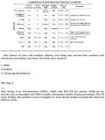


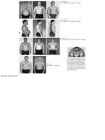


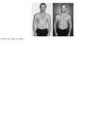

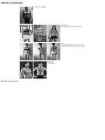

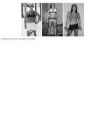









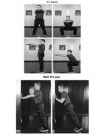
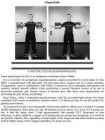
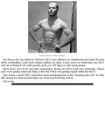



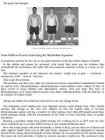
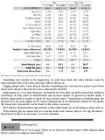
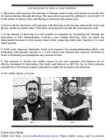

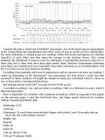

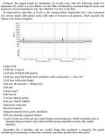
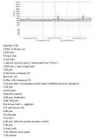

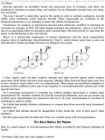



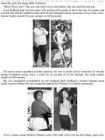
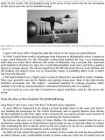
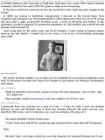
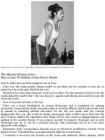

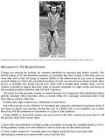
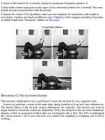
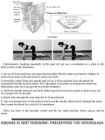
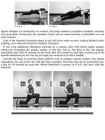
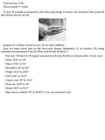
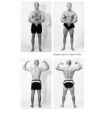
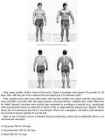

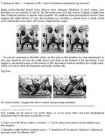
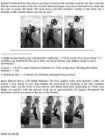
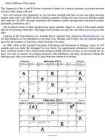











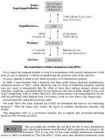
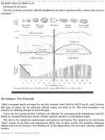









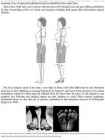
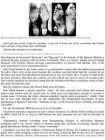
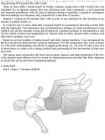
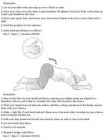
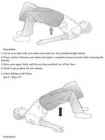
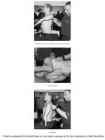


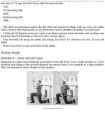
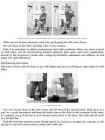
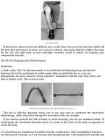
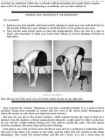
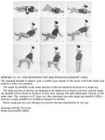
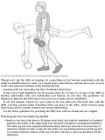



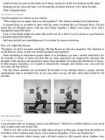


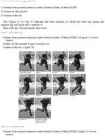
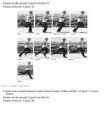
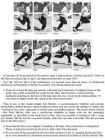

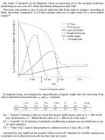
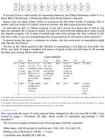




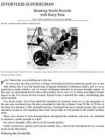














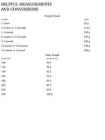
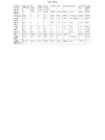


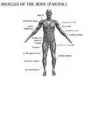
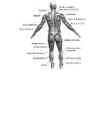



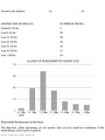
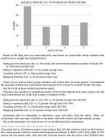




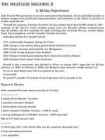


















































Kõik kommentaarid