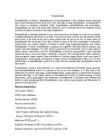
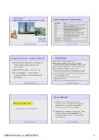
Exercise Physiology Anaerobic Energy Systems Anaerobic Pathways · Anaerobic Glycolysis (lactate system) 10 s to 2 minutes. · ATP-PCr (phosphate system) Less than 10 s · 200 m Sprint (50-100 m Sprint swimming) Men's WR:19.32 s - Michael Johnson (37.3 km/h) Women's WR: 21.34s - Flo Griffith-Joyner (34 km/h · Energy system: The lactate system · Fuel: Carbohydrate only Anaerobic Glycolysis · Breakdown of glucose or glycogen via special glycolytic enzymes. · First glucose or glycogen must be converted to Glucose 6-phosphate. Glucose to glucose 6-phosphate costs 1 ATP · Glycolysis produces pyruvic acid, without oxygen pyruvic acid is converted to lactic acid. · Net gain 3 moles of ATP (glucose = 2 ATP) Anaerobic Glycolysis · Reserve fuel activated when a person accelerates during race, during the last 200 m of a
and also usage of English language. This report is going to talk about biogas. It provides a brief review of usage and future prospects of the biogas. I have tried to make this report as understandable as possible. By the end of this report I want to come to a conclusion whether biogas is the best source of future energy or are there any other sources that are better. What is biogas? Typically it refers to the gas produced by the anaerobic digestion or fermentation of organic matter including manure, sewage sludge, municipal solid waste, biodegradable waste. If opportunely refined it can be used for electricity production. Also for space-, water- or process heating. Unintentional production of biogases has been an ongoing issue in many regions of the world, and several nations have also looked to biogas as a potential source of clean energy. India and China have both invested extensively in
Microbiology, 77(2), 235239. doi:10.1134/S0026261708020185 Definitions Heterotrophic bacteria - bacteria that use organic (carbon-containing) compounds as a source of energy and carbon. This characteristic distinguishes heterotrophic bacteria from chemoautotrophic (chemosynthesizing) and photoautotrophic (photosynthesizing) bacteria, which assimilate CO2 as a source of carbon. The overwhelming number of known species of bacteria, both aerobic and anaerobic, are heterotrophic. Many heterotrophic bacteria utilize sugar, alcohol, and organic acids. However, there are specialized heterotrophic bacteria capable also of decomposing cellulose, lignin, chitin, keratin, hydrocarbons, phenol, and other substances. Heterotrophic bacteria take an active part in the natural recycling of substances. Autrotrophic bacteria Autotrophic bacteria make their own food, either by photosynthesis
Autor: Eliys Tomson Arstiteadus II, 7. Rühm Sõnade arv 1493 Tartu 2010 Summary Metabolism is one of the things that can be used to classify bacteria. For example aerobic and anaerobic bacteria are differentiated on the bases of their need for oxygen in the metabolism. The following report is a brief overview of bacterial metabolism, that is mostly concentrated on the diffrence between anaerobic metabolism ja aerobic metabolism. Because of the complexity of bacterial metabolism the report is mainly about the fundamental diffrences in catabolism (enzymes used and energy and products that are gained) and the defenceses that are used against oxidative stress
piimhappest tingitud valu. Ta on arendanud oma punavereliblesid nii , et ta jala lihased suudavad kasutada rohkem hapnikku. Piimhape jalgadest eemaldamise ja südame ja teiste vähem kasutatud lihaste poolt energiaks tagasi muundamise kiirus on kasvanud. Kui ta on harjunud sõitma anaeroobses piirkonnas ja õppinud paremini taluma valu, Jack ei jää enam keset distantsi maha ja teeb pika puuga Joele ära ja on valmis võistlema eksperdi klassis. HR (heart rate) SLS AT (anaerobic threshold) anaeroobne lävi ANL LT sama mis AT ehk "punane tsoon" Kardiovaskulaar süda, kopsud, veresooned
Water When released to water, formaldehyde will biodegrade to low levels in a few days. In nutrient- enriched seawater, there is a long lag period (40 hours) prior to measurable loss of formaldehyde by presumably biological processes. Formaldehyde in aqueous effluent is degraded by activated sludge and sewage in 4872 hours. In a die-away test, using water from a stagnant lake, degradation was complete in 30 hours under aerobic conditions and 48 hours under anaerobic conditions. Bhattacharya and Parkin used anaerobic chemostats to study fate and kinetic effects of sludge and continuous additions of formaldehyde to acetate and propionate enrichment systems. The high reduction of formaldehyde with continuous addition is indicative of biodegradation, since the combination of volatilization, adsorption, and chemical transformation should account for less than 25% of the removal. Up to 80% of the formaldehyde was removed, with biodegradation accounting
Bauvorhaben: Planbezeichnung: Maßstab: gepr. am/von freigeg.am/von Proj.Nr. Anlage: aqua consult v 04 03 06 Ingenieur GmbH Polva Anaerobic Projekt Flow Scheme 0 0BUS1 803 0 4 Mengendamm 16 Pfad:H :ProjekteHannover4 06 06 corel Flow _Scheme.cdr RE N 30177 Hannover
2. Feldmann, K. (2001). An analysis of the Men`s World Championship in FRA. Handball, EHF Periodical, Vienna, 1, 22-26. 3. Ignatjeva V.J. (1983). Sorevnovatelnaja dvigatelnaja sejatelnost gandbolistov. Moskva. 4. IHF, (2001). Rules of the game. International Handball federation. 2001. 5. Kotzamanidis, C., Chatzikotoulas, K., Giannakos, A. (1999). Optimisation of the training plan of the handball game. Handball , EHF. Periodical, no.2, (49-55). 6. Norkowski H. (2002). Anaerobic power of handball players representing various sport levels. Journal of human Kinetics, 7, 43-49. 7. Sevim, Y. (2008). Handball- Dynamic Game & SpeedTraining. Handball, EHF Periodicals, Vienna. 8. Sportaim - . Sportaim statji. Venemaa, 2003. http://sportaim.ru/index.php/gandbal/istor/639-2011-04-09-20-42-40 , 23.01.2014 9. Sibila M., Vuleta D., Pori P. (2004). Position-related differences in volume and
välja paistavad. Vastavalt oma laisale loomusele, on marmorrail madal vere hapniku sisaldus ning pulss (10-15 lööki minutis). Liik suudab isegi ellu jääda tingimustes kus hapniku tase vees on väga madal, nt mõõna ajal olevates lompides. Rai lõpetab täielikult hingamise kui hapniku osarõhk langeb alla 10-15 Torri, ja ta saab elus olla sellises seisundis vähemalt 5 tundi. It deals with extreme hypoxia by coupling anaerobic glycolysis to additional energy-producing pathways in its mitochondria, which serves to slow down the accumulation of potentially harmful lactate within its cells. Nagu ka teised liigid tema perekonnas, suudab ka marmorrai toota tugevat elektrilaengut läbi ühe paari elektriorganite, ründeks ja kaitseks. Iga organ koosneb 400-600 vertikaalsest sambast, igas sambas on hoidla milles on umbkaudu 400 tarretise laadset "elektroplaati" mis põhimõtteliselt töötab nagu üks patarei
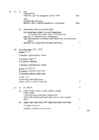
(e) (i) carbon; R CO2 1 (ii) Desulfovibrio, uses sulphur (S)/makes hydrogen sulphide (H2S); green sulphur bacteria, use H2S/make S; colourless sulphur bacteria use H2S; max 2 (f) colourless sulphur bacteria; 1 (g) C. perfringens similar to C. difficile/AW; (bacteria) anaerobic; (tissue damage/poor blood supply) decreases oxygen available; conditions suitable for Clostridium to multiply; AVP; max 2 [16] 50. (a) (i) U A C C G G A U U C A C;; 1 error = 1, 2 errors = 0 allow 1 mark for giving T throughout instead of U
Glucose can be readily restored when ATP demand and glycogen are the preferred substrates for is low. In living muscle, when activity is muscle metabolism and can be utilized either intense, this system can be advantageous, as aerobically (oxidative phosphorylation) or it consumes H+ and thus can reduce the anaerobically (anaearobic glycolysis). Lipid muscle cell acidosis that is associated with and lactate utilization require oxygen. Lipids anaerobic glycolysis. Another advantage of are a very energy-dense storage system and the system is that the catalyzing enzyme is are very efficient with respect to the high located very close to the actomyosin ATPase amount of ATP that can be generated per unit and also at the sarcoplasmic reticulum (where of substrate. However, the rate of synthesis calcium is actively taken up from the sarco-
12:42 pm: cobb salad (huge) 5:20 pm: 25 almonds + 300mg ALA 6:39 pm: 4 brazil nuts26 Fish/cod oil 2 scoops athletic greens 8:26 pm: CRAZY LIBIDO Americano restaurant Hierloom tomato Antipasto mixed (olives, pork, meatballs) 9:29 pm: Pancetta wrapped chicken 11 pm12 am: sex [You can see a small bump in blood glucose, which is partially due to glycogen being released. I also observed this during anaerobic exercise like weight training.] September 26, a Saturday, and my weekly binge day, produced a unusually at graph considering the jamming of chocolate croissants and other goodies down the gullet: Saturday 9/26 10:4011:40 am: sex 12:40 pm: 4 brazil nuts 2 cod caps 1 adrenal recovery pills, 3 desiccated liver ["liver"] 12:50 pm: 1 cup orange juice 1:03 pm: 2 chocolate croissants (3) Bearclaw (1) Coffee with cinnamon (3)
system, ignition system and electrical cylinder, caliper or other hydraulic component accessories. that is opened to purge the hydraulic system Ampere (amp) A unit of measurement for the of air. Also called a bleed screw. flow of electric current. One amp is the Brake bleeding Procedure for removing air amount of current produced by one volt from lines of a hydraulic brake system. acting through a resistance of one ohm. Anaerobic sealer A substance used to prevent bolts and screws from loosening. Anaerobic means that it does not require oxygen for activation. The Loctite brand is widely used. Antifreeze A substance (usually ethylene glycol) mixed with water, and added to a vehicle's cooling system, to prevent freezing Canister of the coolant in winter. Antifreeze also
 annaabi.ee