The Renaissance 1500 1650: background 1. What does the word ,,renaissance mean? Characterize briefly the period called the Renaissance. "The rebirth" from French Renaissance, meaning "rebirth"; Italian: Rinascimento, from re- "again" and nascere "be born") Rebirth of scholarship based on classical learning and philosophy. The Renaissance was a cultural movement that spanned roughly the 14th to the 17th century, beginning in Italy in the late Middle Ages and later spreading to the rest of Europe. It encompassed a revival of learning based on classical sources, the development of linear perspective in painting, and gradual but widespread educational reform. (wikipedia)Bridge between Medieval Ages and Modern Era. 2. Where did the Renaissance start and why?
to grow. A new middle class emerged --bankers, merchants and trades people had a new market for their services. People became wealthier and had more than enough money to spend. They began to build larger houses, buy more expensive clothes and get interested in art and literature. The middle class population also had more free time, which they spent learning foreign languages, reading, playing musical instruments and studying other things of interest. The Renaissance was especially strong in Italian cities. They became centres of trade, wealth and education. Many cities, like Venice, Genoa and Florence had famous citizens who were very rich and gave the city a lot of money. The printing of books led to a new way of thinking. Scholars of the Renaissance returned to the writings of Greek and Roman philosophers. These writings are called the "classics". More and more scholars learned to read Greek and Latin and studied old
William Shakespeare (1564-1616) playwright, actor, poet 37 plays, over 400 screen adaptions Lord Chamberlain's Men, King's Men, The Globe Early life: John Shakespeare, Mary Arden, 2 sis', 3 bros; married Anne Hathaway 3 children Life in London: 1599 built Globe, 1623 first compilation Forms: classical & history plays, comedies+tragedies, poetry Style: metaphors, rhetorical phrases, free flow of words, unrhymed iambic pentameter; deviations Renaissance (end of 14th century) Italy, reaches rest of Europe Elizabethan era (16th II h - 17th I h) Theatre: combined medieval theatre, morality plays & Roman drama to create Elizabethan tragedy Poetry: Italian influences, sonnet (English: cddc ee) Rulers of England: Henry VII (brings prosperity, repairs economic situation; made alliances); Henry VIII (beginning of English reformation; killed "traitors"; 6 marriages); Mary I (Catholic); Elizabeth I
The Renaissance * From the end of 15 century to the beginning of 17th century * The Renaissance is a cultural movement thata started in Italy and spread through Europe * The Renaissance in England covers the period of apporoximately 150 years (1492- 1623 ) * As Queen Elisabeth l was the ruler at that time, it is also called Elisabeth Age * It was the time of the spread of printing ( books) and the exploration of the New World * The Reformation and the establishment of national churches * Humanism. Value on individual human worth and dignity * Art. Reallistic portrayals of human beings * Science * It was also the time that brought federal domains under one man power and
around it. Establishment of Protestant churches movement was started by Martin Luther. Different branches of this movement in France Calvinism, Chatolic. Constant conflic between them in Ulster ( North-Ireland). In the 15th century printing was diccovered in Germany. 1476 a man called Caxton opened the first printing shop in London. Books became cheaper. Until that books were copied by clergyman. More books could be produced. Literacy spread, knowledge of reading. By te end of Renaissance half of the people could read. Monasteries wasn't so important anymore. Grammar schools came. Students are taught English, Latin, Ancient History, Greek, Religion and Arithmetic. One of the oldest schools was Stratford, Shakespeare taught there. Art and Literature The word Renaissance means the rebirth of ancient Rome and Greek art and literature. Ancient artists showed man as a creature full of joy of life and they glorified the beauty of man.
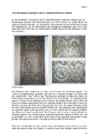
Epitaph Das Renaissance-Epitaph in der St. Benedikt Kirche in Herbern An der nördlichen Chorwand in der St. Benedikt Kirche in Herbern befindet sich ein Renaissance-Epitaph, eine Steinmetzarbeit von 2,87m Höhe und 1,35m Breite. Es zeigt den Grafen Hermann von Merveldt zu Westerwinkel und seine Gemahlin Ursula von Deipenbrock. Da die Sterbedaten des Ehepaares angegeben sind, weiß man, dass das Werk Ende des 16. Jahrhunderts erstellt worden ist. Der Bildhauer ist bis- her unbekannt. (Fotos: Cramer) Das Ehepaar steht betend da, mit Kopf und Schultern an ein Kissen gelehnt. Die Tracht ist zeitgenössisch, spanisch
LITERATURE IN THE MIDDLE AGES. Languages spoken : English, French, Latin. There was four major dialects, east became the basic dialect because it was spoken in London. By 1476, when William Caxton introduced printing, Old English into New English. Latin was generally considered to be the language of serious writing. Religious lyrics also made an appearance at this time. Throughout the Middle Ages ballads, short folk tales that tell stories, were very popular. THE RENAISSANCE: The Literary Background 16th century, - humanism. Thomas More- brought it to England and he was arrested because he refused to acknowledge Henry VIII as the Head of the Church. Elizabeth's reign was a period of unprecedented prosperity, and both the court and the emerging middle class dedicated a lot of time to art and literature. W. Shakespeare wrote 154 sonnets, E. Spencer 88. . Spenser's belief that poetry should deal with subjects far removed from everyday life and should be
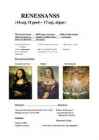
Appi ruttab kuulsa rooma luuletaja Vergilikse vaim (luule ja antiikkultuuri, aga ka inimlik tarkuse sümbol), kes juhib ta läbi põrgu ja puhastustule õndsate asupaika-paradiisi.Edasi viib teda Bcatrice (jumaliku arenu ja taruse sümbol), kellega koos jõuab luuletaja lõpuks jumala palge ette, pärides õndsuse ja rahu. Poeemis kolm osa: 1. Põrgu ( paksus metsas) 2. Puhastustuli 3. Paradiis RENESSANSS Renessanss Renessansiks (prantsuse keeles renaissance ,,taassünd") nimetatakse keskajale järgnevat, antiigist ja loodusest innustunud vaimuliikumist eelkõige Lääne-Euroopas 14.-16. Sajandil. Keskajal sisendas kirik inimesele, et ta on patune olend ja et maapealne elu on vaid ettevalmistus hauatagusele õndsusele või igavesele hukatusele. POEEM- pikem, mitmeosaline lüroeepiline luuleteos, mida iseloomustab jutustav suzee.Sisuliselt haardelt ja mahult väiksem kui eepos, vormi poolest suhlteliselt vaba. Poeemist
10.KLASS ARVESTUSLIK KONTROLLTÖÖ NR.3 RENESSANSIAJASTU MUUSIKA 1.Selgita mõisted ,, renessanss ", ,, humanism " Renessanss (prantsuse sõnast renaissance 'taassünd') oli kõrgkeskajale järgnenud,14. sajandi algusest 17. sajandi alguseni väldanud periood Euroopa kultuuriloos. Humanism - väärtushinnangute lähtumine inimesest. 2.Milline oli renessansiajastu ideaalisiksus Renessansiajastu ideaalisiksus oli kirikukammitsatest vaba, antiikeeskujusid järgivalt ilus, vaimsust hindav iseteadev inimene 3.Nimeta ja kirjelda renessansiajastu uudseid pille lauto näppekeelpill klavessiin ja klavikord klaveri eelkäijad
1.Renesanss tähendab prantsuse keeles renaissance-taassündi sel ajastul taasväärtustati antiikkultuuri. 2.humanism tähendab ladina keeles humanus- inimlik, austatakse kõike mis on inimlik. 3.Renesanssi keskuseks sai Firenze, Itaalia. Renesanss sai alguse hiliskeskajal 14.saj Itaalias. 4.Renesanss tõi maailmapildi keskele jumala asemel inimese.Taassündis antiikkultuur 5.Renesanss väljendus kunstis, luules ja muus loomingulises. 6.”Jumaliku komöödia” kirjutas Dante Alighieri.Seda peetakse juba varasemaks renesanssteoseks kuna ta esitas keskajale iseloomulikke ideid renesanssile omase inimlikkusega. 7.Dekameroni kirjutas Giovanni Bocaccio.Teos räägib kuidas musta surma eest eraldunud noored jutustavad lõbusaid lugusid.Kiitsid armastust ja naudinguid kuid pilkasid askeetlust. 8.Petrarcaja Erasmus Rottedamist läks ajalukku “Narruse kiitus”ega -filosoofiline satiir, oli kriitiline vaimulike ja kiriku vastu.oli filosoof. 9.põhjapoolsed humanis...
Status der Frau im 16. Jahrhundert in Europa Bedeutet die Renaissance im 16.Jahrhundert auch die Wiedergeburt der Frau? Einleitung Das Leben der europäischen Frauen in Mittelalter und Renaissance spiegelt sich in vielfältigen Rollen wieder: als Mutter, Tochter, Ehefrau, Geschäftsfrau, Dienerin, Nonne, Ketzerin, Hexe, Königin und auch Märtyrerin. In der patriarchalischen Gesellschaft des Mittelalters unterstand die Frau dem nächsten männlichen Familienmitglied, sei es der Ehemann, Vater oder Bruder. Ihre Rolle war auf die häuslichen Pflichten ausgerichtet, so unterstanden ihr die Leitung des Haushaltes und die Erziehung der Kinder. Die
Humanism ja Renesanss Mõiste "Renessanss" tähendab taassündi (sõna tuleb pr. keelest renaissance; ka it. rinascita tähendab taassünd). Üldajaloo tänapäevasesse käsitlusse tõi mõiste `renessanss' prantsuse ajaloolane Jules Michelet (1855) ning kultuurihistoriograafiasse juurutas selle Jacob Burckhardt (1860). kultuuriloolased loobusid ajastu tähistamisel ajaloolisest itaalia mõistest `rinascimento' ning võtsid kasutusele prantsusekeelse sõna `renaissance', ajaloolise järjepidevuse katkemisest. Samas on nende mõistete tähenduses väga oluline ühisosa: mõlemas sisaldub hinnanguline vastandus keskajale. Renessanss mõistet kasutatakse seoses kultuuriliste muutustega 14.-16.sajandil. Renessanss on keskaja lõpus enamikus Lääne- ja Kesk-Euroopa riikides toimunud vaimne ja kultuuriline murrang, mille sotsiaalne ja majanduslik alus oli varakapitalistlike suhete tekkimine linnades.
HISTORY OF ENGINEERING Deivid Armulik Kadrina Secondary School 2015 ENGINEERING Integral factor throughout history From first boats to present day projects Improve our life ERAS Ancient era Middle era Renaissance era Modern era ANCIENT ERA Stand as a testament to the ingenuity and skill of the ancient engineers Earliest civil engineer Imhotep, officials of the Djoser, designed Pyramid of Djoser at Saqqara Ancient Greece developed machines, civilian and military domains Chinese and Roman armies, military machines, Ballista and catapult MIDDLE ERA Al-Jazari, five machines to pump water, Turkish Artuqid dynasty
Today, Caprese is known as Caprese Michelangelo. A young boy Michelangelo was sent to Florence to school. The young artist showed no interest in his schooling, preferring to copy paintings from churches and seek the company of painters. He was fantastically gifted. He died on February 18th 1564 in Rome, Papal States when he was 88 year-old. Michelangelo was an Italian sculptor, painter, architect and poet and engineer of the High Renaissance. He field sculpture, painting, architecture and poetry. He is the best-documented artist of the 16th century. He told his apprentice, Ascanio Condivi: "However rich I may have been, I have always lived like a poor man." Works Two of his best-known works, the Pietà and David, were sculpted before he turned thirty. In a demonstration of Michelangelo's unique standing, he was the first Western artist whose biography was published while he was alive. Pieta Created between 14981499
Deutsche kunst Deutsche kunst beschreibt die Geschichte der Sichtkünste in Deutschland. Die Kunstgeschichte der deutschen Kunst untersucht den Ursprung und die Entwicklung kultureller Kontinuitäten des Kunstschaffens, die territorial begrenzt sind.Die Donau Schule ist der Name eines Kreises der Maler des ersten Third vom 16. Jahrhundert in Bayern und in Österreich. Die deutsche Renaissance war ein Resultat der deutschen Künstler, die nach Italien gereist waren, um zu erlernen, daß mehr und zu werden durch die Renaissancebewegung anspornte. Die Düsseldorf Schule war eine Gruppe Künstler, die meistens Landschaften malten und dem an studierte oder von der Düsseldorf Akademie beeinflußt wurden. Museen In Deutschland existieren mehr als 6.000 Museen, wozu auch private und öffentliche Sammlungen, Schlösser und Gärten gehören. Zu den größten und bekanntesten musealen
In his sonnets he criticizes human vices. Shakespeares ideal beauty differed greatly from the traditional beauty of the time. The Earl of Southampton was his friend. Comedies The Taming of the Shrew, A Mid-Summer Night's Dream, The Twelth Night, Much Ado About Nothing, The Merchant of Venice, The Merry Wives of Windsor, The Two Gentlemen of Verona, As You Like It. Although the comedies take place in Italy, they reflect Renaissance England and the characters are men and women whose raison d'etre is enjoying life. There is sorrow and heartbreak in the comedies, but the ending is always relatively happy. The aim of the autho is to take the reader away from everyday troubles. The comic effect comes through comic characters and situations. Shakespeare believed in man's virtues. He hoped that man would achieve his happiness. Love of life. The problems ae serious. Comedies often contain deep philosophical thoughts and problems
Tisler 1. Renessanss kirjanduses, muusikas, kunstis Referaat Koostas: Rimmo Veinimäe Juhendaja: Sirje Speek 2009 Renessanssi mõiste: Renessanss (prantsuse sõnast renaissance 'taassünd') oli Itaaliast alguse saanud ning 14.-17. sajandil väldanud periood Euroopa kultuuriloos. Ajastut iseloomustas eemaldumine religioonikesksetelt väärtustelt inimesekeskse maailmapildi suunas. Renessanss järgnes keskajale. Renessansi sünnikohaks peetakse valdavalt Itaaliat, kuigi seda on ka vaidlustatud. Perioodi kultuuri iseloomustanud ideed on pärit 13. sajandi lõpu Firenzest, eelkõige Dante Alighieri ja Francesco Petrarca tekstidest. 14
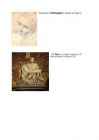
The portrait of Michelangelo by Daniele de Volterra The Pietà is a marble sculpture in St. Peter's Basilica in Vatican City MICHELANGELO Italian sculptor, painter, architect and poet. He was one of the founders of the High Renaissance and, in his later years, one of the principal exponents of Mannerism. He was born in 6 March, 1475 in Caprese, the son of the local magistrate, his family returned to Florence soon after his birth. During his life he lived in city's like Florence, Venice and Bologna in Tuscany, nowadays Italy. Later, during the prolonged illness and after the death of his mother, he lived as a stonecutter and his wife and family in the town of Settignano where his father owned a marble quarry and a small farm
Ballet Merili Kaarna 11.d Italian renaissance court entertainment originated in the 15th century the epicentre moved to France obligatory component of opera Mlle La Fontaine 1681 St. Petersburg ballet reanimated in western Europe Styles Romantic ballet mid 19th century emphasized intense emotion most widely known and performed ● Classical ballet ○ based on technique and vocabulary ○ different styles ○ height in 19th century Neoclassical ballet use of the abstract diverse music choise possibilities for achitectureand design in choreography Contemporary ballet ballet technique apparent roots exploration experimentation
Classical music History The period from the 11th century to present times The term "classical music" did not appear until the early 19th century. The earliest reference is from about 1836 Haydn, Mozart and Beetohoven are the most known classical musicians. Periods in classical music Medieval (5001400) Renaissance (14001600) Baroque (16001750) Classical (17501830) Romantic (18151910) Modern (19102000) Form Concerto Symphony Sonata Opera Dance music Suite Étude Symphonic poem Classical music nowadays Postmodernism Polystylism Eclecticism http://www.youtube.com/watch?v= WXIhTodJ6M&playnext=1&list=PL50 B198056DD2973A Thank you for attention!
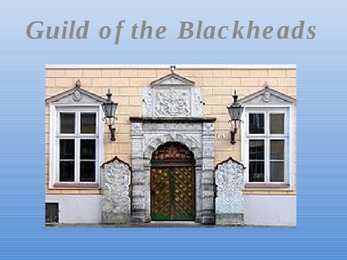
The town councilgoverned pharmacy sold many other goods besides medicine. Over the centuries, it has changed slightly, but it still retains the flavour of bygone days, while it sells modern medicines. Medieval medicinal ingredients like bat powder and snakeskin are no longer available, but you can still try the fine spiced claret, renowned already in the Middle Ages. The House of the Brotherhood of Blackheads is nearly the only preserved Renaissance building in Tallinn. The Brotherhood of Blackheads emerged in 1399. The Brotherhood united the young, single merchants before they could be accepted into the Great Guild, as well as foreign merchants who were residing in Tallinn for longer periods but not permanently. The name of the Brotherhood is associated with their patron, the black St. Mauritius, an early Christian martyr who died in Switzerland around 280300 A.D. His head is the mascot on the Brotherhood's coat of arms
RENESSANSS (14.saj. II pool 17.saj. algus) Mis keelsest sõnast Millal algas renessanss Millest võttis eeskuju tuleb renessanss ja Itaalias ja millal Lääne renessanss? mida see tähendab? Euroopas? Prantsuse keelsest Itaalias algas renessanss Renessanss võttis eeskuju sõnast renaissance juba 14. sajandil, Lääne antiigist. ja see tähendab Euroopas 15. ja 16. saj. taassündi. Renessansi kunstnikud: Leonardo da Vinci Raffael Michelangelo Heliloojad: Kirjanikud:
Guild o f the Blac khe ad s His to ry Mentioned in 1399 Origin of the name is not entirely clear St. Mauritius is depicted in the coat of arms of Blackheads Active only in Estonia and Latvia Left Tallinn in the 1940s They were merchants Were also in Tartu and Pärnu Main building was in Tallinn The Ho us e o f Bro the rho o d o f Blac khe ad s Located in the old town Is nearly the only preserved renaissance building in Tallinn When it's not occupied by concerts or other events it's open 10.00 19.00. Thank you for watching Kalev Gustav Lillepruun Sources : Wikipedia.org Tallinn.com Mustpeademaja.ee
and the victims of the Black Death grew boobs on their necks. Finally, the Magna Carta provided that no free man should be hanged twice for the same offense. In midevil times most of the people were alliterate. The greatest writer of the time was Chaucer, who wrote many poems and verse and also wrote literature. Another tale tells of William Tell, who shot an arrow through an apple while standing on his son's head. The Renaissance was an age in which more individuals felt the value of their human being. Martin Luther was nailed to the church door at Wittenberg for selling papal indulgences. He died a horrible death, being excommunicated by a bull. It was the painter Donatello's interest in the female nude that made him the father of the Renaissance. It was an age of great inventions and discoveries. Gutenberg invented the Bible. Sir Walter Raleigh is a historical figure because he invented cigarettes
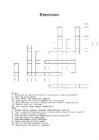
Renessanss Across 5. Õpetlased kes uurisid antiiki ja tutvustasid seda ka kaasajale? 9. Kust oli pärit Dante? 11. Kust kohast sai renessanss alguse? 13. Shakespeare kirjutatud tragöödia üks peategelane? 14. Mida tähendab renessanss(tulnud prantsuse sõnast renaissance)? 15. Inglise poliitik ,kirjanik 16. Kes kirjutas teose nimega "Dekameron"? Down 1. Milline tähtis inimene külastas tihti Gloobuse teatrit? 2. Teatri nimi,kus Shakespeare oli näitleja,näitekirjanik,teatri osanik? 3. Keda peetakse esseede rajajaks? 4. Keda peetakse tegelikult Shakespearei teosete autoriks? 6. Leiutati,seotud kirjutamisega? 7. Renessansiaegne kuulus kunstnik? 8. Kuulus Leonardo da Vinci maal? 10. Kes on "Jumalik komöödia" autor? 12. Shakespearei kirjutatud tragöödia?
skulptuuri iseloomustab loodustunde tugevnemine ja realistliku looduslähedase käsitlusviisi võidulepääs. Maalikunstis rakendatakse kõiki perspektiive ja anatoomia seadusi ning tähtsale kohale tõuseb portree ja skulptuur on jälle eraldi kunstiharu. Püüd reaalsuse poole valitseb eelkõige Itaalias ning sealt edasi teistesse Lääne-E maadesse. Kohe alguses ilmneb antiikkunsti mõju ning seda eelkõige arhitektuuris ja siit ka kunstiajastu nimi renaissance (taassünd). Taassünni all mõeldakse antiikaegsete võtete taas kasutuselevõtmist. Renessansi sünnikohaks peetakse valdavalt Itaaliat. kunstnikud muutsid Piibli tegelased ning pühakud üsna inimeste sarnasteks, ka antiikmütoloogia ainestikku kasutati. Kasutati põhiliselt tempera- ja õlivärve. Sandro Botticelli Leonardo da Vinci
Bartolomeo Colleoni ''Madonna koos istuva lapsega'' ja ''Püha Moonika'' ''Kristus ja Püha Toomas'' ja ''Taavet'' Verrocchio ja Leonardo da Vinci • Verrocchio suureks karjääripöörde põhjuseks oli Leonardo da Vinci. • Maalimine jäi Leonardo ülesandeks, samal ajal kui meister tegeles skulptuuriga. • Taaveti legend • 'Kristuse ristimine' 'Kristuse ristimine' Kasutatud kirjandus • http://www.nndb.com/people/900/0000846 48/ • http://www.italian-renaissance- art.com/Verrocchio.html • http://www.britannica.com/EBchecked/topi c/626424/Andrea-del-Verrocchio • http://en.wikipedia.org/wiki/Andrea_del_Ve rrocchio Tänan kuulamast!
RENESSANSS Renessanss 14.-16.sajand · Mõistega "renessanss" (pr renaissance taassünd) tähistatakse kultuuriloos antiikkultuuri ideaalide taassündi ning seda mõistet hakati esmalt kasutama seoses Itaalia 14.-16.sajandi kultuuriga. · Muusikaloos on Itaaliast olulisemal kohal Prantsusmaa (14.saj.) ja Madalmaad (15 saj.). Teadus ja ajalugu · Mikolaj Kopernik (1473-1543) väitis, et Päikese ja tähtede näiv liikumine on seletatav Maa ja teiste planeetide tiirlemisega ümber Päikese ning samaaegse pöörlemisega ümber oma telje.
WOMEN's IDEALS OF BEAUTY THROUGH THE AGES Renaissance 15th century High forehead In the warmer climate hair in plaits, jeweled turbans or caps Using bleach A few extra pounds of weight. Used white lead powder Elizabethan 16th century Queen Elizabeth Naturally pale complexion Red hair Healthy glow to cheeks 18th Century Women had trim Crimped or curled heads Powdered Decorated with garlands(vanikud) Wire cages Three feet in the air Feathers Ribbons Jewels Even ships, gardens Victorian Natural beauty Without makeup Used cosmetics less Hygiene and health 1840s heads were sleek, demure Heavy knot of curls Plaits in back 1920s "Bobbed" Waved or shingled hairstyles Louise Brooks Clara Bow Powder Circles to the cheeks Plucked eyebrows Penciled in thin arches Lips very red 1940s Feminine hairstyles Bette Davis' curls Rita Hayworth's gleaming waves A lock of hair that covered one eye. 1950s "Doe eye" Pale complexion Intensely ...
Michelangelo Buanarroti Katrin Jermoskin Mustvee Gymnasium Form 11 2010 Michelangelo di Lodovico Buonarroti Simoni 6 March 1475 18 February 1564 Italian Renaissance painter, sculptor, architect, poet, and engineer The second of 5 brothers Mother was Francesca Neri she died young Father was Ludovico di Leonardo di Buonarotti Simoni Childhood in Florence 1488 he got inspiration by painter Domenico Ghirlandaio 1489 he began to study sculpture under the protection of the Lorenzo Magnifico
suurejoonelisusest, ilust ja tõetruudusest tegelikult mulle mitte mingisugust muljet. Ent süvenedes detailidesse, võttes maali lahti osadeks ja neid püüdlikult (kohati küll edutult) enda jaoks lahti mõtestades, pidin tõdema, et mida rohkem ma mõistsin, seda rohkem mulle ka teos meeldima hakkas. Kasutatud materjalid: David Piper ,,Kunstiajalugu" Richard Stemp ,,Renessansi salakeel. Itaalia kunsti varjatud sümbolite tähendused" ,,The panorama of the Renaissance" Frederick Hartt ,,History of Italian Renaissance Art" http://en.wikipedia.org/wiki/The_School_of_Athens http://www.htg.tartu.ee/~merill/pildivaatlus/ pildivaatluse loeng
Name The name Prague is derived from an old Slavic root, praga, which means "ford", referring to the city's origin at a crossing point of the Vltava river. The native name of the city, Praha, is also related to the modern Czech word práh which means threshold. History The area of Prague was settled as early as the Paleolithic age. By the year 800 there was a simple fort fortified with wooden buildings. It was founded during the Romanesque era c. 885 and flourished in the Gothic and Renaissance eras. Prague flourished during the reign of Charles IV. Charles IV founded the first university in MiddleEurope Charles University Prague seen from satellite View of Prague from Petri hill The front view of St. Vitus Cathedral with its rose window The astronomical clock of Prague The National Museum Zizkov Television Tower Charles University in Prague Old Town Square Old Town Square during Christmas Charles Bridge The Dancing House
· Spoke Latin, French, Italian the important languages of the time · Worked as a diplomat for a time · Translated works into English (from Latin, French, Italian) · Favourite of the royal court · At the time of his death was regarded as a great poet and was buried in Westminster · As a writer he was very prolific · His early works show a strong influence of French and Italian poets, especially the great Italian Renaissance geniuses Boccaccio, Dante, Petrarch · His masterpiece "The Canterbury Tales": o He imitates what Boccaccio does in Decameron. Introduces frame story/narrative. A springtime pilgrimage to Canterbury cathedral (which contained the important relics of St Thomas à Becket). Pilgrims would gather in groups because it was easier to protect themselves. The protagonists gather at an inn and wait for others
Arvo Pärt Author: Heli Kopter Life Pärt grew up in Rakvere. He went to study music at the the Tallinn Conservatory (now The Estonian Academy of Music and Theatre), graduating in 1963. He was influenced by medieval and Renaissance music. He became a popular composer during the 1960's. In 1976 Pärt created his signature tintinnabuli style. His best known works are Für Alina and Spiegel im Spiegel. In 1980, Pärt left Soviet Estonia in search of creative freedom in Vienna, and later Berlin. Some Facts He was known for his self-invented compositional technique tintinnabuli. His tintinnabuli technique resembled the ringing of bells and was best displayed in his composition
RENESSANSS Rinascita (itaalia keeles "taassünd", prantsuse keeles renaissance). Renessanss sai alguse Itaaliast ja seepärast tähistatakse ka selle erinevaid perioode itaaliakeelsete tähistustega: 14. sajand - eelrenessanss e trecento 15. sajand - vararenessanss e quattrocento (u 1400-1500) 16. sajand - kõrgrenessanss e cinquecento (u 1500-1520/30) Just Itaalias vabanes kunst kõige varem keskaegseist kammitsaist, tärkas huvi looduse järgimise ja antiikkunsti vastu. MIS TOIMUS? Lagunes naturaalmajandus, laienes tööjaotus, kaubandus arenes kiiresti, tärkas
Detroit Meriliin Lend 11 a Detroiti asukoht Detroit on Ameerika Ühendriikide osariigi Michigani suurim linn. Asub Wayne'i maakonnas Detroiti jõe ja Erie järve ääres. Detroiti asend Wayne'i maakonnas Detroiti pitsat Detroiti lipp Detroit õhtul Andmed Linna asutas 1701. aastal prantsuse maadeuurija Antoine de la Mothe Cadillac. 2010. aasta rahvaloenduse järgi oli Detroiti elanike arv 713 777. Linna kõrgeim hoone on Renaissance Center. Linnapea on alates 2002. aastast Kwame Kilpatrick. Linna pindala on 370,4 km2. Vaatamisväärsused Henry Fordi muuseum (Henry Ford Museum). Idaturg (Eastern Market). Cranbrooki kunstimuuseum (Cranbrook Art Museum). Motowni ajaloomuuseum (Motown Historical Museum). Bailey katedraal (Bailey Cathedral). Foxi teater (Fox Theatre). Foxi teater Bailey katedraal Motowni ajaloomuuseum Cranbrooki kunstimuuseum Henry Fordi muuseum Idaturg General Motors Corporation
Serpent madu Belmont (Nashville, Tennessee) · Geometric · Decorated with cast iron and Antebellum sõjaeelne, marble marmor, tier rida, kiht marble ornaments · 105-foot-high water tower · Antebellum garden simple two-tiered marble fountain (created in 1850) Biltmore (Asheville, North Carolina): · Wall fountains · Designed by Law Olmsted · Recalls the grotto style of the Italian Renaissance Summary: · Good outdoor ornaments · Many pros · Ornamental fountains 7 variations · Cast-iron fountains mass-production in nineteenth century Questions? Thanks for listening! ,,fountains are highly elegant garden decorations, rarely seen in this country." -Andrew Jackson Downing (,,A treatise on the Theory and Practice of Landscape
Peetri kiriku kuppel · Valmis 1560 · Asub Vatikanis Kasutatud allikad · Internet: · http://et.wikipedia.org/wiki/Michelangelo · http://en.wikipedia.org/wiki/Michelangelo_Buonarroti#Under_Medici_Popes_in_Florence · http://www.humanitiesweb.org/gallery/167/54.jpg · http://www.wfu.edu/~sporsl5/FYS/images/last%20judgement%20color+border.jpg · http://whitemouse.ru/photo/italy/firenze/david_michelangelo.jpg · http://www.shoshone.k12.id.us/renaissance/images/michel.jpg · http://en.wikipedia.org/wiki/Moses_(Michelangelo) · http://en.wikipedia.org/wiki/Dying_Slave · http://www.fineartprintsondemand.com/artists/michelangelo/rebellious_slave-400.jpg · http://en.wikipedia.org/wiki/File:Michelangelo_Buonarroti_046.jpg · http://en.wikipedia.org/wiki/Doni_Tondo · Kirjandus: · Eesti Entsüklopeedia 6 (1992) lk. 319
through Ireland with France and the continent of Europe. Following the Acts of Union which united Scotland with England into the Kingdom of Great Britain, and the subsequent Scottish Enlightenment and Industrial Revolution, Scotland became one of the commercial, intellectual and industrial powerhouses of Europe. Its industrial decline following the Second World War was particularly acute, but in recent decades the country has enjoyed something of a cultural and economic renaissance, fuelled in part by a resurgent financial services sector, the proceeds of North Sea oil and gas, and latterly a devolved parliament.
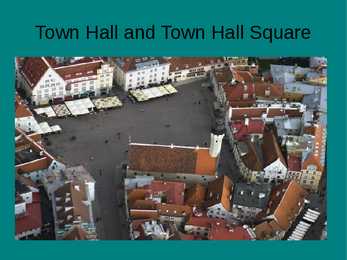
back to the 13th century. In its present form it was completed in 1404. The management of the city worked in the Town Hall until 1970. Since 1975 the Town Hall functions as the ceremonial building of the city government, but it also serves as a concert hall and a museum. The tower The tower was constructed together with the Town Hall in 1402 1404. The original Gothic pyramidal spire was replaced by a Late- Renaissance spire in 1627. The height of the Town Hall from the bottom of the arcade to the top of the spire is 64 meters. The spire was destroyed in an aerial bombing on March 9, 1944. It was rebuilt in 1952. Tallinn Town Council used to have its own guards, who maintained order in town and watched for possible enemy troops or destructive fire from the tower. When something endangered the city, an alarm bell in the belfry was rung. The square
Raphael Sanzio Raphael (April 6 or March 28, 1483 April 6, 1520) was an Italian painter and architect of the High Renaissance. Raphael was enormously productive, running an unusually large workshop. Most of his work remains especially in the Vatican. He received his first training from his father, Giovanni Santi, who was a poet and a painter. After that he became a student and assistant of the painter Perugino. Raphael imitated his master closely and sometimes it is difficult to distinguish which works are painted by Raphael. His work at that period is Marriage of the Virgin (1.) Mary receives a ring from Joseph
Da Vinci was an Italian Renaissance polymath. He was painter, sculptor, architect, musician, mathematician, engineer, inventor, anatomist, geologist, cartographer, botanist, and writer. a man of "unquenchable curiosity"( Kustutamat uudishimu) and "feverishly inventive imagination"( palavikuliselt leidlik kujutlusvõime) Characters Leonardo appears to have had no close relationships with women but he had many good friends.( Gay man) Mona Lisa Oil on cottonwood One of the most famous paintings of all times is a mystery. It is uncertain whether the painting is a portrait of the wife of the Florentine citizen Francesco del Giocondo as traditionally believed, while Mona Lisa’s enigmatic smile remains a subject of speculation. The painting can be seen in the Louvre Museum in Paris, France. The last supper Tempera on gesso, pitch and mastic. The mural repre...
· In addition to "real" goths, there are also "poseurs", the number of which began to increase in the 1990s. · The centers around which local Gothic communities are formed in Western Europe and the US are "friendly subculture" clubs. GOTHIC MUSIC · Gothic rock · Deathrock · Darkwave · Gothic metal · Gothabilli GOTHIC FASHION DIRECTIONS IN GOTHIC FASHION · Antique Goths - also can be called Renaissance Goths, Romantic Goths, Victorian Goths. · The Vampires · Gypsy Goths · Cyber-Goths · J-Goth · Corporate Goths or business goths GOTHIC ATTRIBUTES · Ankh cross · Eye of Ra · The cross of St. Jacob · Celtic crosses and ornaments · Pentagrams · Inverted crosses · Eight-pointed stars etc. GOTHIC EVENTS · Whitby Gothic Weekend (Britain) · M'era Luna (German) · Wave-Gotik-Treffen (Leipzig) · Convergence (USA)
folklore themes. Written in verse, the epic tells the story of Kalevipoeg, the mythical ancient ruler of Estonia. Another achievement of this period was the establishment of Estonia's first regularly published Estonian-language newspaper, Perno Postimees , originally published in Pärnu by Johann Voldemar Jannsen in 1857. In 1878 Carl Robert Jakobson established the newspaper Sakala , which would soon become a major promoter of the cultural renaissance. Jakob Hurt, a schoolteacher and Lutheran minister, organized a collection of folk songs in the 1880s and gave several speeches extolling the value of Estonian culture. Estonia capital of culture is Tallinn
views. There are a lot of interesting places to see. One of the most visited places are the area near terrace, where you can find wonderful rose garden, which is very colorful and aromatic. At the beginning this land was owned by Grigori Jelissejev in 1897. Then he decided to build luxurious summer villa, which could compete with famous resting mekas in France, Riviera and in Italy. Inspired by views of Italian mountains the big merchant asked for development of a castle, which is in renaissance style. The building was finished in 1899. In the end of 19th century Jelissejev started constructing the park that was in an eclectic style. In those days all famous architects and landscape designers were working for this project. They built three gorgeous fountains around the castle area. Also, there were a lot of exotic trees and plants in this garden. Furthermore, a lot of well known people visited this amazing Oru park. One of them was Estonian president Konstantin Päts
Reichstag Reichstag wurde von 1884 bis 1894 nach den Planen von Paul Wallot erbaut. Paul Wallot nüzte Elementen von Renaissance, Barock und Klassizismus. Wenn das Deutsche Keiserreich in 1871 proklamiert wurde, wurde auch Berlin die Hauptstadt und dann brauchte das neu entstandene Parlament einen Regierungssitz. Der Reichstag war 137 m lang, 104 m Breit, vier Ecktürme waren 104 m hoch und der Kuppelspitze war 75 m hoch. Besonders schwer war der Bau der Kuppel, aber zum Glück fand Bauingenieur Hermann Zimmermann eine Lösung. Aber er musste die Höhe der Kuppel niedriger machen
Tants on läbi aegade andnud erinevatele rahvastele võimaluse salvestada om kogemusi, tundeid ja olemust. Kõik rahvad pole suutnud luua tugevaid tantsutraditsitsioone, kuid tuntumad tantsud on ulatanud üle riigipiiride. Nii tantsiti 14. ja 15. sajandil Euroopas kuningakodades Itaalia tarantellat ning Prantsuse menuette ja kadrille. Itaalia Rahvatants on olnud lahutamatu osa Itaalia kultuuris sajandeid. Tants on olnud pidev niit itaalia elu Dante läbi Renaissance tulekuga Tarantella ja tänapäeva ärkamised on rahvamuusika ja tants. Carole, ring või kett tants , mis sisaldab laulu, oli domineeriv Keskaja tantsu vorm Euroopas vähemalt 12 läbi 14. sajandi. See vorm tants leiti Itaalias samuti ja kuigi Dante on mõni põgus viide tantsida, see on Dante kaasaegseid Giovanni del Virgili, kes annab meile varem maininud Itaalia rahvatantsu. Ta kirjeldab grupp naisi, jättes kiriku Bologna at Festa San
Anete Merilin Leetberg Aule Pihlak Renessanss sai alguse Põhja-Itaalia linnriikidest, mis olid rohkem arenenud ja kõige lähemal antiigipärandile. Järgneva kahe sajandi jooksul levis üle Euroopa ja tõi kaasa suure murrangu inimeste mõtteviisis. Renessanss (prantsuse sõnast renaissance 'taassünd') oli Itaaliast alguse saanud ning 14.-17. sajandil väldanud periood Euroopa kultuuriloos. Ajastut iseloomustas eemaldumine religioonikesksetelt väärtustelt inimesekeskse maailmapildi suunas. Renessanss järgnes keskajale. 14. sajand eelrenessanss 15. sajand vararenessanss 16. sajand - kõrgrenessanss Renessansiajal hakati uuesti uurima vahepeal unustusse jäänud antiikaja kunsti, kirjandust, filosoofiat ja igapäevaelu
58. värvivarjund, värvitoon, värving- HUE 59. sepis- jorging 60. krohv-plaster 61. kriit-chalk 62. kujutav kunst(graafika, maalikunst, skulptuur)- figurative art 63. kujutis- image 64. lakk- varnish 65. molbert- easel 66. näitus-exhibition 67. kunstigalerii-art gallery 68. palett(värvide hoidmise ja segamise alus)- palette 69. pintsel- (paint)brush 70. pintslitõmme- (brush) stroke 71. portselan-porcelain 72. põhivärvid- primary colours 73. pärgament-vellum, parchment 74. renessanss- Renaissance 75. rokokoo- Rococo 76. ilmalik, ilmlik kunst-secular art 77. sakraal(kirikllik)kunst- sacred art 78. tempera 8 maalimistehnika vesivärvidega, millele on lisatud liimi, munakollast või muid aineid, ka selles tehnikas maal- tempera 79. toon(värvivarjund)-shade, tone 80. käsikirja algustöhti ornamentidega või kullaga kaunistama- to illuminate(valgusreklaam- illuminated sign)
Renessansiks ( prantsuse keeles renaissance 'taassünd') nimetatakse keskajale järgnevat, antiigist ja loodusest innustunud vaimuliikumist eelkõige Lääne-Euroopas 14.-16. sajandil. Keskajal sisendas kirik inimesele, et ta on patune olend ja et maapealne elu on vaid ettevalmistus hauatagusele õndsusele või igavesele hukatusele. Renessansiaja mõtlejad ja kunstnikud pidasid inimest tema puudustest hoolimata põhiliselt heaks ja seadsid ideaaliks maapealse õnne ja harmoonilise isiksuse. Inimene kui isiksus vabanes keskaja kirikudogmade ja seisuslike normide kammitsaist. Oluliseks sai inimese individuaalsus - isikupära. Renessansiga on lahutamatult seotud humanism ja humanistid. Algul, vararenessansis hakati humanistideks (ladina keeles humanus 'inimlik') nimetama õpetlasi, kes uurisid ja tutvustasid antiikkultuuri. (Kuigi antiiki tunti mingil määral ka keskajal - antiikkirjandus on suures osas säilinud tänu keskaegsete munkade ümberkirjutus...
 annaabi.ee