SHO P P IN G A D D I CT IO N *CLICK* WHAT IS SHOPPING ADDICTION? COMPULSIVE BUYING DISORDER ONIOMANIA 6% U.S POPULATION URGE TO BUY UNNECESSARY THINGS LITERALLY MEANING "FOR SALE INSANITY" HOW IT WORKS? Shopping Guilt Emotional Craving trigger HISTORY ORIGINALLY DESCRIBED BY EMIL KRAEPELIN AND EUGEN BEULER LITTLE INTEREST UNTIL 1990 BAERLY RECOGNIZED AS A MENTAL ILLNESS SYMPTOMS I. OVER-PREOCCUPATION WITH BUYING II. DISTRESS AS A RESULT OF THE ACTIVITY III. BUYING IS NOT LIMITED TO MANIC EPISODES CONSEQUENCES BROKEN MARRIAGES ANXIETY LOST JOBS DEAFULTED LOANS
A person who is addicted to chocolate is called chocoholic. A chocoholic is a person who craves chocolate. There is some medical evidence to support the existence of actual addiction to chocolate. However, the term is mostly used loosely or humorously to describe a person who is inordinately fond of chocolate. The chocolate addiction happens mostly with women because they eat more emotionally than men. Why do people get addicted to it The essential components of addiction are intense craving for something, loss of control over the use of it, and continued use despite negative consequences. Studies have shown that people can exhibit all three of these components in relation to food, particularly food that contains sugar or fat. Since chocolate contains both, it is often used in studies of food addiction. Why it's bad Eating too much chocolate is bad because it's not healthy food it's bad for you teeth you will get fat How can you break it
Portrait-portree Discus-kettaheide Abstract-abstranktne kunst Decathlon-kümnevõistlus Concert hall-kontsertimaja Draw- viik Etching-söövitama? Hurdle- tõke Engraving-gravüür Hurdles- tõkkejooks Audience-publik Javelin- odavise Creative-loov Pole-vault- teivashüpe Craving-joonis Referee-kohtunik Canvas-lõuend Shot put-kuulitõgue Sketch-visand Steeplechase-takistusjooks Shade-vari Wadi-race-kõrberalli Paint-maal Dreary chores of our everyday life- igavad I'm sorry to interupt majapidamistööd I'm sorry but Predecessors- eelkäijad
Love/craving/sad *True love doesn't consist of holding hands; it consists of holding hearts! *Like millions of dreams came true. Me and you! *We could be friends.. but I'd rather be your lover! *Like shooting stars we shine and then we fade. *It's not hard to see through all that's fake... *And every night he kisses someone new. Never you. *Use me, I'm beautiful take me, I'm yours *Oh darling, you're a million ways to be cruel. * And if I could hold on Through the tears and the laughter Would it be beautiful? Or just a beautiful disaster *"You don't love a woman because she is beautiful, but she is beautiful because you love her." *"Too many people are looking for the right person, instead of being the right person." *Words are only words, can you show me something else? *I don't wish to be everything to everyone, but I would like to be something to someone. *Tears have turned to ice. *How can you break my fucking heart and tell me you...
After repeated doses of nicotine, the brain changes. To adjust to too much dopamine, the brain cuts production of the neurotransmitter and reduces the number of some receptors. Now, the smoker needs nicotine just to create normal levels of dopamine in his or her brain. Without nicotine, the smoker feels irritable and depressed. The smoker has trained the limbic system to crave tobacco. Think about how you long for a cold drink on a hot day. Or how you want a sandwich when you are hungry. Craving for tobacco is much stronger. These changes in the brain and body make nicotine highly addictive. Other addictive drugs of abuse, including heroin and cocaine, cause the same changes in the brain. While inhaling a cigarette, smokers are pulling more than nicotine into their lungs. Tobacco smoke contains more than 4,000 chemicals. Besides nicotine, the most dangerous chemicals in cigarette smoke are tar and carbon monoxide. Tar causes lung cancer, emphysema, and bronchial diseases
place? Firstly sometimes people try their first cigarette, they like it and so they start doing it more regularly. Secondly some people start smoking because there's a rumour saying that it's slimming. And another reason may be that it may relieve stress. After three or four cigarettes you get addicted to it because of nicotine. It is a drug that stimulates the brain. When the level of nicotine falls in your blood and you're a regular smoker, you usually develop withdrawal symptoms, such as craving, anxiety, restlessness, headaches, irritability, hunger, difficulty with concentration, or just feeling awful. These symptoms are relieved by the next cigarette. Most smokers need to smoke regularly to feel normal and to prevent nicotine withdrawal symptoms. So once you start smoking it is very hard to quit. But why is smoking so harmful? Cigarettes have tar in them which contains many chemicals. These deposit in the lungs and
stocking. He tore his gaze away from mine and looked down, pushing my skirt higher to bare me from the waist down. "Jesus, Eva." A low rumble vibrated in his chest, the primitive sound sending goose bumps racing across my skin. "Your boss is damned lucky he's gay." In a daze, I watched Cross's body lower to mine, my legs sliding apart to accommodate the width of his hips. My muscles strained with the urge to lift toward him, to hasten the contact between us that I'd been craving since I first laid eyes on him. Lowering his head, he took my mouth again, bruising my lips with a fine edge of violence. Abruptly, he yanked himself away, stumbling to his feet. I lay there gasping and wet, so willing and ready. Then I realized why he'd reacted so fiercely. Someone was behind him. 4 Mortified by the sudden intrusion into our privacy, I scrambled up and back into the armrest,
smolder, even in the dark. I looked away before I could start hyperventilating. It was absolutely ridiculous that I should feel dizzy. The hour seemed very long. I couldn't concentrate on the movie -- I didn't even know what subject it was on. I tried unsuccessfully to relax, but the electric current that seemed to be originating from somewhere in his body never slackened. Occasionally I would permit myself a quick glance in his direction, but he never seemed to relax, either. The overpowering craving to touch him also refused to fade, and I crushed my fists safely against my ribs until my fingers were aching with the effort. I breathed a sigh of relief when Mr. Banner flicked the lights back on at the end of class, and stretched my arms out in front of me, flexing my stiff fingers. Edward chuckled beside me. "Well, that was interesting," he murmured. His voice was dark and his eyes were cautious. "Umm," was all I was able to respond. "Shall we?" he asked, rising fluidly. I almost groaned
in "Perfect Posterior," who lost about 3% bodyfat in four to ve weeks with this one substitution. Once you see the results, suck it up and move to 100% slow-carb for six days, after which you can indulge yourself for 24 hours. Then again, would doing a one-week test from the get-go really be too much? I doubt it. "Pritibrowneyes" developed a simple method for extending self-control: One thing that worked well for me was keeping a little notepad with me. Everytime I got a craving for something (sweet stu or just regular food) I added it to the list of things I was going to feast on during my cheat day. This was my way of acknowledging my craving and reminding myself that I could have it, but just not right now. It's like deferred eating. If that's not enough, don't forget sugar-free Jell-O. When you are on the verge of self-control breakdown, usually late at night, a few bites will put the demons back in their cages. BUT EATING THE SAME STUFF IS SO BORING!
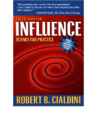
All the weapons of influence discussed in this book work better under some condi- tions than under others. If we are to defend ourselves adequately against any such weapon, it is vital that we know its optimal operating conditions in order to recog- nize when we are most vulnerable to its influence. We have already had a hint of one time when the principle of social proof worked best with the Chicago believers. It was a sense of shaken confidence that triggered their craving for converts. In gen- eral, when we are unsure of ourselves, when the situation is unclear or ambiguous, when uncertainty reigns, we are most likely to look to and accept the actions of oth- ers as correct (Sechrist 8{ Stangor, 2007; Wooten 8{ Reed, 1998; Zitek 8{ Hebl, 2007). Another way that uncertainly develops is through lack of familiarity with a sit- uation. Under such circumstances, people are especially likely to follow the lead of others there
 annaabi.ee