Handbook of Meat Processing Handbook of Meat Processing Fidel ToldráEDITORA John Wiley &
Sons , Inc., Publication
Edition fi rst published 2010
© 2010 Blackwell Publishing
Blackwell Publishing was acquired by John Wiley & Sons in February 2007. Blackwell’s publishing
program has been merged with Wiley’s
global Scientifi c, Technical, and Medical business to form
Wiley-Blackwell.
Editorial Offi ce
2121 State Avenue,
Ames ,
Iowa 50014-8300, USA
For details of our global editorial offi ces, for customer services, and for information about how to
apply for permission to reuse the copyright
material in this book, please see our website at www.wiley.com/
wiley-blackwell.
Authorization to photocopy items for
internal or personal use, or the internal or personal use of specifi c
clients, is granted by Blackwell Publishing,
provided that the
base fee is paid directly to the Copyright
Clearance
Center , 222 Rosewood Drive, Danvers, MA 01923. For those organizations that have been
granted a photocopy license by CCC, a separate system of payments has been arranged. The fee codes
for users of the Transactional Reporting
Service are ISBN-13: 978-0-8138-2182-5/2010.
Designations used by
companies to distinguish their
products are often claimed as trademarks. All brand
names and product names used in this book are trade names, service marks, trademarks or registered
trademarks of their respective owners. The
publisher is not associated with any product or vendor men-
tioned in this book. This publication is
designed to
provide accurate and authoritative information in
regard to the
subject matter covered. It is
sold on the understanding that the publisher is not engaged in
rendering professional services. If professional advice or
other expert assistance is
required , the services
of a competent professional should be sought.
Library of Congress Cataloging-in-Publication DataHandbook of meat processing / edited by Fidel Toldrá.
p. cm.
Includes bibliographical references and index.
ISBN 978-0-8138-2182-5 (hardback : alk.
paper ) 1. Meat—Handbooks, manuals, etc. 2. Meat
industry and trade—Handbooks, manuals, etc. I. Toldrá, Fidel.
TS1960.H36 2010
664′.9—dc22
2009037503
A catalog
record for this book is
available from the U.S. Library of Congress.
Set in 10 on 12 pt
Times by Toppan
Best -set Premedia Limited
Printed in Singapore
Disclaimer
The publisher and the
author make no representations or warranties with
respect to the accuracy or
completeness of the contents of this
work and specifi cally disclaim all warranties,
including without limitation warranties of fi tness for a
particular purpose . No warranty may be created or
extended by sales
or promotional materials. The advice and
strategies contained herein may not be
suitable for every situ-
ation . This work is sold with the understanding that the publisher is not engaged in rendering
legal ,
accounting, or other professional services. If professional assistance is required, the services of a com-
petent professional
person should be sought. Neither the publisher nor the author
shall be liable for
damages arising herefrom. The
fact that an organization or Website is
referred to in this work as a cita-
tion and/or a potential source of
further information does not
mean that the author or the publisher
endorses the information the organization or Website may provide or recommendations it may make.
Further, readers should be
aware that
Internet Websites listed in this work may have changed or disap-
peared
between when this work was written and when it is read.
1 2010
ContentsPreface ixList of Contributors xiAbout the Editor xv PART I. Technologies 3 1. Chemistry and Biochemistry of Meat
5
Elisabeth Huff-Lonergan 2. Technological Quality of Meat for Processing
25
Susan Brewer 3. Meat
Decontamination
43
Panagiotis N. Skandamis, George-John E. Nychas, and John N. Sofos 4. Aging/Tenderization
Mechanisms
87
Brian C. Bowker, Janet S. Eastridge, Ernie W. Paroczay,
Janice A. Callahan, and Morse B. Solomon 5. Freezing/Thawing
105
Christian James and Stephen J. James 6. Curing
125
Karl O. Honikel 7. Emulsifi cation
143
Irene Allais 8. Thermal
Processing
169
Jane Ann Boles 9. Fermentation: Microbiology and Biochemistry
185
Spiros Paramithiotis, Eleftherios H. Drosinos, John N. Sofos, and
George-John E. Nychas10. Starter Cultures for Meat Fermentation
199
Pier Sandro Cocconcelli and Cecilia Fontana 11. Drying
219
Endre Zukál and Kálmán Inczevvi Contents12. Smoking 231
Zdzisław E. Sikorski and Edward Kol´akowski13. Meat
Packaging
247
Maurice G. O’Sullivan and Joseph P. Kerry14. Novel Technologies for Microbial Spoilage
Prevention 263
Oleksandr Tokarskyy and Douglas L. Marshall15. Plant Cleaning and Sanitation
287
Stefania QuintavallaPART II. Products 29916. Cooked
Ham
301
Fidel Toldrá, Leticia Mora, and Mónica Flores 17. Cooked
Sausages
313
Eero Puolanne18. Bacon 327
Peter R. Sheard19. Canned Products and Pâté
337
Isabel Guerrero Legarreta20. Dry-Cured
Ham
351
Fidel Toldrá and M. Concepción Aristoy21. Mold -Ripened
Sausages
363
Kálmán Incze22. Semidry and Dry Fermented Sausages
379
Graciela Vignolo, Cecilia Fontana, and Silvina Fadda23. Restructured
Whole -Tissue
Meats
399
Mustafa M. Farouk24. Functional Meat Products
423
Keizo Arihara and Motoko OhataPART III. Controls 44125. Physical Sensors for Quality
Control during Processing
443
Marta Castro -Giráldez, Pedro José Fito, Fidel Toldrá, and Pedro Fito26. Sensory Evaluation of Meat Products
457
Geoffrey R. Nute27. Detection of Chemical
Hazards 469
Milagro Reig and Fidel Toldrá28. Microbial Hazards in
Foods : Food-Borne Infections and Intoxications
481
Daniel Y. C. Fung Contents vii29. Assessment of Genetically Modifi ed Organisms (GMO) in Meat Products
by PCR
501
Marta Hernández, Alejandro Ferrando, and David Rodríguez-Lázaro30. HACCP :
Hazard Analysis Critical Control Point
519
Maria Jo ã o Fraqueza and António Salvador Barreto31. Quality
Assurance
547
Friedrich-Karl LückeIndex 561 Preface For centuries, meat and its derived products
worldwide meat products
such as cooked
have constituted some of the most
important ham and sausages, bacon, canned products
foods consumed in many countries
around and p â t é , dry - cured ham, mold - ripened sau-
the world. Despite this important
role ,
there sages, semidry and dry fermented sausages,
are few books dealing with meat and its
restructured meats, and functional meat
prod -
processing technologies. This book provides
ucts. The third part
presents effi cient strate-
the reader with an extensive
description of
gies to control the sensory and
safety quality
meat processing, giving the latest advances
of meat and meat products, including physi-
in technologies,
manufacturing processes ,
cal sensors, sensory evaluation, chemical
and tools for the effective control of safety
and microbial hazards, detection of GMOs,
and quality during processing.
HACCP, and quality assurance.
To achieve this goal, the book contains 31
The chapters have been written by distin-
chapters distributed in three parts. The fi rst
guished international experts from fi fteen
part deals with the description of meat
chem -
countries. The editor wishes to thank all the
istry, its quality for further processing,
contributors for their
hard work and for
and the main technologies used in meat
sharing their valuable
experience , as well as
processing, such as decontamination, aging,
to thank the
production team at Wiley
freezing, curing, emulsifi cation, thermal pro-
Blackwell. I also want to
express my appre-
cessing, fermentation, starter cultures, drying,
ciation to Ms. Susan Engelken for her kind
smoking, packaging, novel technologies,
support and coordination of this book.
and cleaning. The second part describes the
manufacture and main
characteristics of
Fidel Toldr á
ix Contributors Irene Allais
Susan Brewer
Cemagref, UMR Genial, Equipe
Automat Food
Science and Human Nutrition,
& Qualite Alimentaire, 24 Av Landais,
University of Illinois, USA.
F - 63172 Aubiere 1,
France .
E - mail:
[email protected] E - mail:
[email protected] Janice A. Callahan
Keizo Arihara
Food
Technology and Safety
Laboratory ,
Department of
Animal Science, Kitasato
Bldg 201, BARC -
East , Beltsville, Maryland
University, Towada - shi, Aomori 034 - 8628,
20705, USA.
Japan .
E - mail:
[email protected] E - mail:
[email protected] - u.ac.jp
Marta Castro - Gir á ldez
M. Concepci ó n Aristoy
Institute of Food
Engineering for
Department of Food Science, Instituto de
Development , Universidad Polit é cnica de
Agroqu í
mica y Tecnolog í a de Alimentos
Valencia , Camino de Vera s/n, 46022
(CSIC), PO Box 73, 46100 Burjassot
Valencia,
Spain .
(Valencia), Spain.
E - mail:
[email protected] Pier Sandro Cocconcelli
Istituto di Microbiologia, Centro Ricerche
Ant ó nio Salvador Barreto
Biotecnologiche, Universit à Cattolica del
Faculdade de Medicina Veterin á ria,
Sacro Cuore, Piacenza - Cremona,
Italy .
DPASA, TULisbon, Av. da Universidade
E - mail:
[email protected] Tecnica, Polo Universit á rio, Alto da Ajuda,
1300 - 477 Lisboa, Portugal.
Eleftherios H. Drosinos
Laboratory of Food Quality Control and
Jane Ann Boles
Hygiene , Department of Food Science and
Animal and Range
Sciences , 119
Technology, Agricultural University of
Linfi eld Hall, Bozeman, Montana
Athens, Iera Odos 75, Votanikos, 11855
59717, USA.
Athens,
Greece .
E - mail:
[email protected] E - mail:
[email protected] Brian C. Bowker
Janet S. Eastridge
Food Technology and Safety Laboratory,
Food Technology and Safety Laboratory,
Bldg 201, BARC - East, Beltsville,
Bldg 201, BARC - East, Beltsville, Maryland
Maryland 20705, USA.
20705, USA.
E - mail:
[email protected] E - mail:
[email protected] xixii Contributors Silvina Fadda
Maria Jo ã o Fraqueza
Centro de Referencia para Lactobacilos
Faculdade de Medicina Veterin á ria,
(CERELA), CONICET., Chacabuco 145,
DPASA, TULisbon, Av. da Universidade
T4000ILC Tucum á n,
Argentina .
Tecnica, Polo Universit á rio, Alto da Ajuda,
E - mail:
[email protected] 1300 - 477 Lisboa, Portugal.
E - mail:
[email protected] Mustafa M. Farouk
AgResearch MIRINZ, Ruakura Research
Daniel Y. C. Fung
Centre , East Street, Private Bag 3123,
Department of Animal Sciences and
Hamilton 3240, New
Zealand .
Industry, 207
Call Hall, Kansas State
E - mail:
[email protected] University, Manhattan, Kansas 66506,
USA.
E - mail:
[email protected] Alejandro Ferrando
Departamento de Bioqu í mica y Biolog í a
Molecular, Facultad de Biolog í a,
Isabel Guerrero Legarreta
Universidad de Valencia, Dr Moliner, 50,
Departamento de Biotecnolog í a,
Burjassot, 46100 Valencia, Spain.
Universidad Aut ó noma, Metropolitana,
Unidad Iztapalapa, San Rafael Atlixco 186,
Del. Iztapalapa, Apartado Postal 55 - 535,
Pedro Fito
C.P. 092340, Mexico City.
Institute of Food Engineering for
E - mail:
[email protected] Development, Universidad Polit é cnica de
Valencia, Camino de Vera s/n, 46022
Valencia, Spain.
Marta Hern á ndez
E - mail: pfi
[email protected] Laboratory of Molecular Biology and
Microbiology, Instituto Tecnol ó gico
Agrario de Castilla y Le ó n (ITACyL), Ctra.
Pedro Jos é Fito
Burgos km.119, Finca Zamadue ñ as, 47071
Institute of Food Engineering for
Valladolid, Spain.
Development, Universidad Polit é cnica de
Valencia, Camino de Vera s/n, 46022
Valencia, Spain.
Karl O. Honikel
E - mail: pjfi
[email protected] Max Rubner - Institut, Arbeitsgruppe
Analytik, Kulmbach,
Germany .
E - mail: karl - otto.honikel@t - online.de
M ó nica Flores
Department of Food Science, Instituto de
Agroqu í mica y Tecnolog í a de Alimentos
Elisabeth Huff - Lonergan
(CSIC), PO Box 73, 46100 Burjassot,
Muscle Biology, Department of Animal
Valencia, Spain.
Science, Iowa State University, 2275 Kildee
E - mail: mfl
[email protected] Hall, Ames, IA 50011 USA. E - mail:
[email protected] Cecilia Fontana
Centro de Referencia para Lactobacilos
K á lm á n Incze
(CERELA), CONICET., Chacabuco 145,
Hungarian Meat Research Institute, 1097
T4000ILC Tucum á n, Argentina.
Budapest, Gubacsi ú t 6/b,
Hungary .
E - mail:
[email protected] E - mail:
[email protected] Contributors xiii Christian James
Douglas L. Marshall
Food Refrigeration and
Process Engineering
College of Natural and Health Sciences,
Research Centre (FRPERC), The Grimsby
University of
Northern Colorado,
Institute of Further and
Higher Campus Box 134, Greeley, Colorado
Education(GIFHE), HSI Building,
Origin 80639 USA.
Way, Europarc, Grimsby,
North East
E - mail:
[email protected] Lincolnshire, DN37 9TZ UK.
E - mail:
[email protected] Leticia Mora
Department of Food Science, Instituto de
Agroqu í mica y Tecnolog í a de Alimentos
Stephen J. James
(CSIC), PO Box 73, 46100 Burjassot
Food Refrigeration and Process Engineering
Valencia, Spain.
Research Centre (FRPERC), The Grimsby
E - mail:
[email protected] Institute of Further and Higher
Education(GIFHE), HSI Building, Origin
Way, Europarc, Grimsby, North East
Geoffrey R. Nute
Lincolnshire, DN37 9TZ UK.
University of
Bristol , School of Clinical
E - mail:
[email protected] Veterinary Science,
Division of
Farm Animal Science, Bristol BS40 5DU, Avon,
England .
Joseph P. Kerry
E - mail:
[email protected] Department of Food and Nutritional
Sciences, University College Cork, Ireland.
George - John E. Nychas
E - mail:
[email protected] Laboratory of Food Microbiology &
Biotechnology, Department of Food
Edward Ko ł akowski
Science & Technology, Agricultural
University of Athens, Iera Odos 75, Athens
Department of Food Science and
11855, Greece.
Technology, Agricultural University of
E - mail:
[email protected] Szczecin, Papie a Paw ł a VI St. 3, 71 - 459
Szczecin, Poland.
E - mail:
[email protected] Motoko Ohata
Department of Animal Science, Kitasato
University, Towada - shi, Aomori 034 - 8628,
Catherine M. Logue
Japan.
Department of Veterinary and
Microbiological Sciences, North Dakota
Maurice G. O ’ Sullivan
State University, 1523 Centennial Blvd,
Department of Food and Nutritional
130A Van Es Hall, Fargo, North Dakota
Sciences, University College Cork, Ireland.
58105, USA.
E - mail:
[email protected] E - mail:
[email protected] Spiros Paramithiotis
Friedrich - Karl L ü cke
Laboratory of Food Quality Control and
Hochschule Fulda (University of Applied
Hygiene, Department of Food Science and
Sciences), P.O. Box 2254, 36012 Fulda,
Technology, Agricultural University of
Germany.
Athens, Iera Odos 75, 11855 Athens,
E - mail: friedrich - karl.luecke@t - online.de
Greece.
xiv Contributors Ernie W. Paroczay
Panagiotis N. Skandamis
Food Technology and Safety Laboratory,
Laboratory of Food Quality Control and
Bldg 201, BARC - East, Beltsville,
Hygiene, Department of Food Science and
Maryland 20705, USA.
Technology, Agricultural University of
E - mail:
[email protected] Athens, Iera Odos 75, Votanikos, 11855
Athens, Greece.
Eero Puolanne
Department of Food Technology, Viikki
John N. Sofos
EE, P.O. Box 66, 00014 Helsinki, Finland.
Colorado State University,
Fort Collins,
E - mail:
[email protected] Colorado 80523, USA.
E - mail:
[email protected] Stefania Quintavalla
Department of Microbiology, SSICA, V.le
Tanara 31/A, 43100, Parma, Italy.
Morse B. Solomon
E - mail address:
[email protected] Food Technology and Safety Laboratory,
Bldg 201, BARC - East, Beltsville, Maryland
Milagro Reig
20705, USA.
Institute of Food Engineering for
E - mail:
[email protected] Development, Universidad Polit é cnica de
Valencia, Camino de Vera s/n, 46022
Oleksandr Tokarskyy
Valencia, Spain.
Department of Food Science, Nutrition, and
E - mail:
[email protected] Health Promotion, Mississippi State
University, Box 9805, Mississippi State
David Rodr í guez - L á zaro
University, Mississippi 39762 USA.
Food Safety and Technology Group,
Instituto Tecnol ó gico Agrario de Castilla y
Fidel Toldr á
Le ó n (ITACyL), Ctra. Burgos km.119,
Department of Food Science, Instituto de
Finca Zamadue ñ as, 47071 Valladolid,
Agroqu í mica y Tecnolog í a de Alimentos
Spain.
(CSIC), PO Box 73, 46100 Burjassot,
E - mail: ita -
[email protected] Valencia, Spain.
E - mail:
[email protected] Peter R. Sheard
Division of Farm Animal Science, School
of Clinical Veterinary Science, University
Graciela Vignolo
of Bristol, Bristol BS40 5DU, Avon, UK.
Centro de Referencia para Lactobacilos
E - mail:
[email protected] (CERELA), CONICET., Chacabuco 145,
T4000ILC Tucum á n, Argentina.
Zdzis ł aw E. Sikorski
E - mail:
[email protected] Department of Food Chemistry, Gda n´ sk
University of Technology
Endre Zuk á l
E - mail:
[email protected] OR
Hungarian Meat Research Institute,
[email protected] Budapest 1097, Gubacsi ú t 6/b, Hungary.
About the Editor Fidel Toldr á , Ph.D., is a research
professor at
years , including
Handbook of Muscle the Department of Food Science, Instituto de
Foods Analysis and
Handbook of Processed Agroqu í mica y Tecnolog í a de Alimentos
Meats and Poultry Analysis (2009),
Meat (CSIC), and serves as European editor of
Biotechnology and
Safety of Meat and Trends in Food Science & Technology , editor
Processed Meat (2008, 2009),
Handbook of in chief of
Current Nutrition & Food Science, Food Product Manufacturing (2007),
and as
section editor of the
Journal of Muscle Advances in Food Diagnostics , and
Handbook Foods . He is also serving on the editorial
of Fermented Meat and Poultry (2007, 2008).
board of the journals
Food Chemistry ,
Meat Professor Toldr á also wrote the book
Dry -Science ,
Open Nutrition Journal ,
Food Cured Meat Products (2002).
Analytical Methods ,
Open Enzyme Inhibition Professor Toldr á was awarded the 2002
Journal and
Journal of Food and Nutrition International Prize for meat science and
tech -
Research . He is a
member of the European
nology by the International Meat Secretariat
Food Safety Authority panel on fl avorings,
and was elected in 2008 as Fellow of the
enzymes, processing aids, and materials in
International Academy of Food Science
&
contact with foods.
Technology (IAFOST) and in 2009 as
Professor Toldr
á
has acted as editor or
Fellow of the Institute of Food Technologists
associate editor of
several books in
recent (IFT).
xvHandbook of Meat ProcessingPart I
Technologies Chapter 1 Chemistry and Biochemistry of Meat Elisabeth Huff - Lonergan
Introduction content is 75% of the
weight of the muscle;
however , can
vary ,
particularly in postmor-
Muscle cells are
among the most
highly orga -
tem muscle (range of 65 – 80%).
Within the
nized cells in the animal
body and
perform a
muscle, it is the
primary component of
extra -
varied
array of
mechanical functions . They
cellular fl uid. Within the muscle cell, water
are required for the movement of limbs,
is the primary component of
sarcoplasmic for locomotion and other gross movements,
(cytoplasmic) fl uid. It is important in
thermo -
and they must also perform fi ner tasks
regulation ; as a
medium for many cellular
such as maintaining
balance and coordina-
processes; and for transport of nutrients
tion. Muscle movement and
metabolism within the cell, between cells, and between
are associated with other diverse functions
the muscle and the vascular system.
such as aiding in movement of
blood and
The second largest component of muscle
lymph and also in maintaining body
tempera -
is
protein (U.S. Department of
Agriculture ture. All of
these functions are
dependent 2008 ). Protein
makes up an
average of 18.5%
on cellular metabolism and the
ability of the
of the weight of the muscle, though that
cell to
maintain energy supplies. Few cells
fi gure can range from 16 to 22%. Proteins
are required to
generate as much
force and
serve myriad functions and are the primary
undergo as dramatic shifts in
rate of metabo-
solid component in muscle. The functions of
lism as muscle cells. The ability of
living proteins are
quite varied. Muscle proteins are
skeletal muscle to undergo relatively large
involved in maintaining the structure and
intracellular
changes also infl uences its
organization of the muscle and muscle cells
response to the drastic alterations that
occur (the role of highly insoluble stromal pro-
during the fi rst few
hours following exsan-
teins). They are also important in the contrac-
guination. Thus the organization, structure,
tile process. These proteins primarily are
and metabolism of the muscle are key to its
associated with the contractile organelles, the
function and to the
maintenance of its
integ -
myofi bril, and are thus termed myofi brillar
rity
both during contraction and during the
proteins. In general, the myofi brillar proteins
early postmortem
period . Ultimately, these
are not
soluble at low ionic strengths
found postmortem changes will infl uence the
suit -
in skeletal muscle (ionic
strength ≤ 0.15), but
ability of meat for further processing.
can be solubilized at higher ionic strengths
( ≥ 0.3). This
class of proteins includes both
the proteins directly involved in movement
Muscle Composition (contractile proteins) and proteins that regu-
The largest constituent of muscle is water
late the interactions between the contractile
(Table 1.1 ; U.S. Department of Agriculture
proteins (regulatory proteins). There are also
2008
). In living tissue, the average water
many soluble proteins (sarcoplasmic pro-
56 Chapter 1 Table 1.1. Composition of Mammalian Muscle
complex lipid found in muscle. In this class
of lipids, one of the hydroxyl groups of glyc-
Component
% of Muscle Weight
erol is esterifi ed to a
phosphate group,
while Water
75% (65 – 80%)
Protein
18.5% (16 – 22%)
the other constituents are fatty acids. The
Lipid
3% (1 – 13%)
fatty acids associated with phospholipids are
Carbohydrate
1% (0.5 – 1.5%)
typically unsaturated. Phospholipids in
skel -
Non - Protein Nitrogenous
1.7% (1 – 2%)
Substances
etal muscle are
commonly associated with
Other Non - Protein
0.85% (0.5 – 1%)
membranes. The relative high
degree of
Substances (minerals,
unsaturation of the fatty acids associated with
vitamins, etc.)
the phospholipids is a contributing
factor to
Numbers in parentheses indicate the average range of
the fl uidity of the cell membranes.
that component. (U.S. Department of Agriculture, 2008 )
Carbohydrates make up a relatively small
percentage of muscle tissue,
making up about
1% of the
total muscle weight (range of 0.5 –
teins) that
include proteins involved in cel-
1.5%). The carbohydrate that makes up the
lular signaling processes and enzymes largest percentage is glycogen. Other carbo-
important in metabolism and protein degra-
hydrates include glucose, intermediates of
dation/cellular remodeling.
glycogen metabolism, and other
mono - and
The lipid content of the muscle can vary
disaccharides. Glycosoaminoglycans are also
greatly due to many factors, including animal
found in muscle and are associated with the
age, nutritional level of the animal, and
connective tissue.
muscle type. It is important to
note that the
There are numerous non - protein nitroge-
lipid content varies inversely with the water
nous compounds in skeletal muscle. They
content (Callow 1948 ). Some lipid is
stored include substances such as creatine and cre-
inside the muscle cell; however, within a
atine phosphate, nucleotides (ATP, ADP),
muscle, the
bulk of the lipid is found between
free amino acids, peptides (anserine, carno-
muscle bundles (groupings of muscle cells).
sine), and other non - protein substances.
Average lipid content of skeletal muscle is
about 3% of the muscle weight, but the range
Muscle Structure can be as much as 1 – 13% (U.S. Department
of Agriculture
2008
). In skeletal muscle,
Skeletal muscle has a very complex organi-
lipid plays roles in energy
storage , membrane
zation, in part to
allow muscle to effi ciently
structure, and in various other processes in
transmit force originating in the myofi brils to
the organ, including immune responses and
the
entire muscle and ultimately, to the limb
cellular recognition pathways.
or structure that is moved. A relatively thick
The two
major types of lipid found in
sheath of connective tissue, the epimysium,
skeletal muscle are triglycerides and phos-
encloses the entire muscle. In most muscles,
pholipids. Triglycerides make up the greatest
the epimysium is
continuous , with tendons
proportion of lipid associated with muscle.
that
link muscles to bones. The muscle is
Triglycerides (triacylglycerides) consist of a
subdivided into bundles or groupings of
glycerol molecule in which the hydroxyl
muscle cells. These bundles (also
known as
groups are esterifi ed with three fatty acids.
fasciculi) are surrounded by
another sheath
The melting point and the iodine number of
of connective tissue, the perimysium. A
thin lipid that is associated with the muscle is
layer of connective tissue, the endomysium,
determined by the
chain length and the degree
surrounds the muscle cells themselves. The
of saturation of the fatty acids. Phospholipids
endomysium
lies above the muscle cell mem-
(phosphoglycerides) are another type of
brane (sarcolemma) and
consists of a base-
Chemistry and Biochemistry of Meat 7ment membrane that is associated with an
basis , they make up
approximately 10 – 12%
outer layer (reticular layer) that is surrounded
of the total weight of
fresh skeletal muscle.
by a layer of fi ne collagen fi brils imbedded
Therefore , they are very important in meat
in a
matrix (Bailey and
Light 1989 ).
chemistry and in determining the functional-
Skeletal muscles are highly diverse, in
ity of meat proteins.
part because of the
diversity of
actions they
Myofi brils are the contractile “ machinery ”
are asked to perform. Much of this diversity
of the cell and, like the cells where they
occurs not only at the gross level, but also at
reside, are very highly organized. When
the muscle cell (fi ber) level.
First , not only
examining a myofi bril, one of the fi rst obser-
do muscles vary in
size , they can also vary
vations that can be made is that the cylindri-
in the number of cells. For example, the
cal organelle is made up of repeating
units .
muscle that is
responsible for adjusting the
These repeating units are known as sarco-
tension of the eardrum (tensor tympani)
meres. Contained in each sarcomere are all
has only a few hundred muscle cells, while
the structural
elements needed to perform the
the medial gastrocnemius (used in
humans physical act of contraction at the molecular
for walking) has over a million muscle cells
level. Current proteomic analysis estimates
(Feinstein et al.
1955
). Not only does the
that over 65 proteins make up the structure
number of cells infl uence muscle function
of the sarcomere (Fraterman et al.
2007
).
and ultimately, meat quality, but also the
Given that the sarcomere is the most
basic structure of the muscle cells themselves
unit of the cell and that the number quoted in
has a profound
effect on the function of
this analysis did not take into
account the
living muscle and on the functionality of
multiple isoforms of the proteins, this number
meat.
is quite high. Many of the proteins interact
Muscle cells are striated, meaning that
with each other in a highly coordinated
when viewed under a polarized light micro-
fashion, and some of the interactions are just
scope,
distinct banding patterns or striations
now being discovered.
are
observed . This appearance is due to spe-
The structure of the sarcomere is respon-
cialized organelles, myofi
brils, found in
sible for the striated appearance of the muscle
muscle cells. The myofi brils have a striated,
cell. The striations arise from the alternating,
or banded, appearance because
different protein dense A - bands and less dense I - bands
regions have different refractive properties.
within the myofi bril. Bisecting the I - bands
The light bands have a consistent index of
are
dark lines known as Z - lines. The structure
refraction (isotropic). Therefore, these bands
between two Z - lines is the sarcomere. In a
are called I - bands in
reference to this isotro-
relaxed muscle cell, the distance between
pic property. The dark
band appears dark
two Z - lines (and thus the length of the sarco-
because it is anisotropic and is thus called the
mere) is approximately 2.2
μ m. A
single A - band.
myofi bril is made up of a large number of
The myofi brils are abundant in skeletal
sarcomeres in series. The length of the myo-
muscle cells, making up nearly 80 – 90% of
fi bril and also the muscle cell is dependent
the
volume of the cell. Myofi brillar proteins
on the number of sarcomeres. For example,
are relatively insoluble at physiological ionic
the semitendinosus, a long muscle, has been
strength, requiring an ionic strength
greater estimated to have somewhere in the neigh-
than 0.3 to be extracted from muscle. For this
borhood of 5.8 × 10 4 to 6.6 × 10 4 sarcomeres
reason , they are often referred to as “
salt -
per muscle fi ber, while the soleus has been
soluble ” proteins. Myofi brillar proteins make
estimated to have approximately 1.4 × 10 4
up approximately 50 – 60% of the total extract-
(Wickiewicz et al.
1983
). Adjacent myofi -
able muscle proteins. On a whole muscle
brils are attached to each other at the Z - line
8 Chapter 1by proteinacious fi laments, known as
inter -
each) and two sets of light chains (14,000 –
mediate fi laments. Outermost myofi brils are
20,000 daltons). One of the light chains is
attached to the cell membrane (sarcolemma)
required for enzymatic
activity , and the other
by
intermediate fi laments that interact not
has regulatory functions.
only with the Z - line, but also with
structures Actin is the second - most abundant protein
at the sarcolemma known as costameres
in the myofi bril, accounting for approxi-
(Robson et al. 2004 ).
mately 20% of the total protein in the myo-
Myofi brils are made up of many myofi la-
fi bril. Actin is a globular protein (G - actin)
ments, of which there are two major types,
that polymerizes to form fi laments (F - actin).
classifi ed as thick and thin fi laments. There
G - actin has a molecular weight of approxi-
is also a third fi lament system composed pri-
mately 42,000. There are approximately
marily of the protein titin (
Wang et al. 1979 ;
400 actin molecules per thin fi lament. Thus
Wang
1984
; Wang et al.
1984
; Wang and
the molecular weight of each thin fi lament
Wright 1988 ; Wang et al. 1991 ; Ma et al.
is approximately 1.7
× 10 7 (Squire 1981 ).
2006 ;). With respect to contraction and rigor
The thin fi laments (F
-
actin polymers) are
development in postmortem muscle, it is the
1 μ
m in length and are anchored in the
interdigitating thick and thin fi laments that
Z - line.
supply the “ machinery ” needed for these pro-
Two other proteins that are important in
cesses and give skeletal muscle cells their
muscle contraction and are associated with
characteristic appearance (Squire
1981
).
the thin fi lament are tropomyosin and tropo-
Within the myofi bril, the less dense I - band is
nin. Tropomyosin is the second - most abun-
made up primarily of thin fi laments, while
dant protein in the thin fi lament and makes
the A - band is made up of thick fi laments and
up about 7% of the total myofi brillar protein.
some overlapping thin fi laments (Goll et al.
Tropomyosin is made up of two polypeptide
1984 ). The backbone of the thin fi laments is
chains (
alpha and
beta ) The alpha chain has
made up primarily of the protein actin, while
an approximate molecular weight of 34,000,
the largest component of the thick fi lament is
and the beta chain has a molecular weight of
the protein myosin. Together, these two pro-
approximately 36,000. These two chains
teins make up nearly 70% of the proteins in
interact with each other to form a helix. The
the myofi bril of the skeletal muscle cell.
native tropomyosin molecule interacts with
Myosin is the most abundant myofi brillar
the troponin molecule to regulate contrac-
protein in skeletal muscle, making up approx-
tion. Native troponin is a complex that con-
imately 50% of the total protein in this organ-
sists of three subunits. These are termed
elle. Myosin is a negatively charged protein
troponin I (MW 23,000), troponin C (MW
with an isoelectric point of 5.3. Myosin is
18,000), and troponin T (MW 37,000).
a large protein (approximately 500,000
Troponin C has the ability to bind
calcium daltons) that contains six polypeptides.
released from the sarcoplasmic reticulum,
Myosin consists of an alpha helical
tail (or
troponin I can inhibit the interaction between
rod)
region that
forms the backbone of the
actin and myosin, and troponin T binds very
thick fi lament and a globular head region that
strongly to tropomyosin. The cooperative
extends from the thick fi lament and interacts
action of troponin and tropomyosin in
with actin in the thin fi lament. The head
response to calcium
increases in the sarco-
region of myosin also has ATPase activity,
plasm regulates the interaction between actin
which is important in the regulation of con-
and myosin and thus is a major regulator of
traction . Each myosin molecule contains two
contraction. Calcium that is released from the
heavy chains (approximately 220,000 daltons
sarcoplasmic reticulum is
bound to the tropo-
Chemistry and Biochemistry of Meat 9nin complex and the resulting conformational
Central to the existence of the muscle cell
changes within troponin
cause tropomyosin
is the production of adenosine triphosphate
to
move away from
sites on actin to which
(ATP), the energy
currency of the cell. ATP
myosin binds and allows myosin and actin to
consists of adenosine (an adenine ring and a
interact.
ribose
sugar ) and three phosphate groups (tri-
For contraction to occur, the thick and thin
phosphate). Cleavage of the bonds between
fi laments interact via the head region of
the phosphates (P i ) and the
rest of the
mole -
myosin. The complex
formed by the interac-
cule provides energy for many cellular
func -
tion of myosin and actin is often referred
tions, including muscle contraction and the
to as actomyosin. In
electron micrograph
control of the
concentrations of key ions (like
images of contracted muscle or of postrigor
calcium) in the muscle cell. Cleavage of P i
muscle, the actomyosin looks very much like
from ATP produces adenosine diphosphate
cross - bridges between the thick and thin fi la-
(ADP), and cleavage of pyorphosphate (PP i )
ments; indeed, it is often referred to as such.
from ATP produces adenosine monophos-
In postmortem muscle, these bonds are irre-
phate (AMP).
Since the availability of ATP
versible and are also known as rigor bonds,
is central to
survival of the cell, there is a
as they are the genesis of the stiffness (rigor)
highly coordinated effort by the cell to main-
that develops in postmortem muscle. The
tain its production in both living tissue and
globular head of myosin also has enzymatic
in the very early postmortem period.
activity; it can hydrolyze ATP and liberate
Muscular activity is dependent on ample
energy. In living muscle during contraction,
supplies of ATP within the muscle. Since it
the ATPase activity of myosin provides
is so vital, muscle cells have
developed energy for myosin bound to actin to swivel
several
ways of producing/regenerating ATP.
and ultimately
pull the thin fi laments
toward Muscle can use energy precursors stored in
the center of the sarcomere. This produces
the muscle cell, such as glycogen, lipids, and
contraction by shortening the myofi bril, the
phosphagens (phosphocreatine, ATP), and it
muscle cell, and eventually, the muscle. The
can use energy
sources recruited from the
myosin and actin can disassociate when a
blood stream (blood glucose and circulating
new molecule of ATP is bound to the myosin
lipids). Which of these reserves (intracellular
head (Goll et al. 1984 ). In postrigor muscle,
or circulating) the muscle cell uses depends
the supply of ATP is depleted, resulting in
on the activity the muscle is undergoing.
the actomyosin bonds becoming essentially
When the activity is of
lower intensity, the
permanent.
muscle will utilize a higher proportion of
energy sources from the blood stream and
lipid stored in the muscle cell. These will be
Muscle Metabolism metabolized to produce ATP using aerobic
From a metabolic point of view, energy use
pathways. Obviously, ample
oxygen is
and production in skeletal muscle is simply
required for this process to proceed. During
nothing short of amazing in its range and
high intensity activity, during which ATP is
responsiveness. In an actively exercising
used very rapidly, the muscle uses intracel-
animal, muscle can account for as much as
lular stores of phosphagens or glycogen.
90% of the oxygen
consumption in the body.
These two sources, however, are utilized
This can
represent an
increase in the mus-
very quickly and their depletion leads to
cle ’ s metabolic rate of as much as 200% from
fatigue. This is not a trivial point.
the resting state (Hargreaves and
Thompson Concentration of ATP in skeletal muscle is
1999 ).
critical; available ATP must
remain above
10 Chapter 1approximately 30% of the resting stores, or
with ATP (100 mmol/kg dry muscle weight
relaxation cannot occur. This is because
for phosphocreatine compared with 25 mmol/
relaxation of contraction is dependent on
kg dry muscle weight for ATP) but very low
ATP, which is especially important because
abundance compared with glycogen (500
removal of calcium from the sarcoplasm is
mmol/kg dry muscle weight for glycogen).
an ATP - dependent process (Hargreaves and
Phosphocreatine can easily
transfer a phos-
Thompson 1999 ).
phate group to ADP in a reaction catalyzed
The primary fuels for muscle cells include
by creatine kinase. This reaction is easily
phosphocreatine, glycogen, glucose
lactate ,
reversible and phosphocreatine supplies
free fatty acids, and triglycerides. Glucose
can be readily restored when ATP
demand and glycogen are the
preferred substrates for
is low. In living muscle, when activity is
muscle metabolism and can be utilized either
intense , this system can be advantageous, as
aerobically (oxidative phosphorylation) or
it consumes H
+
and thus can
reduce the
anaerobically (anaearobic glycolysis). Lipid
muscle cell acidosis that is associated with
and lactate utilization
require oxygen. Lipids
anaerobic glycolysis. Another
advantage of
are a very energy - dense storage system and
the system is that the catalyzing enzyme is
are very effi cient with respect to the high
located very
close to the actomyosin ATPase
amount of ATP that can be generated per unit
and also at the sarcoplasmic reticulum (where
of substrate. However, the rate of synthesis
calcium is actively taken up from the sarco-
of ATP is much slower than when glycogen
plasm to regulate contraction) and at the sar-
is used (1.5 mmol/kg/sec for free fatty acids
colemma. However, this system is not a
compared with 3 mmol/kg/sec for glycogen
major contributor to postmortem metabo-
utilized aerobically and 5 mmol/kg/sec when
lism, as the supplies are depleted fairly
glycogen is used in anaerobic glycolysis)
rapidly.
(Joanisse 2004 ).
In general, glycogen is the preferred
Aerobic metabolism, the most effi cient
substrate for the generation of ATP, either
energy system,
requires oxygen to operate,
through the oxidative phosphorylation or
and that oxygen is supplied by the blood
through anaerobic glycolysis (Fig. 1.1 ). One
supply to the muscle and by the oxygen trans-
of the key steps in the fate of glycogen is
porter, myoglobin. It has been estimated that
whether or not an intermediate to the process,
in
working muscle, the myoglobin is some-
pyruvate, enters the mitochondria to be
where in the neighborhood of 50%
saturated .
completely broken down to CO
2
and H
2 O
Under
conditions of
extreme hypoxia (as
(yielding 38 mol of ATP per mole of oxidized
found in postmortem muscle), oxygen sup-
glucose - 1 - P produced from glycogen or
plies are depleted because blood fl ow is not
36
mol if the initial substrate is glucose),
suffi cient (or does not
exist ), and myoglobin
or if it ends in lactate via the anaerobic gly-
oxygen reserves are depleted if this state con-
colysis pathway. The anaerobic pathway,
tinues long enough.
Prior to exsanguination,
while comparatively less effi cient (yielding
the oxidation of glycogen or other substrates
3 mol of ATP per mole of glucose - 1 - P pro-
to form water and
carbon dioxide via oxida-
duced from glycogen or 2 mol if the initial
tive phosphorylation is a very effi cient way
substrate is glucose), is much better at pro-
for the cell to regenerate ATP. However,
ducing ATP at a higher rate. Early postmor-
after exsanguination, the muscle cell must
tem muscle obviously uses the anaerobic
turn solely to anaerobic pathways for energy
pathway, as oxygen supplies are rapidly
production.
depleted. This
results in the buildup of the
Phosphocreatine in living, rested muscle
end product, lactate (
lactic acid), resulting in
is available in moderate abundance compared
pH decline.
Chemistry and Biochemistry of Meat 11 Figure 1.1. ATP production in muscle.
Major Postmortem Changes to be between 2 and 2.5 μ M in length. In stri-
in Muscle ated muscle, titin thus spans fully half of a
sarcomere, with its C - terminal end localizing
Tenderization in the M - line at the center of the sarcomere
During refrigerated storage, it is well known
and the N - terminal
forming an integral part
that meat becomes more
tender . It is com-
of the Z - line. Titin aids in maintaining sarco-
monly accepted that the product becomes
meric alignment of the myofi bril during con-
more tender because of proteolytic changes
traction. Titin integrates the Z - line and the
occurring in the architecture of the myofi bril
thick fi laments, maintaining the
location of
and its associated proteins. There are several
the thick fi laments between the Z - lines. Titin
key proteins that are degraded during post-
is also hypothesized to play a role in generat-
mortem aging.
ing at
least a portion of the passive tension
that is
present in skeletal muscle cells. During
development of the myofi bril, titin is one of
Titin the earliest proteins expressed, and it is
Titin (aka connectin) is a megaprotein that is
thought to act as a “ molecular ruler ” by pro-
approximately 3 megadaltons in size. In
viding a scaffolding or template for the
addition to being the largest protein found in
developing myofi bril (
Clark et al. 2002 ).
mammalian tissues, it is also the third - most
Due to the aforementioned roles of titin
abundant. A single titin molecule is estimated
in living cells, it is quite conceivable that
12 Chapter 1its degradation in postmortem muscle would
extends from the Z - line to the pointed ends
lead to weakening of the longitudinal struc-
of the thin fi lament. The C - terminal end of
ture of the myofi brillar sarcomere and integ-
nebulin is embedded into the Z - line. Nebulin
rity of muscle. This weakening, in conjunction
is highly nonextensible and has been referred
with other changes in postmortem muscle,
to as a molecular ruler that during
develop -
could lead to enhanced tenderness. The deg-
ment may serve to
defi ne the length of the
radation of titin has been observed in several
thin fi laments (Kruger et al. 1991 ). Nebulin,
studies (Lusby et al. 1983 ; Zeece et al. 1986 ;
via its intimate
association with the thin fi la-
Astier et al. 1993 ; Huff - Lonergan et al. 1995 ;
ment (Lukoyanova et al.
2002
), has been
Melody et al. 2004 ; Rowe et al. 2004a, b ).
hypothesized to constitute part of a compos-
When titin is degraded, a major degradation
ite nebulin/thin fi lament (Pfuhl et al. 1994 ;
product, termed T 2, is observed that migrates
Robson et al. 1995 ) and may aid in anchoring
only
slightly faster under SDS - PAGE con-
the thin fi lament to the Z
-
line (Wang and
ditions than
intact titin. This product migrates
Wright
1988
; Komiyama et al.
1992
).
at approximately 2,400
kDa (Kurzban and
Degradation of nebulin postmortem could
Wang
1988, 1987
; Huff
-
Lonergan et al.
weaken the thin fi lament linkages at the
1995
). Another titin degradation product
Z
-
line, and/or of the thin fi laments in the
that has been observed by SDS - PAGE an -
nearby I - band regions (Taylor et al. 1995 ),
alysis migrates at approximately 1,200 kDa
and thereby weaken the structure of the
(Matsuura et al. 1991 ; Huff - Lonergan et al.
muscle cell. Nebulin has also been shown to
1995
). This
latter polypeptide has been
be capable of linking actin and myosin (Root
shown to
contain the portion of titin that
and Wang 1994a, b ). It has been hypothe-
extends from the Z - line to
near the N 2 line
sized that nebulin may also have a regulatory
in the I - band (Kimura et al. 1992 ),
although function in skeletal muscle contraction (Root
the exact
position that the 1200 kDa polypep-
and Wang
1994a, b
; Bang et al.
2006
).
tide reaches in the sarcomere is
still not
Portions of nebulin that span the A - I
junction certain. The 1,200 - kDa polypeptide has been
have the ability to bind to actin, myosin, and
documented to appear earlier postmortem in
calmodulin (Root and Wang
2001
). More
myofi brils from
aged beef that had lower
interesting, this portion of nebulin (spanning
shear force (and more desirable tenderness
the A - I junction) has been shown to inhibit
scores) than in samples from product that had
actomyosin ATPase activity (Root and Wang,
higher shear force and/or less favorable ten-
2001 ; Lukoyanova et al. 2002 ). This region
derness scores (Huff - Lonergan et al. 1995,
of nebulin also has been suggested to inhibit
1996a, b ). The T2 polypeptide can also be
the sliding velocities of actin fi laments over
subsequently degraded or altered during
myosin. If the latter role is confi rmed, then it
normal postmortem aging. Studies that have
is also possible that nebulin
’
s postmortem
used antibodies against titin have been shown
degradation may
alter actin - myosin interac-
to cease to recognize T2 after prolonged
tions in such a way that the alignment and
periods of postmortem storage or μ - calpain
interactions of thick and thin fi laments in
digestion (Ho et al.
1994
; Huff
-
Lonergan
postmortem muscle is disrupted. This, too,
et al. 1996a )
could lead to an increase in postmortem ten-
derization. Nebulin degradation does
seem to
be correlated to postmortem tenderization,
Nebulin although the exact cause - and - effect relation-
Nebulin is another mega - protein (Mr 600 –
ship remains to be substantiated (Huff
900
kDa) in the sarcomere. This protein
Lonergan et al.
1995
; Taylor et al.
1995
;
Chemistry and Biochemistry of Meat 13Huff
-
Lonergan et al.
1996a
; Melody et al.
related to the shear force (Penny 1976 ; Huff -
2004 ).
Lonergan et al. 1996b ; Huff - Lonergan and
Lonergan, 1999 ; Lonergan et al. 2001 ; Rowe
et al. 2003 ; Rowe et al. 2004a ). Troponin - T
Troponin - T is a substrate for μ - calpain, and it is hypoth-
For many years it has been recognized that
esized that μ - calpain is at least
partly respon-
the degradation of troponin - T and the appear-
sible for the postmortem degradation of
ance of polypeptides migrating at approxi-
troponin - T and the concomitant production
mately 30
kDa are strongly related to, or
of the 28
-
and 30
-
kDa polypeptides.
correlated with, the tenderness of beef (Penny
Degradation of troponin - T may simply be an
et al.
1974
; MacBride and Parrish
1977
;
indicator of
overall postmortem proteolysis
Olson and Parrish 1977 ; Olson et al. 1977 ).
(i.e., it occurs as meat becomes more tender).
It has been shown that purifi ed
bovine tropo-
However, because troponin - T is an integral
nin - T can be degraded by μ - calpain in
vitro part of skeletal muscle thin fi laments (Greaser
to produce polypeptides in the 30 - kDa region
and Gergely
1971 ), its role in postmortem
(Olson et al. 1977 ). In addition, polypeptides
tenderization may warrant more careful
in the 30 - kDa region found in aged bovine
examination as has been suggested (Ho et al.
muscle specifi cally have been shown to be
1994 ; Uytterhaegen et al. 1994 ; Taylor et al.
products of troponin
-
T by using
Western 1995 ; Huff - Lonergan et al. 1996b ). Indeed,
blotting techniques (Ho et al. 1994 ). Often,
the troponin - T subunit makes up the
elon -
more than one
fragment of troponin - T can be
gated portion of the troponin molecule and
identifi ed in postmortem muscle. Increasing
through its interaction with tropomyosin aids
postmortem time has been shown to be
asso -
in regulating the thin fi lament during skeletal
ciated with the appearance of two major
muscle contraction (Greaser and Gergely
bands (each is likely a closely spaced doublet
1971 ; Hitchcock 1975 ; McKay et al. 1997 ;
of polypeptides) of approximately 30 and
Lehman et al. 2001 ). It is conceivable that
28 kDa, which label with monoclonal anti-
postmortem degradation of troponin
-
T and
bodies to troponin - T (Huff - Lonergan et al.
disruption of its interactions with other thin
1996a ). In addition, the increasing postmor-
fi lament proteins aids in the disruption of the
tem aging time was also associated with a
thin fi laments in the I - band, possibly
leading loss of troponin - T, as has been
reported in
to fragmentation of the myofi bril and overall
numerous studies (Olson et al.
1977
; muscle integrity. During postmortem aging,
Koohmaraie et al. 1984a, b ; Ho et al. 1994 ).
the myofi brils in postmortem bovine muscle
It has recently been shown that troponin - T is
are broken in the I - band region (Taylor et al.
cleaved in its glutamic acid -
rich amino - ter-
1995 ). Because troponin - T is part of the reg-
minal region (Muroya et al.
2007
). Some
ulatory complex that mediates actin - myosin
studies have shown labeling of two very
interactions (Greaser and Gergely,
1971
;
closely spaced bands corresponding to intact
Hitchcock, 1975 ; McKay et al. 1997 ; Lehman
troponin - T. This is likely due to isoforms of
et al.
2001
), it is also conceivable that its
troponin - T that are known to exist in skeletal
postmortem degradation may lead to changes
muscle (Briggs et al. 1990 ; Malhotra 1994 ;
involving thick and thin fi lament interac-
Muroya et al. 2007 ), including specifi cally
tions. Regardless of whether or not troponin-
bovine skeletal muscle (Muroya et al. 2007 ).
- T aids in disruption of the thin fi lament in
Both the appearance of the 30 - and 28 - kDa
the I
-
band, alters thick and thin fi lament
bands and the disappearance of the intact
interactions, or simply refl ects overall protein
troponin - T in the myofi bril are very strongly
degradation, its degradation and appearance
14 Chapter 1of polypeptides in the 30 - kDa region seem to
myofi
brils (Huff
-
Lonergan et al.
1996a
;
be a valuable indicator of beef tenderness
Huff - Lonergan and Lonergan, 1999 ; Carlin
(Olson et al. 1977 ; Olson and Parrish, 1977 ;
et al.
2006
). Thus, the proteolytic enzyme
Koohmaraie et al.
1984a, b
; Koohmaraie
μ - calpain may be, at least in part, responsible
1992 ; Huff - Lonergan et al. 1995 ; Huff -
for desmin degradation under normal post-
Lonergan et al. 1996a ; Huff - Lonergan and
mortem aging conditions. Whether or not this
Lonergan 1999 ).
degradation is truly directly
linked to tender-
ization or is simply an indicator of overall
postmortem proteolysis remains to be
Desmin determined.
It has been suggested that desmin, an inter-
mediate fi lament protein (O ’
Shea et al. 1979 ;
Filamin Robson 1989 ) localized at the periphery of
the myofi brillar Z
-
disk in skeletal muscle
Filamin is a large (
M r = 245,000 in skeletal
(Richardson et al. 1981 ), plays a role in the
and cardiac muscle) actin
- binding protein
development of tenderness (Taylor et al.
that exists in numerous cell types (Loo et al.
1995 ; Huff - Lonergan et al. 1996a ; Boehm et
1998 ; Thompson et al. 2000 ; van der Flier et
al. 1998 ; Melody et al. 2004 ). The desmin
al.
2002
). There are several different iso-
intermediate fi laments surround the Z - lines
forms of fi lamin (Hock et al.
1990
). The
of myofi brils. They connect adjacent myofi -
amount of fi lamin in skeletal and cardiac
brils at the level of their Z
-
lines, and the
muscle is very low (approximately ≤ 0.1% of
myofi brils to other cellular structures, includ-
the total muscle protein). In skeletal and
ing the sarcolemma (Robson, 1989 ; Robson
cardiac muscle, fi lamin is localized at the
et al.
1995
). Desmin may be important in
periphery of the myofi brillar Z - disk, and it
maintaining the structural integrity of muscle
may be associated with intermediate fi la-
cells (Robson et al. 1981, 1991 ). It is possible
ments in these regions (Loo et al.
1998
;
that degradation of structural elements that
Thompson et al. 2000 ; van der Flier et al.
connect the major
components (i.e., the myo-
2002
). Thus, postmortem degradation of
fi brils) of a muscle cell together, as well as
fi lamin conceivably could disrupt key link-
the peripheral layer of myofi brils to the cell
ages that serve to help
hold myofi brils in
membrane, could
affect the development of
lateral register. Degradation of fi lamin may
tenderness. Desmin is degraded during post-
also alter linkages connecting the peripheral
mortem storage (Hwan and Bandman 1989 ;
layer of myofi brils in muscle cells to the sar-
Huff - Lonergan et al. 1996a ; Huff - Lonergan
colemma by weakening interactions between
and Lonergan,
1999
; Melody et al.
2004
;
peripheral myofi brillar Z - disks and the sarco-
Rowe et al.
2004b
;
Zhang et al.
2006
).
lemma via intermediate fi lament associations
Furthermore , it has been documented that
or costameres (Robson et al. 1995 ). A
study desmin is degraded more rapidly in myofi -
using myofi brils from beef showed that some
brils from samples with low shear force
fi lamin was degraded to form an approxi-
and higher water
-
holding capacity (Huff
mately 240
-
kDa degradation product that
Lonergan et al. 1996a ; Huff - Lonergan and
migrated as a doublet in both myofi brils from
Lonergan, 1999 ; Melody et al. 2004 ; Rowe
naturally aged muscle and in
μ - calpain -
et al.
2004b
; Zhang et al.
2006
). A major
digested myofi brils (Huff
-
Lonergan et al.
degradation product that is often
seen in beef
1996a ). This
same doublet
formation (com-
is a polypeptide of approximately 38
kDa.
posed of intact and degraded fi lamin) has
This degradation product also has been
been seen in cultured embryonic skeletal
shown to be present in
μ - calpain - digested
muscle cells and was attributed to calpain
Chemistry and Biochemistry of Meat 15activity (Robson et al. 1995 ). Uytterhaegen
the total water in muscle cells; depending on
et al. (1994) have shown increased degrada-
the measurement system used, approximately
tion of fi lamin in muscle samples
injected 0.5
g of water per
gram of protein is
esti -
with CaCl 2 , a process that has been shown to
mated to be tightly bound to proteins. Since
stimulate proteolysis and postmortem tender-
the total concentration of protein in muscle
ization (Wheeler et al.
1992
;
Harris et al.
is approximately 200 mg/g, this bound water
2001 ). Compared with other skeletal muscle
only makes up less than a tenth of the total
proteins, relatively
little has been
done to
water in muscle. The amount of bound water
fully characterize the role of this protein in
changes very little if at all in postrigor muscle
postmortem tenderization of beef. Further
(
Offer and
Knight 1988b ).
studies that
employ a combination of sen-
Another fraction of water that can be
sitive detection methods (e.g., one
-
and
found in muscles and in meat is termed
two - dimensional
gels,
Western
blotting,
entrapped (also referred to as immobilized)
immunomicroscopy) are needed to determine
water (Fennema 1985 ). The water molecules
the role of fi lamin in skeletal muscle systems
in this fraction may be
held either by steric
and postmortem tenderization.
(
space )
effects and/or by attraction to the
bound water. This water is held within the
structure of the muscle but is not bound per
se to protein. In early postmortem tissue, this
Water - Holding Capacity/ Drip water does not fl ow freely from the tissue, yet
Loss Evolution it can be removed by drying and can be easily
Lean muscle contains approximately 75%
converted to ice during freezing. Entrapped
water. The other main components include
or immobilized water is most
affected by the
protein (approximately 18.5%), lipids or fat
rigor process and the conversion of muscle
(approximately 3%), carbohydrates (approxi-
to meat.
Upon alteration of muscle cell struc-
mately 1%), and vitamins and minerals (often
ture and lowering of the pH, this water can
analyzed as ash, approximately 1%). The
also eventually escape as purge (Offer and
majority of water in muscle is held within the
Knight 1988b ).
structure of the muscle and muscle cells.
Free water is water whose fl ow from the
Specifi cally, within the muscle cell, water is
tissue is unimpeded.
Weak surface forces
found within the myofi brils, between the
mainly hold this fraction of water in meat.
myofi brils themselves and between the myo-
Free water is not readily seen in pre - rigor
fi brils and the cell membrane (sarcolemma),
meat, but can develop as conditions
change between muscle cells, and between muscle
that allow the entrapped water to move from
bundles (groups of muscle cells) (Offer and
the structures where it is found (Fennema
Cousins 1992 ).
1985 ).
Water is a dipolar molecule and as such is
The majority of the water that is affected
attracted to charged
species like proteins. In
by the process of converting muscle to meat
fact, some of the water in muscle cells is very
is the entrapped (immobilized) water.
closely bound to protein. By defi nition,
Maintaining as much of this water as possible
bound water is water that exists in the vicin-
in meat is the goal of many processors. Some
ity of nonaqueous constituents (like proteins)
of the factors that can infl uence the
retention and has reduced mobility (i.e., does not easily
of entrapped water include manipulation of
move to other compartments). This water is
the net
charge of myofi brillar proteins and
very resistant to freezing and to being driven
the structure of the muscle cell and its com-
off by conventional heating (Fennema 1985 ).
ponents (myofi brils, cytoskeletal linkages,
True bound water is a very small fraction of
and membrane permeability), as well as the
16 Chapter 1amount of extracellular space within the
relaxation (Millman et al.
1981
; Millman
muscle itself.
et al. 1983 ). This would indicate that in living
muscle the amount of water within the fi la-
mentous structure of the cell would not nec-
Physical/Biochemical Factors essarily change. However, the location of this
in Muscles That Affect water can be affected by changes in volume
Water - Holding Capacity as muscle undergoes rigor. As muscle goes
During the conversion of muscle to meat,
into rigor, cross
-
bridges form between the
anaerobic glycolysis is the primary source of
thick and thin fi laments, thus reducing avail-
ATP production. As a
result , lactic acid
able space for water to reside (Offer and
builds up in the tissue, leading to a
reduction Trinick 1983 ). It has been shown that as the
in pH of the meat.
Once the pH has reached
pH of porcine muscle is reduced from physi-
the isoelectric point (pI) of the major pro-
ological
values to 5.2 – 5.6 (near the isoelec-
teins, especially myosin (pI = 5.3), the net
tric point of myosin), the distance between
charge of the protein is
zero , meaning the
the thick fi laments declines an average of
numbers of
positive and
negative charges
2.5 nm (Diesbourg et al. 1988 ). This decline
on the proteins are essentially equal. These
in fi lament spacing may force sarcoplasmic
positive and negative groups within the
fl uid from between the myofi laments to the
protein are attracted to each other and result
extramyofi brillar space. Indeed, it has been
in a reduction in the amount of water that can
hypothesized that enough fl uid may be
lost be attracted and held by that protein.
from the intramyofi brillar space to increase
Additionally, since like charges repel, as the
the extramyofi brillar volume by as much as
net charge of the proteins that make up the
1.6 times more than its pre
-
rigor volume
myofi bril approaches zero (diminished net
(Bendall and Swatland 1988 ).
negative or positive charge), repulsion of
During the development of rigor, the
structures within the myofi bril is reduced,
diameter of muscle cells decreases (Hegarty
allowing those structures to
pack more
1970
; Swatland and Belfry
1985
) and is
closely together. The end result of this is a
likely the result of transmittal of the lateral
reduction of space within the myofi bril.
shrinkage of the myofi brils to the entire cell
Partial denaturation of the myosin head at
(Diesbourg et al. 1988 ). Additionally, during
low pH (especially if the temperature is still
rigor development, sarcomeres can shorten;
high) is also thought to be responsible for a
this also reduces the space available for water
large part of the shrinkage in myofi brillar
within the myofi bril. In fact, it has been
lattice spacing (Offer 1991 ).
shown that drip loss can increase linearly
Myofi brils make up a large proportion of
with a
decrease in the length of the sarco-
the muscle cell. These organelles constitute
meres in muscle cells (Honikel et al. 1986 ).
as much as 80
–
90% of the volume of the
More recently, highly
sensitive low
-
fi eld
muscle cell. As mentioned previously, much
nuclear magnetic resonance (NMR) studies
of the water inside living muscle cells is
have been used to
gain a more
complete located within the myofi bril. In fact, it is esti-
understanding of the
relationship between
mated that as much as 85% of the water in a
muscle cell structure and water distribution
muscle cell is held in the myofi brils. Much
(Bertram et al.
2002
). These studies have
of that water is held by capillary forces
suggested that within the myofi bril, a higher
arising from the arrangement of the thick and
proportion of water is held in the I - band than
thin fi laments within the myofi bril. In living
in the more protein - dense A - band. This
muscle, it has been shown that sarcomeres
observation may help
explain why shorter
remain isovolumetric during contraction and
sarcomeres (especially in
cold -
shortened
Chemistry and Biochemistry of Meat 17muscle) are often associated with increased
associated with intermediate fi lament struc-
drip
losses . As the myofi bril shortens and
tures and structures known as costameres.
rigor sets in, the shortening of the sarcomere
Costameres provide the structural framework
would lead to shortening and subsequent
responsible for attaching the myofi brils to the
lowering of the volume of the I - band region
sarcolemma. Proteins that make up or are
in myofi bril. Loss of volume in this myofi -
associated with the intermediate fi laments
brillar region (where much water may reside),
and costameres include (among
others )
combined with the pH - induced lateral shrink-
desmin, fi lamin, synemin, dystrophin, talin,
age of the myofi bril, could lead to expulsion
and vinculin (Greaser 1991 ). If costameric
of water from the myofi brillar structure
linkages remain intact during the conversion
into the extramyofi brillar spaces within the
of muscle to meat, shrinkage of the myofi -
muscle cell (Bendall and Swatland 1988 ). In
brils as the muscle goes into rigor would be
fact, recent NMR studies support this hypoth-
transmitted to the entire cell via these pro-
esis (Bertram et al. 2002 ). It is thus likely that
teinacious linkages and would ultimately
the gradual mobilization of water from the
reduce volume of the muscle cell itself (Offer
intramyofi brillar spaces to the extramyofi -
and Knight 1988b ; Kristensen and Purslow
brillar spaces may be key in providing a
2001 ; Melody et al. 2004 ). Thus, the rigor
source of drip.
process could result in mobilization of water
All the previously mentioned processes
not only out of the myofi bril, but also out of
infl uence the amount of water in the myofi -
the extramyofi bril spaces as the overall
bril. It is important to note that shrinkage of
volume of the cell is constricted. In fact,
the myofi brillar lattice
alone could not be
reduction in the diameter of muscle cells has
responsible for the movement of fl uid to the
been observed in postmortem muscle (Offer
extracellular space and ultimately out of the
and Cousins 1992 ). This water that is expelled
muscle. The myofi brils are linked to each
from the myofi bril and ultimately the muscle
other and to the cell membrane via proteina-
cell eventually collects in the extracellular
cious connections (Wang and Ramirez
space. Several studies have shown that gaps
Mitchell
1983
). These connections, if they
develop between muscle cells and between
are maintained intact in postmortem muscle,
muscle bundles during the postrigor period
would transfer the reduction in diameter of
(Offer et al. 1989 ; Offer and Cousins 1992 ).
the myofi brils to the muscle cell (Diesbourg
These gaps between muscle bundles are
et al. 1988 ; Morrison et al. 1998 ; Kristensen
the primary channels by which purge is
and Purslow
2001
; Melody et al.
2004
).
allowed to fl ow from the meat; some
inves -
Myofi bril shrinkage can be translated into
tigators have actually termed
them “
drip
constriction of the entire muscle cell, thus
channels. ”
creating channels between cells and between
bundles of cells that can funnel drip out
Postmortem Changes in Muscle of the product (Offer and Knight
1988
).
That Infl uence Quality Extracellular space around muscle fi
bers con-
tinually increases up to 24 hours postmortem,
As muscle is converted to meat, many
but gaps between muscle fi ber bundles
changes occur, including: (1) a gradual deple-
decrease slightly between
nine and 24 hours
tion of available energy; (2) a
shift from
postmortem, perhaps due to fl uid outfl ow
aerobic to anaerobic metabolism favoring the
from these major channels (Schafer et al.
production of lactic acid, resulting in the pH
2002 ). These linkages between adjacent
of the tissue declining from near neutrality to
myofi brils and myofi brils and the cell mem-
5.4 – 5.8; (3) a
rise in ionic strength, in part,
brane are made up of several proteins that are
because of the inability of ATP
-
dependent
18 Chapter 1calcium,
sodium , and
potassium pumps to
that is involved in increasing the tenderness
function; and (4) an increasing inability of
of fresh meat and in infl uencing fresh meat
the cell to maintain reducing conditions. All
water - holding capacity (Huff - Lonergan and
these changes can have a profound effect on
Lonergan
2005
). Because
μ - calpain and
numerous proteins in the muscle cell. The
m
-
calpain enzymes contain both histidine
role of energy depletion and pH change have
and SH - containing cysteine residues at their
been covered in this chapter and in other
active sites, they are particularly susceptible
reviews (Offer and Trinick 1983 ; Offer and
to inactivation by oxidation (Lametsch et al.
Knight 1988a ). What has not been as thor-
2008
). Therefore, oxidizing conditions in
oughly
considered is the impact of other
postmortem muscle lead to inactivation or
changes on muscle proteins, such as oxida-
modifi cation of calpain activity (Harris et al.
tion and nitration.
2001 ; Rowe et al. 2004a, b ; Maddock et al.
2006 ). In fact,
evidence suggests oxidizing
conditions inhibit proteolysis by μ - calpain,
Protein Oxidation but might not completely inhibit autolysis
Another change that occurs in postmortem
(Guttmann et al. 1997 ; Guttmann and
Johnson muscle during aging of whole muscle prod-
1998 ; Maddock et al. 2006 ). In postmortem
ucts is increased oxidation of myofi brillar
muscle, there are
differences between
and sarcoplasmic proteins (Martinaud et al.
muscles in the rate that postmortem oxidation
1997 ; Rowe et al. 2004a, b ). This results in
processes occur (Martinaud et al. 1997 ). It
the conversion of some amino acid residues,
has been noted that differences in the rate of
including histidine, to carbonyl derivatives
oxidation in muscle tissue are seen when
(Levine et al. 1994 ; Martinaud et al. 1997 )
comparing the same muscles between
animals and can cause the formation of
intra - and/or
and/or carcasses that have been handled dif-
inter - protein disulfi de cross - links (Stadtman
ferently (Juncher et al. 2001 ). These
differ -
1990 ; Martinaud et al. 1997 ). In general, both
ences may arise because of differences in
these changes reduce the functionality of pro-
diet , breed, antemortem
stress , postmortem
teins in postmortem muscle (Xiong and
handling of carcasses, etc. In fact, there have
Decker
1995
). In living muscle, the redox
been reports of differences between animals
state of muscle can infl uence carbohydrate
and between muscles in the activity of some
metabolism by directly affecting enzymes in
enzymes involved in the oxidative defense
the glycolytic pathway. Oxidizing
agents can
system of muscle (Daun et al.
2001
).
also infl uence glucose transport.
Hydrogen Therefore, there may be genetic differences
peroxide (H 2 O 2 ) can mimic insulin and
stim -
in susceptibility to oxidation that could be
ulate glucose transport in exercising muscle.
capitalized on to
improve meat quality. It is
H 2 O 2 is increased after exercise, and thus oxi-
reasonable to hypothesize that differences in
dation systems may play a role in signaling
the antioxidant defense system between
in skeletal muscle (Balon and Yerneni 2001 ).
animals and/or muscles would infl uence
Alterations in glucose metabolism in the
calpain activity, proteolysis, and thus
ante - and perimortem time period do have the
tenderization.
potential to cause changes in postmortem
Exposure to oxidizing conditions (H 2 O 2 )
muscle metabolism and thus represent an
under postmortem
-
like conditions inhibits
important avenue of future research.
calpain activity (Carlin et al.
2006
). In a
In postmortem muscle, these redox series of in vitro assays using either a fl uo-
systems may also play a role in infl uencing
rescent peptide or purifi ed myofi brils as the
meat quality. The proteolytic enzymes, the
substrate it was shown that the presence of
calpains, are implicated in the proteolysis
oxidizing species does signifi cantly impede
Chemistry and Biochemistry of Meat 19the ability of calpains to degrade their sub-
(NOS). There are three major isoforms of
strates. Oxidation with H
2 O 2
signifi cantly
NOS: neural, inducible, and endothelial.
limits proteolytic activity of μ - and m - calpain
Skeletal muscle expresses all three isoforms;
against the fl uorescent peptide Suc - Leu -
however, the neural form, nNOS, is thought
Leu - Val - Tyr - AMC, regardless of the pH or
to be the predominant isoform (Kaminski and
ionic strength.
Similar results were seen
Andrade 2001 ). These enzymes utilize argi-
when using purifi ed myofi brils as the sub-
nine as a substrate and catalyze the following
strate. This inhibition was reversible, as
reaction: L - arginine+NADPH+O 2 forming
addition of reducing
agent (DTT) to the oxi-
L - citrulline+ • NO+NADPH + . NO is important
dized samples restored activity. Oxidation
in
biological systems, particularly because of
also has been shown to
slow the rate of μ -
its role as a second messenger. However,
calpain autolysis and could be part of the
while NO rapidly diffuses through tissues,
mechanism underlying some of the retarda-
NO itself is a relatively short - lived species.
tion of activity (Guttmann et al. 1997 ; Carlin
It does have the ability to combine with other
et al. 2006 ).
biomolecules that also have physiological
Oxidation does occur early in postmortem
importance .
meat, and it does infl uence proteolysis (Harris
One example of this is its ability to
et al. 2001 ; Rowe et al. 2004b ). Rowe et al.
combine with superoxide to form the highly
(2004) showed that there was a signifi
cant oxidizing molecule peroxynitrite. Proteins
increase in proteolysis of troponin - T in steaks
are important biological targets of peroxyni-
from alpha - tocopherol - fed steers after 2
days trite, particularly proteins containing cyste-
of postmortem aging compared with steers
ine, motioning, and/or tryptophan (Radi et al.
fed a conventional feedlot diet. This indicates
2000
). Several enzymes are known to be
that very low levels of oxidation can infl u-
inactivated by peroxynitrite. Among these is
ence proteolysis and that increasing the level
the sarcoplasmic reticulum Ca
2+ - ATPase
of antioxidants in meat may have merit in
(Klebl et al.
1998
). One
indirect effect of
improving tenderness in future studies. In
NO is S
-
nitrosylation. In most
cases , S
-
fact, low levels of oxidation may be the cause
nitrosylation
events involve amines and
of some heretofore - unexplained variations in
thiols. Nitric oxide can interact with cyste-
proteolysis and tenderness that have been
ines to form nitrosothiols that can alter the
observed in meat.
activity of the protein. Because of this, it
has been suggested that S - nitrosylation may
function as a post - translational modifi cation
Nitric Oxide and S - Nitrosylation much like phosphorylation (Jaffrey et al.
Nitric oxide (NO) is often used as a general
2001 ). Some proteins, such as the ryanodine
term that includes NO and reactive nitrogen
receptor and the cysteine protease caspase -
species (RNS), like S
-
nitrosothyols, per-
3, have been shown to be endogenously
oxynitrate, and
metal NO complexes. In
nitrosylated, further supporting the sugges-
living tissue, NO is involved in arteriole dila-
tion that formation of nitrosothiols may be
tion that increases blood fl ow to muscles,
an important regulatory
step (Hess et al.
resulting in increased delivery of nutrients
2001 ; Hess et al. 2005
). μ - Calpain is also
and oxygen to the muscle (Kobzik et al.
a cysteine protease that could be infl uenced
1994 ; Stamler et al. 2001 ). NO species are
by S
-
nitrosylation. Small thiol peptides
also implicated in glucose homeostasis and
like glutathione can be impacted by
nitro -
excitation - contraction coupling. The gas NO
sative stress to form compounds like
is produced in biological systems by a family
S - nitrosoglutathione (GSNO). These com-
of enzymes known as nitric oxide synthases
pounds can, in turn, infl uence other proteins
20 Chapter 1 Bang , M. - L. , X. Li , R. Littlefi eld , S. Bremner , A. Thor ,
by transnitrosating other reduced thiols
K. U. Knowlton , R. L. Lieber , and J.
Chen . 2006 .
(Miranda et al. 2000 ).
Nebulin - defi cient
mice exhibit shorter thin fi lament
Aspects of skeletal muscle function that
lengths and reduced contractile function in skeletal
muscle .
Journal of Cell Biology 173 : 905 – 916 .
can be affected by increased NO production
Bendall , J. R. , and H. J. Swatland . 1988 . A review of the
include inhibition of excitation
-
contraction
relationships of ph with physical aspects of
pork coupling, increased glucose uptake, decreased
quality .
Meat Science 24 : 85 – 126 .
Bertram , H. C. , P. P. Purslow , and H. J. Andersen . 2002 .
mitochondrial respiration, and decreased
Relationship between meat structure, water moblity,
force production. The decrease in force is
and distribution: A low - fi eld nuclear magnetic reso-
apparently because of an inhibitory effect
nance study
.
Journal of Agricultural and Food Chemistry 50 : 824 – 829 .
that NO has on actomyosin ATPase activity,
Boehm , M. L. , T. L. Kendall , V. F. Thompson , and D.
which leads to less cross
-
bridge cycling.
E. Goll . 1998 . Changes in the calpains and calpastatin
S
-
nitroslyation of the ryanodine receptor
during postmortem storage of bovine muscle .
Journal
of Animal Science 76 : 2415 – 2434 .
(calcium
release channel in the sarcoplasmic
Briggs , M. M. , H. D. Mcginnis , and F. Schachat . 1990 .
reticulum) may also play a role on modulat-
Transitions from fetal to
fast troponin - t isoforms are
ing contraction. This protein is responsible
coordinated with changes in tropomyosin and alpha -
actinin isoforms in developing rabbit skeletal - muscle .
for releasing calcium from the sarcoplasmic
Developmental Biology 140 : 253 – 260 .
reticulum into the sarcoplasm. S - nitrosylation
Callow , E. H. 1948 .
Comparative studies of meat. II.
of a cysteine in the ryanodine receptor will
Changes in the carcass during
growth and fattening
and their relation to the chemical composition of the
increase its activity. This effect is reversible
fatty and muscular tissues
.
Journal of Agricultural (Kobzik et al. 1994 ). Because muscle con-
Science 38 : 174 .
tains all the compounds needed to form these
Carlin , K. R. , E. Huff - Lonergan , L. J. Rowe , and S. M.
Lonergan
.
2006
.
Effect of oxidation, ph, and ionic
intermediates, it stands to reason that they
strength on calpastatin inhibition of μ - and m - calpain .
could be important in the conversion of
Journal of Animal Science 84 : 925 – 937 .
muscle to meat.
Clark , K. A. , A. S. McElhinny , M. C. Beckerle , and C.
C. Gregorio . 2002 . Striated muscle cytoarchitecture:
It is
clear that the composition, structure,
An intricate web of form and function .
Annual Review and metabolic properties of skeletal muscle
of Cell and Developmental Biology 18 : 637 – 706 .
have enormous impacts on the quality of
Daun , C. , M. Johansson , G. Onning , and B. Akesson .
2001
.
Glutathione peroxidase activity, tissue and
fresh meat and, in turn, its suitability as a
soluble selenium content in beef and pork in relation
raw material for further processed meat.
to meat ageing and pig rn phenotype .
Food Chemistry Continued
attention to factors that regulate
73 : 313 – 319 .
Diesbourg , L. , H. J. Swatland , and B. M. Millman . 1988 .
changes in early postmortem muscle will
X - ray - diffraction
measurements
of
postmortem
improve the quality and consistency of fresh
changes in the myofi lament lattice of pork .
Journal of meat. This, in turn, will improve the consis-
Animal Science 66 : 1048 – 1054 .
Feinstein , B. , B. Lindegard , E. Nyman , and G. Wohlfart .
tency of the quality of further processed
1955 . Morphologic studies of motor units in normal
products.
human muscles .
Acta Anatomica 23 : 127 – 142 .
Fennema , O. R. 1985 . Water and ice . In
Food Chemistry ,
O. R. Fennema (ed.). New
York : Marcel Dekker .
References Fraterman , S. , U. Zeiger , T. S. Khurana , M. Wilm , and
N. A. Rubinstein . 2007 . Quantitative proteomics pro-
Astier , C. , J. P. Labbe , C. Roustan , and Y. Benyamin .
fi
ling of sarcomere associated proteins in limb and
1993 . Effects of different enzymatic treatments on the
extraocular muscle allotypes
.
Molecular Cell release of titin fragments from rabbit skeletal myofi -
Proteomics 6 : 728 – 737 .
brils — Purifi cation of an 800
kda titin polypeptide
.
Goll , D. E. , R. M. Robson , and M. H. Stromer . 1984 .
Biochemical Journal 290 : 731 – 734 .
Skeletal muscle, nervous system, temperature
regula -
Bailey , A. J. , and N. D. Light . 1989 .
Connective Tissue tion, and
special senses
. In
Duke ’ s Physiology of in Meat and Meat Products . Barking, UK : Elsevier
Domestic Animals , M. J. Swensen (ed.), pp. 548 – 580 .
Applied Science .
Ithaca, N.Y .: Cornell University Press .
Balon , T. W. , and K. K. Yerneni . 2001 . Redox regula-
Greaser , M. L. 1991 . An overview of the muscle
tion of skeletal muscle glucose transport .
Medicine cell cytoskeleton
.
Reciprocal Meats Conference and Science in Sports and Exercise 33 : 382 – 385 .
Proceedings 1 – 5.
Chemistry and Biochemistry of Meat 21 Greaser , M. L. , and J. Gergely . 1971 . Reconstitution of
comparisons of purifi ed myofi brils and whole muscle
troponin activity from three protein components
.
preparations for evaluating titin and nebulin in post-
Journal of Biological Chemistry 246 : 4226 – 4233 .
mortem bovine muscle
.
Journal of Animal Science Guttmann , R. P. , J. S. Elce , P. D. Bell , J. C. Isbell , and
74 : 779 – 785 .
G. V. Johnson . 1997 . Oxidation inhibits substrate pro-
Huff - Lonergan , E. , F. C. Parrish , and R. M. Robson .
teolysis by calpain i but not autolysis
.
Journal of 1995 . Effects of postmortem aging time, animal age,
Biological Chemistry 272 : 2005 – 2012 .
and sex on degradation of titin and nebulin in bovine
Guttmann , R. P. , and G. V. Johnson . 1998 . Oxidative
longissimus muscle
.
Journal of Animal Science stress inhibits calpain activity in situ
.
Journal of 73 : 1064 – 1073 .
Biological Chemistry 273 : 13331 – 13338 .
Hwan , S. F. , and E. Bandman . 1989 . Studies of desmin
Hargreaves , M. , and M. Thompson (eds). 1999 .
and alpha - actinin degradation in bovine semitendino-
Biochemistry of Exercise , vol. 10 . Champaign, Ill. :
sus muscle .
Journal of Food Science 54 : 1426 – 1430 .
Human Kinetics .
Jaffrey , S. R. , H. Erdjument - Bromage , C. D. Ferris , P.
Harris , S. E. , E. Huff - Lonergan , S. M. Lonergan , W. R.
Tempst , and S. H. Snyder . 2001 . Protein s - nitrosyl-
Jones , and D. Rankins . 2001 . Antioxidant
status ation: A physiological signal for neuronal nitric oxide .
affects
color stability and tenderness of calcium
chlo -
Nat Cell Biol 3 : 193 – 197 .
ride - injected
beef .
Journal of Animal Science Joanisse , D. R. 2004 . Skeletal muscle metabolism and
79 : 666 – 677 .
plasticity . In
Functional Metabolism, Regulation and Hegarty , P. V. 1970 . Differences in fi bre size of histo-
Adaptation , K. B. Storey (ed.), pp. 295 – 318 . Hoboken,
logically processed pre - and postrigor mouse skeletal
N.J. : Wiley - Liss .
muscle .
Life Sciences 9 : 443 – 449 .
Juncher , D. , B. Ronn , E. T. Mortensen , P. Henckel , A.
Hess , D. T. , A. Matsumoto , S. O. Kim , H. E. Marshall ,
Karlsson , L. H. Skibsted , and G. Bertelsen . 2001 .
and J. S. Stamler . 2005 . Protein s - nitrosylation:
Effect of pre
-
slaughter physiological conditions on
Purview and parameters
.
Nat Rev Mol Cell Biol the oxidative stability of
colour and lipid during
chill 6 : 150 – 166 .
storage of pork .
Meat Science 58 : 347 – 357 .
Hess , D. T. , A. Matsumoto , R. Nudelman , and J. S.
Kaminski , H. J. , and F. H. Andrade . 2001 . Nitric oxide:
Stamler . 2001 . S - nitrosylation: Spectrum and specifi c-
Biologic effects on muscle and role in muscle dis-
ity .
Nat Cell Biol 3 : E46 – E49 .
eases .
Neuromuscul Disord 11 : 517 – 524 .
Hitchcock ,
S.
E.
1975 .
Regulation
of
muscle
Kimura , S. et al. 1992 . Characterization and localization
contraction:Bindings of troponin and its components
of alpha
- connectin (titin - 1) — an elastic protein iso-
to actin and tropomyosin
.
European Journal of lated from rabbit skeletal - muscle .
Journal of Muscle Biochemistry 52 : 255 .
Research and Cell Motility 13 : 39 – 47 .
Ho , C. Y. , M. H. Stromer , and R. M. Robson . 1994 .
Klebl , B. M. , A. T. Ayoub , and D. Pette . 1998 . Protein
Identifi cation of the 30 - kda polypeptide in post - mor-
oxidation, tyrosine nitration, and inactivation of sar-
tem skeletal - muscle as a degradation product of tro-
coplasmic reticulum ca2+
-
atpase in low
-
frequency ponin - t .
Biochimie 76 : 369 – 375 .
stimulated rabbit muscle
.
FEBS Letters Hock , R. S. , G. Davis , and D. W. Speicher . 1990 .
422 : 381 – 384 .
Purifi cation of human smooth muscle fi lamin and
Kobzik , L. , M. B. Reid , D. S. Bredt , and J. S. Stamler .
characterization of structural domains and functional
1994
.
Nitric oxide in skeletal muscle
.
Nature sites .
Biochemistry 29 : 9441 – 9451 .
372 : 546 – 548 .
Honikel , K. O. , C. J. Kim , R.
Hamm , and P. Roncales .
Komiyama , M. , Z. H. Zhou , K. Maruyama , and Y.
1986 . Sarcomere shortening of prerigor muscles and
Shimada . 1992 . Spatial relationship of nebulin
rela -
its infl uence on drip loss .
Meat Science 16 : 267 – 282 .
tive to other myofi brillar proteins during myogenesis
Huff - Lonergan , E. , and S. M. Lonergan . 1999 .
in embryonic
chick skeletal
- muscle cells - invitro .
Postmortem mechanisms of meat tenderization: The
Journal of Muscle Research and Cell Motility roles of the structural proteins and the calpain system .
13 : 48 – 54 .
In
Quality Attributes of Muscle Foods , Y. L. Xiong ,
Koohmaraie , M. 1992 . The role of ca - 2+ - dependent pro-
C. - T. Ho , and F. Shahidi (eds.), pp. 229 – 251 . New
teases (calpains) in postmortem proteolysis and meat
York : Kluwer Academic/Plenum Publishers .
tenderness .
Biochimie 74 : 239 – 245 .
Huff - Lonergan , E. , and S. M. Lonergan . 2005 .
Koohmaraie , M. , W. H. Kennick , A. F. Anglemier , E.
Mechanisms of water - holding capacity of meat: The
A. Elgasim , and T. K. Jones . 1984a . Effect of post-
role of postmortem biochemical and structural
mortem storage on cold
-
shortened bovine muscle:
changes .
Meat Science 71 : 194 – 204 .
Analysis by sds - polyacrylamide gel electrophoresis .
Huff - Lonergan , E. , T. Mitsuhashi , D. D. Beekman , F. C.
Journal of Food Science 49 : 290 – 291 .
Parrish , D. G. Olson , and R. M. Robson . 1996a .
Koohmaraie , M. , W. H. Kennick , E. A. Elgasim , and A.
Proteolysis of specifi c muscle structural proteins by
F. Anglemier . 1984b . Effects of postmortem storage
mu - calpain at low ph and temperature is similar to
on muscle protein degradation: Analysis by sds -
poly -
degradation in postmortem bovine muscle .
Journal of acrylamide gel electrophoresis
.
Journal of Food Animal Science 74 : 993 – 1008 .
Science 49 : 292 – 293 .
Huff - Lonergan , E. , T. Mitsuhashi , F. C. Parrish , and R.
Kristensen , L. , and P. P. Purslow . 2001 . The effect of
M. Robson . 1996b . Sodium dodecyl sulfate - poly-
ageing on the water - holding capacity of pork: Role of
acrylamide gel electrophoresis and western blotting
cytoskeletal proteins .
Meat Science 58 : 17 – 23 .
22 Chapter 1 Kruger , M. , J. Wright , and K. Wang . 1991 . Nebulin as
dative processes on myofi brillar proteins from beef
a length regulator of thin fi laments of vertebrate skel-
during maturation and by different model oxidation
etal muscles: Correlation of thin fi lament length,
systems .
Journal of Agricultural and Food Chemistry nebulin size, and epitope profi le .
Journal of Cell 45 : 2481 – 2487 .
Biology 115 : 97 .
Matsuura , T. , S. Kimura , S. Ohtsuka , and K. Maruyama .
Kurzban , G. P. , and K. Wang . 1987 . Titin — subunit
1991
.
Isolation and characterization of 1,200
-
kda
molecular - weight by hydrodynamic characterization
peptide of alpha - connectin .
Journal of Biochemistry in
guanidine - hydrochloride .
Biophysical Journal 110 : 474 – 478 .
51 : A323 – A323 .
McKay , R. T. , B. P. Tripet , R. S. Hodges , and B. D.
Kurzban , G. P. , and K. Wang . 1988 . Giant polypeptides
Sykes . 1997 . Interaction of the second binding region
of skeletal
- muscle titin — sedimentation equilibrium
of troponin i with the regulatory domain of skeletal
in
guanidine - hydrochloride .
Biochemical and muscle troponin c as determined by nmr spectroscopy .
Biophysical Research Communications 150 : 1155 –
Journal of Biological Chemistry 272 : 28494 .
1161 .
Melody , J. L. , S. M. Lonergan , L. J. Rowe , T. W. Huiatt ,
Lametsch , R. , S. Lonergan , and E. Huff - Lonergan . 2008 .
M. S. Mayes , and E. Huff - Lonergan . 2004 . Early post-
Disulfi de
bond within μ - calpain active site inhibits
mortem biochemical factors infl uence tenderness and
activity and autolysis .
Biochimica et Biophysica Acta water
-
holding capacity of three porcine muscles
.
(BBA) — Proteins & Proteomics . In press, corrected
Journal of Animal Science 82 : 1195 – 1205 .
proof.
Millman , B. M. , T. J. Racey , and I. Matsubara . 1981 .
Lehman , W. , M. Rosol , L. S. Tobacman , and R. Craig .
Effects of hyperosmotic
solutions on the fi lament
2001 . Troponin organization on relaxed and activated
lattice of intact frog skeletal muscle
.
Biophysical thin fi laments revealed by electron microscopy and
Journal 33 : 189 – 202 .
three - dimensional
reconstruction .
Journal of Millman , B. M. , K. Wakabayashi , and T. J. Racey . 1983 .
Molecular Biology 307 : 739 .
Lateral forces in the fi lament lattice of vertebrate stri-
Levine , R. L. , J. A. Williams , E. R. Stadtman , and E.
ated muscle in the rigor state .
Biophysical Journal Shacter . 1994 . Carbonyl assays for determination of
41 : 259 – 267 .
oxidatively modifi ed proteins .
Methods in Enzymology Miranda , K. et al. 2000 . The chemical biology of nitric
233 : 346 – 357 .
oxide . In
Nitric Oxide: Biology and Pathobiology , L.
Lonergan , S. M. , E. Huff - Lonergan , B. R. Wiegand , and
Ignarro (ed.), pp. 41 – 56 . San Diego, Calif. : Academic
L. A. Kriese -
Anderson . 2001 . Postmortem proteolysis
Press .
and tenderization of top
loin steaks from brangus
Morrison , E. H. , M. M. Mielche , and P. P. Purslow .
cattle .
Journal of Muscle Foods 12 : 121 – 136 .
1998
.
Immunolocalisation of intermediate fi lament
Loo , D. T. , S. B. Kanner , and A. Aruffo . 1998 . Filamin
proteins in porcine meat. Fibre type and muscle - spe-
binds to the cytoplasmic domain of the beta1 - integrin .
cifi c variations during conditioning
.
Meat Science Journal of Biological Chemistry 273 : 23304 .
50 : 91 – 104 .
Lukoyanova , N. , M. S. VanLoock , A. Orlova , V. E.
Muroya , S. , M. Ohnishi - Kameyama , M. Oe , I. Nakajima ,
Galkin , K. Wang , and E. H. Egelman . 2002 . Each
and K. Chikuni . 2007 . Postmortem changes in bovine
actin subunit has three nebulin binding sites .
Current troponin - t isoforms on two - dimensional electropho-
Biology 12 : 383 .
retic gel analyzed using mass spectrometry and
Lusby , M. L. , J. F. Ridpath , F. C. Parrish , and R. M.
western blotting: The limited fragmentation into basic
Robson . 1983 . Effect of postmortem storage on deg-
poly peptides .
Meat Science 75 : 506 – 514 .
radation of the myofi brillar protein titin in bovine
Offer , G. 1991 . Modeling of the formation of
pale ,
soft longissimus muscle
.
Journal of Food Science and exudative meat — effects of chilling regime and
48 : 1787 – 1790 .
rate and extent of glycolysis
.
Meat Science Ma , K. , J. G. Forbes , G. Gutierrez - Cruz , and K. Wang .
30 : 157 – 184 .
2006 . Titin as a giant scaffold for integrating stress
Offer , G. , and T. Cousins . 1992 . The mechanism of drip
and src homology domain 3 - mediated signaling
path -
production — formation of 2 compartments of extra-
ways — the clustering of novel overlap ligand motifs
cellular - space in muscle postmortem .
Journal of the in the elastic pevk segment
.
Journal of Biological Science of Food and Agriculture 58 : 107 – 116 .
Chemistry 281 : 27539 – 27556 .
Offer , G. , and P. Knight . 1988a . The structural basis of
MacBride , M. A. , and F. C. Parrish . 1977 . 30,000 - dalton
water - holding capacity in meat. Part 1: General prin-
component of tender bovine longissimus muscle
.
ciples and water uptake in meat processing
. In
Journal of Food Science 42 : 1627 – 1629 .
Developments in Meat Science , No. 4, R. Lawrie
Maddock , K. R. , E. Huff - Lonergan , L. J. Rowe , and S.
(ed.), pp. 63 – 171 . New York : Elsevier Applied
M. Lonergan . 2006 . Effect of oxidation, ph, and ionic
Science .
strength on calpastatin inhibition of μ - and m - calpain .
Offer , G. , and P. Knight . 1988b . The structural basis of
Journal of Animal Science 84 : 925 – 937 .
water - holding capacity in meat. Part 2: Drip losses . In
Malhotra , A. 1994 . Role of regulatory proteins (tropo-
Developments in Meat Science , No. 4, R. Lawrie
nin
-
tropomyosin) in pathological
states .
Molecular (ed.), pp. 173 – 243 . London, UK : Elsevier Science
and Cellular Biochemistry 135 : 43 – 50 .
Publications .
Martinaud , A. , Y. Mercier , P. Marinova , C. Tassy , P.
Offer , G. , P. Knight , R. Jeacocke , R. Almond , T.
Gatellier , and M. Renerre . 1997 .
Comparison of oxi-
Cousins , J. Elsey , N. Parsons , A. Sharp , R. Starr , and
Chemistry and Biochemistry of Meat 23 P. Purslow . 1989 . The structural basis of the water -
Root , D. D. , and K. Wang . 1994a . Calmodulin - sensitive
holding, appearance and toughness of meat and meat -
interaction of human nebulin fragments with actin and
products .
Food Microstructure 8 : 151 – 170 .
myosin .
Biochemistry 33 : 12581 – 12591 .
Offer , G. , and J. Trinick . 1983 . On the mechanism of
Root , D. D. , and K. Wang . 1994b . Nebulin - calmodulin
water holding in meat: The swelling and shrinking of
as a new calcium regulatory system on the thin fi la-
myofi brils .
Meat Science 8 : 245 – 281 .
ment of skeletal
- muscle .
Biophysical Journal Olson , D. G. , and F. C. Parrish . 1977 . Relationship of
66 : A123 – A123 .
myofi bril fragmentation index to
measures of beef-
Root , D. D. , and K. Wang . 2001 . High - affi nity actin -
steak tenderness
.
Journal of Food Science binding nebulin fragments infl
uence the actos1
42 : 506 – 509 .
complex .
Biochemistry 40 : 1171 – 1186 .
Olson , D. G. , F. C. Parrish , W. R. Dayton , and D. E.
Rowe , L. J. , K. R. Maddock , S. M. Lonergan , and E.
Goll . 1977 . Effect of postmortem storage and calcium
Huff - Lonergan . 2004a . Infl uence of early postmortem
activated factor on myofi brillar proteins of bovine
protein oxidation on beef quality .
Journal of Animal skeletal - muscle .
Journal of Food Science 42 : 117 –
Science 82 : 785 – 793 .
124 .
Rowe , L. J. , K. R. Maddock , S. M. Lonergan , and E.
O ’ Shea , J. M. , R. M. Robson , T. W. Huiatt , M. K.
Huff - Lonergan .
2004b .
Oxidative
environments
Hartzer , and M. H. Stromer . 1979 . Purifi ed desmin
decrease tenderization of beef steaks through inactiva-
from adult mammalian skeletal muscle: A peptide
tion of calpain
.
Journal of Animal Science mapping comparison with desmins from adult mam-
82 : 3254 – 3266 .
malian and avian smooth muscle .
Biochemical and Rowe , L. J. , K. R. Maddock , A. Trenkle , S. M. Lonergan ,
Biophysical Research Communications 89 : 972 – 980 .
and E. Huff - Lonergan . 2003 . Effects of oxidation on
Penny , I. F. 1976 . Effect of conditioning on myofi brillar
beef tenderness and calpain activity
.
Journal of proteins of pork muscle .
Journal of the Science of Animal Science 81 : 74 .
Food and Agriculture 27 : 1147 – 1155 .
Schafer , A. , K. Rosenvold , P. P. Purslow , H. J. Andersen ,
Penny , I. F. , C. A. Voyle , and E. Dransfi eld . 1974 .
and P. Henckel . 2002 . Physiological and structural
Tenderizing effect of a muscle proteinase on beef
.
events postmortem of importance for drip loss in pork .
Journal of the Science of Food and Agriculture Meat Science 61 : 355 – 366 .
25 : 703 – 708 .
Squire , J. 1981 .
The Structural Basis of Muscular Pfuhl , M. , S. J. Winder , and A. Pastore . 1994 . Nebulin,
Contraction . New York : Plenum Press .
a helical actin binding protein
.
EMBO Journal Stadtman , E. R. 1990 . Metal ion - catalyzed oxidation of
13 : 1782 .
proteins — biochemical - mechanism
and
biological
Radi , R. , A. Denicola , B. Alvarez , G. Ferrer - Sueta , and
consequences .
Free Radical Biology and Medicine H. Rubbo . 2000 . The biological chemistry of per-
9 : 315 – 325 .
oxynitrite . In
Nitric Oxide: Biology and Pathobiology ,
Stamler , J. S. , S. Lamas , and F. C. Fang . 2001 .
L. Ignarro (ed.), pp. 57 – 82 . San Diego, Calif. :
Nitrosylation:The prototypic redox -
based signaling
Academic Press .
mechanism .
Cell 106 : 675 – 683 .
Richardson , F. L. , M. H. Stromer , T. W. Huiatt , and
Swatland , H. J. , and S. Belfry . 1985 . Post - mortem
R. M. Robson . 1981 . Immunoelectron and fl uores-
changes in the
shape and size of myofi brils from
cence microscope localization of desmin in mature
skeletal - muscle of pigs .
Mikroskopie 42 : 26 – 34 .
avian muscles .
Eur. J. Cell Biol. 26 : 91 .
Taylor , R. G. , G. H. Geesink , V. F. Thompson , M.
Robson , R. M. 1989 . Intermediate fi laments .
Current Koohmaraie , and D. E. Goll . 1995 . Is z - disk degrada-
Opinion in Cell Biology 1 : 36 – 43 .
tion responsible for postmortem tenderization?
Robson , R. M. , T. W. Huiatt , and F. C. Parrish , Jr . 1991 .
Journal of Animal Science 73 : 1351 – 1367 .
Biochemical and structural properties of titin, nebulin
Thompson , T. G. , Y. M.
Chan , A. A.
Hack , M. Brosius ,
and intermediate fi laments of muscle
.
Proc . Recip. and M. Rajala . 2000 . Filamin 2 (fl n2): A muscle -
Meat Conf . 44 : 7 .
specifi c sarcoglycan interacting protein
.
Journal of Robson , R. M. , M. Yamaguchi , T. W. Huiatt , F. L.
Cell Biology 148 : 115 .
Richardson , J. M. O ’ Shea , M. K. Hartzer , W. E.
U.S. Department of Agriculture, A. R. S. 2008 . USDA
Rathbun , P. J. Schreiner , L. E. Kasang , M. H. Stromer ,
national
nutrient database for standard reference,
Y. - Y. S. Pang , R. R. Evans , and J. F. Ridpath . 1981 .
release 21, Nutrient Data Laboratory Home Page.
Biochemistry and molecular architecture of muscle
http://www.ars.usda.gov/Services/docs.htm?docid =
cell 10 - nm fi laments and Z - line: Roles of desmin and
8964 (Nov. 2009.)
aactinin .
Proc. Recip. Meat Conf. 34 : 5 .
Uytterhaegen , L. , E. Claeys , and D. Demeyer . 1994 .
Robson , R. M. , E. Huff - Lonergan , F. C. Parrish , C. - T.
Effects of exogenous protease effectors on beef ten-
Ho , M. H. Stromer , T. W. Huiatt , R. M. Bellin , and
derness development and myofi brillar degradation
S. W. Sernett . 1995 . Postmortem changes in the myo-
and solubility
.
Journal of Animal Science fi brillar and other cytoskeletal proteins in muscle. In
72 : 1209 – 1223 .
50th Annual Recipriocal Meat Conference, Ames,
van der Flier , A. , I. Kuikman , D. Kramer , D. Geerts , and
Iowa , pp. 43 – 52 .
M. Kreft . 2002 . Different splice variants of fi lamin - b
Robson , R. M. , T. W. Huiatt , and R. M. Bellin . 2004 .
affect myogenesis, subcellular distribution, and
deter -
Muscle intermediate fi lament proteins
.
Methods of mine binding to integrin subunits
.
Journal of Cell Cell Biology 78 : 519 – 553 .
Biology 156 : 361 .
24 Chapter 1 Wang , K. 1984 . Cytoskeletal matrix in striated - mus-
dence of elastic and inelastic domains of the bipolar
cle — the role of titin, nebulin and intermediate fi la-
fi laments .
Journal of Cell Biology 99 : A435 – A435 .
ments .
Advances in Experimental Medicine and Wheeler , T. L. , J. D. Crouse , and M. Koohmaraie . 1992 .
Biology 170 : 285 – 305 .
The effect of postmortem time of injection and freez-
Wang , K. , R. Mccarter , J. Wright , J. Beverly , and R.
ing on the effectiveness of calcium chloride for
Ramirezmitchell . 1991 . Regulation of skeletal - muscle
improving beef tenderness .
Journal of Animal Science stiffness and elasticity by titin isoforms — a test of the
70 : 3451 – 3457 .
segmental extension model of resting tension
.
Wickiewicz , T. L. , R. R. Roy , P. L. Powell , and V.
Proceedings of the National Academy of Sciences of Edgerton . 1983 . Muscle architecture of the lower
the United States of America 88 : 7101 – 7105 .
limb .
Clinical Orthopedics and Related Research Wang , K. , J. Mcclure , and A. Tu . 1979 . Titin — major
179 : 277 .
myofi
brillar components of striated
-
muscle
. Xiong , Y. L. , and E. A. Decker . 1995 . Alterations of
Proceedings of the National Academy of Sciences of muscle protein functionality by oxidative and antioxi-
the United States of America 76 : 3698 – 3702 .
dative processes
.
Journal of Muscle Foods 6 : 139 –
Wang , K. , and R. Ramirez - Mitchell . 1983 . A network of
160 .
transverse and longitudinal intermediate fi laments is
Zeece , M. G. , R. M. Robson , M. L. Lusby , and F. C.
associated with sarcomeres of adult vertebrate skele-
Parrish . 1986 . Effect of calcium activated protease
tal - muscle .
Journal of Cell Biology 96 : 562 – 570 .
(caf) on bovine myofi brils under different conditions
Wang , K. , and J. Wright . 1988 . Sarcomere matrix of
of ph and temperature
.
Journal of Food Science skeletal - muscle — the role of thick fi laments in the
51 : 797 – 803 .
segmental extensibility of elastic titin fi laments .
Zhang , W. G. , S. M. Lonergan , M. A. Gardner , and E.
Biophysical Journal 53 : A25 – A25 .
Huff - Lonergan . 2006 .
Contribution of postmortem
Wang , K. , J. Wright , and R. Ramirez - Mitchell . 1984 .
changes of integrin, desmin and mu - calpain to
varia -
Architecture of the titin nebulin containing cytoskel-
tion in water holding capacity of pork .
Meat Science etal lattice of the striated - muscle sarcomere — evi-
74 : 578 – 585 .
Chapter 2 Technological Quality of Meat for Processing Susan Brewer
Introduction Breed Effects on Quality of Meat For the purposes of this discussion,
techno -
Livestock breed can affect the quality
char -
logical quality of meat for processing includes
acteristics of the meat produced, either
the factors that affect meat quality in general,
because the breed has naturally adapted to
whether endogenous or exogenous. Factors
stressful environmental conditions or because
that contribute to the quality of the meat for
two or more breeds have been purposefully
processing include the breed of the animal
crossbred to increase prevalence of desirable
and its associated characteristics, gene status
qualities. Often these modifi cations improve
within breed, diet and plane of nutrition,
one set of attributes at the expense of another.
fatness/leanness, rate of postmortem pH and
For example, Brahman cattle are used
temperature decline, and postmortem han-
extensively in the southwestern United States
dling such as aging. Ultimately, meat quality
because of their
tolerance to adverse environ-
is defi ned in
terms of
consumer acceptability,
mental conditions; however, Brahman car-
which include tenderness, juiciness and
casses have tenderness
issues . Toughness of
fl avor, and appearance characteristics such as
meat from Brahman cattle has been associ-
color, amount of fat, amount of
visible water,
ated with high levels of calpastatin in the
and textural appearance, which have a sig-
muscle (Ibrahim et al. 2008 ). The Japanese
nifi cant impact on consumer
expected satis-
Wagyu breed produces highly marbled,
faction (Brewer et al. 1998, 2001 ). Because
tender meat. Cross breeding Brahman with
they are the most important
traits defi ning
Wagyu cattle to produce Waguli cattle, which
consumer acceptance, tenderness and fl avor
have a high degree of marbling and low cal-
consistency are important (Robbins et al.
pastatin activity in the tissue, results in more
2003
). Factors contributing to the sensory
tender meat immediately after slaughter.
quality characteristics of meat include breed
Tenderness of meat from Brahman cattle
(Cameron et al. 1990 ; Lan et al. 1993 ), intra-
does catch up with suffi cient aging (14
d).
muscular fat content (Brewer et al.
2001
;
Schone et al. (2006) reported initial tender-
Rincker et al. 2008 ), calpastatin and μ - calpain
ness differences in beef from Holstein and
gene status (Casas et al.
2006
), Halothane
Simmental cattle, in addition to different
gene status (Sather et al. 1990 ; Leach et al.
responses to aging. Some breed differences
1998 ), ryanodine receptor gene status (Fujii
(Nelore, Simmental, Simbrasil) in initial
et al.
1991
), diet, antemortem handling
postmortem beef tenderness are lost after 7
(Ohene - Adjai et al. 2003 ), and
ultimate pH
days of aging (Bianchini et al.
2007
).
(Zhu and Brewer 1998 ).
According to Hocquette et al. (2006) , cattle
2526 Chapter 2of different breeds or different genotypes
polymorphisms within the gene for bovine
of the same breed differ primarily in their
leptin, a chemical messenger that affects
feed connective tissue characteristics (collagen
intake, fatness (fat
yield and subcutaneous
cross
-
linking and solubility), content, and
fat), and tenderness.
composition of intramuscular fat and/or the
Thomas et al. (2008) reported that beef
characteristics of their muscle fi bers (slow -
from medium - framed, early maturing animals
oxidative, fast - oxidoglycolytic, fast glyco-
had the
highest marbling scores, and had the
lytic). Mutations in the myostatin gene result
highest concentration of total n - 3 fatty acids,
in muscle hypertrophy, producing cattle with
and the lowest n
-
6/n
-
3
ratio . Lynch et al.
enlarged muscles. However, this mutation
(2002)
reported that meat from Hereford
favors glycolytic muscle fi ber metabolism
cattle had higher levels of C14:0, C16:1, and
and decreases collagen and intramuscular fat
C18:0 in the phospholipid fraction than that
contents, favoring tenderness.
from Friesian and Charolais cattle.
Collagen constitutes 20
–
25% of the
Breed can also have signifi cant effects on
protein in mammals, and connective tissues
beef fl avor. Nitrogen - and sulfur - compounds,
are composed mainly of collagen. It occurs
free amino acids, alcohols, aldehydes, and
in muscle tissue, binding the fi bers together
ketones in the fl avor volatiles differ in the
in bundles. However, collagen is not distrib-
meat from different breeds of cattle (Sato et
uted uniformly among muscle groups. al.
1995
; Insausti et al.
2005
). Beef from
Generally, the collagen content parallels the
Friesian cattle has a stronger fatty fl avor
level of physical activity of the particular
and aftertaste, and a different volatile profi le
muscle. Increasing intermolecular cross - link-
than that from Pirenaica cattle (Gorraiz et al.
ing among collagen molecules decreases
2002 ). Enzymes, such as μ - and m - calpain,
their extensibility and their solubility (Forrest
known primarily for textural changes, can
et al.
1975
). Those muscles that are used
infl uence fl avor by producing peptides that
extensively have higher amounts of collagen
make signifi cant fl avor contributions. Meat
and are generally tougher.
from
Bos taurus and
Bos indicus cattle inher-
Smith et al. (2007a) reported that weight
iting the CC genotype at the calpastatin
at slaughter, hot carcass weight, loin muscle
gene and the TT genotype at the μ - calpain
area, yield
grade , calpastatin enzyme activ-
gene produce steaks with more intense fl avor
ity, and carcass quality grade were relatively
(Casas et al.
2006
). These
genes correlate
highly heritable. They found moderate heri-
with increased
rancid ,
sour , and salty fl avors,
tability estimates for marbling
score ,
back and decreased umami fl avor
(Toldr á
fat thickness, and feedlot average daily gain.
and Flores
2000
). In addition, content of
MacNeil et al. (2001) reported that Limousin -
several volatile compounds, such as hexane
sired calves grew more rapidly than Hereford -
and 2,2,4,6,6
-
pentamethylheptane, differs
sired calves. By the fi nishing phase,
be
tween Friesian and Pirenaica cattle (Gorraiz
Limousin
-
and Hereford
-
sired calves had
et al. 2002 ). Breed also affects beef color.
greater average daily gains than Piedmontese -
Frickh and Solkner (1997) reported that beef
sired calves. A clear stratifi cation of USDA
from Holstein cattle had higher a
*
values
yield grade, based on differences in carcass
(redness) than did Simmental and Simmental
weight, longissimus muscle area, fat depth,
x Limousin cattle.
and percentage kidney, pelvic, and heart fat,
Genetic differences in swine have also
existed, depending on
sire breed. Hereford -
resulted in pork with different quality char-
sired calves had more marbling than progeny
acteristics. Since 1990, producers have dra-
of Limousin or Piedmontese sires. Schenkel
matically
improved the nutritional profi le of
et al. (2005) reported associations between
pork, producing a product that is 31% lower
Technological Quality of Meat for Processing 27in fat, 10% lower in cholesterol and 17%
while that from Duroc and Duroc/Hampshire
lower in calories (USDA
2007
). However,
was lower in fat. Pork from Danish Landrace
genetic
selection for leanness has not been
Duroc pigs was more tender than that from
without unintended consequences. Pigs Landrace, Duroc, and various crosses with
homozygous for the Halothane gene (nn)
Yorkshire pigs. Blanchard et al.
(1999)
have higher gain: feed ratios, and their car-
reported that meat from crossbred pigs that
casses are leaner than those from Halothane
were at least half Duroc were more tender
negative (NN) and heterozygotic (Nn) pigs
than that from Large White and
British (Leach et al. 1996 ). While pigs carrying one
Landrace crosses. Brewer et al. (2002) also
or two copies of the Halothane gene have
reported that pork from Duroc - sired pigs is
higher lean content, they are likely to produce
more tender than that from Duroc/Landrace -
pale, soft, and exudative (PSE) meat that has
and Pietrain - sired pigs.
excessive drip loss because of
rapid pH
Wood et al.
(2004)
reported that breed
decline while the carcass is still hot (Sather
affected the fatty acid composition of intra-
et al. 1990 ).
Fernandez et al. (2004) reported
muscular
neutral lipid. Pork from Berkshire
that NN and Nn pigs exhibited postmortem
and Tamworth pigs (fatter carcasses) had
changes at the same rate, as evidenced by
more 14:0 and 16:0, while that from Duroc
similar glycogen, lactate, creatine phosphate
and Large White (leaner) contained more
and ATP levels, and pH values at 40 minutes
polyunsaturated fatty acids. Meat from Duroc
postmortem. Raw meat (longissimus lumbo-
pigs had high concentrations of 20:5n - 3 and
rum) from nn pigs had lower
visual color
22:6n - 3.
intensity and homogeneity scores than meat
Genetic markers for tenderness have been
from NN and Nn pigs. Meat from nn pigs was
identifi ed for Duroc - Landrace pigs (Rohrer et
less tender than that from NN pigs; the Nn
al. 2006 ). Chromosome 2 region 60 – 66 cM
pigs were intermediate.
appears to be associated with all measures of
Meat from pigs (Swedish Hampshire x
pork tenderness and the region on chromo-
Finnish Landrace) that are homozygous
some 17 (32
– 39 cM) was associated with
and heterozygous for the rendement napole
measures of intramuscular fat and loineye
(RN - ; acid meat) allele has been shown to be
area.
juicier than that from noncarriers. The RN -
allele also contributes to tenderness (Josell et
Diet Effects on Meat Quality al.
2003
). Emnett
(1999)
reported that
Berkshire and Chester White pigs had lower
Diet can contribute to meat quality directly
glycolytic potential (thought to be an
indica -
(compounds from the feed source
deposit in
tor of the RN
-
allele) than Hampshire or
the meat) or indirectly (primarily by increas-
Hampshire crossbred pigs. High glycolytic
ing fatness). Feeding fi sh byproducts, raw
potential values were associated with lower
soybeans, canola oil, and
meal can result in
pH, poorer WHC, higher cooking loss, and
undesirable fl avors in meat (Melton 1990 ).
paler color.
Pork fat is more likely to be affected by alter-
Meat derived from pigs of these very dif-
ation of dietary fat source than is beef fat
ferent genetic backgrounds does differ in
because pigs have little capacity to biohydro-
quality characteristics (Brewer et al. 2002 ).
genate unsaturated
fats , depositing them in
Ellis et al. (1996) reported that Duroc pigs
tissues in much the same form as they were
produce meat that is highly marbled and has
consumed. Feeding pigs high levels of PUFA
good eating quality. Brewer et al.
(2004)
decreases saturation of carcass fat and has
reported that meat from Duroc/Landrace - and
detrimental effects on pork quality (Whitney
Large White
-
sired pigs was higher in fat,
et al. 2006 ). Unsaturated fatty acids result in
28 Chapter 2carcass fat that is soft and oily. In addition,
higher the phospholipid concentration (Larick
carcass fat that is higher in PUFA content is
et al. 1989 ). Feedlot - fi nished cattle have a
more susceptible to oxidation during storage
different fatty acid profi le from forage
-
fed
than fat that contains more saturated fat.
cattle. Meat from forage
-
fed beef contains
Palm oil and whole linseed supplements
more linolenic acid, and less oleic and lin-
increase muscle levels of alpha
- linolenic
oleic acids than that from concentrate
-
fed
(C18:3) and EPA (eicosapentaenoic acid
beef (Elmore et al.
2004
). Intense pasture
[C20:5]); fi sh oil increases EPA and DHA
rotation systems of millet and grain have
(docosahexaenoic acid [C22:6]; Elmore et al.
been shown to alter concentrations of diter-
2004 ). The effects of changes in dietary fat
penoids and lactones (Maruri and Larick
source on pork fat are more apparent if they
1992
). Lactones correlate positively with
occur during the last few weeks
before roasted beef fl avor and negatively with
slaughter than if they occur 1 to 2 months
gamey/stale off - fl avor; diterpenoids
posi -
before slaughter.
tively correlate with gamey/stale off - fl avor.
Lampe et al. (2006) reported that while
Differences in oleic, linoleic and linolenic
fi nishing diet (yellow
corn , white corn, 1/3
acids, diterpenoids, and lactones may be
yellow corn and 2/3 white corn, 2/3 yellow
responsible for fl avor differences.
Nelson et
corn and 1/3 white corn, or barley) altered
al. (2004) found that
adding restaurant grease
saturated, mono - and poly - unsaturated fatty
to cattle diets to increase energy intake
acid content in the subcutaneous fat of pigs,
increased initial tenderness and had no effect
energy source had little effect on the eating
on drip or
cook loss, sustained tenderness,
quality of pork. However Wood et al. (2004)
juiciness, and beef fl avor.
reported that a low
-
protein fi nishing diet
Feeding antioxidants has been of signifi -
increased tenderness and juiciness but cant
interest with respect to maintaining post -
decreased fl avor quality of pork.
harvest meat quality (Guo et al.
2006
).
Rosenvold et al.
(2001)
reported that
Vitamin E locates in the cell membrane in
feeding fi nishing diets low in digestible car-
proximity to phospholipids. It can
prevent bohydrate can reduce muscle glycogen stores
development of free radicals in membranes
in slaughter pigs without compromising
ante
-
and postmortem (Onibi et al.
2000
).
growth rate. This diet reduced
μ - calpain
Garber et al. (1996) reported that vitamin E
activity and increased calpastatin activity,
supplementation increased muscle alpha
indicating less muscle protein degradation in
tocopherol levels, delaying metmyoglobin
the muscles compared to muscles of control
formation (beef) and lipid oxidation in a
animals. In an effort to improve the nutri-
dose - dependent manner. Boler et al. (2009)
tional profi le of pork, Janz et al. (2008) fed
found that feeding natural sources of vitamin
pigs a plant - based diet containing conjugated
E to fi nishing pigs was more effective in
linoleic acid, selenium, and vitamin E. The
reducing lipid oxidation of pork during sub-
dietary treatments had some effects on meat
sequent storage and
display than were artifi -
quality, but the overall effects on appearance
cial sources. Yang et al. (2002) found that
and palatability were small.
meat from pasture
-
fed cattle contained as
Diet can shift the bone/muscle/fat ratio of
much alpha - tocopherol as grain - fed cattle
beef carcasses. Grain feeding (high
-
energy
supplemented with 2500
IU vitamin E. It
diet)
usually increases carcass weight and
contained a higher percentage of linolenic
intramuscular fat content, and produces more
acid, a lower percentage of linoleic acid, and
intense fl avor in red meats than do low
was less prone to lipid oxidation and
devel -
energy forage and grass diets (Melton 1990 ).
opment of warmed - over fl avor. Diet can also
The longer the animal is in the feedlot, the
affect color of the resultant meat. Vitamin E
Technological Quality of Meat for Processing 29supplemented into swine diets has been
been used as indicators of meat quality.
shown to stabilize meat color and decrease
Highly marbled meat has traditionally been
fl uid loss when fed at
> 200 mg/kd of diet
thought to be the ideal because of the effects
during fi nishing (Asghar et al. 1980 ).
of fat on fl avor and tenderness. However,
Shifting carcass bone/muscle/fat ratio can
Rincker et al. (2008) reported that intramus-
also be accomplished with steroid - like drugs.
cular fat (0.8
–
8.0%) explained less than
Feeding beta
-
agonists can have signifi cant
15% of the variance in pork fl avor scores.
effects on feedlot
performance and/or carcass
Consumers could
tell no
difference in pork
characteristics. Quinn et al. (2008) reported
fl avor scores
until the fat content reached
that feeding ractopamine
-
hydrochloride to
4.5%. In addition, visible fat content in pork
fi
nishing heifers generally improved the
is a major determinant of
purchase intent
effi ciency of carcass gain with minimal effect
with consumers preferring leaner products
on marbling score, yield grade, loin muscle
(Brewer et al.
2001
; Rincker et al.
2008
).
area, or percentages of carcasses grading
Fernandez et al.
(1999)
reported that pork
USDA
Choice . Avendano
-
Reyes et al. texture and
taste are enhanced at intramuscu-
(2006) reported that feeding either zilpaterol -
lar fat levels up to 3.25%, but inconsistent
or ractopamine - hydrochloride considerably
effects occurred with respect to tenderness/
improved gain - to - feed ratio, hot carcass
toughness.
weight, and carcass yield. Zilpaterol increased
Ellis et al. (1996) reported that longissi-
loin muscle area. Both beta
- agonists
mus muscle from pig genotypes selected for
decreased meat tenderness compared with
the
propensity to increase marbling are more
controls. Smith et al. (2007b) reported that
tender and juicy, and have lower shear values.
implanting anabolic steroids increased hot
The Duroc breed produces pork that is highly
carcass weight and loin muscle area for both
marbled with good eating quality (Ellis et al.
heifers and steers. However, implants had no
1996
). Brewer et al.
(2002)
reported that
effect on dressing
percent , fat thickness,
chops from Duroc and Pietrain pigs had the
yield grade, marbling score, intramuscular
most visible marbling, while those from
lipid content, or concentrations of major fatty
Duroc/Landrace and Large White had the
acids.
least. Chops from Duroc, Duroc/Hampshire,
Montgomery et al.
(2004)
reported that
and Pietrain pigs had the highest fat content.
supplementation of three biological types of
Meat from these breeds, however, differs
cattle (Bos indicus, Bos Taurus - Continental,
from other breeds with regard to muscle fi ber
Bos Taurus
-
English ) with vitamin D3 (0.5
type and the incidence of PSE (
Chang et al.
million IU/d) for 8 days prior to slaughter
2003 ).
improved tenderness by affecting muscle
Cattle breeds with different growth
Ca ++
concentrations, calpain
activities , and
rates but the same degree of marbling differ
muscle proteolysis.
substantially in tenderness and Warner
Bratzler shear
value (Chambaz et al. 2003 ).
Historically, selection of beef breeds has
Marbling Effects on been based on marbling, irrespective of
Meat Quality growth rate and simultaneous selection pres-
A high plane of nutrition, especially during
sure for reduced overall fat deposition.
the fi nishing phase, can increase intramuscu-
lar fat to a greater or lesser degree depending
Postmortem p H Decline on species, breed, animal age, and a variety
of other factors. The fatness and marbling
Postmortem biochemical changes dramati-
associated with a high plane of nutrition have
cally affect tenderness and fl avor. The loss of
30 Chapter 2circulatory competency after harvest requires
1979
). During the immediate postmortem
that the tissues shift to anaerobic metabolism,
period, tissues metabolize glycogen via
resulting in the
accumulation of metabolic
anaerobic pathways, lowering pH. ATP is
byproducts, including lactic acid, in the
rapidly consumed, but as reducing equiva-
muscle. The pH declines from about 6.8 to
lents are consumed, it is not regenerated.
5.7. Endogenous thiol proteinases (cathep-
Without the plasticizing effect of ATP, actin
sins B and L) become activated near pH 5.4.
and myosin cross - link, the sarcomere short-
They are redistributed (intracellularly) during
ens, fi bers contract, and rigor results. During
aging (Spanier et al. 1990 ; Spanier and
Miller the rigor process, muscle cells undergo both
1993 ). Proteolytic enzyme activity is
temper -
longitudinal and lateral contraction, usually
ature - dependent; some (cathepsins B and L)
within 24 hours. WHC decreases during the
retain high activity levels
even at cooking
postmortem period. Rigor mortis occurs in
temperatures (70 ° C). Pigs with defects in the
beef when the pH drops to 5.9 (Honikel et al.
ryanodine receptor gene (rn+) undergo exces-
1981
). Factors that affect the rate of pH
sive (not necessarily rapid) pH decline,
decline, such as Halothane gene status of pigs
resulting in abnormally acidic conditions in
and residual glycogen in the tissues, affect
the meat, which affects water - holding capac-
tenderness, WHC, and color. Factors that
ity, tenderness, and color (Leach et al. 1996 ;
affect the ultimate pH (ryanodine gene status,
Bidner et al. 2004 ).
stress that alters muscle glycogen content)
Water
-
holding capacity (WHC) is the
also affect these characteristics.
ability of meat to hold onto its own or added
The peak solubility of actin and myosin
water when force (
heat ,
pressure ) is applied.
occurs between pH 5.7 and 6.0 (Scopes
Water is the major component (about 75%)
1964 ). It decreases dramatically as pH drops
of muscle tissue. Most exists in layers around
from 6.0 to 5.6. These proteins are
almost polar molecules and between layers of cel-
completely insoluble
below pH 4.9.
lular materials. The majority is located in the
Sarcoplasmic proteins are soluble between
intermolecular spaces between the salt - solu-
4.8 and 5.2, regardless of temperature;
ble proteins (actin, myosin) of muscle tissue,
however, at or above 37 ° C, even high pH
which varies depending on various intrinsic
will not prevent them from precipitating onto
and extrinsic factors (Offer and Knight 1988 ).
myofi brillar proteins. This decreases WHC
Its movement is restricted in a number of
as well as other quality characteristics of
ways that are dependent primarily on the
meat. The minimum water - holding capacity
myofi laments. Some of the factors that alter
of meat occurs around pH 5.0, which corre-
the spatial arrangement of the myofi laments
sponds to the isoelectric point of actomyosin.
include alterations in net charge induced by
In addition, toughness is negatively corre-
pH changes, screening of charges by anions/
lated with initial pH and rate of pH decline
cations, presence of divalent cations (Mg ++ ,
(Zamora et al. 1996 ). Two - thirds of the WHC
Ca ++ ), denaturing conditions that alter protein
losses occurring during rigor are due to loss
conformation (rapid pH decline while the
of ATP, with the remainder due to pH decline.
carcass temperature is still high), and pres-
The rate of pH decline is partially genetic, in
ence of plasticizing agents such as ATP and
that pH decreases more rapidly in meat from
enzymes (ATPase).
some breeds, because of the fi ber - type distri-
In pre - rigor meat, Mg - ATP =
serves to
bution in the muscle tissue, than it does in
prevent cross - linking between the contractile
meat from other breeds. Brewer et al. (2002)
proteins, actin and myosin (Fig. 2.1 ). This
reported that carcasses from Duroc and Large
maintains the interfi lamental space such that
White pigs experienced postmortem purge
water can move in (Siegel and
Schmidt losses of 5 – 6%, while those from Pietrain,
Technological Quality of Meat for Processing 31 Figure 2.1. Effect of
excess hydrogen ion (pH decrease) on water located in muscle tissue.
Duroc/Landrace, and Duroc/Hampshire drip loss,
poor WHC, and pale color of pale,
experienced purge losses of 12
–
13%. soft exudative (PSE) pork (Bendall and
Genetics appears to play a signifi cant role in
Wismer - Pedersen 1962 ). Development of the
WHC.
PSE
condition may also be due to denatur-
In addition to pH decline, alterations in
ation and precipitation of sarcoplasmic pro-
carcass temperature can have signifi cant
teins onto myofi brillar proteins (Joo et al.
effects on meat quality (tenderness and
1999 ). The genetic profi le of pigs that produce
WHC). Loss of circulatory and respiratory
PSE pork is advantageous for production
competencies at slaughter allows accumula-
reasons . Brewer et al. (2002) reported that
tion of metabolic heat. Carcass temperatures
chops from Duroc
-
sired pigs were more
can increase to over 42 ° C during the fi rst
tender than those from Duroc/Landrace
-
45 – 60 minutes postmortem. At this tempera-
and Pietrain - sired pigs. Brewer et al. (2002)
ture, a rapid pH decline can result in denatur-
reported similar effects on “ texture ” of
ation of myofi brillar proteins such that WHC
chops from Halothane positive (nn) and neg-
is ultimately quite low, even if ultimate pH
ative (NN) Pietrain, RN
-
Hampshire, rn+
(24 h) is within normal
ranges . Rapid post-
Hampshire, Berkshire, and Duroc lines of
mortem glycolysis is associated with the high
pigs.
32 Chapter 2 Hambrecht et al. (2005) reported that high
of biohydrogenation of dietary lipids, or via
stress conditions (long transport, short endogenous synthesis. Increased marbling,
lairage) decreased muscle glycolytic
poten -
because of the increased amount of fat avail-
tial and increased
plasma lactate, cortisol,
able for formation of fl avor compounds, has
muscle temperature, rate of pH decline, ulti-
traditionally been considered to have a rela-
mate pH, and b
*
values (yellowness) of
tively large impact on the ultimate fl avor of
pork. Other color measures were unaffected
the meat product.
by high stress but water - holding properties
“ Meaty fl avor, ” the generic background
were impaired. Because supplemental dietary
fl avor of all types of red meat, is associated
magnesium is related to postmortem glyco-
with the lean portions of meat. Phospholipids
gen breakdown of lactic acid and concomi-
(0.5 – 1% of the lean tissue) contain a high
tant muscle pH decline, it has been shown
proportion of fatty acids with
four or more
to help offset damage to color and water
double bonds (C18:4, C20:4, C20:5, C22:5,
holding capacity that result from the stress
C22:6; Table
2.2
) that are susceptible to
involved in transport and handling (Frandson
oxidation and likely to make specifi c fl avor
and Spurgeon 1992 ). Feeding swine magne-
contributions to the meat (Elmore et al.
sium during the fi nishing phase results in
1999
). Endogenous antioxidant enzymes,
higher initial and/or ultimate muscle pH
especially catalase and GSH - Px, can poten-
values and a decrease in the incidence of
tially delay the onset of oxidative rancidity
PSE (D
’
Souza et al.
1998
; Swigert et al.
(Pradhan et al. 2000 ). Some meat processing
2004 ).
operations reduce the activity of these
systems (Decker and Mei 1996 ). Of the 60 -
plus compounds that contribute specifi cally
Flavor to “ meaty ” aromas, most are sulfur - or car-
bonyl - containing compounds (Shahidi 1994 ).
Meaty Flavor Phospholipids are also the source of several
“ Flavor ” results from the combination of the
sulfi des that are generated when they
react basic tastes (
sweet , sour, bitter, salt, umami)
with cysteine and/or ribose to produce
mild ,
derived from water - soluble compounds and
slightly meaty - fl avor/odor compounds, such
odors derived from a variety of substances
as 2 -
methyl - 3 - [methylthio]thiophene (Rowe
present in the raw meat. Flavor - and odor -
2002 ).
active volatiles include alcohols, aldehydes,
aromatic compounds, esters, ethers, furans,
Species - Specifi c Flavor hydrocarbons, ketones, lactones, pyrazines,
pyridines, pyrroles, and sulfi des (Shahidi
Species - specifi c fl
avor has traditionally
1994 ). The relationship between some of the
been associated with the lipid portion
more common volatiles and their respective
of meat. It may result from quantitative dif-
fl avors is shown in Table 2.1 .
ferences of several compounds (3,5 - dimethyl -
The lipids present in muscle tissue (sub-
1,2,4,trithiolane,
2,4,6 - trimethylperhydro -
cutaneous fat, intramuscular fat, intermuscu-
1,3,5 - dithiazine,
mercaptothiophenes,
lar fat, intramyocellular lipid, and structural
mercaptofurans; Shahidi et al. 1994 ). A beef -
phospholipids) at slaughter serve as a source
like
aroma compound, 12 - methyltridecanal,
of many of these fl avor constituents. These
is an important contributor to species fl avor
lipids are composed of fatty acids that may
(Mottram et al.
1982
). It occurs in much
be saturated, unsaturated and/or methyl
smaller amounts in species other than beef.
branched (Fig.
2.2
). They may be derived
Other species
- specifi c fl avor compounds
directly from the diet, produced as the result
include
2 - methyl - 3 - [methyl] - furan
and
Table 2.1. Flavors and aromas associated with volatile compounds in meat
Compound
Flavors and Aromas
Pentanal
Pungent
Hexanal
Green , grassy, fatty
Heptanal
Green, fatty, oily
Nonanal
Soapy
Methional
Cooked
potato 12 - methyltridecanal
Beefy
Nona - 2(E) - enal
Tallowy, fatty
Deca - 2(E), 4(E) - dienal
Fatty, fried potato
Butanoic Acid
Rancid
Hexanoic Acid
Sweaty
3 - Hydroxy - 2 - butanone
Buttery
2 - propanone
Livery
2,3 - Octanedione
Warmed over fl avor, lipid oxidation
1 - Octen - 3 - ol
Mushroom
2 - Pentyl furan
Metallic, green, earthy, beany
2 - methyl - 3 - [methylthio]furan
Meaty, sweet, sulfurous
4 - hydroxy - 5 - methyl - 3(2H) - furanone (HMF)
Meaty
Pyrazines
Nutty, cracker - like, roasted
Amino acids: glycine, alanine, lysine, cysteine, methionine,
Sweet
glutamine, succinic
Organic acids: lactic, inosinic, ortho - phosphoric, and pyrrolidone
Sweet
carboxylic
Amino acids: aspartic acid, histidine, asparagines
Sour
Organic acids: succinic, lactic, inosinic, ortho - phosphoric,
Sour
pyrrolidone carboxylic
Hypoxanthine, anserine, carnosine
Bitter
Amino acids: arginine, leucine, tryptophan
Bitter
Monosodium glutamate (MSG), inosine and guanosine
Savory, brothy, beefy.
monophosphate (IMP,GMP)
Bis(2 - methyl - 3 - furyl) disulfi de
Roasted meat
2 - methyl - 3 - furanthiol
Roasted meat
4 - hydroxy - 5 - methyl - 3(2H) - furanone (HMF)
Meaty
4 - hydroxy - 2,5 - dimethyl - 3(2H) - furanone
Meaty
3 - hydroxy - 4,5 - dimethyl - 2(5H) - furanone
Meaty
MacLeod and Ames, 1986 ; Ha and Lindsay, 1991 ; Spanier et al., 1992 ; Spanier and Miller, 1993 ; MacLeod, 1994 ;
Imafi don and Spanier, 1994 ; Maga, 1998 ; Mottram, 1998 ; Shahidi, 1998 ; Rowe, 2002 ; Gorraiz et al., 2002 .
Figure 2.2. Triglyceride with saturated, mono - unsaturated, and poly - unsaturated fatty acid.
3334 Table 2.2. Fatty acid composition of selected types of meat 1
Total lipid
Total sat.
12:0
14:0
16:0
18:0
16.1
18.1
20:1
22:1
18:2
18:3
18:4
20:4
20:5
22:5
22:6
g/100 g
fatty acids
n − 3
n − 3
n − 3
Chicken 2
Breast 3.57
1.01
0
0.3
0.69
0.25
0.15 1.03 0.03
0
0.59 0.03
0
0.06
0.01
0.01
0.02
Dark 9.73
2.66
0.03
0.07
1.84
0.63
0.49 2.97 0.05
0
1.87 0.09
0
0.14
0.01
0.03
0.05
Turkey Breast 3.46
2.10
0
0.01
0.05
1.28
0.40 1.98 0.01
0.01
1.45 0.08
0
0.16
0
0
0
Dark 7.22
2.45
0.02
0.05
1.28
0.72
0.24 1.35 0.03
0.02
1.75 0.07
0
0.26
0
0.04
0.06
Beef 3
3.54
1.31
0
0.09
0.78
0.43
0.11 1.31 0
0
0.12 0.01
0
0.02
0
0
0
Pork 3
3.53
1.21
0.01
0.45
0.76
0.38
0.10 1.42 0.02
0.30
0.30 0
0
0
0
0
0
Lamb 4
9.23
3.30
0.02
0.24
1.79
1.10
—
—
—
—
0.63 0.12 0.09
—
—
—
—
Ocean Perch 2.09
0.31
0
0.08
0.18
0.04
0.10 0.27 0.13
0.29
0.04 0.0
0.03
0.01
0.10
0.03
0.30
Atlantic Salmon 12.35
2.50
—
0.57
1.90
0.32
0.77 2.05 1.37
—
0.67 —
—
1.27
0.69
—
1.46
Tuna 5.97
0.95
0.009
0.011
0.152
0.051
0.025 0.018 0.007
0.014
0.008 0.012 0.005
0.028
0.037
0.013
0.18
1 Source: USDA National Nutrient Database for Standard Reference, Release 20 (2007)
http://www.nal.usda.gov/fnic/foodcomp/cg i - bin/
2 Chicken, broilers or fryers, separable fat, raw; contains less than 0.5 g 4:0, 6:0, 8:0, and 10:0
3 Beef, top sirloin, separable lean only, trimmed to 1/8 ″ fat,
select , raw; contains less than 0.5 g 4:0, 6:0, 8:0, and 10:0
4 Lamb, domestic, rib, separable lean only, trimmed to 1/4 ″ fat, choice, raw
Technological Quality of Meat for Processing 353 - methylcyclopentanone
(Imafi don
and
Sex and carcass maturity also affect off -
Spanier 1994 ). Methyl - branched compounds
fl avors. Beef from bulls has a more livery,
appear to arise from phosphoglycerides
bloody fl avor than that from heifers, which
(Werkoff et al. 1993 ; Mottram 1998 ). These
appears to be related to higher 2 - propanone
compounds are affected by diet, breed, and
and ethanol contents (Gorraiz et al. 2002 ).
muscle.
To the extent that carcass maturity affects
Muscles vary in their concentrations of
iron content, it can increase metallic, rancid,
compounds important to meat fl avor/odor.
bloody, salty, and bitter fl avor notes (Calkins
Stetzer et al.
(2008)
reported that beef
2006
). Volatile compounds impact these
Complexus contained twice the concentration
fl avor notes as well. Higher concentrations of
of 2,3
-
octanedione, nonanal, and butanoic
phospholipids, phosphatidylcholine, and
acid, and 30% more hexanoic acid than the
phosphatidylethanolamine increase livery
Gludeus medius ,
Rectus femoris ,
Vastus lat-and ammonia fl avors in beef (Larick et al.
eralic ,
Vastus medialis ,
Psoas major , and
1989
). Several muscles (
Triceps brachii ,
Longissimus dorsi .
Vastus lateralis , and
Vastus intermedius )
with livery off
-
fl avor have more heptanol,
hexanal, hexanol, B - pinene, 1 - octene - 3 - ol,
Off - Flavors and nonanal.
Muscle tissue also contains compounds that
Because of their effects on desirable and
contribute to off - fl
avors in the fi nished
undesirable fl avor components, diet, animal
product as a result of genetics, sex of the
sex, age at slaughter, genetics, and muscle
animal, heme content of the muscle tissue,
must be considered when meat tissues are to
and diet. Livery fl avor is an objectionable,
be used for specifi c products (fresh, whole
off - fl avor in beef that increases as iron
cuts vs. cured, smoked products).
content increases (Campo et al. 1999 ; Calkins
and Cuppett
2006
; Yancey et al.
2006
).
Factors Affecting Sulfur
-
containing compounds (thiols, sul-
Tenderness/Texture fi des, thiazoles, sulfur - substituted furans) can
interact with carbonyl compounds to produce
In general, consumers rate tenderness as the
a livery fl
avor (Werkhoff et al.
1993
).
major factor that determines the eating
Muscles often exhibiting
liver -
like fl avor,
quality of meat (Brewer and Novakofski
such as the
Psoas major (loin) and
Gluteus 2008
). Tenderness embodies all the mouth
medius (
round ), have higher levels of heme
feel characteristics perceived kinesthetically:
iron and/or myoglobin (Yancey et al. 2006 ).
those perceived prior to mastication (
particle Compared with beef
Infraspinatus ,
Psoas size, oiliness), during mastication (tender-
major , and
Rectus femoris , the
Gluteus ness, juiciness), and after mastication (fi brous
medius had the highest liver off - fl avor score
residue, mouth
coating ; Bourne
1992
).
(Stetzer et al.
2007
). Of the
Complexus ,
Tenderness is composed of mechanical
Serratus ventralis ,
Vastus lateralis ,
Vastus (hardness, cohesiveness, elasticity), particu-
medialis , and
Longissimus dorsi , the
Vastus late (grittiness and fi brousness), and
chemi -
lateralis had the highest liver off - fl avor score
cal components (juiciness and oiliness;
and the
Longissimus dorsi had the lowest
Bourne 1992 ). Minimally, meat tenderness is
(Stetzer et al.
2006
). Stetzer et al.
(2008)
affected by myofi brillar, connective tissue,
reported that livery off - fl avor was positively
and compositional components. The myofi -
correlated with pentanal, hexanal, 3 - hydroxy -
brillar component can be affected by cold
2 - butanone, and hexanoic acid.
shortening and proteolytic degradation; the
36 Chapter 2connective tissue component can be affected
animals and among muscles within an animal;
by animal age, degree of activity, mechanical
this may
relate to initial tenderness
tenderization, and composition (
Pearson and
(Novakofski and Brewer 2006 ; Stolowski et
Young 1989 ). Muscle foods have an inherent
al. 2006 ). A major factor in this
variation is
set of textural characteristics associated with
high growth rate that requires a high plane of
them by the nature of the raw material. These
nutrition. During growth, rapid protein turn-
include fi bers, fl uid/fat exudation, and con-
over increases proteolytic activity, which
nective tissue. Textural parameters of interest
contributes to the aging process (Zgur et al.
are those that are affected by these raw mate-
2003
). This increased proteolytic activity
rials characteristics as well as those that are
enhances aging because proteolytic cathep-
affected by exogenously induced alterations
sins degrade some structural proteins, allow-
(formulation, aging).
ing the sarcomere to relax (Kristensen and
Tenderness of the fi nal product depends
Purslow
2001
). This allows the infl ow of
on the muscle(s) from which the meat was
water previously expelled during rigor. This
derived. Beef
Psoas major was more tender
infl ow may be driven by the difference in
than the
Gluteus medius ,
Infraspinatus , and
protein concentration existing between intra -
Rectus femoris (Stetzer et al. 2007 ). Of the
and extracellular compartments of the muscle
Complexus ,
Serratus ventralis ,
Vastus later -cell.
alis ,
Vastus medialis , and
Longissimus dorsi ,
Tenderness improvement with aging
the
Longissimus dorsi was the most tender
varies between animals within a breed, and
and the
Vastus lateralis was the least (Stetzer
between muscles within an animal. It depends
et al. 2006 ). In general, meat that is the most
on several factors that may also be related to
tender is derived from muscles that were
initial tenderness (Wicklund et al.
2005
;
least used when the animal was
alive , while
Novakofski and Brewer 2006 ). Wicklund et
meat that is the most tough is derived from
al. (2005) reported that changes in tenderness
muscles that are used the most (locomotor,
of
strip steaks required 14 days of aging.
postural). However, both genetics and age
Novakofski and Brewer (2006) reported that
affect tenderness. Meat from two
-
year -
old
the mean improvement in shear with aging
Angus/Wagyu heifers was as tender and
over the fi rst week differed depending on the
juicy as that from yearlings. However, meat
shear value starting point (
original shear
from two - year - old pure Angus lines was less
value); however, no differences occurred
tender and juicy than that from yearlings or
between 7 and 14 days. Rentfrow et al. (2004)
that from Angus/Wagyu animals (Rentfrow
reported that Warner Bratzler shear values
et al. 2004 ).
decreased and tenderness increased in beef
from one - and two - year - old heifers during
aging; however,
maximum improvement
Aging occurred after only 7 days of aging. Bruce et
al. (2005) indicated that aging for up to 14
Aging Effects on Tenderness days increased tenderness.
Sarcomere length, muscle, connective tissue
proteins, and proteolytic degradation account
Aging Effects on Flavor for most of the variation in tenderness
(Koohmaraie et al.
2002
). Tenderness
The effects of aging on fl avor are unclear
depends, in part, on proteolytic degradation
(Mottram 1998 ). It can alter the makeup of
of structural and myofi brillar proteins
the aroma and fl avor precursors, which ulti-
(Koohmaraie et al. 2002 ). Large variation in
mately affects the characteristics of the
aging - induced improvement occurs among
cooked product. Aging can increase carbon-
Technological Quality of Meat for Processing 37yls derived from lipid oxidation, which may
(Fe 3+ , Table 2.3 ). Oxygen can bind to heme
contribute to off - fl avors, decrease fl avor
iron only if it is in the ferrous state (Fe 2+ ).
identity, and increase metallic fl avor (Yancey
However, many other ligands (CN, NO, CO,
et al. 2005 ). It can also increase fatty fl avor
N 3 ) can bind to either the ferrous (Fe 2+ ) or
and negative attributes such as painty,
ferric (Fe 3+ ) form. Water (H 2 O) can bind to
cardboard, bitter, and sour (Spanier et al.
myoglobin (Mb) only if the iron is in the
1992
; Gorraiz et al.
2002
; Bruce et al.
ferrous form. Under low oxygen tension con-
2005 ). Positive fl
avor compounds, such
ditions, Mb exists in the purple
- colored,
as 3 - hydroxy - 2 - butanone, 2 - pentyl furan,
reduced form (Fe 2+ ). Exposed to oxygen for
2,3 - octanedione, and 1 - octene3 - ol, decrease
a short period of time, the central iron (Fe 2+ )
with aging; and negative compounds, such as
reversibly binds oxygen, producing oxymyo-
pentanal, nonanal, and butanoic acid, increase
globin (MbO 2 ), which is
bright pink or red.
with aging (Stetzer et al. 2008 ). Aging beef
However, when exposed to O 2 for an extended
can result in changes in umami taste.
period, the central iron
atom can
lose an elec-
Glutamic acid content more than doubles
tron (oxidized to Fe 3+ ), producing metmyo-
during the fi rst 7 days of aging (Bauer 1983 ).
globin (MetMb), which is grey
-
brown .
The potential benefi ts of aging for selected
Immediately post slaughter, the oxidized
muscles for fl avor development and tender-
form can be reduced by endogenous reducing
ization must be weighed against the potential
systems in the meat, as long as reducing
development of off - fl avors.
equivalents (NADH) are available and the
globin fraction is in its native state (undena-
tured). Over time, these reducing equivalents
Color are depleted and the
pigment is irreversibly
Color and appearance of fresh meat are major
oxidized. Oxidation also occurs rapidly if the
factors in consumer purchase decisions
globin moiety is denatured by rapidly declin-
because they are presumed to be indicators
ing pH while the carcass is “ hot ” or by exces-
of meat freshness and quality (Brewer et al.
sively low ultimate pH.
2002 ). Meat color is due to the concentration
In pigs, color variations may have been
of heme pigments (myoglobin, hemoglobin),
inadvertently selected for as pigs were bred
their chemical states, and the light - scattering
for high gain/feed ratios and leanness. Brewer
properties of the meat (Lawrie 2002 ). At high
et al. (2002) reported that genetic line had
pH, the heme iron is predominantly in the
signifi cant effects on a
*
value (redness),
ferrous state (Fe
2+
); low pH accelerates
which ranged from 9.2 to 11 (on a 15 - point
ferrous iron conversion to the ferric state
scale ) among pigs from genetic lines known
Table 2.3. Characteristics of various states of myoglobin
Pigment
Ligand
Conditions
Iron State
Color
Deoxymyoglobin
H 2 O
Very low oxygen tension
Fe ++
Purple - red/purple - pink
( 24
IIR 2006
Lamb steaks
12
18
24
IIR 2006
Pork
2 to 6
4 to 12
8 to 15
10
ASHRAE 2006
Pork
3
6
12
Lawrie and Ledward
2006
Pork carcasses
6
10
15
IIR 2006
Pork steaks/cuts
6
10
15
IIR 2006
Sliced bacon (vac.)
12
12
12
IIR 2006
Liver
4
12
18
IIR 2006
Freezing/Thawing 1151200
1000
800
600
400
Storage life of beef (days)
200
0
–40
–30
–20
–10
0
Temperature (°C)
Figure 5.2. Experimental data on the
frozen storage life of beef at different temperatures.
storage, but
considerable scatter between
and have asked whether there is any
real eco-
results at any one temperature.
nomic advantage in very low temperature
There is some evidence that consumer
preservation.
panels are often not very sensitive to quality
changes. In a study on the quality of lamb
Temperature Fluctuation stored at
− 5 ° C and − 35 ° C, a consumer
panel could not tell the difference between
Generally, fl uctuating temperatures in storage
samples, although a trained taste panel could
are considered to be detrimental to the
differentiate and scored the samples stored
product. However, it has been reported that
at
− 5 ° C as rancid (Winger 1984 ). Some
repeated freeze - thaw cycles do not cause any
researchers, such as Jul (1982) , have
ques -
essential change in the muscle ultrastructure
tioned the wisdom of storage below − 20 ° C
(Carrol et al. 1981 ) and that several freeze -
1200
1000
800
600
400
Storage life of pork (days)
200
0
–40
–30
–20
–10
0
Temperature (°C)
Figure 5.3. Experimental data on the frozen storage life of pork at different temperatures.
116 Chapter 51200
1000
800
600
400
Storage life of lamb (days)
200
0
–40
–30
–20
–10
0
Temperature (°C)
Figure 5.4. Experimental data on the frozen storage life of lamb at different temperatures.
thaw cycles during a product
’
s life cause
Packaging only small quality damage (Wirth 1979 ) or
possibly no damage at all. In fact, a slight but
Packaging has a large
direct effect on storage
signifi cant improvement in samples that had
life, especially in fatty meats and meat prod-
been frozen and unfrozen several times was
ucts, and in extreme cases, indirectly due to
found by one taste panel (Jul 1982 ).
substantially increasing the freezing time. A
Minor temperature fl uctuations in a stored
number of
examples have occurred where
product are generally considered unimpor-
large pallet loads of
warm boxed meat have
tant, especially if they are below − 18 ° C and
been frozen in storage
rooms . In these cases,
are only of the magnitude of 1 to 2 ° C. Well -
freezing times can be so great that bacterial
packed products and those that are tightly
and enzymic activity results in a reduction of
packed in palletized cartons are also less
storage life.
likely to show quality loss. However, poorly
In most cases, it is the material and type
packed samples are severely affected by the
of packaging that infl uence frozen storage
temperature swings. There is disagreement
life. Without wrapping, freezer
burn may
on how much effect larger temperature fl uc-
occur, causing extreme toughening and the
tuations have on a product. Some
authors development of lipid oxidation as the surface
consider temperature fl uctuations to have the
dries, allowing oxygen to
reach subcutaneous
same effect on the quality of the product as
fat in the affected area. Wrapping in a tightly
storage at an average
constant temperature
fi tting pack
having a low water and oxygen
(Dawson 1971 ); others consider that fl uctua-
permeability (such as a vacuum pack) can
tions may have an additive effect (Van Arsdel
more than double the storage life of a product.
1969 ; Bech - Jacobsen and B ø gh - S ø rensen
Waterproof packing also helps to prevent
1984
). There is evidence that exposure to
freezer burn, and tight packing helps to
temperatures warmer than − 18 ° C
rather than
prevent an ice buildup in the pack. When a
temperature fl uctuations may be the major
product is breaded, packaging appears to
factor infl
uencing quality deterioration have little effect, and in a
trial where breaded
(Gortner et al. 1948 ).
pork chops and breaded
ground pork were
Freezing/Thawing 117packed in poor and very good packs, an
of meat. During the freezing
operation ,
effect of packing could not be found.
surface temperatures are reduced rapidly, and
Lighting, especially ultraviolet, can also
bacterial multiplication is severely limited,
increase lipid oxidation (Volz et al.
1949
;
with
bacteria becoming completely dormant
Lentz, 1971 ). Exposure to the levels of light
below − 10 ° C. In the thawing operation, these
found in many retail frozen food display
same surface
areas are the fi rst to rise in tem-
areas can cause appreciable color change
perature, and bacterial multiplication can
within 1 to 3 days. Development of off fl avor
recommence. On large objects subjected to
can be accelerated and may be noticeable
long uncontrolled thawing cycles, surface
within 1 to 2 months on display. Products
spoilage can occur before the center regions
kept in dark or opaque packages may there-
have fully
thawed .
fore be expected to retain color longer than
Most systems supply heat to the surface
those exposed to the light.
and then rely on conduction to transfer that
heat into the center of the meat. A few use
electromagnetic
radiation to generate heat
within the meat. In selecting a thawing
Thawing and Tempering Systems system for
industrial use, a balance must be
for Meat struck between thawing time, appearance,
Frozen meat as supplied to the industry
the bacteriological condition of the product,
ranges in size and shape, although much of it
processing problems such as effl uent dis-
is in blocks packed in boxes. Thawing is
posal, and the capital and operating
costs of
usually regarded as complete when the center
the respective systems. Of these factors,
of the block has reached 0 ° C, the minimum
thawing time is the principal criterion that
temperature at which the meat can be fi lleted
governs selection of the system. Appearance,
or cut by
hand . Lower temperatures (e.g., − 5
bacteriological condition, and weight loss are
to − 2 ° C) are acceptable for meat that is des-
important if the material is to be sold in the
tined for mechanical chopping, but such meat
thawed condition but are less so if the meat
is “ tempered ” rather than thawed. The two
is for processing.
processes should not be confused because
The design of any thawing system requires
tempering only constitutes the initial phase
knowledge of the particular environmental or
of a complete thawing process. In
practice ,
process conditions
necessary to achieve a
tempering can be a process in which the tem-
given thawing time, and the effect of these
perature of the product is either raised or
conditions on factors such as drip, evapora-
lowered to a value that is optimal for the next
tive losses, appearance, and bacteriological
processing stage. In this section, methods of
quality.
raising the product temperature will be dis-
The process of freezing a high water
-
cussed. Tempering systems where the tem-
content material such as meat
takes place perature of frozen product is lowered will be
over a range of temperatures rather than at an
covered in the tempering and crust - freezing
exact point, because as freezing proceeds, the
section.
concentration of solutes in the meat fl uid
Thawing is often considered as simply the
steadily increases and progressively lowers
reversal of the freezing process. However,
the freezing temperature. Thawing simply
inherent in thawing is a major problem that
reverses this process.
does not occur in the freezing operation. The
Thawing time depends on factors relating
majority of the bacteria that cause spoilage
to the product and the environmental condi-
or food poisoning are found on the surfaces
tions and include:
118 Chapter 5 1.
dimensions and shape of the product,
on the other hand, employ heat generation
particularly the thickness,
inside the product. There is no
simple guide
2.
change in enthalpy,
to the choice of an
optimum thawing system
(Table 5.2 ). A thawing system should be con-
3.
thermal conductivity of the product,
sidered as one operation in the production
4.
initial and fi nal temperatures,
chain. It receives frozen material, hopefully,
5.
surface heat transfer coeffi cient, and
within a known temperature range and of
6.
temperature of the thawing medium.
specifi ed microbiological condition. It is
Thermal conductivity has an important
expected to
deliver that same material in a
effect in thawing. The conductivity of frozen
given time in a totally thawed state. The
meat muscle is three times that of the thawed
weight loss and increase in bacterial numbers
material. When thawing commences, the
during thawing should be within acceptable
surface rises above the initial freezing point.
limits, which will vary from process to
Subsequently, an increasing thickness of
process. In some circumstances (e.g., direct
poorly conducting material extends from the
sale to the consumer), the appearance of the
surface into the foodstuff, reducing the rate
thawed product is crucial; in others, it may
of heat fl ow into the centre of the material.
be irrelevant. Apart from these factors, the
This substantially increases the time required
economics and overall practicality of the
for thawing.
thawing operation, including the capital and
There are two basic methods of thawing:
running costs of the plant, the
labor require-
thermal and
electrical . Thermal methods are
ments,
ease of cleaning, and the fl exibility of
dependant upon conventional heat conduc-
the plant to handle different products, must
tion through the surface. Electrical methods,
be considered.
Table 5.2. Advantages and disadvantages of different thawing systems
ADVANTAGES
DISADVANTAGES
Conduction
AIR
Easy to install: can be
Very slow, unless high velocities and
systems
adapted from chill
high temperatures are used, when
rooms.
there can be weight loss, spoilage
Low
velocity systems
and appearance problems.
retain good appearance.
WATER
Faster than air systems.
Effl uent disposal.
Deterioration in appearance and
microbiological condition.
Unsuitable for composite blocks.
VACUUM - HEAT
Fast.
Deterioration in appearance.
(VHT)
Low surface temperatures.
High
cost .
Very controllable.
Batch size limited.
Easily cleaned.
HIGH PRESSURE
Fast.
Not commercially available at
Reduces
microorganisms .
present.
Electrical
MICROWAVE/
Very fast.
Problems of limited penetration and
systems
INFRA RED
uneven energy absorption. Can
cause localized ‘ cooking ’ .
High cost.
RESISTIVE
Fast.
Problems of contact on irregular
surfaces.
ULTRASONIC
Fast.
Not commercially available at
present.
Freezing/Thawing 119 Thermal Thawing/Tempering Methods used,
frequent water changes are required to
prevent bacterial accumulation.
Air Air is used in the vast majority of thawing/
Vacuum tempering applications. Use of still air is
limited to thin products; otherwise, thawing
Vacuum thawing relies on the transfer of
times are excessively long. Although little or
latent heat of condensation of steam onto
no
equipment is needed, considerable space
product surfaces at low pressure and tem-
is required to lay out
individual items of
perature. For example, if a pressure of
product. Moving air is more commonly used,
1704 Nm − 2 is maintained, steam can be gen-
providing more rapid heat transfer as well as
erated at 15 ° C and will condense at this tem-
improved control of temperature and humid-
perature onto the frozen product surfaces.
ity. Two - stage air thawing with high initial
This ensures that although large amounts of
air temperature followed by a second stage at
latent heat are added, the product will not rise
an air temperature below 10 ° C has also been
above 15 ° C. The process is rapid, but evacu-
used. The duration of the high temperature
ation to sub - atmospheric pressure restricts it
stage is limited to 1 or 2 hours to
avoid exces-
to batch operation. It is more effective for
sive bacterial growth, but the increase in heat
thin products where the heat released at the
input during this time considerably reduces
surface is quickly conducted through the
the overall process time.
product.
Immersion High Pressure Immersion in
liquid media allows much more
High pressure decreases the phase change
rapid heat transfer, especially if pumped or
temperature of pure water (down to − 21 ° C
agitated to avoid temperature stratifi cation in
at 210
MPa). The lowering of the melting
the liquid and grouping together of products.
point allows the temperature gap between the
Thawing times are therefore greatly reduced.
heat source and the phase change front to
Practical limitations are that boxes and other
increase, and thus enhances the rate of heat
packaging (unless vacuum pack or shrink
fl ux (LeBail et al. 2002 ; IIR 2006 ). The pres-
wrap) must be removed before immersion,
sure is released when the food temperature is
bulk blocks are liable to break up, leaching
a little above 0 ° C. High pressure thawing has
of product surfaces can lead to poor appear-
been applied experimentally to pork and beef
ance, and frequent changing of water for
(Suzuki et al. 2006 ). There is some evidence
hygiene reasons requires disposal or
treat -
that the high pressure has the additional
ment of large quantities of effl uent.
benefi t of reducing the number of microor-
ganisms (LeBail et al. 2002 ; IIR 2006 ).
Plate Electrical Thawing/Tempering Plate thawing takes place between metal
Methods plates through which warm liquid is piped.
Resistance The plates and product may also be immersed
in water to improve thermal contact between
Resistance to the
passage of a current (50 –
them. Shape is important for reasonable
60 Hz) creates heating effect (ohmic heating).
contact with the fl at plates, although
immer -
Electrical contacts are required and product
sion helps by fi lling gaps. If immersion is
structure must be
uniform and homogeneous;
120 Chapter 5otherwise the path of least resistance will be
be produced during the process, such as
taken by the current, resulting in uneven tem-
when energy is absorbed at the surface rather
peratures and runaway heating. Frozen foods
than penetrating all of the product. In the
do not readily conduct electricity at low tem-
extreme, such warming can lead to some
peratures, but this improves at higher tem-
parts of the food being cooked while others
peratures, so uniformity of initial temperature
remain frozen. These problems, as well as the
distribution is also important to avoid
capital cost of equipment, have greatly
runaway heating.
limited commercial use. Attempts to avoid
runaway heating have involved low
-
power (and hence longer duration) microwaving,
Dielectric cycling of power on and off to allow equal-
This is split into two frequency bands:
radio ization periods, and cooling of surfaces with
frequency and microwave. The fi rst uses
air or liquid nitrogen. Penetration depth
more
typical electrical techniques, with con-
depends upon temperature and frequency,
ductors, electrodes, etc. The second relies
being generally much greater at frozen tem-
more on electromagnetic
wave technology,
peratures and greater at lower frequencies.
with waveguides to “ beam ” the waves into a
cavity.
Ultrasonic Radio Frequency In some work, ultrasound has been merely
used to assist heat transfer during immersion
This uses the
application of alternating
thawing. However, research has shown that
electric e.m.f. (3 – 300 MHz), using elec-
ultrasound is more highly attenuated in
trodes. Product
requirements are similar to
frozen meat than in unfrozen tissue, and that
resistance methods: uniform structure, homo-
the attenuation increases markedly with tem-
geneity, and uniformity of temperature distri-
perature, reaching a maximum near the initial
bution. The fi eld is created between two or
freezing point of the food (Miles et al. 1999 ).
more electrodes, but the product need not be
The ultrasound attenuation
-
temperature
in direct contact with them. Conveyorized
profi le therefore appears to be better suited
systems have been applied to thawing of
to producing stable rapid thawing than micro-
meat and offal, in some cases using water
wave. Miles et al. (1999) has demonstrated
surrounding the material to aid temperature
that using 300 kHz ultrasound at an intensity
uniformity.
of 1 Wcm − 2 , a 15 cm thick block of meat can
be thawed in less than 1
hour .
Microwave Electromagnetic (900 – 3000 MHz) waves are
Tempering and Crust - Freezing directed at the product through waveguides
Systems for Meat without the use of conductors or electrodes.
Potentially very rapid, the application is
Tempering can be a process in which the
limited by thermal instability and penetration
temperature of the product is either raised or
depth. Instability results from preferential
lowered to a value that is optimal for the next
absorption of energy by warmer sections and
processing stage. Tempering systems where
by different ingredients, such as fat. Warmer
the temperature of frozen product is raised
sections may be present at the start of the
have been covered in the thawing and tem-
process; for example, the surface temperature
pering section above. Tempering operations
may be warmer than the middle, or they may
are used to produce the optimum texture in a
Freezing/Thawing 121chilled product so that it is suitable for
or quarters, or boned out in cartons. Freezing
mechanical processing. Crust freezing is
times in such systems are typically 25 to 72
often used for the same purpose but is
essen -
hours. Some offal is frozen in plate freezers.
tially a less controlled process where only the
Small processed items are typically frozen in
surface is frozen. In tempering, product is
continuous
belt freezers or in cryogenic
semifrozen so that it is stiff enough to be
tunnels.
sliced, cubed, etc. without deformation.
Crust freezing and tempering are increas-
Reducing deformation during cutting im
ingly being used to allow high -
speed mechan-
proves the yield, by enabling faster cutting
ical portioning or slicing of meat and meat
and reducing the number of misshapen slices.
products. The fi nal temperature distribution
However, the process must be carefully con-
produced by the freezing system is critical in
trolled. The optimum tempering temperature
such operations.
is a function of the meat and the slicer. If too
Although a great deal has been written on
much of the water in the meat is frozen, the
the frozen storage life of different meats, the
subsequent sliced, diced, or chopped meat is
underlying data are backed up by a relatively
likely to show a large increase in the amount
small number of controlled scientifi c experi-
of drip released. Also, when the temperature
ments. Much of the scientifi c data
date back
is too low, the hard meat may shatter, and
to the time when meat was either stored
blade wear is excessive. When the tempera-
unwrapped or in wrapping materials that are
ture is too high, the soft meat will deform and
no longer used. It is not surprising when we
may stick to the blade, and the fat may be
consider the changes in packaging and han-
torn away from the lean.
dling methods over the last century that there
Methods for tempering or crust freezing
is a considerable scatter in data on storage
are essentially the same as those used for
lives for similar products.
freezing. A small number of operations use
In recent years, energy conservation
plate freezer, liquid immersion systems, and
requirements have caused an increased inter-
cryogenic tunnels to temper bacon for high -
est in the possibility of using more effi cient
speed slicing. However, the majority of
storage temperatures than have been used to
industrial systems employ air in a single or
date. Researchers, such as Jul, have ques-
two - stage process. Since the temperature of
tioned the wisdom of storage below − 20 ° C
a fully tempered product is critical, it can
and have asked whether there is any real eco-
take a long time to be achieved in a single
nomic advantage in very low temperature
stage process.
preservation. There is a
growing realization
that storage lives of several foods can be less
dependent on temperature than previously
Conclusions thought. Since research has shown that red
Under commercial conditions, differences in
meats often produce nonlinear time - temper-
freezing rates are unlikely to produce notice-
ature curves, there is probably an optimum
able changes in the organoleptic quality of
storage temperature for a particular product.
the meat produced. However, current legisla-
Improved packing and preservation of prod-
tion requires a minimum meat temperature of
ucts can also increase storage life and may
− 12 ° C to be achieved before meat is moved
allow higher storage temperatures to be used.
from the freezing system. Freezing time
One suggestion is that with storage at − 18 ° C,
is therefore of considerable
economic low
-
stability meats such as mechanically
importance.
recovered meat should be stored for 8 months
Most unprocessed meat is either frozen in
or less, medium - stability meats such as pork
batch air systems as bone - in carcasses,
sides ,
and processed meats should be stored for
122 Chapter 5chicken muscles and their relation to tenderness mea-
between 8 and 15 months, and high - stability
sured by sensory methods
.
Acta Alimentaria meats, which include all red meat except
6 ( 2 ): 107 – 111 .
pork, could be stored for more than 15
Dransfi eld , E. 1986 . Conditioning of meat . Recent
Advances and Developments in the Refrigeration of
months.
Meat Chilling, Meeting of IIR Commission C2,
Bristol, UK, Section 1.
Dransfi eld , E. 1994 . Optimisation of tenderisation,
References ageing and tenderness .
Meat Science 36 : 105 – 121 .
Dawson , L. E. 1971 . Stability of frozen poultry meat and
Anonymous.
2008
. Fresh vs. Frozen Steaks, USDA
eggs . In
Quality and Stability of Frozen Foods — Time -Prime Beef and
Black Angus, Online. Buy steak for
Temperature Tolerance and Its Signifi cance , edited
mail
order delivery. MyButcher.com. Accessed 14
by W. B. Van Arsdel , M. J. Copley , and R. L. Olson .
October 2008. 〈
http://www.mybutcher.com/stores/xq/ New York : Wiley .
xfm/Store_id.634/page_id.61/qx/
store .htm 〉 .
Dransfi eld , E. 1974 . Infl uence of freezing on the eating
ASHRAE 2006 .
ASHRAE Handbook — Refrigeration .
quality of meat . In
Meat Freezing: Why and How? Atlanta, Ga.
:
American Society of Heating,
Meat Research Institute Symposium , No. 3, edited by
Refrigerating and Air - Conditioning Engineers .
C. L. Cutting . Langford, UK : Meat Research Institute .
Bech - Jacobsen , K. , and L. B ø gh - S ø rensen . 1984 . TTT -
Enser , M. 1974 . Factors affecting the development of
Studies of different retail packed pork products . In
oxidative rancidity in frozen meat . In
Meat Freezing: Thermal Processing and Quality of Foods , edited by
Why and How? Meat Research Institute Symposium ,
P. Zeuthen , J. C. Cheftel , C. Eriksson , M. Jul , H.
edited by C. L. Cutting . Langford, UK : Meat Research
Leniger , P. Linko , G. Varela , and G. Vos . London :
Institute .
Elsevier Applied Science .
Everington , D. W. 2001 . Development of equipment for
Bendall , J. R. 1972 . The infl uence of rate of chilling on
rapid freezing . In
Rapid Cooling of Food , Meeting of
the development of rigor and cold shortening . In
Meat IIR Commission C2, Bristol, UK, Section 2.
Chilling — Why and How? Meat Research Institute Fernandez - Martin , F. , L. Otero , M. T. Solas , and P. D.
Symposium No 2 , C. L. Cutting, 3.1 – 3.6. Langford,
Sanz . 2000 . Protein denaturation and structural
UK : Meat Research Institute .
damage during high - pressure - shift freezing of porcine
Bendall , J. R. 1974 . The snags and snares of freezing
and bovine muscle
.
Journal of Food Science rapidly after slaughter . In
Meat Freezing: Why and 65 : 1002 – 1008 .
How? Meat Research Institute Symposium No. 3 ,
Gilbert , S. E. , R. Whyte , G. Bayne , S. M. Paulin , R. J.
edited by C. L. Cutting . Langford, UK : Meat Research
Lake , and P. van der Logt . 2007 .
Survey of domestic
Institute .
food handling
practices in New Zealand .
International Bernholdt , H. F. 1974 . Merchandising frozen meats and
Journal of Food Microbiology 117 ( 3 ): 306 – 311 .
consumer attitudes in purchasing and
preparation . In
Grujic , R. , L. Petrovic , B. Pikula , and L. Amidzic . 1993 .
Meat Freezing — Why and How? Meat Research Defi
nition of the optimum freezing rate. 1.
Institute Symposium No 3 , edited by C. L. Cutting .
Investigation of structure and ultrastructure of beef M.
Langford, UK : Meat Research Institute .
Longissimus dorsi frozen at different freezing rates .
Buts , B. , M. Casteels , E. Claeys , and D. Demeyer . 1986 .
Meat Science 33 : 301 – 318 .
Effects of electrical stimulation, followed by
moder -
Gortner , W. A. , F. Fenton , F. E. Volz , and E. Gleim .
ate cooling, on meat quality characteristics of
veal 1948 . Effect of fl uctuating storage temperatures on
Longissimus dorsi. Meat Science 18 : 271 – 279 .
quality of frozen food
.
Industrial Engineering Cornforth , D. 1994 . Color — Its basis and importance In
Chemistry 40 : 1423 – 1246 .
Advances in Meat Research Series, Volume 9
, Quality Harrison , D. L. , J. L. Hall , D. L. Mackintosh , and G. E.
Attributes and Their Measurement in Meat, Poultry Vail
.
1956
.
Effect of post mortem chilling on the
and Meat Products , A. M. Pearson , and T. R. Dutson .
keeping quality of frozen pork
.
Food Technology London : Blackie Academic and Professional .
10 : 104 – 108 .
Critchell , J. T. , and J. Raymond . 1912 .
A History of the Hill , M. A. , and G. Glew , 1973 . Organoleptic assess-
Frozen Meat Trade , 2nd ed . London : Constable and
ment of products frozen by two methods: Liquid nitro-
Company Ltd .
gen and blast freezing .
Journal of Food Technology Carrol , R. J. , R. J. Cavanaugh , and F. P. Rorer . 1981 .
8 : 205 – 210 .
Effects of frozen storage on the ultrastructure of
IIR 2006 .
Recommendations for the Processing and bovine muscle
.
Journal of Food Science 46 : 1091 –
Handling of Frozen Foods .
Paris : International
1094 , 1102 .
Institute of Refrigeration .
CSIRO . 1988 . Tender beef .
Meat Research News Letter Irie , M. , and H. J. Swatland . 1993 .
Prediction of fl uid
88/4.
losses from pork using subjective and
objective pale-
Cutting , C. L. 1970 . The infl uence of freezing practice
ness .
Meat Science 33 : 277 – 292 .
on the quality of meat and meat .
The Proceedings of Jakobsson , B. , and N. E. Bengtsson . 1969 . The infl uence
the Institute of Refrigeration 66 : 51 – 65 .
of high freezing rates on the quality of frozen ground
Dobrzycki , J. , E. Pietrzak , and A. Hoser . 1977 .
beef and small cuts of beef.
Proceedings of the 15th Rheological characteristics of fresh and frozen
European Meeting of Meat Research Workers 482 .
Freezing/Thawing 123 Jakobsson , B. , and N. E. Bengtsson . 1973 . Freezing of
Miller , R. K. 2002 . Factors affecting the quality of raw
raw beef: Infl uence of ageing, freezing rate and
meat . In
Meat Processing: Improving Quality , edited
cooking
method on quality and yield .
Journal of Food by J. Kerry , J. Kerry , and D. Ledward .
Cambridge ,
Science 38 : 560 – 565 .
UK : Woodhead Publishing Ltd .
James , S. J. , and J. A. Evans . 1997 . Frozen storage of
Morrissey , P. A. , P. J. A. Sheehy , K. Galvin , J. P.
meat and meat products
.
FAIR Concerted Action Kerry , and D. J. Buckley . 1998 . Lipid stability in
PL95 - 1180.
meat and meat products .
Meat Science 49 ( S1 ): S73 –
James , S. J. , and C. James . 2002 .
Meat Refrigeration .
S86 .
Cambridge : Woodhead Publishing Limited .
Newman , M. 2001 . Cryogenic impingement freezing
James , S. J. , and D. N. Rhodes . 1978 . Cooking beef
utilizing atomized liquid nitrogen for the rapid freez-
joints from the frozen or thawed state .
Journal of the ing of food products
. In
Rapid Cooling of Food ,
Science of Food and Agriculture 29 : 187 – 192 .
Meeting of IIR Commission C2, Bristol, UK, Section
Jeacocke , R. E. 1986 . The mechanism of cold shorten-
2.
ing
. Recent Advances and Developments in the
Pap , L. 1972 . Freezing with liquid nitrogen; effect of
Refrigeration of Meat Chilling, Meeting of IIR
freezing rate on the quality of sliced beef
.
Acta Commission C2, Bristol, UK, Section 4.
Alimentaria 1 ( 3 – 4 ): 371 – 378 .
Jul , M. 1982 . The intricacies of the freezer chain .
Payne , K. R. , J. C. Brooks , J. B.
Morgan , and F. K. Ray .
International Journal of Refrigeration 5 : 226 – 230 .
2002 .
The Effect of Fresh and Frozen Storage on Lampitt , L. H. , and T. Moran . 1933 . The palatability of
Palatability, Oxidative Rancidity and Color of rapidly frozen meat
.
Journal of the Society of Modifi ed Atmosphere Packed Beef Steaks . Animal
Chemical Industry 52 ( L11.21 ): 143 – 146 .
science research
report , Oklahoma Agricultural
Lawrie , R. A. , and D. A. Ledward . 2006 .
Lawie ’ s Meat Experimental Station, United States.
Science . Cambridge : Woodhead Publishing Limited .
Pearson , A. M. 1994 . Introduction to quality attributes
LeBail , A. , D. Chevalier , D. M. Mussa , and M. Ghoul .
and their measurement in meat, poultry and meat
2002 . High pressure freezing and thawing of foods: A
products
. In
Advances in Meat Research Series, review .
International Journal of Refrigeration Volume 9
, Quality Attributes and Their Measurement 25 : 504 – 513 .
in Meat, Poultry and Meat Products , edited by A. M.
Lea , C. H.
1931 . Chemical changes in the fat of frozen
Pearson and T. R. Dutson . London : Blackie Academic
and chilled meat
.
Journal of the Society of the and Professional .
Chemical Industry 50 : 207T – 213T .
P é rez Chabela , M. L. , and J. Mateo - Oyague . 2006 .
Lentz , C. P. 1971 . Effect of light and temperature on
Frozen meat: Quality and
shelf life . In
Handbook of color and fl
avor of pre
-
packaged frozen beef
.
Food Science, Technology, and Engineering , Volume
Canadian Institute of Food Science and Technology 3 , edited by Y. H. Hui . Boca Raton, Fla. : CRC Press,
Journal 4 : 166 – 168 .
Taylor and Francis Group .
Locker , R. H. , and C. J. Hagyard . 1963 . A cold shorten-
Petrovic , L. , R. Grujic , and M. Petrovic . 1993 . Defi nition
ing effect in beef muscles .
Journal of the Science of of the optimal freezing rate, Investigations of the
Food and Agriculture 14 : 787 – 793 .
physico - chemical properties of beef M.
longissimus Locker , R. N. , and G. J. Daines . 1973 . The effect of
dorsi frozen at different freezing rates .
Meat Science repeated freeze
-
thaw cycles on tenderness and
33 : 319 – 331 .
cooking loss in beef .
Journal of the Science of Food Sacks , B. , N. H. Casey , E. Boshof , and H. Vanzyl . 1993 .
and Agriculture 24 : 1273 – 1275 .
Infl uence of freezing method on thaw drip and protein
Love , J. D. , and A. M. Pearson . 1971 . Lipid oxidation
loss of low - voltage electrically stimulated and non-
in meat and meat products: A review .
Journal of the stimulated
sheep ’ s
muscle .
Meat Science American Oil Chemists ’ Society 48 ( 10 ): 547 –
34 ( 2 ): 235 – 243 .
549 .
Sebranek , J. G. 1980 . Cryogenic freezing of ground beef
MacDougall , D. B. 1974 . The appearance of frozen meat
patties
shows superior organoleptic effects
.
Quick and its color stability during storage . In
Meat Freezing: Freezing August: 50 – 53 .
Why and How? Meat Research Institute Symposium ,
Sebranek , J. G. , P. N. Sang , R. E.
Rust , D. G. Topei , and
No. 3, edited by C. L. Cutting . Langford, UK : Meat
A. A. Kraft . 1978 . Infl uence of liquid nitrogen, liquid
Research Institute .
carbon dioxide and mechanical freezing on sensory
Maria , G. T. , J. Abril , and A.
Casp . 2005 . Surface heat
properties of ground beef patties
.
Journal of Food transfer coeffi cients for refrigeration and freezing of
Science 43 : 842 – 844 .
foods immersed in an ice slurry .
International Journal Sundsten , S. , A. Andersson , and E. Tornberg . 2001 . The
of Refrigeration 28 : 1040 – 1047 .
effect of the freezing rate on the quality of hamburger .
Miles , C. A. , M. J. Morley , and M. Rendell . 1999 . High
In
Rapid Cooling of Food , Meeting of IIR Commission
power ultrasonic thawing of frozen foods .
Journal of C2, Bristol, UK, Section 2.
Food Engineering 39 : 151 – 159 .
Suzuki , A. , K. Kim , H. Tanji , T. Nishiumu , and Y.
Miller , E. , L. C. Hoover , A. L. Guerra , K. L. Huffman ,
Ikeuchi . 2006 . Application of high hydrostatic pres-
K. S. Tinney , C. B. Ramsey , H. C. Brittin , and L. M.
sure to meat and meat processing
. In
Advanced Huffman . 1995 . Consumer acceptability of beef steak
Technologies for Meat Processing , edited by L. M. L.
tenderness in the home and restaurant
.
Journal of Nollet and F. Toldra . Boca Raton, Fla. : CRC Press,
Food Science 60 ( 5 ): 963 – 965 .
Taylor and Francis Group .
124 Chapter 5 Taylor , A. A. 1972 . Infl uence of carcass chilling rate on
Winger , R. J. 1984 . Storage life and eating related
drip in meat . In
Meat Chilling — Why and How? Meat quality of New Zealand frozen lamb: A compendium
Research Institute Symposium , No 2, edited by C. L.
of irrepressible longevity . In
Thermal Processing and Cutting . Langford, UK : Meat Research Institute .
Quality of Foods , edited by P . Zeuthen . London :
Van Arsdel , W. B. 1969 . Estimating quality change from
Elsevier Applied Science .
a known temperature history . In
Quality and Stability Wirth , F. 1979 . Chilling, freezing, storage and handling
of Frozen Foods — Time - Temperature Tolerance and of meat: present state of our knowledge
.
Its Signifi cance , edited by W. B. Van Arsdel , M. J.
Fleischwirtscaft 59 ( 12 ): 1857 – 1861 .
Copley , and R. L. Olson . New York : Wiley -
Woodhams , P. R. , and R. A. Smith . 1965 .
Effect of Interscience .
thawing procedures on the cooking and palatability Volz , F. E. , W. A. Gortner , E. W. Pitz , and J. E. Miller .
of lamb cuts . MIRINZ Report No. 99. The Meat
1949 . The effect of ultraviolet light in the meat cooler
Industry Research Institute of New Zealand.
on the keeping quality of frozen pork
.
Food Zeigler , P. T. , R. C. Miller , and J. A. Christian . 1950 .
Technology 3 : 4 – 7 .
Preservation of meat and meat products in frozen
Walker , C. M. , and G. E. Mitchell . 1986 . Beef handling
storage . The Pennsylvania State College, School of
practices at the retail and household levels . The fi nd-
Agriculture, State College, Bulletin no. 530.
ings of two surveys. Livestock and Meat Authority of
Zhu , S. M. , A. LeBail , N. Chapleau , H.S. Ramaswamy ,
Queensland, Research Series, Research Report No.
and M. de Lamballerie - Anton . 2004 . Pressure shift
22, Brisbane,
Australia .
freezing of pork muscle: Effect on color, drip loss,
Watts , B. M. 1954 . Oxidative rancidity and discoloration
texture, and protein stability .
Biotechnology Progress in meat .
Advances in Food Research 5 : 1 – 52 .
20 : 939 – 945 .
Chapter 6 Curing Karl O. Honikel
Introduction from the
German Imperial Health Offi ce
published experiments where he could
In its original meaning, curing
means cor-
prove that by adding nitrate (saltpeter) to a
recting, making better, that is, treating sick
pickling
solution , nitrite was formed, appar-
people, curing
disease , or in our subject, pre-
ently due to the action of microorganisms
serving, drying, salting, pickling, or smoking
in the brine. Lehmann (1899) and Kisskalt
a
piece of meat (
The New Penguin Thesaurus (1899) confi rmed that nitrite was the agent
2000
). Curing is supposed to
enhance the
producing meat ’ s red color and heat stability.
shelf life of meat by preserving and avoiding
Haldane (1901) shed light on the chemistry
spoilage with the help of salt, acid (pickle),
of the curing process by showing that redox
or drying and/or smoking. In a narrower
reactions occurred in meat on curing. He
sense today (and this is the meaning used in
also extracted the NO - myoglobin as the sub-
this chapter), we
understand meat curing to
stance responsible for the bright red color of
be the addition of salt with or without nitrite
cured meat. Hoagland (
1910 , 1914) showed
and/or nitrate during the manufacture of meat
that the nitrite anion was not the reactant;
products.
it was the nitrous acid (HNO 2 ) or a metabo-
Originally, meat curing was the addition
lite of it, such as NO, that reacted with the
of rock salt, sea salt, or mined salt to an
myoglobin, as shown in the equations in
unheated piece or small cuts of meat in order
Figure 6.1 .
to lower the water activity, prevent microbial
The coloring of meat by nitrogen com-
growth and chemical spoilage, tenderize the
pounds was understood at the turn of the 20th
meat, and add fl avor to the product.
century, but the antimicrobial and fl avoring
In the 19th century, meat processors real-
action was still thought to be mainly due to
ized that some salts preserved better than
the salt (NaCl) concentration. Only in the last
others and also some were better at enhanc-
two decades was light shed on the action of
ing and stabilizing the product ’ s red color.
nitrite on fl avor and preservation (Grever and
Saltpeter (KNO 3 ) was recognized as the con-
Ruiter 2001 ; EFSA 2003 ; L ü cke 2008 ).
taminant of these “ better ” salts. The chemical
Nitrite or nitrous acid formed as shown by
reactions behind it, however, remained
the fi rst equation in Figure 6.1 , when reduced
unknown. Known for centuries for its oxida-
by microbial action is able to sequester
tive power in gunpowder (carbon + KNO 3 ),
oxygen in a meat batter, chemically reacting
saltpeter was known as an oxidative in the reverse direction to form nitrate, thus
compound.
preventing oxidative (rancidity) processes.
Thus the reaction of nitrate in preserving
(Honikel 2008 ; Fig. 6.2 ). Also, the formation
or in preventing oxidative changes (rancid-
of fl avoring substances, mainly from fatty
ity) remained a secret until Polenske (1891)
acids, during storage and preparation of meat
125126 Chapter 6 Figure 6.1. Scheme of the proposal of Hoagland
(1910, 1914)
for the action of nitrate in cured meat
products.
in the presence of oxygen, does not take
ions. NaCl is soluble to 35.7 g/100 ml in cold
place in nitrite - cured meat, since nitrite has
water and 39.1
g/100
ml in hot water. Its
sequestered the oxygen. Commonly, this
molecular weight is 58.45 Dalton. A solution
change in fl avor is called curing fl avor.
of 1% NaCl is
equivalent to a concentration
Furthermore, nitrite or its derivatives bind
of 0.17 mol/litre (M); in
sausage batters, the
to myoglobin (forming NO
-
myoglobin, common 2% NaCl is equivalent to 0.34 M,
responsible for the heat - stable red color of
while the fi nal concentration of NaCl in a dry
meat products), or they react with ascorbate,
cured ham is around 5% ־ 0.85 M.
amino acids, and other compounds (Honikel
2008 ).
−
−
Microbial Inhibition Additionally, NO2 and NO3 anions bind
cations like Fe 2+ /Fe 3+ , which exist in cells in
The ions go into solution by becoming sur-
the form of free ions. There are microorgan-
rounded by water molecules (Fig. 6.3 ). The
isms in which the binding to Fe ions by nitrite
polar water (H 2 O) molecules, which are mol-
inhibits the growth of the microorganisms
ecules with a 105 ° angle between the two
such as
Clostridium botulinum (Grever and
hydrogen atoms and the oxygen atom, exhibit
Ruiter 2001 ; L ü cke 2008 ).
a partially negative
load around the oxygen
So we now understand more about the
atom and a partially positive charge at the H
action of salt and nitrate/nitrite in curing. But
atoms. Due to this polarity, the water mole-
due to the different modes of action, the
cules are immobilized (no free movement)
curing with salt and salt plus nitrite or nitrate
around the ions in several layers and are no
is discussed separately in this chapter.
longer available for chemical/enzymatic
reactions, neither in food nor in microorgan-
isms. We call this immobilization: the water
Action of Salt in Meat Products activity (a w ) is reduced. In pure water, the
Chemically, salt is sodium chloride (NaCl),
a w = 1.00. In a totally dry product, a w = 0. By
which dissociates in water into Na + and Cl −
freezing, the water molecules are also bound
H
O
2
O
H2
O
Na+
H
OH
OH
Cl–
H O
2
2
2
2
O
H2
H
O
2
Figure 6.3. Action of water molecules on salt ions
leading to solution of salt and immobilization of
water molecules; the orientation of the H 2 O mole-
Figure 6.2. Oxidation of nitrous acid to nitric acid.
cules indicates their polarity.
Curing 127in ice crystals and are not free in movement,
- NH +
Cl–
3
and thus they are not available for chemical/
- NH +
3
enzymatic reactions. Ice has an a
Cl–
Na+
–
w
value
OOC -
below 1.00. In this way, freezing prevents
OOC -
- COO–
Na+
one aspect of microorganism growth and
+H N - +
3
Na CL–
- COO–
Na+
food spoilage. In chilled fresh meat, the
- COO–
Cl–
H N -
3
a
- COO–
Na+
w
= ca. 0.99. A 2% salt solution has an a w
+H N -
3
value around 0.97. Adding 2% salt to a meat
Cl–
Na+
batter in emulsion type sausages or pat é , the
+H N -
3
a w is reduced to 0.96 – 0.97. For some micro-
swelling
organisms, this a
w
is
already too low for
growth. In raw meat products with higher salt
Figure 6.4. Diffusion and immobilization of water
concentrations like
salami or raw ham, a
surrounded salt ions into myofi brillar structures. The
w
width of myofi bers increases through swelling.
falls 35 ° C), the major part of the fat is liquid
the more energy is required to achieve emul-
and the term “ emulsion ” seems to be more
sifi cation (Wilson 1981 ).
appropriate than for cold emulsions. Still,
Emulsifi ers are conducive to emulsion
some small elements remain solid (collagen),
formation by reducing the interfacial tension.
and the proteins do not equally and com-
They also enhance emulsion stability. Myosin
pletely
coat the fat
particles . Therefore, it
is the main emulsifi er in comminuted meat
might be better to use the term meat “ batter ”
products; it orients itself with the heavy
or “ matrix ” instead of meat “ emulsion ” and
meromyosin head facing the hydrophobic
the term
“
fi ne emulsion - like products ” or
phase, and the light meromyosin tail oriented
“ fi nely comminuted meat products ” instead
toward the aqueous phase (Mandigo 2004 ).
of
“ emulsifi ed ”
products.
Nevertheless,
Emulsions are by defi nition thermodynami-
similar basic phenomena are encountered for
cally unstable. Therefore, a stable emulsion
structuration of fi nely chopped meat mixtures
is only kinetically stable (Bergenstahl
and for true emulsions.
1995 ). Different mechanisms are involved in
Emulsifi cation 145a
Production flow for cold emulsion
chilled lean meat
Lean
fragmentation
salt, phosphates
protein
ice
solubilisation
chilled fatty
structuration
tissues + spices
T°
+ non-meat
ingredients
thermal treatmentb
Production flow 1 for hot emulsion
Production flow 2 for hot emulsion
precookedliver + salt +
milk liver + salts +
fatty tissue
proteins + egg white
egg white
(>80°C)
Protein fragmentation
fat
fragmentation
+ solubilisation
fragmentation
+ solubilisation
T°
liquid +
precooked fatty
emulsifying
tissue (>80°C)
structuration 1
Structuration
egents
35°C 35°C
(caseinate)
ascorbate
spices +
structuration 2
additives
T° > 35°C
thermal treatmentthermal treatment Figure 7.1. a. Processing diagrams for “ cold ” emulsions. b. Processing diagrams for “ hot ” emulsions.
emulsion instability: creaming or sedimenta-
eter determining the destabilization kinetics
tion; Ostwald ripening, which is a diffusion
of emulsion. Large droplets are prone to
transport of the dispersed phase in small
sedimentation and coalescence, whereas
droplets into larger
ones ; coalescence, which
fi nely dispersed emulsions are more sensitive
is the process in which two droplets combine
to fl
occulation and Ostwald ripening
to form a single droplet; and fl occulation,
(McClements 1999 ).
which is the aggregation of droplets due to
The bulk physicochemical and organolep-
collisions. The droplet size is the key param-
tic properties of emulsions
depend on molec-
146 Chapter 7ular and colloidal interactions, which govern
typical sensory properties such as appear-
whether emulsion droplets aggregate or
ance, texture, fl avor, or noise.
Finely com-
remain as separate entities (McClements
minuted products are defi ned by their smooth
1999 ). These interactions affect protein func-
surface. The “ knackwurst, ” which contains
tionality attributes such as emulsifi cation,
pork, beef, spices, and some garlic, is named
gelation, and water binding (Gordon and
for the familiar popping noise when bitten
Barbut
1997
). Main molecular forces are
( “ Knack! ” ). Generally, “ cold emulsions ”
repulsive electrostatic forces, attractive van
give sliceable products, whereas “ hot emul-
der Waals forces, and steric overlap. sions ” give spreadable products. Third, it is
Hydrogen bonding and hydrophobic interac-
a means to create “ value - added ” meat: rela-
tion are higher - order interactions that occur
tively low - value meat offcuts can be used,
between specifi c chemical groups commonly
including trimmings or parts of the animal
found in food molecules (McClements that are less acceptable in their whole state
1999
). Hydrogen bonds and electrostatic
due to a high content of connective tissue
attractions appear to have some importance
or fat (Sebranek 2003 ; Wilson 1981 ).
and seem to participate in the binding of the
Emulsifi cation operation also has side effects:
interfacial protein fi lm (IPF) to the protein
it improves keepability and safety by the use
matrix (Mandigo 2004 ). Hydrophobic inter-
of ingredients such as salt and by thermal
actions are
strong attractive forces that act
treatment. It is also a means to improve nutri-
between nonpolar groups separated by water
tional properties through low - fat and low - salt
(McClements 1999 ). They happen when sur-
products or through products enriched with
faces are nonpolar, either because they are
fi bers and micronutrients.
Relevant proper -
not completely covered by emulsifi er (during
ties are obtained by a proper combination of
homogenization or at low emulsifi er concen-
ingredients and processing procedures.
tration) or because the emulsifi er has some
hydrophobic regions exposed to aqueous
phase (e.g., adsorbed proteins) (McClements
Formulation 1999
). Protein hydrophobicity is important
Basic meat batter ingredients are lean meat,
for effective formation of the IPF and
fat, water, and sodium chloride, but various
stabilization of the protein matrix (Mandigo
nonmeat ingredients are often used.
2004 ). During heating, myofi brillar proteins
start to denature, leaving several hydropho-
bic domains exposed. Hydrophobic interac-
Meat Muscles and Meat Derivatives tions are then more likely, as is enhanced
Structure of Muscles protein aggregation that immobilizes the fat
globules by physical entrapment (Mandigo
High
-
quality lean meat shows very good
2004 ).
functional properties. It is well recognized
that solubilized muscle proteins are a natural
emulsifying agent due to the nature of the
Aims of Emulsifi cation amino - acid side - chains situated
along their
The emulsifi cation unit operation has three
lengths, some of which are lyophilic and
specifi c aims. First, it has to ensure the
others hydrophilic (Wilson 1981 ). Meat pro-
physicochemical stability of the product.
teins have very different properties, depend-
Emulsifi cation determines the characteristic
ing on their functional role in the muscle.
structure of the batter, which greatly infl u-
They can be divided into three groups, based
ences fat and moisture separation from the
on their solubility characteristics (Nakai and
product during cooking. Second, it creates
Li - Chan 1988 ; Zayas 1997 ). Proteins that are
Emulsifi cation 147insoluble even in solutions of high salt con-
less binding properties. Different kinds of
centration constitute the stromal fraction.
meat — beef, pork, veal, poultry — can be used
The main ones are elastine and collagen con-
in fi nely comminuted products. Beef has the
tained in the connective tissue. Proteins that
highest binding properties compared with
are soluble in water or dilute salt solutions
pork or poultry, but pork is often used (Heinz
constitute the sarcoplasmatic fraction. There
2007 ).
are around fi fty sarcoplasmatic proteins,
which represent 30% to 35% of the total
Infl uence of Processing Treatment muscle proteins. They have very weak
binding properties, but they participate to sta-
High pH or the addition of NaCl or polyphos-
bilize the emulsion by lowering the interfa-
phates prerigor decrease the actine - myosine
cial tension between aqueous phase and lipid
interaction and thus increase the swelling
(Calderon 1984 ). Among them, myoglobin is
capacity. Prerigor meat is known to have
the most abundant. Proteins that are soluble
higher water
-
holding capacity (WHC) and
in more concentrated salt solutions constitute
better fat emulsifying properties than
the myofi brillar fraction. They play the most
postrigor meat; it is thus better suited to make
critical role during meat processing, as this
comminuted meat products such as sausages
fraction is responsible for the structure build -
(Hamm 1982 ; Calderon 1984 ; Bentley et al.
up and the resulting texture of meat products
1988 ; Claus and Sorheim 2006 ). This is due
(Culioli et al.
1993
; Xiong
1997
; Zayas
to higher pH and ATP level (Pisula and
1997 ). They represent more than 50% of the
Tyburcy 1996 ).
muscle proteins (Cheftel 1985 ). Their func-
The high level of ATP in prerigor muscle
tionality is based on their ability to form
inhibits the interactions between actin and
three
-
dimensional viscoelastic gels, bind
myosin and creates a loose network able to
water, and form cohesive membranes at the
absorb water. During rigor, the ATP degrada-
oil/water interface of emulsions or fl exible
tion releases divalent ions (Ca++ and Mg++),
fi lms around air bubbles. Actin, myosin, and
which
favor bridges between proteins,
actomyosin are responsible for most of
leading to a tight network. During the later
the functional properties of meat; they con-
maturation, bridges between actin and myosin
tribute to approximately 95% of total water -
can be broken and WHC can increase
holding capacity of the meat tissue and
(Calderon 1984 ).
75% – 90% of the emulsifying capacity (Li -
At high pH, above the isoelectric point,
Chan et al.
1985
). Among them, myosin
the WHC is maximum. After 24 hours post-
is the most important for fat emulsifi cation
mortem, pH decreases due to lactic acid for-
and water
-
holding capacity (Galluzzo and
mation
’
s tendency toward the isoelectric
Regenstein 1978 ; Xiong 2000 ). The superior
point. Due to the decrease of electrostatic
emulsifying properties of myosin are believed
repulsion, the protein network tightens, and
to be the result of the concentration of hydro-
WHC drastically decreases.
Moreover , it was
phobic residues in the head region, the hydro-
found that emulsion stability increases at
philic groups in the tail region, and the high
high pH, particularly for myosin (Denoyer
length - to - diameter ratio promoting protein -
1978 ). HLB (Hydrophile Lipophile Balance)
protein interaction and molecular fl exibility
meat protein values increase with muscle pH:
at the interface (Xiong
1997
). Meat func-
HLB equals 14.5 for proteins in the prerigor
tional properties depend on the type of meat
state, whereas HLB equals 13 to 13.5 for
muscle, species, and pH. Binding properties
proteins in the postrigor state (Girard 1990 ).
decrease with the decreasing skeletal muscle
An
alternative method to
keep a high
content of the meat used. Low pH meats have
water - holding capacity is to use freezing or
148 Chapter 7salting (Calderon 1984 ). Adding salt (NaCl)
Water before the concentration of ATP has fallen to
Water has several functions. It accelerates
a level where rigor is initiated can maintain
curing and helps to extract water
-
soluble
the high binding properties of the meat.
meat proteins infl uencing most of the func-
Preventing bonds from forming between
tional properties and yield. It is also a means
actin and myosin
causes the myofi brils to
to control batter temperature by adding ice in
swell (Sorheim et al. 2006 ). The pH in the
cold emulsions or hot water during pat é man-
meat should be at a level above 5.9 – 6.0 at the
ufacturing. It reduces the per - unit cost and
time of salting to fully utilize the benefi ts of
lowers the product energy value, and it has a
pre
-
salting of prerigor meat (Farouk and
direct impact on product texture by increas-
Swan 1997
; Honikel et al.
1981
). During
ing juiciness (Ockerman 2004 ).
frozen storage at temperatures of − 20 ° C or
lower the ATP concentration remains almost
unchanged. If beef frozen in this way is
Fat processed before thawing, sausages of
excellent quality are obtained (Hamm 1972 ).
For fi nely comminuted meat products, fats
It is better to salt the prerigor meat before
are major ingredients (in the range of 20%),
freezing than to add the salt during the prepa-
and they are essential for texture, taste, fl avor,
ration of the sausage emulsion (Honikel
and physical - chemical stability. Traditionally,
1978 ).
fats
came from fatty animal tissues directly
incorporated into meat batters as ingredients.
Fat emulsion or
vegetable oils can also be
Mechanically Deboned Meat ( MDM ) used. The four main factors infl uencing the
MDM is obtained by mechanically separat-
fi rmness of fat tissues are the water and lipid
ing remaining muscle tissue from the car-
contents, the extent of connective tissue, and
casses (Heinz 2007 ). Mechanically deboned
the fatty acid composition (Lebret et al.
poultry meat (MDPM) is frequently used in
1996 ). Fat tissues are less fi rm when they
the formulation of comminuted meat prod-
contain few lipids and a lot of water. When
ucts due to its fi ne consistency and relatively
fat tissues contain a lot of connective tissue,
low cost (Harding Thomsen 1988 ; Mielnik et
they are relatively soft at
ambient tempera-
al. 2002 ; Daros et al. 2005 ; Sari ç oban et al.
ture, but when temperature increases, the
2008 ). Proteins from mechanically deboned
connective tissue contracts and gels, trapping
chicken meat show high gelling properties
lipids in a network that prevents lipid fl ow
compared with egg white and beef plasma
(Lebret et al. 1996 ). At a given temperature,
(Selmane et al. 2008 ). MDM contains about
a fat containing fewer unsaturated acids will
ten times more polyunsaturated fatty acids
be fi rmer than one containing more. Highly
(PUFAs) and also more hemoproteins than
unsaturated fats have a lower melting point
HDM and is essentially more susceptible to
compared with saturated fats. Animal fats are
both chemical and biochemical oxidation,
principally triglycerides, but the fatty acid
which results in off
-
fl avors and off
-
odors.
composition of adipose tissues (and conse-
This is why MDM addition is limited, as it
quently their fi rmness and their melting tem-
affects physical, microbiological, and senso-
perature) depend greatly on their origin
rial properties of the products and may result
(Lebret and Mourot
1998
; Mourot and
in products that are not in line with national
Hermier 2001 ) and on the feeding regime.
food regulations in some countries (P
ü
ssa
Recent
works were targeted to increase the
et al. 2008 ).
ratio of PUFA (polyunsaturated fatty acids)
Emulsifi cation 149to SFA (saturated fatty acids) and to get a
point chopping temperatures should remain
more favorable balance between n - 6 and n - 3
below 18 ° C, 12 ° C, and 8 ° C for beef, pork,
PUFA in meat products by selecting appro-
and poultry fats respectively to avoid fat
priate dietary fats. This has consequences on
melting (Mandigo 2004 ). To make
spread -
technological quality by lowering the fat
able products, fat must be dispersed in the
melting temperature, increasing carcass fat
liquid state at “ hot ” temperatures. The end-
softness, and increasing oxidation sensitivity
point chopping temperatures should be above
(Mourot 2001 ). Due to temperature increase
the fat melting point (i.e., 35 ° C) (Solignat
during grinding, highly unsaturated fats can
2003 ). To achieve this fi nal temperature, fats
start to
melt and form a fat coating on the
are usually poached in water at temperatures
product, which is visually unattractive (
Carr above 80 ° C before being mixed with the pro-
et al. 2005 ).
teins (liver or lean meat). The objective is to
The taste and fl avor of fat varies between
reach a fi nal internal temperature between
animal species. Chicken fat is neutral in
50 ° C and 60 ° C for ham fat and between 70 ° C
taste and well suited as a fat component for
and 75
°
C for jowl fat. Fat poaching also
pure chicken products (Heinz 2007 ). It con-
causes contraction of the connective tissues,
tains a lot of linoleic acid; it melts at a
which will facilitate the grinding; it elimi-
low temperature; and it becomes oxidized
nates low
-
melting fats, which can cause
easily (Solignat 2003 ). Beef fat is considered
weight losses during cooking, and it lowers
less suitable for further processing than pork
the microbial content. Thus, for hot emul-
fat, due to its fi rmer texture, yellowish color
sions, low - melting fats are preferred, such as
and more intense fl avor (Heinz
2007
). Its
ham and jowl fats that remain fi rm during
melting
behavior is comparable to pork
cooking at high temperatures.
kidney fat due to its low content of collagen
Increasing
concerns about the potential
tissues and saturated fat (Solignat
2003
).
health risks related to the consumption of
Beef and mutton fats are used for specifi c
high - fat foods has led the food industry to
processed meat products when pork fats
develop new formulations or modify
tradi -
are excluded for sociocultural or religious
tional products to make them healthier. The
reasons. Spices can be added to mask their
most common of these modifi cations has
strong fl avor and taste. It is usual to use pork
been fat reduction (Papadima and Bloukas
fat as it is almost odor - and fl avorless and
1999 ). This is achieved by the use of leaner
largely available.
meat raw materials and by substituting fat
The combination of the four main factors
with water and other ingredients such as
described above can explain the behavior
inulin (Jimenez - Colmenero 2007 ). Signifi cant
of the different pork fat tissues used to
cholesterol reduction (20%
–
50%) can be
manufacture “ emulsifi ed ” meat products
achieved by replacing animal fat with vege-
(Table 7.2 ).
table oils and by adding various plant - based
Knowing the fatty tissue composition
proteins (Jimenez - Colmenero 2007 ). Fatty
and understanding the crystalization and
acid profi le can be improved by using vege-
melting of lipids in food is important to
table oils or fi sh oil (Caceres 2008 ) or by
create food emulsions with desirable proper-
incorporating vegetable ingredients such as
ties. Traditionally, the rules for making meat
walnuts (Jimenez
-
Colmenero et al.
2005
).
emulsions were based on fat choice and tem-
Fatty acid profi les have also been improved
perature control. To obtain sliceable prod-
by the direct addition of CLA to meat batters.
ucts, backfat is the more appropriate, even if
Adding oat, rye, or wheat bran contributed to
jowl and belly fat can also be used. The end-
trans - fatty acid reduction (Yilmaz 2004 ).
150 Table 7.2. Pig Adipose Tissues: Composition and Technological Properties
Jowl fat
Belly fat
Ham fat
Backfat
Kidney fat
Water content (%)
15 – 20 [5]
11 – 14 [3]
10 [3]
7.5 [3]
Protein content (%)
10 – 15 [5]
6 – 7 [3]
6 – 7 [3]
3.5 [3]
Fat content (%)
70 – 75 [5]
79 – 80 [3]
81.3 – 83 [3]
89 [3]
Saturated fatty acids
34.3 [2]
35.1 [2]
39.3 [1]
52.5 [3]
(% fat content)
36.0 [2]
49.5 [6]
41.4 – 43.1 [3]
38.9 [6]
32.3 – 36.9 [7]
C12:0
trace [1]
C14:0 1.60 [1]
C16:0 23.7 [1]
C16:0 24.8 [6]
C16:0 28.8 [6]
C18:0 14.5 [3]
C18:0 15.0 [1]
C18:0 19.4 [3]
C18:0 13.7 [3]
C18:0 18.6 [6]
C18:0 12.2 [6]
Mono - unsaturated fatty acids
49.9 [2]
49.1 [2]
39.7 [1]
40.2 [3]
(% fat content)
48.0 [2]
36.1 [6]
46.9 – 47.9 [3]
40.3 [6]
52.5 – 57.3 [7]
C16:1 4.0 [1]
C17:1 trace [1]
C18:1 34.7 [1]
C18:1 n - 9 36.8 [6]
C18:1 n - 9 33.6 [6]
Jowl fat
Belly fat
Ham fat
Backfat
Kidney fat
Polyunsaturated fatty acids
15.8 [2]
15.8 [2]
21.0 [1]
7.3 [3]
(% fat content)
16.0 [2]
10.7 – 10.0 [3]
20.7 [6]
8.7 – 11.4 [7]
C18:2 7.4 [3]
C18:2 17.1 [1]
C18:2 6.0 [3]
C18:2 9.2 [3]
C18:2 14.4 [6]
C18:2 n - 6 18.5 [6]
C18:2 n - 6 13.0 [6]
C18:3 2.0 [1]
C18:3 n - 6 0.8 [6]
C18:3 n - 6 0.6 [6]
C20:2 0.55 [1]
UFA:SFA ratio
1.92 [2]
1.85 [2]
1.15 [3]
1.54 [1]
1.16 [3]
1.78 [2]
1.18 [3]
Firmness at T ° 30 ° C
Low
Average
Low
High
Very high
% melted fat
10 ° C: 20.9 [4]
10 ° C: 20.1 [4]
10 ° C: 17.4 [4]
10 ° C: 17.2 [4]
10 ° C: 9.1 [4]
40 ° C: 73.9 [4]
40 ° C: 76.4 [4]
40 ° C: 64.5 [4]
40 ° C: 73.7 [4]
40 ° C: 64.5 [4]
Recommended use
Hot emulsion
Cold emulsion
Hot emulsion
Cold emulsion
Lard
Fat emulsion
Sources: [1] Al - Rashood et al. 1996 , Egyptian pig, [2]
Benz et al. 2008 , PIC pig, [3] Bucharles et al 1987 , Large White pig, [4] Favreau 1981 , unknown pig, [5] Solignat
2003 , unknown pig, [6] Renaudeau 2007 , Large White pig, [7] Ninoles et al. 2007 , Iberian pig.
151152 Chapter 7 Sodium Chloride The swelling depends both on pH and
NaCl content (Hamm 1972 ; Offer and Knight
Sodium chloride (NaCl) is involved in water
1988 ). Without salt, there is a maximum at
holding, fi rmness, taste, and fl avor, as well as
pH 3.0, a minimum (the average isoelectric
the microbiological safety of meat products
point of meat proteins) at pH 5.0, and from
(Puolanne et al. 2001 ). NaCl usually ranges
there a constant increase within the physio-
from 0% in salt - free products to 4% in steril-
logical pH range (Rusunen and Puolonne
ized products. In meat processing, typically
2005 ). Due to the selective binding of ions,
2% – 3% salt is incorporated in the product
salts move the isoelectric point. In cooked
formulation (Claus et al.
1994
). Sodium
pork and beef sausages, approximately the
chloride increases water binding in meat lin-
same water holding as with 2.5% NaCl in pH
early from 0 to 0.8
–
1.0 ionic strengths in
5.7 can be reached with 1.5% NaCl in pH 6.1
the water phase (Hamm
1972
; Offer and
and above (Puolanne et al. 2001 ).
Knight 1988 ). This corresponds to less than
Since sodium intake generally exceeds
5% NaCl in lean meat, provided that the
nutritional recommendations in industrial-
water content is about 75% (Ruusunen and
ized countries and approximately 20% – 30%
Puolanne
2005
). Salt induces important
of common salt intake
comes from meat
changes in myofi
brils. Negative protein
products, there is increasing interest among
charges are increased because chloride ions
consumers and processors in reducing the use
are more strongly bound to the proteins than
of NaCl content in meat processing (Jimenez -
sodium ions. According to Hamm
(1972)
,
Colmenero et al. 2005 ). In cooked sausages,
this causes repulsion between the myofi bril-
it can be concluded that without phosphate,
lar proteins (myofi laments), which results in
the NaCl content can be lowered to 1.5% –
a swelling of myofi brils or even a partial
1.7%, and with phosphate, to 1.4% without
solubilization of fi laments. Offer and Knight
jeopardizing the technological quality and
(1988) indicate that the selective binding of
yield approaches (Ruusunen and Puolanne
chloride ions to the myofi brillar proteins
2005 ). However, lowering salt content raises
causes a loosening of the myofi brillar lattice,
several problems. In low - salt meat products,
due to a repulsion between the molecules of
the increased meat protein content (i.e., lean
myosin fi laments breaking down the shaft of
meat content) reduces perceived saltiness and
the fi lament. Moreover, sodium ions are
the intensity of the characteristic fl avor
pulled very close to the fi lament surfaces by
decreases (Ruusunen and Puolanne
2005
).
the proteins ’ electrical forces. This increases
The functionality of the
traditional myosin
osmotic pressure within the myofi brils,
heat - set matrix may be limited due to low
causing the fi lament lattice to swell. The
ionic strength (Pietrasik and Li - Chan 2002 ).
factors inhibiting the unlimited swelling are
This can lead to a decrease in textural char-
the actomyosin cross
-
bridges between the
acteristics: low - salt batters produce gels that
fi laments and Z - lines. In sausage meat, the
are less hard and chewy, and they have poorer
sarcomere alteration depends on the interac-
binding properties than gels produced with
tion of the ionic strength with the processing
higher salt (Pietrasik and Li
-
Chan
2002
).
conditions, particularly of the mincing and
Excessive loss of water can lead to a mushy
mixing conditions (Ripoche et al.
2001
).
texture. Depending on their origin (beef,
Comminution alone enhances the meat
-
pork, or poultry), meat proteins show differ-
setting properties, in that the thermal stabili-
ent gelation patterns and different responses
ties of myosin and actin are modifi ed and
to salt (Barbut and Mittal 1989 ).
protein salt - solubility is increased (Fern á ndez -
The simultaneous reduction of both salt
Mart í n et al. 2002 ).
content and fat content is not easily achieved.
Emulsifi cation 153Indeed, to maintain the same NaCl ionic
the addition of MTG at the levels studied
strength, the NaCl content must increase
(0% – 0.6%).
when the fat content is decreased (Ruusunen
It was also suggested to use seaweeds,
and Puolanne 2005 ).
which contain a high concentration of
mineral A variety of approaches to reduce sodium
elements, to reduce the amount of added
content of meat products has been reported:
NaCl in meat processing (Cofrades et al.
(1) lowering the level of sodium chloride
2008 ).
(NaCl) added; (2) replacing all or part of the
NaCl with other chloride salts (KCl, CaCl 2 ,
and MgCl 2 ); (3) replacing part of the NaCl
Nonmeat Components with nonchloride salts, such as phosphates or
with new processing techniques or process
Nonmeat components play an important role
modifi cations; and (4) combinations of any
in “ emulsifi ed
”
meat products, since they
of the above approaches (Ruusunen and
infl uence nutritional, sensory, and functional
Puolanne 2005 ).
properties. They were used from very ancient
The sodium chloride content of meat can
times in comminuted products: the Egyptians
be reduced when using prerigor meat without
used colors and fl avorings; and the Romans
detrimentally affecting the physical, chemi-
used saltpeter (potassium nitrate), spices, and
cal, or sensory properties of frankfurter - type
colors for preservation and to improve the
sausages (Puolanne and Terrell
1983
). At
appearance of foods. More recently, in
addi -
lowered salt additions, it appears important
tion to meat proteins, a variety of nonmeat
to keep the pH of raw materials high enough
ingredients have been used as fi llers, binders,
to ensure a high level of water holding and
and extenders to reduce cook shrink and for-
fi rmness in cooked sausages, irrespective of
mulation costs. The use of nonmeat compo-
how the high pH has been obtained (Puolanne
nents is changing due to several reasons: new
et al.
2001
). This would then mean, for
components or new forms of them (i.e.,
nano -
example, that high - pH phosphates could be
ingredients having specifi c properties) are
utilized to
raise the batter pH. A sausage of
available; and knowledge about their role has
normal gel
-
forming capacity can be made
increased, while nutritional concerns have
with about 0.3% – 0.5% units lower sodium
become increasingly important, leading man-
chloride content when phosphates are used,
ufacturers to develop new formulations or to
compared with a sausage made without
modify traditional products to make them
added phosphates (Ruusunen and Puolanne
healthier.
2005 ).
The use of some nonmeat components can
Another way to reduce the required
be submitted to food regulation (e.g., addi-
amount of salt and phosphate is to use micro-
tives defi ned in the
Council Directive 89/107/
bial transglutaminase (MTG). It is a calcium -
EEC 1989 ). Most food additives are consid-
independent enzyme that catalyzes the
ered safe . However, some are known to be
polymerization and crosslinking of proteins
carcinogenic or
toxic . Allergic reactions to
through the formation of covalent bonds
colorings and hyperactivity from phosphates
between protein molecules (Carballo et al.
have been reported for sensitive individuals.
2006 ; Heinz 2007 ). Although the addition
Moreover, some nonmeat ingredients, such
of MTG had benefi cial effects on reducing
as vegetables, egg, or milk proteins, contain
cook loss and increasing hardness and chewi-
substances that cause allergic reactions in
ness, Pietrasik and Li - Chan (2002) found
some consumers (e.g., gluten enteropathy
that the detrimental effects of salt reduction
or lactose intolerance) (Jimenez - Colmenero
on these properties were not overcome by
2000 ).
154 Chapter 7 There is a gap between theoretical
increasing water binding (Heinz and
knowledge of nonmeat ingredients in model
Hautzinger
2007
). They stabilize color by
foods and their behavior in real food systems.
chelating free divalent cations (Fe and Cu).
A systematic
approach to the study of
They can indirectly increase shelf life because
nonmeat ingredients
’
effects in meat prod-
higher temperatures or longer cooking times
ucts is missing. Thus, synergetic or antago-
can be used without increasing weight loss.
nist effects between several ingredients
Phosphates are believed to act on muscle pro-
have to be studied for each meat product
teins by increasing the pH and ionic strength
individually.
(Fernandez - Martin 2002 ). They affect meat
Meat products are generally recognized as
fi bers in a similar way as ATP. The simulta-
contributing to nutrition in that they consti-
neous addition of NaCl and phosphate to
tute an important source of high biological
meat, therefore, yields considerable modifi -
value proteins, group B vitamins, minerals,
cation of the physicochemical features of the
trace elements, and other bioactive com-
myofi brillar proteins (Kijowski and Mast
pounds. However, a negative image often
1988 ; Findlay and Barbut 1992 ). The interest
attaches to meat products as a source of fat,
in phosphate addition to maintain water
saturated fatty acids, cholesterol, sodium,
binding and gel strength in low - salt products
and other substances that in inappropriate
is well known. Phosphate
usage is limited to
amounts may produce negative physiological
0.5% in countries such as the United States
effects (Cofrades et al.
2008
). Numerous
and
Canada , and totally prohibited in
researchers are working to optimize meat
Germany for meat products (Trespalacios
product composition in order to achieve a
et al. 2007 ).
composition that is better suited to nutrient
intake goals. To achieve this, nonmeat ingre-
Phospholipids
dients play a crucial role (Cofrades et al.
Surfactants are amphiphilic molecules that
2008 ).
have a hydrophilic head group, which has a
Only nonmeat ingredients having a role in
high affi nity for water, and a lipophilic tail
the emulsifi cation process will be detailed
group, which has a high affi nity for oil. Their
here . In the following, we will present
principal role is to enhance emulsion forma-
nonmeat ingredients through their chemical
tion and stability (McClements
1999
). A
structures that can explain their functional
typical example of such a molecule is leci-
roles.
thin, which in comminuted products is often
from eggs or soybeans.
Mineral Salts
Proteins
The main salts having a role in the emulsi-
fi cation of comminuted meat products are
Proteins are polymers of amino acids; they
NaCl and phosphates. Phosphates have a
have a high proportion of nonpolar groups,
wide application in the meat
-
processing
and they are surface active. They must rapidly
industry and improve binding and texture in
absorb to the surface (McClements
1999
).
processed meat products. For meat prepara-
Nonmeat proteins are mainly used for their
tions such as sausage mixes, where phos-
emulsifying and thickening properties
phates are added as dry
powder , phosphates
(Delaitre et al. 1988 ). They have been used
with moderate alkaline effect are preferred,
in meat products for technological purposes
in particular di
-
phosphates (pH 7.3). (e.g., protein isolates as binders) and to lower
Diphosphates have a low water solubility,
costs (e.g., soy fl our as meat extenders). They
but they are the most effective form of
also provide nutritional benefi ts (e.g., soy
Emulsifi cation 155protein has a positive impact on blood
heating. Casein can impart a pale color and
cholesterol content, and whey proteins soft texture to meat products. In intensively
contain bioactive compounds that may have
heated products, this disadvantage is out-
a positive effect on cardiovascular disease)
weighed by the good binding properties, and
(Jimenez - Colmenero et al. 2006 ). Their
prevention of jelly and fat separation (Heinz
functional properties are determined by
2007 ). Barbut (2006) compared the effects of
their molecular weight, conformation, fl exi-
adding dry caseinate, whole milk, skim milk,
bility, polarity, and interactions (McClements
and
regular and modifi
ed whey protein
1999 ). Three typical confi gurations were
powders in emulsifi ed chicken meat batters.
defi ned for proteins in aqueous solution:
Caseinate and modifi ed whey contributed
globular,
rod - like,
and
random - coil.
more to enhancing the textural properties of
Membranes formed by globular proteins
tend the meat batters compared with the other
to be more resistant to rupture than those
dairy proteins. Overall, the most cost -
effec -
formed from random - coil proteins. In prac-
tive ingredient appeared to be the modifi ed
tice, many biopolymers have some regions
whey, which also provided the best moisture
that are random coil, rod - like, or globular,
retention.
and they can change from one conformation
Blood plasma is rich in proteins (8% – 9%)
to another if their environment is altered
and these proteins have a higher water - bind-
(McClements 1999 ).
ing capacity than meat proteins. Moreover,
Globular proteins form relatively thin but
the pH of blood plasma is slightly alkaline
dense interfacial layers that have high visco-
(7.5
–
7.8), which is also benefi cial to the
elasticities. When globular proteins unfold,
water - binding capacity. Flakes of plasma ice
they expose amino acids capable of forming
are particularly suitable for raw - cooked meat
disulfi de bonds with their neighbors and thus
products where water or ice has to be added
an interfacial membrane that is partly
stabi -
(Heinz 2007 ).
lized by covalent bonds. This occurs when
emulsion ages or when proteins are heated
Polysaccharides
(i.e., when
β - Lactoglobulin is heated to
70 ° C). Examples of globular proteins used
Polysaccharides are polymers of monosac-
in comminuted meat products are plasma
charides. They are mainly used for their
or lactoserum proteins (
α - lactalbumin, β -
thickening and gelifying properties due to
Lactoglobulin, lysozyme), which mainly
their high molecular weights and their
have a stabilizing role when they form a geli-
extended structure. Indeed, large highly
fi ed network during heat treatment (Delaitre
extended
linear biopolymers increase the
1988 ).
viscosity more effectively than small compact
Native and modifi ed dairy proteins are
branched biopolymers. Most polysaccharides
known for their stabilizing role (Barbut
are predominantly hydrophilic and are
2006 ). Different fractions can be extracted.
therefore not particularly surface active,
They have various protein compositions and
except a small number of polysaccharides
thus different functional properties. Caseins
(gum Arabic) or some modifi ed starches
are amphiphilic and unfolding molecules that
(McClements
1999 ).
Polysaccharides
mainly play a role in emulsifying and viscos-
increase water binding and fat binding, thus
ity. They rapidly adsorb and stabilize a newly
improving products
’
juiciness and texture.
formed oil/water interface. Because the
Plant products rich in polysaccharides are
caseins exist in open structures, they are not
used as fi llers for cost reduction and volume
as sensitive to structural alterations; for
addition.
Previous studies have reported that
example, the caseins are very stable to
emulsion stability was increased due to the
156 Chapter 7addition of various polysaccharides in differ-
Various types of fi ber additives such as
ent meat emulsion products such as frank-
soy fi ber (Cofrades et al. 2000 ); citrus fi ber
furters and
bologna - type sausages (Lee et al.
(Fernandez
-
Lopez et al.
2004
); oat fi ber
2008 ). Polysaccharides from various origins
(Chang and Carpenter 1997 ; Desmond et al.
were tested in low - fat meat products: xanthan
1998
; Steenblock et al.
2001
); edible sea-
(Wallingford and Labuza
1983
; Pearson
weeds such as sea Spaghetti, Wakame, and
and Gillett
1996
), carrageenan (Trius and
Nori (Cofrades et al. 2008 ); pea fi ber (Claus
Sebranek
1996 ),
carboxymethylcellulose,
and Hunt
1991
); peach dietary fi ber
beta
-
glucan, guar gum, gellan, locust
bean (Grigelmo - Miguel et al. 1999 ); and kimchi
gum, and starch (Pietrasik 1999 ; Chattong et
powder (Lee et al.
2008
) have been used
al. 2007 ; Garc í a - Garc í a and Totosaus 2008 ).
alone or combined with other ingredients in
These polysaccharides are available under
the formulation of meat products. Inulins
purifi ed form and are generally considered as
were used to
replace fat and to reduce energy
additives. Interactions between several poly-
intake in breakfat sausages (
Archer et al.
saccharides and between polysaccharides
2004 ), bologna sausages (Nowak et al. 2007 ),
and salts or nonmeat proteins were often
and mortadella sausages (10% fat) (Garcia
studied:
iota - carrageenan, xanthan, and guar
et al. 2006 ).
gum (Solheim and Ellekj
æ
r
1993
), potato
starch, locust bean gum, and kappa
-
Process carrageenan (Garc
í a - Garc í a and Totosaus
2008
), blood plasma, microbial transgluta-
Three steps are required to manufacture
minase, and kappa
- carrageenan (Jarmoluk
fi nely comminuted meat products: lean frag-
and Pietrasik 2003 ).
mentation, protein solubilization, and struc-
More recently, several studies were dedi-
turation. The order of these steps depends on
cated to the use of dietary fi bers from differ-
the emulsion type (cold or hot) and the
ent sources (Cofrades et al. 2008 ). Using raw
process used (Figure
7.1
). For cold emul-
materials directly instead of purifi ed extracts
sions, these three steps can be achieved either
has several advantages: (a) it reduces formu-
successively in different apparatus (e.g.,
lation costs; (b) it enhances meat products ’
grinder, mixer, colloid mill) or
simultane -
potential health - benefi cial properties by pro-
ously in a
unique chopper (Figure 7.2 ).
viding not only dietary fi ber but also other
For hot emulsions, when a traditional
bioactive components such as polyphenols or
process is used, liver fragmentation and
carotenoids; and (c) raw materials are not
protein solubilization are fi rst achieved
considered as additives for labeling (Cofrades
simultaneously, then poached fats are frag-
et al. 2000 ; Cofrades et al. 2008 ).
mented, and the emulsion is formed (Figure
Fragmentation
Mincer
Cutter
Protein
Blender
Cutter
solubilisation
Structuration
Cutter
Colloid Mill
Figure 7.2. Different technology combinations to manufacture “ cold ” emulsions.
Emulsifi cation 157 7.1 b). Another method is to start with poached
achieved, a colloidal structure is obtained: a
fats fragmentation, and then caseinate and
solid phase containing nonsoluble proteins,
hot liquid are added. Caseinate proteins solu-
muscle particles, and connective tissue dis-
bilizate, and the structuration starts. Then
persed in a liquid aqueous phase containing
fragmented liver is added, and the structura-
salts, soluble proteins, and carbohydrates
tion is achieved. The emulsifi cation step is
(Schut 1976 ).
always followed by a cooking step.
Structuration Lean Fragmentation During this step, similar phenomena as in
Fragmentation is very specifi c to emulsifi ed
true emulsions occur: fat particles are frag-
meat products. Contrary to true emulsions
mented to reduce their size, and solubilized
made from immiscible liquids, muscles are
proteins in salts must surround the fi nely
structured media that have to be disorganized
chopped fat particles. Fat stabilization during
to enable emulsifi cation. During fragmenta-
chopping is due both to the formation of an
tion, fi ber bundles are separated and their
interfacial fi lm surrounding the fat globules
membranes are broken. Sarcoleme is broken
and to the physical entrapping of the fat
glob -
and myofi brils are liberated, actomyosin
ules within the protein matrix (Barbut 1998 ).
swells, and water can be captured (Schut
As fat particles ’ size decreases, the emulsion
1976 ). The collapse of the myofi brillar struc-
stability will increase, provided there is suf-
ture is promoted by mechanical action such
fi cient protein to coat all the fat particles. A
as comminution, mixing, tumbling, and mas-
lack of emulsifi er will result in insuffi cient
saging (Fernandez - Martin et al. 2002 ). The
binding, leading to a soft texture or excessive
disruption of the myofi brillar structure is also
losses. Excessive amounts of emulsifi er
achieved by the addition of salt and phos-
could result in a hard texture, often
character -
phates (Pearson and Tauber 1984 ) or by an
ized as tough and rubber
-
like (Mandigo
increase in pH (Samejima et al. 1985 ; Wang
2004
). Like other mixing processes,
chop -
and Smith 1992 ; Xiong 1992, 1997 ; Zayas
ping is characterized by an optimum state
1997 ).
where the separation of water and fat from
the product is minimal (Brown and Toledo
1975 ; Girard 1981 ). Generally, this optimum
Solubilization of Meat Proteins point is determined according to the fi nal
Many of the functional properties of bio-
chopping
temperature.
“ Underchopping ”
polymers in food emulsions are governed by
results in interfacial surfaces with thick
their interactions with water, and they are
layers of myofi brillar segments around the
only exhibited when they are fully dissolved
fat globules and without effi cient distribution
and evenly distributed
throughout the of proteins and/or fat throughout the interface
aqueous phase (McClements 1999 ). Protein
(Mandigo 2004 ). “ Overchopping ” leads to
solubility is, for
instance , a prerequisite step
a thin protein fi lm having a low mechanical
for emulsifi cation, gelation, and water reten-
strength unable to stop fat droplets ’ migra-
tion (Xiong
1994
). Myofi brillar proteins ’
tion to the product surface, where they form
solubilization requires a minimal ionic small pockets of fat called “ fat caps. ”
strength of 0.5 M; this condition is usually
Temperature increases during chopping
met in processed meats (Offer and Trinick
cause the melting of part of the fat and a
1983 ; Xiong 1993 ). Main factors acting on
decrease in the surface tension of the fat par-
meat protein solubilization are salt content
ticles. For cold
-
emulsions, in conventional
and pH. After meat protein solubilization is
cutters, the knives can reach
local peak tem-
158 Chapter 7peratures of up to 75 ° C. This causes denatur-
geneizing intermediate
-
and high
-
viscosity
ation of the proteins, which then form
fl uids. The
coarse batter fl ows through a
unwanted small lumps in the sausage meat
narrow gap between two disks, a rotative disk
and partly lose their ability to bind water.
(the rotor) and a static disk (the stator).
Intense shear stress in the gap is due to the
high rotation speed (from about 1000 to
Cooking 2000 rpm) and the narrowness of the gap (50
The fi nal texture of comminuted meat prod-
to 1000 μ m). Many of the factors that increase
ucts is primarily the result of the protein gel
the effectiveness of droplet disruption also
network that is formed upon processing
increase the manufacturing costs. Typically,
(Lavelle and Foegeding 1993 ). For example,
colloid mills with droplet diameters between
in poultry meat batters prepared with salt and
1 to 5 μ m can be used to produce emulsion
phosphate, the structure existing in the raw
(McClements 1999 ). Compared with cutters,
state (i.e., 20
°
C) is reinforced by protein
fi ner and more regular batters are obtained in
gelation during cooking (Barbut et al. 1996 ).
colloid mills. These devices can be combined
A failure to form the gel can produce an
in different ways, depending on the amount
excessive loss of water and fat, producing a
of production (Figure 7.2 ). Although chop-
mushy and mealy texture (Whiting
1987
).
ping technology has been used for a long
Heat processing produces a sol - gel transition,
time, it is still used to develop new products.
causing protein unfolding and the formation
For example, a process for manufacturing
of an ordered, three
-
dimensional network
very low - fat sausages (maximum fat content
stabilized by hydrophobic interactions and
of 4%, i.e., 60%
–
80% fewer calories than
hydrogen bonding (Whiting
1988
). Heat
traditional sausage products) was recently
induced protein aggregation is usually an
performed in Germany (Pointner 2007 ,
patent irreversible process, meaning that the aggre-
DE102005026752 2007).
gates cannot be broken down by physical
means. This results in an immobilization
High Pressure of the fat, water, and other constituents
(Mandigo 2004 ). During cooking, fat
separa -
High - pressure application has been shown to
tion is due to creaming, fl occulation, and
act on myofi brillar proteins in a similar
coalescence, whereas water exudation manner to salts, so both sodium chloride and
depends on polyphosphates, sodium chloride
phosphates can be reduced (Cheftel and
concentration, and water content.
Culioli 1997 ; Fern á ndez - Mart í n et al. 2002 ).
The effect of pressure on meat products
’
binding properties depends on various
Technology factors, such as animal species, type of
muscle, pH and ionic strength, level of fat
Mechanical Energy and protein, treatment conditions (i.e., pres-
Lean and fat fragmentation and structuration
sure level 100 to 700 MPa), time, and tem-
require a high level of energy from mechani-
perature (Iwasaki et al.
2006
; Trespalacios
cal energy. Mincers are dedicated to meat
et al. 2007 ).
fragmentation. Mixers achieved protein solu-
For comminuted meat products, high
bilization and ingredient mixing. Cutters are
pressure can be used at several levels during
very polyvalent devices, as they can achieve
manufacturing: (1) at low temperature (0
–
fragmentation, protein solubilization, and
5
°
C) prior to chopping (MacFarlane et al.
structuration. Colloid mills are dedicated to
1986
; Crehan et al.
2000
), (2) on commi-
structuration; they are suitable for homo-
nuted batter prior to heating (MacFarlane
Emulsifi cation 159et al. 1984 ; Fern á ndez - Mart í n et al. 2002 ;
through sensory, chemical, and physical
Hong 2008 ), (3) during heating (Fernandez -
measurements. They can be performed on
Martin et al.
1997
; Yuste et al.
1999a
;
batter or on the fi nal product. Most of them
Chattong
2007 ;
Supavititpatana
and
are off
-
line measurements performed in a
Apichartsrangkoon 2007 ), or (4) after heating
laboratory. Rapid measurements can be per-
to increase shelf life (Yuste et al.
1999b
;
formed at - line (e.g., water and fat content),
Ruiz - Capillas et al. 2007 ).
but few on - line measurements are available.
The effects of high pressure on commi-
nuted meat are diffi
cult to
compare , due to
Off - Line Measurements the diversity of meat matrixes and the various
ways high pressure is applied. Moreover,
In the following, only measurements directly
high
-
pressure conditions are not precisely
related to the emulsifi cation process (i.e.,
enough
described
(Jim é nez - Colmenero
water and fat binding and microstructure)
2002 ).
will be discussed.
High
-
pressure treatment applied to beef
muscles for manufacturing frankfurters suc-
Microstructure Characterization cessfully reduced salt level to 1.5% without
any noticeable change in cook loss, and
Microscopical techniques are useful to char-
emulsion stability of the frankfurters could
acterize the structure of comminuted meat
be improved with salt reduction, indepen-
products. Light microscopy achieved the
dently of the applied pressure level (Crehan
observation of fat globules ’ distribution and
et al.
2000
). Main limitations are due to
protein gel in emulsion
-
type buffalo meat
texture modifi
cations (MacFarlane et al.
sausages (Krishnan and Sharma
1990
). It
1984, 1986 ; Crehan et al. 2000 ). Pressure -
revealed that caseinate and modifi ed whey
induced protein gels differ from those induced
form distinct dairy protein gel regions within
by heat, being glossier, smoother, and softer,
meat batters, and this could explain their
and having greater elasticity (Supavititpatana
ability to enhance the textural properties of
and Apichartsrangkoon 2007 ). Heat - induced
the meat batters compared with the other
gels and pressure - induced gels show differ-
dairy proteins (Barbut
2006
). In
minced ent properties. Heating ( > 40 ° C) under high -
ostrich meat batter, confocal microscopy
pressure conditions limits the gelling process
suggested that the size of the fat droplets
of meat systems (Jimenez - Colmenero 2002 ).
varied with gum type (Chattong et al. 2007 ).
When pressure was applied to frankfurters
In chicken meat gels, it showed that low - fat
after cooking, pressurized sausages showed
protein gels obtained by pressure and con-
different texture attributes (less hard) than
taining microbial transglutaminase had a
heat - treated sausages (Mor - Mur and Yuste
more compact and homogeneous micro-
2003 ; Ruiz - Capillas et al. 2007 ). High -
structure compared with controls that were
pressure treatment was combined with micro-
pressurized but contained no MTGase
bial transglutaminase to enhance the binding
(Trespalacios et al. 2007 ). Scanning electron
properties, textural parameters, microstruc-
microscopy was useful to show structure dif-
ture, and color in low - fat and low - salt chicken
ferences in low
-
fat sausages (Morin et al.
gels (Trespalacios et al. 2007 ).
2004 ; C á ceres et al. 2008 ).
Differential scanning calorimetry (DSC)
showed that sausages with a higher gum
-
Control to
-
protein ratio required additional energy
Like every food product, the quality of fi nely
for protein denaturation to occur (Morin et al.
comminuted meat products is assessed 2004 ). It was used to study structural changes
160 Chapter 7during heating and to trace the gelling
ness) were collected and formalized. They
process when meat batter was submitted to
were merged with temperature measurement
pressure/heat processing (Fern á ndez - Mart í n
using the theory of fuzzy sets to defi ne a
et al.
1997, 2002
; Supavititpatana and
global index called “ chopping degree. ”
Apichartsrangkoon 2007 ). It helps to explain
Few studies have dealt with the use of
the differences between the functional
prop -
on
-
line instrumental devices to control the
erties of pressure/heated and heated - only gels
chopping process. Barbut (1998) used a fi ber
(Fern á ndez - Mart í n et al. 2002 ).
optic
probe to detect, at an early stage, meat
Texture measurement is a macroscopic
emulsion breakdown (i.e., the response of the
assessment related to the product microstruc-
probe); L * value was correlated to the cook
ture. Texture profi le analysis and the record-
loss. Conductimetry has been used to
measure ing of the maximum force required to move
stability of meat emulsions (Morrison et al.
a blade through the sample using the Warner
1971
; Haq et al.
1973
;
Kato et al.
1985
;
Bratzler Shear Blade Set are generally used
Koolmes et al. 1993 ), but rarely to control
(Mittal and Barbut 1994 ; Hughes et al. 1997 ,
chopping (Curt 1995 ). Recently, temperature
1998 ; Grigelmo - Miguel et al. 1999 ; C á ceres
and light refl
ection measurements made
et al. 2008 ).
during emulsifi cation were used as potential
indicators of cooking losses and gel texture
in pork sausages ( Á lvarez et al. 2007 ; Ba ñ ó n
Water and Fat Binding et al. 2008 ). Fluorescence spectroscopy was
In fi nely comminuted meat products, proper-
assessed for characterizing meat emulsions
ties characterizing the degree of water and fat
and frankfurters manufactured at various fat/
binding are particularly relevant to measure.
lean ratios, chopping speeds, and chopping
The main ones are water
-
holding capacity
times. Multidimensionnal data analysis
(WHC), emulsion stability, cooking loss,
showed that batter fl uorescence spectra were
processing yield, jelly and fat separation, and
correlated to batter and frankfurters ’ texture
purge accumulation (Table
7.3
). The mea-
attributes (Allais et al. 2004 ).
surements are generally performed off - line or
at - line.
Process Control Manufacturers
face an important
decision :
On - Line and At - Line Measurements the optimal combination of raw materials,
There is a lack of on - line sensors to control
ingredients, and process parameters to
chopping and to stop the process in order
achieve a high - quality product with low pro-
to avoid “ overchopping. ” Only temperature
duction costs fullfi lling legal restrictions.
sensors are commonly integrated on cutters
Several studies applied optimization methods
and mixers. It is useful to detect the endpoint
to fi nely comminuted products. Good quality
chopping temperature to determine the
models are required to
describe the relation-
optimal state of the batter. In the absence of
ship between formulation variables and end -
relevant sensors, most of the time operators
product quality. This is still diffi cult to
also use their
know - how to decide when to
achieve because different raw materials (i.e.,
stop the chopping process. Curt et al. (2004a,
meat trimmings and animal fat) show a large
b)
proposed a method to assess the batter
variability in their biochemical and func-
state at the end of chopping using
operator tional properties (Gunvor et al. 2005 ).
knowledge. At - line sensory measurements
Most of the studies aimed to optimize
performed by the expert (fat particle size,
emulsion quality through formulation.
size homogeneity, fi rmness, and adhesive-
Different optimization methods were used.
Emulsifi cation 161 Table 7.3. Methods to Assess Meat Emulsion Properties
Principle
Observations and sources
Water holding capacity
— Force is applied, by centrifugation
Mittal & Barbut 1994 ; Candogan &
(WHC)
without any heating (at 4 ° C or
Kolsarici 2003 ; Desmond and Kenny
15 ° C) or by compression, to
1998 ; Lin & Huang 2003 .
remove unbound or loosely bound
water.
— WHC expressed in g H 2 O
absorbed/g meat
Emulsion stability
— A destabilizing treatment
Centrifugation can be applied before
combining heating at 70 ° C during
heating (Crehan et al. 2000 ; Jim é nez
a given time and centrifugation is
Colmenero et al. 2005 ) or after
applied.
heating (Hughes et al. 1998 ) for a
— % total expressible fl uid
few minutes (2 to 5 min) at various
(TEF) = [(weight of centrifuge
intensities (e.g. 2600 to
3600 g).
tube and sample) − (weight of
centrifuge tube and pellet)]/
sample weight × 100
Water and fat released
— Calculated after the supernatant
Jim é nez Colmenero et al. 2005
was dried for 16 h at 103 ° C and
expressed as a % of sample
weight
— Fat released: weight on heating
the exudate.
— Water released: difference
between total fl uid released and
fat released.
Cooking loss
— calculated as weight loss during
It is a quasi systematic measurement
“ standard ” heat processing and
on comminuted meat products
eventually smoking.
(Mittal and Barbut 1994 ; Jim é nez
— expressed as % of initial sample
Colmenero et al. 2005 ).
weight
Processing yield
calculated after heat processing and
Paneras et al. 1996
cold storage, according to the same
way as cooking loss
Jelly and fat separation
— Determined after batter samples
It is often measured according the
were heated (35 min,
core procedure described by Bloukas and
temperature about 90 ° C), cooled
Honikel 1992 ; Lurue ñ a - Mart í nez
(4 ° C for 24 h) and reheated in
et al. 2004 ; Paneras et al. 1996
cans (45 ° C for 1 h).
— The fl uid jelly and fat, separated
in a volumetric cylinder, are
measured in ml
— calculated as % of the original
weight of batter
Purge accumulation
— Determined on cooked product
Paneras et al. 1996 ; Bloukas et al.
during cold storage
1997 ; Candogan and Kolsarici, 2003 ;
— Calculated as weight difference
Bishop et al., 1993 ; Andres et al.,
between the beginning and the
2006
end of the storage (at least 7 days
at 4 ° C)
Mixture design was used to optimize emul-
used to select compatible ingredients from
sion characteristics in a model system con-
eleven alternates to optimize the sensory
taining beef, chicken, and turkey meat (Zorba
quality of extended meat cubes (
Modi and
and Kurt 2006 ). Plackett – Burman design was
Prakash 2008 ). Response surface methodol-
162 Chapter 7ogy was used to determine the optimum salt
sensory characteristics at the end of the chop-
level (1.3% – 2.1%) and pectin level (0.25% –
ping step. These characteristics were evalu-
1.0%) when
olive oil replaced pork backfat
ated as a global index called the chopping
(0%
–
100%) for the production of highly
degree (CD). The processing conditions
acceptable low - fat frankfurters (9% fat, 13%
established at the end of the Simplex algo-
protein) (Pappa et al. 2000 ). Gunvor et al.
rithm (six trials only) were 3 minutes and
(2005) used a cross - mixture design to con-
2000 rpm. They achieved a high value for the
struct the sensory attributes model for sau-
CD (4.8/5; 5 being the maximum value)
sages ’ fi rmness and color. The color and
(Curt et al. 2004a ). This result was confi rmed
fi rmness were instrumentally measured and
by another study using response surface
modeled as mathematical functions of bio-
methodology, where the effects of four
chemical composition (protein, connective
process parameters
—
chopping duration,
tissue, and fat) and muscle content. These
speed, temperature, and pressure
—
on the
models were constrained by acceptability
chopping degree were studied (Curt et al.
limits found through a consumer test.
2004b ).
Constraints were then applied in a nonlinear
Chopping is often performed as a batch
least - cost optimization model. The objective
operation. Another
strategy to determine the
function to be minimized was the cost func-
optimal processing conditions is to use the
tion of the meat ingredients, which were
repetitive nature of batch processes in batch -
varied. Constraints for protein, fat, and con-
to
-
batch methodologies. Curt et al.
(2007)
nective tissue contents were also made
showed that a batch - to - batch algorithm using
according to legal restrictions. Three optimal
human knowledge was able to control the
solutions were compared. A least - cost solu-
process to obtain the desired sensory proper-
tion was found fulfi lling consumer
accept -
ties at the end of the chopping process. Ten
ability, without fulfi lling the legal restrictions.
runs were carried out independently from
In the second optimal solution, a bit more
each other to validate the algorithm in various
expensive solution fulfi lling the legal restric-
processing situations. For each of the ten run
tion without fulfi lling the consumer accept-
tests , only one batch was necessary to achieve
ability was found. In the third optimal
the targeted chopping degree.
solution, the biochemical composition (legal
restrictions) and linear sensory attributes
Conclusion were restricted but the total cost became sig-
nifi cantly higher compared to the previous
Emulsifi cation control is based on smart
solutions. These results illustrate the diffi -
combinations between ingredients ’ choice
culty in fulfi lling several quality require-
and processing defi nition. Although commi-
ments (legal, sensory, and cost) using only
nuted meat products are traditional products
formulation parameters (quantities of the bio-
and their manufacturing follows ancient rules
chemical components and protein sources).
of thumb, new combinations have to be
Few studies deal with process optimiza-
invented to face changing requirements, such
tion. One diffi culty that has been encountered
as lowering cost, improving nutritional
in the optimization of processing conditions
balance, and decreasing energy consumption.
is the measurement of certain food product
To achieve this, a better knowledge of ingre-
properties and the lack of suitable on
-
line
dients ’ properties and their behavior in com-
sensors. Curt et al. (2004a) used the Simplex
minuted meat products is required; the use of
method to determine the value of two process
new ingredients and technologies can be
parameters, mixing duration and mixer
rota -
useful; and the development of on
-
line
tion speed, to obtain a product with desired
sensors and control strategies is necessary.
Emulsifi cation 163 K. J. Prusa . 2008 . Effects of dried distiller grains with
Acknowledgment solubles on fat quality of fi nishing pigs, Swine Day
2007 .
Report of Progress 985, Kansas State University Many thanks to Dr. Christophe Vial and
Agricultural Experiment Station and Cooperative Pr. Jean
-
Bernard Gros, both from LGCB,
Extension Service 105 – 113 .
Polytech ’ Clermont - Ferrand, for supplying
Bergenstahl , B. 1995 . Emulsions . In
Physico - chemical Aspects of Food Processing , edited by S. Beckett .
me with useful bibliographical sources.
London :
Blackie
Academic
and
Professional,
Chapman & Hall .
Bishop , D. J. , D. G. Olson , and C. L. Knipe . 1993 . Pre -
References emulsifi ed corn oil, pork fat or added moisture affect
quality of reduced fat bologna quality
.
Journal of Al - Rashood K. A. , R. R. A. Abou - Shaaban , E. M.
Food Science 58 ( 3 ): 484 – 487 .
Abdel - Moety , and A. Rauf . 1996 . Compositional and
Bloukas , I. , and K. O. Honikel . 1992 . The infl uence of
thermal characterization of genuine and randomized
additives on the oxidation of pork back fat and its
lard: A comparative study .
Journal of the American effect on water and fat binding in fi nely comminuted
Oil Chemists ’ Society 73 : 303 – 309 .
batters .
Meat Science 32 ( 1 ): 31 – 43 .
Allais , I. , C. Viaud , A. Pierre , and E. Dufour . 2004 .
Bloukas , J. G. , E. D. Paneras , and G. C. Fournitzis . 1997 .
A rapid method based on front
-
face fl uorescence
Sodium lactate and protective culture effects on
spectroscopy for the monitoring of the texture of
quality characteristics and shelf - life of low - fat frank-
meat emulsions and frankfurters
.
Meat Science furters produced with olive oil
.
Meat Science 67 : 219 – 229 .
45 ( 2 ): 223 – 238 .
Á lvarez , D. , M.
Castillo , F. A. Payne , M. D. Garrido , S.
Brown , D. D. , and R. T. Toledo . 1975 . Relation between
Ba ñ ó n , and Y. L. Xiong . 2007 . Prediction of meat
chopping temperatures and fat and water binding in
emulsion stability using refl ection photometry .
comminuted meat batters .
Journal of Food Science Journal of Food Engineering 82 ( 3 ): 10 – 315 .
40 : 1061 – 1064 .
Andr é s , S. C. , M. E. Garcia , N. E. Zaritzky , and A. N.
Bucharles , C. , J. P. Girard , B. Desmoulin , C. W. Yuan ,
Califano . 2006 . Storage stability of low - fat chicken
and M. Bonnet . 1987 . Infl uence de la nature des
sausages .
Journal of Food Engineering 72 ( 4 ):
lipides ing é r é s et du type sexuel sur la composition et
311 – 319 .
les propri é t é s fonctionnelles des tissus adipeux sous -
Archer , B. J. , S. K. Johnson , H. M. Devereux , and A. L.
cutan é s du porc .
Revue fran ç aise Corps Gras Baxter . 2004 . Effect of fat replacement by inulin or
34 : 68 – 75 .
lupin - kernel fi bre on sausage patty acceptability, post -
C á ceres , E. , M. L. Garc í a , and M. D. Selgas . 2008 .
meal perceptions of satiety and food intake in men .
Effect of pre - emulsifi ed fi sh oil — As source of PUFA
British Journal of Nutrition 91 ( 4 ): 591 – 599 .
n −
3
—
on microstructure and sensory properties of
Ba ñ ó n , S. , P. D í az , G. Nieto , M. Castillo , and D.
mortadella, a
Spanish bologna
-
type sausage
.
Meat Á lvarez . 2008 . Modelling the yield and texture of
Science 80 ( 2 ): 183 – 193 .
comminuted pork products using color and tempera-
Calderon - Cervantes , F. 1984 .
Transferts de mati è res ture. Effect of fat/lean ratio and starch .
Meat Science sous l ’ effet de la chaleur en cours de fragmentation, 80 ( 3 ): 649 – 655 .
restructuration et cuisson des produits carn é s divis é s .
Barbut , S. , and G. S. Mittal 1989 . Effects of salt
reduc -
Th è se de Doctorat, Universit é B. Pascal, Clermont -
tion on the rheological and gelation properties of beef,
Ferrand, France.
pork and poultry meat batters .
Meat Science 26 ( 3 ):
Candogan , K. , and N. Kolsarici . 2003 . The effects of
177 – 191 .
carrageenan and pectin on some quality characteris-
Barbut , S. , A. Gordon , and A. Smith . 1996 . Effect of
tics of low
-
fat beef frankfurters
.
Meat Science cooking temperature on the microstructure of meat
64 ( 2 ): 199 – 206 .
batters prepared with salt and phosphate .
Lebensmittel - Carballo , J. , J. Ayo , and F. Jim é nez - Colmenero . 2006 .
Wissenschaft und - Technologie 29 ( 5 – 6 ): 475 – 480 .
Microbial transglutaminase and caseinate as cold set
Barbut , S. 1998 . Use of a fi ber optic probe to
predict binders: Infl uence of meat species and chilling
meat emulsion breakdown .
Italian Journal of Food storage .
LWT — Food Science and Technology Science 3 ( 10 ): 253 – 259 .
39 ( 6 ): 692 – 699 .
Barbut , S. 2006 . Effects of caseinate, whey and milk
Carr , S. N. , P. J. Rincker , J. Killefer , D. H. Baker , M.
powders on the texture and microstructure of emulsi-
Ellis , and F. K. McKeith . 2005 . Effects of different
fi ed chicken meat batters .
LWT — Food Science and cereal grains and ractopamine hydrochloride on
Technology 39 ( 6 ): 660 – 664 .
performance, carcass characteristics, and fat quality
Bentley , D. S. , J. O.
Reagan , and M. F. Miller . 1988 .
in late - fi nishing pigs
.
Journal of Animal Science The effects of hot - boned fat type, preblending treat-
83 : 223 – 230 .
ment and storage time on various physical, processing
Chattong , U. , A. Apichartsrangkoon , and A. E. Bell .
and sensory characteristics of nonspecifi c luncheon
2007 . Effects of hydrocolloid addition and high pres-
loaves .
Meat Sciences 23 ( 2 ): 131 – 138 .
sure processing on the rheological properties and
Benz , J. M. , S. K. Linneen , M. D. Tokach , S. S. Dritz ,
microstructure of a commercial ostrich meat product
J. L. Nelssen , J. M. DeRouchey , R. D. Goodband , and
“ Yor ” (Thai sausage) .
Meat Science 76 ( 3 ): 548 – 554 .
164 Chapter 7 Chang , H. C. , and J. A. Carpenter . 1997 . Optimizing
poultry meat on the rheological properties of sausage .
quality of frankfurters containing oat bran and adder
Journal of Food Engineering 68 ( 2 ): 185 – 189 .
water .
Journal of Food Science 62 : 194 – 197 .
Delaitre , J. M. , N. Corcuff , and D. Lorient . 1988 .
Cheftel , J. C. , J. L. Cuq , and D. Lorient . 1985 . Le
Utilisation des additifs prot é iques en charcuterie -
syst è me prot é ique musculaire . In
Prot é ines alimen-salaison, Les cahiers de l ’ Ensbana, n ° 6 .
Propri é t é s taires . Paris : Ed. Lavoisier Tec et Doc , 123 – 146 .
fonctionnelles des degree ture es alimentaires Cheftel , J. C. , and J. Culioli . 1997 . Effects of high
259 – 268 .
pressure on meat: A review
.
Meat Science 46 ( 3 ):
Denoyer , C. 1978 . Infl uence des caract é ristiques de la
211 – 236 .
phase lipidique sur la stabilit é des degree tu. Th è se de
Claus J. R. , and M. C. Hunt . 1991 . Low - fat, high
Doctorat de l ’ Universit é , Clermont II.
added - water bologna formulated with texture - modify-
Desmond E. M. , and T. A. Kenny . 1998 . Preparation of
ing ingredients
.
Journal of Food Science 56 : 643 –
surimi - like extract from beef hearts and its utilisation
652 .
in frankfurters .
Meat Science 50 ( 1 ): 81 – 89 .
Claus , J. R. , C. Jhung - Won , and G. J. Flick 1994 .
Desmond , E. , D. Troy , and D. Buckley . 1998 . The
Processed meats/poultry/seafood . In
Muscle Foods: effects of tapioca starch, oat fi bre and whey protein
Meat, Poultry, and Seafood Technology , edited by D.
on the physical and sensory properties of low - fat beef
M. Kinsman , A. W. Kotula , and B. C. Breidenstein .
burgers .
Lebensmittel Wissenschaft und Technologie New York : Chapman and Hall .
31 ( 7 & 8 ): 653 – 657 .
Claus , J. R. , and O. S ø rheim . 2006 . Preserving prerigor
Farouk , M. M. , and J. E. Swan . 1997 . Effect of pH at
meat functionality for beef patty production
.
Meat time of salting on the functional properties of pre -
Science 73 ( 3 ): 459 – 466 .
rigor beef .
Meat Science 45 : 463 – 472 .
Cofrades , S. , M. A. Guerra , J. Carballo , F. Fern á ndez -
Favreau , G. , A. Melan , G. Soligna , and J.C. et Mouchot .
Mart í n , and F. Jim é nez - Colmenero . 2000 . Plasma
1981 . Fusion des gras de porc: Infl uence de la egree
protein and soy fi ber content effect on bologna
ture et du egree de hachage
.
Viandes et Produits sausage properties as infl uenced by fat level .
Journal Carn é s 2 ( 8 ): 23 – 27 .
of Food Science 65 : 281 – 287 .
Feiner , G. 2006 .
Meat Products Handbook: Practical Cofrades , S. , I. L ó pez - L ó pez , M. T. Solas , L. Bravo , and
Science and Technology . Boca Raton, Fla. : CRC Press .
F. Jim é nez - Colmenero . 2008 . Infl uence of different
Fern á ndez - Mart í n , F. , P. Fern á ndez , J. Carballo , and F .
types and proportions of added edible seaweeds on
Jim é nez Colmenero . 1997 . Pressure/heat combina-
characteristics of low - salt gel/emulsion meat systems .
tions on pork meat batters: Protein thermal behavior
Meat Science 79 ( 4 ): 767 – 776 .
and product rheological properties
.
Journal of Council Directive 89/107/EEC . 1989 . On the approxi-
Agricultural and Food Chemistry 45 : 4440 – 4445 .
mation of the laws of the Member States concerning
Fern á ndez - L ó pez , J. , J. M. Fern á ndez - Gin é s , L. Aleson -
food additives authorized for use in foodstuffs
Carbonell , E. Sendra , E. Sayas - Barber á , and J. A.
intended for human consumption.
P é rez - Alvarez . 2004 . Application of functional citrus
Crehan , C. M. , D. J. Troy , and D. J. Buckley . 2000 .
by - products to meat products ,
Trends in Food Science Effects of salt level and high hydrostatic pressure pro-
& Technology 15 ( 3 – 4 ): 176 – 185 .
cessing on frankfurters formulated with 1.5 and 2.5%
Fern á ndez - Mart í n , F. , S. Cofrades , J. Carballo , and F.
salt .
Meat Science 55 ( 1 ): 123 – 130 .
Jim é nez - Colmenero . 2002 . Salt and phosphate effects
Culioli , J. , C. Boyer , X. Vignon , and A. Ouali . 1993 .
on the gelling process of pressure/heat treated pork
Heat
-
induced gelation properties of myosin
—
batters .
Meat Science 61 ( 1 ): 15 – 23 .
Infl uence of purifi cation and muscle type .
Sci. Alim. Findlay , C. J. , and S. Barbut . 1992 . A response surface
13 : 249 – 260 .
investigation of the effects of sodium chloride and
Curt , C. 1995 . Evolution de la conductivit é en fonction
tripolyphosphate on the thermal properties of beef
de la temperature pour des m ê l é es de p â tes fi nes de
muscle .
Meat Science 31 : 155 – 164 .
charcuterie. D é termination du coeffi cient thermique .
Galluzzo , S. J. , and J. M. Regenstein . 1978 . Emulsion
Viandes et Produits Carn é s 16 ( 2 ): 49 – 54 .
capacity and timed emulsifi cation of chicken breast
Curt , C. , I. Allais , N. Perrot , V. Leblanc , and G.
muscle myosin
.
Journal of Food Science 43 :
Trystram . 2004a . Optimisation of the meat emulsifi ca-
1757 – 1760 .
tion process using at - line human evaluations and the
Garc í a , M. L. , E. C á ceres , and M. D. Selgas . 2006 .
Simplex method
.
Journal of Food Engineering Effect of inulin on the textural and sensory properties
64 ( 1 ): 33 – 41 .
of mortadella, a Spanish cooked meat product
.
Curt , C. , C. Francon , and G. Trystram . 2004b .
International Journal of Food Science & Technology Optimisation of the chopping process using at
-
line
41 10 : 1207 – 1215 .
human evaluations and response surface methodol-
Garc í a - Garc í a , E. , and A. Totosaus . 2008 . Low - fat
ogy .
International Journal of Food Science and sodium
-
reduced sausages: Effect of the interaction
Technology 39 : 1043 – 1052 .
between locust bean gum, potato starch and
κ -
Curt , C. , J. Hossenlopp , and G. Trystram . 2007 . Control
carrageenan by a mixture design approach
.
Meat of food batch processes based on human knowledge .
Science 78 ( 4 ): 406 – 413 .
Journal of Food Engineering 79 : 1221 – 1232 .
Girard , J. P. 1981 . Contribution à l ’ é
tude de la technolo-
Daros , F. G. , M. L. Masson , and S. C. Amico . 2005 . The
gie
des
p â tes
fi nes .
Sciences des Aliments infl uence of the addition of mechanically deboned
1 ( 3 ): 315 – 327 .
Emulsifi cation 165 Girard , J. P. , C. Denoyer , and T. Maillard . 1990 . Le
Iwasaki , T. , K. Noshiroya , N. Saitoh , K. Okano , and K.
hachage grossier. La restructuration des p â tes fi nes . In
Yamamoto . 2006 . Studies of the effect of hydrostatic
Technologie de la viande et des produits carn é s, col-pressure pretreatment on thermal gelation of chicken
lection sciences & techniques agroalimentaire . Paris :
myofi brils and pork meat patty
.
Food Chemistry Ed. Lavoisier Tec et Doc .
95 ( 3 ): 474 – 483 .
Gordon , A. , and S. Barbut . 1997 . Meat batters: Effect
Jarmoluk , A. , and Z. Pietrasik . 2003 . Response surface
of chemical modifi cation on protein
recovery and
methodology study on the effects of blood plasma,
functionality .
Food Research International 30 : 15 –
microbial transglutaminase and
κ - carrageenan on
11 .
pork batter gel properties .
Journal of Food Engineering Gordon , A. , and S. Barbut . 1992 . Mechanisms of meat
60 ( 3 ): 327 – 334 .
batter stabilization: a review .
CRC Critical Review in Jim é nez - Colmenero , F. 2000 . Relevant factors in strate-
Food, Science and Nutrition 32 : 299 – 332 .
gies for fat reduction in meat products .
Trends in Food Gunvor , I. D. , E. Kubber ø d , T. N æ s , and B. Egelandsdal .
Science & Technology 11 ( 2 ): 56 – 66 .
2005 . Critical quality constraints of sensory attributes
Jim é nez - Colmenero , F. 2002 . Muscle protein gelation
in frankfurter - type sausages, to be applied in optimi-
by combined use of high pressure/temperature .
Trends zation models .
LWT — Food Science and Technology in Food Science & Technology 13 ( 1 ): 22 – 30 .
38 ( 6 ): 665 – 676 .
Jim é nez - Colmenero , F. , M. J. Ayo , and J. Carballo .
Grigelmo - Miguel , N. , M. I. Abad í as - Ser ó s , and O.
2005
.
Physicochemical properties of low sodium
Mart í n - Belloso . 1999 . Characterisation of low - fat
frankfurter with added walnut: effect of transgluta-
high - dietary
fi
bre frankfurters
.
Meat Science minase combined with caseinate, KCl and dietary
52 ( 3 ): 247 – 256 .
fi bre as salt replacers
.
Meat Science 69 ( 4 ): 781 –
Hamm , R. 1972 .
Kolloidchemie des Fleisches . Berlin
788 .
and Hamburg : Paul Parey .
Jim é nez - Colmenero , F. , M. Reig , and F. Toldra . 2006 .
Hamm , R. 1982 . Post mortem changes in muscle with
New approaches for the development of functional
regard to processing of hot
-
boned beef
.
Food meat products . In
Advanced Technologies for Meat Technology 36 ( 11 ): 105 – 115 .
Processing , edited by L. Nollet and F. Toldra .
Haq , A. , N. B. Webb , J. D. Whitfi eld , and F. J. Ivey .
Jim é nez - Colmenero , F. 2007 . Healthier lipid
formula -
1973
.
Effect of composition on the stability of
tion approaches in meat
-
based functional foods.
sausage - type emulsions .
Journal of Food Science Technological options for replacement of meat fats by
38 : 271 – 274 .
nonmeat fats .
Trends in Food Science & Technology Harding Thomsen , H. , and P. Zeuthen . 1988 . The
18 ( 11 ): 567 – 578 .
infl uence of mechanically deboned meat and pH
Kato , A. , T. Fujishige , N. Matsudomi , and K. Kobayashi .
on the water
-
holding capacity and texture of
1985
.
Determination of emulsifying properties of
emulsion type meat products
.
Meat Science 22 ( 3 ):
some proteins by conductivity measurements .
Journal 189 – 201 .
of Food Science 50 : 56 – 62 .
Heinz , G. , and P. Hautzinger . 2007 .
Meat processing Kijowski , J. M. , and M. G. Mast . 1988 . Effect of sodium
technology for small - to - medium - scale producers .
chloride and phosphates on the thermal properties of
Food and Agriculture Organization of the United
chicken meat proteins
.
Journal of Food Science Nations Regional Offi ce for Asia and Pacifi c, Rap
53 : 367 – 370 , 387 .
publication 2007/20, Bangkok.
Koolmes , P. A. , G. Winjgaards , M. H. G. Tersteeg , and
Honikel , K. O. , and R. Hamm . 1978 . Infl uence of
J. G. Van Logtestijn . 1993 . Changes of the micro-
cooling and freezing of minced pre - rigor muscle on
structure of a comminuted meat system during
the breakdown of ATP and glycogen .
Meat Science heating .
Food Structure 12 : 427 – 441 .
2 ( 3 ): 181 – 188 .
Krishnan , K. R. , and N. Sharma . 1990 . Studies on emul-
Honikel , K. O. , C. Fischer , A. Hamid and R. Hamm .
sion - type buffalo meat sausages incorporating skeletal
1981 . Infl uence of postmortem changes in bovine
and offal meat with different levels of pork fat .
Meat muscle on the water
-
holding capacity of beef.
Science 28 ( 1 ): 51 – 60 .
Postmortem storage of muscle at 20 ° C .
Journal of Lavelle , C. L. , and E. A. Foegeding . 1993 . Gelation of
Food Science 46 : 1 – 6 .
turkey breast and thigh myofi brils — effects of pH,
Hong , G. P. , S. H. Ko , M. J.
Choi , and S. G. Min . 2008 .
salt and temperature
.
Journal of Food Science Effect of glucono - δ - lactone and κ - carrageenan com-
58 : 727 – 730 .
bined with high pressure treatment on the physico -
Lebret , B. , L. Lefaucheur , J. Mourot , and M. Bonneau .
chemical properties of restructured pork
.
Meat 1996 . Infl uence des facteurs d ’ é levage sur la qualit é
Science 79 ( 2 ): 236 – 243 .
de la viande de porc, Journ
é
es Rech
.
Porcine en Hughes , E. , S. Cofrades , and D. J. Troy . 1997 . Effects
France 28 : 137 – 156 .
of fat level, oat fi bers and carrageenan on frankfurters
Lebret , B. , and J. Mourot . 1998 . Caract é ristiques et
formulated with 5%, 12%, and 30% fat .
Meat Science qualit é des issues adipeux chez le porc. Facteurs de
45 ( 3 ): 273 – 281 .
variation
non
g é n é tiques .
INRA Prod. Anim. Hughes , E. , A. M. Mullen , and D. J. Troy . 1998 . Effects
11 ( 2 ): 131 – 143 .
of fat level, tapioca starch and whey protein on frank-
Lee , M. A. , D. J. Han , J. Y. Jeong , J. H. Choi , Y. S.
furters formulated with 5% and 12% fat .
Meat Science Choi , H. Y. Kim , H. - D. Paik , and C. J. Kim 2008 .
48 ( 1 – 2 ): 169 – 180 .
Effect of kimchi powder level and drying methods on
166 Chapter 7quality characteristics of breakfast sausage
.
Meat Mourot , J. , and D. Hermier . 2001 . Lipids in monogastric
Science 80 ( 3 ): 708 – 714 .
animal meat .
Reprod. Nutr. Dev. 41 : 109 – 118 .
Li - Chan , E. , S. Nakai , and D. F. Wood . 1985 .
Ni ñ oles , L. , G. Clemente , S. Ventanas , and J. Benedito .
Relationship between functional (fat binding, emulsi-
2007
.
Quality assessment of Iberian pigs through
fying) and physicochemical properties of muscle pro-
backfat ultrasound characterization and fatty acid
teins. Effects of heating, freezing, pH and species .
composition .
Meat Science 76 ( 1 ): 102 – 111 .
Journal of Food Science 50 ( 4 ): 1034 – 1040 .
Nowak , B. , T. Von Mueffl ing , J. Grotheer , G. Klein , and
Lin , K. W. , and H. Y. Huang . 2003 . Konjac/gellan gum
B. M. Watkinson . 2007 . Energy content, sensory
mixed gels improve the quality of reduced - fat frank-
properties, and microbiological shelf life of german
furters .
Meat Science 65 ( 2 ): 749 – 755 .
bologna - type sausages produced with citrate or phos-
Lurue ñ a - Mart í nez , M. A. , A. M. Vivar - Quintana , and I.
phate and with inulin as fat replacer .
Journal of Food Revilla . 2004 . Effect of locust bean/xanthan gum
Science 72 ( 9 ): S629 – S638 .
addition and replacement of pork fat with olive oil on
Ockerman , H. , and L. Basu . 2004 . Other ingredients. In
the quality characteristics of low
-
fat frankfurters
.
Chemistry and physics of comminuted products . In
Meat Science 68 ( 3 ): 383 – 389 .
Encyclopedia of Meat Sciences , vol. 1 , edited by C.
Macfarlane , J. J. , I. J. Mckenzie , R. H. Turner , and P. N.
Devine and M. Dikeman .
Oxford : Elsevier .
Jones 1984 . Binding of comminuted meat: Effect of
Offer , G. , and J. Trinick . 1983 . On the mechanism of
high pressure .
Meat Science 10 : 307 – 320 .
water holding in meat: The swelling and shrinking of
Macfarlane , J. J. , I. J. Mckenzie , and R. H. Turner 1986 .
myofi brils .
Meat Science 8 : 245 – 281 .
Pressure – heat treatment of meat: Changes in myofi -
Offer , G. , and P. Knight . 1988 . The structural basis of
brillar proteins and ultrastructure
.
Meat Science water
-
holding in meat
. In
Developments in Meat 17 : 161 – 176 .
Science , vol. 4 , edited by R. A. Lawrie . London :
Mandigo , R. W. , and O. Esquivel . 2004 . Emulsions and
Elsevier Applied Science, London .
batters
. In
Encyclopedia of Meat Sciences, vol. 1:
Paneras , E. D. , J. G. Bloukas , and S. N. Papadima . 1996 .
Chemistry and Physics of Comminuted Products ,
Effect of meat source and fat level on processing and
edited by C. Devine and M. Dikeman . Oxford :
quality characteristics of frankfurters .
Lebensmittel - Elsevier .
Wissenschaft und - Technologie 29 ( 5 – 6 ): 507 – 514
McClement , J. 1999 .
Food Emulsions: Principles, Papadima , S. N. , and J. G. Bloukas . 1999 . Effect of fat
Practice and Techniques .
Boca Raton, Fla.
:
CRC
level and storage conditions on quality characteristics
Press .
of traditional Greek sausages
.
Meat Science Mielnik , M. B. , K. Aaby , K. Rolfsen , M. R. Ellekj æ r ,
51 ( 2 ): 103 – 113 .
and A. Nilsson . 2002 . Quality of comminuted sau-
Pappa , I. C. , J. G. Bloukas , and I. S. Arvanitoyannis .
sages formulated from mechanically deboned poultry
2000 . Optimization of salt, olive oil and pectin level
meat .
Meat Science 61 ( 1 ): 73 – 84 .
for low - fat frankfurters produced by replacing pork
Modi , V. K. , and M. Prakash . 2008 . Quick and reliable
backfat with olive oil .
Meat Science 56 : 81 – 88 .
screening of compatible ingredients for the formula-
Pointner , J. 2007 . Preparing sausages e.g. raw sausages
tion of extended meat cubes using Plackett – Burman
and boiled sausages, comprises using animal ingredi-
design .
LWT — Food Science and Technology ents such as muscle meat from the leg and/or the
41 ( 5 ): 878 – 882 .
shoulder of pigs and optionally pork liver, Fraunhofer
Mittal , G. S. , and S. Barbut . 1994 . Effects of fat reduc-
Institute, patent DE 102005026752 .
tion on frankfurters ’ physical and sensory character-
Pearson , A. M. , and T. A. Gillett . 1996 . Reduced and
istics .
Food Research International 27 ( 5 ): 425 – 431 .
low - fat meat products . In
Processed Meats , 3rd ed. ,
Mor - Mur , M. , and J. Yuste . 2003 . High pressure pro-
edited by A. M. Pearson and T. A. Gillett . New York :
cessing applied to cooked sausage manufacture:
Chapman & Hall .
Physical properties and sensory analysis
.
Meat Pearson , A. M. , and F. W. Tauber . 1984 .
Processed Science 65 ( 3 ): 1187 – 1191 .
Meats ( 2nd ed .). New York : AVI Publication .
Morrison , G. S. , N. B. Webb , T. N. Blumer , F. J. Ivey ,
Pietrasik , Z. 1999 . Effect of content of protein, fat and
and A. Haq . 1971 . Relationship between composition
modifi ed starch on binding textural characteristics,
and stability of sausage - type emulsions .
Journal of and colour of comminuted scalded sausages
.
Meat Food Science 36 : 426 – 430 .
Science 51 ( 1 ): 17 – 25 .
Nakai , S. , and E. Li - Chan . 1988 . Hydrophobic interac-
Pietrasik , Z. , and E. Li - Chan . 2002 . Response surface
tions in muscle proteins and their role in comminuted
methodology study of the effect of salt, microbial
meat systems . In
Hydrophobic Interactions in Food transglutaminase and heating temperature on pork
Systems . Boca Raton, Fla. : CRC Press .
batter gel properties
.
Food Research International Morin , L. A. , F. Temelli , and L. McMullen . 2004 .
35 ( 4 ): 387 – 396 .
Interactions between meat proteins and barley
Pisula , A. , and A. Tyburcy . 1996 . Hot processing
(Hordeum spp.): β - glucan within a reduced - fat break-
of meat
.
Meat Science 43 (Special
issue ): S125 –
fast sausage system .
Meat Science 68 ( 3 ): 419 – 430 .
S134 .
Mourot , J. 2001 . Mise en place des tissus adipeux sous -
Puolanne , E. , and R. N. Terrell . 1983 . Effects of salt
cutan
é
s et intramusculaires et facteurs de variation
levels in prerigor blends and cooked sausages on
quantitatifs et qualitatifs chez le porc
.
INRA Prod. water binding, released fat and pH .
Journal of Food Anim. 14 : 355 – 363 .
Science 48 : 1022 – 1024 .
Emulsifi cation 167 Puolanne , E. J. , M. H. Ruusunen , and J. I. Vainionp ä ä .
Steenblock , R. , J. Sebranek , D. Olson , and J. Love .
2001 . Combined effects of NaCl and raw meat pH on
2001 . The effects of oat fi ber on the properties of light
water
-
holding in cooked sausage with and without
bologna and fat
-
free frankfurters
.
Journal of Food added phosphate .
Meat Science 58 ( 1 ): 1 – 7 .
Science 66 ( 9 ): 1409 – 1415 .
P ü ssa , T. , R. P ä llin , P. Raudsepp , R. Soidla , and M. Rei .
Supavititpatana , T. , and A. Apichartsrangkoon . 2007 .
2008 . Inhibition of lipid oxidation and
dynamics of
Combination effects of
ultra -
high pressure and
polyphenol content in mechanically deboned meat
temperature on the physical and thermal properties
supplemented with sea buckthorn (Hippophae
of ostrich meat sausage (yor)
.
Meat Science rhamnoides):
berry residues .
Food Chemistry 107 ( 2 ):
76 ( 3 ): 555 – 560 .
714 – 721 .
Trespalacios , P. , and R. Pla . 2007 . Simultaneous appli-
Regenstein , J. M. 1988 . Meat batter: Why it is not an
cation of transglutaminase and high pressure to
emulsion .
Proc Recip Meat Conf 41 : 40 – 43 .
improve functional properties of chicken meat gels .
Renaudeau , D. , and J. Mourot . 2007 . A comparison of
Food Chemistry 100 ( 1 ): 264 – 272 .
carcass and meat quality characteristics of Creole and
Trius , A. , and J. G. Sebranek . 1996 . Carrageenans and
Large White pigs slaughtered at 90
kg BW
.
Meat their use in meat products .
Critical Reviews in Food Science 76 ( 1 ): 165 – 171 .
Science and Nutrition 36 : 69 – 85 .
Ripoche , A. , L. Le Guern , J. L. Martin , R. G. Taylor ,
Wang , S. F. , and D. M. Smith . 1992 . Functional proper-
and J. L. Vendeuvre . 2001 . Sausage structure analysis .
ties and microstructure of chicken breast salt - soluble
Journal of Food Science 66 : 670 – 674 .
protein as infl uenced by pH and temperature .
Food Ruiz - Capillas , C. , J. Carballo , and F. Jim é nez -
Structure 11 : 273 – 285 .
Colmenero . 2007 . Consequences of high - pressure
Wallingford , L. W. , and T. P. Labuza . 1983 . Evaluation
processing of vacuum - packaged frankfurters on the
of the water binding properties of food hydrocolloids
formation of polyamines: Effect of chilled storage .
by physical/chemical methods and in a low meat
Food Chemistry 104 ( 1 ): 202 – 208 .
emulsion .
Journal of Food Science 48 : 1 – 5 .
Ruiz - Carrascal , J. , and J. Regenstein . 2002 . Emulsion
Wilson , N. R. 1981 . Sausages and other comminuted
stability and water uptake ability of chicken breast
meat products . In
Meat and Meat Products, Factors muscle proteins as affected by microbial transgluta-
Affecting Quality Control . London : Applied Science
minase .
Journal of Food Science 67 ( 2 ): 734 –
Publishers .
739 .
Whiting , R. C. 1987 . Infl uence of various salts and water
Ruusunen , M. H. , and E. J. Puolanne . 2005 . Reducing
soluble compounds on the water and fat exudation and
sodium intake from meat products
.
Meat Science gel strength of meat batters .
Journal of Food Science 70 ( 3 ): 531 – 541 .
52 : 1130 – 113 .
Sar ı ç oban , C. , B. Ö zalp , M. T. Y ı lmaz , G. Ö zen , M.
Whiting , R. C. 1988 . Ingredients and processing factors
Karakaya , and M. Akbulut . 2008 . Characteristics of
that control muscle protein functionality
.
Food meat emulsion systems as infl uenced by different
Technology 42 : 104 – 114 , 210 .
levels of lemon albedo
.
Meat Science 80 ( 3 ):
Xiong , Y. L. 1992 . Thermally induced interactions and
599 – 606 .
gelation of combined myofi brillar protein from white
Schut , J. 1976 . Meat emulsions . In
Food Emulsions ,
and red broiler muscles
.
Journal of Food Science edited by S. Friberg . New York : Marcel Dekker .
57 ( 3 ): 581 – 585 .
Sebranek , J. G. 2003 . Sausages and comminuted prod-
Xiong , Y. L. , E. A. Decker , G. H.
Robe , and W. G.
ucts .
Encyclopedia of Food Sciences and Nutrition ,
Moody . 1993 . Gelation of crude myofi brillar protein
Volume 6 , edited by B. Caballero , L. C. Trugo , P. M.
isolated from beef heart under antioxidative condi-
Finglas . Oxford : Elsevier Academic Press .
tions .
Journal of Food Science 58 : 1241 – 1244 .
Selmane , D. , C. Vial , and G. Djelveh . 2008 . Extraction
Xiong , Y. L. 1994 . Myofi brillar protein from different
of proteins from slaughterhouse by
-
products:
muscle fi ber types: Implications of biochemical and
Infl uence of operating conditions on functional prop-
functional properties in meat processing
.
Critical erties .
Meat Science 79 ( 4 ): 640 – 647 .
Reviews in Food Science and Nutrition 34 : 293 –
Solheim , R. , and M. R. Ellekj æ r . 1993 . Sensory quality
320 .
of low - fat sausages affected by fat substitutes .
Food Xiong , Y. L. 1997 . Structure – function relationships of
Quality and Preference 4 ( 3 ): 127 – 131 .
muscle proteins
. In
Food Proteins and Their Samejima , K. , B. Egelandsdal , and L. Fretheim . 1985 .
Applications , edited by S. Damodaran and A. Paraf .
Heat gelation properties and protein extractability of
New York : Marcel Dekker .
beef myofi brils .
Journal of Food Science 50 : 1540 –
Xiong , Y. L. , X. Lou , R. J. Harmon , C. Wang , and
1543 , 1555 .
W. G. Moody . 2000 . Salt and pyrophosphate - induced
Solignat , G. , and F. Crouseilles . 2003 . Produits de char-
structural changes in myofi brils from chicken red and
cuterie. Mati è res carn é es de base . F6500 in
Techniques white muscles .
Journal of the Science of Food and de l ’ Ing é nieur, trait é Agroalimentaire .
Paris :
Agriculture 80 : 1176 – 1182 .
FRANCE ISSN .
Yilmaz , I. 2004 . Effects of rye bran addition on fatty
S ø rheim , O. , S. Uglem , P. Lea , J. R. Claus , and B.
acid composition and quality characteristics of low - fat
Egelandsdal . 2006 . Functional properties of pre - rigor,
meatballs .
Meat Science 67 ( 2 ): 245 – 249 .
pre
-
salted ground beef chilled with solid carbon
Yuste , J. , M. Mor - Mur , M. Capellas , B. Guamis , and R.
dioxide .
Meat Science 73 ( 3 ): 459 – 466 .
Pla . 1999a . Mechanically recovered poultry meat sau-
168 Chapter 7sages manufactured with high hydrostatic pressure .
Zorba , Ö . , and S. Kurt . 2006 . Optimization of emulsion
Poultry Science 78 ( 6 ): 914 – 921 .
characteristics of beef, chicken and turkey meat mix-
Yuste , J. , M. Mor - Mur , M. Capellas , and R. Pla . 1999b .
tures in model system using mixture design
.
Meat Pressure - vs. heat - induced bacterial stress in cooked
Science 73 ( 4 ): 611 – 618 .
poultry sausages: A preliminary study
.
Letters in Applied Microbiology 29 : 233 – 237 .
Zayas , J. F. 1997 . Emulsifying properties of proteins . In
Functionality of Proteins in Food , edited by
J. F.
Zayas . Berlin : Springer .
Chapter 8 Thermal Processing Jane Ann Boles
Introduction 2.
improves meat palatability by intensify-
ing the fl avor and altering the texture
The origin of meat cookery is older than civi-
3.
develops color
lization itself, and, like meat curing, it
prob -
ably fi rst occurred by accident when fresh
4.
decreases the water content of raw meat,
meat was exposed to fi re and/or heat. This
especially on the surface, which in turn
theory has some support in the
classic poem
lowers the water activity and improves
entitled
“
Dissertation upon Roast Pig
”
by
the peelability of casings on cured meats
Charles Lamb. According to Lamb ’ s humor-
products and extends their shelf life
ous account, the ancient Chinese kept their
5.
modifi es the texture or tenderness of
pigs in the
houses as
pets , and after the acci-
meat and meat products
dental
burning of one house along with the
6.
coagulates and denatures the meat pro-
pigs, they learned that “ roast pig ” was indeed
teins, at the same time altering their solu-
a delicacy. In fact, Lamb satirically suggests
bility and stabilizing the cured meat
that it became a custom to purposely set fi re
color
to their houses as a means of preparing roast
7.
inactivates
endogenous
proteolytic
pork.
enzymes and prevents development of
Regardless of the origin of meat cookery,
off - fl avors due to proteolysis
it not only improves palatability but also
reduces the incidence of spoilage by partial
destruction of bacteria. Thus, cooking meat
Importance of Cooking improves the keeping qualities and extends
storage life. Cooking not only contributes to
Destruction of Bacteria and the stability of meat products, but also plays
Improving Stability an important role in providing a variety of
Cooking performs a most important function
meat products, which can be achieved solely
by causing destruction of spoilage and patho-
by modifying cooking procedures. Therefore,
genic organisms. The number of organisms
meat cookery has contributed greatly to
destroyed will depend on the temperature to
advances in civilization.
which the product is cooked, how long the
Cooking has the following effects on meat
product is held at that temperature, and the
and meat products:
type of bacteria on the product. Meat is not
1.
destroys considerable numbers of micro-
sterilized under normal cooking conditions,
organisms and improves the storage life
and the net effect is merely a reduction in
of meat products if not contaminated
total bacterial load and an extension of
post processing
storage life. By proper handling to avoid
169170 Chapter 8recontamination of the product, along with
components identifi ed in raw meat (Seideman
refrigeration to slow down multiplication of
and Durland
1984
). Hamm and Hofmann
bacteria, the storage life is extended. The
(1965) observed that the evolution of meat
length of storage will depend largely on the
fl avors happens as temperatures exceeding
care taken to prevent recontamination and
70 ° C are reached and the oxidation of sulf-
minimize conditions favorable to growth of
hydryl groups to disulfi de groups occurs.
organisms still present in the meat. Different
Although the aroma of cooked meat has a
pathogens can be a problem.
Listeria mono-characteristic sulfury note, there appears to
cytogenes is the current
focus of much
be a number of other components that make
research on
ready - to - eat meat products. The
important contributions to the odor (Table
bacteria are not greatly heat resistant but like
8.2 ). Taste becomes relatively less important
cold temperatures. If a ready - to - eat product
as the aroma develops during cooking, but
is contaminated with
Listeria after process-
the overall impact of the taste of cooked meat
ing, during packaging or slicing, and no post
is still a combination of taste and aroma.
packaging treatments are used to
destroy the
Methods of cooking can profoundly infl u-
bacteria, this can be a problem. Many recalls
ence the fl avor of meat; in fact, it is question-
have been conducted because of this patho-
able if any other factor is as important.
gen. Specifi c internal temperatures of cooked
Browning of meat, various fl avor additives
products must be met to control other patho-
used in cooking, and a variety of modifi ca-
gens such as
Salmonella spp.,
Campylobacter tions during cooking markedly affect the
jejuni , and
Escherichia coli . Time and tem-
fl avor of the end product (Seideman and
perature combinations can be used to control
Durland 1984 ).
different pathogens (Table 8.1 ).
Both the amount and kinds of fat present
In the manufacture of smoked meats,
have an infl uence on the fl avor of meat prod-
cooking is done primarily to produce a table -
ucts. Since fat is believed to impart the char-
ready product. However, cooking also plays
acteristic species fl avor, not only the kind
a major role in extending the shelf life of
but also the percentage of fat will have a
such products. Although raw meat is subject
great infl uence on the characteristic fl avor of
to spoilage within a few days, fi nished cured
various meat products. Fat is also important
meat products can normally be stored for
in carrying added fl avors from seasonings.
several weeks after cooking, with proper
Texture of meat is affected greatly by
packaging and refrigeration.
cooking (Table 8.3 ). Meat samples become
harder and drier as the internal temperature
of the meat increases (Ritchey and Hostetler
Improvement in Palatability 1965 ; Bertola et al. 1994 ). The greatest dif-
Cooking is an important factor in developing
ferences seen are between 74
°
C and 80
°
C
the palatability of meat products. Although
internal temperature. However, as the inter-
some people like to eat raw meat, most
prefer nal temperature increases, mealiness scores
the fl avor and aroma of cooked meat. Cooking
have also been reported to increase (Bertola
intensifi es the fl avor of meat and changes
et al. 1994 ). Bertola et al. (1994) observed an
the “ blood - like ” or “ serumy ” taste of fresh
interesting phenomenon; at an intermediate
meat to pronounced cooked fl avor and
range of temperatures 66 – 68 ° C, hardness
aroma.
decreased very quickly, reached a minimum
Aromatic compounds become a bigger
value, and then increased until maximum
contributor to the palatability of meat after
value was reached above 80 ° C. Bertola et al.
cooking; prior to cooking, the basic tastes
(1994)
attributed the increased toughening
(sour, salty, sweet, bitter) are the major fl avor
associated with increased cooking tempera-
Table 8.1. Effect of cooking on selected pathogenic bacteria
Author
Product
Bacteria
Cooking Process
Effect
Pepe et al. 2006
Breaded chicken
Staphylococcus Baking
Absent from 3.5 × 10 7
cutlet
aureus Whyte et al.,
Chicken livers
Campylobacter
Pan fry to internal
No positive samples
2006
temperature 70 ° C
Yilmaz et al,
Veal meatballs
Stapylococcus
Grill 160 ° C for 3 min
1.02 log reduction
2005
aureus
Conventional
oven 1.08 log reduction
160 ° C 6 min
Escherichia coli
Grill 160 ° C for 3 min
4 log reduction
O157:H7
Conventional oven
4 log reduction
160 ° C 6 min
Murphy et al
Franks, pork
Escherichia coli
55 ° C
33.44 min D - value a
2004a
O157:H7
57 ° C
10.37 min D - value
60 ° C
3.22 min D - value
62.5 ° C
3.22 min D - value
65 ° C
0.80 min D - value
67.5 ° C
0.077 min D - value
70 ° C
0.048 min D - value
Murphy et al
Franks, pork
Salmonella
55 ° C
45.87 min D - value
2004a
57 ° C
26.67 min D - value
60 ° C
5.07 min D - value
62.5 ° C
2.56 min D - value
65 ° C
1.91 min D - value
67.5 ° C
0.36 min D - value
70 ° C
0.083 min D - value
Murphy et al
Franks, pork
Listeria
55 ° C
47.17 min D - value
2004a
monocytogenes
57 ° C
22.32 min D - value
60 ° C
5.61 min D - value
62.5 ° C
2.87 min D - value
65 ° C
1.56 min D - value
67.5 ° C
0.44 min D - value
70 ° C
0.085 min D - value
Murphy et al
Beef/Turkey
Escherichia coli
55 ° C
23.23 min D - value
2004b
link
O157:H7
57 ° C
7.43 min D - value
60 ° C
2.38 min D - value
62.5 ° C
0.76 min D - value
65 ° C
0.24 min D - value
67.5 ° C
0.08 min D - value
70 ° C
0.03 min D - value
Murphy et al
Beef/Turkey
Listeria
55 ° C
50.35 min D - value
2004b
link
monocytogenes
57 ° C
18.60 min D - value
60 ° C
6.87 min D - value
62.5 ° C
2.54 min D - value
65 ° C
0.84 min D - value
67.5 ° C
0.35 min D - value
70 ° C
0.13 min D - value
(continued)171172 Chapter 8Table 8.1. Effect of cooking on selected pathogenic bacteria
( cont .) Author
Product
Bacteria
Cooking Process
Effect
Murphy et al
Beef/Turkey
Salmonella
55 ° C
41.02 min D - value
2004a
link
57 ° C
15.15 min D - value
60 ° C
5.6 min D - value
62.5 ° C
2.07 min D - value
65 ° C
0.76 min D - value
67.5 ° C
0.28 min D - value
70 ° C
0.10 min D - value
Guo et al 2006
Ground beef
Escherichia coli
Radio Frequency
7 log reduction
O157:H7
Cook 72 ° C IT
Water bath 72 ° C IT
7 log reduction
Patel et al 2005
Blade tenderized
Escherichia coli
54.4 ° C
2.71 log reduction
steaks
O157:H7
62.8 ° C
3.59 log reduction
71.1 ° C
5.21 log reduction
Mukherjee
Restructured
Escherichia coli
60 ° C
1.9 log reduction
et al., 2008
roast beef
O157:H7
65 ° C
2.5 log reduction
Singh et al.,
Ground beef
Escherichia coli
62 ° C
1.97 min d - value
2006
O157:H7
65 ° C
1.58 min D - value
Salmonella
62 ° C
1.93 min d - value
65 ° C
1.15 min D - value
Stopforth et al.,
Ground beef
Salmonella
48.9 ° C
0.9 log reduction
2008
patties
54.4 ° C
1.1 log reduction
60 ° C
1.7 log reduction
65.6
3.8 log reduction
71.1 ° C
6.3 log reduction
Sallami et al.,
Bologna batter
Listeria
50
25.21 min D - value
2006
monocytogenes
55 ° C
17.3 min D - value
60 ° C
5.57 min D - value
65 ° C
0.93 min D - value
70 ° C
0.08 min D - value
Salmonella
50
10.11 min D - value
55 ° C
3.49 min D - value
60 ° C
1.47 min D - value
65 ° C
0.28 min D - value
70 ° C
0.04 min D - value
a D - value is the time required to reduce a given bacterial population by 90%
ture to the contraction and likely hardening
force after internal temperature reach 70
°
of fi lamentous materials present within the
(Ritchey and Hostetler 1965 ; Bouton et al.
meat. These results showed that two reac-
1976, 1982 ; Leander et al. 1980 ). However,
tions with opposite effects were taking place,
other researchers have reported a decrease in
one producing tenderization and the other
shear force values at temperatures between
increasing hardness of the samples.
50 ° C and 60 ° C (Davey and Neiderer 1977 ;
Many researchers have observed an
Hearne et al. 1978 ). The different observa-
increased shear force with increasing internal
tions could be associated with temperatures
temperature, followed by a decrease in shear
being evaluated. Bouton et al. (1976) reported
Table 8.2. Compounds contributing to fl avor and odor of cooked meat
Author
Compound
Flavor or Odor
Prescott et al., 2001
Branched chain fatty acids
Barnyard, milky, sour, sheepmeat
fl avor
Calkins and Hodgen, 2007
n - caprioc acid
Goaty
Cyclobutanol
Roasted
2 - decenal
Tallow, orange
2,4 - decadienal
Deep fat fl avor, chicken fl avor
1,3 - bis(1,1 - dimethylethyl)benzene
Cooked beef
Hexanal
Fatty - green, grassy, strong green,
tallow, fat
2 - acetyl - 1 - pyrroline
Roasty beef note
2 acetylthazole
Roasty beef note
12 - methyltridecanal
Tallow beef like
Gasser and Grosch, 1988
2 - methyl - 3 - furanthiol
Beef aroma
Bis(2 - methyl - 3 - furyl)disulphide
Beef aroma
Young and Baumeister,
4 hetanal
Fat yucky, sweaty feet odor
1999
Heptanal
Fat yucky, sweaty feet odor
1 - octen - 3 - ol
Mushroom odor
Nonanal
Fatty odor
Nonanoic acid
Fat/
cheese odor
2 - decenal
Fat/cheese odor
2.4 - decadienal
Fat odor
Farmer and Patterson, 1991
Bis(2 - methyl - 3 - furyl)disulphide
Meat, roasted, burnt odor
2 - furfuryl 2 - methyl - 3 - furyl disulphide
Meaty, roasted, burnt odor
Bis(2 - furfuryl) disulphide
Roasted burnt odor
Werkhoff et al., 1990
2 methyl - 3 - [(cis - 2 - methyltetrahydor - 3 -
Meaty, grilled, mushroom - like,
thienyl)thio] furan
grilled odor
2 methyl - 3 - [(trans - 2 - methyltetrahydor - 3 -
Roasted notes, vegetable - like,
thienyl)thio] furan
mushroom - like, meaty odor
2 - methyl - 2 - [(2 - methyl) - 3 - thienyl)thio]
Typical meat note, characteristic,
tetrahydrothiopene
roast meat odor
2 - methyl - 3 - [(2methyltetrahydro - 2 - thienyl)
Roasted, meaty, typical meat note
thio]furan
odor
Table 8.3. Effect of internal temperature on tenderness of cooked meat
Author
Temperature
Effect
Bertola et al., 1994
66 – 68 ° C
Hardness decreased quickly thin
80 ° C
increase to a maximum
Ritchey and Hostetler, 1965 ;
Increased temperature to 70 ° C
Increased shear force
Bouton et al., 1976; 1982 ;
> 70 ° C
Decreased shear force
Leander et al., 1980
Davey and Neiderer, 1977 ;
50 – 60 ° C
Decreased shear force
Hearne et al., 1978
Bouton et al., 1976
Ambient – 60 ° C
Increased shear force
Laakkonen et al., 1970
50 – 60 ° C
Major decrease in shear force
Leander et al., 1980
63 – 73 ° C
Shear force increased
Hearne et al., 1978
40 – 50 ° C
Small decrease in shear force
50 – 60 ° C
Greater decrease in shear force
60 – 70 ° C
No further change
Ritchey and Hostetler, 1965
61 – 80 ° C
No difference in ease to fragment,
increased connective tissue, increase
softness of connective tissue
Boles et al., 1991
71 – 77 ° C
Reduced initial and sustained
tenderness at lower temperature
173174 Chapter 8an increase in shear force upon cooking
observed by other researchers is usually a
occurred between ambient temperature and
surface phenomenon. Shear force values are
60
°
. Laakkonen et al.
(1970)
, however,
measured in a way to avoid the surface hard-
reported a major decrease in shear values
ening. Sensory panels, however, evaluate all
between 50 and 60
°
C, and Leander et al.
of the cooked meat, including the surface.
(1980) observed an increase in shear force as
This may explain the differences seen
the internal temperature increased from 63 ° C
between shear force measurements and
to 73 ° C. Hearne et al. (1978) reported a small
sensory evaluation.
decrease in shear values when the internal
Cooking temperatures are important to the
temperature was between 40 ° C and 50 ° C,
tenderness of meat from older animals. The
with a greater decrease in shear value taking
increased cross
-
linking of collagen due to
place between 50 ° C and 60 ° C, and no differ-
age reduces tenderness. Beilken et al. (1986)
ence seen between 60 ° C and 70 ° C. Alterations
reported peak shear force values were not
in the collagen and meat microstructure
infl uenced by animal age until heating tem-
could explain some of the differences in the
peratures reached 50
°
C. Peak shear force
observations reported.
values of veal decreased above 50 ° C, and at
Davey and Neiderer
(1977)
suggested
55 ° C, animal age differences became signifi -
that heat tenderizes meat in three distinct
cant. Peak shear force values decreased
stages. The fi rst stage, up to 65 ° C, was from
above 55 ° C and 60 ° C for intermediate and
increased proteolytic breakdown of myofi -
oldest age groups. At temperatures above
brillar elements; the second stage, between
65 ° C, peak shear force values increased up
70 ° C and 100 ° C, was through the destruction
to 80 ° C before decreasing. The initial force
or solubilization of collagen with little loss
values increased steadily, with heating tem-
of myofi brillar strength; and the third stage,
peratures up to 70 – 80 ° C before declining.
beyond 100 ° C, was from a combination of
Final internal temperature also impacts
collagen and myofi bril breakdown. These
the juiciness of meat products. Fjelkner
researchers concluded that cooking in the
Modig (1986) reported pork fried to an inter-
range of 70
°
to 100
°
C halved shear force
nal temperature of 60
°
C was much more
values and were as effective as aging in
juicy than that fried to 80
°
C. Boles et al.
increasing tenderness.
(1991) also reported improved sensory scores
Sensory evaluation of meat cooked to dif-
for pork chops cooked to 71
°
C compared
ferent internal temperatures has been with chops cooked to 77 ° C. This difference
reported. Some of the information does not
in juiciness could be related to the increased
agree with what has been reported for shear
cook yields seen with lower fi nal internal
force values. Ritchey and Hostetler (1965)
temperatures (Boles et al. 1991 ).
reported no difference in ease to fragment a
sample when steaks were cooked to an inter-
nal temperature between 61 ° C and 80 ° C, and
Color Development scores for amount of connective tissue and
softness of connective tissue increased as the
Cooking has an important function in stabi-
internal temperature increased. Boles et al.
lizing cured meat pigment formed by the
(1991) however reported reduced initial and
action of nitric oxide with myoglobin
sustained tenderness when pork chops were
(V ö sgen 1992 ). Without cooking of the
cooked to 77
°
C compared with 71
°
C.
product, the color is more red than pink and
Fjelkner - Modig (1986) also reported reduced
is less stable than it is after cooking. This is
tenderness when chops were cooked to
one of the important functions of cooking for
higher internal temperatures. The hardening
cured meat production. End - point tempera-
Thermal Processing 175ture can affect the development of color in
increased, subjective color scores increased,
cured
-
meat products. Tauber and Simon
indicating less redness and a more apparent
(1963) reported that cured - meat color devel-
degree of doneness. Objective measurements
oped more rapidly in frankfurters as the tem-
supported this observation. Hunter L values
perature was raised from 76.7 ° C to 98.9 ° C.
increased, while both Hunter a and b values
Wirth (1986) observed that if the temperature
decreased, with increasing internal tempera-
was applied for too short a time or if the
ture. Boles and Swan
(2002b)
reported
temperature was not high enough, then the
similar results. The fi nal internal temperature
proper cured color would not be reached.
increased lightness, and decreased redness
Any products cooked to lower temperatures
and yellowness of cooked beef roasts.
will have a less stable color. Fox et al. (1967)
reported samples cooked to 68.9
°
C had a
Types of Cooking more stable pigment than those cooked to
54.4 ° C.
Many small processors utilize smokehouses
Fresh meat color is also affected by
to cook their processed products. These
cooking. The extent of denaturation of the
houses can be very complicated with com-
globular portion of myoglobin affects how
puter controls or more simple with
manual consistent the brown color is in cooked meat.
controls. Small batch ovens (Fig.
8.1
) are
Protection of the myoglobin pigment by high
often used by small processors because of
pH results in a redder appearance of the
space restraints as well as versatility. Larger
cooked meat at the same internal temperature
processors may utilize continuous cooking
(Swan and Boles 2002 ). This phenomenon is
ovens to increase output. These ovens have
sometimes called the “ hard to cook ”
defect stages that allow for different cooking rates,
and is often seen in high pH meat products.
as well as
smoke application. Other options
Meat with normal pH will appear redder at
that are used for cooking of processed meat
lower fi nal internal temperatures than at
products are steam jacketed kettles and water
higher internal temperatures. Lyon et al.
baths. Products cooked in this equipment are
(1986) reported as fi nal internal temperature
submerged in the heated water to cook and
Figure 8.1. View of a smokehouse.
176 Chapter 8are usually vacuum packaged prior to
other methods of cookery. Radio frequency
cooking.
heating is another rapid cooking alternative
The rate of heat penetration depends on
that is regarded as a volumetric form of
the type of cookery used (Seideman and
heating in which heat is generated within the
Durland 1984 ). For example steam cookery
product, which reduces cooking times and
or other moist heat methods of cookery will
could potentially lead to a more uniform
result in faster heat penetration (McCrae and
heating (Zhang et al.
2006
). Zhang et al.
Paul 1974 ) than dry cooking methods (
Buck (2006) reported that radio frequency cooking
et al. 1979 ). Drummond and Sun (2006)
resulted in a signifi cant reduction in cooking
reported moist heat methods of cooking
times for leg and shoulder hams. However, a
resulted in more rapid surface temperature
number of quality attributes of the radio fre-
increases compared with dry heat cooking.
quency cooked samples differed from those
However, surface browning, which contrib-
of their steam
-
cooked counterparts. Radio
utes to the aroma of cooked meat, did not
frequency cooked hams had signifi cantly
develop the same when moist heat cookery
lower water
-
holding capacity and higher
was used.
yields than their steam cooked counterparts.
For a product to reach a specifi c internal
Additionally, radio frequency cooking
temperature, the cooking apparatus must be
resulted in a less well - done coloration with
set at a higher temperature than the
target higher Hunter a * values (Zhang 2006 ) than
temperature. Evaporative cooling prevents
the steam - cooked product.
the product from being the same temperature
Contact cooking, as seen with pan frying
as the set point. Therefore, cooking tempera-
or clamshell grills, is a
popular method of
tures must be greater than the desired internal
cooking meat patties. Oroszv á ri et al. (2005b)
temperature. Boles and Swan
(2002a)
showed that the higher heating temperature
reported cooking time was faster when roasts
resulted in shorter total frying times to reach
were cooked at a constant temperature as
the same internal temperature. Oroszv á ri et
compared with roast cooked by a step
-
up
al.
(2005a)
also found that the longer the
(maintain 10
°
C differential between the
thawing time in the frying pan, the less total
internal temperature and the cooking tem-
water was lost. These researchers reported
perature) or
delta T process. This shows that
that the thawing time was the longest part of
cooking temperature does affect the rate of
the frying time for beef burgers cooked from
cooking. Bengtsson et al.
(1976)
reported
the frozen state. For heating of the core of a
that increasing the oven temperature from
hamburger from 0 ° C to 72 ° C, lower losses
175 ° to 225 ° C resulted in steeper temperature
were favored with quick heat transfer. The
gradients, shorter cooking times, and lower
interconnections of all these parameters show
yields.
the interaction between heat and mass trans-
Microwave or radio frequency cooking
fer. Oroszv á ri et al. (2005a) reported that the
are newer methods that have been introduced
time required to reach the fi nal temperature
to the meat industry. Welke et al
(1986)
in pan
-
fried beef burgers was controlled
reported roasts cooked by microwave took
mainly by the water content of the product.
less time to reach endpoint temperatures than
did roast cooked by convection or conven-
tional methods. The shorter cooking times
Major Effects of Cooking associated with microwave cooking doesn ’ t
Dimensional Changes give enough time for the browning reaction.
Meat cooked with microwaves does not have
During cooking, meat products change size
the typical browned surface associated with
and shape. This is especially obvious in
Thermal Processing 177products like hamburger patties or fresh
the product during cooking helps improve
pork sausage patties. Cooking has a lesser
juiciness (Ritchey and Hostetler
1965
) but
effect on whole - muscle products, but it still
also helps with the profi tability of producing
happens. The change in dimension is caused
cooked, further processed products. Cooking
by moisture loss and changes at the myofi -
temperature (Loucks et al. 1984 ;
Shin et al.
brillar level. Boles and Shand (2008) reported
1992
), cooking rate (Hearne et al.
1978
;
dimensional changes of stir - fry slices were
Boles and Swan
2002a
), and fi nal internal
affected by both meat cut used and
slice temperature (Ritchey and Hostetler
1965
;
thickness. The greatest dimensional changes
Laakkonen et al. 1970 ; Beilken et al. 1986 ;
(esp. shrinkage of length and width) were
Fjelkner - Modig 1986 ) all affect cook yields.
observed in slices made from the inside and
Increased cooking temperatures result in
outside round. Samples that had intact con-
higher temperature gradients from the outside
nective tissue around the slices had less
to the inside of the processed products.
dimensional changes, suggesting that intact
Increased surface temperature during frying
connective tissue may have some impact on
resulted in increased evaporative losses but
the dimensional changes observed. Bouton et
had little effect on the water drip loss from
al. (1976) reported that connective tissue had
the product (Oroszv á ri et al. 2005b ). Hearne
a major impact on the dimensional changes
et al. (1978) however found greater evapora-
in meat. Collagen shrinkage with increased
tive and total cooking losses when meat cores
cooking temperature will contribute to were heated at a slow rate compared with a
dimensional changes seen in a meat product.
faster rate of cooking.
As slice thickness increased (2, 4, or 8 mm),
Laakkonen et al. (1970) reported weight
the changes in length and width were reduced.
loss of meat pieces increased almost linearly
As the slices became thinner, there would
to the seventh hour of cooking and remained
be less water available to migrate to the
relatively constant after that as the samples
surface, causing fi bers to become drier and
were held at 60
°
C. Ritchey and Hostetler
shrink more on heating, increasing cook
(1965) observed that as internal temperature
loss and dimensional change (Boles and
of steaks increased, the cooking losses also
Shand 2008 ). Bouton et al. (1976) reported
increased. Fjelkner - Modig (1986) reported
increased myofi brillar contraction as end
increased cooking losses from 15% to 25% –
point temperature increased. This change in
30% as internal temperature of pork increased
contraction was associated with increased
from 68
°
C to 80
°
C. Internal product tem-
cooking loss. Bouton et al. (1976) suggested
perature can affect the type of losses seen
that changes in meat fi bers ’ length happened
from meat. Hearne et al.
(1978)
reported
in three zones. Temperatures between 40 ° C
evaporative losses were greater when cores
and 45 ° C resulted from changes in the myo-
were cooked to higher internal temperatures.
fi brillar structure, while changes between
Bengtsson et al.
(1976)
reported increased
55
°
C and 60
°
C were primarily caused by
cooking loss as the time of cooking and inter-
changes in collagen, and above 70 ° C were
nal temperature increased. These researchers
both from myofi brillar and connective tissue
found evaporative losses created an almost
changes.
straight line, indicating that evaporation
occurred from the wet surface of the meat for
the entire cooking time and that surface
Cooking Losses temperature was therefore below the oven
Cooking losses or cook yields are very
temperature. Additionally, these researchers
important in processed products as well as
reported that most of the losses occurring
fresh products. Maintenance of moisture in
between 65
°
C and 70
°
C were evaporative
178 Chapter 8losses. Beyond 70 ° C, drip losses
rose rapidly.
related to changes in protein solubility. The
These researchers suggest that drip loss can
matrix
density decreases as temperature is
be minimized if internal temperatures can be
raised (Barbut et al. 1996 ). The major changes
kept below 65 ° C. Furthermore, evaporative
in microstructure could be related to changes
losses could be kept to a minimum by increas-
observed in gel rigidity and the reduction in
ing the relative humidity in the cooking
extractable proteins.
environment.
Hamm and Deatherage (1960) suggested
Effect of Heat on Proteins and that the changes in water
-
holding capacity
Protein Structure during cooking, and thus cooking losses, are
due to changes in charges and unfolding of
Although the exact nature of denaturation
proteins. This results in the shifting of the
and coagulation is not fully understood, there
isoelectric point to a more basic pH.
are distinct and easily recognized physical
Palka (2003) reported increased cooking
changes in meat proteins during cooking
losses when starting meat was aged for 7
(Table 8.4 ). Solidifi cation of the muscle and
days compared with 12 days postmortem.
color changes are readily observed and are
Boles and Swan (2002b) also reported cook
closely associated with the reduction in
yields decreased as refrigerated storage of
solubility. Heating meat up to 45 ° C internal
inside rounds and fl ats increased to 8 weeks
temperature resulted in a slight decrease
of storage. Furthermore, an increase in pH
in the amount of water
-
soluble fraction
was found during refrigerated storage of
extracted from meat (Laakkonen et al. 1970 ).
inside rounds and fl ats, and was related to a
Between the temperatures of 45
°
C and
decrease in cook yield.
58.5 ° C, the water - soluble fraction decreased
Cooking is responsible for the setting of
rapidly, and only a slight decrease in water -
gels that make it possible to manufacture sau-
soluble fraction is seen during holding at
sages and restructured products. Increasing
60 ° C (Laakkonen et al. 1970 ). Solubility of
internal temperature results in increased gel
the myofi
brillar fraction also decreases
strength (Barbut et al. 1996 ). Increased gel
with increasing temperature (Hamm and
strength is paralleled by a decrease in soluble
Deatherage 1960 ; Lyon et al. 1986 ; Barbut et
protein. Changes in gel structure can be
al 1996 ). The decrease in solubility is great-
Table 8.4. Effect of cooking on meat proteins
Authors
Temperature
Effect on proteins
Laakkonen et al., 1970
45 – 58.5 ° C
Rapid decrease in water soluble fraction of meat. No
Hold at 60 ° C
further decrease in water soluble fraction when
held.
Hamm and Deatherage, 1960 ;
40 – 60 ° C
Reduction in solubility of myofi brillar fraction
Lyon et al., 1986 ; Barbut
et al., 1996
Leander et al., 1980
63 ° C
Slight disfi gurement of the myofi bril, some swelling
of the perimysial connective tissue
68 ° C
Swelling of the A - band, connective tissue coagulated
73 ° C
Sarcomeres contraction and breakage at Z - line,
Coagualtion of sarcolemma, increased loss of
sarcomeric structure
Bendall and Restall, 1983
40 – 90 ° C
Decreased myofi ber diameter
Martens et al., 1982
53 – 63 ° C
Denaturation of collagen, breaking up of fi brous
structure
Welke et al., 1986
Increased epimysial connective tissue with cooking
Thermal Processing 179est between 40 ° C and 60 ° C, with the proteins
cluded that the change in volume was mostly
being essentially insoluble above 60
°
C
due to moisture loss. Expulsion of water from
(Hamm and Deatherage
1960
; Lyon et al.
the myofi ber was slow and incomplete from
1986
). Hamm and Deatherage
(1960)
40 ° C to 52.5 ° C but accelerated markedly to
reported denaturation occurred in different
maximal rate between 57.5 ° C and 60 ° C. The
steps. The fi rst reaction was the unfolding of
acceleration of moisture lost was attributed
the tertiary structure of the protein. The
to collagen shrinkage.
second was the aggregation of protein chains,
Changes in connective tissue are also seen
resulting in the coagulation of proteins. The
when meat is cooked. Welke et al.
(1986)
initial changes are confi ned to the surface,
observed increased weights of epimysial con-
but as time and temperature increase, the
nective tissue after cooking, indicating
action penetrates further into the interior of
hydration and hydrolysis of the collagen.
the meat.
Martens et al (1982) reported collagen dena-
Changes in the muscle structure are seen
tured between 53 – 63 ° . The denaturation of
during cooking. Leander et al. (1980) reported
collagen involved the breaking up of the
slight disfi gurement of the myofi brils after
fi brous structure, probably fi rst by the break-
cooking to an internal temperature of 63 ° C,
age of hydrogen bonds. If collagen is not
with some evidence of induced swelling of
stabilized by intermolecular bonds, it will
the perimysial connective tissue. Increased
dissolve and form gelatin on further heating
temperatures to 68 ° C resulted in more swell-
(Tornberg
2005
), especially when meat is
ing in the A - band due to thermally induced
cooked with moisture.
contraction of the sarcomeres. Muscle fi bers
remained intact, while connective tissue
Surface Drying sheaths underwent coagulation and appeared
granular. These researchers reported the
Reduction of moisture at the surface of meat
greatest effects were observed in samples
and meat products serves several purposes.
heated to 73 ° C. Sarcomeres exhibited ther-
Lowering surface moisture reduces the water
mally induced contraction and breakage at
activity on the surface and thus reduces
the Z
-
line, while some transverse lines
microbial growth. The reduced surface mois-
remained intact. Coagulation of the sarco-
ture plays a key role in preventing not only
lemma and exposure of myofi brils were also
the growth of surviving bacteria, but also the
observed. Increased loss of sarcomeric struc-
growth of any bacteria that may recontami-
ture was observed, with increased fi nal
nate the surface of the product.
internal temperature. Hearne et al.
(1978)
Surface drying during cooking is also
also observed greater fi ber disintegration,
responsible for
skin formation in produc -
with increased fi nal internal temperature.
tion of hams and other similar products.
Furthermore, these researchers found faster
Coagulation of the surface proteins results in
cooking rates to result in greater fi ber disin-
the formation of an outer layer that serves as
tegration compared with slow rates of
a “ skin ” when the casings are removed. The
cooking to an endpoint of 60 ° C.
skin formed during cooking is a function of
Bendall and Restall
(1983)
reported no
the temperature the product reached during
change in sarcomere length when fi bers were
cooking and the time it was held at that tem-
heated, but diameter of fi bers changed mark-
perature. The nature of the skin is most
edly. Myofi bers heated in aqueous medium
important for peelability or removal of casing
to fi nal temperatures of 40 ° C to 90 ° C resulted
or netting. Drying of the surface also aids in
in a decrease in diameter of myofi bers but
giving the skin a dense texture and imparts
no change in length. These researchers con-
the characteristic appearance of skinless
180 Chapter 8products. Although the ingredients have
2004 ). Increased levels of oil or oilseed seeds
some infl uence on peelability, proper cooking
in the diet can also increase the levels of α -
without excess weight loss and wrinkling are
tocopherol found in the meat (Leskanich et
important in imparting good peelability. The
al. 1997 ). Increased levels of α - tocopherol or
cooking process must be carefully controlled
Vitamin E fed to pigs can result in lower
to make the product readily peelable and of
TBARS (Corino et al.
1999
; Hasty et al.,
good appearance.
2002 )) and thus less oxidation of the lipids
(Corino et al. 1999 ).
Warmed - over fl avor (WOF) occurs in
Lipids uncured products after they are cooked.
The changes that occur during cooking also
Nitrites in cured products function as a potent
affect lipids. Oxidation of lipids occurs
inhibitor of WOF development. As little as
when oxygen is present and will occur at
50 ppm of nitrites effectively prevents lipid
a faster rate as the temperature increases.
oxidation (Sato and Hegarty 1971 ). However,
These changes in lipids help to give the char-
one of the most noticeable reactions in meat
acteristic odor and fl avor of cooked meat.
when nitrites are fi rst added is the oxidation
Cooked meat exposed to oxygen results in
of the heme pigments to the ferric form (Fox
further lipid oxidation, which can cause off -
and Benedict 1987 ). Nitrite is readily reduced
fl avors and odors to appear in just a few
by endogenous reductants in the meat to form
hours. This off - fl avor development has been
nitric oxide, which combines with myoglobin
traditionally referred to as “ warmed - over ”
to form the cured
-
meat pigment (Fox and
fl avor. More recently, some researchers have
Benedict 1987 ). The nitric oxide is an effi -
referred to the process as cooked - meat fl avor
cient radical chain terminator that slows the
deterioration.
propagation of lipid oxidation (Fox and
Oxidation of lipids in whole - muscle prod-
Benedict 1987 ). Other antioxidant properties
ucts occurs relatively slowly unless a catalyst
have been suggested for nitrite.
is present. In processed products, salt
acts as a catalyst and can result in rapid lipid
Vitamins oxidation. For many years, researchers have
investigated what catalyzes the oxidation of
Most of the effects cooking has on meat are
lipids in fresh cooked meats. During cooking,
positive: improved palatability, reduction of
the muscle cells are broken, allowing high
bacteria, and fl avor development. However,
molecular weight iron sources to be released
cooking does have a negative impact on the
(Morrissey et al. 1998 ). Denatured heme iron
vitamin content of meat, especially water
from myoglobin is one possible candidate for
soluble vitamins such as thiamine, ribofl avin,
catalysis, along with free iron (Fox and
and niacin (Al - Khalifa et al. 1993 ; Lombardi -
Benedict 1987 ).
Boccia et al.
2005
; Riccio et al.
2006
).
The stability of the lipids during cooking
Reported retention of vitamins, however, is
is affected by the fatty acid makeup of the
much more variable, with retention of thiamin
lipids and dietary compounds that can func-
being reported as low as 39% (Al
-
Khalifa
tion to reduce oxidation. Increasing the
et al. 1993 ) and as high as 66% (Rhee et al.
degree of unsaturated fatty acids will reduce
1993 ).
lipid stability. Also, altering diet to include
Severity of heating has a major impact on
rapeseed oil, corn oil, or oil
seed meals will
the retention of water
-
soluble vitamins
increase the unsaturated fats in the meat. This
(Riccio et al. 2006 ). Kumar and Aalbersberg
is especially true in pork and poultry (Romans
(2006) reported that microwave oven cooking
et al. 1995 ; Corino et al. 2002 ; Rey et al.
tended to retain higher amounts of vitamins.
Thermal Processing 181thermal denaturation of proteins in beef muscle
.
Low retention of retinol, thiamin, and ribo-
Journal of Food Processing and Preservation fl avin was seen in earth - oven - cooked meat
18 : 31 – 46 .
compared with microwave - cooked meat. The
Boles , J. A. , and P. J. Shand . 2008 . Effect of muscle
location, fi ber direction, and slice thickness on the
difference in vitamin retention could be due
processing characteristics and tenderness of beef stir -
to a higher cooking temperature of earth
fry strips from the round and chuck .
Meat Science 78 :
oven cooking compared with microwave
369 – 374
Boles , J. A. , and J. E. Swan . 2002a . Heating method and
cooking. Riccio et al. (2006) observed that
fi nal temperature affect processing characteristics of
cooking, in general, produced a decrease in
beef semimembranosus muscle
.
Meat Science the B vitamins content, both under mild (70 –
62 : 107 – 112 .
Boles , J. A. , and J. E. Swan . 2002b . Meat and storage
90 ° C) and severe (120 ° C) conditions. These
effects on processing characteristics of beef roasts .
researchers found that after 5 minutes of
Meat Science 62 : 121 – 127 .
cooking at 100 ° C, all B vitamins analyzed
Boles , J. A. , F. C. Parrish , Jr. , C. L. Skaggs , and L. L.
Christian . 1991 . Effect of porcine somatotropin, stress
were not detectable in the homogenized
susceptibility, and fi nal end point of cooking on
boiled ham without fortifi cation.
the sensory, physical, and chemical properties of
Rhee et al. (1993) reported that samples
pork loin chops
.
Journal of Animal Science 69 : 2865 – 2870 .
lower in fat had a lower retention level of
Bouton , P. E. , P. V. Harris , and W. R. Shorthose . 1976 .
thiamin, ribofl avin, and B 12 . These samples
Dimensional changes in meat during cooking .
Journal lost more of their weight in water, which
of Texture Studies 7 : 179 – 192 .
Bouton , P. E. , P. V. Harris , and W. R. Shorthose . 1982 .
resulted in the loss and destruction of more
The effect of temperature and ultimate pH on the
B vitamins then in ground meat that pos-
increase in meat toughness resulting from restraint
sessed higher fat contents.
during cooking .
Meat Science 6 : 235 – 241 .
Buck , E. M. , A. M. Hickey and J. Rosenau . 1979 . Low -
Overall mineral retention is better than
temperature air oven vs a water bath for the prepara-
vitamin retention (Rhee et al.
1993
). The
tion of
rare beef
.
Journal of Food Science overall retention of minerals in cooked meat
44 : 1602 – 1605 .
Calkins , C. R. , and J. M. Hodgen . 2007 . A fresh
look at
has been reported to be between 84% and
meat fl avor .
Meat Science 77 : 63 – 80 .
90% (Rhee et al. 1993 ).
Corino , C. , S. Magni , E. Pagliarini , R. Rossi , G.
Pastorelli , and L. M. Chiesa . 2002 . Effects of dietary
fats on meat quality and sensory characteristic of
References heavy pig loins .
Meat Science 60 : 1 – 8 .
Corino , C. , G. Oriani , L. Pantaleo , G. Pastorelli , and G.
Al - Khalifa , S. Abdulrahman , and A. A. Dawood . 1993 .
Salvatori . 1999 . Infl uence of dietary Vitamin E sup-
Effects of cooking methods on thiamin and ribofl avin
plementation on “ heavy ” pig carcass characteristics,
contents of chicken meat
.
Food Chemistry meat quality and Vitamin E status .
Journal of Animal 48 : 69 – 74 .
Science 77 : 1755 – 1761 .
Barbut , S. , A. Gordon , and A. Smith . 1996 . Effect of
Davey , C. L. , and A. F. Neiderer . 1977 . Cooking tender-
cooking temperature on the microstructure of meat
izing in beef .
Meat Science 1 : 271 – 276 .
batters prepared with salt and phosphate .
Lebensm. - Drummond , L. S. , and D. - W. Sun . 2006 . Feasibility of
Wiss. u. - Technol . 29 : 475 – 480
water immersion cooking of beef joints: Effect on
Beilken , S. L. , P. E. Bouton , and P. V. Harris . 1986 .
product quality and yield .
Journal of Food Engineering Some effects on the mechanical properties of meat
77 : 289 – 294 .
produced by cooking at temperature between 50 ° and
Farmer , L. J. , and R. L. S. Patterson . 1991 . Compounds
60 ° C .
Journal of Food Science 51 : 791 – 796 .
contributing to meat fl avour .
Food Chemistry Bendall , J. R. , and D. J. Restall . 1983 . The cooking of
40 : 201 – 205 .
single myofi bre bundles and muscle strips from beef
Fjelkner - Modig , S. 1986 . Sensory properties of pork, as
M. psoas and M. sternomandibularis muscles at
infl uenced by cooking temperature and breed .
Journal varying heating rates and temperatures .
Meat Science of Food Quality 9 : 89 – 105 .
8 : 93 – 117 .
Fox , J. B. , and R. C. Benedict . 1987 . Role of heme pig-
Bengtsson , N. E. , B. Jakobsson , and M. Dagerskog .
ments and nitrite in oxidative processes . In
Warmed - 1976 . Cooking of beef by oven roasting: A study of
Over Flavor of Meat , edited by A. J. St. Angelo and
heat and mass transfer
.
Journal of Food Science M. E. Bailey . Orlando, Fla. : Academic Press .
41 : 1047 – 1053 .
Fox , J. B. , W. E. Townsend , S. A. Ackerman , and C. E.
Bertola , N. C. , A. E. Bevilacqua , and N. E. Zaritzky .
Swift . 1967 . Cured color development during frank-
1994 . Heat treatment effect on texture changes and
furter processing .
Food Technology 21 : 386 – 392 .
182 Chapter 8 Gasser , U. , and W. Grosch . 1988 . Identifi cation of
Morrissey , P. A. , P. J. A. Sheehy , K. Galvin , J. P. Kerry ,
volatile fl avour compounds with high aroma values
and D. J. Buckley . 1998 . Lipid stability in meat and
from cooked beef
.
Zeitschrift fuer Lebensmittel -meat products .
Meat Science 49 ( Suppl 1 ): S73 – S86 .
Untersuchung und - Forschung A 186 : 489 – 494 .
Mukherjee , A. , Y. H. Yoon , K. E. Belk , J. A. Scanga ,
Guo , Q. , P. Piyasena , G. S. Mittal , W. Si , and J.
Gong .
G. C. Smith , and J. N. Sofos . 2008 . Thermal inactiva-
2006 . Efi cacy of radio frequency cooking in the
tion of Escherichia coli O157:H7 in beef treated with
reduction of Escherichia coli and shelf stability of
marination and tenderization ingredients .
Journal of ground beef .
Food Microbiology 23 : 112 – 118 .
Food Protection 71 : 1349 – 1356 .
Hamm , R. , and F. E. Deatherage . 1960 . Changes in
Murphy , R. Y. , M. A. Davidson , and J. A. Marcy . 2004a .
hydration, solubility and charges of muscle proteins
Process lethality prediction for Escherichia coli
during heating of meat
.
Food Research 25 : 587 –
O157:H7 in raw franks during cooking and fully
610 .
cooked franks during post
-
cook pasteurization
.
Hamm , R. , and K. Hofmann . 1965 . Changes in the sul-
Journal of Food Science 69 : FMS112 – FMS116 .
phydryl and disulphide groups in beef muscle proteins
Murphy , R. Y. , B. L. Beard , E. M. Martin , A. E. Keener ,
during heating .
Nature 207 : 1269 – 1271 .
and T. Osaili . 2004b . Predicting process lethality of
Hasty , J. L. , E. van Heugten , M. T. See , and D. K.
Escherichia coli O157:H7, Salmonella, and Listeria
Larick . 2002 . Effect of vitamin E on improving fresh
monocytogenes in ground, formulated and formed
pork quality in Berkshire - and Hamshire - sired pigs .
beef/turkey links cooked in an air impingement oven .
Journal of Animal Science 80 : 3230 – 3237 .
Food Microbiology 5 : 493 – 499 .
Hearne , L. E. , M. P. Penfi eld and G. E. Goertz . 1978 .
Oroszv á ri , B. K. , I. Sj ö holm , and E. Tornberg . 2005a .
Heating effects on bovine semitendinosus: Shear,
The mechanisms controlling heat and mass transfer
muscle fi ber measurements, and cooking losses
.
on frying of beefburgers. I. The infl uence of the com-
Journal of Food Science 43 : 10 – 12 , 21 .
position and comminution of meat raw material
.
Kumar , S. , and B. Aalbersberg . 2006 . Nutrient retention
Journal of Food Engineering 67 : 499 – 506 .
in foods after earth - oven cooking compared to other
Oroszv á ri , B. K. , E. Bayod , I. Sj ö holm , and E. Tornberg .
forms of domestic cooking 2. Vitamins .
Journal of 2005b
.
The mechanisms controlling heat and mass
Food Composition and Analysis 19 : 311 – 320
transfer on frying of beefburgers. Part 2: The infl u-
Laakkonen , E. , G. H. Wellington , and J. W. Sherbon .
ence of the pan temperature and patty diameter
.
1970 . Low - temperature, long - time heating of bovine
Journal of Food Engineering 71 : 18 – 27 .
muscle 1. Changes in tenderness, water
-
binding
Palka , Krystyna . 2003 . The infl uence of post - mortem
capacity, pH and amount of water
-
soluble compo-
ageing and roasting on the microstructure, texture and
nents .
Journal of Food Science 35 : 175 – 177 .
collagen solubility of bovine
semitendinosus muscle .
Leander , R. C. , H. B. Hedrick , M. F. Brown , and J. A.
Meat Science 64 : 191 – 198 .
White . 1980 . Comparison of structural changes in
Patel , J. R. , A. C. Williams - Campbell , M. N. Liu , and
bovine longissimus and semitendinosus muscles
M. B. Solomon . 2005 . Effect of hydrodyanamic pres-
during cooking .
Journal of Food Science 45 : 1 – 6 , 12.
sure treatment and cooking on inactivation of
Leskanich , C. O. , K. R. Matthews , C. C. Warkup ,
Escherichia coli O157:H7 in blade
- tenderized beef
R. C. Noble , and M. Hazzledine . 1997 . The effect of
steaks .
Journal of Muscle Foods 16 : 342 – 353 .
dietary oil containing (n - 3) fatty acids on the fatty
Pepe , O. G. Blaiotta , F. Bucci , M. Anastasio , M. Aponte ,
acid, physicochemical, and organoleptic characteris-
and F. Villani . 2006 . Staphylococcus aureus and
tics of pig meat and fat
.
Journal Animal Science staphylococcal enterotoxin A in breaded chicken
75 : 673 – 683 .
products: Detection and behavior during the cooking
Lombardi - Boccia , G. , S. Lanzi , and A. Aguzzi . 2005 .
process .
Applied and Environmental Microbiology Aspects of meat quality: Trace elements and B vita-
72 : 7057 – 7062 .
mins in raw and cooked meats
.
Journal of Food Prescott , J. , O. Young , and L. O ’ Neill . 2001 . The impact
Composition and Analysis 18 : 39 – 46 .
of variation in fl avour compounds on meat accept-
Loucks , J. J. , E. E. Ray , B. W. Berry , E. A. Leighton ,
ability: A comparison of Japanese and New Zealand
and D. G. Gray . 1984 . Effects of mechanical tender-
consumers .
Food Quality and Preference 12 : 257 –
ization and cooking treatments on product attributes
264 .
of pre - and post - rigor beef roasts .
Journal of Animal Rhee , K. S. , H. A. Griffi th - Bradle , and Y. A. Ziprin .
Science 58 : 626 – 630 .
1993 . Nutrient composition and retention in browned
Lyon , B. G. , B. E. Greene , and C. E. Davis . 1986 . Color,
ground beef, lamb and pork
.
Journal of Food doneness and soluble protein characteristics of dry
Composition and Analysis 6 : 268 – 277 .
roasted beef semitendinosus .
Journal of Food Science Rey A. I. , C. J. Lopeze - Bote , J. P. Kerry , P. B. Lynch ,
51 ( 1 ): 24 – 27 .
D. J. Buckley , and P. A. Morrissey . 2004 . Modifi cation
Martens , H. , E. Stabursvik , and M. Martens . 1982 .
of lipid composition and oxidation in porcine muscle
Texture and colour changes in meat during cooking
and muscle microsomes as affected by dietary supple-
related to thermal denaturaiton of muscle proteins
.
mentation of n - 3 with either n - 9 or n - 6 fatty acids and
Journal of Texture Studies 13 : 291 – 309 .
α - tocopheryl
acetate .
Animal Feed Science and McCrae , S. E. , and P. C. Paul . 1974 . Rate of heating as
Technology 113 : 223 – 228 .
it affects the solubiliazation of beef muscle collagen .
Riccio , F. , C. Mennella , and V. Fogliano . 2006 . Effect
Journal of Food Science 39 : 18 – 21 .
of cooking on the concentration of vitamins B in forti-
Thermal Processing 183fi ed meat products .
Journal of Pharmaceutical and Swan , J. E. , and J. A. Boles . 2002 . Processing charac-
Biomedical Analysis 41 : 1592 – 1595 .
teristics of beef roasts made from high and normal pH
Ritchey , S. J. , and R. L. Hostetler . 1965 . The effect of
bull inside rounds .
Meat Science . 62 : 399 – 403 .
small temperature changes on two beef muscles as
Tauber , F. W. , and S. Simon . 1963 . Changes in the color
determined by panel scores and shear - force values .
of meat under various processing conditions .
Food Food Technology 19 : 1275 – 1277 .
Technology 12 ( 10 ): 1317 – 1319 .
Romans , J. R. , R. C. Johnson , D. M. Wulf , G. W. Libal ,
Tornberg , E. 2005 . Effects of heat on meat proteins —
and W. J. Costello . 1995 . Effects of ground fl axseed
Implications on structure and quality of meat prod-
in swine diets on pig performance and on physical and
ucts .
Meat Science 70 : 493 – 508 .
sensory characteristics and omega - 3 fatty acid content
V ö sgen , W. 1992 . Curing are nitrite and nitrate
of pork: I. Dietary level of fl axseed .
Journal of Animal necessary or superfl
uous as curing substances?
Science 73 : 1982 – 1986 .
Fleischwirtschaft 72 ( 12 ): 1675 – 1678 .
Sallami , L. , M. Marcotte , F. Naim , B. Ouattara , C.
Welke , R. A. , J. C. Williams , G. J. Miller , and R. A.
Leblanc , and L. Saucier . 2006 . Heat inactivation of
Field . 1986 . Effect of cooking method on the texture
Listeria monocytogenes and Salmonella enteric
of epimysial tissue and rancidity in beef roasts
.
serovar Typhi in a typical bologna matrix during an
Journal of Food Science 51 ( 4 ): 1057 – 1058 , 1060.
industrial cooking - cooling
cycle .
Journal of Food Werkhoff , P. , J. Br ü ning , R. Emberger , M. G ü ntert , M.
Protection 69 : 3025 – 3030 .
K ö psel , W. Kuhn , and H. Surburg . 1990 . Isolation and
Sato , K. , and G. R. Hegarty . 1971 . Warmed - over fl avor
characterization of volatile sulfur
-
containing meat
in cooked meats
.
Journal of Food Science fl avor components in model systems
.
Journal of 36 : 1098 – 1101 .
Agricultural Food Chemistry 38 : 777 – 791 .
Seideman , S. C. , and P. R. Durland . 1984 . The effect of
Whyte , R. , J. A. Hudson , and C. Graham . 2006 .
cookery on muscle proteins and meat palatability: A
Camplyobacter in chicken livers and their destruction
review .
Journal of Food Quality 6 : 291 – 314 .
by pan frying
.
Letters in Applied Microbiology Shin , H. K. , H. A. Abugroun , J. C. Forrest , M. R. Okos ,
43 : 591 – 595 .
and M. D. Judge . 1992 . Effect of heating rate on palat-
Wirth ,
F.
1986 .
Curing:
Colour
formation
and
ability and associated properties of pre - and postrigor
colour retention in frankfurter
-
type sausages
.
muscle .
Journal of Animal Science 71 : 939 – 945 .
Fleischwirtschaft 66 ( 3 ): 354 – 358 .
Singh , M. , S. M. Simpson , H. R. Mullins , and J. S.
Yilmaz , I. , M. Arici , and T. Gumus . 2005 . Changes of
Dickson . 2006 . Thermal tolerance of acid - adapted and
microbiological quality in meatballs after heat treat-
non - adapted Escherichia coli O157:H7 and Salmonella
ment .
European Food Research and Technology in ground beef during storage .
Foodborne Pathogens 221 : 281 – 283 .
and Disease 3 : 439 – 446 .
Young , O. A. , and B. M. B. Baumeister . 1999 . The effect
Stopforth , J. D. , R. Suhalim , B. Kottapalli , W. E. Hill ,
of diet on the fl avour of cooked beef and the odour
and M. Samadpour . 2008 . Thermal inactivation D -
compounds in beef fat
.
New Zealand Journal of and z - values of multidrug - resistant and non -
multi -
Agricultural Research 42 : 297 – 304 .
drug - resistant Salmonella serotypes and survival in
Zhang , L. , J. G. Lyng , and N. P. Brunton . 2006 . Quality
ground beef exposed to consumer
-
style cooking
.
of radio frequency heated pork leg and shoulder ham .
Journal of Food Protection 71 : 509 – 515 .
Journal of Food Engineering 75 : 275 – 287 .
Chapter 9 Fermentation: Microbiology and Biochemistry Spiros Paramithiotis , Eleftherios H. Drosinos , John N. Sofos , and
George - John E. Nychas
Introduction The microbiota of batter freshly stuffed
into casings is dominated mainly by microor-
Meat fermentation has been the subject of
ganisms present in the raw materials, with
intensive study over the last decades. It has
raw meat and casings being their major
been early recognized that the development
source (
Comi et al. 2005 ; Lebert et al. 2007 ).
of a proper ecosystem is a prerequisite in
As a result, pseudomonads and members of
order to address safety and organoleptic, as
the
Enterobacteriaceae family may reach
well as nutrition - related, issues. The estab-
levels as high as 10 5 and 10 4 cfu g − 1 , respec-
lishment and application of new molecular
tively (Drosinos et al.
2005
; Lebert et al.
tools has provided new insights that have led
2007 ). The presence of pathogens, such as
researchers to more comprehensive under-
Escherichia coli , aerobic spore formers,
standing regarding both the microbial dynam-
Staphylococcus aureus , and
Listeria monocy-ics and the biochemical changes that occur
togenes , has also been reported (Samelis
during the development of this ecosystem. In
et al. 1998 ; Comi et al. 2005 ; Chevallier et al.
this chapter, an update concerning the eco-
2006 ). On the other hand, lactic acid bac -
system of spontaneously fermented sausages,
teria, Gram - positive catalase - positive cocci,
the biochemical changes during ripening, and
enterococci, and yeasts
-
molds are usually
the development of starter cultures is pro-
present at populations lower than 10 5 cfu g − 1 .
vided, as well as nutritional and public health
During ripening and as the water activity is
aspects.
reduced to 0.96 – 0.97 and the oxygen con-
sumed, a shift in the microbiota composition
toward lactic acid bacteria and Micrococcaceae
The Spontaneously Fermented takes place (Luecke
1998
). By the end of
Sausage Ecosystem ripening — depending upon the raw materials,
Spontaneously fermented sausage production
ripening conditions, and hygienic parame-
includes mixing of minced meat and fatty
ters
—
the microecosystem usually consists
tissue with curing agents, carbohydrates, and
of 10
7 – 10 9 cfu g − 1 lactic acid bacteria, 10 4 –
spices; stuffi ng into casings; and ripening,
10 6 cfu g − 1 Micrococcaceae and enterococci,
which can be further subdivided into fermen-
and 10 2 – 10 4 cfu g − 1 yeasts - molds.
tation and aging. Variations in the type and
Apart from composition, microbial
amount of raw materials, fermentation, and
dynamics has also been a fi eld of extensive
drying conditions lead to an extended
diver -
study, especially over the last decade with the
sity concerning the dominating microbiota,
advancement of new molecular tools, in par-
giving rise to a wide range of products with
ticular the ones based on the polymerase
unique sensorial traits.
chain reaction (PCR). The availability of
185186 Chapter 9new, powerful, and reliable techniques has
is not taken into consideration. This weak-
enabled the detailed study of this complex
ness can be addressed by the application of
ecosystem. Table
9.1
lists techniques used
techniques such as PCR
-
DGGE, which
for the identifi cation of technological micro-
instead of relying on culturing of the bacteria,
biota in fermented sausages throughout the
incorporates the direct extraction of the DNA
world. The phenotypic approach (i.e., the
from the food sample. Furthermore, another
identifi cation based on assimilation – fermen-
technique that has not yet been applied in
tation – growth challenges) has been the fi rst
fermented sausages is fl uorescence in situ
to be applied and is still in use, despite its
hybridization (
FISH ). In this technique, the
drawbacks regarding reliability and accu-
direct detection of a microorganism in a food
racy, even at species level. The most fre-
sample is achieved by using specifi c probes
quently applied and most reliable technique
that allow spatial distribution studies to take
is sequencing of the 16S - rRNA gene. This
place.
technique has been applied either in combi-
The microorganisms that are most fre-
nation with other techniques, such as SDS -
quently encountered are
Lactobacillus curva- PAGE of whole cell proteins, RAPD - PCR,
tus ,
Lb. plantarum ,
Lb. sakei ,
Staphylococcus or PFGE, or directly to the isolated microor-
carnosus ,
St. saprophyticus , and
St. xylosus ganism. Although this approach provides
(Table 9.1 ). These microorganisms seem to
accurate identifi cation at
strain level, an
be autochthonous in this ecosystem and have
equally important part of the microbiota,
the capacity to prevail during fermentation.
namely the viable but not culturable fraction,
The competitiveness of
Lb. sakei has been
Table 9.1. Microbial diversity in spontaneously fermented sausages throughout the world
Species
Origin of spontaneously
Identifi cation approach
fermented sausages
Lb. alimentarius Greece
Sequencing of 16S - rRNA gene 5
Hungary
PCR - DGGE 7
Phenotypic 10
Lb. bavaricus Hungary
Phenotypic 10
Lb. brevis Greece
Species specifi c PCR 1
Croatia
Phenotypic 10
Italy
PCR - DGGE 1, 16
Spain
SDS - PAGE - sequencing of 16S - rRNA gene 20
Lb. casei Italy
Species specifi c PCR 1
PCR - DGGE 1
RAPD - PCR — sequencing of 16S - rRNA gene 21
Lb. casei/paracasei Greece
Sequencing of 16S - rRNA gene 5
PCR - DGGE 7
Lb. cellobiosus Serbia
Phenotypic 10
Lb. collinoides Serbia
Phenotypic 10
Lb. curvatus Italy
Species specifi c PCR 1, 12
Greece
PCR - DGGE 1, 3, 7, 14, 15, 16, 22, 23
Hungary
Sequencing of 16S - rRNA gene 5
Croatia
Phenotypic 10
Bosnia and Herzegovina
RAPD - PCR - Species specifi c PCR 13
Spain
RAPD - PCR - sequencing of 16S - rRNA gene 14, 21
Argentina
SDS - PAGE - sequencing of 16S - rRNA gene 20
Lb. delbrueckii spp.
Serbia
Phenotypic 10
bulgaricus Table 9.1. Microbial diversity in spontaneously fermented sausages throughout the world
(cont.) Species
Origin of spontaneously
Identifi cation approach
fermented sausages
Lb. fermentum Croatia
Phenotypic 10
Italy
Serbia
Lb. paracasei Italy
Phenotypic 10
RAPD - PCR - Species specifi c PCR 13
Lb. paraplantarum Italy
Species specifi c PCR 1
Greece
PCR - DGGE 1, 7, 16
Lb. paraplantarum/ Italy
PCR - DGGE 16
pentosus Lb. paraplantarum/ Greece
Sequencing of 16S - rRNA gene 5
plantarum Hungary
PCR - DGGE 7
Lb. pentosus Greece
Phenotypic 10
Croatia
PCR - DGGE 15
Bosnia and Herzegovina
Argentina
Lb. plantarum Italy
Species specifi c PCR 1
Greece
PCR - DGGE 1, 3, 7, 14, 15, 16, 22
Hungary
Phenotypic 4, 10, 24
Croatia
RAPD - PCR - sequencing of 16S - rRNA gene 4, 14
Bosnia and Herzegovina
Sequencing of 16S - rRNA gene 5
Argentina
RAPD - PCR - Species specifi c PCR 13
Spain
SDS - PAGE - sequencing of 16S - rRNA gene 20
Lb. plantarum/pentosus Greece
Sequencing of 16S - rRNA gene 5
Italy
PCR - DGGE 7
Lb. rhamnosus Greece
Phenotypic 10, 24
Lb. sakei Italy
Species specifi c PCR 1, 12
Greece
PCR - DGGE 1, 3, 7,14, 15, 16, 23
Hungary
Phenotypic 4, 10, 24
Bosnia and Herzegovina
RAPD - PCR - sequencing of 16S - rRNA gene 4, 14, 21
Spain
sequencing of 16S - rRNA gene 5
Argentina
RAPD - PCR - Species specifi c PCR 13
SDS - PAGE - sequencing of 16S - rRNA gene 20
Lb. sanfranciscensis Hungary
Phenotypic 10
Lc. garvieae Italy
Species specifi c PCR 1
PCR - DGGE 1
Lc. lactis Italy
Species specifi c PCR 1
PCR - DGGE 1
Phenotypic 10
Lc. lactis ssp.
lactis Italy
PCR - DGGE 3, 7, 16
Greece
Phenotypic 10
Ln. carnosum Italy
Species specifi c PCR 1
PCR - DGGE 1
Ln. citreum Hungary
PCR - DGGE 7, 16
Italy
Ln. mesenteroides Italy
Species specifi c PCR 1
Hungary
PCR - DGGE 1, 7, 16
Spain
Phenotypic 10
Sequencing of 16S - rRNA gene 12
Ln. mesenteroides Hungary
Phenotypic 10
mesenteroides Serbia
(continued)187Table 9.1. Microbial diversity in spontaneously fermented sausages throughout the world
(cont.) Species
Origin of spontaneously
Identifi cation approach
fermented sausages
Pd. acidilactici Italy
PCR - DGGE 3, 15
Argentina
Phenotypic 10
Spain
SDS - PAGE - sequencing of 16S - rRNA gene 20
Pd. pentosaceus Italy
Phenotypic 10
Ws. hellenica Italy
Species specifi c PCR 1
PCR - DGGE 1
Ws. paramesenteroides Italy
Species specifi c PCR 1
Greece
PCR - DGGE 1
Sequencing of 16S - rRNA gene 5
Ws. paramesenteroides/ Greece
Sequencing of 16S - rRNA gene 5
hellenica Hungary
PCR - DGGE 7, 16
Italy
Ws. viridescens Greece
Sequencing of 16S - rRNA gene 5
Hungary
PCR - DGGE 7
St. aureus Spain
SDS - PAGE - sequencing of 16S - rRNA gene 18
St. auricularis serbian
Phenotypic 10
St. capitis Serbia
Phenotypic 10
Croatia
St. caprae Greece
Phenotypic 10
Bosnia - Herzegovina
St. carnosus Slovakia
Species specifi c PCR 2,11
Spain
16S – 23S rDNA intergenic region amplifi cation —
Croatia
species specifi c PCR 9
Italy
Phenotypic 10
St. cohnii Italy
PCR - DGGE 11
St. cohnii cohnii Greece
Phenotypic 24
St. cohnii urealyticum Greece
Phenotypic 10
St. epidermidis Spain
16S – 23S rRNA intergenic region amplifi cation - species
Bosnia - Herzegovina
specifi c PCR 9
Italy
Phenotypic 10
Species specifi c PCR 11
SDS - PAGE - sequencing of 16S - rRNA gene 18
St. equorum Italy
PCR - DGGE 6,11,14, 15, 23
France
PFGE - Sequencing of
sodA int gene 8
Argentina
SDS - PAGE - sequencing of 16S - rRNA gene 18
Spain
RAPD - PCR - sequencing of 16S - rRNA gene 21
St. gallinarum Greece
Phenotypic 24
St. haemolyticus Italy
PCR - DGGE 6
St. hominis Greece
Phenotypic 10
Italy
St. lentus Hungary
Phenotypic 10
Italy
St. pasteuri Italy
PCR - DGGE 6, 11
St. saprophyticus Italy
PCR - DGGE 6, 14, 15
Greece
Phenotypic 10, 24
Boznia - Herzegovina
RAPD - PCR - sequencing of 16S - rRNA gene 14
Croatia
SDS - PAGE - sequencing of 16S - rRNA gene 18
Argentina
Spain
188Table 9.1. Microbial diversity in spontaneously fermented sausages throughout the world
(cont.) Species
Origin of spontaneously
Identifi cation approach
fermented sausages
St. sciuri Italy
Phenotypic 4, 10
Boznia - Herzegovina
RAPD - PCR - sequencing of 16S - rRNA gene 4
St. simulans Greece
Phenotypic 10, 24
Bosnia - Herzegovina
St. succinus Italy
PCR - DGGE 6, 23
France
PFGE - Sequencing of
sodA int gene 8
RAPD - PCR - sequencing of 16S - rRNA gene 21
St. vitulus Spain
SDS - PAGE - sequencing of 16S - rRNA gene 18
St. warneri Italy
PCR - DGGE 6
France
PFGE - Sequencing of
sodA int gene 8
Spain
16S – 23S Rdna intergenic region amplifi cation - species
Serbia
specifi c PCR 9
Phenotypic 10
Species specifi c PCR 11
St. xylosus Slovakia
Species specifi c PCR 2, 11
Italy
Phenotypic 4, 10, 24
Spain
RAPD - PCR - sequencing of 16S - rRNA gene 4
Greece
PCR - DGGE 6, 18,22, 23
Croatia
16S – 23S rDNA intergenic region amplifi cation - species
Hungary
specifi c PCR 9
SDS - PAGE - sequencing of 16S - rRNA gene 18
Mc. caseolyticus Italy
PCR - DGGE 11
Bc. subtilis Italy
RAPD - PCR - sequencing of 16S - rRNA gene 21
Kc. varians Spain
16S – 23S rDNA intergenic region amplifi cation - species
specifi c PCR 9
En. faecalis Greece
Sequencing of 16S - rRNA gene 5
Serbia
PCR - DGGE 15
Argentina
En. faecium Greece
PFGE - sequencing of 16S - rRNA gene 25
En. faecium/durans Greece
Sequencing of 16S - rRNA gene 5
PCR - DGGE 7
En. fl avescens Argentina
PCR - DGGE 15
En. mundtii Argentina
PCR - DGGE 15
En. pseudoavium Italy
PCR - DGGE 7, 16
En. durans Argentina
PCR - DGGE 15
Db. hansenii Italy
PCR - DGGE 3, 17, 22, 23
RAPD - PCR - sequencing of 16S - rRNA gene 21
Cd. psychrophila Italy
PCR - DGGE 3
Sc. barnettii Italy
PCR - DGGE 3
Pn. hirsutum Italy
PCR - DGGE 3
Mt. pulcherrima Italy
PCR - DGGE 17
Lc.: Lactococcus; Lb.: Lactobacillus; Ln.: Leuconostoc; Pd.: Pediococcus; Ws.: Weissella; St.: Staphylococcus; Mc.:
Macrococcus; Bc.: Bacillus ; Kc.: Kocuria; En.: Enterococcus; Db.: Debaryomyces; Cd.: Candida; Sc.: Saccharomyces;
Pn.: Penicillium; Mt.: Metschnikowia 1 Urso et al. 2006 ; 2 Simonova et al. 2006 ; 3 Silvestri et al. 2007 ; 4 Rebecchi et al. 1998 ; 5 Rantsiou et al. 2006 ; 6 Rantsiou
et al. 2005a ; 7 Rantsiou et al. 2005b ; 8 Morot - Bizot et al. 2006 ; 9 Martin et al. 2006 ; 10 Kozacinski et al. 2008 ; 11 Iacumin
et al. 2006 ; 12 Aymerich et al. 2006 ; 13 Andrighetto et al. 2001 ; 14 Fontana et al. 2005a ; 15 Fontana et al. 2005b ;
16 Comi et al. 2005 ; 17 Cocolin et al. 2006 ; 18 Cocolin et al. 2001 ; 19 Benito et al. 2008a ; 20 Benito et al. 2008b ; 21 Baruzzi
et al. 2006 ; 22 Aquilanti et al. 2007 ; 23 Villani et al. 2007 ; 24 Drosinos et al. 2007 ; 25 Paramithiotis et al. 2008
189190 Chapter 9studied in detail and has been attributed
apart from contributing to the inhibition of
partly to the presence of genes involved in
spoilage and pathogenic microorganisms,
the energetic catabolism of nucleosides, such
favors water release through protein coagula-
as adenosine and inosine that are abundant in
tion, as well as the hydrolytic action of both
meat (Chaillou et al. 2005 ), and partly to its
cathepsin D and lysosomal acid lipase.
mode of arginine catabolism (Champomier -
Addition of heterofermentative lactic acid
Verges et al.
1999
; Zuriga et al.
2002
;
bacteria results in the production of addi-
Chaillou et al. 2005 ). Other species, such as
tional compounds, such as acetoin and diace-
the ones mentioned in Table
9.1
, are also
tyl. On the other hand, addition of sugars,
likely to be sporadically present.
apart from being the decisive
parameter on
the fi nal pH, means that their residual amount
will inevitably contribute to taste develop-
Biochemical Changes ment, given that they are present in levels
during Ripening above their sensory threshold.
The main biochemical changes that occur
As a general
rule , proteolysis, at least at
during ripening, affecting appearance, organ-
its early stages, is primarily a function of the
oleptic quality, and safety of fermented
muscle proteinases (Luecke 2000 ), especially
sausages, are shown in Figure
9.1
. These
cathepsin D. Complete hydrolysis into free
biochemical reactions lead to the formation
amino acids takes place by bacterial pepti-
of a variety of metabolic end products, which
dases, along with endogenous ones (Sanz
are summarized in Table 9.2 .
et al.
1999a
). The proteolytic capacity of
Carbohydrates serve as carbon and energy
several lactic acid bacteria and staphylococci
sources for the native microbiota or the added
strains isolated from fermented meat prod-
starter culture. Microbial fermentation results
ucts has been investigated (Fadda et al. 1998,
in the production of lactic acid, the confi gura-
1999a, b ; Sanz et al. 1999a, b ; Mauriello et
tion of which depends upon the
dominant al. 2002 ; Drosinos et al. 2007 ), and a rather
species. The lactic acid results in a decrease
rare proteolytic capacity of lactic acid bacte-
of the pH value that has a manifold effect on
ria has been stated, as well as a compara-
the quality of the product. This pH
drop ,
tively common one of staphylococci. In both
triglycerides
ATP
glycogen
proteins
is
phospholipids
olys
e
drolysis
hy
Muscl
proteases
glycogen
sue lipases
ribose
glucose
peptides
amino acids
Tis
long chain free
fatty acids
microbial metabolism
biogenic amines
oxidation
Flavor volatiles
organic acids
Figure 9.1. Main biochemical changes occurring during sausage fermentation.
Fermentation: Microbiology and Biochemistry 191 Table 9.2. Metabolic end products formed during fermentation and ripening of dry fermented
sausages
End product
Natural fl ora
Starter culture
Kocuria added
Yeast - molds added
Lactic acid
x
x
x
Acetic acid
x
x
x
Butyric acid
x
x
Oxalic acid
x
Citric acid
x
Pyruvic acid
x
Malic acid
x
Formic acid
x
Fumaric acid
x
Propionic acid
x
x
Diacetyl
x
x
x
Acetoin
x
x
x
2,3 - butyleneglycol
x
Ethanol
x
x
x
Free fatty acids
x
x
x
Peptides
x
x
x
Free amino acids
x
x
x
x
Amines
x
x
x
Ammonia
x
x
x
x
Aldehydes, ketones
x
x
cases, it seems that the mode of proteolysis
xylosus strain AS27) has been reported,
is a strain - dependent property. Drosinos et al.
whereas in the study by Drosinos et al.
(2007) reported that six
Lb. sakei strains were
(2007) , seven
Staphylococcus sp. strains
found proteolytic only against the myofi bril-
hydrolyzed the sarcoplasmic protein fraction
lar protein fraction and by a mode quite dif-
by the same mode and only one
St. xylosus ferent from the one already described by
strain LQC 5401 by a different mode. As far
Fadda et al. (1999a) referring to
Lb. planta -as the myofi brillar protein fraction was con-
rum strain CRL 681. In the former
case , a
cerned, Mauriello et al. (2002) reported that
complete decomposition of myosin, actin,
strains ES2 and BS5 resulted in a complete
and all myofi
brillar proteins ranging in
decomposition of myosin and actin, and the
molecular weight from 200 to 12 kDa was
appearance of bands at about 100 and 25 kDa.
observed, compared with the partial hydroly-
On the other hand, Drosinos et al.
(2007)
sis of only actin and myosin that was
reported that all 53
Staphylococcus sp. strains
observed by
Lb. plantarum strain CRL 681
found to be proteolytic were able to com-
(Fadda et al. 1999a ). Comparable differences
pletely hydrolyze the myofi brillar fraction to
were observed in the proteolysis of sarco-
polypeptides with molecular weight less than
plasmic and myofi brillar protein fractions by
12 kDa.
staphylococci (Drosinos et al.
2007
). The
Lipolysis in fermented sausages has been
results obtained in that study were not in
attributed partly to the microbiota and partly
accordance with the ones obtained by
to tissue lipases. It has been estimated that
Mauriello et al.
(2002)
referring to the
muscle lipases contribute at 60% – 80%, with
decomposition of sarcoplasmic proteins. In
the rest being due to microbial ones (Molly
the latter study, the decrease in intensity of
et al.
1996, 1997
). Several authors have
protein bands at approximately 48.4, 41.6,
studied the lipolytic activities of both lactic
22.4, and 20.3 kDa (
St. xylosus strains BS5
acid bacteria and staphylococci in pork fat.
and ES1) or their complete hydrolysis (
St. In general, lactic acid bacteria hydrolyze
192 Chapter 9mono - , di - , and triacylglycerols at a lower
The rationale is to minimize the variability
rate (Sanz et al.
1998
), stating their weak
quelling from spontaneous fermentation and
lipolytic system (El Soda et al. 1986 ; Montel
to enrich organoleptic quality and safety.
et al. 1998 ; Drosinos et al. 2007 ), whereas
Toward this direction, a huge amount of
the production of lipolytic enzymes among
research has taken place. Desirable techno-
staphylococci seems to be a common charac-
logical features include acidifi cation, cata-
teristic (Miralles et al. 1996 ; Coppola et al.
lase, protease, and lipase activity, as well as
1997 ; Kenneally et al. 1998 ; Mauriello et al.
avoidance of possible discoloration phenom-
2004 ; Casaburi et al. 2007 ). Once free fatty
ena through the production of peroxides
acids are released, they are subjected to
according to Figure 9.2 . Regarding the safety
oxidative reactions that give rise mainly to
of the product, bacteriocin production is
aliphatic hydrocarbons, alcohols, aldehydes,
involved in antibiotic resistance, as well as
ketones, and esters, with the latter being pro-
the absence of amino acid decarboxylase
duced in the absence of nitrite in the recipe.
activity and transferable genes.
Excessive oxidation results in the formation
Acidifi cation possesses a key role in fer-
of off - fl avors such as rancidity. The micro-
mented sausage manufacture, as it enables
biota, through the consumption of oxygen,
control of spoilage and pathogenic microbi-
negatively affects rancidity formation.
ota and affects fl avor, color, and texture
development. It has also been reported that a
rapid decrease of the pH value can prevent
Development of Starter Cultures biogenic
amine accumulation (Maijala et al.
The
concept of starter cultures for fermented
1993
). Catalase activity is important, as it
sausages is nearly as old as the product itself.
hydrolyses the hydrogen peroxide (produced
-2e-2eMyoglobin (purple-red) Fe 2+NONONO322HH2OOH-H+Myoglobin (brown) Fe 3+Nitric oxide metmyoglobin(brown) Fe 3+Hexose-O2Bacterial
actionNitric oxide myoglobin(bright pink) Fe 2+Heat or Smoking LactateH O22Cholemyoglobin Nitrosohemochrome(Green)(pink stable) Fe 2+ Figure 9.2. Color development in fermented sausages.
Fermentation: Microbiology and Biochemistry 193by most lactobacilli), which increases rancid-
the assessment of such a potential in strains
ity and discoloration of the fi nal product.
involved in meat fermentation. In has been
Despite the fact that catalase production is a
shown that several
Lb. alimentarius ,
Lb. cur-constitutive characteristic of coagulase - neg-
vatus ,
Lb. plantarum , and
Lb. sakei strains
ative staphylococci, it is still regarded as a
harbor such genes, making horizontal gene
desirable property for lactic acid bacteria as
transfer possible (Gevers et al. 2003 ).
well, and therefore its presence and activity
Whole - genome sequencing of bacteria
in lactic acid bacteria has been studied
and, more accurately, of bacteria capable of
(Abriouel et al.
2004
; Noonpakdee et al.
serving as starter cultures has provided new
2004 ; Ammor et al. 2005 ).
tools in the quest for the suitable starter
The utilization of bacteriocinogenic culture. Genome analysis of
Lb. sakei 23K
strains, either as starter or as protective
revealed a lack of main aroma
-
production
cultures, has drawn special attention. Several
pathways, as well as genes responsible for
autochthonous meat lactic acid bacteria,
amino acid decarboxylation (Chaillou et al.
among them
Lactococcus lactis (Rodriguez
2005 ).
Similarly , genome analysis of
St. car-et al.
1995
; Noonpakdee et al.
2003
),
Lb. nosus TM 300 has revealed that the genetic
sakei (Mortvedt et al. 1991 ; Aymerich et al.
background was present for encoding a series
2000 ),
Pediococcus acidilactici (Cintas
of desired technological properties, such as
et al. 1995 ; Albano et al. 2007 ),
Lb. curvatus branched - chain amino acid aminotransferase
(Mataragas et al. 2003 ; Messens et al. 2003 ),
producing fl
avor compounds, superoxide
Enterococcus faecium (Cintas et al.
1997,
dismutase, and catalase contributing to the
1998 ),
and
Leuconostoc mesenteroides control of lipid oxidation (Barriere et al.
(Mataragas et al. 2003 ; Drosinos et al. 2006 )
2001 ; Madsen et al. 2002 ). The presence of
strains have been screened for bacteriocin
the required genes does not necessarily mean
production against several food - borne patho-
a functional biochemical pathway, but once
gens. Bacteriocin production has been in
the mechanisms that infl uence their transcrip-
many cases optimized, and mathematical
tion and translation are understood, it will be
models have been created in order to predict
possible to assess the presence of desired
its production under various conditions
properties, merely by the use of specifi c
(Drosinos et al.
2008
). Increased attention
probes bypassing classical microbiological
has also been given to the production and
techniques.
concomitant accumulation of biogenic
amines, due to their potential toxic effects on
Nutritional Aspects consumption. The biogenic amine content of
a variety of meat products has been studied
Generally, lactic acid fermentation can have
(Ruiz - Capillas
and
Jimenez - Colmenero
multiple effects on food nutritional value,
2004 ). In the case of fermented sausages, the
either by modifying the level and bioavail-
microorganisms present possess a key role in
ability of nutrients or by interacting with the
their formation, and thus absence of amino
gut microbiota and even the human immune
acid decarbolyxase activity has become a key
system. The nutrients that determine the
requirement in the selection of a starter
nutritional value of meat are the high biologi-
culture (Ammor and Mayo
2007
).
Finally ,
cal value proteins and micronutrients such as
the increased
concern regarding the transmis-
vitamins B1 and B12, niacin equivalents,
sion of antibiotic resistance genes, along with
zinc, and iron, with the latter being mainly in
the ability of several food - associated lactic
the heme form that can be effi ciently absorbed
acid bacteria to
survive passage through the
by humans (Hambraeus 1999 ;
Mann 2000 ).
human gastrointestinal
tract , inevitably led to
Currently, there is no data available concern-
194 Chapter 9ing the effect of fermentation on the level of
gested by Pennacchia et al. (2004) , leading
the above - mentioned nutrients.
to the isolation of twenty potentially
probi -
The substitution of NaCl and fat and the
otic
Lactobacillus strains, eleven of which
concomitant re
-
formulation of fermented
exhibited good adhesion capability to Caco - 2
sausage recipes has also been the subject of
cell layers, most of them belonging to
Lb. extensive research, the former due to its rela-
plantarum group (Pennacchia et al.
2006
).
tion to the development of hypertension in
Klingberg and Budde
(2006)
demonstrated
sensitive individuals, and the latter due to the
the capacity of two
Lb. plantarum strains to
high saturated fatty acid and cholesterol
survive the passage through the human GIT
content and their relation to cardiovascular
either as freeze - dried culture or embedded in
disease. Since both ingredients possess a spe-
a sausage matrix. Microencapsulation has
cifi c role in the manufacture of dry fermented
also been proposed as an alternative for the
sausages, this
task seems to be quite
chal -
incorporation of either probiotic or bacterio-
lenging. Potassium chloride, potassium cinogenic strains. In the latter case, though,
lactate, glycine, manganese chloride, calcium
the inhibitory action of reuterin, producing
chloride, and calcium ascorbate (Ibanez et al.
Lb. reuteri against
E. coli O157:H7, was
1995, 1996, 1997 ; Gou et al. 1996 ; Gimeno
found to be reduced during sausage fermen-
et al. 1998, 1999, 2001 ) have been examined
tation compared with that of the free micro-
for their potential to substitute sodium chlo-
organism (Muthukumarasamy and Holley
ride, and the difference regarding the senso-
2006, 2007 ).
rial quality of the end product has been
pointed out, without, however, studying the
Public Health Aspects effect on safety from a microbiological
point of view. On the other hand, fat reduc-
The ability of pathogens (e.g.,
Salmonella tion with the addition of compounds such as
spp.,
E. coli ,
L. monocytogenes ) to survive in
inulin (Mendoza et al. 2001 ) and dietary fi ber
many low - acid as well as low - water activity
(Garcia et al. 2002 ) and even substitution by
meat products, such as fermented meat prod-
olive oil (Bloukas et al.
1997
; Muguerza
ucts, makes it unlikely that complete sup-
et al. 2001, 2002 ) or soy oil (Muguerza et al.
pression can be achieved by the application
2004 ) has been studied with interesting and
of control measures at a single source
promising results.
(Skandamis and Nychas 2007 ). Thus, effec-
Since the idea of using probiotic starter
tive control strategies must consider the
cultures in sausage fermentation has devel-
multiple
points at which pathogens can
oped, several lactic acid bacteria have been
gain
access to the human food chain. The
screened for their capacity to survive their
persistence and the ability of very small
passage through the human gastrointestinal
numbers of these organisms to establish life -
tract and their possible in
-
site actions.
Lb. threatening infections with serious long - term
curvatus strain RM10 and
Pd. acidilactici clinical consequences, particularly among at -
strain P2, isolated from freeze
- dried com-
risk sections of the human population, mean
mercial meat starter cultures, exhibited the
that many elements of our food safety strate-
strongest capacity for surviving acidic condi-
gies have to be improved. Measures to control
tions and 0.30% bile salts (Erkkila and Petaja
pathogens during fermented meat produc-
2000
). The suitability of three probiotic
tion, processing, and distribution, at the
Lb. rhamnosus strains (GG, E
-
97800, and
retail level and during commercial/domestic
LC
-
705) to produce dry sausage has been
preparation, should be considered in detail.
demonstrated by Erkkila et al. (2001) . A very
Therefore, the best approach to control
effective screening procedure has been sug-
pathogens in fermented meat products is to
Fermentation: Microbiology and Biochemistry 195 Aquilanti , L. , S. Santarelli , G. Silvestri , A. Osimani , A.
implement HACCP principles into the food
Petruzzelli , and F. Clementi . 2007 . The microbial
safety
management systems at all stages of
ecology of a typical Italian salami during its natural
meat and meat product production and distri-
fermentation .
International Journal of Food Microbiology 120 : 136 – 145 .
bution. However, due to their unusual
toler -
Aymerich , T. , B. Mart ı n , M. Garriga , M. C. Vidal -
ance to low pH (i.e.,
L. monocytogenes ,
E. Carou , S. Bover - Cid , and M. Hugas . 2006 . Safety
coli , and
Salmonella spp.), some pathogens
properties and molecular strain typing of lactic acid
bacteria from slightly fermented sausages .
Journal of should be considered at higher risk than other
Applied Microbiology 100 : 40 – 49 .
pathogens (e.g.,
St. aureus ) in meat products
Aymerich , T. , M. Garriga , J. M. Monford , I. F. Nes , and
(sausages) that have a low pH and are mini-
M. Hugas . 2000 . Bacteriocin producing lactobacilli in
Spanish - style fermented sausages: Characterization of
mally processed or are not cooked before
bacteriocins .
Food Microbiology 17 : 33 – 45 .
consumption. The basic control measures
Barriere , C. , R.
Bruckner , and R.
Talon . 2001 .
should include the following:
Characterization of the single superoxide dismutase
of
Staphylococcus xylosus .
Applied and Environmental • A quantitative
microbiological
hazard
Microbiology 67 : 4096 – 4104 .
Baruzzi , F. , A. Matarante , L. Caputo , and M. Morea .
analysis or quantitative microbial risk
2006 . Molecular and physiological characterization of
assessment on current practices should
natural microbial communities isolated from a tradi-
be carried out for products in these
tional
Southern Italian processed sausage
.
Meat Science 72 : 261 – 269 .
categories.
Benito , M. J. , M. J. Serradilla , A. Mart ı n , E. Aranda , A.
• Training of personnel working in food
Hernandez , and M. G. Cordoba . 2008a . Differentiation
preparation and food service industries
of Staphylococci from Iberian dry fermented sausages
by protein fi ngerprinting .
Food Microbiology coupled with consumer education on
25 : 676 – 682 .
hygienic handling and adequate cooking of
Benito , M. J. , M. J. Serradilla , S. Ruiz - Moyano , A.
food can play a role in reducing the inci-
Alberto , F. Pirez - Nevado , and M. G. Cordoba . 2008b .
Rapid differentiation of lactic acid bacteria from
dence of pathogenic infection.
autochthonous fermentation of Iberian dry - fermented
sausages .
Meat Science 80 : 656 – 661 .
Bloukas , J. G. , E. D. Paneras , and G. C. Fournitzis . 1997 .
References Effect of replacing pork backfat with olive oil on
processing and quality characteristics of fermented
Abriouel , H. , A. Herrmann , J. Starke , N. M. Yousif , A.
sausages .
Meat Science 45 : 133 – 144 .
Wijaya , B. Tauscher , W. Holzapfel , and C. M. A. P.
Casaburi , A. , M. C. Aristoy , S. Cavella , R. Di Monaco ,
Franz . 2004 . Cloning and heterologous expression of
D. Ercolini , F. Toldra , and F. Villani . 2007 .
hematin - dependent catalase produced by
Lactobacillus Biochemical and sensory characteristics of traditional
plantarum CNRZ 1228 .
Applied and Environmental fermented sausages of Vallo di Diano (Southern Italy)
Microbiology 70 : 603 – 606 .
as affected by use of starter cultures .
Meat Science Albano , H. , S. D. Todorov , C. A. van Reenen , T. Hogg ,
76 : 295 – 307 .
L. M. T. Dicks , and P. Teixeira . 2007 . Characterization
Chaillou , S. , M. C. Champomier - Verges , M. Cornet ,
of two bacteriocins produced by
Pediococcus acidi- A. - M. Crutz - Le Coq , A. - M. Dudez , V. Mart ı n , S.
lactici isolated from Alheira, a fermented sausage
Beaufi ls , E. Darbon - Rongere , R. Bossy , V. Loux , and
traditionally produced in Portugal
.
International M. Zagorec . 2005 . The complete genome sequence of
Journal of Food Microbiology 116 : 239 – 247 .
the meat
-
borne lactic acid bacterium
Lactobacillus Ammor , M. S. , and B. Mayo . 2007 . Selection
criteria for
sakei 23K .
Nature Biotechnology 23 :
1527 – 1533 .
lactic acid bacteria to be used as functional starter
Champomier - Verges , M. C. , M. Zuniga , F. Morel -
cultures in dry sausage production: An update .
Meat Deville , G. Perez - Martinez , M. Zagorec , and S. D.
Science 76 : 138 – 146 .
Ehrlich . 1999 . Relationships between arginine degra-
Ammor , S. , E. Dufour , M. Zagorec , S. Chaillou , and I.
dation, pH and survival in
Lactobacillus sakei .
FEMS Chevallier . 2005 . Characterisation and selection of
Microbiology Letters 180 : 297 – 304 .
Lactobacillus sakei strains isolated from traditional
Chevallier , I. , S. Ammor , A. Laguet , S. Labayle , V.
dry sausage for their potential use as starter cultures .
Castanet , E. Dufour , and R. Talon . 2006 . Microbial
Food Microbiology 22 : 529 – 538 .
ecology of a small - scale facility producing traditional
Andrighetto , C. , L. Zampese , and A. Lombardi . 2001 .
dry sausage .
Food Control 17 : 446 – 453 .
RAPD
-
PCR characterization of lactobacilli isolated
Cintas , L. M. , J. M. Rodriguez , M. F. Fernandez , K.
from artisanal meat
plants and traditional fermented
Sletten , I. F. Nes , P. E. Hernandez , and H. Holo . 1995 .
sausages of Veneto region (Italy) .
Letters in Applied Isolation and characterization of Pediocin L50, a new
Microbiology 33 : 26 – 30 .
bacteriocin from
Pediococcus acidilactici with a
196 Chapter 9broad inhibitory spectrum .
Applied and Environmental Lactobacillus rhamnosus strains .
International Microbiology 61 : 2643 – 2648 .
Journal of Food Microbiology 64 : 205 – 210 .
Cintas , L. M. , P. Casaus , H. Holo , P. E. Hernandez , I.
Fadda , S. , G. Vignolo , A. P. R. Holgado , and G. Oliver .
F. Nes , and L. S. Havarstein . 1998 . Enterocins L50A
1998 . Proteolytic activity of Lactobacillus strains iso-
and L50B, two novel bacteriocins from
Enterococcus lated from dry - fermented sausages on muscle sarco-
faecium L50, and related to staphylococcal hemoly-
plasmic proteins .
Meat Science 49 : l – 18 .
sins .
Journal of Bacteriology 180 : 1988 – 1994 .
Fadda , S. , Y. Sanz , G. Vignolo , M. - C. Aristoy , G.
Cintas , L. M. , P. Casaus , L. S. Havarstein , P. E.
Oliver , and F. Toldra . 1999a . Characterization of
Hernandez , and I. F. Nes . 1997 . Biochemical and
muscle sarcoplasmic and myofi brillar protein hydro-
genetic characterization of enterocin P, a novel sec -
lysis caused by
Lactobacillus plantarum .
Applied and dependent bacteriocin from
Enterococcus faecium Environmental Microbiology 65 : 3540 – 3546 .
P13 with a broad antimicrobial spectrum .
Applied and Fadda , S. , Y. Sanz , G. Vignolo , M. - C. Aristoy , G.
Environmental Microbiology 63 : 4321 – 4330 .
Oliver , and F. Toldra . 1999b . Hydrolysis of pork
Cocolin , L. , M. Manzano , D. Aggio , C. Cantoni , and G.
muscle sarcoplasmic proteins by
Lactobacillus curva- Comi . 2001 . A novel polymerase chain reaction
tus and
Lactobacillus sake .
Applied and Environmental (PCR) denaturing
gradient gel electrophoresis
Microbiology 65 : 578 – 584 .
(DGGE) for the identifi cation of Micrococcaceae
Fontana , C. , G. Vignolo , and P. S. Cocconcelli . 2005b .
strains involved in meat fermentations. Its application
PCR - DGGE analysis for the identifi cation of micro-
to naturally fermented Italian sausages .
Meat Science bial populations from Argentinean dry fermented sau-
57 : 59 – 64 .
sages .
Journal of Microbiological Methods Cocolin , L. , R. Urso , K. Rantsiou , C. Cantoni , and G.
63 : 254 – 263 .
Comi . 2006 . Dynamics and characterization of yeasts
Fontana , C. , P. S. Cocconcelli , and G. Vignolo . 2005a .
during natural fermentation of Italian sausages .
FEMS Monitoring the bacterial population dynamics during
Yeast Research 6 : 692 – 701 .
fermentation of artisanal Argentinean sausages
.
Comi , G. , R. Urso , L. Iacumin , K. Rantsiou , P. Cattaneo ,
International Journal of Food Microbiology C. Cantoni , and L. Cocolin . 2005 . Characterisation of
103 : 131 – 142 .
naturally fermented sausages produced in the North
Garcia , M. L. , R. Dominguez , M. D. Galvez , C. Casas ,
East of Italy .
Meat Science 69 : 381 – 392 .
and M. D. Selgas . 2002 . Utilization of cereal and fruit
Coppola , R. , M. Iorizzo , R Saotta , E. Sorrentino , and L.
fi bres in low fat dry fermented sausages .
Meat Science Grazia . 1997 . Characterization of micrococci and
60 : 227 – 236 .
staphylococci isolated from soppressata molisana, a
Gevers , D. , M. Danielsen , G. Huys , and J. Swings . 2003 .
Southern Italy fermented sausage .
Food Microbiology Molecular characterization of tet(M) genes in
14 : 47 – 53 .
Lactobacillus isolates from different types of fer-
Drosinos , E. H. , M. Mataragas , and J. Metaxopoulos .
mented dry sausage
.
Applied and Environmental 2006 . Modeling of growth and bacteriocin production
Microbiology 69 : 1270 – 1275 .
by
Leuconostoc mesenteroides E131 .
Meat Science Gimeno , O. , I. Astiasaran , and J. Bello . 1998 . A mixture
74 : 690 – 696 .
of potassium, magnesium and calcium chlorides as a
Drosinos , E. H. , M. Mataragas , and S. Paramithiotis .
partial replacement of sodium chloride in dry fer-
2008 . Antimicrobial activity of bacteriocins and their
mented sausages .
Journal of Agricultural and Food applications
. In
Meat Biotechnology , edited by F.
Chemistry 46 : 4372 – 4375 .
Toldra . New York : Springer .
Gimeno , O. , I. Astiasaran , and J. Bello . 1999 . Infl uence
Drosinos , E. H. , S. Paramithiotis , G. Kolovos , I.
of partial replacement of NaCl with KCl and CaCl 2
Tsikouras , and I. Metaxopoulos . 2007 . Phenotypic
on texture and colour of dry fermented sausages
.
and technological diversity of lactic acid bacteria and
Journal of Agricultural and Food Chemistry staphylococci isolated from traditionally fermented
47 : 873 – 877 .
sausages in Greece
.
Food Microbiology 24 : 260 –
Gimeno , O. , I. Astiasaran , and J. Bello . 2001 . Calcium
270 .
ascorbate as a potential partial substitute for NaCl in
Drosinos , E. H. , M. Mataragas , N. Xiraphi , G.
dry fermented sausages: Effect on colour, texture and
Moschonas , F. Gaitis , and J. Metaxopoulos . 2005 .
hygienic quality at different concentrations
.
Meat Characterization of the microbial fl ora from a tradi-
Science 57 : 23 – 29 .
tional Greek fermented sausage
.
Meat Science Gou , P. , L. Guerrero , J. Gelabert , and J. Arnau . 1996 .
6 : 307 – 317 .
Potassium chloride, potassium lactate and glycine as
El Soda , M. , M. Korayem , and N. Ezzat . 1986 . The
sodium chloride substitutes in fermented sausages and
esterolytic and lipolytic activities of lactobacilli. III:
in dry - cured pork loin .
Meat Science 42 : 37 – 48 .
Detection and characterisation of the lipase system .
Hambraeus , L. 1999 . Meat or wheat for the next millen-
Milchwissenschaft 41 : 353 – 355 .
nium? Plenary lecture. Animal - and plant - food - based
Erkkila , S. , and E. Petaja . 2000 . Screening of commer-
diets and iron status: benefi ts and costs .
Proceedings cial meat starter cultures at low pH and in the presence
of the Nutrition Society 58 : 235 – 242 .
of bile salts for potential probiotic use .
Meat Science Iacumin , L. , G. Comi , C. Cantoni , and L. Cocolin . 2006 .
55 : 297 – 300 .
Ecology and dynamics of coagulase - negative cocci
Erkkila , S. , M. - L. Suihko , S. Eerola , E. Petaja , and T.
isolated from naturally fermented Italian sausages
.
Mattila - Sandholm . 2001 . Dry sausage fermented by
Systematic and Applied Microbiology 29 : 480 – 486 .
Fermentation: Microbiology and Biochemistry 197 Ibanez , C. , L. Quintanilla , A. Irigoyen , I. Garc ı a - Jalon ,
Mataragas , M. , J. Metaxopoulos , M. Galiotou , and E. H.
C. Cid , I. Astiasaran , and J. Bello . 1995 . Partial
Drosinos . 2003 . Infl uence of pH and temperature on
replacement of sodium chloride with potassium chlo-
growth and bacteriocin production by
Leuconostoc ride in dry fermented sausages: Infl uence on carbohy-
mesenteroides L124 and
Lactobacillus curvatus drate fermentation and the nitrosation process .
Meat L442 .
Meat Science 64 : 265 – 271 .
Science 40 : 45 – 53 .
Mauriello , G. , A. Casaburi , and F. Villani . 2002 .
Ibanez , C. , L. Quintanilla , C. Cid , I. Astiasaran , and J.
Proteolytic activity of
Staphylococcus xylosus strains
Bello . 1996 . Part I. Effect of partial replacement of
on pork myofi brillar and sarcoplasmic proteins and
NaCl with KCl on the stability and the nitrosation
use of selected strains in the production of Naples
process .
Meat Science 44 : 227 – 234 .
type salami
.
Journal of Applied Microbiology 92 :
Ibanez , C. , L. Quintanilla , I. Astiasaran , and J. Bello .
482 – 490 .
1997
.
Dry fermented sausages elaborated with
Mauriello , G. , A. Casaburi , G. Blaiotta , and F. Villani .
Lactobacillus plantarum –
Staphylococcus carnosus .
2004 . Isolation and technological properties of coagu-
Part II. Effect of partial replacement of NaCl with KCl
lase negative staphylococci from fermented sausages
on the proteolytic and insolubilization processes
.
of Southern Italy .
Meat Science 67 : 149 – 158 .
Meat Science 46 : 277 – 284 .
Mendoza , E. , M. L. Garc ı a , C. Casas , and M. D. Selgas .
Kenneally , P. M. , R. G. Leuschner , and E. K. Arendt .
2001 . Inulin as fat substitute in low fat, dry fermented
1998 . Evaluation of the lipolytic activity of starter
sausages .
Meat Science 57 : 387 – 393 .
cultures for meat fermentation purposes .
Journal of Messens , W. , J. Verluyten , F. Leroy , and L . De Vuyst .
Applied Microbiology 84 : 839 – 846 .
2003 . Modeling growth and bacteriocin production by
Klingberg , T. D. , and B. B. Budde . 2006 . The survival
Lactobacillus curvatus LTH 1174 in response to tem-
and persistence in the human gastrointestinal tract of
perature and pH values used for European sausage
fi ve potential probiotic lactobacilli consumed as
fermentation processes .
International Journal of Food freeze -
dried cultures or as probiotic sausage
.
Microbiology 81 : 41 – 52 .
International Journal of Food Microbiology Miralles , M. C. , J. Flores , and G. Perez - Martinez . 1996 .
109 : 157 – 159 .
Biochemical tests for the selection of
Staphylococcus Kozacinski , L. , E. H. Drosinos , F. Caklovica , L. Cocolin ,
strains as potential meat starter cultures
.
Food J. Gasparik - Reichardt , and S. Veskovic . 2008 .
Microbiology 13 : 27 – 236 .
Investigation of microbial association of traditionally
Molly , K. , D. I. Demeyer , G. Johansson , M. Raemaekers ,
fermented sausages
.
Food Technology and M. Ghistelinck , and I. Geenen . 1997 . The importance
Biotechnology 46 : 93 – 106 .
of meat enzymes in ripening and fl avor generation in
Lebert , I. , S. Leroy , P. Giammarinaro , A. Lebert , J. P.
dry fermented sausages. First results of a European
Chacornac , S. Bover - Cid , M. C. Vidal - Carou , and R.
project .
Food Chemistry 54 : 539 – 545 .
Talon . 2007 . Diversity of microorganisms in the
Molly , K. , D. I. Demeyer , T. Civera , and A. Verplaetse .
environment and dry fermented sausages of small tra-
1996 . Lipolysis in Belgian sausages: Relative impor-
ditional French processing units
.
Meat Science tance of endogenous and bacterial enzymes
.
Meat 76 : 112 – 122 .
Science 43 : 235 – 244 .
Luecke , F. - K. 2000 . Utilization of microbes to process
Montel , M. C. , F. Masson , and R. Talon . 1998 . Bacterial
and preserve meat .
Meat Science 56 : 105 – 115 .
role in fl
avour development
.
Meat Science Luecke , F. - K. 1998 . Fermented sausages . In
Micro- 49 : S111 – S123 .
biology of Fermented Foods , 2nd ed. , edited by
Morot - Bizot , S. C. , S. Leroy , and R. Talon . 2006 .
B. J. B. Wood . London : Blackie Academic and
Staphylococcal community of a small unit manufac-
Professional .
turing traditional dry fermented sausages .
International Madsen , S. M. , H. C.
Beck , P. Ravn , A. Vrang , A. M.
Journal of Food Microbiology 108 : 210 – 217 .
Hansen , and H. Israelsen . 2002 . Cloning and inactiva-
Mortvedt , C. I. , J. Nissen -
Meyer , K. , Sletten , and I. F.
tion of a branched - chainamino - acid aminotransferase
Nes . 1991 . Purifi cation and amino acid sequence of
gene from
Staphylococcus carnosus and characteriza-
lactocin S, a bacteriocin produced by
Lactobacillus tion of the enzyme
.
Applied and Environmental sake L45 .
Applied and Environmental Microbiology Microbiology 68 : 4007 – 4014 .
57 : 1829 – 1834 .
Maijala R. , S. Eerola , M. Aho , and J. Hirn . 1993 . The
Muguerza , E. , G. Fista , D. Ansorena , I. Astiasaran , and
effect of GDL - induced pH decrease on the formation
J. G. Bloukas . 2002 . Effect of fat level and partial
of biogenic amines in meat
.
Journal of Food replacement of pork backfat with olive oil on process-
Protection 56 : 125 – 129 .
ing and quality characteristics of fermented sausages .
Mann , N. 2000 . Dietary lean red meat and human
Meat Science 6 : 397 – 404 .
evolution .
European Journal of Nutrition 39 : 71 –
Muguerza , E. , O. Gimeno , D. Ansorena , and I.
79 .
Astiasaran . 2004 . New formulations for healthier dry
Martin , B. , M. Garriga , M. Hugas , S. Bover - Cid , M. T.
fermented sausages: a review .
Trends in Food Science Veciana - Nogues , and T. Aymerich . 2006 . Molecular,
and Technology 15 : 452 – 457 .
technological and safety characterization of Gram
Muguerza , E. , O. Gimeno , D. Ansorena , J. G. Bloukas ,
positive catalase
-
positive cocci from slightly fer-
and I. Astiasaran . 2001 . Effect of replacing pork
mented sausages
.
International Journal of Food backfat with preemulsifi ed olive oil on lipid fraction
Microbiology 107 : 148 – 158 .
and sensory quality of
Chorizo de Pamplona
—
A
198 Chapter 9traditional Spanish fermented sausage .
Meat Science Rodriguez , J. M. , L. M. Cintas , P. Casaus , N. Horn , H.
59 : 251 – 258 .
M. , Dodd , P. E. , Hernandez , and M. J. Gasson . 1995 .
Muthukumarasamy , P. , and R. A. Holley . 2006 .
Isolation of nisin - producing
Lactococcus lactis strains
Microbiological and sensory quality of dry fermented
from dry fermented sausages
.
Journal of Applied sausages
containing
alginate - microencapsulated
Bacteriology 78 : 109 – 115 .
Lactobacillus reuteri .
International Journal of Food Ruiz - Capillas , C. , and F. Jimenez - Colmenero . 2004 .
Microbiology 111 : 164 – 169 .
Biogenic amines in meat and meat products .
Critical Muthukumarasamy , P. , and R. A. Holley . 2007 . Survival
Reviews in Food Science and Nutrition 44 : 489 – 599
of
Escherichia coli O157:H7 in dry fermented sau-
Samelis , J. , J. Metaxopoulos , M. Vlassi , and A. Pappa .
sages containing micro - encapsulated probiotic lactic
1998 . Stability and safety of traditional Greek salami—
acid bacteria .
Food Microbiology 24 : 82 – 88 .
—
A microbiological ecology study
.
International Noonpakdee , W. , C. Santivarngkna , P. Jumriangrit , K. ,
Journal of Food Microbiology 44 : 69 – 82 .
Sonomoto , and S. Panyim . 2003 . Isolation of
Sanz , B. , D. Selgas , I. Parejo , and J. A. Ordonez . 1998 .
nisin - producing
Lactococcus lactis WNC 20 strain
Characteristics of lactobacilli isolated from dry
from nham, a traditional Thai fermented sausage
.
fermented sausages
.
International Journal of Food International Journal of Food Microbiology Microbiology 6 : 199 – 205 .
81 : 137 – 145 .
Sanz , Y. , S. Fadda , G. Vignolo , M. - C. Aristoy , G.
Noonpakdee , W. , S. Sitthimonchai , S. Panyim , and S.
Oliver , and F. Toldra . 1999b . Hydrolysis of muscle
Lertsiri . 2004 . Expression of the catalase gene katA
myofi brillar proteins by
Lactobacillus curvatus and
in starter culture
Lactobacillus plantarum TISTR850
Lactobacillus sake .
International Journal of Food tolerates oxidative stress and reduces lipid oxidation
Microbiology 53 : 115 – 125 .
in fermented meat product .
International Journal of Sanz , Y. , S. Fadda , G. Vignolo , M. - C. Aristoy , G.
Food Microbiology 95 : 127 – 135 .
Oliver , and F. Toldra . 1999a . Hydrolytic action of
Paramithiotis , S. , D. - M. Kagkli , V. A. Blana , G. - J. E.
Lactobacillus casei CRL 705 on pork muscle sarco-
Nychas , and E. H. Drosinos . 2008 . Identifi cation and
plasmic and myofi
brillar proteins
.
Journal of characterisation of
Enterococcus spp. in Greek spon-
Agriculture and Food Chemistry 47 : 3441 – 3448 .
taneous sausage fermentation
.
Journal of Food Silvestri , G. , S. Santarelli , L. Aquilanti , A. Beccaceci ,
Protection 71 : 1244 – 1247 .
A. Osimani , F. Tonucci , and F. Clementi . 2007 .
Pennacchia , C. , D. Ercolini , G. Blaiotta , O. Pepe , G.
Investigation of the microbial ecology of Ciauscolo,
Mauriello , and F. Villani . 2004 . Selection of
a traditional Italian salami, by culture - dependent tech-
Lactobacillus strains from fermented sausages for
niques and PCR - DGGE .
Meat Science 77 : 413 – 423 .
their potential use as probiotics
.
Meat Science Simonova , M. , V. Strompfova , M. Marcinakova , A.
67 : 309 – 317 .
Laukova , S. Vesterlund , M. L. Moratalla , S. Bover -
Pennacchia , C. , E. E. Vaughan , and F. Villani . 2006 .
Cid , and C. Vidal - Carou . 2006 . Characterization of
Potential probiotic
Lactobacillus strains from fer-
Staphylococcus xylosus and
Staphylococcus carnosus mented sausages: Further investigations on their pro-
isolated from Slovak meat products
.
Meat Science biotic properties .
Meat Science 73 : 90 – 101 .
73 : 559 – 564 .
Rantsiou , K. , E. H. Drosinos , M. Gialitaki , I.
Skandamis , P. , and G. - J. E. Nychas . 2007 . Pathogens:
Metaxopoulos , G. Comi , and L. Cocolin . 2006 . Use
Risks and control . In
Handbook of Fermented Meat of molecular tools to characterize
Lactobacillus spp.
and Poultry , edited by F. Toldra , Y. H. Hui , I.
Isolated from Greek traditional fermented sausages .
Astiasaran , W. - K. Nip , J. G. Sebranek , E. - T. F.
International Journal of Food Microbiology Silveira , L. H. Stahnke , and R. Talon . Oxford, U.K. :
112 : 215 – 222 .
Blackwell Publishing .
Rantsiou , K. , E. H. Drosinos , M. Gialitaki , R. Urso , J.
Urso , R. , G. Comi , and L. Cocolin . 2006 . Ecology of
Krommer ,
J.
Gasparik - Reichardt ,
S.
Toth ,
J.
lactic acid bacteria in Italian fermented sausages:
Metaxopoulos , G. Comi , and L. Cocolin . 2005b .
Isolation, identifi cation and molecular characteriza-
Molecular characterization of
Lactobacillus species
tion .
Systematic and Applied Microbiology isolated from naturally fermented sausages produced
29 : 671 – 680 .
in Greece, Hungary and Italy
.
Food Microbiology Villani , F. , A. Casaburi , C. Pennacchia , L. Filosa , F.
22 : 19 – 28 .
Russo , and D. Ercolini . 2007 . Microbial ecology of
Rantsiou , K. , L. Iacumin , C. Cantoni , G. Comi , and L.
the Soppressata of Vallo di Diano, a traditional dry
Cocolin . 2005a . Ecology and characterization by
fermented sausage from Southern Italy, and In Vitro
molecular methods of
Staphylococcus species isolated
and In Situ selection of autochthonous starter cultures .
from fresh sausages .
International Journal of Food Applied and Environmental Microbiology Microbiology 97 : 277 – 284 .
73 : 5453 – 5463 .
Rebecchi , A. , S. Crivori , P. G. Sarra , and P. S.
Zuriga M. , M. Miralles , and G. Perez - Martinez . 2002 .
Cocconcelli . 1998 . Physiological and molecular tech-
The product of
arcR , the sixth gene of the
arc operon
niques for the study of bacterial community develop-
of
Lactobacillus sakei , is essential for expression of
ment in sausage fermentation
.
Journal of Applied the arginine deiminase pathway
.
Applied and Microbiology 84 : 1043 – 1049 .
Environmental Microbiology 68 : 6051 – 6058 .
Chapter 10 Starter Cultures for Meat Fermentation Pier Sandro Cocconcelli and Cecilia Fontana
Introduction identifi ed in traditional fermented sausages
are
Lactobacillus sakei ,
Lactobacillus curva- Dry sausages are made from a mixture of
tus , and
Lactobacillus plantarum (Fontana
frozen pork, beef, and pork fat. In addition,
et al.
2005
; Aymerich et al.
2006
; Urso
these fermented products contain sugars, salt,
et al.
2006
). Among GCC+ isolates,
nitrite and/or nitrate, and spices. Fermentation
Staphylococcus xylosus, Staphylococcus is a crucial phase of sausage production,
equorum ,
Staphylococcus succinus ,
and
since the major physical, biochemical, and
Staphylococcus saprophyticus are men-
microbiological transformations take place at
tioned, often with
S. xylosus predominant
this stage (Lizaso et al. 1999 ; Villani et al.
(Mauriello et al. 2004 ; Fontana et al 2005 ;
2007 ). All these transformations, which are
Corbi è re Morot - Bizot et al. 2006 ; Drosinos
infl uenced by the microbiota, the ripening
et al. 2007 ).
conditions, and the ingredients, have a con-
Improvement of quality and safety of
siderable effect on the sensorial quality of
sausage and other fermented meat products
fermented meat products. These changes can
can be achieved by the introduction of selec-
be summarized as follows: decreases in pH;
tive decontaminating procedures targeted
changes in the microbial populations; reduc-
toward spoilage and pathogenic bacteria but
tion of nitrates to nitrites a; formation of
preserving technological microbiota (Ammor
nitrosomyoglobin; solubilization and gelifi -
et al. 2004 ), and by the addition of microbial
cation of myofi brillar and sarcoplasmic pro-
starter cultures selected from meat - process-
teins; proteolytic, lipolytic, and oxidative
ing environment in order to drive the fermen-
phenomena; and dehydration (Casaburi et al.
tation process.
2007 ).
Meat starter cultures are
“
preparations
Knowledge and control of the bacteria
which contain living or resting microorgan-
present in the batter and involved in the fer-
isms that develop the desired metabolic
mentation are essential in terms of the
activity in the meat
” (Hammes 1996 ).
microbiological quality, sensory characteris-
Inoculation of the sausage batter with a
tics, and food safety. In the last decade,
starter culture composed of selected LAB
numerous studies on the ecology of tradi-
(i.e., homofermentative lactobacilli and/or
tional fermented sausages confi rmed and
pediococci) and GCC+ (i.e., nonpathogenic,
extended the knowledge, especially in terms
coagulase - negative
staphylococci
and/or
of technological lactic acid bacteria (LAB)
kocuriae) improves the quality and safety
and Gram
-
positive catalase positive cocci
of the fi nal product and standardizes the pro-
(GCC+), (Aymerich et al.
2003
; Corbi
è
re
duction process (Campbell
-
Platt and Cook
Morot - Bizot et al. 2004 ; Giammarinaro et al.
1995 ; Hugas and Monfort 1997 ; L ü cke 1998,
2005 ; Rantsiou and Cocolin 2006 ; Urso et al.
2000 ; H ü fner and Hertel 2008 ; Talon et al.
2006
). The LAB species most commonly
2008 ).
199200 Chapter 10 The aim of this chapter is to provide the
natural diversity of
wild strains that occur in
most recent information on bacterial inocu-
traditional artisan foods is being explored.
lants and their potential functionalities,
These approaches
permit rapid high - through-
explaining how they can improve the quality
put screening of promising wild strains, with
of fermented meat products.
interesting functional properties that lack
negative characteristics to develop starter
cultures based on indigenous technological
Starter Cultures for bacteria of traditional sausages, since these
Fermented Meats strains are well adapted to the environment
(Villani et al. 2007 ; Talon et al. 2008 ).
History Research on the use of starter cultures in
Bacterial Starter Cultures for meat products began in the United States in
Meat Fermentations the 1940s, inoculating the batter with
lacto -
bacilli, with the aim being to govern and
Lactic acid bacteria play a major role in the
accelerate fermentation. In the late fi fties,
microbial consortium of fermented and cured
the Finn Niinivaara (1955) helped to launch
meat: they affect both the technological prop-
this idea in
Europe , developing mixed cul-
erties and the microbial stability of the fi nal
tures of
Micrococcus sp. and
Pediococcus product through the production of lactic and
cerevisiae . After this experience, a fi rst gen-
acetic acids, and the consequent pH decrease.
eration of meat starter bacterial cultures,
At pH values of 4.6
–
5.9, muscle proteins
generally based on microorganisms derived
coagulate and lose their water - holding capac-
from cultures for vegetable fermentation,
ity. This results in an improvement in the
was developed. These bacterial cultures,
fi nal product
’
s sliceability, fi rmness, and
mainly selected for their acidifi cation
cohesiveness. Ripening is also favored at this
pro
perties, were usually composed of
L. acidic environment, as well as color develop-
plantarum and members of the
genus ment. Moreover, the accumulation of lactic
Pediococcus . Successively, a new generation
and acetic acids inhibits growth of spoilage
of starter cultures composed of strains iso-
and pathogenic microorganisms. Gram
lated from meat, such as
L. sakei and coa-
positive catalase - positive cocci also have a
gulase negative staphylococci (CNS), was
relevant role in the manufacture of fermented
developed that harbored phenotypic traits
sausages. They enhance color stability,
of technological relevance (Buckenh
ü
skes
prevent rancidity, reduce spoilage, decrease
1994 ). This second generation is now widely
processing time, and contribute to fl avor
used in the industrial processes of fermented
development. Yeasts and molds are used
meat production.
mainly for fl avor development, the fi rst
In the last years, more efforts have been
through carbohydrate fermentation and the
dedicated to the study of technological
latter by lactate oxidation, proteolysis, degra-
properties of LAB and staphylococci isolated
dation of amino acids, and lipolysis (Hugas
from traditional fermented sausages to and Monfort 1997 ; L ü cke 2000 ).
develop functional starter cultures, with
Actually, most of the commercially avail-
increased diversity, stability, and industrial
able meat starter cultures contain mixtures of
performance (Garc
í a - Varona et al. 2000 ;
LAB (
Lactobacillus and
Pediococcus ) and
Mauriello et al. 2004 ; Casaburi et al. 2005 ;
GCC+ (
Staphylococcus and
Kocuria ). These
Drosinos et al.
2007
). Using comparative
bacterial groups are responsible for basic
genomics, microarray analysis, transcrip-
microbial reactions that occur simultane-
tomics, proteomics, and metabolomics, the
ously during fermentation. Table
10.1
lists
Table 10.1. Composition of some commercial starter cultures used for meat fermentation
Species
Functional and technological
Quality characteristics
properties for meat fermentation
Lactobacillus curvatus, Fast acidifi cation, and positive mild
Preservation
Staphylococcus carnosus aroma developments as well as a
Firmness (consistency)
stable color in the product. The
Aroma
fi nal pH may be adjusted with the
amount of fermentable sugars
added to the meat mix.
Pediococcus acidilactici, Create a combination of normal
Preservation
Pediococcus pentosaceus, acidifi cation, a positive aroma
Firmness (consistency)
development, and a good, stable
Aroma
red color in the product. The fi nal
pH may be adjusted with the
amount of fermentable sugars
added to the meat mix.
Staphylococcus xylosus, Acidifi cation process initiates
Preservation
Pediococcus pentosaceus quickly and results in a medium
Firmness (consistency)
pH - decline.
S. xylosus gives a
strong and stable color and an
aromatic fl avor.
Pediococcus acidilactici, Fast fermentation, distinct and very
Preservation (pH and bacteriocin)
Lactobacillus curvatus and
good taste, good color formation
Firmness (consistency)
Staphylococcus xylosus and stability. Due to bacteriocin
Aroma
production, both
L. curvatus and
P. acidilactici contribute to
suppressing growth of
Listeria
monocytogenes .
Lactobacillus sakei, Mild acidifi cation, and positive mild
Preservation
Staphylococcus carnosus aroma developments as well as a
Firmness (consistency)
stable color in the product.
Aroma
Pediococcus pentosaceus, Mild acidifi cation, and positive mild
Preservation
Staphylococcus carnosus aroma developments as well as a
Firmness (consistency)
stable color in the product *
Lactobacillus pentosus, Aromatic cultures with intermediate
Color
Staphylococcus carnosus acidifi cation
Aroma
Preservation
Lactobacillus sakei, Proteolysis
Color
Staphylococcus xylosus and
Amino acid catabolism
Aroma
Staphylococcus carnosus Lipolysis
Preservation
Antioxidant properties: catalase and
SOD
Nitrate reduction
Staphylococcus equorum Flavor development
Color
Nitrate reduction
Aroma
Preservation
Kocuria varians Nitrate reduction
Color
Preservation
* Bacteriocin production is discussed in Chapter 14 .
201202 Chapter 10the compostition of some commercial starter
been investigated (Chaillou et al. 2008 ) by
cultures.
analyzing the genomic variations. This study
revealed that
L. sakei strains show extensive
differences in chromosomal size, which
Lactic Acid Bacteria range from 1.8 to 2.3 Mb. Cluster analysis
The genus
Lactobacillus is of great impor-
revealed that there are ten different strains
tance in meat fermentation, and for this
clusters, comprising two main groups of
reason, species of this genus are frequently
strains:
L. sakei subsp.
carnosus , the more
used as starter cultures in sausage and cured
diverse, comprised of seven clusters; and
L. meat production. The genus
Lactobacillus sakei subsp.
sakei , comprised of three
includes more than 150 different species,
clusters.
with a large variety of phenotypic, biochemi-
L. sakei has evolved to adapt itself to the
cal, and physiological traits (Axelsson 2004 ).
meat environment, harboring the genetic
The diversity and complexity of
Lactobacillus function that gives it the ability to
grow and
genus is refl ected by the presence of three
survive there.
L. sakei seems very well suited
phylogenetic groups: the
L. casei subgroup,
to derive energy from other compounds
containing the facultative heterofermentative
that are more abundant in meat. Its adaptation
lactobacilli; the
Leuconostoc group, which
to meat, an environment rich in amino
encompass the obligate heterofermentative;
acids because of the activity of endogenous
and the
L. acidophilus group, composed of
proteases, has caused it to lose biosynthetic
obligate homofermentative lactobacilli.
pathways for amino acid synthesis.
L. sakei Only a limited number of
Lactobacillus is therefore auxotrophic for all amino
species is commonly isolated from meat fer-
acids except aspartic and glutamic acid
mentations and used as starter cultures.
(Champomier - Verges et al. 2002 ). Amino
Among them,
L. sakei ,
L. curvatus and
L. acid metabolism can provide an alternative
plantarum , belonging to the sub
-
group of
energy source for
L. sakei when glucose
facultative heterofermentative lactobacilli,
is exhausted, and this affects the sensorial
are generally used for this purpose. The main
properties of the sausage, as discussed
energetic metabolism of these bacteria is the
later. The genome shows a particularly well -
dissimilation of sugar to organic acid by
developed potential for amino acid catabo-
means of glycolysis and phosphoketolase
lism, and in addition,
L. sakei has the ability
pathways. When hexoses are the energy
to use purine nucleosides for energy produc-
source, lactic acid is the major fermentation
tion (a unique property among lactic acid
end product. Several studies clearly
demon -
bacteria).
strated that
L. sakei is the predominant
Although
L. plantarum has been identifi ed
species in fermented meat products, and its
as part of the meat microbiota and is used as
use as a starter culture for sausage production
starter cultures for meat fermentation, this
is widespread (Leroy et al. 2006 ).
species lacks the specifi c adaptation to meat
The fi rst complete genome sequence of
environment found in
L. sakei .
L. plantarum bacteria from meat fermentation was that of
is a highly
versatile bacterium, frequently
the sausage isolate
L. sakei 23K (Berthier
encountered in a variety of different environ-
et al. 1996 ). Its 1.88 - Mb chromosome, which
ments, such as vegetable and dairy fermen-
encodes 1,883 predicted genes, harbors the
tation and the gastrointestinal tract of
genetic determinates for a specialized
meta -
warm
-
blooded animals. The metabolic and
bolic repertoire that refl ects the adaptation to
environmental fl exibility of this organism is
meat fermentation (Chaillou et al. 2005 ). The
refl ected by the size of its genome, 3.3 Mb
intra - specifi c diversity of
L. sakei species has
(Kleerebezem et al.
2003
), which is the
Starter Cultures for Meat Fermentation 203largest of the
Lactobacillus genus. Although,
with other Gram
-
positive cocci, such as
L. curvatus is frequently isolated from meat
Micrococcus genus, because these two genera
fermentations and has a role in the control of
often cohabit the same habitats. However,
undesirable bacteria due to the production of
molecular taxonomy has revealed that these
antimicrobial peptides (see Chapter 14 ), less
genera are phylogenetically separate and dis-
information on its physiology and genetics is
tinct. The genus
Staphylococcus belongs to
available.
the
Clostridium subdivision of Gram - positive
Pediococci, although they do not
compose bacteria, while
Micrococcus is part of the
a relevant part of the microbial community
Actinomycetales .,
Kocuria varians (formerly
of European fermented sausages, occasion-
classifi ed as
Micrococcus varians ), is a
ally occur in small amounts (Papamanoli et
member of the
Micrococcaceae family, and
al.
2003
). They are more common in fer-
is used in meat starter cultures for its nitrate
mented sausages from the United States,
reductase ability.
where they are intentionally added as starter
The genus
Staphylococcus comprises
cultures to accelerate acidifi cation of the
41 validly described species and subspecies
meat batter. Pediococci are Gram
-
positive,
of Gram - positive, catalase - positive cocci
coccus - shaped lactic acid bacteria, showing
(Ghebremedhin et al.
2008
; Bannerman
the distinctive characteristic of tetrad forma-
2003 ; Kwok and Chow 2003 ; Spergser et al.
tion via cell division in two perpendicular
2003 ), 10 of which contain subdivisions with
directions on a single plane. Pediococci is
subspecies designations (Place et al. 2003 ;
a typical example of a rapid fermentative
Spergser et al. 2003 ; Garrity et al. 2004 ). The
organism, with a higher optimum growth
staphylococci present a spherical shape, and
temperature requirement, and of homo-
the cells are often grouped to form clusters.
fermentative lactate production during These microorganisms are widespread in
sausage
fermentation
(Axelsson
2004 ).
nature; their major habitats are skin, skin
Phylogenetically
Pediococcus species belong
glands, and the mucous membranes of
to the
L. casein - Pediococcus sub - cluster of
mammals and birds. Some species, mainly
the
Lactobacillus cluster. The genus consists
coagulase - negative
staphylococci
(CNS)
currently of nine species, but only
P. pento-such as
Staphylococcus xylosus ,
S. carnosus ,
saceus is generally used as a starter culture
S. equorum , and
S. saprophyticus , are
for meat fermentation. The species
P. cerevi-frequently isolated from dry fermented
siae , frequently mentioned as a starter culture,
sausages, but other species occur, too.
has now been reclassifi ed as
P. pentosaceus .
Staphylococci are facultative anaerobes
The genome - sequencing project of
P. pento-capable of metabolizing a number of differ-
saceus ATCC 25745 is complete (
http://
ent sugars. Under anaerobic conditions, the
genome.jgi-psf.org/draft_microbes/pedpe/
major end product is lactic acid, but acetate,
pedpe.info.html ).
piruvate, and acetoin are also formed.
Since
S. xylosus and
S. carnosus are
highly
competitive in meat fermentation,
Gram - Positive Catalase - Positive Cocci present important technological properties,
( GCC +) and generally lack virulence determinants,
Micrococcaceae were frequently mentioned
these are the most common CNS species
as components of meat starter cultures,
used as starter cultures. These organisms
but this term generally referred to members
show the ability to survive under environ-
of the
Staphylococcus genus (which mental stress, such as high salt and low
belongs to the family
Staphylococcaceae) .
temperatures encountered during meat fer-
Staphylococcus were originally grouped mentation. CNS primarily contribute to the
204 Chapter 10development and stability of the desired red
ing the shift from aerobic to anaerobic
color of fermented sausages by means of
metabolism as a function of environmental
their nitrate reductase activity (Miralles et al.
conditions.
1996
). In addition, they contribute to the
The genome sequencing of
S. xylosus is
development of other organoleptic properties
ongoing, and information can be obtained at
such as texture and fl avor (Hammes and
www.cns.fr/externe/English/Projets/Projet_
Hertel
1998
). These functions are accom-
NN/NN.html . Knowledge of the whole
chro -
plished by specifi c enzymes involved in the
mosome sequence of
S. xylosus , whose size
metabolism of proteins and lipids. Previous
has been estimated to be 2.86 Mb (Dordet -
studies have demonstrated that the aroma of
Frisoni et al. 2007 ), will provide for a better
fermented meat products can be modulated
understanding of the physiology of this
by the presence of different
Staphylococcus species. A proteomics approach to study
spp. (Berdagu é et al. 1993 ; Stahnke 1995 ;
cell - envelope proteins of
S. xylosus has been
Sondergaard and Stahnke 2002 ).
developed (Planchon et al. 2006, 2007 ), in
A deeper view of the technological prop-
which a signifi cant set of cell
-
enveloped
erties of
S. carnosus derives from the analy-
proteins can be recovered. When such
infor -
sis of its genome sequence (Rosenstein et al.
mation is integrated with future analyses
2009 ).
S. carnosus TM300 has a genome size
of the transcripts, a more integrated and com-
of 2.56
Mb, similar to that of pathogenic
prehensive knowledge of the mechanism
members of the
Staphylococcus genus, such
by which meat starter bacteria contribute to
as
S. aureus (2.71 – 2.91 Mb) and
S. epidermi-the fermentation of meat can be obtained, as
dis (2.49 – 2.64). Although this species has a
can how these bacteria interact with one
set of conserved genes corresponding to
another.
46%
–
50% of the entire chromosome, in
common with
S. aureus ,
S. epidermidis ,
S.
haemolyticus , and
S. saprophyticus , the lack
Starter Cultures: Technological of known staphylococcal virulence factors in
Advantage in the Meat S. carnosus was confi
rmed by genome
Environment sequence. Thus, gene coding for
alpha -
Competitiveness hemolysin,
gamma - hemolysin, exfoliative
toxins, and superantigens, such as toxic
To make the ideal starter culture for any par-
shock syndrome toxin 1 and enterotoxins,
ticular technology and recipe, it is necessary
was not found in
S. carnosus TM300 genome.
to understand the function we seek and to
A complete set of genes involved in meat
have tools to
monitor the effi cacy of the
adaptation and coding for technological rel-
culture (Hansen 2002 ). One of the fundamen-
evant properties is harbored in the genome of
tal properties of bacterial starter cultures is
S. carnosus . Genome - based analysis of the
the ability to compete with the adventitious
metabolic pathways for energy generation
microbiota of meat, to colonize this environ-
revealed that this species possesses the
ment, and to dominate the microbial com-
genetic potential for the transport into the cell
munity of the fermented products. The starter
and the metabolism of several sugars occur-
culture must compete with the natural micro-
ring in meat or added in the batter, such as
biota of the raw material and undertake the
glucose, lactose, and ribose. All the enzymes
metabolic activities expected of being condi-
of the glycolytic pathway, the lactate dehy-
tioned by its growth rate and survival in the
drogenase and the tricarboxilic acid cycle,
conditions prevailing in the sausage (i.e., an
and all components of the respiratory chain
anaerobic atmosphere, rather high salt con-
are coded by the
S. carnosus genome, allow-
centrations, low temperatures, and low pH).
Starter Cultures for Meat Fermentation 205 Two of the most common preservative
2005 ), thus increasing the competitiveness of
conditions employed in meat processing are
L. sakei in a meat environment.
low temperatures and high salt concentra-
The competiveness during fermentation is
tions.
L. sakei is remarkably well equipped
strictly related to the ability of the cells to
to cope with these conditions. It contains
adapt to the environmental conditions of the
several transporters for osmoprotective sub-
meat batter and to the
ecological conditions
stances and has more cold stress proteins
present during fermentation. In a study on
L. than other lactobacilli.
L. sakei has psychro-
sakei gene expression, environmental condi-
trophic and osmotolerant properties, and is
tions of sausage were found to induce 15
able to grow at low temperatures and in the
genes (H ü fner et al. 2007 ). Consistent with
presence of up to 10% sodium chloride
the expected metabolic adaptation, these
(NaCl). These physiological features are
genes
code for proteins involved in the amino
associated with the presence in its genome of
acids and carbohydrate transport, lipid
a higher number of genes coding for stress -
metabolism, and stress response. The inacti-
response proteins, such as cold shock and
vation of the heat shock regulator gene
ctsR osmotolerance proteins, than found in other
resulted in an improved growth of
L. sakei in
lactobacilli.
L. sakei lacks proteins involved
fermented sausages.
in adhesion to intestinal mucous, but its
The ability of CNS to colonize cured and
genome codes for numerous proteins that
fermented meats has been well described
may be involved in adhesion to the meat
(Leroy et al. 2006 ). Thus, these organisms,
surface (e.g., to collagen), aggregation,
which are present in the adventitious micro-
and biofi lm formation. Thus, the bacterium
biota of meat or are added as starter cultures
seems well equipped to adhere to and spread
to the batter, become a dominant population
on a meat surface (Eijsink and Axelsson
during fermentation. Physiological proper-
2005 ).
ties, such as the ability to grow at low tem-
Sanz and Toldr á (2002) reported an argi-
peratures and low water activity, contribute
nine - specifi c aminopeptidase activity in
L. to the competiveness. Information derived
sakei that is important for the release of the
from the
S. carnous genome provides a sci-
free amino acid, since it could be further
entifi c basis for adaptation to low water
channeled into the arginine deiminase activity environments, such as cured and fer-
pathway. The genes encoding the proteins
mented meat. Nine pathways involved in
required for arginine catabolism in
L. sakei osmoprotection, which contribute to the
are organized in a cluster (Z ú r í ga et al. 2002 ),
accumulation of biocompatible solutes in the
and their transcription is repressed by glucose
cytoplasm, are present in
S. carnous TM300.
and induced by arginine. Arginine, in par-
These include four proline transport systems;
ticular, is an essential amino acid for
L. sakei three glycine betaine transporters; one multi-
and specifi cally promotes its growth in meat;
component transporter for choline, glycine
it is used as an energy source in the absence
betaine, and carnitine; and one system for the
of glucose (Champomier - Verges et al. 1999 ).
choline uptake (Rosenstein et al. 2009 ).
The concentration of free arginine in raw
meat is low, although it is relatively abundant
Acid Production in muscle myofi brillar proteins. Moreover,
the genome analysis has shown that
L. sakei Sugars (glucose and occasionally lactose or
harbors a second putative arginine deaminase
sucrose) are usually
included in the industrial
pathway, containing two peptydil
-
arginine
manufacture of fermented meat products,
deaminases, enzymes that can contribute to
though in Spain, chorizo is traditionally man-
the metabolism of arginine (Chaillou et al.
ufactured with little or no added sugar.
206 Chapter 10During fermentation and ripening, LAB
inosine hydrolase, and nucleoside phosphor-
convert glucose (their primary energy source)
ylase, all of which enable the release of a
to lactic acid, which is the main component
ribose moiety from nucleoside (adenosine
responsible for the pH decrease. This acidifi -
and inosine) and its subsequent metabolism
cation has a preservative effect, due to inhibi-
(Chaillou et al. 2005 ). Moreover, the pres-
tion of pathogenic and spoilage bacteria with
ence of methylglyoxal synthase, a novel
little resistance to low pH, and it contributes
genetic trait in lactic acid bacteria, has been
to the development of the typical organolep-
proposed as a pathway to counteract frequent
tic characteristics of the fermented sausages
glucose starvation and modulate the metabo-
(Bover - Cid et al. 2001 ). Although it is well
lism of alternative carbon sources (Chaillou
established that fermentable carbohydrates
et al. 2005 ).
have an infl uence on fl avor, texture, and yield
The effect of environmental challenges on
of fermented sausages, carbohydrates for use
the growth and acidifi cation kinetics of
L. in dry sausages formulations are generally
sakei in sausages has been recently studied
chosen to ensure an adequate initial drop in
by H ü fner and Hertel (2008) . In this study, it
meat pH (Bacus 1984 ; L ü cke 1985 ) for pres-
was demonstrated that
L. sakei improves
ervation reasons, and less importance is
its acidifi cation performances if cells are
given to the product texture. The level of
exposed to sub - lethal stresses, such as cold
acidifi cation and the selection of the starter
and osmotic shocks. This adaptation to stress
culture to be used depend on the desired sen-
improves the performance of
L. sakei during
sorial properties of the product. In northern
sausage fermentation.
European sausage technologies, more acid
products are preferred, obtained by adding
Catalase Activity Lactobacillus starter cultures and more car-
bohydrates to the sausage matrix (0.6%
–
The metabolism of most lactic acid bacteria,
0.8%). On the other hand, less acidic products
such as the adventitious lactobacilli that con-
are obtained using a lower concentration of
taminate raw meat, could lead to the forma-
glucose and also by using
Staphylococcus tion of hydrogen peroxide, a compound that
starter cultures, as occurs in typical southern
interferes with the sensorial properties of
European fermented sausages. In these last
meat products, as it is involved in discolor-
products, which are characterized by a longer
ation of nitroso - heme pigment and lipid oxi-
ripening period (up to 60 days), an increase
dation. Bacterial strains used in meat cultures
of pH occurs in the later stages of fermenta-
can produce catalase, antioxidant enzymes
tion, related to ammonia release from ATP
that cause disproportionate levels of hydro-
and amino acid metabolisms.
gen peroxide compared with oxygen and
Acidifi cation could also be the result of
water, preventing the risk of reduced quality
alternative pathways. In
L. sakei , the pres-
in the fermented meat. Thus, catalase produc-
ence of genes involved in the energetic catab-
tion is considered a relevant technological
olism of nucleoside, such as adenosine and
property of starter cultures for fermented
inosine, is an example of the adaptation of
meat products (Leroy et al. 2006 ). Production
this organism to the meat environment.
of this antioxidant enzyme is a common trait
Glucose, the favorite carbon source of
L. in aerobic bacteria, such as CNS. The char-
sakei , is rapidly consumed in meat, while
acterization of catalase and superoxide dis-
adenosine and inosine are abundant, reaching
mutase in
S. carnosus and
S. xylosus has been
twice the concentration of glucose. In addi-
reported. The catalase gene
kat A of
S. xylosus tion (as shown in Fig. 10.1 ),
L. sakei harbors
has been studied in detail (Barri
è
re et al.
genes coding for adenosine deaminase,
2001a, b, 2002 ). Transcriptional activity of
Starter Cultures for Meat Fermentation 207LIPIDSPROTEINSGLYCOGENATPGLUCOSE
NITRATE
O2
lipasephnitratepeptides
glucose
osNAD oglycolyphoketolasfatty-acids
reductasex
idasesisb
-oxglycolyArg
a.a.
idationcatalasecatalaseea.a. metabolismsistdecarbordeiminansaminasexMethylketones
aseilaseLACTATE
LACTATE
NITRITE
H O
2
2
ACETATE
LACTATE
NH3
Orn
ALDEHYDES B.A.
NH
ACIDS
3
ESTERS
ALCHOOLS
Figure 10.1. Meat starter culture bacteria: major metabolic pathways in meat fermentation . Main
enzymatic activities of coagulase negative staphylococci and lactobacilli are indicated by light grey arrows and
dark grey arrows, respectively. The metabolic activities ascribed to both bacterial groups are indicated by white
arrows. Dotted - line arrows indicate action of endogenous meat enzymes. Abbrevations: a.a., amino acids; Arg,
arginine; B.A., Biogenic Amines; Orn, ornithine. Sugars added to the batter are rapidly metabolized to lactate
by starter cultures of lactic acid bacteria. Glycogen, proteins, and lipids catabolism are also used for microbial
growth during fermentation. Ribose is released by ATP hydrolysis, and the subsequent metabolism of ribose -
derived molecules is used for energy production by
L. sakei . When sugar concentration declines, free amino
acids (a.a) are utilized for microbial growth. Via the arginine deiminase (ADI) pathway, arginine is converted to
ornithine and supports the growth of lactobacilli in the latter stage of meat fermentation. Staphylococci modu-
late the aroma through the conversion of amino acids (particularly the branched - chain amino acids leucine,
isoleucine, and valine) into methyl - branched aldehyde, methyl - branched acids and sulphites, diacetyl, and ethyl
ester . The methyl ketones (2 - pentanone and 2 - heptanone) derive from intermediates of an incomplete ß -
oxidation pathway in staphylococci.
this gene is activated and induced by oxygen
heme catalase and the second group nonheme
and hydrogen peroxide upon entry into the
Mn - containing catalase. The presence of a
stationary phase. Moreover, a second gene
heme
-
dependent catalase has been demon-
coding for heme - dependent catalase has been
strated in
L. plantarum (Igarashi et al. 1996 )
detected in
S. xylosus . The well - described
and
L. sakei (Noonpakdeea et al. 1996 ); it can
antioxidant property of
S. carnous TM300,
be active in meat products because these
involved in the protection of meat products
substrates contain abundant heme sources
from hydrogen peroxide damage, depends on
(Hertel et al. 1998 ). Moreover, analysis of the
a set of genes, one superoxide dismutase, two
genome of
L. sakei revealed that this meat
catalases, and various peroxidases, involved
organism harbors systems for protection
in the protection against oxygen reactive
against reactive oxygen species, such as Mn -
species (Rosenstein et al. 2009 ).
dependent SOD and heme
-
dependent cata-
Although lactic acid bacteria have long
lase (Chaillou et al.
2005
). The
L. sakei been considered as catalase - negative micro-
genome contains genes encoding a heme
organisms, two groups of catalase activity
dependent catalase, a superoxide dismutase,
have been reported in the last decade in
and a NADH oxidase to cope with reactive
genera
Lactobacillus ,
Pediococcus ,
and
oxygen species, and there are several systems
Leuconostoc . The fi rst group is defi ned as
to cope with changes in the redox potential.
208 Chapter 10 A summary of the main metabolic path-
The pattern of the proteolysis in fermented
ways used by the meat starter bacteria
sausages is infl uenced by several variables,
(
Lactobacillus and
Staphylococcus ) is given
such as product formulation, processing con-
in Figure 10.1 .
dition, and starter culture (Hughes et al.
2002
). The volatiles so far recognized as
being produced by staphylococci are primar-
Nitrate Reduction ily amino acid catabolites, piruvate metabo-
Nitrate is added to fermented sausages for its
lites, and methylketones from incomplete
capacity to obtain and fi x the typical color of
β
-
oxidation of fatty acids (Stahnke et al.
cured products, rather than for its antimicro-
2002 ). In particular,
S. xylosus and
S. carno-bial properties. To be effective, the added
sus modulate the aroma through the con-
nitrate must be reduced to nitrite. Besides
version of amino acids (particularly the
contributing to fl avor,
Staphylocuccus and
branched - chain amino acids BCAA: leucine,
Kocuria also have a role because of their
isoleucine, and valine). The BCAA can be
nitrate reductase and antioxidant activities
degraded into methyl - branched aldehydes,
(Tal ó n et al. 1999, 2002 ). These microorgan-
alcohols, and acids by
S. xylosus and
S. isms reduce nitrate to nitrite, which is impor-
carnosus (Vergnais et al.
1998
; Larrouture
tant for the formation of nitrosylmyoglobin,
et al. 2000 ; Beck et al. 2002 ). Furthermore,
the compound responsible for the character-
addition of
S. carnosus starter culture has
istic red color of fermented meats. The nitrate
been shown to decrease the maturation time
reductase activity is widespread in CNS; it
of Italian dried sausages by more than two
has been detected in
S. xylosus ,
S. carnosus ,
weeks (Stahnke et al.
2002
). Olesen et al
S. epidermidis ,
S. equorum ,
S. lentus , and
S. (2004) reported that curing conditions had a
simulans (Tal ó n et al. 1999 ; Mauriello et al.
considerable infl uence on the development of
2004 ). In
S. carnosus , the molecular genetic
volatile compounds in sausages. In addition,
determinants for nitrogen regulation, the
major differences were observed in the
nre ABC genes, were identifi ed and shown to
development of volatile compounds, depend-
link the nitrate reductase operon (
nar GHJI)
ing on whether
S. xylosus or
S. carnosus were
and the putative nitrate transporter gene
used as starter culture.
nar T. The data provide evidence for a global
Even though microbial proteolytic activity
regulatory system, with oxygen as the effec-
is generally low in the conditions found in
tors molecule (Fedtke et al. 2002 ). The high
fermented sausages (Kenneally et al. 1999 ),
dissimilatory nitrate respiration, typical of
S. a minor, strain - dependent activity may still
carnosus and involved in nitrate reduction in
partly contribute to initial protein breakdown
meat products, was found to be present in the
(Molly et al.
1997
; Fadda et al.
1999a, b,
genome of
S. carnosus TM300 (Rosenstein
2002 ; Sanz et al. 1999 ). Several studies lead
et al. 2009 ).
the hypothesis that both endogenous and bac-
terial peptidases are required for complete
hydrolysis of oligopeptides, and the activity
Flavor Formation of these enzymes could be strongly involved
The fl avor and aroma of fermented meats is
in the quality of the fi nal product (Rodr í guez
a combination of several elements. Lactic
et al. 1998 ; Fadda et al. 1999a, b ; Mauriello
acid bacteria produce lactic acid and small
et al.
2002, 2004
; Casaburi et al.
2005
;
amounts of acetic acid, ethanol, and acetoin;
Drosinos et al. 2007 ). It has been described
however, to ensure the sensory quality of
in vitro that several
Lactobacillus spp. exhibit
fermented sausages, the contribution of the
proteolytic activity on porcine muscle myo-
proteolytic and lipolytic activities of staphy-
fi brillar and sarcoplasmic proteins. Fadda
lococci is
fundamental .
et al.
(2001a)
reported the contribution of
Starter Cultures for Meat Fermentation 209curing conditions to the generation of hydro-
LAB, referred to as bioprotective cultures.
philic peptides and free amino acids by the
Bioprotective cultures may act as starter cul-
proteolytic activity of
L. curvatus CRL 705.
tures in food fermentation processes, such as
Moreover, it has been demonstrated that
L. dry sausage manufacturing, or they may
sakei plays an important role in amino acid
protect foods without any detrimental organ-
generation (Fadda et al. 1999a, b ; Sanz et al.
oleptic changes.
1999 ).
The ability to produce different antimicro-
Lipolysis, together with proteolysis, is
bial compounds, such as bacteriocins and/or
believed to play a central role in aroma
low
-
molecular mass antimicrobial com-
formation. This phenomena is only the fi rst
pounds, may be one of the critical character-
step in the process and is followed by further
istics for effective competitive exclusion. As
oxidative degradation of fatty acids into
mentioned above, one of the main roles of
alkanes, alkenes, alcohols, aldehydes, and
meat LAB starter cultures is the rapid pro-
ketones (Viallon et al. 1996 ; Chizzolini et al.
duction of organics acids; this inhibits the
1998 ), which enhances the development of
growth of unwanted biota and enhances
the fl avor. In fact, medium - and long - chain
product safety and shelf life. Likewise,
fatty acids act as precursors of aroma com-
several authors have reported the role of
pounds, whereas the short - chain fatty acids
Staphylococcus in proteolysis, lipolysis, and
(Co6) lead to strong cheesy odors (Ansorena
formation of fl avor in sausages (Berdagu é et
et al.
2001
). Although some authors al. 1993 ; Montel et al. 1998, 1996 ; Engelvin
(Molly et al. 1997 ; Kenneally et al. 1998 ;
et al. 2000 ; Stahnke 2002 ; Olesen et al. 2004 ;
Galgano et al.
2003
) have concluded that
Tjener et al. 2004 ). Some strains are able to
tissue lipases are primarily responsible for
produce antimicrobial substances (Mart
í
n
lipolysis during fermentation, numerous et al. 2007 ).
studies over the last decade described
The production of bacteriocins, one of the
lipolytic bacteria, especially staphylococci
most promising technological features of
(Hugas and Monfort
1997
; Montel et al.
starter cultures, is discussed in Chapter 14 .
1998
; Mauriello et al.
2004
). Hugas and
Monfort (1997) highlighted the need to use
Probiotics selected strains of Gram - positive, catalase -
positive cocci to ensure sensory quality of
Foods that have health benefi ts beyond their
fermented sausages. Moreover, Stahnke et al.
nutritional content (functional foods), and
(2002) , Beck et al. (2004) , and Olesen et al.
particularly foods containing probiotics, are
(2004)
described the capability of products that are growing in popularity.
Staphylococcus xylosus and
Staphylococcus Probiotics are available as dietary supple-
carnosus strains to modulate the aroma
ments or they may be incorporated directly
through the conversion of amino acids and
into foods. They are
live microorganisms that
free fatty acids (FFA). Strains of
S. xylosus when administered in adequate amounts,
have been recommended for the production
confer a health benefi t to the
host (FAO
of the very aromatic sausages of southern
2006 ); they are added to a variety of foods.
Europe (Samelis et al. 1998 ).
Recently, attention has been directed to the
use of fermented sausages as a food carrier
because these products could contain high
numbers of viable lactic acid bacteria. To use
Bacteriocin and Biopreservation probiotics as starter cultures for fermented
In recent years, there has been a considerable
sausages, in addition to the demonstrated
increase in studies of the natural antimicro-
probiotic features (FAO 2006 ), other proper-
bial compounds on and in food produced by
ties are demanded.
210 Chapter 10 Although dairy products are the most
bile resistance, from fi nished products
commonly used food vehicles for delivery
(Papamanoli et al. 2003 ; Pennacchia et al.
of probiotics, the future of dry
-
fermented
2004 ). This approach requires an extensive
sausages in this fi eld has been termed “ prom-
study of the isolates for other benefi cial prop-
ising ” (Incze 1998 ). The probiotic culture
erties, such as intestinal colonization poten-
should be well adapted to the conditions
tial and inhibitory activity against pathogenic
of the fermented sausage in order to
domi -
bacteria.
nate in the fi nal product, competing with
Commercial probiotic cultures, such as
other bacterial populations from meat and
strains
L. rhamnosus GG,
L. rhamnosus LC -
from the starter culture. In addition, the
705,
L. rhamnosus E - 97800, and
L. planta-culture should not develop off - fl avors in the
rum E - 98098, have been tested as functional
fi nal product.
starter culture strains in northern European
The potential for dry - fermented sausages
sausage fermentation without negatively
to serve as a vehicle for probiotic organisms
affecting the technological or sensory proper-
has been comprehensively reviewed by
ties, with the exception of
L. rhamnosus Ty ö pp ö nen et al. (2003) . Most of the studies
LC - 705 (Erkkil ä et al. 2001 ). Klingberg
discussed in this review relied on the fermen-
et al. (2005) identifi ed
L. plantarum and
tative abilities of the probiotic organisms
L. pentosus strains, originating from the
used, so the selection of probiotics was
dominant NSLAB of fermented meat pro-
limited to organisms that were capable of
ducts, as promising candidates for probiotic
fermenting carbohydrates in meat.
meat starter cultures suitable for the manu-
Various studies have shown that probiotic
facture of the Scandinavian - type fermented
organisms have poor survival in fermented
sausage.
foods such as yoghurt, fermented milks, and
It is worthwhile to
mention that in the
dry
-
fermented sausages (Kailasapathy and
European Union there is specifi c regulation
Rybka 1997 ; L ü cke 2000 ; Shah 2000 ;
(EC No 1924/2006) aimed at ensuring
Shah and Ravula 2000 ; Erkkil ä et al. 2001 ).
that any health claim made on a food
Dry
-
fermented sausages with their low a
w
label is clear, accurate, and scientifi cally
and pH, plus curing salts and competing
substantiated.
organisms, would seem to present a challeng-
ing environment for the survival of probiotics
Safety of Selected Bacterial during processing. Kearney et al.
(1990)
Starter Cultures was the fi rst to report the use of microen-
capsulation in alginate to protect starter cul-
Members of the genus
Lactobacillus and
tures during meat fermentation. Recently,
Pediococcus are generally considered non-
Muthukumarasamy and Holley (2006) used
pathogenic for the consumer. The safety of
microencapsulation technology as a means to
these two bacterial genera has recently been
protect a recognized probiotic organism (
L. assessed by EFSA in the risk
-
assessment
reuteri ) from the harsh environment during
approach named Qualifi ed Presumption
sausage processing. Based on their results,
of Safety (EFSA
2008
). However, risk
the authors suggest that microencapsulation
factors could be the production of biogenic
may be an
option for formulation of fer-
amines or the presence of transmissible
mented meat products with viable health
determinants for the antibiotic resistance.
promoting bacteria. Another approach for
The
Staphylococcus genus also encompasses
selecting bioprotective and probiotic cultures
several species responsible for infections or
for use in dry - fermented sausages involved
intoxications. For this reason, the production
the isolation of LAB, which possess acid and
of enterotoxins and the presence of acquired
Starter Cultures for Meat Fermentation 211resistance to antibiotic are major concerns
relation between pH and BA contents, the
in CNS.
lowest pH generally being characterized by
highest amine levels (Vandekerckove 1977 ;
Eitenmiller et al. 1978 ; Hal à sz et al. 1994 ;
Biogenic Amines Bover - Cid et al. 1999 ; Parente et al. 2001 ),
The accumulation of biogenic amines (BA)
according to the hypothesis that biogenic
in foods requires the presence of amino acid
amine production could be a protective
precursors, microorganisms with amino mechanism for microorganisms against
acid decarboxylase activity, and favorable
acidic environmental conditions.
conditions (temperature and pH) for growth
The fi nal BA contents in fermented sau-
and decarboxylation. The large quantities of
sages depend on the microbial composition
protein present and the proteolytic activity
of meat used as raw material, but also on the
found during the ripening of meat products
type and activity of the starter culture inocu-
provide the precursors for later decarboxyl-
lated. Most strains of
L. curvatus , one of the
ase reactions performed by both starter cul-
main species used as a starter in sausage pro-
tures and wild microbiota (Suzzi and Gardini
duction, are associated with high BA produc-
2003 ; Komprda et al. 2004 ). The presence in
tion (Bover - Cid and Holzapfel 1999 ; Pereira
food of biogenic amines (BA), such as cadav-
et al. 2001 ).
erine, putrescine, spermidine, histamine,
The use of starter cultures with negative
phenethylamine, agmatine, and tyramine, is
decarboxylase activity was shown to prevent
a health concern because their biological
the growth of biogenic amine producers and
effect can lead to toxicological symptoms,
lead to end products nearly free of BA, as
such as
pseudo - allergic reactions, histaminic
long as the raw material was of suffi cient
intoxication, and interaction with drugs
quality. Several papers have reported on the
(Shalaby
1996
). Excessive consumption of
ability of selected starter culture (
L. sakei these amines could cause nervous, gastric,
CTC494) to greatly reduce BA accumulation
intestinal, and blood pressure problems
in fermented sausages (Bover
-
Cid et al.
(Suzzi and Gardini
2003
). Nowadays, 2001 ; Gonz á lez - Fern á ndez et al. 2003 ). This
increasing attention is given to BA because
negative
-
decarboxylate strain can decrease
of the growing number of consumers who are
the pH quickly during the fermentation step
sensitive to them; in such people, the action
and be predominant throughout the process,
of amine oxidases, the enzymes involved in
thus preventing the growth of bacteria that
the detoxifi cation of these substances, is defi -
can produce BA.
cient (Suzzi and Gardini 2003 ). High levels
The introduction of starter strains that
of BA, especially tyramine but also hista-
possess amine oxidase activity might be
mine and the diamines putrescine and cadav-
a way to further decrease the amount of
erine, have been described in fermented
BA produced during meat fermentation
sausages (Hern á ndez - Jover et al. 1997a, b ;
(Martuscelli et al. 2000 ; Fadda et al. 2001b ;
Bover - Cid et al. 2000a, b ).
Gardini et al.
2003
; Suzzi and Gardini
Many LAB from meat and meat products
2003 ).
can decarboxylate amino acids (Bover
-
Cid
and Holzapfel 1999 ). Rosenstein et al. ( 2009 )
Antibiotic Resistance reported that
S. carnosus encodes an orni-
thine decarboxylase (Sca0122) that could
The safety of bacterial strains intentionally
account for the synthesis of putrescine
added to food, such as starter cultures used
from ornithine or cadaverine from lysine.
for meat products, is becoming an issue.
Many studies have reported a signifi cant cor-
Although meat starter cultures have a long
212 Chapter 10history of apparent safe use, safety concerns
have occurred (Ahn et al. 1992 ; Tannock et
can be associated with lactic acid bacteria
al. 1994 ; Lin et al. 1996 ; Gevers et al. 2003 ;
and, more frequently, with CNS. A risk
Ammor et al. 2008 )
factor potentially associated with all bacterial
Antimicrobial resistance in CNS has been
groups used as starter cultures for sausage is
studied in detail due to its clinical relevance.
the presence of acquired genes for antimicro-
These bacteria display a high prevalence of
bial resistance.
antibiotic resistance (Agvald
-
Ohman et al.
The food chain has been recognized as
2004 ) and can constitute reservoirs of antibi-
one of the main routes for the transmission
otic - resistance genes that can be transferred
of antibiotic
-
resistant bacteria between to other staphylococci (Wielders et al. 2001 ).
animal and human populations (Witte 2000 ).
Antibiotic
-
resistant strains were found in
The European Food Safety Authority has
food (Gardini et al. 2003 ; Martin et al. 2006 ),
recently concluded that bacteria deliberately
and genes for antimicrobial resistance to tet-
introduced in the food chains, such as the
racycline,
tet (M) and
tet (K); erythromycin,
starter cultures, might
pose a risk to human
ermB and
ermC ; and two
β - lactams (
blaZ and animal health because of carrying
and mecA) have been detected in CNS iso-
acquired resistance genes (EFSA
2007
).
lated from fermented meat. Moreover,
S. Fermented meats that are not heat treated
xylosus strains, isolated from poultry infec-
before consumption provide a vehicle for
tions, were found to be resistant to strepto-
such bacteria and can act as a direct link
gramins, harboring the
vatB and the
vgaB between the indigenous microbiota of animals
genes.
and the human gastrointestinal tract.
An additional concern is that, even in the
Lactobacilli are generally recognized as
absence of selective pressure, mobile genetic
safe and are not responsible for human infec-
elements carrying antibiotic resistance can be
tions in healthy people (Z
’
Graggen et al.
transferred at high frequency through the
2005 ). However, they might act as reservoirs
microbial community during sausage fer-
of transmissible antibiotic
-
resistance genes
mentation (Vogel et al.
1992
; Cocconcelli
that under certain conditions could be trans-
et al. 2003 ).
ferred to food or gut microbiota (Jacobsen
For these reasons, the absence of acquired
et al. 2007 ). In addition, the emergence of
resistance to an antibiotic of clinical
rele -
antibiotic - resistant
food - borne
pathogens
vance should be a parameter to be used in the
originating from meat products (Doyle and
selection of starter cultures for food.
Erickson 2006 ) raises the question of the pos-
sibility of gene transfer between industrial
Toxigenic Potential bacterial species and food - borne pathogens.
Several studies have reported antibiotic
Some members of the CNS group, primarily
resistance in LAB from meats and meat prod-
S. epidermidis , are common nosocomial
ucts; a few strains involved in sausage fer-
pathogens, and the presence of regulatory
mentation such as
L. sakei ,
L. curvatus , and
elements, involved in the control of virulence
L. plantarum have been found to show such
factor synthesis, has been recently identifi ed.
resistance (Holley and Blaszyk 1997 ; Teuber
Remarkably, strains of
S. xylosus were iso-
and Perreten 2000 ; Gevers et al. 2003 ). Some
lated from patients who had an underlying
genetic determinants, such as chlorampheni-
disease. The same species has been reported
col acetyltransferase (
cat - TC), erythromycin
to be involved in infections of poultry
(
erm B), and tetracycline (
tet L,
tet M, and
tet S
(Aarestrup et al. 2000 ).
resistance genes), have been identifi ed, sug-
Although CNS of food origin has not been
gesting that horizontal gene transfer may
found to produce nosocomial infections,
Starter Cultures for Meat Fermentation 213some strains that produced enterotoxins have
the selection of strains well adapted to the
been described. Vernozy - Rozand et al.
environment and able to compete with con-
(1996)
reported enterotoxin E as the most
taminant bacteria.
frequent enterotoxin found in
S. equorum and
In the process of selection and choice of
S. xylosus , though Martin et al.
(2006)
a starter culture, the safety aspects such as
reported that the occurrence of staphylococ-
antibiotic resistance, virulence genes, and
cal enterotoxin genes in CNS from slightly
undesirable metabolite formation should not
fermented sausages was rare, detecting only
be overlooked.
ent C in
S. epidermidis . The coagulase - posi-
tive species,
S. intermedius and
S. aureus ,
have been more frequently related to staphy-
References lococcal intoxication to date. Moreover,
S. Aarestrup , F. , Y. Agers ø , P. Ahrens , J. Ø . J ø rgensen , M.
intermedius are opportunistic pathogens in
Madsen , and L. B.
Jensen . 2000 . Antimicrobial sus-
implant infections, due to their ability to form
ceptibility and presence of resistance genes in staphy-
lococci from poultry
.
Veterinary Microbiology biofi lm on prosthetic materials.
74 : 353 – 364 .
The
S. xylosus and
S, carnosus strains cur-
Agvald - Ohman , C. , B. Lund , and C. Edlun . 2004 .
rently used as starter cultures or isolated from
Multiresistant coagulase - negative staphylococci dis-
seminate frequently between intubated
patient into a
fermented meat products generally lack toxin
multidisciplinary intensive care unit
.
Critical Care genes. The absence of genes coding for
8 : 42 – 47 .
staphylococcal enterotoxins or enterotoxin
Ahn , C. , D. Collins - Thompson , C. Duncan , and M.
Stiles . 1992 . Mobilization and location of the genetic
like superantigens is a qualifi cation required
determinant of chloramphenicol resistance from
for CNS strains selected for use as starter
Lactobacillus plantarum caTC2R
.
Plasmid 27 :
cultures.
169 – 176 .
Ammor , M. , M. Gueimonde , M. Danielsen , M. Zagorec ,
A. van Hoek , C. de Los Reyes - Gavil á n , B. Mayo , and
A. Margolles . 2008 . Two different tetracycline
Conclusion resistance mechanisms, plasmid
-
carried tet(L) and
chromosomally - encoded
transposon - associated
Selected starter cultures are powerful tools to
tet(M), coexist in Lactobacillus sakei Rits 9 .
Applied drive the fermentation of meat products,
Environmental Microbiology 74 ( 5 ): 1394 – 1403 .
allowing meats to reach the desired targets of
Ammor , S. , I. Chevallier , A. Laguet , J. Labadie , R.
Talon , and E. Dufour . 2004 . Investigation of the selec-
quality and safety. Their use in meat fermen-
tive bactericidal effect of several decontaminating
tation results in an acceleration of fermen-
solutions on bacterial biofi lms including useful,
spoil -
tation time, an improvement of safety (by
age and/or pathogenic bacteria .
Food Microbiology 21 ( 1 ): 11 – 17 .
reducing undesirable microorganisms), and a
Ansorena , D. , O. Gimeno , I. Astiasar á n , and J. Bello .
better fi nal quality of the products. The
2001 . Analysis of volatile compounds by GC – MS of
choice of a selected starter culture should be
a dry fermented sausage: Chorizo de Pamplona .
Food
Research International 34 : 67 – 75 .
seen in the context of its application, since
Axelsson , L. 2004 . Lactic acid bacteria: Classifi cation
functionality will depend on the type of
and physiology . In
Lactic Acid Bacteria: Microbiology sausage, the technology applied, the ripening
and Functional Aspects , 3rd ed. , edited by S.
Salminen , A. Ouwehand and A. Von Wright . New
time, and the ingredients and raw materials
York : Marcel Dekker .
used.
Aymerich , T. , B. Mart í n , M. Garriga , M. C. Vidal -
Moreover, the new information derived
Carou , S. Bover - Cid , and M. Hugas , 2006 . Safety
properties and molecular strain typing of lactic acid
from genetic analyses, such as genomic and
bacteria from slightly fermented sausages .
Journal of transcriptomic, provide a new
instrument for
Applied Microbiology 100 ( 1 ): 40 – 49 .
a scientifi cally sound selection of new tailor -
Aymerich , T. , B. Mart í n , M. Garriga , and M. Hugas .
2003 . Microbial quality and direct PCR identifi cation
made starter cultures harboring the desired
of lactic acid bacteria and nonpathogenic staphylo-
physiological traits. The microbiota of tradi-
cocci from artisanal low - acid sausages .
Applied and tional sausages will provide the source for
Environmental Microbiology 69 : 4583 – 4594 .
214 Chapter 10 Bacus , J. 1984 . Utilization of microorganisms in meat
Buckenh ü skes , H. 1994 . Bacterial starter cultures for
processing: A handbook for meat plant operators.
fermented sausages
.
Meat Focus International Research Studies Letchworth (UK).
12 : 497 – 500 .
Bannerman , T. 2003 . Staphylococcus, Micrococcus, and
Campbell - Platt , G. , and P. E. Cook . 1995 .
Fermented other catalase - positive cocci that grow aerobically . In
Meats .
Glasgow,
UK :
Blackie
Academic
&
Manual of Clinical Microbiology , edited by
P. R.
Professional .
Murray , E. J. Baron , J. H. Jorgensen , M. A. Pfaller ,
Casaburi , A. , M. Aristoy , S. Cavella , R. Di Monaco , D.
and R. H. Yolken . Washington, D.C. : American
Ercolini , F. Toldra , and F. Villani . 2007 . Biochemical
Society of Microbiology .
and sensory characteristics of traditional fermented
Barri è re , C. , R. Bruckner , D. Centeno , and R. Talon .
sausages of vallo di diano (Southern Italy) as affected
2002 . Characterization of the katA gene encoding a
by use of starter cultures
.
Meat Science 76 : 295 –
catalase and evidence for at least a second catalase
307 .
activity in Staphylococcus xylosus, bacteria used in
Casaburi , A. , G. Blaiotta , G. Mauriello , O. Pepe , and
food fermentation
.
FEMS Microbiology Letters F.
Villani ,
2005 .
Technological
activities
of
216 ( 2 ): 277 – 283 .
Staphylococcus carnosus and Staphylococcus simu-
Barri è re , C. , D. Centeno , A. Lebert , S. Leroy - Setrin , J.
lans strains isolated from fermented sausages .
Meat Berdagu é , and R. Talon . 2001a . Roles of superoxide
Science 71 : 643 – 650 .
dismutase and catalase of Staphylococcus xylosus in
Chaillou S. , M. Daty , F. Baraige , A. Dudez , P. Anglade ,
the inhibition of linoleic acid oxidation
.
FEMS R. Jones , C. Alpert , M. Champomier - Verg è s , and M.
Microbiology Letters 201 : 181 – 185 .
Zagorec . 2008 . Intra - species genomic diversity and
Barri è re , C. , S. Leroy - S é trin , and R. Talon . 2001b .
natural population structure of the meat - borne lactic
Characterization of catalase and superoxide dismutase
acid bacterium Lactobacillus sakei
.
Applied and in Staphylococcus carnosus 833 strain
.
Journal of Environmental Microbiology 29
(Epub ahead of
Applied Microbiology 91 : 514 – 519 .
print).
Beck , H. , A. Hansen , and F. Lauritsen . 2004 ) Catabolism
Chaillou , S. , M. Champomier - Verges , M. Cornet , A.
of leucine to branched
-
chain fatty acids in
Crutz - Le Coq , A. Dudez , V. Martin , S. Beaufi ls , E.
Staphylococcus xylosus
.
Journal Applied Darbon - Rongere Bossy , R. Loux , and M. Zagorec .
Microbiology 96 : 1185 – 1193 .
2005 . The complete genome sequence of the meat -
Beck , H. , A. Hansen , and F. Lauritsen . 2002 . Metabolite
borne lactic acid bacterium Lactobacillus sakei 23K .
production and kinetics of branched - chain aldehyde
Nature Biotechnology 23 : 1527 – 1533 .
oxidation in Staphylococcus xylosus
.
Enzyme and Champomier - Verges , M. , A. Marceau , T. Mera , and M.
Microbial Technology 31 : 94 – 101 .
Zagorec . 2002 . The pepR gene of Lactobacillus sakei
Berdagu é , J. , P. Monteil , M. Montel , and R. Talon . 1993 .
is positively regulated by anaerobiosis at the
tran -
Effects of starter cultures on the formation of fl avour
scriptional level
.
Applied and Environmental compounds in dry sausage
.
Meat Science Microbiology 68 ( 8 ): 3873 – 3877 .
35 : 275 – 287 .
Champomier - Verges , M. , M. Z ú ñ iga , F. Morel - Deville ,
Berthier , F. , M. Zagorec , M. Champomier - Verg è s , S.
G. P é rez - Mart ı nez , M. Zagorec , and S. Ehrlich . 1999 .
Ehrlich , and F. Morel - Deville . 1996 . Effi cient trans-
Relationships between arginine degradation, pH and
formation of Lactobacillus sake by electroporation .
survival in Lactobacillus sakei .
FEMS Microbiology Microbiology 142 : 1273 – 1279 .
Letters 180 : 297 – 304 .
Bover - Cid , S. , and W. Holzapfel . 1999 . Improved
Chizzolini , R. , E. Novelli , and E. Zanardi . 1998 .
screening procedure for biogenic amine production by
Oxidation in traditional Mediterranean meat products .
lactic acid bacteria
.
International Journal of Food Meat Science 49 ( 1 ): S87 – S99 .
Microbiology 53 : 33 – 41 .
Cocconcelli , P. , D. Cattivelli , and S. Gazzola . 2003 .
Bover - Cid , S. , M. Izquierdo - Pulido , and M. Vidal -
Gene transfer of vancomycin and tetracycline resis-
Carou . 2001 . Effectiveness of a Lactobacillus sakei
tances among Enterococcus faecalis during cheese
starter culture in the reduction of biogenic amine
and sausage fermentation
.
International Journal of accumulation as a function of the raw material quality .
Food Microbiology 88 : 315 – 23 .
Journal of Food Protection 64 : 367 – 373 .
Corbi è re Morot - Bizot , S. , R. Talon , and S. Leroy . 2006 .
Bover - Cid , S. , M. Hugas , M. Izquierdo - Pulido , and M.
Staphylococcal community of a small processing unit
Vidal - Carou . 2000a . Reduction of biogenic amine
manufacturing traditional dry fermented sausages
.
formation using a negative amino acid - decarboxylase
International Journal of Food Microbiology 108 :
starter culture for fermentation of “ Fuet ” sausages .
210 – 217 .
Journal of Food Protection 63 : 237 – 243 .
Corbi è re Morot - Bizot , S. , R. Talon , and S. Leroy . 2004 .
Bover - Cid , S. , M. Izquierdo - Pulido , and M. Vidal -
Development of a multiplex PCR for the identifi cation
Carou . 2000b . Mixed starter cultures to control bio-
of Staphylococcus genus and four staphylococcal
genic amine production in dry fermented sausages .
species isolated from food
.
Journal Applied Journal of Food Protection 63 : 1556 – 1562 .
Microbiology 97 : 1087 – 1094 .
Bover - Cid , S. , S. Schoppen , M. Izquierdo - Pulido , and
Dordet - Frisoni , E. , R. Talon , and S. Leroy . 2007 .
M. Vidal - Carou . 1999 ) Relationship between bio-
Physical and genetic map of the Staphylococcus
genic amine contents and the size of dry fermented
xylosus C2a chromosome
.
FEMS Microbiology sausages .
Meat Science 51 : 305 – 311 .
Letters 266 ( 2 ): 184 – 193 .
Starter Cultures for Meat Fermentation 215 Doyle , M. P. , and M. C. Erickson . 2006 .
Emerging Fontana , C. , P. Cocconcelli , and G. Vignolo . 2005 .
microbiological food safety issues related to meat
.
Monitoring the bacterial population dynamics during
Meat Science 74 : 98 – 112 .
fermentation of artisanal Argentinean sausages
.
Drosinos H. , S. Paramithiotis , G. Kolovos , J. Tsikouras ,
International Journal of Food Microbiology and J. Metaxopoulos . 2007 . Phenotypic and techno-
103 : 131 – 142 .
logical diversity of lactic acid bacteria and staphylo-
Galgano , F. , F. Favati , M. Schirone , M. Martuscelli , and
cocci isolated from traditionally fermented sausages
M. Crudele . 2003 . Infl uence of indigenous starter cul-
in Southern Greece .
Food Microbiology 24 : 260 – 270 .
tures on the free fatty acids content during ripening in
EFSA . 2007 . Introduction of a Qualifi ed Presumption of
artisan sausages produced in the Basilicata region
.
Safety (QPS) approach for assessment of selected
Food Technology and Biotechnology 41 : 253 – 258 .
microorganisms referred to EFSA .
The EFSA Journal Garc í a - Varona M. , M. Santos , I. Jaime and J. Rovira .
587 : 1 – 16 .
2000
.
Characterisation of Micrococcaceae isolated
EFSA . 2008 . The maintenance of the list of QPS micro-
from different varieties of chorizo
.
International organisms intentionally added to food or feed .
The Journal of Food Microbiology 25 : 54 ( 3 ): 189 – 195 .
EFSA Journal 923 : 2 .
Gardini , F. , R. Tofalo , and G. Suzzi . 2003 . A survey of
Eijsink , V. , and L. Axelsson . 2005 . Bacterial lessons in
antibiotic resistance in Micrococcaceae isolated from
sausages making
.
Nature Biotechnology 23 ( 12 ):
Italian dry fermented sausages
.
Journal of Food 1494 – 1495 .
Protection 66 : 937 – 945 .
Eitenmiller , R. , P. Koehler , and J. Reagan . 1978 .
Gardini , F. , M. Matruscelli , M. A. Crudele , A. Paparella ,
Tyramine in fermented sausages: Factors affecting
and G. Suzzi . 2002 . Use of Staphylococcus xylosus
formation of tyramine and tyrosine decarboxylase
.
as a starter culture in dried sausages: Effect on bio-
Journal of Food Science 43 : 689 – 693 .
genic amine content .
Meat Science 61 : 275 – 283 .
Engelvin , G. , G. Feron , C. Perrin , D. Molle , and R.
Garrity , G. , J. Bell , and T. Lilburn . 2004 . Taxonomic
Talon . 2000 . Identifi cation of beta
-
oxidation and
outline of the prokaryotes
. In
Bergey ’ s Manual of thioesterase activities in Staphylococcus carnosus 833
Systematic Bacteriology ,
2nd
ed .
New
York :
strain .
FEMS Microbiology Letters 190 : 115 – 120 .
Springer - Verlag .
Erkkil ä , S. , M. Suihko , S. Eerola , E. Petaja , and T.
Gevers , D. , L. Masco , L. Baert , G. Huys , J. Debevere ,
Mattila - Sandholm . 2001 . Dry sausage fermented by
and J. Swings . 2003 . Prevalence and diversity of
Lactobacillus rhamnosus strains
.
International tetracycline resistant lactic acid bacteria and their
Journal of Food Microbiology 64 : 205 – 210 .
tet genes along the process line of fermented dry
Fadda , S. , G. Oliver , and G. Vignolo . 2002 . Protein
sausages .
Systematic and Applied Microbiology degradation by Lactobacillus plantarum and
26 ( 2 ): 277 – 283 .
Lactobacillus casei in a sausage model system
.
Ghebremedhin , B. , F. Layer , W. K ö nig , and B. K ö nig .
Journal of Food Science 67 : 1179 – 1183 .
2008 . Genetic classifi cation and distinguishing of
Fadda , S. , G. Vignolo , M. Aristoy , G. Oliver , and F.
Staphylococcus species based on different partial
Toldr á . 2001a . Effect of curing conditions and
gene sequences: gap, 16S rRNA, hsp60, rpoB, sodA,
Lactobacillus casei CRL705 on the hydrolysis of
and tuf gene .
Journal of Clinical Microbiology (in
meat proteins
.
Journal of Applied Microbiology press).
91 ( 3 ): 478 – 487 .
Giammarinaro , P. , S. Leroy , J. P. Chacornac , J. Delmas ,
Fadda , S. , G. Vignolo , and G. Oliver . 2001b . Tyramine
and R. Talon . 2005 . Development of a new oligonu-
degradation and tyramine/histamine production by
cleotide array to identify staphylococcal strains at
lactic acid bacteria and Kocuria strains .
Biotechnology species level
.
Journal of Clinical Microbiology Letters 23 : 2015 – 2019 .
43 : 3673 – 3680 .
Fadda , S. , Y. Sanz , G. Vignolo , M. Aristoy , G. Oliver ,
Gonz á lez - Fern á ndez , C. , E. Santos , I. Jaime , and J.
and F. Toldr à . 1999a . Hydrolysis of pork muscle sar-
Rovira . 2003 . Infl uence of starter cultures and sugar
coplasmic proteins by Lactobacillus curvatus and
concentrations on biogenic amine contents in chorizo
Lactobacillus sakei
.
Applied and Environmental dry sausage .
Food Microbiology 20 : 275 – 284 .
Microbiology 65 : 578 – 584 .
Hal à sz , A. , A. Bara  th , L. Simon - Sarkadi , and W.
Fadda , S. , Y. Sanz , G. Vignolo , M. Aristoy , G. Oliver ,
Holzapfel . 1994 . Biogenic amines and their produc-
and F. Toldra . 1999b . Characterization of pork muscle
tion by micro
-
organisms in food
.
Trends in Food protein hydrolysis caused by Lactobacillus plantarum .
Science and Technology 5 : 42 – 48 .
Applied and Environmental Microbiology 65 : 3540 –
Hammes , W. , 1996 . Qualit ä tsmerkmale von starterkul-
3546 .
turen
. In
Stuttgarter Rohwurstforum , edited by H.
FAO . 2006 . Probiotics in food. Health and nutritional
Buckenh ü skes . Gew ü rzm ü
ller ,Germany : Stuttgart .
properties and guidelines for evaluation. FAO food
Hammes , W. P. , and C. Hertel . 1998 . New developments
and nutrition paper 85.
in meat starter cultures
.
Meat Science 49 ( 1 ): 125 –
Fedtke , I. , A. Kamps , B. Krismer , and F. Gotz . 2002 .
138 .
The nitrate reductase and nitrite reductase operons
Hansen , E. 2002 . Commercial bacterial starter cultures
and the narT gene of Staphylococcus carnosus are
for fermented foods of the future
.
International positively controlled by the novel two
-
component
Journal of Food Microbiology 78 : 119 – 131 .
system NreBC
.
Journal of Bacteriology 184 ( 23 ):
Hern á ndez - Jover , T. , M. Izquierdo - Pulido , M. Veciana -
6624 – 6634 .
Nogu é z , A. Marin é - Font , and M. Vidal - Carou . 1997a .
216 Chapter 10 Biogenic amine and polyamine contents in meat
Kleerebezem , M. , J. Boekhorst , R. van Kranenburg , D.
and meat products
.
Journal of Agricultural Food Molenaar , O. P. , Kuipers , R. Leer , R. Tarchini , A.
Chemistry 45 : 2098 – 2102 .
Peters , M. Sandbrink , W. Fiers , W. Stiekema ,
Hern á ndez - Jover , T. , M. Izquierdo - Pulido , M. Veciana -
M. Lankhorst , A. Bron , M. Hoffer , N. Groot , R.
Nogu é z , A. Marin é - Font , and M. Vidal - Carou . 1997b .
Kerkhoven , M. de Vries , B. Ursing , W. de Vos , and
Effect of starters cultures on biogenic amine forma-
J. Siezen . 2003 . Complete genome sequence of
tion during sausages production
.
Journal of Food Lactobacillus plantarum WCFS1
.
Proceedings of Protection 60 : 825 – 830 .
the National Academy of Sciences, U.S.A 100 : 1990 –
Hertel , C. , G. Schmidt , M. Fischer , K. Oellers , and W.
1995 .
P. Hammes . 1998 . Oxygen - dependent regulation of
Klingberg , D. , L. Axelsson , K. Naterstad , D. Elsser , and
the expression of the catalase gene katA of
B. Budde . 2005 . Identifi cation of potential probiotic
Lactobacillus sakei LTH677
.
Applied and starter cultures for Scandinavian - type fermented sau-
Environmental Microbiology 64 ( 4 ): 1359 – 1365 .
sages .
International Journal of Food Microbiology Holley , R. A. , and M. Blaszyk . 1997 . Antibiotic chal-
105 : 419 – 431 .
lenge of meat starter cultures and effects upon fermen-
Komprda , T. , D. Sm ê l á , P. Pechova ′ , L. Kalhotka , J.
tations .
Food Research International 30 : 513 – 522 .
Sˆ tencl , and B. Klejdus . 2004 . Effect of starter culture,
H ü fner , E. , and C. Hertel . 2008 . Improvement of raw
spice mix and storage time and temperature on bio-
sausage fermentation by stress
-
conditioning of the
genic amine content of dry fermented sausages .
Meat starter organism Lactobacillus sakei
.
Current Science 67 : 607 – 616 .
Microbiology 57 ( 5 ): 490 – 496 .
Kwok , A. , and A. Chow . 2003 . Phylogenetic study of
H ü fner , E. , T. Markieton , S. Chaillou , A. Crutz - Le Coq ,
Staphylococcus and Macrococcus species based on
M. Zagorec , and C. Hertel . 2007 . Identifi cation of
partial hsp60 gene sequences .
International Journal Lactobacillus sakei genes induced during meat fer-
of Systematic Evolutionary Microbiology 53 : 87 –
mentation and their role in survival and growth
.
92 .
Applied Environmental and Microbiology Larrouture , C. , V. Ardaillon , M. Pepin , and C. Montel .
73 : 2522 – 2531
2000 . Ability of meat starter cultures to catabolize
Hugas , M. , and J. Monfort . 1997 . Bacterial starter cul-
leucine and evaluation of the degradation products by
tures for meat fermentation
.
Food Chemistry using an HPLC method
.
Food Microbiology 29 : 547 – 554 .
17 : 563 – 570 .
Hughes , M. , P. Kerry , E. Arendt , P. Kenneally , P.
Leroy , F. , J. Verluyten , and L. De Vuyst . 2006 .
McSweeney , and E. O ’ Neill . 2002 . Characterization
Functional meat starter cultures for improved sausage
of proteolysis during the ripening of semi
-
dry fer-
fermentation .
International Journal of Food mented sausages .
Meat Science 62 : 205 – 216 .
Microbiology 106 : 270 – 285 .
Igarashi , T. , Y. Kono , and K. Tanaka . 1996 . Molecular
Lin , C. , Z. Fung , C. Wu , and T. Chung . 1996 . Molecular
cloning of manganese catalase from Lactobacillus
characterization of a plasmid - borne (pTC82) chloram-
plantarum .
Journal of Biological Chemistry phenicol resistance determinant (cat
-
TC) from
271 : 29521 – 29524 .
Lactobacillus reuteri G4 .
Plasmid 36 : 116 – 124 .
Incze , K. 1998 . Dry fermented sausages .
Meat Science Lizaso ,
G. ,
J.
Chasco ,
and
J.
Beriain .
1999 .
49 ( 1 ): S169 – S177 .
Microbiological and biochemical changes during rip-
Jacobsen , L. , A. Wilcks , K. Hammer , G. Huys , D.
ening of salchichon, a Spanish dry cured sausages .
Gevers , and S. Andersen . 2007 . Horizontal transfer of
Food Microbiology 6 : 219 – 228 .
tet(M) and erm(B) resistance plasmids from food
L ü cke , K. 2000 . Utilization of microbes to process and
strains of Lactobacillus plantarum to Enterococcus
preserve meat .
Meat Science 56 : 105 – 115 .
faecalis JH2 - 2 in the gastrointestinal tract of gnotobi-
L ü cke , K. 1998 . Fermented sausages . In
Microbiology otic rats .
FEMS Microbiology Ecology 59 : 158 – 166 .
of Fermented Foods , edited by B. J. B. Wood .
Kailasapathy , K. , and S. Rybka . 1997 . L. acidophilus
London : Blackie Academic and Professional .
and Bifi dobacterium spp. — Their therapeutic potential
L ü cke , K. 1985 . Fermented sausages . In
Microbiology and survival in yogurt
.
The Australian Journal of of Fermented Foods , edited by B. J. Wood . London :
Dairy Technology 52 : 28 – 33 .
Elsevier .
Kearney , L. , M. Upton , and A. McLoughlin . 1990 . Meat
Mart í n , A. , B. Col ì n , E. Aranda , M. Benito , and M.
fermentations with immobilized lactic acid bacteria .
C ò rdoba . 2007 . Characterization of Micrococcaceae
Applied Microbiology and Biotechnology isolated from Iberian dry
-
cured sausages
.
Meat 33 : 648 – 651 .
Science 75 : 696 – 708 .
Kenneally , M. , G. Fransen , H. Grau , E. O ’ Neill , and K.
Martin , B. , M. Garriga , M. Hugas , S. Bover - Cid , M. T.
Arendt . 1999 . Effects of environmental conditions on
Veciana - Nogues , and T. Aymerich . 2006 . Molecular,
microbial proteolysis in a pork myofi bril model
technological and safety characterization of Gram
system .
Journal of Applied Microbiology 87 : 794 –
positive catalase
-
positive cocci from slightly fer-
803 .
mented sausages
.
International Journal of Food Kenneally , P. , G. Shwarz , N. Fransen , and E. Arendt .
Microbiology 107 : 148 – 158 .
1998 . Lipolytic starter culture effects on the produc-
Martuscelli , M. , A. Crudele , F. Gardini , and G. Suzzi .
tion of free fatty acids in fermented sausages .
Journal 2000
.
Biogenic amine formation and oxidation by
of Food Science 63 : 538 – 543 .
Staphylococcus xylosus from artisanal fermented sau-
Starter Cultures for Meat Fermentation 217sages .
Letters and Applied Microbiology 31 : 228 –
Pereira , C. , M. Crespo , and V. Rom ã o . 2001 . Evidence
232 .
for proteolytic activity and biogenic amines produc-
Mauriello , G. , A. Casaburi , G. Blaiotta , and F. Villani .
tion in Lactobacillus curvatus and L. homohiochii
.
2004 . Isolation and technological properties of coagu-
International Journal of Food Microbiology lase negative staphylococci from fermented sausages
68 ( 3 ): 211 – 216 .
of Southern Italy .
Meat Science 67 : 49 – 158 .
Place , R. , D. Hiestand , H. Gallmann , and M. Teuber .
Mauriello , G. , A. Casaburi , and F. Villani . 2002 .
2003 . Staphylococcus equorum subsp. linens, subsp.
Proteolytic activity of Staphylococcus xylosus strains
nov., a starter culture component for surface ripened
on pork myfi brillar and sarcoplasmic proteins and use
semi - hard cheese .
Systematic Applied Microbiology of selected strains in the production of “ Naples type ”
26 : 30 – 7 .
salami .
Journal of Applied Microbiology 92 : 482 –
Planchon , S. , C. Chambon , M. Desvaux , I. Chafsey , S.
490 .
Leroy , R. Talon , and M. Hebraud . 2007 . Proteomic
Miralles , M. C. , J. Flores , and G. Perez - Martinez . 1996 .
analysis of cell envelope proteins from Staphylococcus
Biochemical tests for the selection of Staphylococcus
xylosus C2a
.
Journal of Proteomics Research strains as potential meat starter cultures
.
Food 6 ( 9 ): 3566 – 80 .
Microbiology 13 : 1 – 10 .
Planchon , S. , B. Gaillard - Martinie , E. Dordet - Frisoni ,
Molly , K. , D. Demeyer , G. Johansson , M. Raemaekers ,
M. Bellon - Fontaine , S. Leroy , J. Labadie , M. H é braud ,
M. Ghistelinck , and I. Geenen . 1997 . The importance
and R. Talon . 2006 . Formation of biofi lm by
of meat enzymes in ripening and fl avour generation
Staphylococcus xylosus
.
International Journal of in dry fermented sausages. First results of a European
Food Microbiology 25 - 109 ( 1 – 2 ): 88 – 96 .
project .
Food Chemistry 59 ( 4 ): 539 – 545 .
Rantsiou , K. , and L. Cocolin . 2006 . New developments
Montel , M. , J. Reitz , R. Talon , J. Berdagu é , and S.
in the study of the microbiota of naturally fermented
Rousset - Akrim . 1996 . Biochemical activities of
sausages as determined by molecular methods: A
Micrococcaceae and their effects on the aromatic pro-
review .
International Journal of Food Microbiology fi les and odours of a dry sausage model
.
Food 108 : 255 – 267 .
Microbiology 13 : 489 – 499 .
Rodr í guez , M. , F. N ù nez , J. C ò rdoba , M. Berm ù dez , and
Montel , M. , F. Masson , and R. Talon . 1998 . Bacterial
M. Asensio . 1998 . Evaluation of proteolytic activity
role in fl
avour development
.
Meat Science of micro
-
organisms isolated from dry cured ham
.
49 : 111 – 123 .
Journal of Applied Microbiology 85 : 905 – 912 .
Muthukumarasamy ,
P. ,
and
R.
Holley .
2006 .
Rosenstein , R. , C. Nerz , L. Biswas , A. Resch , G.
Microbiological and sensory quality of dry fermented
Raddatz , S. Schuster , and F. G ö tz . 2009 . Genome
sausages
containing
alginate - microencapsulated
analysis of the meat starter culture Staphylococcus
Lactobacillus reuteri .
International Journal of Food carnosus TM300
.
Applied and Environmental Microbiology 111 : 164 – 169 .
Microbiology 75 ( 3 ): 811 – 822 .
Niinivaara ,
F.
1955 .
Ü ber
den
Einfl uss von
Samelis , J. , J. Metaxopoulos , M. Vlassi , and A. Pappa .
Bacterienreinkulturen auf die Reifung und Umr ö tung
1998 . Stability and safety of traditional Greek salami—
der Rohwurst .
Acta Agralia Fennica 84 : 1 – 128 .
—
A microbiological ecology study
.
International Noonpakdeea , W. , K. Pucharoen , R. Valyasevi , and S.
Journal of Food Microbiology 44 : 69 – 82 .
Panyim . 1996 . Molecular cloning, DNA sequencing
Sanz , Y. , and F. Toldr á . 2002 . Purifi cation and charac-
and expression of catalase gene of Lactobacillus
terization of an arginine aminopeptidase from
sake SR911
.
Journal of Molecular Biology and Lactobacillus sakei
.
Applied and Environmental Biotechnology 4 : 229 – 235 .
Microbiology 68 ( 4 ): 1980 – 1987 .
Olesen , P. , A. Strunge Meyer , and L. Stahnke . 2004 .
Sanz , Y. , S. Fadda , G. Vignolo , C. Aristoy , G. Oliver ,
Generation of fl
avour compounds in fermented
and F. Toldr á . 1999 . Hydrolysis of muscle myofi bril-
sausages — the
infl
uence of curing ingredients,
lar proteins by Lactobacillus curvatus and
Staphylococcus starter culture and ripening time
.
Lactobacillus sakei
.
International Journal of Food Meat Science 66 : 675 – 687 .
Microbiology 53 : 115 – 125 .
Papamanoli , E. , N. Tzanetakis , E. Litopoulou - Tzanetaki ,
Shah , N. 2000 . Probiotic bacteria: Selective enumeration
and P. Kotzekidou . 2003 . Characterization of lactic
and survival in dairy foods .
Journal of Dairy Science acid bacteria isolated from a Greek dry fermented
83 ( 4 ): 894 – 907 .
sausage in respect of their technological and probiotic
Shah , N. , and R. Ravula . 2000 . Microencapsulation of
properties .
Meat Science 65 : 859 – 867 .
probiotic bacteria and their survival in frozen fer-
Parente , E. , M. Martuscelli , F. Gardini , S. Grieco , M. A.
mented dairy desserts .
Australian Journal of Dairy Crudele , and G. Suzzi . 2001 . Evolution of microbial
Technology 55 ( 3 ): 139 – 144 .
populations and biogenic amine production in dry
Shalaby , A. 1996 . Signifi cance of biogenic amines to
sausages produced in Southern Italy
.
Journal of food safety and human health
.
Food Research Applied Microbiology 90 ( 6 ): 882 – 891 .
International 29 ( 7 ): 675 – 690 .
Pennacchia , C. , D. Ercolini , G. Blaiotta , O. Pepe , G.
Sondergaard , A. , and H. Stahnke . 2002 . Growth and
Mauriello , and F. Villani . 2004 . Selection of
aroma production by Staphylococcus xylosus, S. car-
Lactobacillus strains from fermented sausages for
nosus and S. equorum
—
A comparative study in
their potential use as probiotics
.
Meat Science model systems
.
International Journal of Food 67 : 309 – 317 .
Microbiology 75 : 99 – 109 .
218 Chapter 10 Spergser , J. , M. Wieser , M. Taubel , R. Rossello - Mora ,
International Journal of Food Microbiology 83 : 233 –
R. Rosengarten , and H. Busse . 2003 . Staphylococcus
244 .
nepalensis sp. nov., isolated from goats of the
Urso , R. , G. Comi , and L. Cocolin . 2006 . Ecology of
Himalayan region .
International Journal of Systematic lactic acid bacteria in Italian fermented sausages:
Evolutionary Microbiology 53 : 2007 – 2011 .
Isolation, identifi cation and molecular characteriza-
Stahnke , L. 1995 . Dried sausages fermented with
tion .
Systematic Applied Microbiology 29 : 671 –
Staphylococcus xylosus at different temperatures and
680 .
with different ingredient levels. Part II. Volatile com-
Vandekerckove , P. 1977 . Amines in dry fermented
ponents .
Meat Science 2 : 193 – 209 .
sausage: A research note .
Journal of Food Science Stahnke , L. 2002 . Flavour formation in fermented
42 : 283 – 285 .
sausage . In
Research Advances in the Quality of Meat Vergnais , L. , F. Masson , M. Montel , J. Berdagu é , and
and Meat Products , edited by F. Toldra . Kerala, India :
R. Talon . 1998 . Evaluation of solid - phase microex-
Research Signpost .
traction for analysis of volatile metabolites produced
Stahnke , H. , A. Holck , A. Jensen , A. Nilsen , and E.
by staphylococci .
Journal of Agricultural and Food Zanardi . 2002 . Maturity acceleration of Italian dried
Chemistry 46 : 228 – 234 .
sausage by Staphylococcus carnosus
— relationship
Vernozy - Rozand , C. , C. Mazuy , G. Prevost , C. Lapeyre ,
between maturity and fl avor compounds .
Journal of M. Bes , Y. Brun , and J. Fleurette . 1996 . Enterotoxin
Food Science 67 : 1914 – 1921 .
production by coagulase - negative staphylococci iso-
Suzzi , G. , and F. Gardini . 2003 . Biogenic amines in dry
lated from goat
’
s milk and cheese
.
International fermented sausages: A review .
International Journal Journal of Food Microbiology 30 ( 3 ): 271 – 280 .
of Food Microbiology 88 : 41 – 54 .
Viallon , C. , J. Berdagu é , M. Montel , R. Talon , J. F.
Talon R. , S. Leroy , I. Lebert , P. Giammarinaro , J.
Martin , N. Kondjoyan , and C. Denoyer . 1996 . The
Chacornac , M. Latorre - Moratalla , C. Vidal - Carou , E.
effect of stage of ripening and packaging on volatile
Zanardi , M. Conter , and A. Lebecque . 2008 . Safety
content and fl avour of dry sausage .
Food Research improvement and preservation of typical sensory
International 29 : 667 – 674 .
qualities of traditional dry fermented sausages using
Villani , F. , A. Casaburi , C. Pennacchia , L. Filosa , F.
autochthonous starter cultures .
International Journal Russo , and D. Ercolini . 2007 . The microbial ecology
of Food Microbiology 15 - 126 ( 1 – 2 ): 227 – 34 .
of the Soppressata of Vallo di Diano, a traditional dry
Tal ó n , D. , E. Deliere , and X. Bertrand . 2002 .
fermented sausage from Southern Italy, and in vitro
Characterization
of
methicillin - resistant
Staphy-
and in situ selection of autochthonous starter cultures .
lococcus aureus strains susceptible to tobramycin
.
Applied and Environmental Microbiology 73 : 5453 –
International Journal of Antimicrobial Agents 5463 .
20 ( 3 ): 174 – 179 .
Vogel , R. , M. Becke - Schmid , P. Entgens , W. Gaier , and
Tal ó n , R. , D.
Walter , S. Chartier , C. Barriere , and M.
W. Hammes . 1992 .
Plasmid transfer and segregation
Montel . 1999 . Effect of nitrate and incubation condi-
in Lactobacillus curvatus LTH1432 in vitro and
tions on the production of catalase and nitrate reduc-
during sausage fermentations .
Systematic and Applied tase by staphylococci .
International Journal of Food Microbiology 15 : 129 – 136 .
Microbiology 52 : 47 – 50 .
Wielders , C. , M. Vriens , S. Brisse , L. de Graaf -
Tannock , G. , J. Luchansky , L. Miller , H. Connell , S.
Miltenburg , A. Troelstra , A. Fleer , F. Schmitz , J.
Thode - Andersen , and A. Mercer . 1994 . Molecular
Verhoof , and A. Fluit . 2001 . Evidence for in vivo
characterization of a plasmid - borne (pGT633) eryth-
transfer of mecA DNA between strains of
romycin resistance determinant (ermGT) from
Staphylococcus aureus .
Lancet 357 : 1674 – 1675 .
Lactobacillus reuteri 100 – 63 .
Plasmid 31 : 60 – 71 .
Witte , W. 2000 . Selective pressure by antibiotic use in
Teuber , M. , and V. Perreten . 2000 . Role of milk and
livestock .
International Journal of Antimicrobial meat products as vehicles for antibiotic
-
resistant
Agents 16 : S19 – S24 .
bacteria .
Acta Veterinaria Scandinavica Suppl Z ’ Graggen , J. , H. Fankhauser , F. Lammer , T. Bregenzer ,
93 : 75 – 87 .
and D. Conen . 2005 . Pancreatic necrosis infection due
Tjener , K. , L. Stahnke , L. Andersen , and J. Martinussen .
to Lactobacillus paracasei in an immunocompetent
2004
.
Growth and production of volatiles by
patient .
Pancreatology 5 : 108 – 109 .
Staphylococcus carnosus in dry sausages: Infl uence of
Z ú r í ga , M. , M. Miralles , and G. P é rez - Mart í nez .
inoculation level and ripening time
.
Meat Science 2002 . The product of arcR, the sixth gene of the arc
67 : 447 – 452 .
peron of Lactobacillus sakei, is essential for expres-
Ty ö pp ö nen , S. , E. Pet ä j ä , and T. Mattila - Sandholm .
sion of the arginine deiminase pathway
.
Applied 2003 . Bioprotectives and probiotics for dry sausages .
Environmental Microbiology 68 ( 12 ): 6051 – 6058 .
Chapter 11 Drying Endre Zuk á l and K á lm á n Incze
Introduction ( “ salami - masters ” ), who had high prestige
and earnings.
Drying is probably the most ancient way of
preservation, along with heating (cooking,
Basis of Drying frying, etc.) and chilling or freezing. While
chilling and freezing were applicable only
During drying, water is removed as
vapor .
seasonally or in arctic regions, drying as such
Thus:
or in combination with smoking could be
• the activity of microorganisms decreases
practiced all over the world. This method was
because the portion of water they can
of vital importance to early humans, when
utilize decreases, and this in turn means the
fi shing and hunting were not always
success -
shelf life of the product increases
ful and/or when the meat and fat of a large
• the mass and volume of product decreases
animal was too much to be eaten within a
• the texture will be harder
short period of time. Unsalted or salted dried
meat also had great importance during wars
• aroma compounds develop during longer
and maritime navigation.
processes, mainly in nonheated products
As a consequence of the development in
By means of these changes, meat products
general, meat processing (drying) began to
can be manufactured, stressing and improv-
be done at a larger scale, and simple ways of
ing the favorable texture of raw meat and
“ conditioning ” were worked out and gradu-
developing products with extraordinary
ally improved. Good dried meat products
attributes.
were also made before air conditioning.
Naturally, the process needed “ conditioning ”
The Effect of Preservation at that time, too, but this process had other
names. The drying rooms had big doors
The pressure of water vapor will be constant
and windows, and the air conditions were
in the closed space around the material. This
regulated by opening and closing the doors
pressure is lower or equal to vapor pressure
and windows according to the daily outside
above pure water at the same temperature.
temperature and humidity. The water loss
The numerical expression of this is the water
of the product was examined by touch, and
activity (a w ):
then eventually, on the basis of color, shape,
a =
w
water pressure above the material
and fl exibility of slices. This procedure
water pressure above th
he pure water
needed a lot of experience, and it was still
not always precise and well - founded enough.
Microorganisms cannot grow below their
That is why there was a strong demand
specifi c a w (Table 11.1 .) (IFT/FDA 2003 ;
for the classical salami
-
drying specialist
Leistner and R ö del 1976 ; Mossel 1971 ).
219220 Chapter 11 Table 11.1. The lower a w range of development of microorganisms
Bacteria
Yeasts
Molds
a w
E. coli 0.99
Str. fecalis 0.98
Vib. metschnikovii 0.97
Pse. fl uorescens 0.97
Clo. botulinum 0.97
Campylobacter ssp. 0.97
Shighella 0.97
Yersinia enterocolitica 0.97
Clo. perfringens 0.96
Bac. cereus 0.96
Bac. subtilis 0.95
Sal. newport 0.95
Ent. aerogenes 0.94
Microbacterium 0.94
Vib. parahaemolyticus 0.94
Lac. viridescens Schizosaccharomyces Rhisopus 0.93
Mucor 0.93
Rodotorula 0.92
Mic. roseus Pichia 0.91
Anaer. Staphylococcus 0.91
Lactobacillus Saccharomyces 0.90
Pediococcus Hansenula 0.90
Candida Asp. niger 0.88
Debaryomyces 0.88
Torulopsis Cladosporium 0.87
Staphylococcus aureus Torulaspora Paecilomyces 0.86
Listeria monocyt. 0.83
Penicillium 0.80
Asp. ochraceus 0.80
Halophilic bacteria 0.75
Asp. glaucus 0.72
Chrysosporium fastidum 0.70
Zygosaccharomyces rouxii Monascus bisporus 0.60
The a w of the material has to be decreased
rial. Two groups of components are able to
to a certain level in order to inhibit the growth
diminish the a w value:
of contaminating microorganisms. During
• the water soluble compounds
drying, this decrease will be achieved by
lowering the moisture content. It is necessary
• materials able to swell in water (In meat,
to know the relation between the moisture
structural proteins are such components.)
content and a w . This relation is rather com-
In meat products, the fi rst group is impor-
plicated and changes from material to mate-
tant, and in meat meal, it is the second one.
Drying 221It
needs to be stressed that the other compo-
7.00
nents of meat — for example, fat — are inef-
fective in terms of a w , and therefore, a w does
not depend on the material ’ s moisture content
6.50
but on the ratio of water to the effective com-
spoiling
ponents. The raw fat has an a w close to 1
6.00
independent of its low moisture content.
The soluble components decrease a
pH
w value
by means of their “ diluting ” effect. The basic
5.50
stable range
relation for a w is:
a =
5.00
w
number of water particles number of
water particles + numbeer of particles in
solution)(Nernst law)
4.50
Number of particles = mass of component in
0.85
0.90
0.95
1.00
the solution mass off particles
aw
The mass of a particle is the molecular
Figure 11.1. The stable a w - range as a function of
pH.
mass in the case of molecules, and ion mass
in the case of ions. If the solubility is limited
in a saturated solution, no more soluble com-
Fat - free raw meat has a content of water
ponent goes into solution, and consequently
of about 80%, with swelling protein content
the a w does not change either.
of about 19% and soluble components at
Some soluble particles, particularly ions,
about 1%. Figure 11.2 shows the domain of
further decrease the water activity because
a w water content connection calculated from
they bind water particles.
various experiments (Hamm 1972 ; Lewicki
During preservation, the task is to dimin-
2004 ; Ruiz - Ramirez et al. 2005a ). The fi gure
ish the a w to the desired value. This value
depends on the storage temperature of the
1.0
product. Dried meat products need no chill-
ing; they can be stored at
room temperature.
0.9
Traditional dried meat products have a pH of
0.8
about 6.0; they need an a w below 0.9. The
0.7
lactic fermented ones have a pH about 5.0,
0.6
and in this latter case, an a
w
w
below 0.95 is
a 0.5
needed for ensuring a safe product (Fig. 11.1 )
(Incze 2004 ).
0.4
The swelling components bind a little part
0.3
of water independent of the a w ; another part
0.2
of water is bound increasingly
parallel with
0.1
a w
-
increase. The amount of bound water
depends on the state of swelling material
0.0 0 10 20 30 40 50 60 70 80
(denaturation).
moisture content of raw meat in %
The contents of water, soluble materials,
and swelling materials together determine
low limits
high limits
the a
w
; the other components have no
Figure 11.2. Relationship between a w and moisture
infl uence.
content of raw meats.
222 Chapter 11also shows that the water content of raw meat
The saturated solution of NaCl contains
must be decreased to 40% to get an a w of
26.5% NaCl (a w = 0.75). The NaCl content is
0.90.
much lower in meat products; NaCl does not
The meat loses 60% of its original mass
separate in solid form (Krispien et al. 1979 ).
during this process. This loss and the amount
Other meat components (phosphates, amino
of used energy is too high. In addition, the
acids) can be crystalized by strong drying
product has a skin - like texture; the product
(Zuk á l 1959 ).
can become edible only by a complicated
The fat - free part of raw meat must contain
swelling process.
6.6% NaCl to reach a w = 0.95. Such product
That is why raw meat as such is not dried
is inedibly salty. The salty taste can be
without some supplementary treatment. Meat
decreased by adding fat to the mix. This
powder and meat granules are produced from
method is used when producing meat creams,
cooked meat to use in soup powders, soup
but these products are not dried. Another
insets, and feeds.
method to reduce the salty taste of the end
Less drying is necessary when soluble
product is to start with lower salt content
materials are introduced into the meat. Two
and then dry to the necessary extent. In this
materials, NaCl and sugar, can be used
case, the salty taste eases because of the
because of health and organoleptic reasons.
higher content of proteins and fat. This
Lower amounts of NaCl than sugar is neces-
method is used with dried meat products;
sary for a suffi cient reduction of a w , because
therefore, the raw material of these products
of the lower particle mass of NaCl. NaCl is
is salted or cured meat. Another benefi t of
used in meat products and in some sour veg-
the salt treatment is that salt swells the
etables, while sugar is added to fruits and
meat, and so the chewiness and sliceability
candies because of accustomed taste.
of the product is improved. These are impor-
The Na+ and Cl
− ions bind about two
tant attributes of dried meat products.
molecules of water in solution; therefore, the
During the planning of a w reduction, the
NaCl decreases the a w more than would be
following factors need to be taken into
expected according to Nernst law (Fig. 11.3 ).
account:
1
0.9
wa
0.8
0.7 0
5
10
15
20
25
30
NaCl content in % of the solution
measured
calculated by Nernst law
Figure 11.3. The a w of NaCl solutions.
Drying 223 Figure 11.4. Change of a w as a function of water loss and initial salt content of meat products.
• the characteristic composition of the end
• The mechanical and organoleptical pro-
product (water, meat
-
protein, salt, other
perties of the originally soft material
soluble materials, insoluble materials)
improve.
• a w to be reached.
Meat ’ s a w — which is necessary for stabil-
Details of the Steps ity — depends on pH. The higher the pH, the
The water vapor leaves the surface layer of
lower the a w must be (Fig. 11.1 ).
the product if the a w of the surface layer is
The loss of mass and the initial salt content
higher than the relative humidity of the air
can be calculated on the basis of the planned
around the product. In reversed cases, the
end characteristics (Fig. 11.4 ).
surface layer binds water and becomes wet.
The next task is to determine the drying
The rate of drying depends on:
rate. To do this, we need to understand the
drying process.
• the measurements of the drying surface
• the difference between the a w
and the
humidity of the air (driving force)
The Drying Process • the characteristics of the outer layers with
During drying
pores (e.g
., casing, mold, surface layer of
the product/drying resistance)
• Water vapor evaporates from the surface of
the product, and consequently, the compo-
The drying surface is the geometrical
sition of the surface layer changes.
surface multiplied by the ratio of the water -
• Materials move from one layer of the
permeable elements (meat) to the surface.
product to the other.
Ham with skin dries only on the meat side;
• The thickness (and eventually the shape
the skin side is isolated by the fat. This barrier
too) of the layers changes to different
effect is utilized during ripening of some
degrees.
types of hams. If the meat surface is smeared
224 Chapter 11with fat, the ripening process that produces
radius of product is more equilibrated than
aroma proceeds with very slow drying.
the water content. So the salt content com-
The geometric surface of chopped prod-
pared with the water mass is lower in the
ucts decreases during drying because the
outer layers (Fig. 11.5 ) (K á rp á ti 1960 ; Gou
diameter of the rods decreases. The
perme -
et al. 2004 ).
able part of the surface decreases to a higher
In the initial phase of drying, the moisture
degree than the geometrical surface because
content of outer layers decreases, while the
the impermeable fat particles fl atten out,
inner layers lose water in the later periods.
occupying a greater part of the surface. The
The equilibration of water content becomes
water vapor leaving the surface increases the
slower and slower, which in turn slows down
moisture content of the ambient air. The rela-
drying. The differences in water content of
tive vapor content will be higher because the
the layers barely changes after the end of
evaporation cools down the surface and the
drying (Fig. 11.6 ) (Imre 1974 ).
environment. The air surrounding the product
The mechanical properties of dried meat
has to become drier and warmer to maintain
products, such as chewiness, easy slicing,
the driving force.
appropriate fi rmness, and suffi cient fl exibil-
The high rate of air circulation decreases
ity, are very important. During drying
the air - side drying resistance too. The prod-
• the initial plasticity comes to an end.
uct - sided resistance depends on the porosity
of the casing, the mold, and the fat fi lm on
• the mentioned attributes increase.
the surface. This resistance steadily increases
• chewiness and sliceability improve.
during the process, lowering the drying rate.
The salt content of the surface layer grows
The fi rmness is highest in the surface layer
with the water loss and decreases with the
as a consequence of the higher content of dry
diffusion of salt into the inner layer. The
material (Fig. 11.7 ) (Kov á cs 1961 ; Ruiz -
driving force of diffusion is the difference in
Ramirez et al. 2005b ). Too low water content
the salt content compared with the water
in overdried products causes denaturation of
content. The diffusion of salt seems to be
proteins and a loss of swelling capacity. The
quicker because the salt content along the
result is a product that is too chewy.
100
90
80
70
60
50
40
30
20
10
r= distance from the center in % of radius
moisture content in % of the initial one
0 0
10
20
30
40
50
60
70
80
90
100
days
r=0
r=50
r=80
r=100
Figure 11.5. Pattern of moisture content in the layers of salami during drying.
Drying 2258.5
8.0
7.5
7.0
6.5
6.0
fat-free material 5.5
5.0
4.5
salt content in % compared to the
4.00
5
10
15
20
25
30
35
40
45
50
days
outer layer
intermediate part
central part
Figure 11.6. The salt content in the layers of salami during drying.
The loss of volume causes tensile strength
The oxygen itself and the initiation of
in the outer layer; therefore, at fi rst, this layer
aerobic microbe activity makes the inner
stretches plastically, and later, elastically.
part rancid and green, with a bad odor. That
Too rapid drying makes denaturation in the
is why the meat products must be dried
external layer, so this layer becomes irrevers-
slowly in order to avoid case hardening. The
ibly hard (case hardening). The layer should
air
holes remaining in the sausage batter
shrink during further drying, but it is unable
during stuffi ng mechanically weaken the
to do so. The external layer will be separated
product. Such products become hollow more
from the inner layers, causing hollows and
easily.
breakages. Therefore, air
gets into the deeper
The chopped products always have fat
part of the product.
particles. Case hardening, air holes, and form
100
90
80
70
60
50
40
30
tensile-strength kPa
20
10
0 0 10 20 30 40 50 60 70 80 90 100
the distance from center in % of radius
dried 3 months
dried 2 months
dried 1
month Figure 11.7. The change of tensile strength of the layers of salami during drying.
226 Chapter 11defects occur too often without this compo-
Air Circulation nent. However, fat softens the product, so
Canals for both blowing air and sucking it
more drying is necessary for the suffi cient
are built into drying rooms. In one
- level
hardness. The fat particles need to stick
rooms, the blowers are along the sides at the
to meat particles; otherwise, the product
bottom and blow the air horizontally to the
becomes crumbly. Good adhesion requires a
middle of the room; or the blowers are high
surface of fat tissue particles without fat fi lm
on the walls and blow vertically down along
and a surface of meat covered with solved
the walls (Fig. 11.8 ). Rooms with more levels
proteins, gluing the surfaces together.
have horizontal blowers placed at the bottom
Smeared fat slows down the drying rate
of all levels, while sucking the air back takes
by covering the outer surface and by block-
place higher, mostly in the middle of the
ing inner channels that could otherwise serve
room.
for moisture migration.
As a result of the enzymatic decomposi-
tion of proteins, the meat softens during the
Control of Air Conditions drying - ripening (Toldr á 2006 ). The soft
texture can be controlled by mild thermal
The only regulating factor in the drying of
treatment (under 50
°
C) at the end of the
meat products is, in fact, the air. The amount
drying (Morales et al. 2008 ).
of water vapor, the temperature, and the rate
of circulation must be controlled. The tem-
perature is the most effective regulator; tra-
Preparation ditional meat products, especially at the
The raw material of dried products has to be
beginning of drying, need low temperature
selected following stricter hygienic direc-
(about 10 ° C) to prevent microbial activity.
tives than that of cooked products because of
The product dries more slowly because
the initial, critical period of drying and
control is more diffi cult at this temperature;
because of the
rational decisions to be reached
however, the danger of case hardening and
for achieving the proper a w .
other mechanical faults is also lower. The
Meat pieces will be salted without water
range of the relative humidity expands from
(dry salting). In the preparation of the raw
70% to 95%, according to the product
’
s
mass of chopped products, the fat must be
drying program.
chopped frozen, with a sharp
knife , to avoid
When working with the starter culture for
the fat fi lm. During stuffi ng, smearing and air
manufactured meat products, initial (incuba-
holes have to be avoided. Air holes cannot be
tion) temperature is in general 20 – 24 ° C. (See
left over in the mass (vacuum chopping,
Chapter 21 on mold ripened sausages.)
fi lling).
The regulation of air parameters is per-
formed in the
device connected to the drying
room. The air sucked from the room is mixed
Drying with outside air from time to time. The
super -
Meat products are dried in ventilated rooms,
fl uous humidity is eliminated by condensa-
hung upon suitable (eventually mobile)
tion or by absorption. With condensation, the
frames. The size of the room and the number
temperature of the air is lowered below the
of levels depends on the capacity, the timing
dewpoint temperature, and the water partially
of production, and the choice of products.
condenses. The dry air is warmed and even-
The frames are mostly mobile, so that they
tually moistened. To absorb water, two
can be cleaned and loaded more easily.
methods are used. One of the methods is by
Drying 227 Figure 11.8. Front view (cross section) of a single level drying room.
spraying an absorbing fl uid into the air. The
must be changed or regenerated. The total
other method sends air through layers of
energy demand is lower as well (Fig. 11.9 ).
water
-
absorbing granules (e.g., silica gel).
The dried air is recirculated into the drying
These systems leave out the cooling and
room (Imre 1974 ). Temperature and relative
warming of the air to achieve moisture con-
humidity of this air is adjusted to the drying
densation. The regulation of air humidity is
program. This program determines the rate of
easier, too. However the absorbing medium
air circulation, too. The circulation is either
room
outside
air
mixing
moisture and
removal
temperature
of water
adjustment
condensation
cooling and
warming
absorbent
absorbtion
condensating
fluid spraying
by silica-gel
replacement
regenerating
of fluid
Figure 11.9. The arrangement of the air control unit.
228 Chapter 11continuous, with relatively low velocity, or
equilibrium can be reached, and sausages
periodic. With the periodic system, the room
with lower moisture content are then dried
is rinsed through with relatively dry, high -
further the traditional way.
velocity air. Then air circulation stops, and
In the Quick - Dry - Slice (QDS) technology
the product saturates the air; then the
rinse (Comaposada et al.
2008
), sausages are
comes
again . In this system, the product reg-
fermented, and, after fermentation, they are
ulates its own drying, and case hardening can
frozen and sliced; in this form, they are dried
be avoided.
by convection and vacuum drying. This
Smoking needs lower humidity. The
method of drying lasts 30 minutes only, and
smoke hinders the growth of microbes and
the products are similar in quality to the sau-
rancidity on the surface, makes the evapora-
sages produced traditionally, according to the
tion easier by tanning the outer sausage layer,
authors.
and gives a specifi c, pleasant fl avor.
One might call it “ indirect drying ” when
Mold growth needs high humidity. The
part of the meat is freeze dried, which lowers
cover of mold balances the drying rate,
initial moisture and shortens total drying
hinders the rancidity, and helps to develop
time.
aroma by its enzyme - activity. Smoking and
At present,
none of these technologies
mold growth make the drying slower and
can be considered to be widespread. This is
need special drying programs (Andres et al.
due to several reasons, such as high - energy
2007 ; Zuk á l 1973 ).
demand, the need for further investments, the
need for more space, problems with reaching
high quality, or even in some cases, no real -
Observation of Drying time savings.
The temperature, humidity, and velocity of
the blown and sucked air are easy to measure
and register at the input and output of the air
References channels. However, these data give an overall
Andr é s , A. , J. M. Barat , J. Grau , and P. Fito . 2007 .
view inside the room. This distribution must
Principles of drying and smoking . In
Handbook of be periodically examined at various places in
Fermented Meat and Poultry , edited by F. Toldr á .
Ames, Iowa : Blackwell Publishing .
the room.
Comaposada , J. , J. Arnau , M. Garriga , M. Xargay ó , L.
The water loss can be measured simply by
Freixanet , J. Bernardo , M. Corominas , P. Gou , J.
the (eventually continuous) weighing of
Lagares , and J. M. Monfort . 2008 . Verfahren unter-
st ü tzt trendorientierte Formate .
Fleischwirtschaft some of the product units in the room. This
10 : 34 – 38 .
can be solved by weighing devices mounted
Gou , P. , J. Comaposada , and J. Arnau . 2004 . Moisture
on the drying frames.
diffusivity in the lean tissue of dry - cured ham at dif-
ferent process times .
Meat Science 67 : 203 .
Hamm , R. 1972 .
Kolloidchemie des Fleisches . Berlin
and Hamburg : P. Parey .
Special Methods for Drying IFT/FDA . 2003 . Factors that infl uence microbial
growth .
Comp Rew Food Science and Food Safety In order to avoid case hardening, a phenom-
2 : 21 .
enon occurring mainly in the fi rst part of
Imre , L. 1974 . Drying of salami sorts . In
Handbook of ripening - drying, a method was worked out
Drying (in Hungarian), edited by L. Imre . Budapest :
M ü szaki Kiad ó (Publisher of the Technics) .
where after stuffi ng, sausages were put in
Incze , K. 2004 . Dry and semi - dry sausages . In
tanks with saline. Sausages with lower salt
Encyclopedia of Meat Sciences , edited by W. K.
content lose water into the higher - concentra-
Jensen , C. Devine , and M. Dikeman . London : Elsevier
Academic Press .
tion salt solution; in other words, the sau-
K á rp á ti , G. 1960 . The changing of salt and water content
sages dry. When the salt content of the saline
of salami during ripening (in Hungarian)
.
H ú sipar and the sausage are adjusted properly, an
(Meat Industry) 9 ( 2 ): 77 .
Drying 229 Kov á cs , E. 1961 . Ripening and hardness of salami (in
Ruiz - Ramirez , J. , X.
Serra , J. Arnau , and P. Gou . 2005a .
Hungarian) .
H ú sipar (Meat Industry) 10 ( 4 ): 146 .
Profi les of water content, water activity and texture in
Krispien , K. , W. R ö del , and L. Leistner . 1979 . A sug-
crusted dry - cured loin and in noncrusted dry - cured
gested method for calculating the water activity of
loin .
Meat Science 69 : 519
meat products from the water and common salt con-
Ruiz - Ramirez , J. , X. Serra , J. Arnau , and P. Gou . 2005b .
tents .
Fleischwitschaft 59 ( 8 ): 1173 .
Relationship between water content, NaCl content,
Leistner , L. , and W. R ö del . 1976 . Inhibition of microor-
pH and texture parametes in dry - cured muscles .
Meat ganisms in food by water activity . In
Inhibition and Science 70 : 579
Inactivation of Vegetative Microbes , edited by F. A.
Toldr á , F. 2006 . The role of muscle enzymes in dry -
Skinner , W. B. Hugo . London, New York, San
cured meat products with different drying conditions .
Francisco : Academic Press .
Trends in Food Science and Technology 17 : 164
Lewicki , P. P. 2004 . Drying . In
Encyclopedia of Meat van ’ t Hooft , B. J. 1999 . Development of binding and
Sciences , edited by W. K. Jensen , C. Devine and M.
structure in semidry fermented sausages
.
Thesis Dikeman . London : Elsevier Academic Press .
Universiteit Utrecht . Utrecht, Neth. : Ponsen &
Morales , R. , J. Arnau , X. Serra , L. Guerrero , and P. Gou .
Loyen .
2008 . Texture changes in dry - cured ham pieces by
Zuk á l , E. 1973 . Meat Processing . In
Handbook of Meat mild thermal treatments at the end of the drying
Industry (in Hungarian), edited by F. L ö rincz and
process .
Meat Science 80 : 231 .
J. Lencsepeti . Budapest : Mez ö gazdasagi Kiad ó
Mossel , D. A. A. 1971 . Physiological and metabolic
(Publisher of Agriculture) .
attitudes of microbial groups
.
Journal of Applied Zuk á l , E. 1959 . Crystals precipitated in salami (in
Bacteriology 34 : 95 .
Hungarian) .
H ú sipar (Meat Industry) 8 ( 2 ): 108 .
Offer , G. J. Tirinck . 1983 . On the mechanism of water
holding in meat .
Meat Science 8 : 245 .
Chapter 12 Smoking Zdzis ł aw E. Sikorski and Edward Ko ł akowski
Introduction forced by mechanical equipment and shaped
according to a computer program adjusted to
Smoking, drying, and salting of meats belong
the kind of smoked
goods . The temperature
to the oldest methods of food preservation.
of the smoke affects the sensory properties
Ages ago, meat hung above a fi re was pre-
and the preservative effect, and controls the
served by the combined action of drying and
rate of the process. Cold smoking takes place
smoking, which was often preceded by pick-
in the range of 12 – 25 ° C and warm smoking
ling in brine. Smoking extended the shelf life
at 23 – 45 ° C. In hot smoking, since thermal
and changed the sensory properties of the
denaturation of the meat proteins is required,
meats. The procedures of smoking have been
the smoke temperature during various stages
gradually improved to suit the requirements
of the process ranges from about 50
°
to
of people in different regions of the world in
90 ° C.
respect to shelf life and sensory properties.
In the past few decades, various aspects of
The role of the preservative effect of smoking
the process of meat smoking have progressed.
diminished in many countries, while fl avor-
In traditional smoking, the most signifi cant
ing and safety are of paramount importance
developments include:
for the processor and consumer. Nowadays,
various smoking procedures are applied
• control of the composition of the smoke by
throughout the world in rural households for
applying rational procedures of smoke
treating the meat and sausages for domestic
generation;
use, as well as in large processing plants for
• use of engineering principles regarding
the
market . It is estimated that as much as
heat and mass transfer to shorten the pro-
40% – 60% of the total amount of meats and
cessing time and control the weight loss of
meat products are smoked.
the product;
The meats hung in a kiln are exposed to
• optimization of the process parameters to
smoke and heat for a time suffi cient to cause
assure the required sensory properties and
the desirable sensory and preservative effect.
safety of the smoked goods
The smoke generally comes from smoulder-
• modernization of smokehouses, which
ing wood chips or sawdust, either directly
affects smoke generation as well as han-
below the hanging meat or in an external
dling of the smoked material and control of
generator . Its density, relative humidity, and
the process; and
fl ow rate are controlled in a traditional
• treatment of the spent smoke to avoid pol-
smoking oven by natural draft and depend on
lution of the environment.
the construction of the kiln, the weather con-
ditions, and the actions of the operator. In
In nontraditional smoking, various new
modern,
automatic smokehouses, the draft is
liquid smoke preparations have
come into
231232 Chapter 12use, along with procedures for their coalescence of some particles. Due to the
application.
action of the gravitation and centrifugal
forces, as well as the temperature gradient,
some components are deposited on the
Curing Smoke smoked goods, in the smoke ducts, and on
the walls of the smokehouse. This leads to
Generation and Properties of changes in their concentration in the smoke.
Wood Smoke The surface electrical charge of the particles
Curing smoke develops as a result of the
also contributes to the physicochemical state
partial burning of wood with a limited oxygen
of the aerosol. The dispersed components
supply. Generally, hardwood is used, mainly
absorb and disperse light; thus their concen-
oak and beech. However, for imparting spe-
tration affects the optical density of the
cifi c color or fl avor to some products, wood
smoke. The optical density is proportional to
from other trees that are rich in resins, includ-
the number of particles in a unit volume of
ing coniferous, as well as heather, may be
the smoke. In constant conditions, when the
used. In some areas, other carbohydrate
-
dimensions of the particles do not change, the
rich material (e.g., bagasse [sugarcane], beet
optical density is correlated to the mass con-
refuse from sugar making, or coconut husks)
centration of the dispersed components in the
is used.
smoke. Thus
photo optical measurements can
The smoke consists of gaseous products
be used for the determination of smoke
of thermal degradation and subsequent partial
density, which refl ects the contents of all
oxidation of the wooden material and of the
components.
dispersed soot and compounds present in
fl uid or particle form. The temperature of
thermal degradation in the wood constitu-
Chemical Composition of Smoke ents — hemicelluloses, cellulose, and lignin —
Introduction ranges from 180 ° to 300 ° C, 260 ° to 350 ° C,
and 300 ° to 500 ° C, respectively. The tem-
The chemical composition of smoke and
perature in the glowing zone may even reach
smoke condensates produced from various
up to 900 ° C.
kinds of wood was comprehensively reviewed
The numerous components of the smoke
over two decades ago (T
ó
th and Potthast
differ in chemical and physical properties.
1984
). In numerous later publications, the
The gases and low - boiling compounds con-
effect of the conditions of smoke production
stitute the gaseous phase, while the higher
prevailing in different generators has also
boiling ones are dispersed in the form of fl uid
been investigated.
droplets or solid particles. The mass of the
Wood smoke contains air, water vapor,
dispersed phase makes up about 90% of the
CO 2 , CO, and at least several hundred organic
total mass of the smoke. The proportion of
compounds in different concentrations.
different smoke constituents in both phases
About 400 of them have been unequivocally
depends not only on their chemical composi-
identifi ed by chromatographic and spectral
tion, but also on the conditions of smoke
analytical methods. The composition of the
generation and the temperature and turbu-
smoke depends on the kind of wood used for
lence in the duct leading from the generator
smouldering (i.e., mainly on its dryness and
to the smokehouse. Cooling increases the
the contents of hemicelluloses, cellulose,
weight proportion of the higher boiling com-
lignin, and resins), as well as on the tempera-
pounds, while heating raises the concentra-
ture and access of air to the zone of oxidation
tion of vapors. Brownian motion leads to
of the volatile products. The content of water
Smoking 233vapor in the smoke is related to the humidity
pyrocatechol, phenol, and their various alkyl
of the wood and air. The relative humidity of
derivatives. The highest yield of phenols,
the smoke varies within a broad range and
especially of guaiacol and syringol and their
can be controlled by the operator. Although
derivatives, compounds that are essential for
numerous investigations have been carried
the sensory and preservative action of
out on the effect of the parameters of genera-
smoking, is at 400 – 600 ° C.
tion on the composition of the curing smoke,
Aldehydes and ketones of smoke form a
it is still not possible to predict precisely the
group of about 110 compounds, which
contents of various compounds in the smoke.
includes also a number of aldehydealcohols,
However, it is known which factors affect the
ketoalcohols, and ketoaldehydes. In the
generation of phenols, aldehydes, ketones,
smoke from alder and fi r wood, 28 and 34
alcohols, acids, esters, and hydrocarbons.
carbonyl compounds, respectively, were
The concentrations of these fractions in the
identifi ed (Borys 1978 ). Aliphatic and cyclic
curing smoke, in mg/m 3 of the aerosol or in
carbonyl compounds, as well as furan deriva-
mg/100
g of wood, differ considerably as
tives, are the products of pyrolytic degrada-
reported by different investigators, since the
tion of cellulose and hemicelluloses, while
conditions of smoke production in various
aromatic carbonyls are formed from lignin.
experiments were different. The yield and
The total content of carbonyl compounds
gross chemical composition of smoke ranges from about 25 to 110 mg/m 3 ; thus it is
depends more on the temperature and oxygen
similar to that of phenols. The carbonyls
access than on the humidity and kind of
present in the highest concentrations are acet-
wood.
aldehyde, formaldehyde, and acetone; also,
several O - heterocyclic carbonyls have been
identifi ed in wood smoke (e.g., furfuralde-
The Main Groups of Compounds hyde and 5 - hydroxymethyl - 2 - furaldehyde).
The phenolic fraction of wood smoke con-
Wood smoke contains several aliphatic
sists of about 250 components, with 85 of
and aromatic alcohols, including methanol,
them identifi ed. Phenols are formed primar-
ethanol, allylalcohol, n - amylalcohol, benzyl
ily due to pyrolysis and oxidation of lignin,
alcohol , and phenylethylalcohol. Methanol
at comparatively low temperature (200
–
may be the substrate for the generation of
400 ° C), and cellulose at 700 ° C. The total
formaldehyde and formic acid.
contents of phenols depend on the kind of
The group of carboxylic acids in wood
wood, temperature, and the density of the
smoke consists of about 30 various com-
analyzed smoke. According to different data,
pounds. In the aliphatic fraction, the
follow -
it may be from 10 to 200 mg/m 3 ; the yield of
ing acids were identifi ed: acetic, propionic,
phenols from 100 g of wood ranges from 50
isobutyric, butyric, crotonic, isocrotonic,
to 5000
mg. This fraction includes com-
valeric, isovaleric, heptanoic, caprylic, and
pounds containing one, two, or three hydroxyl
nonanoic (K ł ossowska 1979 ). Among the
groups bound to the benzene ring, besides
dicarboxylic acids are oxalic, malonic,
alkyl or ether derivatives, as well as those
fumaric, maleic, and succinic acids. Wood
containing additional alcohol, aldehyde, acid,
smoke also contains several ketocarboxylic
and ester groups. Therefore, they differ in
acids. In the esters group, the methyl esters
water solubility, boiling point, sensitivity to
of formic, acetic, butyric, and acrylic acids
oxidation, chemical reactivity, sensory prop-
were identifi ed, as well as the benzoic acid
erties, and antibacterial activity. Among the
ethyl ester.
identifi
ed phenols, those present in the
One of the important groups of smoke
highest concentrations are syringol, guaiacol,
constituents contains aliphatic and aromatic
234 Chapter 12hydrocarbons. In the fraction of about 20
phase is more effective than that of the
aliphatic hydrocarbons, the compound particles and droplets. A rise in the tempera-
present in the highest concentration is
ture of the smoke also accelerates sorption
methane, known also as the product of dry
of these compounds by the meat being
distillation of wood. Much larger is the
smoked.
group of polycyclic aromatic hydrocarbons
The quantity of different smoke compo-
(PAH) identifi ed in numerous investigations
nents accumulated in the meat depends on
(Obiedzi n´ ski and Borys 1977 ). Some smoked
the temperature, humidity, agitation, and
products contain up to 100 different PAH and
composition of the smoke; the properties of
their alkylated derivatives, of molecular
the components, particularly their volatility
weights from 116 (indene) to 302 (dibenzo-
and solubility; the characteristics of the
pyrenes). They are generated at temperatures
surface of the product; and the duration of
above 420 ° C and, having high boiling tem-
smoking. Wet surfaces absorb about 20 times
perature, are present mainly in the dispersed
more phenols than dry ones. The published
phase of smoke. Thus the contents of PAH
data on the total amount of smoke compo-
can be decreased by reducing the wood
nents absorbed by meat products are incom-
smouldering temperature and fi ltering the
plete and vary within a broad range. The
smoke.
large range of values is caused both by the
Smoke fl avorings produced commercially
properties of the products and the parameters
for the food industry contain only traces of
of smoking, as well as by differences in the
PAH. They are generally smoke extracts fi l-
analytical procedures applied by various
tered and separated from the tars or distillates
investigators. The use of phenol as a standard
of pyroligneous liquids. Various fl avorings
in colorimetric determination of total phenols
of different brands are available as aqueous
may lead to signifi cant underestimation,
solutions or in free - fl owing, dry form on salt,
since the amount of phenol in smoked meats
yeast, or other material.
is rather low. The content of phenols in dif-
Wood smoke also contains a number of
ferent smoked sausages, according to pub-
other
chemicals , including NO, NO
2 ,
and
lished data, ranges from about 0.02 to
NO 3 , as well as various heterocyclic com-
300 μ g/g. In smoked pork belly strips and
pounds, including the N - heterocyclic pyrrole,
summer sausage, the total recovery of phenols
pyrazine, and carbazole.
was, according to Lustre and Issenberg
(1970) , about 280 μ g/g and 60 μ g/g, respec-
tively. The composition of the absorbed
Accumulation and Interactions of fraction depends more on the conditions
Smoke Components in Meats of smoking, especially the humidity of the
surface of the meats, than on the concentra-
Deposition on Smoked Surfaces tion of individual phenols in the smoke. The
Due to Brownian motion, the smoke particles
quantity of formaldehyde in cold smoked
and droplets undergo coalescence and settle
goods may be as high as 20 – 40 μ g/g. The
on the smoked products under the effect of
amount of formaldehyde in different assort-
gravitational and centrifugal forces. Their
ments of sausages may reach 2 to 50 μ g/g;
natural, electrostatic charge and absorption
the surface layers of some products may
in the wet surface layer also contribute some-
contain about fi ve times more than the inner
what to deposition on the meat. Thus, the
layer.
high humidity of the smoke increases the rate
The rate of deposition of smoke compo-
of smoking. On wet surfaces, the deposition
nents can be greatly increased by applying
of components present in the dispersing
high - voltage electrostatic precipitation, as in
Smoking 235the deposited compounds, as well as by the
thermal conditions of smoking. In
electro -
–40 kV
static smoking, the rapidly formed thick,
sticky coat of smoke components is initially
not fi xed to the meat surface and can be
easily removed (Fig. 12.1 ). However, during
subsequent heating to the desired tempera-
ture, rapid penetration of the smoke compo-
nents into the mass of the meat takes place.
Most phenols accumulate on the skin, on
the sausage casing, and under the surface at
about a 6 mm deep layer, especially in the
fatty tissue. However, in some products, even
Figure 12.1. Artist ’ s view of the principle of electro-
as much as 60% of the total mass of phenols
static smoking. (Courtesy of Pawe ł Kowalski.)
can diffuse into deeper layers. Carbonyl
compounds and acids are rather equally dis-
tributed throughout the mass of some smoked
meat products.
an electrostatic fi lter. If the meat is placed on
The smoke compounds accumulated in
a metal conveyor connected by a conducting
the meat cannot be 100% recovered by
wire to the ground, and a corona discharging
extraction, since many of them interact
wire electrode under high voltage is arranged
chemically with the meat components. The
nearby, the smoke particles in the space
proteins and lipids of meat contain various
between the meat and the electrode get
reactive groups, which in appropriate condi-
ionized and deposited under the effect of
tions, especially at high temperature, can
the electrostatic fi eld (Fig. 12.1 ). At a proper
react with phenols, carbonyl compounds, and
distance between the product and the elec-
acids of the smoke. The most reactive are the
trode, a thick, viscous layer of smoke com-
– SH, – NH 2 , and – NH – C( = NH)NH 2 groups
ponents can be deposited in a few minutes.
of amino acid residues in proteins and of
Usually, the installation works at about 20 to
nonprotein nitrogen compounds, as well as
60 kV at an electrode distance of 7 to 20 cm.
the polyenoic fatty acids and different reac-
In the conditions for electrostatic smoking,
tive oxygen species and oxidation products
not only deposition of the dispersed, ionized
like
· O 2 − , · OH, RO · , ROO · , and ROOH.
smoke particles is accelerated, but also that
Smoke compounds may react with amino
of the components of the vapor phase. This
acids in meat products, leading to a signifi -
happens because the rapid movement of the
cant decrease in the contents of amino
particles creates an “ electrical wind, ” which
acids in acid hydrolysates (Seuss
1986
).
increases the motion of the smoke toward the
Coniferaldehyde and sinapaldehyde present
meat surface.
in the smoke condensates were not recovered
from the smoked meats in the experiments of
Lustre and Issenberg (1970) , possibly due to
Diffusion and Interactions their interactions with the meat proteins. A
The components deposited on the product
signifi cant decrease in the contents of smoke
and dissolved in the humid surface fi lm
grad -
carbonyl compounds caused by reactions
ually diffuse into the deeper tissues due to the
with gelatine was shown by Ziemba (1969) .
concentration gradient. The rate of diffusion
High loss of available lysine in sausage
is controlled by the properties of meat and of
casings due to smoking was found by Ruiter
236 Chapter 12 (1979) . In laboratory experiments, the smoke
sheet to smoke in the high - voltage fi eld of an
phenols have been shown to reduce signifi -
electrostatic apparatus; in two or three
cantly the concentration of thiol and amino
minutes, the sheet turns yellow or brown.
groups in solutions of amino acids, peptides,
According to Ziemba
(1969)
and Ruiter
and proteins and in meat. Such interactions
(1979) , a signifi cant contribution to the for-
may decrease the lysine availability some-
mation of the color of smoked goods comes
what. However, since the concentration of
from the reactions of carbonyl compounds,
smoke components is the highest on the
mainly glycolaldehyde and methylglyoxal
surface and in the thin outer parts of the
present predominantly in the vapor phase of
smoked meat products, no signifi cant
the smoke, with the amino groups of proteins
decrease in the nutritional value of the meat
and nonprotein nitrogen compounds. The
proteins should be expected. Furthermore,
smoke phenols form stable colors in reac-
the phenolic constituents of smoke absorbed
tions with proteins at weak alkaline
by the sausage can be oxidized. The contents
conditions.
of guaiacol and phenol in smoked sausages
The intensity
J of the color of the smoked
stored 1 month may decrease by about 35%.
products is primarily related to the optical
density of the smoke
E 0 and the time of
smoking
τ :
The Sensory Effects J =
kE τ
0
Introduction The value of
k increases with the rise in
The desirable, sensory properties of smoked
smoke temperature and velocity. High tem-
products result from the concerted action of
perature favors the development of dark
salting or curing, seasoning, pre
-
drying,
color, since it increases the concentration of
smoking, and heating, and in some cases also
the components of the dispersing phase of
dyeing. The smoke compounds induce smoky
smoke and the rate of the carbonyl
-
amino
color and fl avor themselves and by interact-
reactions and polymerization of various com-
ing with the meat components, which results
ponents. The higher the temperature and
in the creation of other sensory - active sub-
water activity of the surface of small - caliber
stances. Interactions with the nitrogenous
Br
ü
hwurst sausages, within limits set by
meat constituents may lead to some texture
other technological requirements, the darker
changes. The desirable intensity of sensory
is the color of the sausages. The kind of wood
changes induced by smoking depends on the
used for smoke generation is also important.
kind of meat products; some assortments are
Smoking with beech, maple, ash, sycamore,
expected to acquire only a slight smoky note,
or lime
-
tree smoke leads to gold
-
yellow
while for others, mainly regional products,
color; yellow - brownish tint comes from oak,
very heavy smoking must be applied to suit
nut, and alder smoke, and lemon - like from
the typical consumer preferences.
acacia smoke. Products treated with smoke
from coniferous wood have dark coloration.
The Color The Flavor and Taste The color developed on the surface of the
products is due to the presence of colored
The smoke compounds are the dominant
smoke components and to the interactions of
factor directly responsible for the smoky
reactive compounds with those in the meat or
fl avor. Smouldering wood smoke generated
sausage casings. The direct coloring role may
at 450 – 550 ° C is regarded as the most suitable
be easily shown by exposing a plate of tin
for imparting the smoky fl avor to smoked
Smoking 237meats. The products of thermal decomposi-
during processing, concentration of salt, and
tion of cellulose and hemicelluloses are the
composition and quantity of smoke deposited
result of carmelization and the source of
in the meat. Various products preserved by
fruity and fl oral scents, while the phenols
curing and heavy smoking may have a shelf
generated by decomposition of lignin con-
life of even several months at room tempera-
tribute the fl avor associated with smoke,
ture, while mild treatment, as applied in
scorch, spices, vanillin, and clover. Various
manufacturing of some frankfurter - type sau-
fractions of smoke condensates separated by
sages, yields products that can be kept only
chromatography
reveal different fl avors,
a few days under refrigeration. By smoking
including fruity, diacetyl - like, spicy, protein
frankfurters 30 minutes at internal tempera-
hydrolysate
-
like, or that of freshly baked
tures 60 – 76 ° C, the total number of aerobic
bread. The desirable smoky fl avor is associ-
bacteria may be reduced by about two log
ated with the presence of a mixture of
cycles; higher temperature and longer pro-
syringol and 4 - methylsyringol, although 4 -
cessing time is slightly more effective.
allylsyringol, guaiacol, 4 - methylguaiacol,
Smoke components delay the growth of
and trans - isoeugenol also contribute to the
microfl
ora in cold
-
stored frankfurters,
typical sensory sensation. However, the mul-
whereby the effect increases with the smoking
titude of variations of the smoky fl avor is
time. Natural smoking can retard the onset
probably due to the contribution of the osmic
of greening of frankfurters caused by
effect of different carbonyl compounds and
Leuconostoc mesenteroides during storage
their reaction products, furans, esters, short -
(Anifantaki et al. 2002 ).
chain carboxylic acids, pyrazine and its
Numerous smoke compounds (phenols,
derivatives, terpenes, and other unidentifi ed
carboxylic acids, and formaldehyde) in con-
constituents, as well as various products of
centrations similar to those in heavily smoked
interactions of smoke compounds and reac-
goods are effective antimicrobial agents.
tive meat constituents.
Their activity against various microorgan-
The smoky taste is a result of the sensory
isms at different stages of development is
properties of smoke constituents, mainly
not equal. The phenols prolong the lag phase
numerous phenols and carbonyl compounds,
of bacterial growth proportionally to their
as well as various products of the interactions
concentration in the product. Therefore,
with proteins and lipids. Some results of
the amount of the smoke components depos-
experiments point to the crucial role of the
ited on the meats during smoking has a sig-
fraction of smoke condensates containing
nifi cant infl uence on the preservative effect.
guaiacol and its four derivatives, eugenol,
Generally, hot smoking decreases the number
phenol, 3 cresols, 4 - ethylphenol, 3 xylenols,
of viable microorganisms in the products by
tyglic acid, and 4 carbonyl compounds.
one to two log cycles, whereby the effect
increases with the rise in processing time
and temperature. Among the most effective
The Antimicrobial Activity of antimicrobial agents of wood smoke are:
Smoke Components guaiacol and its methyl and propyl deriva-
The shelf life of smoked meats depends on
tives, creosol, pyrocatechol, methylpyrocate-
the time and temperature of heating during
chol, 2,6
-
dimethoxyphenol, and pyrogallol
the process, on decrease in water activity,
and its methyl ether. Formaldehyde inhibits
and on the antibacterial and antioxidant
Cl. botulinum in concentrations of 40 μ g/cm 3 .
activity of smoke components. Thus the pre-
Adding to raw minced beef 8% of liquid
servative effect is related to the effectiveness
smoke, containing in 1 cm 3 about 1.4 – 4.0 mg
of the heat pasteurization, loss of water
of phenols and 20 – 70 mg of carbonyl com-
238 Chapter 12pounds, may reduce by two log cycles the
similar concentrations. To the most active
number of viable cells of
E. coli O157 H7
smoke phenols belong: pyrogallol, 3 - methyl-
after 3 days at 4 ° C. This result, however, was
pyrocatechol, 4 - methylpyrocatechol,
pyro -
shown at a very high concentration of the
catechol, butylhydroxytoluol, resorcinol,
liquid smoke, 8%, while the recommended
hydroquinone,
α - naphthol, 4 - methylguaia-
percentage is 1.5% (Estrada
-
Mu
ñ
oz et al.
col, 4 - vinylguaiacol, and 4 - trans - propenyl-
1998
). Several strains of thermotolerant
syringol. The antioxidant properties of the
Staphylococcus epidermis do not survive
phenolic fraction of wood smoke were
commercial hot smoking on inoculated
already recognized about 50 years ago (Kurko
rainbow trout. In cold - smoked salmon, the
1963, 1966 ). Liquid smoke in a concentration
growth of
Listeria monocytogenes was found
of 1.5% was shown to effectively retard the
to be inhibited proportionally to the smoking
lipid oxidation in precooked beef patties
time; 12 hours of smoking reduced the
during 90 days of storage at − 15 ° C (Estrada -
number of the population by three log cycles.
Mu ñ oz et al. 1998 ).
However, well - adapted strains may persist in
the smokehouse environment, so that
L. Possible Health Hazards Caused monocytogenes can often be found in vac-
by Smoked Meats uum
-
packaged cold smoked salmon. The
The health hazards associated with the
total concentration of smoke components
smoking of meat may be caused by carcino-
present in
lightly smoked vacuum
-
packed
genic components deposited from wood
nonrefrigerated foods is not high enough to
smoke: PAH, N - nitroso compounds, and pos-
effectively prevent the formation of
Cl. botu-sibly also heterocyclic aromatic amines.
linum toxin.
Most of the PAH contained in wood
Generally the vegetative forms of bacteria
smoke have a molecular weight below 216
are most sensitive to smoke. Molds are con-
Da, and they are regarded as noncarcino-
siderably resistant. A large population of
genic. However, smoke also contains highly
molds and yeasts may survive in frankfurters
carcinogenic or mutagenic PAH (Table 12.1 ).
smoked 30 minutes at an internal temperature
Very mutagenic and carcinogenic is
benzo (a)
67 ° C. Smoking has little effect on the yeast
pyrene (BaP). It has a molecular weight of
count in the early stages of manufacturing
252 Da and has been chosen as the indicator
of fermented sausages; however, in stored
PAH, representing the other carcinogenic
samples the population of yeast is lower
hydrocarbons in wood smoke and smoked
in smoked sausages than in unsmoked
products. By applying the principle of toxic
controls.
equivalency factors (TEF), it is possible to
estimate the total equivalent exposure (TEQ)
The Antioxidant Properties of to PAHs in various smoked meat products
Smoke Components Table 12.1. Polycyclic aromatic hydrocarbons
The antioxidant effect of smoking was
regarded as potentially genotoxic and carcino-
noticed previously by observing that the
genic for man
lipids in smoked meats and fi sh were resis-
Benz [a]anthracene
Dibenzo[al]pyrene
tant to oxidation (Watts and Faulkner 1954 ).
Benzo[b]fl uoranthene
Dibenz[ah]anthracene
Among the smoke components that have the
Benzo[j]fl uoranthene
Indeno[1,2,3 - cd]pyrene
highest antioxidant activity are phenols;
Dibenzo[ae]pyrene
Benzo[k]fl uoranthene
Benzo[ghi]perylene
Dibenzo[ai]pyrene
some of them are more effective than butyl-
Dibenzo[ah]pyrene
Chrysene
ated hydroxyanisole (E 320) and butylated
Benzo[a]pyrene
5 - Methylchrysene
hydroxytoluene (E 321) when applied in
Cyclopenta[cd]pyrene
Smoking 239relative to BaP. The proposed TEF for BaP
method of smoking, the quality of smoke,
and dibenzo(a,h)anthracene is 1, for benzo(a)
and the protection of the edible parts by the
anthracene, benzo(a)fl uoranthene, indeno
skin. The external parts of the fi sh exposed
(1,2,3 - c,d)pyrene, and benzo(k)fl uoranthene
to the smoke, especially the skin of eel, may
it is 0.1, for chrysene and fl uoranthene 0.01.
contain up to fi ve times more BaP than the
Among PAH isolated from smoked products
fl esh. In the edible parts of fi sh smoked in a
are mainly compounds of m.w. smaller than
modern automatic kiln with external smoke
216. In different smoked meat products, their
generation, the contents of BaP are about
total mass may be from about 30 to 250 times
0.1 ng/g.
larger, while that of the heavy PAH about 10
Some smoked foods may also be contami-
times larger than that of BaP. If the specifi c
nated with nitropolycyclic aromatic hydro-
carcinogenicity of various heavy PAH con-
carbons. In smoked sausages, 1 - nitropyrene,
tained in smoked foods is taken into consid-
2 - nitronaphtalene, and 2 - nitrofl uorene were
eration, the total carcinogenicity of all PAH
found in concentrations of about 4.2, 8.4,
is about 10 times higher than would result
and 19.6 ng/g, respectively, while in roasted
from the content of BaP alone (Scientifi c
coffee beans the concentrations were 2.4, 4.0,
Committee on Food 2002 ). Although many
and 30.1 ng/g.
PAH are regarded as not carcinogenic, some
Cured meats and bacon, as well as
of them may function in living organisms as
smoked cured meat products, contain
synergists, increasing the carcinogenicity of
several N
-
nitroso compounds, most of
other PAH.
which are carcinogenic in laboratory
German regulations in force since 1973
animals. The contents of N
-
nitrosoproline,
require that the content of BaP in smoked
N - nitrosohydroxyproline, and N - nitrosodime-
meat products not exceed 1
ng/g. In about
thylamine in smoked cured mutton after
75% of market samples of meat products in
cooking reached up to 230, 500, and 2.2 ng/g,
Germany, the contents of BaP were not found
respectively (Dennis et al. 1984 ). The alde-
to be higher than the limiting value, but in
hydes of smoke can react with cysteamine
about 1% of investigated samples, even as
and cysteine, yielding various thiazolidine
much as 40
ng/g were present. The actual
precursors, which can be easily nitrosated.
European
limit of BaP in smoked meats and
Formaldehyde reacting with cysteamine and
smoked meat products is 5 ng/g wet weight
cysteine yields thiazolidine and thiazolidine -
(Commission Regulation (EC) No 208/2005).
4 - carboxylic acid, respectively, which, upon
Hot smoked sausages and smoked beef
nitrosation, turn into N
-
nitrosothiazolidine
spreads usually contain below 1
ng/g, but
and N - nitrosothiazolidine - 4 - carboxylic acid.
some black smoked products even have as
In traditionally smoked fried bacon, the
much as 55 ng/g. According to data reviewed
content of N
-
nitrosothiazolidine may be
by Simko (2002), the content of BaP in 10
about 5
ng/g (Ikins et al.
1986
). In the
different kinds of smoked meat and meat
presence of glycolaldehyde from smoke,
products ranged from 0.03 to 1.2
ng/g and
2 - (hydroxymethyl) - N - nitrosothiazolidine
was 17.1 ng/g in dark smoked meat products.
and
2 - (hydroxymethyl) - N - nitrosothiazoli-
In 1 g of fl ame - grilled sausages, 18 to 42 ng
dine - 4 - carboxylic acid (HMNTCA) may be
BaP were found. This could be compared
formed. In various cured smoked products,
with the contents of BaP in barbecued pork
including smoked ham, sausages, salami,
and beef: 1.5
–
10.5
ng/g, and in charcoal
pepperoni, and smoked poultry products, the
broiled steaks 5 – 8 ng/g. Traditionally smoked
contents of HMNTCA ranges from about 10
fi sh may contain from about 1 to about
to 260 ng/g (Sen et al. 1993 ). Generally, these
60 ng of BaP/g of product, depending on the
compounds occur in higher concentrations in
240 Chapter 12meat products smoked in traditional smoking
made of wood logs, and the burning logs are
ovens than in meats processed in modern
covered with a layer of damp sawdust or
smokehouses. The total amount of various
wood chips to keep the fl ame down and cause
N - nitroso compounds in smoked fried bacon,
smoldering of the woody material. Here the
some of which are still unidentifi ed, has been
control of the quantity and quality of the
reported to be 430 – 6800 ng/g.
smoke depends totally on the kind of sawdust,
Heterocyclic aromatic amines, known to
the experience of the operator, and the
be generated due to pyrolysis of amino acids
weather conditions. Increasing or decreasing
and proteins and in nonenzymatic browning,
the volume of air entering into the fi replace
may be found in very heavy smoked goods
by widening or shutting the inlet openings
in amounts lower than 1 ng/g.
can
adjust the smoldering temperature only
coarsely. The smoke produced in such condi-
tions may be high in PAHs. This principle is
The Equipment for Smoking applied also in industrially manufactured
Introduction generators, in which there are several boxes
connected to one smoke duct. Here the uni-
The implements used for smoking meat and
formity of smoke output can be better assured
fi sh have been gradually improved during
by proper, simultaneous controlling of the air
ages of development from very primitive
inlets to the boxes.
burrows or huts with a fi replace on the ground
In industrial smoking, generators are most
to modern installations controlled electroni-
often used, in which the sawdust or wood
cally. However, in some parts of the world,
chips are automatically fed onto a plate or
the most ancient procedures and equipment
grate heated to a controlled temperature of
may still be in use. In contemporary
indus -
about 350 ° C. The air needed for smoldering
trial smoking, high attention is paid to the
is blown from below the plate. The tempera-
temperature of smoke generation, proper
ture in the layer of sawdust depends on the
circulation of the smoke and drying air
temperature of the heated grate and on the
in order to achieve the required degree
volume of supplied air. When small mesh
and uniformity of smoke deposition, water
sawdust is used, the fl ow of air may be hin-
evaporation, and heating, as well as to control
dered and the temperature tends to be below
all process parameters affecting the quality
that of the plate. Such smoke is rich in
of the products. In accordance with the
CO. Adding wood chips to the pile increases
requirements of hygiene and environmental
the temperature and makes the smoke richer
protection, the industrial installations also
in phenols. However, in the presence of too
include the necessary gear for effi cient
large chips, the development of smoke may
cleaning and for neutralization of the spent
be disturbed by the occurrence of fl ame.
smoke. The main components of smoking
equipment are the generators of smoke and
the smokehouses.
Friction - Type Generators The principle of action of different construc-
Smoke Generators tions of these generators depends also on
thermal degradation and partial oxidation of
Smoldering - Type Generators woody material. However, the temperature
In primitive, usually small
-
scale or artisan
needed to initiate the process results from
processing, the smoke is produced in a fi re-
friction of a log pressed at about 1 kg/cm 2
place directly below the meat, which is hung
against a rotating drum or disk (Rasmussen
above it on spits or laid on a mesh. A fi re is
1956 ). Access of air is possible due to
perfo -
Smoking 241rations in the rotor. The temperature in the
chips of low mesh size is kept below 400 ° C
friction zone may be controlled by adjusting
to prevent self - ignition. The composition of
the pressure applied to the log and the speed
the smoke can be controlled by modifying
of rotation of the rotor. It is usually 300
–
the content of oxygen in the air mixture. Self -
350 ° C. The smoke is blown into the smoke
ignition of the fl uidized sawdust bed may be
duct by a fan that may be fi xed on the shaft
prevented even at a temperature as high as
of the rotor. Because of comparatively limited
750 ° C if the concentration of oxygen in the
access of air to the friction zone and low
gas mixture is reduced to 6% (Balejko and
temperature, the smoke contains fewer prod-
Miler 1988 ). The quality of the smoke pro-
ucts of thermal degradation and oxidation of
duced in a fl uidized bed at such a high tem-
lignin than that from the earlier described
perature is equal to that from a smoldering - type
generators. The assets of the friction
- type
generator.
machine are low consumption of wood
and the fact that the smoke production can
Smokehouses be started and stopped instantaneously.
However, because it makes a lot of noise
Introduction during operation and needs electrical power
Meats and meat products can be successfully
for driving the rotor, it is not very often used
smoked in very simple devices (e. g., in a
in the industry.
barrel inverted over a pile of smoldering
sawdust, fi tted with supports for spits, rods,
Other Types of Generators or wire mesh, and outlets for the spent
smoke). Here, as well as in smoking ovens,
Thermal degradation of wood can also be
but also in kilns or tunnels supplied with
accomplished by overheated steam; this takes
smoke from generators, the quality of the
place in the steam smoke generators covered
products is affected by the duration of the
by numerous patents (Fessman 1971 ). The
process, the properties of the smoke, and
sawdust is fed by a worm feeder into a reactor
the conditions of heat and mass transfer. The
formed by a tilted pipe with perforated walls.
same factors are also important in smoke-
Overheated steam at temperatures of usually
houses equipped with atomizers of liquid
about 200 ° C is blown through the perfora-
smoke preparations. Additionally, in smoking
tions into the sawdust - fi lled reactor. At this
and steaming chambers, the parameters of
considerably lower temperature, lignin does
the heating steam have to be considered, as
not undergo thermal degradation, and the
do the effects of the high
-
voltage electro-
smoke is rich in carboxylic acids and car-
static fi eld in electrostatic smoking units.
bonyl compounds but relatively poor in
phenols and polycyclic aromatic compounds.
In some of these generators, additional
Smoking Ovens sections of the reactor serve to oxidize the
volatile decomposition products by oxygen -
Smoking ovens, generally built as a cross
enriched air.
section of a rectangle, about 1 m wide, 1.2 m
Wood smoke can also be produced by
deep, and 2
m high, have stony fl oors and
blowing a stream of hot air or air/inert gas
fi reproof brick walls. On the side walls, there
mixture countercurrently across a bed of
are two or three pairs of supporting rails at
sawdust that is being fed at a controllable rate
appropriate distances to allow for sliding the
into a fl uidization
chamber that has the form
frames on which the meat products
hang of a truncated cone (Nicol 1962 ). The tem-
from spits or rods. On the front of the oven
perature of the fl uidized bed of sawdust or
there are three doors: two small ones at the
242 Chapter 12bottom and top to handle the fi replace and
arranged so that their common back walls
enable the access of air and to control the
can be lifted. In such an arrangement, the
airfl ow and humidity, respectively. The third,
loading and pre - drying of the product takes
a large door in the middle, is used for manual
place in the front row of ovens. After lifting
loading and unloading of the frames, as well
the back
wall , the meats are pushed into the
as for observing the process. A duct to the
back row for further heating, smoking, and
chimney connects the coned ceiling. Its
fi nally unloading. This principle may be
coned shape assures that the water and smoke
applied also in operating other types of
condensate does not drop on the meats but
smokehouses.
drains down the walls. The smoke duct is
Advanced types of smoking kilns, still
equipped with a shutter to control the fl ow.
with a fi replace in the bottom, may
extend In order to produce smoked meats of fairly
over two stories of a building. The drying,
standard quality, the operator may have to
heating, and smoking conditions in the lower
rearrange the frames at various distances
and higher sections of such ovens differ sig-
from the fi replace during smoking to coun-
nifi cantly, which is convenient for processing
teract the effect of the differences of tem-
different assortments of meat products.
perature, draft, and humidity on the cross
section of the oven. Smoking in such condi-
Smokehouses with External tions is a labor - intensive task if no mechani-
Smoke Generators zation of the handling of the loaded frames
is available. The process may be improved if
Modern smokehouses (Fig. 12.2 ) make pos-
two smoking ovens, or batteries of ovens, are
sible
full application of the principles of food
14
9
6
13
9 1211
5
7 10
8
1
2
3
4
Figure 12.2. A smokehouse with external smoke generator. (1) Smoke generator, (2) sawdust container, (3)
electric heater, (4) ashtray, (5) smoke duct, (6) inlet fan, (7) smoke - distributing channel, (8) jet, (9) throttle, (10)
smoke inlet collector, (11) outlet fan, (12) afterburner, (13) smoke outlet passage, (14) heater. (Courtesy of
Jerzy Balejko.)
Smoking 243engineering regarding heat and mass transfer.
products within tunnel smoke houses, which
They are supplied with smoke of standard
are designed to operate in a continuous
quality from an external generator and are
system. In such tunnels, the meats to be
heated by steam, gas, or electricity. Sawdust
smoked are carried through consecutive sec-
and chips of wood of various species of trees,
tions, in which appropriate parameters of
standardized water content, and mesh size are
temperature, smoke density, humidity, and
available commercially. The air and smoke
fl ow rate are maintained.
fl ow or circulation is forced mechanically at
For electrostatic smoking, the smoke-
controlled velocity. The temperature, humid-
house is additionally equipped with a high -
ity, and density of the air/smoke, as well as
voltage section, where the smoke deposition
the process time, are adjusted according to a
takes place within a few minutes (Sikorski
computer program to requirements depend-
1962 , Tilgner and Sikorski 1962 ). Because
ing on the desired properties of the meat
the length of treatment is so short, the density
products. The smoke is often fi ltered or con-
of smoke has to be kept very constant in
ditioned under a water
spray to control its
order to assure a uniform degree of smoking
temperature and humidity, and to separate
of the product. Electrostatic deposition may
some tar fractions and soot. In smokehouses
also be applied in smoking ovens in which
working in a half - open system, the smoke is
smoke preparations are used instead of
circulated until its density drops below a
smoke. The other phases of the process (i.e.,
critical level. At that point, it is discharged
pre - drying and cooking) proceed as in con-
into the chimney, and new smoke from the
ventional smoking.
generator is fed into the kiln. In a closed
system, the smoke circulates within the kiln
Additional Equipment during the whole cycle of smoking, and after-
ward , a stream of air forces out its residues.
To reliably operate a smokehouse, several
The closed system bears the risk of self - igni-
instruments are necessary for measuring and
tion of the smoke, which may contain CO at
controlling the temperature, relative humid-
a concentration that is too high.
ity, and fl ow rate of the smoke and the tem-
For smoking with smoke preparations or
perature in the meat products. Similar
fl avorings, the same smokehouses may be
instruments are used for control of other pro-
used as in the conventional process. However,
cesses in the food industry. The density of the
additional equipment must be installed for
smoke, a crucial parameter of smoking, can
atomization or vaporization of the smoking
be easily determined by photoelectric mea-
liquids. Atomization nozzles in the smoke-
surement of the intensity of a light beam
house create a cloud of smoke droplets in
transmitted through a layer of smoke.
the range of 100 μ m, while the smoke fl avor-
The spent smoke and other exhaust gases,
ing sprayed onto a heated plate turns into
after leaving the smokehouse, should be
vapors. For processing cooked sausages, hot -
cleaned before entering the atmosphere.
water shower or steam injection systems
Depending on the contents of the polluting
must be fi tted, so that smoking and cooking
components, different equipment may be
can be carried out concurrently in the same
used. Some installations comprise three sec-
kiln.
tions: an electro fi lter, a fi brous fi lter, and
In modern smokehouses, as well as in
activated charcoal. Other systems use after-
advanced types of smoking ovens, the mate-
burners to oxidize the components of the
rial to be smoked is usually loaded into the
spent smoke at 800 – 1500 ° C. In the presence
smoking chamber on trolleys. Trolleys or
of catalyzers, the temperature may be reduced
conveyors are used also to transport the meat
to 600 ° C.
244 Chapter 12 Many smokehouses are equipped with
and less dense smoke. After smoking, the
installations for automatic cleaning that are
salami is ripened for two to three months, as
available as standard units. Alkaline deter-
described in chapter 22 .
gents may be used for the effi cient removal
Warm smoking is carried out at 23
°
to
of smoke deposits and tar.
45
°
C and relative humidity of 70%
–
80%
for 4 – 48 hours. The pre - drying and smoke
penetration is restricted mainly to the outer
Typical Procedures for layers of the product. It is usually followed
Smoking Meats by cooking or baking. In smoking
frankfurt -
Meat may be smoked in the raw state or after
ers, the fi rst phase is a tempering period at
previous salting, marinating, cooking, or
32
–
38
°
C, aimed at removing the surface
other treatment, which may also be followed
moisture to ensure uniform coloring. Smoking
by other processing. However, in industrial
proper, lasting usually about 1
–
1.5
hrs in
practice, meat and meat products are usually
dense smoke of controlled humidity, brings
smoked after salt curing, as described in
the internal temperature of the sausages to
chapter 6 . The pre - treatment of the raw mate-
60
–
68
°
C and imparts a smoky color and
rial and the conditions of smoking, mainly
fl avor. This is followed by cooking in a hot -
the humidity and fat content of the surface
water spray or steam and by chilling. In
layer of the sausage, the temperature, humid-
smoking cooked sausages, too high tempera-
ity, and density of the smoke, and the dura-
ture may lead to excessive fat and weight loss
tion of the process, affect both the and thus to creased surfaces of the sausages
characteristic sensory properties and the shelf
and nonuniformity of color. Smoking at a
life of the products.
temperature not exceeding 40 ° C is used also
Many smoking procedures are used in the
for preparation of salted, spiced, dried pork
industry and in artisan meat processing. They
back fat.
lead to very different sensory properties and
In hot smoking, the fi rst stage (lasting
shelf lives of various products. In these pro-
about 30 minutes, without smoke, at 40
–
cedures, the impact of drying, heating, and
50 ° C) results in pre - drying of the surface and
treating with smoke on the quality of the
is followed by several stages of smoking in
products may be very different.
dense, hot smoke (at temperatures reaching
Cold smoking is used in manufacturing
85 ° C) and further surface drying. In manu-
raw, fermented sausages, made from cured
facturing jagdwurst, the links are kept 2
meats. The smoke, at 12 – 25 ° C and controlled
hours for settling at about 30
°
C, surface
humidity, is applied for between several
dried at 40 – 60 ° C, smoked about 80 minutes
hours to about 16 days, depending on the
at 45 – 80 ° C, dry - heated at 85 ° C during 25
assortment. The loss of water due to drying
minutes to reach internal temperature 68
–
and the impregnation with smoke compo-
72 ° C, smoked again at 30 ° C during 12 hours
nents should be equal on the whole cross
to a dark brown surface color, and dried
section of the product. The surface of the
at 14
–
18
°
C during 5
–
7 days to a water
freshly cut sausage should be light brown to
content of 55% – 57% in the product. In man-
dark brown, depending on the duration of the
ufacturing other assortments, the thermal
process. In smoking salami, the links are fi rst
changes in the meat products are caused by
surface dried one day at 12 ° C in low - density
dry heating at about 90 ° C, steam cooking in
smoke. This is followed by fi ve days of
the smokehouse, or cooking in water. The
smoking in dense smoke at 15 – 22 ° C, and by
internal temperature of the product should be
the last phase of two days in somewhat colder
68 – 72 ° C.
Smoking 245 Nicol , D. L. 1962 . The fl uidized sawdust smoke pro-
References ducer . In
Advances in the Engineering of the Smoke
Curing Process , II International Session, edited by D.
Anifantaki , K. , J. Metaxopoulos , M. Kammenou , E. H.
J. Tilgner . Belgrade : Yugoslav Institute of Meat
Drosinos , and M. Vlassi . 2002 . The effect of smoking,
Technology .
packaging and storage temperature on the bacterial
Obiedzi n´ ski , M. , and A. Borys . 1977 . Identifi cation of
greening of frankfurters caused by Leuconostoc mes-
polynuclear aromatic hydrocarbons in wood smoke .
enteroides subsp. Mesenteroides .
Italian Journal of Acta Alimentaria Polonica 3 ( 27 )(3): 169 – 173 (in
Food Science 14 ( 2 ): 135 – 144 .
Polish).
Balejko , J. , and K. B. M. Miler . 1988 . A procedure and
Rasmussen , H. J. 1956 . Fireless smokehouse smoker .
apparatus for generating curing smoke . Polish patent
Food Engineering 28 ( 6 ): 65 – 67 .
PL 155590, Warsaw.
Ruiter , A. 1979 . Color of smoked foods .
Food Borys , A. 1978 . Chemical composition of carbonyl frac-
Technology ( 5 ): 54 – 63 .
tion of smoke obtained from some kind of wood
.
Sen , N. P. , P. A. Baddoo , and S. W. Seaman . 1993 .
Roczniki Instytutu Przemys ł u Mi e˛ snego I T ł uszczowego Studies on the occurrence and formation of
25 : 157 – 182 (in Polish).
2 - (hydroxymethyl) - N - nitrosothiazolidine - 4 - carbox-
Commission Regulation (EC)
No. 208/2005 of 4
ylic acid (HMNTCA) and 2 - (hydroxymethyl) - N - ni-
February
2005
amending Regulation (EC) No.
trosothiazolidine (HMNTHZ) in various cured
466/2001 as regards polycyclic aromatic hydrocar-
smoked meat, fi sh and cheese .
Journal of Science and bons.
Offi cial Journal of the European Union Food Agriculture 61 : 353 – 356 .
L34 ( 8.2.2005 ): 3 – 5 .
Scientifi c Committee on Food
2002
.
Opinion of the
Dennis , M. J. , G. S. Cripps , A. R. Tricker , R. C. Massey ,
Scientifi c Committee on food on the risks to human
and D. J. McWeeney . 1984 . N - nitroso compounds and
health of polycyclic aromatic hydrocarbons in food .
polycyclic aromatic hydrocarbons in Icelandic
SCF/CS/CNTM/PAH/29 Final. Brussels: European
smoked cured mutton
.
Fd Chem. Toxic. 22 ( 4 ):
Commission. Health and Consumer Protection
305 – 306 .
Directorate - General.
Estrada - Mu ñ oz , R. , E. A. E.
Boyle , and J. L. Marsden .
Seuss , I. 1986 . Einfl uss der R ä ucherung auf n ä hrwert-
1998
.
Liquid smoke effects on
Escherichia coli bestimmende Bestandteile von Fleischerzeugnissen.
O157:H7, and its antioxidant properties in beef prod-
III. Proteinverdaulichkeit und Aminos ä urengehalt bei
ucts .
Journal of Food Science 63 ( 1 ): 150 – 153 .
Dosenbr ü hwurst und Rohwurst .
Fleischwirtschaft Fessman , G. 1971 . Verfahren zur Herstellung eines
66 ( 4 ): 544 – 550 .
R ä uchermittels zur Durchf ü hrung des Verfahrens .
Sikorski , Z. 1962 . Einige Probleme der elektrostatischen
Patentschrift No. 1238317.
Rauchniederschlagung
beim
R ä uchern .
Nahrung Ikins , W. G. , J. I. Gray , A. K. Mandagere , A. M. Booren ,
6 : 148 – 156 ,
A. M. Pearson , and M. A. Stachiw . 1986 . N - nitrosamine
Š imko , P. 2003 . Determination of polycyclic aromatic
formation in fried bacon processed with liquid smoke
hydrocarbons in smoked meat products and smoke
preparations .
Journal of Agricultural and Food fl avoring food additives .
Journal of Chromatography Chemistry 34 : 980 – 985 .
B 770 : 3 – 18 .
K ł ossowska , B. M. 1979 . The use of combined gas
Tilgner , D. J. , and Z. E. Sikorski . 1962 . Einige
chromatography - mass spectrometry for the identifi ca-
Beobachtungen ü ber elektrostatische Apparate f ü r
tion of aliphatic carboxylic acids in smoke produced
R ä ucherrauchniederschlagung.
Tehnologia
Mesa
from two species of wood .
Acta Alimentaria Polonica (special edition): 83 – 84 .
5 ( 2 ): 301 – 310 (in Polish).
T ó th , L. , and K. Potthast . 1984 . Chemical aspects of the
Kurko , V. I. 1963 .
The Chemical and Physicochemical smoking of meat and meat products . In
Advances in Foundations of the Smoking Process . Warsaw :
Food Research , vol. 29 , edited by C. O. Chichester ,
Wydawnictwa Przemys
ł
u Lekkiego i Spo
z ywczego
E. M. K. Mrak , and B. S. Schweigert . New York :
(in Polish ).
Academic Press .
Kurko , V. I. 1966 . On the role and importance of indi-
Watts , B. M. , and M. Faulkner . 1954 . Antioxidative
vidual smoke phenols in inhibiting the oxidative
dete -
effects of liquid smokes
.
Food Technology rioration of smoked meats . XII European Congress of
8 : 158 – 161 .
Meat Research Workers, Sandefjord.
Ziemba , Z. 1969 . The role of chemical constituents of
Lustre , A. O. , and P. Issenberg . 1970 . Phenolic compo-
wood smoke in the coloring of the surface of food
nents in smoked meat products .
Journal of Agricultural during smoking
.
Roczniki Technologii i Chemii .and Food Chemistry 18 ( 6 ): 1056 – 1060 .
Z ywno s´ ci 15 : 153 – 169 (in Polish).
Chapter 13 Meat Packaging Maurice G. O ’ Sullivan and Joseph P. Kerry
Introduction that so much attention has
focused on devel-
opments within the area of packaging tech-
The packaging of muscle
-
based foods is
nologies, especially in the last twenty to
necessary to ensure that such products reach
thirty years. In the case of beef, two impor-
the consumer in a condition that satisfi es his
tant visual clues that determine perceived
or her demands on a number of levels,
quality are color and packaging (Issanchou
namely: nutrition, quality, safety, and conve-
1996 ).
nience, as well as the ability to deliver a
There are four categories of preservative
product shelf life that will endure the stresses
packaging that can be used with raw muscle
of handling, transportation, storage, sale, and
foods. These are vacuum packs (VP), high
consumer contact. However, in order for
oxygen modifi ed atmosphere packs (high O 2
such products to be truly commercially suc-
MAP), low oxygen modifi ed atmosphere
cessful, consumer desires and demands must
packs (low O 2 MAP), and controlled
atmo -
be addressed and met with respect to the
sphere packs (CAP) (
Gill and Gill
2005
).
sensory properties of such products, before
Over the past number of years, much research
other quality dimensions become relevant
has focused on the infl uence of modifi ed
(Chambers and Bowers
1993
). The three
atmosphere packaging (MAP) on meat
sensory properties by which consumers most
quality attributes and the purchasing prefer-
readily judge meat quality are: appearance,
ences of consumers (Carpenter et al. 2001 ;
texture, and fl avor (Liu et al. 1995 ). Each
Jayasingh et al.
2002
). Discoloration in
food product category presents its own
retail meats during display conditions may
unique challenges in this regard, and meat is
occur as a combined function of muscle
no different. Unfortunately, fresh meat color
pigment oxidation (oxymyoglobin to met-
is short - lived and surface discoloration that
myoglobin) and lipid oxidation in membrane
occurs during chilled and frozen storage is
phospholipids (Sherbeck et al. 1995 ). MAP
considered a sign of unwholesomeness and
is one of the principle methods of maintain-
product deterioration (Faustman and Cassens
ing and prolonging meat color sensory
1990 ). The bright, cherry - red color of fresh
quality.
beef is used by consumers as an indicator
High O 2 concentrations promote the oxy-
of meat quality (Cassens et al. 1988 ; Kennedy
myoglobin (OxyMb) cherry red form of
et al. 2004 ). In red meats, consumers relate
myoglobin (O
’
Grady et al.
2000
) but may
the bright red color to freshness, while dis-
impact negatively on the oxidative stability
criminating against meat that has turned
of muscle lipids and lead to the development
brown in color (Hood and Riordan
1973
;
of undesirable fl avors (Rhee and Ziprin 1987 ;
Morrissey et al.
1994
). It is because of
Estevez and Cava
2004
). The breakdown
such sensory quality changes in fresh meat
products of lipid oxidation have been associ-
247248 Chapter 13ated with the development of off - fl avors and
Modifi ed Atmosphere Packaging off - odors and loss of color in meat (Faustman
of Meat Products and Cassens 1989 ).
A variety of packaging systems and tech-
MAP is defi ned as
“
a form of packaging
nologies are currently available for muscle
involving the removal of air from the pack
foods. Fresh red meats may simply be placed
and its replacement with a single gas or
on trays and over - wrapped with an oxygen -
mixture of gases ” (Parry 1993 ). MA packs
permeable fi lm, or placed within a gaseous -
usually contain mixtures of two or three
modifi ed atmosphere. As the meat industry
gases: O 2 (to enhance color stability), CO 2 (to
moves toward central processing that inhibit microbiological growth), and N 2 (to
employs MAP and vacuum packaging, they
maintain pack shape) (Sorheim et al. 1999;
may need to overcome consumer preference
Jakobsen and Bertelsen
2000
; Kerry et al.
for fresh beef that is bright red in color and
2006 ). An example of MA packed meat is
packaged with the traditional PVC over - wrap
presented in Figure 13.1 . The capacity for
(Carpenter et al. 2001 ).
such gases to promote the overall quality of
Finally, the changing faces of ecologically
fresh red meat is well established (Gill 1996 ).
friendly packaging require the addressing of
Beef steaks are commonly displayed under
multiple aspects of packaging, including
high oxygen concentrations in MAP in order
recyclability, simple packaging, reusable,
to promote color stability (Zakrys et al.
refi llable, renewable materials, less
materi -
2008
). The color of lamb may also be
als, less or no plastics, and bulk rather than
extended by storage under MAP conditions
individual packaging (Doyle
2008
). Also,
(Kerry et al. 2000 ).
the noncontact preservative effect of active
MAP has now been available to producers
packaging offers the
opportunity to produc-
for many years. As far back as 1933, Killefer
ers of prolonging shelf life further, while
(1930) , using 100% carbon dioxide (CO 2 ) at
maintaining the
clean label status of meat
4 – 7 ° C, found that pork and lamb remained
products.
fresh for twice as long as equivalent products
Figure 13.1. Modifi ed atmosphere packed meats, beef burgers, and beef steak. Gas mixtures 80% oxygen
and 20% CO 2 .
Meat Packaging 249stored in air and held at similar temperatures.
order to maintain bloom, with at least 20%
Also, the shelf
-
life extension of bacon by
CO 2 to prevent selective microbial growth
packaging in CO 2 - enriched atmospheres was
(Eilert
2005
). Whether these gases were
investigated by Callow in 1932 (Callow
placed in the primary
package or in a master
1932 ). Additionally, in the 1930s a carbon
bag surrounding the primary package, the
dioxide - enriched environment was employed
basic technology has been unchanged for a
to transport refrigerated beef carcasses from
number of years. This technology has been
Australia and New Zealand (Floros and
successful for a number of larger retailers, as
Matsos 2005 ). The retail use of MAP did not
the shelf life provided by this package has
occur until the 1950s, in the form of vacuum
been suffi cient for usage in a controlled dis-
packaging (Floros and Matsos
2005
). In
tribution system (Eilert 2005 ). High O 2 MA
1981, Marks
&
Spencer introduced to the
packs contain atmospheres of O 2 and CO 2 ,
United Kingdom gas - fl ushed fresh meat in
and often N 2 . Mixtures of O 2 /CO 2 have been
plastic trays (Inns 1987 ). It is now used ubiq-
used commercially for a considerable time
uitously across the meat industry for many
(Brody 1970 ). A patent in 1970 specifi ed a
different meat products. As previously stated,
range of O 2 and CO 2 concentrations suitable
MA packs usually contain mixtures of two or
for MAP beef (Georgala and Davidson 1970 ).
three gases.
Results demonstrated that at least 60% O 2 is
The use of high O 2 concentrations in MA
required to achieve a color shelf life of 9
packs promotes oxymyoglobin (OxyMb) for-
days, and the patent claims that a mixture of
mation, the cherry red form of myoglobin
80% O 2 plus 20% CO 2 keeps meat red for up
(O ’ Grady et al. 2000 ). Packaging beef in MA
to 15 days at 4 ° C (Georgala and Davidson
packs and storing at low temperatures extends
1970 ). Typically, fresh red meats are stored
the product shelf life considerably (Young
in MAP containing 80% O
2 :20%
CO 2
et al.
1983
). Beef and lamb are both red
(Georgala and Davidson 1970 ), while cooked
meats and share similar properties, but con-
meat equivalents are stored in 70% N 2 :30%
siderable differences in shelf lives are
CO 2 (Smiddy et al. 2002 ).
apparent between them due to their relative
Beefsteaks are commonly displayed under
susceptibility to chemical and microbial
high oxygen concentrations in MAP in order
spoilage. In contrast to beef cuts, much of the
to promote color stability (Zakrys et al.
surface of lamb is adipose tissue, which has
2008 ). As previously stated, the major func-
a pH close to neutrality and has no signifi cant
tion of O 2 is to maintain the muscle pigment
respiratory activity (Robertson
2006
). The
myoglobin in its oxygenated (oxymyoglobin)
pH of beef is lower than that of lamb, thus
form (Kerry et al. 2006 ), but high oxygen
making it less susceptible to microbial spoil-
levels within MAP also promote oxidation of
age (Gill 1989 ; Kerry et al. 2000 ). In order
muscle lipids over time (O
’
Grady et al.
to optimize shelf life, sensory quality, and
1998 ). These high O 2 levels may also impact
microbiological safety using MAP, the pack-
negatively on the oxidative stability of
aging system applied must be product spe-
muscle lipids and lead to the development of
cifi c (Church and Parsons 1995 ).
undesirable fl avors (Rhee and Ziprin 1987 ;
Estevez and Cava 2004 ). This distinctive off -
fl avor develops rapidly in meat that has been
precooked, chilled - stored, and reheated. The
High O 2 MAP Meat Packs term warmed - over - fl avor (WOF) has been
The vast majority of meat products have been
adopted to identify this fl avor deterioration
and
continue to be offered in high oxygen
(Renerre and Labadie
1993
). Membrane
pack formats (approximately 80% O
2 )
in
phospholipids are particularly susceptible to
250 Chapter 13oxidation processes, thereby causing the
the
correct blend of gases that maximizes
rapid development of meat rancidity (Renerre
initial color, color stability, and shelf life,
1990 ). The oxidation of polyunsaturated fatty
while also minimizing microbial growth,
acids not only causes the rapid development
lipid oxidation, and gaseous headspace
of meat rancidity, but also affects the color,
(Mancini and Hunt
2005
). Jakobsen and
the nutritional quality, and the texture of beef
Bertelsen (2000) reported that while O 2 levels
(Kanner 1994 ).
higher than 20% were necessary to promote
High O 2 - MAP increases lipid oxidation in
meat color, package O 2 contents higher than
meat: beef (Jakobsen and Bertelsen
2000
;
55% did not result in additional color stabi-
Zakrys et al. 2008 ; Zakrys et al. 2009 ), pork
lizing benefi ts.
(Lund et al. 2007 ), and lamb (Kerry et al.
High O 2 concentrations can cause protein
2000 ). High - oxygen atmospheres (80% O 2 )
oxidation, which has been linked to increased
also promote pigment oxygenation, and
toughness in MAP meat, particularly beef.
therefore, prolong the time before metmyo-
Thus, protein oxidation may decrease eating
globin is visible on the muscle surface. The
quality by reducing tenderness and juiciness,
drawback to high O 2 MAP is that although it
and enhancing fl avor deterioration and dis-
maintains redness during storage, rancidity
coloration (Xiong 2000 ). Zakrys et al. (2008)
often develops in the meat while color is still
showed that high O 2 concentrations in MAP -
desirable (Jayasingh et al.
2002
). Because
stored beefsteaks were shown to have
consumers use meat color as an indicator
increased toughness scores after cooking, as
of freshness and wholesomeness, recent
determined by 134 consumers (Fig.
13.2
;
advances in MAP have focused on fi nding
Zakrys et al. 2008 ).
1.0
0.8
0.6
b′ value
Day 12
O2
0.4
Day 0
O270
O260
0.2
a′ value
Carbonyls cont.
Oxidized flavor
Liking of flavor
TBARS
Toughness
0.0
O
NHI conc.
280
HI conc.
WBSF
Days
L′ value
O
Juiciness
250
–0.2
overall acceptability
Principal Component 3
OxMb conc.
–0.4
Day 4
O240
–0.6
Day 8
–0.8
–1.0
–1.0
–0.8
–0.6
–0.4
–0.2
0.0
0.2
0.4
0.6
0.8
1.0
Principal Component 1
Figure 13.2. An overview of the variation found in the mean data from the ANOVA - partial least squares
regression (APLSR) correlation loadings plot for each of the 5 MAP treatment groups: 40%, 50%, 60%, 70%,
and 80% oxygen, with all packs containing 20% CO 2 and the make - up gas N 2 . Shown are the loadings of the
X and Y variables for the fi rst 3 PCs for raw data. • = days and MAP treatments, ᭡ = sensory descriptor and
instrumental variables. The concentric circles represent 100% and 50% explained variance, respectively.
(Adapted from Zakrys et al. 2009 .)
Meat Packaging 251 Carpenter et al. (2001) showed that con-
concluded that the use of 0.4% CO during
sumer preference for beef color was suffi -
storage in MAP improved beef color without
cient to infl uence their likelihood to purchase,
masking spoilage. Upon removal of product
but was not enough to bias taste scores. It is
from CO packaging, meat color (likely to be
likely that once a decision to purchase beef
a combination of
COMb and OMb) deterio-
is made in the market, whether the beef is
rated during display in a manner not different
presented in the form of cherry red fresh
from product exposed only to air. Thus, the
bloomed beef, the brown of discounted beef,
inclusion of 0.4% CO in conjunction with
or the purple of vacuum - packaged beef, con-
O 2 will not infl uence color stability, metmyo-
sumer eating satisfaction at home will depend
globin - reducing activity, or O 2 consumption.
only on the beef quality attributes of tender-
This is likely the result of greater formation
ness, juiciness, and fl avor (Carpenter et al.
of oxymyoglobin (oxyMb) in atmospheres
2001 ).
containing 20 – 80% O 2 , which dominates or
limits the ability of carboxymyoglobin
(COMb) to form (Seyfert et al. 2007 ). COMb
Low O 2 MAP Meat Packs is more resistant to oxidation than oxymyo-
Low O 2 packaging systems have been readily
globin, owing to the stronger binding of CO
available for usage in the United States, but
to the iron - porphyrin site on the myoglobin
are not as widely implemented as their high
molecule (Wolfe
1980
). However, one of
O 2 counterparts (Eilert 2005 ). Low O 2 MAP
the main consumer fears relating to the use
are generally packed with CO
2
(usually
of CO is the possible loss of quality due to
enough to dissolve into the product) and also
a break in the cold chain, causing deteriora-
N 2
, while residual O
2
may be present or
tion in spite of its attractive appearance
included during the packing process. The
(Wilkinson et al. 2006 ). Concern has been
CO 2
acts as the antimicrobial and N
2
as
expressed in the United States in the past that
the pack shape stabilizer (S
ø
rheim et al.
such a system would mask spoilage that
1997 ). For Low O 2 MAP in the United States,
could occur in fresh meat products (Eilert
carbon monoxide (CO) may also be used as
2005 ). The FDA noted that while color did
a gas for meat color enhancement. Within the
not degrade in a package containing CO,
EU, only Norway adopted the use of CO
offensive odors could still form normally in
(0.3
–
0.5%) in primary packs in the mid
the product in the presence of CO (FDA
1980s; however, this practice has since
2004 ). Although there are distinct advantages
ceased, following a decision by the EU
for the storage and display life of meat with
Parliament committee in 2004 not to allow
CO in VP or low O 2 MAP, consumers have
the use of CO in meat packaging applications
a negative image of CO because of its haz-
(S ø rheim 2006 ).
ardous nature and the concern that products
Industrially, CO has been added to pack-
may appear fresher than they actually are
ages to eliminate the disadvantages of com-
(Cornforth and Hunt 2008 ). The declaration
mercial ultra - low O 2 MAP, because CO has
of CO for meat as generally recognized as
a high affi nity for myoglobin and forms a
safe (GRAS) in the United States has a legal
bright cherry red color on the surface of beef
basis (Boeckman 2006 ). The use of CO in the
(S
ø
rheim et al.
1999
; Luno et al.
2000
;
primary package of fresh meat in the United
Jayasingh et al. 2001 ; Hunt et al. 2004 ). CO
States is a major breakthrough. This will
is a colorless, odorless and tasteless gas. It is
allow for the wider distribution of case - ready
produced mainly through incomplete com-
products and adequate shelf life needed to
bustion of carbon
- containing
materials
achieve distribution of these products (Eilert
(S
ø
rheim et al.
1997
). Hunt et al.
(2004)
2005 ).
252 Chapter 13 Controlled Atmosphere Packaging (Dixon and Kell
1989
). The absorption
of Meats capacity is related to biological factors (i.e.,
pH, water, and fat content) (Gill
1988
;
The storage life of chilled meat can be
Jakobsen and Bertelsen
2002
), but also to
extended by packaging the product under
a large extent to packaging and storage con-
controlled atmosphere packaging (CAP) with
ditions, specifi cally CO 2 partial pressure,
N 2 or CO 2 (Gill and Molin 1991 ). The absence
headspace to meat volume ratio, and storage
of O
2
in an O
2
-
free MAP or CAP system
temperature (Jakobsen and Bertelsen 2002 ;
results in a signifi cant shelf - life extension, as
Zhao et al. 1995 ). O ’ Sullivan et al. (2010)
these packaging formats offer hostile
envi -
used sensory panelists to assess the prefer-
ronments to obligate aerobic spoilage micro-
ence of steaks packed under atmospheres
organisms. CAP packaging has been used
containing 50% O 2 (50 CO 2 ), 70% O 2 (30
commercially for the shipment of chilled
CO 2 ), 80% O 2 (20 CO 2 ), or 100% CO 2 . The
lamb to distant markets (Gill 1990 ).
principal aim of this study was to explore
However, these packaging systems initi-
off - fl avors developed by CO 2 in commercial
ate the development of metmyoglobin in the
MA packs as well as 100% CO 2 . Samples
meat, which is unattractive to the consumer
were tested by assessors after immediate
(Hunt et al. 1999 ). The meat will bloom to
cooking, upon removal of the respective
an attractive bright red color shortly (20
–
packaging, and a second identical sample set
30 min) after opening the pack and exposing
was served with samples left for 30 minutes
the meat to air. Another negative
attribute in ambient air to let any CO 2 dissipate prior
associated with these packaging formats is
to cooking. From sensory analysis, panelists
that the high usage of CO 2 may cause off -
had a preference for steaks packed under
fl avor or CO 2 taint in the meat, which can be
atmospheres containing 50% O 2 . The 50% O 2
detected upon consumption (Nattress and
packed treatments displayed a signifi cant
Jeremiah 2000 ). CO 2
is highly soluble in
(
P ≤ 0.05) and negative correlation with CO 2
water, most of which is contained in the
fl avor, and this was even more pronounced
muscle, and also in fat tissue. This solubility
for samples where the CO 2 was allowed to
is increased with decreasing temperature.
dissipate (Dis,
P ≤ 0.001). There also
When an atmosphere rich in CO 2 is used, the
appeared to be a directional correlation of the
high solubility of the gas in meat tissues must
100% CO 2 samples to CO 2 fl avor, although
be taken into account (Gill 2003 ). In an atmo-
these results were not signifi cant (Fig. 13.3 ).
sphere of 100% CO
2
, meat will absorb
All other treatments proved to be nonsignifi -
approximately its own volume in gas. Thus,
cant. One explanation for this may be the
the initial gas volume must exceed the
leanness of the meat used in this study, which
required fi nal volume by the volume of the
had a very low fat content. In addition, the
enclosed meat (Gill 2003 ). When high CO 2
meat purchased was very stable in terms of
levels are applied in a package headspace, the
composition, with no signifi cant variation in
concentration of CO
2
will decline due to
protein, fat, and moisture content. These cuts
absorption of CO 2 in the meat. CO 2 dissolves
are typical of those found in Irish
in meat until saturation or equilibrium is
supermarkets.
reached. CO 2 is also suspected of affecting
In general, CAP is used for bulk product
the chemical quality of the meat (Jakobsen
or items of irregular shape, such as whole
and Bertelsen 2002 ). A lowering of meat pH
lamb carcasses, or as master packs for retail -
is a result of CO 2 absorption into the meat
ready product (Gill 2003 ). CAP is not suit-
and is a consequence of carbonic acid being
able for individual trays of retail
- ready
dissociated to bicarbonate and hydrogen ions
product because of the undesirable color of
Meat Packaging 253 Figure 13.3. An overview of the variation found in the mean data from the ANOVA - Partial Least Squares
Regression (APLSR) correlation loadings plot for each of the 4 MAP treatment groups. Shown are the loadings
of the X and Y variables for the fi rst 2 PCs for ᭡ = days and the individual MAP treatments, • = sensory
descriptor and instrumental variables.
Im (Immediate) = meat samples cooked immediately after opening of the
MA packaging and presented to panelists.
Dis (Dissipate) = meat samples left 30 min in ambient air to let any
CO 2 dissipate, then cooked and presented to panelists. The concentric circles represent 100% and 50%
explained variance, respectively. (Adapted from O ’ Sullivan et al. 2010.)
anoxic meat, and because packaging materi-
Vacuum Packaging of Meat als that are impermeable to gases are mostly
opaque (Gill 2003 ). The inclusion of O 2 in
Vacuum packaging (VP) was one of the ear-
CAP systems at low levels can have a delete-
liest forms of MAP methods developed com-
rious effect on meat color. The inclusion of
mercially and still is extensively used for
just 100ppm oxygen can cause this discolor-
products such as primal cuts of fresh red meat
ation, but this is usually transient, since the
and cured meats (Parry 1993 ). An example
metmyoglobin is reduced to myoglobin,
of vacuum packed meat is presented in Figure
usually within four days, as anoxic condi-
13.4 . The fi rst signifi cant commercial appli-
tions are established and maintained (Gill
cation was for vacuum packaging of whole
and Jones
1994
). However, O
2 scavengers
turkeys using rubber stretch bags (Purdue
may be used in CAP systems to prevent the
1997 ). VP extends the storage life of chilled
formation of metmyoglobin, if very low
meats by maintaining an O 2 defi cient envi-
levels of O
2
are accidentally incorporated
ronment within the pack (Bell et al. 1995 ).
during pack fi lling. Buys (2004) found that
Vacuum packs are comprised of evacuated
the inclusion of an oxygen scavenger ensured
pouches or vacuum skin packs, in which a
that retailed bulk - packaged pork chops held
fi lm of low gas permeability is closely applied
in approximately 100% CO 2 were still accept-
to the surface of the product. Preservative
able to a consumer panel after 14 days of
effects are achieved by the development of
storage.
an anaerobic environment within the pack
254 Chapter 13 Figure 13.4. Vacuum - packed meat products, chorizo and salami.
(Gill and Gill 2005 ). The objective is that any
The consumer has been shown to reject those
residual O
2
in the remaining atmosphere,
myoglobin forms that are not acceptable
including O 2 dissolved in the product, will be
meat colors from their perspective (Parry
removed by enzymatic reactions within the
1993
;
Allen et al.
1996
). Consumers have
muscle tissue, or through other chemical
demonstrated a bias against the purchase of
reactions with tissue components (Gill and
vacuum packaged beef, which displays the
Gill 2005 ). Respiration of the meat in vacuum
purple color of deoxymyoglobin (Meischen
packs will also quickly consume the vast
et al. 1987 ). Also, prolonged storage of meat
majority of residual O
2
, replacing it with
in vacuum packs results in the accumulation
CO 2 , which eventually increases to 10 – 20%
of drip, which is also unappealing to
consum -
within the package (Taylor 1985 ; Parry 1993 ;
ers (Jeremiah et al. 1992 ; Parry 1993 ; Payne
Gill
1996
). However, the amount of O
2
et al. 1997 ).
remaining in the pack at the time of closure
VP continues to be used in numerous
must be very small if the product is to be
ways for effi cient meatpacking and is still the
effectively preserved, as the capacity of the
most cost
-
effective packaging strategy
muscle tissue for removing O 2 is limited (Gill
employed for the packing of meat. A recent
and Gill 2005 ). The oxygen level is generally
innovation in VP has been the evolution
reduced to less than 1% under good vacuum
of shrinkable fi lms in use with horizontal
conditions. Due to the barrier properties of
form - fi ll - seal machinery (Salvage and Lipsky
the fi lm used, entry of oxygen from the
2004 ).
outside is restricted (Parry 1993 ; Robertson
2006 ).
Vacuum Skin Packaging of Meat Vacuum - packaged meat is unsuitable for
the retail market because depletion of O
2 ,
Drip formation in vacuum packed meat, as
coupled with low O
2
permeability of the
discussed above, can partly be overcome by
packaging fi lm, causes a change in meat
vacuum skin packaging (VSP), using a fi lm
color from red to purple, due to the conver-
that fi ts very tightly to the meat surface,
sion of oxymyoglobin to deoxymyoglobin.
leaving little space for the accumulation of
Meat Packaging 255any fl uid exudate (Hood and Mead
1993
).
gives rise to active packaging (Camo et al.
This style of package uses a polystyrene or
2008
). An active package was defi ned by
polypropylene tray, coupled with the use of
Rooney (1995) as a material that “ performs
a barrier fi lm that can form around the product
a role other than an inert barrier to the outside
to reduce any liquid purge emanating from
environment.
”
They can actively control
it. An additional web of fi lm or a header
microbial contamination of foods during
can also be added for pre - pricing and pre -
storage and distribution. The fundamental
labeling. Depending on one ’ s perspective, an
concept behind this technology is the incor-
advantage or disadvantage of this package is
poration of an antimicrobial agent into the
that it gives the product a very unique appear-
packaging material by either spraying,
ance (Belcher 2006 ). VSP involves produc-
coating, physical mixing, or chemical binding
tion of a skin package in which the product
(Berry
2000
). Food manufacturers may be
is the forming mold. It was fi rst introduced
able to maintain the minimum inhibitory con-
using an ionomer fi lm, which softens on
centration of an antimicrobial to prevent
heating to such an extent that it can be
growth of pathogenic and spoilage microor-
draped over sharp objects without puncturing
ganisms by using controlled - release packag-
(Robertson 2006 ). The product shelf life can
ing (Koontz
2006
). The major potential
be 15 – 22 days, depending on the meat cut
product applications for antimicrobial fi lms
used. Since the product is displayed in the
include meat, fi sh, poultry, bread, cheese,
myoglobin state, there is no loss of color in
fruits, vegetables, and beverages (L
ó pez -
the display case and oxidation issues are
Rubio et al. 2004 ).
minimized using this packaging
format Antimicrobial (AM) packaging research
(Belcher 2006 ).
generally started with the development of
In summary, VSP eliminates the wrinkled
antimicrobial packaging materials that
appearance of traditional vacuum - packaged
contain antimicrobial chemicals in their mac-
meat products, thus improving the appear-
romolecular structures (Han 2005 ). Chemical
ance of products, which will have a positive
preservatives can be employed in antimicro-
effect on consumer appeal.
bial - releasing fi lm systems, including organic
acids and their salts (sorbates, benzoates,
and propionates), parabens, sulfi tes, nitrites,
Active Packaging chlorides, phosphates, epoxides, alcohols,
Antimicrobial packaging is a promising and
ozone, hydrogen peroxide, diethyl pyrocar-
rapidly emerging technology in which anti-
bonate, antibiotics, and bacteriocins (Ozdemir
microbial agents are incorporated into or
and Floros 2004 ). Antimicrobial fi lms can be
coated onto food packaging materials to
classifi ed into two types: (1) those that
prolong the shelf life of the packed food,
contain an antimicrobial agent that migrates
usually by extending the lag phase and reduc-
to the surface of the food, and (2) those that
ing the growth rate of microorganisms
are effective against the surface growth of
(Floros et al.
1997
; Han
2000
; Suppakul
microorganisms without migration (Suppakul
et al. 2003 ). The aim of active packaging is
et al.
2003
). Also, antimicrobial coatings
to increase the display life of the contained
may be developed by incorporating nisin,
products, while maintaining their quality,
lactoferrin, sodium diacetate, sorbic acid, and
safety, and sensory properties, without direct
potassium sorbate into a coating material
addition of active agents to the product
(Limjaroen et al.
2003
). Antimycotics and
(Camo et al. 2008 ). Inclusion of the active
antimicrobials have been added to food pack-
agents, be they antioxidants, antimicrobials,
aging fi lms to delay outgrowth of mold.
or any other, within the packaging material
Potassium sorbate release from low - density
256 Chapter 13polyethylene (LDPE) and high - density poly-
dation in beef, leading to the enhanced
ethylene (HDPE) fi lms has been studied in
display life of the meat. Additionally, Camo
food systems. In such systems, release rates
et al. (2008) investigated and compared the
and migration amounts must be closely mon-
effect of two natural antioxidant sources
itored for the system to effectively preserve
(rosemary and oregano extracts) incorpo-
the contents of the package (Han
2000
).
rated into an active package fi lled with a
Looking to the consumers
’
demand for
modifi ed atmosphere on the display life of
chemical preservative - free foods, food man-
lamb steaks. These workers found that a rose-
ufacturers are now using naturally occurring
mary extract, a rosemary active fi lm, or an
antimicrobials to sterilize and/or extend
oregano active fi lm resulted in enhanced oxi-
the shelf life of foods (Han 2005 ). Present
dative stability of lamb steaks. Also, active
plans envisage the possible use of naturally
fi lms with oregano were signifi cantly more
derived AM agents in packaging systems for
effi cient than those with rosemary, exerting
a variety of processed meats, cheeses, and
an effect similar to that of the direct addition
other foods, especially those with relatively
of the rosemary extract and extended fresh
smooth product surfaces that come in contact
odor and color from 8 to 13 days compared
with the inner surface of the package. This
to the control.
solution is becoming increasingly important,
Active packaging has the advantage of
as it represents a perceived lower risk to the
maintaining the preservative effects of
consumer (Nicholson 1998 ). Various bacte-
various compounds (antimicrobial, antifun-
riocins, such as nicin, pediocin, lacticin, pro-
gal, or antioxidant), but without being in
pionicin, etc., can be incorporated into foods
direct contact with the food product. This is
and/or food packaging systems to inhibit
an important development, considering the
growth of spoilage and pathogenic microor-
consumer drive toward clean labeling of food
ganisms (Daeschul 1989 ). The extracted
products and the
desire to limit the use of
bacteriocins, which are generally small
food additives.
molecular weight peptides, can be utilized in
various ways; however, it is very important
Summary and Future Trends in to characterize their resistance to thermal
Meat Packaging treatment and pH (Han 2005 ). The storage
temperature may also affect the activity of
In recent years, much attention has focused
AM packages. Several researchers have
on the shift from consumers buying meat at
found that the protective action of AM fi lms
the family butcher shop to purchasing it at
deteriorated at higher temperatures, due to
the local supermarket. More and more tradi-
high diffusion rates in the polymer (Vojdani
tional butcher shops have closed because
and Torres 1989 ). The diffusion rate of the
they cannot compete on
price , offer the same
AM agent and its concentration in the fi lm
supermarket one
-
stop shop opportunity, or
must be suffi
cient to remain effective
provide the extended shelf life of MAP meats
throughout the shelf life of the product
to the consumer that are available on refriger-
(Cooksey 2000 ).
ated supermarket shelves. This is the situa-
Antioxidant packaging is a recent devel-
tion in most developed countries, particularly
opment in active packaging technologies that
within the EU, where sales of fresh meat
has had some success. Ner
í
n et al.
(2006)
have increased in supermarkets at the expense
described the promising results of a new anti-
of the specialized butcher ’ s store (Mannion
oxidant active packaging system; a plastic
1995
). However, recently, consumers have
fi lm with an embodied rosemary extract was
become very much more discerning with
able to inhibit both myoglobin and lipid oxi-
respect to the origins of the food they
Meat Packaging 257consume. Poor labeling by the supermarkets
beef that is bright red in color and pack -
has resulted in a swing back toward the
aged with the traditional PVC overwrap.
local butcher, where meat traceability is
Nevertheless, it is encouraging that the initial
transparent and promoted as a selling point;
perceptions of quality will likely not bias
in addition, green issues relating to product
eating satisfaction once a decision to pur-
movement to markets (air miles) and support
chase is made and the meat is taken home,
for local product producers has encouraged
thereby hastening the acceptance of the
this same trend. The impact of such develop-
newer packaging technologies (Carpenter
ing trends on the pre - pack sales of meat at
et al.
2001
). Additionally, meat processing
the supermarket level remains to be seen.
and packaging technologies that are accepted
Mize and Kelly (2004) reported the trends
by the market and adopted by the industry
in fresh meat packaging at retail level in the
will have to become more effi cient, consis-
United States. They found that in 2002, 69%
tent , and leaner in activity if future global
of the linear footage of the self - service meat
challenges are to be met. Low - oxygen pack-
case was occupied by fresh meat and poultry.
aging technologies will continue to evolve as
This fi gure declined to 63% in 2004, refl ect-
long as they can successfully and economi-
ing a growing conversion of meat items to
cally enable the wider distribution of cen-
products with greater consumer convenience,
trally packaged fresh meat (Eilert 2005 ).
such as fully cooked entrees and marinated
It is critical that we understand the factors
meats, as well as hams and sausages. They
that will have the largest infl uence on the
also reported an increase in packages that
evolution of meat packaging. The demand
were case ready, from 49% in 2002 to 60%
for convenience foods will continue to be
in 2004.
fueled by the aging of our population, the
As stated earlier, high O
2
MAP is now
diminished cooking skills of the typical con-
used ubiquitously across the meat industry
sumer, and the reduced time available for
for many different meat products. home preparation of meals. The ability of
Alternatively, low O
2
packaging systems
materials to offer fl exibility in primary pro-
have been readily available in the United
cessing as well as reheating at home will be
States, but not as widely implemented as the
critical (Eilert 2005 ).
high O
2
counterparts. Vacuum packaging
The volatility of oil prices has a direct
continues to be, in many cases, the most cost -
effect on the cost of traditional petrochemi-
effective packaging strategy. A relatively
cal
-
based packaging materials. Also, the
recent innovation in vacuum packaging has
environmental considerations of disposing of
been the evolution of shrinkable fi lms in use
traditional packaging after use have become
with horizontal form - fi ll - seal machinery
center stage in recent years with respect to
(Salvage and Lipsky 2004 ). This packaging
green solutions to modern living. The
format uses a polystyrene or polypropylene
increased costs of petroleum will continue to
tray and uses a barrier fi lm that can form
drive the demands for bio - based packaging
around the product to reduce any amount of
materials. Consumer demand for more envi-
purge
coming out of the product. An addi-
ronmentally friendly packaging and more
tional web of fi lm or a header can also be
natural products will also create increased
added
for
pre - pricing
and
pre - labeling
demand for packaging from biodegradable
(Belcher 2006 ).
and renewable resources (Cutter 2006 ). Even
As the meat industry moves toward central
though food manufacturers cannot eliminate
processing that employs MAP and Vacuum -
packaging, they can redesign packages to
Skin Packaging (VSP), processors may need
reduce the amount of material used or to
to overcome consumer preference for fresh
incorporate newly developed materials such
258 Chapter 13as biodegradable plastic in their products
’
“ NatureTray ” product aimed at fresh meat.
packaging. This is particularly important in
Both these companies use a foam form that
the European Union, where many countries
is derived from 100% annually renewable
are considering tougher legislation to encour-
resources. In the future, we can hope to see
age the use of less packaging material (Dodds
even more applications for renewable pack-
2007 ). Biopolymer fi lms may serve as poten-
aging materials in the packaging of meat
tial replacements for synthetic fi lms in food
products. These products will address the
packaging applications to address strong
various technical challenges of MAP and
marketing trends toward more environmen-
vacuum packaging and overcome the gas
tally friendly materials, but hydrophilicity is
permeability issues required to make such
a central limitation to replacement and full-
packaging effective.
scale commercial utilization of biodegrad-
able fi lms (Han et al.
2005
). However, a
variety of bio
-
based materials have been
References shown to prevent moisture loss, reduce lipid
Allen , P. , A. M. Doherty , D. J. Buckley , J. Kerry , M. N.
oxidation, improve fl avor, retain color, and
O ’ Grady , and F. J. Monahan . 1996 . Effect of oxygen
stabilize microbial characteristics of foods
scavengers and vitamin E supplementation on colour
stability of MAP beef
.
Proceedings of the 42nd (Cutter 2006 ).
International Congress of Meat Science and Additionally, any assessment of the envi-
Technology , Lillehammer, Norway.
ronmental impact of food packaging must
Belcher , J. N. 2006 . Review: Industrial packaging devel-
opments for the global meat market .
Meat Science consider the positive benefi ts of reduced
74 : 143 – 148 .
food waste in the supply chain (
Marsh and
Bell , R. G. , N. Penny , and S. M. Moorhead . 1995 .
Bugusu 2007 ). The demand for pre - packaged
Growth of the psychrotrophic pathogens Aeromonas
hydrophila, Listeria monocytogenes and Yersinia
fresh meat will continue to grow, but it is
enterocolitica in smoked blue cod Parapercis colias
critical that packaging formats that enable
packed under vacuum or carbon dioxide .
International wider distribution of these products evolve
Journal of Food Science and Technology 30 : 515 –
521 .
(Eilert
2005
). Foamed food trays made of
Berry , D. 2000 . Packaging ’ s role — Brief article.
Dairy polylactic acid (PLA) resin, the corn - based
Foods August.
biopolymer, have recently been trialed in the
Boeckman , A. M. 2006 . Regulatory status of carbon
monoxide for meat packaging . In
Proceedings 59th United States and Europe for commercial
Reciprocal Meat Conference . Champaign - Urbana,
meat packaging applications (Schut
2008
).
Illinois.
The polymers are said to biodegrade when
Brody , A. L. 1970 . Shelf life of fresh meat .
Modern Packaging 1 : 81 .
packages that are made from them are com-
Buys , E. M. 2004 . Colour changes and consumer accept-
posted. Moisture and heat in the compost pile
ability of bulk packaged pork retail cuts stored under
break the PLA polymer chains to smaller
O 2 , CO 2 and N 2 .
Meat Science 68 : 641 – 647 .
Callow , E. H. 1932 . Gas storage of pork and bacon. Part
chains, and then ultimately to lactic acid.
1.Preliminary experiments .
Journal of the Society of Microorganisms in the compost consume
Chemical Industry 51 : 116 – 119 .
the lactic acid for nourishment (Nachay
Camo , J. , J.
Antonio Beltr á n , and P. Roncal é s . 2008 .
Extension of the display life of lamb with an antioxi-
2008 ).
dant active packaging
.
Meat Science 80 : 1086 –
An Italian company, Coopbox SpA in
1091 .
Reggio, which is a major producer of foam
Carpenter , C. E. , D. P. Cornforth , and D. Whittier . 2001 .
Consumer preferences for beef color and packaging
food packaging, introduced the fi rst foamed
did not effect eating satisfaction
.
Meat Science PLA trays, called Naturalbox, in 2005, which
57 : 359 – 363 .
can be used for the packaging of meat, fi sh,
Cassens , R. G. , C. Faustman , and F. Jimenez - Colmenero .
1988 . Modern developments in research on colour of
or poultry. Also Cryovac Inc. (Reading,
meat . In
Trends in Modern Meat Technology , edited
Pennsylvania) has commercialized a PLA
by B. Krol , P. Van Roon , and J. Houben . Wageningen,
foam tray in the U.S. market with its
The Netherlands : Pudoc .
Meat Packaging 259 Chambers , E. IV , and J. Bowers . 1993 . Consumer per-
Gill , C. O. 1988 . The solubility of carbon dioxide in
ception of sensory quality in muscle foods: Sensory
meat .
Meat Science 22 : 65 – 71 .
characteristics of meat infl uence consumer decisions .
Gill , C. O. 1989 . Packaging for prolonged chill storage:
Food Technology 47 : 116 – 120 .
The Captech process
.
British Food Journal Church , I. J. , and A. L. Parsons . 1995 . Modifi ed atmo-
917 : 11 – 15 .
sphere packaging technology: Review .
Journal of the Gill , C. O. 1990 . Controlled atmosphere packaging of
Science of Food and Agriculture 67 : 143 – 152 .
chilled meat .
Food Control 1 : 74 – 78 .
Cooksey , K. 2000 . Utilization of antimicrobial packag-
Gill , C. O. 1996 . Extending the storage life of raw
ing fi lms for inhibition of selected microorganism . In
chilled meats
,
Meat Science 43
Suppl.: S99 –
Food Packaging: Testing Methods and Applications ,
S109 .
edited by S. J. Risch . Washington, D.C .: American
Gill , C. O. 2003 . CH17. Active packaging in practice:
Chemical Society.
Meat . In
Novel Food Packaging Techniques , edited
Cornforth , D. , and M. Hunt . 2008 . Low - oxygen packag-
by R. Ahvenainen . Cambridge, England : Woodhead
ing of fresh meat with carbon monoxide . Meat quality,
Publishing Ltd .
microbiology, and safety.
AMSA White Paper Series ,
Gill , C. O. , and T. Jones . 1994 . The display of retail -
no. 2 : 1 – 10 . Savoy, Ill.: American Meat Science
packs of ground beef after their storage in master
Association.
packs under various atmospheres
.
Meat Science Cutter , C. N. 2006 . Opportunities for bio - based packag-
37 : 281 – 295 .
ing technologies to improve the quality and safety of
Gill , C. O. , and G. Molin . 1991 . Modifi ed atmospheres
fresh and further processed muscle foods
.
Meat and vacuum packaging . In
Food Preservatives , edited
Science 74 : 131 – 142 .
by N. J . Ruse1 and G. W. Gould . Glasgow : Blackie
Daeschul , M. A. 1989 . Antimicrobial substances from
and Sons .
lactic acid bacteria for use as food preservatives .
Food Han , J. H. 2000 . Antimicrobial food packaging .
Food Technology 431 : 164 – 167 .
Technology 543 : 56 – 65 .
Dixon , N. M. , and B. Kell . 1989 . A review. The inhibi-
Han , J. H. 2005 . CH6. Antimicrobial packaging systems .
tion by CO2, of the growth and metabolism of
In
Innovations in Food Packaging , edited by J. H.
micro - organisms .
Journal of Applied Bacteriology Han . London : Elsevier Academic Press .
67 : 109 – 136 .
Han , J. H. , Y. Zhang , and R. Buffo . 2005 . Surface chem-
Dodds , A. 2007 .
The future of ethical food and drinks: istry of food, packaging and biopolymer materials . In
growth opportunities in organic and sustainable prod- Innovations in Food Packaging , edited by J. H. Han .
ucts and packaging . London : Business Insights Ltd .
London : Elsevier Academic Press .
Doyle , M. 2008 . Green expectations are changing .
Food Hood , D. E. , and G. C. Mead . 1993 . Modifi ed atmo-
& Beverage Packaging 722 : 10 – 11 .
sphere storage of fresh meat and poultry , In
Principles Eilert , S. J. 2005 . New packaging technologies for the
and Applications of Modifi ed Atmosphere Packing of 21st century .
Meat Science 71 : 122 – 127 .
Food , edited by R. T. Parry . London : Blackie
Estevez , M. , and R. Cava . 2004 . Lipid and protein oxida-
Academic and Professional .
tion, release of iron from heme molecule and colour
Hood , D. E. , and E. B. Riordan . 1973 . Discoloration in
deterioration during refrigerated storage of liver pate .
pre - packed beef .
Journal of Food Technology Meat Science 68 : 551 – 558 .
8 : 333 – 348 .
Faustman , C. , and R. G. Cassens . 1989 . Strategies for
Hunt , M. C. , R. A. Mancini , K. A. Hachmeister , D. H.
improving fresh meat colour
. In
Proceedings, 35th Kropf , M. Merriman , G. DelDuca , et al. 2004 . Carbon
International Congress of Meat Science and monoxide in modifi ed atmosphere packaging affects
Technology . Copenhagen, Denmark.
color, shelf life, and microorganisms of beef steaks
Faustman , C. , and R. G. Cassens . 1990 . Infl uence of
and ground beef
.
Journal of Food Science aerobic metmyoglobin reducing capacity on colour
691 : C45 – C52 .
stability of beef
.
Journal of Food Science Hunt , M. C. , O. Sorheim , and E. Slinde . 1999 . Color and
55 : 1279 – 1283 .
heat denaturation of myoglobin forms in ground beef .
FDA . 2004 . Letter from Tarantino, L. to Kushner, G. J.
J. Food Science 64 : 847 – 851 .
Re: GRAS Notice No. GRN 000143.
Inns , R. 1987 . Modifi ed atmosphere packaging
. In
Floros , J. D. , L. L. Dock , and J. H. Han . 1997 . Active
Modern Processing, Packaging and Distribution packaging technologies and applications .
Food Cosm. Systems for Food , vol. 4 , edited by F. A. Paine .
Drug Packag 20 ( 1 ): 10 – 17 .
Glasgow : Blackie .
Floros , J. D. , and H. I. Matsos . 2005 . CH10. Introduction
Issanchou , S. 1996 . Consumer expectations and percep-
to modifi ed atmosphere packaging . In
Innovations in tions of meat and meat products
.
Meat Science Food Packaging , edited by J. H. Han . London :
43 : S5 – S19 .
Elsevier Acamemic Press .
Jakobsen , M. , and G. Bertelsen . 2000 . Colour stability
Georgala , D. L. , and C. M. Davidson . 1970 . Food
and lipid oxidation of fresh beef. Development of a
Package .
British Patent 1 : 199 , 998 .
response surface model for predicting the effects of
Gill , A. O. , and C. O. Gill . 2005 . CH13. Preservative
temperature, storage time, and modifi ed atmosphere
packaging for fresh meats, poultry and fi n fi sh . In
composition .
Meat Science 54 : 49 – 57 .
Innovations in Food Packaging , edited by J. H. Han .
Jakobsen , M. , and G. Bertelsen . 2002 . The use of CO 2
London : Elsevier Acamemic Press .
in packaging of fresh red meats and its effect on
260 Chapter 13chemical quality changes in the meat: A review
.
Mancini , R. A. , and M. C. Hunt . 2005 . Current research
Journal of Muscle Foods 13 : 143 – 168 .
in meat colour .
Meat Science 71 : 100 – 121 .
Jayasingh , P. , D. P. Cornforth , C. P. Brennand , C. E.
Mannion , P. 1995 . Meat retail: Major change .
Meat Carpenter , and D. R. Whittier . 2002 . Sensory evalua-
international 3 ( 4 ): 10 – 13 .
tion of ground beef stored in high - oxygen modifi ed
Marsh , K. , and B. Bugusu . 2007 . Food packaging —
atmosphere packaging
.
Journal of Food Science Roles, materials, and environmental issues
.
Food 679 : 3493 – 3496 .
Science 72 ( 3 ): 39 – 55 .
Jayasingh , P. , D. P. Cornforth , C. E. Carpenter , and D.
Meischen , H. W. , D. L. Huffman , and G. W. Davis .
Whittier . 2001 . Evaluation of carbon monoxide treat-
1987 . Branded beef - product of tomorrow today .
ment in modifi ed atmosphere packaging or vacuum
Proceedings of the Reciprocal Meat Conference packaging to increase color stability of fresh beef
.
40 : 37 – 46 .
Meat Science 593 : 317 – 324 .
Mize , J. , and J. Kelly . 2004 . America ’ s
dynamic meat
Jeremiah , L. E. , C. O. Gill , and N. Penney . 1992 . The
case.
Cryovac Retail Wrap - up , December.
effect on pork storage life of oxygen contamination in
Morrissey , P. A. , D. J. Buckley , P. J. A. Sheehy , and F.
nominally anoxic packagings
.
Journal of Muscle J. Monaghan . 1994 . Vitamin E and meat quality .
Foods 3 : 263 – 281 .
Proceedings of the Nutrition Society 53 : 289 – 295 .
Kanner , J. 1994 . Oxidative processes in meat and meat
Nachay , K. 2008 . Sustainability. Seeking to reduce
products: quality implications .
Meat Science 36 : 169 –
energy costs and to protect the environment, compa-
189 .
nies are exploring “ green ” manufacturing practices
Kennedy , C. , D. J. Buckley , and J. P. Kerry . 2004 .
and sustainable/renewable packaging applications
.
Display life of sheep meats retail packaged under
Food Technology 62 ( 7 ): 38 – 49 .
atmospheres of various volumes and compositions
.
Nattress , F. M. , and L. E. Jeremiah . 2000 . Bacterial
Meat Science 68 : 649 – 658 .
mediated off - fl avours in retail - ready beef after storage
Kerry , J. P. , M. N. O ’ Grady , S. A. Hogan . 2006 . Past,
in controlled atmospheres
.
Food Research current and potential utilisation of active and intelli-
International 33 : 743 – 748 .
gent packaging systems for meat and muscle
-
Ner í n , C. , L. Tovar , D. Djenane , J. Camo , J. Salafranca ,
based products: A review
.
Meat Science 74 : 113 –
J. A. Beltr á n , et al. 2006 . Studies on the stabilization
130 .
of beef meat by a new active packaging containing
Kerry , J. P. , M. G. O ’ Sullivan , D. J. Buckley , P. B.
natural antioxidants
.
Journal of Agricultural and Lynch , and P. A. Morrissey . 2000 . The effects of
Food Chemistry 54 : 7840 – 7846 .
dietary
α - tocopheryl acetate supplementation and
Nicholson , M. D. 1998 . The role of natural antimicrobi-
modifi ed atmosphere packaging MAP on the quality
als in food packaging biopreservation
.
Journal of of lamb patties .
Meat Science 56 : 61 – 66 .
Plastic Film Sheeting 143 : 234 – 41 .
Killefer , D. H. 1930 . Carbon dioxide preservation of
O ’ Grady , M. N. , F. J. Monahan , J. Bailey , P. Allen , D.
meat and fi sh .
Industry Engineering Chemistry J. Buckley , and M. G. Keane . 1998 . Colour - stabilising
22 : 140 – 143 .
effect of muscle vitamin E in minced beef stored in
Koontz , J. L. 2006 . Controlled release of active ingredi-
high oxygen packs .
Meat Science 50 : 73 – 80 .
ents from food and beverage packaging
.
Italian O ’ Grady , M. N. , F. J. Monahan , R. M. Burke , and P.
Packaging Technology Award IPTA Paper Allen. 2000 . The effect of oxygen level and exoge-
Competition , 15 February 2006.
nous α - tocopherol on the oxidative stability of minced
Limjaroen , P. , E. Ryser , H. Lockhart , and B. Harte .
beef in modifi ed atmosphere packs
.
Meat Science 2003 . Development of a food packaging coating mate-
55 : 39 – 45 .
rial with antimicrobial properties .
Journal of Plastic O ’ Sullivan , M. G. , M. Cruz - Romero , and J. P. Kerry .
Film and Sheeting 19 ( 2 ): 95 – 109 .
2010 . Evaluation of carbon dioxide fl avour taint in
Liu , Q. , M. C. Lanari , and D. M. Schaefer . 1995 . A
modifi
ed atmosphere packed beef steaks.
Meat review of dietary vitamin E supplementation for
Science , submitted.
improvement of beef quality
.
Journal of Animal Ozdemir , M. , and J. D. Floros . 2004 . Active food pack-
Science 73 : 3131 – 3140 .
aging technologies .
Critical Reviews in Food Science L ó pez - Rubio , A. , E. Almenar , P. Hernandez - Mu ñ oz , J.
and Nutrition 44 : 185 – 193 .
M. Lagar ó n , R. Catal á , and R. Gavara . 2004 . Overview
Parry , R. T. 1993 . Introduction . In
Principles and of active polymer
-
based packaging technologies
Applications of Modifi ed Atmosphere Packaging of for food applications
.
Food Reviews International Food , edited by R. T. Parry . New York : Blackie
20 ( 4 ): 357 – 387 .
Academic and Professional .
Lund , M. N. , R. Lametch , M. S. Hviid , O. N. Jensen ,
Payne , S. R. , C. J. Durham , S. M.
Scott , N. Penney , R.
and L. H. Skibsted . 2007 . High - oxygen packaging
G. Bell , and C. E. Devine . 1997 . The effects of rigor
atmosphere infl uences protein oxidation and tender-
temperature, electrical stimulation, storage duration
ness of porcine longissimus dorsi during chill storage .
and packaging systems on drip loss in beef
.
Meat Science 77 : 295 – 303 .
Proceedings of the 43rd International Congress of Luno , M. , P. Roncales , D. Djenane , and J. A. Beltran .
Meat Science and Technology , Auckland, Gl – 22:
2000 . Beef shelf life in low O 2 and high CO 2 atmo-
592 – 593 .
spheres containing different low CO concentrations .
Purdue , R. 1997 . Vacuum packaging . In
Encyclopedia Meat Science 554 : 413 – 419 .
of Packaging Technology , 2nd ed. , edited by A. L.
Meat Packaging 261 Brody and K. S. Marsh . New York : John Wiley &
sphere with low carbon monoxide and high carbon
Sons .
dioxide .
Meat Science 52 : 157 – 164 .
Renerre , M. 1990 . Review: Factors involved in the dis-
S ø rheim , O. 2006 . Prospects for utilization of carbon
coloration of beef meat .
International Journal of Food monoxide in the muscle food industry . In
Modifi ed Science and Technology 25 : 613 – 630 .
Atmosphere Processing and Packaging of Fish , edited
Renerre , M. , and J. Labadie . 1993 . Fresh meat packaging
by W. S. Otwell , H. G. Kristinsson , and M. O.
and meat quality .
Proceedings of the 39th International Balaban . Ames, Iowa : Blackwell Publishing .
Congress of Meat Science and Technology , Calgary,
Suppakul , P. , J. Miltz , K. Sonneveld , and S. W. Bigger .
Canada:361.
2003 . Active packaging technologies with an empha-
Rhee , K. I. , and Y. A. Ziprin . 1987 . Lipid oxidation in
sis on antimicrobial packaging and its applications .
retail beef, pork and chicken muscles as affected by
Journal of Food Science 68 ( 2 ): 408 – 420 .
concentrations of heme pigments and nonheme iron
Taylor , A. A.
1985 .
Packaging
fresh
meat .
In
and microsomal enzymic lipid peroxidation activity .
Developments in Meat Science , vol. 3 , edited by R. A.
Journal of Food Biochemistry 11 : 1 – 15 .
Lawrie . Essex, U.K. : Elsevier Applied Science
Robertson , G. L. 2006 . Food packaging principles and
Publishers .
practice . In
Packaging of Flesh Foods , 2nd ed. Boca
Vojdani , F. , and J. A. Torres . 1989 . Potassium sorbate
Raton, Fla. : CRC Press .
permeability of polysaccharide fi lms: Chitosan,
meth -
Rooney , M. L. 1995 .
Active Food Packaging, Blackie ylcellulose and hydroxypropyl methylcellulose
.
Academic & Professional . London : Chapman & Hall .
Journal of Food Process Engineering 121 : 33 – 48 .
Salvage , B. , and J. Lipsky . 2004 . Focus on packaging
Wilkinson , B. H. P. , J. A. M. Janz , P. C. H. Morel , R.
and process.
The National Provisioner : 64 – 79 .
W. Purchas , and W. H. Hendriks . 2006 . The effect of
Schut , J. H. 2008 . Close - up on technology: Extrusion
modifi ed atmosphere packaging with carbon monox-
foamed PLA shows promise . In
Biodegradable Meat ide on the storage quality of master packaged fresh
Trays . Plastics Technology. www.PTonline.com .
pork .
Meat Science 75 ( 4 ): 605 – 610 .
Seyfert , M. , R. A. Mancini , M. C. Hunt , J. Tang , and C.
Wolfe , S. K. 1980 . Use of CO - and CO 2 enriched atmo-
Faustman . 2007 . Infl uence of carbon monoxide in
spheres for meats, fi sh, and produce .
Food Technology package atmospheres containing oxygen on colour,
34 ( 3 ): 55 – 63 .
reducing activity, and oxygen consumption of fi ve
Xiong , Y. L. 2000 . Protein oxidation and implications
bovine muscles .
Meat Science 75 ( 3 ): 432 – 442 .
for muscle food quality . In
Antioxidants in Muscle Sherbeck , J. A. , D. M. Wulf , J. B. Morgan , J. D. Tatum ,
Foods , edited by E. A. Decker , C. Faustman , and C.
G. C. Smith , and S. N. Williams . 1995 . Dietary sup-
J. Lopez - Bote . New York : John Wiley & Sons .
plementation of vitamin E to feedlot cattle affects
Young , L. L. , R. D. Reviere , and A. B. Cole . 1983 . Fresh
retail display properties
.
Journal of Food Science red meats: A place to apply modifi ed atmospheres .
60 : 250 – 252 .
Food Technology 42 : 65 – 69 .
Smiddy , M. , N. Papkovskaia , D. B. Papkovsky , and
Zakrys , P. I. , S. A. Hogan , M. G. O ’ Sullivan , P. Allan ,
J. P. Kerry . 2002 . Use of oxygen sensors for the non-
and J. P. Kerry . 2008 . Effects of oxygen concentration
destructive measurement of the oxygen content in
on the sensory evaluation and quality indicators of
modifi ed atmosphere and vacuum packs of cooked
beef muscle packed under modifi ed atmosphere .
Meat chicken patties: Impact of oxygen content on lipid
Science 79 : 648 – 655 .
oxidation .
Food Research International 35 : 577 – 584 .
Zakrys , P. I. , M. G. O ’ Sullivan , P. Allan , and J. P. Kerry .
S ø rheim , O. , T. Aune , and T. Nesbakken . 1997 .
2009 . Consumer acceptability and shelf life of modi-
Technological, hygienic and toxicological aspects of
fi ed atmosphere packed beef steaks
.
Meat Science carbon monoxide used in modifi ed - atmosphere pack-
81 : 720 – 725 .
aging of meat .
Trends in Food Science & Technology Zhao , Y. , J. H. Wells , and K. W. McMillin . 1995 .
8 ( 9 ): 307 – 312 .
Dynamic changes of headspace gases in CO 2 and N 2
S ø rheim , O. , H. Nissen , and T. Nesbakken . 1999 . The
packaged fresh beef
.
Journal of Food Science storage life of beef and pork packaged in an atmo-
603 : 571 – 575 , 591 .
Chapter 14 Novel Technologies for Microbial
Spoilage Prevention Oleksandr Tokarskyy and Douglas L. Marshall
Introduction bacteriocins, chitosan, essential oils, and
enzymes), chemical
interventions (organic
Storage of chilled meats in air leads to
acid salts, acidifi ed sodium chlorite, phos-
rapid spoilage by psychrotrophic bacteria,
phates, ozone, and electrolyzed water), and
predominantly
Pseudomonas spp. and physical interventions (ionizing irradiation,
Brochothrix thermosphacta . As shown in
high pressure, hydrodynamic shockwave,
Chapter 13 , traditional packaging systems for
pulsed electric fi elds, high intensity light, and
meat products have been very successful in
cold plasma). Brief commentary on novel
slowing the rate of microbial spoilage and
thermal processing interventions (high fre-
extending the shelf life of meats. These
quency and ohmic heating) and novel carcass
systems are designed to manipulate the gas
decontamination methods is also provided.
environment surrounding the product. Such
Many of the interventions remain at the theo-
systems include oxygen - permeable overwrap
retical stage and will require extensive vali-
for short
-
term retail display to maintain
dation and economic analysis before practical
the bloom color of red meats. For long
-
introduction to industry. Others, however,
term storage, vacuum packaging (complete
have found widespread use and will likely
removal of headspace gases) or modifi ed
remain a mainstay in industry.
atmosphere packaging (MAP)/controlled
atmosphere packaging (CAP) is employed.
Packaging Systems The success of these packaging systems is
such that the majority of red meat produced
As introduced in Chapter
13
, several new
in the United States is vacuum or MAP pack-
packaging systems have been developed that
aged (Siragusa et al. 1999 ).
hold promise to extend the shelf life of meats.
In the present chapter we review a number
Traditional MAP/CAP usually involves
of recent non - thermal technological develop-
removal of headspace air, followed by
rein -
ments for the control of meat spoilage micro-
troduction of gases that have a different
organisms and extension of shelf life. The
composition than air (Kerry et al.
2006
).
types of microbes found on meats and condi-
Incorporation of elevated CO
2
levels into
tions that lead to spoilage can be found in
packaging inhibits pseudomonads in chilled
recent reviews (Marshall and Bal
’
a
2001
;
meats (Marshall et al. 1991, 1992 ; Zhao et al.
Nychas et al. 2007 ). We present here new
1992 ). Complete oxygen removal by vacuum
information related to revolutionary packag-
packaging or 100% CO
2 /N 2
substitution
ing innovations such as gas scavenging and
inhibits spoilage bacteria while favoring
antimicrobial impregnation systems. Also
growth of lactic acid producing bacteria,
discussed are recent developments in natural
resulting in extended shelf life of the product
product biological interventions (phage, (Nychas et al.
2007
). The need for low
263264 Chapter 14( 2.5 log 10 reduction
31 ° C
Cooked ham
> 6 log 10 reduction
after 60 days at
4 ° C
Minced chicken
Aerobic plate
1 log 10 reduction
500 MPa, 15 min,
Linton et al. 2004
count
40 ° C
Hydrodynamic Shockwave treated pork muscle and control. Thus, aside
Treatment from the obvious increase in tenderness,
HDS treatment as a
tool to decrease micro-
Hydrodynamic shockwaves (HDS) are gen-
bial loads and prolong the shelf life of meat
erated either electrically (capacitor discharge
products remains undetermined, and addi-
system) or by using explosives in water.
tional research is needed to support this
Besides tenderizing meat products by dis-
concept.
rupting the myofi brillar structure (Schilling
et al. 2003 ), HDS might infl uence bacterial
counts as well, resulting in extended product
Antimicrobials shelf life (Raloff
1998
). Explosively pro-
Bacteriocins duced HDS are not commercially feasible
because it is a batch - type process, has spe-
Bacteriocins are cationic and hydrophobic
cifi c packaging requirements, and has poten-
peptides produced by lactic acid bacteria,
tial worker safety concerns. In contrast,
with antibacterial activity against related
electrically generated HDS has been com-
Gram
-
positive bacteria (Chen and Hoover
mercialized by Hydrodyne, Inc. (Claus et al.
2003
). In addition to bacteriocins, lactic
2001 ).
acid bacteria produce other antimicrobials,
Mixed results are found in the literature
such as lactic acid, acetic acid, diacetyl,
on the effectiveness of HDS to inactivate
ethanol, and carbon dioxide among others
microbes on meats. Williams - Campbell and
(Davidson and Hoover 1993 ). Bacteriocins,
Solomon
(2002)
showed that explosively
usually named after the bacterium that pro-
generated shockwaves caused immediate
duces it, can be classifi ed into four major
reduction of aerobic plate counts by 1.5 to
classes, with class I and class II being the
2.0 log 10 CFU/g in fresh beef. After 14 days
most investigated (Hugas
1998
). A brief
of storage, treated beef counts were 4.5 logs
summary of bacteriocins is presented in
less than control samples. Schilling et al.
Table 14.4 .
(2003) showed that blade - tenderized beef
Of a variety of bacteriocins discovered,
treated with HDS had lower standard plate
only nisin (commercially available as
counts (0.5 log difference) compared to con-
Nisaplin ® ) is on the Generally Recognized as
trols after 14 days of storage. On the other
Safe (GRAS) list as a direct food additive
hand, Moeller et al. (1999) found no signifi -
approved by the U.S. FDA (Siragusa et al.
cant difference in aerobic plate counts and
1999 ). This heat - stable, easily digestible
coliform counts between explosive HDS
bacteriocin is especially effective for control
270 Chapter 14 Table 14.4. Summary of bacteriocins and their producing bacteria
Bacteriocin
Producer
Bacteriocin
Producer
Nisin, lacticin
Lactococcus lactis Sakacin
Lactobacillus sakei Lactocin
Lactobacillus sakei Curvacin
Lactobacillus curvatus Pediocin
Pediococcus acidilactici Curvacitin
Leuconostoc curvatus Enterocin
Enterococcus faecium Bavaricin
Lactobacillus bavaricus Brevicin
Lactobacillus brevis Leucocin
Leuconostoc gelidum Divergicin
Carnobacterium divergens Carnobacteriocin/Piscicolin
Carnobacterium piscicola Adapted from Hugas 1998
of the foodborne pathogen
L. monocytogenes acidilactici . Another approach for biopreser-
(Scannell et al. 1997 ; Murray and Richards
vation might be use of lactic acid - producing
1998 ; Pawar et al. 2000 ). In addition, nisin is
bacteria that also produce bacteriocins as
currently used in the United States as an anti-
direct protective cultures on meats (Hugas
botulinum agent for pasteurized cheese prod-
1998 ) due to the fact that lactic acid bacteria
ucts and pasteurized liquid eggs.
do not induce signifi cant spoilage until large
A drawback of bacteriocin usage is that
population numbers are reached (Nychas et
effectiveness is only against closely related
al.
2007
). Bloukas et al.
(1997)
extended
bacteria, which usually excludes Gram
shelf life of vacuum
- packaged frankfurters
negative bacteria. For example, nisin was
stored at 4
°
C by one week using com-
effective against
L. monocytogenes on cooked
mercially available protective culture of
pork under MAP, but not against
Pseudomonas Lactobacillus alimentarius .
fragi (Fang and Lin 1994 ). In order to
sensi -
Government approval is needed in order
tize Gram
-
negatives to nisin, chelators or
to take advantage of the variety of bacterio-
bacterial membrane disruptors, such as
cins present in nature. To date, nisin is the
EDTA, Tween - 80, or high hydrostatic pres-
only approved bacteriocin. Nisin can be used
sure (HHP), might be required (Natrajan and
to control Gram - positive bacteria, such as the
Sheldon 2000b ; Galvez et al. 2007 ).
pathogen
L. monocytogenes and the spoiler
Application of nisin in meat products is
B. thermosphacta . Although methods of sen-
somewhat challenging due to its binding
sitizing Gram - negatives are well known, the
ability to meat components, low solubility
major drawback of nisin is its loss of activity
(hydrophobic nature), and loss of effi cacy at
in meat products, such that large concentra-
pH > 5 (Scannell et al. 1997 ; Murray and
tions are needed. This increases application
Richards
1998
). For example, Rose et al.
costs.
(1999)
showed that glutathione, which is
present in raw ground beef, can inactivate
Lactic Acid, Sodium Lactate, nisin. Scott and Taylor
(1981)
showed the
Diacetate, and Acetate need for greater nisin concentration to inac-
tivate
Clostridium botulinum in cooked
The U.S. government allows the use of lactic
meat compared to microbiological medium.
acid, sodium lactate (4.8%), sodium diacetate
Finally, Chung et al. (1989) showed a 70%
(0.25%), and sodium acetate (0.25%) on
loss in nisin activity in raw meat during
meat products as extensive research has
storage at 5 ° C for 4 days.
shown their safety for human consumption
Hugas
(1998)
mentioned that pediocin
(FDA
2000
). Whether produced by lactic
might be more effective than nisin in meat
acid bacteria or chemically derived, the listed
applications, since it is derived from the
compounds are antagonists to food
-
borne
meat - fermentation bacterium
Pediococcus pathogens and to general spoilage microfl ora
Novel Technologies for Microbial Spoilage Prevention 271due to nonspecifi c mechanisms of action
instead of their salts is lowered pH and the
(Kim et al. 1995a, b ; Marshall and Kim 1996 ;
pale/watery appearance of fresh meats
Bal ’ a and Marshall 1998 ; Kim and Marshall
(Kotula and Thelappurate
1994
; Lin and
2000
). Numerous publications have docu-
Chuang 2001 ). A summary of organic acid
mented the effectiveness of these compounds
applications (with an emphasis on lactate) for
against
L. monocytogenes ,
E. coli O157:H7,
meat product shelf life extension is presented
Clostridium perfringens , and
Salmonella in Table 14.5 .
spp. (Glass et al.
2002
; Porto et al.
2002
;
A suggested alternative to lactic acid, low
Juneja 2006 ; Michaelsen et al. 2006 ; Paulson
molecular weight polylactic acid, was capable
et al. 2007 ). Lactate effi cacy can be improved
of releasing free lactic acid for extended
by combining with diacetate (Jensen et al.
periods of time, which helped maintain and
2003
; Serdengecti et al.
2006
). The main
resist pH change better than free lactic acid
drawback of using straight organic acids
(Mustapha et al. 2002 ). Their results showed
Table 14.5. Lactic acid - derived antimicrobials
Product
Antimicrobial
Result
Reference
Sliced poultry
2% Na lactate
3 × to 4 × shelf - life
Cegielska - Radziejewska
sausage
extension, 5 to 7 ° C, air
and Pikul 2004
7 × shelf - life extension, 5
to 7 ° C, N 2
Pork chops
Na acetate
Na lactate/diacetate
Jensen et al. 2003
Na lactate
treatment had lowest
Na lactate/diacetate
APC and least
discoloration after
96 - h display
Low - fat Chinese -
3% Na lactate
Lower microbial counts
Lin and Lin 2002
style sausage
after 12 weeks storage
at 4 ° C
Retail beef cuts
1.2% acetic acid,
Paler meat, but small
Kotula and Thelappurate
120 s
sensory difference;
1994
1.2% lactic acid,
1 to 2 log 10 CFU/g
120 s
reductions in
Escherichia coli and
APC count within 9 d
storage
Pork loin chop
2% Acetic acid
Pale soft exudate
Lin and Chuang 2001
appearance, > 9 day
shelf - life.
10% Na lactate dip
Extended shelf - life by 3
days compared to
control (9 vs. 6)
Vacuum packaged
1% Na lactate
1 to 2 weeks shelf - life
Brewer et al. 1993
fresh pork sausage
extension
2% Na lactate
2 week shelf - life extension
Vacuum packaged
4% Na lactate
Lower APC after 7 days at
Maca et al. 1999
cooked beef loins
10 ° C
Vacuum packaged
3% Na lactate
Lower APC after 10
Brewer et al. 1992
beef bologna
weeks storage at 4 ° C
Vacuum packaged
2% Na lactate
2 to 3 week shelf - life
Bloukas et al. 1997
frankfurters
extension at 4 ° C
APC = aerobic plate count
272 Chapter 14that 2% polylactic acid behaved the same as
3 log 10 CFU/g for 18 days at 4 ° C compared
2% lactic acid against
E. coli O157:H7 in raw
with an untreated control. Juneja et al. (2006)
vacuum - packaged beef stored at 4 ° C.
found that addition of 3% chitosan to ground
beef and ground turkey prevented growth of
inoculated
C. perfringens after cooking and
Chitosan inadequate cooling. Their results showed a 4
Chitin is the second - most abundant natural
to 5 log 10 CFU/g reduction in
C. perfringens biopolymer after cellulose and is a starting
spore germination and outgrowth over
material for chitosan (deacetylated derivative
12 - , 15 - , and 18 - hour cooling cycles and a
of chitin) manufacturing. Since biodegrada-
2 log 10 CFU/g reduction during a 21 - hour
tion of chitin is slow, its accumulation during
cooling cycle. Three treatments of fully
crustacean processing (mainly shrimp and
cooked grilled pork (air packaged, vacuum
crab shell wastes) is a disposal
challenge .
packaged, or treated with chitosan and
The production of value
-
added chitin by
vacuum packaged) were investigated for the
products, such as chitosan, could provide a
duration of shelf life (Yingyuad et al. 2006 ).
solution to crustacean processing waste accu-
The authors found signifi cant shelf life exten-
mulation (Shahidi et al. 1999 ). Chitosan is
sion of 2
°
C stored product, with standard
reported to have antimicrobial properties.
plate counts of 6.8, 3.8, and 1.6 log 10 CFU/g
Factors that improve antimicrobial activity
for air, vacuum, and vacuum
-
2% chitosan
are a low degree of acetylation and a low pH,
stored samples on day 14, respectively.
both of which increase solubility (Shahidi et
al. 1999 ). Due to the highly reactive nature
Essential Oils of polycationic chitosan, which readily inter-
acts with proteins, fats, and other anionic
Plant - derived
essential
oil
components
compounds, chitosan antimicrobial activity is
may be active against bacteria but are diffi -
less in foods than
in vitro (Rhoades and
cult to apply in foods due to signifi cant
Roller
2000
). Chitosan has achieved self
changes in sensory quality (Davidson 2001 ).
affi rmed GRAS status (FDA - CFSAN 2004 ),
Seydim and Sarikus
(2006)
compared the
removing regulatory restrictions on its use in
antimicrobial activity of oregano, rosemary,
some foods.
and garlic essential oils in whey protein
Studies by Darmadji and Izumimoto
isolate fi lms (1.0 to 4.0%
wt/vol) against
(1994) showed that 1% chitosan addition to
E. coli O157:H7, Staphylococcus aureus, minced beef stored at 4 ° C for 10 days inhib-
Salmonella Enteritidis
, L. monocytogenes ,
ited growth of spoilage bacteria, reduced
and
Lactobacillus plantarum on
agar plates.
lipid oxidation and putrefaction, and resulted
Film with 2% oregano essential oil was the
in better sensory quality. Specifi cally, an
most effective compared to fi lms with garlic
initial reduction of total bacterial count by
(effective at 3% and 4%) or rosemary extracts
0.5 log 10 CFU/g was observed, with average
(no effect). Oussalah et al. (2004, 2006) also
count reductions after 10 days storage at 4 ° C
showed that alginate - based or protein - based
of 1.0, 2.6, 1.0, 1.4, > 2.0, and > 2.0 log 10 CFU/g
edible fi lms containing oregano essential oil
for total bacterial, pseudomonad, staphylo-
were more effective than cinnamon or
cocci, coliform, Gram - negative bacteria, and
pimento in the extension of shelf life of
micrococci counts, respectively. Sagoo et al.
whole beef muscle. They found that applica-
(2002) showed that the addition of 0.3 and
tion of oregano oil edible fi lm caused 0.9 and
0.6% chitosan to an unseasoned minced - pork
1.1 log 10 CFU/g reductions in
Pseudomonas mixture reduced total viable counts, yeasts
and
E. coli O157 counts, respectively after 7
and molds, and lactic acid bacteria by up to
days of storage at 4 ° C (Oussalah et al. 2004 ).
Novel Technologies for Microbial Spoilage Prevention 273Likewise, Skandamis and Nychas
(2002)
1.0 log 10
CFU/g difference on day 13 of
found that oregano essential oil extract
storage at 3 ° C.
extended shelf life of refrigerated MAP
We believe essential oils and plant extracts
stored fresh meat.
probably have limited application for shelf
Allyl isothiocyanate is one of many vola-
life extension of fresh meats due to fl avor
tile natural antimicrobials found in cruci-
changes associated with the quantities needed
ferous plants, such as horseradish, black
to achieve meaningful results. On the other
mustard, cabbage, and turnip. Nadarajah et
hand, in applications where fl avoring is
al. (2005a) prepared paper disks containing
expected, such as with seasoned or marinated
1 ml of 65% allyl isothiocyanate mixed with
products, use of essential oils may be benefi -
corn oil. They then applied the paper disks to
cial to extend shelf life.
ground beef patties that were then vacuum
packaged and stored for 15 days at 4
°
C.
Enzymes Results showed a delay in natural microfl ora
growth and signifi cant population reduction
Lysozyme is a naturally occurring (human
in inoculated
E. coli O157:H7 . They argued
saliva, egg white), 14.6 kDa, single - peptide
that the antimicrobial might have use as a
protein that has antimicrobial activity due to
vapor. When 5% to 20% mustard fl our was
its enzymatic ability to hydrolyze β (1 – 4) gly-
used as a natural source of allyl isothiocya-
cosidic linkages in bacterial cell walls
nate in ground beef, inoculated
E. coli (Proctor and Cunningham 1988 ). It is more
O157:H7 population declined but no effect
active against Gram
-
positive bacteria, and
on spoilage microfl ora was noted (Nadarajah
activity against Gram
-
negatives can be
et al.
2005b
). Sensory evaluation results
increased by use of membrane disrupting
showed that panelists could detect mustard
agents (detergents and chelators), such as
treatment, but considered mustard
-
treated
EDTA (Padgett et al.
1998
). Because of
meat to be acceptable.
this narrow activity range, most studies
The infl uence of various
herb decoctions
use lysozyme in combination with other
to control the major poultry spoiler
Yarrowia antimicrobials.
lipolytica was investigated by Ismail et al.
Gill and Holley (2000) showed that com-
(2001)
. Basil, marjoram, oregano, or rose-
bined lysozyme, nisin, and EDTA treatment
mary decoction
-
saturated cellulose disks
of ham and bologna sausages reduced popu-
showed no inhibition zones on lawn
- lations of
B. thermosphacta to nondetectable
inoculated
Y. lipolytica agar plates, compared
levels for up to 4 weeks, while during storage
with sage and thyme decoctions. These
at 8
°
C, growth of
Lactobacillus curvatus, latter decoctions were capable of initial
Leuconostoc mesenteroides, and
Listeria 0.45 log 10 CFU/g
Y. lipolytica reduction on
monocytogenes was slowed for up to 3, 2,
chicken wings, although the effect was
and 2 weeks, respectively. Cannarsi et al.
diminished after 3 days of storage. No effect
(2008)
showed that the combination of
on aerobic plate count was observed.
0.5% lysozyme and 2% EDTA extended the
Ha et al.
(2001)
incorporated 0.5 to
shelf life of chilled buffalo meat, with
1.0% grapefruit seed extract in multilayered
an antimicrobial affect on all microfl ora
polyethylene fi
lms and investigated its present, including
B. thermosphacta . Nattress
activity against spoilage microfl ora of
and Baker (2003) combined nisin and lyso-
wrapped ground beef. The authors observed
zyme as an antimicrobial treatment on pork
that total plate count was lower in grapefruit
loins, with successful inhibition of lactic
seed extract wrapped beef compared to
acid bacteria and preferential growth of
wrapped beef throughout the study, with a
Enterobacteriacea. However, the authors
274 Chapter 14noticed that aerobically displayed nisin
-
They found that peroxyacetic acid and acidi-
lysozyme treated meat spoiled sooner than
fi ed sodium chlorite were less effective than
untreated meat. They attributed this to inhibi-
4% lactic acid against aerobes and coliforms.
tion of lactic acid bacteria and a resultant
They also found that activity was infl uenced
shift to putrefactive bacterial spoilers. In
by plant location. Acidifi ed sodium chlorite
summary, a combined lysozyme/nisin/EDTA
is approved by the USDA for poultry and
mixture may be a promising tool for exten-
red meat applications at 500 to 1200
ppm
sion of the shelf life of anaerobically pack-
(21CFR173.325).
aged meats by inhibiting lactic acid bacteria,
Phosphates are known to inhibit spoilage
which is the predominant bacterial spoilage
microorganisms (Marshall and Jindal 1997 ;
group capable of growth in such conditions.
Kim and Marshall
1999
). Castillo et al.
(2005) showed that a 7.6% trisodium phos-
phate dip reduced initial aerobic mesophilic
Other Antimicrobials count of chicken wings by 1.5 log 10 CFU/g,
There are a few other novel antimicrobial
resulting in a shelf life extension of 2 to 3
agents that have been reported to eliminate
days during storage at 4 ° C. Numerous other
food
-
borne pathogens and prevent meat
investigations showed mixed results for tri-
spoilage. Examples include acidifi ed sodium
sodium phosphate effectiveness, both against
chlorite, trisodium phosphate, ozonated meat spoilers and pathogens (Ismail et al.
water, and electrolyzed water. Acidifi ed
2001
; Lin and Lin
2002
; Pohlman et al.
sodium chlorite solution is a mixture of
2002 ; Fabrizio and Cutter 2005 ; Ö zdemir
sodium chlorite and a GRAS food
-
grade
et al.
2006
; del Rio et al.
2007
). Because
organic acid. A chemical reaction between
trisodium phosphate requires high concen-
the two produces chlorous acid, which is the
trations for effectiveness, the resultant cost
main active agent. Numerous studies have
and soapy meat surface and fl avor may limit
shown acidifi ed sodium chlorite activity
its use.
against
L. monocytogenes, S. aureus, Bacillus Ozone is a highly oxidative gas that easily
cereus, Salmonella Enteritidis,
E. coli ,
C. decomposes (especially under UV light) to
jejuni , and
Yersinia enterocolitica (Castillo
produce oxygen. Ozone is on the FDA GRAS
et al.
1999
; Beverly et al.
2006
;
Ö
zdemir
list and its current use in meat processing is
et al. 2006 ; del Rio et al. 2007 ). Bosilevac
limited to water and surface sanitizer (oxida-
et al.
(2004b)
evaluated the infl uence of
tive power) and degreaser roles. According
300 ppm acidifi ed sodium chlorite spray in
to Lazar
(2006a)
, the ability of ozonated
50/50 and 90/10 lean beef trimmings and
water to both continuously clean and sanitize
ground beef made from those trimmings on
eliminates the need for a sanitation shift
aerobic plate count. They found that acidifi ed
break during production, making meat pro-
sodium chlorite was most effective on
cessing plants productive 24/7. Several
50/50 lean trimmings, reducing counts by
researchers investigated the possibility of
1.1 log 10 CFU/g. Counts in ground beef chubs
using ozonated water to decontaminate meat
were reduced by 1.0 to 1.5 log 10 CFU/g until
(Kim et al.
1999
; Castillo et al.
2003
;
day 20 at 2 ° C, while maintaining acceptable
Kalchayanand et al.
2008
), although most
sensory ground beef quality. Gill and Badoni
agree that a major drawback is its ineffective-
(2004) compared 0.02% peroxyacetic acid,
ness in the presence of organic matter (Moore
0.16% acidifi ed sodium chlorite, 2% lactic
et al. 2000 ). The inactivity of ozone in the
acid, and 4% lactic acid on the natural fl ora
presence of organics and its short half - life
of beef brisket from two slaughtering plants.
makes meat decontamination diffi cult. These
Novel Technologies for Microbial Spoilage Prevention 275drawbacks coupled with worker safety issues
Table 14.6. Types of active antimicrobial
related to ozone inhalation hazards limit
packaging
widespread adoption of ozone technology.
• Addition of sachets/pads containing volatile
Electrolyzed water is produced by passing
antimicrobial agents (contact with product
through headspace)
12% NaCl solution across a bipolar mem-
• Incorporation of volatile/non - volatile compounds
brane with an electrode on each side, result-
directly into packaging
ing in an acidic solution called electrolyzed
• Coating or absorbing antimicrobials onto polymer
surfaces
oxidizing water and an alkaline solution
• Chemical bonds (ion or covalent linkages)
(Fabrizio and Cutter
2004
). Electrolyzed
between antimicrobials and packaging material
oxidizing water has a low pH (2.3 to 2.7),
• Using polymers that are inherently antimicrobial
• Edible packaging containing antimicrobials
high oxidation
-
reduction potential (ORP,
> 1000 mV), and free chlorine (25 to 80 ppm)
From Appendini and Hotchkiss (2002)
(Huang et al. 2008 ). Thus, electrolyzed oxi-
dizing water antimicrobial effect is due to the
combined action of low pH, high ORP, and
free chlorine. Fabrizio and Cutter
(2005)
could be protective for antimicrobials, allow-
investigated the infl uence of electrolyzed
ing them to slowly migrate to the product
oxidizing water (pH 2.3 to 2.7, 1150
mV
surface over extended periods of time without
ORP, ∼ 50 ppm free chlorine) on
L. monocy-deactivating them. Siragusa and Dickson
togenes inoculated on beef frankfurters
(1992) investigated the possibility of organic
stored for 7 days at 4 ° C. Electrolyzed oxidiz-
acid use in bioactive edible packaging in the
ing water caused only a slight reduction
form of calcium alginate gels. On lean beef
( 6 log 10 CFU/cm 2 by day
Active Antimicrobial Packaging 7), while treatment with nisin
-
alginate did
Antimicrobial packaging can involve utiliza-
suppress growth (2.4 log 10 CFU/cm 2 by day
tion of several concepts (Table
14.6
).
7). Bacteriocin titers from both tissues
Quintavalla and Vicini
(2002)
noticed that
were greater in nisin - alginate vs. nisin - only
microbial contamination of intact fresh
samples after day 7 of incubation. Active
muscle occurs mostly at the surface and anti-
packaging in the form of edible fi lms is
microbials applied directly on the surface
advantageous because it retains antimicrobial
could be easily inactivated by meat compo-
activity and steadily delivers the antimicro-
nents. Therefore, antimicrobial packaging
bial to the contaminated meat surface.
276 Chapter 14 Table 14.7. Commercial active antimicrobial packaging
Technology
Antimicrobial
Trade name
Manufacturer
Silver substituted zeolite paper,
Silver
AgIon ®
AgIon Technologies LLC
plastic
(USA)
Triclosan plastic
Triclosan
Microban ®
Microban Products (UK)
Allylisothiocyanate labels, sheets
Allylisothiocyanate
WasaOuro ®
Lintec
Corp . (Japan)
Commercial antimicrobial packaging is
acids and their slow release into bologna,
available (Table 14.7 ). Silver - substituted
cooked ham, and pastrami. Chitosan fi lms
zeolite technology developed in Japan
intro -
inhibited indigenous Enterobacteriaceae and
duces a thin layer (3 to 6 μ m) of Ag - zeolite
surface - inoculated
Serratia liquefaciens ,
on the surface of common food contact poly-
but failed to affect growth of lactic acid
mers. Zeolite slowly releases antimicrobially
bacteria.
active silver in the food, provoking an
Scannell et al.
(2000)
investigated the
antimicrobial effect. AgION
®
Silver Ion
immobilization of lacticin and nisin in
Technology
received U.S. FDA approval for
cellulose
-
based paper and polyethylene/
use on all food - contact surfaces (FDA 2008 ).
polyamide plastic for spoilage prevention of
Triclosan - impregnated food packaging mate-
cooked sliced ham. Lacticin was unsuccess-
rials recently have been approved in the
ful in binding to plastic, while nisin bound
European Union as long as migration into
well and retained its activity for 3 months.
food products does not exceed 5 mg per 1 kg
Nisin
-
treated cellulose paper applied to
(Quintavalla and Vicini 2002 ). Triclosan is a
cooked sliced ham packaged in MAP and
nonionic, broad
- spectrum
antimicrobial
stored at 4 ° C had a slight infl uence on total
agent commonly used in personal hygiene
plate count over a 24
-
day storage period
items, such as soaps and detergents. Cutter
(1 log 10
CFU/g lower counts compared to
(1999) investigated triclosan - incorporated
control at the end of the trial). In contrast, this
plastic (1,500
ppm triclosan, Microban
® ,
treatment successfully controlled lactic acid
Microban Products Co., United States)
bacteria (not detectable for nisin - treated vs.
against bacteria on irradiated, inoculated, and
4 log 10 CFU/g increase for control at the end
vacuum
-
packaged beef surfaces. Except of the trial).
Ming et al. (1997) used pediocin -
slight reduction in
B. thermosphacta , triclo-
coated cellulose casings to control
L. mono-san failed to control populations of
cytogenes growth on surface - inoculated fresh
Salmonella ,
Escherichia , or
Bacillus. The
turkey breast, fresh beef, and ham.
L. mono-lack of triclosan activity was speculated to be
cytogenes counts on pediocin - treated casing
due to triclosan inactivation by fatty acids
did not increase (3 log 10 CFU/ml in rinsates)
and adipose tissues.
over a 12 - week storage time, but increased to
Some inherently antimicrobial polymers
5.5, 6.0, and 4.0 log 10 CFU/ml on untreated
include chitosan (discussed previously) and
casing for ham, turkey breasts, and beef,
irradiated nylon (Quintavalla and Vicini
respectively. Franklin et al. (2004) showed
2002 ; Yingyuad et al. 2006 ). Irradiated nylon
that packaging fi lms coated with cellulose -
has surface
-
bound amine groups that are
based solution containing 7,500 and
effective against numerous pathogens, 10,000 IU/ml nisin signifi cantly inhibited
L.
although we are unaware of its use in meat
monocytogenes growth in vacuum - packaged,
applications. Ouattara et al. (2000) investi-
surface - inoculated hot dogs. Counts remained
gated chitosan as a food
-
packaging matrix
at a constant 3 log 10 CFU/package level com-
for the incorporation of acetic and propionic
pared to controls, which increased to 9 logs
Novel Technologies for Microbial Spoilage Prevention 277within 60 days of storage at 4
°
C. Similar
summary of investigated antimicrobial active
antimicrobial effects may be seen with lactic
packaging is presented in Table 14.8 .
acid spoilage bacteria, since the behavior of
L. monocytogenes is similar to this group;
Other NonThermal Technologies however, confi rmation studies are needed.
Siragusa et al. (1999) incorporated nisin
We are aware of a few other novel food
in a polyethylene
-
based plastic fi lm and
processing technologies, but meat industry
observed its activity against inoculated
B. applications might be technically or
econ -
thermosphacta on vacuum - packaged beef
omically challenging. Some equipment
surface tissue sections. An initial reduction
intensive applications may have future
of 2.0 log 10 CFU/cm 2
of
B. thermosphacta potential if the cost of production becomes
was observed within 2 days of refrigerated
economically viable. For example, pulsed
storage at 4
°
C. After 20 days of storage,
electric fi elds use bursts of high
-
intensity
samples with nisin - containing plastic showed
electric pulses to inactivate microorganisms.
signifi cantly fewer bacterial numbers com-
The main problem with this method for meat
pared with control, 5.8 vs. 7.2 log 10 CFU/cm 2 ,
applications is the requirement for the food
respectively.
to be liquid (Marth 1998 ). Pulsed high - inten-
Edible antimicrobial coatings, besides
sity light treatment consists of xenon fl ash-
their main function, also hold meat juices,
lamps capable of producing brief (
5 - Log
Lopes (1986)
Deionized water
QUAT1
100 – 200
> 5 - Log
Lopes (1986)
Deionized water
QUAT2
200
> 5 - Log
Lopes (1986)
Deionized water
Sodium hypochlorite
100 – 200
> 5 - Log
Lopes (1986)
Stainless
steel Sodium hypochlorite
200
4 - Log
Mustapha and
Liewen (1989)
Stainless steel
QUAT 50
> 4 - Log
Mustapha and
Liewen (1989)
Stainless steel
Ethanol
70% v/v
60 ° C, which
needed.
may reduce smoke absorption or cause fat
Microbes also exert a substantial effect on
separation in the surface layer. Immediately
the sensory properties of meat, although the
after drying, sausages are smoked at 65 – 70 ° C
hygienic quality of sausages has improved
until the desired surface color and aroma
tremendously. It is not possible to cover the
have been reached, and the temperature is
microbial effects exclusively. Salt (NaCl)
about 50 ° C (B ø gh - S ø rensen et al. 1981 ).
decisively infl uences the microbial pattern in
Then the sausages are cooked in steam (75 ° C)
meat, as it strongly reduces the proteolytic
until a core temperature of 72
–
73
°
C is
metabolism of the fl ora. The inhibitory effect
reached (Fig. 17.6 ).
of salt is based on its content in the water
phase of the product. In countries where the
product has a high fat content and phosphate
is not added, the salt content in the water
Quality Aspects of the phase ranges from 4% to 5%; but with lower
Finished Product fat and higher levels of water (with phos-
Quality includes taste and fl avor, structure,
phates), the content in the water phase
color, nutritional value, and microbial quality.
could be even as low as 2.5%. It should be
The taste and fl avor of sausage is a combina-
remembered that about 10 percentage units
tion of the savory taste of cooked cured meat
of lean meat water is strongly bound to the
and spices. The fl avor is infl uenced by the
polar parts of proteins and thus not included
formulation (what meat animals have been
in the free water phase of the product (3% –
used, what the proportions are, and especially
6% units of the product water, depending on
the content of fat from the various sources).
the lean meat content of product; Hamm
An integral part of the fl avor is the effect of
1972 ).
nitrite, which is based not on the direct taste
Nitrite also has a very strong inhibitory
of the salt itself but on an indirect effect on
effect on microbes, but the effect is strain
various components of the meat (Pegg and
specifi c. The effect is especially important
Shahidi 2000 ). Much chemical research has
against the most pathogenic bacteria within
been performed on the effects of nitrite on
the contents used in cooked meat products.
fl avor, but this extremely complex system is
As the pK
a
-
value of the effective form,
still far from fully elucidated.
nitrous acid (HNO 2 ) is 3.4, nitrite is more
The sensory and nutritional quality is
effi cient at lower pH values, but on the other
mainly based on lean meat content, fat
hand, low pH values increase the degradation
content, and the amount of water added. In
of nitrite (Honikel 2007 ).
addition, if other foodstuffs are added, they
The nutritional quality of sausages directly
may improve the overall nutritional quality,
refl ects the formulations of the sausages,
or as extenders, they may dilute the nutri-
which can be most variable. As the maximum
tional density and taste. The use of phos-
temperature used in cooking is 72
–
74
°
C,
phates facilitates the use of less lean meat and
meat proteins do not lose their nutritive
more water and fat, thus exerting a negative
value, but on the contrary, collagen turns
effect on nutritional value (unless low
-
fat/
digestible via denaturation (Bailey and Light
low
-
sodium products are targeted). The
1989 ). Since sausage does not lose liquid by
Cooked Sausages 323cooking, minerals and vitamins remain in the
excludes oxygen can reduce oxidation.
batter. The vitamins are destroyed to a certain
Consequently, sausages are not, or they need
extent, depending on the vitamin and the
not be, susceptible for rancidity, provided
process. About 10% – 20% of the vitamins of
that nitrite and ascorbates are used, and even-
the B group are destroyed during the prepara-
tually phosphates. Also, by avoiding a long
tion. Vitamin A is quite resistant to cooking,
freeze storage of meat raw materials, using
but about one - third can be lost by chopping
appropriate packaging, and avoiding micro-
(Niinivaara and Antila
1972
; Lawrie and
bial spoilage, the risk of rancidity can be
Ledward
2006
). Smoking may reduce the
reduced (Pegg and Shahidi 2000 ).
biological value of proteins, the signifi cance
of which depends on the relative surface area
and the intensity and length of smoking. In
Safety Aspects most cases however, the reduction is not
With a hygienically well - organized produc-
substantial.
tion process and a satisfactorily cooked
Connective tissue proteins (collagens)
product, the sausage contains only a few
denature when sausage is cooked, and they
hundred living microbes per gram, and those
are also largely comminuted by chopping,
usually are not particularly capable of prolif-
especially in fi nely chopped sausages. Ninety
erating at cold storage temperatures. Common
percent of the denatured collagen will be
salt inhibits proteolysis, and nitrite and other
hydrolyzed in the human digestive track and,
antioxidative agents inhibit oxidation. The
consequently, used as energy or for protein
main role of nitrite, however, is to inhibit
synthesis (Bailey and Light 1989 ). The bio-
pathogenic bacteria. Most of these bacteria
logical value of collagen is, however, very
are strongly infl uenced by nitrite at the
low as such, but in combination with other
levels used in sausages (Pegg and Shahidi
proteins, it may have some value. A protein
2000
). The primary reason for the use of
effi ciency ratio (PER) of 2.5 for good - quality
nitrite in meat products is its specifi c capacity
proteins allows for a collagen content of up
to inhibit the growth of
Clostridium botuli-to 30% of the meat proteins (Bailey and Light
num . This is increasingly important, as the
1989
). Therefore, most cooked sausages
trends are for the use of vacuum packaging
fulfi ll this requirement.
(anaerobic), lowering the salt content,
The oxidative changes in fats or mem-
improved hygiene (less competing fl ora), and
brane phospholipids can cause rancidity.
in - package pasteurization (hardly any vege-
Also, oxidative changes may cause polymer-
tative fl ora). In these circumstances, the
ization of fats as well as proteins. Heme iron
strictly anaerobic spore - forming
C. botuli-is a strong prooxidant, and particularly in
num may start growing and become toxic, if
freeze - stored meat and cooked meat, the oxi-
the packages are stored for longer period of
dation may be very fast (the worst combina-
times, and especially if temperature abuse is
tion is food prepared from freeze
- stored
involved (Korkeala 2006 ). However, nitrite
meat). Microbes may also increase oxidative
is by no means a guarantee for full safety.
changes in meat. In sausages, however, there
are effi cient antioxidative agents. Nitrite sta-
bilizes heme iron, which results in a much
Recent and Future Trends lower oxidation rate. Phosphates also have an
antioxidative effect as they chelate prooxida-
The salt intake in modern industrialized
tive cations. Ascorbates are also antioxidants,
countries has been connected to elevated
although they are primarily used as color
blood pressure and consequently to an
enhancers. Finally, the use of packaging that
increase in coronary heart disease. Only the
324 Chapter 17salt that is detected by the taste receptors will
gated linoleic acid (Martin et al.
2008
).
be considered salty. Therefore, there have
Vegetable fats usually melt at lower tempera-
been considerable efforts to reduce salt (i.e.,
tures than meat fats, and they are liquid at
sodium) intakes, especially via industrial
chopping temperatures. This causes a fat
food. This reduction cannot be achieved
separation during preparation and also during
quickly, but over a period of years, so that
cooking. This separation can be reduced by
consumers gradually get used to lower salt
making a preemulsion using an emulsifi er
content in their foods. In Finland, for
(e.g., soy protein or caseinate). As most
example, the reduction of the average salt
sausage fat is pork fat or poultry fat, which
content in cooked sausages from 2.3% – 2.4%
are close to or within the dietary recommen-
to 1.5%
–
1.7 % took about twenty years
dations, the real benefi t of the replacement
(Ruusunen and Puolanne
2005
). In many
could be questioned.
countries the same development has been
Sodium has been targeted by replacing
experienced, but all countries have not done
sodium chloride with different mineral salt
it yet.
mixtures. Most of them contain potassium
The use of nitrite has been debated for
chloride. The bitterness of potassium ion
more than thirty years, and during that period,
limits the total replacement of sodium with
the levels added have been lowered through
potassium. Also, lactate as potassium salt has
legislative actions and voluntary decisions in
been used as a partial salt replacer. As the
the industry from about 200
mg/kg to 80
–
contents required are rather high (from 1% –
120 mg/kg. The industry is still looking for
2%), the bitterness caused by potassium is a
possibilities for further reductions, and the
limiting factor.
number of nitrite
-
free cooked sausages is
Accelerated processing (i.e., prerigor
even increasing. However, no single sub-
curing) has been extensively studied over the
stance that would replace all the positive
years. Hot boning with prerigor curing allows
effects of nitrite (inhibition of pathogenic
a very fast processing of carcass without
bacteria and spoilage fl ora, color formation,
cooling of sausage meats. Salt is required
antioxidant capacity, effects on taste) has
at levels of 1.5% or more (in prerigor curing
been found (Cassens 1990 ). In - package pas-
as well as in the sausage batter) in order
teurization would allow a reduction of nitrite,
to achieve the desired water/fat binding
but then extra measures for pathogen safety
(Puolanne and Terrell 1983 ). Prerigor curing
must be performed. In
- package pasteuriza-
would replace the use of phosphates. Despite
tion might increase the risk of spore - forming
the research and demonstrated positive
C. botulinum , as it is not competitive when
results, the practice has not been widely
high numbers of other bacteria are present
adopted in the industry.
(Korkeala 2006 ).
Health food, or even functional food, is a
References worldwide trend, and there have been
Aberle , E.D. , J. C. Forrest , D. E. Gerrard , E. W. Mills .
attempts to use sausages as vectors for func-
2001 .
Principles of Meat Science , 4th ed. Dubuque,
tional ingredients, including several methods
Iowa : Kendall/Hunt .
for manipulating sausage properties. Making
Bailey , A. , and N. D. Light . 1989 .
Connective Tissue in Meat and Meat Products .
London and New York
:
changes in the lipid portion of sausages
Elsevier Applied Science .
does not necessarily fulfi ll the criteria of
Bedie , G. K. , J. Samelis , J. N. Sofos , K. E. Belk , J. A.
functional food, but it belongs to the same
Scanga , G. C. Smith . 2001 . Antimicrobials in the for-
mulation to control Listeria monocytogenes post pro-
trend. There are low - fat varieties, down to
cessing contamination on frankfurters stored at 4 ° C
6%
–
10% fat. Also animal fat has been
in vacuum packages
.
Journal of Food Protection replaced with vegetable fat or even conju-
64 : 1949 – 1955 .
Cooked Sausages 325 B ø gh - S ø rensen , L. , J. Heimerke , M. Jul . 1981 . R ø gning
Martin , D. , J. Ruiz , R. Kivikari , and E. Puolanne . 2008 .
(Smoking)
. In
Konserveringsteknik (Preservation
Partial replacement of pork fat by conjugated linoleic
Technology). Copenhagen : DSR Forlag .
acid and/or olive oil in liver p â t é s: Effect on physico-
Carpenter , J. , and R. Saffl e . 1964 . A simple method of
chemical characteristics and oxidative stability .
Meat estimating the emulsifying capacity of various sausage
Science 80 : 496 – 504 .
meats .
Journal of Food Science 26 : 774 – 781 .
Niinivaara , F. P. , and P. Antila . 1972 .
Der N ä hrwert des Cassens , R. G. 1990 .
Nitrite - Cured Meat. A Food Safety Fleisches . Alzey, Germany : E. Dietel & Co .
Issue in Perspective . Trumbull, Conn. : Food and
Offer , P. , and P. Knight . 1988 . Structural basis of water -
Nutrition Press .
holding in meat
. Part 1. In
Developments of Meat Desmond , E. 2005 . Reducing salt: A challenge for the
Science , edited by R. A. Lawrie . London and New
meat industry .
Meat Science 74 : 188 – 196 .
York : Elsevier Applied Science .
Feiner , G. 2006 . Cooked sausage . In
Meat Products Pegg , R. B. , and F. Shahidi . 2000 .
Nitrite Curing of Handbook. Practical Science and Technology . Boca
Meat. The Nitrosamine Problem and Nitrite Raton, Fla. : CRC Press .
Alternatives . Trumbull, Conn. : Food and Nutrition
Grabowska , J. , and R. Hamm . 1978 . Proteinl ö slichkeit
Press .
und Wasserbindung unter den in den Br ü hwurstbr ä ten
Pouttu , P. , and E. Puolanne . 2005 . A procedure to deter-
gegebenen Bedingungen. III.
Mitteilung: Einfl uss
mine the water - binding capacity of meat trimmings
des Fleisches: Wasser - Verh ä ltnisse und der Zerklein-
for cooked sausage formulation
.
Meat Science erungsbedingungen.
Fleischwirtschaft 58 : 1529 –
66 : 329 – 334 .
1534 .
Puolanne , E. 1999 . Cooked meat products . Review.
Grabowska , J. , and R. Hamm . 1979 . Proteinl ö slichkeit
Proceedings og ICoMST 45, Yokohama, Japan, 1999 ,
und Wasserbindung unter den in den Br ü hwurstbr ä ten
116 – 120 .
gegebenen Bedingungen
. IV. Mitteilung: Einfl ü sse
Puolanne , E. , and M. Ruusunen . 1981 . The properties of
von NaCl - Konzentration, pH - Wert und Diphosphat.
connective tissue membrane and pig skin as raw mate-
Fleischwirtschaft 59 : 1166 – 1172 .
rials for cooked sausage .
Meat Science 5 : 371 – 382 .
Hamm , R. 1972 .
Kolloidchemie des Fleisches . Berlin
Puolanne , E. , and R. N. Terrell . 1983 . Effects of rigor -
and Hamburg : Paul Parey .
state, levels of salt and sodium tripo
-
lyphosphate
Hansen , L. 1960 . Emulsion formation in fi nely chopped
on physical, chemical and sensory properties of
comminuted sausages
.
Food Technology 14 : 565 –
frankfurter - type sausages .
Journal of Food Science 569 .
48 : 1036 – 1038 .
Honikel , K. O. 2007 . Principles of curing . In
Handbook Ruusunen , M. , and E. Puolanne . 2005 . Reducing sodium
of Fermented Meat and Poultry Products , edited by
intake in meat products .
Meat Science 70 : 531 – 542 .
F. Toldr á . Ames, Iowa : Blackwell Publishing .
Tuominen , R. , and M. Honkavaara . 1982 . Effect of
Kinsman , D. M. 1980 .
Principal Characteristics of electrically stimulated meat on processing properties
Sausages of the World Listed by Country of Origin .
of cooked sausage
.
Proceedings of 28th European
Storrs, Conn. : University of Connecticut Press .
Meeting of Meat Research Workers (ICoMST),
Korkeala , H. 2006 . Personal communication . University
Madrid, Spain, 4.18 .
of Helsinki, Department of Food and Environmental
Tornberg , E. 2005 . Effects of heat on meat proteins —
Hygiene. Helsinki, Finland.
Implications on structure and quality of meat prod-
Lawrie , R. A. , and D. A. Ledward . 2006 .
Lawrie ’ s ucts .
Meat Science 70 : 493 – 508 .
Meat Science ,
7th ed
.
Boca Raton, Fla.
:
CRC
Wikipedia ( 2009 ). The free encyclopedia.
http://en .
Press .
wikipedia.org/wiki/ . Accessed on January 2009.
Chapter 18 Bacon Peter R. Sheard
Introduction chapter. This chapter focuses on the manu-
facture of bacon, as practiced in Europe, par-
Originally developed as a method of preserv-
ticularly in the UK where annual per
capita ing pork before the widespread use of refrig-
consumption is about 8 kg (Fisher 2006 ).
eration, bacon remains a popular product in
its own right. Its production varies from
country to country (Feiner 2006 ), but typi-
Processing Stages cally involves the treatment of boneless pork
Traditional Wiltshire Curing cuts with curing salt, usually added as a
brine. As practiced in North America, bacon
Fifty years ago, nearly all bacon was made
is produced from boneless pork belly that is
by a traditional Wiltshire process (Fig. 18.1 ).
hot smoked, sliced thinly, and vacuum
This involved three distinct stages: injection,
packed (Andersen
2004
), while in Ireland
immersion, and maturation. The process has
and the United Kingdom, the most popular
been described elsewhere (Hughes
1988
;
bacon is made from cured pork loins. In con-
Varnam and Sutherland 1995 ; Ranken 2000 ;
tinental Europe, bacon lardons (cubes) are
Lawrie and Ledward 2006 ).
used mainly as a cooking ingredient.
Salt (sodium chloride) and nitrite are
Injection of Pork Sides essential for curing, although nitrates (sodium
or potassium) are still used in some brines.
Whole sides, usually bone
-
in and
rind -
on,
Both major ingredients, salt and nitrite, are
were injected with a brine containing salt,
multifunctional. Salt acts as a preservative by
nitrate, and nitrite. Injection was carried out
lowering water activity, gives bacon its char-
manually, using a single needle. The brine
acteristic salty fl avor, and increases the
was introduced at multiple points (25
–
30)
water - holding capacity of meat by solubiliz-
along the carcass in order to obtain a reason-
ing myofi brillar protein and increasing the
ably uniform distribution.
myofi brillar lattice spacing (Offer and Trinick
1983
). Although nitrite chemistry is rela-
Immersion in a “ Live Brine ” tively complex, the basic functions of nitrite
are well known (e.g., Pegg and Shahidi 2000 ;
Following injection, sides were stacked into
Honikel 2008 ). It (1) acts as a preservative,
large tanks capable of holding several
(2) promotes the formation of the cured meat
hundred pieces. These were sprinkled with
color, (3) contributes to cured meat fl avor,
salt, covered with an immersion brine, and
and (4) acts as an antioxidant. The principles
held for several days. A characteristic feature
of curing have been described in an earlier
of the process was that the immersion brine
327328 Chapter 18 Figure 18.1. Traditional Wiltshire curing as practiced 50 years ago involved the manual injection of a brine
into pork sides, followed by immersion in a “ live brine ” and maturation for about 10 days. The process was
slow and labor intensive.
was continually reused and consequently
Modern Wiltshire Cured Bacon developed a unique microfl ora of salt - toler-
Bacon is still produced using a Wiltshire
ant bacteria, typically > 10 6 /ml, which played
style process, albeit adapted for modern pro-
an important role in converting nitrate to
duction. Thus, manual injection of brine
nitrite. Typically deep red in color, the brine
using a single needle has given way to mul-
also contained proteins in suspension. This
tineedle injection, which is less
labour inten-
so - called “ live brine ” was also believed to
sive and achieves a better brine distribution.
contribute to the characteristic fl avor. The
Although some whole sides are still cured, it
brine could be used almost indefi nitely. To
is more common to use boneless loin pieces
do so required regular checks on the compo-
or bellies, which can be processed more
sition, its temperature, and pH. Salt, nitrate,
rapidly (Fig. 18.2 ). The period of maturation,
and nitrite were replenished when necessary.
2 to 4 days, is considerably shorter. As
It was necessary to keep the brine chilled,
before, careful handling of the live brine is
2 – 5 ° C, and the pH within strict limits. An
necessary to ensure stability.
unstable brine was associated with a high pH.
Aeration helped maintain stability if the brine
was unused for several days.
Maturation Following immersion, the sides were
removed, stacked, and allowed to mature for
10 to 14 days before further processing. The
Figure 18.2. Whole sides were cured in traditional
maturation period was believed to be impor-
Wiltshire curing, but most modern bacon derives
from the loin and belly, which produce back bacon
tant for fl avor development and to improve
and streaky bacon, respectively. Often the shoulders
sliceability.
are used for sausages and the hindlimb for ham.
Bacon 329 Modern Bacon Production and fed a commercial concentrated diet. The
pigs have a fast growth rate and are slaugh-
Although some Wiltshire - style bacon is still
tered at 90
–
110
kg when they are 5 to 6
produced using a live brine, generally, this
months old. Such pigs are relatively lean, the
has been superseded by curing techniques
average backfat thickness of UK pigs being
that employ freshly prepared brines. Two
about 11
mm (BPEX
2008
). Bacon from
techniques predominate: immersion curing
organically produced pigs — reared less inten-
and bag curing. Both methods are more rapid
sively and using organic feed
—
inevitably
than traditional Wiltshire curing, due mainly
commands a premium
price .
to the use of smaller, boneless pieces. Back
bacon prepared from the loin is the most
common, accounting for 84% of the market,
Slaughter and Chilling with streaky and middle bacon accounting
for the rest (Fisher 2006 ). The production of
Plants that have their own slaughtering facil-
dry - cured bacon takes longer, but even this
ity will normally source pigs from farms
can be achieved within about 10 days. An
located close to the factory, within a few
overview of the main stages involved in
hours ’ drive. A lairage area within the abat-
modern bacon manufacture is given in
toir is provided to allow a period for the
Figure 18.3 .
animals to rest prior to slaughter. A fi ne mist
is sometimes used to exert a calming effect,
except in very cold weather. Any animals
Pig Production and Slaughter kept overnight must have access to feed and
Most bacon is made from pigs, of various
water. Good stockmanship during unloading,
genetics, reared in intensive indoor systems
in the lairage, and in moving animals to the
Unloading pigs
Butchery
Lairage
Backs and bellies
(rindless, boneless)
Stunning/shackling
Drain
Multi-needle injection
Apply dry
cure Sticking/bleeding
Vacuum pack
Immerse
Vacuum pack
(cure in bag)
Scald/dehairing
(fresh/live brine)
Singe/scrape/polish
Mature
Evisceration/washing
(smoke)
Splitting
Temper
Chilling
High speed slice
Retail packing
(vacuum or MA)
Figure 18.3. Diagram illustrating the major operations in bacon processing. After unloading, the pigs are
killed ,
dressed, and processed in modern, large throughput abattoirs. Most bacon is produced from boneless, rindless
backs (loins) and bellies that are immersion or bag cured, tempered, high - speed sliced, and packaged in a
modifi ed atmosphere (MA) or vacuum packed.
330 Chapter 18point of slaughter is important to reduce pre -
pieces, covered with fresh immersion brine,
slaughter stress that might otherwise cause
and held for up to 3 days. The cured pieces
a high incidence of PSE. The poor water
are then removed, stacked, and matured just
holding capacity of the latter can adversely
long enough to dry the surface. They are then
affect brine uptake and retention (Kauffman
ready for slicing.
et al. 1978 ; Fisher et al. 2000 ).
The pigs are killed humanely and dressed
hygienically. Electrical stunning, followed
Bag Curing by prompt sticking, has been the usual
This process differs in that it has no immer-
method, although this is being superseded by
sion stage. Instead, the boneless pieces
carbon dioxide stunning throughout Europe.
are injected and, after a short drainage
Singeing the carcass improves the sliceability
period, placed in a moisture
-
and oxygen
of rind - on product.
impermeable bag, vacuum sealed, and held
Toughness is not a problem in bacon, so
for a minimum of two days to allow time for
interventions to improve tenderness (e.g., hip
equilibration and the development of the
suspension, electrical stimulation, and long
characteristic cured color. As there is no
aging periods) are unnecessary. Butchery
immersion stage, all the necessary salt, pre-
normally commences immediately after servative, and other ingredients have to be
overnight chilling. The other parts of the
introduced into the injection brine. The fi nal
carcass are sold fresh or used for processing
salt content is typically 3%.
(shoulders for sausages and the hindlimb for
ham). Most plants employ a traceability
system that can trace product back to the day
Dry Curing of slaughter.
Some bacon is dry cured, but the process is
quite different and much shorter than that
Immersion Curing (Tank Curing) used in the dry curing of hams (e.g., Parma
The pieces to be cured, whether boneless
or Iberian), which can take up to two years
loins or bellies, are fi rst injected mechani-
to develop the characteristic aroma and fl avor
cally with a brine containing salt and preser-
(Toldr
á
2002
). Often the process takes no
vative (sodium nitrite alone or in combination
more than a couple of weeks, which does not
with nitrate). Sodium polyphosphate, where
allow suffi cient time for the proteolytic and
included, will improve the water
-
holding
lipolytic changes that occur in the production
capacity but its use is less common than for-
of dry - cured hams. The major contributors to
merly, due to consumer concerns. Sodium
fl avor and odor in dry - cured bacon, therefore,
ascorbate may be added to promote develop-
are those derived from the curing ingredients
ment of the cured meat pigment and improve
and generated during cooking.
the color shelf life (Ranken 1981 ). Sugar is
Production involves rubbing the dry - cur-
used in the production of sweet - cured bacon,
ing ingredients manually into the surfaces of
which helps to mask the salty fl avor. The
exposed lean tissue. The treated pork is
target weight gain, typically 10%, is based on
vacuum packed and stored under chill condi-
the total weight of the piece(s) to be injected,
tions for about 10 to 14 days (depending on
although it will be appreciated that propor-
the thickness of the product), after which it
tionally more brine is taken up by muscle
is ready to slice. A sweet cure can be obtained
rather than adipose tissue.
by rubbing in sugar after 7 days before re -
Following injection, the pieces are stacked
packing and leaving the product for another
in small tanks, with a capacity for 30 to > 50
7 days.
Bacon 331 Dry - cured bacon is drier and has a higher
can be achieved using a one - stage system by
meat content, about 97%, than that produced
placing the bacon in a cold room operating at
using a brine, but the fl avor is similar in both.
the target temperature, or, more commonly,
by a two
-
stage system employing a blast
freezer and a separate cold room to achieve
Smoking equilibration (Brown et al. 2003 ).
Traditional methods of smoking use natural
The amount and composition of the
wood smoke generated under controlled tem-
adipose tissue can also affect the fi rmness of
perature and humidity conditions from hard-
the bacon to be sliced (Enser et al.
1984
;
woods such as oak, beech, and hickory. The
Shackelford et al. 1990 ; Rentfrow et al. 2003 ;
center of the product
never rises above 30 ° C,
Teye et al. 2006 ), depending on the degree of
so the product remains uncooked, albeit with
unsaturation of the component fatty acids,
an altered fl avor, odor and color due to the
which can vary widely. A high proportion of
action of the smoking process. Smoked bacon
saturated fatty acids results in adipose tissue
accounts for approximately 25% – 30% of the
that is relatively fi rm, which, in turn, affects
UK market (Fisher 2006 ).
sliceability.
Tempering and High - Speed Slicing Packaging Most bacon is sold pre
-
sliced. This is
Two systems are used for packing pre
-
achieved using high - speed slicers operating
sliced bacon: vacuum packing and modifi ed
at 800
–
1400 revolutions per
minute (i.e.,
atmosphere packing. Various studies have
∼
10
–
20 revolutions per s). This requires
shown that the cured meat pigment nitric
bacon to be sliced in a tempered (partly
oxide myoglobin (NOMb) is unstable when
frozen) condition to maximize the yield of
exposed to light and air. A major concern,
high
-
quality slices. The optimal conditions
therefore, in both pack types is to exclude
for slicing depend on both the bacon (its tem-
oxygen, which is detrimental to the stability
perature, salt content, and the amount and
of the cured meat pigment. This is quite dif-
composition of the adipose tissue) and the
ferent from fresh meats, where the predomi-
slicer (its design and slicing speed) (James
nant pigment, oxymyoglobin, is favored by
and Bailey 1987 ; Brown et al. 2003 ). High -
high oxygen concentrations.
speed photography has demonstrated the
importance of correct slicing temperature. If
Vacuum Packing
the temperature is too high, the bacon is too
soft and distorts when presented to the slicing
Twenty years ago, the majority of pre - sliced
blade, resulting in a low yield of high - quality
bacon in the UK was vacuum packed.
(well - defi ned) slices. If the temperature is too
Vacuum packing
’
s use continues but less
low, the bacon is more brittle and tends to
commonly than formerly. Packing under
shatter, again reducing the slicing yield. The
vacuum extracts the air, and the package col-
optimal temperature varies with salt content.
lapses around the meat. Any residual oxygen
For bacon containing 3% salt, the optimal
is depleted by tissue respiration, and carbon
slicing temperature is about
− 7 ° C (Brown
dioxide is produced. The resulting pattern of
et al. 2003 ). The optimal temperature varies
microbial growth is quite different from that
because salt lowers the initial freezing point
which occurs in air. The growth of pseudo-
(ifp), which, in turn, affects the ice content
monads is inhibited, while lactic acid bacte-
and the resulting mechanical properties of the
ria dominate and can reach high numbers
semifrozen product. The temper temperature
without causing objectionable spoilage.
332 Chapter 18 Modifi ed Atmosphere Packing
Agency has set voluntary targets for the food
industry aimed at reducing the average salt
Most retail - packed bacon employs a modi-
intake to 6 g/day from the current level of
fi ed atmosphere having an initial composi-
about 9 g/day (Matthews and Strong 2005 ).
tion of 70%
–
75% nitrogen and 25%
–
30%
Meat and meat products currently contribute
carbon dioxide. The residual oxygen level
about 25% to the total dietary salt intake; this
must be less than 1% to ensure a long color
derives mainly from salt added to meat prod-
shelf life. Carbon dioxide, employed as a pre-
ucts (Henderson et al. 2003 ). Cured meats
servative, is highly soluble in meat (Jakobsen
(bacon and ham) are a signifi cant contributor
and Bertelsen 2004 ), forming carbonic acid.
to the total because of their high salt content
The acid is able to
pass through bacterial cell
and their popularity. However, reducing the
walls into the cell, where it dissociates
salt content in cured meats is diffi cult to
and interferes with normal cell metabolism.
achieve without altering the shelf life. For
Lactic acid bacteria are less susceptible to the
example, Applegate (1989) demonstrated
action of carbon dioxide and, therefore, con-
that reducing the salt content from 3% to 2%
stitute the predominant microfl ora. The other
in vacuum
-
packed bacon resulted in unac-
main gas, nitrogen, is inert and prevents pack
ceptably high levels of
Enterobacteriaceae collapse.
during the six
-
week storage period. The
microbial fl ora was dominated by lactic acid
Storage Instructions
bacteria, which were present at similar levels
Once opened, the bacon should be kept
of about 10 8 in the low - salt bacon as well as
refrigerated and consumed within three or
the 3% - salt bacon. Reducing salt from 3% to
four days. Although the microbiological
2% also infl uenced the amount and appear-
quality cannot be guaranteed beyond about
ance of drip, the color of the product, and
four days, anecdotal evidence suggests that
meat pH, as well as fl avor. The study pro-
some consumers may use bacon for up to a
vides a good example of the multiple proper-
week after opening. Microbiological deterio-
ties that can be affected in products where
ration after opening may also be accompa-
salt content is reduced.
nied by color fading, especially on the surface
Some low - salt bacon is available commer-
of slices exposed to oxygen.
cially. This can be achieved by replacing up
to a third of the sodium chloride with
potas -
sium chloride, or by incorporating potassium
Industry Standards lactate as a shelf
-
life extender. Potassium
Most bacon producers in the UK are members
chloride has similar properties to sodium
of the Charter Quality British Bacon scheme
chloride in terms of water holding (Hamm
run by the British Meat Processors Associa-
1960 ) and antimicrobial effi cacy (Bidlas and
tion (BMPA). The BMPA standard (BMPA
Lambert 2008 ), but higher replacement levels
2006
), available from the association
’
s
are associated with a bitter fl avor (Gou et al.
website, lays down various standards and
1996 ). The use of either additive would, of
specifi cations that must be adhered to by the
course, require a declaration in the list of
scheme ’ s members.
ingredients.
Issues Facing the Industry Lower Nitrite Levels Low - Salt Bacon In addition to reducing salt levels, the UK
In an effort to reduce the incidence of hyper-
industry is faced with reducing nitrite levels
tension in the UK, the Food Standards
in certain types of bacon to comply with new
Bacon 333EU legislation aimed at minimizing the for-
during cooking. There is no evidence that this
mation of potentially carcinogenic nitrosa-
affects eating quality, but the exudate none-
mines while maintaining microbiological
theless adversely affects appearance during
safety. Concern about the use of nitrite and
cooking. Studies at the University of Bristol
nitrate in cured meats stems from research in
demonstrated that the exudate had a similar
the 1970s showing that nitrosamines were
composition to drip (Sheard et al. 2001 ). It
generated during the frying of bacon (e.g.,
consists mainly of water, proteins derived
Patterson et al.
1976
) and could also be
from the sarcoplasm, and a relatively high
formed in vivo in the acidic conditions
level of salt. The amount of exudate was
present in the stomach. Despite attempts to
assessed subjectively by ranking photographs
fi nd safer alternatives (see Pegg and Shahidi
following “ dry - frying ” or objectively by col-
2000 ), nitrite continues to be used in curing,
lecting exudate in an ice - cooled tray during
albeit at much lower levels than those
grilling. It was demonstrated that dry - cured
employed 30 to 40 years ago when nitrite
bacon produced less exudate than that pro-
levels in bacon could be as high as 1000 mg/
duced by Wiltshire cured bacon; the greatest
kg (Ingram 1971 ), well above current permit-
amount of exudate was produced by rapidly
ted levels (Table 18.1 ).
cured bacon. Tempering increased the
In North America, a demand for natural
amount of exudate. It was also noticed that
and organically cured meats has led to the use
higher amounts of exudate resulted from pigs
of natural sources of nitrate (e.g., sea salt,
with the lowest ultimate pH, with least exu-
raw sugar, and celery) rather than using con-
dates at the highest pHs. Although interven-
ventional curing ingredients. This approach
tions to reduce the amount of exudate were
can deliver the typical quality characteristics
not investigated, it seems likely that improv-
expected of cured meats, provided that suf-
ing the water - holding capacity (WHC) — by
fi cient nitrite is formed from the nitrate
using phosphate, for example — would lead to
source, although, in practice, residual nitrite
less exudate.
levels are often less than in conventionally
cured product (Sebranek and Bacus 2007 ).
“ Tiger Stripe ” Modern bacon sometimes exhibits a regular
White Exudate in Cooked Bacon alternating pattern of light and dark bands,
Though bacon remains a popular product,
which was described as “ tiger stripe ” when
one of the frequent complaints heard about
it was fi rst reported (Voyle et al. 1986 ). The
modern bacon concerns the unsightly white
alternating pattern had a regular periodicity
liquor that sometimes exudes from bacon
that seemed to coincide with the injection
Table 18.1. Changes in maximum permitted levels of nitrate and nitrite in bacon
Legislation
Ingoing amount (mg/kg)
Residual amount (mg/kg)
Preservatives Regs 1979 1
200 nitrite, 500 nitrite + nitrate
Food Additives Regs 1995 2
300 nitrate
175 nitrite, 250 nitrate
Food Additives Regs 2007 3
150 nitrite and 150 nitrate *
1 Preservatives in Food Regulations 1979 (amended 1982)
2 Miscellaneous Food Additives Regulations 1995 (implementing Directive 95/2/EC)
3 Miscellaneous Food Additives & Sweeteners (Amendment) (England) Regulations 2007 (implementing Directive
2006/52/EC)
*
exemptions for immersion and dry cured bacon where maximum residual amounts of 175
mg/kg nitrite and
250 mg/kg nitrate apply
334 Chapter 18marks caused by the needles of a mechanical
quite different from those used today and at
injector during the curing process. Micro-
a time when less was known about boar taint.
scopic investigations revealed that the dark
A French study on bacon lardons (bacon
bands showed ordered myofi brillar structure
cubes) prepared from gilts and boars at three
(i.e., myofi brils with overlapping thick and
different combinations of skatole (S) and
thin fi laments and well
-
defi ned Z lines),
androstenone (A) (low S/low A, low S/high
while the light bands exhibited a disordered
A and high S/high A) and assessed by 96
structure in which the usual structural fea-
consumers demonstrated that the combina-
tures were obscured by amorphous material
tion of high skatole and high androstenone
which the authors attributed to denatured sar-
was signifi cantly worse for several odor
coplasmic protein or denatured myofi brillar
descriptors (Beague et al. 1997 ). This is to be
material. The phenomenon was attributed to
expected, since androstenone and skatole are
localized variations in brine concentration
both volatile, particularly at the high tem-
around the injection sites. At the time, some
peratures attained during frying (a common
affected batches of bacon were returned to
method of cooking). Off - fl avors during con-
the manufacturer, but the condition now
sumption may be less marked due to the
appears to be accepted as a normal feature of
partial volatilization of the taint compounds
modern bacon production. A similar phe-
during cooking (Bonneau et al.
1992
) and
nomenon can also occur in moisture - enhanced
any abnormal fl avors partially masked by the
pork (Gooding et al.
2009
), suggesting a
curing ingredients, especially salt.
common mechanism in both types of product.
Immuno - castration appears to be an effec-
tive way to reduce the incidence of boar taint
in fresh pork (Prunier et al.
2006
; Pearce
Boar Taint et al. 2008 ), and its adoption could have a
The compounds responsible for boar taint,
marked effect in reducing the volume of
androstenone and skatole, were identifi ed
tainted bacon. This reduces both taint com-
many years ago, but boar taint remains a
pounds because high levels of androstenone
persistent problem for the pork industry.
act naturally to increase skatole in the liver.
However, quantifying the occurrence of off -
The use of different fi ber sources in the diet
odors or off - fl avors in cooked bacon is
before slaughter (e.g., chicory) is effective in
diffi
cult, partly because individuals are
reducing skatole.
highly variable in their sensitivity, particu-
larly in their response to the pheromone,
PSE and DFD androstenone (Annor - Frempong et al. 1997 ).
Castration of entire male pigs is a common
The incidence of the PSE condition in the UK
method of preventing boar taint, but, even
pork industry has risen from 6% in the 1970s,
here, taint could arise due to high levels of
to 13% in the 1980s, and 15% in the 1990s
skatole. The latter is produced by fermenta-
(Table 18.2 ). This is probably due to changes
tion of the amino acid tryptophan in the hind
in abattoir operation (fewer plants with
gut.
higher throughputs and greater pre - slaughter
Most of the studies investigating boar
stress) and breeding programs that have
taint in bacon were carried out more than 25
resulted in pork with a higher incidence of
years ago (Rhodes 1971 ; Lesser et al. 1977 ;
white fi bers and a greater tendency to PSE.
Mottram et al.
1982
; Smith et al.
1983
;
The adverse effects of using PSE meat in
Lundstrom et al.
1983
, cited by Malmfors
cured meats are well documented (Kauffman
and Lundstrom
1983
), when slaughter et al. 1978 ; Honkavaara 1988 ; Clarke 1998 ;
weights were lower and pig genetics were
Fisher et al. 2000 ; O ’ Neill et al. 2003 ). Using
Bacon 335 Table 18.2. Incidence of the
PSE condition in
the cooking odour of lardons produced from pork with
pork
longissimus muscle: reports from three
different androstenone and skatole contents . In
Boar large UK - based surveys over the last 30 years
Taint in Entire Pigs, EAAP Publication 92 . Stockholm,
Sweden.
1970s 1
1980s 2
1990s 3
Bidlas , E. , and R. J. W. Lambert . 2008 . Comparing the
antimicrobial effectiveness of NaCl and KCl with
N
6015
5383
5598
a view to salt/sodium replacement
.
International Mean pH 45
6.55
6.38
6.39
Journal of Food Microbiology 124 : 98 – 102 .
% PSE
5.7
12.8
15.1
BMPA 2006 . BMPA standard for Charter Quality
(pH 45 6.5); a more severe heat treatment is
In the striated muscle, caloric fl ux is also
necessary to destroy potentially present
affected by the muscle fi ber orientation.
pathogens. A pH of 4.5 is the growth limit
Conductivity, if this fl ux is perpendicular to
for
Clostridium botulinum , a strict anaer-
the muscle fi bers, is 1.72 kJ/h m ° C at 78%
obe widely present in nature and seldom
relative humidity, 0 ° C; at the same conditions
found in canned foods. At this pH,
C. botu-parallel to the muscle fi bers, conductivity is
linum can grow and produce toxins and
1.76 kJ/h m ° C (P é rez and Calvelo 1984 ).
heat
-
resistant spores; processing condi-
Several additives act as antimicrobial agents:
tions to destroy this microorganism is the
several medium - chain fatty acids, essential
calculation basis for thermal processing of
oils (cinnamon, clove, garlic, onion, and
many foods.
oregano), or proteins such as conalbumin.
• Water activity (a w ) is also a criterion for
processing calculations; the limit value for
Toxins Cl. botulinum is 0.97 for psychrotrophic
species, and 0.95 for mesophile species.
The pathogenicity of several microorganisms
Unfortunately, a w in most canned meats is
present in foods depends on their infection or
above this value.
intoxication ability. Infection is due to micro-
• Redox potential: there is a correlation
bial colonization on the human organism;
between redox potential, heating, and the
intoxication is a condition caused by the
presence of additives (nitrates, phosphates,
intake of a toxin, produced by the secondary
Canned Products and Pâté 339metabolism of certain microorganisms. temperatures; this is the case with
tropical Several of these toxins are thermostable,
preserves (Manev
1983
). Heat treatment
whereas others can be destroyed by heat
conditions destroying
C. botulinum and
treatments. The toxin
Aeromonas hydrophila Clostridium sporogenes result in a thermo-
is heat sensitive
; Escherichia coli 0157:H7
stable food, with considerably long shelf
and
C. botulinum (proteolytic types A, B, F,
life and without the need of other preserva-
and nonproteolytic types B, E, F) toxins are
tion processing. Inactivation of either patho-
medium heat resistant;
Vibrio sp. (
V. cholera gen or spoilage
-
causing microorganisms is
and
V. parahaemolyticus) and
Staphyloccocus calculated by the heat penetration rate.
aureus toxins are highly heat resistant.
Vegetative cells are destroyed at tempera-
tures slightly higher than optimum growth
temperatures, whereas spores can survive at
Microbial and Enzyme Destruction higher temperatures (Zamudio
2006
). Heat
in Canned Foods treatments depend on a time
-
temperature
As stated before, heat treatment ’ s fi rst aim is
relationship.
to destroy pathogens, spoilage microorgan-
Traditionally, process calculations con-
isms, and enzymes. Theoretical consider-
sider that, since heat application involves the
ations for microbial destruction are also valid
destruction of at least one microbial enzyme
for enzyme inactivation (Dziezak 1991 ). The
necessary to the bacterial metabolism, vege-
main criteria for thermal destruction are: (1)
tative cells and spores are inhibited according
all spores and viable cells able to grow and
to a fi rst - order reaction rate equation (Baranyi
produce toxins must be eliminated, taking as
and Roberts 1995 ), even though Peleg (2006)
a calculation basis
C. botulinum , the most
stated that there is evidence bacterial spore
dangerous microorganism from the public
inactivation, including
C. botulinum spores,
health point of view; (2) spoilage microor-
does not follow fi rst - order kinetics. The
ganisms must be reduced to a limit that
author states that the exponential inacti-
ensures food quality for a given time. From
vation rate depends on the spores ’ previous
a commercial point of view, a food can
thermal history, which is not considered in
be considered sterile if it is free from
the exponential inactivation rate equations
Bacillus stearothermophilus or
Clostridium that follow a log
-
linear Arrhenius model.
perfringens .
However, the author concluded canning
In general, the strict anaerobe
C. botuli-operations are generally a safe procedure due
num is taken as the target microorganism due
to over - processing.
to its pathogenicity; however, other target
When microbial populations are treated
microorganisms are
B. stearothermophilus, with humid heat at a temperature slightly
B. thermoacidurans ,
B. macerans, and
B. higher than the maximum for growth,
vegeta -
polymyxa (Guerrero Legarreta
2001
), in
tive cells and spores are destroyed according
addition to specifi c pathogens most likely
to the equation:
to colonize a specifi c food. In the case of
dc
raw poultry meat and poultry products,
−
= kc
(19.1)
dt
these are
C. prefringens ,
Salmonella spp.,
Staphylococcus spp., and
Campylobacter This means that cell concentration (dc)
spp. Microbial inactivation calculations are
decreases (hence, the negative sign) with
based on how long the food shelf life must
time (dt) in a direct proportion to viable cell
be extended.
concentration (c). This is a logarithmic cell
Sporulated thermophiles must also be
destruction rate (for example: 10 3 to 10 2 ), but
considered if the food will be stored at high
time increases linearly.
340 Chapter 19 As mentioned before, another heat treat-
A = area of transference
ment objective is enzyme inactivation; meat
Δ T = temperature difference
enzymes (endogenous and exogenous) play
L = thickness of the material
an important role in meat spoilage, and it
k = thermal conductivity coeffi cient
is, therefore, necessary to inactivate them.
The coeffi cient k depends on the food
Enzyme inactivation depends on several
intrinsic properties; it actually defi nes how
factors and practically the same affecting
heating is facilitated or prevented by the
microorganisms. However, in mixed
-
food
treated material. Comparing k for stainless
products, several heat
- resistant isoenzymes
steel versus k for meats makes clear the low
can be present, especially if plant material is
conduction rate in foods. In stainless steel,
added to the formulation, as peroxidases
k = 45.872 kg cal/h m 2 ° C (Green and
may be present; the process parameters are
Maloney
1997
), whereas on the average,
calculated taking into account the most heat -
k = 1.464 kg cal/h m 2 for meat (Mittal and
resistant enzyme (Braun et al. 1999 ).
Usborne 1985 ). Conduction may differ even
in different cuts of the same animal, due to
Heat Transfer Mechanisms the particular chemical composition. Siripon
et al.
(2007)
reported different average
In all thermal operations, the amount of
thermal conductivity for white and dark
transferred heat is necessary for calculations.
poultry meat.
Thermal processing is basically an operation
in which heat fl ows from a hot element — the
heating medium
—
to a cold element
—
Convection the food. As it is a dynamic process, the heat
fl ux is proportional to the driving force and
Convection is carried out in fl uids, due to
inverse to the fl ow resistance. Heat transfer
density differences. It is the mechanism
obeys one of the following mechanisms: con-
occurring in homogenous soups, brines,
duction, convection, or radiation. In canning
sauces, and syrups. This mechanism is based
operations, only conduction and convection
on Newtons ’ s law:
mechanisms take place. Radiation occurs in
q = hA T
Δ
(19.3)
heating systems such as microwaves and
infrared heating.
where:
A = area of transference
Conduction Δ T = temperature difference
h = heat transfer coeffi cient
In conduction, heat is transmitted by vibra-
tions of adjacent molecules; this mechanism
The heat diffusion rate is higher if an
occurs in solids. This is the heating mecha-
external force is applied; can rotation
nism that takes place in canned products such
decreases the temperature difference ( Δ T) to
as brines containing solid chunks (e.g., in
a minimum (Welti - Chanes et al. 2003 ). The
soups containing meat pieces, canned sausage
coeffi cient h describes the heating potential
in brine, and products that gel during heating,
of a given medium; it depends on fl ow prop-
such as luncheon meats and pat é ; Mittal and
erties, surface type, and fl ow velocity of the
Blaisdell
1984
). Conduction follows the
heating medium. For instance, for boiling
Fourier law:
water, h = 1.464 kg cal/h m 2 ° C; for condens-
ing steam, h = 2.928 to 19.520 kg cal/h m 2 ° C
q = k (AΔT L)
(19.2)
(Green and Maloney
1997
). Therefore, to
where:
obtain the maximum heating rate during
Canned Products and Pâté 341canning, condensed steam is the most effi -
instance, 90% of a
C. progenies population
cient heating medium through a barrier (the
is destroyed if heating at 110 ° C is maintained
can) to the cold fl uid inside the can.
for 10 minutes; D value in this case is
Heating mechanisms may change in prod-
D 110 ° C = 10 min. At 115 ° C, the necessary time
ucts that modify their physical characteristics
for the same microbial reduction is 3 minutes
during processing. For instance, in canned
(i.e., D 115 ° C = 3 min); at 120 ° C, 1 min is neces-
emulsions, such as luncheon meats and p â t é s,
sary to obtain the same population reduction
where the product changes from semifl uid to
(D 120 ° C = 1 min). On the other hand, at differ-
solid, the heating mechanisms change from
ent heating times, the number of destroyed
convection to conduction. Process calcula-
microorganisms increases with time of
expo -
tions must be carried out accordingly.
sure. For example, in order to destroy 6 log
Finally, in products such as soups contain-
cycles (6D) of a given microbial population,
ing meat pieces or in sausages in brine, a
the required heating times are: 120 ° C for 6
combined heat and mass transfer mechanism
minutes (D 120 ° C = 6), or 115 ° C for 18 minutes
takes place: heat transfer between fl uids
(D 115 ° C = 18), or 110 ° C for 60 minutes
within the meat and between the product and
(D 110 ° C = 60) (ICMSF 1996 ). D - values allow
the heating medium, and mass transfer as
comparisons of the necessary heat treatment
water and nutrients diffuse within the can.
severity among different microorganisms or
among temperatures.
Thermal Inactivation Parameters z - Value In order to calculate the time
-
temperature
relationship for a given heat process, several
Heat resistance of a given microbial popula-
parameters have been developed that accu-
tion is given by a z - value, which indicates the
rately describe the necessary time at a given
required temperature to reduce D - values by
temperature to achieve a given microbial
1/10. The thermal
death - time curve gives the
destruction. Severe heat treatment can destroy
heating time (x -
axis ) versus log number of
all viable cells, and possibly all spores,
survivors per ml or per g (y
-
axis); in this
although other food characteristics such as
curve, the slope is the z - value, showing the
physicochemical (texture, color, water reten-
temperature (in
°
C) required to reduce a
tion) and sensory quality can also be altered.
given microbial population by 1 log cycle.
Therefore, there must be a compromise
For instance, if z = 10 ° C, then D 100 ° C = 50
between destruction of most undesirable
minutes, therefore D
110 ° C = 5 minutes, and
microorganisms (pathogens and spoilage
D 120 ° C = 0.5 minutes. This is shown in Figure
related) and food quality.
19.1 .
D - Value F - value According to Equation
19.1
, 90% of the
F - value represents the thermal death extent
microbial population is destroyed (1 log
of a given microbial strain, as well as treat-
cycle) at a given time interval, provided a
ment severity. It allows predictions con-
constant temperature is applied. This time
cerning the product shelf life, as well as
interval differs from one microbial strain to
comparisons between different heat treat-
another and is called decimal reduction time
ment conditions. As it is impossible to instan-
(D). It is given by the time in minutes neces-
taneously reach the processing temperature
sary to destroy 90% of a given microbial
in every part of a container or a can, the
population at a constant temperature. For
F - value is the sum of heat treatments in every
342 Chapter 19106
(Guerrero Legarreta
2001
). D and F are
related through the equation:
110°C
105
F = D(log a − log b)
(19.4)
104
D=19 min
where:
103
a = initial viable cell load
D=1 min
b = fi nal viable cell load
102
In extreme cases, when the presence of
C. 120°C
101
botulinum is presumed or complete spore
number of survivors per mL or g
destruction is necessary, a “ botulinum cook ”
10o
is applied. This is a process, generally applied
0
10
20
only to low - acid foods such as meats, fi sh, or
dairy products, where cell number is reduced
Figure 19.1. Thermal death time curve.
(Adapted
from Stiebing 1992 .)
from 10 1 to 10 0 , a 12 log - cycle reduction or
12D. Heat treatment ensures the probability
of fi nding 1 spore in 10 12 cans. Processing
moment of the process: heating up, tempera-
parameters in botulinum cook are (for
C. ture holding, and cooling down. A hypotheti-
botulinum ): D 120 ° C = 2.52 minutes and
cal situation occurs assuming F = 1; this is
z = 10 ° C.
the lethality effect when heating at 120 ° C for
1 minute. F s is the sum of all F values in each
Process Lethality Calculations point of the container
Heating in not homogenous in a food
When a new thermal process is designed or
material, even less in canned meats or meat
applied for the fi rst time to a food, F - values
products, where fat, connective tissue, and
are analyzed using thermocouples at various
other compounds such as carbohydrates
positions on the container, mainly at the cold
and other additives are present, each with a
point. Recently, the use of thermocouples has
wide range of heat
-
transfer capacities. been substituted by radiotelemetry.
Calculations, therefore, are carried out in ref-
The rate at which a microbial population
erence to the point where heating occurs at
is destroyed and the total processed severity
the slowest rate or the “ cold point ” ; at this
can be calculated by several methods; the
point, the sum of all lethal effects is denoted
easiest ones use the area under a curve that
as F c . The cold - point position depends, there-
represents lethality versus time. Lethality is
fore, on the food composition and the leading
calculated by the equation:
heating mechanisms. If convection is the
log (t F) = (250 − T) z
(19.5)
main mechanism, the cold point is located
along the
vertical can axis. Can agitation, for
where:
instance when cans are rotated, increases the
t = time at any given minute
heat - transfer rate; in this case, the cold point
T = temperature in the process
is located approximately one - third up from
the can bottom. This is the case with meat
Another method for calculating the overall
chunks in brine or canned sausages. If con-
process lethality is by adding the F - value at
duction is the main mechanism, the cold
every moment during the heating and cooling
point is in the geometric can center. F
c is
phases. Manev (1983) describes in detail the
lower than F
s
, as heating in the center is
process for a tropical preserve expected to
always lower than in the rest of the container
have a shelf life up to 1 year at 40 ° C; in this
Canned Products and Pâté 343case, F must be between 12 and 15. This type
maximum for bacterial growth destroy all
of preserves is intended for regions with
viable cells; however, spores may survive in
extreme heat and humid weather, such as the
this condition.
humid tropics, with no other preservation
In food
-
processing operations, the term
facility. Total F - value for the heating phase
“ sterilization ” is incorrect, as sterility is not
is 9.4589, and for the cooling is 5.1602; the
fully achieved. This means that, although all
overall value is F = 14.6191.
pathogens are destroyed, some nonpathogens
can survive, although environmental condi-
Commercial Sterilization tions are such that they cannot proliferate.
Under this situation, it is said that foods are
The general principles underlying heat
-
“ commercially sterile, ” “ microbiologically
transfer mechanisms and the response of
inactive, ” or “ partially sterile. ”
foods to the caloric fl ow are the same for all
There are two methods of commercial
processes. However, specifi c thermal pro-
sterilization: placing the food in a container,
cesses have particular objectives. The objec-
with further heating; or heating and cooling
tive of cooking (roasting, grilling, boiling,
the foods, then placing it in a container. The
and steaming) and frying is mostly to destroy
fi rst method is the conventional canning
heat
-
sensitive organisms and toxins, to
operation, developed by Appert in the eigh-
improve sensory characteristics, and to make
teenth century (therefore, it is also called
the product more digestable; it is carried out
“ appertization ” ). The second method is called
at around 85 ° C, although frying can be done
aseptic processing.
at 160 ° to 190 ° C. Scalding is applied in order
In aseptic processing, the food is com-
to inactivate enzymes, remove gas trapped in
mercially sterilized before packaging; it is
the tissues, and clean the food material; it is
based on the same principles as pasteuriza-
carried out at around 65
°
C. Pasteurization
tion, although the process is more severe. As
destroys only part of the vegetative cell pop-
the temperature applied is between 132 ° and
ulations; therefore, further preservation 175 ° C, this process is similar to HTST. It is
methods must be applied. In most cases, the
mainly based on enzyme inactivation, rather
objective of pasteurization is to destroy
than microbial destruction. Once the con-
pathogens, as is the case with milk. The high -
tainer is fi lled with the food, a hot fl uid such
temperature, short - time (HTST) pasteuriza-
as brine is injected and the container sealed.
tion method involves temperatures around
This method is effi cient only if further refrig-
70 ° to 73 ° C for 15 to 20
seconds , or 140 ° to
eration is applied (Thumel 1995 ).
150
°
C for 1 to 45 seconds for fl uid milk,
whereas in the low - temperature, long - time
method, heating is at 62 ° C for 30 minutes
Canning (for fl uid milk).
Canning processing consists of fi ve stages:
(1) food preparation (cleaning, cutting, selec-
Aseptic Processing tion, etc); (2) can, pouch, or jar fi lling; (3) air
Sterilization is a process where severe treat-
exhaustion; (4) sealing; and (5) thermal
ments are applied to completely destroy
C. processing (heating and cooling).
botulinum or
C. perfringens ; although it
results in a stable food, sensory characteris-
Food Preparation tics such as texture and fl avor are consider-
ably altered. A sterile food is that where
In the case of meat and meat products, the
no viable microorganisms are present. How-
earlier operations depend on the type of
ever, treatments at temperatures above the
product. Canned sausages are fabricated
344 Chapter 19according to certain formulations (curing,
the headspace (Mathlouthi 1986 ). Exhaustion
cooking, smoking, etc.). In the case of lun-
is also carried out by heating, mechanical air
cheon meat, an emulsion is prepared and the
removal, or by steam injection; if the last is
can fi lled with the raw meat batter.
applied, cans are immediately sealed. During
can cooling, a vacuum is generated due to
steam condensation, but if the headspace is
Can Filling excessive, a vacuum is not formed. Also, if
Heat penetration depends on the solid - liquid
air is not completely removed from the can,
ratio and the food distribution inside the can.
bacteria such as
Bacillus subtilis and
B. In canned sausage distributed along the
verti -
mycoides can grow.
cal axis, a convection - conduction mechanism
takes place; if the solid material is loosely
Thermal Treatment packed, the heating rate will be faster. In
general, 30% of the can volume should be
This includes three cycles: heating, tempera-
fi lled with a liquid, such as brine, to provide
ture holding, and cooling. Time - temperature
a high heat
-
transference rate. The brine is
relationships during the heating phase are
always added after the solids; in the case of
calculated according to microbial destruction
pastes, the fi lling operations are generally
and enzyme inactivation criteria, as described
carried out with automatic fi lling equip-
earlier, whereas cooling is applied for practi-
ments; care must be taken not to incorporate
cal reasons, such as handling.
bubbles. The headspace must be 0.5% of
Commercial sterilization can be carried
total can volume; effi
ciency during the
out by several methods, all based on the
exhausting phase depends on the headspace.
theoretical principles already discussed.
The main methods are batch still retorts or
continuous operations.
Exhausting The batch method is still used in large
Oxygen is a very reactive substance that acts
industrial operations handling cans and glass
on food components. It modifi es color, fl avor,
jars, and all types of containers in small oper-
and overall quality. Air removal from the
ations. However, Crang and others
(2006)
headspace is necessary to prevent these
describe a process for bottling and canning
changes, as well as to improve the heat pen-
sausage meat with domestic equipment. The
etration rate and reduce the growth of aerobes.
authors concluded that some of the products
Vacuum formation in the can also prevents
in jars of thicker glass require a longer pro-
the risks of an increase in the pressure inside
cessing time to give the same level of safety.
the can during heating, and possible can
The method basically consists of loading the
blowing or deformation.
retort, closing it, and fi lling it with steam.
Exhausting is carried out at normal atmo-
The second cycle, temperature holding,
sphere or under vacuum. If large meat pieces
depends on the time - temperature relationship
are put into the can, exhausting during fi lling
to satisfy the processing parameters (D, z, F).
and sealing is enough to evacuate the air;
Cooling is carried out by closing the steam
however, if pastes are canned, air can be
valves and injecting cold water into the
incorporated if this operation is not carried
retorts. Care must be taken to gradually
out under vacuum. Cans are heated at 75 ° to
reduce the retort pressure in order to avoid
95 ° C immediately before fi lling and sealing;
deformation or breaking of containers.
alternatively, the cans are placed in a con-
Continuous retorts are generally used in
veyor where they are heated at 85 ° to 95 ° C,
large operations. The retort pressure differ-
removing approximately 90% or more from
ence is controlled to avoid deformation of
Canned Products and Pâté 345large - format cans or lid blowing in glass jars.
then a combination of convection and con-
In general, there are four systems, all using
duction, as explained before. Chili con carne
steam as the heating medium: Sterilmatic ™ ,
or “ chili ” is a spicy stew - like dish. The essen-
Orbitort ™ , Hydrostatic ™ , and Hydrolock ™ .
tial ingredients are, in addition to meat, chili
Sterilmatic ™ are Orbitort ™ are similar; the
peppers, garlic, and cumin. It often includes
cans are fed into the system through a pres-
tomatoes, onions, beans, and other ingredi-
sure seal, moving through the retort in a helix
ents, as well.
conveyor that takes the cans through the
Other products, such as luncheon meat
heating
-
cooling zones. Heat transfer is and p â t é , change their heating mechanisms
increased by rolling the cans on rails.
during processing, as they turn from semi-
After completing the thermal processing,
fl uid to solid. P â t é is a product in which an
cans are cooled by cold
-
water spray or
emulsion system turns into a gel.
immersion. This allows easier handling and
reduces the pressure inside the can. However,
Paste Products: Liver P â t é and water used for cooling must be sanitary, since
P â t é de Foie Gras seam failures or microscopic holes (pinholes)
in the can allow water to enter into the food;
Meat paste products, such as p â t é , are similar
microorganisms present in the water can
to emulsions. A true emulsion is defi ned as
grow and proliferate inside, causing sanitary
two immiscible liquids, one of them being
failures as well as other alterations such as
droplets or fat globules (the disperse or inter-
blowing. If cooling after heating is insuffi -
nal phase) dispersed into another (the con-
cient, thermophiles can grow. As a general
tinuous phase); the droplet or fat globule
rule, canned meat products are cooled down
diameter in a true emulsion is between 0.1
to 35 ° C. At this temperature, the can ’ s outer
and 100 μ m (McClemens 1999 ). Meat emul-
surface cools rapidly (Guerrero Legarreta
sions, however, also contain in the disperse
2001 ).
phase muscle fi bers, small connective tissue
Cans must be stored in small blocks
fractions and carbohydrates, and the fat
in well
-
ventilated areas to allow them to
droplet diameter of the disperse phase is
reach room temperature at a fast rate.
larger than 100
μ
m; therefore, meat emul-
Recontamination after heat treatment is a
sions are not considered true emulsions, but a
very common problem, causing can blowing;
“ paste ” or “ batter. ” When heated, the proteins
it indicates seam failure. The main microor-
in the continuous phase gel, due to unfolding
ganisms responsible for this alteration are
and interlinking. This phenomenon stabilizes
cocci and bacilli (Ray 1996 ).
the product. However, the high fat content
provides a smooth texture and spreadability.
On the other hand, foie gras, a French
Canned Meat Products term for “ fat liver, ” is a traditional product
Canned meat products include meat stews,
fabricated only from the hypertrophied liver
luncheon meat, sausages, sauces with meat
of goose or duck; this hypertrophy is obtained
pieces, and paste products. These products
by supplying special diets to the animals. The
can be fully cooked before canning, as in the
practice of force
-
feeding geese to enlarge
case of sausages, or can be homogenous
their livers dates back to at least 400 B.C.
products cooked inside the can, as in the case
Egyptian hieroglyphics depict slaves force -
of luncheon meat. Products such as “ chili con
feeding geese to enlarge their livers and
carne ” ( “ peppers with meat ” ), sausages, and
obtain a primitive foie gras. To obtain foie -
sauces with meat pieces have solid and fl uid
gras livers, animals are immobilized on farms
ingredients in the can. The heat process is
and fed with diets high in calories; the liver
346 Chapter 19obtained has no pathology but is merely an
p â t é s, followed by duck liver p â t é s. Both
organ with excessive fat content. Unlike
products, liver p â t é and p â t é de foie gras, are
other p â t é , in p â t é de foie gras fabrication,
high in calories, saturated fats, cholesterol,
the liver is not mixed with meat or any other
and sodium.
ingredients; it is only heat treated to obtain a
product fulfi lling sanitary regulations. French
law requires that at least 80% of p â t é de foie
Liver P â t é gras must be liver; this makes the product
Processing very expensive. There are three commercial
types of p â t é de foie gras: frais (fresh), mi - cut
The main ingredient in liver p â t é is chopped
(semicooked), and bloc (restructured block).
liver, which must be cleaned and freed from
Mousse or pur
é
e de foie gras, a cheaper
any connective tissue residue. Meat ingredi-
version, contains 55% liver.
ents (viscera and lean meat) are fi rst coarsely
An even cheaper product, or one for
ground or chopped, and then cooked at
people not agreeing with animal force
-
approximately 80 ° C. Fat (45% – 50% total
feeding, is the chopped liver p â t é made of
formulation), previously scalded at around
other animals ’ livers. P â t é is French for
65 ° C, is then added. Alternatively, fat substi-
“
pie
”
; it is traditionally served baked in a
tutes are included in the formulation, as will
crust (cro
û
te) or molded as a terrine. The
be explained later. The meat block is then
terms p â t é and terrine are often used inter-
homogenized, adding hot broth, though this
changeably. Originally, the crust was operation is done in order to obtain the
intended to hold the p â t é together, not to be
desired texture (Totosaus and P é rez - Chabela
eaten. Terrines are not surrounded by a crust
2005 ). In some cases, nonmeat proteins, such
but
laced in a mold and cooked in a water
as skim - milk powder or soy protein concen-
bath. Terrines are made of different compo-
trates, are included in the formulation to
nents and have various structures; they can
stabilize the emulsion. Once this paste is
include meat chunks, such as terrine de cam-
homogenized, the homogenized liver is
pagne, or have the structure of a pur
é
e
added, followed by spices, herbs, and other
such as terrine de foie de volaille (poultry
additives, such as almonds and truffl es.
liver).
Homogenization in the chopper forms an
The basic ingredients of p â t é may vary,
emulsion, where the main emulsifying agents
but they are in general made from the liver
are the liver proteins. However, in commer-
of beef, pork, poultry, and duck; or from
cial operations, other emulsifi ers are added in
seafood, wild game, and even vegetables.
order to stabilize the product, as well as
However, liver and other viscera are usually
plasticizers such as sorbitol and glycerol
included as part of the main ingredients. In
to improve spreadability. The batter is then
addition, a number of other components are
stuffed into casings or canned. As it is a
necessary for p â t é fabrication, such as herbs,
semifl uid material, it is important to avoid
spices, milk, and starches. A smooth and
trapping bubbles during stuffi ng or canning,
creamy texture is obtained after grinding all
since air reduces heat transference, resulting
the ingredients, although in some cases, a
in an underprocessed food; air can also
chunky product is desired. Although this type
promote lipid and pigment oxidation, reduc-
of products is generally called “ p â t é , ” the
ing the fi
nal product quality. Time
correct name is “ paste ” or “ liver paste, ” pre-
temperature relationship depends on casing
ceded by the name of the animal used for its
or can diameter, in addition to processing
fabrication (i.e., chicken liver p â t é ). The
parameters. In small casings (50 mm diame-
most commonly merchandised are pork liver
ter), heating must be at 70 ° to 74 ° C for 41 to
Canned Products and Pâté 347Liver (poultry, pork, game, etc.)
Spices, herbs,
other additives
Lean meat + viscera
12 - 18% final product
Cooking at 80oC
HOMOGENIZATION
(emulsion formation)
Fat
Scalding at 65oC
45 - 50% final product
Heat treatmenttime-temperature relationship
depends on the can or casing
diameter
Figure 19.2. Flow diagram of liver p â t é fabrication.
58 minutes at the product center; in large
and spreadability in particular are the most
formats (150 mm diameter), 68 ° to 70 ° C for
important physicochemical characteristics.
314 to 360 minutes are necessary for a fully
Spreadability, a subjective texture charac-
processed material (Totosaus and P
é
rez
teristic of semisolid foods, is related to the
Chabela 2005 ). Figure 19.2 depicts the
material yield stress, the minimum shear
general process to obtain liver p â t é . In addi-
stress required to initiate fl ow ( σ
o); it is
tion to ensuring product microbial safety,
inversely proportional to
σ o. Kryscio and
heating develops sensory characteristics such
others (2008) developed a method to measure
as fl avor and texture; the emulsion turns into
spreadability of pharmaceutical topical for-
a gel, stabilizing the product, although the
mulations, based on a torque exerted by a
high fat content also contributes to the
desir -
vane. It involves the immersion of vane
able spreadability characteristic of this meat
blades into a sample, followed by slow rota-
product.
tion at a constant speed until the torque
In the case of p â t é foie gras, the high fat
exerted on the vane reaches a maximum
content (44%, Table 19.1 ) makes this product
value and the sample begins to fl ow. Torque
melt too easily, so it is served chilled; liver
versus time curves are used to determine
p â t é s can be served warm or hot. Chefs rec-
yield stress, and the maximum torque
ommend that canned p â t é age for three
exerted on the vane by the fl uid is measured.
months before opening, to develop fl avor.
Daubert and others (2007) reported a method
for rapid and quantitative measurement of
spreadability based on the yield point of
Physicochemical Characteristics food items. The authors concluded that this
Since p â t é is a semisolid food that is expected
textural property has been linked to the
to be consumed as a spread, texture in general
yield stress of a material, but observations
Table 19.1. Nutritional content of pork liver p â t é and p â t é de foie - gras (100 g)
energy
protein
fat(g)
Cholesterol
sodium
Iron
(
kcal )
(g)
(mg)
(mg)
(mg)
pork liver p â t é
305
10
28
96
660
3.5
p â t é de foie - gras
448
10
44
380
740
6.4
http://www.consumer.es/web/es/alimentacion/aprender_a_comer_bien/curiosidades/2008/01/19/145977.php 348 Chapter 19support that strain at yielding may also be
includes 40% to 80% ground lean meats
important.
(3% – 8% fat), up to 15% fat substitute, 15% –
50% added water, 1.2% – 2.4% nitrite salts,
and up to 0.3% phosphates. The authors
Low - Fat P â t é reported that the meat emulsion undergoes
In emulsifi ed low
-
fat meat, the disperse
proteolytic digestion and cooking, and when
phase is partially or totally replaced by other
later subjected to hydrostatic pressure
materials that contribute to the formation of
( > 400,000 kPa) for enough time, obtains
 100 punkti
Autor soovib selle materjali allalaadimise eest saada 100 punkti.
100 punkti
Autor soovib selle materjali allalaadimise eest saada 100 punkti.
 ~ 584 lehte
Lehekülgede arv dokumendis
~ 584 lehte
Lehekülgede arv dokumendis
 2015-02-12
Kuupäev, millal dokument üles laeti
2015-02-12
Kuupäev, millal dokument üles laeti
 22 laadimist
Kokku alla laetud
22 laadimist
Kokku alla laetud
 0 arvamust
Teiste kasutajate poolt lisatud kommentaarid
0 arvamust
Teiste kasutajate poolt lisatud kommentaarid
 Thistel
Õppematerjali autor
Thistel
Õppematerjali autor
 annaabi.ee




















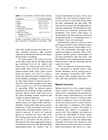
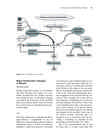
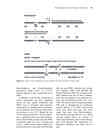
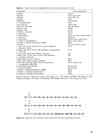
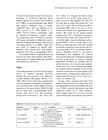
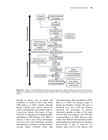





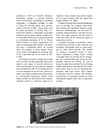
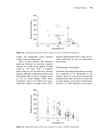
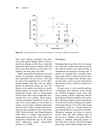
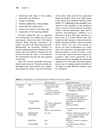
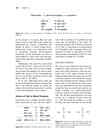
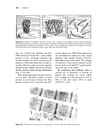
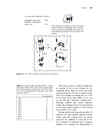
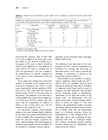
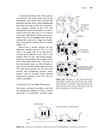
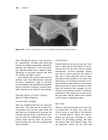
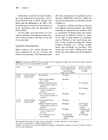
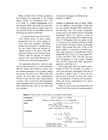
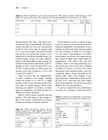
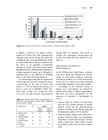
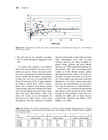
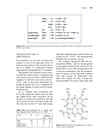

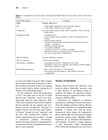
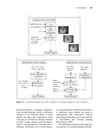

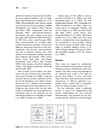
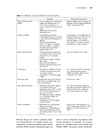


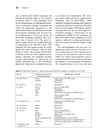
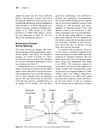
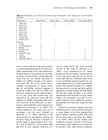
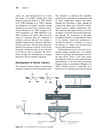
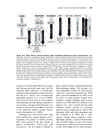
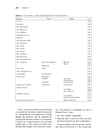
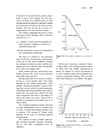
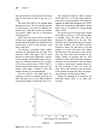
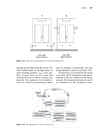

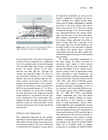
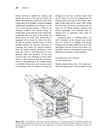

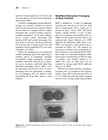
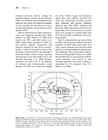
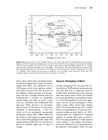
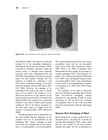

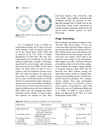
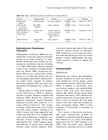
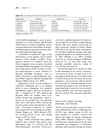
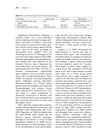
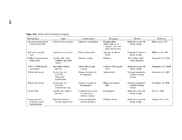

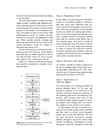
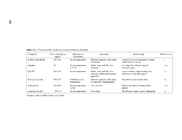
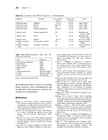



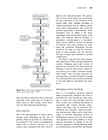
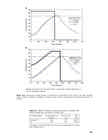

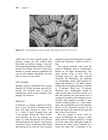
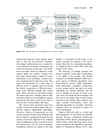

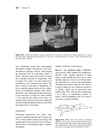
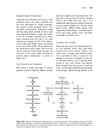
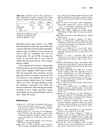
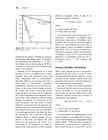
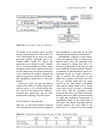

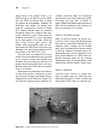
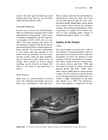
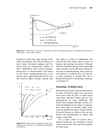

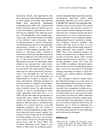
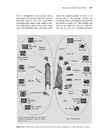
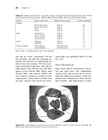

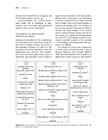
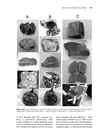
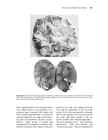


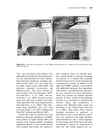
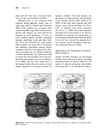
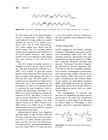
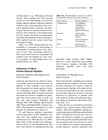
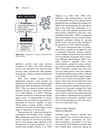
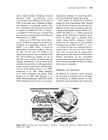




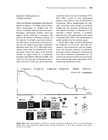
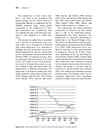
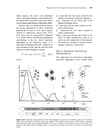
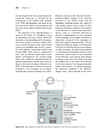
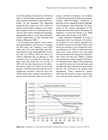
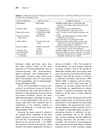
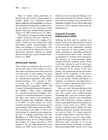
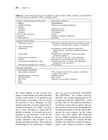


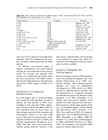
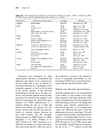
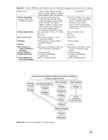
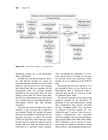



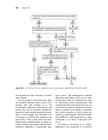
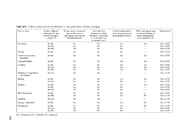
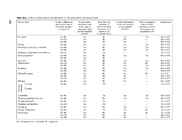
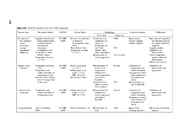

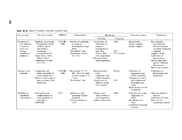
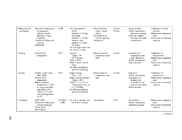
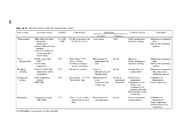
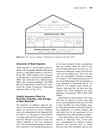
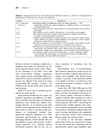
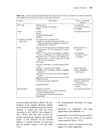

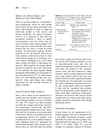
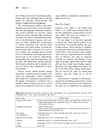
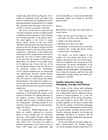
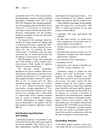








Kõik kommentaarid