Extended Essay
Research Question: To What Extent Does a
Plant Based Diet Lower the
Risk of Coronary Artery
Disease ?
Subject : Biology
Word
Count : 3482
Abstract : Because
there has been much debate over whether plant based diets are
beneficial or
not, I’m wil ing to learn more about it and
since there’s
eligible data
available on the
effects of
vegetarian /
vegan diets on cardiovascular
diseases , my research question is
formed accordingly: To what extent does a plant based diet lower the risk of coronary artery
disease? The
importance of this
study lies in my own
curiosity and my
desire to acquire
further knowledge on the
prevention and treatment of coronary artery disease.
In this investigation I wil study two
similar prospective
studies on plant based diets and
cardiovascular diseases, mainly coronary artery disease, to
find out if the outcomes of one
have anything common with the
other . I want to find out whether the outcomes of
these studies are
reasonable and have any
evidence from other studies to
support them . My
sources include a
wide variety of
medical journals, studies and webpages.
The Californian Seventh-day Adventists study
found vegetarian men to have
significantly lower risk of coronary artery disease compared to non-vegetarians whereas
vegetarian
women were at the
highest risk. The
Oxford vegetarian study, on the other
hand, found al vegans and vegetarians to have lower
mortality rates when it
came to
coronary artery disease. Vegans were found to have the lowest cholesterol levels, lowest
saturated fat intake and highest dietary
fiber intake which are al associated with lower risk
of coronary artery disease. A positive correlation
between plant based diets and
higher mortality rates was found.
Word count: 250
Table of Contents: 1.
Introduction ……………………………………………………………………………………. 4
3.1. Plant based diets and
heart disease prevention .………….……………………. 4
3.2. Cholesterol and triglycerides ……………………………………………………… 5
2. Investigation ………………………………………………………………………………..….. 8
2.1. Californian Seventh-day Adventists Study …………………………………..….. 8
2.2. The Oxford Vegetarian Study ……………………………………………………. 11
2.3. The cholesterol debate …………………………………………………………… 16
3.
Conclusion and Evaluation .………………………………………………………………… 17
4. Bibliography ……..…………………………………………………………………………… 19
5.
Appendix ………..……………………………………………………………………………. 23
Introduction: Plant based diets and heart disease prevention Over the
centuries cardiovascular diseases have become the
leading cause of
death worldwide and researches have found that
different diets have a different
effect on the
progression of cardiovascular diseases, mainly coronary artery disease. For that
reason ,
and many others, more and more people have started
changing their diets into more plant
based ones. To find out whether this
change is worth
making , from a medical point of view,
I’m going to investigate this topic in order to
answer my research question: To what extent
does a plant based diet lower the risk of coronary artery disease?
There are different
types of cardiovascular diseases. Some
affect the heart’s
muscle ,
valves or rhythm, but most conditions are caused by the hardening or clogging of arteries.
Coronary artery disease is associated with the hardening of arteries that supply
blood to
heart muscle and is, in most
cases , preventable and
even treatable as it’s often found to
be caused by poor lifestyle
choices .1 These lifestyle choices include unhealthy dietary
choices, lack of
exercise and
cigarette smoking . Other risk factors appear to be
diabetes ,
high blood
pressure ,
stress and history of heart disease running in the family. 2
A plant based diet is
solely based on
foods that are derived from
plants . Individuals who
fol ow a plant based diet
exclude al
animal products from their diet. They don’t consume
any
meat ,
dairy products or
eggs , as wel as other products that are either derived from
animal sources, or are processed and
contain traces of those products. A plant-based diet
is also
known as the vegan diet, which is a more restrictive form of a vegetarian diet. It’s a
1 ‘’What is Coronary Heart Disease?’’, National Heart,
Lung and Blood Institute, https://
www.nhlbi.nih.gov/health/health-topics/topics/cad, 15.10.
2016 2 ‘’Clogged Arteries (
Arterial Plaque ), WebMD,
http://www.webmd.com/heart-disease/clogged -
arteries-arterial-plaque#1 15.10.2016
4
diet that has been approved to be healthy by many
major health associations when
planned and nutritional y adequate. 3 There are some key nutrients that vegans need to
look out for, mainly
vitamin B12 and vitamin D, but with the help of fortified foods and food
supplements it’s found to be appropriate for al stages of life. 4
Individuals fol owing vegetarian and vegan diets appear to have lower
body mass
indexes and lower rates of heart disease as wel as lower blood pressure and cholesterol
levels. 5 That being said, not al diets fit al individuals and any diet plan can
turn out to be
the opposite of healthful when not fol owed correctly. When comparing a plant based diet
to a standard diet,
both can be as equal y beneficial when properly planned and balanced.
However , plant based diets have been found to be more beneficial when it comes to
preventing, treating or reversing heart disease.6
Cholesterol and triglycerides Elevated levels of triglycerides and LDL cholesterol in the blood have long
before been
associated with atherosclerosis. Atherosclerosis is the hardening of the arteries. When it
affects the arteries of the heart it is cal ed coronary artery disease.
7 Triglycerides are
lipid compounds in the bloodstream. They’re the kind of
fats that are either used by the body to
3 et al.
Craig WJ,’’
Position of the American Dietetic
Association : vegetarian diets’’, US National
Library of
Medicine National Institutes of Health,
https://www.ncbi.nlm.nih.gov/pubmed/19562864, 26.10.2016
4
Ginny Messina, ‘’Recommended Supplements for Vegans’’, The Vegan R.D, http://
www.theveganrd.com/2010/11/recommended-supplements-for-vegans.html, 16.10.2016
5 ’’Position of the American Dietetic Association and Dietitians of Canada: vegetarian diets’’, US
National Library of Medicine National Institutes of Health,
https://www.ncbi.nlm.nih.gov/pubmed/ 12826028, 16.10.2016
6 Harvard Publications,’’Halt heart disease with a plant-based, oil-free diet’’, Harvard Health, http://
www.health.harvard.edu/heart-health/halt-heart-disease-with-a-plant-based-oil-free-diet-,
15.10.2016
7 ‘’What is Atherosclerosis?’’, National Heart, Lung and Blood Institute,
https://www.nhlbi.nih.gov/ health/health-topics/topics/atherosclerosis, 16.10. 2016
5
provide energy or
stored as fat when consumed excessively. Triglyceride levels are usual y
elevated when foods with hight fat content are being consumed. But not al fat is bad for
our bodies. There are different kinds of fats in the foods we eat. Saturated and trans fats
tend to
raise triglyceride levels in the blood
while unsaturated fats help lower them. 8
Cholesterol is an
important fat-like compound found in body tissue which is
essential for
neurological
function and
memory formation. However,
having too much of it in your
bloodstream causes your arteries to
build up a plaque which narrows the arteries and
makes it harder for
oxygen -
rich blood to flow
through the arteries into the heart. Individuals
who suffer from atherosclerosis are
prone to
getting a heart attack or angina. While heart
attacks have become less deadly overtime, due to modern medicine, it is stil important to
keep your body healthy to
avoid them altogether because heart attacks tend to cause
permanent damage to the heart, contributing to heart failure and arrhythmias.
9
There are two types of cholesterol in our body. HDL-cholesterol, high-
density lipoprotein
cholesterol, is what we cal the
good cholesterol, because it helps lower the bad
cholesterol levels. To raise HDL-cholesterol levels one should consume more healthy fats
that are high in
omega 3 content. LDL-cholesterol, low-density lipoprotein cholesterol, is
what we cal the bad cholesterol and having high levels of it in your blood is usual y
associated with a higher risk of
developing coronary artery disease. The human body is
capable of producing the
necessary cholesterol it
needs and the
primary organ
responsible 8 ‘’Triglycerides: Frequently Asked
Questions ’’, American Heart Association,
http://www.heart.org/ idc/groups/ahamah-public/@wcm/@sop/@smd/
documents /downloadable/ucm_425988.pdf
15.10.2016
9 National Heart, Lung and Blood Institute,’’Coronary Artery Disease’’, Medline
Plus , https://
medlineplus.gov/coronaryarterydisease.html, 15.10.2016
6
for it is the
liver . The more saturated and trans fats are eaten the more LDL-cholesterol is
produced by the liver.10
There has been much disputation over whether eating cholesterol rich foods raise
blood cholesterol levels or not. Some of the earliest
scientific studies have
proven that high
consumption of cholesterol containing foods and/or saturated fat are connected to
atherosclerosis, but
recent studies have been disproving them. Despite these findings,
individuals who eat a diet low in animal derived foods have been found to have lower
incidence of heart disease. 11
Another notable
finding is that only herbivorous beings are
able to develop a heart
condition called atherosclerosis. And while
humans are identified as omnivorous
organisms, we stil get atherosclerosis, unlike other omnivorous and carnivorous
animals (eg.
dogs , cats,
tigers and lions) who can consume excessive amounts of cholesterol and
fat
without developing atherosclerotic plaques.When comparing human
characteristics with
the characteristics of other animals, evidence suggests that humans are
rather herbivorous and thus it’s self evident why individuals with plant based diets
stand a lower
risk of getting heart disease.12
10 ‘’Where is Cholesterol Produced in the Body?’’, Disabled World,
http://www.disabled-world.com/ artman/publish/body-cholesterol.shtml 16.10.2016
11
Ella Haddad,’’Dietary intake and biochemical, hematologic, and
immune status of vegans
compared with nonvegetarians’’, the American
journal of
clinical nutrition,
http://ajcn.nutrition.org/ content/70/3/586s.
full 16.10.2016
12 William Roberts,’’
Twenty questions on atherosclerosis’’, US National Library of Medicine
National Institutes of Health,
https://www.ncbi.nlm.nih.gov/pmc/articles/PMC1312295 16.10.2016 7
Investigation: Californian Seventh-day Adventists study Numerous studies have been conducted to find out the mortality ratios of vegetarian
and/or vegan populations compared to those who eat a standard diet. One of the
first studies conducted was the Californian Seventh-day Adventists study which was a
prospective study in which 24 044 individuals
took part in during a 6-
year period , from year
1960 to 1965. Two
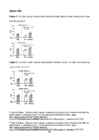
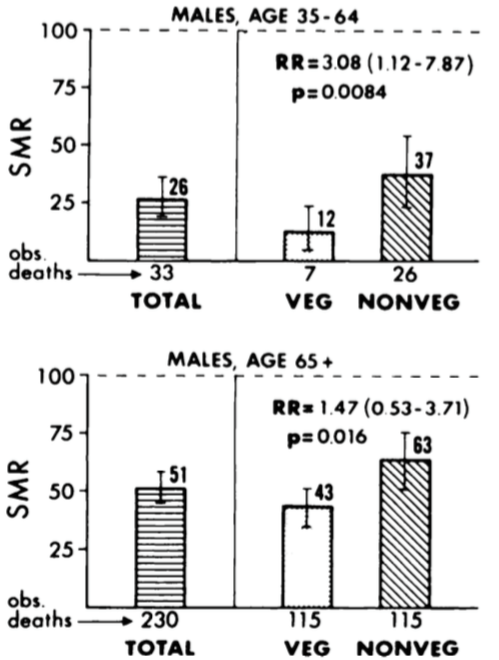
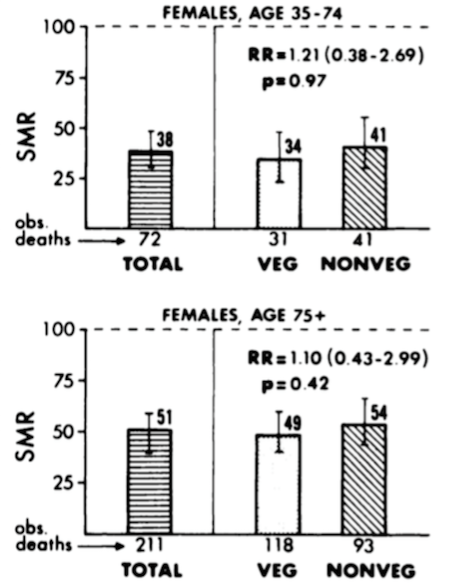
diagrams were drawn in this study, and they can be found in the
appendix of this investigation. They tested the hypothesis that coronary artery disease is
related to dietary
habits . From these
figures [
Figure 1. and 2.] we can
draw the
conclusions that the standardised mortality
ratio suggested that coronary heart disease
was significantly lower in vegetarian men compared those who were not vegetarian [Figure
1 in the appendix]. On the contrary,
female participants that fol owed a vegetarian diet
were found to be at the highest risk at getting coronary artery disease [Figure 2 in the
appendix]. An exact reason to why vegetarian females were at higher risk was not found.
Female participants might have either had a dietary deficiency that increased the risk of
coronary artery disease, or had other characteristics that put them at higher risk. A
decreased risk of coronary artery disease in men participants was
thought to be the
result of their higher intake of dietary fiber or lower intake of
total or saturated fat.13
When comparing the figures 1 and 2 in the appendix, it is clear that women tend to be
at higher risk for developing coronary artery disease compared to men,
taking al dietary
groups into consideration. Lower consumption of fat was correlated with higher mortality
rates in vegetarian men,
therefore it can be assumed that women of al dietary groups
were at higher risk for developing coronary artery disease because of their higher fat
13
Roland Phillips, ‘’Coronary heart disease mortality
among Seventh-Day Adventists with differing
dietary habits: a preliminary
report ’’, the American journal of clinical nutrition, http://
ajcn.nutrition.org/content/31/10/S191.abstract?
ijkey=18706be5e362ceac27ce659a27a82ac2364d4219&keytype2=tf_ipsecsha, 01.10.2016
8
consumption. In
addition to that, it is notable that the female body is natural y designed to
store more fat for reproductive
purposes . Researchers have found that oestrogen, a
primary female sex hormone, is what reduces fatty acid oxidation and is, as a result,
responsible for increased body fat in women.14
A clear
indicator to why vegetarian women were at the highest risk for developing
coronary artery disease was not found. One possible reason
behind it
could be that
vegetarian women consumed an unhealthier diet compared to their non-vegetarian
counterparts. Vegetarians, unlike vegans, do stil consume some animal derived foods;
mainly eggs and dairy products. Eggs, milk,
cheese , cream,
ghee and butter are widely
present in vegetarian diets. It could be possible for a vegetarian to consume more
saturated fat compared to a meat
eater . To put this into perspective, one tablespoon of
butter, which is 14.2 grams, contains 7 grams of saturated fat.15 In
contrast , 100 grams of
beef contains 6 grams of saturated fat.16 This makes butter much higher in saturated fat
content, and high consumption of saturated fats has been linked to higher risk of
developing coronary disease.17 The elimination of meat from ones diet may
lead to higher
consumption of products high in trans fats and/or saturated fats like butter and cheese, but
to be able to
prove this hypothesis, further investigation on dietary choices of vegetarians
would have to be conducted.
14 Blaak E, ‘’
Gender differences in fat
metabolism ’’, US National Library of Medicine National
Institutes of Health,
https://www.ncbi.nlm.nih.gov/pubmed/11706283 , 26.10.2016
15 ‘’Show Foods’’, US National
Nutrient Database,
https://ndb.nal.usda.gov/ndb/foods/show/132 ?
fgcd=&manu=&lfacet=&
format =&count=&max=50&offset=&sort=default&order=asc&qlookup=0114
5&ds=, 26.10.2016
16 ‘’Show Foods’’, US National Nutrient Database,
https://ndb.nal.usda.gov/ndb/foods/show/7612 ?
fgcd=&manu=&lfacet=&format=&count=&max=50&offset=&sort=default&order=asc&qlookup=2356
8&ds=, 26.10.2016
17 Walter Willet, Frank Sacks, Meir Stampfer, ’’Dietary fat and heart disease study is seriously
misleading’’,The Nutrition Source,
https://www.hsph.harvard.edu/nutritionsource/2014/03/19/ dietary-fat-and-heart-disease-study-is-seriously-misleading/, 26.10.2016
9
Another risk
factor for higher coronary artery disease in vegetarian women may have
been a nutrient deficiency, as noted by the researchers of the Seventh-Day Adventists
study researchers. There is one nutrient in
particular , vitamin B12, that vegetarians and
vegans especial y
seem to be lacking. It’s a vitamin that is produced by bacteria which is
common in the gastrointestinal tract of animals. It’s the virtual y the only nutrient absent in
plant foods. It is extremely important for vegetarian and vegan individuals to either
supplement vitamin B12, or consume products that are fortified with it.18 A
double -blind,
placebo control ed, randomised crossover study was conducted on fifty vegetarians. The
study showed how vitamin B12 supplementation improved arterial function in the
participants [Table 1. in the appendix]. Serious vitamin B12 deficiency can often
times result in atherosclerosis (the hardening of arteries) or other cardiovascular diseases if not
treated with the supplementation of vitamin B12.19
As a further matter, Seventh-Day Adventists are a
religious group of people who also
restrict their alcohol intake and smoking, therefore it must be taken into account that the
vegetarian men participants might not stand a lower risk of developing coronary artery
disease solely because of their plant based diet, but because of the other risk factors of
which they lack.20
18
Jane Higdon,‘’Vitamin B12’’,
Linus Pauling Institute,
http://lpi.oregonstate.edu/mic/vitamins/ vitamin-B12#food-sources, 26.10.2016
19 et al. Kwok T,’’Vitamin B-12 supplementation improves arterial function in vegetarians with
subnormal vitamin B-12 status’’, US National Library of Medicine National Institutes of Health,
https://www.ncbi.nlm.nih.gov/pubmed/22659999 , 02.10.2016
20 Roland Phillips, ‘’Coronary heart disease mortality among Seventh-Day Adventists with differing
dietary habits’’, the American journal of clinical nutrition,
http://ajcn.nutrition.org/content/31/10/ S191.abstract?ijkey=18706be5e362ceac27ce659a27a82ac2364d4219&keytype2=tf_ipsecsha,
01.10.2016
10
The Oxford Vegetarian study Although the risk factors were adjusted for the Californian Seventh-day Adventists
participants, the
reasons behind
such differences in mortality rates among vegetarian and
non-vegetarian men were stil not
completely evident. A new long-term prospective study,
cal ed The Oxford Vegetarian Study, was conducted between 1980 and 1984. Smoking,
body mass index and
social index were adjusted for al 6000 vegetarians and 5000 non-
vegetarians. In the fol owing years, between 1984 and 1986, they took blood samples from
the surviving participants and obtained the measurements of
plasma lipids and total
cholesterol. They were also told to have food diaries to track their nutrient intake.
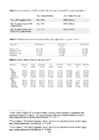
Vegans were reported to have the lowest LDL-cholesterol
concentrations (2.28 ±
0.126), while
fish eaters had the highest HDL-cholesterol concentrations (1.56 ± 0.038)
[Table 2. in the appendix].21 This is mainly because plants contain very
little amounts of
cholesterol when compared to animal derived foods. Moreover, plant cholesterol is
toxic to
human cel s and for that reason our intestines don’t absorb it very wel .22 While fish eaters
had elevated levels of HDL-cholesterol, they had stil got higher levels of LDL-cholesterol
when compared to vegetarians. Nevertheless, it was
expected for both vegetarians and
fish eaters to have more or less the
same mortality rates because HDL-cholesterol is
necessary when it comes to eliminating excess LDL-cholesterol from the body, which
helps
prevent heart disease. 23
21 Paul Appleby, ‘’The Oxford Vegetarian Study’’, the American journal of clinical nutrition, http://
ajcn.nutrition.org/content/70/3/525s.full, 01.10.2016
22 E. J. Behrman, Venkat Gopalan, ‘’Cholesterol and Plants’’, chemistry.osu.edu, https://
chemistry.osu.edu/~gopalan.5/file/7B.PDF, 15.09.2016
23 K Mahdy Ali,’’Cardiovascular disease risk reduction by raising HDL cholesterol - current
therapies and future opportunities’’, US National Library of Medicine National Institutes of Health,
https://www.ncbi.nlm.nih.gov/pmc/articles/PMC3504986/ , 26.10.2016
11
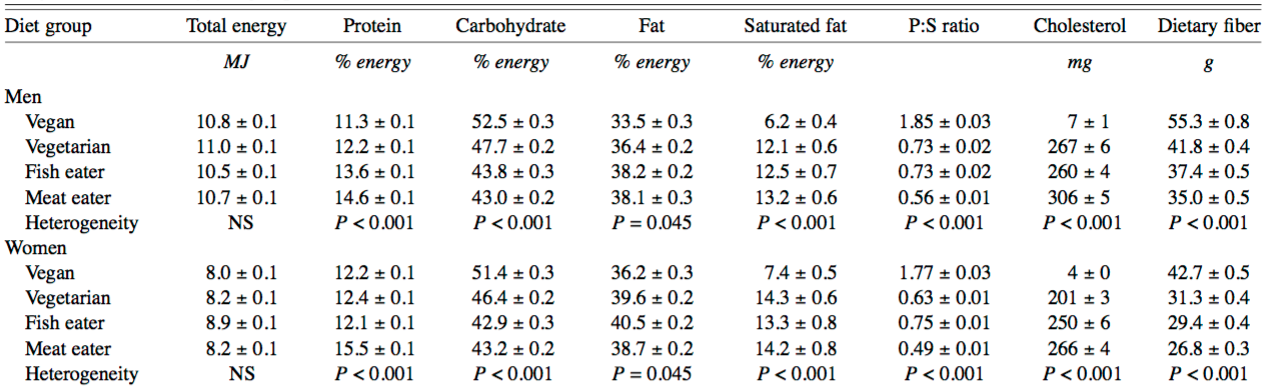
Vegans were also found to consume the
least fat in
terms of energy, and their saturated
fat intake was significantly lower compared to those who consumed animal derived foods.
Their cholesterol intake was natural y very low compared to other diet groups and they
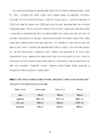
also consumed the most fiber [Table 3]. Dietary fiber is also said to help lower cholesterol
levels by moving cholesterol particles out of the body and is therefore associated with a
lower risk of coronary heart disease.24
Fats are an important part of a healthy diet. They give us energy and support cel
growth . There are good fats in foods that our body needs, these foods also contain some
essential vitamins and minerals. For example, canola oil is one of the healthy fat sources.
It contains omega-3 and 6 fatty acids as wel as vitamin E.
Above al , foods high in
omega-3’s are said to help lower LDL cholesterol levels. However, not every kind of fat is
good for the body. Saturated fats are known as the bad fats that raise blood cholesterol
levels and therefore higher the risk of heart disease. Foods that contain high amounts of
saturated fats include: pork, butter, cheese, lamb, fatty beef, etc. 25 As vegans don’t
consume any of these products it is self-evident why their saturated fat intake was
almost half of what the other dietary groups had.
24 D. E. Threapleton,’’Dietary fibre intake and risk of cardiovascular disease: systematic review and
meta -
analysis ’’,
British Medical Journal,
http://www.bmj.com/content/347/bmj.f6879 , 01.10.2016
25 ’’Good fats and bad fats explained’’, British Nutrition foundation,
https://www.nutrition.org.uk/ healthyliving/basics/fats.html, 25.10.2016
12
Table 3.
Daily nutrient intake by diet groups with averages of both sexes
calculated.26
Dietary groupFat Saturated fat CholesterolDietary fiber% energy% energymggVegan
34.9 ± 0.3
6.8 ± 0.5
5.5 ± 0.5
49 ± 0.7
Vegetarian
38 ± 0.2
13.2 ± 0.6
234 ± 4.5
36.6 ± 0.4
Fish eater
39.4 ± 0.2
12.9 ± 0.8
255 ± 5
33.4 ± 0.5
Meat eater
38.4 ± 0.3
13.7 ± 0.7
286 ± 4.5
30.9 ± 0.4
The consumption of saturated fat and cholesterol were positively associated with a
higher risk of coronary artery disease. Individuals who fol owed a plant based diet were
found to have lower death rates for coronary artery disease, even with smoking, body
mass index and social class being adjusted. It was predicted that vegetarians would have
a 25% less
chance of developing coronary artery disease, and vegans 57% compared to
non-vegetarians.27
The American Heart Association’s Nutrition
Committee has set fat intake guidelines for
Americans to help prevent heart disease. The
recommendation for daily fat intake is
between 25 and 35
percent of total calories, and the daily saturated fat intake is advised to
be
kept under 7 percent of total calories.28 This
means that
adult women, consuming
2200 calories a day on
average , are advised to keep their saturated fat intake under 154
calories for optimal health. In contrast, adult men, consuming 2500 calories a day on
average, are advised to keep their saturated fat intake under 175 calories.
26 Paul Appleby, ‘’The Oxford Vegetarian Study’’, the American journal of clinical nutrition, http://
ajcn.nutrition.org/content/70/3/525s.full, 01.10.2016
27 Paul Appleby, ‘’The Oxford Vegetarian Study’’, the American journal of clinical nutrition, http://
ajcn.nutrition.org/content/70/3/525s.full, 01.10.2016
28 ’’
Know Your Fats’’, American Heart Association,
http://www.heart.org/HEARTORG/Conditions/ Cholesterol/PreventionTreatmentofHighCholesterol/Know-Your-
Fats_UCM_305628_Article.jsp#.WBE2uTvnj8s, 21.10.2016
13
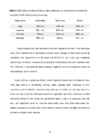
As I had gathered data on saturated fat intake from the Oxford Vegetarian study [Table
4], I then calculated the lower, higher and
medium ranges of saturated fat intake,
calorical y, for both women and men of different dietary groups. I used the estimates of
2200
kcal a day for women and 2500 kcal a day for men, assuming they were at least
moderately active. These calculations showed that only the vegans were able stay
below or
near the recommended fat intake guidelines [Table 5-6]. Vegan men ate less
than 175
calories of saturated fat on average, including individuals in the higher range. This means
vegan men’s saturated fat intake was near ideal. The medium of vegan women was near
ideal as wel . When comparing the saturated fat intake of vegans with other diet groups,
we can see that vegans consumed nearly 2 times less saturated fat in every
case .
Although fish eaters’ saturated fat intakes were lower than vegetarians’ in men, it was the
other way
around for women. Meat eaters seem to consume the most saturated fat of al ,
with one exception: vegetarian women consume insignificantly higher amounts of
saturated fat when compared to meat eaters.
Table 5. Daily intake of saturated fats in female participants consuming the recommended
amount of 2200 calories a day on average.
Dietary groupLower rangeHigher rangeMediumVegan
145 kcal
165 kcal
155 kcal
Vegetarian
287.5 kcal
317.5 kcal
302.5 kcal
Fish eater
295 kcal
330 kcal
312.5 kcal
Meat eater
315 kcal
345 kcal
330 kcal
14
Table 6. Daily intake of saturated fats in
male participants consuming the recommended
amount of 2500 calories a day on average.
Dietary groupLower rangeHigher rangeMediumVegan
151.8 kcal
173.8 kcal
162.8 kcal
Vegetarian
301.4 kcal
327.8 kcal
314.6 kcal
Fish eater
275 kcal
310.2 kcal
292.6 kcal
Meat eater
294.8 kcal
330 kcal
312.4 kcal
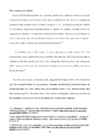
These findings now help understand why the vegetarian women in the first study
were at the highest risk of developing coronary artery disease. It didn’t seem
sound as
vegetarian men
appeared to be the healthiest of them al . As it turns out, vegetarian
women truly do tend to consume more saturated fat than those who eat a standard diet.
The
difference in saturated fat intake between vegetarian and non-vegetarian women is
not significant, but it’s present.
Despite al this, vegetarians of the Oxford Vegetarian study were stil found to have
25% less chance of developing coronary artery disease when compared to non-
vegetarians, which definitely means that high saturated fat intake isn’t the only risk factor.
When we look at the total cholesterol levels of vegetarians and meat eaters we see that
cholesterol levels in meat eaters are significantly higher [Table 2 in appendix]. Not only
that, but vegetarians seem to consume significantly more fiber than meat eaters do.
Higher cholesterol and lower fiber intake must be related to lower mortality rates when it
comes to coronary artery disease.
15
The cholesterol debate In spite of these findings there are, and have always been, suspicions when it comes to
animal derived foods and how they raise blood cholesterol levels. There’s a widespread
perception that cholesterol isn’t to blame. However in 1913 a Russian pathologist, Nikolai
N. Anitschkow, tested hypercholesterolemia on rabbits. He isolated cholesterol from an
egg yolk then dissolved it in sunflower oil and fed it to rabbits. It took a couple of weeks for
him to
notice how their arteries
developed raised yel ow lesions that were rich in ‘’lipoids’’.
It was very
close to what human atherosclerosis looks like. 29
A control ed
trial in 1981 studied 21 strict vegetarians for
eight weeks. First they
fol owed their
regular diet for two weeks and then they were fed 250 grams of beef daily in
addition to what they used to eat before. The participants didn’t
experience any
changes in
HDL-cholesterol levels, but their total blood cholesterol had
gone up by 19% at the end of
the
fourth week. 30
Another cohort study, on elderly people, suggested that high levels of LDL cholesterol
are not necessarily linked to cardiovascular diseases, and that total cholesterol lowers as
people got older, so it didn’t affect their cardiovascular health.
31 Stil , these findings have
little
back -up and LDL-cholesterol levels need further investigation, before we can
rule out
the possibility of it being one of the risk factors for coronary artery disease.
29 D. Steinberg,’’In
celebration of the 100th anniversary of the lipid hypothesis of atherosclerosis’’,
US National Library of Medicine National Institutes of Health,
https://www.ncbi.nlm.nih.gov/pmc/ articles /PMC3793599/, 02.10.2016
30 et al. Sacks FM,’’Effect of ingestion of meat on plasma cholesterol of vegetarians’’, US National
Library of Medicine National Institutes of Health,
https://www.ncbi.nlm.nih.gov/pubmed/7019459, 02.10.2016
31 Uffe Ravnskov,’Lack of an association or an inverse association between low-density-lipoprotein
cholesterol and mortality in the elderly’’, BMJ
Open ,
http://bmjopen.bmj.com/content/6/6/ e010401.full, 26.10.2016
16
Conclusion and Evaluation: The
compilation of these finding suggest that a plant based diet can be used as a
measure when it comes to lowering the risk of coronary heart disease. I have found out
that those who fol ow a plant based diet are less likely to die of coronary artery disease.
Common factors for reduced coronary artery disease appear to be lower saturated fat
intake, lower cholesterol intake and higher fiber intake. Vegan and vegetarian populations
also tend to have lower body mass indexes and lower blood pressure which are also
positively correlated with a reduced risk of heart disease.
However, it is necessary to pay close attention to the diet and to keep it balanced. It’s
important to eat an abundance of nutritious
whole foods like fruits, vegetables, grains,
legumes , nuts and seeds. And to supplement when needed. Vegetarian and vegan diets
can be made unhealthy in the absence of whole foods. The same thing
goes for the
standard diet. Vegans and vegetarians can be just as unhealthy as meat eaters who eat
junk food daily. Nowadays there are many options and replacement products for meat and
dairy based products, and they’re highly processed in most cases. A vegan can just as
easily die of coronary artery disease as a meat eater. One could eat doughnuts for
lunch and
french fries for
dinner . These foods are very high in trans fats which increase the risk
of developing heart disease when consumed excessively. It is important to eat everything
in moderation and to
focus on whole foods, rather than packaged and processed foods, for
a plant based diet to offer health benefits.
17
This investigation favours a purely vegan diet over a vegetarian diet. Vegetarians do
tend to over consume some animal derived products, like cheese and butter, that are high
in saturated fat content and artery clogging. Vegetarians that are concerned about the
health of their arteries should seriously cut back on dairy products that are high in
saturated fat, and put an
emphasis on whole foods. A vegan diet is protective agains
coronary artery diseases only as long as it’s healthful, and when saturated fats are
consumed minimal y.
Although there was enough sufficient data I was hoping there would be more case
studies on different populations from al around the world. Unfortunately vegan and
vegetarian populations only make up a smal portion of people. This investigation could be
made even more comprehensive if there was data available on people that are
lacto -
vegetarians, ovo-vegetarians, raw vegans as wel as people who are on a meat only diet.
There could be even more possible variables and outcomes.
I believe this investigation would have turned out a lot better if the Seventh-Day
Adventists study conductors had examined the saturated fat and cholesterol levels, as wel
as dietary fiber in their participants like the Oxford Vegetarian Study did. I would’ve been
able to add the
results together to get a broader overview of the outcomes. It would’ve
helped if other nutrients in the body were examined to determinate whether any
deficiencies, for example B12 deficiency, may induce coronary artery disease.
18
Bibliography: 1. ’ Clogged Arteries (Arterial Plaque), WebMD,
http://www.webmd.com/heart-disease/clogged -
arteries-arterial-plaque#1 15.10.2016
2. et al. Craig WJ,’ Position of the American Dietetic Association: vegetarian diets’’, US National
Library of Medicine National Institutes of Health,
https://www.ncbi.nlm.nih.gov/pubmed/19562864, 26.10.2016
3. ’ Position of the American Dietetic Association and Dietitians of Canada: vegetarian diets’’, US
National Library of Medicine National Institutes of Health,
https://www.ncbi.nlm.nih.gov/pubmed/ 12826028, 16.10.2016
4. Harvard Publications,’ Halt heart disease with a plant-based, oil-free diet’ , Harvard Health, http://
www.health.harvard.edu/heart-health/halt-heart-disease-with-a-plant-based-oil-free-diet-,
15.10.2016
5. ’ Triglycerides: Frequently Asked Questions’’, American Heart Association,
http://www.heart.org/ idc/groups/ahamah-public/@wcm/@sop/@smd/documents/downloadable/ucm_425988.pdf
15.10.2016
6. National Heart, Lung and Blood Institute,’ Coronary Artery Disease’ , Medline Plus, https://
medlineplus.gov/coronaryarterydisease.html, 15.10.2016
7. ‘’Where is Cholesterol Produced in the Body?’ , Disabled World,
http://www.disabled-world.com/ artman/publish/body-cholesterol.shtml 16.10.2016
8. Ella Haddad,’ Dietary intake and biochemical, hematologic, and immune status of vegans
compared with nonvegetarians’’, the American journal of clinical nutrition,
http://ajcn.nutrition.org/ content/70/3/586s.ful 16.10.2016
19
9. Wil iam Roberts,’ Twenty questions on atherosclerosis’’, US National Library of Medicine
National Institutes of Health,
https://www.ncbi.nlm.nih.gov/pmc/articles/PMC1312295 16.10.2016 10. Roland Phil ips, ‘’Coronary heart disease mortality among Seventh-Day Adventists with
differing dietary habits: a preliminary report’ , the American journal of clinical nutrition, http://
ajcn.nutrition.org/content/31/10/S191.abstract?
ijkey=18706be5e362ceac27ce659a27a82ac2364d4219&keytype2=tf_ipsecsha, 01.20.2016
11. Blaak E, ‘’Gender differences in fat metabolism’’, US National Library of Medicine National
Institutes of Health,
https://www.ncbi.nlm.nih.gov/pubmed/11706283 , 26.10.2016
12. ‘’Show Foods’’, US National Nutrient Database,
https://ndb.nal.usda.gov/ndb/foods/show/132 ?
fgcd=&manu=&lfacet=&format=&count=&max=50&offset=&sort=default&order=asc&qlookup=0114
5&ds=, 26.10.2016
13. Walter Wil et, Frank Sacks, Meir Stampfer, ’ Dietary fat and heart disease study is seriously
misleading’ ,The Nutrition Source,
https://www.hsph.harvard.edu/nutritionsource/2014/03/19/ dietary-fat-and-heart-disease-study-is-seriously-misleading/, 26.10.2016
14. Jane Higdon,‘’Vitamin B12’ , Linus Pauling Institute,
http://lpi.oregonstate.edu/mic/vitamins/ vitamin-B12#food-sources, 26.10.2016
15. et al. Kwok T,’ Vitamin B-12 supplementation improves arterial function in vegetarians with
subnormal vitamin B-12 status’’, US National Library of Medicine National Institutes of Health,
https://www.ncbi.nlm.nih.gov/pubmed/22659999 , 02.10.2016
16. Paul Appleby, ‘’The Oxford Vegetarian Study’’, the American journal of clinical nutrition, http://
ajcn.nutrition.org/content/70/3/525s.ful , 01.10.2016
17. E. J. Behrman, Venkat Gopalan, ‘’Cholesterol and Plants’’, chemistry.osu.edu, https://
chemistry.osu.edu/~gopalan.5/file/7B.PDF, 15.09.2016
20
18. K Mahdy Ali,’ Cardiovascular disease risk reduction by raising HDL cholesterol - current
therapies and future opportunities’’, US National Library of Medicine National Institutes of Health,
https://www.ncbi.nlm.nih.gov/pmc/articles/PMC3504986/ , 26.10.2016
19. D. E. Threapleton,’ Dietary fibre intake and risk of cardiovascular disease: systematic review
and meta-analysis’’, British Medical Journal,
http://www.bmj.com/content/347/bmj.f6879, 01.10.2016
20. ’ Good fats and bad fats explained’ , British Nutrition foundation,
https://www.nutrition.org.uk/ healthyliving/basics/fats.html, 25.10.2016
21. ’ Know Your Fats’’, American Heart Association,
http://www.heart.org/HEARTORG/Conditions/ Cholesterol/PreventionTreatmentofHighCholesterol/Know-Your-
Fats_UCM_305628_Article.jsp#.WBE2uTvnj8s, 21.10.2016
22. D. Steinberg,’ In celebration of the 100th anniversary of the lipid hypothesis of
atherosclerosis’’, US National Library of Medicine National Institutes of Health, https://
www.ncbi.nlm.nih.gov/pmc/articles/PMC3793599/, 02.10.2016
23. et al. Sacks FM,’ Effect of ingestion of meat on plasma cholesterol of vegetarians’’, US
National Library of Medicine National Institutes of Health,
https://www.ncbi.nlm.nih.gov/pubmed/ 7019459, 02.10.2016
24. Uffe Ravnskov,’Lack of an association or an inverse association between low-density-
lipoprotein cholesterol and mortality in the elderly’’, BMJ Open,
http://bmjopen.bmj.com/content/ 6/6/e010401.full, 26.10.2016
25. Ginny Messina, ‘’Recommended Supplements for Vegans’’, The Vegan R.D, http://
www.theveganrd.com/2010/11/recommended-supplements-for-vegans.html, 16.10.2016
21
26. ‘’What is Atherosclerosis?’’, National Heart, Lung and Blood Institute,
https://www.nhlbi.nih.gov/ health/health-topics/topics/atherosclerosis, 16.10. 2016
27. ‘’What is Coronary Heart Disease?’’, National Heart, Lung and Blood Institute, https://
www.nhlbi.nih.gov/health/health-topics/topics/cad, 15.10.2016
22
Appendix: Figure 1. Coronary artery disease standardised mortality ratios in male participants by age
and diet groups.32
Figure 2. Coronary artery disease standardised mortality ratios in female participants by
age and diet groups.33
32 Roland Phillips, ‘’Coronary heart disease mortality among Seventh-Day Adventists with differing
dietary habits: a preliminary report’’, the American journal of clinical nutrition, http://
ajcn.nutrition.org/content/31/10/S191.abstract?
ijkey=18706be5e362ceac27ce659a27a82ac2364d4219&keytype2=tf_ipsecsha, 01.20.2016
33 Roland Phillips, ‘’Coronary heart disease mortality among Seventh-Day Adventists with differing
dietary habits: a preliminary report’’, the American journal of clinical nutrition, http://
ajcn.nutrition.org/content/31/10/S191.abstract?
ijkey=18706be5e362ceac27ce659a27a82ac2364d4219&keytype2=tf_ipsecsha, 01.20.2016
23
Table 1. Improvements in FMD and IMT after periods of vitamin B12 supplementation.34
Flow-Mediated Dilation
Intima-Media Thickness
Prior to B12 supplementation
6.3 ± 1.8%
0.69 ± 0.09 mm
After 12 weeks of vitamin B12
6.9 ± 1.9%
0.67 ± 0.09 mm
supplementation
After 24 weeks of open label
7.4 ± 1.7%
0.65 ± 0.09 mm
vitamin B12 supplementation
Table 2. Plasma lipid concentrations by diet group, adjusted for age and sex.35
Table 4. Daily nutrient intake by diet and sex.36
34 et al. Kwok T,’’Vitamin B-12 supplementation improves arterial function in vegetarians with
subnormal vitamin B-12 status’’, US National Library of Medicine National Institutes of Health,
https://www.ncbi.nlm.nih.gov/pubmed/22659999 , 02.10.2016
35 Paul Appleby, ‘’The Oxford Vegetarian Study’’, the American journal of clinical nutrition, http://
ajcn.nutrition.org/content/70/3/525s.full, 01.10.2016
36 Paul Appleby, ‘’The Oxford Vegetarian Study’’, the American journal of clinical nutrition, http://
ajcn.nutrition.org/content/70/3/525s.full, 01.10.2016
24
 100 punkti
Autor soovib selle materjali allalaadimise eest saada 100 punkti.
100 punkti
Autor soovib selle materjali allalaadimise eest saada 100 punkti.
 ~ 24 lehte
Lehekülgede arv dokumendis
~ 24 lehte
Lehekülgede arv dokumendis
 2018-02-12
Kuupäev, millal dokument üles laeti
2018-02-12
Kuupäev, millal dokument üles laeti
 2 laadimist
Kokku alla laetud
2 laadimist
Kokku alla laetud
 0 arvamust
Teiste kasutajate poolt lisatud kommentaarid
0 arvamust
Teiste kasutajate poolt lisatud kommentaarid
 syleem
Õppematerjali autor
syleem
Õppematerjali autor
 annaabi.ee









Kõik kommentaarid