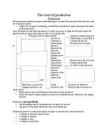
European Union economic 9th May 1951, six Western-Europe countries (Belgium, Italy, Luxembourg, Netherlands, France and Germany) signed a treaty to run their heavy industries coal and steel under a common management. From this economic cooperation agreement, European Union has grown up. For today, the aim of this union has made 180º turn but the reason why more and more countries are joining it is still same to rise the economy. So how does it work? European Union is functioning like an independent country. It collects taxes to reach its objectives. Taxes are collected mainly from member countries GDP (1,1% of countries budget) but as well the import duties on good bought into EU. Also, every
Economic Country Review: Finland, Estonia and Hungary Girli Vasiljev Report Business Economics, RB1X 06.05.2012 Abstract 06.05.2012 Experience and Wellness management Author Group Girli Vasiljev RB1X Title of report Number of pages Economic Country Review: Finland, Estonia 20 and Hungary Teacher Kalevi Torunen The goal of this paper is to compare the economic performance of Finland, Estonia and Hungary. First, a general overview on the countries will be given. After, economic indicators (real GDP growth rate, inflation, unemployment, household consumption, investment, current account, government budget and deficit) of the three countries will be compared to draw a conclusion. Keywords
International Economic organisations were established to increase globalisation and international co-operation. 1. Economic unions- organisations dealing with international trade and also finance. For example European Union,World Trade Organisation. 2. Cartels-a formal agreement of some kind of raw materials. ASEAN-Association of Southeast-Asia Nations. It was established in 1967-Its aim is to make favorable conditions for membership countries. The members are Brunei,Philippines,Indonesia,Thailand, Myanmar, Cambodia, Laos, Vietnam, Malaisia and Singapore. NAFTA-North American Free Trade Agreement
Positive sides of the economic recession The economic recession is inevitable. Without it people would not have any understanding about how economy works and what are the future expectations. During the recession people start thinking about cheaper ways of living. Since the monthly income might not be as brave as it was before, they turn their attention to discounted alternative products and find out that for example it may be possible to use low-priced detergents instead of purchasing a highly recommended one and double the expense.
The aim of this report is to describe social and economic situation in Estonia. Estonia is well known because for it's highly developed IT-sector. IT-sector is the fastest growing area. In the words of stat.ee about two-thirds of households have a broadband Internet connection. Due to more people go online to vote and do their business with the banks. As time goes by, more and more discoveries are made in the IT field. However, the income of estonians is one of the lowest in the European Union, therefore there is a big gap between different social layers. Estonians average monthly wage is 792 EUR, which means that the average monthly wage is bigger only than in Latvia. Other European Union countries have higher average monthly wages. Small salary is accompanie by aging. That is because families with smaller income do not want to have children, because they can not adequately care for them. That is the reason why the gro...
Michael E.Porter artikli „Location, Competition, and Economic Development: Local Clusters in a Global Economy“ kokkuvõte. Maailma majanduse globaliseerumine peidab endas märgatavat paradoksiaalset nähtust. Ühest küljest on tehnoloogilised arengud soodustanud globariseerumist tootmises; kapitali, tooraine, tööjõu jne liikuvust vastavalt vajadusele ning keskendudes üha madalamatele püsikuludele. Teisalt on äärmiselt oluliseks aspektiks kujunenud kohalikud klastrid (Local clusters), mis on fenomenaalne nähtus majandusmaailmas
Tehnoloogilised muutused toovad endaga kaasa uute toodete, teenuste, protsesside, turustuskanalite ja müügiviiside ning äritegevuse ülesehituse muutusi. Uute tehnoloogiate kasutamine (juukse pikendused) toob kaasa tootlikkuse tõusu. Nii näiteks on kogu tegevuskeskkonda ja pea iga ettevõtet oluliselt mõjutanud info- ja kommunikatsioonitehnoloogia areng. Arendustööde kulud (salongi töötajate kolitused) on alati vajalikud, sest tänu koolitustele tõuseb teenuste kvaliteet. ECONOMIC Majanduskeskkonnas toimuvad muudatused, mida enim jälgitakse ja analüüsitakse, on seotud majanduskasvu ja majanduskriisidega erinevates regioonides ja riikides, valuutakurssidega, intressimääradega, maailmaturu hindadega, inflatsiooniga jne. Maailma regioone haaravate majandustsüklite mõju avaldub Eesti ettevõtetes enamasti teatud hilinemisega. Maailmamajanduse langus avaldab meie ekspordipartnerite kaudu meile mõju tavaliselt mõni kvartal hiljem. Eesti
ERLE MAIDO TAAB11 Report Purpose The purpose of this report is to give an overview of Estonian population, political factors, technological factors, economic factors and the trends in Estonian economy compared to Germany and to briefly discuss Estonian business environment. Estonian population The total population of Estonia is 1 313 271 according to Statistics Estonia, of which 69.1% are Estonians, 25.1% Russians, 4.9% of which are of different nationalities for example Ukrainians, Belarusians and Finns. Rest are of unknown nationality. 68.5% of population speaks Estonian as a mother language, 29.6% speaks Russian as a mother language and 0
21. aprill 2008. a. http://jang.com.pk/thenews/apr2008-weekly/busrev-21-04- 2008/p3.htm (kasutatud 28. oktoober 2015. a.). Jang-Yung, Lee. „Sterilizing Capital Inflows.“ International Monetary Fund. märts 1997. a. https://www.imf.org/EXTERNAL/PUBS/FT/ISSUES7/INDEX.HTM (kasutatud 7. november 2015. a.). Lefort, Fernando, ja Klaus Schmidt-Hebbel. „Indexation, Inflation and Monetary Policy: An Overview.“ rmt: Central Banking, Analysis, and Economic Policies Book Series , 1-18. Central Bank of Chile, 2002. Mankiw, N. Gregory. Principles of Macroeconomics. 5. Boston: Cengage Learning, 2008. Miner, Jason. Raise Minimum Wage Trigger Inflation. 3. märts 2013. a. http://inflationdata.com/articles/2013/03/03/raise-minimum-wage- trigger-inflation/ (kasutatud 28. september 2015. a.). Org, Avo. Inflatsiooni liigid: nõudlusinflatsioon ja pakkumisinflatsioon. kuupäev puudub. http://jaanikarookmann.weebly
ERLE MAIDO 155635TAAB11 21.09.2015 Laste hind ja väärtus 1. Milliste muutustega ühiskonnas on seotud lastele omistatud väärtuse teisenemine ajaloolises perspektiivis? Tooge vähemalt 3 näidet loetud tekstist. 18. sajandil tervitati vastsündinud last “talupoeglikus” Ameerikas kui tulevase töö tegijat, kes oli oma vanematele tuleviku kindlustuseks. 19. sajandi keskpaigaks muutus laps “linna” keskklassis ökonoomselt mõttetuks. Rahaliste hüvitiste asemel muutus tähtsaks laste haridus. Töölisklassi laste väärtus kasvas edasi. Järsk industrialiseerimine tutvustas lastele uusi tegevusalasid ja 1870. aastaks oli iga kaheksas l...
Tallinn University TURKEY AND THE EUROPEAN UNION Tallinn 2013 INTRODUCTION The accession negotiations and the forthcoming Turkish accession present challenges to both Turkey and the EU. It is widely accepted that Turkey's accession would be different from previous enlargements because of the combined impact of Turkey's population, size, geographical location, economic, security and military potential. The case of Turkey will be different and more challenging from previous accessions for a number of reasons, some of them are presented below. Turkey is a country with a large population and geographic area. With a population of 74 million today, it is projected that it could be the largest member state at the time of accession. As a Moslem secular country, Turkey will also add a new demographic and religious dimension to the EU
.... 10 2 Introduction. Years ago countries didn’t depend so much on imports and also on export. World has so many organizations controlling countries economics like WTO, The European Union, OPEC, NAFTA, ASEAN, APEC, MERCOSUR, CEEAC, IMF, World Bank and so on. Nowadays because of globalization there are large corporations like Apple, Gazprom and Allianz who rules the world and control the economic outcome with big organizations that are roled by influencial countries like China and USA. This essay is about criticism to IMF and World Bank. Critics of the World Bank and the IMF are concerned about the ‘conditionalities’ imposed on borrower countries. Often the conditionalities are attached without due regard for the borrower countries’ individual circumstances and the prescriptive recommendations by the World Bank and IMF fail to resolve the economic problems within the countries
valeinformatsioon, seda teavad vaid vähesed, kuid selle sõja kasulikkust USA-le pole raske näha - peamiste nafta eksportriikide enda võimu alla võtmine ei ole just näide ohvrimeelsusest. Sellist valeinformatsiooni kasutatakse oma tahtmise saamiseks ära igal pool. Sõjaline lahendus antakse olukorrale siis, kui manipulatsioonile ei alluta. Sellest kirjutab ka John Perkins, kes töötas aastaid Ühendriikide Riikliku Julgeoleku Agentuuris, oma raamatus "Economic Hit Man". Raamatus kirjeldab Perkins oma tööd "majanduse palgamõrtsukana", mis tähendas reisimist erinevate strateegiliselt oluliste riikide juhtide juurde ning neile altkäemaksu pakkumist abiprogrammide ja riigi arengusponsorite näol. Kui tema oma tööga hakkama ei saanud ja juht polnud äraostetav, siis ta ka kaotati - nagu juhtus Panama liidri Omar Torrijosiga. Panama vallutati inimõiguste kaitsmise, narkokartellide peatamise ja Panama kanali neutraalsuse säilitamise ettekäändel.
Introduction to macroeconomics Macroeconomics Macroeconomics (from Greek prefix "macr(o)-" meaning "large" + "economics") is a branch of economics that deals with · the performance, structure, behavior and decision-making of the entire economy, · be that a national, regional, or the global economy The Economist's Dictionary of Economics defines Macroeconomics as - "The study of whole economic systems aggregating over the functioning of individual economic units. It is primarily concerned with variables which follow systematic and predictable paths of behaviour and can be analysed independently of the decisions of the many agents who determine their level. It is a study of national economies and the determination of national income." Macroeconomics examines the economy as a whole and answers questions · 'What causes the economy to grow over time
Neighboring countries include Iraq, Israel, Jordan, Lebanon, and Turkey. The geography of Syria is primarily semiarid and desert plateau with a double mountain belt in the west. The government system is a republic under authoritarian regime. The chief of state is the President and the head of government is the Prime Minister. Syria has a mixed economy in which there is limited private freedom but the economy remains highly controlled by the government. Syria is a member of the Council of Arab Economic Unity (CAEU). Two-thirds of Syria is desert; the other third is part of the Fertile Crescent along the Mediterranean coast. About 80 percent of the population lives in that fertile region. The total population of Syria is a little over 13 million. Half the people live in cities, 4 million in Damascus alone. Arabic is the official language of the Syrian Arab Republic and the language is spoken by nearly all Syrians. French is the second-most- common language
India: $60.9 Korea: billion Jaapan: $44.2 (9.1%) $50.8 billion billion (6.6%) (7.6%) KASUTATUD ALLIKAD World´s top exports. Crude Oil Exports by Country. [WWW] http://www.worldstopexports.com/worlds-top-oil-exports-country/ (13.05.2017) World´s top exports. Crude Oil Imports by Countr. [WWW] http://www.worldstopexports.com/crude-oil-imports-by-country/ (13.05.2017) The observatory of economic complexity. Canada. [WWW] http://atlas.media.mit.edu/en/profile/country/can/ (14.05.2017) The observatory of economic complexity. The Arab Emirates. [WWW] http://atlas.media.mit.edu/en/profile/country/are/ (14.05.2017) The observatory of economic complexity. Iraq. [WWW] http://atlas.media.mit.edu/en/profile/country/irq/ (14.05.2017) The observatory of economic complexity. Russia. [WWW] http://atlas.media.mit.edu/en/profile/country/rus/ (14.05.2017) The observatory of economic complexity
8. Summary………………………………………………………………………………….17 4 1. INTRODUCTION The Global Reporting Initiative (GRI) is a long-term, multi-stakeholder, international process whose mission is to develop and disseminate globally applicable Sustainability Reporting Guidelines. These Guidelines are for voluntary use by organisations for reporting on the economic, environmental, and social dimensions of their activities, products, and services. The aim of the Guidelines is to assist reporting organisations and their stakeholders in articulating and understanding contributions of the reporting organisations to sustainable development. Trends The key trends during the last two years are: Expanding globalization – Expansion of global capital markets and information technology continue to bring unprecedented opportunities for the creation of new wealth
Riigi, ühiskonna ja majanduse arengu eeltingimused A.Smith’i järgi, selle kriitika K.Marx: kuidas mõistis sotsiaalse muutuse seaduspära ning ühiskonna struktuuri põhiolemust; milles seisneb tööjõu võõrandumine; väärtuse käsitlus; Durkheim: mehhaaniline ja orgaaniline solidaarsus, anoomia; Weber: sotsiaalse muutuse olemus; kapitalismi põhitüübid; domineerimistüübid; Swedberg, R. (2003/2007) Principles of Economic Sociology. Oxford University Press; ptk I Giddens, A. (2009) Sociology. Polity Press, ptk I ja III International Encyclopedia of Economic Sociology. (2006/2011) Eds J. Beckert, M. Zafirovski. Routledge. Vt märksõnade alusel (sh klassikute nimed) 3. Loeng – Kaasaegne ühiskond, globaliseerumine, jätkusuutlikkus Giddens ja Beck: kaasaegse ühiskonna põhijooned: refleksiivsus, individualiseerumine, aja ja ruumi lahutatus, riskiühiskonna mõiste, riskide
The distribution of property is even more uniequal. 1 per cent of the population own 60 per cent of the saleable assets of the nations. Individual incomes range from £1 000 000 a year to £50 per year. This extreme degree of inequality is due to the right of inheritance at present vested in the legal institution of property. Large individual fortunes are, for the most part, made up of inherited property. The rich, as a class, are born with silver spoon in their mouths and the economic privileges that they enjoy were not acquired by the possession or exercise of great talents, but by the accident of birth. Social inequality. The apparatus of social hierarchy is amazingly complete. It is manifest in the Court with its great expense and elaborate display; the country house with its ancient associations and dependent village; the segregation of a group of schools (ironically called ,,public" schools) to provide each new generation with the manners and habits of ruling class;
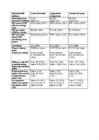
Majanduslik Eesti (Estonia) Argentiina Keenia (Kenya) näitaja (Argentia) Liberaalsuse aste 6 koht 69 koht 86 Koht (Economic freedom) Indeks:3,2 Indeks:2,05 Indeks:1,9 SKP suurus (GDP $22.5 billion (2011) $435.2 billion (2011) $36.1 billion (2011) official exchange rate) SKP per capita $20,200 (2011) $17,400 (2011) $1,700 (2011) (GDP per capita) SKP ostuvõime $26.93 billion (2011) $709.7 billion (2011) $71.5 billion (2011) alusel (GDP purchasing power parity)
Until recently, concern about the environment revolved almost exclusively around local and national problems. Over the past two decades, however, scientists have increasingly focused attention on more far-reaching environmental threats, such as global warming, ozone depletion, and deforestation that transcend national boundaries. A new concept global environmental problems has entered the public arena, especially in the area of foreign policy and economic matters. Global Environmental Problems: · Energy · Water · Global Climate Change · Land Use and Development · Ozone Depletion · Waste · Resource Depletion · Ecological Health (Biodiversity) · Human Health · Air Quality Sustainable Development
The Great Guild Liisbeth Kallakmaa The Great Guild Medieval Tallinn's social institutions were guilds and brotherhoods, whose main function was to provide members with social interactions and ensure their rights, but also played an important political and economic role. Tallinn had three important guilds - The Great Guild, St. Canute's Guild and St. Olaf's guild. The Great Guild was the youngest among them, founded in the 14th century, but soon became the biggest and most important. It was founded as an organization of the wealthiest merchants and shipowners. The name of the Great Guild was introduced in the late 15th century. There were close ties between the guild and the town rules: only members of the Great
work to be done bigger. But it's wrong to think that necessarily, humans will be placed to perform those tasks. As machines become more capable, it's likely that theyl take on the extra lump of work themselves. Machines perform tasks differently to humans. What humans are currently capable of doing dosen't represent any sort of summit in what machines might be capable of doing in the future. For most of human history one ecomomic problem has dominated: how to make the economic pie large enough for everyone to live on. Go back to the turn of the first century AD, and if you took the global economic pie, and divided it up into equal slices for everyone in the world, everyone would get a few hundred dollars. And if you rolled forward a thousand years, roughly the same is true. But in the last few hundred years, economic growth has taken off. Those economic pies have exploded in size. The value of those individual slices of the pie today, the're about 10,150 dollars
These are mainly income and value-added taxes . Tax revenues come from a variety of sources. Goods that are imported into Lithuania face import duties that range from 10 to 100 percent (but average 15 percent on most goods). The highest tariffs are on tobacco, automobiles, jewelry, and gasoline. The personal income tax level is 33 percent with rates of between 10 to 35 percent on supplemental income from investments or interest dividends. Labour law Essential political economic and legal reforms started after the independence of Lithuania in 1990. Since then the legal system has been reformed to meet the demands of the social and economic changes brought by the return to democracy and the free market economy system. The population of Lithuania is 3.4 million, with a labour force of 1.6 million. Unemployment has been low, but has increased to almost 10 per cent during 2009. All employees in Lithuania
population growth:e.g. celibacy, delaying marriage which lower fertility rates He noted that there was a correlation between wheat prices and marriage rates i.e. wheat price increases marriage rates decrease (C18th) Positive checks (decrease in population size due to): famine, war, diseases i.e. anything which increases mortality and decreases life expectancy. Carrying capacities can relate to ecosystems and humans. Rapid economic growth can impede economic development by exacerbating social and economic problems. Studythe graphs on page 379 and summarise the points made relating to links between population growth and levels of economic development. Checks fall into three categories; 1. Misery-(Shorten LE) 2. Vice-Warned against the dangers of practicing family planning which may lead to promiscuity 3. Moral restraint-Advised this e.g. delayed marriage and limit sexual partners. This viewpoint also states that available technology
Home reading ( magazine article ) : 1. " Government fails to serve up free school meals for all " from http://www.timesonline.co.uk 2. The article is about Scottish government who has failed to achieve it's goal of extending free school meals to all children in the first three years of education. This healthy meal serving is now extended because of the tight public finances caused by the economic slump. There's mentioned that at the moment government can only offer a healthy lunch for 20% of the pupils in Scotland. 3. This topic is interesting because now I can compare my school lunch with Scottish meals. Here we have it for free until the end of the primary school. It's also interesting to read how are they handling with this economic crisis. 4. reluctance vastumeelsus, magnetiline takistus provision säte, lepingutingimus acute, akuutne, terav 5
can produce for a cost (MC) that is less than the additional revenue (MR) that they collect. · Maximum profits (or minimum loses) for a firm occur when MR = MC. Ideally, the market will "signal" the costs of sellers and benefits to buyers with the market price; P = MR = MC Total-revenue-total-cost approach Should we produce this product? Profit Yes; Loss No In what amount? Output level where economic profit is maximized TR TC = (P x Q) - (FC + VC) = economic profits · Break-even point = when normal profit is satisfied Intersection of TC + TR (TR covers all TC) No economic profit only normal There are 2 break-even points on graph any point in between is economic profits Profit is maximized on a graph where the vertical distance between TR and TC is the greatest
the state is simply "Ireland", but its legal description the Republic of Ireland is sometimes used to differentiate the state from the island. On 29 December 1937 Ireland became the successor-state to the Irish Free State, itself established on 6 December 1922. Ireland was one of the poorest countries in Western Europe and had high emigration. The protectionist economy was opened in the late 1950s and Ireland joined the European Communities (now the European Union) in 1973. An economic crisis led Ireland to start large-scale economic reforms in the late 1980s. Ireland reduced taxation and regulation dramatically compared to other EU countries. Despite a forecast for reduced economic growth in 2008, Ireland today has the fifth highest gross domestic product per capita and the seventh gross domestic product per capita considering purchasing power parity, and has the fifth highest Human Development Index rank in the world. The country also boasts the highest quality of life
Military purged of British trained soldiers, replaced with reliable Afrikaners Afrikaners in police increased by 77% between 1946-60 Between 1946 and 1960 number of Afrikaners in administration increased by 98.5% Religion- `chosen people' biblical basis for apartheid Economics Afrikaners had political control but English-speakers controlled the economy. Limited career options High levels of white poverty 1948: NP came into power and created the apartheid state improved the economic conditions of National Party supporters (Afrikaners). Apartheid linked pre-apartheid Legislation and post- apartheid... PREAPARTHEID LEGISLATION 1911 Mines and Works Act The cornerstone of job reservation 1913 Native Lands Act Black ownership of 7% of land in South Africa (extended to 13% in 1936). 1920 Native Affairs Act Political authority over blacks given to government appointed chiefs
Oskar. Abimees nii ausale eksaminandile kui ka leidlikule spikerdajale. Vastuses esitage ajakirja nimetus, aasta, number, lehekljed, kus artikkel asub. 4. Leidke e-ajakirjade otsivahendit A-to-Z kasutades, millise andmebaasi vahendusel ja mis aastast aastani on meie likooli arvutivrgust juurdeps ajakirja Network security tistekstidele? 5. Leidke EBSCOhost andmebaasidest ks tistekstiga artikkel teemal majandusintegratsioon (economic integration) Vastuses esitage artikli autor, pealkiri, ajakirja nimetus, aastakik (Volume), number (Issue) ja artikli paiknemise lehekljed. Lisage artikli tisteksti sisaldava andmebaasi nimetus ja kasutamise kuupev. 1. Raamatu "Janno, Jaan. Arvutusmeetodid. Tallinn, 2008. 182 lk." asukoht ... , kohaviit 519.6/J-28... 3 korrus riiul 327 2. Otsinguks teemal "alternatiivenergia" on soovitav kasutada jrgmisi seotud mrksnu: ...energiapoliitika, sstlik eluviis, taastuvad energiaallikad 3
, sõltuvad oma mida-, kuidas- ja kellele valikute tegemisel eelkõige tavadest ja kommetest, traditsioonidest. 11. Segamajandus, mixed economy - majandussüsteem, mis vastab , põhilistele majandusküsimustele, kasutades elemente mitmest 11. , majandus-süsteemist:turu-, käsu- ja tavamajandusest. , . 12. Majanduslik vabadus, economic freedom isikliku valiku, 12. , vahetuse, konkurentsi vabadus ja kõiki liiki omandi kaitstus. , . 13. Majandusvabaduse index, index of economic freedom: 13. - 10 , Koostatakse The Heritage Foundationi ja The Fraser Institut poolt. 0 100, 100 Riigid liigitatakse: 10 tunnuse alusel 5 rühma: , 0, , 1) Vabad, free;
Last year 61 thousand people (a huge downgrade from 2012 when 150 thousand people worked for the company) worked for Coca-Cola Company and created a revenue of 35 billion U.S dollars worldwide when the Estonian state budget for 2018 is only 10,58 billion euros (Statista). Other than generating jobs and money Coca-Cola Company has a huge role in politics as well because they have a lot of money and with lot of money comes a lot of power to do and change things. For example they try to promote economic growth and decent work for everybody including women, men, young people and persons with disabilities and equal pay for equal work value. They are committed to enable the economic empowerment of 5 million women across its global value chain by 2020 (Business for 2030). This is a very problematic topic in general politics section and it is important that companies like Coca-Cola get involved because they have a huge reach to places all over the world and politics should be
European Union Exam 1949 France, UK and the Benelux countries decide to set in place a Council of Europe. 1951 Treaty of Paris signed by the Six (Belgium, France, Germany, Italy, Luxembourg, Netherlands), establishing the European Coal and Steel Community (ECSC). 1957 Treaties of Rome establish the European Economic Community (EEC) and the European Atomic Energy Community (Euratom). 1959 July, seven countries of the Organisation for European Economic Co- operation (OEEC) – Austria, Denmark, Norway, Portugal, Sweden, Switzerland and the UK – decide to establish a European Free Trade Association (EFTA). 1960 Creation of European Free Trade Association 1961 UK applies to join the Community. 1962 The Parliamentary Assembly changes its name to the European Parliament. 1965 The Treaty merging the executives of the three Communities (ECSC, EEC, Euratom) is signed in Brussels; enters into force on July 1, 1967. Empty chair crisis 1966
Paul Wojtkowski Author: Janno Ott Tutor: Tiia Krass Tartu 2011 Introduction I'm writing my book review about Agroecological Economics. Which is written by Paul Wojtkowski, who is very famous as leading proponent and analyst. This book presents a wide range of new and diverse techniques for sustainable agriculture for the purpose of enhancing economic interest. Since agriculture is growing really convivially, the emphasis is on changing from conventional agriculture to more efficient systems and practise. This book is very educational because it explains how is the best way to analyze the experimental results from intercropping and multiple cropping trials. Also offers a means for risk assessments. I chose this book because my family also is engaged to farm business and agriculture.
From that on, the 9th of May has been considered as the birth of European Union and is now celebrated as Europe Day. In 1951 the founding members (Belgium, the Federal Republic of Germany, France, Italy, Luxembourg and Netherlands sign a treaty of European Coal and Steel Community for a period of 50 years. In 1955 the six countries decide to extend European economy and in 1957 the treaty of Rome is signed (which establishes the European Economic Community and the European Atomic Energy Community). In 1960 from the pressure of the UK the Stockholm Convention establishes European Free Trade Association. In 1963 an agreement is signed creating an association between the European Economic Community and Turkey. In 1965 in Brussels was signed a treaty which combined European Coal and Steel Community, European Atomic Energy Community and the European Economic Community into a single institution.
1. Which are the main cornerstones of EU-Russia cooperation? Which have been the main developments and success stories in this partnership in 2000-2012? Which side is more interested? The main cornerstones of the EU and Russia relations are the trade and energy relations. One biggest breakthrough has been gas pipeline Nord Stream. Russia is the third biggest trade partner of the EU and is the main importer of gas and crude oil. The economic benefits are the biggest cornerstones of the relations. Cooperation between Russia and the European Union progressively strengthens in foreign policy and security issues, in combating illegal migration, organised crime and terrorism. The main achievement of recent years, which can be hardly overestimated, is the understanding increasingly gaining ground that partnership between Russia and the EU is one of the
Wood based fuels sources •Energy forest •Forest biomass •Recycled wood Wood Biomass • Biologicalmaterial derived from living, or recently living organisms. • Can be used after converting it to various forms of biofuel. • Woodchips • Pellets Bioenergy • Energy produced from biomass. • Electricity, heat, and transportation fuels. • Eesti Energia and bioenergy. Benefits of Biomass • Environmental Benefits • Economic Benefits • Energy Benefits Biofuels • Solid fuels Pellets, briquettes • Liquid fuels Ethanol Bio-diesel Conclusion • Attractive renewable energy source. • Environmental, economic, and energy benefits to society. • Challenges and barriers do exist. References • „Forest bioenergy produstion“ Seppo kellomäki, Antti Kilpeläinen, Ashraful Alam • http://www.forestbioenergy.net/ THANK YOU FOR LISTENING!!
cbs.nl/en-gb/news/2018/07/gdp-growth-rate-0-8-percent-in-q4-2017 http://ec.europa.eu/eurostat/statistics-explained/index.php/GDP_per_capita,_con sumption_per_capita_and_price_level_indices http://ec.europa.eu/eurostat/statistics-explained/index.php/Unemployment_statistic s http://ec.europa.eu/eurostat/statistics-explained/index.php/Inflation_in_the_euro_a rea#Main_statistical_findings http://vm.ee/et/eesti-ja-hollandi-majandussuhted https://ec.europa.eu/info/business-economy-euro/economic-performance-and-fore casts/economic-performance-country/netherlands/economic-forecast-netherlands_ en
Queensland floods Markus Põder 10 A Contents · Introduction · Backround · Extend · Deaths · Response · Recovery · Economic impact · Animals · Video Introduction · December 2010 January 2011 · 35 confirmed dead · 9 missing · 30 billion dollars · Much of central and southern Queensland including Brisbane, Rockhampton, Emerald, Bundaberg, Dalby, Toowoomba, and Ipswich Backround · Last was in 1974 · Heavy rainfall · 24 December · Coral Sea · Gulf of Carpentaria · Gold Coast Extend · Half of Queensland was flooded · Fitzroy River basin
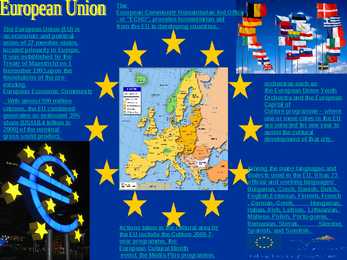
The European Community Humanitarian Aid Office , or "ECHO", provides humanitarian aid The European Union (EU) is from the EU to developing countries. an economic and political union of 27 member states, located primarily in Europe. It was established by the Treaty of Maastricht on 1 November 1993,upon the foundations of the pre- existing orchestras such as European Economic Community the European Union Youth Orchestra and the European
Vastus: Elektriala, 2009, nr 1, lk 35 · Leidke e-ajakirjade otsivahendit A-to-Z kasutades, millise andmebaasi vahendusel ja mis aastast aastani on meie ülikooli arvutivõrgust juurdepääs ajakirja Occupational Ergonomics täistekstidele? Vastus: Business Source Complete, 1998 kuni tänapäevani · Leidke EBSCOhost andmebaasidest üks täistekstiga artikkel teemal majandusintegratsioon (economic integration) Vastuses esitage artikli autor, pealkiri, ajakirja nimetus, aastakäik (Volume), number (Issue) ja artikli paiknemise leheküljed. Lisage artikli täisteksti sisaldava andmebaasi nimetus ja kasutamise kuupäev. Vastus: de Carvalho, Fernando J. Cardim artikkel Economic integration and development in Latin America: perspectives for Mercosul on ilmunud ajakirjas Journal of Post Keynesian Economics, 2009, aastakäik 32, number 2, lk 235-248.
Social problems in England What are social problems? Racism Crime Unemployment Alcohol/Drug abuse Economic recession Poverty Riots Racism Common problem all around the world Many refugees and immigrants Locals with false perceptions Different cultures and ethnic groups Crime Racism related crime Robberies and burglaries Murders Petty crimes Unemployment People have less money A lot of free time Necessity of meeting the needs Unemployment benefits Alcohol and drug abuse Worldwide problem Has a negative effect on the country's human development Quantities have incresed
· QX = f( inputs [land, labor, capital], technology, . . . ) · Legal and social/cultural institutions influence the production function. Costs Costs are incurred as a result of production. The important concept of cost is opportunity cost (marginal cost). These are the costs associated with an activity. · When inputs or resources are used to produce one good, the other goods they could have been used to produce are sacrificed. Economic Cost: the monetary value of all inputs used in a particular activity or enterprise over a given period. Economic costs reflect the opportunity cost of resources. Costs may be in real or monetary terms; - implicit costs - explicit costs Explicit Costs: paid directly in money - money costs. - A firm incurs explicit costs when it pays for a factor of production at the same time it uses it.
Market Power In pure competition sellers are "price takers." No seller (or buyer) has the ability to influence the market price. In most markets, at least one or more of the conditions required for pure competition are violated. This gives sellers or buyers the ability to influence the market price and allocation of resources Pure competition results in an optimal allocation or resources given the objective of an economic system to allocate resources to their highest valued uses or to allocate relative scarce resource to maximize the satisfaction of (unlimited) wants in a cultural context. Pure competition is the ideal that is be benchmark to evaluate the performance markets. The economic theory of · monopolistic competitive markets, · oligopoly and · monopoly is used to suggest the nature of problems that may exist when firms or agents have market power
Stages of democratization The old regime breaks down. New democratic structures are built. Initial fragility These new structures become embedded; their removal is unthinkable: `consolidation'. Structural factors : Factors that are `unchangeable' or change slowly; `preconditions' · Historical · Economic · Political W. Germany 1950s: educated, literate population, but residue of authoritarian attitudes, poor experience of Weimar democracy? E. Germany 1990s: educated, literate, good knowledge of West German system (relatively) easy adaptation once East German state collapsed Mexico: as economy developed did potential for democratic structures increase? South Africa: little apparent scope for change? Transitions theory 1
I`ve divided my talk into three parts. First Im going to give a short overview of the Estonian business. Second Im going to talk about studying business in Estonia and third Im going to talk about business in industrial sector. FIRST: Estonia is a relatively small country in the northern part of Europe. Estonia is strategically placed in the business corridor, between the Scandinavian countries (EU) and other eastern European countries, including Russia. Estonia has suffered from economic Chrisis as many ohter European countries and compared to ohter bigger countries like Spain and Greece, Estonia has managed to recover from the Chrisis quite well. The number of unemployed people has reduced, still many private companies have struggles due to the fact that the income of consumers has been low and the ability to consume products provided by the companies has suffered aswell. To develope business in Estonia, there is one option to set up here limited liability (piiratud)
Switzerland is a peaceful and modern market economy with low unemployment (in contry comperison to the world it was on the 27 place with 3,1 % and dropping, 1 being the lowest), a highly skilled labor force (about 4,3 million working people), and a per capita GDP among the highest in the world. Switzerland's economy benefits from a highly developed service sector, led by financial services, and a manufacturing industry that specializes in high-technology, knowledge-based production. Its economic and political stability, transparent legal system, exceptional infrastructure, efficient capital markets, and low corporate tax rates also make Switzerland one of the world's most competitive. The Swiss economy is not built on mass production, but on high-quality work and well- trained workers. The important areas for Swiss exports are micro-technology, high technology, biotechnology, the pharmaceuticals industry and banking and insurance know- how.
Which has been the theoretical logic to cause it? Bring examples! The main idea of the ENP is to offer our neighbours a privileged relationship, building upon a mutual commitment to common values (democracy and human rights, rule of law, good governance, market economy principles and sustainable development). The ENP goes beyond existing relationships to offer political association and deeper economic integration, increased mobility and more people-to- people contacts. The level of ambition of the relationship depends on the extent to which these values are shared. Some examples which steps ENP has made in the field of human rights and which are represented in the report of implementation of the European Neighbourhood Policy about Eastern Partnership: The adherence to the shared values of democracy, rule of law, human rights and
1) 1.Racism 2. Crime 3. Unemployment 4. Alcohol/Drug abuse 5. Economic recession 6. Poverty 7. Riots 2) Racism is a common problem in many countries and in Englad it is present because there are many immigrants from all over the world. As it is a widespread social problem it's also one of the worst ones, because the hatred directed to different races or even nationalities makes the foreign people feel bad and also to hate the locals. This brings up many conflicts like the bombings in 2005 (when 4 islamic suicide bombers killed thmeselves and 52 civilians), but
take on this, see Drechsler 2000), and it has had, and still has, similar results. Already more on the defensive within public administration (PA) than STE is within economics, NPM also shows that such major paradigm shifts in theory and policy may actually happen. In addition, it occasionally appears that pae-oriented scholars have overlooked the fact that some features in public management reform, state organization, and the economic interpretation of state functions that they advocate from "Good Governance" to "efficiency" as a goal in itself actually belong into the "other camp" and by and large have a disastrous effect on "industrial" and "developing" countries alike, although the consequences for the latter are much more severe. NPM is the transfer of business and market principles and management techniques from the private into the public sector, symbiotic with and based on a neo-liberal
 annaabi.ee