Cuisine of South Africa has had a variety of
sources and stages:
- Cookery practised by indigenous people of South Africa such as the Khoisan and Xhosa- and Sotho -speaking people
- Settler cookery introduced during the colonial period by people of Indian and Afrikaner and British descent and their slaves and servants - this includes the cuisine of the Cape Malay people, which has many characteristics of Malaysia and Java , and recipes from neighbouring colonial cultures such as Portuguese Mozambique.
Indigenous
cookery
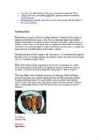
traditional South African cuisine
In the precolonial period, indigenous cuisine was characterized by
the use of a very
wide range of fruits, nuts, bulbs, leaves and
other products gathered from
wild plants and by the
hunting of wild
game .
The domestication of cattle in the
region about two
thousand years ago by Khoisan groups enabled the use of
milk products and the
availability of
fresh meat .
However , during the colonial period the
seizure of communal
land in South Africa restricted and discouraged
traditional
agriculture and wild harvesting, and reduced the extent
of land
available to
black people.
Decline of indigenous cookery
Urbanization from the nineteenth
century , coupled with
close control
over agricultural
production , led black South Africans to rely more
and more on comparatively
expensive , industrially-processed
foodstuffs like wheat
flour , white
rice , mealie (maize)
meal and
sugar . Often
these foods were imported or processed by white
wholesalers, mills and factories. The consequence was to drastically
restrict the range of ingredients and cooking styles used by
indigenous cooks. On the other
hand , some imported food plants
(maize, tomatoes) have
expanded the dietary range of indigenous
cooks. Of these maize is the most significant - it has been
integrated to such an extent into the traditional diet that it is
often assumed to be an indigenous
plant .
Popular foods in modern South Africa are
chicken , limes, garlic,
ginger,
chili , tomatoes, onions and many spices.
Settler cookery
South Africa was settled from the seventeenth century by colonists
from the
Netherlands ,
Germany and
France , and
later by arrivals from
the British Isles. These colonists
brought European cookery styles
with
them .
Traditional cookery of South Africa is often refered to as "Cape
Dutch". This cuisine is characterized by the use of spices such
as
nutmeg , allspice and hot
peppers . The Cape Dutch cookery style
owes at
least as much to the cookery of the slaves brought by the
Dutch
East India Company to the Cape from
Bengal , Java and Malaysia
as it does to the European styles of cookery imported by
settlers ,
and this is reflected in the use of
eastern spices and the
names given to many of these dishes.
Indian cookery
Curry dishes are popular in South Africa
among people of all
ethnic origins; many dishes
came to the
country with the thousands of Indian
labourers brought to South Africa in the nineteenth century.
Restaurants and fast food outlets
South Africa can be said to have a
real "
eating out"
culture.
While there are some restaurants that specialize in
traditional South African dishes or modern interpretations thereof,
restaurants featuring other cuisines such as Moroccan,
Chinese ,
West African, Congolese and
Japanese can be
found in all of the
major cities and many of the larger towns. In
addition , there are also a
large number of home-
grown chain restaurants, such as Spur and Dulce
Cafe.
There is also a proliferation of fast food restaurants. While there
are some international players such as
McDonalds and
Kentucky Fried
Chicken
active in the country, they have competition from
local chains such as Nando's and Steers.
Many of the
restaurant chains originating from South-Africa have also
expanded successfully
outside the borders of the country.
South African wine
There are vineyards all over Africa. Algeria and
Morocco have been
producing wines for decades and modern wine-
making has been set up in
places like
Zimbabwe and
Kenya .
But it is down south in the Cape, where climactic and topographic
conditions simulate those of the old wine countries, that the
continent 's finest wines are produced.
Today the
best of South
African wine is up there with the
rest , while in the "
easy -
drinking "
category no one beats us.
History has a way with wine and the Cape's wine culture, which
goes back 350 years, is one that reflects the country's sad colonial and
apartheid past, but also shines with the potential and
expectation of
the modern wine world.
From that long history
comes a wine
tradition of tastes and styles
with its
roots in the
classic "Old World" of France,
Germany and
Italy , but also an acute awareness of the contemporary
consumer , as has been defined by wine-making in the "New World"
of
California and
Australia .
It has often been said that South African wine is in the
unique position of
both those wonderful worlds. It
offers marketing
possibilities that can be harnessed for the challenges of the new
global economy . It can
offer the wine-drinking world all kinds of new
flavour experiences. It can also show the way to
handle such
sensitive issues as
labour relations in the
reality of the beautiful
Cape winelands.
Wine for the modern market In the post-apartheid era
since 1994, South African wine has
returned to the world with significant impact,
growing from some
50-million litres exported that
year to topping 139-million in 2000,
representing more
than 25% of
good wine production.
It is
still increasing, and Cape wine is reaching
even more consumers
in more countries. According to the latest
figures from the generic
exporter
association Wosa, or Wines of South Africa, international
sales for 2001 increased 17.8% compared with 2000, despite the global
recession.
Internationally, the industry is small, ranking
16th with about 1.5%
of global plantings, but production, at seventh position, accounts
for 3% of the world's wine.
As in most
established wine-producing countries, new plantings are
taking place at a
pace and new
varieties of wine grapes as well as
new
regions are being explored as the country
finds itself at the
frontline of modern market requirements.
Of the 105 566
hectares under wine grapevines (compared with 98 203
hectares in 1997), according to the latest
official statistics,
21.38% is chenin
blanc - by far still the country's most widely
planted variety. Sultana (11.28%), a
grape that is also used for
non-
alcohol purposes, is next, followed by colombard and
chardonnay .
Cabernet sauvignon comprises the
majority of red varieties (a mere
8.36% of
total vineyard plantings) in
present vineyards, followed by
pinotage and
shiraz .
White varieties still
represent more than two-thirds of the total,
but this has moved from an imbalance of 15% red and 85% white in
1990. In 2000 more than 80% of all new plantings were red, with
shiraz, cabernet and merlot at the top of the list. At the
same time,
87% of all vines uprooted were white, mostly chenin blanc, white
French and colombard.
There is a
shift from chardonnay to sauvignon blanc, a varietal which
lends itself to a larger range of styles and
quality levels.
All in all, in the year up to the end of 2000, 6 042.7 hectares of
new vines were planted.
In 2000 the total grape crop was about 1-million tons, from which
830-million litres of wine were made by 355 active cellars, of which
185 were non-
estate "private
producers ", 92 registered
"estates", 69 co-operatives and
nine producing wholesalers
South African cuisine
For the more daring diner, South Africa offers
culinary challenges
from
crocodile sirloins to fried caterpillars to
sheep heads. All
three are reputed to be delicious. For the not-
quite so brave, there
are myriad indigenous delicacies such as
biltong (dried, salted
meat), bobotie (a much-
improved version of Shepherd's pie) and
boerewors (hand-made
farm sausages, grilled on an
open flame).
Those who
prefer to play it altogether
safe will
find that most
eateries offer a familiar global
menu -
anything from hamburgers to
sushi to pad
thai to spaghetti bolognaise. And you can
drink the
water.
On a
single street in a Johannesburg suburb, one finds
Italian restaurants, two or three varieties of Chinese cookery, Japanese,
Moroccan, French, Portuguese and Indian food, both Tandoor and
Gujarati. Not far
away are Congolese restaurants,
Greek ,
even Brazilian and Korean establishments, and,
everywhere ,
fusion ,
displaying the fantasies of
creative chefs.
It's not much
different in the other major
centres , such as Cape Town
or Durban. Restaurant guides that categorise eateries by national
style list close to two dozen, including Vietnamese and
Swiss .
Those in search of authentic South African cuisine have to
look harder for those few establishments that specialise in it - like the
justly
famous Gramadoelas in central Johannesburg, Wandie's Place in
Soweto, the Africa Café in central Cape Town or smaller restaurants
in that city's Bo-Kaap, in Khayelitsha and Langa.
Or one can watch for glimmers of the real
thing . There are varieties
of biltong in every café, in big cities and
little dorps. Every
weekend there wafts from neighbourhoods
rich and
poor the smell of
spicy sosaties being grilled over the braai. Steak
houses may
specialise in flame-grilled aged sirloin, but they also offer
boerewors.
And sometimes, in posh restaurants, there is the occasional fusion
dish - not the common merger of east and west, but
north and south:
marinated
ostrich carpaccio at Sage in Pretoria, oxtail ravioli with
saffron
cream sauce at Bartholomeus Klip in Hermon on the Cape west
coast, even Tandoori crocodile at the Pavilion in the
Marine hotel in
Hermanus.
There is crocodile on the menu and kudu, impala, even warthog at a
number of restaurants that offer game. But there won't be
seagull ,
mercifully, or
penguin . Both were
staple foods for the strandlopers
(or beachcombers) - a community of Khoi who lived on the Cape shore -
and the Dutch and Portuguese sailors who made landfall there.
It was the search for food that shaped modern South Africa: spices
drew the Dutch East India Company to Java in the mid-1600s, and the
need for a
half -way refreshment stop for its ships rounding the Cape
impelled the Company to plant a farm at the tip of Africa. There are
sections of Commander Jan van Riebeeck's wild
almond hedge still
standing in the Kirstenbosch Gardens in Cape Town.
That farm changed the region
forever . The Company discovered it was
easier to bring in thousands of hapless slaves from Java to
work in
the fields than to
keep trying to entrap the local people, mostly
Khoi and San, who
seemed singularly unimpressed with the Dutch and
their
ways . The Malay slaves brought their cuisine,
perhaps the
best-
known of all South African cooking styles.
The French Huguenots
arrived soon after the Dutch, and changed the
landscape in wonderful ways with the vines they imported. They soon
discovered a need for men and
women to work in their vineyards, and
turned to the Malay slaves (and the few Khoi and San they
could lure
into
employment ).
Much later, sugar farmers brought indentured labourers from India to
cut the cane. The British, looking for
gold and
empire , also brought
their customs and cuisine, as did
German immigrants.
And black communities carried on eating their traditional, healthy
diet: game, root vegetables and wild greens,
berries , millet,
sorghum and maize, and
protein -rich
insects like locusts.
Today the
resultant kaleidoscope - the famous "rainbow" -
applies not only to the people but to the food, for one finds in
South Africa the most extraordinary range of cuisines.
Typical South African foods and dishes
- Amasi, sour milk.
- Biltong, a salty dried meat ( similar to jerky ).
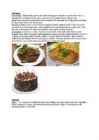
- Bobotie, a dish of Malay descent, is like meatloaf with raisins and with baked egg on top, and is often served with yellow rice, sambals, coconut, banana slices, and chutney.
- Boerewors, a sausage that is traditionally braaied (barbecued).
- Bunny chow , curry stuffed into a hollowed-out loaf of bread .
- Chutney, a sweet sauce made from fruit that is usually poured on meat, especially a local brand called Mrs Ball's Chutney.
- Frikkadelle - meatballs.
- Gesmoorde vis, salted cod with potatoes and tomatoes and sometimes served with apricot jam.
- Hoenderpastei, chicken pie, traditional Afrikaans fare .
- Isidudu, pumpkin pap.
- Koeksisters come in two forms and are a sweet delicacy. Afrikaans koeksisters are twisted pastries, deep fried and heavily sweetened. Koeksisters found on the Cape Flats are sweet and spicy, shaped like large eggs , and deep-fried.
- Mageu, a drink made from fermented mealie pap
- Malva Pudding, a sweet spongy Apricot pudding of Dutch origin.
- Mashonzha, made from the mopane worm.
- Melktert (milk tart ), a milk- based tart or dessert .
- Melkkos (milk food), another milk-based dessert.
- Mealie-bread, a sweet bread baked with sweetcorn.
- Mielie-meal, one of the staple foods, often used in baking but predominantly cooked into pap or phutu.
- Ostrich is an increasingly popular protein source as it has a low cholesterol content; it is either used in a stew or filleted and grilled.
- Pampoenkoekies (pumpkin fritters), patatrolle (sweet potato rolls) and a further variety of baked goods where flour has been supplemented with or replaced by pumpkin or sweet potato.
- Potbrood (pot bread), savoury bread baked over coals in cast - iron pots .
- Potjiekos, a traditional African stew made with meat and vegetables and cooked over coals in cast-iron pots.
- Rusks, a rectangular, hard , dry biscuit eaten after being dunked in tea or coffee ; they are either home-baked or shop -bought (with the most popular brand being Ouma Rusks).
- Samosa or samoosa, a savoury stuffed Indian pastry that is fried.
- Smagwinya, fat cakes
- Smoked or braai'ed snoek, a regional gamefish.
- Sosaties, grilled marinated meat on a skewer.
- Tomato bredie, a lamb and tomato stew.
- Trotters and Beans , from the Cape, made from boiled pig's or sheep's trotters and onions and beans.
- Umleqwa, a dish made with free-range chicken.
- Umngqusho, a dish made from semolina and black-eyed peas.
- Umphokoqo, an African salad made of maize meal
- Umqombothi, a type of beer made from fermented wheat.
- Umvubo, sour milk mixed with dry pap, commonly eaten by the Xhosa.
- Vetkoek (fat cake ), deep-fried dough balls, typically stuffed with meat or served with jam.
- Waterblommetjie bredie (water flower stew), meat stewed with the flower of the Cape Pondweed.
Traditional food
South African cuisine
is a blend of culinary traditions. Perhaps the best example of
indigenous South African cuisine is
Pap.
Pap is a
traditional staple food of Black people, a dish made out of maize,
similar to
corn meal. This dish is eaten like rice or noodles in
other cultures.
Pap can be
firm or crumbly and can be eaten
for
breakfast with milk or sour milk and sugar. It is also served
with a savoury sauce, or tomato and onion stew and with barbecued or
stewed meat or chicken.
A traditional drink of
Black people is the
Umqombothi. It is a home-brewed sorghum
beer that is rich in B vitamins and has a low alcohol content.
Because of its nutritional value it is
considered a type of food.
Other South African
dishes originated in the period of colonization. As settlers moved
into mainland South Africa, the ingredients for their usual dishes
were not available. This meant they had to adapt their eating
habits to their new
homes .
The Cape Malays were
considered the masters of seasoning. When the Malays arrived in the
region, they spiced, curried and often sweetened variations of many
European traditional dishes. Fish and
shellfish might be grilled,
fried, baked or curried. Some of the more exotic Cape dishes consist
of venison and
fowl . Venison meat is traditionally cooked in wine and
served either with rich gravy or stewed preserves.
Putu-Pap or
Crumbly
Pap
(Serves 6)
Ingredients 750 ml water
2 tsp.
salt 1 kg fine white corn meal, in place of
maize meal
Preparation Bring water to boil.
Pour meal into centre of water to form a
pile ,
add salt, but do not
stir . Reduce
heat by removing from stove. Put
lid on and let sit for 5 minutes. Stir with fork or
wooden spoon
until pap is fine-grained and crumbly. Replace lid and let simmer for
45 minutes until
done .
South African restaurant guides
Here 's South Africa's restaurant guides,
plus where to go for
restaurant and food news,
features , recipes and more.
eatout.co.za
southafrica.info/
travel /food/eatout.htm
WINEmag.co.za
trufflepig.co.za
Dining-out.co.za
WhatToEat.co.za
What2night.co.za
Dining.co.za
Restaurants.co.za
Webdining.co.za
food24.com
Showcook.co.za
chaine.co.za/
saca.co.za/
funkymunky.co.za/recipes.html
biltongbox.com/
http://en.wikipedia.org/wiki/Cuisine_of_South_Africa http://www.southafrica.info/travel/food/food.ht m
http://www.cp-pc.ca/english/southafrica/eating.html
 5 punkti
Autor soovib selle materjali allalaadimise eest saada 5 punkti.
5 punkti
Autor soovib selle materjali allalaadimise eest saada 5 punkti.
 ~ 7 lehte
Lehekülgede arv dokumendis
~ 7 lehte
Lehekülgede arv dokumendis
 2008-10-06
Kuupäev, millal dokument üles laeti
2008-10-06
Kuupäev, millal dokument üles laeti
 49 laadimist
Kokku alla laetud
49 laadimist
Kokku alla laetud
 1 arvamus
Teiste kasutajate poolt lisatud kommentaarid
1 arvamus
Teiste kasutajate poolt lisatud kommentaarid
 IIIk
Õppematerjali autor
IIIk
Õppematerjali autor
 annaabi.ee









Kõik kommentaarid