Infectious bovine keratoconjunctivitis Kristjan Rannaäär Veterinary medicine, 2. year, 2. group Abstract Infectious bovine keratoconjunctivitis (IBK) is a highly contagious ocular disease and big problem in cattle farms worldwide. It is the most common ocular disease of cattle caused by bacteria Moraxella bovis. This study focuses on IBK despite having low mortality rate and complete recovery, it causes significant loss of productivity in the herds affected due to the costs of treatment and considerable impact on afflicted animals, including blindness. This
Melanie had gone away before starting university and the girls didn't meet until some time later. Melanie had put on some weight and looked serene. She chatted about her course, friends and her holiday plans like nothing romantic had ever happened between the two. One year later they met again. Melanie announced that she was to be married to an army man. Jeanette didn't like the groom. I objected to her getting married to him. And she was serene, serene to the point of being bovine. I was so angry I tried to talk to her about it, but she had left her brain in Bangor. Jeanette also left her hometown and during the second year away from home she met Melanie by accident. If she had been serene to the point of bovine before, she was now almost vegetable. It was still painful for Jeanette to think about her past relationship with Melanie, but Melanie seemed to have forgotten everything. She said that not much had happened between us anyway, historically speaking
hüperplaasia, sobib lihakeha tarbimiseks • Seropositiivse veise liha käitlemisele kitsendusi ei kehtestata • Generaliseerunud kasvajalise leukoosi puhul kahjutustatakse kogu rümp ja siseelundid Esinemissagedus • 2012. a 3 juhtumit Võrumaal • 2011. a 1 juhtum Läänemaal • 2010. a 2 juhtumit – Lääne- ja Harjumaal • Kuulub teatamis-ja registreerimiskohustuslike loomataudide hulka Tekkepõhjused • Viirushaigus, tekitaja Retroviridae, Bovine leukemia virus • Peiteaeg 2-6 aastat • Krooniliselt kulgev • Vastuvõtlikud on igas vanuses veised, kliiniliselt avaldub vanemas eas • Ülekandumine: ninanõred, sülg, veri, in utero, iatrogeenne Diferentsiaaldiagnoosid • Sporaadiline leukoos • Tuberkuloos • Aktinomükoos • Kasvajad Inimesele ülekandumine • Haigelt loomalt – pole tuvastatud • Toore liha tarbimisel – pole tuvastatud • Töödeldud liha – ei levi Kasutatud kirjandus • Alaots, J
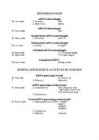
) Ph. Parvoviridae SubPh. Parvovirinae G. Dependovirus (AAV) G. Parvovirus FPV (feline parvovirus) CPV (canine parvovirus) MVM (minute virus of mice) G. Erythrovirus B19 G. Amadovirus AMDV (Aleutian mink dis.v) G. Bocavirus BPV (Bovine parvovirus) HboV (Human bocavirus) SubPh. Densovirinae Väikesed tsirkulaarse dsDNA genoomiga viirused Ph. Polyomaviridae hiirte polüoomiviirus SV-40 JCV ja BKV (in. Pol. V) Ph. Papillomaviridae BPV (Veiste pap. Viirus)
Seejärel koostatakse kaliibrimiskõver valgustandardi lahjendusrea absorptsiooni tulemuste põhjal. Saadud kaliibrimiskõvera kaudu saab määrata uuritava valgu kontsentratsiooni. Standardvalk. Standardvalguks sobib mingi odav valk, millest on võimalik võtta täpne kaalutis ning teha kindla kontsentratsiooniga lahus. Siiski standardvalgu valik mõjutab oluliselt katse tulemust. Originaaltöös kasutati valgustandardiks BSA-d (bovine serum albumine), mis on jäänud laialdaselt kasutusse. Siiski on täheldatud, et BSA annab tugevama värvimuutuse, kui enamik valke, mistõttu võivad BSA abil määratud valgu kontsentratsioonid olla kõrgemad tegelikust. Tihti kasutatakse valgu standardiks ka immunoglobulin G-d (IgG). Mõõtepiirkond: Bradfordi meetodil on võimalik määrata valgu kontsentratsiooni vahemikus 100-1,500 µg/ml Bradfordi mikromeetodil on võimalik määrata valgu kontsentratsiooni 1-25 µg/ml.
Tekitada kunstlikult telomeraasi sisseviimisel rakku. Rakuliin sageli aneupolidne- kromosoomide arv normaalsest erinev (tavaliselt suurem). Eri rakutüübid transformeeruvad eri sagedusega, suured liikidevahelised erinevused. 5. Miks rakud vajavad kasvamiseks seerumit? Et rakud end hästi tunneksid. Seerum-keskkond + mitogeenid=kasvufaktorid ja muud proliferisatsiooniks vajalikud substansid. Enamasti kasutatakse veise loote seerumit (FBS (ka FCS) foetal bovine serum) kontsentratsiooniga 10%. Seerum on hüübinud vere vedel osa. Seerumi koostis pole defineeritud, ta sisaldab albumiine, kasvufaktoreid ja teisi valke, vitamiine, rasvhappeid, lipiide jm; seerum suurendab ka söötme puhverdamisvõimet. 6. Miks peab rakkude külmutamisel lisama DMSO-d? Dimetüülsulfoksiid. Kaitseb rakke külmutamise ajal. Soojas on rakkudele kahjulik. 7. Mis on Bürkeri kamber? Rakkude loendamise kaadervärk 8
ajal (näiteks arenguetapp) aktivatsiooni tagajärjel (fosforüleerimine) ligandi (ehk mingi molekuliga) sidumisel keskkonna tingimuste muutusel · Peamised tüübid (võtmed): steroid retseptor zinc finger valgud leucine zipper (iga 7. on leu) Wendy Prioonid · Prions, which cause diseases such as Creutzfeldt-Jakob and BSE (Bovine spongiform encephalopathy, commonly called mad cow), are pretty scary stuff. They don't have any genetic material; instead, they're made from a protein that's normally produced by the brain. Like something out of science fiction, they adopt a distinct conformation, and then induce all the other proteins around them to adopt the same structure, gradually creating a tangle that's fatal to brain cells. Expose a healthy animal to the prions of a sick
ance of polypeptides migrating at approxi- troponin-T and the concomitant production mately 30 kDa are strongly related to, or of the 28- and 30-kDa polypeptides. correlated with, the tenderness of beef (Penny Degradation of troponin-T may simply be an et al. 1974; MacBride and Parrish 1977; indicator of overall postmortem proteolysis Olson and Parrish 1977; Olson et al. 1977). (i.e., it occurs as meat becomes more tender). It has been shown that purified bovine tropo- However, because troponin-T is an integral nin-T can be degraded by μ-calpain in vitro part of skeletal muscle thin filaments (Greaser to produce polypeptides in the 30-kDa region and Gergely 1971), its role in postmortem (Olson et al. 1977). In addition, polypeptides tenderization may warrant more careful in the 30-kDa region found in aged bovine examination as has been suggested (Ho et al. muscle specifically have been shown to be 1994; Uytterhaegen et al
A CEMS technique has been developed for age estimation of silk textiles based on amino acid racemization rates ranging in age from several decades to a fewthousandsyears old. The analysis takes ~20 min., consumes only nanolitres of amino acid mixture, and provide both amino acid composition profiles and d/l ratios for 11 amino acids. Lysozymem bovine serum albumin and betagalactosidase were 27 succesfully separated using a laboratorymade miniaturized capillary electrophoresis apparatus with a confocal fluorescence spectrometry (Sekhon, 2011). Conclusions and perspectives Capillary electrophoresis combines the resolution of conventional electrophoresis with ease
määratletud riskiteguriga materjal määratletud riskiteguriga materjal, nagu on määratletud määruse (EÜ) nr 999/2001 artikli 3 lõike 1 punktis g; rõhu all steriliseerimine loomsete kõrvalsaaduste töötlemine pärast seda, kui peenestamise tulemusena ei ole osakesed suuremad kui 50 millimeetrit, vähemalt 20 minuti jooksul katkematult sisetemperatuuril üle 133 °C ja vähemalt 3baarise absoluutrõhu all. Hullulehmatõbi (BSE bovine spongiform encephalopathy) on veiste nakkushaigus, millesse nakatumise korral loom sureb närvikoe kahjustumise tõttu. Haiguse põhjustajaks ja nakkuse ülekandjaks on valguosake ehk prioon. Sarnaseid nakkuslikust valguosakesest põhjustatud haigusi esineb peale veiste ka teistel loomadel, nagu näiteks lammastel, kassidel ja naaritsatel. Lammaste puhul on vastava haiguse nimetus skreipi. Erinevatel loomadel esinevat
Acupuncture and acupressure *Active-release technique (ART) (shoulders) *Advanced muscle integration therapy (AMIT) (pectorals, glutes, and calves) Graston technique MEDICATION Topical Androgel® (crystallized testosterone) DMSO (a solvent popular among sprinters and racehorses) combined with MSM Arnica Oral Cytomel® (liothyronine sodium = synthetic T3 thyroid hormone) High-dose L-glutamine (5080 grams per day) High-dose bovine and chicken collagen (types 1, 2, and 3) Intra-articular (in the joint) injections PRP Cortisone *Prolotherapy (left knee, right wrist) Intramuscular injection *Deca-Durabolin® (nandrolone decanoate) (left shoulder) Delatestryl® (testosterone enanthate) Depo® -Testosterone (testosterone cypionate) Sustanon® 250 (testosterone blend) HCG (human chorionic gonadotropin)
 annaabi.ee