Vajad kellegagi rääkida?
Küsi julgelt abi LasteAbi
Logi sisse

ITALY NATIONAL KITCHEN (0)

1 Hindamata
Punktid

ITALY NATIONAL KITCHEN
J
Sisukord
ITALY KITCHEN 3
Antiquity 4
Middle Ages 4
Early modern era 5
Some of the regional cuisines 6
Veneto 6
Lombardy 6
Meal structure 7
Recipe 8
Pasta alla Carbonara (eesti keeles) 9

ITALY KITCHEN


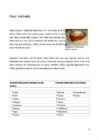
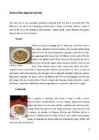
Spaghetti is traditional Italian cuisine
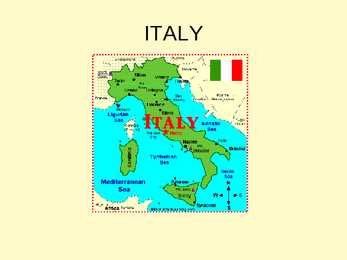
Italian Cuisine is traditional Italian food. It is often made up of the famous Italian foods such as pasta, pizza , cannoli and red or white wine . Italian cuisine often contains a lot of carbs and sometimes fats. Italian food also has a lot of vegetables and healthy fats, such as olives, broccoli, and lettuces. Italians are also famous for the different kinds of breads they make.
Ingredients and dishes vary by region . Many dishes that were once regional, however, have proliferated with variations across the country . Cheese and wine are a major part of the cuisine, with many variations and Denominazione di origine controllata (DOC) (regulated appellation) laws . Coffee , specifically espresso , has become important in Italian cuisine.
Essential Italian herbs and spices in the Essential Italian food in the kitchen:
kitchen:
* Garlic * Olive oil * Prosciutto ham
* Basil * Tomato * Rukola
* Onions * Anchovy
* Oregano * Capers
* Rosemary * Artichoke
* Parsley * Cauliflower
* Sage * Mushrooms
* Thyme * Olives

Antiquity


The first known Italian food writer was a Greek Sicilian named Archestratus from Syracuse in the 4th century BCE. He wrote a poem that spoke of using "top quality and seasonal" ingredients. He said that flavors should not be masked by spices, herbs or other seasonings. He placed importance on simple preparation of fish . This style seemed to be forgotten during the 1st century CE when De re coquinaria was published with 470 recipes calling for heavy use of spices and herbs. The Romans employed Greek bakers to produce breads and imported cheeses from Sicily as the Sicilians had a reputation as the best cheese makers . The Romans reared goats for butchering, and grew artichokes and leeks .

Middle Ages


With culinary traditions from Rome and Athens, a cuisine developed in Sicily that some consider the first real Italian cuisine.
Muslims invaded Sicily in the 9th century. The Arabs introduced spinach, almonds, rice and perhaps spaghetti. During the 12th century, a Norman king surveyed Sicily and saw people making long strings made from flour and water called atriya, which eventually became trii , a term still used for spaghetti in southern Italy. Normans also introduced casseroles, salt cod (baccalà) and stockfish which remain popular .

Early modern era


The courts of Florence, Rome, Venice and Ferrara were central to the cuisine. Christoforo Messisbugo, steward to Ippolito d'Este, published Banchetti Composizioni di Vivande in 1549. Messisbugo gives recipes for pies and tarts (containing 124 recipes with various fillings). The work emphasizes the use of Eastern spices and sugar .
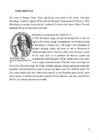
Bartolomeo Scappi personal chef to Pope Pius V
In 1570, Bartolomeo Scappi, personal chef to Pope Pius V, wrote his Opera in five volumes, giving a comprehensive view of Italian cooking of that period. It contains over 1,000 recipes, with information on banquets including displays and menus as well as illustrations of kitchen and table utensils. This book differs from most books written for the royal courts in its preference for domestic animals and courtyard birds rather than game . Recipes include lesser cuts of meats such as tongue, head and shoulder . The third volume has recipes for fish in Lent. These fish recipes are simple, including poaching, broiling, grilling and frying after marination. Particular attention is given to seasons and places where fish should be caught. The final volume includes pies, tarts, fritters and a recipe for a sweet Neapolitan pizza (not the current savory version , as tomatoes had not been introduced to Italy. However, such items from the New World as corn (maize) and turkey are included .

Some of the regional cuisines


Each area has its own specialties, primarily at regional level, but also at provincial level. The differences can come from a bordering country (such as France or Austria), whether a region is close to the sea or the mountains , and economics . Italian cuisine is also seasonal with priority placed on the use of fresh produce.

Veneto


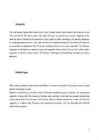
A dish of risotto
Venice and many surrounding parts of Veneto are known for risotto, a dish whose ingredients vary by location, with fish and seafood being added closer to the coast and pumpkin, asparagus, radicchio and frogs ' legs appearing further away from the Adriatic. In other parts of Veneto, polenta is the primary starch. Beans , Peas and other legumes are seen in these areas with pasta e fagioli (beans and pasta) and risi e bisi (rice and peas). Veneto features heavy dishes using exotic spices and sauces. Ingredients such as stockfish or simple marinated anchovies are found here as well. Less fish and more meat is eaten away from the coast. Sausages such as sopressata and garlic salami are common. High quality vegetables are prized, such as red radicchio from Treviso and asparagus from Bassano del Grappa . The most notable dish of Veneto is fegato alla Veneziana, thinly-sliced liver sauteed with onions. Squid and cuttlefish are common ingredients, as is squid ink, called nero di seppia.

Lombardy


Pizzoccheri
Rice is popular in Lombardy, often found in soups as well as risotto. Regional cheeses include robiola, crescenza, taleggio, gorgonzola and grana padano (the plains of central and southern Lombardy allow intensive cattle -raising). Butter and cream are used. Single pot dishes, which take less work to prepare, are popular. In Bergamo, Brescia, and Valtellina, polenta is common. In Mantua festivals feature tortelli di zucca ( ravioli with pumpkin filling ) accompanied by melted butter and followed by turkey stuffed with chicken or other stewed meats.

Meal structure

Traditionally, meals in Italy usually contain 3 or 4 courses. Meals are seen as a time to spend with family and friends instead of immediate sustenance; thus, daily meals can be longer than in other cultures. During holidays, family feasts can last for hours .
Today, the traditional Italian menu is kept mainly for special events (such as weddings) while an everyday menu includes only the first and second course , the side dish and coffee. A notable aspect of Italian meals is that the primo or first course, is usually a more filling dish such as risotto or pasta. Modern Italian cuisine also includes single courses (all-in-one courses), providing carbohydrates and proteins at the same time (e.g. pasta and legumes).
Aperitivo :
apéritif usually enjoyed as an appetizer before a large meal, may be Campari , Cinzano, Prosecco, Aperol, Spritz or Vermouth.
Antipasto :
literally "before (the) meal", hot or cold appetizers
Primo :
"first course", usually consists of a hot dish like pasta, risotto, gnocchi, polenta or soup .
Secondo :
"second course", the main dish, usually fish or meat. Traditionally veal , pork and chicken are most commonly used, at least in the North , though beef has become more popular since World War II and wild game is found, particularly in Tuscany. Fish are generally caught locally.
Contorno :
"side dish", may be a salad or cooked vegetables. A traditional menu features salad along with the main course.
Formaggio e frutta :
"cheese and fruits ", the first dessert . Local cheeses may be part of the Antipasto or Contorno as well.
Dolce :
"sweet", such as cakes and cookies
Caffè :
coffee
Digestivo :
"digestives", liquors/liqueurs (grappa, amaro, limoncello,sambuca, nocino, sometimes referred to as ammazzacaffè ("coffee killer ")
Note: On restaurant menus, these terms may be referred to as Primi, Secondi, Contorni, and Digestivi.

Recipe


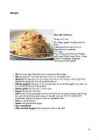
Pasta alla Carbonara
Recipe serves one
60 to 80gm spaghetti freshly cooked al dente
1 tablespoon Extra virgin olive oil
30gm pancetta or guanciale
1 or 2 eggs
25 gm freshly grated Pecorino Romano and/or aged Italian Grana Cheese. (Grana Padano or Parmigiano Reggiano)
freshly ground black pepper
  • Mix the beaten egg with grated cheese and ground black pepper
  • Slice the pancetta 7 to 10 mm thick and cut in 2 cm rectangular bites
  • Slowly fry the pancetta in the extra virgin olive oil in a non stick pan until crispy. If the pancetta has enough fat you will not need to add oil
  • Add the spaghetti with some of the cooking water, do not fry the spaghetti but rather just let it absorb the flavour of the pancetta
  • Simmer gently until the water is almost gone
  • Remove the pan from the stove
  • Add the egg, cheese and pepper mixture to the pasta and stir quickly making sure the egg does not overcook but remains creamy. It shouldn’t pass the 70-72 C? (158-162 F?) temperature, which is the point at which its coagulation starts
  • Place in a hot pasta bowl
  • Season with ground black pepper
  • Serve immediately
  • Offer more black pepper and more grated cheese at the table

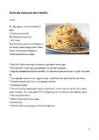
Pasta alla Carbonara (eesti keeles)


1 ports
60 - 80g spagette, värskelt keedetud, al dente
1 tl Ekstra neitsioliiviõli
30g Pancetta või guanciale
1 või 2 muna
25 g värskelt riivitud Pecorino Romano ja / või vanuses Itaalia Grana juustud . (Grana Padano või Parmigiano Reggiano)
värskelt jahvatatud musta pipar
* Sega lahti löödud muna ning riivitud juust ja jahvatatud musta pipart .
* Slice Pancetta 7-10 mm paksune ja lõigata 2 cm ristküliku kujuliseks.
* Aeglaselt praadida Pancetta Neitsioliiviõlis. Kui Pancetta on piisavalt rasvane , siis pole vaja lisada õli.
* Lisa spagetide keetmiseks vett, spagette ei prae, vaid lihtsalt lasta neil taluda Pancetta maitse.
* Keedetakse tasasel tulel, kuni vesi on peaaegu kadunud.
* Eemalda pott pliidilt.
* Lisa muna, juust ja paprika pasta segule ja sega kiiresti, muna ei tohi üle küpseda kuid ta peab jääma kreemjaks. See ei tohi anda 70-72 C. Temperatuur, mis on koht, kus oma hüübimise algust
* Pane kuum pasta kaussi.
* Maitsesta jahvatatud musta pipraga.
* Serveeri kohe
* Pakkuda rohke musta pipraga ja riivitud juustuga lauas .
Vasakule Paremale
ITALY NATIONAL KITCHEN #1 ITALY NATIONAL KITCHEN #2 ITALY NATIONAL KITCHEN #3 ITALY NATIONAL KITCHEN #4 ITALY NATIONAL KITCHEN #5 ITALY NATIONAL KITCHEN #6 ITALY NATIONAL KITCHEN #7 ITALY NATIONAL KITCHEN #8 ITALY NATIONAL KITCHEN #9
Punktid 50 punkti Autor soovib selle materjali allalaadimise eest saada 50 punkti.
Leheküljed ~ 9 lehte Lehekülgede arv dokumendis
Aeg2010-10-30 Kuupäev, millal dokument üles laeti
Allalaadimisi 16 laadimist Kokku alla laetud
Kommentaarid 0 arvamust Teiste kasutajate poolt lisatud kommentaarid
Autor A. V. Õppematerjali autor
ITALY KITCHEN
Antiquity
Middle Ages
Early modern era
Some of the regional cuisines
Veneto
Lombardy
Meal structure
Recipe
Pasta alla Carbonara (eesti keeles)

Sarnased õppematerjalid

Itaalia
10
ppt

Itaalia

ITALY Pizza When we think of Italian cuisine, the first thought that comes to mind is Pizza. Yes, Italian Pizza is renowned the world over. 1 tsp yeast (fresh or dried) 6 tbsp lukewarm water ½ tsp sugar 1 tbsp olive oil 1 cup plain flour 1 tsp salt Mix together the yeast, water and sugar in a clean and dry bowl. If you are using dried yeast, sprinkle over the water and sugar solution and mix till dissolved. Leave this bowl in a warm place until a froth forms on the top. Then stir in the olive oil. In the meanwhile, sift together the flour and salt in a large bowl, mix these two dry ingredients well. Now, if your yeast mix is ready, make a well in the centre of the flour salt mix and pour the mixture in. Preferably with the hands, mix together and knead to make smooth dough. Remember to knead for at least five minutes, or until the dough is elastic and smooth to touch. Wrap this dough in a greased plastic sheet and leave in a warm place for at least an hour. T

Inglise keel
Lõuna Aafrika rahvusköök
7
doc

Lõuna Aafrika rahvusköök

Today the best of South African wine is up there with the rest, while in the "easy-drinking" category no one beats us. History has a way with wine and the Cape's wine culture, which goes back 350 years, is one that reflects the country's sad colonial and apartheid past, but also shines with the potential and expectation of the modern wine world. From that long history comes a wine tradition of tastes and styles with its roots in the classic "Old World" of France, Germany and Italy, but also an acute awareness of the contemporary consumer, as has been defined by wine-making in the "New World" of California and Australia. It has often been said that South African wine is in the unique position of both those wonderful worlds. It offers marketing possibilities that can be harnessed for the challenges of the new global economy. It can offer the wine-drinking world all kinds of new flavour experiences. It can also show the way to handle such sensitive issues

Kokandus
India
3
rtf

India

History: · Indian society is predominantly agrarian. Diet consists mainly of fruits and vegetables, meat, cereals, dairy products and honey. Also, drinks containing different types of spices. · During the Gupta empire influenced by diet buduism and jainism. Many religious people were vegetarians. Most of the people consumed the chickens, sheep and goat meat. · Muslims also put emphasis on the development of food. Indians brought to the diet of dried fruit and flat bread. India introduced the dietary habits of the Portuguese and Chinese. · Indian diet is mixed with a variety of cultures. Etiquette: · Traditionally, meals were eaten while seated either on the floor or on very low stools or cushions. · Food is most often eaten without cutlery, instead using the right hand. Among the middle class throughout India, spoons and forks are commonplace. · Hot food is served on banana leaves, the leaves a

Inglise keel
Turundusplaani koostamine
5
doc

Turundusplaani koostamine

Tallinna Majanduskool ,,Notes on preparing a marketing plan" Homework 03.05.2012 Liisi Nigul Turundus II Tallinn 2012 Toscana Gourmet is a place for family togetherness and will also be the leading gourmet Italian restaurant in Tallinn. The signature line of innovative, premium, pasta and risotto dishes include pesto with smoked salmon, pancetta and peas linguini in an special sauce, and fresh mussels and clams in a marinara sauce. Toscana also serves distinct salads, desserts, and beverages. Toscana Gourmet will reinvent the Italian food experience for individuals, families, and take out customers with discretionary income by selling high quality, innovative products at a reasonable price, designing tasteful, convenient locations, and providing excellent customer service. The basic market need is to offer individuals, families, and tak

Inglise keel
Estonian cuisine
4
docx

Estonian cuisine

beetroot, meat and herring . Small pastries called pirukad ("pirukas" in the singular) - a relative of the pirozhki - filled with meat, cabbage, carrots, rice and other fillings or mixtures are also popular, and are often served with bouillon. Herring is common among other fish as a part of the Estonian Cold Table. Smoked or marinated eel, crayfish dishes and imported crabs and shrimps are considered delicacies. One of Estonia's national dishes is räim (Baltic dwarf herring), along with sprats. Flounder, perch and pike-perch are also popular. Soups Soups are traditionally eaten before the main course and most often are made of meat or chicken stock mixed with a variety of vegetables. Soups are also blended with sour cream, milk and yogurt. The Main Course Pork and potatoes accompanied by a rich gravy and often served with sauerkraut or other vegetables has been the traditional Estonian main course

Inglise keel
Erinevate riikide rahvustoidud
6
doc

Erinevate riikide rahvustoidud

German Sauerbraten: Traditionally made with a beef roasting joint (topside or similar) the meat is marinated for 2-3 days in beer, spices such as cloves, juniper berries, allspice and peppercorns, bay leaves and onions and is braised in the marinade for a long period, resulting in very tender melt-in-the-mouth meat. The Black Forest: cake is one of the most popular German national foods. Cake consists of several layers of chocolate cake, with whipped cream and cherries between each layer. Then the cake is decorated with additional whipped cream and chocolate shavings. A Schnitzel in German is a slice of pork or veal haunch. Dish made with boneless meat thinned with a mallet (escalope-style preparation), coated in bread crumbs and fried. Only if it is made of veal and coated in bread crumbs is it called Wiener Schnitzel; a pork version is

Inglise keel
Estonian National Cuisine
30
ppt

Estonian National Cuisine

mixture Mixture of ground grains ­ rye, oat barley, and pea flour. It is used for making some desserts Mostly enjoyed for breakfast mixed with milk, buttermilk or kefir F is h o n ia n Es t lt u re C u The Baltic Herring The Baltic herring has been the main fish dish on Estonians' table for centuries. It is the main fish that is caught in the Baltic Sea. The Baltic Herring ... has become the national fish of Estonia. ... is eaten fresh, marinated, smoked and tinned. ... with sauce is traditional fish meal Baltic Sprat A sprat sandwich is a traditional snack on Estonian food table. Sprats are usually salted with all kinds of spices. Typical Estonian black bread with sprat and egg Po r k Pork has been known in the national cuisine of Estonia for a long time. Meat was eaten mostly

Inglise keel
Food-Restaurants and Cooking
4
docx

Food-Restaurants and Cooking

It's under-…. A) chilled B) frozen C) frosted D) chilly A) done B) developed C) nourished D) weight d) Can you give me the …. for this pie? It's delicious. i) Is the hamburger for you to eat here, or to ..? A) prescription B) instructions C) ingredients D) recipe A) go out B) take away C) carry on D) sit down e) There was a wonderful smell of …. bread in the j) That was fantastic. Could I have a second …., kitchen. please? A) cooking B) roasting C) baking D) grilling A) plate B) course C) helping D) service Task 4. Decide which answer (A, B, C or D) best fits each space. Chickpea soup This recipe is both (1) B. and cheap. If you use dried chickpeas, (2) them for at least twelve hours in cold water. Drain them and put them in a large (3) with plenty of water

Inglise keel


Meedia

Kommentaarid (0)

Kommentaarid sellele materjalile puuduvad. Ole esimene ja kommenteeri


Sellel veebilehel kasutatakse küpsiseid. Kasutamist jätkates nõustute küpsiste ja veebilehe üldtingimustega Nõustun