Public International Law is a
system of law, different from
domestic law.
Why is this system
unique ?
Usually law regulates
relations between people, people and the state etc,
PIL regulates relations between states . Thats why PIL is
important for international relation
students .
- PIL influences the life of everybody , it doesn’t regulate people directly but indirectly ( through the decisions of the states), because it’s everywhere . It’s like air. E.g. when you want to send a letter to Brazil, you put a stamp from your own country and send it from your post office and the letter gets delivered . Why is this so easy , because there are certain international conventions that regulate postal services . E.g. traffic signs are almost the same everywhere, why? Because of certain int conventions that require the states to have more or less unified traffic signs.
- States apply international regulations to national regulations and they have to be in accordance with each other , the states can always specify these regulations. Therefore , PIL regulates people indirectly.
- Another unique feature: domestic law sources have a clear pyramid (top to bottom : constitution, laws , individual contracts, they cannot contradict each other ) and all sources are written. In PIL there is no such hierarchy, but there are primary sources (all are equally important) and secondary sources and all are not written. Primary sources: written documents (int treaties, conventions, declarations etc), international customary law (legally binding), fundamental principles (legally binding).
PIL= system of (legally binding) norms and principles, written or
customary, regulates the conduct of states and
intergovernmental international organizations . Also
known as
International Law, but called PIL to distinguish from
private
international law, i.e. solution for conflict of laws.
Only intergovernmental organizations are also
subject of PIL,
non-governmental organizations are not.
- There can be specific cases of PIL, e.g. nations fighting for their independence. These can be considered to be subjects of PIL.
- Also, some exceptions : International Committee of Red Cross , formerly it wasn’t covered by PIL, but due to its unique status (covered by Geneva conventions etc), then it is a subject of PIL.
- PIL directly regulates private persons, e.g. punishment of international crimes (crimes against peace = crime of aggression, genocide , crimes against humanity, war crimes). This is if specific countries do not want to punish the criminals , specific international tribunals etc are created to do the job for them .
Humanitarian doctrine – if a certain country violates human
rights very severely and if other attempts have failed to
prevent and
stop this, then war can be used as a
method to stop this
stuff .
Süüria – chemical weapons doctrine is one of the strongest
doctrine ever, respected by almost everyone, that’s why people are
so shocked about the
events there. It’s a
grave violation of PIL.
If there’s enough
evidence that chemical weapons were used, then
war is basically a
legal method, but not fully, because it isn’t
one of the
reasons that allows war as a method to
resolve conflict.
Differences :
Public International LawPrivate International Law = conflict of lawsSubjectsStates, intergovernmental organisations and some specific stuff (Red Cross; nations seeking independence if they are recognized)
Regulates relations between private persons and legal persons (
person vs person, person vs legal person vs state etc); like domestic law
What is regulated?Relations between states
Relations regulated by domestic law branches. Why it’s international then? Because our world is a globalized world and
even though its regulated by domestic branches, it’s international because one has to decide which national law is
applicable . (Also called domestic law with international
elements )
SourcesInternational conventions, int customary law, fundamental principles. The same everywhere.
Domestic laws, international conventions. This isn’t
Enforcement By specific
instruments . You can’t
enforce the law of int level like in a national level. Main
idea is the coordination of the desires of states. And some specific enforcement in
addition . PIL
works in some branches very well and
makes life
convenient , but some branches fail (
security etc).
By national courts
Lecture 2
Sources of PIL
- Divided to primary and secondary sources. Primary sources are equal and secondary sources as well.
Primary sourcesInternational conventions (expressly recognized by the contesting states) – all written documents, agreements (can be diplomatic notes , letters , treaties.
International customary law (as evidence of a general practice accepted as law)
General principles of the law recognized by civilized nations (why civilized nations – before the creation of UN and the collapse of the colonial system, only metropolitan nations were considered subject of international law, this was created before the collapse of the colonialized system, UN charter is a very old and stupid document , that’s why there’s still such a definition )
- Strong point of int. Conventions - it’s easier to apply, no proof is needed, the rules exist in the text. However , int. Treaties and conventions are only legally binding for member states, some conventions are not applicable to everybody.
- Customs are compulsory for everybody, for all countries of the world. However, it’s harder to apply these, because there should be a consensus that a custom is customary norm for it to be legally binding.
- To create a legally binding norm, two criteria :
1) should have general practice of the states (practice
should be established , wide -spread and consistent; it should be a
settled practice),
2) should be accepted as law, opinio juris is necessary ( positive legal opinion). How such opinion should be expressed? Usually opinio
juris is expressed by silent agreement. E.g. if we have certain
general practice that happens periodically and everybody is silent
about it, then it is opinio juris. If someone is not happy with this
practice, the state should produce a formal protest, e.g. by
diplomatic note or you can act not in accordance with the practice.
One can also find opinio juris in the secondary sources, in
addition to the silent agreement.
- General principles is an unusual source, there’s not many of them. They provide general guidelines. If you have a gap in law, you can apply to the general principles. Due to their general character they can cover these gaps.
Secondary sources
- Subsidiary sources, cannot exist without primary sources. Help determine the rules of international law
Judicial decisions (decisions of int courts or tribunals etc)
Juristic writings ( explain the essence of the primary sources, commentaries for conventions)
Implementation of IL
- Important to actually make a connection between national law and IL. If there’s a certain norm in IL, to make it applicable in national law, you have to make an implementation.
- Def.=Realization, execution and enforcement of international law at a national level
- Three forms :
- If you take a certain provision from IL and put it in national law.
- If you take a certain provision from IL and make certain specifications or amendments to it for it to fit into national law.
- Possibility to make a reference , in national law you make a reference to the applicable IL treaty .
Some topical question:
- Which one is more important, national or international law? Depends, there are different views. A certain view says that if there is a contradiction in national law to the IL, then national law should be changed. Also, many countries write it in their constitution that IL should prevail. However, some countries don’t support this idea.
- Sometimes treaties and customs can overlap. Sometimes conventions put on paper some customs. Or some successful conventions can become customary norms. This is important because customary norms are legally binding for all, this way conventions can become binding on all. E.g. the convention of human rights, wasn’t legally binding, now customary and legally binding.
- E.g. convention for chemical weapons has become a customary norm and the fact that SÜÜRIA is not a member state doesn’t mean anything .
Principles of PIL
Pacta sunt servanda (every treaty in force is binding upon the parties to it and must be performed by them in good faith )
Equal rights and self-determination of peoples (lot of problems with self-determination, many believe that this means that every nation can have their own independent state, self-determination in another state, autonomy; a fully independent state is only allowed if the nation is very repressed in a state, e.g. in Kosowa?, others are not recognized, even de facto states are not recognized sometimes. Self-determination means that nation has the right to freely exercise their culture and language )
Sovereign equality and independence of all States (all countries are equal in front of law, since the collapse of the colonial system)
Non-interference in the domestic affairs of States (all countries can decide what to do on their territory, others cannot dictate this, but sometimes it can contradict with the 7th principle)
The prohibition of the threat or use of force
Peaceful settlement of international disputes
Universal respect for, and observance of, human rights and fundamental freedoms for all (environmental norms – Lege ferenda – norm which is in the process of establishment )
To use war as a legal object to resolve conflict, there has to be
either self-defence or the agreement of the security council of UN
(if there’s a threat to peace etc).
State (def)
- “ Inter -American convention on the rights and Duties of States!” (Montevideo 26.12.1933)
- A permanent population – biggest part are citizens of the state, + citizens of other states, who have a residence permit , stateless person (apatrid), people with multiple citizenships (bipatrid).
- How to get citizenship
- by birth :
- lex sanguinis – blood principle, by birth, given to the child according to the citizenship of the parents (if parents are citizens of different countries different legislation can provide different solutions , they could choose or the child could choose);
- lex soli – ground principle, given due to the place of birth, typical for Anglo-America and Latin -American, this can lead to dual-citizenship. Child if found without parents, he/she can still receive citizenship based on lex soli, even though lex sanguinis is used in the country. E.g. Russian and stateless person get a child in Estonia, then child receives Russian citizenship automatically, but later on there can be problems.
- by naturalization (reasons: immigration , marriage , adoption etc), the procedure: you should spend certain amount of time in the country etc, some procedures are simplified (adoption).
- from the state, e.g. for scientists, for people who have accomplished certain things.
- by international treaties (if territories change , people can choose to keep their citizenship, or to obtain citizenship of the new state)
- How one becomes stateless – country can take away citizenship, or in some countries marrying someone from another country the person loses citizenship; if a country stops existing, then.
- Why is international community against stateless persons? – Travelling is difficult, getting visas in grey passports; stateless person doesn’t have the consulate protection abroad ; stateless persons don’t have political rights (they have all other rights), that means to elect and to be elected on the parliamentary level and cannot get positions on the state service . Harder to trace criminal .
- Why is international community against dual-citizenship? – People have additional obligations ( military obligation, paying taxes ) and additional rights. For states it’s difficult to trace criminals etc.
- A defined territory
- Government
- Capacity to enter into relations with other states (def from the convention) – if states can enter into relations with other states ,it means that the state is recognized by other surrounding states or by the states which have relationship with the specific state.
- Sovereignty: internal and external
Lecture 3
- A defined territory
- 3 types of territories:
- Territory under the full sovereignty of the state – territory within the state borders. Borders are established by two stages: 1) delimitation – establishing of the borders on paper, treaties with annexes, which have maps where the border is shown and the description of the border etc; 2) demarcation – establishing the border on the ground since maps and reality can be a bit different sometimes. In addition : 1) subsoil to the centre of the world is part of the territory; 2) airspace over the territory and outer space , until 100-110 km; 3) islands , 4) territorial and internal waters . There’s also quasi territory of the states, e.g. 1) territory of embassies, 2) territory of the ships and aircrafts, 3) artificial islands, 4) cables and pipelines (under the sovereignty of the state if they are installed in the international zones ), 5) all artificial objects in space ( here they are always quasi territory of the state)
- Difference between private ships and aircrafts and military/state – military/state ones are under territory of the state under all circumstances, private ones are considered quasi territory of the state only in international territories, not in the territories of other countries.
- International territory, regulated by IL – includes high seas ( open seas), the airspace above the high seas, deep seabed beyond the continental shelf , outer space including all natural space objects ( moon , comets, starts etc), Antarctica (territory that goes from south latitude 60)
- Territory with mixed regime – partially covered by sovereignty of the state and national law and partially by international law. Almost all territories covered by the law of the sea. First there are territorial waters that are covered by the state, then there are contiguous zone and exclusive economic zones and continental shelf. In addition there are international straits, channels and rivers (this is where many have disputes). The idea is that all of them are regulated by international treaties, coastal states don’t necessarily have a say. E.g. Panama channel, Suess channel, Bosporus and Dardanelles straits, straits between Sweden and Denmark , Danube river , river Nile
Lecture 4
Antarctica
- Antarctica’s unique regime was established by the Antarctic Treaty (Washington, 1 December 1959 ). Originally signed by 12 countries which were not far from Antarctica or had some explorations there (UK, Japan , South- Africa etc). Initially concluded for 30 years , then prolonged. Some scholars consider the treaty’s principles as norms of customary international law.
- The unique feature of Antarctic is that it comprises of all territories that go under the south latitude 60 (includes all ice shelves, doesn’t prohibit using rights under IL concerning high seas). So Antarctic was an international territory. So it is a common heritage of mankind.
- It was prohibited to make any new claims on it or enlarge existing claims on it (these were proclaimed as frozen ones).
- Antarctic is a peaceful zone, any military activities are prohibited, inter alia, any measures of military nature , establishment of military bases , tests of equipment and weapons, fortification. It was permitted to use military equipment for scientific research/ purposes .
- Prohibited to do nuclear explosion and to dispose any nuclear waste .
- Member states can compose expeditions (under the organizing state’s jurisdiction) and polar stations (under the state’s jurisdiction) and they are under the jurisdiction of the state, but not the territory.
- After the expedition countries should give the research to the other member states.
- All member states have the right to check if all provisions to the treaty are all fulfilled in good faith: freedom of flights (any country can send aircraft), can send inspections to stations of the other countries (to all Antarctic).
- All parties have to inform other parties of their expeditions to Antarctica, all stations occupied by their nationals and all military personnel/equipment.
- In the treaty it’s said that any conflict regarding that treaty can submit a complaint to the international court of justice of the UN and the court has the jurisdiction to solve the dispute.
- Later other annexes and conventions were adopted.
- Additional conventions
- Convention for the Conservation of Antarctic Seals (London, 1 June 1972)
- Convention on the Conservation of Antarctic Marine Living Resources (Canberra, 20 May 1980)
- Convention on the Regulation of Antarctic Mineral Resource Activities (Wellington, 2 June 1988)
- Protocol on Environmental Protection to the Antarctic Treaty ( Madrid , 4 October 1991)
- Arctic isn’t regulated in the same way because it’s not a continent and the law of the sea applies there, it’s easier that way.
Home task – situation in western sahara , recognition ,
international court of nation un.
Read the case – Rainbow warrior, know details , clearly
Recognition of the States
- A political act by which one state acknowledges an act or status of another state or government, thereby according it legitimacy and expressing its intent to bring into force the domestic and international legal consequences of recognition.
- Not only recognition of the country, but also the government (e.g. after a revolution there will be a new government, or when there’s occupation or when government is in exile , e.g. the Polish government). Sometimes recognition required for nations fighting for their independence, otherwise they’re not recognized as subject of IL.
- Recognition could be de facto (country enters into certain new relations with another country, but official steps are not made yet; government has control over territory, weaker recognition) or de jure, usually by a statement of the recognizing government.
- Expressed de jure recognition – formal statement of the state, letter, int treaty etc.
- Implied de jure recognition – by action , e.g. exchange of ambassadors or diplomatic missions , visit of the head of state etc.
- De facto could be tricky, can be the first stage for recognition (e.g. US recognized Finland as de facto at first, then de jure), or de jure recognition by implication could be treated as de facto.
- Recognizing by international treaty. After the II WW in 1955, Austria was established as an independent state. It was re-established in an international treaty signed by the allied powers, it was automatically de jure recognition.
- Usually recognition cannot be withdrawn , unless country somehow was divided or re-organized etc. One example when it happened , e.g. Japan against China in
- Two theories
- Constitutive theory – says that countries or government don’t exist until they are officially recognized
- Declaratory theory – countries or governments exist objectively and recognition only confirms their existing situation.
- Many think that declaratory theory is more relevant , in reality, constitutive theory is more practical . To receive international rights and obligations you have to be recognized, it’s easier to deal with the constitutive theory.
- Northern Cyprus is recognized only by 2-3 countries, and then no-one considers it as an independent state.
- How many states should recognize? In an unofficial doctrine it says half of the countries. But usually when countries start recognizing the process goes quickly and soon most countries recognize. E.g. Kosowa, a lot of countries recognize it, but it’s still less than half; also Taiwan which is officially under China, but recognized by several countries. Another example: Western Sahara.
- Situations
- A –> B ; On the territory of one country another country is established (e.g. Soviet Union over Russian Empire , but still not a very good example) (recognition needed)
- A + B –> C; Two or more different countries merge into third new country (recognition needed). E.g. Zanzibar and Tanganyca merged and out came Tanzania, or Egypt + Syria (which then collapsed and became separate countries again )
- A + B –> A; Countries merge but in the end there will be one of the original countries left , it got bigger. E.g. Eastern and Western Germany merged.
- A –> B + C; Collapse of the country, country can be divided into completely new countries (recognition needed for new countries). E.g. Yugoslavia in the late stages when only two countries were left, Tšehhoslovakkia, Soviet Union ( Baltic States, Belarus , Moldova, Ukraine , Russia , Armenia , Azerbaidjan, Georgia , Kasaksthan, gergistan, usbekistan, Turkmenistan +1)
- A –> A + B; Collapse of the country, a part of the country leaves and the country remains (recognition for the new country). E.g. Yugoslavia in the early stages when some countries left, Sudan, Kosowa from Serbia, something from Ethiopia, Pakistan from India. South Sudan from Sudan
Succession of the states
- When new countries come , then what to do with treaties, archives and property? This process is known as the succession of States – the replacement of one state by another in the responsibility for the international relations of territory.
- Predecessor State – the state which has been replaced by another state on the occurrence of a succession of states
- Successor State – the state which has replaced another state on the occurrence of a succession of states.
- Issues
- To regulate the situation with treaties: Vienna Convention on Succession of States in respect of Treaties (22 August 1978).
- If we have situation 1, then tabula rasa principle is applied (newly independent state should not be bound by the treaties of predecessor states, but these countries are hard to find anyway).
- If situation 2 and 3, then old treaties of predecessors continue to be bound for the new country. Exceptions: 1) if successor state and other state parties agree otherwise, done formally in written form, then it’s the country’s right not to be bound by the treaty; 2) if the treaty in respect to the successor state is incompatible, or it makes no sense anymore , then the successor is not bound by it (e.g. if there’s a treaty on borders between two countries, then if they merge the new country doesn’t need the treaty anymore).
- In situation 4 and 5 same as 2 and 3. Exception: if treaty not related to the territory of a new emerged country, then the treaty is not compatible for the country.
- To regulate property, archive and debts: Vienna Convention on Succession of States in Respect of States Property, Archives and Debts (8 April 1983)
- Situation 1 – succession as such doesn’t affect the rights and obligations or creditors (if country has debts, the successor state also has debts). So it’s opposite of tabula rasa.
- Situation 2 and 3 – all debts, archives and property are gathered together and applicable to the new country.
- Situation 4 and 5 – should be divided in equitable proportions, it should be decided by negotiations and then it could be decided very differently. Archives are usually divided according to the relevance for the new territories; archives should be protected , kept carefully. Property inside the countries goes to the countries. Foreign property is the problem, houses of embassies, houses of consulate. Problem with debts as well, they could be positive or negative . So countries decide themselves. But different decisions from usual ones with Soviet Union, agreed that Russian Federation was to take all debts and all property, the idea was balance between them, but no-one knows if there was more property or debts.
Lecture 7
HOMEWORK : erga omnes , how it is related to PIL, which principles are ergo omnes.
- Rights or obligations that are owed toward all (erga omnes right – statutory right)
- In PIL, used as a legal term to describe obligations owed by states towards the community of states as a whole . An erga omnes obligation exists because of the universal and undeniable interest in the perpetuation of critical rights (and the prevention of their breach ).
- Concept recognized in ICJ Belgium v Spain: “In view of the importance of the rights involved, all States can be held to have a legal interest in their protection; they are obligations erga omnes.”
- Concerns jus cogens norms.
- Just as the jus cogens crimes, the crimes that give rise to erga omnes obligations are seen as affecting the international community as a whole, and consequently all states in the world have an obligation to take action against the perpetrators of such crimes.
- Examples : outlawing of acts of aggression, outlawing of genocide, protection from slavery, protection from torture , protection from racial discrimination.
Responsibility – three types of responsibility: international, civil and criminal.
- PIL has its own specific system of international responsibility. You don’t have international police if your rights are violated and the jurisdiction of courts is not as strong. Courts have jurisdiction only if all parties of the conflict agree to it.
- Elements of state/international responsibility:
- Attribution of conduct to the state
- If the state’s person acts on official capacity or not; e.g. if a private person blows up a Greenpeace boat then the person is responsible , if for example agents blow up a boat because they’re given orders from officials, then the state is responsible.
- Criminal responsibility ( killing the crew member, agents are imprisoned)*
- Breach of an international obligation of the state
- France is responsible in front of New Zealand , because states are the subjects of international law and it blew up the boat in the New Zealand waters.
- Civil responsibility
- To establish responsibility there should be also absence of excuses or defences:
- Consent – if there are certain obligations between countries they can always agree on something different and therefore the breach of the obligations is legal. One exception: jus cogens norms (no state cannot derogate from them).
- Self-defence – use of force and threatening is prohibited, the only exceptions are self-defence and the decision of the Security Council of the UN (if there’s threat to peace)
- Force Majeure – “acts of God”, acts in nature no state, no human beings have control over, major natural disaster etc. it can be used as defence/excuse in certain limitations: 1) only when the force majeure influences the situation, 2) if direct consequences prevent acting out the obligations, 3) can be used only regarding those obligations which are directly affected by force majeure.
- Distress and necessity – 2 criteria should be followed here: 1) by your action you should prevent more serious harm which you caused by your violation, 2) there shouldn’t any other legal alternatives to your behaviour.
- National law example: you’re a doctor , walking by the pharmacy; see a guy lying on the ground having a heart attack. You can save him by doing an injection, you have one minute . An ambulance won’t come to the place in time. So you break the window of the pharmacy and take the medicine and save the man.
- International example: you’re in a boat on international waters, boat starts sinking of something is wrong (military ship ) and you need help so you enter to the territorial waters of another country without permission to save yourself and your boat. Only if you have no alternatives.
- Life of a person is considered as absolute value . You cannot excuse killing of one person for the saving of three persons, e.g. to get organs from the dead and give them to the living. In certain situations it can be acceptable.
- Countermeasures – you violate certain obligations in response of the violations of your partner . It’s not a universal measure . You can use it if it’s not directly prohibited by international law. In some areas nowadays it’s prohibited, e.g. law of war. Earlier it was prohibited to use countermeasures in times of war, now it’s clearly prohibited (collective punishments , any reprisals regarding civilian populations). Often used in cases of trade wars , if no limitations.
- Forms of international responsibility
- Political responsibility
- Most known form is satisfaction – the guilty side express its formal official excuses, the issue the statement that they are sorry , person responsible will be punished , or that they promise they won’t do this again.
- Breaking off diplomatic relations – if a country is very unhappy with the behaviour of another country.
- Limiting diplomatic relations; can be in the form of recalling the ambassador for consultations. Head of the mission , ambassador comes back to their origin state.
- If country is seriously wrong by using force, then more severe punishments could be imposed .
- The sovereignty of the state could be limited after the war for certain period . E.g. after II WW the sovereignty of Germany and Japan were limited, part of sovereignty on their territory was exercised by allied powers.
- Changing the borders of the country, e.g. moving Germany’s borders after the II WW:
- Material /economic responsibility
- Reparations – general form; you should cover the damage you caused
- Can be paid by money .
- Substitution – replacing one object by another with similar value.
- Taking away scientific stuff from the wrong-doer, USA and Russia took engineers from Germany and based their space stuff on their findings.
- Restitution – restore the damage by material, same as paid by money ?
- Reparation - return to the situations as it was before the violation of IL
- Sanctions – can be imposed on a specific country. General definition, all forms of responsibility all in a sense sanctions. E.g. prohibition to export certain weapons to stop aggressive developments in a certain country; support the population with food but not the aggressive people. If country violates anti-dumping regulations, certain trade-barriers could be imposed to avoid that.
- International crimses
- In certain situations conflicts can be submitted to the ICJ if all members of the conflict agree to do so. E.g. with the Antarctica treaty.
- PIL can punish private persons for international crimes. Before there were ad hoc tribunals. Ad hoc – created for a specific purpose ; e.g. Nürnberg tribunal , made specifically to punish major Nazi -German criminals. Now there’s an international court.
Law of international treaties
- Written positive law in general (because treaties can have different names such as settlement, pact , covenant, declaration, charter (inter-governmental document)etc.). Legally binding only for member states (agreement, contract, pact, truce, settlement ,act etc)
- It can also be the exchange of diplomatic notes, not just a single document.
Homework : first part of the case, in general
ICJ has jurisdiction only if both parties agree. Should or should not
have the jurisdiction and which documents could be accepted as
international treaties and which could not.
- NEXT CASE: ICJ 1994, Qatar vs Bahrain; check only the establishment of ICJ jurisdiction, there are numbers of documents one side considered as a treaty and the other side didn’t consider as a treaty.
- Qatar submitted an application to the ICJ against Bahrain relating to sovereignty over certain areas and the delimitation of the maritime areas of the two states.
- Qatar relies on the exchanges of letters of December 1987 and Doha Minutes of 25 December. Both parties agree that the letters constitute an international agreement with binding force. Bahrain maintains that the Minutes are a slime record of negotiations; they’re not an international agreement. Also, that Qatar is not able to seize the Court unilaterally; the text says seisin only by the two parties. Therefore the Court lacks jurisdiction to deal with the application of Qatar.
- Bahrain is wrong. The Minutes are an international agreement, because it is not simply a record of a meeting . It enumerates the commitments to which the Parties have consented previously and thus create rights and obligations in international law for the parties.
- Also, in their letters Bahrain and Qatar agreed that disputed matters shall be referred to the ICJ for a final ruling.
- The determining of the subject matter : Qatar in its application only talked about certain areas, not all. However, in the texts it is provided that all matters of dispute shall be submitted to arbitration , therefore, the Court will deal with all the matters, not only those submitted by Qatar.
- The Parties may (lo so by a joint act or by separate acts; the result should in any case be that the Court has before it "any matter of' territorial right or other title or interest which may be a matter of difference between" the Parties, and a request that it " draw a single maritime boundary between their respective maritime areas of seabed, subsoil and superacent waters"
CLASSIFICATION OF TREATIES
- Classification of treaties by object:
- Classification by subject
- Between different states
- Between states and inter-governmental organisations
- Between inter-governmental organisations
- 2 Vienna conventions, which cover these subject-classification topics. First between states, second between state and IGO or IGO’s (INTERCOVERNMENTAL ORGANISATIONS)
- Classification by number of participants
- Classification by territorial scope/coverage
- Local – bilateral treaties between two specific countries
- Regional – treaties adopted in African Union
- International/universal – e.g. UN conventions
- Classification by participation
- Closed – treaty which cannot be joined by the new members, only original members.
- Open – could be joined later by any country
- Semi-closed – could be joined by new members, but under certain conditions . Conditions could be substantial (fulfilment of certain economic or political ,military criteria's ) and/or procedural (agreement of all original member States, qualified majority of original members).
- Analysis of Treaties
- Name
- Short name (if applicable)
It’s important because nowadays we have very
long names, which are almost never used.
- Date of adoption
- Date of enter into force
- These two are important because treaties do not have retroactive force. This means that (they are valid from) treaties can influence states only from the time it enters into force. However, some conventions do have retroactive force if the convention mentions it specifically in the convention, e.g. concerning international crimes.
- Number of participants (signed/ratified)
- Treaties are legally binding only on member States (if not customary law) are legally binding when ratified . If a country joined in 1999 you can’t use 1988 requirements /regulations ?!
- Structure – modern treaties very often have many annexes and additional regulations etc. this is a nightmare because these usually require additional ratifications. Nowadays there are also framework conventions, e.g. convention on conventional weapons (CCW). But it depends, some annexes don’t require specific ratifications.
- Content (don’t jump to the content right away, first find out if it’s applicable)
Lecture 8
- Law of the treaties is regulated by:
- Vienna convention on the law of the treaties, 1969 – regulates treaties between states
- Vienna convention on the law of the treaties, 1986 – regulated treaties between states and IGO’s or between IGO’s
- So difference: regulated based on the subjects
- Similar, because the main issues are more or less the same. Difference is a technical one, the procedures between the parties can be different.
Vienna Convention on the Law of the Treaties
1969 (one of the bibles of PIL, the other one is the UN Charter)
- Codified existing customary norms, provisions from the Vienna conventions are considered as customary norms. Doesn’t matter if state is a member state.
- Treaty – def. an international agreement concluded between States in written form and governed by international law, whether embodied in a single instrument or in two or more related instruments and whatever its particular designation.
- Negotiating State – state which took part in the drawing up and adoption of the text of the treaty;
- Contracting State – state which has consented to be bound by the treaty, whether or not the treaty has entered into force
- Party – a state which has consented to be bound by the treaty and for which the treaty is in force
- Third state – a state not a party to the treaty
- Conclusion of the treaties
- Capacity of states to conclude treaties (every state can conclude treaties)
- Full powers – document which is issued by the competent authority of the state by which a certain person is authorized to sign a treaty in the name of the state. Usually minister or something.( giving specific persons a right to represent the state for negotiating, adopting or authenticating the text of a treaty, for expressing the consent of the state to be bound by a treaty, or for accomplishing any other act with respect to a treaty).
- There are some people who can sign treaties without any full powers due to their position – ex officio – heads of states and heads of governments ( president and prime minister, or monarch and prime minister, or only prime minister) and minister of foreign affairs. Heads of state and heads of government can sign any treaties.
- People who can sign without receiving full powers but with limitations:
- Ambassadors and other heads of missions can sign only treaties between sending and receiving states. E.g. Estonian ambassador in France can sign treaties between France and Estonia, to sign with other countries he/she should receive full powers.
- Official representatives to the international organisations or international conferences etc, can sign only those treaties that are adopted by that international organisation /conference.
- If a person who does not have authority to sign the document does it anyway, the treaty is without legal effect unless afterwards confirmed by the state.
- Adoption of the text, preparation of the final draft . If bilateral then it’s already finished. If multilateral, then you have to have qualified majority vote for that.
- Authentication of the text – check that final draft is correct. Done by the signature ad referendum. Small signature on every page by the treaty done by the expert , shows that the text is correct.
- Means of expressing consent to be bound by a treaty:
- Signature
- Exchange of instruments constituting a treaty (exchange of diplomatic notes for example)
- Ratification, acceptance or approval – in each case the international act so named whereby a State establishes on the international plane its consent to be bound by a treaty.
- In time of kings and queens , kings sent representatives, then there were only drafts of the treaty, then when the final document was done, the representative signed the treaty. But it was not the final agreement. Then later the kings looked through the treaty and if he agreed then he signed it as well.
- Nowadays, serious treaties should be supported by the country therefore it should be ratified by the parliament or by referendum.
- Accession
- Could be a one-stage or two-stage procedure. If treaty is a serious one, then two stages are required: 1) signature, 2) ratification, accession etc.
- Exchange or deposit of instruments of ratification, acceptance, approval, accession
- Unless the treaty provides otherwise, instruments of ratification, acceptance, approval or accession establish the consent of a state to be bound by a treaty upon their exchange between the states, their deposit with the depositary or their notification to the states or the depositary if so agreed.
- In each case the international act so named whereby a state establishes on the international plane its content to be bound by a treaty
- Depository of the state – keeps the authentic texts, provides new copies, collects all instruments of ratifications, informs member states if any country wants to leave the treaty, or if someone wants to join . Does the administrative work .
- Treaties have to be registered in UN.
- Consent to be bound by part of a treaty and choice of differing provisions
- If the treaty permits and other states agree. Should be made clear to which provisions consent relates to.
- Obligation not to defeat the object and purpose of a treaty prior to its entry into force
- Until it has made clear not to become a party if it has signed the treaty or exchanged instruments constituting the treaty subject to ratification etc.
- State has expressed its consent to be bound, pending the entry into force of the treaty and provided that entry into force is not unduly delayed.
- Reservation – state can modify a convention. E.g. certain state wants to be a member of the document, likes the document, but doesn’t like certain provisions. Then you can sign the treaty and make a reservation that you will not be bound by those provisions, or is will fulfil them partially. This is if the treaty is silent towards this. Treaty can also say that reservations are prohibited or limited (reservations not permitted for certain parts etc.).You cannot do this if it destroys the objects of the treaty.
- Def = A unilateral statement, however named, made by a State where it changes something in the treaty in their application to that state.
- Reservation established with regard to another party modifies for the reserving state in its relations with the other party the provisions the reservation extends to and modifies those provisions to the same extent for that other party. This doesn’t affect other states and their relations.
- States can agree to this or object to this ( during 12 months, or if the treaty says otherwise), 2 forms:
- Objecting by providing the same reservation in return. Provisions to which the reservation relates do not apply between the two states.
- Objecting by saying the convention is pointless now, then the convention does not apply in relation to that country and the country which made the reservation. Cancelling the entire treaty with that specific country. Not a regular option.
READ next part at home:
- entry into force and provisional application of treaties
- Enters into force like and when the treaty so provides or when negotiating states agree. If that fails, treaty enters into force as soon as consent to be bound by the treaty is established by all negotiating states. If a state’s consent comes after the treaty came into force, the treaty enters into force at that date for that state.
- Treaty is applied provisionally pending its entry into force if the treaty so provides or if the states agree.
- observance of treaties
- pacta sunt servanda – every treaty in force is binding upon the parties and must be performed in good faith
- a party may not bring as an excuse its internal law for its failure to perform a treaty
- application of treaties
- treaties are not retroactive unless the treaty provides differently
- treaty is binding upon each party in respect of its entire territory
- application of successive treaties relating to the same subject manner
- subject to UN Charter
- if a treaty says that it is subject to or not to be considered as incompatible with an earlier or later treaty, the provisions of the other treaty prevail
- if parties to the earlier treaty are parties to the later treaty, then the earlier treaty applies only to the extent that its provisions are compatible with the later treaty
- when parties to the later treaty don’t include all the parties of the earlier one:
- parties to both treaties apply rule 3 (above)
- party to both treaties and party to one treaty are governed by their mutual treaty.
- interpretation of treaties
- general rule: interpreted in good faith in accordance with the ordinary meaning to be given to the terms of the treaty in their context and in the light of its object and purpose.
- Context for interpretation shall comprise of the text, preamble and annexes; in addition any agreement made relating to the treaty made between all the parties in connection with conclusion of the treaty; any instrument made in connection with the conclusion of the treaty and accepted by other parties as being related to the treaty.
- Also taken into account : subsequent agreements by the parties about the interpretation or the application of the treaty; subsequent practice in the application of the treaty; any relevant IL rules applicable in the relations between parties.
- Special meaning is given to a term if the parties so intended.
- Supplementary means: recourse could be given to preparatory work, circumstances of the conclusion of the treaty if the general rules leave some meanings ambiguous or lead to a result which is absurd or unreasonable.
- Treaties in two or more languages
- Text is equally authoritative in both languages unless the treaty provides/parties agree otherwise
- Other languages shall be considered authentic only if the treaty provides/parties agree
- Terms have same meaning in each text
- If there’s ambiguity, then the meaning which best reconciles the text shall be adopted.
- treaties and third states
- general rule: treaty doesn’t create obligations or rights to third states without their consent
- obligations arise if the parties intend so in the treaty and the third state agrees
- rights arise if the parties intend to and the third state assents thereto
- revocation: obligation can be modified or revoked with the consent of the parties and the written agreement of the third state, unless it’s established that they agreed otherwise (assent as long as proved otherwise). A right is not revocable if it was so intended without the consent of the third state.
- International custom: treaties can become binding upon third states as customary rule of international law
- amendment and modification of treaties
- general rule: amended by agreement of the parties
- multilateral treaties
- any proposal to amend shall be notified to all contracting states who have the right to take part in the decision of the action taken in regard to the proposal; the negotiation and conclusion of any agreement for the amendment.
- Every state entitled to become a party to the treaty shall also be entitled to become a party to the treaty as amended.
- The amending agreement does not bind any state already a party to the treaty which does not want to make a party to the amending agreement.
- States that become parties of the treaty after the entry into force of the amending agreement shall be considered parties to the treaty as amended and parties to the unamended treaty in relation to any party to the treaty not bound by the amending agreement.
- Multilateral treaties, amending between certain parties only:
- They may conclude an agreement to modify the treaty between themselves if the possibility is provided in the treaty or the modification is not prohibited in the treaty (and does not affect the enjoyment of other parties of their rights and performance of their obligations, and does not relate to a provisions from which derogation is incompatible with the effective execution of the treaty’s object and purpose). Parties shall notify other parties of their modifications
- Invalidity, termination, suspension of the operation of treaties
- Validity of a treaty or the consent of a treaty may be impeached only through the application of this convention.
- Invalidity, termination etc of a treaty or a party doesn’t impair the duty of the state to fulfil obligations which are subject to IL.
- Right of a party to denounce, withdraw from a treaty may be exercised only in respect to the whole treaty unless provided otherwise. A ground for invalidating, terminating etc. a treaty may be invoked only with respect to the whole treaty, unless otherwise provided.
- A state may not invoke the right to invalidate terminate etc a treaty after becoming aware of the facts: it has agreed that the treaty is valid and remains in force, or it has by its conduct shown that the treaty is valid and in force.
- Invalidity of the treaties
- A state cannot say its consent to be bound by a treaty has been expressed in violation of a provision of its internal law regarding competence to conclude treaties as invalidating its consent.
- Error – may invalidate its consent by error it the error relates to a fact the state thought existed and was the essential basis for its consent, but didn’t. error relating to the wording of the text doesn’t count .
- Fraud – by another negotiating state.
- Corruption of a representative – if the consent is procured through the corruption of its representative by another state
- Coercion of a representative – acts or threats against him/her
- Coercion of a state by the threat or use of force
- Treaties conflicting with peremptory norms () – treaty is void if at the time of conclusion conflicts with jus cogens norms. Norm accepted and recognized by the international community of States as a whole as a norm from which no derogation is permitted and which can be modified only by a subsequent norm of general international law having the same character.
- Termination and suspension of the operation of the treaties
- Termination or withdrawal from the treaty under its provisions or by others’ consent
- Unless otherwise provided, a multilateral treaty doesn’t terminate because the number of parties falls below the number necessary for its entry into force.
- Treaty that doesn’t contain provisions regarding its termination and doesn’t provide denunciation or withdrawal is not subject to these things unless its intended by the parties, or this right is implied by the nature of the treaty. Notice of 12 months.
- Operation of a treaty in regard to all parties or a party may be suspended in confromity with the treaty’s provisions or by consent of all parties after consultation.
- Suspension of the operation of a multilateral treaty by agreement between certain parties only if the possibility is provided in the treaty, the suspension is not prohibited (and doesn’t affect other parties’ rights, obligations, is compatible with the object of the treaty). Parties shall notify other parties.
- A treaty is terminated if all parties conclude a later treaty on the same subject and the later treaty provides/ is established that parties want that to govern this matter; later treaty’s provisions are incompatible with the earlier one’s and not capable of being applied together. Earlier treaty shall be suspended if so in the later treaty or if it’s the intent of the parties.
- Material breach of a bilateral treaty by one party gives the other party the right to terminate the treaty or suspend its operation.
- A breach of a multilateral treaty: 1) other parties by consent may suspend the operation of the treaty or to terminate it either between themselves and the defaulting states or between all parties; 2) a party specially affected by suspend the operation in relations between it and the defaulting state; 3) any other party than the defaulting state by suspend the operation with respect to itself if the breach radically changes the fulfilment of obligations by others.
- A material breach - repudiation; violation of a provision essential to the objective of the treaty.
- This does not apply to provisions relating to the protection of the human person.
- Impossibility of performing a treaty as a ground for terminating or withdrawing from the treaty – yes if results in the permanent destruction/ disappearance of a thing indispensable to execute the treaty; if temporary then only suspension; no if the impossibility is a result of a breach of obligations under the treaty or under IL.
- Fundamental change after the treaty was concluded, not foreseen, not a ground for termination, unless consent was given because of the circumstances and the effect of change changes the extent of obligations. Cannot be used as excuses if the treaty has a boundary, changes are caused by a breach of obligations.
- Treaties in conflict with jus cogens norms are void and terminated.
- Procedure
- If a party invokes a defect in its consent or a ground for impeaching the validity of a treaty, terminating it, withdrawing from it or suspending its operation, it must notify the other parties and propose measures to be taken. If no objections, the party carry out the measures.
- If objection , then solution through the UN charter, art 33.
- If no solution found within 12 months, then if the dispute concerns jus cogens norm any party may apply to the ICJ for a decision; concerning other articles procedure like in the annex.
- Notification must be in writing. Any acts of declaring something carried out through an instrument communicated to the other parties, signed.
- Notification can be revoked any time before it takes affect.
- Invalid treaty is void, no legal force. If acts performed by parties: parties may establish positions that would exist if the acts hadn’t been performed; acts in good faith are not unlawful. If issue with consent of one state, then these things apply between that state and other parties.
- Termination usually releases parties from obligations, doesn’t affect any right/ obligations/ legal situation created through the treaty prior to its termination. If one state denounces, withdraws these apply to the relations between that state and other parties.
- Treaty in conflict with a jus cogens norm: eliminate consequences of acts performed under the treaty which conflict with the peremptory norm, bring mutual relations into conformity with the norm. If the treaty becomes void, it releases parties form their obligations, doesn’t affects acts prior to the termination if they’re not in conflict with the new peremptory norm.
- Suspension of the operation of a treaty: releases parties to which the operation is suspended from their obligations; doesn’t affect others.
- Miscellaneous
- Absence of diplomatic/ consular relations between states doesn’t prevent the conclusion of treaties between them.
- Provisions of the present convention are without prejudice to any obligation in relation to a treaty which may arise for an aggressor state.
- Depositaries, notifications, corrections and registration
- Designation of a depositary made by negotiating states or the treaty or etc. may be one or more states, international organisation, chief administrative officer of the organisation.
- Functions : keeping the original text of the treaty and full powers; preparing certified copies; receiving signatures and other instruments; examining if signatures and instruments are in due and proper form; informing parties and states entitled to become parties of acts, notifications etc; informing states wanting to be parties when signatures, ratifications for entry into force has been received; registering the treaty with the secretariat of the UN; performing other things under the convention.
- If issue between a state and depositary, the question informed to the signatory/ contracting states or a competent organ.
- Notification or communication shall be given to the depositary or if no depositary then to the state for which its intended; considered having been made by the state in question to the recipient state; if given to depositary then received when depositary informs the receiver.
- After authentication of the text any errors corrected by having appropriate corrections made; by exchanging instruments setting out the correction ; by executing a corrected text of the whole treaty by the same procedure as the original text.
- If there’s a depositary, he notifies states of the mistake, makes a proposal to correct it and states can make objections: if objections not made, the correction is made; if objection made it is communicated to others.
- The corrected text replaces the defective text ab initio, unless otherwise decided. Correction notified to the secretariat
- Treaty enters into force and is transmitted to the secretariat for registration, filing and publication.
CONVENTION WILL BE IN THE QUIZ, as a whole!!
Lecture 9
Law of International Organisations
The United Nations Organisation/system www.un.org
- History
- Prior to this, the League of Nations was responsible, but collapsed after WW II. It was the first attempt to create an organisation to prevent another war, created in 1919.
- UN used first by Roosevelt for allied forces in 1942.
- October 1945 the Charter was adopted, creation of the UN
- 1946 the first conference, in London. Later headquarter in New York .
- Six official languages: Arabic, Chinese , English , French , Russian, Spanish
- READ THE UN CHARTER
- Six Principal Organs:
- General Assembly – all member states, each country has 1 vote.
- Regular decisions could be adopted by the simple majority vote, then half+1 vote is present.
- Some issues should be voted and receive qualified majority: recommendation with respect to the maintenance of international peace and security; election of non-permanent members of the security council; election of the members of ECOSOC (elections of members of other main bodies); admission of new members to the UN and the suspension of the rights and privileges of membership and expulsion of the members; budgetary questions. Members can also decide some additional questions should be treated this way.
- Meet on annual regular sessions, can be extraordinary sessions at the request of the Security Council or the majority of the member states of the UN.
- UN resolutions are not always legally binding. Sometimes they’re considered as soft law.
- Can tackle any questions that may appear.
- Security Council – has the strongest powers, because it can authorize the use of force
- Main aim is to protect int peace and security. It has failed due to the structure of the Council.
- Composition – consists of 15 members, only 5 are permanent members of the Council (UK, France, Russian Federation, China – originally Taiwan, now republic of the peoples of China, USA). Non-permanent members elected for 2 years by the General Assembly
- Voting procedure – to vote to take a decision it’s not enough to have the majority of votes (9 members), no veto - power should be used by the permanent members (veto power – right to vote against anything and it won’t go through). Permanent member can abstain from voting – not considered as veto power. So very often the Security Council is blocked . There has been a discussion of modernizing this, but this hasn’t become a reality. A lot of countries want to become permanent members, but this wouldn’t change anything really . There are a lot of candidates. Sooner or later this problem will be solved.
- Economic and Social Council – responsible for the issues of economic, social and cultural matter.
- 54 members, no permanent members, so re-election is necessary (by the General Assembly)
- Voting is simple majority by present member states.
- It has specialised agencies – different organisations which work under the umbrella of the UN. Some specialised agencies are even older than the UN (some established in the 19th century ). They’re responsible for international law.
- WHAT TO KNOW FROM THE CHART ? THE MAIN BODIES AND THE SPECIALISED AGENCIES
- Secretariat – approx. 9000 people, head is the Secretary General, like the head of the UN.
- International Court of Justice – separate statute of the ICJ is an integral part of the UN Charter.
- Trusteeship council – not working anymore, was used to look at trusteeship issues. Last territory with such title (Palau) became fully independent and therefore, this system is not used anymore.
- Specialised agencies – cultural, social, and economic agencies – theoretical division
- Social
- World Health Organisation (WHO) – solving health problems, with the aim to achieve highest possible level of health. Works in areas like immunisation, health education, and provision of essential drugs.
- International Labour Organisation (ILO) – old, created with the League of Nations; formulates policies and programs to improve working conditions and employment opportunities; sets minimum labour standards used by the countries around the world
- Cultural and humanitarian
- UNESCO – educational, scientific and cultural organisation. Promotes education for all, promoted cultural development , and protects the world’s natural and cultural heritage. So certain cultural objects, places are under the protection of UNESCO. International cooperation in signs, press freedom and communication. Responsible for freedom of speech
- World Intellectual Property Organisation (WIPO)– promote international protection of intellectual property; foster cooperation in copyrights, trademarks, industrial design and patents.
- Economic
- Food and Agricultural Organisation of the United Nations (FAO) – works to improve agricultural productivity and food security, works for better living standards of the rural population.
- International Fund for Agricultural Development (IFAD) – more responsible for the mobilisation of financial resources to raise food production as well as nutrition levels among the poor countries.
- These work with different agricultural issues
- International Civil Aviation Organisation ( ICAO ) - sets international standards for safety , security and efficiency of air transport. (safety – airplanes are safe from the technical point of view so technical questions, security – protection form the hostile actions of the people), coordinates international cooperation in all areas of civil aviation. (Important for us)
- International Maritime Organisation (IMO) – covers the law of the sea. Moto – cleaner oceans, safer sailings. Improves the different technical requirements for ships to prevent marine pollution or to reduce it and prevent any other negative influences on the environment. Establishes safer procedures, to raise standards in the question of maritime safety. Similar to ICAO
- Their conventions amended often, because there are always improvements to the aviation and maritime procedures.
- International telecommunication Union (ITU) – established in the 19th century, fosters cooperation to improve telecommunication of all kind. Coordinates usage of radio and TV frequencies. Promotes different safety measures.
- Universal Postal Union (UPU)– also an old agency . Establishes international regulations for postal services.
- World meteorological organisation (WMO)– promotes scientific research on the atmosphere, responsible for the facilitation of global exchange of meteorological data.
- International Monetary Fund (IMF) – facilitates international monetary cooperation with the aim to have financial stability.
- World Bank Group – consists of several organisations. Provides loans and technical assistance to different countries, mostly developing countries. To get a loan you have to follow the requirements of IMF.
- These two work very closely.
- World Tourism Organisation ( UNWTO ) – involved in the issues of the facilitations of international tourism
- United Nations Industrial Development Organisation – responsible for industrial advancement of developing countries through technical assistance, advice and training.
ATOMIC ENERGY AGENCY – safe and peaceful use
of atomic energy.
Public International Law
- Grading: 55% final exam (90 min written, open book), 30% 2 planned quizzes (closed book, multiple choice), 15% work in class (repetition!!!)
- Simplified procedure: before exam he announces the grades based on quizzes and work in class. You can agree and skip the exam.
- Text books : books in the syllabus are not compulsory.
- There will be two parts in the class, general and specific.
- General part: similar branches for all.
- Specific part: different branches (one week one branch )
- Contacts: [email protected]
Lecture 10
NEXT WEDNESDAY QUIZ! 9. October
Human rights not included .
All topics with the law of international organisation.
History, structure, functions (legal issues)
African Union, Caribbean Community, Commonwealth , League of Arab States, Organization of American states
Commonwealth of independent states
HOMEWORK:
Start of the human rights law
- The European wars of religion and the civil wars of seventeenth century England gave rise to the philosophy of liberalism and belief in human rights became a central concern of European intellectual culture during the 18th century Age of Enlightenment. The idea of human rights lay at the core of theAmerican and French revolutions.
- Difference between derogations and limitations from human rights:
- Derogations from human rights are permitted only in exceptional circumstances, when the life of the nation is at stake, when there’s a natural disaster, etc. The situation has to be officially proclaimed and then informed to the Human Rights Organisation? Derogations can be only inflicted upon rights that can be derogated from and it should only be temporary (for the duration of the emergency situation). It also has to be strictly-required and in proportion to the aims achieved, only rights puudutatud by the situation can be derogated from. Also, derogations should not be discriminatory.
- Limitations to rights are made to serve certain legitimate aims, however the core of the right may not be affected as in derogation. Limitations should be done only according to the law, in the conventions and covenants the limitations are mentioned in the specific articles of the rights, if not said otherwise then no limitations can be done. Grounds for legitimate reasons may vary in different treaties. And not all rights are subject to limitations. These are restrictions provided by law, are necessary to protect national security, public order , public health or morals, rights/freedoms of others, consistent with the rights in this convention.
Differences between1st 2nd
3rd
generation human rights
- The differences are historic . The first generation of human rights first emerged in the western countries and therefore was more concerned with liberty and political rights, as was the western culture. The second generation of rights emerged after the II WW in the socialist countries and they are fundamentally concerned with equality and therefore social, economic and cultural in nature. Third generation rights emerged in developing countries and they are more collective rights, they’re quite broad as well.
- It is believed that 1st generation rights are more important and should be protected firstly, because the 2nd and 3rd generation rights involve more work and obligations (positive rights). So, the CP rights were thought to be negative rights as they a lot of the time prohibit the actions of people towards others. However, these rights also include the obligation to provide necessary laws and although some rights are prohibitive in nature, they include certain obligations for it to be exercisable in this way.
- CP rights are ensured to all people, whereas ESC and 3rd rights take steps to the maximum of their available resources and this might not include giving these rights to non-nationals.
MOVIE
Violations
Freedom for economic activity ?
Article 1 – right
to self-determination. All officials spoke exclusively Russian,
Belarusian is almost like prohibited. All the people in the movie use
a new flag (red, white) and the original flag is prohibited.
Article 2 (1) (3):
- There were violations against people’s rights recognized in the convention because of their political or other opinion.
- Those whose rights were infringed did not have any remedies and couldn’t have them either because if they were to claim them, the judges/ courts giving them are not competent in the sense that they’re not independent or impartial .
Article 6 – right to life. Violated
with the people who disappeared (political opposition).
Article 7:
- A demonstrator, a woman, was hit in the face by a public official.
- Letting the detainees stand in the cold against a wall ; beating the people while arresting them. This can constitute as torture or cruel, inhuman or degrading treatment or punishment.
- Also there was some talk about setting the protesters’ tents on fire at some point (another protest) and some people died in that fire. The police never did investigate it properly so no-one knows who did it.
Article 9 (1) (2) (4) (5)
- People in the square were arbitrarily arrested and kept in prison. It was made without any procedural measures. They were beaten and thrown into vehicles and they weren’t informed of the reasons for their arrest. Another presidential candidate was arrested when he wanted to reveal some facts about Lukashenka form a certain book and he was imprisoned for that.
- Since they were arbitrarily arrested they should have had the right to take proceedings before a court so the court could decide on the lawfulness of the arrest.
- And victims of unlawful arrest should be compensated.
Article 12
– free movement in the territory and freedom to choose residence in
that territory. A guy from the opposition was sent to a village in
the middle of nowhere.
Article 14 (1) (2) (3)
- The people from the square were abritrarily arrested and the hearing they went through wasn’t fair or public, because the courts and the judges are not independent or impartial. All it took was an hour for a 100 people and they were all found guilty.
- They were not presumed to be innocent until proved by law.
- They didn’t have time or the resources for adequate defence, not that it would have mattered. There was no examination of witnesses
- Some rights are related to criminal cases, some rights all cases. In criminal cases people have more rights. This court was an administrative court – but still, there were no rights execute, there was one witness, a police officer, and by his statement the sentence was given.
Article 17
- Watergate scandal – president Nixon luuras teiste kandidaatide järel. In Belarus – the president also spied on other candidates and read the reports before the opposition. Right for private and family life.
Article 19 - right
to hold opinions without interference. Right to freedom of expression
and right to receive information.
- The only allowed thinking was in favour of Lukashenko. The opposition was not accepted.
- There was no freedom of expression. There are no independent newspapers or TV channels, people are told only what Lukashenka wants to tell them.
Article 21 – right to peaceful assembly.
To make a protest you have to have permission from the authorities.
In normal countries the procedure requires notification and usually
authorities won’t prevent you, unless that place is occupied at
that date/ time. In Belarus, you should be given permission to do an
assembly, you cannot just notify. You usually won’t be allowed to
do an assembly; if allowed, then somewhere far away. (same difference
between residence – in normal countries registration, ). After that
officials gave the people time to clean the place of assembly
(hygienic reasons); if people don’t listen then the place is cleaned by the officials.
- March to meet other presidentil candidates and their supporters. But it was said that they are blocking the steert and transport was limited and so they prohibited the assembly.
Article 25 –
right to take part in the conduct of public affairs, the right to
vote and be elected at genuine elections.
- People were not allowed to participate in the conduct of public affairs as the elections etc were not genuine and the opposition was not taken into consideration .
- Voting procedures and elections were not genuine and did not express the will of the electors in some cases.
- Fair elections: equal access to resources (press, media), to voters etc. Violations: people somehow don’t register for elections, candidates don’t register. So observers were arrested, candidates couldn’t use media.
- Difference between civil and political rights: political rights are basically concerned with taking part in the political right, to vote, be elected, etc. Civil rights are for all people, political rights are specifically reserved to citizens (there can be exceptions).
Article 26 –
all equal before the law without discrimination.
- The fact that some people were bullied and denied access to certain public services because they had a different political opinion than the one that was ruling at the moment.
Covenant on the Civil and Political Rights
Right to self-determination – free to determine their political status, pursue economic/social/cultural development.
May freely dispose of their natural wealth and
resources without prejudice and in no case may be deprived of its own
means of subsistence.
States shall promote the realization of the
right to self-determination
No discrimination to all individuals within state based on race , colour, sex, language, religion, political or other opinion, national or social origin, property, birth or other status.
Shall adopt laws and measures necessary to give effects of the rights in this covenant.
People whose rights are violated shall have an
effective remedy (even if the violation committee by people acting on
official capacity); remedies determined by competent judicial,
administrative or legislative authorities; competent authorities
enforce the remedy when granted .
Equal rights to men and women .
If there’s an emergency threatening the life of a nation and its existence, the state may derogate from obligations under this covenant if strictly necessary, not inconsistent with other obligations under IL and if not based on discrimination (race, colour, sex, language, religion, social origin).
NO derogation from articles 6, 7, 8, 11, 15,
16, 18 can be made under this provision.
Derogation informed to others, from what and
why.
Cannot do anything that would aim to destroy others rights and freedoms or take the limitations provided to a greater extent. No restrictions or derogations from any fundamental human rights in laws and covenants not present or recognized less in the covenant.
Right to life. Death penalty may be imposed only for the most serious crimes, not contrary to provisions of this covenant and convention on the prevention of genocide. Sentenced to death have a right to seek pardon or commutation of the sentence. Death penalty cannot be carried out for under aged people and pregnant women. Abolition of capital punishment.
Prohibited torture, cruel, inhuman or degrading treatment or punishment. No medical / scientific experiments.
Prohibition of slavery and slave -trade. Cannot be held in servitude.
- No forced or compulsory labour, unless its imprisonment with hard labour as a punishment.
- Forced, compulsory labour doesn’t include – work required under detention, service of military character, service in cases of emergency; work/ service that is part of civil obligations.
Right to liberty and security of person. No arbitrary arrest, detention. When arrested, informed why. Entitled to take proceedings before a court to decide without delay on the lawfulness of the arrest. If unlawful arrest – right to compensation.
People deprived of liberty shall be treated with humanity and with respect to their dignity. Accused persons shall be separated from convicted persons (except in exceptional circumstances) and shall have separate treatment. Juveniles separated from adults. The aim of imprisonment is the people’s reformation and social rehabilitation.
No-one shall be imprisoned on the ground of inability to perform a contractual obligation.
Everyone lawfully in a territory of a state have free movement and freedom to choose residence in that territory. Free to leave the country. No restrictions except those provided by law, are necessary to protect national security, public order, public health or morals, rights/freedoms of others, consistent with the rights in this convention.
An alien may be expelled only according to a decision in accordance with law and shall be able to give reasons against his expulsion and have his case reviewed and be represented for this purpose. Restrictions: compelling reasons of national security.
All are equal before the courts and tribunals. Entitled to a fair and public hearing by a competent, independent and impartial tribunal. Public/press may be excluded for reasons of morals, public order, national security, in the interest of private lives of parties, or when publicity would prejudice. Judgements public.
Presumption of innocence.
Minimum guarantees when subject of criminal
charges: nature and cause of the charge against him; adequate time
and facilities for preparation of his defence; tried without delay;
tried in his presence and defend himself ; to examine witnesses; free
assistance of an interpreter if he doesn’t speak the language or
the court; not compelled to testify guilty.
Right to review of the judgement by a higher
tribunal.
No-one charged for an offence for which he has
already been finally convicted or acquitted.
No-one held guilty of a criminal offence which didn’t constitute as a criminal offence at the time of the offence. Nor can a heavier penalty be imposed than what was at the time of the offence. This doesn’t prejudice trial and punishment for international crimes.
Right to recognition as a person before the law.
No arbitrary or unlawful interference with privacy , family, home or correspondence nor unlawful attacks on his honour and reputation. Right to protection of law against this.
Right to freedom of thought, conscience, religion. Right to manifest his religion by worship, observance, practice, teaching. No-one subject to coercion which wold impair his freedoms.
Limitations: prescribed by law, necessary to
protect public safety, order, health, morals, rights of others.
Right to hold opinions without interference. Right to freedom of expression (seek and receive and impart information). This right subject to restrictions – respect for rights and reputations of others, protection of national security or public order or public health or morals.
Prohibition of propaganda of war; and advocacy of national, racial or religious hatred that constitutes discrimination, hostility or violence .
- Obligation of the state to prohibit the freedom of expression etc.
Right to peaceful assembly. Restrictions imposed by law for the protection of national security, public safety, public order, health, moral, rights/freedoms of others.
Freedom of association , right to form and join trade unions. No restrictions other than those imposed by law necessary to protect national security/public safety, public order, health, morals or rights/freedoms of others.
- Difference between the freedom of assembly and freedom of association. Assembly – freedom to organise meetings, express opinions, etc. Association – freedom to make unions, groups etc.
Protection of family. Right of men and women of marriageable age to marry and form a family. Equality of spouses.
Every child has without discrimination right to protection required by his status as a minor, part of his family, society and state. Child shall be registered immediately after birth, shall have a name. right to acquire nationality .
Right and opportunity to take part in the conduct of public affairs, to vote and be elected at genuine elections, to have access to public services.
All persons are equal before the law and entitled without discrimination to equal protection by the law.
Minority groups shall have the right to enjoy their own culture, practice their religion, use their own language.
Lecture 14
READING WEEK 28.10-4.11 NO CLASSES .
Law of war = International Humanitarian Law
(academic name) = Law of armed conflicts
Jus in bello – law that governs the way in
which warfare is conducted
IHL divided into:
- Geneva law – protects victims of war (wounded and sick, shipwrecked, prisoners of war, civilians)
- Named after the 4 Geneva Conventions, from 1949 (last version of the Geneva Conventions). I – wounded and sick armies, II – wounded and sick shipwrecked navy, III – prisoners of war, IV – civilians.
- After that 2 additional protocols, in 1977. I – international armed conflicts, II – non-international armed conflicts.
- Very well written documents the Geneva Conventions. Basically all countries are member states. That’s why new provisions were adopted as protocols. III additional protocol about symbols.
- 1977 protocols have mixed stuff of Geneva and Hague law.
- Hague law – regulates/limits the means and methods of warfare; provides rules how you can behave at time of war and what you can use.
- Means of war - types of weapons which can be used, cannot, with certain limitations.
- Methods – specific actions how you fight , which could be prohibited. E.g. it’s prohibited to use starvation.
- Named after the Hague Peace Conferences (I – 1899, II – 1907), but not there are also Geneva Convention parts here.
- www.icrc.org
- www.icrc.org/ihl
- Different approach to IHL (in Slavic cultures): HR at peace time (regular HR, which can overlap with IHL), HR at war time (Geneva law), rules and customs of warfare (Hague law).
- Some say even environmental law belongs under this, etc.
- HR and IHL overlap: hard-core human rights on the one side and fundamental guarantees on the other side
- Jus (ius) in bello is not to be confused with jus ad bellum – law towards war, law for war. It regulates how to start war, just war, unjust war, etc., since war was a legal tool. After the UN Charter use of war was prohibited, except for 2 excuses. Now it’s part of the law of international security.
- Difference is important because one does not derive from the other.
- IHL is still needed even though war is prohibited, however, war still happens, there are victims etc, so it’s basically for protection.
- IHL develops very quickly. Actions which were normal during the Vietnam war are now prohibited and a war crime. E.g. carpet bombing during II WW was usual.
- IHL is usually a step behind – something happens during a war that’s not prohibited so people are shocked and prohibit it after the war. 2 exceptions: 1976 prohibition of using the environment as a weapon ; prohibition of blinding laser weapons.
- III Convention – 1929, only one not a member was Soviet Union, so their prisoners were in bad conditions and they held their prisoners in bad conditions
- Punishment of IHL criminals – member states, if a state is unable or unwilling, then international instruments are involved.
- IHL, especially Hague law overlaps with law of disarmament (part of law of international security). There are some conventions that prohibit some use of weapons, e.g. chemical weapons (at war time). Some countries had these weapons, later in 1993, new chemical convention prohibited production, transfer etc of chemical weapons and precides to destroy it. Difference: IHL applicable at war, the other applicable always; IHL prohibits use of weapons, the other prohibits the use, production, stocking etc.
- IHL and international criminal law – criminal law defines international crimes and punishment for them (genocide, crimes against humanity, crimes against peace, war crimes). IHL overlaps with this because war crimes are grave breaches of IHL.
- Practical – People will not fight. Maintaining the IHL means maintaining discipline. Economical (weapons are expensive ).
MOVIE:
- WW I – poisonous gas. Rights of prisoners not guaranteed
- Fulfilling of IHL is a legal and practical recuirement. In Pakistan, they didn’t and a lot of civilians were left without homes etc. americans in Vietnam also make similar mistakes (beat a prisoner, treat civilians harshly). Incident were there was a suspicion that there is a headquarter in a village, there wasn’t and the americans still killed most of the people and destroyed the village
- War criminalrs punished by the state itself, international organizations only if the state doesn’t want to.
- Legal order is not a defence. Always good to ask for a written order, although it’s not a defence.
- Afghanistan example: between two mountains a village and some gun fighters there. So the Russians used the hammer technique – they ambushed them from both side, but one group wasn’t able to push further as the gun fighters were strong in defence. The colonel said to open fire, but the guy who was supposed to do the orders asked a written one. Colonel refused and the leitnant did not open fire.
- War crimes don’t have statutory limitations!!!!!
- Argentina vs UK – IHL was respected and only 2-3-4 civilians were killed. IHL is effective only if both sides follow the rules.
HOMETASK
Emblems: what it is/what it means; which int
convention regulates it; what are the privileges of the people or
units who bear this emblem or obligation
Red cross/ red crescent/ red diamond
Blue triangle on an orange shield
Three orange circles
Blue and white shield/ three blue and white shields
Red stripe on a white shield
PW or PG ( black letters)
IC
Black and white shield made of 2 triangles, top triangle is black
White flag
c
Lecture 15
Applicable law
- At peace time there are human rights and national law. Human rights are generally applicable fully. IHL is not applicable at peace time (so HR are like lex generalis and IHL lex specialis)
State of emergency. There are internal disturbances etc. There is national law and human rights, but there can be some restrictions to human rights (derogations). Except jus cogens/ absolute rights.
Internal armed conflict, rebels do not control any of the territory. Applicable various human rights, national law (both restricted as in previous ), Geneva convention Art 3 (the same in all four conventions, called mini convention – since it can be applicable in all kinds of conflicts, basic rules), also various treaties and customs (customary law – international customs that are legally binding)
Internal armed conflict, rebels organized, in control of certain territories, conflict between rebels and governmental forces. Human rights, national law, GV art 3, treaties and customs AND second additional protocol to the Geneva Convention specifically made for non-international armed conflicts (1977)
AP II: taking place on the territory of a state party between state party’s armed forces and dissident armed forces or other organized armed groups, which under responsible command (certain level of organization) exercise such control over a part of its territory as to enable them to carry out sustained and concerted military operations and to implement this protocol. Does not apply to internal disturbances and tensions, as not being armed conflicts. The yellow ones are important to distinguish between situations 2 and 3. Blue one – difference between internal and international conflicts.
International armed conflict. Two or more states. All range of the IHL is applicable, except for AP II. Applicable GV I-IV and Additional Protocol I, various treaties and customs, GC art 3, human rights, national law.
- Practial, because if there’s a problem one has to identify the conflict in order to find the applicable documents.
- AP I: applies to situations described in art 2 of GC. These international armed conflicts include armed conflicts in which people are fighting against colonial domination, alien occupation, racist regimes in the exercise of their right to self-determination. But this is not customary law.
Reasons to obey IHL
- Principled: professionalism, chivalry, conscience
- Pragmatic: operational effectiveness, reciprocity, support (foreign and domestic), criminal liability
- If the armed forces behave against rules of IHL, then resistance is definitely bigger. If the armed forces show respect there is less resistance. E.g. during II WW, Danish people were treated very well by the Germans and there was less resistance, but with the Slavic nations they were disrespectful and tortured people etc and resistance was bigger and divisions had to be called down to calm the situation.
- As soon as war finishes , if rules of IHL are followed then the reconciliation is easier.
- Discipline – if soldiers act disrespectfully then discipline gets lower and the professionalism and effectiveness gets worse .
- Economic reasons: no sense to waste attacking aims which don’t have military use. It’s more effective to destroy military objects.
- Public opinion: difficult to hide crimes, there will be pressure if there were crimes. Pressure to punish the people responsible and governments are forced to do something.
- At war time you can do whatever: no, war crimes will be punished, there are no statutory limitations. You can’t violate something that doesn’t exist: violations of IHL are proof of IHL.
COMPANTANSE slaidid
Basic rule (art 48 I AP)
In order to ensure respect for and protection
of the civilian population and civilian objects, the Parties to the
conflict shall at all times distinguish between the civilian
population and combatants and between the civilian objects and
military objectives and accordingly shall direct their operations
only against military objectives. Also
known as principle of distinction.
- This is not easily done always, distinguishing.
- Combatants can kill combatants. You cannot be punished for this, you can be sent to PW camp , but this is only a restriction until the hostilities end after which the PW’s get to go home.
- If combatants deliberately targets civilians then it’s a war crime and is punishable.
- Also, civilians cannot kill combatants, even during time of war. Treated as regular criminal.
- You can only attack military objectives. Military objectives are limited to those objects which by their nature, location , purpose, use make an effective contribution to the military action and whose total or partial destruction, capture or neutralization, in the circumstances ruling at the time (nature of the object could be changed during the armed conflict), offer a definite military advantage . If soldiers leave the object and then there’s now a hospital , it is not a military object anymore.
- E.g. USA bombed the Chinese embassy in Yugoslavia. Before there was the blabla ministry, but it moved and the US failed to figure it out.
- Principle of proportionality – the sufferings of the civilians should be smaller than the military advantage.
- Also, there’s a difference between bombing a clear military objective and a military objective near civilian objects. The latter should not be targeted.
- If there are civilians on a military object, then the civilians should bear the risk that the military object could be destroyed and the attack would be legitimate.
- In case of doubt whether an object is to be considered a civilian object. An object which is normally dedicated to civilian purposes, such as a place of worship, school etc is being used to make an effective contribution to military action, it shall be presumed not to be used. If there was a military object and there is suspect that it has been converted to a civilian object then the attack should be stopped immediately.
- Combatants can kill combatants ONLY if they are not “Hors de combat ”. A person hors de combat is:
- Persons under the protection of GC;
- Prisoner of war;
- Expresses intention to surrender;
- If rendered unconscious or otherwise incapacitated by wounds or sickness and is therefore incapable of protecting himself.
- Provided that in any of these cases he abstains from any hostile act and does not attempt to escape. If a person uses his or her status to achieve better military advantage, then it is a war crime.
Armed forces
- Combatants – all members of armed forces, except medical and religious personal. Army in the sense of IHL is a broader term, it can also be a national guard (Kaitseliit). Basically, it has to be considered as an army by the state.
- Civilians can be combatants as belligerents under these criterias:
- To be commanded by a person responsible for his subordinates,
- To have fixed distinctive emblem recognizable at a distance ,
- To carry arms openly,
- To conduct their operations in accordance with the laws and customs of war.
- For people that are not officially in the army.
- The inhabitants of a territory which has not been occupied, who on the approach of the enemy, spontaneously take up arms to resist the invading troops without having time to organize themselves in accordance with Article 1, shall be regarded as belligerents if they carry arms openly and if they respect the laws and customs of war. If you live in the village and see the enemy troops coming in, you can shoot the enemy, then you are treated as a combatant, next day you will be a criminal.
- In the armies there can be specific groups, e.g. civil crew of military airships who are in the army, but are not combatants. The armed forces can include combatants and non-combatants. In time of capture, both have the right to be treated as prisoners of war.
Lecture 16
Exercise
Picture of army troops – combatants, since one can presume that these are army troops (all in the same uniform , bear their flag, carry arms)
Chechnya partisans in the picture discussing military operations, have some uniforms etc – can presume their combatant status, but doubtful so presume they’re civilians (if not war)
Child combatant? - children cannot be recruited under 18, BUT it’s a conventional norm. the other norm is 15 years. If the child participates in the hostilities you can shoot him/her.
Prisoners of war
- In the power of the hostile government, but not the individuals or corps who capture them.
- They must be humanely treated.
- In the absence of a special agreement between the belligerents, prisoners of war shall be treated as regards board, lodging and clothing on the same footing as the troops of the government who captured them. So the prisoners of war treated the same way as state troops.
- Members of the armed forces under 18 shall not take part in the hostilities. People under 18 cannot be forcibly recruited in the armed forces.
- A person who takes part in the hostilities and falls into the power of the other state he shall be presumed a prisoner of war and therefore protected by III GC, if he claims this status or if his troops claim this and there are no contrary evidence. If it’s more beneficial for him to be considered a civilian, he shall be considered as such.
- To avoid gaps there is a negative rule – everybody who is not a combatant is a civilian automatically. There are 3 exceptions – mercenaries, spies, saboteurs. Mercenaries, spies and saboteurs, if captured, can be punished. Meanwhile, the person still has some legal guarantees, he or she has to be brought to the court, everything has to be official, you can’t punish the person.
- A Mercenary is any person who: Art 47. (I AP)
- is specially recruited locally or abroad in order to fight in an armed conflict;
- does in fact, take direct part in the hostilities;
- this makes the difference between mercenary v volunteers: is motivated to take part in the hostilities essentially by the desire for private gain and, in fact, promised, by or on behalf of a party to the conflict, material compensation substantially in excess of that promised or paid to combatants of similar ranks and functions in the armed forces of that party (first thing to prove );
- is neither a national of a party to the conflict nor a resident of territory controlled by a party to the conflict;
- is not a member of the armed forces of a Party to the conflict; and
- has not been sent by a state which is not a Party to the conflict on official duty as a member of its armed forces.
- French foreign legion has the same criteria, but is officially part of the army, therefore not mercenaries. Also example: pope’s guards.
- Spies: (Art 46, I AP)
- Notwithstanding any other provision of the conventions or of this protocol, any member of the armed forces of a party to the conflict who falls into the power of an adverse party while engaging espionage shall not have the right to the status of prisoner of war and may be treated as a spy.
- A member of the armed forces of a party to the conflict who, on behalf of that party and in territory controlled by an adverse party, gathers or atteps to gather information shall not be considered as engaging in espionage if, while so acting, he is in the uniform of his armed forces.
- To be a spy, you should be caught at time when you engaged in the espionage. Later, when you rejoin your army, you can’t be a spy any longer.
- Civilian reporter making photos in the enemy’s land when caught can be treated as a spy, if not captured in the act, but have evidence, then still they cannot do anything.
- In the IV GC, saboteurs are not civilians. There is no primary source, therefore you look into the commentaries to the IV GC, which is secondary source (legal writing). Saboteurs, civilians who destroy the property of the enemy, e.g. civilian set fire to the warehouse of the enemy, so such person can be treated as a saboteur. Can be punished.
- Fundamental Guarantees (Art 75, I AP). Even if you are spy, saboteur or etc, then you get minimal protection. Similar to hardcore human rights.
- KIRJUTA SLAIDILT
- Any person at time of war, regarding his or her status, has guarantees:
- Prohibited at any time by civilians or military agents: (a) violence to life, health or physical or mental well-being of persons, in particular murder: torture of all kinds, corporal punishments, mutilation; (b) outrages upon personal dignity, humiliating and degrading: taking hostage, collective punishment, threaths to commit any of the foregoing acts.
- Any punishment imposed only by legal decision
- Illegal combatants : myth
A merchanary is any person who: Art 47. (I AP)
- Is specially recruited locally or abroad in order to fight in an armed conflict.
- Does, in fact, take a direct part in the hostilities
- Is motivated to take part in the hostilities essentially by the desire for private gain and in fact , is promised by or on behalf of a party to the conflict, material compensation substantially in excess of that promised or paid to combatants of similar ranks and functions in the armed forces of that party
- Is neither a national of a party to the conflict nor a resident nor a resident of territory controlled by a party to the conflict
- Is not a member of the armed forces of a party to the conflict and has not been sent by a state which.
Convention (III) relative to the treatment of prisoners of war.
Geneva 12 August 1949 – SLAID
- Part I – General provisions
- Part II – General Protection of prisoners of war
- Part III – Captivity
- Section I – Beginning of Captivity
- Section II – Internment of prisoners of war
- Section III – Labour of prisoners of war
- Section IV – Financial resources of prisoners of war
- Section V – Relations of prisoners of war with the exterior
- Section VI – Relations between prisoners of war and the authorities
- Part IV – Termination of captivity
- Part V – Information Bureaux and relief societies for prisoners of war
- Part VI – Execution of the convention
General rule concerning children (customary law) – 15. If member of
a convention, then - 18.
Protection of people who have taken part in
hostilities. Art 45, I AP
Person who takes part in hostilities if is
captured, then he is said to be a prisoner of war unless otherwise
proved. Then protected by the third convention.
Lecture 8
St Petersburg Convention 1868 – first of
Hague law
- Had a preamble, the role of it was very important – main principles of hague law were established – which are duplicated by all modern conventions.
- the progress of civilization should have the effect of alleviating as much as possible the calamities of war;
- the only legitimate object which States should endeavour to accomplish during war is to weaken the military forces of the enemy;
- for this purpose it is sufficient to disable the greatest possible number of men;
- this object would be exceeded by the employment of arms which uselessly aggravate the sufferings of disabled men, or render their death inevitable;
- the employment of such arms would, therefore, be contrary to the laws of humanity;
- Legitimate aim of war – exclusively to weaken military forces of the enemy, to disable as much people as possible from the enemy’s army. Any other object beyond this aim was considered illegal. Another principle was that weapons should not be used that uselessly aggravate the sufferings of disabled men or render their death inevitable (this would be contrary to the laws humanity).
- General principles:
- superfluous injury or unnecessary suffering – to understand if injury is necessary we should compare it to military advantage, there is a balance, a proportionality . This convention prohibited explosive bullets (regular bullet permitted, explosive bullets prohibited, artillery shells permitted – why? Because military advantage is the same in a regular and explosive shell, artillery shell is not comparable because it can have more military advantage; if military advantage is equal, but sufferings are more serious, then it is prohibited)
- a weapon would be of a nature to cause superfluous injury or unnecessary suffering, i.e. when they resulted in (SIrUS project ) (exists on doctrinal level and is important, but not universally adopted):
- a. a specific disease , specific abnormal physiological state, specific and permanent disability or specific disfigurement; or
- b. field mortality of more than 25% or a hospital mortality of more than 5%; or
- c. Grade 3 wounds as measured by the Red Cross wound classification scale ; or
- d. effects for which there is no well-recognized and proved treatment
- indiscriminate weapons – not fully prohibited, but limited, cannot be used where in the areas there are civilians, because they cannot be targeted without unproportional damages
Additional Protocol I to the Geneva Conventions
1977
- In any armed conflict, the right of the Parties to the conflict to choose methods or means of warfare is not unlimited.
- It is prohibited to employ weapons, projectiles and material and methods of warfare of a nature to cause superfluous injury or unnecessary suffering.
- It is prohibited to employ methods or means of warfare which are intended, or may be expected , to cause widespread, long-term and severe damage to the natural environment (there can be an or between these)(here nature is the victim, in the ENMOD convention, nature is the weapons)
- Protection of civilians
- Indiscriminate attacks are:
- those which are not directed at a specific military objective;
- those which employ a method or means of combat which cannot be directed at a specific military objective; or
- those which employ a method or means of combat the effects of which cannot be limited as required by this Protocol;
- and consequently, in each such case, are of a nature to strike military objectives and civilians or civilian objects without distinction.
- carpet bombing of the city (completely bombing the city area with aerial bombing) is a war crime because it is an indiscriminate attack; this is because the development of IHL (in II WW it could be done).
- Each military target should be considered as a separate one.
- These attacks are also considered indiscriminate:
- an attack by bombardment by any methods or means which treats as a single military objective a number of clearly separated and distinct military objectives located in a city, town, village or other area containing a similar concentration of civilians or civilian objects; and
- an attack which may be expected to cause incidental loss of civilian life, injury to civilians, damage to civilian objects, or a combination thereof, which would be excessive in relation to the concrete and direct military advantage anticipated – proportionality principle ( comparison of military advantage)
Prohibited means of warfare:
- Two types of weapons: prohibited weapons lawful weapons that are subject to limitations (can be used under certain conditions)
- All weapons can be divided into two big groups:
- Weapons of mass destruction (used only once in time of war, if used again the human kind will die):
- nuclear weapons (atomic bombs) – not prohibited, certain limitations, Advisory opinion of International Court of Justice, 1996 said that not prohibited weapons, but principles and rules of IHL apply to the use of nuclear weapons. Only one legal use imaginable – destroying of the flied somewhere in the middle of the ocean
- biological /bacteriological weapons and chemical weapons - with these two, the situation is different, after the I WW, the protocol 1925 which prohibited only the USE of gases and bacteriological weapons was adopted, silent regarding production etc, that’s why all had a lot of stock piles of them. That’s why two more conventions were adopted, which overlap the law of disarmament – 1972 (biological weapons), 1993 (chemical weapons), that prohibit the production and stockpiling these weapons and on their destruction. It is also customary law – prohibition to use chemical weapons and bacteriological weapons.
- (1976 was the convention on the prohibition of military or any hostile use of environmental modification techniques; these do not belong to mass destruction weapons – ENMOD convention, prohibition of environmental modification).
- Conventional weapons – all weapons not considered to be mass destruction weapons.
- Explosive bullets – prohibited by customary law; prohibited by St Petersburg declaration 1968 (explosive projectiles under 400g). there are bullets lighter than 400, their purpose is different that’s why they are not covered by the convention, because the military advantage is different. It doesn’t matter if you are member of the convention, this is customary norm
- Expanding bullets (dumdum bullets) – prohibited by customary law; prohibited on the first Hague conference 1899, bullets which expand easily in the human body and cause unnecessary suffering (Declaration IV,3 concerning expanding bullets). Doesn’t matter if you’re a member state to the convention or not. Prohibited are two types of means of these bullets, but technical engineers have developed different means to get the same effect; that’s why it should be changed. Bullets similar to these are used but police forces – because the bullet will stay in the body for sure (not to hit civilians behind the criminal etc). Also, hunters use these bullets for the same aim. So prohibition is only for military operations.
- Automatic submarine contact mines – convention VIII, the Hague 1907, is not fully prohibited, but limited use. Problem is it’s only for contact mines; very soon after that different mines were developed which exploded due to different things (noise etc) and due to that not covered by the convention. This still important because these are the cheapest, but unfortunately rich countries are able to use.
- Prohibiting the discharge of projectiles and explosive from balloons – declaration (XIV), Hague 1907, because lawyers were too stupid to look forward that planes could be invented (1909). Not customary rule (always check if the state is a member state of the convention).
(CCW) Convention on Prohibitions or
Restrictions on the Use of Certain Conventional Weapons Which May be
Deemed to be Excessively Injurious or to Have Indiscriminate Effects
(Geneva 1980) – framework
convention, does not regulate anything itself, made to not be revised
the convention again and again, the protocols state the regulations ,
it was revised only once applicable for non-international armed
conflicts as well.
- Protocols I, II, III adopted together, later IV and V. II revised 1996. Protocols ratified separately, should see who is member state where.
- Protocol on Non-Detectable Fragments (by x-rays) (Protocol I). 1980 State parties – 111 – done to prohibit plastic bombs, plastic fragments are not detectable by x-rays, which were most common tools of detection then; fully prohibited, but check member states
- Protocol on Prohibitions or Restrictions on the Use of Mines, Booby- Traps and Other Devices (Protocol II). 1980 State parties – 94, not full prohibition, certain weapons and restriction
- Protocol on Prohibitions or Restrictions on the Use of Incendiary Weapons (Protocol III). 1980 State parties – 108 – more restrictive not fully prohibited (cannot be delivered by air etc) incendiary weapons use fire
- Protocol on Blinding Laser Weapons (Protocol IV). 1995 State parties – 100 – prohibition (lawyers ahead of their things), should not mix with other laser weapons
- Protocol on Prohibitions or Restrictions on the Use of Mines, Booby-Traps and Other Devices (Protocol II as amended on 3 May 1996) State parties - 98
- Protocol on Explosive Remnants of War (Protocol V), 2003 State parties – 81; does not prohibit or restrict, but imposes the obligation to the states to clear the area after war (unexploded shells, bombs etc)
Ottawa convention - Convention on the Prohibition of the Use,
Stockpiling, Production and Transfer of Anti-Personnel Mines and on
their Destruction 1997- unfortunately not ratified by main
produces – usa, china, Russia.; overlapping with law and
international security
Why do we need two CCW protocols and Ottawa convention –
Ottawa is stronger because it fully prohibits te production and
transfer of anti-personnel mines and instructs their destruction,
applicable at peace time; but it is more narrow because it covers
only those mines. II protocol covers mines, booby-traps and other
devices (wider range).
Was hard to prohibit land mines – but they are totally
indiscriminate because only 1 hits a military objective out of 10,
and people don’t die, they get handicapped.
Mines – something that explodes automatically, if it is exploded
when the operator makes it, then it is not an indiscriminate weapon
anymore.
Booby-traps may not be mines at all, they can be holes with sticks
inside etc.
Latest convention on cluster munitions (2008) – bombs which have
several bomblets because they are light, a lot of ammo doesn’t explode , could be dangerous and is indiscriminate. The full
prohibition is for member states, the general prohibition for others
because it is an indiscriminate weapon (not to use in civilian
areas, but can be used in military areas with no civilians).
Multiple rocket artillery are not regulated as well, but since
they’re indiscriminate, you can’t use in civilian populated
areas, so they are limited by their nature
Indiscriminate weapons – general prohibition. Adopted by the I
additional protocol to the Geneva Conventions (1977).
New weapons – article 36 in the I Protocol, all new weapons under
certain expertise, but unfortunately has a rather unclear definition,
so it’s easier to talk about specific new weapons. development,
acquisition or adoption of a new weapon, means or method of warfare,
a High Contracting Party is under an obligation to determine whether
its employment would, in some or all circumstances, be prohibited by
this Protocol or by any other rule of international law applicable to
the High Contracting Party.
- Depleted Uranium (DU) munitions (and other low radiation devises) – currently, using this is not prohibited anyhow, it’s fully permitted, but there are some reasonable grounds to believe that using this frequently could lead to certain illnesses, because they believe it’s radioactive. (thesis about DU on our website ). DU has a bit radiation, it has alfa and small beeta radiation, which are not that harmful, they do not penetrate through the skin . DU is much more dangerous as a source for heavy metal poisoning, it’s a real threat. The problem is, it’s a very effective weapon – it’s very heavy, effective as anti-armor shells/vehicles and they’re pretty cheap (only other alternative is wolfram which is much more expensive), because DU is like waste of the nuclear industry.
- Fuel-Air Explosives, aka Thermobaric weapons, vacuum bombs, volume detonation weapons – they’re an aerosol bomb, these make a cloud and it goes everywhere and it uses up the oxygen , also pressure is very low, one cannot hide oneself from it. It’s purely indiscriminate, wounds are very hard to treat (if you’re in the explosion, then no-one will find any remains of you). Such weapons should be limited at least , if not prohibited, but the indiscriminate rule is applicable at least.
- Non-lethal weapons – hard to define , the most problematic issue was non-lethal gas, it was decided that for more peace time for something something can be used, but during war it cannot be used on the front line to avoid escalation of conflict (because the other party could answer with giving lethal gas in exchange)
- Small arms proliferation – Trading of the arms is the most profitable business. To limit such trade it’s almost mission impossible. The aim is to prohibit fully.
Prohibited methods of warfare:
- denial of quarter aka no prisoners – kill everyone even if one wants to surrender, it’s a war crime.
- perfidy – War Crime (because it dramatically decreases the protection by IHL and international law, it undermines aims of this law); could be in different forms, but two criteria should be filled : 1) you should misuse the protection which is provided by the international law, 2) you should use with misuse to achieve certain military advantage. The most famous example: put ammunition in a red cross car; or you can use UN uniform with its protective signs to change a secretly position of your troops; or you put lots of bombs on you and then say you surrender and then the enemy comes near and you blow yourself up. Perfidy behaviour diminishes the protection for real victims, that’s why it’s a war crime. You should distinguish between perfidy and for example the misuse of red cross, because it’s not for military advantage. Regular misinformation (camouflage etc), then it’s not perfidy, because it’s not the misuse of the protection of IHL. E.g. waving the white flag and then starts shooting is perfidy. Using safety zones such as hospitals for the location of military zones is perfidy.
- Starvation
- terrorism – there’s no universal definition for it. Each convention provides the definition itself. Here in I Additional Protocol – terrorizing the civilian population at time of war.
Crime of aggression – crime against peace –
very problematic, hasn’t been involved since the Nürnberg trial or Tokyo
Aggression - is the use of armed force by a
State against the sovereignty, territorial integrity or political
independence of another State, or in any other manner inconsistent
with the Charter of the United Nations, as set out in this
Definition.
- The invasion or attack by the armed forces of a State of the territory of another State, or any military occupation, however temporary, resulting from such invasion or attack, or any annexation by the use of force of the territory of another State or part thereof,
- Bombardment by the armed forces of a State against the territory of another State or the use of any weapons by a State against the territory of another State;
- The blockade of the ports or coasts of a State by the armed forces of another State;
- An attack by the armed forces of a State on the land, sea or air forces, or marine and air fleets of another State;
- The use of armed forces of one State which are within the territory of another State with the agreement of the receiving State, in contravention of the conditions provided for in the agreement or any extension of their presence in such territory beyond the termination of the agreement;
- The action of a State in allowing its territory, which it has placed at the disposal of another State, to be used by that other State for perpetrating an act of aggression against a third State;
- The sending by or on behalf of a State of armed bands, groups, irregulars or mercenaries, which carry out acts of armed force against another State of such gravity as to amount to the acts listed above, or its substantial involvement therein.
The acts enumerated above are not exhaustive
and the Security Council may determine that other acts constitute
aggression under the provisions of the Charter.
Three consequences:
- There’s no justification, excuse for it
- It’s a crime against peace
- No advantage gained by it is lawful
Genocide
- means any of the following acts committed with INTENT to destroy, in whole or in part, a national, ethnical, racial or religious group, as such:
- Killing members of the group;
- Causing serious bodily or mental harm to members of the group;
- Deliberately inflicting on the group conditions of life calculated to bring about its physical destruction in whole or in part – extermination, making unbearable conditions for the group;
- Imposing measures intended to prevent births within the group;
- Forcibly transferring children of the group to another group. (yanichar – ottoman empire special troops, children taking from the families when they were really young, fully trained and brainwashed)
- At first there was also social and political groups, but under the pressure of the soviet union these were taken out. E.g. that’s why the ukranian famine is not genocide and why Chinese communists killing 20 million is not as well. These can be considered crimes against humanity.
- INTENT is enough, you don’t have to kill, you just have to give an order. But it’s problematic to prove the intent in the court.
- Some examples:
- First genocide of the 20th century: Armenian genocide, 1915 (peak of genocide), Ottoman Empire cleaned out more than half of the Armenian population. Many stages: first stage where Armenian men were recruited to the army but were killed there; second they killed all the writers etc; third was to kill women, children, elderly people. Turkey doesn’t recognize this, according to them it was the I WW, Armenia was pro-Russia, so they hostile to Turkey and it was necessary for protection (this is absolute BS). Gas chambers were introduced here, they used water steam to kill breast-feeding children
- NAZI’S holocaust. Hitler : "Who, after all, speaks today of the annihilation of the Armenians?" Not only Jews were killed.
- 1932-1932 starvation among Ukrainian peasants, their grain was taken away to the west ; several million people dead. This is also not recognized by Russia – they said it was because of bad weather , that it was targeted at all peasants, later they said that the hunger also reached Russia. All BS, according to statistical datas, only in 2 soviet republics population decreased dramatically (Ukraine and Kazakhstan). It was prohibited for ukranians to leave ukranian territory, all the borders were sealed. There was no grain, but during that time Ukraine exported the most grain, so there was grain, just not for peasants. And not only grain was confiscated, everything was taken away, all food.
- Events in former Yugoslavia, Rwanda
- Similar events to genocide: china killed some people political or social groups, that’s why not genocide.
- Genocide in Rwanda was not that long ago.
- Also, Sudan, Yugoslavia.
Crimes against humanity – following acts when
committed as part of a widespread or
systematic attack directed against
any civilian population, with knowledge of the attack: Murder;
Extermination; Enslavement; Deportation or forcible transfer of
population; Imprisonment or other severe deprivation of physical
liberty in violation of fundamental rules of international law;
Torture; Rape, sexual slavery, enforced prostitution, forced
pregnancy, enforced sterilization, or any other form of sexual
violence of comparable gravity; Persecution against any identifiable
group or collectivity on political, racial, national, ethnic ,
cultural, religious, gender or other grounds that are universally
recognized as impermissible under international law; Enforced
disappearance of persons; The crime of apartheid; Other inhumane acts
of a similar character intentionally causing great suffering, or
serious injury to body or to mental or physical health.
War crimes
- Grave breaches of IHL, especially of the Geneva Conventions of 12 August 1949, namely, any of the following acts against persons or property protected under the provisions of the relevant Geneva Convention: Wilful killing; Torture or inhuman treatment, including biological experiments; Wilfully causing great suffering, or serious injury to body or health; Extensive destruction and appropriation of property, not justified by military necessity and carried out unlawfully and wantonly; Compelling a prisoner of war or other protected person to serve in the forces of a hostile Power; Wilfully depriving a prisoner of war or other protected person of the rights of fair and regular trial; Unlawful deportation or transfer or unlawful confinement; Taking of hostages.
Tribunals: Nuremberg and Tokyo, International
Criminal Tribunal for the former Yugoslavia, International Criminal
Tribunal for Rwanda
International criminal court
- ICC only acts when national jurisdictions are:
-“unwilling” or
-“unable”
genuinely to investigate or prosecute
- The ICC is a court of last resort . If ICC cannot step in, then there are AD HOC TRIBUNALS (like mentioned above)
Jurisdiction
- Temporal: crimes committed after 1 july 2002 (when the statute came into force)
- Personal: crimes committed on territory or by nationals of a state party, or security council referral, non state party accepts jurisdiction for a specific situation
- Substantive: genocide, crimes against humanity, war crimes, aggression ( exercises jurisdiction once definition and conditions agreed)
- Exercise of jurisdiction: referral to prosecutor by state party, referral to prosecutor by security council, prosecutor initiates investigation on his/her own initiative
Universal jurisdiction –
allows other states and international organisations to punish people
for international crimes who are not citizens of that state or
anything who did not commit a crime on that state’s territory, etc.
This is outside the jurisdiction of ICC. It is more difficult,
because the searching for the evidence can pose difficulties.
No Statutory limitation convention –
when usually laws/ conventions have no retroactive force, then due to
this convention there is retroactive force to punish war criminals/
international crimes.
Following orders – is it an excuse or not?
It cannot be an excuse if you had a moral choice (if you are
threatened or your life is, then it might be). Established by the
Nuremberg trial, later recognized by the UN. However,
it is usually impossible to prove that an order was given, therefore,
it is difficult to punish the person who gave the orders. If you have
doubts of an order, then you should demand a written order (then
there is evidence and also such orders might not be given).
Nürnberg tribunal:
- Most principles considered as customary law, for international and non-international conflicts.
- Principle I: Any person who commits an act which constitutes a crime under international law is responsible therefore and liable to punishment.
- Principle II: The fact that internal law does not impose a penalty for an act which constitutes a crime under international law does not relieve the person who committed the act from responsibility under international law. Very important, because it’s an exemption of a very hard-core human right.
- International crimes: crimes against humanity, genocide, war crimes (overlaps with IHL, because it’s a grave breach of IHL), crimes against peace
- Principle III: The fact that a person who committed an act which constitutes a crime under international law acted as Head of State or responsible Government official does not relieve him from responsibility under international law. Important, because usually heads of state have immunity, status similar to the diplomatic one.
- Principle IV: The fact that a person acted pursuant to order of his Government or of a superior does not relieve him from responsibility under international law, provided a moral choice was in fact possible to him. Execution of illegal order is not a defense , people who do it will be responsible. Furthermore , to prove their fault is much easier that the person who gave the order.
- Principle V: Any person charged with a crime under international law has the right to a fair trial on the facts and law.
- Principle VI: The crimes hereinafter set out are punishable as crimes under international law:
(a) Crimes against peace
(b) War crimes
(c) Crimes against humanity. Genocide not here, because at the time of this trial, genocide wasn’t a separate crime, few years later it was developed separately in the Genocide convention.
These crimes show that international law
regulates things concerning individuals. There is universal
jurisdiction (FIND OUT MORE ABOUT
IT) for such crimes, any country can punish and should punish
international criminals. Due to practical reasons it’s difficult.
- Principle VII: Complicity in the commission of a crime against peace, a war crime, or a crime against humanity as set forth in Principle VI is a crime under international law.
Prisoners of war
Who can visit?
- Delegates of the International Committee of the Red Cross
- Due to unknown reason countries did not want to be a third neutral party and ICRC is such a neutral party and can substitute as protecting powers.
- Their representatives or delegates have the permission to go to all places where prisoners of war may be, particularly to places of internment, imprisonment and labour, and shall have access to all premises occupied by prisoners of war; they shall also be allowed to go to the places of departure, passage and arrival of prisoners who are being transferred. They shall be able to interview the prisoners, and in particular the prisoners' representatives, without witnesses, either personally or through an interpreter.
- Representatives and delegates of the Protecting Powers shall have full liberty to select the places they wish to visit. The duration and frequency of these visits shall not be restricted. Visits may not be prohibited except for reasons of imperative military necessity, and then only as an exceptional and temporary measure.
- The Detaining Power and the Power on which the said prisoners of war depend may agree, if necessary, that compatriots of these prisoners of war be permitted to participate in the visits.
ICRC has these privileges.
- It’s extremely important to protect prisoners of war, therefore their delegates can visit prisoners of war, there are certain rules etc to ensure impartiality. Visits should be made on regular basis, should be repeated, during the first visit the delegates registers the prisoners of war. After that visit they check if the prisoners are in good health. After the war, the certificates from ICRC are accepted by all countries that the person was in a prisoner of war camp.
- The meetings with prisoners of war – delegate should have a possibility to meet any prisoner he or she likes to meet; such interview should be done without witnesses to ensure that the prisoner tells the truth ; delegate should take such interview in the premises of his or her choice; access to all premises of the camp (cellars etc.).
- After such visits, the delegates deliver the reports that are confidential to the countries authorities (countries that hold the prisoners of war, to address the people who can actually help the situation)
- Confidentiality is a very important principle it helps to enter facilities which are closed to other organizations. ICRC delegates have the right to not be a witness in certain criminal proceedings.
- To help the prisoners of war inform the relatives of their life – red cross messages that prisoners of war can write that they’re okay and in good health (the administration of the camp can check the messages) and only personal information. After that ICRC is used as a post office. Sometimes if too many prisoners, the short form is used – in good health and the signature. Messages are also used for civilians who are separated by the front line at time of war the communication possibilities can be disconnected.
- Icrc finds relatives that have gone missing at time of war or after the consequences of the war. They have a tracing agency in Switzerland for this. Both parties have to want to reunite. Not involved in the peace time disappearance.
- Hard to find children because the might now know exactly where they are from. E.g. in Rwanda a lot of children went missing so the ICRC made a picture based system so parents could find their children.
- Prisoners of war shall be released and repatriated without delay after the cessation of active hostilities. At first it was in the convention that after the end of war, but later it was changed because wars can go on for a long time even when the hostilities have ended .
- Putting people in war camps is a RESTRICTIVE measure.
Nowadays ICRC delegates can also visit
civilian concentration camps (during the II WW they did not have this
opportunity because there was no legal basis for this).
Four positions required for identification of a
person: only things a prisoner of war should say if interrogated.
Name, date of brith, military rank or number.
Difference between international crimes and
internationalized crimes (international criminal offence)? –
international law does not regulate these crimes (international
criminal offence), it’s in the jurisdiction of national courts.
They are internationalized because
usually many countries are involved. But these are technically
regular criminal acts. E.g. human trafficking, terrorism, property
crimes, drug trafficiking, financial crimes, corruption,
environmental crimes. International law intervene with certain
international organisations like Interpol and Europol by which they
coordinate things for national police. These are like databases of
criminals. Core functions of Interpol: secure global police
communications services, operational data services and databases for
police, operational police support services. There are different
circulars for severe criminals, for missed persons, unrecognized dead
people, etc.
However, there could be certain overlapping.
E.g. certain big acts of terrorism can overlap with the crimes
against humanity.
Lecture – MOVIE about international crimes (Soviet Story)
Soviet union killing people by shots in the back neck etc, mass
graves and anonymous graves.
Lenin – communism will work when certain groups of people are
killed
Best workers , best engineers are killed. Lots of gulags were created
for this.
Resisting people were shot , massacres towards peasants. No-one knows
how many died
- Crime against humanity, because it was a widespread/systematic attack directed against any civilian population, with knowledge of the attack (murder, extermination, torture)
Ukraine – 1932 11.sept, extermination, winter 32-33, food supplies
taken away, no-one could leave the country. Initially, leftovers kept
them alive , but stalin confistaced everything, peasants were
forbidden to find food elsewhere, to buy it etc. people starved, they
weren’t allowed into towns. If they wanted to collect grain, they
were shot on the spot . Most people died. Special teams collected the
dead, and the families were given bread for every dead person. Many
were buried alive, since they would die anyway.
The grain was exported to the west, millions and millions of tonns.
Ukranians were being exterminated.
- Genocide – following act committed with intent to destroy, in whole or in part, a national, ethnical, racial or religious group, as such: deliberately inflicting on the group conditions of life calculated to bring about its physical destruction in whole or in part. However, since it is a social group, it does not qualify under the genocide definition.
- Genocide also the holocaust conducted by Nazi Germany against gypsies and Jews, but also handicapped, gays
Communism strived to bring about the birth of a new man.
Hitler wanted to create a new man as well. Wanted a healthy society,
without handicapped and yews.
Both ideologies were socialist.
All started with karl Marx – races who cannot keep up with the
changes must give way, must die in a revolutionary holocaust.
Göebler - lenin and hitler had similar ideologies.
If your existence doesn’t benefit us, then you must die – the
supporters of hitler supported him because of the killing.
A HUMANE gas must be invented to kill painlessly, used in auswitch.
Gasing people by nationality. Hitler apparently got it wrong, it
should be based on class.
Jews publicly humiliated, ridiculed, then killed
- Genocide - following act committed with intent to destroy, in whole or in part, a national, ethnical, racial or religious group, as such: killing members of the group
In soviet union – class enemies were killed instead.
- Not genocide because political, social groups, but still a crime against humanity - a widespread or systematic attack directed against any civilian population, with knowledge of the attack: Murder; Extermination
There were designated areas for burying people. People were killed in
people, in certain chambers, by bullet in the head.
Whole generation of children lost their parents, became beggars and homeless . Stalin shot the children above the age of 12 (not all,
mostly young criminals).
Result, 37-41, 11 million people were repressed, killed.
- Crime against humanity - a widespread or systematic attack directed against any civilian population, with knowledge of the attack: Murder; Extermination
Hitler annexed Austria, occupied tshehhoslovakkia.
MRP - stalin initiated it, devided europe
Soviet union and hitler against Poland
- Crime of aggression by two sides.
Russia – attacked finland, called them fascist, but finns fought
back. The league labelled Russia as an aggressor
- Crimes of aggression, invading foreign territories, attacking them, bombardment of Helsinki . League of Nations recognized the Soviet Union as an aggressor after them attacking Finland (before that there was only 3 agressors – Italy , Japan and Germany)
- Crimes of aggression – invading the Baltic States, the agreement principle
- Crimes of aggression – occupying Austria, Czechoslovakia
- Crimes of aggression – Nazis attacked a a lot of countries
Russia main supplier of nazi-germany, even sent food to hitler, while
the soviet people were starving.
Molotov – fighting nazi ideology is a crime. Because mass killing
was based on these ideologies.
Soviet delivered jews to the Nazis. This collaboration is not denied,
only denied that its based on a written agreement.
- Crimes against humanity – not clear deportation, but can be considered as other inhuman acts since the people were sent to death
Minister of defence – actions against jews because they were
fascist.
Critics of the kremlin were not argued with, they were killed.
Polish doctors , engineers, prisoners etc were killed, shot in the
back of the head. First mass execution in Katyn that was. 20 000
people killed. Killers were honoured.
- War crime – murder, extermination of civilians
All war crimes were nazi crimes? Nope.
Soviet army dead – their name tags were torn off to decrease their
numbers. A lot of soldiers went over to the Nazis.
Soviet deportations are horrific.
- War crime – Deportation is also a crime?
The extermination camps in Germany were not destroyed, but used after
the war by the soviet union.
Soviet union transferred Russian civilians into occupied countries. – violation of Geneva. Baltic people deported to Siberia.
- crime against humanity, forceful deportation
Many people used for experiments. All of this happened after the II
WW. KGB tortured people.
- Crime against humanity, millions of people were sent without anyreason to torture camps, they had horrible conditions, they were used as slaves, women were sexually abused and tortured, medical experiments, not only men and women but also children
crimes against humaniity, war crimes, genocide - Rome
Statute of the International Criminal Court, 17 July 1998
crimes of
aggression added in 2010 as an amendment to the Rome statute
General Assembly resolution 3314 (XXIX), with the Definition of
Aggression annexed to it, was adopted on 14 December 1974
Murder – you kill somebody. Extermination – when you put a person
in such a condition that the person will not survive , will die
anyway.
Persecution – violation of fundamental or absolute rights of the
people based on their religion, race, etc.
Communist idea is horrible – killing certain classes, nations of
people.
IHL used to be applicable only to international armed conflicts.
Nowadays it is applicable to all conflicts. International Criminal
Tribunal for the former Yugoslavia proved this principle.
Convention on the non-applicability of statutory limitations to war
crimes and crimes against humanity (1968). This means that you can
punish people for war crimes and crimes against humanity at all
times, even for crimes that were committed in the past. Usually laws
don’t have retroactive force, but this has. This is important
because in certain situations people cannot be punished at the moment
of the crime (due to political stuff, etc). So this is kind of like
enforcement to these crimes.
Konanov v Latvia – read it if you want.
Lecture (?)
QUIZ nr 2!!!!! – 16 December – starting from Human rights,
including them, until the end
9 December – NO LECTURE
Some kind of island – dispute between China and Japan concerning
this area. China said they will protect that land blabla. US
aircrafts flew over that territory – this is a protest against
China’s decision (not agreeing to opinio juris).
Law of International Security HOMETASK –
freedom of flight
- Quite broad, has many subbranches
- The main branch is the peaceful settlement of international disputes
- Diplomatic methods (to solve conflicts between states)
- Negotiation – between the parties to the disputes. Sometimes it’s not easy to start. Easy start is when there are diplomatic relations in the country. However, if sometimes no diplomatic relations because the situation is already so bad.
- So good offices could be useful – provided by a third neutral state/ int organisation, they can simply say you can come to our country and you can negotiate the issue here (both can go there without any political consequences in their own countries). But these third parties do not interfere in the negotiations, and sometimes even don’t participate.
- Mediation – third state/ int organization provides a place for negotitations but here the third party participates in the negotiations. They act as a neutral intermediary.
- Conciliation – could be broad or narrow. Broad – conciliation is process of looking for a peaceful settlement (so it concerns all forms of methods). Narrow – special body is created by the parties involved to the dispute, a comittee, comission, etc. Composition of that is initiated by the parties (representatives of the parties, or repr of parties + neutral intermediaries, experst, lawyers, etc.).
- Inquiry / neutral evaluation – sometimes want to find a solution, but there is no common ground to use as the beginning for negotiations because the parties cannot agree on points of fact so an investigation is initiated (happens at time of war). One of the first procedures was organized at war between Japan and Russia (1904-1905). After that more examples – ships of neutral states were attacked during I WW. Can happen in any situation where the facts aren’t clear
- Legal methods
- International Court of Justice – main body of the UN. Statute of this is an integral part of the UN Charter. Created after II WW together with UN, but the first attempt was already made after I WW (permanent court of int justice in Hague with the league of nations). So the nowadays ICJ is a successor of that, and it still remains in Hague. Not a court in the meaning of a domestic law where you can file any kind of case.
- ICJ has jurisdiction only if both sides of the conflict agree to submit the case. That agreement could be done in 3 forms:
- Special agreement to submit the case to the court, concluding a special agreement on a dispute (Bahrain case!!)
- Jurisdictional claus in the convention – convention can have an article or paragraph saying that all disputes regarding that convention can be submitted to ICJ. So if a state signs the convention they also agree to this.
- To make a declaration to accept the ICJ jurisdiction – if both countries have made such a thing, then ICJ can decide on the case. Countries can also make reservations.
- Sometimes it is unclear whether the state has jurisdiction or not, then the court can decide itself. First stage – jurisdiction stage, court decides if it has jurisdiction or not. if yes, second stage – court proceeds to the substantial part of the case.
- Decisions of the Court are legally binding (if states agree and court has jurisdiction).
- Second function of ICJ – producing advisory opinions. Opinion on Western Sahara case. Could only be asked by main bodies, or specialised agencies of the UN. Opinions are not legally binding, however, strong political tool. These are also a secondary source (can find opinio juris here). It is convenient, because if it is written in black and white, it is easier to prove.
- Composition – 15 judges, elected by the General Assembly of UN and the Security Council of UN. Court can include only 1 judge of any nationality, BUT judges do not represent their states, they act on individual capacity. There is a balance between practical and theoretical areas, geographical regions are taken into considerat. Elected for 9 years, to ensure continuity, every 3 year there is a re-election of 1/3 of the judges. So it’s a shifting procedure. Usually, court seats in full, but smaller chambers could be created by the request of the involved parties.
They should represent different law branches
not only civil law.
- Procedure for solving conflicts – written stage, parties submit their written arguments, then oral hearings, each party has time to present arguments, and then time for rebuttal (counter-arguments). Decision is final and cannot be appealed
- Working languages: French and English.
- Weak side – jurisdiction of the case. If no jurisdictional clause , no statement, then only a special agreement is possible, but if one side is clearly not right then that side will not agree to that.
- Different international arbitrations – parties agree to the jurisdiction, 1 and 2 of the ICJ possibility. Why do we need this? Arbitrations are more specialised, can be created under specialised organisations. This means that the arbiters who decide the case are specialised lawyers and are familiar with that particular area. ICJ is more general issues of international law.
- Other courts and tribunals – to punish different criminals
- International organisations – could be mediator, can organise neutral evaluation, conciliation procedure. ICJ is the body of UN, which international organisation. Basically, this can provide different options for peaceful settlements.
- Another important direction of int security is law of disarmament.
- Some overlap with IHL (Ottawa Treaty, chemical convention, biological convention, cluster bomb convention, etc.). These are IHL because they prohibit using these weapons. Also, they prohibit transporting, producing, etc these weapons – area of disarmament.
- Some conventions are clearly law of disarmament. Regarding nuclear weapons –treaties between USA and Russia (reduced nuclear warfare).
- Next, protection of peace and international security
- If security council beleives there is threat to peace, then they can authorise the use of force. Unfortunately, the security council is not active enough (due to its composition).
- Questions of neutrality or collective defense – up to each country to decide how to protect itself
- Different military blocks – NATO (helped to save Europe from invasion after II WW). Lots of critisize nato, but thanks to that III WW did not happen.
- Demilitarized and neutralised zones
- Difference between them: demilitarization can be full and partial. Full – on the territory concerned no military activity, troops, equipment, etc. Partial – military troops, equipment could only be in limited numbers (e-g- nuclear free zones). Neutralization – military equipment could be in the area, but not used. Panama and Suess channels are neutral zones. Demilitairzed zones: finnish islands???, schwitsberg, Malta, Anatarctic (exception: using for research), outer space, moon and other bodies fully demilitarized, orbits are partially demilitarized (no nuclear weapons); partial demilitarization in Japan and Germany after II WW (Germany I WW – limited to having certain weapons, competence was in the allied powers).
- Measures to establish trust between States. Different options
- Hotline between Kremlin and White house during cold war (still exists). In case of wrong laucnh of missilies quick possibility to talk about the issue.
- Open sky treaty – aim that flights of member states over other member states to see that there is no military activity.
Diplomatic and consular law
- Only 2 basic conventions, which cover almost all aspects.
- Vienna Convention on diplomatic relations of 1961
- Functions:
- Representing of the sending/receiving state
- Preparing different treaties, signing them
- Protect sending state and its interests in the receiving state (if nationals have visa problems, then embassy can intervene, General problem of nationals)
- Negotiating with the government of the receiving state
- Collecting information and informing the sending state of the conditions and developments of receiving state
- Promoting friendly relations between sending and receiving states
- Vienna convention on consular relations of 1963
- Functions:
- Similar to embassy ones, but more individually oriented.
- Protecting sending state, its interests and its nationals
- Furthering the development of commercial, economic, etc relations and overall friendly relations
- Collecting information on commercial, economic, etc developments and reporting to the sending state
- Representing, helping, assisting nationals,
- Supervision and inspection of vessels of sending state
- Issuing of different documents (passports, etc), citizens can receive visas for travelling to the sending state. If you’re a citizen of a country of EU, you are a citizen of EU and have consulate protection etc from any EU member state consulate. There are also honorable councellors – elected from prominent citizens of the sending state or have roots from the sending states.
- Acting as a notary and civil registrar – you can register anything in the receiving ountry, but if you return to the sending states, then there is a formal procedure (time + money) to formulate the documents in the sending state language, legalizing etc.
- Also, consulates tackle issues like death, cases of succession mortis causa, safeguarding interests of minors and others lacking full capacity.
- Put down customary norms?
- Main difference: diplomatic missions usually more involve public issues (solve questions between states), consulates involved with private issues (involved with different issues between individuals and organisations of the sending and receiving states, legal and physical persons).
- Embassy and consulate are different institutions, but located often in one building .
- Ambassador basically main representative of the country, but counsellor is not a direct subordinate of the ambassador. If ambassador asks something from the counsellor, then the latter will probably do it.
- Diplomatic missions of embassies given money from the state budget.
- Consulates have sometimes small profits.
QUIZ 2 – READ VIENNA CONVENTION ON
DIPLOMATIC RELATIONS 1961 AND VIENNA CONVENTION ON CONSULAR RELATIONS
1963!!!!!!!
Lecture
Further with diplomatic relations
- Establishment of diplomatic missions can happen only if both states agree. A specific person proposed by the sending state as the head of the mission should receive agrément (agremaant) – official permission of the receiving state to receive the certain person as the head of the mission. Receiving state can give its agrément or refuse but does not have to give reasoning, and then the sending state has to find a new person.
- The assignment of diplomatic missions is not limited, only due to financial reasons of the country.
- If the state does not have money, it can establish one embassy to be responsible for multiple states. Then the head of mission has to receive agrément from all those states.
- It can also be a vice versa situation. If a state is not represented in one state because of bad relations, then another, a third state can represent the interests of the first country in the other country.
- Diplomatic privileges and immunities are important
- Why missions and diplomats have this? To prevent pressure and coercion of diplomatic representatives.
- Very beginning of Vienna convention – personnel and embassies divided into different groups, which have different privileges.
- Diplomatic immunities of diplomatic personnel (not only the personnel, but their members of the family staying with them in the state):
- Personal immunity against jurisdiction of the receiving state (person cannot be punished, brought to court, etc. in the receiving state). What to do if this person performs a crime? The receiving state can claim the person to be persona non grata – translated as undesirable person, this means that this person should leave the territory. If the misconduct is serious, the person must leave in 24h, if not, then longer period. If you commit the crime, then the receiving state can only expel you, but such person should be punished by the sending state according to their laws. However, in different countries there are different laws. E.g. if a diplomatic person spies, then he/she is expelled, then the sending state might not punish that person because spying might not be a criminal act. This is concerning crimes. What about misdemeanours? The police cannot punish, but can inform the ministry of foreign affairs which informs the embassy which imposes a disciplinary punishment.
- Immunity can be waived by the sending state
- Immunity of the premises where the diplomatic person lives – police or other authorities cannot enter these premises.
- Fiscal immunity – tax immunity; diplomatic personnel should not pay taxes in the receiving state, except the regular ones like for regular goods or services or private immovable property ones,
- Immunity on customs – diplomatic personnel should not be checked in the customs, except for security reasons, his personal belongings can be checked only if he is present or other members of embassy are present; there should be serious proof.
- Diplomatic post should not be checked under any circumstances!
- Immunity from different regular duties in the country, e.g. service in the army.
- Diplomatic agent should not practice any professional or commercial activity for personal profit (rec. state)
- Privileges belonging to the mission in general
- Protection of premises of the diplomatic mission, it is a quasi-territory of the state, including diplomatic vehicles. Receiving state people cannot enter without permission
- Fiscal immunity
- Protection of the post, archives, any other means of communication
- Freedom of relations with anybody they want
- Right to use official state symbolic (flag, symbol , etc.)
- Members of international intergovernmental organisations have often privileges and immunities similar to those of diplomatic personnel, etc. like members of the UN. These are usually covered by different statues of these organisations or bilateral treaties of different countries. E.g. Red Cross delegates usually have bilateral agreements with different states and their delegates have privileges and immunities like diplomatic personnel. ICRC has this agreement even with Switzerland, where it is located.
- Almost always diplomatic privileges and immunities
- These people have specific passports, green passports. This passport does not provide protection, it should also have additional documents. You should be accredited properly and the protection is related only to the receiving state.
- Even if persons have diplomatic immunities and privileges, they still have to respect the laws of the receiving state. You cannot behave as you want.
02.12 Loeng
Lecture – Law of the Sea
Difference between law of the sea (PIL),
maritime law (PRIL), admiralty law (PRIL) transport of goods by sea
(branch of transport law, separate subbranch).
Topics covered by maritime and admiralty law:
ownership, registration and management of ships, safety of shipping,
law of collisions , assistance in case of shipwreck, harbouring and
pilotage, responsibility of diverse actors such as shipowners,
captains, commercial agents, insurance agents, etc.; limitation of
liability; rules of jurisdiction regarding the arrest of the ships
and some other questions.
- Difference between pilot and captain : pilots are provided for unusual places of navigation, not permanent member of the crew. Provided by the port to get into the port, etc.
From the other hand, the law of the sea covers:
Delimitation of marine boundaries, legal status
of different marine zones, nationality of the ships, legal status of
civil and military ships, freedoms of high seas, marine scientific
research; rights
of landlocked states; question of piracy .
When talking about PIL, we are talking about
law of the sea.
- Here, all measurements are done in nautical miles : 1853,6 m = 1nm. Also known as sea mile, geographical mile, admiralty mile.
- For information: 1609 m = 1 lm, land mile, English mile, statute mile.
- All measurements to make delimitation of boundaries are taken from base lines. The seashore is a normal base line, so you measure the necessary NM from the base line, e.g. territorial sea is 12 nm. Some seashores are not very straight , they are complicated – in this case you can connect the outstanding points, these are straight base lines. Then it is easier to make measurements. The water in the straight line is considered as internal waters – not covered by PIL, under full sovereignty of the state. Territories of the seaports, of historical bases belong under the state.
- In case of tides: low water mark is used for calculation for base lines. Difference between high water mark and low one are internal waters.
- The beach in side view: from the beach is the baseline .
- The first territory is territorial sea or territorial waters. According to the UNCLOS (1982) convention (not ratified by all countries, but important, contains all stuff) territorial sea can be max 12 nm. Original idea of territorial sea – possible to cover by the artillery from land, so artillery became more powerful , but now such notions are useless. However, some countries want even more.
- Legal status: under sovereignty of the state. Compared to internal waters, there is one exception to sovereignty – innocent passage. This could be exercised in 2 cases: 1) ship needs to shorten the way, siis võib lõigata; 2) to go internal waters, to the ports there, and going out from there. Exception from sovereignty of the state because the state cannot prohibit this, everyone has this right. State can regulate it, security measures, navigation requirements, etc. in internal waters state can prohibit anything. Only one rule, if there is a military base then in that space one cannot exercise innocent passage, but it should be grounded and others should be notified. Innocent passage should not violate peace, good order and security of the coastal state and it should be continuous, without stops. Prohibited actions: no stops; cannot be involved in military activities, not involved in fishing , cannot collect information; cannot receive/send aircrafts. Specific requirements for submarines: on the surface and show the flag.
- Next, contiguous zone. Not compulsory, state can claim it or not. Contiguous zone together with territorial sea can be maximum 24 nm.
- Legal status: zone with mixed regime.
- Next, exclusive economic zone (EEZ). It is 200 nm from the base line together with contiguous zone and territorial waters.
- Legal status: zone with mixed regime
- Continental shelf – exists objectively, it is the continuation of the continent. Measurement is complicated. Minimum is 200 nm. State has it automatically. Even if shelf is shorter, continental shelf is still 200 nm. However, sometimes, shelf that exists can be longer than 200 nm, then continental shelf size is size of its objective existence? state has to prove the shelf is longer and then it could be prolonged, but not forever . Max in 350 nm. If shelf is longer than that, it is still 350 nm. If the size is between 200 and 350 nm, then the size it is objective size. But the state has to make a claim.
- If shel between 200 or 350. It could not be longer than 100 nm from the isobath / depth 2500 m
- Legal status: zone with mixed regime
- Everything beyond EEZ is high seas aka open seas. Everything beyond continental shelf is The Area (deep seabed).
- Legal status: international zones.
- There are also archipellagus things – waters there are archipellagus waters and similar to territorial sea.
- Mixed regimes: state does not have full sovereignty, but has some sovereign rights. Rights: in the contiguous zone state can exercise fiscal, custom, sanitary and migration control. EEZ and continental shelf state have right to explore and exploit natural resources. EEZ – fishing. Continental shelf – mineral resources (oil, gas, excavating other minerals). Besides that state has no right to exercise jurisdiction. You can freely navigate there, but you cannot fish or find mineral resources without permission. Specific requirements for scientific researches.
- High seas and The Area – international areas. In the high seas – freedom of high seas: freedom of navigation, freedom of overfly (air above the high seas is also int area); freedom of fishery ; freedom of scientific research; freedom to install pipelines, cables. Using mineral resources is a bit different – a special procedure, all mineral resources usuallu taken from cont shelf, too deep here to take.
- Status of the ship – every ship should bear a flag. If state owner ship, military ship – flag of the country. Some countries have naval flags similar to state flags. Some countries have special navy flags ( britain , Estonia, Russia, etc.). Civil ships not always registered in country, flags of convenience also exist. Some problems with these flags – registration of ships requires also check, providers flags of convenience cannot ensure that these procedures are done properly. There are different lists: white, black and grey. White country ships allowed everywhere. Black country ships can be not allowed somewhere. Grey is somewhere in between.
- In the high seas ship has to have at least one flag. If ship has none or more than one then can be considered a pirate and arrested by any military ship. If civil ship goes to another state water, to territorial waters, then they should bear that country’s flag as well.
- Pirates can also make fake flags and ships can transport drugs etc. military ships can check ships in the high seas – done at the risk of that military ship’s state. If they stop some ship and check and don’t find anything, then the state has to pay compensation. Serious grounds should be for this usage.
- Military ships can arrest pirates, but what to do later with pirates? They should be legally tried in the country who seized them. Some countries have problems with this so many states let them go and it is hard to prove piracy.
- There are also border areas between private and public issues which are protection of marine environment and questions of maritime safety. Maritime safety governed by IMO – cleaner oceans, safer sailings. Make conventions. Liitumine nendega on kerge.
- If accident at sea then it is investigated, what happened and why and make new rules so that these accidents wouldn’t happen. This has decreased accidents and victims dramatically.
Law of the Air
- There are private and public aspects.
- If talking about the sea, there are different names which help to differentiate between them. In the law of the air there are no differences, everything is law of the air. Systems are used.
- Private international law systems:
- Warsaw system (international carriage of goods), convention for the unification of certain rules relating to international carriage of air – done to protect air carriers from the claims of relatives who died in traffic accidents, limiting liability, to protect from bankruptcy. In case of injury liability is limited, insurance recommended. Not only with lives and health, but also with luggage .
- Rome system convention on damage caused by foreign aircrafts to third parties on the surface. Protocol to amend the convention on damage caused by foreign aircraft.
- Public international law:
- Tokyo system: convention on offences and certain acts committed on board aircraft. Dedicated to safety(technical stuff) and security (hostile acts). Protect aircrafts, but also ground equipment. Convention on the suppression of unlawful seizure of aircraft; convention for the suppression of unlawful acts against safety of civil aviation
- Chicago system: convention on international civil aviation (1944). It established freedoms of the air, ICAO (international civil aviation organisation) was established by this convention; named the areas which should be specifically developed by the law of the air (LOOK THEM UP): registration, airworthiness, licences for crew members, log books, radio station licence, etc (SLAID air traffic control? Navigation, characteristics of airports and landing areas, collecting meteorological information, customs and immigration procedures? SLAID)
- Airworthiness of aircraft – if technical conditions are okay
- Log books – also called board journals , everything that happens with airplaces should be included
- Documents that should be in the aircraft are similar to the areas developed mentioned in the convention: certificate of registration, certificate or airworthiness, appropriate licenses of crew mebers; log book; radio station licence, passenger names, cargo declaration.
- Airplanes should have black boxes – round and orange, at least two of them. Records all talks within the cabin crew. Second records all flight information, speed , altitude. To check problems in case of accidents.
- IATA – International air transport association
- Int federation of airline pilots association
- Airports consul intern
Lecture – law of the space
- What happened between Estonia and Finland – signed the first international agreement by digital signature (treaty is about Estonia helping finland to develop electronic governance and other services)
- One of the most challenging and developing areas of IL.
- Two basic document:
- Declaration of legal principles governing the activities of states in the exploration and use of outer space
- Adopted by the general assembly in 1963
- Treaty on principles governing the activities in the exploration and use of outer space, including the moon and other celestial bodies
- These provision applicable to all, considered as customary international norms, signed by almost all major space power countries.
- Principles of International space law
- Space is common heritage of mankind,
- outer space respectively shall be free for the exploration by all countries
- outer space is not a subject to the national appropriation by claim of sovereignty or other means
- outer space is an international territory
- space is demilitarized, some parts fully, some partially. Moon and other celestial bodies are fully demilitarized; other stuff ( orbit etc) in space prohibit nuclear weapons or other mass destruction weapons can be used
- Dropping nuclear heads from space take very little time, so if it’s a technical mistake you cannot stop it. Usual missiles take more time, 10-20 minutes.
- Moon and other celestial bodies used exclusively for peaceful purposes
- Astronauts are regarded as the envoys of mankind;
- Principle from the agreement on the rescue of astronauts, the reutn of astronauts and the return of object launched in space
- All states are obliged to help astronauts and return their objects if they land on their territory. Space objects are quasi-territory of the state.
- Astronauts are under the sovereignty of the ship where it was registered. If Estonian astronaut is in a US space ship, he is under the sovereignty of US. So nationality doesn’t matter.
- States are responsible for national space activities. Doesn’t matter if it’s done by governmental or non-governmental authorities. Nowadays there are private institutions dealing with space stuff as well (space tourism). Important because if non-governmental space ship falls down and destroys something, not a private owner will be primarily responsible, the state where it is registered is responsible. Later, the state can make claims to the private persons, companies , etc. but primarily, the state is responsible. Strict liability is used – all damages regarding the fall , the state is still liable.
- States are liable for the damage caused by their space objects.
- Convention on international liability for damage caused by space objects
- Convention on registration of objects launched into outer space
- states shall avoid harmful contamination of space and celestial bodies
- problematic, hard to apply. There is a lot of space rubbish (remnants of old satellites), no mechanism to avoid this and to clean the space. It is more like a nice desire
- responsibility of the states works pretty well. E.g. during cold war soviet union by mistake dropped a missile on Canada (fortunately north Canada, densely populated) and Russia took responsibility and cleaned it.
- Agreement governing the activities of states on the moon and other celestial bodies. Signed and ratified by very few countries, no real space power countries among them. The idea is how to share the resources of the moon and other celestial bodies if this kind of thing would be available.
- Different technical agreements about communication in the space. Also, question of g-stationary orbit? Idea – orbit which is stationary goes straight over the ecuatior, then speed of the satellite and the earth turning is similar, because of that the satellite would be on the same spot all the time. But problem – this orbit is a limited resource, only a number of satellites can be put here. Equator countries do not want people to put satellites there. Other countries did not regard those claims, these are not legally grounded.
- Is it legal to sell areas of the moon? (like on one page in the net, lunarembassy.com or something) The guy selling these things says it’s all legal. He said that he appropriates moon as a private person, since the principle above says national appropriation is prohibited. He sent letters to Russia and USA asking if they have claims for the moon, then no-one replied so he took it as a silent agreement. However, it is still a souvenir. But, this all is not legal and not real. First of all, according to American legislation you can appropriate only a certain area (the moon is too big) and you should use it. Also, moon is a province of all mankind, so moon belongs to all of us. Technically, he’s selling something that belongs to all of us. One more convention, prohibits private appropriation as well, but US is not a member state.
Second quiz: from human rights until space law. all topics in
between.
International economic law
Not classical PIL
Main areas:
International trade – the general agreement on tariffs and trade
GATT; un conference on trade and development UNCTAD
International monetary law – international monetary fund IMF
International development issues – the world bank group
International environmental law
In the process of development
One of the most complicated areas
Earth summit , climate change, ozone depletion, biological diversity ,
hazardous waste trade, ocean pollution, marine resources, desertification
Earth summit – official name of world summit in rio de janeiro ,
biggest summit ever at that time. UN conveference on environment and
development UNCED – many important environmental treaties opened
for signature, agreed to develop these treaties. Earth summit agreed
upon agenda 21 –action plan for the 21st century for
integration of environmental and economic activities. Also, UN
commission on sustainable development, known as CSD – responsible
for various aspects of the agenda 21.
Climate change – most well-known, measures to limit greenhouse
gases, these gases keep the warminf of the atmosphere, most wellknown
is CO2. Convention, some quotas for the emission of co2, countries
can sell these. Estonia sold to japan, to Mitsubishi, which in turn
provided us with electric cars and that system; also, new trams for
Tallinn. Problem – convention limited with time, no-one wants to
further participate in this thing.
Protection of ozone area – successful, Vienna convention for this
protection 1985 also framework convention, specific requirements
included to monniere protocol? Idea was to decrease the level of
chemical substances: CFC’s
What conventions will be in the quiz?
 Tasuta
Faili alla laadimine on tasuta
Tasuta
Faili alla laadimine on tasuta
 ~ 47 lehte
Lehekülgede arv dokumendis
~ 47 lehte
Lehekülgede arv dokumendis
 2017-10-18
Kuupäev, millal dokument üles laeti
2017-10-18
Kuupäev, millal dokument üles laeti
 7 laadimist
Kokku alla laetud
7 laadimist
Kokku alla laetud
 0 arvamust
Teiste kasutajate poolt lisatud kommentaarid
0 arvamust
Teiste kasutajate poolt lisatud kommentaarid
 Cardo Veski
Õppematerjali autor
Cardo Veski
Õppematerjali autor
 annaabi.ee


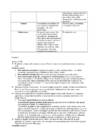




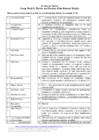



Kõik kommentaarid