EU Internal Market Group Work I: History and Purpose of the Internal Market Please connect terms (numbers) with correct description (letter), for example 17 M
1
Common Market
A
… is characterized by free
movement of
goods between the participating countries, but autonomous
external trade policies in relation to non-participants.
2
Comparative Advantage B
A top-down
approach to integration that can be
best explained by market
failure .
3
Customs Union
C
Allows for specialization, specialization leads to
competitive advantage, and comparative advantage leads to economies of
sales which maximizes
consumer welfare and ensures the most efficient use of world-wide resources.
4
Economic Union
D
Approach to attaining a common market underpinned by the principles of non-discrimination, market
access and
concept of comparative federalism.
States retain power to regulate as long as national
regulation does not interfere with `federal` law.
5
Free trade
E
Common
foreign and
security policies
first appear at the stage of integration called …
6
Free Trade Area
F
Emerges due to decentralized approach to integration, when
different national systems struggle to produce the best set of
rules to attract capital and
labor .
7
Full Union
G
Formed a cornerstone for the
creation of the common market. It recommended creation of regional common market,
based on a customs union, and achieved by progressive elimination of customs duties and all
measures that obstruct trade, regulation of state
intervention and
monopoly , creation, and more efficient use of resources by
means of free movement of labor
force and capital.
8
Harmonization
H
Free movement of all factors of
production ,
single currency , single monetary and fiscal
policy are
elements of …
9
Market Access
I
In a … free movement of goods complemented by single customs tariff.
10
Monetary Union
J
Introduction of single currency between the participating countries is a distinctive feature of …
11
Non-discrimination
K
Portugal is relatively better at producing wine
than wheat: so, Portugal is said to have a … in the production of wine.
12
Political Union
L
Positive integration.
13
Regulatory
Competition M
Ricardo.
14
Speak
Report N
Test of restrictions to
fundamental freedoms which in the first line examines whether a
measure is liable to
hinder of make less attractive the
exercise of
these fundamental freedoms.
15
The Centralized Model of Integration
O
The last stage of integration when all policies and unified between participating countries, is called …
16
The Decentralized Model of Integration
P
Where
host and home factors pf production are
similarly situated , they
shall enjoy the
same treatment.
17
Theory of Comparative Advantage
Q
Within this area
there is all factors of production can
move freely.
Answers1
2
3
4
5
6
7
8
9
10
11
12
13
14
15
16
17
Q
K
H
D
C
A
O
G
I
J
P
E
N
L
B
F
M
HOL_6012 EU Internal Market
Group Work 2: EU Internal
Market and Free Movement of Goods
(Ch. 18 and 19 CdB)
What are the main Treaty applicable to free movement of goods? List and explain the main scope .
Articles 26 and 28-37 of the Treaty on the
Functioning of the European Union (TFEU).
Prohibition of charges having an effect equivalent to that of customs duties: Articles 28(1)
and 30 TFEU, or to describe it a bit more easier , The Court of Justice of the European Union had found that any type of
extra charges or however it may be called or applied to a product
produced and being sold in any Member State should not be charged
with any fees or any extras that in the end will have the same effect
on a product price as a custom duty . Examples : Cases 2/62 and
3/62 of 14 December 1962, and Case 232/78 of
25 September 19791
Prohibition
of measures having an effect equivalent to quantitative restrictions:
Articles 34 and 35 TFEU
Provided option gives manufacturers and distributers more freedom for a single
product to move and not to be charged with any extras while entering
to the Member States market environment. So any product legally
manufactured and marketed in a Member State in accordance with its fair and traditional rules in a member state that produced that
product should be allowed without any restrictions, extra normative
applied to another Member state. As an example would provide You a case of the Cassis de Dijon (Case 120/78 of 20 February 1979).
So in principal of harmonization all Member States are obliged to allow goods that are legally produced and marketed in other Member
States to circulate and to be placed on their markets .2
Exceptions to the prohibition of measures having an effect equivalent to that of
quantitative restrictions
Article
36 TFEU allows Member States to take measures having an effect
equivalent to quantitative restrictions when these are justified by
general, non-economic considerations (e.g. public morality , public
policy or public security), so basically a principle of
proportionality. All exceptions to the general principle must be
interpreted strictly and there should be no disguised restriction on
trade between Member States.3
Harmonisation
of national legislation
Article 95
of the EC Treaty, as modified by the Maastricht Treaty abide are
Member States to adopt or better to say to harmonize local laws and
directives to remove obstacles created by national provisions by making them inapplicable and to establish common rules aimed at
guaranteeing both free circulation of goods and products and respect for other EC Treaty objectives, such as protection of the environment
and of consumers, competition, etc.
Harmonisation
must be restricted to essential requirements , and is justified when
national rules cannot be considered equivalent and create
restrictions. Directives adopted under this new approach have the dual purpose of ensuring free movement of goods through the technical
harmonisation of entire sectors, and guaranteeing a high level of
protection of the public interest objectives referred to in
Article 114(3) TFEU (e.g. toys, building materials, machines ,
gas appliances and telecommunications terminal equipment ).4
Completion
of the internal market
The
creation of the single market necessitated the elimination of all
remaining obstacles to free movement of goods. The Commission White Paper of June 1985 set out the physical and technical obstacles
to be removed, and the measures to be taken by the Community to this
end. Most of these measures have now been adopted. However, the
single market still requires substantial reforms if it is to meet the
challenges of technological progress — the key factor in improving
the EU’s competitiveness on global markets.
In its resolution of
8 March 2011[1] Parliament called on the Commission to establish a single market
surveillance system for all products (harmonised and non-harmonised),
based on one legislative act covering both the General Product Safety Directive and Regulation (EC) No 765/2008 on market
surveillance, in order to attain a high level of product safety and
market surveillance, and to clarify the legal basis . On
13 February 2013, at Parliament’s request, the Commission
presented the Product Safety and Market Surveillance Package , which
aims to improve market surveillance systems in the Member States. The
package consists of new enforcement rules for the internal market for
goods, which will enable national market surveillance authorities to enforce the law and to provide better and more extensive means of
consumer protection. In particular , authorities will be better able
to track down unsafe products, while, at the same time, the rules on
consumer product safety will be simplified and merged into a single
piece of legislation.
The three most important parts of the package are:
a proposal for a new regulation on consumer product safety (CPSR);
a proposal for a single regulation on market surveillance for products, unifying and simplifying existing fragmented legislation;
a multiannual plan for market surveillance of 20 individual actions that the Commission will take over the next three years .5
Can a tax caught by Article 30 TFEU be defended on the basis of Article 36 TFEU? In which case the CJEU has discussed the issue for the first time?
Article 30 TFEU prohibits not only costumes
duties, butt also charges having an equivalent effect (CEE). 6
According to
Community trade law, any derogation which is not construed strictly,
is hostile to achievement of the common market. This principle is seen concretely in the form of Article 36 TFEU (ex Article 30 EC)
(Weatherill, 2007, p. 359).
Article 36 TFEU provides:
“The provisions of
Articles 34 and 35 shall not preclude prohibitions or restrictions on
imports, exports or goods in transit justified on grounds of public
morality, public policy or public security; the protection of health
and life of humans, animals or plants ; the protection of national treasures possessing artistic , historic or archaeological value ; or
the protection of industrial and commercial property. Such
prohibitions or restrictions shall not, however, constitute a means
of arbitrary discrimination or a disguised restriction on trade
between Member States".
Finally , Article 36 TFEU allows Member States
to apply rules prohibited under article 34 provided they are
justified on the grounds of public morality, public policy, public
security, protection of health and life of humans, animals or plants,
protection of national treasures possessing artistic historic or
archaeological value, or protection of industrial and commercial
property, and as long as the measures do not arbitrarily discriminate
or are a disguised restriction on trade. Also it must be
proportionate.7
This combination had been
used in Case of Italy (Case 7/68
Commission v Italy (Art Treasures))
while there was a argument regarding adding extra charges on a
“national treasures” to keep them in the country . But Article 36
can only be used to justify a non-fiscal barriers falling within
Article 34 TEFU (case 26/62 Van Gend en Loos [1963]).
Article 30 does not apply to charger for services . So taxes caught by
an Article 30 might be defined on a bases of Article 36 TFEU if those
are not fiscal and not involve charges to services.
Exceptions are if a charge is not a customs duty or charge having equivalent effect if:
- it relates to a general system of internal dues applied systematically and in accordance with the same criteria to domestic products and imported products alike,
- if it constitutes payment for a service in fact rendered to the economic operator of a sum in proportion to the service, or
- subject to certain conditions , if it attaches to inspections carried out to fulfil obligations imposed by Union law.
Based on the jurisprudence of the CJEU (i.e. Diamantarbeiders, Case 24/68 Commission v. Italy) can (a) a good purpose, or (b) the form (discriminatory/not discriminatory) of a charge prohibited under Article 30 TFEU be a sufficient reason to justify the measure?
There were
two main points we’d like to propose: “Any pecuniary charge,
however small and whatever designation and mode of application , which
which is imposed unilaterally on domestic or foreign goods when they cross a frontier , and which is not a customs duty in the strict sense , constitutes a charge having equivalent effect within the meaning of articles 9, 12, 13 and 16 of the treaty, even if it is not
imposed for the benefit of the state, is not discriminatory or
protective in effect or if the product on which the charge is imposed
is not in competition with any domestic product.”
“The
prohibition of new customs duties or charges having equivalent
effect, linked to the principle of the free movement of goods,
constitutes a fundamental rule which, without prejudice to the other
provisions of the treaty, does not permit of any exceptions.”8
Why do we find those articles the most important? An answer will be as simple as possible: You cannot avoid restrictions, feather fees or sanctions
if a country or a company did ratificated so as governmentally
approved directives in their law. There cannot be any exceptions
provided regarding additional norms that each member state had
approved by itself. Therefore we do find that whole system may
collapse if there would be “too many or any exceptions”, because already well organised machine (even with so many participants and
different markets to be involved) would not be functioning as well as
it should be.
Based on the jurisprudence of the CJEU the Court allowed only very limited exceptions to Article 30 TFEU. What exceptions is allowed and what four conditions must be fulfilled?
Article 36 TFEU allows Member States to take
measures having an effect equivalent to quantitative restrictions
when these are justified by general, non-economic considerations
(e.g. public morality, public policy or public security). Such
exceptions to the general principle must be interpreted strictly, and
national measures cannot constitute a means of arbitrary
discrimination or disguised restriction on trade between Member
States.
Furthermore , the Court of Justice has
recognised in its jurisprudence (Cassis de Dijon) that Member States
may make exceptions to the prohibition of measures having an
equivalent effect on the basis of mandatory requirements (relating, among other things, to the effectiveness of fiscal supervision, the
protection of public health, the fairness of commercial transactions
and the defence of the consumer). Member States have to notify
national exemption measures to the Commission.9
There are four exceptions:
- The payment for the service actually rendered to the exporter and amounts of paid finances id equal/ proportional to an amount of the cost of such service;
- or if it (the fee) relates to the general system of internal taxes, is applied regularly in accordance with the same criteria in both domestic and imported goods (Case 46/76 Bauhuis [1977]).
- Payments for services that provide real profits for the importer or quality improvement of imported goods (for example, processing and packaging). Case 63/74 W.Cadsky SpA [1975]
- In all cases where charges are levied in accordance with EU legislation or international law, their amounts should not exceed the cost or price of the service or the amount proportional to the service rendered (cases 39/73 Rewe [1973] and 158/82 Commission v. Denmark [1983]).
Based on Article 110 TFEU and the jurisprudence of the CJEU direct and indirect discriminatory taxation is prohibited. Why in Humblot case the Court found the French car tax system as incompatible with Article 110 TFEU?
Indirect discrimination is
based on factors other than the origin of the goods, but is directed
against the importer. In case 112/84 Humblot [1985], a road tax in France was considered, which crawled on a sliding scale : up to 1,100
French francs for cars with engine power below 16 horsepower, and
5,000 francs for cars with a more powerful engine. Mr. Humblot, who
bought a Mercedes in France, whose engine capacity was 36 horsepower,
applied to the court for a tax refund claim, referring to Art. 90
Treaty establishing the European Community. At that time, France did
not produce cars with engines with a capacity of more than 16
horsepower. Therefore it was obvious that a higher tax applied only
to imported cars. The EU Court agreed with the plaintiff's arguments
that although the discrimination concerned the car's power, its
indirect influence contrary to art. 90 applied to discrimination on
the basis of nationality.
Therefore as an example when
article 110 TFEU tried to use in a “ similar ” conflict, “Case
C-132/88 Commission v Greece (Car Tax) [1990]”, or to be more exact
Greece implemented a tiered car tax system, which taxed cars based on
their engine capacities (applicable to all vehicles with engine
capacity greater than 1800cc). Greece did not manufacture any cars
with engine capacities greater than 1800cc, therefore no domestic
cars fit into the high rate tax band . Usually, and contrary to
Humblot,
an objective , and not an effects -based test was used to conclude that
the tax was not contrary to Art 110 TFEU on the prohibition of
internal taxes. It
was said that the tax could be justified in the interest of
protecting the environment, despite the fact that such a large
tax- jump from a small change in engine capacity would be likely to
discourage the purchase of the larger-engined (and always foreign)
cars.
Can differentiated tax policy for a specific good, for example to attain social ends, be justified? If yes, what three conditions must be fulfilled?
Yes, differentiated tax
policy might be applied in specific circumstances a charge is a
customs duty if it is proportionate to the value of the goods; if it
is proportionate to the quantity, it is a charge having equivalent
effect to a customs duty.
There are three exceptions
to the prohibition on charges imposed when goods cross a border,
listed in Case 18/87 Commission v Germany or C-132/88 Commission v
Greece (Car Tax). A charge is not a customs duty or charge having
equivalent effect if:
- it relates to a general system of internal dues applied systematically and in accordance with the same criteria to domestic products and imported products alike,
- if it constitutes payment for a service in fact rendered to the economic operator of a sum in proportion to the service (judgment of 12 July 1977 Commission v Netherlands (( 1977 )) ECR 1355), or
- subject to certain conditions, if it attaches to inspections carried out to fulfil obligations imposed by Union law.
Does Article 110 TFEU only prohibits discrimination of the strictly identical products? i.e. different taxation system applicable to the cars or it also applies in relation to the ‘similar products’? How does the Court determine whether products are similar or not? Refer to the applicable case law
Art. 110 DFES prohibits the
imposition of higher taxes on goods imported from other EU member
states that are similar to domestic ones . To determine the
similarity, the EU Court has developed two criteria – formal and
economic. According to a formal criterion, imported and domestic
goods should be classified as belonging to the same category of goods
for tax, customs, statistical and other (those might be added
afterwards by decision of a court or by any legal case) purposes .
The economic criterion is broader. According to him,
the similarity and analogy of goods are determined by the combination
of analysis of a large number of objective criteria, such as the
origin of goods, methods of their production, physico-chemical
composition, organoleptic qualities , etc., and subjective criteria
(in particular, the ability of compared import and Domestic products
meet the same needs of customers in terms of their habits and
preferences). The first criterion plays a supporting role rather than
the other, while the second criterion plays a decisive role in
determining the similarity.
On the secondary nature of the
formal criterion is explicitly stated in decisions on a number of
cases. For example, Case 169/78 "Commission v. Italy"
(1980): the customs classification is not a decisive criterion for
determining the similarity of goods in the sense of art. 95 (1) of
the Treaty on the Establishment of the EEC (now Article 110 (1) of
the TFEU).
So, the EU Court recognized the
similarity of fruit and grape wines (both in terms of one commodity
group and the way of preparation (fermentation)) in connection with
the same organoleptic qualities (taste, alcohol content). In addition , according to the Court, they satisfied the same needs and
tastes of buyers. Conversely, on the basis of the difference in the
same criteria for whiskey and liquors, the Court of Justice
recognized that the taxation of these goods in the case of 243/84
(John) Walker (1986)
If the similarity of goods can
not be established , the EU Court finds out whether they compete with
each other in the sense of Art. 110 (2) TFEU, to determine whether
such competition is fair or a local producer benefits from indirect
tax protectionism. In the latter case, the mechanism of art. 110 (2)
TFEU.
Competition can be partial,
indirect or even potential.
Which Article of the TFEU catches quantitative restrictions and all measures that have and equivalent effect?
The most complex issue that
caused the largest number of decisions of the Court was the interpretation and application of art. 28 and 29 of the Treaty
prohibiting quantitative restrictions (quotas) on the export and
import of goods between Member States, as well as measures having an
equivalent effect.
The definition of measures having an effect
equivalent to quantitative restrictions first appeared in Commission
Directive No. 70/50. It contains a fairly voluminous list of
practices that are recognized illegal as a measure that has the
effect equivalent to quotas. In this Directive, the Commission first
applied the method of determining the legality of measures based not
only and not so much on their legal nature as on the effect they
exert on trade between Member States.
The correctness of such
a test, called an effect test, confirmed later the decisions of the
Court. There are three main decisions showing how the Court
interprets these measures and applies the effect test. 154
The
first such decision was a decision on the famous case of Procureur de
Roi v. Dassonville. The court ruled that Belgium had no right to
prohibit the import from Scotland of Scotch whiskey, which did not
have a certificate of origin issued by the authorities of the
producing country, since whiskey was already legally free in France.
The Court's decision determined measures having an effect equivalent
to quantitative restrictions as "any trade rules adopted by
Member States that are capable, directly or indirectly, at the moment
or potentially obstruct trade within the Community".
In
the same case, the Court recognized that the trade rules adopted by
Member States to protect consumers "must be reasonable "
should "not act as impediments to trade between Member States"
and should be "accessible to all citizens of the Community".
In addition, they "should not be a means of arbitrary
discrimination or disguised restrictions on trade between Member
States".
Can Art. 28 Treaties to national trade rules
that apply to all producers without discrimination? The answer to
this question was the Court's decision in the 1979 case, known as
Cassis de Dijon.
The court found illegal the requirements of German legislation on the minimum alcohol content on the grounds that
it does not correspond to the test of reasonableness (sometimes
called the Cassis test). This test, originally appeared in the
Dassonville case, and was brought to its logical conclusion in this
Court decision. It is that, as long as the Community has not adopted
norms in certain areas, Member States can take "reasonable"
and "proportionate" (ie, not wider than is directly necessary ) measures to ensure the protection of the public interest
.
For clarity, paragraph 8 of the Court's decision in this
case: "In the absence of general rules relating to the
production and distribution of alcohol ... a Member State must itself
regulate all matters relating to the production and distribution of
alcohol on its territory. Obstacles to freedom of movement within the
Community arising from discrepancies between national laws governing
the distribution of goods may be acceptable in so far as they are
necessary to meet imperative needs relating to the effectiveness of
fiscal surveillance, public health protection, honesty Trade
transactions and consumer protection. "
In the judgment
of Cassis de Dijon, the rule of "mutual recognition" was
also formulated. If the goods are legally pro-155. Is bred in one
Member State, it can be freely sold in another Member State, even if
it does not comply with its national standards.
Exceptions
to the prohibition of measures having an effect equivalent to that of
quantitative restrictions
Article 36 TFEU allows
Member States to take measures having an effect equivalent to
quantitative restrictions when these are justified by general,
non-economic considerations (e.g. public morality, public policy or
public security). Such exceptions to the general principle must be
interpreted strictly, and national measures cannot constitute a means
of arbitrary discrimination or disguised restriction on trade between
Member States. Exceptions are no longer justified if Union
legislation that does not allow them has come into force in the same
area. Finally, the measures must have a direct effect on the public
interest to be protected , and must not go beyond the necessary level
(principle of proportionality).
Furthermore, the Court of
Justice has recognised in its jurisprudence (Cassis de Dijon) that
Member States may make exceptions to the prohibition of measures
having an equivalent effect on the basis of mandatory requirements
(relating, among other things, to the effectiveness of fiscal
supervision, the protection of public health, the fairness of
commercial transactions and the defence of the consumer). Member
States have to notify national exemption measures to the Commission.
Procedures for the exchange of information and a monitoring mechanism
were introduced in order to facilitate supervision of such national
exemption measures (as provided for in Articles 114 and 117
TFEU, Decision 3052/95/EC of the European Parliament and of the Council of 13 December 1995 and Council Regulation (EC)
No 2679/98 of 7 December 1998). This was further formalised in Regulation (EC) No 764/2008 on mutual recognition,
which was adopted in 2008 as part of the so-called New Legislative Framework (NLF). 10
What is the quantitative restriction within the meaning of Article 34 TFEU?
From
the four main
articles (34-37), the greatest practical importance for the
realization of the freedom of movement of goods and the formation of
a single internal market for the EU is art. 34 on the prohibition of
quantitative import restrictions and measures equivalent to
quantitative restrictions. The Treaty on the functioning of the
European Union does not define either key concepts or the mechanism
for implementing Art. 34. This task in this case (as in all others )
is carried out by the EU Court. Three of his decisions - Dassonville
(1974), Cassis de Dijon (1979) and Keck (1993) - played a decisive
role in shaping the legal basis for eliminating non-tariff
restrictions on the freedom of movement of goods.
Articles on tariff and
non-tariff restrictions mutually exclude each other. Thus, the
obstacles to mutual trade of a "fiscal nature" are not
subject to the prohibitions of Art. 28 - 34 DFES. See: Case 74/76
"Ianelli v. Meroni" (1977); Case C-34-38 / 01 "Enirisorse
SpA v. Ministerial delle finanze " (2003)
Decision of the Court of
Justice in the case of Dassonville. Quantitative restrictions in the
sense of art. 34 TFEU ( former Article 28) The EU Court defines as
"measures leading to a complete or partial restriction -
depending on the circumstances - of import, export or transit of
goods in mutual trade between Member States". For this
definition, for example, the measures for quoting and quoting goods
are covered. The general definition of MECO was found by the EU Court
in the judgment in case 8/74 of Dassonville (1974). According to this
decision, the measures of the member states, which directly or
indirectly interfere in real or potential trade between them, are
considered measures whose consequences are equivalent to quantitative
restrictions. The court found it to be contrary to Art. 30 of the
Treaty on the Establishment of the EEC (now Article 34 of the DFES)
the provisions of the Belgian law, according to which the exporter
must present to the customs authorities of Belgium a certificate of
origin of the goods of the producing country
A formulation above from the decision of the EU Court in the literature is called
the "Dassonville formula ". It was universally accepted and
widely used in the further practice of the Court, which further
clarified and clarified the concepts of this formula and their
content. In particular, the Court of Justice stressed: Art. 30 of the
Treaty on the Establishment of the EEC (now Article 34 of the DFES)
has a vertical direct effect, i.e. Applies to a broad category of
state and quasi -public bodies, and to relations between individuals
(in a broad sense) is not applied (the so-called horizontal action ).
The Member State is responsible for the actions of its citizens who
violate Art. 34 DFES, in the person of its state and quasi-public
bodies . The term "state measures prohibited by Article 34 of
the DEFE" includes not only the action, but also the inaction of
member states, fraught with the creation of obstacles to mutual trade
between them
How is the ‘measure having equivalent effect” is defined in the EU law and jurisprudence? Give some examples
Treaty on the Functioning of the European Union
(TFEU): Article 34 (ex Article 28 TEC) Quantitative restrictions on
imports and all measures having equivalent effect shall be prohibited
between Member States. Article 35(ex Article 29 TEC) Quantitative
restrictions on exports, and all measures having equivalent effect,
shall be prohibited between Member States. Example: Case 8/74
Dassonville - Belgian law provided that goods bearing a designation
of origin could only be imported if they were accompanied by a
certificate from the government of the exporting country certifying
their right to such a designation. Dassonville imported Scotch whisky into Belgium from France without being in possession of the requisite
certificate from the British authorities. Such a certificate would
have been very difficult to obtain in respect of goods which were
already in free circulation in a third country, as in this case.
Dassonville was prosecuted in Belgium and argued by way of defense that the Belgian rule constituted a measure that has an equivalent
effect to a quantitative restriction of trade.
What are three main categories of discriminatory barriers to trade? Give examples from the case law
Free trade refers to the elimination of barriers to international trade. The most common barriers to trade
are tariffs,
quotas,
and nontariff barriers.
A tariff is a tax on imports, which is
collected by the federal government and which raises the price of the
good to the consumer. Also known as duties or import duties, tariffs
usually aim first to limit imports and second to raise revenue .
A quota is a limit on the amount of a certain
type of good that maybe imported into the country. A quota can be
either voluntary or legally enforced.
The effect of tariffs and quotas is the same:
to limit imports and protect domestic producers from foreign
competition. A tariff raises the price of the foreign good beyond the
market equilibrium price, which decreases the demand for and,
eventually, the supply of the foreign good. A quota limits the supply
to a certain quantity, which raises the price beyond the market
equilibrium level and thus decreases demand.
Tariffs come in different forms , mostly
depending on the motivation , or rather the stated motivation. (The
actual motivation is always to limit imports.) For instance , a tariff
maybe levied in order to bring the price of the imported good up to
the level of the domestically produced good. This so-called
scientific tariff—which to an economist is anything but—has the
stated goal of equalizing the price and, therefore, “leveling the playing field ,” between foreign and domestic producers. In this
game, the consumer loses.
A peril -point tariff is levied in order to save
a domestic industry that has deteriorated to the point where its very
existence is in peril. An economist would argue that the industry
should be allowed to expire. That way, factors of production used by
that inefficient industry could move into a new one where they would
be better employed .
A retaliatory tariff is one that is levied in
response to a tariff levied by a trading partner . In the eyes of an
economist, retaliatory tariffs make no sense because they just start
tariff wars in which no one— least of all the consumer—wins.
Nontariff barriers include quotas, regulations
regarding product content or quality, and other conditions that
hinder imports. One of the most commonly used nontariff barriers are
product standards, which may aim to serve as “barriers to trade.”
For instance, when the United States prohibits the importation of
unpasteurized cheese from France, is it protecting the health of the
American consumer or protecting the revenue of the American cheese
producer?
Other nontariff barriers include packing and
shipping regulations, harbor and airport permits, and onerous customs
procedures, all of which can have either legitimate or purely
anti-import agendas, or both.
Examples from the case law:
Judgment of the Court (Fifth Chamber ) of 12 November 2015
Valev Visnapuu v Kihlakunnansyyttäjä
( Helsinki ) and Suomen valtio - Tullihallitus
Request for a preliminary ruling from the
Helsingin hovioikeus
Reference for a preliminary ruling - Articles
34 TFEU and 110 TFEU - Directive 94/62/EC - Articles 1(1), 7 and 15 - Distance selling and transport of alcoholic beverages from another
Member State - Excise duty on certain beverage packaging - Exemption
where packaging is integrated into a deposit and return system -
Articles 34 TFEU, 36 TFEU and 37 TFEU - Requirement of a licence for
the retail sale of alcoholic beverages - Monopoly on the retail sale
of alcoholic beverages - Justification - Protection of health.
Case C-198/14
( http://curia.europa.eu/juris/liste.jsf?language=en&num=C-198/14 )
Judgment of the Court (Tenth Chamber) of 12 February 2015
Minister Finansów v Oil Trading Poland sp.
z.o.o.
Request for a preliminary ruling from the
Naczelny Sąd Administracyjny
Reference for a preliminary ruling - Excise
duties - Directives 92/12/EEC and 2008/118/EC - Scope - Mineral oils
and energy products - Lubricating oils used for purposes other than
as motor fuels or as heating fuels - Not included - Excise duty
levied on the consumption of energy products, imposed by a Member
State in accordance with the harmonised excise duty arrangements -
Concept of ‘formalities connected with the crossing of frontiers’
- Article 110 TFEU - Shorter payment deadline in certain cases for intra -Community purchases than for products acquired on the domestic
market.
Case C-349/13
( http://curia.europa.eu/juris/document/document.jsf?text=&docid=162248&pageIndex=0&doclang=en&mode=lst&dir=&occ=first&part=1&cid=794468 )
What measures can be considered as ‘national measures’ for the purpose of free movement of goods?
The prohibition of discriminatory taxation,
abolition of customs duties and removal of other administrative rules
and barriers which hinder the free movement of goods have been
tackled by Articles 34 and 35 of the Treaty on the Functioning of the
European Union (TFEU). Articles 34 and 35 can be used to strike down
national legislation which impedes the free movement of goods. This
is a process known as ' negative harmonisation.'
Articles 34 and 35 of the TFEU are provisions
which prohibit quantitative restrictions (QR's) and measures
equivalent to quantitative restrictions (MEQR's).
Article 34 prohibits quantitative restrictions,
and all measures having equivalent effect, on imports from Member
States.
Article 35 prohibits quantitative restrictions,
and all measures having equivalent effect, on exports to Member
States.
Who Do Articles 34 and 35 Apply to?
• The State institutions themselves.
• Bodies which derive their power from public
law, including central, regional and local government, or any
semi-public body like a quango (See the case of Apple and Pear Development Council v. KJ Lewis Ltd. (case 222/82)).
Also, measures adopted by professional bodies,
like the Royal Pharmaceutical Society, on which national legislation
has conferred regulatory or disciplinary powers counted as 'measures
taken by a Member State' subject to what is now Article 34. (See the
case of R. v. Royal Pharmaceutical Society of Britain (Cases 266 and
267/87))
• Note : Articles 34 and 35 have no horizontal
direct effect, however broadly they are interpreted. (See case of
Sapod-Audic (case C-159/00))
The actions of individuals can be challenged
indirectly by imposing positive obligations upon Member States. (See
the case of Commission v. France (Angry Farmers) (case C-265/95))
What Do Articles 34 and 35 Apply to?
Articles 34 and 35 apply to "goods",
which are defined in the "Art Treasures" case (Commission
v. Italy C-7/68) as "Products which can be valued in money and
are capable of forming the subject of commercial transactions."
Quantitative Restrictions
What are quantitative restrictions defined as?
Quantitative restrictions were defined in
Riseria Luigi Geddo v Ente Nazionale Risi (case 2/73) as, "any
measures which amounted to a total or partial restraint on imports,
exports or goods in transit."
What types of actions count as quantitative
restrictions?
Quantitative restrictions are not just
legislation, they can be administrative acts as shown by the Franking
Machine case (case 21/84).
Bans on imports can count as quantitative
restrictions. (See cases of Commission v. Italy (Re Ban on Pork Imports) (case 7/61)) and (R. v. Henn (Ban on import of pornographic
materials) (case 34/79)).
It also includes quota systems. (See case
Salgoil SpA v. Italian Ministry for Foreign Trade (case 13/68)). Even
a quota system applying to a small part of the country counts as a
quantitative restriction. (See the Ditlev Bluhme case (Danish Brown bees) (case C-67/97)).
Forcing importers to have licences is also an
example of a quantitative restriction. Although the courts have
sometimes decided that it is a measure equivalent to a quantitative
restriction (MEQR). (As they did in the case of International Fruit
Co NV v Produktschap voor Groenten en Fruit (cases 51-4/71).
Directive 70/50 highlighted how QR's and MEQR's
did not have to be legally binding. For example, the Buy Irish case
(Commission v. Ireland (249/81), where it was held that Irish
policies were influencing traders and frustrating the aims of the
Union.
Measures Equivalent to Quantitative
Restrictions (MEQR's)
What are MEQR's defined as?
The case of Dassonville defined MEQR's as,
"All trading rules enacted by Member States which are capable of
hindering, directly or indirectly, actually or potentially,
intra-Union trade..."
What types of actions count as MEQR's?
The concept of MEQR is wider in scope than
quantitative restrictions. MEQR's can be divided into two different
scopes.
a) Distinctly Applicable Measures: Measures
which apply exclusively to imports or exports.
b) Indistinctly Applicable Measures: Measures
which apply to both imports or exports, AND domestic goods.
The difference between distinctly and
indistinctly applicable measures is that indistinctly applicable
measures can be justified if they are necessary to satisfy mandatory
requirements. For example, environmental protection, promotion of
national culture, etc.
The three key cases of MEQR's.
1.Dassonville (case 8/74)
2.Cassis de Dijon (case 120/78) (Officially
called, "Rewe-Zentral AG v Bundesmonopolverwaltung für
Branntwein." But 'the Cassis de Dijon case' is much easier to
remember and pronounce!)
3.Keck (cases C-267-8/91)
Case 1: Dassonville
Dassonville concerned Belgian rules which required imported goods to have a certificate of authenticity from
the authorities of certain countries of origin. A group of whiskey
traders bought Scotch Whisky in France and tried to import it into
Belgium without a certificate. The Court of Justice determined that
such a measure would fall within Article 34 TFEU saying,
"All trading rules enacted by Member
States which are capable of hindering, directly or indirectly,
actually or potentially, intra-Union trade are to be considered as
MEQR's."
This has become known as the 'Dassonville
formula' and has been applied consistently by the Court of Justice in
subsequent cases.
Dassonville Limitations
1.A measure which is not capable of hindering
trade between Member States, but only affects the flow of trade
within a Member State will not breach Article 34 TFEU. (See Quietlynn
Ltd. v. Southend Borough Council (case C-23/89) where a a licensing
requirement for the sale of sex appliances was held not to breach
Article 34 TFEU.)
2.A measure which imposes a maximum price which
goods can be sold for can be considered in breach of Article 34, if
the sale of the imported products becomes if not impossible, more
difficult. (see Tasca case (65/75) where the price of sugar in Italy
had a maximum price so low that it made selling imported sugar
difficult.)
3.A measure which imposes a minimum price which
goods can be sold for does NOT breach Article 34 though. The court
said that a prohibition on selling below cost price, would be
acceptable since it would have no adverse effect on trade between
Member States. (See van Tiggele case (case 82/77)
Case 2: Cassis de Dijon
The Cassis de Dijon case paved the way for a
distinction between distinctly and indistinctly applicable measures.
The question before the court was that German liquor required 25%
minimum alcohol volume , whereas French liquor required 15-20%. Thus
the drink , Cassis de Dijon was legal for sale in France, but not in
Germany. The indistinctly applicable policy of the German government
had effectively banned Cassis de Dijon from the German market.
The court decided that Article 34 TFEU could
apply to measures which appeared to apply to both domestic products
and imports.
Case 3: Keck
In the case of Keck the legality of a French
law prohibiting the reselling of goods in an unaltered state at lower than original price was analysed. Keck complained to the Court of
Justice that the French law was incompatible EU law.
The court clarified and restricted the decision
previously reached in Cassis de Dijon, which had been the target of
much academic criticism.
The court distinguished between 'market access
rules', which would infringe Article 28 if they discriminated against
imports either directly, or indirectly; and 'selling arrangements'
which would not. These two new terms now serve as the test for
determining whether actions restricting the Free Movement of Goods
are legal or not.
A 'market access rule' is constituted as a
measure, which restricts or prevents the availability of a particular
imported product in a particular market. For example, a rule which
targeted the size , shape, labeling or packaging of a particular
product would be a 'product requirement' and prohibited by the ruling
in Keck. However, a rule which had the effect of a general reduction in the sales of all products would no longer contravene Article 28.
Extrinsic measures such as preventing goods
being sold before 12 noon on Sundays, or limitations on advertising are known as 'selling arrangements' and are not prohibited as long as
they are not discriminatory in law and in fact.
Article 36 Derogations
Article 36 allows for prohibitions on exports
and imports which are justified on a number of specified grounds,
such as public health.
These apply to distinctly and indistinctly
applicable measures, whereas the Cassis rule of reason only applies
to indistinct measures.
Courts construe derogations under Article 36
very narrowly, and watch for certain conditions that must be met. For
example:
• There must be no arbitrary discrimination
(the reason for the derogation must be genuine). See the Christmas Turkey case, where the British Government restricted Turkey imports
on Public Health ground... just before Christmas. (Commission v UK
“ poultry Imports case” (C-40/82)).
• National measures must be proportionate, as
stated by the court in Commission v. Italy, C-128/89).
"National rules adopted in order to
achieve one of the objectives referred to in Article 36 [TFEU] are
compatible with the Treaty only in so far as they do not exceed the
limits of what is appropriate and necessary in order to achieve the
desired objective.
Regarding State Monopolies and Article 37
State monopolies are defined as further
obstacles to the free movement of goods in the TFEU. A State monopoly
is one where a Member State has restricted the right to sell
particular goods to one body. Article 37 of the TFEU deals with State
monopolies when it states:
"Member States shall adjust any State
monopolies of a commercial character so as to ensure that no
discrimination regarding the conditions under which goods are
procured and marketed exists between nationals of Member States."
Article 37 does NOT prevent new monopolies from
being created, however if they are they must be compatible with the
provisions of the FMOG.
The Court came to conclusion that the removal of discriminatory trade barriers is necessary but not sufficient condition for single market integration. There are many rules that do not discriminate between goods dependent upon country of origin, but which nevertheless create barriers to trade between MS. How are those rules called?
Indistinctly applicable rules
Please briefly describe the case Cassis de Dijon? Why this case is one of the most important in the history of development of the internal market? Please describe to central principles/rules developed in the judgement?
Cassis is a French liqueur with an alcohol
level of 16%. Germany would not allow it to be sold as “liqueur”
under German law, which states that the minimum percentage of alcohol
should be 25%. The Court of Justice found that under the principle
of mutual recognition, a product lawfully marketable in one Member
State (France) should be freely marketable in another Member State
(Germany). Having enacted a measure within the scope of Article 34
TFEU, the Court of Justice found that such a measure could no longer
be justified only under Article 36 TFEU (an exhaustive list of
grounds). EC Court verdict from 1979 stating that, as a rule,
products in one EU country are also legal in other EU countries (case
120/78). The verdict forced the member states to agree on common
standards which they would otherwise not have agreed. The verdict
paved the way for decisions by qualified majority under the so-called
Internal Market, introduced by the Single European Act in 1987.
What are the two groups of justifications for restrictive measures?
Mandatory/ imperative requirements; public
morality, public policy or public security; the protection of health
and life of humans, animals or plants; the protection of national
treasures possessing artistic, historic or archaeological value; or
the protection of industrial and commercial property
Why it is understood that the case Keck limits the Cassis jurisprudence? What important distinction was introduced in the case Keck? Give some examples from the CJEU case law.
In Keck the Court drew a seemingly
straightforward distinction between selling arrangements and product
requirements and appeared to suggest that the former category of nation regulatory rules should be exempt from the prohibition under
Article 34 TFEU. That prohibition, the Court’s previous ruling in
Cassis de Dejon hade made clear , had as its purpose to capture all
overtly or disguisedly, obviously or indirectly protectionist trade
rules impeding imports from EU Member State into another. The
distinction in Keck between sales- and product- related rules only
made sense if it could obviate detailed examination of the trade
effects of selling regulation on the grounds that it did not
generally have a differential impact on imported and domestic goods.
Joined cases C-34,35 & 36/95 De Agostini [1997] ECR I-3843:
the court had to decide whether a ban on television advertising of
magazines for children was captured by Article 34. Since television,
as contended by De Agostini, may be the “ only effective form of
promotion enabling it to penetrate the Swedish market since it had no
other advertising methods for reaching children and their parents”
the court held that despite being a selling arrangement, in fact the
rule may discriminate against imports, but left it to the domestic
court to decide.
What are the two conditions necessary for the selling arrangements to be outside of scope of Article 34 TFEU?
Quantitative restrictions on imports (QRs) - measures which amount to a total or partial restraint of, according to the circumstances, imports, exports or goods in transit
Measures having equivalent effect to quantitative restrictions on imports (MEQRs) - All trading rules enacted by Member States which are capable of hindering, directly or indirectly, actually or potentially, intra-Community trade are to be considered as measures having an effect equivalent to quantitative restrictions
Is the ‘use of product’ according to the jurisprudence of the CJEU should be regarded as selling arrangement and thus outside of scope of Article 34 TFEU?
With a reading of Article 34 of the Treaty and the Court’s own ruling in
Dassonville, it may be questioned how rules which do not limit the
importation and marketing of the relevant product, but merely
regulate how it may be used after its sale, can be said to constitute
“trading rules”.
On the
other hand , it is clear that some limitations on how a product may be
used can negatively affect sales and import to a very significant
extent. Indeed, whereas a prohibition on using mobile phones in
airplanes hardly has any such effect, a ban on using fireworks all year except on 31 December is likely to ( greatly ) reduce demand for,
and thus sales and import of, that good. Similarly, one may imagine that a ban on the use of SUVs in congested urban zones would
constitute an efficient means for diminishing sales and import of
such cars to the benefit of more environmentally friendly vehicles.
Importantly,
the field of application of Article 34 TFEU is limited by the Keck
jurisprudence, which states that certain selling arrangements fall
outside the scope of that article, provided that they are
non-discriminatory (i.e. they apply to all relevant traders operating within the national territory, and affect in the same manner, in law
and in fact, the marketing of domestic products and products from
other Member States) (Joined Cases C-267/91 and C-268/91 of 24
November 1993).
What are the main defences to the discriminatory measures?
Article
36 TFEU lists the defences that could be used by Member States to
justify national measures that impede cross-border trade: ‘The
provisions of Articles 34 to 35 shall not preclude prohibitions or
restrictions on imports, exports or goods in transit justified on
grounds of public morality, public policy or public security; the
protection of health and life of humans, animals or plants; the
protection of national treasures possessing artistic, historic or
archaeological value; or the protection of industrial and commercial
property’.
The
case-law of the Court additionally provides for so-called mandatory
requirements (e.g. environmental protection) on which a Member State
may also rely to defend national
measures.
The
Court of Justice interprets narrowly the list of derogations in
Article 36 TFEU, which all relate to non-economic interests (163). Moreover , any measure must respect the principle of proportionality.
The burden of proof in justifying the measures adopted according to
Article 36 TFEU lies with the Member State (164), but when a Member
State provides convincing justifications it is then for the
Commission to show that the measures taken are not appropriate in
that particular case.
Member
States may decide to ban a product on morality grounds. While it is
up to each Member State to set the standards enabling goods to comply
with national provisions concerning morality, the fact remains that
that discretion must be exercised in conformity with the obligations
arising
under EU law.
Protection
of health and life of humans, animals and plants - The Court of
Justice has ruled that ‘the health and life of humans rank fi rst
among the property or interests protected by Article 36 and it
is
for Member States, within the limits imposed by the Treaty, to decide
what degree of protection
they intend to assure, and in particular how strict the checks to be
carried out are to be.
In
the same ruling the Court stated that national rules or practices do
not fall within the exception specified in Article 36 TFEU if the
health and life of humans can be as eff ectively protected by
measures which do not restrict intra-EU trade so much.
Protection
of national treasures possess in gartistic, histricorarchaeological
value - a Member State’s duty to protect its national treasures and
patrimony may justify measures which create obstacles to imports or
exports.
Protection
of industriaal and commercial property - the most important types of
industrial and commercial property are patents, trade marks and copyright . Two principles can be deduced from the case-law on the
compatibility with Articles 34–36 TFEU of the exercise of
industriaal property rights .
The
first principle is that the Treaty does not affect the existence of
industrial property rights
granted pursuant to the legislation of the Member States. Accordingly,
national legislation on the acquisition, transfer and extinction of
such rights is lawful. This principle does not apply, however, where
there is an element of discrimination in the national rules.
The
second principle is that an industrial property right is exhausted when a product has been
lawfully
distributed in the market of a Member State by the owner of the right
or with his or her consent. Thereafter the owner of the right may not
oppose the importation of the product into any Member State where it
was fi rst marketed. This is known as the principle of exhaustion of
rights. This principle does not preclude the holders of performing or
lending rights from recovering royalties for each performance or
rental
What are the main defences for the Indistinctly Applicable Rules?
Indistinctly
applicable (IDAs) - the measure applies to both imports and domestic
goods but affect imports more.
Justifying
Indistinctly Applicable Measures
A Member
State can justify under Article 36 or under the "mandatory
requirements" from the case of Cassis De Dijon.
Mandatory
requirements, as developed by the Court in the Cassis de Dijon case,
could be invoked only to justify the indistinctly applicable rules.
Measures of Art. 36 TFEU – defences to all
kinds of restrictions.
Additional defences to indistinctly applicable
restrictions were developed in Cassis case and are called mandatory/
imperative requirements:
They include protection of consumers and
fairness of commercial transactions.
The list is non-exhaustive and has been further
developed by the CJEU (protection of environment, cultural policy, maintenance of media diversity, maintenance of financial balance of
the national social security system, protection of children, prevention of fraud etc).
HOL_6012
EU Internal Market/Group Work 3: Free Movement of Capital
1. How is capital defined for the purposes of
free movement of capital? What difficulties does the definition
present? Give examples of what capital movement may mean under EU
law.
The treaty on the functioning of the EU does not
define the term ‘movements of capital’. In the absence of a
definition, the Court of Justice of the European Union has held that
the definitions in the nomenclature annexed to Directive 88/361/EEC
can be used to define that term. According to these definitions,
cross-border capital movements include:
- foreign direct investments (FDI)
- real estate investments or purchases
- securities investments (e.g. in shares , bonds, bills , unit trusts)
- granting of loans and credit
- other operations with financial institutions, including personal capital operations such as dowries, legacies, endowments, etc.
However, this Nomenclature is not an exhaustive
list for the notion of capital movements — whence a heading XIII —
F. ‘Other capital movements — Miscellaneous’. It should not
therefore be interpreted as restricting the scope of the principle of
full liberalization of capital movements as referred to in Article 1
of the Directive (so it has the indicative value).
For European citizens, free movement of capital
means the ability to carry out many transactions, such as
- opening bank accounts abroad
- buying shares in non-domestic companies
- investing where the best return is
- purchasing real estate in another country
For companies, it means being able to
- invest in, and own, other European companies
- raise money where it is cheapest
2. Explain how free movement of capital applies
to taxation issues.
Article 63 of the treaty on the functioning of the
EU prohibits all restrictions on capital movements and payments not
only within the EU, but also between EU countries and countries
outside the EU. However, further provisions in the treaty stipulate a
number of exceptions to the principle of free movement of capital, in
particular to prevent problems related to taxation, prudential
supervision of financial institutions, public policy and security.
Art. 65(1) TFEU allows for different tax treatment
of non-residents and foreign investment, but with the reservation
that this must not represent a means of arbitrary discrimination or a
distinguished restriction in the sense of Art. 65(3) TFEU.
Art. 65 (1b) TFEU allows Member States "to
take all requisite measures to prevent infringements of national law
and regulations", in particular in the field of taxation and the
prudential supervision of financial institutions, or to lay down
declaration procedures for purposes of administrative or statistical
information (e.g. cash controls at the border), or to take measures
which are justified on grounds of public policy or public security.
However, these measures must not represent a means of arbitrary
discrimination or a distinguished restriction in the sense of Art.
65(3) TFEU.
The Court of
Justice of the European Union (CJEU) has the final say in
interpreting treaty provisions, and there is extensive case law in
this area.
Like the tax levied on inheritances, the tax
treatment of gifts in money or in kind therefore comes within the compass of the Treaty provisions on the movement of capital, except
in cases where the constituent elements of the transactions concerned
are confined within a single Member State (C-11/07 – Eckelkamp
case, § 39).
To make the grant of a tax advantage, such as the dividend exemption, relating to taxation of the income of natural
persons who are shareholders subject to the condition that the dividends are paid by companies established within national territory
constitutes a restriction on capital movements prohibited by Article
1 of Directive 88/361 (C-35/98 – Verkooijen case, § 34-36).
In relation to direct taxes, the situations of
residents and of non-residents are not, as a rule, comparable. The position is different, however, in a case such as this one where the
non- resident receives no significant income in the State of his residence and obtains the major part of his taxable income from an activity performed in the State of employment, with the result that
the State of his residence is not in a position to grant him the
benefits resulting from the taking into account of his personal and
family circumstances. There is no objective difference between the
situations of such a non-resident and a resident engaged in
comparable employment, such as to justify different treatment as
regards the taking into account for taxation purposes of the
taxpayer's personal and family circumstances.
3. What are the preconditions for application
of free movement of capital? How are they
different and similar to the conditions of
application of other freedoms?
Legal basis
Articles 63 to 66 of the Treaty on the Functioning
of the European Union (TFEU), supplemented by Articles 75 and 215
TFEU for sanctions.
A stable banking & supervision system
Free competition
Functioning tax & legal system &
insolvency regime
Contributes to making the EU an attractive place for investment;
The most recent freedom:
it became a directly applicable Treaty freedom only with the entry into force of the Maastricht Treaty – „ poor cousin“ of the
other freedoms for many years.
A complete liberalization of capital movements is
a precondition of
the implementation of the other 3 freedoms.
It has the broadest
scope of all Treaty freedoms - the only
freedom going beyond the boundaries of the Internal Market, as it
also covers the movement of capital between Member States and third
countries.
Movement of capital according to the Directive
includes financial operations between MSs
or a MS and a third country essentially concerned with investment of
the funds (rather than remuneration for
services and goods).
The free movement of capital is not only the
youngest of all Treaty freedoms, but — because of its unique third-country dimension — also the broadest. Initially, the
Treaties did not prescribe full liberalisation of capital movements;
Member States only had to remove restrictions to the extent necessary
for the functioning of the common market. However, economic and
political circumstances globally and in Europe changed, and thus the
European Council confirmed the progressive realisation of the
Economic and Monetary Union (EMU) in 1988. This included more
coordination of national economic and monetary policies.
Consequently, stage one of EMU introduced complete freedom for
capital transactions, introduced first through a Council directive
and later on enshrined in the Maastricht Treaty. Since then, the
Treaty prohibits any restriction on capital movements and payments,
both between Member States and between Member States and third
countries. The principle was directly effective, i.e. it required no
further legislation at either EU or Member States’ level.
In contrast with the freedom of all other
freedoms, the free movement of capital is not restricted to intra-EU
situations, but applies also to capital movements to and from third
countries (on a non-reciprocal basis). This means that residents of
EU member states and of third countries may invoke the free movement
of capital in relation to capital movements between EU member states
and third countries.
4. Why is an external dimension is necessary
for free movement of capital, but not for other
fundamental freedoms?
The free movement of capital constitutes a
necessary support for the other freedoms. A transaction in goods or
services or establishment in another member state will often require
investment necessitating a capital movement across borders.
The rules on the free movement of capital are laid down in Article 63 TFEU. The provision is simple and has two short
paragraphs. The first paragraph covers movement of capital, and the
second covers payments. The term movement of capital, in the first
paragraph, does not only cover investments and loan but also
inheritances and certain tax deductions linked to gifts in money or
in kind. The term movement of payments, in the second paragraph, concerns transfers of foreign exchange as consideration for a
transaction and not, as in the case of capital movements, to
investment of the funds in question. Here , we also note one
particularity with the free movement of capital. It's linked to third
states.
Although the free movement of capital was one of
the original four freedoms, initially, it was surrounded by more
conditions than the free movement of goods, services and workers .
Member States of the EC were only obliged to get rid of the capital
transaction barriers that hindered the other freedoms (i.e.
cross-border salary payments, payments for purchased goods etc).
As countries are interested in investments, they
provide incentives to get more FDI. When doing so it is, mostly, not
important whether the money comes from an EU firm or a third-country investor .
For businesses and consumers alike, there are
still numerous barriers preventing easy capital transfers between EU
Member States. They are caused, for example, by discriminatory taxes
on financial services and by digital fragmentation, i.e. a set of 27 partly incompatible rules making cross-border capital transfers
unnecessarily complicated. This is based on legal as well as
technical problems. Examples of problems include the lack of mutual
recognition of national electronic signatures and the requirement of
permanent residency to acquire a national electronic signature, both
problems potentially creating difficulties for cross-border payments.
5. Distinction between freedom of services
provision and free movement of capital represents a special challenge. Explain why. Also explain how this distinction is made in
practice.
Freedom of capital flows - the last but not least the
freedom of the EU - is at the core of the mechanism for the formation
of a single internal market for the EU. In comparison with other
freedoms, it is most closely connected with the world economy, since,
on the one hand, it is the movement of capital, especially foreign
direct investment, that is the main instrument for its development;
On the other hand, it is investment policy that is an essential
element of the economic policy of member states (as, indeed, of any
modern state). In other words, the movement of capital today is the
main stimulus for economic development, both nationally and
internationally. At the same time, it is subject to a strong influence of external and internal factors. Therefore, the states
were and remain extremely interested in maintaining their own control over investment flows. It is no coincidence that the formation of a
mechanism for regulating the movement of capital (and payments) at
the EU level has a rather complex (if not uncertain) character.
The foregoing, as well as the fact that the average annual permissible concentration occupies a special place among the
other main freedoms of the EU, is confirmed by a small historical
digression, which testifies to the difficulties in establishing a
legal mechanism in this field. First of all, in the original version
of the Treaty of Rome of 1957 (Article 67 (1)), it was recognized
that the liberalization of capital flows between Member States, even
after the end of the transition period , should be carried out to the
extent necessary for the normal functioning of the common market.
This provision was interpreted broadly in favor of the discretion of
Member States acting in the interests of their national economic
policies. Limit the scope of discretion of Member States could the
Council of EEC on the basis of the adoption of relevant directives
(Article 69 of the Treaty on the EU). In this regard, the provisions
of the Treaty, regulating the annual average permissible
concentration, did not have a direct effect. In addition, the
difference between the average annual allowable concentration and
Special Drawing Rights was established. The latter was considered as
a general condition for the realization of the freedom of movement of
persons, goods, services and capitals, since it concerned primarily
the performance of payment obligations for each particular
transaction. In the movement of capital, however, it was more about
investing financial resources than about paying for goods and (or)
services. The question of the average annual permissible
concentration between Member States and third countries remained also
unclear. Finally, there was no legal definition of the concept of
"capital" for the purposes of regulating its movement in
the sense of the Treaty. Judicial practice also reflected these
uncertainties. For example, in the case of 203/80 Casatti (1981), the
EU Court raised concerns about the liberalization of KFOR, as this
could adversely affect the economic policies of the member state. In
the Lambert (1988) judgment in case 306/86, the EU Court recognized
the Luxembourg Law prohibiting the payment of cash in goods and
services from other Member States that did not conflict with
Community law and, accordingly, did not represent an obstacle to the
liberalization of payments, since it considered that the speech in
The law is only about the method of transferring funds for specific
transactions
It is no coincidence that special drawing rights are
often called the fifth freedom.
6. What types of restrictions on capital
movement are possible in general? Can they be justified and on what
grounds? Explain what the individual justification grounds mean.
Directive EEC 91/308 on the prevention of the use of
the financial system for the purpose of laundering " dirty "
money requires Member States to impose regulations that oblige their
credit and financial institutions to verify the identity of their
clients (when the amount of transactions reaches 15,000 euros (Article 3)); Keep information on such transactions for five years
(Article 4); To clarify the sources of origin of funds in cases where
there is suspicion of questionable transactions. In cases C-163, 165
& 250/94 Sanz de Lera [1995], the EU Court confirmed the legality
of restrictive measures to prevent actions such as avoiding taxation,
laundering "dirty" money, drug trafficking, terrorism.
Directive EEC 89 117 requires the disclosure of
annual accounting documents by branches of credit and financial
institutions that have a head office outside the EU member state.
According to Art. 65.2. The restrictions imposed by
the provisions on the right to grounds and economic activities shall
apply to the freedom of movement of capital and payments. They concern the limitations of activities related to the exercise of
official power (Article 51). Certain restrictions can be established
in the form of a special regime for foreign citizens, based on
considerations of public policy, state security and health (Article
52).
Directive EEC 89/646 requires that capital flows be
liberalized in parallel with the liberalization of banking services.
In addition, in cases where, under exceptional
circumstances, the movement of capital to or from third countries causes or threatens to cause serious difficulties in the operation of
the economic and monetary union, the EU may introduce protective
measures against third countries for a period of not more than six
months, That such measures are extremely necessary (Article 66).
The
European Union and Member States can also restrict capital flows and
payments to third countries with the aim of imposing economic
sanctions on third countries.
7. EU law treats differently capital movement
within the EU and capital movement between the EU and third
countries. Explain the differences in both the restrictions and the
justifications for them.
TFEU Article 63: all
restrictions on the movement of capital between Member States and
between Member States and third countries shall be prohibited. All
restrictions on payments between Member States and between Member
States and third countries shall be prohibited.
TFEU Article 65 allows for different tax treatment
of non-residents and foreign investment, but the measures and
procedures shall not constitute a means of arbitrary discrimination
or a disguised restriction.
For capital movements
between Member States and third countries, Member States also have:
the option of safeguard measures in exceptional circumstances; the
possibility to apply restrictions that existed before a certain date to third countries and certain categories of capital movements; and a
basis for the introduction of such restrictions — but only under
very specific circumstances.
8. Why is freedom of capital movement is
necessary for completion of the internal market? Do you think that
the internal market is possible to achieve with only free movement of
goods, services and persons?
Increased competitive pressure leads to lower
prices. This empowers companies to search new solutions and also this
leads to innovation. The internal market allows to get a benefit from
the use of a large-scale effect in production and be more
competitive. Free movement of capital and workers allows to achieve
equalization of prices for production and leads
to an economic rapprochement.
It is not easy to achieve with only free movement
of goods, services and persons. Free movement of capital allows to
invest and to borrow without limits between Member States. It leads
to the ability to use capital more efficiently and to improve the
general well-being. In a country where there
is a relatively small amount of capital, you can earn a higher return
on investment. As a result of the free flow of capital, capital will
move from countries where the return on capital is low in countries
where the return on capital is higher.
В
зависимости
от
использования
капитала
, инвестиции
разделяются
на
прямые
и
портфельные
инвестиции
.Depending on the use of capital,
investments are divided into lines and portfolio investments.
Portfolio investments are investments in foreign securities, without
interest in the management of enterprise. Direct investments are
investments, where investments suppose long-term economic interest of
investor and certain control above activity of company. At direct
investments and moving of production to the target market
essentially, motion of commodity is replaced by a capital flow.
The inflow of foreign capital investments has many
positive effects in the having a special purposecountry of capital.
New investments assist creation of workplaces and decide the problem
of shortage of workplaces. Additionally investments stimulate a height and promote the level of welfare in this country. The positive
factor of moving of production is that it assists addition of new
technologies, skills in a management, in a production and sale in the
having a special purpose country of capital.
In the total win both in Member State more
products are produced and a capital brings a large profitability.
1, 2, 3 , 4 , 5 , 9, 10- http://www.europarl.europa.eu/atyourservice/en/displayFtu.html?ftuId=FTU_3.1.2.html , by Mariusz Maciejewsk, 12/ 2016
6 – R. Barents “Charges have an Equivalent effect on Customs Duties” (1978) 15CNL rev 415
7 - Paul Craig, Gráinne de Búrca, EU Law: Text, Cases, and Materials, p.613, 617, 618, 2015
8 - http://eur-lex.europa.eu/legal-content/EN/TXT/?uri=CELEX%3A61968CJ0024
 100 punkti
Autor soovib selle materjali allalaadimise eest saada 100 punkti.
100 punkti
Autor soovib selle materjali allalaadimise eest saada 100 punkti.
 ~ 24 lehte
Lehekülgede arv dokumendis
~ 24 lehte
Lehekülgede arv dokumendis
 2017-12-21
Kuupäev, millal dokument üles laeti
2017-12-21
Kuupäev, millal dokument üles laeti
 2 laadimist
Kokku alla laetud
2 laadimist
Kokku alla laetud
 0 arvamust
Teiste kasutajate poolt lisatud kommentaarid
0 arvamust
Teiste kasutajate poolt lisatud kommentaarid
 Ms.Sunshine
Õppematerjali autor
Ms.Sunshine
Õppematerjali autor
 annaabi.ee


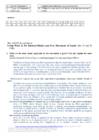
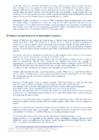


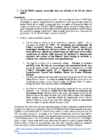


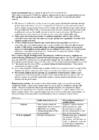

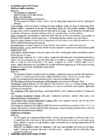


Kõik kommentaarid