investor ’s HandbookA Legal Guide to Business in Georgia •
STArT Up•
privATizATiON•
LABOr LEGiSLATiON February 20111st Edition 1 CYAN MAGENTA YELLOW BLACK 1This brochure is a publication by the Georgian National Investment Agency (GNIA) and was prepared by Georgian law firm Mgaloblishvili, Kipiani, Dzidziguri (MKD). The Brochure is intended to be a general guidance on start up, privatization and labor relations . It is thus not expected to be a substitute for detailed research or exercise of professional judgment on above mentioned topics. Companies and individuals operating in Georgia or planning to operate, are strongly advised to obtain current and detailed information from experienced professionals. None of the organizations mentioned above, nor their members , employees or agents accept liability for the consequences of you and anyone else acting or refraining to act on the information contained in this brochure or for any decision based on it.The brochure is published with support of the German Development Cooperation Deutsche Gesellschaft für Internationale Zusammenarbeit GmbH (GIZ). Findings, conclusions and comments made in the publication do not necessarily reflect the opinion of GIZ.This publication may not be reproduced in whole or in part without the written permission of the copyright holder .© Deutsche Gesellschaft für Internationale Zusmmenarbeit GmbH (GIZ), 2011.2CYAN MAGENTA YELLOW BLACK 2 iNTrOdUCTiON For the past few
years , Georgian
government has carried out a number of significant
economic reforms in various fields in
order to create attractive business environment and to breathe a new
life into Georgian
economy . The main aim of the reforms was to
boost foreign investments, cre-
ate new
jobs , stimulate
entrepreneurial activities in a variety of fields and
increase the
welfare of
citizens.
As a
result of economic deregulation
policy which was
focused on liberalization of the Economy,
a number of state regulated spheres were sharply decreased and
regulation procedures were sim-
plified. Consequently, our achievements have been recognized by a number of international in-
stitutions. This
year the World
Bank and the International
Finance Corporation published a
joint research Doing Business 2011, under which Georgia ranks 12th
among 183 countries in
terms of
Ease of Doing Business.
Moreover , Georgia surpasses 174 counties in terms of
reformation of
business regulations
since 2005. Last but not
least , Georgia ranks
first in the Post-
soviet space ,
excluding the
Baltic countries, in terms of counter-
corruption policy. It is worth noting that de-
spite the current difficulties
related to the
global financial
crisis , Georgia
managed to overcome
economic challenges due to economic liberalization reforms. In this direction, Georgian Govern-
ment made
several important steps:
Tax -The administration of tax and customs systems has been simplified. The number and rates
of
taxes have been significantly reduced
making it
easier for
local and foreign businesses to do
business. Currently,
there are only 6 taxes and no capital gains, inheritance,
wealth , property
transfer ;
social ,
branch remittance or any
other taxes are in
place in Georgia. The
coming into
effect of a new comprehensive Tax
Code (
including customs legislation) on
January 1, 2011 con-
stitutes a
further milestone in the development of tax legislation.
Licenses and permits - Georgia has dramatically reduced licensing and permitting
requirements to ease constraints on business.
The
total number of licenses and permits was cut by 84% in re-
forms that eliminated 756 licenses and permits and streamlined procedures. Currently, licenses
and permits are only used in the
production of
highly risky
goods and
services , also
usage of
natural resources and
specific activities. The procedures of issuing licenses and permits were
significantly simplified to the “one-stop
shop ” and “silence is consent” principles.
Customs reform - From January 1, 2011 the new Tax Code of Georgia
took effect which also
includes the provisions regulating customs. Tax Code
established business
friendly customs pro-
cedures. Customs Tariffs Reform significantly eased and sharply reduced the
costs connected to
the foreign trade. Number of
import tariffs were abolished on approximetaly 90% of
products and
only 3 tariff rates (0%, 5%, 12%)
exist instead of
previous 16. Georgia
sets import taxes on only
several kinds of agricultural goods and constructing materials. In
addition , there are no quantita-
tive restrictions (quotas) on imports and exports.
3CYAN MAGENTA YELLOW BLACK 3Labor relations - New Georgian
Labour Code made significant reforms in the sphere of labour
relations simplifying the relations
between employers and employees. As a result of the reform,
Georgia is among the world’s leaders in labor
freedom with its new Labor Code.
privatization of State property – Starting from 2004,
provision of
aggressive and transparent
privatization policy was one of the important reforms of Georgian Government, that was ad-
dressed to denationalization of the remained state property in order to
attract foreign investments,
increase and
develop the private
sector and effective use of
country resources.
Georgia is a business-friendly state that strives to make Georgia the
best destination for business-
es. The reforms and
creation of the right legal
base have played a significant
role in Georgia’s
economic
growth . The Government of Georgia stays committed to its economic reform agenda
and intends to
implement further reforms to
improve its investment climate and stimulate eco-
nomic growth. This
means more reforms and more
initiatives in a range of fields
aimed at further
improvement of investment climate and progress in terms of the ease of doing business.
In this brochure we
offer information about the legal
framework which is highly important in the
process of starting up and
running a business in Georgia.
The brochure
consists of three parts – Start up a Business, Privatization and the Labor legislation.
Each part consists of
chapters outlining in most comprehensible
language the content of the leg-
islative base regulating the corresponding
field .
Furthermore ,
relevant legislative
acts and
articles are
provided at the end of each
chapter .
Unfortunately , the
format of the brochure does not
enable full incorporation of every relevant
detail and information and can thus not
serve as a substitute for professional legal
advice . Nev-
ertheless, we did our best to make the brochure comprehensive and
catch main aspects and
rules of Georgian legal framework which will
hopefully be of use for the interested reader.
4CYAN MAGENTA YELLOW BLACK 4Table of contentspArT i STArT UpChapter i. Legal Forms of Companies ------------------------------------------------------- 6
Chapter ii. Setting up a company ------------------------------------------------------------16
Chapter iii. reorganization, Liquidation and insolvency procedures ---------------23
Chapter iv. Tax Legislation -------------------------------------------------------------------28
Chapter v. Customs procedures --------------------------------------------------------------36
Chapter vi. international Trade regimes of Georgia -----------------------------------50
Chapter vii. General review of Current
Licenses and permits Applicable in Georgia -----------------------------------------------59
Chapter viii. State promotion of investments --------------------------------------------79pArT iiprivATizATiONChapter iX. privatization ---------------------------------------------------------------------87pArT iii LABOr LEGiSLATiONChapter X. Labor Code of Georgia -------------------------------------------------------- 114Useful links ------------------------------------------------------------------------------------- 1295CYAN MAGENTA YELLOW BLACK 5pArT i. STArT UpChapter i LEGAL FOrMS OF COMpANiESPrior to starting a business in Georgia, one must first of all identify a specific legal structure
through which one intends to establish and operate the business. The rules regarding the foun-
dation,
registration , reorganization and liquidation of a company are enumerated in the Law on
Entrepreneurs. Pursuant to the law, one of the
following legal forms can be chosen for organizing
a business in Georgia:
1. Limited Liability Company;
2. Joint
Stock Company;
3. General Partnership;
4. Limited Partnership;
5. Cooperative;
6.
Individual Entrepreneur Of the above-mentioned legal forms, only the last one - Individual Entrepreneur does not have the
status as a legal
person . Thus, the individual entrepreneur acts as a
physical (natural) person and
has unlimited liability against his or her creditors.
According to the Georgian legislation, any
activity related to art,
science , medicine,
architecture ,
attorneys or notaries, advisories,
agriculture or
forestry is not
considered an entrepreneurial activ-
ity. As
such , it is not
required to incorporate a company in order to
carry out the aforementioned
activities, provided that such activity is undertaken by a physical person individually, without
hired labor.
A
brief review of
basic features of each legal form is
given below in a successive order:
Limited Liability CompanyLiabilityAs the name implies, the limited liability company (LLC) provides limited liability to its owners
in such a way that they are not liable for the LLC’s
debt obligations. The liability of a
partner in
an LLC is limited to the investment made in the company,
while his or her personal
assets are not
at risk. The LLC can be established by a
single person or by several persons jointly.
6CYAN MAGENTA YELLOW BLACK 6 Charter capitalThe presence of charter capital is required to set up a limited liability company. The Law on
Entre -
preneurs does not establish a minimum or
maximum capital requirement for establishing a LLC.
The
amount of the charter capital,
therefore , rests entirely with the partner(s) of the company.
Rights and Obligations of Partners The partners of the limited liability company are entitled to create an agreement, which sets
forth their rights and obligations and the distribution of
shares . This agreement is
reflected in the stat-
ute of the company.
Management The managerial structure of a company, its
composition and the regulation of its activity
rest solely on the decision of the partners
.A partners’
meeting is the
highest body of the limited liability company. The partners’ meeting
has the exclusive right to make
strategic decisions with
respect to company’s activity.
A
director (or directors) appointed by the partners’ meeting carries out the
overall management
of the day-to-day activity of the Company. The rights and obligations of the director are specified
by respective agreement and the Law on Entrepreneurs.
Besides that, the partners’ meeting is entitled to create a supervisory
board and determine its
functions .
Joint Stock CompanyLiabilitySimilar to an LLC, a joint stock company is liable vis a vis
its creditors only to the extent of the
property
owned . The shareholders are not personally liable for the
corporate debt obligations.
Charter capitalThe presence of charter capital is required to set up a joint stock company. The Law on Entrepre-
neurs does not establish a minimum or maximum capital requirement for the joint stock company.
Rights and Obligations of ShareholdersThe
shareholder of a company is expected to make a
contribution in the charter capital to get his
shares. The law does not prescribe any other obligations.
Currently, a monetary contribution is the most common way of paying the charter capital in a
joint stock company.
7CYAN MAGENTA YELLOW BLACK 7The
class of shares owned by the shareholder determines the rights of the shareholder in the
company.
Unless otherwise stipulated by the statute, the joint stock company may
issue ordinary
(common) and
preferred shares. At a shareholders’ meeting, the
owner of ordinary shares enjoys
a voting right corresponding to the number of shares owned. The owner of preferred shares does
not have such a right; he is only entitled to receive stock
dividends at an approved
rate .
ManagementAccording to the Law on Entrepreneurs, the joint stock company has a three-tiered structure. The
shareholders’ general meeting is the highest body of the company authorized to make decisions
on the company’s strategic and key
issues . The general meeting elects a supervisory board of the
company. The supervisory board is mandatory for public companies, for joint stock companies
licensed by the National Bank of Georgia, and for joint stock companies with more
than 100
shareholders. The main tasks of the board are the appointment and dismissal of the directors and
regulation of their activity. The director is
responsible for the management and representation of
the company and reports to the supervisory board.
General partnershipLiabilityA general partnership can be set up by two or more persons. Unlike the partners in the limited li-
ability company, the founders of the general partnership have unlimited liability against creditors
and are jointly liable for the debt obligations of the company to the extent of their
entire personal
property.
Charter capitalWith regard to the personal liability of partners to the creditors of the company, the Law on En-
trepreneurs does not
require the creation of charter capital for setting up a general partnership.
Rights and Obligations of PartnersEach partner of the company is entitled to participate in the management of the company. Any
partner who does not participate in the management of the company is entitled to become familiar
with
details of the company’s activity, as well as any financial or other type of documentation
related to the operations of the company.
ManagementThe company is managed by the partners on
basis of a mutual agreement. Each partner has one
voting right in the
course of decision-making. The partners may undertake management jointly or
delegate it to one partner. The management structure of the company is specified by the partners
in the statute of the company.
8CYAN MAGENTA YELLOW BLACK 8Limited partnershipLiabilityA Limited Partnership can be established by two or more persons (either physical or legal per-
sons ). Under this legal structure, the liability of certain partners (the limited partners) for the ob-
ligations of the company is limited to an agreed
pledge amount
paid by those partners.
However ,
the liability of other partners (the general partners) is unlimited, i. e. they are personally liable to
the creditors for their entire personal property.
Charter capitalThe limited partners are obliged to pay an agreed pledge amount by which their liabilities for a
company’s obligations are limited. The general partners do not make contributions to the charter
capital, and therefore their liability is unlimited.
The Law on Entrepreneurs does not
specify a
lower and
upper threshold for the pledge amount.
Rights and Obligations of PartnersThe partners of the company enjoy
different rights. The limited partners may not participate in
the management of the company. They can only review annual reports and require corresponding
financial documentation to
double -
check the data given in the
report .
The limited partners do not have the right to approve or
amend the statute of the company.
ManagementOnly general partners are entitled to
manage the company. The limited partners can exercise their
voting rights only in
cases prescribed by the statute of the company.
CooperativeLiabilityA Cooperative (CO) is a company
incorporated with the
objective of
developing common busi-
ness and increasing the profits of its members. The objective of the CO is to accomplish the in-
terests of its members. The CO is not primarily aimed at
earning profit .
Both physical and legal
persons can be members of the CO. The CO is liable to the creditors to the extent of its own
property.
Charter capitalThe Law on Entrepreneurs does not specify the minimum capital requirement for setting up a
cooperative. The members of the CO decide on minimum initial shares.
Rights and obligations of the members 9CYAN MAGENTA YELLOW BLACK 9All members are expected to contribute a predetermined initial
share . Unless otherwise agreed, all
members enjoy equal rights. They participate in the management of the company jointly by means
of the partners’ general meeting. The statute of the cooperative may stipulate different rules.
ManagementThe cooperative has a three-tiered managerial structure. A general meeting is the highest body
authorized to make decisions on strategic issues. The general meeting elects a supervisory board
and a board of directors. The supervisory board monitors the activity of the board of directors.
The board of directors should consist of at least two directors to manage the
daily activity of the
cooperative and report to the supervisory board and the general meeting.
Branch office of a company; Branch office ( permanent establishment ) of a foreign companyA company registered in Georgia is entitled to set up a branch office, which is not a legal person.
The Law on Entrepreneurs does not require registration of the branch office.
A foreign company can establish a branch office in Georgia. The registration of a branch of a
foreign company in Georgia is mandatory. The procedures for registration are highlighted in the
following chapter.
Type of CompanyLiabilityCapitalManagement• Partners’ Meeting
LLC
No personal liability Required. Minimum capital • Director (Directors)
requirement is not specified
• Supervisory Board
(
Optional )
• Partners’ Meeting
JSC
No personal liability Required. Minimum capital • Director (Directors)
requirement is not specified
• Supervisory Board (In cases
provided by law)
General partnership
Personal liability
Not required
• Partners’ Meeting
• Director (Directors)
Personal liability for
• Partners’ Meeting
Limited Partnership General partners.
Required. Minimum capital • Director (Directors)
Limited liability for requirement is not specified
(Only general partners have
Limited partners
right to manage company)
• General Meeting of
Cooperative
No personal liability Required. Minimum capital
Members
requirement is not specified
• Director (Directors)
• Supervisory Board
Individual
Entrepreneur
Personal liability
Not required
No management body
10CYAN MAGENTA YELLOW BLACK 10 Audit and Accounting requirementsAs far as the
auditing requirements are concerned, per Law on Entrepreneurs, the audit is
incumbent for the following entities:
a) accountable company (as defined by the Law on Securities
Market ), the securities of which are
admitted at the stock
exchange ;
b) the company which is licensed by the National Bank of Georgia (such as
banks ,
insurance companies, brokerage companies and etc);
c) the company, the number of its shareholders exceeds 100. In this
case the audit
shall be
conducted by the auditor being legally and economically independent from the company, its
directors and shareholders.
Despite the legal status, the company
turnover of which exceeds 100 000 GEL in any
continuous period of 12
calendar months must file an
application for VAT registration to the
Revenue Service and process the accounting in compliance common standards. Individual entrepreneurs, small
and micro business are
eligible for certain simplified accounting rules and tax exemptions.
Legislative BaseLaw of Georgia on EntrepreneursOctober 28, 1994Article 1.
Scope of application of the law
1. This law regulates the legal forms of entrepreneurial entities.2. Entrepreneurial activity is a legitimate and continuous undertaking that is carried out for the purpose of gaining profit individually or in a corporate manner .3. Creative art, science, medicine, architecture, legal defense or notary, audit, advisory (including tax advisory), agriculture or forestry related activity of physical persons is not considered to be an entrepreneurial activity; agriculture and forestry related companies may exist in the legal form anticipated in Article 2 of this law if they are registered in the Register of Entrepreneurs and Non-Entrepreneur (non-commercial) Legal Persons. Registration is mandatory if an enterprise permanently employs at least five persons who are not the members of the family of the owner. Article 2. Entrepreneurial entities and how they are established
1. Entrepreneur entities are: individual entrepreneur, general partnership, limited partnership, limited liability company, joint stock company and cooperative. 3. General partnership, limited partnership, limited liability company, Joint Stock Company and cooperative are enterprises (companies) with the status of a legal person. An individual entrepreneur identified in this law is not a legal person. In business relations an individual entrepreneur implements his rights and fulfills his obligations as a physical person. 11CYAN MAGENTA YELLOW BLACK 11Article 3. Responsibility, rights on receiving of information and monitoring
3. Partners of a general partnership and personally responsible partners of a limited partnership – general partners (Complementars) are jointly liable for the debts of the company i.e. each partner is responsible for the debts with all his entire property directly and independently. Different agreement between the partners is void for the third person. 4. Limited partners of a general partnership (Comandites), the partners of a limited liability company, a joint stock company and a cooperative are not liable for the debts of the company. The partners of a limited liability company, a joint stock company and a cooperative shall be liable towards the creditors with the unpaid contribution if the liability takes an effect before the full contribution agreed between the parties is made. 4 1.The partners enter into an agreement (a statute) by which the matters related to the operation of the company and relationships of the partners are regulated. The part of the partners’ agreement (the statute) which includes the data envisaged under Article 5 of this law and is registered in the register represents a registration application. The partners’ agreement, which is not subject to registration, is made in written form and can be concluded in any language (the Partners’ Agreement - the Statute)5. In the course of the creation of a company, the partners shall agree on distribution of shares and accord on the amount of their contribution into the charter capital. The contribution can be tangible and intangible assets, labor or/and provision of services.Article 9. Management and Representation
1. Managerial right is assigned to: in a general partnership – all the partners; in a limited partnership – the general partners , in case the general partner is a legal person – a physical person appointed by him; in a limited liability company, joint stock company and a cooperative – the directors if otherwise stipulated in the Statute (the partners’ agreement).2. The power to manage anticipates the act of decision making on behalf of the company within the terms of reference , and the representation right implies action taken on behalf of the company in relations with third parties.Article 91. Partners’ General Meeting
1. Unless otherwise specified by this law or the Statute of the company, the rule of calling and procedures of a partners’ general meeting, as well as its scope of authority shall be stipulated in accordance with the regulations identified in this Article.5. Partners’ meeting shall make decisions on the following issues:a) Types of production, commencement and cancellation of industrial activity;b) Approval of changes in the data of an application for registration and the Statute;c) Opening and liquidation of branch offices;d) Investments with the value of each or all of them exceeding 50% of the company assets in a fiscal year;e) Taking liabilities with the value of each or all of them exceeding 50% of the company assets;f) Guarantees for the liabilities that do not belong to a regular industrial activity and have a value which exceeds 50% of the value of the company assets;g) Issuance and cancellation of procurement;h) Approval of annual results ;i) Selection of an audit;12CYAN MAGENTA YELLOW BLACK 12g) Reorganization and liquidation of a company.6. In a limited liability company the meeting makes decisions on the following issues apart from those spelled out in Paragraph 5 of this Article:a) Identification of principles of distribution of profit among the management, participation in general income and issuance of pension ;b) Application of those additional rights which is assigned to the company from the day of its registration or is anticipated in the management of the company against the director or/and the partner, as well as representation of the company in the judicial proceedings that are carried out against the directors;c) Require to make a contribution;d) Return of extra contribution;e) Appoint and dismiss directors, sign and terminate agreements with them, approve their reports;f) Make decisions on setting up a supervisory board;g) Decisions on increasing the company’s capital by making new/additional contributions.7. Every decision of special importance outweighing regular activity of the company requires approval of a general meeting with participation of all the partners.10. At the general meeting, each partner of a general partnership and each general partner of a limited partnership has one voting right. The limited partner of a limited partnership does not have a voting right. Voting right of the partners of a limited liability company is specified proportionally to their shares.Article 16. Branch Office of a Company
1. Company may establish a branch office, which is not a legal person. The branch office of a company registered in Georgia does not require registration.Article 20.
Concept of a General Partnership
1. A general partnership is a company where several persons (partners) carry out an entrepreneurial activity jointly under a single name and are liable for the obligations of the company as joint debtors to their creditors directly with all of their propertyArticle 34. Concept of a Limited Partnership
1. Limited Partnership is a company where several persons carry out an entrepreneurial activity under a single brand name and liability of one or several partners to the creditors is limited to agreed pledge amount – the limited partners, while the liability of other partners is unlimited – the general partners.4. Only general partners have the right to adopt and amend the statute of a limited partnership and modify the registration data.Article 36. Monitoring Right of Limited Partners on
1. The limited partners are entitled to require a copy of the annual report and check its accuracy through reviewing financial documentation of the company.Article 37. Management of the company
1. The limited partners do not participate in the management of the company. They may not 13CYAN MAGENTA YELLOW BLACK 13 challenge the actions of the general partners taken within ordinary entrepreneurial operations. The limited partners enjoy a voting right only in the cases foreseen by the statute of the company.Article 44. Concept of a Limited Liability Company
1. A Limited Liability Company is a company the liability of which to its creditors is limited to its entire property. A single person may also set up such company.2. Agreement between the partners of the company on lessening the liability is void for the third parties.3. Capital of a limited liability company is divided into shares. The share is a transferable right.Article 45. Capital of a Limited Liability Company
Charter capital of a limited liability company may be determined in any amount.Article 46. Rights and Obligations of Partners
Rights and obligations and the rule of initial distribution of shares are spelled out in the statute of a company (partnership agreement).Article 47. Management of the Company
Structure, composition and the method of activity of management bodies are defined by the statute of a company.Article 51. Concept of a Joint Stock Company
1. A joint stock company is a company whose capital is divided into shares, the classification and the number of which are specified in the Statute. A share is a dematerialized nominative security which confirms the liability of a joint stock company to a partner (shareholder) and the rights of a shareholder in the joint stock company. The Statute of a joint stock company may identify the price , which is the threshold for the shares of this class during a primary sale ( nominal price of shares). A liability of a joint stock company towards the creditors is limited to its entire property. A shareholder of the joint stock company is not liable for the obligations of the company. When setting-up a joint stock company the charter capital of company may be determined in any amount.Article 52. Types of shares. Other securities convertible into shares
1. Unless otherwise established by the statute, shares may be ordinary and preferred. One ordinary share provides a shareholder one voting right at a shareholders’ general meeting. On the contrary, a preferred share does not grant a voting right. The preferred share entitles the shareholder to receive a dividend at an approved rate. Size of a dividend and the rule of its granting are defined by the Statute. A different rule may be stipulated by the Statute that suggests different definition of the rights of ordinary and preferred shares. Shares of one class provide equal rights to their holders. Promise on unrestricted granting of dividends is invalid. Article 53. Rights and Obligations of Shareholders
1. Unless otherwise stipulated by the law, the sole duty of the shareholder is to make a contribution in order to get a relevant number of shares. Imposing a duty to a shareholder by virtue of the statute of a joint stock company, which is not stipulated by the law, is invalid.
14CYAN MAGENTA YELLOW BLACK 1432. Shareholders owning 5% of the shares are entitled to require a special examination of industrial actions or the entire annual balance if they think violations take place.Article 60. Concept of a Cooperative
1. A Cooperative is a company based on the labor activity of its members or is created for the purpose of development of the business and boosting the revenues and the main goal is to meet the interests of the members. A Cooperative is not primarily oriented towards earning a profit. 3. A Cooperative is liable for its obligations to the creditors only with its own property. Article 61. Share
1. The minimum share of a cooperative member is determined by the founders. One member of the cooperative may have several shares.Article 63. General Meeting
1. Unless otherwise stipulated by the law, the members of a cooperative exercise their cooperative related rights at the general meeting. 3. Each member has one voting right. A different distribution of the voting rights may be defined by the statute.Article 65. Supervisory Board
1. A cooperative has a supervisory board consisting of at least 3 and no more than 15 members elected by simple majority of votes of the members being present at the general meeting.3. Supervisory board monitors the activity of the board of directors in every area of the management and for this purpose obtains information on progress of the cooperative’s operations.Article 66. Board of Directors; The Directors
1. A board of directors of a cooperative consists of at least 2 directors (members of the board of directors). The directors may not be the members of the cooperative. A statute may foresee other conditions as well. 15CYAN MAGENTA YELLOW BLACK 15Chapter iiSETTiNG Up A COMpANYAfter choosing a suitable legal form for the business, the next
step is the registration of the company.
The terms and procedures for registering a company are regulated by the Law on Entrepreneurs,
the Law on Public Registry and the Instruction Manual on Registration of Entrepreneurs and
Non-Entrepreneur (non-commercial) Legal Persons.
The registration of a company in Georgia is based on three
essential principles:
fast , inexpensive
and simple procedures.
Registration is absolutely mandatory for all of the types of companies listed in the first chapter.
A company is considered established only after it is registered in the National Agency of Public
Registry (www.napr.gov.ge). The data entered in the Registry is public. A company is not re-
quired to
complete a separate tax registration, as pursuant to the Georgian legislation, the initial
registration includes both the State and the Tax registration and is carried out simultaneously.
Prior to
submission of an application for registration, the partners sign an agreement specifying
the rights and responsibilities of the parties and other matters related to the company. Such an
agreement is referred to as the Statute of the company.
The distribution of shares between the partners, the method of
formation of charter capital of the
company and the form of contribution are also specified by the partners’ agreement.
For the purpose of registration, the law does not require a
document verifying the amount or ex-
istence of the charter capital.
registryRegistration of companies in Georgia is carried out by the National Agency of Public Registry – a
legal person of public law.
registration proceduresThe registration process
begins with
filing an adequate application to the National Agency of
Public Registry. The application shall be submitted to an office of the Public Registry appropriate
to the legal address of the company applying for registration.
The application for registration should be
signed by all partners of the company and verified by
a notary.
16CYAN MAGENTA YELLOW BLACK 16If the partners sign the application in the Public Registry in the presence of an authorized officer,
notarization of the application is not required.
The Application for the registration should include the following information:a) The name of the company;
b) The legal form of the company;
c) The legal address of the company;
d) The full name, address and the personal identification number of the partner(s). If the partner
is a legal person the application should include:
The name of the company;
The company’s legal form;
The company’s legal address;
The company’s
date of registration and the identification number;
Information on the representation (management) of the company;
e) The management body (bodies) of the company and the decision-making methods;
f) The number of shares of the partners of the limited liability company and the general partners
of the limited partnership, if the company is a limited liability company or a limited partnership.
g) A reference to the general and limited partners, if the company is a limited partnership;
h) In the case of a limited liability company or limited partnership, any obligations limiting own-
ership of the shares by the partners/general partners;
i) The persons authorized to manage and
represent the company – full name, address and the
personal identification number;
j) The full name, address and the personal identification number of a procurist, if any;
k) If the company has several persons entitled to represent the company, a
statement as to whether
these persons shall act jointly or separately.
l) The person, if any, authorized to
apply , on behalf of the company, to the Public Registry in fu-
ture with the request for amendments to the
record of incorporation. This person may be either a
legal or physical person. In case of physical person, the application should include the full name,
address, and the personal identification number of that person. For a legal person, the name, legal
address, legal form, date of registration, identification number, and representatives should be
indicated.
If the activity of the company is related to the production of or trade in food or
animal feed , a
respective
note should be made in the process of registration.
Establishment of a company in Georgia by foreign residentsIf the partner, director or representative of the company or the person authorized to make amend-
ments to the registration data in the registry is not a Georgian
citizen , he/she is required to
submit to the Public Registry the data
equivalent to the personal data prescribed for a citizen of Georgia.
A
certificate of
residence in Georgia or a personal identification document issued by the foreign
country is considered as an equivalent document.
17CYAN MAGENTA YELLOW BLACK 17If the Georgian company is established by a foreign company, the information on the corporate
standing of the
parent company entity should be verified or legalized according to the applicable
rule.
registration of a branch office of a foreign company in GeorgiaGeorgian legislation allows a foreign company to set up a branch office (a permanent establish-
ment) in Georgia. In this case, registration of the branch office is mandatory.
Registration of a branch office of a foreign company is carried out by the Public Registry and the
application for registration should be submitted to an office of the Public Registry appropriate to
the legal address of the branch.
For the purpose of registration of the branch office, the following
documents should be submitted
to the Public Registry:
a) Application for the registration of the branch;
b) Decision of the company on the appointment of a branch director or the power of
attorney au-
thorizing a person to manage the branch, verified in accordance with the Georgian legislation;
c) Information on the foreign company and its management as enumerated by the Law on Entre-
preneurs and verified in accordance with the Georgian legislation. This information is the
same that required by Georgian legislation for the establishment of the company.
(The data established by the law implies the information that is normally required for registration
of a company)
relocation (redomocile) of a foreign company to GeorgiaGeorgian legislation allows the redomicile of a foreign company to Georgia without requir-
ing it to cease its activity. When seeking to relocate a company, one should
keep in mind that
the company can operate in Georgia only under one of the legal forms
allowed by Georgian
legislation.
For the purpose of redomicile, the interested person should submit the following documents to
the National Agency:
Application;
Personal identification document;
Document confirming the redomicile of the company (respective decision of the company
partners);
Document verifying the
payment of the registration fee.
If redomicile is carried out by a representative, a copy of the personal identification document of
the representative and the respective power of attorney are required.
The
term and fee for redomicile registration is the same as for the registration of a company.
Fee and Term of registrationThe fee payable for the registration of the company (including registration of the branch of the
foreign company) is 100 GEL. The registration is completed in one business day.
18CYAN MAGENTA YELLOW BLACK 18Georgian legislation allows the registration of the company on the same day of filing the applica-
tion . In this case, the fee is 200 GEL.
Registration of a company producing food or animal feed is completed during one business day
and the registration fee is 15 GEL.
The document showing payment of the registration fee should be attached to the application for
registration and submitted to the Public Registry. The payment of the registration fee is possible
at any Georgian bank.
Once the registration procedures are completed successfully, the company is assigned a
unique identification number.
Opening a bank account After completing the registration, a company may
select any Georgian bank and
open a bank ac-
count .
Opening a bank account takes one business day and a minimum
cost of 10 GEL.
For the purpose of opening the bank account, the following documents should be submitted to
the bank:
a) Application for opening a bank account in the form established by the bank (the form is avail-
able at the bank and can be completed on site).
b) State and Tax Registration Certificate of the company;
c) Sample signature of the director of the company;
d) Copies of identification documents of the persons authorized to represent the company.
Legislative BaseLaw on EntrepreneursOctober 28, 1994Article 3. Responsibility, rights on receiving and monitoring of information
41The partners enter into an agreement (a statute) by which the matters related to the opera -tion of the company and relationships of the partners are regulated. The part of the partners’ agreement (the statute) which includes the data envisaged under Article 5 of this law and is registered in the registry represents a registration application. The partners’ agreement, which is not subject to registration is made in written form and can be concluded in any language (the Partners’ Agreement - the Statute)5. In the course of the creation of a company the partners shall agree on the distribution of shares in accordance to the amount of their contribution into the charter capital. The contribu-tion can be tangible and intangible assets, labor or/and provision of services.19CYAN MAGENTA YELLOW BLACK 19Article 4. Registration of an entrepreneurial entity
2. A registration of an entrepreneurial entity is undertaken by a legal person of the public law – the National Agency of Public Registry being under the management of the Ministry of Justice of Georgia (hereinafter – the Registry).3. An entrepreneurial entity is created upon the moment of its registration in the register of commercial and noncommercial legal persons. An existence of an entrepreneurial entity is veri -fied by a record of the registry of commercial and noncommercial legal persons. The registration of the entrepreneurial entity covers both state and tax registration. A decision of the registering body on registration becomes effective upon its official presentation to the party or as soon as it gets published. The decision is considered published once it is posted at the webpage of the registering body.4. The registration of an entrepreneurial entity is undertaken according to the address chosen by the entity. A written notification (correspondence) sent to this address is considered as an of-ficially dispatched notification (correspondence) (legal address).Article 5. Terms of Registration of an entrepreneurial entity
1. In case of requesting a registration of a company, an application for registration signed by all partners of the company and verified according to the applicable rule shall be submitted to the Registry, while at the same time the application represents the part of the partners’ agreement and includes the following information:a) A name/brand name of the company;b) A legal form of the company;c) A legal address of the company;d) A full name, address and the personal number of the partner(s) and if the partner is a legal person the application shall include the brand name of the company, the legal form, legal ad-dress, date of registration, identification number and the information about its representatives;e) A management body of the company, decision making methods and the information about the number of shares of the partners and the general partners in case of a limited liability com-pany and a limited partnership;f) A reference to the general and limited partners, if the company is a limited partnership;g) In case of limited liability company or limited partnership, the obligations limiting an own-ership of the shares by the partners / general partners;
h) The managers and representatives of the company – ful name, address and the personal number;i) Full name, address and the personal number of a procurist, if any;j) If the company has several persons entitled to represent the company, a reference whether these persons shall act jointly or separately.k) The person, if any, authorized to apply, on behalf of the company, to the Registry in future with the request on amendments to the record of incorporation. This person may be either legal or physical person. In case of physical person, the application shall include full name, address and the personal number of that person, while for the legal person, the name, legal address, legal form, date of registration, identification number and representatives shall be indicated.3.
Notary verification of the application for registration is not required if the authorized per-sons sign it in the Registry or it is verified by the authorized administrative body in accordance with the established rule.20CYAN MAGENTA YELLOW BLACK 204. In the case when a partner (partners) of the company, an authorized person (persons) on management or representation, a person authorized to registry changes in an application for registration (if any) are physical persons without Georgian citizenship or legal persons of a foreign country for the purpose of registration they shall submit the data analogous to those established for a Georgian citizen or a company registered in Georgia. The rule of identifica-tion of data equivalency is specified in the instruction. In case of a legal person of a foreign country the documents authenticating its registration as a legal person needs to be duly veri-fied or legalized.6. For the purpose of registration of a company, the document verifying the existence of the charter capital is not required.7. If the activity of the company is related to the production, processing , distribution, selling of food/animal feed or food business operators it is mandatory to include this information in the documents submitted for registration. Additional terms of registration of such a company are specified by the instruction and the price is stipulated in the Georgian Law on Public Registry.Article 57. Company Redomicile
1. Transfer (redomocile) of the registration of a foreign company without discontinuation of its activity is permitted. 2. A Company redomociled to Georgia may be registered only under the form foreseen by the Georgian legislation.)Article 16. Branch Office of a Company
4. For the purpose of opening a branch office (a permanent establishment) of a foreign com-pany in Georgia the following documents shall be submitted to the Registry:a) Application for the registration of the branch;b) Decision of the company on appointment of the branch director or the power of attorney authorizing a person to manage the branch, verified in accordance with the Georgian legislation;c) Information on the company and its management verified in accordance with the Georgian legislation and defined by this Law. Law on public registryDecember 19, 2008Article 31. Terms and fees established for the service provided by the agency
1. The following timeframe is established and the following fees are set for the service pro-vided by the Agency:h) Registration of an entrepreneurial entity, excluding an individual entrepreneur, and a non-entrepreneurial (non-commercial) legal person; Registration of amendments of the registered data and cancellation of them is possible in one business day at the cost of 100 GEL.j) Registration as a company producing food/animal feed or/and as a distributor which also implies registration as a company whose activity is related to processing, selling an producing food/animal feed; as well as registration of amendments of the registered data and cancellation thereof is possible in one business day at the cost of 15 GEL.21CYAN MAGENTA YELLOW BLACK 21Article 32. Accelerated Service
1. The Agency offers an accelerated service for the following timeframe and at the following cost:c1) Registration of an entrepreneurial entity, excluding an individual entrepreneur, and a non-entrepreneurial (non-commercial) legal person; Registration of amendments of the registered data and cancellation thereof is possible on the same day of submission of an application at the cost of 200 GEL.instruction on “registration of Entrepreneurs and Non-entrepreneur (Non-commercial) Legal persons”Approved by the Order # 241 of the Minister of Justice of Georgia December 31, 2009 Article 9. Identification of personality of an interested person, his/her trustee or/and an ap-
plicant
1. Identification of personality of an interested/representative physical person is carried out by means of a personal identification document. A passport of a citizen of Georgia or a personal identification card is considered to be a document identifying personality of a Georgian citizen. A residency permit for Georgia or a personal identification document issued by a respective country shall be considered to be a document identifying personality of foreign residents or the persons without citizenship.Article 12. The Rule of Assigning an Identification Number
1. Identification Number is the unique code that is assigned to a subject along with registra-tion.22CYAN MAGENTA YELLOW BLACK 22Chapter iiirEOrGANizATiON, LiqUidATiON ANd iNSOLvENCY prOCEdUrESreorganization of a companyGeorgian legislation enables a company to
change form, as well as the merger of two or more
companies into one legal entity.
Procedures related to the reorganization of a company are provided in the Law on Entrepreneurs.
Only partners are authorized to make the decision to reorganize a company. The decision to reor-
ganize should be reflected in the statute of the company. Specifically, following reorganization,
the redistribution of partners’ shares and determination of their obligations should be revised in
the statute with regard to the change in form of the company. The company established through
reorganization is a successor of the reorganized company.
Georgian legislation enables the
division of a company, as well. In the case of division, the com-
pany may be
split to create two or more new and independent entities. In this case, the partners
are entitled to
define their shares in the companies established as a result of the division on the
basis of a new agreement.
Companies established through division are jointly liable for the commitments of the transferring
company.
Georgian legislation allows a merger of two or more companies into a single legal entity. The
decision to merge is made according to the same rule as in the case of division. A company es-
tablished in this way is the successor of those companies whose merger resulted in establishment
of the new company.
The reorganization of a company requires the registration of adequate changes in the Public Reg-
istry. The term and cost of registration are similar as those applicable for the initial registration
of a company.
Liquidation of a companyThe decision to liquidate a company is made by the partners of the company. Following the
deci -
sion to liquidate, the partners (or the supervisory board) appoint a liquidator of the company and
submit an application for liquidation to the Public Registry. Once the application is registered by
the Public Registry, the process of liquidation is commenced. According to the Georgian legisla-
tion, the creditors must be informed of the liquidation.
23CYAN MAGENTA YELLOW BLACK 23Liquidation is carried out by the liquidator of the company. Specifically, the liquidator undertakes
the sale of a company’s assets and
puts the
received amount in the
deposit account of
court or
notary. This amount is used to satisfy the debts owed by the company to the creditors. After all
claims of creditors are satisfied, the remaining part of the assets shall be distributed among the
partners.
Once the liquidation of a company is completed, and upon the
receipt of a respective
notice , the
Public Registry cancels the registration of the company and the company ceases to exist. Submis-
sion of the application for liquidation and the cancellation of registration are carried out within
the same term and at the same cost as in the case of registration or reorganization of a company.
principles and features of insolvency procedures In the process of operation, a company may
face financial hardship when it is not in the
posi -
tion to
honor its obligations to creditors and thus, the company becomes insolvent. Insolvency
procedures are regulated by the Law on Insolvency Procedures. In the case of insolvency, the
director(s) of the company is obliged to make an announcement about insolvency in due time.
The legislation on insolvency procedures is focused on the balanced
protection of the interests
of debtor company and its creditors, and if possible, allows the insolvent company to solve its
financial problems and
avoid bankruptcy.
Insolvency procedures can be initiated by an application submitted by the
creditor or the debtor.
Cases on insolvency are considered by the City Courts of
Tbilisi and Kutaisi. The procedures can
be initiated only if a company is insolvent or if it is expected that it will not be able to meet its
financial obligations.
The acceptance of an application by the court and commencement of insolvency procedures
entails a
suspension of all the enforcement (execution)
measures initiated against the debtor.
Additionally, the
accrual of the
interest or penalties to the outstanding debts shall be
suspended .
Upon commencement of insolvency procedures a custodian is appointed who monitors the man-
agement of the company, protects the debtor’s property,
studies its financial
position and submits
the information to the mediation
council . The
latter is composed in accordance with the agree-
ment between the debtor and the creditors. The mediation council examines the position of the
insolvent company, studies the
ways to reconcile the financial difficulties faced by the company,
and resolves on bankruptcy, rehabilitation or cancellation of insolvency procedures. The decision
of the mediation council is approved by the court.
Once a decision on bankruptcy is made, the trustee of the bankruptcy is appointed. The trustee
manages the insolvent company, facilitates the sale of its assets through
auction , and the payment
of debts according to the sequence specified by the law. After the
finalization of this process, the
bankruptcy procedures are terminated and the company ceases to exist.
24CYAN MAGENTA YELLOW BLACK 24In the case that the mediation council and the creditors
consider that it is viable to solve financial
difficulties through rehabilitation of the company they adopt a rehabilitation plan and appoints a
rehabilitation
manager . This decision is approved by the court. The rehabilitation manager man-
ages the rehabilitation process. If the rehabilitation process
goes on successfully, the company
satisfies all its debts and continues its normal operations.
Legislative BaseLaw of Georgia on EntrepreneursOctober 28, 1994Article 14. Liquidation, reorganization (transformation, merger, division)
1. Partners of an entrepreneurial legal person are entitled to take a decision on initiating a liquidation of the company. The partners, as well as the members of supervisory board or the director (directors) in the cases foreseen by the statute, are authorized to designate the persons who carry out the liquidation of the company (the liquidators).3. Decision of partners on commencement of liquidation process of company has to be regis-tered in the Register of Entrepreneurs and Non-Entrepreneur (Non-Commercial) Legal Persons. The liquidation process shall be considered commenced upon the moment of its registration on where the Registrar shall notify the Tax Authorities without delay .5. The company (the liquidator) shall commence the sale of the property of the company at a market price or by means of auction from no later than 90 days from registration of liquidation process of the company and deposit the proceeds from such sale at the deposit account of the court or notary.If the partners resolve on in kind distribution of the property, they shall, from the moment of registration of liquidation process of the company until in kind distribution of the assets, main- tain the assets in the original condition at their own expenses by means of putting the assets in the custody of one of the partners. Disposition of funds allocated at the deposit account and the entrusted property prior to distribution of aforementioned funds and the property among the partners is allowed only with the aim of satisfaction of creditors’ claims.8. Registering body cancels registration of company on the basis of application of person authorized for cancellation of registration of the company and the decision on completion of bankruptcy/liquidation process of the company submitted by the authorized person/body. 101. A liquidation process of company has to be completed within no later than 4 months from the registration of commencement of liquidation process.11. Partners are entitled to transform a company of a specific legal form into a company of different legal form. In such case partners’ rights shall be redistributed by the statute with regard to the limitations established for the particular legal form. Unless otherwise provided in the stat-ute, for transformation of joint stock company into Limited Liability Company and, vice versa, 75% of votes of attending partners with voting rights (the Partners) is required. In all other cases a decision shall be made unanimously.25CYAN MAGENTA YELLOW BLACK 25 12. Companies may be united (merger). For merger with a joint stock company, a limited liability company and a cooperative 75% of votes of attending partners with voting rights (the Partners) is required; In all other cases a decision is made unanimously unless otherwise pro-vided by the statute. The decision on merger shall indicate whether one company merges with another or two companies merge into the new company. Decision on merger shall specify the rights and responsibilities of the partners unless they follow the proportionality principle in re-spect with their shares in the charter capital. The company merged with another company or a newly established enterprise is a successor of the former company (companies).13. An enterprise may be divided into two or more enterprises and the latter may continue business as independent companies with their individual legal form. Decision on division may provide participation of former partners in the company established as a result of division on the basis of different shares. Companies established as a result of division are jointly liable for the liability of the original company existing before division.Article 9. Management and representation
9.
If company is insolvent or faces the risk of insolvency the persons identified in Paragraph 1 of this Article shall make a statement about this fact without faulty delay, however no later than 3 weeks from the moment of occurrence of insolvency in accordance with the rules of Law on In-solvency Procedures. Statement about insolvency shall not be considered to be made with faulty delay if aforementioned persons treat this statement in a good faith as foreseen in Paragraph 6 of this Article.Law of Georgia on insolvency procedures March 28, 2007Article 1. Aim of the law
This law aims at equal protection of the interests of a debtor and a creditor (creditors), reso -lution of the debtor’s financial difficulties, if possible, and satisfaction of creditors’ claims or satisfaction of creditors’ claims by means of distribution of funds received from realization of the debtor’s property in case the resolution of financial difficulties is not possible.Article 4. Court procedure
2. The cases envisaged by this law are considered by the city courts of Tbilisi and Kutaisi.Article 6. Procedural fees related to the insolvency procedures
2. Submission of application on insolvency is charged with a state duty in the amount of 5,000 GEL.3. Debtor is exempted from payment of the state duty.Article 13. The
ground for submission of insolvency application to the court
Insolvency or expected insolvency of a debtor is the ground for submission of an insolvency application to the court.26CYAN MAGENTA YELLOW BLACK 26Article 21. Decision on acceptance of an insolvency application for
consideration 1. By virtue of decision on acceptance of an insolvency application, the court:a) Appoint a custodian;c) Suspends all the measures of enforcement initiated against the debtor and it is not allowed to commence the new measures of enforcement.Article 26. Custodian
Custodian shall be an independent, impartial, honest person, a nominated member of a pro-fessional organization, an auditor or a member of Bar Association of Georgia, a lawyer with a general or civil specialization.Article 32. Mediation council
1. Mediation council is a collegial body, established on the basis of parity, which evaluates and resolves the issue of insolvency of a debtor. In case of rehabilitation of debtor the mediation council reviews a rehabilitation plan as well.4. One member of mediation council is appointed by the debtor and the other member is elected by the creditors’ meeting by the simple majority of votes. If the creditors’ meeting fails to elect the member of mediation council the judge shall appoint the second member of mediation council as soon as the first meeting of the creditors is over. 5. The third member of mediation council shall be selected by agreement between the media- tors appointed by the debtor and creditors (or the judge).Article 37. Bankruptcy manager
A bankruptcy manager carries out management and representation of company in the process of bankruptcy. The bankruptcy manager is assigned with all rights granted by the Law on En-trepreneurs to the persons authorized to manage and represent respective company. Managerial and representation rights of the director of company in the process of bankruptcy are suspended. Article 43. Term of
preparation of rehabilitation plan
1. The term of preparation of rehabilitation plan shall commence from the moment of an-nouncement of decision on rehabilitation taken by the court in accordance with the decision of the mediation council. A court decision on rehabilitation is published according to the rule pro-vided by this law.Article 44. Rehabilitation manager
1. Rehabilitation process is carried out by the rehabilitation manager.Article 47. Ratification of rehabilitation plan by the creditors
1. The rehabilitation plan reviewed and approved by the mediation council shall be ratified by the secured creditors within 7 days after receiving the rehabilitation plan from the mediation council. Ratification of rehabilitation plan requires consent of all secured creditors.27CYAN MAGENTA YELLOW BLACK 27Chapter ivTAX LEGiSLATiONIn September 2010, the
Parliament of Georgia adopted a new tax code (the “Tax Code”) which
took effect on January 1, 2011.
The Tax Code introduces several new initiatives and predominantly aims to improve the tax
envi -
ronment and attract investments to Georgia by offering an efficient tax administration and better
protection of taxpayers’ rights. At the same time, one of the
major novelties of the Tax Code is
that it incorporates both tax and customs legislation into a single legal act.
This chapter offers general information about tax rates and provides an at-a-glance insight into
the basic features of the Georgian tax system.
TAXESThere are two types of taxes in Georgia: general taxes and local taxes.
General taxes are unified and mandatory throughout the territory of Georgia. These taxes are as fol ows:
a) Income Tax;
b) Corporate income tax;
c) Value Added Tax;
d) Excise Tax;
e) Import Tax
.(Tax Code, Article 6, Part 5)The local tax is governed by the Tax Code, which simultaneously specifies its lower and upper
threshold. However, it rests with the local governments to determine the specific rate of the local
tax within the
limits set forth by the Tax Code. So the
fixed local tax is effective only within the
territory of the respective
municipality .
Local taxes include Property Tax.
Income TaxThe income tax is applicable only to individuals (both
resident and nonresident). Individuals are
taxed only on income earned in Georgia.
The standard income tax rate is a
flat rate - 20%. This rate wil
reduce to 18% in 2013 and to 15% in 2014.
Note: Tax on income from interest and dividends is - 5%. The rate for dividends will reduce to
3% in 2013 and to 0% in 2014. The rate for interest will reduce to 0% in 2014.
28CYAN MAGENTA YELLOW BLACK 28Corporate income taxFor the Corporate income tax, the taxpayer is any resident or nonresident company which car-
ries out its business in Georgia through a permanent establishment and/or makes income from a
Georgia-based source.
The standard rate is 15%.
Value Added Tax VAT The following persons are VAT payers:
a) Any person who registers as a VAT taxpayer;
b) Any person required to register as a VAT taxpayer;
c) Any person who imports or temporarily imports goods to Georgia;
d) Non-Resident persons (other than a Georgian physical person), who
render the services in
Georgia without being registered as a VAT taxpayer and without
having a permanent establish-
ment related to this particular service and is subject to the
reverse charge .
(Tax Code, Article 156)A person who carries out a VAT taxable activity with total taxable amount exceeding 100 000
GEL per
annum is obligated to register as a VAT taxpayer.
The following are subject to VAT:
a) Taxable Operation;
b) Import;
c)
Export ;
d)Temporary Import.
(Tax Code, Article 160)The standard rate of VAT is 18%
The special rates:
*VAT on supplies within a Free Industrial Zone – Exempt;
*
Supply of goods by a Free
Warehouse Company to a VAT taxpayer – Exempt;
* Activities of an International Financial Company – Exempt
Excise TaxUnder the Excise Tax, the taxpayer is the person which:
a) Produces excise goods in Georgia;
b) Imports excise goods to Georgia;
c) Exports excise goods from Georgia;
d) Supplies condensed natural gas-condensate or/and natural gas to
motor vehicles;
e) Delivers mobile
communication service.
(Tax Code, Article 182, Part 1)29CYAN MAGENTA YELLOW BLACK 29The following are subject to the excise tax:
a) Taxable Operation;
b) Import of excise goods;
c) Export of excise goods.
(Tax Code, Article 183)The excise tax rates are fixed per physical
unit of excisable good (liter, cm3, kilogram, ton, etc.)
Import TaxUnder the Import Tax, the taxpayer is a person importing the goods to Georgia.
Tariff value of goods at the moment of
crossing the economic border of Georgia is subject to the
import tax.
The rate of import tax is 5% or 12 %
(depending on the type of imported goods).Property TaxThe Property Taxpayer is any individual or legal entity owning and leasing property in Georgia.
Taxable
object includes property and
land .
The rate of the property tax is a maximum of 1%.
Property in a Free Industrial Zone is exempt from the property tax.
Protection of Taxpayer Rights A separate chapter of the Tax Code is dedicated to the protection of taxpayer rights. This chapter
introduces a set of principles to ensure the protection of taxpayer rights.
These principles include:
The right to request information;
Tax Confidentiality;
The right to enjoy a tax
benefit and
claim overpaid tax;
Protection of taxpayers’ legal interests;
Tax
Ombudsman .
Below is brief information to each principle:
The right to request informationThis right establishes the taxpayer’s privilege to receive information from tax authorities regard-
ing the application of the tax legislation and taxpayer’s rights, as well as any personal informa-
tion on the taxpayer maintained by the tax bodies. At the same time, the taxpayer is not required
to disclose information on paid taxes to anyone, except the tax authorities, unless otherwise
prescribed by the law.
30CYAN MAGENTA YELLOW BLACK 30Tax Confidentiality Any information on a taxpayer
held by the tax bodies is confidential. This rule does not apply
to information submitted to the public registry by the taxpayer in the course of registration of a
company. Such information is public and
available to anyone.
The Tax Code obliges the tax authorities to keep taxpayer-related information confidential.
The right to enjoy a tax benefits and claim overpaid taxesAll taxpayers are equal before the law. Everyone is entitled to enjoy the tax concessions estab-
lished by the law. Tax or
penalty amounts overpaid by a taxpayer must be returned to the taxpayer
or credited to the account of future tax
payments .
Protection of taxpayer’s legal interestsThe taxpayer is entitled to represent his interests directly or through a representative, participate
in any tax auditing processes, and to receive and
deliver information related to the tax audit.
Moreover, the taxpayer is entitled to bring a case against an action or decision taken by the tax au-
thorities and claim compensation for the loss
incurred as a result of their
illegal action or decision.
The Tax Code establishes two levels of tax dispute resolution. The taxpayer may
choose to
appeal to the Ministry of Finance of Georgia (the Revenue Service and the Dispute Resolution
Council are empowered to hear the tax appeals in the Ministry of Finance) or to the courts. Spe-
cial provisions set forth the time frame and procedures for the appeals in both circumstances.
Tax OmbudsmanA tax ombudsman is appointed by the
Prime Minister of Georgia in agreement with the Chairman
of the Parliament of Georgia. The main objective of the tax ombudsman is to secure protection
of taxpayers’ rights. The ombudsman reviews applications and claims submitted by taxpayers,
investigate the facts of violations of the law by tax authorities and provide recommendations on
how to remedy the violations.
Appealing against a decision of the tax bodiesTax administration in Georgia is carried out by the Revenue Service – a legal person of public
law. The Revenue Service reports to the Ministry of Finance.
Any decision taken in regard to
taxation can be appealed in the dispute resolution bodies of
the Ministry of Finance of Georgia, which are the Revenue Service and the Dispute Resolution
Council.
The
deadline for appeal is 20 days from the moment of
delivery of the decision.
31CYAN MAGENTA YELLOW BLACK 31According to the Georgian legislation, a tax dispute involves two stages. At the initial stage, a
claimant submits an appeal to the Revenue Service. If the appeal meets the
formal requirements
defined by the law, the Revenue Service reviews it and makes a decision. If the Revenue Service
decides against the claimant, the claimant can appeal this decision in the Dispute Resolution
Council or the court up to 10 days after the decision is delivered. The claimant is entitled to
choose between the court and the Dispute Resolution Council for hearing his appeal.
The Dispute Resolution Council is a collegial body at the Ministry of Finance. It is headed by
the Finance Minister and the members of the Council are members of the Parliament of Georgia
and tax bodies. Such a structure offers additional assurance for objective decision making by
proficient experts.
It should be noted that the Dispute Resolution Council is not the
final adjudicator for tax disputes,
and any decision by the Dispute Resolution Council can be appealed in court by an interested party.
The deadline for appealing against a decision of the Dispute Resolution Council is 10 days after
the decision is delivered.
Avoiding double taxationGeorgia has signed agreements to avoid double taxation of income and property with the follow-
ing countries:
Uzbekistan
Belgium Luxemburg
Iran Holland Turkey The
Ukraine Lithuania Ireland Azerbaijan Great
Britain Kuwait
Kazakhstan
Latvia
Malta
Armenia Austria
Singapore
Turkmenistan
China Israel
Romania
Czech Republic Egypt Bulgaria Germany Spain Greece Estonia
Switzerland
Russia France Poland Denmark Italy Finland 32CYAN MAGENTA YELLOW BLACK 32Legislative BaseTax CodeSeptember 17, 2010Article 6. Concept and Types of Tax
5. General taxes include:a) Income Taxb) Corporate income taxc) Value Added Tax (VAT)d) Excise Taxe) Tax on Import6. Local tax includes the Property TaxArticle 38. The Right to request information
1. The taxpayer is entitled to receive information from the tax authorities regarding applica-tion of the Georgian tax legislation, protection of taxpayer rights, or any personal information kept in the tax bodies in accordance with the rule established by the law.2. The taxpayer is entitled to not disclose the documents related to type of taxable objects, cal-culation and payment of taxes to the law enforcement and other controlling agencies, except the tax authorities, apart from the cases when such power is delegated to other agencies by this Code.Article 39. Tax Confidentiality
Any information about a taxpayer obtained by the tax bodies, except that related to the status, name, address, identification number of the taxpayer and the public information recorded in the register of commercial and non-commercial legal persons, has the status of tax confidentiality upon the moment of registration as the taxpayer.Article 40. The Rights to enjoy a tax benefit and claim overpaid tax amount
Taxpayer has the right to enjoy tax benefits, including tax exemptions, on the basis of and in accordance with the rules established by the tax legislation of Georgia. Taxpayer is also entitled to claim overpaid tax or/and fine amount or credit it for the account of future tax liability within the term specified by the Georgian legislation.Article 41. Protection of taxpayer’s legal interests
1. Taxpayer is entitled to: a) Maintain relation with a tax body personally or through his legal or authorized representa-tive and communicate his own interests to the tax body; at that, substitute his representative any time in the course of tax relation. b) Bring an action against a tax claim submitted to him and also against other decisions and actions of the tax authorities in accordance with the rule established by the law;h) Not implement tax officers’ acts and claims that are inconsistent with this Code and other laws of Georgia; i) Claim compensation for damages caused by the illegal decisions and actions of the tax of-ficers in accordance with the rule established by the law.33CYAN MAGENTA YELLOW BLACK 33Article 42. Tax Ombudsman
1. Tax ombudsman supervises protection of taxpayer rights and legal interests across the ter-ritory of Georgia, reveals the facts of violation of these rights and interests, facilitate restoration of infringed rights.9. Tax Ombudsman is appointed by the Prime Minister in agreement with the Chairman of the Georgian Parliament.Article 79. Income Tax
Payer Income tax is paid by:a) Resident physical person;b) Non-Resident physical person who gets income from a Georgia based source.Article 81. Income Tax Rate
Taxable income of a physical person is taxed at 15 percent .Article 96. Corporate income tax Payer
1. Corporate income tax is paid by:a) Resident company;b) Non-Resident company that carries out its business in Georgia through a permanent estab-lishment or/and gets income from a Georgia based source.Article 97. Object of Taxation
1. Taxable profit of a resident company is the object of taxation with a corporate income tax.
It is the balance between taxpayer’s gross income and the sum of payments anticipated by this Code.Article 98. Corporate income tax Rate
Taxable profit of a company is taxed at 15 percent.Article 156. VAT Payer
The following persons are VAT payers:a) Person registers as a VAT taxpayer;b) Person who shall register as a VAT taxpayer;c) Person who carries out an import or a temporary import of goods to Georgia;d) Non-Resident person (other than a Georgian physical person), who renders the services in Georgia without being registered as a VAT taxpayer and without having permanent establish-ment related to this particular service and is the subject to the reverse charge.Article 157. Mandatory Registration as a VAT Payer
1. Person who carries out economic activity and conducts VAT taxable operations in the amount exceeding 100,000 GEL for the period of any 12 consecutive months:a) Shall approach the tax body to get registered as a VAT payer in no later than 2 working days from the instance when the gross amount of taxable operations exceeds 100,000 GEL;b) Is considered to be a VAT payer from the moment of conducting the taxable operation (including this operation) according to which the gross amount of the taxable operation will exceed 100,000 GEL 34CYAN MAGENTA YELLOW BLACK 34Article 160. Object of VAT Taxation
The following are objects of VAT taxation:a) Taxable operationb) Import;c) Export;d) Temporary Import Article 169. VAT Rates
1. VAT rates are as follows:a) 18 percent of taxable turnover or import amount;b) 0.54 percent of tariff value of the good at the moment of its temporary import per each com- plete and incomplete month of the good’s being on the economic territory of Georgia but no more than 18 percent of tariff value of the good at the moment of its temporary import;c) 18 percent of the amount of a taxable operation according to the rule of back taxation.Article 195. Import Tax Payer
Import tax payer is a person who transfers goods across the economic boarder of Georgia except in cases of export.Article 196. Object of Taxation
Tariff value of the goods at the moment of crossing the economic boarder of Georgia is the object of import taxation unless otherwise specified by this Code.Article 202. Property Tax Rate
1. Annual rate of the property tax for a company/organization is specified at no more than 1 percent of a taxable property.Article 297. Tax Resolution Bodies
1. Dispute resolution bodies within the system of the Ministry of Finance of Georgia are the Revenue Service and the Dispute Resolution Council at the Ministry of Finance (hereinafter – the Dispute Resolution Bodies).2. Dispute Resolution Council at the Ministry of Finance is the body that reconciles tax related disputes.3. Tax related dispute in the system of the Ministry of Finance includes two stages, the process begins with submission of an appeal to the Revenue Service.Article 299. Initiation of a tax dispute
4. A person is authorized to appeal against a decision of the tax authorities in a 20-day period running from the receipt of the decisionArticle 305. Appealing against the decision
1. In case the Revenue Service takes an undesired decision for the claimant he has the right to appeal against the decision in the Dispute Resolution Council during the 10 days from its receipt.2. The claimant is entitled to appeal to court against the decision of the Dispute Resolution Council in 10 days from the receipt of the decision.35CYAN MAGENTA YELLOW BLACK 35Chapter v CUSTOMS LEGiSLATiON ANd prOCEdUrESThe Customs Code of Georgia used to govern customs procedures. However, from January 1,
2011 the new Tax Code of Georgia took effect which also includes the provisions regulating
customs.
As mentioned, the Tax Code of Georgia regulates customs issues, i.e. the actions and procedures
related to the
movement of goods across the economic territory of Georgia.
The economic territory of Georgia encompasses the territory of Georgia, including territorial and
inland
waters of Georgia and the airspace as well. Goods entering the economic territory of
Geor -
gia are subject to registration according to the procedures established by Georgian legislation.
According to the Law, commodities are defined as
material property, including
money , securities,
electric and thermal energy, natural gas and water.
Customs reform As a result of customs reforms undertaken by Georgia, the customs procedures have become ad-
vanced and simplified, and modern management technologies have been introduced.
Currently, the Customs agency employs a risk management system that is based on an automated
system for processing customs declarations – ASYCUDA (Automated System of Customs Data).
The system provides for the
four channel release of goods at customs.
Physical examination of goods takes place in the red channel. Only
documentary checking is
undertaken in the yellow channel. When releasing the goods through the
green and the
blue channels, no examination of goods is performed (in case of the blue channel only an audit can be
carried out after certain period of time).
(See picture #1)After launching this system, 85% of goods undergo customs registration by means of office con-
trol only, without the need for a physical examination.
The process of customs registration itself is carried out inside the territory of Georgia in specially
arranged customs offices (Tbilisi, Telavi, Akhaltsikhe, Gori, Kutaisi, Batumi and
Poti regional
centers). The introduction of three special
zones – Customs Clearance Zone (hereinafter – CCZ)
is planned in Georgia:
Customs Clearance Zone TBILISI
Customs Clearance Zone BATUMI
Customs Clearance Zone POTI.
The Customs Clearance Zone TBILISI was launched by the end of 2010, and the other two zones
will
begin to
function in the first
quarter of 2011.
36CYAN MAGENTA YELLOW BLACK 36As a result of the reforms, the method for determining the customs value of the goods has been
streamlined and now relies on the standards of the General Agreement on Tariffs and Trade (GATT).
The Importer/Exporter
Golden List (authorized economic
operator ) is another innovation of the
Customs system of Georgia. Persons
included in this list have the right to enjoy
even more sim-
plified customs procedures and pay import duties under preferential timeframes.
Finally , due to the reforms, the duration of customs procedures takes only 2
hours (
versus the
three days previously required).
registration of Goods and the State Control The most common customs activities include import, export, temporary import of goods,
transit and re-export.
During the registration of goods the owner of the goods fills in a customs (commodity) declara-
tion and pays customs taxes and fees. The rate of taxes and duties depends on the customs
regime (commodity operation) and the type of commodity, as well as the quantity of the goods. In the
case of an import, the owner of the goods submits a certificate of
origin of the goods as well.
Customs payments consist of the import tax, VAT, excise tax and customs fees.
In the case of import of certain types of goods, the importer is also required to have a relevant
license/permit and pay a license/permit fee.
Rate of the import tax is fixed and it can be 5% or 12%. The applicable rate of the import tax
depends on the type of commodity.
A 12% rate of import tax basically applies to beef, mutton or
poultry and
meat products, particu-
lar types of
dairy products,
mineral water, fruit, specific
building material etc. (The detailed list
of the goods subject to 12 % import tax is provided in the part 1 of Article 197 of the Tax Code).
A 5% rate applies to pork, means of hygienic care and
cosmetic items , clothes, plastic produce
etc.
(Tax Code, Article 197, Part 2)A special tariff is anticipated for import of alcoholic
beverages . Import tax for 100 liters of an
alcoholic
beverage consists of the tariff rate (0.2 to 3 EURO) multiplied by the percentage of al-
cohol in the beverage. (For example, in case of import of
whisky if the
volume of
alcohol is 40%,
the import tax on 100 liters will be 1.5 EURO x 40 i.e. 60 EURO)
For specific types of beverages, the import tax rate is defined directly, thus it is fixed (for ex-
ample, sparkling
wine – 1.5 EURO per liter)
(Tax Code, Article 197, Part 3)The import tax does not apply to the import of baby food and diabetic products, special machin-
ery, transportation and
equipment related to oil and gas operations. Likewise, one-off import of
particular types of goods not related to an economic activity is also exempted from the import tax
(Tax Code, Article 197).37CYAN MAGENTA YELLOW BLACK 37Apart from the goods mentioned above, the following import is also exempted from the import tax:
a) Import of commodity produced in a free industrial zone;
b) Import of commodity foreseen in a grant agreement;
c) Import of goods for diplomatic
purposes ;
d) Import of fuel, lubricant and other materials for international flights and shipment;
e) Import of four liters of alcoholic beverages and 200
cigarettes by physical persons.
f) Import of goods via post provided that the value of the goods does not exceed GEL 300 and
total
weight of them is not more than 30kg.
Preferable regimes of taxation will apply in the process of trade with certain
states by virtue of
international trade agreements
bound upon Georgia or the Generalized Systems of Preferences –
GSP. (Detailed information about international agreements of Georgia is given in the following
chapter)
Imported goods in Georgia are taxed with the Value Added Tax. VAT rate is 18% and it is cal-
culated by the price of import. The import price is the sum of the tariff value of imported goods,
the payable taxes applicable to import (except VAT) and the service cost (exclusive VAT), which
pursuant to the Tax Code is a part of the import.
The Tax Code creates a special system of VAT taxation on imports for those persons who make
more than 200,000 GEL in VAT payment for 12 (consecutive) months. In this case, according
to the reporting period, the person will receive a credit on the taxable import of particular goods.
In the case of the import of excise goods, the imported goods are taxed with an excise tax.
The tax rate in this case is differentiated and depends on the type of excise goods being imported.
(For example, excise tariff for
beer is 0.4 GEL per 1 liter, while for whisky it is 3 GEL per 1 liter).
In the case of the importation of certain goods (for instance, scrap
metal ), the price of import is
calculated according to weight.
In the case of the importation of a car, the price of import is determined according to the age of
the car and the volume of its
engine .
When
moving goods into the economic territory of Georgia (import, export, transit, etc.), the ap-
plicable liabilities with respect to importation are determined according to the
integrated tariff of
Georgia.
The integrated tariff is approved by the Government of Georgia. This data consists of:
a) National Commodity Nomenclature Code of foreign-economic activity (hereinafter – Com-
modity Nomenclature Code);
b) Import duty rates and/or concessions (preferences) applicable to the goods included in Com-
modity Nomenclature Code;
c) Concessions (preferences) established by the effective international agreements ratified by the
Georgian Parliament;
38CYAN MAGENTA YELLOW BLACK 38d) Prohibitions and restrictions, as specified by the Georgian legislation, applicable to the goods
included in Commodity Nomenclature Code.
(Tax Code of Georgia, Article 210, Part 1)The identification and classification of goods is carried out on the basis of the Commodity No-
menclature Codes. The code of a commodity is specified by the declarant.
Together with the nomenclature code, the declarant also identifies a tariff value for the goods by
himself and indicates it in a declaration. While determining the tariff value, special rules that are
in compliance with the WTO regulations, shall be used. The tariff value determined by the declar-
ant is verified (controlled) by the Revenue Service, which has the right to reject the tariff value.
In this case the Revenue Service determines the value on its own.
The reform of the customs system creates one more innovation – this is the right of the owner of
the goods to amend an
already submitted declaration by his own decision and avoid a sanction
(penalty).
This is a case when a declarant indicates an incorrect value of the goods in a declaration while
the
real value of declared goods is
higher than the one indicated in the declaration. The declarant
is entitled to make amendments to the declaration at his own initiative and thus, avoid customs
liability for putting an incorrect value of the goods in the declaration.
A set of methods are
employed for determining the tariff value of the imported goods. Specifi-
cally, the tariff value is identified:
a) According to the price of a
transaction (the first method);
b) According to the price of a transaction on identical goods (the second method);
c) According to the price of a transaction on similar goods (the third method);
d) According to the unit price of the goods (the forth method);
e) According to the compound value (the fifth method);
f) According to the reservation method (the
sixth method).
(Tax Code, Article 213, Part 3)These methods are applied only successively,
meaning that the second method shall be employed
only then when it is not possible to identify the value by means of the first method and so on.
The State control is carried out for the purpose of double checking the accuracy of data given in
a declaration. The control is carried out in a respective customs zone in the territory of Georgia.
The control also includes the phytosanitary, veterinary and sanitary controls.
The importation and exportation of goods is allowed only through a corresponding
portal located in the territory of Georgia
(See picture #2 and # 3).As mentioned, simplified and accelerated service for commodity registration is available in Cus-
toms Clearance zones (CCZ -
terminals )
beginning from December 2010.
39CYAN MAGENTA YELLOW BLACK 39 Bellow we provide the step by step procedure for commodity registration at the CCz in the course of import:1. Arrival of a truck and parking in a parking place
l Upon arrival at the CCZ the
driver hands a registration certificate over to an administrative
officer. The officer provides the driver with:
A parking card and the permit to enter the CCZ, by which the truck can be parked in the
territory of the CCZ.
l The administrative officer confirms the arrival of the
vehicle in the ASUCUDA database and
puts the following information in the
internal database:
•
Plate number of the vehicle;
•
The number of a registration certificate, the number and name of declarants (if
any). The administrative officer reconciles the certificate data with the
numbers of the
truck and the seal and verifies the wholeness of the seal.
In case of breakage/inconsistency of the seal, an act of delinquency is compiled.
2. Transfer of documents to the importer by the driver and informing the importer
l The driver leaves the parking place through the entrance at the side of the cabin;
l The driver passes the document to the importer in the
waiting hall or in the territory adjacent
to the central entrance;
l In a case of absence of information on arrival of the means of importation at the CCZ or
failure to get in
touch with a driver of the vehicle parked on the territory of the CCZ the import-
er approaches the information service.
The information service officer:
•
Finds out whether the vehicle is on the territory of the CCZ by the plate number
of the vehicle and the name of the importer;
•
Gets connected with the administrative officer in order to
find the driver. The of-
ficer passes the information to the driver. Otherwise, he leaves a
sticker on the vehicle
conveying the request for the driver to
come up to the information service.
3. request of the importer to visually examine or/and physically inspect the commodity with the help of experts prior to submission of a declaration of the goods
l Prior to submission of a declaration the importer is entitled to request a
visual examination
and/or physical inspection of the goods by the experts. For this purpose the importer approaches
an operator of the information service.
The operator:
•
Informs the importer on the service fee of visual examination, loading/unloading
or/and physical inspection of the goods by the help of experts;
•
Instructs the importer to
fill an application for requesting a visual examination or/
and physical inspection of the goods by the help of experts;
•
Designates the officer who determines the time when a visual examination or/and
physical inspection of the goods by the experts can be carried out and informs the declar-
ant.
40CYAN MAGENTA YELLOW BLACK 404. Assigning a queue number
l An operator of the information service asks the declarant to produce the number of a registra-
tion certificate or the plate number of a means of transportation or the name of an importer;
l After finding the number in the internal database the operator passes a queue number to the
declarant;
l According to the queue number showed on the electric table, the importer fills the declaration.
5. Filing of declaration
l The process of declaring goods involves the binding of presented documents, checking boxes
relevant to the list of items and marking with a sticker;
l After finalization of declaration the process of
filling the declaration is accomplished;
l Prior to filing a declaration, the Revenue Service determines if the importer has any tax ar-
rears.
In case of presence of arrears the customs registration shall be completed and the goods shall be
transferred to another place where it shall be taken under arrest.
l The
dates of submission of a declaration or/and arrival of goods or/and means of transporta-
tion are signed by declarant. In case the dates are inconsistent an infringement case is initiated;
l In case of failure to identify the documents required for declaration or a commodity code and/or
the customs value and/or the weight of the goods and/or the terms of shipment and/or the
supplier and/or the country of origin on basis of the submitted documents, the declarant has the right to:
•
Submit an application for identification of the goods;
•
Request a visual examination or a physical inspection of the goods.
l The declaration is assigned with a number and the channel is identified for it.
6. The green or blue channel
l The declaration is assigned with the A number;
l In case of presence of penalty sanction the declarant pays a corresponding amount to the
bank;
l The declaration gets a “Release Permitted” stamp and the registration certificate (TIR Carnet)
is taken from the control;
l A copy of the declaration and a copy of the registration certificate and a notification for the
service fee and customs duties are
passed to the declarant who is entitled to pay customs duties
within 5 calendar days;
7. The red channel
l The declaration and the supporting documents are transferred to the red group which
sends a
notification to the declarant on the time and the place of control of the truck;
l The goods are checked (if commodity is homogeneous the examination is undertaken by
means of a scanner. In other cases a physical inspection of goods is carried out);
l If the data given in the declaration correspond to those indicated in the supporting documents,
the declaration is assigned with the A number;
l The declaration gets a “Release Permitted” stamp and the registration certificate (TIR Carnet)
is taken from the control;
41CYAN MAGENTA YELLOW BLACK 41l A copy of the declaration and a copy of the registration certificate and a notification for the
service fee and customs duties are passed to the declarant;
If the examination discloses non-declared goods of a different brand name together with the declared goods or if the commodity does not match with the declared items:• A commodity inspection is undertaken by the experts;
• Only undeclared goods (the goods of different brand name) are inspected for the
purpose of identification of the customs value and the code;
• A case of infringement of customs legislation is filed.
8. departure of a truck from the CCz
l At the
exit of the CCZ, an administrative officer takes the seal off of the truck and then
verifies the release of the registration certificate (TIR Carnet) off the control with the stamp:
“Release Permitted” and the declaration is registered in the internal database;
l After completion or verification of the aforementioned procedures the truck is allowed to
leave the territory of the CCZ.
These procedures and services are carried out in one place so that the owner of the goods does not
have to
visit several
places to submit different documents and make a payment of service fees.
At the CCZ the owner of the good is able to:
•
Promptly fill and
finalize a customs declaration without the need to
hire a declar-
ant or a broker;
•
Examine,
load /unload the goods without additional expenses;
•
Have the goods examined by the experts and the documents
translated (if needed)
simultaneously;
•
Pay duties at place (if he desires so);
•
Transfer the registered goods to the importer’s warehouse by a means of transpor-
tation of the
terminal .
•
Defer a term of payment of customs duties and the service fees for 5 calendar days
from the moment of assigning the number to the declaration upon filling a declaration in
the terminal in the course of import of goods.
42CYAN MAGENTA YELLOW BLACK 42Legislative baseTax Code of GeorgiaSeptember 17, 2010Article 162. VAT taxable import, the price and the time of import
1. For the purpose of Import:a) Price of import is the sum of:a.a) Tariff value; a.b) Import duties excluding VAT payable in Georgia; a.c) The cost of services (excluding VAT) that is considered to be a part of import of goods in accordance with part 4 of Article 177 of this Code;b) Import of goods is performed when according to the Georgian tax legislation the commod-ity is taxable or would have been taxed with the import tax if it had not been exempted. 2. A person whose VAT payment to the Budget , declared according to the taxable operations for the last consecutive 12 months, exceeds 200,000 GEL is authorized to be the subject to the special VAT taxation of import.Article 163. VAT taxable export, the price and the time of export
In case of export:a) Price of export is the tariff value; b) Export of goods is performed when the export is declared to be included in the commodity operation. Article 177. Mixed Operation
4. Provided service that has an auxiliary character in respect with the import of goods is con-sidered to be a part of the import of this commodity.Article 185. Identification of the export price of a taxable operation, import of excise goods
and export of excise goods
1. Price of a taxable operation, import of excise goods and export of excise goods is determined:a) for ferrous/non-ferrous metal scrap – by the weight of the scrap;b) for a strong beverage – by the volume of alcohol;c) for tobacco products – by the quantity or weight of the product;d) for oil products – by the weight (volume) of the oil product;e) for cars – by age of the car and the volume of its engine;f) for condensed natural gas or/and natural gas – by the volume of the gas;Article 208. Economic Territory of Georgia
1. The economic territory of Georgia consists of the terrain of Georgia, onland and under-ground waters of Georgia and their airspace. The economic territory of Georgia also includes the territories of installations, facilities and artificial islands situated in a special economic ma-rine zone which is under the special jurisdiction of Georgia. 43CYAN MAGENTA YELLOW BLACK 43Article 209. The status of goods
1. For the purpose of crossing the economic border of Georgia the goods imply a material property, including, money, securities, electric and thermal energy, natural gas and water. Article 211. Classification of goods
1. Identification and classification of goods is carried out on basis of Commodity Nomencla-ture Code.2. Code of the commodity is determined by the declarant.Article 212. Identification of the country of origin of the commodity
1. Country of origin of the commodity is identified for the purpose of implementation of the trade policy measures. 2. Criteria of identification of the country of origin, the form of a certificate of origin, the rule of its completion and issuance are specified in a decree of the Government of Georgia. Article 214. Implementation of a State control
1. To verify accuracy of declared data a State control is carried out in the controlling zone that is a part of the economic territory of Georgia.5. The State control also includes the phytosanitary border and quarantine control, the veteri-nary border and quarantine and the sanitary quarantine control that is undertaken in accordance with the regulation approved by the Government of Georgia.Article 218. Commodity Declaration
1. For the purpose of registration of goods a commodity declaration has to be submitted and the commodity operation shall be determined on basis of the declaration.2. From the date of registration the declaration is a document verifying the facts of legal rel-evance unless otherwise provided in this Code.3. Personal items of passengers and the crew in the course of international air, rail and sea transfers, as well as water, fuel and lubricants (except spare parts and installations) taken on board to ensure normal conditions of exploitation of the transportation are not required to be declared in accordance with the regulation specified in this Code.4. In case of alteration of quantity and price of declared goods the declaration registered by initiative of the declarant may be modified :a) before releasing the commodity provided that the Revenue Service has not notified the declar-ant on its intension to check the commodity or has not discovered inaccuracy of the declared data;b) After releasing the commodity, before commencement of post releasing examination of the commodity.Article 224. Golden List (Authorized economic operator)
By entering the golden list a person is entitled to avail of simplified procedures and different timeframes of payment of import taxes when importing goods in the economic territory of Geor-gia or/and exporting the goods out of the economic territory of Georgia.Article 227. Commodity Operations
1. The following commodity operations are employed in the process of registration of goods: 44CYAN MAGENTA YELLOW BLACK 44a) Import;b) Export; c) Re-Export;d) Transit; e) Warehouse;f) Free Warehouse;g) Free Zone;h) Temporary Import;i) Inside processing;j) Outside processing.2. Submission of declarations takes place during registration of goods. 3. During registration of the good the liability to pay a due tax or/and submit a guarantee becomes effective according to the terms of the commodity operation. 4. Liability to make due payments or/and submit a guarantee rests on the declarant or the owner of the goods.“instruction on movement and registration of goods across the economic territory of Georgia” Approved by Order # 993 of the Finance Minister of Georgia. December 31, 2010Article 1. Time and place of import/export of goods
1. Import of goods to the economic territory of Georgia and export of goods out of the econom-ic territory of Georgia are carried out via the portal or the other place specified in the paragraph 7 of this Article. These obligations do not apply to the goods transported via territorial waters or air space of Georgia by means of a pipeline or a power transmitting line.2. Border checkpoint zones – the portals include the fol owing checkpoints: Red Bridge , Sadakhlo, Gardabani, Akhkerpi, Guguti, Mtkvari, Lagodekhi, Samtatskaro, Kazbegi, Vale, Ninotsminda, Sarpi, Batumi Airport, Kutaisi and Senaki airports, Tbilisi Airport, Batumi Seaport, Poti and Kulevi Seaports. Article 2. Presentation of goods in the portal
1. Goods from the moment of entering the economic territory of Georgia or from the moment of finalizing the registration in the case of exports are subject to State control thus shall be pre-sented in accordance with the regulation specified in this Article. This obligation does not apply to the goods transported via territorial waters or air space of Georgia by means of a pipeline or a power transmitting line. 2. Responsibility for presentation of goods to the portal rests with the person carrying out transportation of the goods.3. Presentation of goods imported to the economic territory of Georgia takes place in:a) Land border checkpoints – by placement of the goods in the control zone after accomplish-ment of a border checkpoint control; b) International seaports – by presentation of a manifest; c) International airports – by presentation of manifest and actual cargo in 15 minutes; d) In the case of importation of goods to places other than a portal – by actual placement of goods in a control zone identified by the tax authority (portal, terminal, other zone of control or any other location indicated by the tax authority). 45CYAN MAGENTA YELLOW BLACK 45 4. Presentation of goods to be exported from the economic territory of Georgia is undertaken: a) By actual placement of goods in the control zone;b) In case of export of goods from the place other than a portal - by actual placement of goods in the place identified by the tax authority.Article 3. General declaration of goods
1. General declaration of goods imported to the economic territory of Georgia is carried out within no later than 2 calendar days from accomplishment of examination of goods at the border checkpoint. 2. General declaration anticipates presentation of general data of the goods in the portal nec-essary for implementation of State supervision and State control. 3. General declaration is undertaken by:a) Importer of the goods to the economic territory of Georgia or the person responsible for transportation of the goods; b) Owner of the goods or his representative.Article 4. Forms of general declarations
1. General declaration is carried out electronically or in writing. 2. General declaration upon importing goods is performed by submission of one of the follow-ing documents: a) Shipping document: a.a.) Upon transporting goods by a truck – a transportation invoice or a TIR Book and a copy of the technical passport of a truck in case of absence of the aforementioned documents; a.b.) Upon shipment by sea – the bill of lading; a.c.) Upon shipment by air –An air invoice; a.d.) Upon transporting by the rail – a rail invoice; b) Original or the copy of a purchase agreement or an invoice, or other payment document. 4. Additional documents have to be presented together with the documents foreseen in Para- graph 2 of this Article: a) If import of the goods requires permission, license, other not cost related measures the cor-responding document among those given in the following list shall be presented:a.a) Permit: Note: Information about relevant permits is available in Chapter VIIb) If upon importing the goods to the economic territory of Georgia there was a case of viola-tion of tax or administrative regulation in respect with the means of transportation, a protocol of tax or administrative violation and a document verifying a penalty payment shall be submitted.Article 21. Declaration of goods
1. Submission of declaration of goods can be done electronically or in a written form. 2. Verbal (in case of a passenger only) or other form of declaration expressing the will of the owner of goods on application of a goods operation on the goods in accordance with the tax leg-islation is considered to be a submitted declaration.46CYAN MAGENTA YELLOW BLACK 46Article 22. Tariff Value
1. Upon declaring goods the declarant specifies the tariff value of goods on the basis of Ar-ticle 213 of the Tax Code of Georgia in accordance with the regulations established in the agree-ment on accomplishment of Article 7 of the General Agreement of 1994 on Tariffs and Trading.Article 23. Filling in a goods declaration
1. Filling in a goods declaration (hereinafter – the Declaration) except in cases foreseen in this Article is completed by the Revenue Service which is authorized to delegate this right to another person.2. A person is entitled to fill in a declaration if:a) The person conducts the declaration in his own name; a) The person has a connection to the relevant server of the Revenue Service and has got the access to ASYCUDA.Article 25. Submission of a guarantee
1. A person who bears or will bear a tax liability shall submit a guarantee ensuring fulfillment of the liability unless otherwise anticipated in this instruction. 2. Guarantor must be a Georgian resident. Guarantee is submitted in a written form. Article 80. “Golden List”
Participant 1. A person enrolled in the Golden List (hereinafter – the Golden List Participant) is entitled to enjoy simplified procedures and different deadlines of payment of import taxes when importing his goods to the economic territory of Georgia or exporting them. Receiving the abovementioned status does not restrict a person from carrying out import or export of goods into and out of the economic territory of Georgia and their registration according to the regulation specified by the tax legislation and different from the one described in this Chapter.Article 81. The Terms of assigning the status of a
Gold List participant
1. Unless otherwise foreseen by this instruction the following are compulsory terms for receiving the status of a Gold List Participant:a) In the course of one year (continuously) prior to the 1st day of a calendar month when a candidate was identified by the Revenue Service or when the application of candidate was reg-istered: a.a.) Experience of foreign economic activity; a.b.)High figures of tariff value of goods imported or/and exported to and from the economic territory of Georgia – no less than 5 million GEL; a.c.)High figures of paid import taxes – no less than 900,000 GEL or a large number of import or/and export goods declarations – no less than 100; b) As of the 1st day of a calendar month of identification of a candidate by the Revenue Service or registration of the application of a candidate: b.a.)Absence of a valid decision on assigning the liability for the tax violations foreseen in Part 7 of Article 289 (when tarif value of goods imported or exported across the economic border of Georgia bypassing the State control or avoiding it exceeds 10,000 GEL) and Part 10 of Article 289 (when 6 months have expired after the decision on assigning a liability for a tax violation became ef ective); b.b) Registration as a VAT payer.47CYAN MAGENTA YELLOW BLACK 47pic #1pic #248CYAN MAGENTA YELLOW BLACK 48pic #2Y
r
TO
rri
TEOMSCUST49CYAN MAGENTA YELLOW BLACK 49Chapter viiNTErNATiONAL TrAdE rEGiMES OF GEOrGiAGeneral information about trade regimesA trade regime encourages the development of favorable trade relations between states by in-
troducing special concessional trade conditions through bilateral and multilateral international
agreements. However, in some cases the trade regime may
impose certain limitations and restric-
tions on the parties.
Basic types of trade regimes are:
1. regular TradeWithin this regime, the states do not impose any limitations on each other nor grant concessions
to each other.
2. Most Favored Nation regimeThis regime is the cornerstone of international trade. Unlike the regular trade regime, it allows for
specific preferences in the field of international trade.
3. Generalized System of preferencesGeneralized system of preferences (GSP) is a trade regime, which is granted to relatively less
developed countries by developed states unilaterally without requiring any concessional regimes
in exchange.
4. Free TradeFree trade regimes
allow the formation of a trade
relationship between two or more states, on the
basis of an appropriate agreement, in which the trade among these countries is exempted from
customs tariffs. However, free trade agreements may include a list of goods that are not the sub-
ject to the free trade regime.
Most Favored Nation RegimeThe most favored nation (MFN) system of trade relations is embodied in the World Trade
Orga -
nization (WTO) agreement, which is
observed by each member state of the WTO. MFN, which
represents one of the
fundamental principles of the WTO,
lays down the rules of reciprocity and
nondiscrimination in international trade relations. In effect, pursuant to the MFN principle, a
country that has been granted MFN status has access to a third country’s
markets under the same
treatment as any other country with MFN status.
50CYAN MAGENTA YELLOW BLACK 50Generalized System of preferences (GSp)The main idea of the GSP is that the economically developed countries
assist the states with
rela -
tively
weak economies to develop their export potential. For this purpose, developed countries
unilaterally grant certain trade concessions to the beneficiary states of the GSP (without receiving
any concessions in return). Specifically, GSP entails lower import tariffs on goods imported from
beneficiary countries or full exemption from import duties, thus facilitating access for products
of less developed countries to the markets of developed countries.
Georgia is a GSP beneficiary of the following countries: EU Member States, the USA,
Japan ,
Canada , Switzerland and
Norway .
EU GSP+ SchemeGeorgia enjoys a GSP scheme offered by the EU. In accordance with the previous document
regulating this regime effective from January 1st 2006 to December 31st 2008, a special mecha-
nism of
sustainable development and good management was
extended to Georgia – GSP+ (
pilot period of implementation of this mechanism began from 1st
July 2005). GSP+ offers Georgia an
opportunity to access the EU market under most favorable conditions. Specifically, under this
scheme, Georgian companies may export about 7200 different products of Georgian origin to
the EU market at
zero customs rate. This undoubtedly enhances the competitiveness of Georgian
products while simultaneously promoting the expansion of Georgian exports.
At the same time, it should be noted that out of 10,300 commodities included in the EU General
Customs Tariffs, 2100 commodities were and are
still subject to zero tariff rate. Accordingly,
with regard to this list and list of commodities included in the GSP+ scheme, currently 9300
(2100+7200 HS) products in aggregate can access the EU market customs free. The list of the
goods subject to GSP+ regime can be
found at
http://eurlex.europa.eu/LexUriServ/LexUriServ .
do?uri=OJ:L:2008:211:0001:0039:EN:PDF
The USA GSP SchemeGeorgia has been the beneficiary of the USA GSP scheme since 2001. The products included
in the USA GSP regime are entirely exempted for customs duties
providing rather significant
advantages to the beneficiary of this regime. The full exemption from customs tariffs in respect
to items imported under favorable terms make the USA scheme of preferences more simple that
the schemes of other countries.
For example, EU GSP scheme creates different levels of concessions (different percentage of
tariff discount) for different products according to the “
sensitivity ” of specific products to the
EU market (products
fall into four categories). The
Japanese GSP scheme also includes different
levels of concessions for agriculture and industrial products as well as a complicated system of
quoting for concessional imports.
It is important to correctly identify the commodity code of a product in order to take
advantage of
51CYAN MAGENTA YELLOW BLACK 51USA GSP import concessions. (Verification of the export product coverage by the USA GSP can
be made at the following address -
http://www.usitc.gov/tata/hts/bychapter/index.htm )
The beneficiary of the USA GSP uses the tariff tables of the US HS in the process of identifying
a product list. Concessions apply to about 4500 different products.
It is remarkable that the US preferential regime covers a rather
wide list of goods important for
Georgian exports. These products include: walnut, dry fruit, apple, peach, fruit and
vegetable processed products, green tea, spices, cheese, animal and poultry products, mineral waters, beer,
wine, strong beverages, essential oils and so on.
When using the US GSP it is essential to identify the HS code of the product accurately as often
GSP applies to a rather
narrow sub-
section of each type of product.
A commodity is subject to the USA preferential regime if it is fully produced in a beneficiary
country, but if the product is manufactured in a beneficiary country with materials imported from
abroad then the production cost must exceed 35% of the product value.
GSP Scheme of CanadaCanada granted Georgia the status of GSP beneficiary in 1995.
Concessions of
Canadian GSP range from 0 to 17% while the MFN rates for the same products
range between 2 and 25%. There are no strict rules of
variation for these rates. The levels of
prefer -
ences are defined by the Canadian government and are based on the size of the import and other
economic considerations. GSP tariffs specified for each type of product are given in special tables.
Products may enjoy GSP concessions if its origin in the beneficiary country is documented and
verified.
Products manufactured in the beneficiary country that consist fully or partially of
components made in another country are considered to be a
bona fide product manufactured in the beneficiary
country if the price of components imported from a non-beneficiary country does not exceed 40%
of the total value of the final product or 60% in case of less developed countries.
The Canadian government tries to promote and simplify the importation of goods to Canada by
entrepreneurs from the beneficiary countries. For this purpose the Canadian government periodi-
cally relaxes the applicable requirements. As a result, from
17th September 1997, the exporters of
beneficiary countries are entitled to produce an Exporter’s Statement of Origin instead of filing
the certificate of origin (Form A).
Despite these simplified rules, Georgian exporters should take into consideration the fact that
the Ministry of Economy and Sustainable Development of Georgia does not issue the Form A
certificate to products that are not covered by the Canadian GSP regime or that do not meet the
52CYAN MAGENTA YELLOW BLACK 52Canadian origin requirements. In these cases, Georgian exporters may use a certificate of origin
issued by the Trade
Chamber of Georgia.
GSP scheme of NorwayThe
Norwegian GSP scheme has included Georgia since 2008. The scheme includes several
types of import tariff concessions for less developed countries. The several tables are attached to
the Norwegian GSP. Each table contains a list of products, and relevant customs tariff conces-
sions are given for each particular table - 100%, 50%, 30%, 15% and 10% tariff
reduction .
The Norwegian GSP scheme, similar to the EU GSP+ scheme, enables the importation of
differ -
ent commodities to the Norwegian market at zero customs tariff. It is important that, unlike the
EU GSP+, this list includes the important Georgian exports such as wine.
Norwegian rules of origin are similar to the EU rules of origin. However, in certain cases they
include even stricter requirements.
In order to apply to the Norwegian GSP regime, one must submit “Form A” – the certificate origin.
Commodities subject to Norwegian concessions are clustered in 5 groups and are taxed in accor-
dance with the particular group where the goods belong.
1st group Implies 100% tariff concession
2nd group Implies 50% tariff concession
3rd group Implies 30% tariff concession
4th group Implies 15% tariff concession
5th group Implies 10% tariff concession
The scheme also specifies the rules for a products origin, processing and transportation. These
rules have to be strictly observed.
GSP scheme of Japan Georgia has been the beneficiary of Japanese GSP concessions since 1995. The Japanese GSP
regime covers agriculture products from Georgia recognized as
priority export items. These
prod -
ucts include: walnut, tea, spices (including laurel), vegetables, fruit, spicy sauces, mineral waters,
natural juices, beer, wine, vinegar, etc.
Japanese GSP divides the products under the concessional regime into two parts:
I. Agricultural Products.
Japan gives preferences to the agricultural and
fish products stipulated in Chapters 01-24 of the
HS. Reduction of customs duty in respect of these products
ranges from 0 to 100% versus the
MFN regime.
53CYAN MAGENTA YELLOW BLACK 53II. Industrial Products.
As for industrial products (Chapters 25-97 of HS), most of them are fully exempted from customs
duty, and for rest, the level of concessions varies from 20 to 100%.
Simultaneously, the Japanese GSP scheme stipulates a “list of
exceptions ” meaning that conces-
sions do not apply to the goods included in this list. For example, GSP is not applicable to the
agricultural and
fishery products imported to Japan (HS: 01-24).
In order to benefit from preferential tariffs for products imported to Japan, the products must
qualify as a commodity manufactured in the beneficiary country according to the rules estab-
lished by the Japanese GSP scheme and transported according to the requisite shipping rules.
When importing products to Japan, a certificate of origin – Form A has to be submitted to the
customs authorities of Japan in order to benefit from the preferences in question.
Switzerland GSP schemeSwitzerland granted Georgia the status of beneficiary country in 1995. According to a new scheme,
the
Swiss GSP for less developed countries establishes zero tariffs for all industrial products and
some agricultural products. The
revision of the scheme demonstrated the
difference in develop-
ment levels of beneficiary countries. This served as the basis for granting a beneficiary status to
some developing countries (many Central
Asian countries among them: Armenia, Azerbaijan,
Georgia, Kazakhstan, Kyrgiz Republic,
Moldova , Tajikistan, Turkmenistan and Uzbekistan) and
two less developed countries (Angola and
Eritrea ).
Certificate of Origin (Form A)As already mentioned, relevant documents should be filed by the exporter to receive the tariff
concessions anticipated by the GSP system. One of the key documents is the certificate of origin,
the so-called “Form A”. The latter was drafted by UNCTAD in 1970 and approved as a unani-
mously recognized certificate of origin for the GSP system.
The customs authorities of any GSP granting country recognize Form A. In Georgia, this certifi-
cate is issued by the Ministry of Economy and Sustainable Development of Georgia.
For the purposes of preferences under GSP scheme, goods produced in Free Industrial Zone of
Georgia, are considered as the goods produced in Georgia.
international agreements binding upon Georgia in the field of free tradeA free trade agreement implies the consent of two or more countries not to apply customs tariffs
for mutual trade.
Georgia has signed bilateral free trade agreements with Azerbaijan, Moldova, the
Ukraine , Uz-
54CYAN MAGENTA YELLOW BLACK 54bekistan, Kazakhstan, Turkmenistan,
Russia and Armenia (only six of them are effective, while
agreements with Russia and Moldova are still pending).
Free trade agreements concluded within GUUAM (Georgia, Ukraine, Uzbekistan, Azerbaijan
and Moldova) are effective among Georgia, Azerbaijan, Uzbekistan, the Ukraine and Moldova.
Free Trade Zone within GUUAM On
20th July 2002, the foreign ministers of GUUAM member countries signed an agreement to
create a free trade zone. Under this agreement, Georgia, Azerbaijan, the Ukraine, Moldova and
Uzbekistan assumed the obligation to cancel customs taxes and duties in multilateral trading, as
well as quantitative quotas in respect to goods manufactured in the territory of a member state
intended for export to another member state.
A member state is obliged to grant the products manufactured in the customs territory of other
member states a similar (not
worse ) regime as provided to its national products, services, capital
and etc.
Additionally, in the course of trading, member states
cannot apply
indirect taxes – excise and
VAT – or tax them at a zero rate.
The agreement allows for the possibility of member states to introduce some limits and excep-
tions with respect to certain goods for security
reasons .
Free trade agreement with AzerbaijanThe free trade regime between Georgia and Azerbaijan has been in effect since 1996 when the
free trade agreement was endorsed by both countries.
Goods are exempted from customs duties and related fees incurred in the course of both import
and export, provided that the rules of the origin are strictly observed.
Additionally, both countries assumed the obligation not to impose any kind of additional
direct and/or indirect taxes and duties on the products included in the agreement that exceed the taxes
and duties normally applicable to the national products.
The agreement limits the introduction of quantitative quotas only in cases when such a
measure is due to the rule of
reason (deficiency of specific product on
domestic market, a need to stabilize
the balance of payments, etc.)
Certain limitations are applicable to reexport. Accordingly, such operations are allowed only at
the consent of respective agency of exporting country.
It should be noted that for the purpose of customs procedures the parties agreed to apply a uni-
55CYAN MAGENTA YELLOW BLACK 55fied
nine -digit trade nomenclature of foreign economic activity which relies on the Harmonized
System (HS) of itemizing and coding of goods and the EU Combined Tariff and Statistical No-
menclature.
The parties are entitled to impose restrictions in certain fields such as trade with arms or other
self-defense items, as well as materials and the equipment used in the
nuclear industry, gold,
silver, precious
stones , etc.
Free trade agreement with KazakhstanThe free trade agreement between Georgia and Kazakhstan
went into
force in 1999.
The agreement enables trade between the two countries without quantitative restrictions and cus-
toms duties (except customs fees).
Unlike the free trade regime with Azerbaijan, the agreement with Kazakhstan established a vari-
ety of limitations at the initial stage. Specifically, the parties would
compile the list of the prod-
ucts that were not included in the free trade regime every year (the exception list). However, in
2005 Kazakhstan and Georgia signed amendments by which the exception list was cancelled.
Free trade agreement with TurkeyThe free trade agreement between Georgia and Turkey
came into effect on 1st November 2008.
Upon implementation of the agreement the customs tariffs
imposed on import of industrial prod-
ucts (codes stipulated in 01-24 chapters according to HS classification) were entirely cancelled.
Note that these concessions do not apply to industrial products of the following type: essential
oils, untreated leather, raw fur,
wool , etc.
However, customs taxes still apply to certain agricultural products imported from Turkey (codes
stipulated in 01-24 chapters according to HS classification). For example, for import to Georgia,
concessions do not apply to the following goods produced in Turkey: poultry (
0105 ),
goat or
mutton (0204), milk and
cream (0401),
eggs (0407), natural
honey (0409), tomato (seasonally in
the period from
June 1 to October 31), canned vegetables for short term
storage (0711), walnuts
(0802), citruses (0805), grapes (0806), tea (0902), raw tobacco (2401), etc.
Likewise, customs taxes continue to be effective for specific types of agricultural products im-
ported to Turkey from Georgia. For example, concessions do not apply to the following goods
imported from Georgia to Turkey:
animals , meat, fishery, dairy products, eggs, honey (the goods
included in group 01-04), walnut (0802), grapes (0806), dry fruit, tea (0902),
wheat (group 10 –
wheat, rye, barley and so on), wheat flour (
1101 , 1102),
sugar beets and sugar, animal or
plant fats and oil (group 15), final products (group 16) etc.
Some commodities are subject to quotas. Responsibility for distribution of quotas lays on the
General Secretariat of Foreign Trade of the Republic of Turkey. For example, cream butter
(0405) has a quota of 500 tones and for this amount the MFN regime customs tax applies with
56CYAN MAGENTA YELLOW BLACK 5650% discount. In the case of
chocolate , (1806) the quota is 500 tones and the customs tax is
reduced by 100%.
It should be noted that in terms of Georgia-Turkey Free Trade Agreement for import/export of
goods, a EUR 1 movement certificate is required. The certificate is issued by the customs office
or other relevant agency of an exporting country. Along with the EUR 1 certificate, the certificate
of origin issued by the Ministry of Economy and Sustainable Development of Georgia is also
required.
Free trade agreement with TurkmenistanThe agreement anticipates free trade between the two countries without
custom duties and similar
taxes during both import and export.
This regime applies to the goods with the origin in the customs territory of one country intended
for export to the customs territory of the other country.
The parties of the agreement may introduce some limits on certain products as an exception and
pursuant to the mutual agreement.
Besides that, the parties have an obligation not to impose any kind of additional direct and/or in-
direct taxes and duties on the products covered in the agreement that exceed the taxes and duties
normally applicable to the national products.
The agreement allows the introduction of quantitative limits only in cases when such measure is
substantiated by specific necessity (deficiency of specific product in the domestic market, a need
to stabilize the BOP, etc.)
It should be noted that for the purpose of customs procedures the parties agreed to apply a uni-
fied nine-digit trade nomenclature of foreign economic activity which relies on the Harmonized
System (HS) of itemizing and coding of goods and the EU Combined Tariff and Statistical No-
menclature.
The parties are entitled to impose restrictions in certain fields such as trade with arms or other
self-defense products, as well materials and the equipment used in nuclear industry, gold, silver,
precious stones, etc.
Free trade agreement with the UkraineThe Ukraine is one of the most important trade partners for Georgia. The free trade regime be-
tween Georgia and the Ukraine has been in effect since 1996.
The agreement establishes a free trade regime between the states and exemption from the cus-
toms taxes. Exceptions from this rule are allowed only in cases required for the country’s security
57CYAN MAGENTA YELLOW BLACK 57and trade in particular commodities (precious stones and
metals , arms and the materials used in
nuclear industry).
Trade between the parties of the agreement is carried out through the unified nine-digit nomen-
clature of foreign economic activity, relying on the Harmonized System of Itemizing and Coding
of Products, and the EU Combined Tariff and Statistical Nomenclature.
Apart from the trade agreement, there are a number of agreements between Georgia and Ukraine
related to air and ferry transfer and transit of goods.
Free trade agreement with Armenia and UzbekistanThe free trade agreements between Georgia and Armenia and Uzbekistan establish regular free
trade regimes where the parties exempt the commodity of the other party from customs and other
similar taxes, and at the same time, the states apply the similar (not worse) regimes for imported
goods as they do for their national products.
Individual restrictions may be imposed by both countries to
protect strategic and vital interests
of the country.
According to the agreement with Armenia, the free trade regime applies to all goods without
exceptions. Under the agreement with Uzbekistan, the parties retain the right to impose certain
restrictions. These restrictions are defined annually by the decision of the governments of the
participating countries and such restrictions may change.
Note: Please note that the information given in this chapter on MFN, GSP and free trade regimes is general in character. We suggest that you independently verify the codes of respective goods and the concessions granted in each particular case (whether for export or import). This is of a great practical importance as tariff concessions or quantitative limits may be modified or can-celled with respect to individual products.58CYAN MAGENTA YELLOW BLACK 58Chapter viiGENErAL rEviEW OF CUrrENT LiCENSES ANd pErMiTS AppLiCABLE iN GEOrGiAIn Georgia, every company is entitled to choose a field of activity at its own discretion and run a
business without limitation, unless such an activity is directly prohibited by the law or a permit
or license is required to
perform the activity.
The Law on Licences and Permits specifies the exhaustive list of activities that require a license
or a permit.
Information about licenses and permits applicable in Georgia, the rule of their issuance, the issu-
ing bodies and the amount of license/permit fees is outlined below.
Licenses, Amount of the Fee and the License issuing BodiesAs a rule, licensing is mandatory for activities that are related to human life and health, as well as
to the State or public interests.
As mentioned, an exhaustive list of licenses and permits are stipulated by the law. It is not al-
lowed to require a license or permit that is not specified by the law.
At the same time, Georgian legislation allows that licenses issued by foreign countries may be
recognized by the Georgian authorities and have the same legal effect as a permit/license issued
by the Georgian bodies. However, such recognition is effective either by virtue of an
interna -
tional
treaty obligation for Georgia or a
statutory provision of the Georgian legislation explicitly
authorizing such recognition.
According to the Georgian legislation, there are two types of applicable licenses: the license of
activity and the license of use.
A License of Activity is the type of a license which grants a person the right to undertake an ac-
tivity specified by the law (for instance - setting up a private security service). To obtain a license
of activity, one has to meet particular requirements. This type of license may be used only by the
person (a physical or legal person) who is granted the license. Therefore, transferring a license of
activity to another person is not allowed.
A License of Use is related to the use of the State resources specified by the law. Such a license
grants a person the right to use resources (for instance, natural resources). This type of license is
issued only through auction, and the owner of the license is entitled to transfer it to other persons.
59CYAN MAGENTA YELLOW BLACK 59The license of activity is issued for an
indefinite period, versus the license of use which is nor-
mally issued for a
definite period of time.
Articles 6 and 7 of the Law on Licenses and Permits provide an exhaustive list of the licenses
issued by Georgian authorities.
The license issuing bodies are regulated by various laws and sub-laws.
A basic list of licenses that one may require in the process of entrepreneurial activity is given
bellow.
LiCENSES OF ACTiviTY, FEES ANd iSSUiNG BOdiESType of LicenseLicense FeeLicensorLicense for the production and packaging of baby food products200 GEL
Ministry of Agriculture
of Georgia
License for the production and packaging of children ’s food products200 GEL
Ministry of Agriculture
of Georgia
License for the production Ministry of Environment
of biological pesticides 280 GEL
Protection and Natural
Resources of Georgia
General license for trading military arms 2,000 GEL
Ministry of Defense of Georgia
License for trading a specific type of weaponry100 GEL
Ministry of Defense of Georgia
License fee for production License for the production, purchase, - 100 GEL;import or export of electronic observa- License fee for purchase, Ministry of Internal
tion equipment import or export of elec- Affairs of Georgia
tronic observation equip-ment - 1% of the contract.License for private broadcasting2,000 GEL
Georgian National
Communications Commission
License for community broadcasting2,000 GEL
Georgian National
Communications Commission
No license fee. The license
holder pays an annual reg- National Commission
on
En-
License for electric power generationulation fee established by
the National Commission
ergy and Water Supply
Regula -
on
Energy and Water Sup- tion of
Georgia
ply Regulation of Georgia
60CYAN MAGENTA YELLOW BLACK 60Type of LicenseLicense FeeLicensorNo license fee. The license
holder pays an annual reg-
License for electric ulation fee established by National Commission
on
En-
power transmissionthe National Commission
ergy and Water Supply
Regula-
on
Energy and Water Sup- tion of Georgia
ply
Regulation of Georgia
No license fee. The license
holder pays an annual reg-
License for the dispatching ulation fee established by National Commission
on
En-
of electric powerthe National Commission
ergy and Water Supply
Regula-
on
Energy and Water Sup- tion of Georgia
ply Regulation of Georgia
No license fee. The license
holder pays an annual reg-
License for the distribution ulation fee established by National Commission
on
En-
of electric powerthe
National Commission
ergy and Water Supply
Regula-
on
Energy and Water Sup- tion of
Georgia
ply
Regulation of Georgia
No license fee. The license
holder pays an annual reg-
License for the distribution ulation fee established by National Commission
on En-
of natural gasthe National Commission
ergy and Water Supply
Regula-
on Energy and Water Sup- tion of
Georgia
ply
Regulation of
Georgia
No license fee. The license
License for the transportation of natu- holder pays an annual reg-
ral gas (the right to transport natural ulation fee established by National Commission
on
En-
gas through a transportation system) the National Commission
ergy and Water Supply
Regula-
on
Energy and Water Sup- tion of
Georgia
ply Regulation of Georgia
The
National Agency
for
Oil
License for the transportation of natural gas2,000 GEL
and Gas – a State entity subor-
dinate to the Ministry of Energy
of Georgia
The
National Agency
for
Oil
License for oil refining15,000 GEL
and Gas – a State entity subor-
dinate to the Ministry of Energy
of Georgia
The
National Agency
for
Oil
License for processing natural gas5,000 GEL
and Gas – a State entity subor-
dinate to the Ministry of Energy
of Georgia
61CYAN MAGENTA YELLOW BLACK 61Type of LicenseLicense FeeLicensorThe
National Agency
for
Oil
License for oil transportation 2,000 GEL
and Gas – a State entity subor-
dinate to the Ministry of Energy
of Georgia
Life insurance license500 GEL
The National Bank of Georgia
Insurance license (exclusive of life-insurance) 500 GEL
The National Bank of Georgia
Reinsurance license 500 GEL
The National Bank of Georgia
Banking license500 GEL
The National Bank of Georgia
License for non-banking deposit and credit activity 10 GEL
The National Bank of Georgia
Securities registrar license 500 GEL
The National Bank of Georgia
Brokerage license 500 GEL
The National Bank of Georgia
Stock exchange license 2,000 GEL
The National Bank of Georgia
Central depositary license1,000 GEL
The National Bank of Georgia
Asset management license300 GEL
The National Bank of Georgia
Special depositary license500 GEL
The National Bank of Georgia
Private security service license 50,000 GEL
Ministry of Internal Affairs of
Georgia
License for executive activity200 GEL
Ministry of Justice of Georgia
62CYAN MAGENTA YELLOW BLACK 62LiCENSES OF USE; FEES ANd iSSUiNG BOdiES (These licenses may be issued only through the auction)
Type of LicenseLicense FeeLicensorNatural Resources Mining License 200 GEL
Ministry of Environment protection
and Natural Resources of Georgia
License for the use of underground space200 GEL
Ministry of Environment protection
and Natural Resources of Georgia
General license for using oil and gas resources a) Special license for the exploration
a) 2,000 GEL
The
National Agency
for
Oil and Gas
of oil and gas resources
- a State entity under subordination of
the Ministry of Energy of Georgia
b) Special license for the extraction
b) 20,000 GEL
of oil and gas resources
General license for forestry applicationsa) Special license for
timber processing
a) 200 GEL
Ministry of Environment Protection
b) Special license for the
hunting industry
b) 200 GEL
and Natural Resources of Georgia
Fishing License200 GEL
Ministry of Environment Protection
and Natural Resources of Georgia
License for the application of numeration resources1,000 GEL
Georgian National
Communications Commission
License for the application of radio band 1,000 GEL
Georgian National
Communications Commission
License for the use of Sochi fir-cones and tubers of Galantus Alpinus or/and tubercles of Cyclamen vernum for ex-port purposes, stipulated by the annex of 100 GEL
Ministry of Environment Protection
the “ Convention on International Trade and Natural Resources of Georgia
in Endangered Species of Wild Fauna and Flora ” (CITES)63CYAN MAGENTA YELLOW BLACK 63permits, Fees and permit issuing BodiesA permit
is the right to perform an action identified by the law. It is granted to a person provided
that he meets the required terms.
A permit may be issued for a definite or indefinite period.
With regard to the fact that there exist various types of permits (for instance the permit to carry a
weapon ) we offer the information on those permits which a person may require within the scope
of an entrepreneurial activity.
An exhaustive list of the permits is given in Article 24 of the Law on Licenses and Permits.
THE LAW ON LiCENSES ANd pErMiTSENUMErATES THE FOLLOWiNG pErMiTS:Type of permitpermit Feeissuing bodyPermit for transit of products subject Ministry of Agriculture
to veterinary control 50 GEL
of Georgia and Revenue
Service
Permit to import products subject Ministry of Agriculture
to veterinary control 50 GEL
of Georgia and Revenue
Service
Permit to import vegetable products Ministry of Agriculture
subject to phytosanitary control 50 GEL
of Georgia and Revenue
Service
Ministry of Environment
Permit of environmental impact500 GEL
Protection and Natural
Resources of Georgia
Permit for the transportation, im-port, export, reexport or transit of restrictively circulated materialsMinistry of Environment
(List of restrictively circulated mate-500 GEL
Protection and Natural
rials is specified by the decision of Resources of Georgia
the Government of Georgia) Permit for the application Georgian Technical Supervi-
of industrial explosives40 GEL
sion State Inspection – legal
person of public law
Permit for the export, import, or re-export of species stipulated in the at-tachments to the “Convention on International Ministry of Environment
Trade in Endangered Species of Wild 50 GEL
Protection and Natural
Fauna and Resources of Georgia
Flora” (CITES), as well as their parts and derivatives. 64CYAN MAGENTA YELLOW BLACK 64Type of permitpermit Feeissuing bodyBuilding permit (except for building a radiation facility or nuclear object from 0.5 to 5 GEL
Executive Body
or an object of special importance)per
square meter of Local Council
Amount of the permit fee:a) Object with the value of up to
500
thousand GEL – 1000 GEL +
0.5% of the value of the object;
b) Object with the value ranging
between 500 thousand and 1 mil-
lion GEL –
8000 GEL;
Permit for building objects c) Object with the value ranging
of special importance between 1 million GEL and 3 mil- Ministry of Economy and
(except radiation or nuclear objects) lion GEL – 14000 GEL;
Sustainable Development of
d) Object with the value ranging Georgia
between 3 million GEL and 5 mil-
lion GEL – 19000 GEL;
e) Object with the value ranging
between 5 million GEL and 10
million GEL – 24000 GEL;
f) Object with the value above
10 million GEL – 24000 GEL +
0.01% of the value of the object.
Permit for the export, import, Ministry of Economy
reexport or transit of dual-use goods30 GEL
and Sustainable
Development of Georgia
United Transport
Aviation works permitAdministration of the
Permit fee is not payable Ministry of Economy
and Sustainable
Development of Georgia
United Transport
Permit for irregular international Administration of the
air transportationPermit fee is not payable Ministry of Economy
and Sustainable
Development of Georgia
Permit for regular international United Transport
passenger transfer established Administration of the
on basis of international agreement500 GEL
Ministry of Economy
and Sustainable
Development of Georgia
United Transport
Permit for international freight Administration of the
transportation established on 500 GEL
Ministry of Economy
basis of international agreementsand Sustainable
Development of Georgia
65CYAN MAGENTA YELLOW BLACK 65Type of permitpermit Feeissuing bodyPermit for international freight transportation (above the quota es-United Transport
tablished on the basis of the interna-Administration of the
tional agreement) from the territory 500 GEL
Ministry of Economy
of Georgia carried out by a foreign and Sustainable
freighterDevelopment of Georgia
Revenue Service -
Permit for duty free trade 500 GEL
legal person of public law of
the Ministry of Finance
of Georgia
Revenue Service -
Permit for the operation of a customs legal person of public law of
warehouse (open or/and closed)1,000 GEL
the Ministry of Finance
of Georgia
Revenue Service -
Permit for the operation of a free warehouse 250 GEL per square meter
legal person of public law
of the Ministry of Finance
of Georgia
a) In the whole territory of
Georgia (except Batumi, the
territory of Dusheti municipal-
ity adjascent to Bazaleti Lake,
as well as Kobuleti and Bor-
jomi municipalities and the ter-
ritories of Tskaltubo and
Sigh -
naghi municipalities) – 5 000
000 GEL;
b) In Batumi, on the territory of
Dusheti municipality adjascent
to Bazaleti Lake, as well as in Revenue Service -
Permit for casino establishmentthe municipalities of Kobuleti legal person of public law
and
Borjomi – 250 000 GEL.
of
Note: Casinos opened on the the Ministry of Finance
territories of Tskaltubo and of Georgia
Sighnaghi municipalities are
exempted from the permit fee.
Note: Casinos opened on the
territory of a newly
built hotel with no less than one
hundred rooms in Batumi and Anaklia,
as well as in the municipalities
of Kobuleti and Khelvachauri
are exempted from the permit
fee for 10-year period from the
date of issuance of the license.
66CYAN MAGENTA YELLOW BLACK 66Type of permitpermit Feeissuing bodya) In the territory of a Tbilisi,
Rustavi, Kutaisi, Poti and Ba-
Permit for establishing a saloon tumi municipalities -
Revenue Service - legal per-
of gambling machines 20 000 GEL;
son of public law of the Min-
b) In any other territory –
istry of Finance of Georgia
12 000 GEL
a) In the territory of a Tbilisi,
Rustavi, Kutaisi, Poti and Ba-
Permit for opening a betting shoptumi municipalities -
Revenue Service - legal per-
30 000 GEL;
son of public law of the Min-
b) In any other territory –
istry of Finance of Georgtia
20 000 GEL;
Revenue Service - legal per-
Permit for lotto arrangement15,000 GEL
son of public law of the Min-
istry of Finance of Georgia
Revenue Service - legal per-
Permit for bingo arrangement 15 000 GEL
son of public law of the Min-
istry of Finance of Georgia
Revenue Service - legal per-
Permit for a promotional lottery 15 000 GEL
son of public law of the Min-
istry of Finance of Georgia
Permit for the import or export State Regulation Agency of
of treatment facilities that are under 100 GEL
Medical Activity of the Min-
a special controlistry of Labor Health and
Social Affairs of Georgia
State Regulation Agency of
Permit for pharmaceutical industries Medical Activity of the Min-
(except narcotics drugs)400 GEL
istry of Labor Health and
Social Affairs of Georgia
State Regulation Agency of
Permit for an authorized drugstore 300 GEL
Medical Activity of the Min-
istry of Labor Health and
Social Affairs of Georgia
67CYAN MAGENTA YELLOW BLACK 67rule of issuance of License and permitTo obtain a license/permit, an application should be submitted to the respective state agency.
The application should
clearly specify the type of a license/permit which is being
requested by
the applicant.
A record from the Public Registry (in the case that the applicant is a legal person) or the copy of
a personal identification document (in the case of a physical person) shall be attached to the ap-
plication, together with the document verifying the payment of the license/permit fee.
Issuance of licenses and permits in Georgia is governed by the One Stop Shop principle,
mean -
ing that the interested person has to deal only with one administrative entity to obtain a desired
license/permit.
The decision making period on the issuance of a license is 30 days from the moment of submis-
sion of an application and, in the case of issuing a permit, the corresponding period is 20 days. If
no decision is made during this period the license/permit is considered issued.
Characteristics of issuance of Licenses of UseA license of use allows its holder to use those State resources enumerated by the law. This type
of license may be granted only through an auction.
An auction may be initiated by a license issuing agency or a license seeker who submits an ap-
plication to the license issuing body.
After a decision to
hold the auction is made, the licensor defines the requirements for the use of
the object of the license. These requirements and conditions may
vary according to the license in
question. Such requirements and conditions are stipulated by the law.
Information about the auction, as well as the requirements for the application of the license and
additional terms of the license are published in the central press at least one month in advance of
the auction. The published information includes:
a) Name of the Licensor;
b) Specific subject of the license of use;
c) Application and auction deadline;
d) License terms specified by the law;
e) Requirements for application of the specific object;
f) Criteria for the identification of the
winner ;
g) Other data – according to the decision of the licensor
(
The law on Licenses and Permits, Article 18, Paragraph 10) Any interested person is entitled to take part in the auction.
The person who fully meets the terms and conditions set forth in the license and offers the highest
price is be considered the winner.
68CYAN MAGENTA YELLOW BLACK 68The holder of the license of use is authorized to
divide the license into several parts and transfer
the rights granted under the license or any part of it to a third person on
lease or by ownership.
This excludes the license of use regarding the resources of Georgia’s continental
shelf in the
Black Sea, which may be transferred only with the consent of the Government of Georgia.
Monitoring fulfillment of the license/permit terms The licensor monitors the fulfillment of the license/permit terms by means of a selective inspec-
tion or/and through regular reports from the licensee.
Unless otherwise stipulated by the law, the licensor is authorized to undertake monitoring of ful-
fillment of the license/permit terms only once during a calendar year.
responsibility for the violation of the license termsThe licensee is responsible for meeting the obligations taken upon obtaining the license.
The licensor monitors the fulfillment of these obligations by the licensee.
In the case of non-fulfillment of the license terms, the licensee shall be penalized and given a
period of time to fulfill the terms. If the licensee fails
again to meet the obligation in this time, the
penalty applicable to the licensee shall be tripled.
The payment of a penalty does not exempt the licensee from fulfilling the license terms.
If the license terms are not met after a repeated penalty, the licensor shall cancel the license.
Characteristics of issuance of certain types of licenses/permitsBuilding permitsAccording to the law, a building permit is mandatory only for the following types of building
projects :
a) New constructions (including a assembling works);
b)
Reconstruction of an existing building;
c) Disassembling of an existing building;
d) Modification of a building document in such a way that requires a new permit.
(Decision of the Government of Georgia # 57 on the “Rule of issuance of a building license and the license terms” Article 36, Paragraph 2)A building permit is issued by the executive body of the corresponding municipality on the basis
of an application by an interested person. The permit issuing procedure basically consists of three
69CYAN MAGENTA YELLOW BLACK 69stages and lasts for a maximum of 60 days. Legislation anticipates the possibility permits may be
issued in accordance with simplified procedures as well.
Permit for an outdoor advertisementA decision on issuance of a permit on erecting an outdoor advertisement is taken by the executive
body of the municipality, the authority of which covers the territory where the advertisement is
supposed to be located. A permit for posting an outdoor advertisement is required only when such
a posting takes place on the territory belonging to the State or the municipality. Consequently,
if an individual posts an advertisement on his/her own
plot of land or building, no permit is re-
quired.
A permit may be issued only through auction. Unlike other types of permits, the legislation does
not set a permit fee for posting an
external advertisement. The winner of the auction should only
pay the cost for permit issuance. The cost of permit issuance is specified by the respective mu-
nicipality.
Permit for regular local passenger transfer serviceA permit is issued on the basis of a
competition . A decision on the issuance of the permit is taken
by the executive body of the corresponding municipality. The winner of the competition is re-
quired to pay a permit issuance cost only. Payment of a duty is not required by the law. The cost
of permit issuance is specified by the respective municipality.
License for the use of oil and natural gas resources Pursuant to the Georgian legislation, the oil and natural gas resources within the whole territory
of Georgia belong only to the State. In other
words , the State retains the ownership to said re-
sources , irrespective of the ownership of the plot of land where the oil and natural gas deposits
are located. The State is the owner of the aforementioned resources, and their use is not allowed
without a special license.
In
light of the strategic importance of oil and natural gas resources, the issues regarding the ex-
traction of these resources are regulated by a special Law on Oil and Gas, which sets forth special
rules for obtaining licenses for use of these resources.
The License for the use of oil and gas is issued by the National Agency of Oil and Gas of Georgia
only through a
tender or an auction. Information about the tender/auction is published at least one
month in advance. A respective agreement is signed with the winner of the tender/auction. The
agreement stipulates the terms of use in detail. The license is issued for a maximum period of 25
years.
70CYAN MAGENTA YELLOW BLACK 70License for oil refinery, natural gas processing, transportation of oil or natural gas (License of Activity) A License for oil refinery, natural gas processing, and transportation of oil or natural gas (License
of Activity) is issued by the National Agency of Oil and Gas of Georgia. The license is issued
based on the application of an interested person for a maximum period of 25 years. This term may
be extended by a maximum of 10 years.
License for the use of mineralsThe issues related to use of minerals in Georgia is regulated by the Law on Minerals. According
to Georgian law, several types of uses of minerals require a license. These include:
a) Exploration of minerals;
b) Mining of minerals;
b1)
Handling a mineral deposit or processing minerals;
c) Utilization of the remains of mining enterprises;
d) Use of underground spaces, as well as building and exploitation of such underground
facilities (including facilities for storage of industrial wastes from oil and natural gas pro-
duction and wastewater) that are not related to extraction of useful minerals;
e)
Gathering geological, mineralogical, paleontological collections for
museum exhibits.
(The Law on Minerals, Article 6, Paragraph 1)A license for the use of minerals does not
cover oil and natural gas resources.
Usually , an application for a mineral use license is issued for a definite term, specifically for a
period of 5 to 45 years.
The terms are specified in accordance with the types of use:
a) For minerals used for energy purposes – up to 45 years;
b) For mines of black and colored metals – up to 40 years;
c) For
construction materials – up to 30 years;
d) For non-mining minerals – up to 30 years;
e) For underground water and natural non-fuel gases – up to 25 years;
f) For construction of buildings not related to extraction of minerals – up to 45;
g) For exploration of minerals – up to 5 years.
(The Law on Minerals, Article 10, Paragraph 2)In a case when an application for a mineral use license implies the construction of special places
for storing
hazardous substances and residue, or the exploitation of underground facilities of dif-
ferent types related to development of a social infrastructure, and is of a special State importance,
the license of use is issued for an indefinite time.
Similar to oil and natural gas, ownership of mineral rights belongs only to the State regardless of
the owner of the plot of land.
71CYAN MAGENTA YELLOW BLACK 71The use of minerals within the scope of a regular non-industrial activity accomplished on a pri-
vate plot of land does not require a license.
The mineral use license is issued by the Ministry of Economy and Sustainable Development of
Georgia only through auction.
preliminary License/permitTo promote domestic and foreign investments, the Georgian legislation anticipates the possibility
of issuing a preliminary license/permit. In the case of a preliminary issuance of a license/permit,
the license/permit is issued by the corresponding agency on the basis of the application of an
interested person and the person receiving the license takes responsibility for meeting the require-
ments established by the law by an agreed upon time. In order to obtain a preliminary license/
permit, an applicant, together with the application, shall submit a technical
project , describing the
specifics of the activity in detail.
A decision about the issuance of a license/permit is made within the term specified by the Law
on Licenses and Permits.
The principles of issuance of a preliminary license/permit are governed by the Law on State Pro-
motion of Investments.
Any license and permit may be issued on a preliminary basis, except:
a) License of Use;
b) Building License
c) License (permit) related to arms and ammunition.
State support in the process of obtaining licenses/permitsA potential investor has to take into account the fact that the procedures for obtaining licenses and
permits often differ. Different criteria and terms may be introduced for obtaining a particular license/
permit. Thus, in this chapter, only general information on obtaining licenses and permits has been
provided, due to various laws and by-laws that regulate specific criteria for obtaining some licenses.
Taking into consideration this fact, the State offers a special service to investors to obtain licenses
and permits. An investor can approach the National Investment Agency of Georgia and request
the issuance of any license and permit (including a preliminary license and permit) through that
agency.
After signing a respective agreement with an investor, the Agency is authorized to represent the
investor
vis a vis the license/permit issuing bodies and to carry out certain actions on behalf of the
investor. For rendering these services, the Agency charges a payment specified in an agreement
between the Agency and the investor.
The following subchapter will
describe information about State promotion of investments and the
activities of the National Investment Agency more specifically.
72CYAN MAGENTA YELLOW BLACK 72Legislative BaseLaw on Licenses and permitsJune 14, 2005Article 2. Principles of Issuance of Licenses and Permits
2. Goal and the basic principles of regulation through licenses and permits are as follows:a) Safety and protection of human life and health;b) Safety and protection of human residence and cultural environment;c) Protection of the State and public interests. Article 3. Definition of terms
a) License of Use is the type of a license by which the person is granted the right on use of public resources. The license of use shall be issued through auction and shall be connected to the object. The licensee shall be entitled to divide the license of use or/and transfer completely or partially to the third person, including transfer in heritage .b) License of Activity is the type of license by which a person is granted the right to implement activity prescribed by the law. A license of activity shall be issued after applicant fulfils the terms defined by the law and shall be connected with the subject. Transfer of license of activity in heri-tage or in any other manner is not allowed.e) Permit is the right to fulfill an action for a definite or indefinite period, as provided by this law, which is connected to the object and confirms compatibility of this will to the terms stipu-lated by the law. The transfer of the permit to the other person shall be permissible, if it is not prohibited by the law or permit is not substantially connected to its holder.l) One Stop Shop Principle – procedure of administrative proceedings, when an administra-tive body issuing the license or permit shall ensure the approval of additional licensing or per-mitting conditions from other administrative body on its own. Approval of additional licensing or permitting conditions shall be connected to the administrative proceedings of issuing license or permit. Obtaining of the factual conditions fulfilling this condition shall directly serve to the aim of license or permit.Article 4. Restriction of Introducing Additional License and Permit
1. This law shall provide for the exhaustive list of licenses and permits of the areas of licensed activities and actions subject to permits. Introduction of the license or permit by the other laws or sub-laws for the activity or action which is not defined by this law is not allowed. 2. Introduction of obligation by the administrative body through the sub-laws, which in es-sence implies establishment of license or permission regime on any activity or action or necessity of consent of administrative body in any manner is not allowed. Article 9. Documentation to be submitted to obtain the license of activity
3. Application shall include a record from the Public Registry in case of a legal person of pri-vate law and individual entrepreneur and the copies of applicable papers identifying the person, in case of a physical person. A legal person of public law shall attach the verified copies of the constituting documentation to the application. 73CYAN MAGENTA YELLOW BLACK 734. A document verifying the payment of a license fee shall be attached to the application as well. 5. Additional terms for obtaining a license in view of the specificity of the activity shall be provided exclusively by the law.Article 10. General rule of issuance of the license of activity
17. Licensor is obligated to make a decision on issuance of a license in 30 days from submis-sion of the application. If the decision on issuance of the license or refusal it is not made in the said term the license shall be considered issued.18. Applicant is entitled to require a license certificate after expiration of the term established for the issuance of a license. The licensor is obligated to issue the license without delay.Article 17. Documentation to be submitted for Obtaining the License of Use
1. Applicant for the license of use to be issued through the auction shall submit a written ap-plication which shall indicate the type of license the applicant applies for. 2. Application shall include a record from the Public Registry in case of a legal person of pri-vate law and individual entrepreneur and the copies of applicable papers identifying the person, in case of a physical person. A legal person of public law shall attach the verified copies of the constituting documentation to the application.3. A document verifying the payment of a license fee shall be attached to the application as well.Article 18. The Rule of issuance of the license of use through the auction
1. License of Use is issued through auction.2. The ground for initiating the proceedings of issuing the license of use for particular state resource shall be the application of applicant, as well as the decision of the licensor;4. For issuing the license on the use of state resources the following shall be established: a) Requirements for the use of particular object; b) Additional terms of license for the applicant. Additional terms of license shall be provided by the law.7. The license of use of particular resources, granted through the auction, shall be issued on the basis of undertaking obligation to fulfill the norms and procedures established for the use and proposing the highest price.9. Information about the auction on the issuance of license of use for particular State resourc-es shall be published by licensor in the central press no later than one month before the auction date. Other means of dissemination of information may be applied additionally as well.Article 19. The Rule of determination of the starting price of the license of application and the
settlement. Period of effectiveness of the license of use
1. Method of payment and determination of starting price for issuance of the license of use under the principles of this law shall be determined by the licensor.Article 20. Complete or partial transfer of the license of use. Other issues related to the li-
cense of use
1. Holder of the license shall be entitled to divide the license of use into several parts and 74CYAN MAGENTA YELLOW BLACK 74transfer the right of use or its part to other person under the lease or to the ownership except the case spelled out in Paragraph 7 of this article. 7. Only at the consent of the Government of Georgia the holder of the license of use of the re-sources on Georgia’s continental shelf of the Black Sea can divide the license into several parts, transfer it to ownership or lease it entirely or partly to the third person.Article 21. Monitoring on observance of license terms
2. The licensor carries out monitoring of fulfillment of the license terms by means of a selective inspection or/and through obtaining regular reports from the licensee. 10. Unless otherwise stipulated by the law the licensor is authorized to undertake monitoring of fulfillment of the license terms only once during a calendar year.Article 22. Responsibility for violation of the license terms. Cancellation of license
1. Non-fulfillment of the terms of a license by the licensee provided by the law shall be ground to impose a fine on the licensee under the procedure prescribed by the law. The amount of the penalty shall be defined by the law. Licensor shall determine the reasonable period for the ful-fillment of the terms of license and establish the terms required to be met in order to implement particular activity. 2. Despite imposing the liability, non-fulfillment of the terms of license in the established period by the licensee the imposed penalty shall be tripled. While imposing the penalty to the li-censee the timeframe and relevant terms of fulfillment of the terms of license shall be determined. 4. If, despite the imposed liability provided by this Article, the terms of license is not fulfilled by the licensee the licensor shall make the decision on cancellation of the license.Article 26. General rule of issuing a permit
2. A building permit shall be granted and the related administrative procedures shall be ac-complished in 60 days. The rule and the terms of issuance (including simplified issuance) of a building permit are regulated by the normative act of the Government of Georgia. 10. The permit issuer is obligated to make a decision on issuance of a permit in 20 days from submission of the application. If the decision on issuance of the permit or refusal it is not made in the said time the permit shall be considered issued.Article 261. The Rule of issuance of the permit on erecting an outdoor advertisement
1. Decision on issuing a permit on posting an outdoor advertisement is a discretional right of the representative body of a corresponding municipality. In case of introduction of regulation on posting outdoor advertisements by means of a permit, such a permit shall be issued by the execu-tive body of municipality ( Mayer ’s Office - in Tbilisi).2. Permit on locating an outdoor advertisement is issued through an auction. The permit on posting an outdoor advertisement shall be issued on basis of undertaking the obligation to fulfill the established norms and regulations and offering the highest price. In case of winning the auc-tion the winner shall pay only the fee of obtaining the permit according to the auction results. Payment of a permit fee in the process of issuing a permit on posting an outdoor advertisement is not required.75CYAN MAGENTA YELLOW BLACK 75Article 262. The Rule of issuance of the permit on local regular passengers transfer
1. Permit of local regular passengers transfer shall be issued by the local council on basis of a competition. In case of Tbilisi it is the local government of Tbilisi or a structural unit of Tbilisi Mayor ’s Office authorized by the government of Tbilisi. To get a permit on local regu-lar passengers transfer the winner of the competition shall pay a permit issuance cost. In the process of issuance of a permit on local regular passengers transfer payment of a permit fee is not requires.2. The Representation body of the municipality defines the price of the permit of local regular passengers transfer, approves the rule of inviting a tender for the permit issuance and payment of the permit fee; In Tbilisi the fee of the permit of local regular city transfer of passengers is defined and the rule of inviting a tender for the permit issuance is approved by the City Council of Tbilisi and payment of the permit price is approved by the government of Tbilisi via their nomination by the Mayer’s Office of Tbilisi.Article 33. Monitoring on observance of permit terms
1. The licensor carries out monitoring of fulfillment of the license terms only via a selective inspection.7. Unless otherwise stipulated by the law the licensor is authorized to undertake monitoring of fulfillment of the license terms only once during a calendar year.Law on Oil and GasApril 16, 1999Article 4. The Ownership Right on Oil and Gas Resources
1. Oil and natural gas deposits situated in the territory of Georgia are subject to the State ownership. Ownership of a plot of land does not imply ownership or the right of use of the natural resources of oil and gas deposited under the plot of land.Article 10. Procedure of granting the right to the investor to explore and extract oil and natural gas
1. An agreement granting an investor the right to use oil and natural gas resources and utilize the mine containing oil and gas is signed between the State and the investor who won the tender or the auction held by the National Agency of Oil and Gas of Georgia. Terms of the tender and the auction and the terms of general license of use of oil and natural gas resources have to be equally reflected in the agreement.Article 16.
Validity period of the general license of use of oil and natural gas resources
1. Maximum term of validity of the agreement and the corresponding license of use of oil and natural gas resources is 25 years.Article 256. Procedures of issuance of a license of activity
6. c) The term of validity of an activity license shall not exceed 25 years. The National Agency of Oil and Gas is entitled to extend the term of the activity license under new terms by no more than 10 years on basis of a new application of the holder of the activity license.76CYAN MAGENTA YELLOW BLACK 76Law on MineralsMay 17, 1996Article 2. The Status of the mineral resources of Georgia
1. Minerals deposits of Georgia belong to the State. Any kind of action, which directly or in-directly affects the ownership right of the State is forbidden, consequently, any such transaction is void. Land ownership does not imply and grant the ownership right on the mineral deposits.3. Use of mineral resources of Georgia requires paymentArticle 10. Terms of application of mineral resources
6. In certain cases use of minerals may be carried out for indefinite time, for building of special places for storing of hazardous substances and residue as well as exploitation of underground fa-cilities of different types if such an activity is related to development of a social infrastructure and is of a special State importance. The status of a special State importance of the objects spelled out in this article is determined by the Government of Georgia followed by the issuance of a cor-responding license by the Ministry.Article 17. Procedures of issuing the license of use of mineral resources
1. Mineral use license is issued through a tender and auction. 2. The date, rule and the terms of the tender and the auction on particular objects of mineral application are specified by the Ministry.Law on State promotion of investmentsJune 30, 2006Article 3. National Investment Agency of Georgia
3. The
Agency is entitled to represent an investor in relations with administrative bodies and other persons. For this purpose an agreement is signed between the investor and the Agency identifying the scope of representation. By means of the agreement signed by/between the Agency and the investor the Agency assists the investor in the process of obtaining all the licenses or/and permits required for carrying out an investment activity or performs other representative rights. These activities are performed by the Agency on basis of compensation except the cases where the implementation of investments is of special importance. Price for service is specified by the Ministry of Economy and Sustainable Development of Georgia. Realization of investments of the special importance is exempted from payment of a service fee.Article 4. The Investor’s Rights
1. Investor is entitled to:a) Require issuance of any license/permit (including a preliminary/license and permit) through the Agency.Article 5. The rule of issuance of a preliminary license or/and permit
1. A preliminary license/permit is the right on undertaking a specified activity/action assigned 77CYAN MAGENTA YELLOW BLACK 77to a person by an administrative body on basis of an administrative and legal act under the condition of fulfilling the requirements established by the law for obtaining the corresponding license/permit. The period of fulfillment of the requirement can be specified. Any type of license/permit except the following may be issued in advance: a) License of Use;b) Building License;c) License (permit) applicable in the field of circulation of arms and ammunition2. Any person has the right to request a preliminary license/permit.3. For the purpose of obtaining a license/permit an applicant is required to provide the re-spective administrative authority with a technical design of the activity for which the license/permit is requested, along with the documents envisaged by the Law of Georgia on Licenses and Permits. The technical design must be as detailed as possible in order to make it possible to explicitly identify the terms and conditions (in view of the specific character of the activity the design may include the type of the activity, the amount of investment, the schedule and the cat-egories; location, technological processes, a description and types of employed equipment, the implementation schedule and other matching the decision of the investor).78CYAN MAGENTA YELLOW BLACK 78Chapter viiiSTATE prOMOTiON OF iNvESTMENTSInvestment related issues in Georgia are currently regulated by two laws, these are: the Law of
Georgia on Promotion of Investment Activity and Guarantees,
dated 12 November 1996 and the
Law of Georgia on State Promotion of Investments, dated 30 June 2006. These legislative acts
stipulate the concept of an investment, the legal guaranties of protection of investments and the
rights and obligations of investors.
investment Activity According to Georgian legislation, an investment may be any type of proprietary or intellectual
value or right that can be
invested and used for a commercial activity in Georgia.
It is evident that the concept of investment is
broad and does not entail only monetary
invest -
ment or the purchase of immovable property.
Any physical or legal person, as well as an international organization, may be an investor.
The following persons are considered to be foreign investors:
a) A citizen of a foreign country;
b) A person without citizenship who does not
reside in the territory of Georgia;
c) A Georgian citizen who
lives abroad permanently;
d) A legal person who is registered outside Georgia.
(The Law on Promotion and Guarantees of Investment Activity, Article 2, Paragraph 2) An investment may be of both foreign and local origin, i.e. an investor can also be a Georgian
citizen or a company registered in Georgia.
For the encouragement of investment activity, the State offers equal promotion and guarantees to
foreign and local investments, as well as to any physical and legal persons.
Current legislation in Georgia provides an investor with the right to invest in
almost every field
of activity with a few exceptions. Specifically, in Georgia, investments are prohibited in the fol-
lowing areas:
a) Creation, production and proliferation of nuclear, bacteriological and chemical weap-
ons;
b) Construction of nuclear, bacteriological and chemical test ranges;
c) Import of nuclear and
toxic waste materials from foreign countries for
dumping or ren-
dering harmless;
d) Execution of
scientific and research projects related to human
cloning ;
e) Production of narcotics;
79CYAN MAGENTA YELLOW BLACK 79f) Cultivation of poppy,
coca bush and
hemp plant of somatic effect;
g) Any activity prohibited by international agreements of Georgia;
h) Import and use of
lead containing (above 0.013 grams per 1 liter) motor gasoline,
tetraethyl lead, as well as
counterfeit (irregular)
liquid gas for communal
consumption (investment in import of tetraethyl lead is allowed only in special cases permitted by a
production
technology )
(Law on Promotion and Guarantees of Investment, Article 9, Paragraph 1)As is apparent, the prohibition of certain investment activity in Georgia is not unique, and affects
only those fields of activity which are generally restricted or prohibited in almost every country.
Restrictions are also imposed on investments in the fields that represent the exclusive authority
of the State of Georgia.
Specifically, only the State of Georgia is entitled to invest in:
a) Production of banknotes and coins, symbols of State
awards , postal stamps;
b) Activity related to marking of the products from precious metals;
c) Activity related to the import, export, shipment, or wholesale of narcotic substances for
medical use and producing new narcotics;
d) Activity related to the production, processing, import, export, shipment, wholesale and
fabrication of new types of psychotropic medicines under special control;
e) Energy dispatching activity.
(Law on Promotion and Guarantees of Investment, Article 9, Paragraph 2)Listed restrictions are exhaustive and apply equally both to foreign and local investors.
Apart from direct prohibitions, the law provides a list of those fields of activity where invest-
ments are allowed, but with certain limitations.
These limits apply to economically important strategic areas. Specifically, investors are allowed
to invest in Georgia in the following fields but without the right of management:
a) Activity related to regulation, security and control of movement of sea-transportation in
the territorial waters and seaport zones of Georgia;
b) Railway dispatching activity;
c) Activity related to the regulation, security and
flight control of aircrafts in the airspace
of Georgia;
d)
Manufacture and realization of military technology, producing and
testing of new and
modified weaponry in agreement with the National Security Council of the
President of
Georgia, for the purpose of enhancement of defensive capability of the country;
e) Military industry;
f) Activity related to using nuclear energy for peaceful reasons.
(Law on Promotion and Guarantees of Investment, Article 9, Paragraph 3)Aforementioned restrictions imply the possibility of making an investment in the field of arms
production, for instance, provided that the investor does not manage such a company. In similar
80CYAN MAGENTA YELLOW BLACK 80cases, the investor is only entitled to own shares or stocks and receive profit or dividends.
The listed restrictions are exhaustive. Any kind of investment activity in any sector that is not
included in the above described articles may be undertaken freely and without any limitation.
The Government of Georgia ensures the protection of the investors’ rights and the State promo-
tion of investments through the National Investment Agency of Georgia. The Agency is a legal
person of public law with the main function of promoting investment activity.
An investor is able to get desired information by means of the Agency. In addition to that, at the
request of the investor the Agency is authorized to represent the investor in relations with other
State bodies and assist him/her to obtain licenses/permits. Usually, the Agency charges for this
type of service. The price and the terms of service are spelled out in an agreement signed by and
between an investor and the Agency.
Investments of special importance are exempted from the payment of a sevrice fee.
Implementation of a representation right by the Agency does not
prevent an investor to liaise with
administrative bodies directly or through another representative.
investment of special importance Georgian legislation offers a special status for investments that are of strategic importance to the
State and have a value of 8 million GEL or more, or serve a special
functional or are of strategic
importance to the Country’s economy.
The status of an investment of special importance may also be assigned to an investment which
exceeds 2 million GEL and is carried out in one of the high mountain
regions of Georgia.
An investment receives the status of special importance by a decree of the Government of Geor-
gia. To acquire such a status an investor needs to apply to the Government of Georgia with a
relevant request.
Along with an application, the investor is expected to submit to the Government of Georgia a de-
tailed plan of implementation of the investment. The Government of Georgia reviews the applica-
tion, assesses the presented plan and makes a decision on whether to assign the status of special
importance. As a rule, a decision has to be made in one month from the receipt of an application.
If decision is not made during this period it is implied that the investor has been refused the status.
In a case when the Government of Georgia makes a decision on granting an investment with the
status of special importance, an agreement is signed by/between the investor and the Government
of Georgia. The terms of the investment and the responsibilities of the parties are stipulated in the
agreement. Such an agreement is public and should not be treated by the parties as confidential
information.
81CYAN MAGENTA YELLOW BLACK 81Upon signing an agreement with the Government, the investor has to present a bank guarantee
in the amount of 2% of the total investment. Instead of a bank guarantee, the investor may also
deposit the corresponding amount. This is a pledge amount securing fulfillment of the obligations
assumed by the investor.
The Agency monitors implementation of an investment with the status of special importance and
oversees whether the investor fulfills fully and duly the obligations assumed under the agree-
ment. The Agency also studies the circumstances that prevent and delay the investing process
and submits a corresponding report to the Government of Georgia. The Government of Georgia
is entitled to provide the investor with additional support in the process of making the investment.
The status of special importance of an investment provides an investor with additional rights and
guarantees.
If the investor thinks that during the State control his rights are violated, he is entitled to address
the Agency and submit relevant information to it. The Agency studies the received information
and if it proves the fact of violation of the law due to which of investment is delayed, the Agency
will
inform the Government of Georgia. Such a mechanism ensures the best guarantees for pro-
tection of the investor rights.
The status of special importance for an investment is not permanent. It is valid for a particular pe-
riod. This period is determined in the decree of Government of Georgia by this status is assigned.
The Government of Georgia has the right to cancel the status before the expiration of its term if
the investor fails to fulfill the obligations under the agreement. In such a case, the pledge amount
presented by the investor is transferred to the State budget. Cancellation of the status does not
entail withdrawal of licenses and permits granted to the investor.
If the investor fulfills fully the obligations assumed under the agreement, the deposited guarantee
shall be returned to the investor without delay.
The rights and Guarantees of an investor Unless expressly limited by the Georgian legislation, any investor in Georgia enjoys the same
rights as a company registered in Georgia does.
Legislation stipulates the list of additional rights that can be used by investors only:
An investor is entitled to:
a) Claim issuance of any license/permit (including a preliminary license/permit) through
the Agency;
b) Require purchase of a property and implementation of all related procedures with the
assistance of the Agency;
c) Require any information related to granting a license/permit (including a preliminary
license/permit) and obtaining a property as well as the issues connected with implementa-
tion of investments;
82CYAN MAGENTA YELLOW BLACK 82d) Use the guarantees foreseen by the Georgian legislation.
(Law on State Promotion of Investments, Article 4, Paragraph 1)Ownership rights in Georgia are
protected by the Constitution of Georgia. Seizure of a property
is not permitted except in cases anticipated by the law when such a seizure is required by public
and the State interests.
Adequate compensation will be given to an investor for the seized property. Compensation may
not be less than the market value of the seized property. Compensation should also include
reim -
bursement of the loss incurred by the investor.
After the payment of taxes and duties, an investor is entitled to
convert the proceeds (income)
from investment and other funds in a banking institution of Georgia at the market exchange rate
and repatriate them to abroad without limitation. The investor may also freely sell, lease or
mort -
gage property obtained in Georgia.
The investor is entitled to take the movable property owned by him abroad.
Legislative BaseThe Law on investment Activity and GuaranteesNovember 12, 1996Article 1. An Investment
1. Investment is any kind of proprietary or intellectual value or right to be contributed and used in the entrepreneurial activity carried out in the territory of Georgia for earning of possible income.2. Such value or right may be: a) Funds, shares, stocks and other securities; b) Movable and immovable property - land, buildings, equipment and other values; c) The right of use of land or other natural resources (concession, as well), patent , license, “ Know -how”, experience and other intellectual value; d) Other legally recognized property and intellectual value or right.Article 2. The Subject (Investor) and the Object of Investment Activity
1. Investor is any physical or legal person or international organization realizing investments in Georgia. 2. Foreign investor may be: a) A citizen of a foreign country; b) A person without citizenship not residing on the territory of Georgia; c) A citizen of Georgia permanently residing abroad; d) A legal person registered outside Georgia.83CYAN MAGENTA YELLOW BLACK 83Article 3. Investor’s Rights
1. A foreign investor whilst realizing investment and entrepreneurship enjoys the rights and guarantees that are not less than those granted to a physical and legal person of Georgia except in the cases spelled out in the law. 2. An investor is entitled to open current and other type of accounts in any currency in any banking institution operating in the territory of Georgia. 3. An investor is entitled to take a loan at any banking and financial institution, or from physi-cal or legal persons in the territory of Georgia and abroad. 4. An investor is entitled to acquire stocks, bonds and other securities as well as property in the territory of Georgia and abroad. 6. Having paid taxes and duties a foreign investor is entitled to convert the earnings (income) from the investments and other funds at the market exchange rate in banking institutions of Geor-gia and repatriate them abroad without any limitation.Article 7. Inviolability of Investment
1. The investment is entirely and unconditionally protected in Georgia by the applicable law. 2. Investment may be seized only in the cases directly specified by the law, at the court decision or in the cases of emergency established by the organic law. The seizure may be accomplished only under condition of a relevant compensation. Article 8. Compensation in case of a seizure of investment
1. Compensation to be given to the investor shall correspond to the real market value of the confiscated investment by the very moment of the seizure.2. Compensation shall be given without any delay and shall include those losses suffered by the investor from the moment of seizure till the payment of compensation. 3. A foreign investor has the right to convert the compensation amount at the market exchange rate in banking institutions of Georgia and transfer it abroad freely and without delay.Law on State promotion of investmentsJune 30, 2006Article 2. Scope of Coverage of the Law
1. The law applies to any foreign and local investments that are invested and used in the ter-ritory of Georgia.Article 3. National Investment Agency of Georgia
1. The State promotion of investments shall be ensured by the Government of Georgia. 2. In the field of State promotion of investments the Government of Georgia shall be repre-sented by the Georgian National Investments Agency. 3. The Agency shall be entitled to represent an investor in his relationship with the adminis-trative authorities and other persons. To this end an agreement shall be made between the inves -tor and the Agency, providing for the scope of representation. By virtue of the agreement made between the investor and the Agency, the Agency shall assist the investor in obtaining all the 84CYAN MAGENTA YELLOW BLACK 84licenses and/or permits, necessary for the conduct of investment activities, also discharge other representative authorizations. The agency shall discharge the aforementioned powers on a paid-for basis, except for the cases involving special importance investments. The amount of fee for rendered services shall be specified by the Ministry of Economy and Sustainable Development of Georgia. Special importance investments shall be exempted from payment of the service fee.4. The representative powers of the Agency, guaranteed by this Law shall not restrict the in-vestor in liaison with the administrative authorities personally or through other representative. Article 9. Special Importance Investment
1. An investor who intends to make an investment in the amount exceeding 8 million GEL or the one which has the significant impact on the development of the economy and infrastructure of the country from functional and strategic point of view shall be entitled to request the status of special importance for the investment he is going to make. 2. Except for the cases, envisaged in Paragraph 1 of this Article, the Government of Georgia shall be entitled to grant the status of special importance to the investments made in the highlands of Georgia, the total amount of which exceeds 2 million GEL or which has a significant impact on the development of local economy and infrastructure from functional and strategic point of view. 3. The status of a special importance investment shall be granted by the decree of the Govern-ment of Georgia.Article 10. The Procedure of Granting the Status of a Special Importance Investment
1. An investor may request the status of a special importance investment before or after mak-ing the investment. 2. To obtain a status envisaged by this Law the investor shall submit the investment appli-cation to the Government of Georgia, which must be supplemented by the detailed plan of the implementation of the investment. 3. The investment application shall be examined by the ministry (ministries) or/and other administrative body (bodies) identified by the Government of Georgia in no later than 1 month after submission of the application. On the basis of the aforementioned study the Government of Georgia shall make a decision on granting the adequate status to the investment. This time-frame may be extended by the decision of the Government of Georgia on the basis of motivated proposal submitted by the line ministry identified by the respective decree of the Government of Georgia whereon the investor shall be duly informed. Non-issuance a decree of the Government of Georgia in the course of specified timeframe shall be regarded as a refusal to grant the status of special importance to the investment. 4. When granting the status of special importance to an investment an agreement shall be made between the Government of Georgia and the investor specifying the conditions of the in-vestments. As agreed between the parties the investment plan and agreement shall be subject to further modification. The terms and conditions of the agreement shall be publicized.5. From the moment of granting the status of special importance to the investment the investor shall be required to deposit the investment guarantee amount totaling 2% of the investment or submit a bank guarantee to secure fulfillment of the obligations assumed under the agreement. 6. The Agency shall be required to monitor the implementation of special importance invest-ments on a regular basis and submit respective reports to the Government of Georgia. The re-85CYAN MAGENTA YELLOW BLACK 85porting schedule shall be specified by the decree of the Government of Georgia. If required, on the basis of these reports the Government of Georgia shall make a decision on implementation of additional measures for support of a special importance investment. Article 11. The Aspects of State Control over Entrepreneurial Activity in the Case of
Implementation of Special Importance Investments
1. In the case of implementation of a special importance investment the investor shall be en-titled to inform the Agency on the State control undertaken in respect with the activity thereof. The Agency shall examine and provide the Government of Georgia with the information about violations taken place in the course of monitoring the entrepreneurial activity or other impedi-ments hindering accomplishment of the investment.2. To implement the authority stipulated in Paragraph 1 of this article the Agency shall be entitled to require the information from the controlling authorities except from the confidential information directly specified by the Law
Article 12.
Expiry of the Validity Period of the Status of Special Importance Investment
1. The status of a special importance investment shall be valid for the period specified by the decree of the Government of Georgia. 2. The status of a special importance investment shall be cancelled if the investor fails to ob-serve the terms of the agreement signed in accordance with this Law. 3. Cancellation of the status of a special importance investment shall not result in the with-drawal of already issued licenses and permits (including preliminary licenses and permits). Any license/permit shall remain valid unless withdrawn according to the regulation established by the Georgian legislation. 4. In the case of fulfillment of the terms and conditions of the agreement the pledge amount spelled out in Article 10 of this Law shall be returned to the investor without delay. 5. In the case of cancellation of the status of a special importance investment the pledge envis- aged by Article 10 of this Law shall be transferred to the State budget.86CYAN MAGENTA YELLOW BLACK 86pArT ii privATizATiONChapter iXprivATizATiONThe availability of information on issues related to privatization is
crucial for investors in Geor-
gia, because investing in Georgia often involves the acquisition of State property.
This chapter addresses the legislative framework regulating the privatization process. The Law
on State Property and Law on Municipality Property are the basic acts that lay down the rules and
the procedures of privatization.
According to the Georgian legislation, privatization means the acquisition of State/Municipal
property by physical and legal persons (including foreign individuals and foreign companies) in
accordance with the rule stipulated by the legislation.
property which is subject to privatization Property in Georgia may be in
State, Municipal or
private ownership
.State property may include State-owned movable and immovable property, intangible property,
stocks and shares.
Municipal property includes Municipality-owned movable and immovable property, intangible
property, stocks and shares. Municipal property is divided into two categories – basic (unsalable
property) and additional property.
Generally, Georgian legislation allows privatization of any State or Municipal property not sub-
ject to
express restrictions and prohibitions under the law. Accordingly, Georgian legislation
includes an exhaustive list of the property that may not be privatized due to its utmost State or
economic importance.
Specifically, the following State property may not be subject to privatization:
a) Minerals and subsoil;
b) Water resources;
c) Territorial waters;
d) Continental shelf;
e) State
forest fund except the
woods of former collective and Soviet farms situated within
the borders of settlements;
f) Air space;
87CYAN MAGENTA YELLOW BLACK 87g) State reserved territory;
h) National
parks ;
i) Monuments of
nature ;
j) Protected territory;
j1) Recreational territories or/and special construction zones determined by the President of
Georgia;
k) Objects of
historic , cultural and
artistic value approved according to the established rule,
buildings and facilities of cultural and artistic destination, also, plots of land where the
above mentioned objects are located. These may not be privatized without adequate condi-
tions and agreement with the Georgian Ministry of Culture and Protection of Monuments;
k1)
Religious buildings (
active and inactive), their remnants, also plots of land where they
are situated;
l) State archives of special historic and cultural importance;
m) State fund of
cinema , photo and
audio documents of exceptional importance;
n) Special archives and funds of the ministries (entities) and scientific and research institu-
tions of Georgia;
o) Museum collections and funds of special importance;
p) House-
museums of special importance;
q) Property used for performing dispatching activity in the energy sector;
r) Property utilized by legal persons of public law where public
schools and high educa-
tional and scientific institutions are operating;
s) Berths, hydro technical buildings, lighthouses, light signals and waters of seaports of
special importance;
t) Motorways (in case of absence of the
road of
alternative importance);
u) Means of operation and control of air navigation;
v) Runways of special importance;
w)
Frequency spectrum;
x) Georgia’s position on geostational
orbit ;
y) State pantheons;
z) Property designated for deploying the Prosecutor’s Office of Georgia, the Ministry of
Defense and Ministry of Internal Affairs of Georgia in accordance with the rules provided
by the Georgian legislation;
z1) State owned agricultural land of the following type:
z2) Pasture, except the pasture rented out before July 30, 2005 and pasture that is attached to
the buildings owned by physical or/and legal persons or/and the State on basis of legal act
adequately issued by the relevant administrative body;
z3) Domestic animal routes;
z4) The first ring of the sanitary protection zone of water supply facilities (the zone of a strict
regulation);
z5) Land designated for historic, cultural, nature and cultic and religious monuments;
z6) Land of protected territories except protected landscape and the territory of multiple usage;
z7) Agricultural land used by budgetary organizations and legal persons of public law in the
form of usufruct;
z8) Plots of land adjacent to Georgian
rivers - Enguri, Rioni, Kvirila, Mtkvari, Khrami,
88CYAN MAGENTA YELLOW BLACK 88Tergi, Ksani, Aragvi, Supsa, Bakhvistskali, Khobi (Khobistskali), Tekhura, Tskhenistskali,
Dzirula, Nenskra, Kintrishi, Jejori, Khanistskali, Gubazeuli, Paravani, Stori, Nakra, Khe-
leduli, Jonouli, Sakauri, Chakvistskali, Tsablarastskali, Samkuristskali, Magani, Pirikita
Alazani, Avaniskhevi, Dumali, Chelti, Chveshuri (Chashuri), Duruji, Chkhorotsku,
Iori ,
Lebarde, Tsachkhuri, Bzholiskhevi, Chanistskali, Merisi (Akavreti), Shavi Tskali, Uraveli,
Khumpreri, Kvirilistskali, Jutistskali (Juta), Snostskali, Khda (Khdistskali), Amala, Ch-
kheri, Kesi, Mnaisistskali, Chorokhi and Ajaristskali – where building of new sources of
renewable energy is anticipated the X and Y coordinates are approved by the order of the
Minister of Economy and Sustainable Development of Georgia.
(Georgian Law on State Property Article 4, Paragraph 1)At the same time, there are exceptions applicable to the land designated for domestic animal
routes, the first ring of sanitary protection zone of water supply facilities (the zone of strict regu-
lation) and historic, cultural, natural and religious monuments and the lands adjacent to rivers.
These objects can be subject to privatization in case of implementation of important projects by
the special decision of Government of Georgia which is issued pursuant to the submission of the
Ministry of Economy and Sustainable Development of Georgia (The “Ministry”).
The privatization of agricultural land situated in the first ring of the sanitary protection of the wa-
ter supply facilities (the zone of strict regulation) is allowed only if observance of the conditions
of sanitary protection is guaranteed.
Georgian legislation imposes some restrictions on
foreigners wishing to participate in the priva-
tization of State owned agricultural land. In this case, only a Georgian citizen or company regis-
tered in Georgia are entitled to purchase such land. A branch of foreign company is not consid-
ered a Georgian company.
Foreigners are also prevented from participating in the privatization of
forests of former collec-
tive and Soviet farms situated within the borders of a settled territory (artificially planted specific
forests that are located within the borders of settlements and which were originally planted in
order to later be cut down). Furthermore, this type of forests may be
acquired only by a Georgian
citizen or group of citizens residing (registered) in the respective settlement. This means that a
company registered in Georgia may not acquire such property.
As mentioned above, the municipal property is divided into two categories. Georgian legislation
forbids the privatization of basic (unsalable) municipal property. Basic property includes roads,
bridges, tunnels, streets, subways, sidewalks, streetlights, outdoor
lighting constructions, flat ar-
eas, squares, boulevards, fountains, parks, green
plants and waterside protection facilities.
The sale of basic municipal property is allowed only if the functional purpose of the property has
already been
lost . In this case, the decision on privatization is made by the Municipal Council.
89CYAN MAGENTA YELLOW BLACK 89Where to find information about the objects of privatizationAs a rule, the State (the Ministry) and Municipal Government publish information on the sale of
a particular property in advance.
Below is the list of official web pages where information on property subject to privatization can
be obtained:
www.eauction.ge – official webpage where the information about public auction is posted. The
information is available in Georgian and
English languages .
http://privatization.ge - official webpage of the Ministry. Information is available in English.
http://auction.tbilisi.gov.ge – official webpage of Tbilisi Municipality. Information is available in Georgian.
http://24saati.ge/index.php/auction – Newspaper “24 Saati” (according to the legislation it is man-
datory to post the information on an auction in this
paper ). Information is available in Georgian.
This list is not exhaustive. Municipalities may post information on privatization on their own web pages.
An investor may also inquire for information himself and
select the State/ Municipal property
which he intends to purchase. In this case, the investor is entitled to make a request with the Min-
istry or the relevant Municipality on privatization of the property.
The bodies undertaking privatization and the forms of privatization The privatization of State-owned property is carried out by the Ministry or its territorial body.
Privatization of Municipal property is carried out by the executive body of that municipality
(municipal government).
The privatization of State/Municipality owned immovable property is carried out in several forms:
a) Public auction;
b) Direct selling;
c) Direct selling on the basis of
competitive selection.
Detailed information about each of these forms is provided below.
public AuctionPublic auction is one of the most widespread forms of privatization. It aims to sell a property at
the highest price, and consequently, the participant who offers the highest bid wins the auction.
90CYAN MAGENTA YELLOW BLACK 90The auction may also be announced under certain conditions. In this case, along with the price,
the compliance with these conditions is also assessed.
Electronic auctionPrivatization can be carried out by electronic auction. The electronic auction is announced
and conducted on a web page
designed especially for electronic auctions (www.eauction.ge).
Information about electronic auction is published on the web page of the body selling the State
property.
Note: currently
, detailed regulations on conducting an electronic auction are in preparation. As
provided by the law, the Ministry shall approve the regulations on conducting electronic auction
by 1st May 2011.
Decision maker and organizer of auctionThe decision to privatize State owned property via auction is made by the Ministry or its territo-
rial body. Accordingly, the Ministry or its territorial body organizes the auction.
Decision on the privatization of Municipal property via auction is made and the auction is orga-
nized by the executive body of municipality (in case of Tbilisi, by the Government of Tbilisi).
Announcement of auctionAfter making the decision to conduct an auction, the organizer (the
Seller ) is required to publish
all relevant information in advance. Deadlines for publishing information are determined by the
Ministry.
Information about the auction has to be posted on a relevant webpage and published in the news-
paper “24 Saati”.
The information about the auction should include the following data:
a) Name of body conducting privatization;
b) Conditions and criteria for the identification of a winner;
c) Name of State property being privatized;
d) Deadlines for bids and the date of public auction;
e) Amount requested for unconditional and irrevocable bank guarantee;
f) Bid size and the price of
ticket for the participation in the auction. The price of ticket is
determined by the body conducting the auction;
g) The place (address) for receiving bid and the contact
telephone number;
h) Any other information which the body conducting privatization considers appropriate.
(Provisions on Disposal of State Property by means of Public Auction approved by the Order (#1–1/ 1487 ; 07.09.2010) of the Minister of Economy and Sustainable Development, Article 2, Paragraph 5)91CYAN MAGENTA YELLOW BLACK 91If the property subject to auction is State-owned shares or stocks, the information should include
the following additional data:
a) Legal address of legal person;
b) Total number of issued shares;
c) Nominal price of shares;
d) Starting price of shares or
package of shares and the number of shares in the charter
capital of company;
(Provisions on Disposal of the State Property by means of Public Auction approved by the Or-der (#1–1/1487; 07.09.2010) of Minister of Economy and Sustainable Development, Article 2, Paragraph 6)After the publication of information, any interested person is entitled to visually inspect and/or
get familiar with the property.
The right and the conditions of participation in the auctionAny person, including foreign citizens and foreign companies, is entitled to participate in the
auction and purchase property. If the State or municipality owns more than 25% of shares in the
company, this company is not authorized to purchase the state/municipal property.
In order to participate in the auction, the interested person must submit an application to the or-
ganizer of the auction.
The application should include:
a) Requisites of the interested person;
b) Name of the property and the lot number;
c) Initial sale price of the property;
If the auction includes certain conditions the application shall indicate that the participant as-
sumes obligation to meet these conditions.
In order to participate in the auction, it is mandatory to submit an unconditional and irrevocable
bank guarantee to the organizer of auction. The amount of guarantee varies for each case, and it
is determined by the seller.
Note: If the auction offers several
lots , and a person wishes to buy two or more lots, the bank
guarantee has to be submitted separately for each lot.
The interested party also pays a fee for the ticket to participate in an auction and submits a docu-
ment verifying that payment to the organizer. The price of a ticket is determined by the organizer
and it should be indicated in the announcement.
Note: If the auction offers several lots and a person wishes to by two or more lots, he must buy
a separate ticket for each lot.
92CYAN MAGENTA YELLOW BLACK 92A copy of a personal identification card of a participating person should be attached to the appli-
cation. If the participant is a legal person, the extract from the Public Registry should be enclosed
with the application.
The organizer of an auction may require filing of additional documents. Information about such
an obligation should be expressly mentioned in the auction announcement.
The application for participation in an auction, together with the aforementioned documents must
be submitted before the deadline. An application is disqualified if not filed in due time. Likewise,
the application is also disqualified if a participant submits documents in an incomplete form or if
the law prevents him from purchasing the property (for instance, a foreign citizen is not allowed
to participate in the auction organized for the privatization of agricultural land).
The bank guarantee is returned to the participant in the case that the auction is postponed or can-
celled by the organizer of auction, or if the person refuses to participate in the auction prior to the
deadline for receiving applications.
Information about those persons participating in the auction is confidential until the auction is over.
Starting price of auctioned propertyThe price of auctioned property is determined by the body that decides to conduct the auction
(The Ministry or the municipality). The price of property is determined according to the Order of
the President of Georgia.
The following circumstances are taken into account while determining the price of property: re-
sidual value of property and/or the opinion of independent auditor (expert) on the price of property.
The price of land is determined in a different way, and it may vary in individual cases. The price
depends on the status of the land (agricultural or non-agricultural) and its location.
The initial price of property is indicated in an auction announcement.
Repeated auctionIf the property is not
purchased at the first auction, or the auction is cancelled, the same property
can be offered again at an auction. In this case, the initial price of the property may be reduced
by a maximum of 50%, or the conditions of sale may be changed (if the property was originally
offered with certain conditions).
If the property is not purchased in a second
round of auctioning, the price can be reduced further
and a new auction can be announced. Georgian legislation does not specify any further rules for
repeated auctions.
93CYAN MAGENTA YELLOW BLACK 93Signing agreement with the winner of auctionAfter auction is completed and the winner is identified, an agreement is signed between the seller
and the
buyer of the property. Pursuant to this agreement, the buyer is entitled to register the
property and his ownership of it in the Public Registry (according to the Georgian legislation the
ownership title on immovable property is effectively transferred only upon the adequate registra-
tion of property in the Public Registry). The standard form of the agreement is elaborated by the
Ministry.
The buyer is obliged to pay full the purchase price during the term specified by the agreement.
The term of payment may not be less than 7 days and more than 2 years.
If the acquisition of property is contingent on meeting certain conditions, or the full payment of
auction price, a record of these obligation are made upon registration of property in the Public
Registry. In this case, the buyer of the property is not entitled to lease, mortgage or alienate the
property in any form without the consent of seller. If the purchased property represents shares or
stocks, they should be transferred only to the management of the buyer with the condition that the
ownership title will be transferred upon the full payment of purchase price.
purchase of property at auction with conditions Upon privatizing the State owned immovable property via auction with conditions, an additional
agreement can be reached with the winner of auction. The agreement should specify the obligation
to fulfill the corresponding conditions, and the period for the payment of the sale price. The agree-
ment is signed on the initiative of the Ministry and at the consent of the Government of Georgia.
Conditions for winning the auction may require the use of immovable property for a specific
purpose or goal or an obligation to make a certain amount of investment. The winner acquires
the ownership title for the purchased property, provided that the condition of auction is fulfilled.
On the other
hand , non-compliance with the auction conditions and non-fulfillment of the obliga-
tions assumed under the agreement by the buyer will result in those sanctions enumerated in the
legislation. Specifically, if the purchaser breaches an agreement repeatedly, or fails to pay the
penalty in due course, the agreement must be terminated and purchased property will be returned
to the State/Municipality.
The
conditional auction entails further responsibility for the buyer. If the terms of auction require
the winner to make a certain amount of investment, the buyer is obliged to present an unconditional
and irrevocable bank guarantee within one month after the date of signing the contract. The guaran-
tee may not be less than 10% of investment liability. The term of validity of the guarantee will ex-
pire no later than two months after the final date specified for fulfillment of the investment liability.
Note: The bank guarantee for the fulfillment of investment liabilities and the bank guarantee
submitted previously for participation in the auction are not same.
94CYAN MAGENTA YELLOW BLACK 94Once the buyer meets all the conditions of the auction and pays the full purchase price, he is
granted unrestricted ownership rights to the property. After acquiring the title, the buyer is en-
titled to sell or otherwise transfer the ownership of the property to another party. If the property is
sold or transferred before the expiration of the agreement, the obligations assumed by the original
purchaser are passed to the future buyer. (For example, if land was bought under the condition
that the buyer creates a parking lot on it, the purpose of the land may not be modified after it is
sold.). The person is required to notify, in writing, the body that sold the property.
Features of acquisition of municipal property via auctionThe rule of privatization of municipal property via auction is stipulated in a legal act adopted
by the council of the corresponding municipality. This act may not be in conflict with the Law
on State Property and Provisions on Privatization of Municipal Property approved by the Order
of the Minister of Economy and Sustainable Development of Georgia. Consequently, the same
auction rules are basically applied in all municipalities throughout Georgia, including the city of
Tbilisi.
It should be taken in account that the decision to sell municipal property via auction is made, and
the auction conducted, by the Municipal Government, the Tbilisi Government, in the case of city
of Tbilisi.
Therefore, the Municipal Government manages municipal property, and it has the same function
as the Ministry does when privatizing the State property in the process of privatizing municipal
property via auction.
direct selling and direct selling based on competitive selectionDirect selling and direct selling on the basis of competitive selection are separate forms of priva-
tization. In case of direct selling, the criterion for selection is the complete fulfillment of condi-
tions specified for the purchase of the property. Thus, the buyer is always required to undertake
a
commitment to fulfill predetermined conditions (the responsibility may include use of acquired
property for an agreed purpose, making a certain amount of investments, etc.). In the process of
direct selling, the price of the property is not a decisive
factor .
The decision on direct selling and direct selling on the basis of competitive selection is made by
the President of Georgia.
Direct selling can be conducted on the basis of competitive selection. This form is used when
there exist several investment related preconditions or alternative
proposals by the interested par-
ties. Accordingly, preference is given to the party that offers the best conditions to the property-
selling body.
95CYAN MAGENTA YELLOW BLACK 95Any physical and legal persons may buy property via direct selling, except companies in which
the State or the Municipality owns more than 25% of shares.
Persons interested in the purchase of State property via direct selling (including direct selling on
the basis of competitive selection) should submit the application to the Ministry and attach the
extract from the Public Registry (in case of legal person) or copy of personal identification docu-
ment (in case of physical person). The application should indicate the precise information on the
property which the buyer wishes to obtain.
The Ministry reviews the application and prepares the issue. In special cases, the issue is prepared
by the Government of Georgia (when the issue refers to the sale of the property of special impor-
tance). The final decision on direct selling is made by the President of Georgia.
If privatization is carried out via direct selling on the basis of competitive selection, the decision
on privatization is published in advance in central media or sometimes in international media.
Interested persons are entitled to express their interest in the property and file their proposals to
the Ministry within one month from the date of the publication of information. The Ministry (or
the Georgian Government) reviews submitted proposals, and selects the best one, which is sub-
mitted to the President of Georgia for the final decision.
A person who participates in direct selling on the basis of competitive selection is required to
submit an unconditional and irrevocable guarantee. In case of wining the competition and paying
the full purchase price, the guarantee amount shall be returned. Likewise, the guarantee will also
be returned to those persons not qualifying in the selection process.
The buyer of property via direct selling is required to submit an unconditional and irrevocable
bank guarantee in the amount of 10% of the assumed investment liability. Exemption from this
obligation is allowed only by decision of the President of Georgia.
The term for paying the purchase price is determined by the President of Georgia, which may not
exceed one year.
privatization of municipal property via direct selling (including direct selling based on competitive selection)The decision to privatize municipal property via direct selling (including direct selling based on
competitive selection) is made by the President of Georgia, pursuant to submission by the Minis-
try (or Government of Georgia in special cases).
In this case, interested person should submit an application to the corresponding municipality.
Privatization of property of Tbilisi Municipality via direct selling (including direct selling based
on competitive selection) is regulated differently. Specifically, the decision to privatize property
96CYAN MAGENTA YELLOW BLACK 96in Tbilisi is made by the Government of Tbilisi in agreement with the Government of Georgia.
Information about privatization is published by the Government of Tbilisi.
After receiving proposals by interested parties, the Government of Tbilisi forwards these propos-
als to the Government of Georgia, which reviews them and identifies the winner.
Once the winner is ascertained, the Government of Tbilisi signs a relevant agreement with the
winner, which is submitted to the President of Georgia for approval.
If direct selling is not conducted through competitive selection, the Government of Tbilisi signs
the agreement with the interested person by itself. This agreement is submitted to the Govern-
ment of Georgia, and upon its approval, the agreement is submitted to the President of Georgia
for final consent.
privatization of agricultural landFor the purposes of the privatization of State owned agricultural land two cases are identified:
a) privatization of rented agricultural land and
b) privatization of non-rented agricultural land.
The privatization of rented agricultural land is carried out exclusively via direct selling and the
buyer may only be the
tenant of the land.
The Law on State Property mentions the timeframe (the period before 1st May 2011) during when
the tenant is entitled to require privatization of rented agricultural land. If the tenant does not
request privatization of the land before the expiration of this period, privatization will take place
in accordance with the rules applicable to un-rented land.
Privatization of agricultural land which is not rented may be accomplished in the following forms:
a) Auction;
b) Direct Selling;
b.a) Direct selling on the basis of the decision of the President of Georgia;
b.b) Direct selling on the basis of competitive selection by the decision of the President
of Georgia;
Privatization of land via auction is carried out by the Ministry, its territorial bodies, or respec-
tive entities of the autonomous republics of Adjara and Abkhazia (the Ministries of Economy of
Autonomous Republics).
The proposal of privatization via direct selling (including direct selling on the basis of competi-
tive selection) is considered and prepared by the Ministry, and the final decision is made by the
President of Georgia.
Land situated on territory within a 500 meter border line adjacent to the State border is an ex-
97CYAN MAGENTA YELLOW BLACK 97ception to this rule. In this case, the decision to privatize the land is made by the Government of
Georgia in agreement with the Ministry of Internal Affairs of Georgia.
A person interested in buying State-owned land via auction may take part in the auction an-
nounced by the Ministry or request the Ministry to initiate the privatization procedures. The sur-
veyor’s
drawing of the land should be attached to the application. If Ministry decides to conduct
the auction, it is announced according to the established rules.
A purchase agreement for the land is signed with the winner of auction. The buyer is obliged to
pay the full purchase price within one month and submit a document verifying the payment of the
purchase price to the body undertaking privatization, which, in return, will issue the document
confirming the fulfillment of liabilities. The land is transferred to the ownership of the buyer after
the full payment of the purchase price and the registration of ownership in the Public Registry.
When land is sold at auction the starting price is determined by the body undertaking the privatization.
However, if privatization is held via direct sel ing, the price is determined by the President of Georgia.
privatization of stocks and sharesApart from tangible property, Georgian legislation provides for the privatization of State or Mu-
nicipality owned intangible property (stocks and shares). The State/Municipality may be the
founder of a Joint Stock Company or Limited Liability Company and/or the owner of the shares.
The privatization of stocks and shares is carried out by the executive body of the corresponding
municipality or by the Enterprise Management Agency (the “Agency”), which is a legal person
of public law. The Agency is controlled by the Ministry of Economy and Sustainable Develop-
ment of Georgia.
The privatization of shares and stocks can be conducted via auction or direct selling (including
direct selling on the basis of competitive selection). The price is determined by the seller of
prop -
erty in accordance with the rule approved by the President of Georgia.
The buyer of stocks/shares must pay for the acquired property within 30 days. If the stocks/shares
are sold or otherwise transferred to another party under particular conditions, the term of payment
may be maximum 2 years.
Use of State propertyApart from acquisition, Georgian legislation allows for the possibility that the State/Municipal
property may be used by interested parties.
The forms of use of the property are different. The most widespread forms are leasing, renting,
right to
build and usufruct.
98CYAN MAGENTA YELLOW BLACK 98Any State/Municipal property, except the State owned
housing fund, Municipality owned basic
(unsalable) property, and agricultural land, may be transferred to be used.
Note: Only agricultural land, not subject to privatization by the law, can be transferred for use.
The transfer of State/Municipal property with the right of usage can be made by auction or with-
out (by means of direct disposal). The auction rule in this case is the same as for the privatization
of property.
The decision to transfer property for use is made, and the price is determined, by:
a) The State body owning the property in agreement with the Ministry
b) The Ministry
c) Executive body of corresponding municipality
Transfer of the forest fund with the right of usage is carried out by the Forestry Agency, the legal
person of public law, in agreement with the Ministry.
The right of use is registered in the Public Registry. At the same time, the person who receives the
property is not authorized to alienate or dispose with property without the consent of the owner.
The State/ Municipality owned intangible property (shares and stocks) can also be transferred to
another party for management, which is carried out by the Enterprise Management Agency via
auction. Direct transfer of management rights can be made by the decision of the President of
Georgia.
restrictions related to ownership on agricultural land Particular restrictions in terms of privatization are applicable with respect to agricultural land,
which are enumerated under the Law on Ownership of Agricultural Land.
The owner of agricultural land in Georgia may be a citizen of Georgia (physical person), a legal
person or household registered in Georgia, and in very exceptional cases a foreign citizen reg-
istered in Georgia or a foreign company. The latter may become the owner of agricultural land
only if the land is acquired through succession (in heritage). If this is a case, the foreign company
or foreign citizen shall alienate (i.e. sell) the land to a citizen of Georgia, Georgian household
or legal person registered in Georgia. If this is not done within 6 months after receiving a title,
the land will be seized by decision of court. Relevant compensation will be paid in exchange of
seizure of land.
The Georgian legislation creates one more restriction in respect to agricultural land. Specifically,
it is prohibited to use agricultural land for non-agricultural purposes. (For example, it is prohib-
ited to build a parking lot on agricultural land).
99CYAN MAGENTA YELLOW BLACK 99The rule of registration of property According to the Georgian legislation, it is mandatory to register the ownership and other rights
(such as mortgage, lease, usufruct) on immovable property with the Public Registry. The rules,
conditions and the costs of registration are spelled out in the Law on Public Registry. According
to the law the following rights related to immovable property have to be registered:
a) Ownership;
b) Right to build;
c) Usufruct;
d) Servitude;
e) Mortgage;
f) Renting, sub-renting;
g) Letting, sub-letting;
h) Lending;
i) Leasing;
j) Liabilities connected to ownership on immovable object.
(Law on Public Registry, Article 11, Paragraph 1)For registration, the interested person must apply to territorial body of Public Registry according
to the location of the immovable property. Specifically, the buyer must submit an adequate appli-
cation, technical papers related to the immovable property (drawing of building, cadastral
draw -
ings of the land) and the purchase agreement on the basis of which the property was acquired.
If the property is obtained by auction with preconditions or in the form of direct selling under
the condition of fulfillment of particular obligations, these obligations will be also registered in
the Public Registry along with the ownership right. The document verifying the payment of the
registration fee has to be attached to the application.
The fee for registration of ownership and other rights on immovable property is 50 GEL (registra-
tion is accomplished in 4 working days). However, registration during one working day costs 150
GEL, while 200 GEL on same date of application
Legislative BaseLaw on State property12. 07. 2010.Article 2. Definition of terms used in this law
a) The State property – movables and immovables, intangible property being in the ownership of State;c) Privatization – purchase of ownership right on the State property by physical or legal per-sons or their associations via electronic or/and public auction or in the form of direct selling and free of charge transfer in accordance with the rules set forth in this law;d) Transfer of State property to use – transfer of State property with the right on use in accor-dance with Georgian legislation;100CYAN MAGENTA YELLOW BLACK 100f) Transfer in management – transfer of State owned shares and stocks (hereinafter – shares and stocks) to the management of physical or legal persons or other entities.J) The third person (trustee, agent ) – a physical or legal person or union of persons ensuring search of persons interested in privatization of State owned property and promotiing privatiza-tion of State owned property through initiating privatization. The third person performs assign-ment on the basis of agreement signed with the Ministry;Article 3. Buyer of State owned property
1. Buyer of State owned property (except the cases of privatization/realization of State owned agricultural land and sharing of movable property owned by the State) may be a Georgian or foreign citizen or legal person of private law or an association of persons in which the share of State or the local self-government body is less than 25%.2. A Georgian citizen or legal person of private law registered in Georgia is allowed to priva-tize the State owned agricultural land against the payment, while the Georgian Apostolic Auto-cephalous Orthodox Church and homeless Georgian citizens who lived or is living on the occu-pied territories may privatize agricultural land free of charge.Article 31. The rule of
conclusion of transaction for privatization of State owned immovables
1. When privatizing the State owned immovable thing, a purchase agreement is signed be-tween the entity conducting privatization and the buyer. The agreement is the basis for registra-tion of ownership right in the Public Registry and creation of relevant obligations (including the liability of payment of privatization fee). 2. In case of privatization of State owned immovable thing via auction the samples of purchase agreement is approved by the Ministry. The entity conducting privatization is entitled to issue confirmation on winning the auction.3. In case of privatization via auction a purchase agreement is signed withing one month after conducting the auction, in case of direct selling privatization by the President of Georgia – with-in the 3 months after issuance of respective act, while the purchase agreement is signed within 1 month after issuance of respective act in case of privatization in the form of direct selling by the Ministry or its territorial body or respective body of the executive government of autonomous republics of Abkhazia and Adjara acting within the authorization delegated by the Ministry.4. The buyer is required to pay privatization fee in a due course which shall not be less than 7 calendar days and exceed 2 calendar years and in the same period shall submit the document verifying the payment of fee to the entity conducting privatization.5. In presence of obligations, the entity conducting privatization shall issue written confir-mation on full or partial fulfillment of obligations within 5 working days after submission of document verifying fulfillment of obligations which is the ground for deletion or modification of obligations registered in the Public Registry. 6. In presence of investment preconditions, the buyer is entitled to mortgage the purchased property for the purpose of fulfillment of privatization liability at the consent of the Ministry 7. In case of absence of investment preconditions the buyer is entitled to mortgage the ac-quired property for the purpose of fulfillment of privatization liability.Article 5. Information about privatization and realization of State owned property via auction
1. Information about privatization of State owned property via public auction shall be posted 101CYAN MAGENTA YELLOW BLACK 101at the web-page of the body conducting privatization of State owned property or/and at the web-page www.eauction.ge by which it is considered as an official announcement. For the purpose of publicity and availability of information, information about privatization of State owned property via public auction shall also be published in the newspaper “24 Saati”. 3. The terms of publication of information about privatization of State owned property via public auction are determined by the Ministry.Article 6. Condition for participation in the auction
1. Disposition with State owned property via auction aims at transferring the right of own-ership/usage to the person participating in the auction which, in the course of trade, offers the highest price to the State body disposing with the property; if auction is announced with precon-ditions, ownership/usage rights shall be granted to the participant which undertakes obligation to meet the announced preconditions and offers the highest price to the State body disposing with the property.2. Disposition of State owned property may be carried out via electronic auction. If the State owned property is not sold or transferred to the use, it is allowed to dispose with it by means of public auction. The rules on disposition of State owned property via public auction is approved by the Minister of Economy and Sustainable Development.3.
In order to participate in auction the interested person is required to submit an uncondi-tional and irrevocable bank guarantee/down payment. The size of a bank guarantee/down pay-ment is determined for each individual case by the body conducting privatization. 4. Auction results are annulled if: a) The winner of auction fails to submit the document verifying the payment of fee within the period specified in this law;b) The winner of the auction refuses to sign the purchase agreement.5. In cases foreseen in Paragraph 4 of this Article the amount of unconditional and irrevo-cable bank guarantee/down payment deposited by the winner shall be fully transferred to the relevant budget.6. Besides the case mentioned in Paragraph 5 of this Article the amount of unconditional and irrevocable bank guarantee/prepayment shall also be transferred to the relevant budget if the participant of auction violates the auction participation rules or/and conditions stipulated by the legal act.7. If State body/ legal person of public law postpones the auction or annuls the decision on realization of the State property via auction before the auction is conducted, the down payment shall be returned to participant. 8. If State property is not disposed at the auction, the decision on realization of this State owned property with modified starting price or/and with the conditions shall be considered as a repeated auction. At repeated auction the starting price of the State property may decrease by 50% and if the property is not sold even after such reduction, the initial price may be further reduced.Article 61. Remuneration of the Third Person
Remuneration of services provided by the third person is made from the privatization price on the basis of agreement signed between the Ministry and the third person.
102CYAN MAGENTA YELLOW BLACK 102Article 7. The Forms of privatization of State owned agricultural land and the bodies conduct-
ing privatization
1. The forms of privatization of the State owned agricultural land are as follows
: a) Auction; b) Direct Selling: b.a) Direct selling on the basis of decision of the President of Georgia;b.b) Direct selling on the basis of competitive selection by the decision of the President of Georgia;b.c) Direct selling of leased land.2. Privatization of the unleased State owned agricultural land via auction is carried out by the Ministry, its territorial body or the respective body of the executive government of autonomous republics of Abkhazia and Adjara acting within the authorization delegated by the Ministry. 3. Privatization of unleased State owned agricultural land via direct selling and direct selling on the basis of competitive selection is carried out pursuant to the decision of the President of Georgia.4.
Special decision on privatization of individual plots of State owned agricultural land situ-ated within the territory of 500 meters border line as specified by the Law on the Georgia State Border is made by the Government of Georgia with consideration of State and public interests and at a preliminary consent of the Ministry of Internal Affairs.
5. Privatization of leased plot of State owned agricultural land via direct selling is conducted by the Ministry, its territorial body or respective body of executive government of the autonomous republics of Abkhazia and Adjara acting within the authorization delegated by the Ministry. 6. The Ministry is entitled to sign an agreement with third persons who initiated privatization of State owned agricultural land and, if required, prepare cadastral drawings.7. Third persons performing the measures indicated in the Paragraph 6 of this Article shall be compensated from the privatization price received as a result of privatization of unleased plot of State owned agricultural land in the amount anticipated by relevant agreement. 8. The rules and conditions of initiation of privatization of State owned agricultural land by third persons are specified by the Order of the Minister of Economy and Sustainable Develop-ment.Article 8. Initiation, planning and naturalization of privatization of unleased plots of State
owned agricultural land
1. Citizen of Georgia, a legal person of private law registered in Georgia, the Ministry and the third person are entitled to initiate privatization of unleased plots of State owned agricultural land . 2. In case of initiation of privatization of unleased plots of State owned agricultural land via auction by a citizen of Georgia, legal person of private law registered in Georgia, as well as the third person, they shall address the Ministry, its territorial body or the respective body of execu-tive government of autonomous republics of Abkhazia and Adjara acting within the authorization delegated by the Ministry. 3.
Planning and drawing of an unleased plot of State owned agricultural land is accomplished by the Ministry or the initiator of the issue.
4.
When a citizen of Georgia, legal person of private law registered in Georgia, as well as the third person intends to privatize an unleased plot of State owned agricultural land, for the purpose of initiation of privatization, they shall:103CYAN MAGENTA YELLOW BLACK 103a) Identify an unleased plot (plots) of State owned agricultural land and, if needed, divide them into the plots of optimal size (not less than 3 hectares ). This specific restriction is not ap-plicable if the size of plot is less than 3 hectares.;
b) Draft a detailed cadastral measurement drawing of unleased plot (plots) of State owned agricultural land and also inquire information about the category and quality of the plot (plots);
c)
Submit an application to the body conducting privatization confirming the interest to privatize an unleased plot (plots) of State owned agricultural land via auction. Article 15. Privatization of land plot in forest via public auction situated in the territorial bor-
ders of settlement
1.
Privatization of land plot in the forest situated in territorial borders of settlement is carried out by means of public auction.
In case no winner is determined at the public auction, the auction shall be held again. A purchase agreement is signed between the body conducting privatization and the winner.
2. A Georgian citizen or group of Georgian citizens (individuals) registered in the Household Register of a particular administrative unit – a settlement ( village , rural community, town), the union of settlements (community) is entitled to participate in the public auction.Article 18. The forms of privatization of State owned immovable property and the bodies
conducting privatization
1. The forms of privatization of State owned immovable property are as follows:a) Auction;b) Direct Selling;c) Direct selling on the basis of competitive selection. 2. The Ministry/territorial body of the Ministry carries out privatization of State owned im-movable property via auction.3.
Privatization of State owned immovable property via direct selling and the direct selling on the basis of competitive selection is carried out pursuant to the decision of the President of Georgia.Article 20. Special conditions of privatization of State owned immovable property
1. When privatizing the State owned immovable property via direct selling with the condition of investment liability, the buyer is required to submit an unconditional and irrevocable bank guarantee/down payment in the amount of 10% of investment liability within one month from signing relevant purchase agreement, and in case of privatization via auction, from the issuance of certificate confirming winning of the auction. The term of validity of the bank guarantee/down payment shall be at least 2 months longer than the term of fulfillment of investment liability. Re- duce of amount of unconditional and irrevocable bank guarantee/down payment indicated in this paragraph is admitted only by the decision of the Government of Georgia.2. In the course of validity, the unconditional and irrevocable bank guarantee/down payment ensures satisfaction of claim for penalty payment in case of breach of the obligations by the buyer. 3. In case of reducing the amount of unconditional and irrevocable bank guarantee/ down payment the buyer is obliged to fill it up to the full amount within one month.4. In case of termination of the act/agreement by the body disposing with State property due 104CYAN MAGENTA YELLOW BLACK 104to buyer’s failure to fulfill its obligations the amount of the unconditional and irrevocable bank guarantee/down payment shall be fully transferred to the relevant budget. Article 33. The forms and conditions of transfer of State property in the use
1. State property may be transferred in the use for definite or indefinite period, against the payment or free of charge, via or without auction. 2. State property may be transferred in use to the legal entities of State of Georgia, autono-mous republics of Abkhazia and Adjara, local self-government bodies and legal persons of public law, as well as physical persons and legal persons of private law.3. Transfer of State owned property in use shall be registered in the Public Registry by the entity of the State of Georgia, autonomous republics of Abkhazia and Adjara or local self-govern-ment bodies, the physical person, the legal person of public or private law to whom the property was transferred in use. 4. Unless otherwise provided by this law, it is not allowed to mortgage, rent, servitude, encum-ber, conclude any transaction disposing with the property or issue an individual administrative act by the receiver of State owned property which results in change of owner of the property.Article 36. The rule of transfer of State owned property in the use of physical person and legal
person of private law
1. The State owned property is transferred in the use of physical person or legal person of private law against the payment in the forms foreseen by the Civil Code of Georgia, via auction and at the consent of the Ministry, by the State entity which has received the property in usage. If immovable property is not transferred in usage it shall be transferred to the physical person or the legal person of private law in usage by the Ministry. 11. A legal person of public may receive the land of the forest fund with the right to use for no longer than 10 years if used for agricultural purposes and for no longer than 49 years if used for non-agricultural purposes from the Forestry Agency at the consent of the Ministry.
Article 37. Application of the property returned to the State ownership and usage of the State
owned agricultural land
2. Agricultural land not subject to privatization may be transferred in use.Article 39. State owned intangible property
1. State owned intangible property includes shares and stocks, as well as all those claims and rights that can be transferred to other persons or that are designated for earning the material benefit to their holder or/and grant the holder the right to have a claim against other persons. 2. The Ministry creates joint stock companies and limited liability companies or/and non-en-trepreneurial (non-commercial) legal persons based on the State owned property in accordance with the Law of Georgia on Entrepreneurs. Article 42. Privatization of shares and stocks via auction and direct selling
1. The auction of shares and stocks are two types: an auction with conditions and an auction without conditions. 2. Privatization of shares and stocks in the form of direct selling can be accomplished by means of direct selling or direct selling based on competitive selection by the decision of the President of Georgia.105CYAN MAGENTA YELLOW BLACK 105Article 43. Transfer of shares and stocks to the management
1. Transfer of shares and stocks to the management is carried out in the form of auction or direct transfer by the decision of the President of Georgia.2. The rights of partner (shareholder) of enterprise in which the State owns the shares, except the rights related to management of State owned shares and stocks, shall be transferred to the Enterprise Management Agency (hereinafter – the Enterprise Management Agency), a legal per-son of public law, on which The Ministry undertakes the State supervision. Article 45. Definition of privatization price of shares and stocks, settlement and signing priva-
tization agreement
3.
Upon privatization of shares and stocks a purchase agreement is signed between the body undertaking privatization and the buyer. The body undertaking privatization is authorized to is-sue confirmation on winning in the auction. The purchase agreement of privatization via auction is signed within 1 month after the auction and within 3 months after issuance of the act in case of privatization in the form of direct selling by the decision of the President of Georgia. Upon priva-tization of State owned shares and stocks the ownership right shall be transferred to the buyer after registration in the relevant registrar. The liability for payment of privatization fee shall be registered simultaneously. Article 46. Measures to be taken for the implementation of this law
2. By May 1, 2011 the Ministry shall ensure approval of the rules on conducting of electronic auction in respect of management of State owned property. Article 47.
4. In order to privatize a State owned agricultural land and the farming or supplementary facilities (buildings) or/and multi -year plants situated thereon in the form of direct selling the lessee is required to submit an application no later than May 1, 2011 to the Ministry, its relevant territorial entity or the respective body of executive government of autonomous republics of Ab-khazia and Adjara acting within the authority delegated by the Ministry. Law on Municipal property25.03.2005Article 2. Municipal Property
1. Municipal Property – any object and intangible property which according to the Georgian legislation are included in the ownership of municipality, including the property which is trans-ferred to the municipality in the ownership by the State or which is created or obtained by the municipality in accordance with the rule provided by the Georgian legislation.2. Municipal property is divided into two categories – the basic (unsalable) and added prop-erty: a) Basic (unsalable) property – municipal property which is the basis of implementation of self governance and which may be used by municipality only for the purpose of realization of its public functions and rights; b) Added property – municipal property which is not a part of basic (unsalable) property and 106CYAN MAGENTA YELLOW BLACK 106which may be utilized by municipality in accordance with the rule provided by the Georgian Legislation.3. Alienation of basic municipal property is not allowed except the cases provided by the Or-ganic Law of Georgia on Municipalities and this law.5. Pursuant to this law the following type of basic property may be transferred to the owner- ship of a municipality: roads, bridges, tunnels, streets, sub-ways, sidewalks, street lights, con-structions of outdoor lighting, open area, squares, boulevards, fountains, parks, green plants and waterside facilities.Article 13. The rule of alienation of basic municipal property
1. Alienation of basic property is possible at the consent of representative body of municipal-ity – the Council, only in case when the property has lost its functional purpose. 2. The chairman of municipality (a self- governing town) submits an substantiated proposal on alienation of basic municipal property prepared by the governor (the Mayor) along with all the necessary documentation to the corresponding Council.Article 191. The body conducting privatization of municipal property, buyer of property, the
forms and the rule of privatization
1. Management, administration, including privatization and transfer with the right to use of municipal property is carried out by the executive body of corresponding municipality.3. In the process of privatization of municipal property the executive body of municipality fol- lows this law, the provisions of the Law on the State Property, that are not in conflict with this law, and other normative acts.4. A Georgian or foreign physical person or legal person of private law or an association of individuals where the share of Georgian State or municipality is less than 25% may be the buyer of municipal property.8. In the course of management, privatization, transfer to use or management in any possible way the municipality is entitled to act through its representatives (trustees) or agents. The ex-ecutive body of municipality is authorized to specify the action instruction to the representatives (trustees) in advance. 9. Privatization of municipal property is accomplished in the form of public or electronic auc-tion, direct selling and direct selling based on competitive selection. 10. Decision on privatization of municipal property via auction is made by the executive body of municipality. 11. Decision on privatization of municipal property via direct selling and direct selling based on competitive selection is made and relevant preconditions are determined by the President of Georgia.12. Agreement on direct selling and direct selling based on competitive selection of property which is in the ownership of Tbilisi Municipality is signed and the terms of the agreement are specified by the executive body of Tbilisi Municipality – the Government of the city of Tbilisi. The agreement takes effect on the basis of consent of the President of Georgia.13. The agreement signed between Tbilisi Municipality and the interested person is sent to the Government of Georgia for review and which, in case of positive resolution, forwards the agree-ment to the President of Georgia.14. The issue of privatization of municipal property in the form of direct selling, as a rule, is 107CYAN MAGENTA YELLOW BLACK 107resolved by the President of Georgia via nomination by the Ministry of Economy and Sustainable Development of Georgia - in special cases via nomination by the Government of Georgia. The issue is prepared by the relevant authorized body. 15. The issue of privatization of immovable municipal property in the form of direct selling (including the privatization fee and conditions) is decided by the executive body of Tbilisi Mu-nicipality – the Government of the city of Tbilisi. 16. Direct selling, based on competitive selection, of municipal property or/and stocks and shares is carried out on the basis of decision of the President of Georgia via nomination by the Min-istry of Economy and Sustainable Development of Georgia - in special cases via nomination by the Government of Georgia. The issue is prepared by the executive body of corresponding municipality.18. The executive body of municipality is authorized to consider the question of exemption of the liability of the receiver of privatized property or the property transferred with the right to use to observe particular condition (conditions), except the conditions related to fulfillment of finan-cial and investment liabilities.Article 193. Announcement and organization of auction
1. Information on privatization of property in the form of public auction is published on rel-evant webpage, local or/and other printed media in accordance with the rule stipulated in Article 5 of the Law on State Property.2. In case of privatization of property via electronic auction the information is posted on the auctioneer’s webpage.Article 195. The forms and the rule of transfer of municipal property with the right to use, de-
termination of the size of rental for utilization of the property
1. Transfer of municipal property with the right to use can be accomplished in the following forms anticipated by the Civil Code of Georgia: a) Right to build;b) Usufruct;c) Rental;d) Leasing;e) Lending;f) Other forms of use foreseen in the Civil Code of Georgia.2. Issues related to the transfer of municipal property with the right to use are regulated by this law, the Law of Georgia on State Property and the Civil Code of Georgia.The rules on disposing with State owned property in the form of public auctionApproved by the Order #1–1/1487 of the Minister of Economy and Sustainable Development. September 7, 2010.Article 1. General Provisions
2. According to the Law of Georgia on the State Property, a decision on privatization of State property via public auction is taken by the Ministry of Economy and Sustainable Development of Georgia (hereinafter – the Ministry) or its territorial body.6. Buyer of State owned property in the form of public auction may be a Georgian or foreign 108CYAN MAGENTA YELLOW BLACK 108citizen or legal person of private law or association of individuals wherein the share of the State or the local council is less than 25%.8. Until accomplishment of public auction information about participants of public auction (including the number of participants) is confidential.Article 4. Prerequisites of participation in public auction
1. Acceptance of application on participation in public auction ends on specified day and time. Applications submitted after the deadline shall be rejected.4. A person wishing to participate in the public auction shall submit the following documenta-tion to the registrar of the auction:a) application containing information about the participating person, the reference to the State property, the number of the lot, the starting privatization price of State property which the person desires to acquire. In case of public auction announced with conditions the application has to reflect consent of the person wishing to participate on fulfillment of the conditions;b) The document evidencing a payment of down payment (deposited amount on the bank ac-count of participant equals to down payment). The deposited amount shall be transferred to the body conducting the public auction as soon as the participant wins the auction or if the partici-pant violates the rule and the terms provided by the Law of Georgia on the State Property), or the document verifying existence of unconditional and irrevocable bank guarantee;c) The document verifying payment for the participant’s ticket;d) The copy of personal identification document (in case of physical person);e) Notarially verified power of attorney if the participant acts on behalf of another person;f) The copies of founding documents and the record from the Register of entrepreneurs and non-entrepreneur (non-commercial) legal persons (in case of legal person) valid by the moment of submission of application.g) Other additional documents if required by the body conducting the privatization. 5. A person intending to participate in public auction which offers privatization of the State property divided into different lots shall submit unconditional and irrevocable bank guarantee/down payment for each lot separately.
6. A
person intending to participate in public auction which offers privatization of State prop-erty divided into different lots shall pay for the participant’s ticket separately for each lot.
7. If all submitted documents meet the requirements the registrar makes a note about the per-son in the Registry of Participants of Public Auction, keeps submitted documents with him and hands the participant’s ticket to the person. The participant’s ticket gives the person the status of participant of public auction.8. The person is entitled to refuse participation in the public auction without withholding the down payment/the bank guarantee only during the bidding period.9. The applicant can be refused to participate in a public auction, if: a) Pursuant to the applicable legislation the applicant may not be recognized as buyer of the State property designated for privatization;b) The requirements of Paragraphs 1, 2, 4 and 5 of this Article have been violated; Article 5. The rule of conducting the public auction
4. Upon commencement of trade with each lot the auctioneer announces the title of State 109CYAN MAGENTA YELLOW BLACK 109property, the starting price, auction step (the size of step for each specific State property is deter -mined by the body conducting the auction).5. Trade at public auction begins with announcement of starting price. The participants are not allowed to move around the hall during the process of trading.6. The public auction participant who wishes to begin trade from the starting price raises his board (which means an addition to the starting price). The auctioneer points that and asks the public auction participants to continue trade until any of the participants call the highest price. After announcement of price three times and striking the hammer the latest participant who of-fered the highest price to the auctioneer is considered to be the winner.Article 8. Responsibility of the buyer of State property in case of public auction announced
with conditions
1. The buyer of property at the auction with condition is obliged to observe the obligations assumed under the agreement (the conditions of the public auction), meet the requirements en-visaged by the applicable legislation while using acquired property and, upon request, provide relevant information to the administrator of the property. 3. After confirmation of ownership right of buyer by the body disposing with the State prop-erty, if the buyer of State property decides to alienate the privatized property during the period of effectiveness of the act (agreement), the State property shall be alienated to a new owner under the same conditions as provided by the act (agreement). The body disposing with the State prop-erty shall be in writing notified on alienation of property.rules on privatization of municipal property via auctionApproved by the Order #1–1/1417 of the Minister of Economy and Sustainable Development September 20,2010.Article 1. General Provisions
2. Decision on privatization of municipal property via auction is taken by the executive body of respective municipality.4. Privatization of municipal property via auction is carried out by the executive body of respective municipality. The executive body can fulfill the functions of the seller directly or act through its representative (trustee) who is empowered with adequate authority by the seller.7. Auction (auction with conditions) is announced at the initiative of executive body of respec-tive municipality.rules on privatization of State property in the form of direct sellingApproved by the Order #1–1/1537 of the Minister of Economy and Sustainable Development September 16, 2010.Article 1. General Provisions
2. Pursuant to the Law of Georgia on State Property a decision on direct selling and direct 110CYAN MAGENTA YELLOW BLACK 110selling based on competitive selection is made and relevant conditions are set forth by the Presi -dent of Georgia.3. Privatization of State owned property via direct selling aims at transfer of ownership right to the buyer who fulfills fully and honestly the condition (conditions) specified for privatization of State property via direct selling and in case the privatization is conducted via direct selling based on competitive selection the privatization shall aim at transferring the ownership right to the interested person (a potential investor) who fully and honestly fulfills the condition (conditions) specified for privatization of State property via direct selling based on competitive selection.5. Direct selling of State property based on competitive selection is carried out on the basis of decision of the President of Georgia and the issue is prepared by the Ministry of Economy and Sustainable Development of Georgia - in special cases by the Government of Georgia.6. Direct selling of the State property based on competitive selection is carried out if:a) Multiple prerequisites of making investments exist;b) The conditions proposed by the interested persons are alternative.10. After expiry of period determined for summation of interests the Ministry, the Government of Georgia in special cases, reviews the received applications and submits substantiated propos-als on selling of State property via direct selling based on competitive selection to the President of Georgia. Decision on direct selling of State property is made by the President of Georgia. Article 2. Organization of privatization via direct selling
Interested persons wishing to acquire State property via direct selling including direct selling based on competitive selection address the Ministry with an application and submit:a) An application;b) The copies of founding documentation (in case of legal person);c) Other documents that may be required by the Ministry (including the documents of financial guarantees in individual cases). Additionally requested documents have to be submitted during the period specified by the Ministry.The rules of privatization of Tbilisi municipal property via direct sellingApproved by decision # 9–62 of the Council of the City of TbilisiAugust 27, 2010 Article 1. General Provisions
3. An agreement is signed between the Tbilisi Government and the interested party on direct sell-ing of Tbilisi municipal property and direct selling of Tbilisi municipal property based on competi-tive selection. The agreement becomes effective by the consent of the President of Georgia.4. Privatization of Tbilisi municipal property via direct selling aims at transfer of the own-ership right to the buyer who fully and honestly fulfills the condition (conditions) specified for privatization of Tbilisi municipal property via direct selling and in case the privatization is con- ducted via direct selling based on competitive selection the privatization shall aim at transferring the ownership right to the interested person (a potential investor) who fully and honestly fulfills the condition (conditions) specified for privatization of Tbilisi municipal property via direct sell-ing based on competitive selection. 5. By means of direct selling, Tbilisi municipal property may be acquired by Georgian or 111CYAN MAGENTA YELLOW BLACK 111foreign physical or legal person or an association of these persons wherein the share of Georgian State or Georgian Local Council is less than 25%.Article 2. Privatization via direct selling based on competitive selection
1.
Decision of privatization of Tbilisi municipal property via direct selling based on com-petitive selection is made by Tbilisi Government in agreement with the Government of Georgia.2.
Tbilisi Government forwards the proposals of interested persons to the Government of Georgia for consideration and the Government of Georgia shall decide on qualified candidate in view of interests of the city of Tbilisi and the presented proposals.3.
Tbilisi Government signs an agreement with the selected candidate for the municipal property, which is ascertained on the basis of competitive selection and submits it to the Presi-dent of Georgia.4.
Decision on privatization of property via direct selling based on competitive selection and information about relevant preconditions are published in mass-media of national or/and in-ternational importance by Tbilisi Government and the deadline for submission of interests which, as a rule, may not be less than 1 month . The rules of determination of individual forms of privatization of State owned stocks and shares and their transfer from the Enterprise Management Agency to the management of other entities Approved by the Order #1–1/1596 of the Minister of Economy and Sustainable Development. October 01, 2010.Article 1. General Provisions
1. The authority of partner (shareholder) of enterprise wherein the State owns shares, except the authority related to management of State owned stocks and shares, shall be transferred to the Agency. The State control over the Agency is undertaken by the Ministry of Economy and Sustainable Development of Georgia (hereinafter – the Ministry).2. Privatization of stocks and shares is accomplished in accordance with the Law of Georgia on State Property in the form of auction or direct selling.The Law on Ownership of Agricultural LandMarch 22, 1996.Article 1. The goal of the law
1. The law aims at: a) Legally ensure organization of farming industry and promotion of the agricultural struc-ture based on rational use of land; b) Prevention of depletion of plots of land into small pieces and their inefficient use.Article 3. The concept of agricultural plots of land
1. The land which in the Public Registry is registered as agricultural one and is used for pro-ducing plant and animal products – with or without auxiliary buildings on it - is considered to be an agricultural land. 112CYAN MAGENTA YELLOW BLACK 112Article 4. Ownership of agricultural land
1. The ownership right on agricultural land may be assigned to a Georgian citizen, household, a legal person registered in Georgia in accordance with Georgian legislation, as well as to a foreign citizen and a legal person registered abroad in cases foreseen under Paragraphs 11, 12 and 13 of this Article. At that the same time, the ownership right of foreign citizen or legal person registered abroad applies only to that specific agricultural plot of land received by them in heri-tage. A foreign citizen’s ownership right may also cover the plot of land that was under his legal ownership when being the Georgian citizen. 11. Foreign citizens and the legal persons registered abroad are required to alienate the ag-ricultural land to the Georgian citizen, household or/and legal person registered in Georgia in accordance with Georgian legislation within the 6 months period from the moment of creation of their ownership right on these plots of land. 12. In case of non-fulfillment of obligations provided in Paragraph 11 the plots of agricultural land that are in the ownership of foreign citizen and legal person registered abroad shall be seized in favour of State by decision of the court and against the payment of relevant compensation.Article 6. The right to alienate agricultural land
1.
Alienation of agricultural land in Georgia is allowed according to the regular rule as well as with application of general restrictions.Article 19. Restrictions in the process of use and alienation of agricultural land
1. It is not allowed to use a plot of agricultural land for non-agricultural purpose except in cases provided by the law.The Law on public registry19.12.2008Article 31. Period and the fees for the services provided by the Agency
1. Following period and following fees are determined for the services provided by the Agency:a) Registration of ownership right on immovable property, registration of obligations related to the ownership right on immovable property, registration of amendments to the obligations and registration of cancelation of obligations are carried out within 4 working days for 50 GEL.Article 32. Accelerated Service
1. The Agency offers accelerated service during following period and for the following fees:a) Registration of ownership right on an immovable property, registration of obligations re-lated to the ownership right on immovable property, registration of amendments to the obliga-tions and registration of cancelation of obligations are carried out on the day of submission of application for 200 GEL; within one business day – for 150 GEL;113CYAN MAGENTA YELLOW BLACK 113pArT iii LABOr LEGiSLATiONChapter XLABOr COdE OF GEOrGiAOne of the main issues businesses face after establishing themselves in Georgia, is matters related
to
employment and employees. These matters are addressed by the Labor Code of Georgia (the
“Labor Code”), which regulates the various issues related to employment, such as the rights and
obligations of
employer /
employee , the terms of a labor agreement, vacation and leave, working
conditions, termination of a labor agreement, and so on.
The Georgian Labor Code is flexible enabling the employer to match the employment policy
with company’s requirements in the most efficient way. Moreover, in most cases, the Labor Code
gives the employer and the employee the freedom to stipulate the terms and conditions of the
labor through a contract.
prohibition of discrimination Georgian legislation does not allow discrimination of parties within their labor relations in any
form. Any distinction made between persons and in the treatment of an employee should be sub-
stantiated by the content, specificity and conditions of assigned
work .
Employment Age Georgian Legislation allows an employer to hire an employee from the age of 16. However, the
employment of such a person is allowed only after obtaining the consent of his or her
parent , legal
representative, or guardian, and provided that the employment is not in conflict with interests of
that person and does not
hinder his or her moral, physical and
mental development and does not
limit his or her right and ability to receive compulsory, elementary and basic education.
A labor contract can also be entered into with a person under 14 years old, however, only for
work related to
sport , culture and art, as well as
advertising related activities. At the same time,
the Labor Code specifies a list of the spheres in which the employment of underage persons and
pregnant women is not allowed.
Prior to
hiring a person, an employer is allowed to obtain information about the candidate in or-
der to make a decision on employment. At the same time, the candidate is obliged to inform the
employer on any circumstance that may hinder his or her
performance or endanger the interests
of the employer or a third party.
114CYAN MAGENTA YELLOW BLACK 114The employer is entitled to check the accuracy of the information provided by candidate.
The candidate is entitled to any information regarding working conditions. At the same time, the
employer is obliged to disclose this information at the request of the candidate.
The employer enjoys free discretion in the course of selecting a candidate. He or she is entitled
to set forth the criteria according to which candidate will be selected. The employer defines the
selection procedures (testing, interview, etc.) at his or her discretion as well. The employer is not
obliged to substantiate the decision to refuse a candidate employment.
Labor contract and commencement of labor relations Labor relations between the employer and the employee are regulated by a labor contract. The labor
contract can be written or verbal. Because, according to the Labor Code, the content of labor rela-
tion can be determined by an agreement between the parties, it is preferable that a labor contract be
executed in written form, whereby the parties spell out their rights and obligations. Labor contracts
can be concluded for definite or indefinite periods or for the period of fulfillment of the work.
The beginning of a labor relation is connected to the commencement of the work.
As a rule, the labor contract in Georgia should be in Georgian, however the labor Code allows for
the creation of a contract in any other, or several foreign languages if the parties decide to do so.
The employee is entitled to enter into labor contracts with two or more employers at the same
time and perform other part-time work in addition to his or her primary employment, provided
that this does hinder the performance of the primary work. The employer is entitled to limit this
right of the employee through the labor contract.
A Collective Labor Contract The employer has the right to sign a collective labor contract with two or more employees. Such
an agreement can be executed only in written form. The establishment of a collective labor con-
tract is governed by the same rules applicable to that of an individual labor contract.
probation TermThe employer is entitled to hire a person for a probation period. In such a case, the contract must
be written. The probation period may not exceed 6 months. During this term, or upon its expira-
tion, the employer may dismiss the employee without any further compensation or enter into a
labor contract with him. In the case of employee dismissal, the employer is obligated to compen-
sate the employee according to the number of hours actually worked.
115CYAN MAGENTA YELLOW BLACK 115Some aspects of hiring employees by the foreign investor Georgian legislation does not restrict a foreign investor or impose any limitations on the investor
in the process of recruiting
staff for business activities. He is authorized to enter into labor con-
tract with individuals who do not have Georgian citizenship (foreigners).
However, in particular cases, by virtue of an agreement signed with the government, the foreign
investor may be obligated to hire Georgian citizens for his activities in Georgia in accordance
with an agreed upon
ratio .
Said obligations do not apply to individuals hired in the management bodies of company (direc-
tors, members of the supervisory board, etc.)
Hiring of foreigners; work permits/visas for foreigners, residence permitThere is no restriction in Georgian legislation preventing Georgian companies from hiring for-
eigners.
According to Georgian law, foreigners are entitled to conduct work/business activities under the
rules established by Georgian legislation. It should be mentioned that there is no such concept as
a Work Permit to be granted to foreigners. Three sole legal
grounds for staying in Georgia are as
follows:
•
Visa ;
• Residence Permit
o Permanent Residence Permit
o Temporary Residence Permit
• Refugee certificate
It is worth noting that no Visa is required for
entry and a
stay in Georgia up to 360 days for the
citizens of the following states: EU, The United States of America, Canada, Japan, Swiss Con-
federation, Lichtenstein, Norway, Israel,
Vatican , Andorra, San-
Marino ,
Iceland , United Arab
Emirates, Kuwait,
South Korea,
Qatar , Kingdom of Bahrain, Sultanate of
Oman ,
Brunei Darus-
salam, Singapore, Australia,
Monaco , New
Zealand ,
Bahamas ,
Barbados , Antigua and Barbuda,
Trinidad and Tobago, Seychelles,
Botswana , Croatia,
Chile , Saint
Kits and
Nevis ,
Argentina ,
Malaysia ,
Mexico ,
Uruguay , Mauritius,
Panama , Costa-
Rica , South
Africa , Brazil, Thailand, Be-
lize, Saudi Arabia.
The temporary residence permit is issued by legal entity of public law under the Ministry of
Justice of Georgia – Civil Registry Agency (the “Agency”). A foreigner wishing to obtain a
residence permit must submit an application personally to the Agency or through an authorized
representative or if he/she is not present in Georgia, through Diplomatic or Consular representa-
tions of Georgia abroad.
116CYAN MAGENTA YELLOW BLACK 116The temporary residence permit is issued for not more than 6 years to a foreigner willing to stay
in Georgia for more than 90 days and: who conducts the business activities under Georgian leg-
islation, also to a person of free profession, etc.
Documents issued abroad need to be legalized or apostilled and translated into Georgian.
The time for consideration of an application for the issuance of a residence permit shall not ex-
ceed 30 days from the date of submitting the necessary documentations. The foreigner is obliged
to present all the necessary documentations along with the application. In case of the failure to do
this, the Agency shall define a reasonable time period (not more than 2 weeks) in which the body
responsible for the transfer of documents or the foreigner must present the documents.
performance of work Normally, an employee is individually responsible for carrying out the work specified in a con-
tract, however the parties may agree that the work can be performed by a third party for a speci-
fied period.
In the process of performing the work specified in a labor contract, the employer is allowed to
elaborate some aspects of ongoing work by instructing the employee, provided that the terms of
the contract are not changed substantially. As for modification of the terms of the contract, it may
be amended only by mutual agreement of the parties.
Unless otherwise provided by the labor contract, the terms of the labor contract are not modified
substantially when:
a) The place of the work assigned to the employee is changed in a way that a round trip of
the employee from home to a new working place by means of public transportation does
not take more than 3 hours a day and is not related to unreasonable cost;
b) The starting/
closing time of a working day is changed by not more than by 90 minutes;
c) There is a change due to the amendments to legislation, which make the exact fulfill-
ment of a contract impossible, though this change does not modify its main
essence .
However the terms of the labor contract shall be considered substantially changed if two changes
mentioned above occur at the same time.
Work, Break and rest TimeThe Labor Code specifies the maximum duration of working time per week, which should not ex-
ceed 41 hours. However, this provision is not unconditionally binding, as the employer is authorized
to set out different working hours in a labor contract. If this is the case, the employer must take into
consideration that the duration of the rest time between working days may not be less than 12 hours.
Despite the limitation on working hours, the employee is obligated to work overtime in the case
of
prevention of and/or
recovery from a natural
disaster (without compensation) and for preven-
117CYAN MAGENTA YELLOW BLACK 117tion of and/or recovery from an industrial
accident (with consequent compensation).
The Labor Code restricts overtime work for certain categories of employees. The conditions of
overtime work can be defined by agreement between the parties.
The Labor Code restricts night work for particular categories of employees as well. Also, it pro-
vides an additional break for women who have a
child of less than one year of age
The Labor Code regulates
holidays . Holidays include religious, National celebrations and the
New Year days.
The right on a leaveThe employee is entitled to paid leave for no less than 24 business days per year. The employee
is also authorized to take at least 15 days of unpaid leave per year.
The employee is entitled to request a leave after 11 months from starting a work. At the same
time, the employee may use the leave prior to expiration of that term if the employer agrees.
By the agreement between the employer and the employee a leave may be used part by part.
Pursuant to the Labor Code, the employer may not refuse to grant leave when the employee re-
quests leave for pregnancy, childbirth and maternity reasons, as well as due to adoption of
infant .
The leave for pregnancy, maternity and childcare as well as due to adoption of a newborn
child is remunerated from the State budget. The employer and the employee may agree on additional
compensation.
The employee has the right to unpaid leave for childcare until the child is 5 years old.
remuneration of Labor Compensation for labor depends on the agreement with the employer. In this respect, the Labor
Code does not impose any requirements.
Labor Conditions The employer must provide an employee with
safe working conditions, deliver objective
infor -
mation to him, establish a
preventive system for ensuring safety and remunerate a loss incurred
by the employee during work.
In case of
heavy , hazardous and
dangerous work, the law imposes additional responsibilities on
an employer, subject to separate legal regulations. These responsibilities are basically related to
compliance with special regulations of labor safety and health protection for employees.
118CYAN MAGENTA YELLOW BLACK 118The list of heavy, hazardous and dangerous works is provided in Order Number 147 of the Minister
of Health, Labor and Social Affairs of Georgia, dated May 3, 2007. According to the aforemen-
tioned order, heavy and hazardous works predominantly include mining work, manufacture of
coal ,
natural gas and oil operations, metallurgy, power generation, chemical industry and so on.
Suspension of labor relation The Labor Code stipulates grounds for suspension of a labor contract by an employee. These are
cases when temporary nonperformance of the work specified in a labor contract may not lead to
the termination of employment and, thus, the dismissal of employee in such case is not allowed.
Grounds for suspension of labor relations are:
a)
Strike ;
b) Lockout;
c) Realization of the active or/and
passive voting right;
d) Summoning in investigative and prosecutor’s offices and courts in cases foreseen by the
procedural legislation;
e) Conscription in a mandatory military service;
f) Conscription in a
reserve military service;
g) Leave due to pregnancy, maternity and a child care, leave due to adoption of a newborn
and an additional leave due to child care;
h) Placement of victim of family violence to a shelter or/and a crisis
center , when perfor-
mance of working duties becomes impossible, however, duration of such nonperformance
may not exceed 30 calendar days per year;
i) Temporary work
disability if duration of such disability does not exceed 30 consecutive
days or total duration does not exceed 50 calendar days during 6 months;
j) Improving professional
skills , vocational training and education, which does not last
more than 30 calendar days per year;
k) Unpaid leave;
l) Paid leave.
(Labor Code, Article 36, Part 2)In case of suspension of labor relations an employee is not be compensated, unless otherwise
provided by the labor agreement. There is an exception from this rule, namely, if the employee
is recruited to military reserve service an employer is obligated to keep him on the payroll. The
employer may not dismiss the employee in the course of suspension of labor contract.
Termination of labor relation The Labor Code spells out an exhaustive list of the cases when the labor contract can be terminated
Grounds for termination of employment are as follows: a) Completion of the work foreseen in labor contract119CYAN MAGENTA YELLOW BLACK 119b) Expiration of labor contract;c) Breach of labor contract terms by either party;d) Repudiation of labor contract;e) Agreement of the parties;f) Enactment of court verdict or decision which excludes the contingency to perform a work;g) Unless otherwise envisaged by a labor contract, lasting disability, – if disability period exceeds 30 consecutive calendar days or total length of disability exceeds 50 calendar days during 6 months, at the same time, an employee has used his leave, foreseen under the Labor Code;h) Death of an employer or an employee;i) Initiation of liquidation process of employer legal person.(Labor Code, Article 37, Part 1)It should be noted that an employer may not dismiss a person on the grounds that he is conscript-
ed to the military reserve service. Likewise, the employer may not terminate the labor contract
with a person who is being conscripted in the military reserve service. The rationale is to protect
the interests of conscripted persons. It should be mentioned that the person may be recruited to
the military reserve service for 45 days as maximum per year.
Termination of labor contract by intention of one party
Either party to the Labor contract may unilaterally terminate the contract without having grounds
for termination as indicated above.
If the labor contract is terminated unilaterally by an employee, written notice should be served to
the employer at least 30 calendar prior to termination.
The termination of a labor contract on the initiative of an employer does not require a mandatory
advance notification to the employee. The Labor Code does not require the employer to give a
reason for the dismissal. If an employer terminates a labor contract by his/her initiative, he/she is
required to compensate the dismissed employee for least one month’s salary.
An employer is not required to pay compensation if a labor contract is terminated due to the
non-fulfillment of obligations by employee. Likewise, the employee is not obliged to honor the
30-day term of termination of labor contract specified by the law if employer does not comply
with his obligations.
Georgian legislation provides certain guarantees for underage employees by imposing relevant
obligations on the employer.
In labor contracts, the parties may voluntarily limit the rights of either party provided that such
limitation serves the interests of both employer and employee. For example, a non-
compete 120CYAN MAGENTA YELLOW BLACK 120agreement imposes limitations on an employee, by restricting the usage of
knowledge and skills
for the benefit of the competitiveness of the employer’s company for a certain period after the
obligations spelled out in labor contract are completed.
dispute resolution MechanismIf a dispute arises between an employer and an employee, reconciliation procedures can be initi-
ated wherein one party has to
send a written notification to other party. The notification should
outline details of the reasons for the dispute and related claims. The party receiving such a notifi-
cation is required to review it and should notify the other party with a decision within 10 calendar
days from the receipt of the notification.
Consideration of a dispute does not entail the cancellation of labor relations. If an accord cannot
be reached, the dispute can be
brought to the court for
arbitration .
Strike and lockoutAn employee is entitled to refuse full or partial fulfillment of obligations specified in a labor con-
tract and go on strike, in a case of having a dispute with the employer.
Similarly, an employee enjoys the right to a lockout. Maximum duration of strike or lockout is
90 calendar days. During strike or a lockout the employer is not required to compensate an em-
ployee. Prior to commencement of a strike or lockout the parties are obligated to hold a warning
strike or lockout. In the course of a strike/lockout the parties shall continue reconciliation proce-
dures (
negotiations ).
A labor contract may not be terminated on the ground of a strike/lockout.
A court has the power to deter or
suspend realization of the right on a strike or lockout
There are some restrictions with respect to the right to strike and lockout. For instance, this right
may be restricted by decree of President of Georgia issued during emergency situations and
military actions. Likewise, an employee whose activity is related to the safety of human life and
health is also prevented from striking.
If either party avoids participation in reconciliation procedures and undertakes strike or lockout,
such action shall be considered as illegal. Likewise, the strike of the employees who had been
notified about termination of labor contract before beginning of the dispute will also be treated
as illegal.
The court is authorized to rule on the legality of strike or lockout.
121CYAN MAGENTA YELLOW BLACK 121 Legislative BaseLabor Code of Georgia25 May 2006Article 1. Scope of Coverage
1. This Code regulates labor and labor related relations on the territory of Georgia unless they are differently regulated by the other special law or the international agreements of Georgia. Article 2. Labor Relation
3. Any kind of discrimination due to race , color, language, ethnic and social belonging, na-tionality, origin, property and official status, place of residency, age, gender , sexual orientation,
limited capability, religious or other association membership , marital status, political and other
conception, is not allowed in the process of labor relations.4. Direct or indirect oppression of the person aiming at or causing a hostile environment which intimidates and humiliates the person, threatens his/her self-respect or causes offense to
him, or creation of such conditions which directly or indirectly impairs his/her status compared
with that of the other person working under similar conditions shall be considered as discrimina-
tion.5. Required distinction of individuals based on the essence or specifications of the employment or the conditions of its performance which serves to achievement of legitimate objective and is
reasonable and necessary measure of its achievement shall not be considered as discriminationArticle 4. Minimum Employment Age and Beginning of Labor Capability
2. Labor capacity of person under 16 years arises under the consent of his/her legal represen-tative or a guardianship/custodian body provided that the labor relation is not in conflict with
interests of the underage person, does not hinder his/her moral, physical and mental develop-
ment and does not limit his/her right and ability to obtain compulsory, elementary and basic
education. The consent of the legal representative or the guardianship/custodian body is valid in
respect of further similar labor relations. 3
Labor contract may be signed with an underage person less than 14 years of age only in the field of sport, culture, arts and advertisement.4
It is not allowed to sign a labor contract with an underage person for the purpose of accom-plishment of works related to gambling business, night clubs , manufacture transportation and
realization of erotic and pornographic products, pharmaceutical and toxic substances. 5. It is not allowed to conclude a labor contract with an underage person, as well as with a pregnant or a breast feeding woman for the purpose of performing heavy, hazardous and danger -
ous worksArticle 5.
Pre-agreement Relation and Information Sharing Prior to Signing a Labor Contract
1.
Prior to hiring a person the employer is entitled to obtain the information about the candi-122CYAN MAGENTA YELLOW BLACK 122date which he/she needs to make a decision on his/her employment. 2.
A Candidate is obliged to inform employer on any circumstance which may hinder him/her to perform his/her work or endanger interests of the employer and the third persons.3.
An Employer is entitled to examine accuracy of the information provided by a candidate.
6. A candidate is entitled to receive exhaustive information on job-related assignments, working conditions, his/her legal standing in the course of employment relations and labor remuneration.8. An employer is not obliged to substantiate his/her decision for not hiring the applicantArticle 6.
Signing a Labor Contract
1. Contract may be completed in a written form or verbally for a definite or an indefinite pe-riod or for the period required to complete a work.2. A written labor contract is completed in a language understandable to the parties. The written labor contract may be completed in several languages. If the written labor contract is
concluded in several languages it shall refer to the language which shall prevail in case of dis-
crepancies among the provisions of the contracts. Article 8.
Limitation of a Labor Contract on a Part time Work
1. labor Contract on a part time work may be signed with a person is capable to perform an-other paid work during the period of time when he/she is free from his/her primary work.2. The employee’s right to perform other work may be limited by terms of labor contract, if such work prevents the employee from fulfilling the duties and responsibilities of the primary job
or/and if the person for which he/she performs work is a competitor to the employer.Article 9.
Probation Term
1. In order to ascertain the expediency of applicant with the employment, pursuant to the agreement of the parties, a labor contract for a probation period can be concluded with an appli-
cant only once, provided that the probation period does not exceed 6 months. The labor contract
for probation period can only be concluded in writing, in other cases, a contract of this kind shall
be considered to be as the labor contract. 2. The Employer is entitled to conclude a labor contract with the applicant any time during the probation period or terminate the labor contract concluded for the probation period.Article 11. Employer’s Right to Instruct, Essential and Inessential Modification of Contract Terms
2. Modification of the terms of a labor contract is possible only by agreement between the parties. Article 14.
Duration of a work period
1. Unless otherwise provided by labor contract the duration of the work specified by employer during which an employee performs the work shall not exceed 41 hours per week. Break and rest
time are not included in the working hours. 2. Duration of rest between working days (shifts) shall not be less than 12 hours123CYAN MAGENTA YELLOW BLACK 123Article 17. Overtime Work
1. The employee is obligated to work overtime in the following cases:
a) prevention and/or liquidation of the results of natural disaster -- without any remuneration;
b) prevention and/or liquidation of the results of industrial accident -- with consequent remuneration.
2. Overtime employment of pregnant woman, a breastfeeding woman or a person with limited capabilities is not allowed without their consent.4. Terms of an overtime work shall be specified by/between the parties.
Article 18. Limitation on Night Work
Employment of under aged person, pregnant or newly baby-born or breast-feeding female in evening hours (from 22:00 p.m. till 6:00 a.m.) and employment of person taking care of child
under three years or with limited capabilities without his/her consent is prohibited.Article 20.
Holidays
3. Performance of work on holidays by employee is considered to be an overtime work and its terms shall be specified by the agreement of the partiesArticle 21. Duration of Leave
1. An Employee is entitled to use a paid leave which includes no less than 24 business days per year.
2. An Employee is entitled to use an unpaid leave with the number of calendar days no less than 15.3. Periods and conditions different from those anticipated in this article may be identified in a labor contract of using a leave can be specified by a labor contract provided they do not worsen
the status of an employee.Article 22. Rule of Granting a Leave
1. An Employee’s right to request a leave gets activated after expiration of the 11 months of work however the employee may use his/her leave before that time if agreed between the parties.3. Leave may be used part by part at the agreement between the parties.
4. The leave does not include a temporary incapability period, a leave due to pregnancy, childbirth and maternity, adoption of infant and an additional leave for taking care of child. 5. Unless otherwise provided by the labor contract, the employer is entitled to specify the or-der of granting paid leaves to employees for the year.Article 27. Leave due to pregnancy, post natal period and child care
1. An employee is entitled to request a maternity leave of 477 calendar days for the reason of pregnancy, childbirth and childcare.
2. 126 calendar days are payable from the leave taken for the reason of pregnancy, childbirth and childcare, while in case of a complicated childbirth or delivery of twins 140 calendar days
of paid leave shall be granted.124CYAN MAGENTA YELLOW BLACK 124Article 28.
Leave due to adoption of an infant
An employee who has adopted a child below 12 months, upon his/her request, is entitled to take a leave for the reason of adoption of the newborn for 365 calendar days, out of which 70
calendar days will be paid leave.Article 29. Remuneration of leaves due to pregnancy, maternity and child care as well as adop-
tion of an infant
Leaves due to pregnancy, maternity and child care as well as adoption of an infant shall be remunerated from the State budget in accordance with the regulation established by the law. Ad-
ditional pay may be agreed on by/between the employer and the employee.Article 31.
Form and amount of labor remuneration, time and place of payment
1. The form and the amount of labor remuneration are determined by labor contract. The provisions of this article shall apply only in the case when the labor contract does not provide
otherwise.Article 35.
Right on a safe and healthy working environment
1. An employer is required to ensure maximum safety of working conditions for an employee’s life and health.2. An employer is required to, in a reasonable period of time, provide an employee with the complete, objective, timely and comprehensive information available to him/her regarding all
circumstances that influence the employee’s life and health or the safety of natural environment.4. An employer is required to implement the prevention system for ensuring labor safety; and inform an employee in proper time and appropriate manner of the risks and preventive mea-
sures related to labor safety, as well as of the rules of using hazardous equipment. If necessary,
an employer shall provide an employee with personal protective facilities; and along with the
technological progress replace the hazardous equipment with safe or less hazardous appliances,
also take all the other reasonable measures for protecting the safety and health of an employee.5. An employer shall take all the reasonable measures for timely localization and liquidation of a professional accident, as well as for providing first medical assistance and evacuation.6. An employer is required to fully reimburse an employee damages resulted from the wors-ening of the employee’s health due to his/her labor duties, as well as the expenses of necessary
medical treatment.7. An employer is required to ensure protection of a pregnant woman from such work that endangers the welfare, physical and psychical health of the woman and fetus.8. The list of heavy, hazardous and dangerous works, labor safety regulations, including the cases and the rules of periodic and compulsory medical check up of employee carried out at the
expense of employer, are stipulated by the Georgian legislation. 125CYAN MAGENTA YELLOW BLACK 125Article 36.
Suspension of a labor relation
1. Suspension of labor relations is a temporary non-fulfillment of the work envisaged by a contract, which does not cause termination of a labor relation.6. Termination of labor contract is not permitted during suspension of labor relation. Article 37.
Grounds for cancellation of a labor relation
2. Termination of labor relation due to recruitment of employee to the military reserve ser-vice or/and in the course of time when an employee stays in the military reserve service is not
allowed. Article 38. Termination of a labor contract
1. Termination of a labor contract is possible by the initiative of one of the parties.
2. If termination of labor contract is initiated by employee, he shall notify the employer in writing, at least 30 calendar days prior to termination, unless otherwise envisaged in the labor contract.)3. If termination of labor contract is initiated by employer, the employee shall be given at least a one-month salary payment.4. If one of the parties violates his/her liabilities as determined by the labor contract, the pro-visions of paragraphs 2 and 3 of this article shall not apply Article 39. Termination of a labor contract with an underage person
A legal representative of an underage person or his/her guardian/custodian body is entitled to require termination of labor contract with the underage if continuation of the work threatens his
life, health or other important interests.Article 41. Concept of a Collective Labor Contract
1. A collective contract is concluded between an employer and two or more employees or an association of employees.2. A collective contract is based on the same principles as an individual contract.Article 42. Representation
1. While concluding, changing or cancelling a collective contract, or for the purpose of pro-tecting the employees’ rights, the unions of employees shall act through their representatives.Article 43.
Collective Contract
1. A collective contract shall be concluded only in writing.
5. Existence of collective contract does not limit the right of an employee or an employer to terminate the labor relation. Such termination shall not result in cancellation of labor relation
with other employees who are the parties to the contract.Article 46.
Limitations foreseen in a labor contract
3. A labor contract may specify an employee’s obligation not use the knowledge and qualifi-cations obtained while performing the duties under the labor contract in favor of any rival em-126CYAN MAGENTA YELLOW BLACK 126ployer. This provision may remain in force even after the termination of labor relations, but for
no more than 3 years after the termination of a labor relation.Article 47. Dispute
1. A dispute is a disagreement that may arise during labor relations between the parties of the labor contract settlement of which represents the legal interests of the parties.2. A dispute shall arise based on a written notice about disagreement sent by one party to the other.5. Consideration of a dispute shall not cause suspension of a labor relation.
6. An individual dispute may be settled through conciliatory procedures and individual nego-tiations as well as through the court.Article 48. Consideration and resolution of a dispute
1. A Dispute between the parties shall be settled through conciliatory procedures.
2. A party sends out a written notice to the other party on the beginning of conciliatory proce-dures. The notice shall precisely define the reasons of the dispute as well as the party’s demands.3. A party shall consider the written notice and inform the other party in writing of its decision within ten calendar days after receiving the notice.5. If during the dispute no accord is achieved within 14 calendar days or the party avoids participation in reconciliation procedures the other party is entitled to apply to the court or ar-
bitration.Article 49. Strike and Lockout
1. Strike is a temporary and voluntary refusal of employee partially or fully to fulfill his/her obligations under a labor contract. The Georgian legislation specifies the persons who are not
allowed to participate in strike2. Lockout is a temporary and voluntary refusal of an employer to perform partially or fully his obligations under a labor contract.3. Prior to using the right on a strike or a lockout the parties are obligated to hold a warning strike or a warning lockout.4. Prior to commencement of a warning strike or a warning lockout the parties shall in no less than three calendar days inform each other in writing on the grounds and subject of the dispute,
as well as on the time, location and the nature of the strike or the lockout.6. The right on a strike or lockout is effective no earlier than 24 hours and no later than 14 calendar days after holding a warning strike or warning lockout.8. A strike or lockout cannot continue for more than ninety calendar days
9. During the period of strike or lockout an employer is not liable to pay remuneration to an employee.10. A strike or a lockout shall not serve as the ground for termination of a labor relation.127CYAN MAGENTA YELLOW BLACK 127Article 50. Postponing or Suspension of a Strike and a Lockout
Court has the right to postpone a strike/lockout for no more than thirty days or suspend al- ready started strike or lockout for the same period if there exists a danger to a human life or
health, environment safety or the property of the third person, as well as to the activity of an
institution of vital importance.Article 51. Illegal Strike and Lockout
1. During the state of emergency or the martial law, the right to strike or lockout can be lim-ited based on a presidential decree.2. The right to strike during the working process shall not be enjoyed by the employees whose work is related to human life and health; or whose working process cannot be suspended due to
its technological feature.3. If either party of the labor relation avoids participation in the conciliatory commission and conducts a strike or a lockout, such a strike or a lockout shall be considered illegal.4. The strike of the employees who are informed about the termination of the contract before the dispute arises shall be considered illegal.6. A decision on illegality of a strike or lockout is taken by the court about which the parties shall be immediately informed. Decision of court on illegality of a strike or lockout shall be ex-
ecuted without delay.Law on investment promotion and Guarantees
November 12, 1996Article 10. Labor Relations, Social Protection and Pension Security
1. An Investor has the right to hire a foreigner in accordance with the effective legislation of Georgia. 2. Compulsory minimum number of Georgian citizens to be elected or appointed to the posi-tions in the management bodies of a company may not be imposed.128CYAN MAGENTA YELLOW BLACK 128ContactsNational Bank of Georgia - http://www.nbg.gov.ge
Ministry of Finance of Georgia - http://mof.ge
Ministry of Economy and Sustainable development of Georgia - http://www.economy.ge
Ministry of Justice of Georgia - http://www.justice.gov.ge
Ministry of Foreign Affairs of Georgia - http://www.mfa.gov.ge
Ministry of Education and Science of Georgia - http://www.mes.gov.ge
Ministry of Environment protection and Natural resources of Georgia - http://moe.gov.ge
Ministry of defense of Georgia - http://mod.gov.ge
Ministry of Agriculture of Georgia - http://www.maf.ge
Ministry of Labor, Health and Social Affairs of Georgia - http://www.moh.gov.ge
Ministry of internal Affairs of Georgia - http://www.police.ge
revenue Service of Georgia - http://rs.ge
Georgian National investment Agency - http://www.investingeorgia.org
The National Agency of public registry - http://reestri.gov.ge
National Commission on Energy and Water Supply regulation of Georgia - http:/ www.gnerc.org
The National Agency for Oil and Gas - http://www.naog.ge
Georgian National Communication Commission - http://www.gncc.ge
Civil registry - http://www.cra.gov.ge
Service Agency – legal person of public law
of the Ministry of internal Affairs of Georgia - http://saagento.security.gov.ge
United Transport Administration of the Ministry of Economy and Sustainable
development of Georgia - http://uta.gov.ge
National Statistics Office of Georgia - http://geostat.ge
National intellectual property Center of Georgia - http://www.sakpatenti.org.ge
Georgian Technical Supervision State inspection - http://techinspection.gov.ge
Georgian Chamber of Commerce and industry - http://www.gcci.ge
Business Association of Georgia - http://bag.ge 129CYAN MAGENTA YELLOW BLACK 129About deutsche Gesellschaft für internationale zusammenarbeit (Giz) GmbHThe Deutsche Gesellschaft für Internationale Zusammenarbeit (GIZ) GmbH is owned by the
Federal Republic of Germany. We work
worldwide in the fields of international cooperation
for sustainable development and international education. Our mandate is to support the German
Government in achieving its objectives in these fields. We provide viable, forward-
looking solutions
for political, economic,
ecological and social development in a globalised world. Sometimes
working under difficult conditions, we promote
complex reforms and change processes. Our
corporate objective is to improve people’s lives on a sustainable basis.
Contact Information:
GIZ Regional Office South Caucasus
4
Elene Akhvlediani Agmarti
0103 Tbilisi, Georgia
Tel.: +995 32 201800
Fax: +995 32 201801
www.giz.de
About Georgian National investment Agency The Georgian National Investment Agency (GNIA) was established in 2002 under the Ministry of
Economic Development as a part of the liberalization drive. GNIA is the only government agency
responsible for investment and export promotion, which offers a “one-stop-shop” customer
approach and acts as a liaison between the government and the business community. GNIA’s
vision is to work with international investors and Georgian businesses to facilitate long-term
partnerships and to contribute to a strong,
robust economy across all industries.
Contact information:
Georgian National Investment Agency
12, Chanturia Street, 0108 Tbilisi, Georgia.
Telephone (Georgia) (+995 32) 433 433
E-mail:
[email protected]www.investingeorgia.org
130CYAN MAGENTA YELLOW BLACK 130About MKd Mgaloblishvili, Kipiani, Dzidziguri (MKD) was established in November 1996 and is a Georgian
law firm with local, national and international clients serving as legal council to corporations,
international financial institutions, NGO’s, foundations and individuals.
MKD provides a full range of business services and has a strong
tradition of providing corporate
and financial legal advice with the aim to offer
clear , concise and practical advice based on
knowledge of the legal, regulatory and commercial environments. The experience of MKD
includes representing clients on major infrastructure projects and comprises establishment
of corporate vehicles under Georgian law,
examining all relevant legal and tax ramifications,
licensing and permitting, drafting contractual and other forms of documents, legal research and
due diligence, commercial and court representation and general legal, financial and tax advice.
The
practice of MKD covers the following areas of legal advice:
Corporate Finance and Commercial Law
Acquisitions/Mergers and Banking
Insurance and Natural Resources
Constitutional Law and Privatization
Communications and Energy
Investments and Commercial Property
Litigation and Arbitration
Taxation/Customs and Real
Estate Transport and Contract Law
Franchising/Distribution and Banking
Competition and Intellectual Property
Mgaloblishvili Kipiani Dzidziguri
(MKD) law firm
71 Vazha Pshavela Ave.,
Floor 4th, office 24
Business Center on Vazha (BCV)
0186 Tbilisi, Georgia
T: ( +995 32) 553880/81, 973880/81
F: (+995 32) 973884
E-mail:
[email protected]www.mkd.ge
131CYAN MAGENTA YELLOW BLACK 131
 50 punkti
Autor soovib selle materjali allalaadimise eest saada 50 punkti.
50 punkti
Autor soovib selle materjali allalaadimise eest saada 50 punkti.
 ~ 133 lehte
Lehekülgede arv dokumendis
~ 133 lehte
Lehekülgede arv dokumendis
 2014-04-25
Kuupäev, millal dokument üles laeti
2014-04-25
Kuupäev, millal dokument üles laeti
 4 laadimist
Kokku alla laetud
4 laadimist
Kokku alla laetud
 0 arvamust
Teiste kasutajate poolt lisatud kommentaarid
0 arvamust
Teiste kasutajate poolt lisatud kommentaarid
 21aastat
Õppematerjali autor
21aastat
Õppematerjali autor
 annaabi.ee



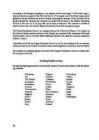















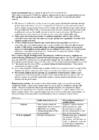


Kõik kommentaarid