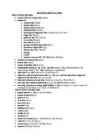
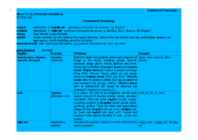
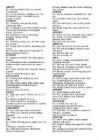
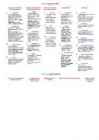
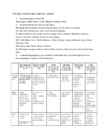
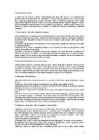
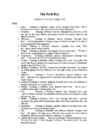
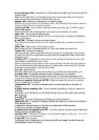
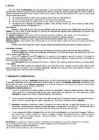
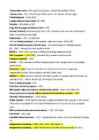
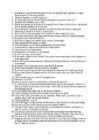
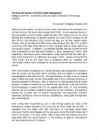
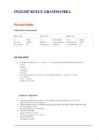
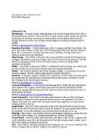
DEFINITE ARTICLE (THE) THE IS USED BEFORE: · nouns which are unique (the moon) · names of: o cinemas (the Opera) o hoteles (the Hilton) o theaters (the Palladium) o museums (the Louvre), o newspapers/magazines (the European but: Newseek) o ships (the Titanic), o galleries (the Tate Gallery) o rivers (the Thames) o seas (the Black Sea) o groups of islands/states (the USA) o mountain ranges (the Alps) o deserts (the Negev Desert) o oceans o canals o names or nouns with ''of'' (the Queen of Spain) · musical intruments (the piano) · dances (the samba) · names of families (the Browns) · nationalities ending in sh, -ch or ese (the Welsh). Othe plural nationalities are used with or without ''the'' (the Australians or Australians) · titles (the King, the Profess...
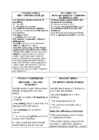
- Plaanid ja kavatsused lähitulevikus ,,I am going to spend next summer sailing around the world." - Ennustused, mida näeme ( tugevneb mingil faktil ) ,,The Sky is very cloudy. It's going to rain today." Modal Verbs Reported speech Can -> could Could -> had been able to May -> might Must -> had to Mustn't -> was/were not allowed to have to Had to -> had had to The Definite Article The is used before: · Nouns which unique · Names of cinemas, hotels, theatres, museums, newspapers/magazines, ships, institutions, galleries · Names of rivers, seas, groups of islands/states, mountain ranges, deserts, oceans, canals, and names or nouns with ,,of" · Musical instruments, dances · Names of families, nationalities ending in -sh, -ch or -ese, other plural nationalities are used with or without ,,the"
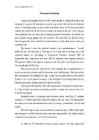
The Article Table of Contents General Rules....................................................................... 2 The Definite Article ............................................................... 5 Names that take the Definite Article...................................... 6 No article.............................................................................. 7 Countable and uncountable nouns ....................................... 9 General Rules There are two articles in the English language – the Indefinite Article and the Definite Article. The Indefinite Article has two forms – a and an (a precedes words beginning with a consonant sound and an precedes words beginning with a vowel sound)
we have forgotten /we’ve forgotten they have gone /they’ve gone Negative I/you/we/they have not washed /haven’t washed he/she/it has not worked /hasn’t worked Question Have I/you/we/they worked? Has he/she/it washed? When to use the Present Perfect Simple Present Perfect refers to: • Recent events, without a definite time given. The recentness may be indicated by just. We've missed the turning. I've just seen a ghost! • Indefinite events, which happened at an unknown time in the past. No definite time is given. Jim has had three car accidents. (up to the present) • Indefinite events, which may have an obvious result in the present. I've twisted my ankle. (that’s why I'm limping)
•I want an orange. (not I want orange.) •Where is my bottle? (not Where is bottle?) When a countable noun is plural, we can use it alone: •I like oranges. •Bottles can break. We can use some and any with countable nouns: •I've got some dollars. •Have you got any pens? We can use a few and many with countable nouns: •I've got a few dollars. •I haven't got many pens. definite article The definite article the is the most frequent word in English. We use the definite article in front of a noun when we believe the hearer/reader knows exactly what we are referring to. • because there is only one: The Pope is visiting Russia. The moon is very bright tonight. The Shah of Iran was deposed in 1979. This is why we use the definite article with a superlative adjective: He is the tallest boy in the class. It is the oldest building in the town.
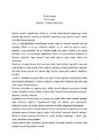
work,bed when talking about the activity which normally takes place in that place or building, e.g. He Had an accident and was taken to hospital. -with the names of most towns, cities, streets, countries, islands, e.g. Milan, Italy, Jamaica -with lakes and invidual mountains, e.g. Lake Geneva, Mount Fuji -with names of streets and squares, e.g. Oxford Street, Times Square -with named building, airports, and institutions , e.g. Padua University, John F. Kennedy Airport, Coventry Cathedral DEFINITE ARTICLE (THE) 1. The definite article the is used when we are referring to something specific or already mentioned.It is used: -in front of a singular countable noun , e.g.(for example) Give me the apple. -in front of plural countable nouns, e.g. The apples I bought weren't very ripe. -in front on uncountable nouns if they are specified, e.g. The water from the bathroom tap is not very nice to drink 2.Other uses of the: -when there is only one of something, e.g. the sun,
Nouns are commonly thought of as "naming" words, and specifically as the names of "people, places, or things". Nouns also denote abstract and intangible concepts such as birth, happiness, evolution, technology, management, imagination, revenge, politics, hope, cookery, sport... Determiners are followed by the noun. Determiners are the, a or an. The determiner the is known as the definite article and a is indefinite article. Verbs have traditionally been defined as „action“ words or „doing“ words. Travels, sings, walked, cooked... Adjectives typically describe an attribute of a noun. Cold, large, violent, beautiful... Adverbs are used to modify a verb, and adjective, or another adverb. Slowly, quickly, softly, suddenly, gradually... Prepositions typically come before a noun. Across, after, at, before, by, during, from, into, in...
(We have been cleaning the house all morning) · To express anger, irritation or annoyance (She has been using my computer without asking) · Fo repeated actions in the past continuing to the present. (She has been going to the gym) TIME EXPRESSIONS USED WITH PRESENT PERFECT CONTINUOUS: how long..?, for, since, all day/morning etc, lately, recently Past Simple · Action occurred at a definite time in the past (Postman delivered the parcel..) · Actions that happened immediatly after one another in the past (She opened the curtains and looked out of the window) · Habits and states which are now finished (Paul worked in a factory when he was younger) NB! Used to can be used instead of past simple for habits and states TIME EXPRESSIONS USED WITH PAST SIMPLE: yesterday, then, how long ago..?, last night/week/Friday etc three days
him and gets away. The police gets him and Sookie ends up in a hospital. Sam Merlotte is her boss and at some point she discovers he is a shapeshifter. evade - vältima, kõrvale põiklema, kõrvale hiilima (To escape or avoid by cleverness or deceit) saunter lonkima (To walk at a leisurely pace) indignation - nördimus, meelepaha, ükskõiksus (anger aroused by something unjust, unworthy, or mean) tentative - esialgne, katseline, ebakindel (unsure; uncertain; not definite or positive) eckon - arvutama, arvama, arvesse võtma (to count or compute, to consider as being, to assume)
Nothing can be done to prevent crime We will always have to face grief and pain as a result of countless varieties of crimes.Unfortunately, we are prone to make bad choices and reap undesirable outcomes. What in future can make more problem, what was. The difference is that most of us have some self-control, but in time of need human beings can change drastically their personality. That is why we can not prevent all crimes every time or build a perfect society: because we are still plain humans. But we can improve on an environment by providing a higher level of education and security. In doing so, there will be a decrease in the attempts of crimes, since a higher level of social development was properly provided. Our world is well known by having a high level of poverty and all sorts of crimes. This is a consequence of bad governments that hav not provided the least welfare throughout the centuries. So...
undergoes. This technology is really new and it is unknown to people. It has not been proven yet, so people are scared and concerned about it. The biggest fear is that carbon dioxide will leak out but we don't have to be worried about that, because CO2 is everywhere around us and it is not poisonous. But still, if we have very concentrated carbon dioxide, it is hazardous and that's purpose of monitoring. Rick Russell sees no definite risk associated with the release or damage either to the surface, soils or ground water, because the type of geology they are useing, will protect the planet from this happening. For now, they have given investment sanction to two projects one in Norway in partnership with thw government there and with Statoil, and the anaother one in Australia. Prof. Martin Blunt is sure that if they cannot get Carbon capture and storage to work, then the world will be committed to dangerous climate change
Respect for Other People I would definite the word respect as esteem and as excellence of a person, a personal quality and ability. In human cultures there are varied ways of showing respect by bodily actions. In many European cultures, people shake hands. In others, such as in Japan people bow at the waist when meeting. Frequently, gender is a factor in how respect I displayed in bodily behavior. For example, woman in many Western cultures traditionally curtsy, whereas men bow.
That's quick. interjektsioon vocalisations used to express emotional reactions such as surprise, shock, delight (Oh! Ouch! Oops! Wow!). article artikkel Articles are used with nouns. There are three forms of a/an, the the article in English: the indefinite article (a/an), the definite article (the), the zero article. 3 Grammatical Terminology definite article määrav artikkel Refers to determiner the which is used with a noun to The university is closed today. define and specify entities projected as known to I'll try to put you through to the
to attend guests' needs, which includes food and beverage requirements upon request, villa daily cleaning, transportation, tours and sightseeing. The swimming pools shallowest depth is 0.4 m, sloping to the deepest end of 1.8m. We strongly advise strict supervision of children and toddlers around the pool area by a capable adult, as the pool is not fenced. However, it is possible to close and lock all the doors at the villa, creating a definite and secured boundary separating the pool area to the villa. Both Villas (Deluxe Villa and Master Exclusive Villa) Include the Following : Three master-bedrooms (AC/TV/Cable) 2 min. walk to Berawa Beach Private Swimming Pools Authentic interior design Fully equipped European kitchen Four staff Expat-managed Language EN/FR/IND Hotspot high-speed WiFi ( With Vouchers ) Free unlimeted WiFi in Canggu Club Intl. cable TV channels Free access to Canggu Private
Present Am/is/are+Iing 1. actions happening now, at the moment of speaking Now, at the moment, these I am writing a lettesat Continuous 2.actions happening around the time of speaking days, at present, tonight etc. the moment. 3. fixed arrangements in the near future Past Simple + II / -ed 1. actoins which happened or finished at a definite time in the past Yesterday, last I went to the gym -?did+I 2. actions which happened repeatedly in the past but don't happen night/week/year/month, wtc, a yesterday. anymore. In this case we can use adverbs of frequency month/two years/three years
average, incredible Ex2. Immediate, honest, final, short, detailed, ACCOUNT correct Ex1. Listened to, keep, provide, accept, Ex3. Knew, have, guess, come up with, provide, corroborated, differ arrived at Ex2. Conflicting accounts, blow-by-blow account, Ex4. Simple, long-term, wrong, only, obvious, clear account, fascinating account, graphic definite account, full account APOLOGY Ex3. Faithful, eye- witness, hair-raising, Ex1. Expect, owe, give, demanded, make, offered humorous, sketchy, moving Ex2. Sincere, full, formal, belated, heartfelt, ACTION profound, public, abject Ex1. Demanding, explain, put...into, take, swing Ex3. Letter, full, way, words
) · 's-ga lausetes (Peter's car) · elukutsete ees (She'll problably go into medicine.) · poodide ees · linnad, tänavad, lennujaamad, rongijaamad · mäetipud, järved, saared · maailmajaod · riigid, osariigid, linnad, külad · teatud töökoht/amet (Jim is the chairman of the company.) · üldine transport · omadussõna + nimisõna · mingi koha nime esimene sõna on muu nimi (Brown resturant) THE DEFINITE ARTICLE · eelnevalt mainitud asi · kui viidatakse kindlale esemele grupist · aastaajad (The summer is the best.) · kui on kindel, millest räägime (I prefer the red one.) · kui midagi on maailmas üks (The Sun, the Earth) · rahvuslikud grupid (The British like to drink tea.) · Kui inimesed on jaotatud klassidesse (the rich, the poor, the Social Democrats) · Kui kindel asi esindab kogu klassi (The fork is used for eating.)
far in distance or time (that, those) Examples: 1) Look at that! 2) These are bigger than those. Interrogative pronouns We use interrogative pronouns to ask questions. Four main interrogative pronouns: (person) who, whom, (thing) what, (person/thing) which , (person) whose . (possesive) Examples: 1) Who told you? - John told me. 2) Whom did you tell? - I told Mary. Indefinite pronoun An indefinite pronoun does not refer to any specific person, thing or amount. It is vague and "not definite". Some typical indefinite pronouns are: all, another, any, anybody/anyone, anything, each, everybody/everyone, everything, few, many, nobody, none, one, several, some, somebody/someone. Examples: 1) Each has his own thoughts. 2) All have arrived. Relative pronouns A relative pronoun is a pronoun that introduces a relative clause. There are five relative pronouns: who, whom, whose, which, that* Examples: 1) The car which hit me was yellow.
qualify as a passive house for several reasons it had too many windows but we all want to see the daylight, right? the windows didn´t absorb enough solar heat, and the L-shaped house, isn´t a simple cube. So it must be rahther difficult to build one of those. As you noticed I mostly mentioned only the problems that may come with building a passive house, and that´s because you probably already know the positives the environmental, social benefits and over time a definite financial win. So unfortunately due to lack of time, I won´t be going over them more properly. In conclusion it can be said, that building a passive house isn´t affordable for everyone, so most of people just choose an easier path and focuse on today rather than the future. However, if we have now considered all the the negatives, it leaves us with a simple question despite the cons do we want to live in a sustainable, environmentally friendly and a healthy household or not?
The Social Network review To begin with, I would like to prove the fact that if Facebook would be a country, then it would be the 3rd largest in the world. When I wake up in the morning I do things in a definite order. Logging in to Facebook is one of those things I do in those mornings when I have some extra time. So do many of us. If we could, we would spend hours on the world's most popular social network. But at many academic institutions and office networks Facebook has been blocked to guarantee the irrelevancy. We try to deny the importance of the site but without success. It has changed our culture in many ways, making it so modernized that some of us cannot handle it.
The restaurant is called "Luigi's". Italian food is great! Here are the rules for when to use "A, An or The": · a = indefinite article (not a specific object, one of a number of the same objects) with consonants She has a dog. I work in a factory. · an = indefinite article (not a specific object, one of a number of the same objects) with vowels (a,e,i,o,u) Can I have an apple? She is an English teacher. · the = definite article (a specific object that both the person speaking and the listener know) The car over there is fast. The teacher is very good, isn't he? · The first time you speak of something use "a or an", the next time you repeat that object use "the". I live in a house. The house is quite old and has four bedrooms. I ate in a Chinese restaurant. The restaurant was very good.
15 monophtongs, (7 long, 7 short, 1 central), 4 diphtongs, 17 consonants. Free variaton of R, and it was pronounced everywhere. Very much Germanic in character. Quite some special consonants that no longer exist. About morphology: synthetic with numerous aglutinating tendencies. System of tenses Germanic, but with a reduction of tenses. Paradigmatic leveling; Stress shift; Word order; Loan words (Old Norse, Old French). Dual pronouns. Determiners - no separate definite article. Strong and weak verbs. Word order relatively free with tendencies towards SVO. SVO, SOV, VSO most common. Adposition and podposition were both possible (eesliide ja tagaliide). About syntax: clauses were joined much simpler than nowadays, using and, then etc. Because of case syncretion the word order in a sentence became much more important to be able to tell the difference between words. FIRST CONSONANT SHIFT (GRIMM'S LAW)
Artikkel Inglise keeles on kaks artiklit: umbmäärane artikkel a, an (the indefinite article) ja määrav artikkel the (the definite article). Loendatava d Loendamatud nimisõnad nimisõnad Ainsus Mitmus This is a cat. Umbmäärane artikkel There is a rose on the table. The cats
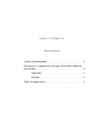
Acknowledgements xi Acknowledgements for the Second Edition xii 1 Introduction: meaning and reference 1 Overview 1 Meaning and understanding 1 The Referential Theory 3 Summary 6 Questions 6 Further reading 6 Part I: Reference and referring 2 Definite descriptions 9 Overview 9 Singular terms 10 Russell's Theory of Descriptions 12 Objections to Russell's theory 19 Summary 29 Questions 30 Further reading 30 3 Proper names: the Description Theory 31 Overview 31
Degrees of Comparison are used to compare things (living beings, actions, phenomena, etc). We use the comparative degree to compare two things: She’s shorter than me. John works harder than Jim. After a comparative we use than. We use the superlative degree to compare more than two things: Mary is shorter than Jane but Judy is the shortest of the three sisters. Ben is the shortest boy in his class. The superlative degree is usually used with the definite article the. Formation of comparatives and superlatives from adjectives and adverbs: Adjectives 1) one-syllable Adjectives • for one-syllable adjectives, add –er to form the comparative and -est to form the superlative: sweet sweeter the sweetest If an adjective ends with a mute –e, it is omitted: late later the latest NOTE! For one-syllable adjectives ending in a vowel + consonant, we double the consonant:
knowledge of the subjects. They encouraged me in my disire of choosing my future career. School meant a lot to me and it wasn't just learning and studying. I had made good friends there and met many interesting people. I faced a new life without school with a mixed feeling of sadness and joy. I had asked myself a lot of times what I wanted to be when I left school. A few years ago it was difficult to give a definite answer. As the years passed I changed my mind several times. But it was only in my last year at school that I finally made up my mind what profession I would most like to have in future. I realized that my strongest desire was to continue specializing in humanities and learn foreign languages in particular. I hope my dream will come true. If I fail in my exams I'll try to enter the University again. And now a few words about my inclinations
STATEMENT is deliberate presents inanimate repeating w-d, phrase, sent-e 4. IRONY lessening the size or significance of sth., or things as human without definite regularity. literal meaning of a word is beings. Used: Function to emphasize repeated affirmation by denying "not pronouns, capital unit. opposite of what intended good"=bad). (positive word used in Function not to sound too
with their acquaintances. DOI theory: Practice and Application in Branding products & Services Branding is pretty much creating or changing perception of the product, in order to influence the favourability towards adoption by the customer segment or mass market. In this article the concept of product brand is used, and differentiated between two categories: Fast moving consumer goods (FMCG) – they could add to social value, but rather fulfil a definite purpose. Decisions on these kinds of brands are done rather quickly. The decision to even buy something in that product category is a simple need. The products don’t also differ too much from each other. In branding, it is thus essential to portray the relative advantages in a direct way. High-involvement products – things that portray social symbolism and status. These products are more expensive, they depict social class and are leveraged for acceptance to those classes
from mother country, temporary laws made in europe; no outsiders, spanish catholics. 6. From the English point of view, what was the purpose of establishing colonies? English protestants etc. wanted to escape from religious persecution by catholics back in Europe, basically wanted religious freedom. 7. What was an indentured servant? An indentured servant was a person under contract to work for another person for a definite period of time, e.g a few years, in exchange for free passage to a new country. 8. When and why was slavery brought to America? Slavery started in America in 1619, when the first slaves were brought to Jamestown, VA from Africa. Colonists bought slaves for cheap/free work force in the plantations they couldn’t have kept up otherwise due to large plots of fertile land and small families. 9. Name the original 13 colonies. VA, MA, MD, RI, CT, NH, NC, SC, NY, NJ, PA, DE, GA. 10
Noun becomes a verb (anger, to anger)- that's the basic model of conversion Adj becomes a verb (to thin, to slow, to equal) Prep becomes a verb (to out, to down) Prep becomes a noun (ups and downs) Substantivation Substantivation of adjectives is when nouns are converted from adjectives. They have the plural form and the posessive case. (nt, an alcoholic). Partial subst (nt, the rich, poor) subst is partial because these words do not take a new paradigm. They're used with definite article and a collective meaning. Conversion is very productive because Engl is an analytical lg, the paradigms are simple and yet conversion is not absolutely productive. Traditional conversion is registred in the dictionaries. Occasional conv. takes place when writer wishes to be original. (nt, to brandy, to hm). How do I know which word is the result of conversion? (nt, paper, to paper)Compare the number of menaings of both words. Paper (noun) has several meanings but to paper has only one
The Rich Boy Francis Scott Key Fitzgerald Words 1. Queer. Meaning in Estonian: imelik, veider. Example from book: That is because we are all queer fish, queerer behind our faces and voices... 2. To conceal. Meaning in Estonian: varjama. Example from book: I feel pretty sure that he has some definite and perhaps terrible abnormality which he has agreed to conceal... 3. Misprision. Meaning in Estonian: kuriteo varjamine. Example from book: ...And his protestation of being average and honest and open is his way of reminding himself of his misprision. 4. Cynical. Meaning in Estonian: küüniline. Example from book: They are...cynical where we are thrustful. 5. Refuges. Meaning in Estonian: varjupaigad
Last few years there have been a lot of discussion about euro in newspapers, TV, radio shows et cetera - so there shouldn't be a citizen of Estonia, who doesn't know anything about it. Many of us think that kroon is one of our national symbols and for that reason they were against the coming of euro. It's like we'd give away our national bird swallow or even our flag - so people were very defensive about it - and it also has a definite meaning as the attribute of independence. People even arranged many different funerals for the kroon in various places of Estonia on the 31 st of December. Edgar Savisaar, the leader of Centre Party (Keskerakond), has brought out one main point in his article - progressive tax is getting closer. Somehow I'm not very happy about this one. It seems to me that it is a bit unfair. People, who have built their career up with hard work and patience shouldn't pay more taxes for it
Will Jim be coming with us? 8)Predicting or guessing: You'll be feeling thirsty after working in the sun. He'll be coming to the meeting, I expect. You'll be missing the sunshine now you're back in England. Past Simple (II/ed; ?/- DID+I) Past Continuous (was/were doing) We use the past simple for: We use the past continuous: an action that occurred at a for an action which was in definite time (stated or implied) in progress at a stated time in the the past. past. We don’t mention when the I started work at 7 o´clock this action started or finished. morning. At 10 o’clock last night I was action that happened immediately watching TV. after one another in the past. for an action which was in
used today in rebuilding our cities. It is of special importance when considering urban environments scale of size, time, complexity. The first chapter will develop basic ideas, later chapters will apply them to several American cities. Cues used in structuring and identifying environment: visual sensations of color, shape, motion, polarization of light, smell, sound, touch, kinesthesia, sense of gravity, perhaps even electric and magnetic fields. There is consistent use of and organization of definite sensory cues from the external environment. This organization is fundamental to the efficiency and to the survival of free-moving life. Getting lost in the process of way-finding, the strategic link is the environmental image. Clear image enables one to move about easily and quickly. An ordered environment can do more than this; it may serve as a broad frame of reference, an organizer of activity or belief of knowledge.
crimp a pie crust.; To bend or mold (leather) into shape King and Lipsha started playing poker. Lipsha decided that he belonged and that he was a real kid now. Then he crimped himself an ace. harrowing (354) - Extremely distressing; agonizing When Lipsha told Gerry his name, Gerry started to laugh. Lipsha felt joy and comfort, but for King and Lynetteit was harrowing. to ascertain (359) - To make certain, definite, and precise The police were looking for Gerry. They were standing in the door and it took a quick look to ascertain that Gerry wasn't in the apartment. gingerly (361) - With great care or delicacy; cautiously; Cautious; careful. Lipsha heard someone/something knocking. He jumped out and thought it was some trapped animal. He wasn't sure that it would not spring for his throat so he held the key out very ginger when he put it in the trunk latch.
Nevertheless, given the stated reason for the overthrow of the Diem government, such action would have been a policy reversal, but Kennedy was generally moving in a less hawkish direction in the Cold War since his acclaimed speech about World Peace at American University the previous June 10, 1963. According to historian Lawrence Freedman, regarding Kennedy's statements about withdrawing from Vietnam, it was, "less of a definite decision than a working assumption, based on a hope for stability rather than an expectation of chaos".After Kennedy's assassination, the new President Lyndon B. Johnson immediately reversed his predecessor's order to withdraw 1,000 military personnel by the end of 1963 with his own NSAM 273 on November 26, 1963.
day before yesterday anteayer ahn-teh-eye-yair day after tomorrow pasado mañana pah-sah-doh mahn-yahn-ah the following day el día siguiente dee-ah see-gwee-ehn-teh the day before la víspera vees-peh-rah Days of the week are all masculine in gender and they are not capitalized in writing. The definite article is not used after the verb ser, but at all other times it is required and there is slight change in meaning if it is singular or plural: el lunes = on Monday but los lunes = on Mondays 10. Months of the Year January enero ay-nair-oh February febrero fay-bray-roh March marzo mar-soh
or they might be violated or deformed (by adding new words, replacing or changing word order, reviving (; ) the meaning of certain words). DEFORMED: "the winner takes all" "the looser takes all" (G. Greene). REVIVED: "to have something up one's sleeve" "I had so many new schemes up my sleeve that I had to wear kimonos to keep them." Deformation is usually funny, ironic. 6. Lexical repetition repeating a word, phrase or sentence without any definite regularity. The function is to emphasize the repeated unit (e.g. Dickens "Scrooge went to bed again and thought, and thought, and thought it over, and over, and over.") 7. Synonymic repetition two or more synonyms placed together to explain the notion more fully. The second, and other synonyms express an additional shade of meaning (e.g. "Joe was a mild, good-tempered, easy-going, sweet-tempered fellow.") 8. Contextual synonyms "She told his name to the trees
g. FGI 1081 Stylistics (I. Ladusseva) 4 G. H. Vallins books: "Good English", "Better English", "Best English"). The other prominent trend was to regard style as pure form divorced from thought (ideas, message). Speaking of foreign linguists it is the French Ch. Bally and J. Marouseau who have in th 20 century made a definite contribution, this was due to old tradition of interest in style in France. The classical words of classic stylistics are those by German scholars Ph. Aronstein and W. Deutschbein. In the 50s and 60s there was a rapid growth of interest in stylistics. Various conferences were held (e.g. USA 1958, GDR 1959, USSR 1961, 1963, etc.). The methods of structural linguistics were most popular in 70s and 80s. Present day
Charles (the Prince of Wales), Anne (the Princess Royal) and Andrew (the Duke of York). 5 3) Nature, weather The climate in the British Isles is generally mild and temperate. It is greatly influenced by the surrounding seas. The rainfall and precipitation are huge. You can experience four seasons in the course of a single day. The average temperature is +15...+20 degrees in summer and -5...-7 degrees in winter. The unstable weather has a definite effect upon the national character. They say that it has made the British both cautious and easily adaptable. Great Britain, consisting of England, Scotland and Wales, is 350 miles across at its widest point and 600 miles long at its longest. It has got beautiful beaches, bays, inlets, cliffs and rocky headlands. England features mostly low hills and plains. Its coastline is 3200 km long. The Pennine Chain splits northern England into western and eastern parts
like processes), anaerobic (do not require oxygen) and microaerophilic (requiring low concentration / level of oxygen). 6. Light: Direct sunlight is highly injurious to most of the microorganisms except algae. Therefore upper portion of the surface soil a centimeter or less is usually sterile or devoid of microorganisms. Effect of sunlight is due to heating and increase in temperature (More than 45°) 7. Soil Reaction / Soil PH: Soil reaction has a definite influence / effect on quantitative and qualitative composite on of soil microbes. Most of the soil bacteria, blue-green algae, diatoms and protozoa prefer a neutral or slightly alkaline reaction between PH 4.5 and 8.0 and fungi grow in acidic reaction between PH 4.5 and 6.5 while actinomycetes prefer slightly alkaline soil reactions. Soil reactions also influence the type of the bacteria present in soil. For
causation between a dog breed and aggressiveness. They pointed out other influential factors such as individual character and disposition of an animal, resulted, among other things, from its training, living surroundings etc. In those circumstances and following the precautionary principle, the parliament adopted the prohibitive law of the scope suggested by the NGOs stating that “the State cannot idly wait until the scientists come to the definite conclusion about actual sources of the dangerous behavior” and “has to preventively interfere in order to effectively protect life and health of its citizens, in particular those of younger and senior generations”. Company PB&R is a small family undertaking active in the dog-selling and –importing business for over 30 years and having a focus on pit bulls, Rottweilers, boxers, Labradors, and some other breeds which were classified as dangerous by the study
programmeerimiskeelte aluseks. Loogika progra keel Prolog Prolog-i põhi-idee on nõuda otsitava lahenduse kirjeldamist esimest järku predikaatarvutuse keeles, kusjuures Prolog-i süsteem sisaldab teatud tüüpi automaatset teoreemitõestajat, mis on võimeline lahendust automaatselt otsima ja tuletama. Some properties of an Algorithm Kindlasti: Deterministic: Given the same input, it produces the same output. Finite: It can be described in a finite number of steps Definite: Each step has a clearly defined meaning. Soovitavalt: Correct: It produces correct answers Time Bounded: It eventually stops Fast: it not only stops, but stops quickly Tegeldakse keerukusega peamiselt kahes mõttes: Kiirus ehk aeg (time): kui kiiresti algoritm peatub, kui kiireid algoritme on mingite ülesannete jaoks olemas? Mälukasutus ehk ruum (space): kui palju mälu algoritm kasutab, kui väikese mälukasutusega algoritme on mingite ülesannete jaoks olemas?
may die at any moment. But first you must learn how to keep it in mind. 280. Conscious love evokes the same in response. Emotional love evokes the opposite. Physical love depends on type and polarity. 281. Conscious faith is freedom. Emotional faith is slavery. Mechanical faith is foolishness. 282. Hope, when bold, is strength. Hope, with doubt, is cowardice. Hope, with fear, is weakness. 283. Man is given a definite number of experiences--economizing them, he prolongs his life. 284. Here there are neither Russians nor English, Jews nor Christians, but only those who pursue one aim--to be able to be. 285. The bitterest tears shed over graves are for words left unsaid and deeds left undone. 286. In the end it's not the years in your life that count. It's the life in your years. 9
Instruktiiv nt lehvivi hõlmu tsi; päris kääne pole, sest kõigist sõnadest teha ei saa: nt meilitsi, telefonitsi Määratus e. definiitsus definiitset artiklit kasutatakse, kui mingit objekti on juba mainitud, see pole lause küsimus, vaid on seotud teksti ja olukorraga. Definiitne on selline nimisõna fraas, millele kõneleja arvates on kuulajal iseseisev ligipääs. · indo-germaani keeltest tuttav; nt inglise k artiklid the ja a; definite ja indefinite articles. Kasutusel, kui objekti on ainult üks, nt the sun, the king. · eesti keeles on selle väljendamiseks teistsugused vahendid (nt üks, see) Võrdlus objektide kõrvutamine ühistunnuse alusel. Võrdluse vormilisteks tunnusteks eesti keeles on sidesõnad kui, nagu, otsekui, justkui, olev kääne, vahel ka mõttekriips või koma. · Positiiv, algvõrre · Komparatiiv, keskvõrre skalaarsete omadussõnade puhul - eesti k tunnus m;
The tendency to regard stylistics as an applied science has been particularly marked in english- 1 speaking countries. It was believed here that the main aim of stylistics is to improve the style of the writer and of a textbook, that is to show how better to express one's thoughts. Of foreign linguists, it is the french Ch.Balley, G.Marduzeon who in the 20th century made a definite contribution. This happened because of the centuries-old tradition in France of interest in style. The classical works on english stylistics are those by the german scholars: Ph.Aronstein, M.Deutschbein, I.Galperin. In the 50's and 60's of the previous century there was a rapid growth of interest in stylistics throughout the word. In the 70's and 80's, the methods of structural linguistics were very popular in stylistics. Present stylistic studies have become quite systematic
questions of public policy. Part of the answer lies in policy diffusion brought about by the activities of international officials (whose zeal for administrative reform mysteriously stops short at the door of their own organizations), by meetings of public administrators, academics, and the so-called policy entrepreneurs. (Wright 1997: 8) Indeed, the international vocabulary of management reforms carries a definite normative `charge'. Within the relevant community of discourse ... the assumption has grown that particular things performance management, TQM ... and so on are progress. To be progressive one has to be seen to be doing things to which these particular labels can be stuck. ... Suggesting, for example, that an existing or new activity would be better placed within an enlarged central ministry or as a direct, state-provided service, becomes an
Pane tähele! Kui omastavat käänet kasutatakse tavaliselt elusolenditega, siis kuuluvust saab väljendada asjade, nähtuste ja ka elusolendite puhul ka ofkonstruktsiooniga (eessõna of ja nimisõna). the legs of the table the name of that book a photo of cats a friend of Tom Articles Artikkel Inglise keeles on kaks artiklit: umbmäärane artikkel a, an (the indefinite article) ja määrav artikkel the (the definite article). Loendatavad nimisõnad Loendamatud nimisõnad Ainsus Mitmus This is a cat. Umbmäärane artikkel There is a rose on the table. The cat is eating. The cats are
This type of license is issued only through auction, and the owner of the license is entitled to transfer it to other persons. 59 CYAN MAGENTA YELLOW BLACK 59 The license of activity is issued for an indefinite period, versus the license of use which is nor- mally issued for a definite period of time. Articles 6 and 7 of the Law on Licenses and Permits provide an exhaustive list of the licenses issued by Georgian authorities. The license issuing bodies are regulated by various laws and sub-laws. A basic list of licenses that one may require in the process of entrepreneurial activity is given bellow. Licenses of Activity, Fees and Issuing Bodies Type of License License Fee Licensor
parents now seem to him a hazy and unreliable memory. He feels that "only facts are real and important to us." Paul ruminates that he and the other young men of his generation were cut off from life just as they had begun to live it. The older soldiers have jobs and families to which they can return after the war, but the younger men have nothing; the war has become their entire lives. Whereas the older men will forget the trenches and the death, the young men have nothing definite on which to focus thoughts of the future. Their prewar lives are vague, unreal dreams with no relevance to the world that has been created by the war. Paul feels utterly cut off from humanity; his only feelings of love and loyalty are those that he shares with his friends and fellow soldiers. As a result, Paul tries to see them in the best possible light. He thinks about Müller's attempt to persuade the dying Kemmerich to give him his boots and tries to convince
 annaabi.ee