Vajad kellegagi rääkida?
Küsi julgelt abi LasteAbi
Logi sisse

Suurbritannia ühiskond ja kultuur konspekt (1)

5 VÄGA HEA
Punktid
ühiskond - Isegi need väikesed ühiskonnad, millesse laps kõige enne sisse kasvab – perekond ja mänguseltskond, on talle tähtsad vaid üksikvahekordade kaudu
Ancient Britain : the Celtic tribes .
2000 years ago there was an Iron Age Celtic culture throughout the Br Isles . It seems that the Celts , who had been arriving from Europe from the 8th cent BC onward, intermingled with the peoples who were already there. The Celts were extremely talented people, creative and artistic . More than 1 Celtic tribe invaded Br. The descendants of ancient Celts live in Wales , Scotland , Cornwall and Ireland . They lived in primitive society. Druids – priests, more powerful than chiefs. Acted like prophets.
  • Stonehenge
    From prehistoric period . Was built on Salisbury plain between 2500 and 1500 bc. One of the most famous and mysterious archaeological sites in the world. One of the mysteries is how it was built at all with the technology of the time. Another is its purpose . It appears to function as a kind on astronomical clock and we know it was used by the Druids for ceremonies marking the passing of the seasons. It appears in number of novels. These days it is not only the interest of tourists but is also a gathering point of certain minority groups. It is now fenced off to protect it from damage.
  • The Roman conquest
    Julius Caesar ’s first raid was in 55 BC but the romans left . Ad 43- the Romans came to stay . The army established Roman rule in the south and SW of the country . The Romans started to introduce their laws to a new province of the Roman Empire and started to build good roads.
    Officials were appointed (governors, procurators to collect taxes , look after the estates and mines and se that the gold , silver , iron and lead were exported back to Rome). Introduced schools ,a new languageLatin , large farms ( villas ), baths.
    In AD 410 they had to leave . roman occupation lasted nearly 400 years. They left behind very little . Roman province of Britannia covered most of present -day England and Wales.
  • Latin influence on English
    *The influence of Latin is noticeable also in the names of European cities: the Latin noun colonia (settlement, colony ) may be found in numerous place -names: Lincoln , Colchester, Cologne ; from Latin word castrum ( military camp) were derived English affixes -chester and - castle : Manchester, Lancaster , Newcastle; Latin word portus (seaport) in Portsmouth
    *-tor - person , doer, masculine form. The suffix is attached to the stem: victor (‘ winner ’, from the verb vincere ‘to win’), spectator (spectare).
    *-orium - place, where the activity marked with the verb occurs: dormitorium (dormire ‘to sleep ’). In English the suffix is -ory: dormitory.
    *tas - it denotes an abstract notion , derives from the adjective : celebritas (celeber), libertas ( liber ), universitas (universus). In English the suffix is -ty: celebrity, liberty , university .
    *- tudo - characteristic or condition , derives from the adjective: longitudo ( longus ), fortitudo (fortis). In English - tude : longitude, fortitude.
  • The Angles, Saxons and Jutes.
    The Angles were one of the main groups that settled in Britain in the post-Roman period, founding several of the kingdoms of Anglo- Saxon England, and their name is the root of the name "England".
    The Saxons were a confederation of Old Germanic tribes. Their modern-day descendants are generally considered ethnic Germans, Dutch or English.. Saxons participated in the Germanic settlement of Britain during and after the 5th century
    The Jutes were a Germanic people who were one of the three most powerful Germanic peoples of their time. They are believed to have originated from Jutland in modern Denmark . Were associated with the Saxons. The Jutes, along with some Angles, Saxons and Frisians, sailed across the North Sea to raid and eventually invade Great Britain from the late 4th century onwards, either displacing, absorbing, or destroying the native Celtic peoples there.
    6. The Anglo-Saxon invasion
    Germanic invasions 410-1066
    5th cent. A-S soon had the s- east of the country in their grasp . A-S were pagan when they came to br. A-S had little use for towns and cities but had great effect on the countryside , where thay introduced new farming methods and founded thousand self-sufficient villages.
    7.The Anglo-Saxon Chronicle
    The Anglo-Saxon Chronicle is a collection of annals in Old English chronicling the history of the Anglo-Saxons. The annals were initially created late in the 9th century, probably in Wessex , during the reign of Alfred the Great. Multiple manuscript copies were made and distributed to monasteries across England and were independently updated. In one case , the chronicle was still being actively updated in 1154 . Nine manuscripts survive in whole or in part , though not all are of equal historical value and none of them are the original version.
    8. Beowulf
    Beowulf is the most famous heroic poem (written down 8-9cc)
    Beowulf is a war- leader from Scandinavia.He rescued the land of the Danes from a man-like monster Grendel . The monster kills the hero .The poet describes the funeral and how warriors mourned their king .
    9. The Vikings , their way of life. Sutton Hoo
    In 789 three ships carrying Northmen (Vikings – vikingr = pirate , raider in the old Norwegian ) landed on the coast of the kingdom of the West Saxon. Many were sailors who sailed looking for plunder, trade and land for new settlements. Their craftworkers made beautiful objects.
    Most of the written evidence about the Vikings in England comes from ANGLO-SAXON CHRONICLE (892) Vikings lived in country settlements, grew crops, vegetables, kept animals , hunted animals, birds, fish . Vikings were great traders in town markets .
    JORVIK – typical Viking town
    9th c. V. moved to the islands of Shetland, Orkneys, the Hebrides, Ireland
    Sutton Hoo near Woodbridge, Suffolk , England, is the Anglo-Saxon burial place from the 6th century and early 7th century, which was found in 1939. The wooden ship, which was buried there, contained lots of armour, weapons, jewellery, symbols of power and other treasures, but no bodies were found.
    10. Roman conquest
    • In the 1st c. BC the Roman Empire began to make contact with Britain (wine, pottery, small bronze statues)
    • Julius Caesar’s first raid was in 55 BC (the troops were afraid of the sea crossing )
    In AD 43 the Emperor Claudius decided the full - scale invasion (army of 40,000 men)
    • The Roman occupation lasted nearly 400 years.
    • They couldnt conquer Scotland or as they called it caledonia, and so they built a strong wall along the northern border, named after the Emperor Hadrian who planned it. (70 miles or 117km long)
    • The army established Roman Rule in the South and SW of the country.
    • Permanent military forts were established in Wales, but the tribes remained difficult to subdue.
    • The Romans started to build good roads, appointed officials (governors, procurators to look after the estates and see that the goods were exported back to Rome)
    • Romans developed a number of towns and introduced schools, new language – Latin large farms, baths.
    • In AD 410 they had to leave.

    11. The battle of hastings. Bayeux Tapestry.
    On I 4 October 1066 an invading army from Normandy defeated the English at the Battle of Hastings. The battle was close and extremely bloody. At the end of it, most of the best warriors in England were dead , including their leader, King Harold. On Christmas day that year the Norman leader, Duke William of Normandy, was crowned king of England. He is known in popular history as 'William the Conqueror'. The date is remembered for being the last time that England was successfully invaded.
    The Bayeux Tapestry is technically not a tapestry, but a huge band of embroidered linen, which describes the Norman invasion of England and the events that led up to it. The Tapestry contains hundreds of images divided into scenes each describing a particular event. The scenes are joined into a linear sequence allowing the viewer to "read" the entire story starting with the first scene and progressing to the last.
    12. French influence on the English language
    English language originally sprang from the dialects of three Germanic tribes known by historians as the Angles, Saxons, and Jutes. These peoples settled in Britain around 450 AD. Their language became known as Anglo-Saxon.
    One of the most important influences ever to shape the English language arrived in 1066 AD-William the Conquerors invasion of the British Isles.
    The Norman Conquest and its Consequences
    On William the Conqueror’s accession to the throne of England, several important changes took place. Firstly, the French dialect the Normans spoke (Anglo-Norman) became the official language of the court , administration, and perhaps just as importantly, the language of culture. At the same time, English was relegated the common people, and became the language of everyday use. This official ignoring of Old English actually assisted in simplifying the language. Being ignored by grammarians, the language was simplified, and became more practical .
    Initially, French and English remained very much separate, and each language influenced the other but little. In the period between 1066 and 1120 AD, a mere 900 Anglo-Norman words became assimilated into English. As the Saxons began to accept their Norman conquerors, however ; language change became more rapid, with 10,000 Anglo-Norman words entering English before the 15th century.
    Vocabulary Change
    Of the 10,000 French words adopted during the Norman occupation, three-quarters of these are still in use. Currently, French vocabulary is found in all areas - government , law, art, and literature . More than one third of English words today are derived, directly or indirectly, from French. This is so pronounced, that without prior study , English speakers already know 15,000 French words.
    Pronunciation Change
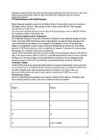
    Much of current English pronunciation can be traced to definite French influence. Old English had many unvoiced, fricative sounds, while French introduced voiced counterparts.
    English
    French
    f
    v
    s
    z
    th
    th
    sh
    g (as in mirage)
    diphthong (as in boy)
    Grammar Change
    An interesting observation in the study of Middle English is the word order of certain phrases. In expressions like secretary general and surgeon general, the French order of adjectives and nouns is used. [English-adjective + noun; French-noun + adjective]
    Conclusion
    French influence has made a lasting print on English as we know it today. Many words which are generally conceded to be merely English, actually have their roots in French. Just pick up a dictionary to see.
    13. Magna Carta
    The Magna Carta is an English legal document written in 1215 CE which had a huge influence on the developing legal system of England. The proper name for the Magna Carta is the Magna Carta Libertatum, the Great Charter of Freedoms. By establishing Magna Carta the King was not above the law.
    14. 100 year war - a series of separate wars lasting from 1337 to 1453 between two royal houses for the French throne, which was vacant with the extinction of the senior  Capetian line of French kings . The two primary contenders were the House of Valois  and the House of Plantagenet, also known as the House of Anjou . The House of Valois claimed the title of King of France , while the Plantagenets from England claimed to be Kings of France and England. Plantagenet Kings were the 12th century rulers of the Kingdom of England, and had their roots in the French regions of Anjou and Normandy. The Hundred Years' War was, in many respects, a " civil war" as French soldiers fought on both sides , with Burgundy and Aquitaine providing notable support for the Plantagenet side.
    The conflict lasted 116 years but was punctuated by several periods of peace , before it finally ended in the expulsion of the Plantagenets from France (except the  Pale of Calais). The war was eventually a victory for the house of Valois, who succeeded in recovering the Plantagenet gains made initially and expelling them from the majority of France by the 1450s. However, the war nearly ruined the Valois, while the Plantagenets gained huge amounts of plunder from the mainland, which enriched England. France itself likewise suffered greatly from the war, as most of the conflict occurred on the continent .
    15. Wat Tyler ’s Rebellion – took place in 1381 . The first great popular rebellion in English history. Its immediate cause was the imposition of the unpopular poll tax of 1381, which brought to a head the economic discontent that had been growing since the middle of the century. The rebellion drew support from several sources and included well-to-do artisans and villeins as well as the destitute. Probably the main grievance of the agricultural labourers and urban working classes was the Statute of Labourers (1351), which attempted to fix maximum wages during the labour shortage following the Black Death .
    16. The Wars of The Roses - a series of dynastic civil wars for the throne of England, fought between supporters of two rival branches of the Royal House of Plantagenet: the houses of Lancaster and  York  (the "red" and the "white" rose , respectively). They were fought in several spasmodic episodes between 1455 and 1485, although there was related fighting both before and after this period. The final victory went to a relatively remote Lancastrian claimant,  Henry Tudor , Earl of Richmond, who married   Elizabeth of York, the daughter of the late Yorkist king Edward IV, to reconcile the two factions and founded the House of Tudor, which subsequently ruled England and Wales for 117 years, until the succession of the Scottish  House of Stuart .
    17. Tudor Absolutism – The Tudor dynasty or House of Tudor was a prominent European royal house of  Welsh  origin that ruled the Kingdom of England and its realms, including the Lordship and Kingdom of Ireland, from 1485 until 1603. Its first monarch was Henry Tudor, a descendant through his father , although ultimately not male line, of the rulers of the Welsh Kingdom of Deheubarth. Through his mother he descended from a legitimised branch of the English royal House of Lancaster. The Tudor family rose to power in the wake of the Wars of the Roses, which left the House of Lancaster, to which the Tudors were aligned , extirpated.
    18. Henry VII - was King of England and  Lord of Ireland from his seizing the crown on 22 August 1485 until his death on 21 April 1509, as the first monarch of the House of Tudor.
    Henry won the throne when he defeated  Richard III at the Battle of Bosworth Field . He was the last king of England to win his throne on the field of battle. He was successful in restoring the power and stability of the English monarchy after the political upheavals of the Wars of the Roses. He founded a long-lasting dynasty and was peaceably succeeded by his son, Henry VIII, after a reign of 23 years.
    Church of England - the officially established  Christian  church in England and the oldest in the worldwide  Anglican Communion.
    The Church of England understands itself to be both  Catholic  and Reformed.
    19. The Elizabeth Age - was a time associated with  Queen Elizabeth I's reign (1558–1603) and is often considered to be the  golden age in English history. It was the height of the English Renaissance and saw the flowering of English poetry , music and literature. This was also the time during which Elizabethan theatre  flourished, and William Shakespeare  and many others composed plays that broke free of England's past style of plays and theatre. It was an age of exploration and expansion abroad , while back at home, the Protestant Reformation  became more acceptable to the people, most certainly after the  Spanish Armada was repulsed. It was also the end of the period when England was a separate realm before its royal union with Scotland.
    Shakespeare- was an English poet and playwright, widely regarded as the greatest writer in the English language and the world's pre-eminent dramatist. He is often called England's national poet and the "Bard of Avon". His surviving works, including some collaborations, consist of about 38 plays, 154 sonnets, two long narrative poems , and several other poems. His plays have been translated into every major living language and are performed more often than those of any other playwright
    20. The Civil War - (1642–1651) was a series of armed conflicts and political machinations between Parliamentarians and Royalists. The first (1642–46) and second (1648–49) civil wars pitted the supporters of King Charles I against the supporters of the Long Parliament , while the third war ( 1649 –51) saw fighting between supporters of King Charles II and supporters of the  Rump Parliament. The Civil War ended with the Parliamentary victory at the Battle of Worcester on 3 September 1651.
    21. Oliver Cromwell . The Restauration
    Oliver Cromwell (25 April 1599 – 3 September 1658 ) was an English military and political leader best known in England for his involvement in making England into a republican Commonwealth and for his later role as Lord Protector of England, Scotland and Ireland.
    Oliver Cromwell was born on 25 April 1599 in Huntingdon, Cambridgeshire into a family of minor gentry and studied at Cambridge University. He became member of parliament for Huntingdon in the parliament of 1628 - 1629. In the 1630s Cromwell experienced a religious crisis and became convinced that he would be guided to carry out God's purpose. He began to make his name as a radical Puritan when, in 1640, he was elected to represent Cambridge, first in the Short Parliament and then in the Long Parliament.
    Civil war broke out between Charles I and parliament in 1642. Although Cromwell lacked military experience , he created and led a superb force of cavalry, the 'Ironsides', and rose from the rank of captain to that of lieutenant-general in three years. He convinced parliament to establish a professional army - the New Model Army - which won the decisive victory over the king's forces at Naseby (1645). Cromwell was convinced that the king must be brought to justice. He was a prime mover in the trial and execution of Charles I in 1649. Cromwell became army commander and lord lieutenant of Ireland.
    Cromwell then defeated the supporters of the king's son Charles II at Dunbar ( 1650 ) and Worcester (1651), effectively ending the civil war. In 1653, frustrated with lack of progress, he dissolved the rump of the Long Parliament and made himself lord protector. In 1657, he refused the offer of the crown. At home Cromwell reorganised the national church, established Puritanism, readmitted Jews into Britain and presided over a certain degree of religious tolerance. Abroad, he ended the war with Portugal (1653) and Holland (1654) and allied with France against Spain , defeating the Spanish at the Battle of the Dunes (1658). Cromwell died on 3 September 1658 in London.
    The Restoration
    When Cromwell died, he, his system of government and the puritan ethics that went with it had become so unpopular that the son of he executed king was asked to return and take the throne. So in 1660 Parliament offered to restore the monarchy if Charles would agree to concessions for religious toleration and a general amnesty. Charles was not as hard -headed as his father, and he agreed to the proposals . He returned to London on a wave of popular support to be crowned Charles II (1660-85).
    The Anglican church was restored.
    22. Queen Victoria and her time.
    Victoria was the longest reigning British monarch and the figurehead of a vast empire. She oversaw huge changes in British society and gave her name to an age.
    Victoria was born in London on 24 May 1819, the only child of Edward, Duke of Kent , and Victoria Maria Louisa of Saxe-Coburg. She succeeded her uncle , William IV, in 1837 , at the age of 18, and her reign spanned the rest of the century. In 1840, she married her first cousin, Prince Albert of Saxe-Coburg-Gotha. For the next 20 years they lived in close harmony and had a family of nine children , many of whom eventually married into the European monarchy.
    On her accession, Victoria adopted the Whig prime minister Lord Melbourne as her political mentor. In 1840, his influence was replaced by that of Prince Albert. The German prince never really won the favour of the British public, and only after 17 years was he given official recognition, with the title of 'prince consort'. Victoria nonetheless relied heavily on Albert and it was during his lifetime that she was most active as a ruler. Britain was evolving into a constitutional monarchy in which the monarch had few powers and was expected to remain above party politics , although Victoria did sometimes express her views very forcefully in private.
    Victoria never fully recovered from Albert's death in 1861 and she remained in mourning for the rest of her life. Her subsequent withdrawal from public life made her unpopular, but during the late 1870s and 1880s she gradually returned to public view and, with increasingly pro- imperial sentiment, she was restored to favour with the British public. After the Indian Mutiny in 1857, the government of India was transferred from the East India Company to the Crown. In 1877, Victoria became empress of India. Her empire also included Canada, Australia , New Zealand , and large parts of Africa . During this period, Britain was largely uninvolved in European affairs, apart from the Crimean War from 1853 - 1856 .
    Victoria's Golden Jubilee in 1887 and her Diamond Jubilee in 1897 were celebrated with great enthusiasm. Having witnessed a revolution in British government, huge industrial expansion and the growth of a worldwide empire, Victoria died on 22 January 1901 at Osborne House on the Isle of Wight.
    23. National emblems, patron saints, holidays .
    England: flower - the Rose; animallion ; saint - St George; national day - 23 April St George's Day.
    Scotland – flower - the Thistle and Scottish Bluebell; animal – unicorn; saint - St Andrew, national day - 30 November St Andrew’s Day
    Wales – flower - the Daffodil ; animal – red dragon ; saint - St David, national day – 1 March St David’s Day
    Northern Ireland –flower - the Shamrock; saint – St Patrick , national day – 17 March St Patrick’s Day
    More national holidays:
    1 Jan – New Year’s Day
    April – Good Friday ; Easter Monday
    May – May Day; Spring Bank Holiday
    Dec. – Christmas Day; Boxing Day
    24. The Union Jack
    The Union Flag, popularly known as the Union Jack, is the national flag of the United Kingdom. It is the British flag. It is called the Union Flag because it symbolises the administrative union of the countries of the United Kingdom. It is made up of the individual Flags of three of the Kingdom's countries all united under one Sovereign - the countries of 'England, of 'Scotland' and of 'Northern Ireland'. So the Flag is a combination of the cross of St George ( England ) , the cross of St Andrew ( Scotland ) and St Patrick ( Ireland ). Welsh dragon does not appear, because Wales was not a Kingdom, but a Principality, it could not be included on the flag
  • The bodies of water around Britain, rivers and lakes in Britain.- Atlantic ocean, Irish sea, North sea, English channel . Rivers: the Severn-longest, 354 km, flows through both Wales and England. The longest rivers in the UK by country are: England- river Thames , Scotland-river Tay, Northern Ireland-river Bann, Wales- river Tywi. Lakes: the deepest lake in the UK is Loch Morar-309 m deep . Largest lakes in the UK by country are: Northern Ireland- Lough Neagh, Scotland-Loch Lomond, England- Windermere, Wales- Llyn Tegid ( Bala Lake).
  • Albion . – a word used in some poetic or rhetorical contexts to refer to England. It was the original Roman name for Britain. It may come from the Latin word ‘albus’, meaning ‘white’. The white chalk cliffs around Dover on the south coast are the first part of England to be seen when crossing the sea from the European mainland.
  • Britannia. – the name that the Romans gave to their southern British province. It is also the name given to the female embodiment of Britain, always shown wearing a helmet and holding a trident. The figure of Britannia has been on the reverse side of many British coins for more than 300 years.
  • Caledonia- Caledonia, Cambria and Hibernia were the Roman names for Scotland, Wales and Ireland respectively. The words are commonly used today in scholarly classifications(for example, the type of English used in Ireland is sometimes called ‘Hiberno-English’) and for the names of organizations(for example, the airline ‘British Caledonian’)
  • The crown dependencies.- there are two small parts of the British Isles which have special political arrangements . These “Crown dependencies” are the Channel Islands and the Isle of Man. Each has complete internal self-government, including its own Parliament and its own tax system. Both are ‘ruled’ by a Lieutenant Governor appointed by the British government.
  • The educational system in Britain. – the basic features of the British educational system are the same as they are anywhere else in Europe: full-time education is compulsory up to the middle teenage years; the academic year begins at the end of summer ; compulsory education is free of charge , but parents may spend money on educating their children privately if they want to. 3 stages: primary, secondary, tertiary( further education at university or college). There is comparatively little central control or uniformity, education is managed not by one, but three, separate government departments: the Department for Education and Employment is responsible for England and Wales alone-Scotland and Northern Ireland have their own departments. None of these central authorities exercises much control over the details of what actually happens in the country’s educational institutes. Central government does not prescribe a detailed programme of learning or determine what books and materials should be used. One of the reasons for this level of independence is that the school system has been influenced by the public-school tradition that a school is its own community and develop a sense of distinctiveness. Schools usually divide their year into three ‘ terms ’, all schools have a ‘ half - term ’(half-term holiday), lasting a few days or a week in the middle of each term. At the age of 16 people are free to leave school if they want to. Exams: GCSE-exams taken by most fifteen -to sixteen-year-olds in England, Wales and Northern Ireland. Marks are given for each subject separately. A Levels- higher -level academic exams set by the same examining boards that set GCSE exams. They are taken mostly by people around the age of 18, who wish to go on to higher education. The sixth form- refers to those pupils who are studying beyond the age of sixteen.
    31. Academic degrees in British universities
    A bachelor’s degree is usually an undergraduate academic degree awarded for a course or major that lasts for three or four years.
    The most common undergraduate degrees given are the Bachelor of Arts (BA) and the Bachelor of Science (BS, BSc).
    A master’s degree is an academic degree usually awarded for completion of a postgraduate course of one to three years in duration. The basic degree types in most subjects are Master of Arts and Master of Science. They can be either entirely course- based or research-based; however, they are usually a mixture of lectures and practical work .
    A doctorate is an academic degree of the highest level. This qualification gives a holder the opportunity to undertake an original piece of research. It usually takes at least three years of full-time study to complete. Throughout the course, candidates are expected to work independently, with guidance from a supervisor.
    32. The media
    British watch a lot of telly and are also reported to be the worlds most dedicated home-video users. They are also the worlds third biggest newspaper buyers after the Japanese and Swedes.
    Nearly 80% of all households buy a copy of one of the main newspapers every day. There are more than eighty local and regional papers. The only non-national papers with significant circulation are published in the evenings, when they do not compete with national papers, which appear in the mornings. Most local papers do not appear on Sundays, so that day dominance of national press is absolute. The Sunday Papers are so called because its the only day on which they appear.
    Until the laws were relaxed in the early 90s, newsagents were the only shops allowed to open on Sundays.
    National papers can be characterized as belonging to one of two distinct categories. The “ quality papers”, or “broadsheets”, cater for the better educated readers. The popular papers or the “tabloids” sell to a much larger readership. They use larger headlines and write in a simpler style of english. Basically, broadsheets write about politics and serious news while tabloids write about sex and scandal.
    The characteristics of national press: politics.
    Each paper tends to have their own political outlook . Many are often obviously in favour of the policies of this or that party, but none of them would never use “we” or “us” to refer to a certain party.
    The British Press is controlled by a rather small number of extremely large multinational companies. This fact helps to explain two notable features.
    1. One is the absolute freedom of speech an interference from government. The Press is so powerful in this respect that its sometimes referred to as “ the fourth estate”
    2. Second is the shallowness. Apart from sports the papers are full of little except stories of famous people and big headlines used as excuses to publish pictures of naked people. This has led to discussion about the possible need to ristrict the freedom of the press. This is because, in behaving this way, the press has found itself in conflict with the right to privacy.
    Complaints regarding invasion of privacy are dealt with by the Press Complaints Commission (PCC). - In other words the press regulates itself.
    BBC - Just as the British Parliament has the reputation for being the “the mother of parliaments”, so the BBC might be said to be the “mother of information services .” BBC does not favour any politic views. It doesnt depend on advertising or government for its income .
    Televison: Organization
    In terms of the size of its audience , television has long since taken over from Radio as the most significant form of broadcasting in Britain.
    When commercial television began, it was feared that advertisers would have too much control over programming an that the new channel would exhibit all the worst features of tabloid journalism. Over the years, however, these fears proved to be unfounded.
    33. The places of interest in London:
    The Houses of Parliament - The Palace of Westminster , also known as the Houses of Parliament or Westminster Palace, is the meeting place of the two houses of the Parliament of the United Kingdom—the House of Lords and the House of Commons. It lies on the north bank of the River Thames[ note 1] in the heart of the London borough of the City of Westminster, close to the historic Westminster Abbey and the government buildings of Whitehall and Downing Street. The name may refer to either of two structures : the Old Palace, a medieval building complex most of which was destroyed in 1834, and its replacement New Palace that stands today; it has retained its original style and status as a royal residence for ceremonial purposes. The Palace is one of the centres of political life in the United Kingdom; "Westminster" has become a metonym for the UK Parliament, and the Westminster system of government has taken its name after it.
    Westminster Abbey - Westminster Abbey is a Gothic monastery church in London that is the traditional place of coronation and burial for English monarchs. Neither a cathedral nor a parish church, Westminster Abbey is a place of worship owned by the royal family.
    Located next to the Houses of Parliament in the heart of London, Westminster Abbey is a must-see for any London visitor. With its oldest parts dating to the year 1050, the Abbey contains some of the most glorious medieval architecture in London. Because of its royal connections, it was spared King Henry VIII's general assault on monastic buildings during the Reformation.
    The Tower of London - Her Majesty's Royal Palace and Fortress, more commonly known as the Tower of London, is a historic castle on the north bank of the River Thames in central London, England. It lies within the London Borough of Tower Hamlets, separated from the eastern edge of the City of London by the open space known as Tower Hill . It was founded towards the end of 1066 as part of the Norman Conquest of England. The White Tower, which gives the entire castle its name, was built by William the Conqueror in 1078. The Tower of London has played a prominent role in English history. It was besieged several times and controlling it has been important to controlling the country. The Tower has served variously as an armoury, a treasury, a menagerie, the home of the Royal Mint, a public records office, and the home of the Crown Jewels of the United Kingdom.
    Buckingham Palace - Buckingham Palace is the official London residence of the British monarch.[1] Located in the City of Westminster, the palace is a setting for state occasions and royal hospitality . It has been a rallying point for the British people at times of national rejoicing and crisis.
    The History of Buckingham Palace began in 1702 when the Duke of Buckingham had it built as his London home. The Duke's son sold the house in 1761 to George III, it was renamed "Queen's House" in 1774 as Queen Charlotte resided there. When it passed to George IV in 1820, Nash was commissioned to make alterations to the palace. The main block was retained but a new suite of rooms was added facing west into the garden , doubling the size of the building. The French Neo Classical style was the influence for the design. The re-modelled state rooms remain unchanged from Nash's original design.
    Queen Victoria was the first monarch to take up residence in Buckingham Palace in 1837 . Once again extensive changes took place, one of these was to have the huge arched gateway removed to Tyburn, where it remains, known as Marble Arch.
    Today Buckingham Palace is used not only as the home of The Queen and The Duke of Edinburgh, but also for the administrative work for the monarchy. It is here in the state apartments that Her Majesty receives and entertains guests invited to the Palace.
    During the summer, the Changing of the Guard takes place at the front of the Palace.
    St Paul’s Cathedral - St Paul's Cathedral is an Anglican cathedral on Ludgate Hill, the highest point in the City of London, and is the seat of the Bishop of London. The present building dates from the 17th century and was designed by Sir Christopher Wren.
    Important services held at St. Paul's include the funerals of Lord Nelson , the Duke of Wellington and Sir Winston Churchill; Jubilee celebrations for Queen Victoria; peace services marking the end of the First and Second World Wars; the launch of the Festival of Britain and the thanksgiving services for both the Golden Jubilee and 80th Birthday of Her Majesty the Queen. The Royal Family holds most of its important marriages, christenings and funerals at Westminster Abbey, but St Paul's was used for the marriage of Charles, Prince of Wales and Lady Diana Spencer . St Paul's Cathedral is still a busy working church, with hourly prayer and daily services.
    Hyde Park - Hyde Park is one of the largest parks in central London, England and one of the Royal Parks of London, famous for its Speakers' Corner. Hyde Park is one of several royal parks in London connected to each other, forming one large green lung in the center of the city.
    The other parks are the neighboring Kensington Gardens , Green Park and St. James's Park. Hyde park covers more than 360 acres (142 hectares ) and hosts many large events, including celebrations and concerts. It is also a popular place for jogging, swimming, rowing , picnicking and even horse riding .
    The park was the site of The Great Exhibition of 1851
    The park has become a traditional location for mass demonstrations.
    The park is divided in two by the Serpentine.
    In 1536 King Henry VIII confiscated Hyde Park from the monks of Westminster Abbey. It was used primarily for hunting . King Charles I opened the park to the public in 1637. The current park layout was planned by architect Decimus Burton in 1825.
  • The House of Commons and the House of Lords.
    The House of Commons is the lower house of the Parliament of the United Kingdom. The House of Commons meet in the Palace of Westminster. The Commons is a democratically elected body, consisting of 650 members (since 2010 General Election), who are known as "Members of Parliament" (MPs). Members are elected through the first-past-the-post system by electoral districts known as constituencies. They hold their seats until Parliament is dissolved (a maximum of five years after the preceding election). A House of Commons of England evolved at some point in England during the 14th century and, in practice , has been in continuous existence since, becoming the House of Commons of Great Britain after the political union with Scotland, and also, during the nineteenth century, of the United Kingdom of Great Britain and Ireland after the political union with Ireland. The House of Commons was originally far less powerful than the House of Lords, but today its legislative powers exceed those of the Lords. The Government is primarily responsible to the House of Commons; the prime minister stays in office only as long as he or she retains its support. Almost all government ministers are drawn from the House of Commons. General elections occur whenever Parliament is dissolved by the Sovereign. The timing of the dissolution is normally chosen by the prime minister, but it isn’t longer than 5 years. There are numerous qualifications that apply to Members of Parliament: firstly - must be aged at least 18, secondly - must be a citizen of the United Kingdom, of a British overseas territory, of the Republic of Ireland, or of a member state of the Commonwealth of Nations. Sittings in the Chamber are held each day from Monday to Thursday, and also on some Fridays. During times of national emergency , the House may also sit at weekends. The full, formal style and title of the House of Commons is The Honourable the Commons of the United Kingdom of Great Britain and Northern Ireland in Parliament assembled.
    The House of Lords is the upper house of the Parliament of the United Kingdom. The House of Lords, like the House of Commons, assembles in the Palace of Westminster. membership of the House of Lords is not attained by election from ,the population as a whole, but by inheritance or by appointment, or by virtue of their ecclesiastical role within the established church. The Lords Spiritual are 26 senior bishops of the Church of England. The Lords Temporal make up the rest of the membership; of these, the majority are life peers who are appointed by the Monarch on the advice of the Prime Minister. Membership was once a right of birth to hereditary peers but, following a series of reforms, as of 2010[update] only 91, elected by the House from the hereditary peers, remain as members. The number of members is not fixed ; as of October 2010[update] the House of Lords had 744 members. formal title of the House of Lords is The Right Honourable the Lords Spiritual and Temporal of the United Kingdom of Great Britain and Northern Ireland in Parliament assembled.
  • The daily schedule. Question Time.
    The House of Commons scrutinises the Government through "Question Time", during which members have the opportunity to ask questions of the prime minister and of other cabinet ministers. Prime minister's question time occurs once each week, normally for a half-hour each Wednesday . Questions must relate to the responding minister's official government activities , not to his or her activities as a party leader or as a private Member of Parliament. Customarily, members of the Government party and members of the Opposition alternate when asking questions. In addition to questions asked orally during Question Time, Members of Parliament may also make inquiries in writing.
  • The opening of the Parliament, Black Rod.
    The opening of the Parliament is an annual event that marks the commencement of a session of the Parliament of the United Kingdom. It is held in the House of Lords Chamber, usually in November or December, or in a general election year, when the new Parliament first assembles.
    Black Rod is The Gentleman Usher of the Black Rod, generally shortened to just Black Rod, is an official in the parliaments of a number of Commonwealth countries. The position originates in the House of Lords of the Parliament of the United Kingdom. His equivalent in the House of Commons is the Serjeant at Arms. Black Rod is an officer of the English Order of the Garter , and takes the rank of knight bachelor. His deputy is the Yeoman Usher of the Black Rod. Black Rod has a number of official duties: he is the personal attendant of the Sovereign in the Lords; as secretary to the Lord Great Chamberlain he is responsible as the usher and doorkeeper at meetings of the Order of the Garter and, as the Sergeant-at-Arms and Keeper of the Doors of the House he is concerned in the admission of strangers to the House of Lords.
  • The procedure of how a bill becomes a law.
    In the United Kingdom Parliament, each bill passes through the following stages:
  • Pre-legislative scrutiny
  • First reading: This is a formality; no vote occurs. The Bill is presented and ordered to be printed and, in the case of private members' bills, a date is set for second reading.
  • Second reading: A debate on the general principles of the bill is followed by a vote.
  • Committee stage: This usually takes place in a standing committee in the Commons and on the Floor of the House in the Lords. The committee considers each clause of the bill, and may make amendments to it.
  • Consideration (or report) stage: this takes place on the floor of the House, and is a further opportunity to amend the bill. Unlike committee stage, the House need not consider every clause of the bill, only those to which amendments have been tabled.
  • Third reading: a debate on the final text of the bill, as amended.
  • Passage : The bill is then sent to the other House (to the Lords, if it originated in the Commons; to the Commons, if it is a Lords bill), which may amend it.
  • Consideration of Lords/Commons amendments: The House in which the bill originated considers the amendments made in the other House.
  • Royal assent
  • The Monarchy (the Royal Family, Queen’s official title).
    The British Royal Family is the group of close relatives of the monarch of the United Kingdom.
    This is a list of current members of the Royal Family:
    HM The Queen – Elizabeth II, whose official title is "Elizabeth the Second, by the Grace of God, of the United Kingdom of Great Britain and Northern Ireland and Her other Realms and Territories Queen, Head of the Commonwealth, Defender of the Faith ."
    In common practice Queen Elizabeth II is referred to simply as "The Queen" to differentiate her from her mother, who was called "Queen Elizabeth" and HRH The Duke of Edinburgh (her consort).
    H.R.H. - the Prince of Wales (Prince Charles Philip Arthur George) born November 4, 1948. He was married July 29, 1981, to Lady Diana Frances Spencer (Diana the Princess of Wales), born July 1, 1961.They had two children together Prince William of Wales in 1982 and Prince Harry of Wales in 1984 They were divorced in 1996. Princess Diana died in an automobile accident on August 31, 1997. In 2005 Prince married Camilla , who uses the title Duchess of Cornwall.
    H.R.H. - the Duke of York (Prince Andrew Albert Christian Edward), born February 19, 1960. He was married on July 23, 1986, to a commoner, Sarah Margaret Ferguson, born October 15, 1959 . They were divorced in 1996.
    H.R.H. - The Prince Edward (Antony Richard Louis) born March 10, 1964. He was married June 19, 1999, to a commoner, Sophie Rhys- Jones . At his marriage, the Queen bestowed the title of Earl of Wessex on Prince Edward. His wife will bear the title Countes of Wessex.
    H.R.H. - The Princess Royal (Princess Anne Elizabeth Alice Louise ) born August 15, 1950. She was married November 14, 1973, to Captain Mark Anthony Peter Phillips. They were divorced in 1992. She was married a second time to Captain Timothy James Hamilton Laurence on Dcember 12, 1992.
  • British holidays ( New Year, BurnsNight , Valentine ’s, Pancake Day, Easter, Halloween , Guy Fawkes’, Christmas)
    NEW YEAR – All over Britain there are New Year festivities. Thousands of people gather in Trafalgar Square , London to see in the New Year. In Scotland and the north of England, people go first footing. They call at friends’ houses so they can be the “first foot” into the house for the New Year. To symbolize good luck and prosperty, the visitor carries a piece of coal and a glass of water (or a bottle of whiskey). At midnight on 31st December, people join hands and sing Auld Lang Syne.
    BURNS’ NIGHT – is normally held on or near the 25th of January to celebrate poet’s Robert Burns’s birthday with a supper . Burns suppers are most common in Scotland and Northern Ireland.
    VALENTINE’S DAY – This is the day, when you can send a Valentine card to tell people you love them. Boyfriends and girlfriends, husbands and wives send each other cards, too, or give each other presents. Usually, the card is anonymous, and it’s fun trying to guess who sent it.
    PANCAKE DAY - Traditionally, pancakes are eaten on Shrove Tuesday, the day before Lent. People made pancakes to use up their flour, eggs and milk . On Ash Wednesday, they started fasting for the 40 days up to Easter. The British eat pancakes with fresh lemon juice and sugar .
    EASTER – Schools are closed for two weeks. On Good Friday, many people eat hot cross buns, toasted with butter. Children are given chocolate Easter eggs on Easter Sunday. The eggs are usually hollow and contain sweets. Some people decorate or paint real eggs.
    HALLOWEEN – The evening of 31st October is Halloween which comes before All Saints’ Day. The festival started in pre-Christian times. People believed that at Halloween the souls of the dead revisit the places where they once lived. Children dress up as witches and make lanterns. Some follow the American custom of “ trick or treat”. They call at houses and ask, “trick or treat?” If you give them money or sweets, they will go away . Otherwise, they will play a “trick” on you, such as squirting water in your face .
    GUY FAWKES’ – Night on 5th November, 1605, Guy Fawkes planned to kill the king of England by blowing up the House of Parliament. He was discovered and hanged . Every 5th November, people set off fireworks . The make models of Guy Fawkes and burn them in the bonfire.
    CHRISTMAS – the most important day of Christmas is 25th December, Christmas Day. Children usually wake up early to find a sock or stocking full of small presents on their bed. Larger presents are arranged around the Christmas tree in the living room and opened when everyone is together. Most British families decorate their Christmas tree with multi -colored lights . A traditional Christmas dinner includes turkey, followed by Christmas pudding.
  • Elections and parties in Britain.
    The most popular parties are Conservative Party and Labour Party, which have got the most places in the House of Commons. Also, there are Liberal Democrats, Democratic Unionist Party, Scottish National Party, Sinn Féin, Plaid Cymru - Party of Wales and so on. There is no election to the House of Lords, but there is election to the House of Commons. There are five types of elections in the United Kingdom:
  • United Kingdom general elections,
  • elections to devolved parliaments and assemblies,
  • elections to the European Parliament,
  • local elections
  • mayoral elections.
    Elections are held on Election Day, which is conventionally a Thursday. General elections do not have fixed dates, but must be called within five years of the opening of parliament following the last election. Other elections are held on fixed dates though in the case of the devolved assemblies and parliaments, early elections can occur in certain situations.
    14
  • Vasakule Paremale
    Suurbritannia ühiskond ja kultuur konspekt #1 Suurbritannia ühiskond ja kultuur konspekt #2 Suurbritannia ühiskond ja kultuur konspekt #3 Suurbritannia ühiskond ja kultuur konspekt #4 Suurbritannia ühiskond ja kultuur konspekt #5 Suurbritannia ühiskond ja kultuur konspekt #6 Suurbritannia ühiskond ja kultuur konspekt #7 Suurbritannia ühiskond ja kultuur konspekt #8 Suurbritannia ühiskond ja kultuur konspekt #9 Suurbritannia ühiskond ja kultuur konspekt #10 Suurbritannia ühiskond ja kultuur konspekt #11 Suurbritannia ühiskond ja kultuur konspekt #12 Suurbritannia ühiskond ja kultuur konspekt #13 Suurbritannia ühiskond ja kultuur konspekt #14
    Punktid 50 punkti Autor soovib selle materjali allalaadimise eest saada 50 punkti.
    Leheküljed ~ 14 lehte Lehekülgede arv dokumendis
    Aeg2011-05-22 Kuupäev, millal dokument üles laeti
    Allalaadimisi 72 laadimist Kokku alla laetud
    Kommentaarid 1 arvamus Teiste kasutajate poolt lisatud kommentaarid
    Autor jana L Õppematerjali autor
    Eksamiks piisab täielikult
    Inglise keeles

    Sarnased õppematerjalid

    Ingliskeelsete maade ühiskond ja kultuur-eksamiküsimused
    26
    docx

    Ingliskeelsete maade ühiskond ja kultuur, eksamiküsimused

    1. The Queen’s official title. Elizabeth the Second, by the Grace of God, of the United Kingdom of Great Britain and Northern Ireland and of Her other Realms and Territories Queen, Head of the Commonwealth, Defender of the Faith. 2. The Queen’s working day. Starts after breakfast. Reads the newspapers which are prepared by the Press Secretary, and a report on the previous day’s proceedings in the Parliament and the letters she receives. Also phone calls. Once a month she attends the Privy Council in order to give Royal Assent to various items of government legislation. Discusses domestic matters with the Master of the Household. Towards the end of the day, there is always another pile of official papers and reports waiting to be read or acted upon. The business on constitutional monarchy never ends. 3. Who is the present heir to the throne? Speak about his education. Who are the 2nd and 3rd in line? Pre

    Ingliskeelsete maade ühiskond ja kultuur
    Inglise keelt kõnelevate maade ajaloo eksamiküsimused
    28
    doc

    Inglise keelt kõnelevate maade ajaloo eksamiküsimused

    History exam *Stonehenge - is a monument located in England. It is one of the most famous prehistoric sites in the world and is composed of earthworks surrounding a circular setting of large standing stones. The surrounding circular, earth bank and ditch, have been dated to about 3100 BC. Stonehenge was produced by a culture with no written language. Many aspects of Stonehenge remain subject to debate. There is little or no direct evidence for the construction techniques used by the Stonehenge builders. *The Celts in Britain and their legacy ­ The Cets lived in Britain in The Iron Age. They were warring tribes who were battleful amongst themselves as well as inter-tribal war. They were not centrally governed. The Celts brought iron working, iron ploughs and metal swords, horses, wheels and chariots - all these things gave them an instant superiority over the native tribes. The Celts built a number of hill forts throughout the region. The society

    Inglise keel kõnelevate maade ajalugu
    Suurbritannia üldkokkuvõte
    8
    doc

    Suurbritannia üldkokkuvõte

    1) General facts The UK: * the United Kingdom of Great Britain and Northern Ireland was formed in 1801 * it covers 243,610 sq km * everybody from the UK is called British * the capital city is London * is made up of four constituent countries: England, Scotland, Wales and Northern Ireland which in turn are divided into counties * the flag is called the Union Jack which is a combination of the flags of England, Scotland and Northern Ireland * the population is about 60,000,000 people, the population density is 242 people/sq km * its coasts are washed by the Atlantic Ocean, the North Sea, the English Channel, the Celtic Sea, Saint George's Channel, and the Irish Sea. It is linked to France by the Channel Tunnel * the United Kingdom is a constitutional monarchy. The current monarch is Queen Elizabeth II, who is also the Queen and Head of State of fifteen other Commonwealth Realms, such as Canada, Australia, New Zealand and Jamaica.

    Inglise keel
    The United Kingdom
    8
    doc

    The United Kingdom

    The United Kingdom The United Kingdom consists of England, Scotland, Wales and North Ireland and it is situated in the Atlantic Ocean near the mainland of Europe. The population of the UK is 58.6 million and area is 244,110 sq km. Britain has a temperate humid climate. Its characteristic features are mild winters, warm summer, no temperature extremes, abundant rain all year round and frequent changes of weather. The mild climate is partly due to the warm Gulf Stream and partly to the south westerly winds. Occasional winds from the east in winter may bring cold and dry weather. The distribution of rainfall is influenced by the Atlantic Stream. The mountainous areas of the north and west have more rain than the lowlands of the south and east. Wales is located on a peninsula in central-west Britain. The entire area of Wales is about 20,779 km². Wales borders by England to the east and by sea in the other three directions: the

    Inglise keel
    The UK
    5
    doc

    The UK

    THE U.K Different Parts The United Kingdom is a short way of saying the United Kingdom of Great Britain and Northern Ireland. The UK is the political name for those countries which share a parliament in London. All of them were at one time independent kingdoms with their own monarch. Now they are all part of the same kingdom and share the same monarch. The UK consists of Northern Ireland, Scotland, England and Wales. The peoples of these countries are British subjects; they hold British passports and therefore their nationality is British. The british Isles is the geographical name for all the islands off the west coast of Europe. These islands also include The Republic of Ireland, which is politically independent of the Britsh government. Many people refer to the inhabitants of the British isles as 'the English', but England is only one of the countries. The other countries are Scotland, Wales and Northern Ireland. Great britan

    Inglise keel
    Inglismaa
    9
    doc

    Inglismaa

    khTallinn English College The United Kingdom Topic Mari-Liis Pakats Tallinn 2008 2 Table of Contents Introduction..................................................................................................................4 Geographical Position .................................................................................................4 History .........................................................................................................................4 Government..................................................................................................................5 Queen Victoria.............................................................................................................5 Relief............................................................................................................................6 Climate .....................................

    Inglise keel
    Suurbritannia ühiskond ja kultuur quiz 2 mõisted
    32
    pdf

    Suurbritannia ühiskond ja kultuur quiz 2 mõisted

    Established church The Church of England is the established church, which means that: 1.)the Monarch is the Supreme Governor of the church, 2.)the Church performs a number of official functions, 3.)Church and State are linked. To disestablish Disestablishmentarianism refers to campaigns to sever links between church and state, particularly in relation to the Church of England as an established church. It was initially a movement in the United Kingdom in the 18th century. The established churches in Wales and Ireland could not count on even nominal adherence by a majority of the population of those countries. In Ireland, the predominantly Roman Catholic population campaigned against the position of the established Anglican Church of Ireland - eventually disestablished in Ireland from 1 January 1871. A broad church The Church of England is a broad church, representing a wide spectrum of theological thought and practice The Church of England is a broad church, represent

    Inglise keel
    Inglise keelt kõnelevate maade ajalugu lühikonspekt
    168
    odp

    Inglise keelt kõnelevate maade ajalugu lühikonspekt

    Stonehenge One of the best known ancient wonders of the world, 5000 years old Megalith monument, built by western mediterraneans during 3000-1600 BC Circular structure, large standing stones, aligned with rising sun at teh solstice Attlers and bones were sued to dig pits that hold the stones The Celts in Britain and their legacy 700-200 BC celts invade Britain Gaels or Goehls(Ireland and Scotland),Cymri(Wales) and Brythons(gave name to Brittany) Fierce fighters,superb horsemen.Most of them farmers, lived in thatched houses Good at art, craftmanship, used iron Divided into tribes, ruled by kings, only in face of danger would they choose a single leader Legacy- hill-forts, farms, churches, field system, woodland, pasture, weapons, iron objects, langugae, culture Caesar in Britain The great Roman Emperor Firts came 55 BC to gather information, celts were doing agriculturally well,so romans wanted

    Inglise keel


    Kommentaarid (1)

    axlcat profiilipilt
    axlcat: Tundub üsna hea.
    10:15 02-12-2011


    Sellel veebilehel kasutatakse küpsiseid. Kasutamist jätkates nõustute küpsiste ja veebilehe üldtingimustega Nõustun