1) General factsThe
UK:*
the United Kingdom of Great
Britain and
Northern Ireland was
formed in 1801
*
it covers 243,610 sq km
*
everybody from the UK is called
British * the capital city is London
*
is made up of
four constituent countries:
England ,
Scotland ,
Wales and Northern Ireland which in turn are
divided into counties
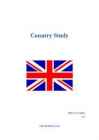
* the flag is called the Union
Jack which is a combination of the flags of England, Scotland and
Northern Ireland
* the population is about
60,000,000 people, the population
density is 242 people/sq km
* its coasts are washed by the
Atlantic Ocean, the
North Sea, the
English Channel , the
Celtic Sea,
Saint George's Channel, and the
Irish Sea. It is
linked to France by
the Channel Tunnel
* the United Kingdom is a
constitutional monarchy. The
current monarch is
Queen Elizabeth II,
who is also the Queen and Head of State of
fifteen other Commonwealth Realms,
such as Canada,
Australia , New
Zealand and
Jamaica .
England:*
it has 50 cities, the capital city is London
* despite of the density of
population and the high degree of urbanisation, England has many
unspoilt
rural and
coastal areas which have been placed under
protection
* the flag is called the Saint
George’s
Cross Scotland:* the
biggest cities are
Glasgow and
Edinburgh (the capital)
*
Stirling has been an
important settlement in Scotland for over 800
years * the flag is called the Saint
Andrew ’s Cross
Wales:* the biggest cities are
Cardiff , Swansea and Newport
*
these cities depended for
their growths on surrounding mines and
metal production, which
started during the
days of the
Industrial Revolution
* the flag is of Wales bears a
Red
Dragon (it is not represented on the Union Jack)
Northern Ireland:* the capital city is
Belfast * 54% of people regard
themselves as Protestants and 42% as
Roman Catholics
* the flag is called the Saint
Patrick’s Cross
2)
HistoryPrehistoric
Britain, Roman Britain, Anglo- Saxon , Danish, Norman invasions (…-1066):Britain
was
part of the European
land mass
until the end of the last Ice Age.
It
became an
island by about 6000 BC. From about 3000 to 2000 BC the
British Isles were inhabited by a group of people called
the
Iberians.
These
Stone Age
people lived in
limestone caves, they used stone axes and
fashioned antlers and bones into
leather -working
tools .
Later groups of people
from what are now
Germany , the
Netherlands and
Brittany also settled
in Briton.
During
the
Bronze Age,
they mined tin,
gold and
copper and made bronze tools. They also
probably
built the spectacular prehistoric megaliths, such as
Stonehenge on Salisbury
Plain .
The Celts
invaded the British Isles in the 5th
century BC in two waves. The
Britons grew
wheat and
corn , caught
fish , and tamed and bred animals.
They made
coarse cloth for their clothes, learned the art of pottery,
made things of wool, metal and copper, and were
good warriors. They
traded with the Gauls and built many
temples and altars. The Celts
brought with them a
knowledge of smelting
iron , which produced
stronger weapons than the bronze ones. They had a
strange and cruel
religion, sometimes human beings were sacrificed.
In
43 AD the
Roman
Invasion
in Britain started. The
millions of people who lived under the
Romans , were
bound together under a common system
of
law and
government . Ancient Rome had an enormous influence on the
development of
Western civilization.
Julius Caesar reached the shores of Gaul in 55 BC. The Romans, having better arms,
armour, organization, and training, defeated the Celtic
tribes . The
next invasion
took place under the
Emperor Claudius,
this time the Romans occupied Britain for
almost 4 centuries. During
that time, Britain was ruled as a province. The Romans taught the
Britons to build bridges,
houses and paved roads. They also built
public baths. Many of Britain’s main towns and cities were
established by the Romans.
Latin influenced the
early development of
the English
language . The capital city, London, was also built during
that time. The Romans built the
Hadrian ’s
Wall in AD 122 to
keep out the raiding Picts from what is now Scotland. Roman
soldiers brought Christianity to Britain. In AD 410, Roman forces were
withdrawn from Britain.
With
the Romans gone, the Britons could not
protect themselves from
invading tribes. The
greatest danger
came from
Germanic seafaring
tribes called
Angles,
Saxons
and the
Jutes.
They established kingdoms in
southern and
eastern England. The
gradual intermarriage of these new waves of invaders and the people
already
living in Briton created what was called Anglo-Saxon England
– ‘
Angle-land’.
The Angles and the Saxons became the most
powerful tribes in England
with the Saxons in southern England and the Angles in the north. The
language the Anglo-Saxons
spoke (Anglo-Saxon
German ) gradually
developed into
Old
English. Old
English was not a written language.
In
787 the
Vikings
began their invasion from Denmark. They mercilessly
raided and
pillaged coastal towns in Britain. The
king of Wessex,
Alfred the
Great, resisted and defeated the Vikings in 886. A
treaty – the
Danelaw – was
signed between King Alfred the Great of Wessex and
Guthrum, Danish king of
East Anglia. England was divided. Later, the
Anglo-Saxon dynasty was restored and lasted until 1066. The last
famous Saxon king of England was Edward the
Confessor .
In
1066 at the
battle of Hastings the
Norman Duke William
defeated the Saxon King
Harold and was crowned the king of England.
In Norman times three languages were spoken: Latin (by the clergy and
the
university scholars), Norman-
French (by the aristocracy and the
king), Anglo-Saxon German (by common people). By the
14th century Norman-French and Anglo-Saxon German formed one language
called
Middle English.
Medieval Britain (1066-1485):1066
–
the
Battle of Hastings
between the Anglo-Saxons and the Normans. The Anglo-Saxons were
defeated, Harold II was
killed , William of Normandy became William I
of England (William the Conqueror).
1215
–
the Magna Carta: king
John was forced to sign a
document which limited his
power .
1337
–
the Hundred Years’ War
with France. The English
kings tried to maintain
control of the land
they
owned in France. The French won the war.
1348 –
the Black Death
was a terrible illness (probably plague) which killed a large number
of people.
1455-1485
–
the Wars of the Roses
were fought between the House of
York and the House of Lancaster.
Richard III was defeated by
Henry Tudor of the House of York. The
latter was crowned King Henry VII of England.
The House of Tudors
(1485- 1603 ):This
period was
lively characterised by new
learning , trade and expansion,
sea exploration and
naval victories. It culminated with the sinking
of the
Spanish Armada. The most powerful Tudor monarchs were
Henry
VII
(he had 6 wives and great ambitions, he broke away from the Roman
Catholic
Church ),
Elizabeth
I
(her
reign was a long and
golden one, characterised by intellectual
brilliance, flourishing
literature and commercial prosperity). The
famous explorers were
Sir
Francis
Drake
(one of the leaders of the English navy) and
Walter Raleigh
(he made
several journeys to America, wrote books about them, brought
potatoes and tobacco to Britain).
The House of Stuarts (1603-1714):Guy
Fawkes
Night dates back to 5 November 1605, when the English
Catholics attempted to blow up the King and the
Parliament . They
failed. The conflict between the Parliament and the kings over power
increased and led the
country into
the Civil War
(1642-1651). In the end, Charles I was defeated and executed and
Cromwell took up
rule of the country, which became a republic. After
Cromwell’s death, the Stuarts returned to the throne.
The House of Hanoverians
(1714-1901):George
I was a controversial king who
left the country in care of the
Cabinet. This was eventually headed by Sir Robert Walpole, Britain’s
first Prime Minister. The
single greatest
threat to George I came
with the
Scottish Jacobite Rebellions. However James Stuart was
easily defeated and fled to Rome. During the reign of George III,
Britain
lost its American colonies and the United States was born.
Arthur Wellesley, Duke of Wellington, ended
Napoleon Bonaparte’s
dream of world dominance in the Battle of Waterloo,
Belgium , in 1783.
Captain James
Cook , a navigator and
explorer , changed the map of the
world and established footholds for British expansion and
empire building during the
18th and
19th centuries. Britain exported
coal , cloth,
guns and other manufactured
products . Imports
included cotton,
sugar , tobacco and tea.
The Victorian Age
( 1837 -1901):This
period was dominated by three men – her
Prince Consort,
Albert of
Saxe-Coburg, and two outstanding prime ministers, William Gladstone
and Benjamin Disraeli. By the end of her reign the
nation was the
most powerful in the world. Victoria
gave birth to
nine children
during her 20-
year marriage to Albert. Prince Albert’s death in
1861 left Victoria inconsolable and she
withdrew from most public
appearances for years.
1853-
1856 –
the
Crimean War,
which took place in
Russia . The war was won by the British.
1899-
1902 –
the Boer War
saw the British army
fight successfully against two Boer republics
and make them part of the British Empire.
The Potato Famine
hit Ireland between 1845 and 1850 and was one of the greatest natural
disasters the Western world has
seen . Ireland lost about
half of its
population, people relied on the potato as their
staple diet.
Charles
Dickens
is
considered one of the greatest English novelists of all time. He
became a very rich man and used his
wealth for the
causes closest to
his
heart , such as the antislavery movement,
social housing
projects and international copyrighting
laws .
The House of
Saxe-Coburg-Gotha, later Windsor (1901-…):The
first king of this period was
Edward
VII,
the eldest son of Victoria and Albert. He enjoyed
active social life
and had several mistresses (
hence the name ‘the
Playboy King’).
George
V
was confronted with many crises,
including World War I, Ireland’s
fight for independence,
women ’s battle to secure the
vote , the
General Strike, the Great Depression and the
rise of
Hitler ’s
Nazis. The family name was changed into ‘Windsor’ in 1917.
World
War I
(1914-1918) was a war in
Europe fought between France, the UK and the
British Empire, Russia and the US (‘the
Allies ’) on one side and
Germany, Austria-
Hungary and
Turkey on the other side. As for
voting,
the
Reform Act of
1832 gave the vote to all men who owned a house.
Later, in 1928, all men and women over 21 had the right to vote.
The
General Strike
on 04.05.1926 was started by the people who worked in the mines. Many
people stopped
work in support of the men who worked in the mines.
Edward
VIII
wanted to
marry a divorced American woman, Mrs
Wallis Simpson. He
married her and later his
brother ,
George
VI,
became the new king. During World War II, they continued to
live in
London (
while it was being bombed) and accepted the
same food
restrictions as ordinary people. The British Commonwealth of Nations
was created during his reign.
World
War II
(1939-1945) was started by Adolf Hitler. 55 million people were
killed during this war until Japan
surrounded in 1945. German planes
dropped bombs on British cities and London. Sir
Winston Churchill led
Britain through the war, and he was
named the architect of the
victory.
Queen
Elizabeth II’s
coronation in 1953 was the first to be televised. She has three
children: Charles (the Prince of Wales), Anne (the Princess Royal)
and Andrew (the Duke of York).
3) Nature , weatherThe climate in the British
Isles is generally mild and temperate. It is greatly influenced by
the surrounding seas. The rainfall and precipitation are huge. You
can
experience four seasons in the
course of a single day. The
average temperature is +15…+20 degrees in summer and -5…-7
degrees in winter. The unstable weather has a
definite effect
upon the national character. They say that it has made the British both
cautious and easily adaptable.
Great
Britain,
consisting of England, Scotland and Wales, is 350
miles across at its
widest point and 600 miles long at its
longest . It has got beautiful
beaches ,
bays , inlets,
cliffs and
rocky headlands.
England
features mostly low
hills and plains. Its coastline is 3200 km long.
The Pennine Chain splits northern England into western and eastern
parts.
There are many rivers and
lakes (Lake
District for example).
The
whole of England resembles a park in the
hands of a skilful
landscape gardener.
Scotland
covers about one-third of Great Britain. It has large areas of
untouched and
wild landscapes. Britain’s highest
peak , Ben
Nevis (1343 m)
lies there. Scotland may be divided into the Lowlands and
the Northern Highlands. The Great Glen, cutting across the Highlands,
is a string of lochs and canals, including
Loch Ness and the deepest
lake in the UK – Loch Morar (310 m).
Wales
is also a mountainous country. Its border to the east with England
still roughly runs
along Offa’s Dyke, the giant earthwork
constructed in the 8th
century. Wales has two
major mountain systems: the Black
Mountains and the Brecon Beacons in the
south and the mountains of Snowdonia in
the north-
west . The longest river in the UK, the Severn (322 km),
rises in central Wales and flows through England into the
Bristol Channel. Wales also has many caves, the deepest of which is Ogof
Flynnon Powys (308 m).
Ireland
is the second largest of the British Isles. The island has a
spectacular landscape of high mountains, fine lakes and
different kinds of beaches. Its two great rivers are the Liffey in the east and
the
Shannon in the west. Lough Neagh is the largest stretch of inland
water in the British Isles. Ireland is noted for its pastures and the
world’s best
dairy products.
4) British InstitutionsThe
British Constitution is an unwritten constitution. It is
based on
statutes and important law,
case law, customs and conventions. It
contains two main principles – the rule of law and the supremacy of
Parliament. Parliament is the supreme legislative
authority and
consists of three separate element: the Sovereign, the House of
Lords and the House of Commons. There are 650
Members of Parliament (MPs) –
each member representing one of the 650 geographical areas
(constituencies). The House is presided over by the Speaker. The main
function of the House of Commons is to legislate. The House of Lords
is presided over by the
Lord Chancellor. It is made up of Lords
Spiritual and the Lords Temporal, the latter comprise all hereditary
and life peers. The
leader of the
party which obtains a majority of
seats in a general election is named Prime Minister. A number of
ministers are invited by the Prime Minister to
attend regular meetings to discuss
policy and this group of ministers is
known as
the Cabinet. The main opposition party forms a
Shadow Cabinet.
People vote for any one of the
candidates in the constituency in which they are registered. The
Conservative Party was formed by Robert Peel from what was left of
the old
Tory party in the
1930s . The
Labour Party was formed by James
Keir Hardie in 1892 to represent the
workers . The recently-formed
Green Party has
begun to threaten the left-of-centre Liberal
Democratic Party as the nation’s “third” party.
There is a large body of laws
that have never been codified known as common law.
5) Economy , industry, agriculture , tourismThe
UK economy has performed remarkably well for the past 15 years,
especially in the
service sector. The
value of all
goods and
services produced
within the UK economy for
final consumption is measured by
GDP. The biggest companies are BP energy, Vodafone, GlaxoSmithKlein,
HSBC Holdings, Royal
Bank of Scotland, etc. The main revenue
sources were
taxes on income, taxes on expenditure, National Insurance
Contributions, taxes on capital.
The
profile of British
industry has changed greatly
since WW II. About 70%
today work in
service industries. Agriculture takes up almost 80% of the land but
employs only 1-2% of the
total workforce. Mainly wheat, barney,
oilseed
rape , sugar beet, peas and
beans are cultivated.
Britain is one of the world’s
leading
tourist destinations. Britain is well-
know for its big
airports, safe roads and extensive rail
network .
6)
Famous people of BritainFamous writers:William
Shakespeare, Brontë sisters (
Charlotte , Emily, and Anne), Jane
Austen , Agatha
Christie , J. R. R. Tolkien, Charles Dickens and J. K.
Rowling .
Famous Poets :Lord
Byron , Robert
Burns , and
Thomas Hardy.
Famous Composers:William Byrd , Thomas Tallis ,
John Taverner , Henry Purcell , Edward Elgar, Arthur Sullivan ,
Ralph Vaughan
Williams , and Benjamin Britten.
Famous
musicians and bands:Arctic
Monkeys, the
Beatles , James Blunt, (born 1977), Eric
Clapton (born
1945), Coldplay,
Deep Purple,
Depeche Mode, Duran Duran, Iron Maiden,
Sir
Elton John, (born 1947), Led
Zeppelin , John
Lennon , (1940-1980),
Andrew Lloyd Webber, (born 1948), Sir Paul McCartney, (born 1942),
Muse , Oasis,
Mike Oldfield, Ozzy Osbourne (born 1948),
Pink Floyd,
Queen, Simply Red, the
Rolling Stones, Sex
Pistols , the
Spice Girls,
Robbie Williams (born 1974).
Famous actors/actresses:Julie Andrews, Rowan
Atkinson ,
Kate Beckinsale, Orlando
Bloom , Hugh
Grant , Audrey
Hepburn , Keira
Knightley, Hugh
Laurie , Jude Law, Wentworth Miller,
Daniel Radcliffe.
8
 10 punkti
Autor soovib selle materjali allalaadimise eest saada 10 punkti.
10 punkti
Autor soovib selle materjali allalaadimise eest saada 10 punkti.
 ~ 8 lehte
Lehekülgede arv dokumendis
~ 8 lehte
Lehekülgede arv dokumendis
 2012-05-31
Kuupäev, millal dokument üles laeti
2012-05-31
Kuupäev, millal dokument üles laeti
 40 laadimist
Kokku alla laetud
40 laadimist
Kokku alla laetud
 0 arvamust
Teiste kasutajate poolt lisatud kommentaarid
0 arvamust
Teiste kasutajate poolt lisatud kommentaarid
 unpoco
Õppematerjali autor
unpoco
Õppematerjali autor
 annaabi.ee







Kõik kommentaarid