khTallinn English CollegeThe United KingdomTopicMari-Liis PakatsTallinn 2008Table of ContentsIntroduction 3
Geographical
Position 3
History 3
Government 4
Queen Victoria 4
Relief 5
Climate 6
Plants 6
Animal life 6
Natural Resources 7
Economy 7
Population and Ethnicity 8
Introduction
The
official name of the
country is the United Kingdom. The United
Kingdom is an
island country. It
consists of the island of Great
Britain and
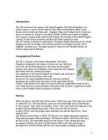
Northern Ireland . Great Britain can be
divided into three
parts –
England ,
Wales and
Scotland . Each of
them has their own
capital city.
Glasgow in Scotland,
Cardiff in Wales and London in
England.
The
country is
situated in the
north -
western Europe . The territory of the
United Kingdom is about 244,000
square kilometres and about 60
million people
live there .
The
UK contains a number of small
islands . The largest islands that
belong to the United Kingdom are the
Isle of Man in the
Irish Sea and
the Isle of Wight which
lies off of England’s
southern coast. The
largest groups of islands are the Shetland Islands, the Orkney
Islands and the Hebrides.
Geographical
Position
The
UK is situated in the Northern Hemisphere. The United Kingdom is
bordered by the
Atlantic Ocean in the
west , the North Sea in the
east , the
Norwegian Sea in the north, and the English Channel, also
known as La
Manche , in the
south and it also separates the country
from the
continent of Europe.
The neighbours of the United
Kingdom are
Iceland in the north-west,
Norway in the east and
France in the south.
Britain
also has many dependant territories which are scattered
throughout the world and are the remains of the huge former
British Empire .
Today Britain assists them, but they may become independent whenever
they
wish . There have been some difficulties with some of the
territories. Argentina has made claims to the Falkland Islands and
Spain to Gibraltar.
History
When the glaciers retreated from Britain about 10,000
years ago,
Stone -Age men
started to inhabit the
isles . The
early Britons
came across the
land bridge which joined Britain
to the continent. They were cave-dwellers at
first . This way of life
was replaced by the invaders from the Mediterranean lands.
These men
were the first farmers.
In about 500 BC came the people
whose homeland was
near the Rhine
River . These
were the
Celts .
The
Roman invasion began in 43AD. The
Romans were
highly organized
conquerors.
They
built good roads, baths and bridges. The Romans stayed in the
British Isles up to
the 5th
century . The remarkable
thing about the Romans is that,
despite their long
occupation of Britain, they
left very
little behind. Most of the
villas and
temples the impressive
network of roads and the cities they
founded ,
including Londinium,
were soon destroyed.
The next invaders were the Anglo-
Saxons . They came from nowadays
Germany ,
Holland and
Denmark .
In 1066 the last successful invasion was made by
French -speaking
Normans. French
became the
language of the ruling class,
Latin was the written
language. By the
14th century,
however , English began to replace
both French and Latin, but the English language
still contains numerous
French and Latin borrowings.
The
Hundred Years War
between England and France and the
Black Death had
a great negative
influence on Britain. Over 1/3 of the population
died.
During the fifteenth century the throne of England was
claimed by
two rival groups - the House of
York and the House of Lancaster. As
the
symbol of the House of York was a white
rose and the symbol of
the House of Lancaster was a red rose, the war between the groups was
called the War of the
Roses . It lasted from 1455 to 1485 and
ended with the
establishment of the
powerful Tudor monarchy.
Civil War broke out in 1642 and it lasted until1649. It ended with
complete victory for the parliamentary forces. The
king was captured
and executed after a
trial for crimes against his people. The
leader of the parliamentary army, Oliver Cromwell, became "
Lord Protector" of the
republic . The monarchy was restored in 1660,
after the death of Cromwell.
In the
18th .century Britain expanded its empire in America, in
Africa and India. Technological
inventions led to the
Industrial Revolution.
Hundreds of thousands of people moved from
rural areas into new towns
and cities. London became an
important business and trading
centre .
By the
19th century Britain was a powerful empire with its
colonies in
Canada , France,
Australia , New
Zealand , India and Africa. Tens of thousands people
left Great Britain
to settle in these colonies.
Government
The
United Kingdom is a constitutional
monarchy with
Elizabeth II, Queen
of the United Kingdom of Great Britain and Northern Ireland, as
the head of state. The
monarch of the UK also serves as head of state
of
fifteen other Commonwealth countries. The UK has a parliamentary
government
based on
strong democratic traditions.
The
Parliament is the
legislature of the United Kingdom; housed in the
Palace of
Westminster . The parliament is made up of the Queen and two
houses : House of Commons, which is elected and House
of
Lords , which is appointed.
Queen
Victoria
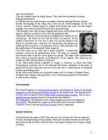
Victoria
became the queen in
1837 when she was only 18 years old. She was
queen for 64 years, the
longest reign of any monarch. We know a lot
about her because she
kept a diary from the age of
thirteen until her
death. She reigned
through a time of great
change in Britain.
While she was the queen, Britain changed completely. Near the
beginning of
her reign the population was about 18 million people but by 1901 it
was 30 million. By the end of her reign Britain had huge industrial
cities, linked by railways.
Telephone and telegraph communications
improved .
There
was
street and house lightning for the first time. Education for all
5-10
year olds started. More people
could read and write. Victoria
was the first monarch on a
photograph .
The
royal family of Europe had a terrible
disease –
hemophilia . The
disease stops the
blood from clotting. Victoria was a
carrier and her
son died of it at the age of 31.
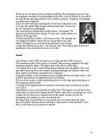
Victoria
married
Prince Albert – her
German cousin. The
marriage was very
happy until Albert’s death. He was a good
father to his large
family.
Although he was very British he introduced on of German
custom that the British now love – the
Christmas tree. When Albert
died Victoria was heartbroken. She wore black for the
rest of her
life.
Relief
Great
Britain is about 1000 km long an in its widest
part about 500 km
across.
The
mountainous part of the country is Scotland. There are many highlands
with high
mountains and
deep valleys. The
highest peak is Ben
Nevis 1343m high.
In
Scotland there is also a
wide lowland area just between the two
uplands. This is the part where many big towns are situated,
including
Edinburgh and Glasgow. More
than three quarters of
Scotland’s population live in that area.
A
big part of Wales is also mountainous and in England the Pennine
Range which is also called as the
backbone of England because of its
location .
The
rest of the country is
rather undulating and not
even the large
agricultural plains in East Anglia are perfectly
flat .
In
Ireland all the
highland areas are situated on the
coastal areas but
there are no peaks over 1100 m.
Great
Britain is
rich in
rivers but they are rather short. The longest
rivers are the Severn, which flows into the
Bristol Channel and the
Thames which flows just through the city of London. Both of them are
an important part of the inland transport network for transporting
such products as
coal ,
iron ore and
steel .
The largest lake in Great Britain,
Loch Lomond, lies in Scotland.
There are many
lakes in Scotland. They are
narrow and long in
shape because of the
mountains. Loch
Ness is well-known for its mysterious monster.
Climate
Britain has a
maritime temperate climate which
means that it's
quite mild , with
temperatures not much
lower than 0ºC in
winter and not much
higher than 30ºC in
summer . There are no extremes of temperature, abundant
rainfall all the year
round and
frequent changes of the
weather . English people often
complain about
their weather.
The mild climate is due to the
warm Gulf
Stream .
Occasional winds from the east in winter bring
cold and dry weather.
The mountainous areas of the north and west have mare rain than the
lowlands of the south and east. The
best time to
visit England
is from May to September.
July and August are the hottest months, but
unfortunately the
wettest too. In September and October the temperatures drop
slightly .
January and
February are the coldest months and there's often
snow on
highland areas, especially in Scotland.
Plants
The
mild climate, plenty of rain and a long
growing season in Britain
support a great variety of plants, which
grow exceptionally well.
Most of Britain was
once covered with thick deciduous
forests in
which oak
trees predominated. The impact of
centuries of
dense human
population has massively altered the
flora of Britain and only small
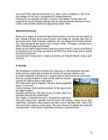
parts of those forests
remain today.
Although
about 10 percent of Britain is still forested, most of this area
consists of commercially planted coniferous forests in Wales.
Before they were affected by the people, the oak forests spread over the
best soils of Britain. Forests were unable to establish themselves in
the poorer soils of the mountains, wetlands and
heath . The plants
common to these wilder areas are heather, peat
moss , rowan and
bilberry .
Some
wetland areas have drained and are now covered by towns and farmland.
Animal
life
An
estimated 30,000 animal
species live in Britain, although many of
them are on the
endangered list. Britain has many small
mammals and
the large
ones tend to be gentle. The only surviving large mammals
are red deer and roe deer. Semi
wild ponies also inhabit the Shetland
Islands. Once wild boars and wolves roamed Britain but they were
hunted to extinction.
Small
mammals like badger, foxes, otters, red squirrels and wildcats
inhabit Britain. Wildcats are
found only in parts of Scotland.
Britain
has
five species of
frogs and toads and three species of
snakes .
There are no snakes in Northern Ireland.
Bird
watching is a popular national pastime. Britain is home to a large
variety of
birds . About 200 species are regularly
seen . The most
common ones are those which remain all year round. Other well known
birds are crows, robins, wrens, woodpeckers. One of the worst
dangers for the birds is the
popularity of ordinary housecats.
Saltwater
fist are important to Britain’s economy. Cod, haddock, herring,
plaice are caught off the coasts of Britain, although there are
concerns about the
decrease of stocks. Lobster, crab and other
shellfish are caught
along inshore
waters .
Natural
Resources
Britain has a variety of mineral and agricultural resources, but must
rely on imports of both.
Mining in Britain has an
ancient history.
Salt mining, for example, dates
back to pre-
historic times . Today
limestone , sandstone, salt, clay and gravel are
found in Britain.
Zinc ,
lead and
gold are also mined. Gold is mined in Wales. The
biggest coal fields are in Wales, Northern England and Scotland.
Britain has the largest energy resources than any country in the EU,
mostly in the form of oil and natural gas. Oil and gas are found in
the North Sea. Other energy
sources include coal and
nuclear power .
Some
alternative energy sources, notably wind farms, are being
developed n various parts of Britain.
Economy
The
development of industry in Britain was a long process.
Industrialization
took place earlier and more rapidly than anywhere
else because the existing
conditions were favorable in England. In
Britain there is a good system of
internal waterways and canals,
there are no
physical barriers to trade and that made the transport
of
goods less difficult than in other nations.
The south-
eastern part of England is the most densely populated
region . It is the main
centre of
printing , clothes and food industry. In that region lie the
two biggest airports -
Heathrow and Gatwick. The largest town is London, which is an
important financial and
cultural centre.
East Anglia is extremely flat and is dominated by
agriculture . They
grow mainly fruit, vegetables and
soft berries. East Anglia is
famous for its large
wheat fields. They grow wheat, potatoes and other sorts
of vegetables there. There is not very much
heavy industry in that
region. The main branches of industry are connected with agriculture
– food industry. Agricultural machinery is produced there.
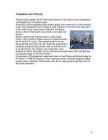
Population
and Ethnicity
With
60 million people, the UK ranks about fifteenth in the world in terms
of population, with England the most populous part.
Britain
has a
diverse population that includes people with connections to
every continent of the world. People have been
coming to settle in
Britain for centuries from many parts of the world. Some came because
of
political or religious
reasons ,
others to
find a better way of
life or an escape from poverty.
Britain’s
predominant historical stock is called Anglo Saxons. They
arrived in
Britain in
massive numbers between the 5th and the 7th
century. These people tended to be
tall , bland and
blue eyed.
Native Britons fought the great flood of
Germanic people and many Britons
who survived fled west to the
hill country. The refugees were called
Celts. Celts tended to be shorter than Anglo Saxons and they had
rounder heads. Most had
dark hair , but high percentage of Celts had
red hair.
A
big number of Scandinavians
raided and settled in Great Britain and
Ireland during the 9th century. In 1066 the Normans,
French speaking invaders conquered England,
adding another ethnic component. The Normans were the last
major group to add their stock
to the British population.
8
 50 punkti
Autor soovib selle materjali allalaadimise eest saada 50 punkti.
50 punkti
Autor soovib selle materjali allalaadimise eest saada 50 punkti.
 ~ 9 lehte
Lehekülgede arv dokumendis
~ 9 lehte
Lehekülgede arv dokumendis
 2008-11-06
Kuupäev, millal dokument üles laeti
2008-11-06
Kuupäev, millal dokument üles laeti
 46 laadimist
Kokku alla laetud
46 laadimist
Kokku alla laetud
 2 arvamust
Teiste kasutajate poolt lisatud kommentaarid
2 arvamust
Teiste kasutajate poolt lisatud kommentaarid
 aliice
Õppematerjali autor
aliice
Õppematerjali autor
 annaabi.ee








Kõik kommentaarid