MODULE 1Greeting. Introducing
oneself and the others . The alphabet . Spelling. The tenses .
How
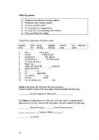
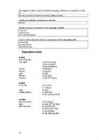
to introduce yourself and others Formal introductionsMay I introduce
myself ? I am John Smith.
Allow me to introduce John Smith to you.
How to respond and reply to an introductionHow do you do.
Pleased to meet you.
Standard introductionI’d like you to meet John Smith.
I want you to meet John Smith.
This is
Jane Smith.
I’m Jane Smith.
My name’s John Smith.
Nice to meet you.
Hello .
I’m so pleased to meet you.
Informal introductionJohn. Jane.
Hi.
Hello.
Titles: Mr
Mrs
Miss Ms
Ms
is a modern form of address for
women .
It
replaces the
traditional forms of Mrs and Miss.
Greetings Good morning /afternoon/ evening !’
How
are you?’
Very
often people expect you to say
something positive .
Here ’s a
breakdown of how you can
express how you
really are
without complaining too much.
- Fine, thanks . / On top of the world, thanks.
- OK, thanks
- Not so bad, thanks. / Can’t complain , thanks.
- So – so, thanks. / So and so, thanks.
- Not so good, actually
Spelling
Work with your
partner and
spell out
first your name and then some
names of
places . Write down each
letter as you
hear it, and then say
the word.
The
English alphabet on the phone :You might
find the
following alphabet (used by international
airlines ) useful when trying to spell a word on the
telephone .
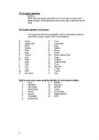
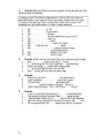
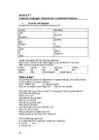
A Alpha O Oscar
Ä Alpha-
Echo Ö Oscar-Echo
B Bravo P
Papa C Charlie Q
Quebec D Delta R
Romeo E Echo S
Sierra F Foxtrot Sch Sierra
Charlie
Hotel G Golf T
Tango H Hotel U
Uniform I India Ü Uniform-Echo
J Juliet V Victor
K Kilo W Whiskey
L Lima X X-Ray
M
Mike Y Yankee
N November Z Zulu
Spell
in turns some names using the alphabet for international airlines. KLM 9 ENIRO
FARWEK 10 SAUREX
TALLEGG 11 MIZDE
VESITERM 12 LADA
STOW 13 SCHWUNG
KALEV 14 MAIASMOKK
YAMAHA 15 ISKU
ESTRAVEL
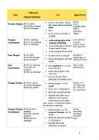
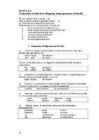
tense
Affirmative
Negative / Questions
Use
Signal Words
Present Simple
A: He speaks.
N: He does not speak .
Q: Does he speak ?
always, every …, normally, often, seldom, sometimes, usually
Present Continuous
A: He is speaking.
N: He is not speaking.
Q: Is he speaking?
- action taking place in the moment of speaking
- action taking place only for a limited period of time
- action arranged for the future
at the moment, just now, Listen !, Look !, now, right now
Past Simple
A: He spoke .
N: He did not speak.
Q: Did he speak?
yesterday , 2 minutes ago, in 1990, last Friday
Past Continuous
A: He was speaking.
N: He was not speaking.
Q: Was he speaking?
- action going on at a certain time in the past
- actions taking place at the same time
- action in the past that is interrupted by another action
when, while
yesterday at 5
Present Perfect
A: He has spoken.
N: He has not spoken.
Q: Has he spoken?
action that has taken place once, never or several times before the moment of speaking
already , ever, just, never, not yet, so far, till now, up to now
Present Perfect Continuous
A: He has been speaking.
N: He has not been speaking.
Q: Has he been speaking?
- putting emphasis on the course or duration (not the result)
- action that recently stopped or is still going on
- finished action that influenced the present
all day, since 1993, how long?, the whole week
Past Perfect
A: He had spoken.
N: He had not spoken.
Q: Had he spoken?
- action taking place before a certain time in the past
- sometimes interchangeable with past perfect continuous
- putting emphasis only on the fact (not the duration)
until that day,
Past Perfect Continuous
A: He had been speaking.
N: He had not been speaking.
Q: Had he been speaking?
- action taking place before a certain time in the past
- sometimes interchangeable with past perfect simple
- putting emphasis on the duration or course of an action
Future Simple
A: He will speak.
N: He will not speak.
Q: Will he speak?
- action in the future that cannot be influenced
- spontaneous decision
- assumption with regard to the future
in a year , next …, tomorrow
assumption: I think, probably, perhaps
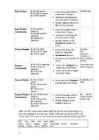
Future Continuous
A: He will be speaking.
N: He will not be speaking.
Q: Will he be speaking?
- action that is going on at a certain time in the future
- action that is sure to happen in the near future
in one year, next week, tomorrow
Future Perfect
A: He will have spoken.
N: He will not have spoken.
Q: Will he have spoken?
- action that will be finished at a certain time in the future
by Monday , in a week
Future Perfect Continuous
A: He will have been speaking.
N: He will not have been speaking.
Q: Will he have been speaking?
- action taking place before a certain time in the future
- putting emphasis on the course of an action
for …, the last couple of hours , all day long
Note :
we use continuous tenses only for actions and happenings (e.g. they
are singing / it is snowing). Some verbs are not action verbs (e.g. know , like). You cannot use continuous tenses with the following
verbs:
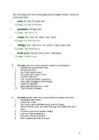
like love hate want need prefer
know realise suppose mean understand believe remember
belong contain consist depend seem
The
following verbs are usually only used in Simple Present (not in the
continuous form).
- state: be, cost , fit, mean, suit
Example:
We are
on holiday .
Example:
Sam has
a cat.
- senses: feel , hear, see, smell, taste, touch
Example:
He feels
the cold .
- feelings: hate, hope , like, love, prefer, regret, want, wish
Example:
Jane loves pizza.
- brain work : believe, know, think, understand
Example:
I believe
you.
1. Exercise :
make the sentences positive, negative and interrogative:
Christine (get up) at seven o’ clock .
She (go) downstairs .
She (have) breakfast early .
We (start) work at eight o’clock.
I (listen to) the news.
Sam (watch) the breakfast programme .
They (read) newspapers in the morning.
I (like) the weekends.
Mario (play) football twice a week.
They (eat out) on Sundays.
2. Exercises:
put the correct tense (simple present or present continuous)
We (always start) at nine .
I (think) he’s away .
She (usually stay ) with Barbie when we go to Chicago.
While the butter (melt), you (take) three eggs and (break) them into a bowl.
Scientists (believe) the weather (change).
I (not see) what the problem is.
Why (you look) at me like that.
Now I (understand) what she (want).
3. Exercise:
Read what Sharon says about a typical working day and write what she
did or didn’t do yesterday:
I usually get up at 7.30 and have a big breakfast. I walk to work,
which takes me about half an hour . I start work at 9. I never have lunch . I finish work at 5 o’clock. I’m always tired when I get
home. I usually cook a meal in the evening. I don’t usually go out.
I go to bed at about 11 o’clock. I always sleep well.
She …………………. at 7.30.
She …………………. a big breakfast.
She …………………… to work.
It ……………………… her about half an hour to get to work.
She …………………… work at 9.
She ……………………….. lunch.
She ……………………………work at 5 o’clock.
She ……. tired when she ……………… home.
She ……………………………. a meal yesterday evening.
……………………………. out yesterday evening.
She ……………………….. to bed at 11 o’clock.
She ……………………….. well last night .
4. Exercise:
put the verbs into the correct form, past continuous or past simple.
Jane ………………( wait ) for me when I … ( arrive ).
I … (walk) along the street when suddenly I … (hear) footsteps.
When I was young, I … (want) to be a shop assistant.
I … (go) out last night because I was too tired.
Ann … (watch) television when the phone rang.
5. Exercise:
Where have you been? ……………….. (you/play) tennis ?
Look! Somebody …………………. (break) that window .
You look tired. ………………….. (you/work) hard ?
‘……………. (you/ever/work) in a factory ?’ ‘No, never.’
‘Jane is away on holiday.’ ‘Oh, is she? Where ……. (she go)?’
6. Exercise:
I was very tired when I arrived home. I ………. (work) hard all day.
The two boys came into the house. They ………. (play) football.
I was sad when I sold my car. I ……….. (have) it for a very long time.
Mary was sitting on the ground . She was out of breath. She ……. (run).
We were good friends . We …….. (know) each other for a long time.
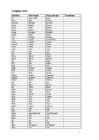
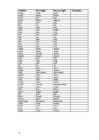
Irregular verbs
Infinitive
Past simple
Past participle
Translation
be
was / were
been
beat
beat
beaten
become
became
become
begin
began
begun
blow
blew
blown
break
broke
broken
bring
brought
brought
build
built
built
buy
bought
bought
can
could
(been able )
catch
caught
caught
choose
chose
chose
come
came
come
cost
cost
cost
cut
cut
cut
do
did
done
drink
drank
drunk
drive
drove
driven
eat
ate
eaten
fall
fell
fallen
feel
felt
felt
fight
fought
fought
find
found
found
fly
flew
flown
forget
forgot
forgotten
forgive
forgave
forgiven
freeze
froze
frozen
get
got
got
give
gave
given
go
went
gone
grow
grew
grown
have
had
had
hear
heard
heard
hide
hid
hidden
hold
held
held
hurt
hurt
hurt
keep
kept
kept
know
knew
known
lay
laid
laid
lead
led
led
learn
learnt/learned
learnt/learned
leave
left
left
lend
lent
lent
let
let
let
lie
lay
lain
light
lit/lighted
lit/lighted
lose
lost
lost
make
made
made
mean
meant
meant
meet
met
met
must
had to
(had to)
pay
paid
paid
put
put
put
read
read
read
ride
rode
ridden
ring
rang
rung
rise
rose
risen
run
ran
run
say
said
said
see
saw
seen
sell
sold
sold
send
sent
sent
shake
shook
shaken
shine
shone
shone
show
showed
shown
shrink
shrank
shrunk
shut
shut
shut
sing
sang
sung
sink
sank
sunk
sit
sat
sat
sleep
slept
slept
speak
spoke
spoken
spell
spelt/spelled
spelt/spelled
spend
spent
spent
stand
stood
stood
steal
stole
stolen
swear
swore
sworn
swell
swelled
swollen/swelled
swim
swam
swum
take
took
taken
teach
taught
taught
tell
told
told
think
thought
thought
throw
threw
thrown
understand
understood
understood
wake
woke
woken
wear
wore
worn
win
won
won
write
wrote
written
MODULE
2 Making phone calls
Answering
the phone
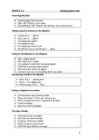
- Good morning. Can I help you?
- Hello. ABC Helpline. (your name)
- Good afternoon. ABC Helpline. Jane speaking. How can I help you?
Asking to speak to someone on the
telephone
- Could I talk to …, please ?
- Can I speak to …, please?
- I’m trying to get hold of …
- I’m trying to contact ….
- I’m trying to get in touch with …..
- Would/Could you put me through to …, please
Asking
for identification on the telephone
- Who’s calling , please?
- Who shall I say is calling?
- Yes, certainly . Could I have your name, please?
- Could I have your name again , please?
- Would you spell that for me, please?
- I wonder if you would mind spelling that for me, please.
Introducing
yourself on the telephone
- Hello. This is … phoning from ….
- This is … I’m calling from …
- Good morning. This is … from ….
Ending a telephone conversation
- Look forward to hearing from you then.
- Thanks for calling. It’s been nice talking to you.
- That’s just about it for now. I’ll get back to you later .
- Is that everything?
- Have we covered everything?
Leaving
a message
- Can/Could I leave a message?
- Can/Could you take a message?
- Could you tell him/her I called?
- Shall I ask him to call you back?
- Can/Could I give him/her a message?
Other
key phrases
- Would you hold the line a moment, please?
- Would you wait a moment, please?
- Could you call back later?
- I’m sorry the line is engaged/ busy .
- I’m sorry. He’s not answering at the moment.
- Thank you/Thanks for calling.
Complete the expressions with these words.
moment hold wrong engaged answer can extension
keep try message through hang speak
1 How
…………… I help you?
2 Could
I …………… to John Smith?
3 Could
I have ………….. 233, please?
4 Could
I leave a …………. for John Smith?
5 I’m
sorry, the line’s …………
6 There ’s
no ………….
7 I
think you’ve got the ………….. extension.
8 Would
you like to ……………?
9 I’ll
…………. on.
10 I’ll
………….. again later.
11 I’m
sorry to …………… you.
12 Just
one …………… , please.
13 I’m
just putting you ……………. now.
Listen
to the phone call. Why does the caller get angry?
Listen
to a better version of the same phone call and complete the
following:
__________, accounts department . Marius Pot _________________
Now
listen to
another phone call. Why does the caller sound so unprofessional?
Again
listen to a better version of the same phone call and complete the
following:
_____ _____ Ramon Berenguer ________ Genex Pharmaceuticals.
_____ _____ _____ __ Catherine Mellor, ________?
_____
______ an invoice.
Write
the missing words in the conversation. Listen and check your answers
A Valentine
Paints. ________ ______ _______ __________?
B Yes.
__________ ___________ ________ _____ Mr Evans , please?
A Who’s
calling?
B __________
_________ Moleda, Guillermo Moleda.
A __________
__________ __________ _________ _________?
B Yes,
it’s Guillermo, G-U-I- double L-E-R-M-O, Moleda, M-O-L-E-D-A.
A _________
________, Mr Moleda. And _________ ________?
B Xavier Electronica. That’s X-A-V-I-E-R.
A Right.
________ ______ line, please. I’m sorry. I’m afraid there’s no
answer.
___________
__________ ___________ _________ message?
B No,
it’s all right. I can _____ ______ later. Goodbye.
A Goodbye.
Dialogues:
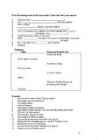
Caller Person
receiving the call
Answer the phone
Ask to speak to someone
Ask who is calling
Give your name
Ask her to spell it
Spell it
Thank her. Explain that you are going to put her through
Thank her.
Translate :
1 Kas
ma saaksin rääkida Mary Cykes’ga palun?
2 Palun
öelge oma nimi tähthaaval.
3 Kes
räägib, palun?
4 Aitäh
helistamast.
5 John
Smith on kahjuks hõivatud.
6 Jane
Bondil on täna vaba päev. Kas ma saan talle midagi edasi öelda?
7. Üks
hetk, ma võtan pastaka.
8 Ma
kontrollin. Olge palun liinil.
9 Kas
ta teab teie telefoni numbrit?
10 Kas
ma saaksin teie nime ja ettevõtte nime, palun?
11 Paluge
tal mulle helistada niipea kui võimalik. Sellega on kiire.
12 Ma
helistan seoses teie tellimusega.
13 Kas
ma saaksin teile tagasi helistada tunni jooksul
14 Kahjuks
on James Brown ärireisil.
15 Kahjuks
ei saa ma praegu rääkida, olen praegu koosolekul.
Practise. Match these comments and replies:
I’d like to speak to Jim Ross , please.
Can you spell that, please?
I’m afraid she’s gone out to lunch.
It’s rather urgent .
Can you manage Monday afternoon?
Ready?
Thank you very much.
What message shall I give to Mr Carpenter ?
a That would be fine.
b Could you ask him to call me?
c Yes. Go ahead .
d W-A-V-E-R-L-E-Y.
e I’ll call back later then.
f My pleasure .
g One moment. I’ll put you through.
h Don’t worry . I’ll tell her to call you as soon as she gets back.
Answerphones
Consideration: Example:
Greet and identify: Hello, this is ........... from
.............................................
Day and time: Calling at ........................ on ............................the.......
................... of
...............................................................
Concise reason : I’m phoning about
.........................................................
........................................................................................
Give info/ask
questions: ........................................................................................
........................................................................................
Give your number and I can be reached on
........................................................
times when you’re until
................................................................................
available .................this evening.
Thank them. Thanks very much. Bye.
Useful
questions and answers
Match
these questions and possible replies. Some have more than one answer
What does “look up” mean? It’s called a pencil sharpener.
How do you say “kapp” in English? It means find the word in a
dictionary
What’s this called in English? We say cupboard.
How do you spell “ married ”? I’m sorry. I don’t know.
Can you repeat that, please? It’s spelt M-A-double R-I-E-D.
How do you pronounce this word? Yes, of course. M-A-double R-I-E-D.
MODULE 3
Asking and answering
questions. Direct questions and indirect questions.
Asking and answering questions
How
to ask and answer direct questions where a short Yes or No answer is
expected:
Are
you cold? Yes I am./No. I’m not
Are
you waiting for someone?
Are
you coming on Friday?
We
usually make questions by changing the word order : we put the first
auxiliary verb before the subject :
You
are – Are you?
In
present simple questions we use do/does: Do you live near here
Does
the film begin at three?
In
past simple questions we use did: Did
you sell your car?
Practise:
Is
it raining?
Is
your brother married?
Are
there any questions you’d like to ask?
Is
there a station near here?
Is
there time to buy a newspaper ?
Were
you late this morning?
Were
you born in Estonia?
Was
your friend with you last night?
Was
it cold this morning?
Were
there many people at the party ?
Were
there any problems?
Was
there a lot of traffic this morning?
Was
there anyone you knew?
Can
you swim?
Have
you got a car?
Have
you ever been to Nuustaku?
Has
it stopped raining yet?
Do
you come from France ?
Do
you speak English?
Do
you live in a flat ?
Does
your husband / wife play the piano ?
Does
this pen belong to you?
Did
you see John yesterday?
Did
it rain last night?
Question
words:
what when where which
who whose why how
Match
the question words and answers:
What ....?
Who ...?
Where ...?
When ...?
Why ...?
How many ...?
How much ...?
How ...?
Whose ...?
Which ...?
Because I wanted to.
Last night.
£5.
A sandwich .
By bus.
In New York .
Jack.
The black one.
It’s mine.
Four .
Sõnade
järjekord küsimuse puhul:
KÜSISÕNA
ABITEGUSÕNA/OLEMA/ MODAALVERB ALUS ÖELDIS
When
do you usually start your day?
How
are you?
How
long can you stay?
Kui
küsisõna tähistab küsimuses alust, on lauses esimesel kohal
küsisõna ja sellele järgneb öeldis. Abitegusõna do/does/did ei
lisata.
What happened ?
Which
is the best restaurant ?
Who
left the room ?
Practise:
Ask
someone:
what the time is.
what he/she did last night.
what sort of books he/she likes reading .
how he/she is.
how he/she usually gets home from here.
when he/she got up this morning.
when he/she first visited Helsinki .
how long he’s/she’s been learning English.
how long it takes him/her to get home from here.
where he/she lives .
where he/she went last summer .
which pop group he/she likes?
which country he/she comes from.
why he’s/she’s learning English.
Practise:
Write
questions. Use the words in brackets + do/does. Put the words in the
right order.
1 (where/live/your parents ?) Where do your parents live?
2 (you/early/always/get
up?) Do you always get up early?
3 (how
often/TV/you/watch?) .............................................
4 (you/want/what/for dinner ?) .............................................
5 (like/you/football?) .............................................
6 (your
brother/like/football?) .............................................
7 (what/you/do/in
the evening?) .............................................
8 (your sister /work/where?) ............................................
9 (to
the cinema /often/you/go?) ............................................
10 (what/mean/this
word?) ............................................
11 (often/ snow /it/here?) ............................................
12 (go/usually/to
bed/what time/you?) ...........................................
13 (how
much/to phone New
York/it/cost?) ............................................
14 (you/for
breakfast/have/usually/what?) ...........................................
15 (hard/you/work?) ..........................................
Indirect questions
Direct
questions Indirect
questions
Where
are you from? Can
you tell me where you are
from?
How
is she? How she is?
Where
are we meeting ? Can
you remember where we’re
meeting?
Where
do you live? Could
you tell me where you live?
How
much money does he earn? How much money he earns?
Does
he like football? Do you know if
he likes football
Has
he got my address? If he has got my address?
Differences:
- Word order
- No do or does
- If in Yes/No questions
When
you make enquiries and requests, polite question forms and indirect
questions are often more polite than imperatives and direct
questions.
Polite
question form /indirect question
Could
you tell
me where the nearest taxi rank is?
Do
you think
you could tell me why the flight is delayed?
Could
I open the window?
Do
you mind
if I open the window?
Would
you mind if I opened
the window?
Could
you help me with my bags?
Would
you help me with my bags?
Would
you mind helping
me with my bags?
Practise:
Change
the imperatives into polite question forms. Think carefully about
word order and grammar .
1 Coffee ! 1 Could you …………………………….
2
Remember to use the spell check in future! 2 Would you please
…………………….
3
I want a word with you in private! 3 Could I ……………………………….
4
Where do I plug this mobile in? 4 Is there somewhere ……………………
5
Check these figures again! 5 Would you mind ………………………
6
How does this damn computer work? 6 Could you tell …………………………
7
What’s the phone code for Greece ? 7 Do you happen …………………………
8
You’ll have to work overtime this evening. 8 Do you think I could
ask …………….
MODULE 4 Numbers , dates
Cardinals
and ordinals
1 one the
first 11 eleven the eleventh
2 two the
second 12 twelve the twelfth
3 three the
third 13 thirteen the thirteenth
4 four the fourth 14 fourteen the fourteenth
5 five the
fifth 15 fifteen the fifteenth
6 six the sixth 16 sixteen the sixteenth
7 seven the
seventh 17 seventeen the seventeenth
8 eight the
eighth 18 eighteen the eighteenth
9 nine the
ninth 19 nineteen the nineteenth
10 ten the tenth 20 twenty the twentieth
21 twenty-one the
twenty-first
34 thirty -four the
thirty-fourth
47 forty -seven the
forty-seventh
59 fifty-nine the
fifty-ninth
100 a hundred the hundredth
Listen
and say the numbers:
15 50 406 72
128 90 19 850
36 1,520 247 5,000
100,000 2,000,000
Money
£400 50p €9.40 €47.99
¥5,000 $100
Fractions
¼ ¾ 2/3 7/8
12½
Decimals
and percentages
6.2 17.25 50% 75.7%
100%
Dates
1995 2020 1789 15/7/94 30/10/02
Phone
numbers
01865 -556890 800 451-7545 919 677-1303
Listen
to the conversation. Write the numbers you hear.
___________ _____________
__________ ______________
__________ ______________
□□□□ □□□□ □□□□ □□□□
_________ _____________ _________
_________ ___________
Months:
January , February , March , April, May, June , July , August, September, October,
November, December.
Days
Monday,
Tuesday, Wednesday , Thursday, Friday, Saturday, Sunday .
How
to say dates:
We
write 03/04/1999 or 3 April 1999
We
say: The third of April, nineteen ninety-nine
or
April the third, nineteen ninety-nine.
Notice how we say these years :
nineteen hundred
nineteen oh five
two thousand and four
Practise
saying these dates:
1
April, 2 March, 17 September, 19 November, 23 June, 5 October, 1
December
29/2/76, 19/12/83, 3/10/99, 31/5/2000, 15/7/2005, 1/1/2001, 4/9/1995
Ask
and answer the questions with your partner.
What’s the date today ?
When did this English course start?
When does it end?
When’s Christmas Day?
When’s Valentine’s Day?
When’s Estonia’s Independence Day?
What century is it now?
When were you born?
When’s your birthday ?
When is your desk mate’s birthday?
What is your phone number?
What is the fourth day of the week?
What
is the time? /What time is it?
It’s
five o’clock
It’s
half past five.
It’s quarter to six.
It’s
ten to six.
It’s
quarter past six.
Excuse
me. Can you tell me the time, please? Yes, of course. It’s six
o’clock.
I’m
sorry, I don’t know.
I
don’t have a watch.
Practise
saying them:
12.30 22.20 14.50 9.15
10.45 19.05 6.15 7.45
20.15 19.40 14.30 16.29
23.25 5.49 8.02 13.55
17.09 18.22
Addresses
Aadressidest
rääkides kasutatakse eessõna at, kui öeldakse ka korteri või
maja number, ning eessõna in, kui öeldakse ainult tänava nimi.
They
live at 5 Oxford Street. She got a job in Weston Road .
Ameerika
inglise keeles kasutatakse tänavatest rääkides eessõna on.
He
lives on Penn Street.
What’s the address?
Do you know the address?
Practise
asking and saying addresses:
Süda
1, 10118 Tallinn
Akadeemia
tee 311
Kentmanni 25-91
Saue, Harjumaa , 76402 Jõgisoo
MODULE
5 Word order
A Verb
+ object I like children
very much.
Did
you see your friends
yesterday?
Ann
often plays tennis.
B Place
and time Tom walks to work every
morning.
She
has been in Canada since
April.
We
arrived at the airport early.
It
is often possible to put time at the beginning of the sentence:
On
Monday I’m going to Paris .
C Direct
and indirect objects
The
indirect object without to
comes before the direct object.
Aunt Jane gave Sarah a record .
She
sent Peter a book.
The
indirect object with to
comes after the direct object.
Aunt
Jane gave the record to Sarah.
She
sent the book to
Peter.
Practice
Put
these words in order to make sentences:
often he plane by travels
out friends I go usually Friday on with
office boss out my is of often the
always at have Christmas an we office party
days don’t they faxes these often send
morning always in I the am tired
have in doesn’t lunch usually she office the
in I on holiday August never go
E-mails, compiling them.
Polite expressions. Modals .
Writing
a letter:
THE
START:
Dear Sir or Madam ,
Dear
Mr Smith, / Mrs Smith, / Miss Smith, Ms Smith
Dear
Mary,
THE REFERENCE
With
reference to your advertisement in the Times, …….
your
letter of 25th
April, ………
your
phone call today, …………..
THE
REASON FOR WRITING
I
am writing to enquire about ……………………
apologize for ………………………….
confirm
……………………………
REQUESTING
Could
you possibly …..?
I
would be grateful if you could……….
AGREEING
TO REQUESTS
I
would be delighted to………..
GIVING
BAD NEWS
Unfortunately …………..
I
am afraid that …………….
ENCLOSING
DOCUMENTS
I
am enclosing …
Please
find enclosed ……
CLOSING REMARKS
Thank
you for your help.
Please
contact us again if we can help in any way.
there
are any problems.
you
have any questions.
REFERENCE
TO FUTURE CONTACT
I
look forward to hearing from you soon.
meeting
you next Tuesday.
seeing
you next week.
THE
FINISH
Yours faithfully,
Yours
sincerely,
Best
wishes,
MODULE
6
Prepositions. Asking the
way. Means of transport. Timetables. Information.
Asking the way
How to ask someone the way
Excuse me, can you tell me the way to ( Silver Street), please
can you tell me where (the post office) is, please.
Could you tell me how to get to ( Green Street),
please.
Excuse me, I’m looking for (the library).
How to say you are unable to give directions
I’m sorry, I don’t know. I’m a stranger here myself.
I’ve no idea .
I’m afraid I can’t help you.
How to give simple directions
Walk down this street, and it’s on the left next to the bank .
Go along this road, and it’s the first turning on the right.
Carry on up this street, and it’s on the right opposite the car
park.
Go straight on and it’s at the corner of (the High Street) and
(Green Road).
How to give more complex directions
Go straight up/down this road until you come to a set of traffic
lights.
Go along this street as far as the crossroads / roundabout.
Then turn left/right into Silver Street.
Then take the first/second/third turning on the left.
Then turn left, then right.
And it’s at the end of the road, on the left/right.
How to give an idea of distance
It’s not very far.
Only about (5 minutes) from here.
Quite near here.
It won’t take you very long to get there.
It’ll only take about (10 minutes) to get there.
Means of transport
ambulance fire engine pick -up truck sports car
bicycle ( bike ) hatchback police car taxi
bus lorry (truck) saloon car van
coach motorbike scooter
ship horse and cart liner speedboat
canoe hot-air balloon motor boat train
car ferry helicopter plane tram
yacht lifeboat rowing boat trolley -bus
Kui
räägitakse sellest, millist liiki liiklusvahendiga sõidetakse,
kasutatakse eessõna by.
By bus, by bicycle, by car, by coach, by plane, by train, …
Kõndimisest
rääkides kasutatakse eessõna on.
On foot
Autodest
rääkides kasutatakse eessõnu in,
into ja
out of
in my car
into his lorry
out of the ambulance
Teistest
liiklusvahenditest rääkides kasutatakse eessõnu on,
onto ja
off
on the train
get onto the bus
step off the train
Prepositions of time
in
(the)
parts
of the day
(not
night) in the morning(s)
in
the evening(s)
in
the afternoon(s)
months in
February
seasons in
summer
years in
1995
decades in
the 1920s
centuries in
the 20th century
at
(the)
clock
time at 5 o’clock
at
7.45 pm
night at
night
holiday
periods at Christmas
at
the weekend (Br.E)
on
(the)
day
of the week on Saturday(s)
dates on
(the) 20th
(of) May
particular days on Good Friday
on
New Year’s Day
on
my birthday
on
the following day
5.
Timetables
Making travel arrangements
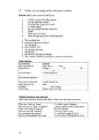
- I’d like to find out about …………………….
- Do you have any information on ………..?
- I’m inquiring about ………………………
- I’d like a ……………… ticket to ………., please.
- Do I have to change?
- I’d like to book a ………………………………….
MODULE
7
Countries, languages .
Future forms. Conditional sentences.
Countries and languages
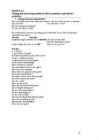
Complete
the following country and nationality sets:
Country
Nationality
Cuba
M ……….
Argentina
C ……….
Moroccan
A ………..
E ……….
Italy
Hungary
C ……….
Egyptian
I ……….
H ………
Croatian
China
M ………
P ………..
Japan
C ……….
Maltese
Portuguese
J ……….
Decide
if you agree with the following statements:
French wine is the best in the world. Japanese cars are the best in the
world.
Make
sentences using the words in the box:
coffee watches beer pop music fashion
perfume tea rice roads food
shops films football players mobile phones
What’s
it like?
This
question asks about the characteristics of people or things. You
usually answer it with an adjective or adjective phrase.
What’s Madrid like? It’s big and exciting .
What
are the people in your village like? They are very friendly.
Think
about the city you have visited. You are going to tell your partner
about it. Think about the following:
Where
is the city?
When
did you first go there?
Were
you on holiday?
Who
did you go there with?
What
did you do there?
How
many times have you visited the city?
When
was the last time?
What
do you most like about this city?
Would
you like to live there? Why / Why not?
Use
the following expressions:
It’s
in the south - west / south- east / north -west / north-east
It’s
on the …… coast
It’s
on the river …….
Exercise
on countries, nationalities and languages
e.g.
I come from Estonia. I am Estonian. I speak Estonian
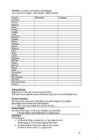
Country
Nationality
Language
Australia
Austria
Belgium
Brazil
Britain
Canada
China
Denmark
Finland
France
Germany
Greece
Hungary
Italy
Japan
Latvia
Lithuania
Norway
Poland
Portugal
Russia
Spain
Switzerland
Turkey
New Zealand
the USA
The Netherlands
Sweden
Future
forms:
English
has several ways of expressing the future.
The
form we use depends on the circumstances and how we view the future
event.
Present
continuous
Use
the present continuous to talk about a personal arrangement and plans , particularly when we know the time and place.
She is leaving for Madrid in the next few days.
Present
simple
Use
the present simple to talk about schedules and timetables.
The next flight to Amsterdam leaves in half an hour.
be
going to
Use
be going to:
- to talk about things we plan to do, or have planned to do.
We are going to visit our aunt Augusta next week.
- to make predictions based on what we can see now.
Just look at those clouds! It’s going to rain
_____________________________________________________________
Future
Simple (will)
For
facts and predictions.
Production
of the new model will begin in June.
To predict the present; i.e. make a deduction based on normal behaviour
A:
This parcel has just arrived.
B: That will be the book I ordered.
Spontaneous decisions.
A: I need to post this letter, but I am busy.
B: I’ll post it for you.
Future
continuous
(will
be + -ing) to describe actions which will be in progress at a time in
the future.
Don’t
worry. I’ll be waiting for you at the airport.
Something
that is happening in the normal course of events .
In a few minutes the crew will be serving refreshments
Future
perfect
To
describe something that will have happened by a point in the future.
We’ll have had our millionth passenger by June.
Translate:
Mida sa teed täna õhtul?
Me läheme täna õhtul kontserdile. See algab kell 19.00.
Vaata neid pilvi. Hakkab vihma sadama.
Ma ei ole siin laupäeval.
Ehk läheksime. On juba hilja .
Ma arvan, et ma olen õhtul kodus.
Ma helistan sulle home.
3. Conditional sentences.
It
is common to talk about the First, Second, and Third Conditional:
Conditional
I If I see John, I’ll
tell him.
Kui
ma näen Johni, siis ütlen ta
Conditional
II If I saw John, I would
tell him.
Kui
ma näeksin Johni, siis ma ütleksin talle.
Conditional
III If I had seen John, I
would have told him.
Kui
ma oleksin näinud Johni, siis ma oleksin talle öelnud.
Other patterns
It is common to use modals in conditionals :
If only you’d asked me, I would have lent you the money!
If you must smoke, do it outside , please.
If you want my opinion, I’d sell the car and buy something more
reliable.
Some conditionals use the present simple in both parts
If it rains , the water comes in through the roof .
A
good rule is to avoid using ‘would’ in the if- clause . This is almost always true.
Translate:
Kui ma leian numbri, siis ütlen teile.
Kui homme on ilus ilm, siis lähen maale.
Ma helistan tagasi, kui saan informatsiooni.
Kui Mary helistab, siis saan need andmed.
Kui ma teaksin , siis ütleksin teile.
Kui ma oleks teadnud, siis oleksin sinna läinud.
MODULE 8
Comparison of adjectives.
Shopping, shops, garments , foodstuffs.
We
can compare things using as … as
Write
sentences using this information and as … as ..
e.g. Blue eyes are as beautiful as brown eyes.
Green
eyes aren ’t as common as blue or brown eyes.
brown eyes/ sensitive to light/blue eyes
in hot countries blue eyes/common/brown eyes
small eyes/attractive/large eyes
women’s eyebrows /thick/men’s
eye make-up/old/history
our ears / important /our eyes
Comparison of Adjectives and Adverbs
(1) 1-silbiliste
omadus- ja määrsõnade keskvõrre moodustatakse lõpu –er
ja ülivõrre lõpu –est
lisamise teel.
cheap cheaper the cheapest
safe safer the safest
Ühe
täis- ja kaashäälikuga (v.a. w) lõppevate sõnade puhul muutub
kaashäälik kahekordseks.
big bigger the biggest
sad sadder the saddest
(2) Kaashääliku ja y-tähega lõppevate 2-silbiliste omadus- ja
määrsõnade puhul asendub y
tähega i
ja sõnale lisandub –er või –est.
happy happier the happiest
(3) Enamiku 2- ja enamsilbiliste omadussõnade, samuti ly-lõpuliste määrsõnade keskvõrre moodustatakse sõna more
ja ülivõrre sõna most abil
beautiful more beautiful the most beautiful
(4) Järgmiste 2-silbiliste omadussõnade puhul võib kesk- ja
ülivõrret moodustada nii –er ja –est kui more ja most abil:
cruel gentle handsome stupid
narrow pleasant polite simple
(5) Mõnede omadus- ja määrsõnade võrdlusastmed moodustatakse
ebareeglipäraselt.
good/well better the best
bad/badly worse the worst
far farther/further the farthest/furthest
old older/elder the oldest/eldest
Exercise Write
the comparative and superlative form:
beautiful
nice
important
polite
pretty
young
large
good
happy
near
hot
bad
modern
fast
expensive
early
Shops
baker’s fishmonger’s off-licence
bank florist ’s post office
barber’s furniture shop record shop
butcher’s greengrocer’s shoe shop
café hairdresser’s supermarket
card shop ironmonger’s tobacconist’s
chemist’s jeweller’s toy shop
department store laundrette dry cleaner ’s
newsagent’s
3. Food
MEAT
pork mutton veal beef turkey deer chicken
FISH
shrimp trout salmon herring whitefish perch pike
pike perch Baltic herring crab prawn squid
FRUIT
lemon orange grapefruit apple plum peach cherry banana grape melon watermelon pear kiwi
BERRIES
strawberry raspberry blueberry gooseberry cranberry currant
VEGETABLES
cabbage cauliflower broccoli asparagus Brussels sprouts spinach tomato cucumber lettuce mushroom bean pea red pepper pumpkin
ROOT VEGETABLES
potato carrot onion beetroot garlic radish celery horseradish
CEREALS
wheat rye barley corn oats
MILK PRODUCTS
cream yoghurt cheese sour cream cottage cheese
GARMENTS
suit jacket dress
trousers coat skirt
waistcoat anorak blouse
tie raincoat nightdress
shirt bathrobe jeans
Useful
expressions:
What size are you? Can you measure me?
Changing rooms How much is it?
Too tight across the shoulders /too long/too short
It suits you very well. It fits but it doesn’t suit.
I’ll have it. I’ll leave it.
Can I try it on?
Have
something done: arrange for something
to be done
e.g. I must have my watch repaired.
We
need to have the curtains cleaned.
Exercise:
Make sentences
using have + object + the past
participle in the box.
changed cleaned cut put in redecorated repaired reproofed
re-strung serviced sharpened valued
1 When
did you last (your hair )? When did you last have your hair cut?
2 We
(our knives) once a year.
3 We’re
going to (the roof) next summer.
4 I
must (my jacket). And I’d better (my raincoat).
5 ‘Do
we need to (the car)?’ ‘Well, we ought to (the oil).’
6 When
she (her jewellery), she found it wasn’t actually worth much.
7 You
need to (your tennis racket).
8 Shall
we (the kitchen ), or shall we do it ourselves?
MODULE
9
Problem solving. Speaking
about a product or a service.
Problem
solving:
How to ask someone
about his/her problem
- What’s the matter ?
- What’s wrong?
- What’s the problem?
- Is anything the matter?
- Is anything wrong?
To
which the person can answer:
1 I’ve
got a terrible pain in my back
2 I’ve
just lost my wallet.
3 My
flat has been burgled.
4 I
can’t get into the house. I have lost my key.
5 I
have lost my pet crocodile .
6 I’ve
got a terrible pain in my chest .
7 My
car has caught fire.
8 My
cat is in the tree and can’t get down.
9 I’ve
cut into my finger.
10 I’ve
been mugged.
11 I
can’t find my dog.
12 I
have lost my passport.
How to express
sympathy
Oh, I’m sorry to hear that.
Oh, what a pity!
Oh, no! How awful/dreadful!
Oh, dear! That’s terrible!
How to give advice
Why don’t you (go and see a doctor ).
If I were you I’d ..................................
I’d advise you to ....................................
I think you should ...................................
I think you’d better ..................................
Perhaps you ought to (see a doctor)
Maybe you should .............................................
Well, it might be a good idea to .........................
Well, you could consider (going to see a doctor)
Well, you might like to try ....................................
How to accept a
piece of advice
Yes, that sounds a good idea. Thanks a lot.
Yes, I’ll do that. Thanks for the advice.
Yes, I’m sure that’s a good idea. Thank you
very much.
Yes, I’ll certainly try that.
How to refuse a
piece of advice politely
I’m not sure, really. But thanks anyway.
Well, to be honest, I’ve already tried that. But thanks for trying.
Well, I doubt if that would do any good. But thank you all the same.
Well, I doubt if that would work.
Useful
language for describing products:
We sell/make ..................................
They range in price from ................ to ..................
They are available in .......................................
They are made of ............................................
They come in ..................... sizes.
They are guaranteed for ....................................
Weights
and measurements
1 How wide is it? It’s 30 centimetres ..... It’s 30 cm in width .
2 How
long is it? It’s 10cm ........... It’s 10 cm in length .
3 How
high is it? It’s 20cm ............ It’s 20cm in height.
4 How deep is it? It’s 15cm .......... It’s 15cm in depth.
5 How heavy is it? It weighs 50kg . It’s 50kg in weight .
Materials
plastic glass fibre glass wood paper tin rubber gold brass concrete cardboard aluminium porcelain canvas cotton silk metal
Write
down the product information
Price:
.......................................................................
Delivery
time: ........................................................
Size
(footprint): .....................................................
Length:
..................................................................
Width:
....................................................................
Colour:
..................................................................
Weight:
....................................................................
Guarantee:
...................................................................
MODULE
10
Leisure activities .
Entertainment. Booking tickets. The use of the article.
How
to ask how a person likes/dislikes spending time
What don’t you like doing in your spare time?
do you like/enjoy
are you fond of
are you keen on
How
to answer
I like/enjoy skiing/painting/ travelling
I’m fond of skating
I’m keen on dancing
Leisure
activities
dancing singing skating skiing working out
yoga reading cooking walking hiking
hitch-hiking camping travelling painting listening to music playing computer games shopping gardening sewing knitting
The
use of the article
- We use a/an to say what kind of thing somebody or something is, what job a person does, or what something is used as. A/an has no plural .
She’s
a doctor They
are doctors .
He
worked as a farmer . They
worked as farmers.
Don’t
use the plate as an
ashtray. Don’t use the plates as ashtrays.
- A/an can mean ’any example of something’.
In the plural,
we use no article
or some.
A spider has eight legs. Spiders
have eight legs.
I’d like a
cup of coffee. I’d like some
chips.
- A/an can mean ’a particular one’. If you don’t say exactly who or which. In the plural we use some or no article.
A
man called while you were
out. Some men
called.
John
married a doctor. They
both married doctors.
- We don’t use a/an with uncountable nouns .
- We don’t use a/an with possessives.
- After kind of or sort of, a/an is usually dropped .
- In exclamations with what, a/an is not dropped. (e.g. What a pity!)
- A/an usually comes after quite, rather and such . (Quite/rather/such a nice day)
- Descriptions: He’s got a long nose.
She’s
got an interesting face.
- Note that hair is singular , and has no article.
She’s
got dark hair.
- The means – ’you know which one(s) I mean’
I
bought a radio and a CD player , but the CD player didn’t work.
The woman over there works with my sister.
Please close the door .
He’s
been to the North Pole.
- We often use the with only and with superlatives.
She
is the only
woman for me. It’s the best
restaurant in town.
- We do not use the in generalisations with plural and uncountable nouns.
I
like music. Can
you turn off the music?
She is very interested in nature . What
is the nature
of his illness ?
- We do not normally use the in generalisations with plural and uncountable nouns, even if there is an adjective before the noun .
She’s studying Chinese history. He collects antique clocks.
- But we use the when a description with of follows the noun.
She
is studying the history
of China.
- We can use the in generalisations with singular countable nouns, to talk about a whole class of things. This is common in scientific and technical language.
Who invented the
telescope? The tiger is in danger of dying out.
I
can’t play the
piano. I hate the telephone.
Note
also:
I
love the
sea. Do you like living in the
country.
I never go to the
cinema or the theatre .
- Place names with no article:
continents,
most countries Africa , Germany, Peru (but the Netherlands)
states,
counties etc Texas , Oxfordshire, Normandy
towns Ottawa ,
Prague (but the Hague)
most
streets Fifth Avenue, Oxford Street (but the High Street)
lakes ,
most mountains Lake Superior , Everest , Mont Blanc
town
+ building Oxford University, York Airport, Reading Station
names
includes common noun the Czech Republic, the United States
seas,
rivers, deserts the Atlantic , the Thames , the Sahara Desert
mountain and island groups the Alps , the Himalayas , the West Indies
most
geographical regions the Far East, the Ruhr, the Midwest
hotels,
cinemas, theatres the Ritz , the Playhouse
- Other expressions with no article: He was elected President .
She
became Queen.
They
made her Manager .
What’s
on TV?
Let’s watch television. (but on the radio, listen to the radio)
This
is Alice ’s house.
Exercise:
Who is ….. best player in your team ?
I don’t watch …..television very often.
‘Is there …..bank near here?’ ‘Yes, at ….. end of this street.’
I can’t ride ….. horse.
…..sky is very clear tonight .
Do you live here or are you ….. tourist ?
What did you have for ….. lunch?
Who was ….. first President of ….. United States?
‘What time is it?’ ‘I don’t know. I haven ’t got ….. watch.’
I’m sorry but I’ve forgotten your name. I can never remember ….. names.
What time is ….. next train to London?
Kate never writes ….. letters. She prefers to phone people.
Where’s Sue?’ ‘She’s in ….. garden .’
Excuse me, I’m looking for ….. Majestic Hotel. Is it near here?
Gary was ill ….. last week, so he didn’t go to ….. work.
Everest is ….. highest mountain in ….. world.
I usually listen to ….. radio while I’m having ….. breakfast.
I like ….. sport . My favourite sport is ….. basketball.
Julia is ….. doctor. Her husband is ….. art teacher .
My flat is on ….. second floor. Turn left at ….. top of …..stairs, and it’s on …..right.
After ….. dinner, we watched ….. television.
Last year we had ….. wonderful holiday in ….. south of ….. France.
Modal verbs
can,
could, may, might, will, would, shall, should, ought to, must, need, dare .
-
always have the same form
-
there is no -s ending
-
no -ing form
-
no -ed form (except - dare)
-
after the modal verbs we use the infinitive without to.
- ability - can, could, ( be able to)
I
can swim.
Sarah could play
the piano when she was very young. If we go to town, I’ll be
able to do some shopping.
___________________________________________________________________
People
can/may/are allowed to drive a car in Britain when they are 17.
___________________________________________________________________
- obligation - must, have (got) to, needn’t, mustn’t
I
must
hurry. Martin has got to
see a doctor. I needn’t wash this, it’s clean . You mustn’t forget
my key.
___________________________________________________________________
- advice - ought to, should
= something is the right thing to do
You
ought to walk./ Walking is the right thing for you to do./
I
oughtn’t to eat cakes.
I
shouldn’t eat cakes.
___________________________________________________________________
- possibility - may, might, could
The
keys may be/might be in one of those drawers.
Amanda may not/might not come tomorrow.
The
keys could be in one of those drawers. We could go out later.
___________________________________________________________________
- imagining situations - would
= to talk about a situation which we are imagining (=thinking about)
but which is not really happening
A
holiday in the Bahamas would be
nice. Yes it would.
___________________________________________________________________
- certainty - will, must, can’t
= to say that something is logically certain
This
story can’t be true. (It is certainly untrue.)
He
left half an hour ago, so he’ll be home by now.
No
one is answering the phone. They must
be out.
__________________________________________________________________
Past
tense
- Modal verbs + have + -ed form
to
talk about necessity, obligation etc. in the past.
Peter
and Susan didn’t come. They ought to
have told/should have told us. (=They
had an obligation to tell us, but they didn’t tell us.)
Translate
Mr Smith, kas ma tohin kasutada teie hiirt, minu oma on katki?
Ma ei osanud ujuda kui ma olin 5-aastane.
Ma pean koju minema, kell on juba 6.
Puhkus Hawail oleks kena. – Ja oleks küll.
Sa peaksid rohkem käima jala.
Me peame kandma tool vormirõivast.
Sul ei ole vaja joosta, see buss on juba läinud.
See jutt ei või ju ometi tõsi olla.
Sinu võileib võib olla ühes neist sahtlistest.
Ma ei peaks sööma kooke, sest olen dieedil.
Sa ei tohi siin suitsetada.
Keegi ei vasta telefonile. Nad on kindlasti väljas.
38
 50 punkti
Autor soovib selle materjali allalaadimise eest saada 50 punkti.
50 punkti
Autor soovib selle materjali allalaadimise eest saada 50 punkti.
 ~ 37 lehte
Lehekülgede arv dokumendis
~ 37 lehte
Lehekülgede arv dokumendis
 2013-09-13
Kuupäev, millal dokument üles laeti
2013-09-13
Kuupäev, millal dokument üles laeti
 42 laadimist
Kokku alla laetud
42 laadimist
Kokku alla laetud
 0 arvamust
Teiste kasutajate poolt lisatud kommentaarid
0 arvamust
Teiste kasutajate poolt lisatud kommentaarid
 cerstin11
Õppematerjali autor
cerstin11
Õppematerjali autor
 annaabi.ee















Kõik kommentaarid