American
literature The
literary history of this
nation when the
first humanbeing
living in what has
since become the U.S used
language creatively.
Dates and
names Christopher
Columbus
Christopher Columbus (1451-
1506 ) was an
Italian explorer who sailed
across the
Atlantic Ocean in 1492, hoping to
find a route to India
(in
order to trade for spices). He made a
total of
four trips to the
Caribbean and
South America
during the
years 1492-
1504 . He discovered
America in 1492.
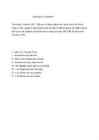
I –
Indian sun, they pray for fan.
J – we hate Jews, they are
fools .
K –
Bush is okey, because he is not gay.
L – Americans are large, they eat much.
M – Mc`Donalds is
good ,
there is a lot of food.
N – is for Nigga who pulled the
trigger .
O – is for Osama who wears pyjamas.
P – is for
Pamela who
likes camera.
Puritans The Puritans were a group of people who grew discontent in the
Church of
England and worked towards
religious , moral and societal reforms.
The writings and
ideas of John
Calvin , a leader in the
Reformation ,
gave rise to
Protestantism and were pivotal to the
Christian revolt.
They contended that The Church of England had become a product of
political struggles and man-made doctrines. The Puritans were one
branch of dissenters who decided that the Church of England was
beyond reform .
Escaping persecution from church
leadership and the
King , they
came to America.
Of
Plymouth Plantation
Of Plymouth Plantation is the
single most
complete authority for the
story of the Pilgrims and the
early years of the
Colony they
founded .
Written
between 1620 and 1647, the
journal describes the story of the
Pilgrims from
1608 , when they settled in the
Netherlands , through the
1620 Mayflower
voyage ,
until the
year 1647. The book ends with a
list, written in 1650, of
Mayflower passengers and what
happened to
them .
The
Age of
Reason The Age of Reason: Being an Investigation of True and Fabulous
Theology
, a deistic treatise written by
eighteenth-century
British radical and American
revolutionary Thomas Paine , critiques institutionalized
religion and challenges the
inerrancy of the
Bible . Published in three parts in 1794, 1795, and
1807, it was a
bestseller in America, where it caused a short-lived
deistic revival. British audiences,
however , fearing increased
political radicalism as a result of the
French revolution ,
received it with more hostility.
The Age of Reason presents common
deistic arguments; for example, it highlights the
corruption of the
Christian Church and criticizes its efforts to acquire political
power . Paine advocates reason in the
place of revelation,
leading him
to reject miracles and to view the Bible as an ordinary
piece of
literature
rather than as a divinely inspired text.
The Age of
Reason is not atheistic, but deistic: it promotes natural
religion and argues for a creator-God.
Benjamin
Franklin
Benjamin Franklin (
January 17, 1706
– April 17, 1790) was one of the
Founding Fathers of the
United States of America. A noted polymath, Franklin was a leading
author and
printer , satirist, political theorist, politician,
scientist,
inventor , civic activist, statesman, and diplomat. As a
scientist, he was a
major figure in the Enlightenment and the history
of physics for his discoveries and theories regarding electricity. He
invented the
lightning rod, bifocals, the Franklin stove, a carriage
odometer, and the
glass 'armonica'. He
formed both the first public
lending library in America and first
fire department in Pennsylvania.
He was an early proponent of colonial
unity , and as a political
writer and activist he supported the
idea of an American nation.As a
diplomat during the American Revolution he secured the French
alliance that helped to make independence of the United States
possible.
A year after Benjamin Franklin's
death , his autobiography, entitled
"Memoires De La Vie Privee," was published in
Paris in
March of 1791. The first
English translation , "The Private Life
of the Late Benjamin Franklin, LL.D. Originally Written By
Himself ,
And Now
Translated From The French," was published in London in
1793.
Known today as "The Autobiography of Benjamin Franklin,"
this
classic piece of Americana was originally written for Franklin's
son William, then the Governor of New
Jersey .
Noah
Webster
Noah Webster (October 16,
1758 – May 28, 1843) was an
American lexicographer,
textbook author, spelling reformer, word
enthusiast, and
editor . He has been called the “
Father of American
Scholarship and Education.” His “
Blue -Backed Speller”
books were used to
teach spelling and
reading to
five generations of
American
children . In the United States, his name has become
synonymous with dictionaries, especially the modern Merriam-Webster
dictionary that was first published in 1828 as
An American
Dictionary of the English Language.
In 1806, Webster published his first dictionary,
A Compendious
Dictionary of the English Language. The
following year, at the
age of 43, Webster began writing an expanded and comprehensive
dictionary,
An American Dictionary of the English Language,
which would take twenty-
seven years to complete. To supplement the
documentation of the etymology of the words, Webster learned
twenty-six
languages ,
including Old English (Anglo-
Saxon ), German,
Greek , Latin, Italian, Spanish, French, Hebrew, Arabic, and
Sanskrit .
Webster hoped to standardize American speech, since Americans in
different parts of the
country spelled, pronounced, and used words
differently.
The
Romantic Traditions James Fenimore Cooper James Fenimore Cooper (September 15, 1789 – September 14,
1851 ) was
a prolific and
popular American writer of the early
19th century. He
is
best remembered as a novelist who wrote numerous sea-stories and
the historical novels known as the
Leatherstocking Tales ,
featuring frontiersman Natty Bumppo.
Among his most
famous works is
the Romantic
novel The Last of the Mohicans, which many
consider to be his
masterpiece .
Further information: List of James Fenimore Cooper writings.
He anonymously published his first book,
Precaution (1820). He
soon issued
several others under his own name. In 1823, he published
The Pioneers; this was the first of the
Leatherstocking
series, featuring Natty Bumppo, the resourceful American woodsman at
home with the
Delaware Indians and especially their
chief Chingachgook. Cooper's most famous novel,
Last of the Mohicans
(
1826 ),
became one of the most widely read American novels of the
nineteenth century. The book was written in a second-story
storefront-
apartment in Warrensburg, New
York , just
north of where
most of the book's plot
takes place.
Washington IrvingWashington Irving was born in New York City (
near present-day
Wall Street) at the end of the Revolutionary War on April 3,
1783. His
parents ,
Scottish -English immigrants, were great
admirers of General George Washington, and
named their son after
their
hero .
Irving had many interests including writing,
architecture and
landscape design,
traveling , and diplomacy. He is best known,
however, as the first American to make a living
solely from writing.
Initially, he wrote under pen names; one was "Diedrich
Knickerbocker." In 1809, using this pen name, Irving wrote A
History of New-York that describes and pokes fun at the
lives of the
early Dutch
settlers of Manhattan.
Letters of Jonathan Oldstyle 1802
Salmagundi 1807-1808
A History of New York 1809
Emily Elizabeth Dickinson Emily Elizabeth Dickinson (December 10, 1830– May 15,
1886 ) was an
American
poet . Born in Amherst, Massachusetts to a successful family
with
strong community ties, she lived a mostly introverted and
reclusive life. After she studied at the Amherst Academy for seven
years in her
youth , she
spent a short time at Mount Holyoke Female
Seminary
before returning to her family's house in Amherst. Thought
of as an eccentric by the locals, she became known for her penchant
for white clothing and her reluctance to greet guests or,
later in
life,
even leave her
room .
Dickinson was a prolific private
poet , though fewer than a dozen of
her
nearly eighteen
hundred poems were published during her
lifetime .
The
work that was published during her lifetime was
usually altered
significantly by the publishers to fit the conventional poetic
rules of the time. Dickinson's poems are
unique for the era in which she
wrote; they
contain short lines, typically
lack titles, and often
utilize slant rhyme as well as unconventional capitalization and
punctuation. Many of her poems deal with
themes of death
and immortality, two
subjects which infused her letters to friends.
Walter Whitman Walter Whitman (May 31, 1819 – March 26, 1892) was an American
poet, essayist, journalist, and
humanist . He was a
part of the
transition between Transcendentalism and
realism , incorporating both
views in his works. Whitman is among the most influential
poets in
the American canon, often called the father of free
verse . His
work was very controversial in its time,
particularly his
poetry collection Leaves of Grass , which was
described as obscene for
its
overt sexuality.
Born on Long
Island , Whitman worked as a journalist, a
teacher , a
government clerk , and a volunteer
nurse during the American
Civil War
in
addition to publishing his poetry. Early in his
career , he also
produced a temperance novel,
Franklin Evans (1842). Whitman's
major work,
Leaves of Grass, was first published in 1855 with
his own
money . The work was an attempt at reaching out to the common
person with an American
epic . He continued expanding and revising it
until his death in 1892. After a stroke towards the end of his life,
he moved to Camden, New Jersey where his health further declined. He
died at age 72 and his funeral became a public spectacle.
Poetry
by Walt Whitman
Among the MultitudeAmong the men and
women the multitude,
I perceive one picking me out by
secret and divine signs,
Acknowledging none
else , not
parent ,
wife ,
husband , brother,
child ,
any nearer than I am,
Some are baffled, but that one is not--that one knows me.
Ah lover and
perfect equal,
I meant that you should discover me so
by faint indirections,
And I when I meet you
mean to discover you
by the like in you.
To a stanger
Passing
stranger ! you do not
know how longingly I look
upon you,
You must be he I was seeking, or she I was seeking, (it
comes to me
as of a
dream ,)
I have somewhere surely lived a life of joy with you,
All is recall'd as we flit by each
other , fluid, affectionate,
chaste, matured,
You grew up with me, were a boy with me or a girl with me,
I ate with you and
slept with you, your
body has become not
yours only nor
left my body mine only,
You give me the
pleasure of your
eyes , face, flesh, as we pass, you
take of my beard, breast,
hands , in
return ,
I am not to
speak to you, I am to think of you when I sit
alone or
wake at
night alone,
I am to
wait , I do not
doubt I am to meet you
again ,
I am to see to it that I do not
lose you.
A Clear MidnightThis is thy
hour O Soul, thy free flight into the wordless,
Away from books, away from art, the day erased, the lesson done,
Thee
fully
forth emerging,
silent , gazing, pondering the themes
thou
lovest best.
Night, sleep, and the
stars .
Had I the Choice Had I the choice to tally
greatest bards,
To limn their
portraits, stately, beautiful, and emulate at will,
Homer with
all his
wars and warriors--
Hector , Achilles, Ajax,
Or
Shakespeare 's woe-entangled
Hamlet ,
Lear ,
Othello --Tennyson's
fair ladies ,
Meter or wit the best, or choice
conceit to weild in
perfect rhyme,
delight of singers;
These , these, O sea, all these
I'd gladly
barter ,
Would you the undulation of one
wave , its
trick to me transfer,
Or breathe one breath of yours upon my
verse,
And leave its odor there.
Mark
Twain Samuel Langhorne
Clemens (November 30, 1835 – April 21,
1910 ),
better known by the pen name Mark Twain, was an American author and
humorist . Twain is most noted for his novels
Adventures of Huckleberry Finn , which has since been called the Great American
Novel, and
The Adventures of Tom Sawyer . He is extensively
quoted. During his lifetime, Twain became a
friend to presidents,
artists, industrialists and European royalty.
Twain enjoyed immense public
popularity . His keen wit and incisive
satire earned him
praise from both critics and peers. American author
William
Faulkner called Twain "the father of American
literature."
Twain began his career writing
light , humorous verse but evolved into
a
grim ,
almost profane chronicler of the vanities, hypocrisies and
murderous acts of mankind. At mid-career, with
Huckleberry Finn,
he combined
rich humor , sturdy
narrative and
social criticism. Twain
was a master at rendering colloquial speech and helped to create and
popularize a distinctive American literature
built on American themes
and language. Many of Twain's works have been suppressed at
times for
various
reasons .
Adventures of Huckleberry Finn has been
repeatedly restricted in American high schools, not
least for its
frequent use of the word "nigger," which was a common
term when the book was written.
Unfortunately, a complete bibliography of his works is nearly
impossible to compile because of the vast number of pieces written by
Twain (often in
obscure newspapers) and his use of several different
pen names. Additionally, many believe that a large portion of his
speeches and lectures have been
lost or simply were not written down;
thus, the collection of Twain's works is an ongoing
process .
Researchers have rediscovered published material by Twain as recently
as 1995.
Henry James
Henry James (1843-1916), noted American-born English essayist,
critic , and author of the
realism movement wrote
The Ambassadors
(1903),
The Turn of the Screw (
1898 ), and
The Portrait of a
Lady (1881).
James's works, many of which were first serialised in the
magazine The Atlantic Monthly include narrative romances with
highly developed
characters set amongst illuminating social commentary on
politics ,
class , and
status , as well as
explorations of the themes of
personal
freedom , feminism, and
morality . In his short stories and
novels he employs techniques of interior
monologue and point of view
to expand the readers' enjoyment of
character perception and insight.
Often comparing the Old World with the New, and
influenced by Honore
de
Balzac , Henrik
Ibsen , Charles
Dickens , and Nathaniel Hawthorne of
whose work he wrote
"too original and exquisite to pass away"
James would become widely respected in North America and
Europe ,
earning honorary degrees from Harvard and
Oxford Universities, in
1911 and 1912 respectively. He was acquainted with many notable
literary figures of the day including Robert
Browning , Ivan S.
Turgenev ,
Emile Zola ,
Lord Alfred Tennyson, and
Gustave Flaubert.
American-born and
never married, James would
live the
majority of his
life in Europe, becoming a British
citizen in 1915 after the outbreak
of World War I. Many of his works have inspired other author's works
and adaptations to the stage and
screen .
Jack
London
Jack London, whose life symbolized the power of will, was the most
successful writer in America in the early
20th Century. His vigorous
stories of men and
animals against the environment, and
survival against hardships were drawn mainly from his own
experience . An
illegitimate child, London
passed his childhood in poverty in the
Oakland slums. At the age of 17, he ventured to sea on a sealing
ship . The
turning point of his life was a
thirty -day imprisonment
that was so degrading it made him decide to turn to education and
pursue a career in writing. His years in the Klondike searching for
gold left their mark in his best short stories; among them, The
Call of the
Wild , and White Fang. His best novel, The Sea-
Wolf , was
based on his
experiences at sea. His work embraced the concepts of
unconfined
individualism and
Darwinism in its exploration of the
laws of
nature . He retired to his
ranch near Sonoma, where he died at age
40 of various diseases and drug treatments.
Novels - A Daughter of the Snows ( 1902 )
- The Call of the Wild (1903)
- The Kempton-Wace Letters (1903)
- The Sea-Wolf ( 1904 )
- The Game (1905)
- White Fang (1906)
Short story collections - Son of the Wolf (1900)
- Children of the Frost (1902)
- Tales of the Fish Patrol (1906)
- South Sea Tales (1911)
Autobiographical memoirs - The Road at Project Gutenberg (1907)
- John Barleycorn (etext) at Project Gutenberg (1913)
Francis
Scott Key
Fitzgerald Francis Scott Key Fitzgerald (September 24, 1896 – December 21,
1940) was an American writer of novels and short stories, whose works
are evocative of the
Jazz Age, a term he coined himself. He is widely
regarded as one of the twentieth century's greatest
writers .
Fitzgerald is
considered a
member of the "Lost Generation"
of the twenties. He finished four novels, including
The Great
Gatsby, with
another published posthumously, and wrote dozens of
short stories that treat themes of youth and promise
along with
despair and age.
Novels
- This Side of Paradise (1922)
- The Beautiful and Damned (1922)
- The Great Gatsby (1925)
- Tender Is the Night (1934)
Short Stories
- Bernice Bobs Her Hair (Short Story, 1920)
- Head and Shoulders (Short Story, 1920)
- The Ice Palace (Short Story, 1920)
- May Day (Novelette, 1920)
- The Offshore Pirate (Short Story, 1920)
- The Curious Case of Benjamin Button (Short Story, 1921)
- The Diamond as Big as the Ritz (Novella, 1922)
- Winter Dreams (Short Story, 1922)
Other
Winter Dreams by FitzgeraldDexter Green is a
middle -class boy who aspires to be part of the "old
money" elite. His father owns the second most
profitable grocery
store in the town. He starts out as a
teenage golf caddy at a Golf
Club in Lake Erminie, Minnesota, which has been suggested is
really White
Bear Lake, where Fitzgerald lived for a relatively short time
at the Yacht Club. It is when he is caddying that he is first
introduced to Judy
Jones , a spoiled
eleven year old. Dexter works
under Judy Jones' father,
Mortimer Jones, at the club, and one day
decides he is too old to work there. In
reality , he quits his job not
because of his age but because he doesn't like feeling
inferior to
the people for
whom he is caddying.
After college, Dexter buys a partnership in a laundry business and
becomes wealthy and successful. He returns to the
Sherry Island Golf
Club and is invited to play golf with the men for whom he once
caddied. He encounters Judy Jones again on the golf course, only now
she is older and amazingly beautiful. Later in the
evening Dexter
swims to a raft on the lake, and runs into Judy, who is
driving a
motor boat. She asks him to take over
while she rides on a surfboard
attached to the boat. After this encounter, Judy invites Dexter to
dinner, where their
affair begins . He soon finds that he is one of a
dozen men she is stringing along.
After about 18 months, Dexter
grows tired of chasing Judy and becomes
engaged to
Irene Scheerer, a kind but ordinary looking girl, while
Judy is vacationing in
Florida . When Judy returns, however, she again
captures Dexter's heart and asks him to
marry her. Dexter breaks off
his engagement with Irene, only to be
dropped again by Judy a month
later. To deal with his heartbreak, Dexter joins the
army to
fight in
World War I.
We next see Dexter several years later as a single, successful New
York business man. He meets a
client who recalls having attended Judy
Jones' wedding. The client describes Judy's husband's
alcoholism and
torrid affairs, and
says that Judy has "
faded ."
The reality of Judy's life conflicts with Dexter's
vision of her, and
her downfall destroys Dexter's "winter dreams." The dream
of being with her -- an unfulfilled dream -- has
kept him from
realizing that the glory of his social climb lay in its progression
rather than in its fulfillment.
To Built A FirePart I‘‘To
Build a Fire’’ begins at
nine o’
clock on a winter
morning as an unnamed man travels across the
Yukon Territory in Northwestern Canada. The man is a
chechaquo
(cheechako), a
Chinook jargon word meaning ‘‘newcomer.’’ This
is the man’s first winter in the Yukon, but because he is ‘‘
without imagination’’ and thus unaccustomed to
thinking about life and
death, he is not
afraid of the
cold , which he estimates at fifty
degrees
below zero . He is on his way to
join the
rest of his
companions at an old
mining camp on a distant fork of
Henderson Creek, and he estimates his arrival time will be six o’clock in the
evening. The man is traveling on foot; all he has by way of supplies
is his
lunch . It is not long before he realizes that the temperature
is colder than fifty below, but this
fact does not yet
worry him.
Part IIThe man is accompanied only by a dog—‘‘a big
native husky,’’ wilder than other breeds. Despite its
heavy fur,
the dog dislikes traveling in brutally cold
weather . It knows
instinctively that the temperature is actually
seventy -five below
zero and that no one should be out in
such ‘‘tremendous cold.’’
The man reaches Henderson Creek, which has
frozen and can be used as
a
trail but is also riddled with dangerous winter springs that never
freeze and are
hidden beneath a
thin layer of
river ice.
Although he
is short on imagination, the man uses human judgment and alertness to
avoid these traps. At one suspicious-looking
spot on the trail, he
forces the dog to go
ahead of him. The dog breaks through into the
water but scrambles out,
saving itself from freezing to death by
instinctively biting away the ice that clings to its
feet . The man
removes a glove to help the dog, and to his
surprise , his
bare fingers are numbed instantly by the
bitter cold
Part IIIWhen the man stops for lunch he is startled at
the
speed with which his fingers and
toes go numb, and for the first
time he becomes frightened at the intensity of the freezing
weather,... »
William
Faulkner
William Faulkner (September 25, 1897 – July 6, 1962) was a
Nobel Prize-
winning American author. One of the most influential writers of
the 20th century, his reputation is based on his novels, novellas and
short stories. However, he was also a published poet and an
occasional screenwriter.
Most of Faulkner's works are set in his native state of
Mississippi ,
and he is considered one of the most
important Southern writers,
along with Mark Twain, Robert Penn
Warren , Flannery O'
Connor , Truman
Capote, Eudora Welty, and
Tennessee Williams.
While his work was published regularly starting in the mid
1920s ,
Faulkner was relatively unknown before receiving the 1949 Nobel Prize
in Literature. He is now deemed among the greatest American writers
of all time.
Novels
- Soldiers ' Pay (1926)
- Father Abraham (written: 1926/1927 pub: 1983)
- Mosquitoes (1927)
- Sartoris/Flags in the Dust (1929/1973)
- The Sound and the Fury (1929)
- As I Lay Dying (1930)
- Sanctuary ( 1931 )
- Light in August (1932)
- Pylon (1935)
- Absalom, Absalom! (1937)
Short stories
- "Landing in Luck" (1919)
- "The Hill " (1922)
- "New Orleans "
- "Mirrors of Chartres Street" (1925)
- "Damon and Pythias Unlimited" (1925)
- "Jealousy" (1925)
- "Cheest" (1925)
The Great
Depression The Great Depression was a
worldwide economic downturn starting in most
places in 1929 and
ending at different times in the
1930s or early 1940s for different countries. It was the largest and most important economic depression in the 20th century, and is used in the
21st century as an example of how far the world's economy can
fall . The Great Depression originated in the United States; historians most often use as a starting
date the
stock market crash on October 29, 1929, known as
Black Tuesday.
The depression had devastating effects in virtually every country, rich or
poor . International trade plunged by
half to two-thirds, as did personal income, tax
revenue , prices and profits. Cities all
around the world were hit
hard , especially those
dependent on heavy industry.
Construction was virtually halted in many countries. Farming and
rural areas suffered as crop prices fell by roughly 60
percent . Facing plummeting
demand with few alternate
sources of
jobs , areas dependent on primary
sector industries such as farming, mining and logging suffered the most.However, even shortly after the Wall Street Crash of 1929,
optimism persisted; John D. Rockefeller said that "These are
days when many are discouraged. In the 93 years of my life, depressions have
come and
gone . Prosperity has always returned and will again."
There were multiple causes for the first downturn in 1929, including the structural weaknesses and
specific events that turned it into a major depression and the way in which the downturn spread from country to country. In relation to the 1929 downturn, historians emphasize structural factors like massive
bank failures and the stock market crash, while economists (such as Peter Temin and
Barry Eichengreen) point to Britain's
decision to return to the Gold Standard at pre-World War I parities.
Ernest Miller Hemingway Ernest Hemingway (1899-1961), born in Oak Park, Illinois,
started his career as a writer in a
newspaper office in
Kansas City at the age of seventeen. After the United States entered the First World War, he joined a volunteer ambulance unit in the Italian army. Serving at the
front , he was wounded, was decorated by the Italian Government, and spent considerable time in hospitals. After his return to the United States, he became a reporter for
Canadian and American newspapers and was soon sent
back to Europe to
cover such events as the Greek Revolution.
During the twenties, Hemingway became a member of the group of expatriate Americans in Paris, which he described in his first important work,
The Sun Also Rises (1926). Equally successful was
A Farewell to Arms (1929), the
study of an American ambulance officer's disillusionment in the war and his
role as a deserter. Hemingway used his experiences as a reporter during the civil war in
Spain as the background for his most ambitious novel,
For Whom the Bell Tolls (1940). Among his later works, the most outstanding is the short novel,
The Old Man and the Sea (1952), the story of an old fisherman's journey, his long and lonely struggle with a fish and the sea, and his victory in defeat.
Hemingway - himself a great sportsman - liked to portray soldiers, hunters, bullfighters - tough, at times primitive people whose courage and honesty are set against the brutal ways of modern society, and who in this confrontation lose hope and
faith . His straightforward
prose , his
spare dialogue, and his predilection for understatement are particularly effective in his short stories, some of which are collected in
Men Without Women (1927) and
The Fifth Column and the First Forty-Nine Stories (1938). Hemingway died in Idaho in 1961.
Novels - (1926) The Torrents of Spring
- (1926) The Sun Also Rises
- (1929) A Farewell to Arms
Science fiction Science fiction is a broad
genre of fiction that often involves speculations based on current or future science or
technology . Science fiction is
found in books, art,
television , films,
games , theatre, and other media. In
organizational or marketing contexts, science fiction can be synonymous with the broader definition of speculative fiction, encompassing creative works incorporating imaginative elements not found in contemporary reality; this includes
fantasy ,
horror , and
related genres.
Science fiction differs from fantasy in that,
within the
context of the story, its imaginary elements are largely possible within scientifically established or scientifically postulated laws of nature (though
some elements in a story might
still be
pure imaginative speculation). Exploring the
consequences of such
differences is the
traditional purpose of science fiction,
making it a "literature of ideas".Science fiction is largely based on writing entertainingly and rationally about alternate possibilities in settings that are contrary to known reality.
These may include:
- A setting in the future, in alternative time lines, or in a historical past that contradicts known facts of history or the archeological record
- A setting in outer space , on other worlds, or involving aliens
- Stories that involve technology or scientific principles that contradict known laws of nature
- Stories that involve discovery or application of new scientific principles, such as time travel or psionics, or new technology, such as nanotechnology, faster-than-light travel or robots, or of new and different political or social systems (e.g. a dystopia)
True Love by Isaac
Asimov "True Love" is a science fiction short story by Isaac Asimov. It was first published in the
February 1977
issue of
American Way magazine and reprinted in the collections
The Complete Robot (1982) and
Robot Dreams (1986).
In his autobiography
In Joy Still Felt, the author states that
American Way had
requested a Valentine's Day story from him for its February 1977 issue, and that he wrote the story to console himself after the departure of his daughter following a
visit during the 1976 Thanksgiving
weekend .
Plot Summary
Milton Davidson is trying to find his
ideal partner . To do this, he instructs his computer (named Joe), which has
access to databases covering the
entire populace of the world, to find him his ideal match, based on physical parameters supplied.
He meets the shortlisted candidates, but realises that
looks alone are not enough to find an ideal match. In order to correlate personalities, he speaks at great length to Joe, gradually filling Joe's databanks with information about his personality.
In doing so, Joe develops the personality of Milton, and upon
finding an ideal match, arranges to have Milton arrested, so that Joe can 'have the girl' for himself.
Franklin
Delano Roosevelt Franklin Delano Roosevelt (January 30, 1882 – April 12, 1945), often
referred to by his initials FDR, was the 32nd President of the United States. He was a central figure of the 20th century during a time of worldwide economic
crisis and world war. Elected to four
terms in office, he served from 1933 to 1945 and is the only U.S. president to have served more than two terms. Franklin D. Roosevelt and Theodore Roosevelt were fifth cousins but were close. FDR's wife Eleanor Roosevelt was Theodore's orphaned
niece who he gave away in
marriage to "cousin Franklin" in 1905.
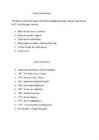
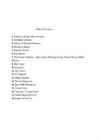
Table
of Contents
1. American Literature, dates and names
2. Christopher Columbus
3. Puritans, Of Plymouth Plantation
4. The Age of Reasons
5. Benjamin Franklin
6. Noah Webster
7. The Romantic Traditions – James Cooper, Washington
Irving, Emily Dickinson, Walter Whitman
8. Mark Twain
9. Henry James
10. Jack London
11. F.S Fitzgerald
12. William Faulkner
13. The Great Depression
14. Ernest Miller Hemingway
15. Science Fiction
16. ”True Love” by Isaac Asimov
17. Franklin Delano Roosevelt
18. Analysis of The Year
 50 punkti
Autor soovib selle materjali allalaadimise eest saada 50 punkti.
50 punkti
Autor soovib selle materjali allalaadimise eest saada 50 punkti.
 ~ 22 lehte
Lehekülgede arv dokumendis
~ 22 lehte
Lehekülgede arv dokumendis
 2009-04-19
Kuupäev, millal dokument üles laeti
2009-04-19
Kuupäev, millal dokument üles laeti
 36 laadimist
Kokku alla laetud
36 laadimist
Kokku alla laetud
 0 arvamust
Teiste kasutajate poolt lisatud kommentaarid
0 arvamust
Teiste kasutajate poolt lisatud kommentaarid
 synne
Õppematerjali autor
synne
Õppematerjali autor
 annaabi.ee







Kõik kommentaarid