RTH
se
LLE
o
O
A
urpo
RT T
E
A
ife's P
H
akening t
EW
w
A
ECK
Your L
N
A
CONTENTS
Chapter One
The Flowering of Human
Consciousness – 6
Evocation..................................................................................................6
The
Purpose of This Book........................................................................8
Our Inherited Dysfunction........................................................................10
The Arising New consciousness..............................................................12
Spirituality and
Religion ..........................................................................14
The Urgency of Transformation...............................................................16
A New
Heaven and a new Earth...............................................................18
Chapter Two
Ego: The
Current State of Humanity – 19
The Illusory Self......................................................................................20
The
Voice in the Head.............................................................................22
Content and Structure of the Ego.............................................................24
Identification with Things........................................................................25
The
Lost Ring...........................................................................................26
The
Illusion of Ownership........................................................................29
Wanting: The Need for More....................................................................31
Identification with the
Body .....................................................................33
Feeling the Inner Body.............................................................................34
Forgetfulness of Being.............................................................................35
From Descartes's Error to Sartre's Insight...............................................36
The
Peace that Passes All Understanding................................................37
Chapter Three
The
Core of Ego – 39
Complaining and Resentment..................................................................40
Reactivity and Grievances.......................................................................42
Being Right,
Making Wrong ....................................................................43
In Defense of an Illusion..........................................................................44
Truth : Relative or Absolute?....................................................................45
The Ego Is Not Personal..........................................................................46
War Is a Mind-set.....................................................................................48
Do You Want Peace or
Drama ? ...............................................................49
Beyond Ego: Your True
Identity .............................................................50
All
Structures are Unstable.......................................................................51
The Ego's Need to
Feel Superior ..............................................................52
Ego and Fame...........................................................................................52
Chapter Four
Role -
Playing : The Many Faces of the Ego - 54
Villain, Victim, Lover...............................................................................55
Letting Go of Self-Definitions..................................................................56
Pre-established Roles................................................................................57
Temporary Roles.......................................................................................58
The Monk with Sweaty Palms..................................................................59
Happiness as a Role Vs. True Happiness..................................................59
Parenthood: Role or
Function ? ................................................................60
Conscious Suffering.................................................................................63
Conscious Parenting.................................................................................64
Recognizing Your
Child ...........................................................................65
Giving Up Role-playing............................................................................66
The Pathological Ego................................................................................68
The Background Unhappiness...................................................................70
The Secret of Happiness............................................................................71
Pathological
Forms of Ego........................................................................73
Work – with and
Without Ego...................................................................75
The Ego in
Illness ......................................................................................77
The Collective Ego....................................................................................77
Incontrovertible Proof of Immortality.......................................................79
Chapter
Five The Pain-Body - 80
The Birth of Emotion.................................................................................81
Emotions and the Ego................................................................................83
The Duck with a Human Mind..................................................................85
Carrying the Past.......................................................................................85
Individual and Collective...........................................................................87
How the Pain-Body Renews Itself.............................................................89
How the Pain-body Feeds on Your Thoughts............................................90
How the pain-Body Feeds on Drama.........................................................91
Dense Pain-bodies......................................................................................93
Entertainment, the Media, and the Pain-Body...........................................94
The Collective
Female Pain-body..............................................................95
National and Racial Pain-bodies................................................................97
Chapter Six
Breaking Free - 99
Presence.....................................................................................................100
The
Return of the Pain-Body.....................................................................102
The Pain-body in
Children .........................................................................103
Unhappiness...............................................................................................105
Breaking Identification with the Pain-body...............................................106
“Triggers”...................................................................................................108
The Pain-Body as an Awakener..................................................................110
Breaking Free of the Pain-Body.................................................................112
Chapter Seven
Finding Who You Truly Are - 113
Who you Think you are..............................................................................114
Abundance..................................................................................................116
Knowing Yourself and Knowing About Yourself.......................................117
Chaos and
Higher Order .............................................................................118
Good and Bad.............................................................................................119
Not Minding What Happens.......................................................................120
Is That So?..................................................................................................121
The Ego and the
Present Moment .............................................................122
The Paradox of Time...................................................................................124
Eliminating Time.........................................................................................125
The Dreamer and the
Dream .......................................................................127
Going Beyond Limitation...........................................................................128
The Joy of Being.........................................................................................130
Allowing the Diminishment of the Ego......................................................130
As Without, So
Within ................................................................................132
Chapter Eight
The
Discovery of Inner
Space - 135
Object Consciousness and Space Consciousness.......................................137
Falling Below and Rising
Above Thought .................................................138
Television ...................................................................................................139
Recognizing Inner Space...........................................................................141
Can You
Hear the Mountain
Stream ? .......................................................143
Right
Action ..............................................................................................144
Perceiving Without Naming......................................................................144
Who Is the Experiencer? ..........................................................................146
The Breath.................................................................................................147
Addictions..................................................................................................149
Inner Body Awareness...............................................................................150
Inner and
Outer Space................................................................................151
Noticing the Gaps.......................................................................................153
Lose yourself to
Find Yourself....................................................................153
Stillness.......................................................................................................154
Chapter Nine
Your Inner Purpose - 155
Awakening ..................................................................................................156
A Dialogue on Inner Purpose.....................................................................158
Chapter Ten
A New Earth - 167
A
Brief History of Your Life......................................................................169
Awakening and the Return
Movement .......................................................170
Awakening and the Outgoing Movement...................................................172
Consciousness............................................................................................174
Awakened Doing........................................................................................175
The Three Modalities of Awakened Doing................................................176
Acceptance.................................................................................................177
Enjoyment..................................................................................................177
Enthusiasm .................................................................................................180
The
Frequency -holders..............................................................................183
The New Earth Is No Utopia.....................................................................184
Notes...........................................................................................................186
About the
Author ........................................................................................189
CHAPTER ONE
THE FLOWERING OF HUMAN CONSCIOUSNESS
EVOCATION
Earth, 114 million
years ago, one morning just after sunrise: The
first flower ever to appear on the
planet opens up to receive the rays of the sun. Prior to
this momentous event that heralds an evolutionary transformation in the life
of plants, the planet had
already been covered in vegetation for millions of
years. The first flower probably did not survive for long, and flowers must
have remained
rare and isolated phenomena,
since conditions were most
likely not yet favorable for a widespread flowering to occur. One day,
however , a critical threshold was reached, and suddenly
there would have
been an explosion of color and scent all over the planet – if a perceiving
consciousness had been there to witness it.
Much
later , those delicate and fragrant beings we
call flowers would
come to play an
essential part in the
evolution of consciousness of
another species.
Humans would increasingly be drawn to and fascinated by
them . As
the consciousness of human beings
developed , flowers were most likely the
first
thing they
came to value that had no utilitarian purpose for them, that is
to say, was not linked in some way to
survival . They
provided inspiration to
countless artists, poets, and mystics.
Jesus tells us to contemplate the flowers
and learn from then how to
live . The
Buddha is said to have
given a “silent
sermon”
once during which he held up a flower and gazed at it. After a
while , one of those present, a monk called Mahakasyapa, began to smile. He
is said to have been the only one who had understood the sermon. According
to legend, that smile (that is to say, realization) was handed down by twenty-
eight successive masters and much later
became the
origin of Zen.
Seeing beauty in a flower
could awaken humans, however briefly, to
the beauty that is an essential part of their own innermost being, their true
nature . The first recognition of beauty was one of the most significant
events in the evolution of human consciousness. The feelings of joy and love are
intrinsically connected to that recognition. Without our fully realizing it,
flowers would become for us an expression in form of that which is most
high, most sacred, and ultimately formless within ourselves. Flowers, more
fleeting, more ethereal and more delicate
than the plants out of which they
emerged, would become like messengers from another realm, like a
bridge between the world of
physical forms and the formless. They not only had a
scent that was delicate and pleasing to humans, but also
brought a fragrance
from the realm of
spirit . Using the word “enlightenment” in a wider
sense than the conventionally accepted one, we
could look upon flowers as the
enlightenment of plants.
Any life-form in any realm – mineral, vegetable, animal, or human –
can be said to undergo “enlightenment.” It is, however, an extremely rare
occurrence since it is more than an evolutionary progression: It also implies
a discontinuity in its development, a leap to an entirely
different level of
Being and, most
important , a lessening of materiality.
What could be heavier and more impenetrable than a rock, the densest
of all forms? And yet some rocks undergo a
change in their molecular
structure,
turn into crystals, and so become transparent to the
light . Some
carbons, under inconceivable heat and
pressure , turn into diamonds, and
some
heavy minerals into
other precious stones.
Most crawling reptilians, the most earthbound of all creatures, have
remained unchanged for millions of years. Some, however, grew feathers and
wings and turned into birds, thus defying the
force of gravity that had held
them for so long. They didn’t become better at crawling or walking, but
transcended crawling and walking entirely.
Since time immemorial, flowers, crystals, precious stones, and birds
have held
special significance for the human spirit. Like all life-forms, they
are, of
course , temporary manifestations of the underlying one Life, one
Consciousness. Their special significance and the
reason why humans feel
such fascination for and affinity with them can be attributed to their ethereal
quality .
Once there is a certain
degree of presence, of
still and
alert attention in human beings’ perceptions, they can sense the divine life
essence , the one
indwelling consciousness or spirit in every creature, every life-form,
recognize it as one with their own essence and so love it as themselves.
Until this happens, however, most humans see only the outer forms, unaware of the
inner essence, just as they are unaware of their own essence and identify only
with their own physical and psychological form.
In the
case of a flower, a crystal, precious stone, or bird, however,
even someone with
little or no Presence can occasionally sense that there is more
than the mere physical existence of that form, without knowing that this is
the reason why he or she is drawn
toward it, feels an affinity with it. Because
of its ethereal nature, its form obscures the indwelling spirit to a lesser
degree than is the case with other life-forms. The exception to this are all
newborn life-forms – babies, puppies, kittens, lambs, and so on. They are
fragile, delicate, not yet firmly established in materiality. An innocence, a
sweetness and beauty that are not of this world still shine
through them.
They delight even relatively insensitive humans.
So when you are alert and contemplate a flower, crystal, or bird
without naming it mentally, it becomes a window for you into the formless.
There is an inner opening, however slight, into the realm of spirit. This is
why
these three “en-lightened” life-forms have played such an important part
in the evolution of human consciousness since
ancient times ; why, for
example, the jewel in the lotus flower is a central symbol of Buddhism and a
white bird, the dove, signifies the Holy Spirit in Christianity. They have been
preparing the
ground for a more profound
shift in planetary consciousness
that is destined to take
place in the human species. This is the
spiritual awakening that we are
beginning to witness now.
THE PURPOSE OF THIS BOOK
Is humanity
ready for a transformation of consciousness, an inner
flowering so radical and profound that compared to it the flowering of
plants, no
matter how beautiful, is only a pale reflection? Can human beings
lose the
density of their conditioned mind structures and become like
crystals or precious stones, so to
speak , transparent to the light of
consciousness? Can they defy the gravitational pull of materialism and
materiality and
rise above identification with form that keeps the ego in
place and condemns them to imprisonment within their own personality?
The possibility of such a transformation has been the central message
of the great wisdom teachings of humankind. The messengers – Buddha,
Jesus, and
others , not all of them
known – were humanity’s
early flowers.
They were precursors, rare and precious beings. A widespread flowering was
not yet possible at that time, and their message became largely
misunderstood and often greatly distorted. It certainly did not transform
human
behavior , except in a small minority of people.
Is humanity more ready now than at the time of those early teachers?
Why should this be so? What can you do, if
anything , to bring about or
accelerate this inner shift? What is it that characterizes the old egoic state of
consciousness, and by what signs is the new emerging consciousness
recognized? These and other essential questions will be addressed in this
book. More important, this book itself is a transformational
device that has
come out of the arising new consciousness. The ideas and concepts
presented
here may be important, but they are secondary. They are no more
than signposts pointing toward awakening. As you read, a shift
takes place
within you.
This book’s main purpose is not to add new information or beliefs to
your mind or to try to convince you of anything, but to bring about a shift in
consciousness; that is to say, to awaken. In that sense, this book is not
“interesting”. Interesting
means you can
keep your distance, play
around with ideas and concepts in your mind, agree or disagree. This book is about
you. It will change your state of consciousness or it will be meaningless. It
can only awaken those who are ready. Not everyone is ready yet, but many
are, and with each
person who awakens, the momentum in the collective
consciousness grows, and it becomes easier for others. If you don’t
know what awakening means, read on. Only by awakening can you know the true
meaning of that word. A glimpse is enough to initiate the awakening
process ,
which is irreversible. For some, that glimpse will come while reading this
book. For many others who may not even have realized it, the process has
already begun. This book will help them recognize it. For some, it may have
begun through loss or suffering; for others, through
coming into contact with
a spiritual
teacher or teaching, through reading The
Power of Now or some
other spiritually
alive and
therefore transformational book – or any
combination of the above. If the awakening process has begun in you , the
reading of this book will accelerate and intensify it.
An essential part of the awakening is the recognition of the
unawakened you, the ego as it thinks, speaks and
acts , as well as the
recognition of the collectively conditioned
mental processes that perpetuate
the unawakened state. That is why this book
shows the main aspects of the
ego and how they operate in the individual as well as in the collective. This
is important for two related reasons: The first is that unless you know the
basic mechanics
behind the workings of the ego, you won’t recognize it, and
it will trick you into identifying with it
again and again. This means it takes
you over, an impostor pretending to be you. The second reason is that the act
of recognition itself is one of the
ways in which awakening happens. When
you recognize the unconsciousness in you, that which
makes the recognition
possible is the arising consciousness, is awakening. You
cannot fight against
the ego and win, just as you cannot fight against darkness. The light of
consciousness is all that is
necessary . You are that light.
OUR INHERITED DYSFUNCTION
If we look more deeply into humanity’s ancient religions and spiritual
traditions, we will find that underneath the many surface differences there
are two core insights that most of them agree on. The
words they use to
describe those insights
differ , yet they all point to a twofold fundamental
truth. The first part of this truth is the realization that the “normal” state of
mind of most human beings contains a
strong element of what we might call
dysfunction or even madness. Certain teachings at the
heart of Hinduism
perhaps come closest to seeing this dysfunction as a form of collective
mental illness. They call it maya, the veil of
delusion . Ramana Maharshi,
one of the
greatest Indian sages, bluntly
states : “The mind is maya.”
Buddhism uses different terms. According to the Buddha, the human
mind in its normal state generates dukkha, which can be translated as
suffering, unsatisfactoriness, or just
plain misery. He sees it as a
characteristic of the human
condition . Wherever you go, whatever you do,
says the Buddha, you will encounter dukkha, and it will manifest in every
situation sooner or later.
According to Christian teachings, the normal collective state of
humanity is one of “original sin.” Sin is a word that has been greatly
misunderstood and misinterpreted. Literally translated from the ancient
Greek in which the New Testament was written, to sin means to miss the
mark, as an archer who misses the target, so to sin means to miss the point of
human existence. It means to live unskillfully, blindly, and thus to suffer and
cause suffering. Again, the
term , stripped of its cultural baggage and
misinterpretations, points to the dysfunction inherent in the human
condition.
The achievements of humanity are impressive and undeniable. We
have created sublime works of music, literature, painting, architecture, and
sculpture. More recently, science and technology have brought about radical
changes in the way we live and have enabled us to do and create things that
would have been considered miraculous even two hundred years ago. No
doubt: The human mind is highly intelligent. Yet its very intelligence is
tainted by madness. Science and technology have magnified the destructive
impact that the dysfunction of the human mind has upon the planet, other
life-forms, and upon humans themselves. That is why the history of the
twentieth century is where that dysfunction, that collective insanity, can be
most
clearly recognized. A further
factor is that this dysfunction is actually
intensifying and accelerating.
y
t
y
t
y.
y
:
ars,
on
en
of
to
m
ans
B
or
its
ent
ant
cal
ce of
m
the
left the
ol
one
also
ent
ar or
tha
t the
ur
ng
ss
be
r and
l w
s and
art of
e, and
um
ed no
guns,
ed
y
n
y also
r pl
rvi
of
tw
r
Stalin l w
is the
m
clini
de
com
tur
H
sters.
ne
aim
but
he
tive in
ind
soni
can onl
ve to
ur
crue
en
sa
se
e tha
r of
othe
ctedne
y. It is to a
achi
vastation
m
as onl
ed a vi
rter of
or
civi
tions,
de
unde
m
poi
ha
it m
be
al di
d invent
illions
e
struc
di
on
any. The
sh
y-first cent
cked,
stor
ere the
d
m
d
m
de
or
s w
m
ur
ni
an
r life-for
he
tur
ha
, m
de
ho
m
ni
to realize tha
ent
and
oul
tive and
erm
ty w
avery, tor
e in the
a qua
cal reasons.
bs,
m
to
ests and
s;
ir conne
na
ind
um
as over in 1918,
the
t thi
e w
een na
et U
Spa
n
on
tw
hum
othe
t
lies at the
an hi
s w
er, ha
ani
sl
so
d unc
ogi
tw
he
si
for
elgi
ar w
any
en
opl
rise
azi G
on
the
estruc
w
d
ol
ough
an m
bom
tha
hum
ty to com
elligenc
B
the
the
w
upon
m
d
Sovi
w
o
ing
y farm
of
inue
ty tha
hum
D
po
pe
h as the
a
ha
w
nsi
ide
be
oul
ars be
h as the
televi
of
ant
ni
agnosi
n thr
hum
also
Int
on
ss
r of
w
t in N
int
licting
oduc
rt of
y of
di
ope
e and
n the
nsi
and
kno
w
, suc
bodi
in the
suc
s on
tion
pr
insa
re for
and
be
ng
y, as
y
aus
r tha
gas.
he
lled
adne
ans
ide
s”
am
w
ignor
t, if cont
stor
the
in 1914.
si
ous
, but
ehe
ough
oc
unc
elligent
W
m
the
licts,
C
inui
gen-
the
hi
cal pr
de
stor
ne
son
pr
ki
d
num
ol
sf
are inf
als in factor
tha
ing,
ud.
ily ne
om
an
hum
y thr
H
oxy
m
or
of
greater pa
ogi
e out
hi
religi
y int
poi
genoc
traitor
e in
ans
m
ings
di
l conf
da
of
vi
If the
be
thol
ok
the
an
engi
y, the
m
red.
ani
each othe
ghl
inc
ha
be
hum
ttle
ur
t onl
and
and
the
an
de
t is cont
of
e the
ss.
hi
tion
and
arfare in Franc
d
erna
ur
lective dy
t hum
tion
a pa
ar br
and
of
es,
hum
iles of
and
an
ir fellow
s of
e regi
tha
ent
riven by greed,
tion.
festations
titut
adne
licted for
ers,
atch the
nds
bus
h w
e ha
e. Li
cent
ed no
tions
st in be
ow
m
ror
bl
the
spi
ror
as m
col
e tha
struc
ani
m
le hum
ons,
ld W
oug
ha
hum
for
si
the
y di
ina
aller int
ted,
de
rsi
struc
cons
ng
or
e inf
ever, the
ies,
hor
vi
of
lusi
m
e hor
the
enc
air. D
pe
y of
oughout
l com
e thr
of
erm
ed to w
enc
w
er R
ol
tion
illion
nd
The
bl
sm
ation w
t aba
ans
n de
stor
a si
d de
fear , greed,
ho
in
hm
and
w
lective m
thr
ol
e at the
erna
ever be
ext
ene
ct of
lf – the
flam
m
end
ha
aka
less
y ne
s no
ed vi
of
First W
ir o
by
K
a hi
es
or
N
y
int
s,
In static trenc
clearly
illion.
ass
nt
col
ranoi
s look
eans,
ten
y the
m
s popul
e onl
ha
t itse
al life; ill-treatm
e, hum
he
an condi
ent
The
ead vi
d to
gain a few
ed.
ng.
“class
r aspe
m
stor
renc
ss!
B
unspe
the
W
ss
oc
The
spr
the
arine
vor
ed m
c pa
nd:
at the
ry’
ane
hol
igur
nni
the
ecede
ani
t in t
hi
otivated
cur
ing
ide
fered m
year 1914,
y
adne
rishe
vi
hi
sf
gi
ath
ough
illion
the
ed in count
adne
no
pr
pl
w
hum
oni
m
oc
w
suf
the
onl
subm
m
pe
sur
be
di
effect , so
be
de
hundr
thr
m
or
di
dur
count
m
A
un
the
and
rivers ,
the
resul
the
large ext
case
chr
s
l
r
t
l
ief
s,
ng
d
e
re
ss
ay
lves
ngs
lly
e a
ess
m
si
on
age.
of
als,
go.
fect.
the
– hi
br
re for
tha
inde
erna
e
m
indu
tribe
rsona
othe
ed for
se
sa
it can
e m
leadi
si
m
on
com
m
de
ut
ide
ies”
otivating
of
ne
the
r
reality ,
, of
lf-im
goodne
e
o account
the
com
al de
– w
s of
In H
m
de
lusi
l teachi
gh-
state
e ext
w
tion,
Fear, greed,
n:
ent
ith a few
ng
cal m
tions,
to be
ent
int
ss.
lict in pe
hi
’s se
the
ne
tua
the
m
tion
are the
ritua
ng
ceed in unl
rt of
erge. B
nobl
ir inne
ithi
, w
ogi
na
y your
em
ng
ng
rception
tion.
your
cha
re the
ne
and
actices are usua
nc
by
conf
tisf
but
spi
e and
iousne
chol
een
Tryi
taki
good
nt
pe
lective de
unc
sha
sa
l pr
ity, one
sf
s.
bl
to em
in
red
pt to
e in the
arries w
an condi
rceived “ene
tw
of
r of
ately suc
nt
be
by findi
ss
es
ng
lly insa
psy
be
essa
your
et every si
ng
ritua
dy
enda
it is still pa
lf-enha
ng
ithout
tions
: the
s pe
e
m
tim
se
l ide
inspi
ing c
hum
ina
inc
an consc
in
erpr
aki
ated col
but
cha
ght
num
spi
the
l factor
e attem
w
arred by a funda
t hi
enc
nt
fear and
t fear, greed,
se
t ul
of
lly
ior
the
rim
ol
of
cause
isi
ans
l tradi
ep-
A
t of
m
eptua
t goodne
al cha
na
opl
an be
insi
hum
C
er are the
tion
of
good,
e of
w
vi
filled.
tha
igi
S
is m
stor
m
ing.
those
roo
canno
ent
pe
ritua
tur
of
ard.
e are spe
ate causa
n
ES
po
cause
ever, tha
ut
like a com
s is be
’s conc
ing
m
, or
any pr
ake pl
ind
cond
lty agains
w
and
to be
he
spi
na
the
, you
ver be
w
t w
tim
SN
m
a di
m
an be
you
very hum
ation
re. B
to the
Thi
ng
sm
w
y m
U
tha
ch is a de
si
ul
rarefied for
one
ithout
t e
m
crue
re for
s a se
si
hi
avor
ss.
allow funda
uni
ns
IO
and
o the
or
arfare
also
the
d to rid you
an ne
ha
de
of
t the
sounds
m
The
ected out
de
t c
w
ng
ppe
SC
int
w
about
tion
gne
ing
ng
by tryi
and
om
ss.
N
ons
e and
oj
but
ough
iousne
le and
ni
tion t
al” state of
ght
arise the
nd
O
es,
ing
si
e tha
unc
tion
each hum
ethi
ven’t gone
he
C
t ha
m
enc
pr
hi
de
to realize, ho
sf
of
earth – w
C
an be
n you,
ha
unc
religi
s –
cal transf
ol
ss
br
unc
w
iousne
and
ogi
fear and
e subt
of
sf
s insi
w
be
ol
y
lf. Thr
er are no
tant
dy
sf
ind
y ha
e good
w
or
ithi
som
y
EW
dy
ient
“nor
ne
e vi
y
se
less hol
dy
m
of
if
N
thi
d
iousne
ide
The
por
t the
com
w
. The
po
yet it is an ende
ft in consc
a m
a strengt
stor
consc
for
G
t our
of
a radi
rem
d action
ss.
trates w
t onl
ps.
your
ttom
ul
tter hum
t be
hi
int
t anc
ba
onsc
and
de
n the
erge
ISIN
ext
ervals.
re for
be
tion,
pr
nt
Fear, greed,
e and
no
illus
R
– tha
lity of
ons,
e and
It is im
to let go
si
The
Mos
isgui
ithi
cessf
or
to do,
or
em
iousne
ue
ever, out
bi
n unc
id i
ces no
e, a bo
er are no
unc
do
opl
de
E A
ght
or
w
ng
re is a shi
sf
m
t is already
y
ir state of
bl
ou
ow
acts of
ow
luc
for
religi
relationshi
pe
to m
m
po
created by the
lies w
tell us
unsuc
and
good
thi
the
dy
for
Y
tha
onl
consc
clearly
reality – create a ne
the
the
TH
insi
H
call it the
possi
e
y
e
t
e
, it
e,
ss.
an
ps
as
n
m
is
ss
nt
a
the
of
are
of
tly
led,
tred
een
to
sm
d to
d in
ienc
m
rha
w
. H
rare
n,
os
que
cam
of
ought
cam
m
adne
A
sa
na
of
ty, the
lity
d tha
e. The
tal and
de
ed the
lective
r tha
ha
tw
is called
s use
ni
si
m
revi
ls.
nt
the
hi
iousne
t you
bi
, be
be
the
uddhi
n m
as pe
one
sa
ed,
col
y br
y
art, sc
uddha
Those
of
ha
stenc
ere
subse
t poi
ty.
rathe
e and
ation
dua
a, w
of
of
e
consc
possi
ere a vi
use
w
erful
ere adde
cul
the
ni
ell as be
m
in B
r term
vi
t abut
m
ng
exi
ve
The
y
by
w
ere recor
w
tha
of
si
enc
so
or
ks of
its ow
for
ng.
of
ering.
spok
the
an
y w
po
insa
vi
ol
on.
and
or
indi
title B
.” A
erged in C
hi
y w
arisi
on
y
ngs
ere reflections
ngs
vi
e as w
tion,
in Indi
to
ere ridi
w
ay out
the
di
all life, the
ion,
e C
ensi
live. See w
ed
y, the
ell as
e
of
opl
ith and
s transf
are othe
d one
rs em
in the
, the
The
e and
rs w
w
of
religi
vat
t its w
m
yet the
ng
ng
unc
nt
al” hum
sf
ter the
ng
se
pl
rt of
e
di
ative flow
m
tabl
w
any thi
but
Teachi
cam
ss
, thi
you
m
the
m
eni
e to a few
vi
ne
een pe
ify w
akene
Tao T
w
aries.
w
poi
, and
m
ak
years ago
n
as
ngs,
, be
sa
nt
ty is no
n dy
he
cour
teache
tw
cam
d teache
ne
ind,
por
ho
“nor
m
Ine
th si
s even as the
ies,
lves pa
an endi
also)
it is sal
aw
ent
aw
ani
s teachi
ur
se
be
em
the
y
the
bo
the
m
al one
the
d ide
sm
hi
e. A
ng.
aries,
d as gods.
an m
sus,
its ow
e clarity. La
“the
akene
ritten, t
ty, is of
nc
are of
e case
ext
ons
cent
l teachi
e of
about
ent
si
ng
Je
and
hum
of
already
ut
d of
ni
t, a first tent
“Look
m
for
por
ppe
m
akeni
na
hum
e the
ng
vi
ithi
uddhi
e coul
of
ion
of
lived 2,600
eans
ane
id,
ght
em
igi
shi
tion
tion
ende
ir cont
ho
ver w
Som
large
m
aw
although or
cam
ingi
e di
w
opl
ngs
rat
ent
s e
n insa
pl
in som
ver the
or
a
funda
, w
absol
s early aw
the
y sa
ng.
w
o the
or
an
cont
O
br
m
es in B
the
create.” The
ngs,
to
s pe
Libe
ith
transc
evem
t yet ready
the
nd be
the
rtha
ty’
’s ow
to
eted,
even
e
The
lective ni
ir
es.
tion
teachi
ation.
recogni
s recogni
e left a recor
l book
ith
rstandi
of
tred,
etim
m
ani
and
you
hum
erpr
ipl
e to be
unc
ons,
stem
or
it w
. Buddha
H
on.
col
as no
the
sc
w
sf
ted a
tead of
and
fering.
the
w
m
u.
ritua
ze one
erge on
spok
nt
ir teachi
ha
som
st, thi
hum
aling
n
lusi
the
isi
do
dy
stor
Ins
. In the
hi
by
isunde
ons
suf
ransf
, but
fering
ld w
religi
pa
a Siddha
sa
o Tz
ir di
he
de
ay.
or
rt of
m
rs cam
lief sy
to
e and
ent
s t
am
ho
r of
from
w
The
the
so
ces.
be
(and
of
greatest achi
ogy
of
to em
suf
w
pa
ng
al m
ere di
thi
stant
aut
the
ound spi
ls the
of
othe
enc
as La
religi
of
ng
ng
he
ry
rstood
ent
nd
for
a realization
ol
es,
ngs
enm
by the
end
The
di
To recogni
gun
dua
the
thi
yond
ed t
The
A
rations.
ted and
m
lled;
ty, w
ng
ogi
ight
ribe
erred upon
e w
t pr
nni
vi
no
ni
e vi
sc
technol
first w
e, ano
m
os
gi
d be
fering,
ng,
akeni
w
cessa
isunde
stor
riting
d
ki
ay be
fyi
ough
or
fferent
ol
teachi
enl
is the
de
or
In the
called G
the
conf
tim
na
m
be
ha
indi
suf
doi
aw
sho
ne
m
gene
di
w
ha
funda
or
w
insa
uni
thr
m
di
ide
ir
t
s
a
”
n
t
y
s
s
.
ir
y
s
w
lves
ho
no
e. It
ent
eval
in
sm
for
ver
ain
een
t of
se
the
and
ithi
in hi
to
ne
god.
the
overy,
Thi
la
the
ough
d the
onl
hool
tw
m
ho
ed
ls w
h,
edi
s,
lective
tion
rceive it
w
h
lves tha
ovem
sc
ng.
uddhi
and
tility by
on,
ere ne
sc
rem
the
ough
w
od”
our
ir cor
m
- a se
“
dua
se
abba
es,
col
to
of
e be
“G
trated in the
stor
vi
m
l Trut
m
K
regaine
t case
ake the
thr
or
e to pe
t Trut
tur
It is thr
os
rs w
ep
ng
stem
ade
as reduc
rpe
di
or
y a redi
l teachi
ith layers upon
ten hos
religi
those
s at the
n in B
ons
be
de
lized
fferenc
d m
ity
lievers”
n the
eptua
s”
na
and
nt
pe
abl
tha
he
of
be
n m
e w
y god”
ne
arisi
ithi
t onl
igi
ay w
ation.
in m
of
di
lief sy
m
eds
of
conc
ons.
hool
sm
e
or
tream
eptua
e in early and
di
zogc
lief struc
and
m
religi
ir num
the
y coul
ir ide
ill be
rong
Ma
eabl
de
en rare indi
or
the
m
s “
ne
layers of
pse
“sc
ed no
asi
D
d aw
ains
in the
a be
still shi
w
eligi
nt
the
al be
cion
ajor
conc
, the
the
“w
lling.
p a
t non-
n r
en,
of
stenc
H
y di
m
although
. The
ct on
e, som
ons
ng
m
shi
nt
glim
ays be
w
ese
ent
m
m
pa
or
are of
vi
or
unna
insa
t you
or
d
realized w
tha
om
n and
o exi
on,
ike
r transf
the
fine
m
ngs,
y poi
so
ir o
w
light
ith suspi
nl
t the
im
aw
t ha
de
ha
ribe
t repr
, Ze
nd w
ve alw
sc
the
the
e int
and
U
inne
to the
ver tim
alized
d religi
ough
all the
layers upon
religi
sm
lievers”
tified in ki
te, and
ever, tha
and
and
tha
ic
lastic. The
ed w
es.
s tha
m
thus
l teachi
ficant
ishe
ini
ch the
ss
of
te of
hi
w
k of
and
ough
re ha
en
or
ons
cam
am
indui
ew
ent
na
gni
ity. O
for
N
lf. Thr
. To de
m
lization
y
and
igi
d access
IO
lves jus
inf
lieve in a
nt
ew
Isl
erarchi
si
ajor
dl
establ
y realize tha
se
“nonbe
G
e are already
se
in spi
iousne
ovem
h to w
y, the
or
ly, thr
fication
ikely, ho
religi
ere vi
hi
e ha
of
m
o be
poi
ysticism
a in H
ere iconoc
eptua
w
m
m
rigi
ELI
opl
rong”
l, the
m
stor
l fram
those
the
The
ajor
ensi
m
nt
m
the
opl
any
nse
” the
the
d t
realization
R
yet…
Trut
ons
ous
ve at
least already
hi
s w
e o the
e of
in
s or
ve
the
too
D
on.
se
rs,
w
eda
conc
the
er of
pe
N
ny pe
rs “w
eterna
ou ha
the
It is unl
ha
ft in consc
eptua
and
zed
e
ism
hool
ng
si
w
ha
rol
y sa
and
ever di
s an int
hool
of
A
t y
w
som
n all m
ni
t of
religi
Ma
religi
“othe
on,
onc
aita V
sc
os
d
pha
ity of
to
ss
cam
Y
ir
false othe
oughout
c
T
tha
you
ithi
ticism
se
yet…
ho
ch all religi
he
dv
ade
m
LI
t is the
ss?
the
ly the
s,
etation.
ess
ed a shi
hi
ough
e case
ishe
d w
nos
ty, Suf
de
em
teric sc
ative po
inor
A
ha
e the
nt
age. The
nd
religi
d t
, A
the
iousne
A
ne
erpr
lf. Thr
Thr
G
m
lves be
W
lity and
nc
” and
ies,
al idol
ngs
eso
or
enough
se
ITU
iousne
m
im
e of
nt
se
rienc
w
ism
t of
all m
reque
n
ard w
istiani
establ
onsc
ent
m
isi
re unl
n use
velope
in som
hr
s reason
m
ritua
enha
“right
ene
inf
ow
m
na
still shi
m
the
your
expe
tow
the
de
but
is ho
C
Juda
Mos
layers of
thi
the
teachi
those
transf
a sm
large
unc
the
effective.
SPIR
consc
spi
l
y
d
t
l
s
y
t
l
of
’t
to
ted
m
lity
os
if
II
ill
the
an
ritua
the
k at
etely
oul
ng
lized
rtua
e to
tion
ine
epl
w
pl
on
ina
m
l
talk and
nd one
de
isdom
s and
ng no
trina
spi
ake your
ssi
y don
y w
.
Paul
iona
ritua
. In the
si
w
de
ch,
n certain
y realize
lieve but
term
e
ssi
also
ions
m
w
dom
d by the
ritua
stem
l tradi
is arisi
spi
ent
d a vi
ithi
ing, a
John
are abl
be
de
or
itne
titut
ir doc
are from
e are stuc
st, the
titut
est, the
n out
stern
The
ss,
ind-
chur
ons
ritua
n,
m
e but
ake you
e you
are com
e posse
ity. The
exactly as the
ven no
of
ins
eatene
W
ch ha
arm
Ea
re w
ins
the
or
opl
y
nt
pa
ng
velopm
ve a spi
lief sy
lves.
t you
n
t m
nk)
n spi
m
f you
pe
ni
gi
ient
be
se
ha
in tur
e a
s tim
ous
in sol
artw
ve arise
stant
iousne
sting
de
, even w
even
w
h as Pope
l religi
d
m
s,
rde
e
s no
of
ir ide
w
d by the
ous”
as the
di
till do, e
and
no
t ha
anc
ir ow
ith w
Thi
e s
exi
es
felt thr
t is he
suc
tiona
rigi
n the
com
ind. W
at thi
e religi
ill ha
e cut
to be
lieve (thi
consc
ale ope
istian chur
up
tione
ut
tha
w
t-too-
lity even in m
cially in the
the
hr
ss.
nc
B
e. I
ss,
of
n the
ithi
rs.
be
ss
ir m
h – doe
of
the
In
fact , the
or
, and
otect the
be
irely ne
C
ng
nne
ngs
tradi
Som
rs w
m
no
ritua
erarchi
a, and
ithi
the
m
he
ny “religi
lux
y claim
you
nd som
ation
e, espe
t
stand ha
to do
iousne
n t
iousne
e trut
pth w
m
es of
spi
large-sc
ere sa
e you.
c
ope
inf
ers of
n w
ng
ith o
for
ego.
othe
ut
liefs is.
thought
ess
t. A
re the
w
y, i
, the
pt to pr
l teachi
nl
in the
or
tur
of
de
. A
he
’t jus
lenc
an
, dogm
dde
thi
the
ss;
be
ity, the
lf. Ma
lized hi
eivabl
gogue
low
consc
consc
nt
ith
. U
tha
kets of
m
yond
es is an ent
w
dn
you
gns of
gns
ritua
to
m
o sa
of
absol
se
and
y si
w
ind)
or
fol
s no
eract w
attem
transf
struc
iona
onc
of
the
tur
es,
ess
re si
due
for
t is hi
nt
be
t is t
those
ide
h
ckl
spi
iousne
ir m
ou f
coul
est si
syna
over the
the
r of
titut
lux
ess
tur
ou
unl
re a
s a
sc
ha
the
be
ith
state of
nd i
e of
n your
ious
ir
eyes ,
ays poc
en inc
are ha
look
fication
your
(the
thought
ight
also
lity, the
of
ins
struc
d qui
he
w
pth tha
y di
inf
tur
o
ithi
te trut
of
lling y
sl
ell a
t of
but
ld a
liefs, t
consc
w
onsc
de
ous
oul
num
to
ed
ensi
si
the
suppr
ve be
all cul
lity. Y
l book
s w
l de
ith your
or
e
nt
w
regard as the
na
int
in the
ons, t
on
equa
n ki
ritua
ere alw
l” you
w
to
y w
ing
bl
int
ritua
a
ons,
na
w
he
ir be
ne
t the
y
itations
ritua
ification
e as the
rong
spi
out
religi
d ha
eligi
ue
igi
ritua
he
t you
re w
even the
nt
ecede
and
ha
liefs)
ensi
w
ted of
una
m
ith thought
spi
t, the
or
n t
the
lim
tified i
oul
ne
ent
osq
religi
pr
The
although
tried
the
ina
on
a spi
nd r
for
m
d
a
grow ide
e tim
“spi
to do
ct in t
d i
ent
to
s tha
s (be
l di
h in a n unc
are w
ten
of
s w
m
se
ish
s a
w
ng
he
un
hm
n
atter w
of
ified w
The
ons.
ons,
Partly as a resul
Those
de
dom
hi
ere no
ngs,
hi
ou a
che
ishe
sa
over the
y
an
m
ritua
t level. The
nt
trut
you
of
ve felt jus
si
st, thi
w
ting a
ind-
publ
si
sc
t ho
w
renc
y
renc
ope
thought
no
thought
spi
tha
ide
the
realize the
do,
ha
a large ext
religi
religi
and
out
pa
m
franc
or
you
chur
is grateful
vi
establ
teachi
let go
di
at the
tha
everyt
ho
ent
onl
ent
be
s,
e
e
d
d
as
es,
s,
ar
’t
o
ow
a.
n a
ry
ve
ve
tat
s is
ough
sn
che
itical
ater
ind,
tur
ent
lapse
abl
com
se
oul
and
velop
bi
e int
ation
ities,
ol
. H
ithi
in the
iona
t ha
m
w
m
y appe
ere taken
e doe
ount
be
ut
us
s at first,
de
ur
or
ay ha
ir ha
es thr
sm
an
e chur
struc
vernm
ill c
ing
as already
tur
m
he
t, it w
re it coul
again,
val – thi
tur
c ent
any pol
re the
d the
uni
yet w
ll w
be
e or
es m
he
fins,
re m
vi
fied
go
m
ved in the
a w
ane
d vent
he
he
e, w
A
na
r di
inc
w
transf
hum
” Som
or
ng
om
and
s.
us.
an evol
se
pl
The
c
struc
ers of
ay of
of
ly insur
oul
ry
ck.
reality.
renc
ha
thi
the
the
and
again and
tead of
ean w
ade
low
o c
et C
ared,
w
e for
d w
ing
ough
a creatur
l a few
iona
tion.
to leave the
very sur
egoi
m
ba
lective egoi
ations,
ill eithe
fol
y ent
esa
tor
ol
realm
em
thr
t first evol
se
l of
stent
cies w
ut
tua
fish our
the
an-
all its ossi
por
land ,
xi
ain oc
epl
ous t
Sovi
n s
ane
craw
s si
“fight
etation of
for
s i
tion
the
ps
feet ins
evol
m
of
r m
cor
rvi
of
n the
on
l pul
cing
cally col
as the
de
pe
c it appe
ise
ith the
cies – w
s pl
of
rha
t a spe
eatens
si
erpr
w
he
d by se
t none
an
the
ithi
o one
pr
N
w
thi
os
e crisi
for
tion
othe
lf and
ve, and
ions,
tions
t im
case
grow
N
O
w
TI
s,
d pe
a spe
its condi
found , one
tationa
rgo
t thr
unc
itse
tive int
ssol
titut
os
onol
n.
h sur
r and
eatene
s on
nt
oul
n it tried again and
ikely tha
f from
years,
sf
s are ba
di
atter ho
m
m
of
ithi
MA
m
gravi
land,
unde
by som
of
s tha
dy
fend
al posi
r ins
m
he
d in the
e suc
R
– or
of
e poi
It w
ty is alm
the
all those
ent
to
w
m
ent
lterna
d
no
ne
or
cal crisi
ous
nd
s unl
so
nds
othe
n,
es, t
id and
SFO
val is thr
itations
t cut
life-for
m
. A
em
and
cal crisi
. The
rt of
ill de
ovem
ny a
tur
ppe
N
vi
als yet to be
w
ir m
stine
or
y land.
ent
t go
w
m
o a
ithi
A
m
ha
sol
any m
ith each othe
l life-for
lim
t the
re gravi
n at som
enor
It se
e pa
ous
w
truc
w
he
pt to life on
no
ous
d t
ith a radi
w
ani
o dr
ith the
e
is de
d s
lled to do
ho
n sur
ronm
egrated from
re m
F TR
dua
lls.
pe
com
lose
he
vi
ve the
to a radi
religi
igi
d,
nt
re a
O
Y
e ont
ater, w
d ada
gi
a area tha
d over thousa
ng
lleng
be
lective ego
religi
ego
t r
si
s already
he
C
e, w
abo
envi
lieved tha
ere no
ur
h greater
ease oul
or
ified w
t is c
y be
os
eracting
w
. The
n faced w
or
ith life. The
ted by the
uc
as com
and
col
ts,
nt
ha
the
egrate from
m
renc
it di
EN
an indi
rise
re w
us
s cha
ut
nt
s ha
ise
G
he
int
s,
w
tead of
alien
ve.
espondi
B
r the
si
pr
R
W
of
t or
It is be
ith m
it w
lly recede
R
ty’
tions
cul
y ide
y ent
em
ins
vol
ch the
dl
ogy t
the
. The
years,
ing
an
E U
ld,
k anym
n the
n to the
h later w
ani
hi
cts,
ol
he
ill di
epl
h
or
or
obl
inc
he
n exha
uc
ess
en a large se
posi
w
se
rigi
ide
w
w
to be
first. Thi
de
few
by sur
TH
w
w
pr
ext
leap.
W
teem
started to vent
the
retur
live w
m
lungs
suc
unl
be
gradua
and e
hum
ls
as
d
s
n
I
n,
ient
A
ce:
ol
of
on,
of
ith
ith
y
rive
of
t a
arily
t an
isdom
first
dua
ze, if
, the
ithi
ha
am
, the
ns.
w
total w
l si
ly, the
vi
it w
age of
on
e goe
w
im
ss
w
the
anc
the
na
religi
ng
er de
ho
ppe
n a
rlies and
r, read a
of
ensi
t onl
ne
w
In fact, at
on
stream
lf. W
ts i
igi
ient
the
cause
rcent
s.
. W
ckground.
recogni
m
no
cha
thought
ensi
nt
se
ch pr
ification
I create? To
, is for
recent
long
unde
by
pe
di
m
hi
nt
esul
c one
is or
anc
rare indi
ba
n be
eakup
essa
I am
to thought
s r
ss
ss
ogy
to
ith a stark choi
w
, a ne
end
e of
, w
ppe
ing
br
The
n no
your
ld do
thought
nc
ho
ior
m
s a relative, no
rinsi
ne
the
s.
a di
or
il very
ed
ous
ill soon
ne
the
inc
rception – ha
nt
t ha
w
stem
the
be
ratene
grow
t w
ete ide
s. Thi
y int
w
by
nt
a
to
stem
ende
ou
pe
it ha
pl
m
pa
technol
faced w
y
n your
the
t is pr
ith for
getful
of
ght
t. U
poi
religi
d no
ation
w
dl
lves the
. Y
nse
e, m
se
ing
is no
w
nd
of
lief sy
realizing
l for
relate to each othe
take to
tha
se
com
s for
ter se
oni
e and
ane
hol
also
ss di
rapi
m
e
be
lief sy
r tha
transc
ad”
ss
w
ut
t ki
ans
pl
–
al or
ty is no
w
be
epe
, of
you
tion:
otiona
ha
on t
years ago
ienc
si
ss
tur
n the
n thought
are, from
y he
of
ss
arene
ification
m
ce. Thi
w
hum
sc
lity, realized by a few
iousne
ani
ergenc
de
otion or
fini
on
the
bi
all but
e are com
is the
nt
cul
ithi
aw
m
s, e
ith the
w
elevi
earth’s popul
w
t a ne
es and
ind,
ss
you
e
m
w
Sour
lusi
do,
2,500
iousne
onsc
t hum
sm
em
. W
ho
iousne
ce in m
ide
s any reality – and
ss
n
ough
of
the
ing
ogi
m
ve thought
the
s:
its de
for
s on t
val of
an c
tha
s de
rve ho
the
is no
ogy
ol
iousne
e vast tha
w
t. The
l ha
y, and
w
vi
n a possi
of
w
hol
your
abo
or
“voi
– or
n thi
ith the
e tha
consc
of
fied thr
ctive
so,
rienc
yt
ide
consc
ctedne
n thi
, sa
obse
ne
or
hum
ng
sur
an
e tha
tion
and
no
of
d
hought
he
m
of
consc
nse
t the
es tha
e tha
If evi
s is also
he
nk
s,
m
agni
or
tely m
ol
por
done expe
ng
ent
w
risi
se
se
or
s.
s, t
ell as w
W
m
the
hum
m
still relatively
, or
ini
ho
thought
m
m
y conne
atch t
w
ering of
tterns
also
ne
the
m
on.
ng
of
re, irrespe
cont
w
he
for
m
w
low
ficant
e. A
pa
ogy
the
lity of
lusi
tever I thi
er to thi
already
no
as no
rative.
ss.
ol
t is inf
t in
ch t
cal for
of
r” as w
, or
ation
the
pe
gni
di
t is arisi
ind
es but
n the
abi
ity, your
to realize tha
one
hi
is no
ysi
ss
de
ha
zed
eateni
ead f
si
ha
nt
tha
w
answ
rs and
m
ven’t already
ty is already
l ide
ogi
art of
lf tha
thought
e, reality – thi
thr
or
rs – w
and
A
W
Ego
spr
et im
m
iousne
r tha
ng
The
ut
arene
y book
e
ve or
ani
c
found
se
ide
– ph
the
re
hol
he
ration
ce in w
w
ide
t y
y ha
ol
ritua
yt
epe
w
nki
n?
eans
m
fering,
verns
stor
recogni
teache
tim
transf
teache
he
w
no
the
Ev
hum
egoi
consc
spi
m
de
the
ne
your
your
thi
libe
the
spa
m
absol
for
una
every “othe
suf
go
find
hi
e
1
r.
ays
m
cy
”
is
y. It
of
ith
to
and
cal
sa
nd,
cally
e of
w
rts of
ophe
d,
ysi
stor
lapse
inne
ill alw
earth.
or
the
r ha
rinsi
stat
ph
e pr
w
w
the
e w
ls,
col
ed
any pa
ibl
an hi
refers to the
of
m
w
the
a ne
the
othe
or
cally one
in the
re are bound
ed,
e evi
but
of
m
a B
the
t are int
rinsi
the
ng
ng
aks of
on
.
ha
sa
e in hum
ane
w
aven and
ation
transf
avals in m
eani
ves,
the
e from
rth,
pl
a
r tim
spe
he
are int
ld,
ssol
w
Ea
ss
ng no
ain unc
or
cam
and
t a loc
ays a reflection
our
e of
di
al uphe
teric m
ssi
ent
sus.
is its reflection
ss
tur
rem
e w
“a ne
Je
iousne
itne
m
s book
eso
ergenc
th”
ind
of
of
sa
TH
life on
R
iousne
thi
n at any othe
ch is alw
atic na
Testam
ng
aven is no
ngs
hi
em
ear
an m
EA
w
lready w
tha
ew
t he
s is the
and
an consc
clim
w
, w
N
arisi
m
ss
d consc
re a
hum
ally the
EW
title of
Thi
teachi
is the
hum
ent
N
the
ol
e no
the
re tha
ss.
“a ne
c and
e a
the
m
A
the
iousne
D
he
in for
aven”
for
ch w
icabl
r and
in the
and
raphi
es of
N
ld and
de
iousne
ng
he
ss,
t, as the
hi
w
tur
funda
A
O
rstand
consc
w
an life and
EN
ration
e appl
ld or
eani
festation
an
ane
e of
V
ne
or
or
consc
iousne
pl
struc
th the
ani
stic geog
EA
inspi
w
of
“A
e hum
s m
its m
the
oni
H
t, som
If the
re-creating
tion.
The
em
er m
hr
s in bo
sting
ed to unde
cted.
consc . Sinc
ane
up
unc
EW
r realm
an m
sf
lective hum
N
t se
cur
exi
e ne
s is also
out
ol
life of
sync
pl
end
dy
A
tha
oc
the
W
inne
thi
the
C
conne
hum
real the
be
the
t
s
ir
t
n
e
t
t
or
ha
d it
nse
of
of
pth
ha
you.
icitly
the
he
, and
cted
ch it
the
e, of
t an
ss
tha
the
ed to
com
ngs,
and
tha
pl
w
cha
w
it ha
, is the
hi
w
of
nse
w
de
nd
you
hol
a
to any
es,
lf to you
A
ne
is w
im
w
w
of
t’s jus
The
ing
a se
. A
ior
s be
ent
life
TY
sounds
com
o
ll upon
o
kno
e stone
cause
y conne
of
eingne
int
e ago
ss.
you
ls to thi
pl
about
nse
B
ush.
ls,
n,
it ha
lem
of
int
int
you
d sho
at it or
y covered up
m
nk
t onl
se
br
pa
tim
cates itse
y: “Tha
labe
lf as pr
ppe
ngs
ang
ade
tic spe
ng,
s is be
coul
look
t, a
t great artists se
d the
the
The
al labe
iracle
thi
nt
reality be
m
tized
ethi
uni
’t sa
ir freshne
ve onl
e, thi
is no
ha
nse
and
d by thought
se
ent
m
all life out
rd,
l on i
m
dn
up
lars.
ds
ial se
s to ha
ha
e. Thi
rg.
ng
n you
e se
t a long
sse
the
nt
t di
m
your
and
t hypno
rienc
hi
a bi
s is w
di
or
dol
thi
O
os
hypno
ou
abl
he
H
took
illion.
ss,
all the
e
w
cebe
ce of
ly com
ogh
ne
esse
Tha
l or
W
d to som
Y
al labe
ith w
n i
er or
Thi
ed.
as los
e posse
w
For
T
TE OF HUMANI
alized
com
or
a tree, even a si
a
lf. W
ent
lent
a few
ith.
lifeless
$25 m
t w
from
TA
e, everyt
Sour
se
an G
verba
t it is.
rd,
m
ld w
your
reality, the
e si
look
of
or
cam
ir ne
ages .
ss,
ng
and
TER
S
, be
d a w
ha
rceive, expe
of
m
tip of
aranc
d or
nc
canvas and
w
, be
im
ified w
to
are voc
w
a bi
ately unkno
ith the
ly a flow
or
ck to you.
and
valent
ing
nt
llow
e
y
w
he
ir art. V
ed,
the
xcess of
the
life tha
eingne
HAP
ENT
can cast an alm
the
ng,
tim
n t
w
ce, to your
w
n e
and
B
com
C
R
s,
hi
e easi
e ba
of
equi
rienc
ls,
e sha
ve attache
e can pe
ha
or
ng a
Its esse
nc
thought
regain the
y, ide
or
UR
r the
look
your
be
lf in
’t kno
eryt
is ul
face appe
also
in the
m
Sour
the
etch i
ng
ngs
I, of
m
C
the
se
ha
ll w
ess t
posi
ng
to
expe
are in attachi
he
don
and
for
d f
al labe
of
l. Ev
ing,
A
sur
, but
n you.
n esse
t in
front ’t
cover up
ns
usi
the
you
HE
ou
, and
im
veyi
ed,
d
ent
nse
t is to sa
d
your
n you
to the
sa
oul
he
Y
an be
pth.
else ithi
ow
don
ne
retur
m
se
atter w
en as thought
reality, l
ath the
y w
life. Thi
tha
tions,
ng
od,
ithout
s w
n he
ve sol
tead of
s,
cker you
ade
lose
t w
e de
bout
rne
hi
w
e look
ha
ous
ith,
tua
EGO: T
m
n you
ly
tha
fact is:
ith a labe
abl
en a stone
d
iracle is the
ir toda
le your
w
s a
qui
si
de
no
he
e
ng
y a hum
nde
U
ck to G
r, arise
ceed in con
ir.” H
ir. The
oul
ha
W
iracul
ty, ins
to your
thought
ang
The
or
ds,
e, or
ain unspok
easi
The
e. Ev
let it be
reflects your
suc
e c
ani
ns
ds,
nt
or
athom
face layer of
cha
lf w
m
m
ou
lievi
ystery w
ith everyt
ay ba
onde
d cha
m
or
se
ixed up
s book i
opl
W
rem
Y
be
it is.
m
certainl
unf
sur
w
cam
w
and
w
and
and
ol
the
itse
sa
the
hum
retur
greatest m
w
di
m
thi
pe
the
t
s
ss.
ir
ch
ng
y
d
os
ds:
In
si
it
nds
the
y a
ind
the
ay be
the
hi
are
lieve
ndi
m
or
es a
ng.
ba
on,
pe
use
ly and
of
m
m
ve the
w
be
are, or
pe
w
rception
y in to
reality
cs
ss
is in its
com
alivene
and
ed by the
the
eadi
s illusor
ow
are. B
y ha
you
de
t onl
es the
reality, all
ni
val de
sl
r sounds
ispe
t, the
lf?
o you
isl
ho
h,
of
Thi
vi
you
l “I” and
The
oduc
stone
related
t m
s no
com
of
as illusi
echa
are is conf
ty, and
D
y se
rception
s.
ho
m
can grasp,
pr
“I” in your
othe
, a m
m
th.
os
usua
ain w
st trut
y one
the
ego.
ght
reality be
on
are no
as you
t w
you
of
ay, cleverne
pe
he
ind
m
e, referred to as “an
n be
Its sur
ns
the
llusor
n t
for
epe
ith
tur
etations
our
you
ho
the
s w
t onl
the
illusi
ng.
s i
the
thought
d i
an m
t a tree or
al error
Y
ppe
w
c sounds
so
de
r w
di
s is the
ep insi
lf the
ho
t do
si
u. The
ha
of
erpr
ze
thi
the
or
an na
ps.
y se
nt
w
t ha
thought
ha
In thi
een
and
and
ethe
d de
are about
y “I” is no
pth of
tw
ds
isone
hum
d ever expl
one
im
isi
its endi
of
ha
e of
the
or
pr
and
pr
ity. Thi
ha
ch
tur
sa
or
So w
you.
be
the
o hum
hi
w
f, g,
coul
even w
ge, it is no
nt
ho
r m
recogni
eing
te de
e im
ng
five ba
e, i, o,
ge (tog
also
na
w
int
t illusor
se
s is w
ini
ds
ith.
are joy, love, creativi
a,
e: s,
, or
es the
ide
relationshi
is also
he
n you
com
ethi
l usa
can
of
rathe
on
pter, w
he
inf
around
so
sts of
els
tein,
also
” Tha
al cor
c sounds
verse
lf”) but
bodi
or
and
lf. Thi
t is t
still gap
ve to use
o be
essur
iona
langua
nse
ns
ss.
on.
cha
ha
, the
ified w
vow
si
yse
illusi
xt
voc
nt
”
refer to?
n and
t, and
e ha
uni
greatest error
vent
e but
If you
o w
sm
the
ed t
ge consi
h ba
the
“m
y se
rt Ei
of
ne
ine
ithi
w
the
tim
iousne
s ide
e ne
in
lbe
etations,
eractions,
l illusi
reality. In the
the
tioni
m
w
se
s is:
tion
“
is los
in
ngua
suc
of
es the
ds
ge, “I” em
go. S
t A
na
w
lly refer to w
ed by the
ds
e reality to som
are the
ed by air pr
e
of
ELF
In con
or
,” and
erpr
int
igi
it for
erges by itse
and
ol
y
bodi
ha
consc
ealed
f cour
do w
La
pose
S
d.
w
ine
ce and
s,
or
ne
“I” ha
ng
s
usua
reduc
y,” or
isdom
y usa
oduc
O
h.
tion
d
of
m
The
oduc
RY
spa
r int
esse
recogni
thi
all the
y unf
w
reduc
uc
na
are, an illusor
on
the
are em
pr
conc
y – but
ds
ds.
s pr
bi
SO
lf is w
the
oc
e c
t you
ate pur
U
use
y,” “m
good
The
istaki
read
act of
e,” “
but
or
d “I” em
ly
se
ha
tever the
m
etation.
aut
nt
it is use
W
pr
m
tim
LL
or
w
nt
you
The
you
ly
lf w
W
ha
inuousl
d,
are
al everyda
of
ves.
trous
y
e com
ho
ho
se
erpr
n be
’t very m
al cor
ul
w
pth?
E I
ho
e,” “m
m
w
w
nse
reality of
tical illusi
all fur
ssol
your
w
ons
ith a
sound cont
gaine
The
int
ow
isn
voc
consona
som
the
de
TH
The
on
freque
“m
nor
of
se
the
op
for
thought
reflection of
di
on
of
careful
false
m
w
and
related “
d,
e,
s
r
r
–
t
r
al
it
t
t
or
ry.”
m
s of
s is
ith
ha
ately
an
ense
the
the
ngs
on
tha
the
the
ally
m
t you
ent
re is
w
t stage,
ng
othe
s – the
d tha
r thi
stream
s taken
ed by the
ir na
tim
rt of
ons,
so
ngs
t fur
e of
ately no
y are all
t m
The
er, is the
te a w
rivi
nor
nt
t go
y, “W
t tha
r thought
ul
ay, int
r toys,
ssi
the
n tol
t ha
e pa
thi
tim
nk
tha
d “I,” but
oduc
A
y is hung
“I.” Thi
de
O
s tha
t the
e it is no
or
essa
less.
tha
he
y sa
ith the
but
aw
toy ha
attracts othe
y som
t you
nt
thi
pr
n othe
cam
on.
ife, and
also
w
W
to equa
is.
rt of
reby
ha
inc
the
ity tha
r, posse
w
tim
ct of
poi
ns
ngs,
t the
she
“Johnn
step are thought
essi
nd,
and
y are ul
the
otions
ious.
ng,
gi
te it w
pa
of
are onl
fact tha
the
or
xt
w
thi
lf, the
tha
aced by othe
toy be
se
t is w
ith the
em
aki
ce, is the
rson.
ne
is taken
l I-thought
pr
ikes,
. The
t of
e aspe
lf.
onsc
e o sounds
ld be
he
equa
y are. The
eho
se
na
as an ent
a gende
sl
on,
ch are thought
m
truc
still use
se
titive and
the
spe
voi
nc
ho
of
repl
”. The
r, husba
di
hi
som
chi
rd pe
the
. The
c value
igi
ith
w
y.” The
y by the
: Mos
our
ified w
que
investing
eaks or
ine
or
you
nt
lly unc
is the
ith w
thi
ho
nse
s and
rinsi
ill be
w
y of
ity for
nt
al cons
ecise
n y
it repe
se
ed upon
e, the
t are som
br
“m
r, fathe
or
y stor
ritua
ver stops
t a se
d “I” and
the
ent
ithi
esse
m
, w
eans
“I” but
aken,
or
ith w
a se
it w
of
ified
likes and
ecariousl
e pr
t of
tha
m
toy
I.”
nt
othe
em
m
ide
nk
os
oc
spi
cour
look
tha
ith
s m
or
aw
etely ide
t ne
r na
“
c w
l I-thought
s up,
m
of
r pr
pr
na
any int
ngs
ch
w
y”
lity,
race , religi
ons,
m
thi
ace w
pl
m
ing
t be
he
lves in the
ted w
hi
ni
e and
ch of
os
se
agi
igi
of
nse
ng,
w
“m
thought
lf, of
es ide
es – m
ethe
or
e you
r pl
be
ad tha
hi
m
m
ngs,
n
se
tiona
opi
st, the
lf. Thi
y
nc
nki
of
ld learns
s or
es a thought
equa
or
te thi
ld grow
com
ir se
se
epe
d alm
ects,
thi
he
cause
the
erest in it, and
of
e or
pa
ld tog
sa
ir thought
ng
ir he
chi
gna
lf as “m
of
lf. O
is hi
com
si
nt
h de
. W
of
chi
, a na
int
nse
y “I.” To be
ve thi
eani
ny it, w
ds
be
ith the
obj
ot be
ith are rol
se
you
uc
si
de
ese
m
ledg
s he
nse
c se
the
w
rive the
sa
n
m
e are still com
m
It coul
m
ind
y learn the
ith
N
cause
lf: It be
of
pul
ve already
to
e” in the
the
s.
lose
ng se
as the
he
a
opl
rily de
m
erge w
w
t repr
be
nse
e de
egoi
ce in the
ind.
the
n a young
al cor
en refer to the
ifies w
ine
so
itse
nt
ith a se
n you
t pe
com
rt from
ang
he
ldr
y ha
m
he
s is the
m
opl
from
arise
velopi
nd
rceived body
ated kno
d to “m
y se
n thought
aks w
t, the
e from
of
on of
W
s’ voc
s tha
ill soon
A
s to
ul
ne
m
pe
Mos
rved m
e chi
after, the
e and
ification
ity
s de
-pe
om
ssi
e tha
spe
truc
ind,
. Thi
rent
ch in the
ch the
hi
hi
e and
nt
nt
fering
ld w
ects – but
ld’
nse
“I” ide
ppe
fine
ngs
or
ho
ill c
m
“I” apa
m
re is a voi
ce?” or
pa
w
som
Soon
w
com
m
ide
thought
ide
suf
chi
obj
chi
thought
se
the
accum
ha
de
thi
m
invested w
refer to w
w
cons
w
of
no
the
the
voi
unobse
posse
ir
r
to
ly
as
id
n
e
t
ds
r
ry
n
as
the
rs it
ne
nt
ad
ng
he
ho
up
the
ice a
the
O
w
r the
sa
you
w
com
or
r. A
My
na
ithi
, the
as it
w
she
ing
tice an
in
r early
eithe
ared
essi
be
w
w
in the
W
othe
tw
k
essa
er he
…
and
be
he
agi
rise
ybe
be
t she
stood
tion.
ng
t no
ay)
H
em
n she
eone
of
nd
ere w
ked.
re she
For
t train.
ats on
appe
hi
aged in he
r im
gh-
Ma
as a first-year
w
lf inc
s tha
e of
alki
ngs.
the
som
she
e w
he
ified from
y jus
o’cloc
an in he
tha
se
rse
ere addr
’t rem
nd
m
ted you
f be
r posi
w
s hi
nt
(sub
t she
ne
om
w
lest she
stream
he
as w
d in he
as shoc
t’s’ w
arian?
de
ity from
the
n I w
es on
l, the
“A
ce of
t of
w
si
nt
ni
, tha
roundi
s:
ckground.
he
tube
I don
tion
the
e a w
accuse
e I trus
Soon
tha
tim
r thought
r voi
d Station,
I go
re, still eng
rting
rosse
y di
ba
e w
as ful
doubt
r sur
m
oa
in
ng.
, a 1930’
ary. I w
es,
so
as she
ker, a libr
ft in ide
reason.
tim
asse
eng
tice it, or
talked to he
he
like thi
r posi
t R
eak
or
he
around
ne
no
d in he
lthough
re you
in he
libr
ng
ouse
age of
d Squa
shi
in the
lly
e a few
be
da
he
our
br
too,
or
as goi
ace? Y
ss
e to m
d take the
and
e or
left, as if she
r. A
and
y no
train w
ing t
. O
for
ing,
ethi
w
ant
C
edf
and
r as long
w
te H
fice w
rdl
w
oul
the
be
opl
the
ry tone
fend
m
ng
lthough
ng
e pl
first tie the
cam
y stop
m
ed the
arene
hour
r be
absor
to he
he
A
ldi
kno
ss
I w
r pe
to
xt
som
ang
de
still no
ard B
re she
Sena
sa
aw
y ha
ary, usua
ely
tense ly
ent
as m
low
in.
, an of
he
rienc
rush
en he
lthough
reason
as so
to
ith
nt
get the
at ne
e of
the
arene
libr
rem
w
othe
ight
w
w
t w
rily accusi
w
ay the
ithout
ty
the
d se
the
are a liar ho
ays taken adv
as the
eds
d Tottenha
w
tur
to the
ing
D
aw
London.
r. A
of
sl
alk tow
ogue
d to fol
d to go
strative bui
of
of
ed,
ed ext
ed,
pty se
re w
ne
che
Tha
ng
r, stude
ver for
le w
ace w
EA
versi
ce. She
r you
s alw
ho
oa
door
h.
ini
iefly expe
ty of
and
I ha
struc
to be
pse
cide
end
e. I ha
tice he
cupi
em
em
onol
ha
The
w
out
ng
e ne
look
the
br
r pe
E H
uni
, still ang
ind
versi
ard
ed to kno
te m
no
gan to w
ere goi
ry voi
r m
ho
ed,
r m
I de
a teache
opl
h a subt
ard
inne
TH
ni
the
t…”
. She
nw
in the
, he
id to he
w
be
d,
rection
em
posi
ral adm
e w
thus
ir m
N
U
ard the
w
ere unoc
he
ne
ang
are, in se
rong
train appr
alogue
se
im
e pe
to
lp but
ent
tow
t w
the
E I
t first glim
w
do
tting
I sa
one
y trus
of
ral di
s cent
as she
in suc
joy or
IC
go
tow
t opposi
t he
r w
and
si
so
w
s the
ry di
, she
the
ty’
W
Som
s and
of
out
ns
O
Tha
at the
ng,
he
te insa
cont
en
lated.
A
alked
ty arouse
e tha
ent
nt
to
na
ni
d no
of
eone
e…
hi
ng.
w
ing
e gene
of
bl
ppe
lux of
E V
are the
iosi
eek
or
rties sa
versi
de
qui
as facing
ecise
trayed m
s be
agi
m
alogue
ght
adi
thought
cont
ha
inf
TH
stude
w
m
thi
coul
si
be
in a loud
totally una
w
som
pr
to m
you
be
ha
anni
and
com
street level, she
im
cur
sa
di
si
uni
possi
he
.
r
ch
en
e
an
I
to
’t
I
y
d
ds,
e it
ng
y a
n a
ade
alked
hi
the
a of
inor
he
be
atur
ng.
d an
akes
m
ior
and
or
se
nki
ty, the
m
(w
m
m
nd
at m
l in
hum
nki
pr
I don
w
m
y
hi
thought
ni
d to get
e tha
A
lem
d all the
coul
thi
ng
I laughe
ind
as onl
or
ind-
er. I w
ng
ice” in the
n everyone
and
sa
ee years in
ldi
d.
as of
ha
ow
those
be
y.
, m
Pol
already
rection,
r,” I thought
ind
it w
I ha
h m
sse
m
ind,
y m
ain di
ho
: I
hope thr
ere onl
the
, looki
ut
uc
answ
bui
nd
d
ellectua
y, by thi
e. H
otion
ety. She
n m
ft from
er of
xt
ind.
itne
lem
y di
ad,
w
y m
B
false
int
m
en’s
room as m
ne
the
ha
di
ges w
ledg
m
like he
re w
em
gree onl
no
m
ng.
y m
as m
w
the
“Mi
t w
w
t thought
y ow
ief shi
the
ng
tly anxi
as m
laught
yi
rious
the
ered
the
t is to sa
is the
I thought
The
os
w
n de
m
from
sa
nd
n it w
of
4), she
d jus
kno
’t jus
alone
ith m
lf as an
ss
s as sa
iefly in m
rlyi
es i
ver kne
ers to the
as in the
nds,
dn
already
rs?
as a br
ent
as the
the
and
yse
e of
as m
, but
’t as se
d spe
ng
e I ent
rters of
198
t I ha
arene
If she
essor
pl
ed br
ck from
I’m
unde
re w
it w
ed to be
oul
ified w
and
ua
ha
m
ellect, tha
y ha
t I ha
ad.
fferenc
nki
vel,
answ
aw
of
n I w
nt
, it w
ba
tachm
em
nt
d,
ect. I ne
tim
w
fe isn
int
pr
tem
he
m
od,
ina
de
, but
I w
ne
oj
adq
ng
e look
y he
the
s.
ere di
ne
ve thi
he
s?
r w
y G
of
. “Li
er se
ck by w
t all the
the
ithout
the
y case
ere. The
en’s room
ashi
active as he
si
edom
tten.
retur
by
ell’s no
w
thi
he
to m
h m
ly
re w
e to stand
m
ent
go
etely ide
ss
pul
arch pr
the
ty as the
rw
levator
ough
ng
xt
nt
pr
om
d insa
uddha
laught
pl
of
rt of
as w
for
O
e
y-five, I sa
ed tha
n I realized tha
“O
er. In m
tly – in m
com
r, and
thr
nki
ed upon
versi
about
essa
lf. The
as abl
t m
arene
ge
the
ent
nc
pa
The
ng
he
os
com
s I w
an ne
t the
st’s rese
vi
he
ation
t taken aba
uni
ang
yse
llied B
ha
eor
of
t thi
ctive, as it w
ha
r be
nki
m
aloud.
us.
, I w
t tha
y to be
on,
e aw
ogi
nd
loc
– m
ve sounde
be
at tw
found
the
ked w
as inc
as still in the
for
hi
G
ew
m
ent
rspe
. A
g-
ckl
essi
e free of
nt
as con
e. I look
ary. A
een
ng m
t’s w
be
chol
y one
ike he
r. The
bi
pr
be
d be
ind
tw
ed to be
om
I w
ay ha
as the
of
I w
upon
libr
ludi
r pe
irror
de
cam
on
stenc
as shoc
ed the
m
em
nc
ss.
m
the
.” Tha
cide
e psy
as som
rson l
as still thi
bl
y
es be
I thought
a m
epe
It m
steps
ed up b
and
e coul
exi
the
like he
y w
se
, very qui
. I be
y
I w
pe
I w
ad, i
For
er of
cally w
versi
ng,
um
’t realize yet tha
an
ers and
nl
ng
arene
ne
’t m
to be
up
a de
to sui
m
loud.
loud.
pse
ety and
pse
as som
ent
allow
aki
stenc
dn
ering
asn
fferenc
nki
as m
w
tw
ironi
film sw
first-year stude
m
exi
di
hum
answ
insa
ent
end
sudde
but
W
di
thi
out
w
from
to aw
face in the
out
laught
it out
glim
anxi
close glim
“I.”
it
n
n
s
d
e
y
.
ng
is
e.
ith
es
t?
m
ss,
. O
cide
as a
tur
pe
the
ha
m
My
ellect.
hose
ithi
w
w
ever, I
ith
ith any
com
row
e w
tioni
w
cul
sha
e as far
h acut
al. The
ake.” So
rt of
ngs:
arene
H
ow
’t realize
e are, nor
s toy ha
tur
an int
essor
ng
itted sui
d.
H
dn
ondi
hi
e w
ify
ood
iation
ego
e as w
lf in the
m
aw
of
m
t w
tect it w
nt
es pa
I try to find
ts c
eabl
w
fferenc
hy suc
rived from
“to m
yse
sa
ith thi
of
hum
y doubt
ers.
. I di
tha
cause
ide
roundi
di
w
assoc
m
m
ss
st. I
ng
ch the
com
on.
pse
the
d com
e to de
be
ece of
hi
is de
eans
is w
ng
ade
as stunne
answ
pa
you
sur
it is struc
so
ha
ercha
reason
ough
ind.
w
e.” The
it be
losi
ty of
t m
ven by a pr
thought
iousne
abl
he
ent
and
akes no
ch m
m
so
and
gi
fering
c m
y he
lf. I w
of
ing
y t
hi
up
ng,
s,
et m
The
y,” and
ity thr
ough
sa
ification
d tha
dl
se
d b
goi
ification”
m
toy is a pi
d.
nt
nt
ve all the
consc
be
O
. It is int
cont
ingi
e
nt
lf, and
end
e a first glim
e validi
ne
e.
ep suf
ut
e to be
t sa
hi
es thr
ere, w
tione
erne
d “m
ide
ppe
tivation
the
E EG
tur
ent
r the
c gadg
or
’s ide
the
tur
se
fac
y clothe
d tha
ting
d “ide
cul
upbr
the
w
e of
ake it the
of
, m
absol
ondi
or
c ha
truc
ed to ha
ct of
let alone
ect. The
s cont
he
e one
tur
struc
w
nse
ake it and
y gave m
a lectur
tol
F TH
em
nd s
cries in de
nt
obj
, your
, w
is conc
nc
e” and
I “m
c levels of
tragi
ego,
E O
etely c
a
truc
ind
The
m
si
te m
t onl
by shoo
se
ho
ese
or
ent
ng,
ng
R
y house
y to be
pl
the
ent
poor c m
ith a se
no
as to the
tive to the
TU
om
“sa
ont
ld w
ery s
si
ethi
t ba
nt
ethi
ronm
ealed in the
to enha
eekend
r and
v
os
y a tiny aspe
C
r toy
sticated electroni
ng
U
s c
c
on
he
t ba
it w
ver qui
go.
ide
e arrived for
toy repr
d by its loss
ification.
w
m
w
w
e
alterna
about
a chi
envi
si
os
eani
y car, m
ne
ng
TR
ind i
sts of
othe
o t
nt
ith som
the
ng,
the
is onl
hi
S
of
ld is rich or
a sophi
pul
m
, m
es m
but
the
ve inc
first doubt
D
cause
later, som
ni
s is conc
ing
e no
ng
N
c m
onsi
ay, the
of
, any
lt int
the
m
hs
or
cted teache
goi
case
chi
al or
cur
com
e is ide
ify w
ne
ngs
abo
ired greatly, onl
anyt
ide
com
ed the
nki
e
It c
ent
d by your
m
of
nt
fate of
ont
y m
T A
e dur
w
d:
fering
oc
d
ious
ne
e as I. I endo
he
The
ant
r the
or
m
t thi
The
ol
In the
suf
ect is bui
O
stenc
m
ity.” O
pl
I adm
etim
y respe
d as yet se
lf.
TEN
tione
lf in thi
N
of
r cont
the
onsc
n I ide
sa
nt
t is t
few
ind
ghl
d I kno
yse
O
w
en taken aw
he
fering
o exi
tin w
he
yse
also
A
a Monda
m
som
hi
coul
yet tha
di
m
C
is t
be
othe
condi
W
like an ani
as the
suf
unc
an obj
int
La
w
The
“ide
toy later be
m
Tha
s
.
t
t,
t
r to
rs;
a
for
en
m
ity
ng
in
thi
or
left
of
rson
os
ng,
bi
ng,
ary
ngs,
de
or
d
nt
buy
reas,
ego
tha
t those
s,
lives ng
d buy
m
is the
ol
the
he
por
d be
roundi
ng
tha
thi
rson,
unspok
cal act of
“ide
t you
to pe
; w
the
The
rit, and
t in or
coul
all thi
m
lieved
en by othe
do
ay create an
age of
oul
sur
of
k:
lves inha
ed housi
in our
ed to honor
y
agi
ent
spi
d by usi
pe
es of
an
rson
or
y m
. The
w
iety goi
e, keep buyi
e ne
ngs
e ne
is a tem
ce of
be
e
ell tha
e the
ous
ctur
e m
s to a fraction
pe
the
or
ss,
nc
are se
pose
t but
ities tha
’t w
face se
W
thi
opl
elling
vi
lf. The
crow
r the
pi
face im
nt
on,
ith cont
sn
m
sour
som
all you
ount
er soc
be
lity. W
the
a fam
en
oduc
w
sur
pe
very w
se
lf. O
t pur
sur
al. It is one
doe
for
lives.
eingne
w
t con
lves or
and
fashi
ng
qua
fe, the
es,
us
se
of
se
Ev
tha
ough
ve.” If everybody
tur
t our
ay also
s B
m
from
t and
r the
a pr
ngs
our
tur
d an indw
lective ide
ill vary from
rent
ha
Li
y m
nse
rson.
t, thr
ng
thi
tha
re m
ng
ha
try kno
out
ly your
oduc
ell for
on
rt of
one
cul
the
e the
ith w
ir se
rathe
ch likely am
pr
pe
cal value
hi
ial class,
ith is all to do
rates.
called consum
inhe
The
less
ient
ects,
ed,
y se
e ful
ng
k w
oduc
ough
e pa
or
, or
t buyi
arily col
e “exclusi
ogi
ify is struc
keep looki
ensi
y or
ch thi
m
S
indus
the
bl
ill stand
or
m
, w
ify w
nt
so-
m
G
ng
the
s pr
im
nt
to
e, soc
ify w
w
m
e w
refor
chol
nt
the
lf thr
you
apa
tation.
aut
for
t anc
ate obj
IN
w
ind ope
it. Ea
m
ng
een the
be
y-looki
im
thi
are no
ide
om
se
so
cal di
sc
os
ertisi
tw
the
ide
to ide
c m
ir be
se
n the
ni
TH
ng
’t
really ne
pp
m
to ho
ethi
t you
ysi
be
ir pr
e like the
ir psy
you
on
ine
spi
ha
ls are pr
r, inc
you
si
goi
t keeps
your
the
ithi
ITH
adv
ng
tha
ication
buyi
s you
the
aterial value
ngs
e
ha
s ph
transpor
t de
In
som
pl
ind
com
ve and
hat
pul
he
s,
of
n w
s.
W
e don
ethi
m
r labe
nsi
thi
find
ry and
no
m
called ina
N
opl
you
t by
be
case
ir m
W
t-lived and
igi
O
e in the
add
ch t
ities in the
gne
d lose
of
com
hi
to
, in thi
e,
tool cause
ngs,
TI
t pe
som
by im
you
any
the
nd
on.
cally, w
cessa
ng
se
be
A
opl
ds,
oul
so
esi
id.
age, gende
ious
n w
xi
ing.
tur
thi
s its or
all for
pe
tha
or
in your
is tha
m
d be
t ki
so
to
is shor
ni
even so-
FIC
ill add
y are expe
y w
r w
, attractive, or
d celebr
iation,
in
ha
onsc
ays i
t tryi
f cour
fur
ld of
t ha
es,
ng,
TI
The
ngs
w
e, by telling
t and
er.” D
oul
ng
pl
iation
ul
ption
ou pa
W
Parado
onsum
O
are a ne
s,
e value
hi
hf
opr
so
nc
The
, the
e, and
t y
di
action
or
tha
EN
c w
ll thi
ngs
othe
oduc
cease
nd
o.
m
ith w
ha
tur
unc
si
tisf
ngs
t w
w
m
ID
se
thi
in
exam
pr
assoc
yout
de
assum
appr
A
enha
int
the
w
w
accor
cul
the
ba
fact tha
sa
keep c
thi
clothe
tha
the
for
all bodi
everyt
e.
a
y
y
n
w
d
the
a
lf-
s is
ent
iety
ve
or
ect
in
or
onl
tion
the
ssi
th is
erior
ow
eho
oul
as a
live in
of
and
or
w
w
ss
to se
. Thi
so
and
ed to be
n a few
m
er soc
ays m
tion
hose
struc
n you
ists are so
d,
obse
lf-w
le feeling
you
’s eyes and
som
r, I
n you
eans
w
de
es is obj
investigate
n
or
ne
se
feel inf
ngs
er. She
e tha
he
the
unc
an
ou
e tha
alivene
reality, but
is alw
sf
ow
t w
tim
are likely to
fill t you
rvation,
of
thi
else
or
or
consum
fests,
by
e a subt
ry and
l teache
y. W
m
the
ng
as a m
ough
creates attachm
ress
its
tha
ed
our
y.” Y
nse
ion
eone
s m
m
ani
e econom
ake you
ang
ritua
ith canc
nse
livi
ngs
og
is a dy
of
est tha
lf-obse
se
induc
m
ent
ha
the
pr
th,
about
are, you
se
d “m
m
or
ed w
ven no
’t se
t a
lves thr
cell m
ills of
or
ngs
lly m
else
e are toda
ful
nd spi
bi
se
ith thi
e of
ng
rt. Som
”
w
r your
the
e use
th in som
a
w
n creates our
t you
nt
grow
the
ough
the
en gi
n w
don
our
ingi
th.
or
eone
lor
easur
erous
of
ess
br
thr
he
casua
w
as riddl
you
if w
y can’t let go
row
actice, I sugg
ith the
w
d be
h tha
’t inha
life tha
ngs
e, w
lack of
of
ngs
ification
y m
canc
ounse
ch in tur
endl
t it is
t the
n som
ha
e’s lives is consum
hy one
l pr
thi
pl
o certain thi
o you
nse
feel rese
c
trut
don
ch it is a pa
he
thi
nt
hi
onl
the
hi
ted w
D
s the
D
se
s a
body
traction,
e
e try to find
ide
w
e, for
gative g
opl
ritua
ss.
oe
opl
tion
w
th tha
ne
s is w
feel the
ld of
gna
exam
o you
lf w
on?
e a
re the
or
are tha
“
pe
or
si
D
ssi
hose
ties and
r to the
ngs,
w
of
n you?
your
D
se
opl
al abs
m
unc
, for
t pe
y, if w
Ego-
he
Thi
w
for
s.
sf
sm
grow
e of
any
s a spi
posse
ity?
n?
of
ent
can no
A
eek w
id-
ith thi
es w
for
lf, una
of
m
ngs.
out
rior
e tha
rease
ow
nse
t really honor
doe
ng
e dy
gani
tim
t are de
you
or
eing pe
ere close
.
w
tur
m
ngs.
ith the
se
r m
e. Mos
t is to sa
on
itse
s a
ized posse
y
or
tion
rt of
n you
ith thi
tha
ngs
supe
ve m
ice a w
y w
d by m
or
ego
sa
he
p w
f to inc
pr
G
as se
ne
ssi
no
on a
w
st to find
a
e canno
, tha
tipl
the
ith thi
ngs
ha
of
in your
IN
w
t the
ic struc
ul
W
e or
r in he
ng
ith thi
ho
m
m
n I
an tw
ct the
ade
cked strivi
ose
anym
lized one
w
ent
m
tion
d in your
ut
ha
obse
he
hone
w
tanc
ST R
he
. It is the
to
ecessi
large pa
life w
ar, thi
the
the
ou l
om
ld de
B
em
d to the
A
up
rs w
she
W
teache
eptua
nc
ngs,
stroyi
cupa
w
relationshi
por
s respe
or
verse
econom
unc
ase
l is
iferation.
ini
n y
t a w
se
eoc
ol
your
rticul
im
sho
ough
m
E LO
he
si
hool
thi
a w
uni
conc
enha
exactly w
to thi
and
The
di
goa
by de
attache
refer to r
pr
pr
up
your
pa
alert and
bound
of
to othe
or
thr
di
w
TH
vi
sc
d
r
o
e
f
n
ing
w
id.
th.
ng
ps
et
ng
she
and
and
the
id I
t ill
can
use
rily
o l
ar
es,
d,
sa
“D
rha
tary as
bo
aki
e it ha
s every
ethi
r tha
ront
in he
e after
a rig or
ow
to look
m
tead of
ed:
‘Y
again,
ver felt
en dur
e di
ver kne
stress ss
ill pa
cessa
you
one
, pe
” she
il I go
ins
lenc
r face, and
id,
ne
tant
e. H
nt
ready t
ho
som
stion
as sur
hour
callous
ately. I sa
vene
I w
t ne
si
sa
ve ne
as w
d conf
I ask
he
w
so
rve the
edi
por
y unt
but
to m
enough
e poi
as w
ind
que
ere spok
t she
great di
as still spe
ill be
I ha
a few
m
im
rstand,
fensi
nt
n you.
ay no
es of
w
great m
obse
w
ile on
realize
ss.
e, and
d be
shoul
w
de
ese
stions,
e
y m
lf the
ds
of
id she
r for
ithi
ou w
ho
it m
to
listen .
it? H
inut
m
-ne
or
lf tha
t a ring
and
lenc
sa
coul
r she
ice im
’t unde
e pr
ego
at som
que
e y
of
m
m
yse
m
w
rse
es,
ring,
ers w
she
the
pol
out
er and
don
for
as a sm
ade
ear it every da
n jus
com
e I tried to feel rathe
event
t the
ring
er and
ed m
y I A
r in si
n he
r.
r in a state of
ond
after he
he
ou
ang
a few
m
answ
as ready
ed be
let go
re w
ithi
and
e w
e tha
the
tha
er com
w
the
ere a few
s tim
es a few
ethe
he
am
anybody
r to find
or
the
w
d to w
the
of
the
stion
teache
ared,
w
t yet be
you
n I ask
from
gns
ou ne
n you
re w
an answ
’ Thi
d feel m
etim
t tog
ss
er di
e to look
ho
ed m
life. “Y
and
id she
H
ppe
ed he
I use
It’s m
d no
he
for
’ The
d?
d si
hool
sa
ask
tter to call the
ere si
to ask
n an answ
sa
e do y
w
” The
again,
d.
Som
sc
ed.
cam
be
ask
in hr
len.
ha
can find
he
ng
ind
she
s.
oul
stillne
rstand
w
ng
last que
y I coul
s a
d di
ho
ini
but
nt
ol
r reaction
ss
ve to let go
aki
y m
she
nl
tor
r. She
W
” She
e tim
m
e w
the
d be
r’s ring.
r response
t she
goi
e less
loss?
ini
ife a
I ask
, ha
sw
s poi
ds.
or
m
d”
an w
’t unde
oul
he
tha
le he
vene
e if you
or
ill ha
to m
e di
r doc
othe
com
tly w
s of
stion.
sudde
ne
om
dn
s to he
t to do,
e too
of
, se
w
w
h m
os
ever, I arrived to find
pse
w
w
ang
“I am
ace. “The
ent
nd
di
uc
be
en di
com
thi
r it w
ha
ss
nt
fensi
w
of
d by the
m
r busy l
ppe
al value
as at thi
cam
cations
se
de
id,
no
m
m
t you
started spe
be
y, ho
ent
the
r w
be
ckne
m
ow
she
ve be
er. A
but
t ha
w
im
id she
he
y grandm
t?”
for
H
ill you
ini
at pe
stion.
ts,
ing he
da
ha
nt
to di
r. I sa
n she
ha
en by the
w
nds
qui
the
m
ed
. First I w
I am
answ
to live by he
si
sa
as to do
else
ue
he
r first glim
ne
er and
’t tell he
as m
ere indi
he
em
ho
hs
vi
O
ng
y ha
The
n and
e di
you
ering
it? W
W
tant
the
er. “W
an or
dn
hi
s w
m
t b upse
e in the
realize tha
se
se
ont
d he
sted dur
ell as se
en stol
y. She
artless
om
ce w
ithi
er ang
ough
iefly after each que
te soon?
of
com
last q
por
as w
nk
m
those
ha
exi
ang
w
be
da
he
w
coul
anyt
“Thi
and
I no
voi
w
H
thr
answ
br
com
you
qui
go
be
the
she
im
cour
‘H
thi
en
’t
d
n
e
get
sn
ou
the
ver
ver
ade
he
t in
ss.
ful
, of
or
ne
you
ha
also
nt
’t be
. Y
ne
live.”
’ in it.
ho
k your
r. She
W
ve you
ide
“m
– it is
sn
doe
m
he
ve your
n you
s is the
es for
d.
w
are ne
ine
w
ver m
eaker, she
he
cabi
re all the
iousne
pr
ha
ha
ne
rong
ery a
he
ego
as really in
I A
far greater
ill gi
thi
ough
v
w
titut
‘m
and
t ne
m
ver loc
thought
ay, she
of
w
of
but
you
e w
ough
epe
cine
en the
fe w
consc
nse
I am
but
. The
aw
to feel rese
ring
lf thr
ngs,
nd
e,’ or
d ne
cam
thr
d
edi
ecause
nor
ho
nse
A
ego,
id tha
an she
m
: Li
your
or
t se
y feel it w
se
thi
ng
sa
rt, let hi
sse
B
is an act of
be
ni
r joy de
d it be
w
’s se
n w
aceful
. The
yond
”
shoul
om
pa
of
ons
r right
thought
the
ego.
sus
shi
w
ed?
one
d to are subs
s ‘I,’ ‘m
ha
be
go
d
in the
kno
ion
ssi
ithe
sts of
ith
Je
r body
ay, he
or
ut
ne
of
ly, the
ng pe
can onl
care for
t ha
go
erges.
ngs
ere shi
ha
ng
e do
ent
ethi
ou
w
m
d
w
r ring
ing.
it’s the
is ne
tha
ean you
thi
e to the
she
ring,
w
evol
’s posse
ot at all. Tha
“Y
r
and
w
you
lf, e
ethi
he
e you
em
N
n”
strong
use
takes your
gave aw
w
ng
the
nc
, som
id.
t it consi
he
tse
’t m
sn
ent
one
tha
so
w
ha
n t
gets attache
som
n the
rienc
eone
”
r life as he
she
thi
for
om
of
m
felt. It can’t be
conf
ill kno
ss i
es letting
ay, som
e kno
ne
ul
enha
” I sa
as i
he
ng
y found
n you?
is w
, as if light
“less
can value
w
aw
. O
lpf
expe
s m
oud
I A
t be
to a thought
rstand
etim
ng on.
ant
w
rent
eing,
us
t you
it w
eks and
ou
iousne
“It doe
an retur
t he
t thi
pr
e tha
, you
id.
ngi
ons
let m
ath the
ough
or
till feel it no
B
m
tha
rt of
se
but
e: ‘If som
t som
eeks of
ssi
om
os
appa
thought
m
ng
onsc
I unde
ha
thr
for
w
e radi
ith each thi
e to
r de
w
s is the
ng a
an s
eing
pa
ego
etely
accept a loss,
s c
or
vi
n to be
ve m
, the
ent
c
joy of
a
t feel. Y
pl
ow
w
B
,” I sa
ng or
m
e is m
thi
cause
or
ch i
e be
is tha
m
r posse
id the
ill ever kno
w
re ha
the
shm
ll. I
out
ad.
m
d to the
com
hi
“N
and
w
t a
d to a thi
w
id,
eans
fendi
last few
he
t after he
. D
rienc
no
rong
e to ha
ini
t is the
he
it be
tever the
to m
t’s right
e and
ou a
m
e. If I can feel the
d a
as a thought
I A
ha
t it canno
m
sa
r called
ell.’”
n de
or
ring,
d tha
oom
you
e y
opl
di
for
nse
obody
she
ad
to stand
“Tha
your
the
I A
ll it m
any of
about
“W
ver you
She
“Tha
In the
e m
othe
thr
Is it w
he
tha
ne
he
s w
ione
do
rienc
ng
and
t be
ini
w
get attache
h se
t a
. A
er tha
en the
tever expe
ard pe
m
of
ba
e? N
eing
he
uc
w
cam
r m
ent
ha
ow
edi
n”
tha
di
out
kno
your
thought
B
you
really attache
W
are, t
m
coa
door
po
be
gave m
stol
he
m
the
tim
w
H
expe
tow
ne
tha
the ego. The ego isn’t wrong; it’s just unconscious. When you observe the
ego in yourself, you are beginning to go beyond it. Don’t take the ego too
seriously. When you detect egoic behavior in yourself, smile. At times you
may even laugh. How could humanity have been taken in by this for so long?
Above all, know that the ego isn’t personal. It isn’t who you are. If you
consider the ego to be your personal problem, that’s just more ego.
THE ILLUSION OF OWNERSHIP
To “own”
something – what does it really
mean ? What does it mean to make
something “mine”? If you stand on a street in New
York , point to a huge
skyscraper and say, “That building is mine. I own it,” you are either very
wealthy or you are delusional or a liar. In any case, you are telling a story in
which the thought form “I” and the thought form “building” merge into one.
That’s how the mental
concept of ownership works. If everybody agrees with
your story, there will be signed pieces of paper to certify their agreement
with it. You are wealthy. If
nobody agrees with the story, they will send you
to a psychiatrist. You are delusional, or a compulsive liar.
It is important to recognize here that the story and the thought forms
that make up the story, whether people agree with it or not, have absolutely
nothing to do with who you are. Even if people agree with it, it is ultimately
a
fiction . Many people don’t realize until they are on their deathbed and
everything
external falls
away that no thing ever had anything to do with who
they are. In the proximity of
death , the
whole concept of ownership stands
revealed as ultimately meaningless. In the last moments of their life, they
then also realize that while they were
looking throughout their lives for a
more
complete sense of self, what they were really looking for, their Being,
had actually always already been there, but had been largely obscured by
their identification with things, which ultimately means identification with
their mind.
“Blessed are the poor in spirit,” Jesus said, “for theirs will be the
kingdom of heaven.”1 What does “poor in spirit” mean? No inner baggage,
no identifications. Not with things, nor with any mental concepts that have a
sense of self in them. And what is the “kingdom of heaven” The
simple but
profound joy of Being that is there when you let og of identifications and so
become “poor in spirit.”
This is why renouncing all possessions has been an ancient spiritual
practice in
both East and West. Renunciation of possessions, however, will
not automatically free you of the ego. It will attempt to ensure its survival by
finding something else to identify with, for example, a mental
image of
yourself as someone who has transcended all
interest in material possessions
and is therefore superior, is more spiritual than others. There are people who
have renounced all possessions but have a bigger ego than some millionaires.
If you take away one kind of identification, the ego will quickly find another.
It ultimately doesn’t mind what it identifies with as long as it has an identity.
Anti-consumerism or anti-private ownership would be another thought form,
another mental
position , that can replace identification with possessions.
Through it you could make yourself right and others wrong. As we shall see
later, making yourself right and others wrong is one of the principal egoic
mind
patterns , one of the main forms of unconsciousness. In other words, the
content of the ego may change; the mind structure that keeps it alive does
not.
One of the unconscious assumptions is that by identifying with an
object through the fiction of ownership, the apparent solidity and
permanency of that material object will endow your sense of self with
greater solidity and permanency. This applies particularly to buildings and
even more so to land since it is the only thing you think you can own that
cannot be destroyed. The absurdity of owning something becomes even more
apparent in the case of land. In the days of the white settlement, the natives
of North America found ownership of land an incomprehensible concept.
And so they lost it when the Europeans made them signs pieces of paper that
were equally incomprehensible to them. They felt they belonged to the land,
but the land did not belong to them.
The ego tends to equate
having with Being: I have, therefore I am.
And the more I have, the more I am. The ego lives through comparison. How
you are
seen by others turns into how you see yourself. If everyone lived in a
mansion or everyone was wealthy, your mansion or your wealth would no
longer
serve to
enhance your sense of self. You could then
move to a simple
cabin, give up our wealth, and regain an identity by seeing yourself and
being seen as more spiritual than others. How you are seen by others
becomes the mirror that tells you what you are like and who you are. The
ego’s sense of self-worth is in most
cases bound up with the worth you have
in the eyes of others. You need others to give you a sense of self, and if you
live in a culture that to a large extent equates self-worth with how much and
what you have, if you cannot look through this collective delusion, you will
be condemned to chasing after things for the
rest of your life in the vain hope
of finding your worth and completion of your sense of self there.
How do you let go of attachment to things? Don’t even try. It’s
impossible. Attachment to things drops away by itself when you no longer
seek to find yourself in them. In the meantime, just be
aware of your
attachment to things. Sometimes you may not know that you are attached to
something, which is to say, until you lose it or there is the
threat of loss. If
you then become
upset , anxious, and so on, it means you are attached. If you
are aware that you are identified with a thing, the identification is no longer
total. “I am the awareness that is aware that there is attachment.” That’s the
beginning of the transformation of consciousness.
WANTING: THE NEED FOR MORE
The ego identifies with having, but its satisfaction in having is a
relatively shallow and short-lived one. Concealed within it remains a
deep -
seated sense of dissatisfaction, of incompleteness, of “not enough.” “I don't
have enough yet,” by which the ego really means, “I am not enough yet.”
As we have seen, having – the concept of ownership – is a fiction
created by the ego to give itself solidity and permanency and make itself
stand out, make itself special. Since you cannot find yourself through having,
however, there is another more powerful
drive underneath it that pertains to
the structure of the ego: the need for more, which we could also call
“wanting.” No ego can last for long without the need for more. Therefore,
wanting keeps the ego alive much more than having. The ego wants to want
more than it wants to have. And so the shallow satisfaction of having is
always replaced by more wanting. This is the psychological need for more,
that is to say, more things to identify with. It is an addictive need, not an
authentic one.
In some cases, the psychological need for more or the feeling of not
enough that is so characteristic of the ego becomes transferred to the
physical level and so turns into insatiable hunger. The sufferers of bulimia
will often make themselves vomit so they can continue eating. Their mind is
hungry, not their body. This eating disorder would become healed if the
sufferers, instead of being identified with their mind, could get in
touch with
their body and so feel the true
needs of the body
rather than the pseudo-
needs of the egoic mind.
Some
egos know what they want and pursue their aim with grim and
ruthless determination – Genghis Khan, Stalin,
Hitler , to give just a few
larger-than-life examples. The energy behind their wanting, however, creates
an opposing energy of equal intensity that in the end leads to their downfall.
in the meantime, they make themselves and many others
unhappy , or, in the
larger-than-life examples, create hell on earth. Most egos have conflicting
wants. They want different things at different times or may not even know
what they want except that they don't want what is: the present moment.
Unease, restlessness, boredom,
anxiety , dissatisfaction , are the result of
unfulfilled wanting. Wanting is structural, so no
amount of content can
provide lasting fulfillment as long as that mental structure remains in place.
Intense wanting that has no specific object can often be found in the still-
developing ego of teenagers, some of whom are in a permanent state of
negativity and dissatisfaction.
The physical needs for food, water, shelter, clothing, and basic
comforts could be easily met for all humans on the planet, were it not for the
imbalance of resources created by the insane and rapacious need for more,
the greed of the ego. It finds collective expression in the economic structures
of this world, such as the huge corporations, which are egoic entities that
compete with each other for more. Their only blind aim is profit. They
pursue that aim with absolute ruthlessness. Nature, animals, people, even
their own employees, are no more than digits on a balance sheet, lifeless
objects to be used, then discarded.
The thought forms of “me” and “mine,” of “more than,” of “I want,”
“I need,” “I must have,” and of “not enough” pertain not to content but to the
structure of the ego. The content is interchangeable. As long as you don't
recognize those thought forms within yourself, as long as they
remain unconscious, you will believe in what they say; you will be condemned to
acting out those unconscious thoughts, condemned to seeking and not
finding – because when those thought forms operate, no possession, place,
person, or condition will ever satisfy you. No content will satisfy you, as
long as the egoic structure remains in place. No matter what you have or get,
you won't be
happy . You will always be looking for something else that
promises greater fulfillment, that promises to make your incomplete sense of
self complete and fill that sense of lack you feel within.
IDENTIFICATION WITH THE BODY
Apart from objects, another basic form of identification is with “my”
body. Firstly, the body is
male or female, and so the sense of being a man or
woman takes up a significant part of most people's sense of self. Gender
becomes identity. Identification with gender is encouraged at an early age,
and it forces you into a role, into conditioned patterns of behavior that affect
all aspects of your life, not just sexuality. It is a role many people become
completely trapped in, even more so in some of the traditional societies than
in Western culture where identification with gender is beginning to lessen
somewhat. In some traditional cultures, the worst fate a woman can have is
to be unwed or barren, and for a man to lack sexual potency and not be
able to produce children. Life's fulfillment is
perceived to be fulfillment of one's
gender identity.
In the West, it is the physical appearance of the body that contributes
greatly to the sense of who you think you are: its
strength or weakness, its
perceived beauty or ugliness relative to others. For many people, their sense
of self-worth is intimately bound up with their physical strength, good
looks ,
fitness, and external appearance. many feel a diminished sense of self-worth
because they perceive their body as ugly or imperfect.
In some cases, the mental image or concept of “my body” is a
complete distortion of reality. A young woman may think of herself as
overweight and therefore starve herself when in fact she is quite
thin . She
cannot see her body
anymore . All she “sees” is the mental concept of her
body, which says “I am fat” or “I will become fat.” At the root of this
condition lies identification with the mind. As people have become more and
more mind-identified, which is the intensification of egoic dysfunction, there
has also been a dramatic increase in the incidence of anorexia in recent
decades. If the sufferer could look at her body without the interfering
judgments of her mind or even recognize those judgments for what they are
instead of believing in them – or better still, if she could feel her body from
within – this would initiate her healing.
Those who are identified with their good looks, physical strength, or
abilities
experience suffering when those attributes
begin to fade and
disappear, as of course they will. Their very identity that was based on them
is then threatened with collapse. In either case, ugly or beautiful, people
derive a significant part of their identity, be it
negative or positive, from their
body. To be more precise, they derive their identity from the I-thought that
they erroneously
attach to the mental image or concept of their body, which
after all is no more than a physical form that shares the destiny of all forms-
impermanence and ultimately decay.
Equating the physical sense-perceived body that is destined to grow
old, wither, and die with “I” always leads to suffering sooner or later. To
refrain from identifying with the body doesn't mean that you neglect,
despise, or no longer care for it. If it is strong, beautiful, or vigorous, you can
enjoy and appreciate those attributes – while they last. You can also improve
the body's condition through right nutrition and exercise. If you don't' equate
the body with who you are, when beauty fades, vigor diminishes, or the body
becomes incapacitated, this will not affect your sense of worth or identity in
any way. In fact, as the body begins to weaken, the formless dimension, the
light of consciousness, can shine more easily through the fading form.
It is not just people with good or
near -perfect bodies who are likely to
equate it with who they are. You can just as easily identify with a
“problematic” body and make the body's imperfection, illness, or disability
in to your identity. You may then think and speak of yourself as a “sufferer”
of this or that chronic illness or disability. You receive a great deal of
attention from doctors and others who constantly confirm to you your
conceptual identity as a sufferer or a patient. You then unconsciously cling to
the illness because it has become the most important part of who you
perceive yourself to be. It has become another thought form with which the
ego can identify. Once the ego has found an identity, it does not want to let
go. Amazingly but not infrequently, the ego in search of a stronger identity
and can and does create illnesses in order to strengthen itself through them.
FEELING THE INNER BODY
Although body-identification is one of the most basic forms of ego,
the good news is that it is also the one that you can most easily go beyond.
This is done not by trying to convince yourself that you are not your body,
but by shifting your attention from the external form of your body and from
thoughts about your body – beautiful, ugly, strong,
weak , too fat, too thin –
to the feeling of aliveness inside it. No matter what your body's appearance
is on the outer level, beyond the outer form it is an intensely alive energy
field .
If you are not familiar with “inner body” awareness, close your eyes
for a moment and find out if there is life inside your hands. Don't ask your
mind. It will say, “ I can't feel anything.” Probably it will also say, “Give me
something more interesting to think about.” So instead of asking your mind,
go to the hands directly. By this I mean become aware of the subtle feeling
of aliveness inside them. It is there. You just have to go there with your
attention to
notice it. you may get a slight tingling sensation at first, then a
feeling of energy or aliveness. If you
hold your attention in your hands for a
while, the sense of aliveness will intensify. Some people won't even have to
close their eyes. They will be able to feel their “inner hands” at the
same times as they read this. Then go to your feet, keep your attention there for a
minute or so, and begin to feel your hands and feet at the same time. Then
incorporate other parts of the body – legs, arms, abdomen, chest, and so on –
into that feeling until you are aware of the inner body as a global sense of
aliveness.
What I call the “inner body” isn't really the body anymore but life
energy, the bridge between form and formlessness. Make it a
habit to feel the
inner body as often as you can. After a while, you won't need to close your
eyes anymore to feel it. For example, see if you can feel the inner body
whenever you listen to someone. It
almost seems like a paradox: When you
are in touch with the inner body, you are not identified with your body
anymore, nor are you identified with your mind. This is to say, you are no
longer identified with form but
moving away from form-identification
toward formlessness, which we may also call Being. It is your essence
identity. Body awareness not only anchors you in the present moment, it is a
doorway out of the prison that is the ego. It also strengthens the immune
system and the body's
ability to heal itself.
FORGETFULNESS OF BEING
Ego is always identification with form, seeking yourself and thereby
losing yourself in some form. Forms are not just material objects and
physical bodies. More fundamental than the external forms – things and
bodies – are the thought forms that continuously arise in the field of
consciousness. They are energy formations, finer and less dense than
physical matter, but they are forms nonetheless. What you may be aware of
as a voice in your head the at
never stops speaking is the stream of incessant
and compulsive
thinking . When every thought absorbs your attention
completely, when you are so identified with the voice in your head and the
motions that accompany it that you lose yourself in every thought and every
emotion, then you are totally identified with form and therefore in the grip of
ego.. Ego is a conglomeration of recurring thought forms and conditioned
mental-emotional patterns that are invested with a sense of I, a sense of self.
Ego arises when your sense of Beingness, of “I Am,” which is formless
consciousness, gets mixed up with form. This is the meaning of
identification. This is forgetfulness of Being, the
primary error, the illusion
of absolute separateness that turns reality into a nightmare.
FROM DESCARTES'S ERROR TO SARTRE'S INSIGHT
The seventeenth-century philosopher Descartes, regarded as the
founder of modern philosophy, gave expression to this primary error with his
famous dictum (which he saw as primary truth): “I think, therefore I am.”
This was the
answer he found to the question “Is there anything I can know
with absolute certainty?” He realized that the fact that he was always
thinking was beyond doubt, and so he equated thinking with Being, that is to
say, identity – I am – with thinking. Instead of the
ultimate truth, he had
found the root of the ego, but he didn't know that.
It took almost three hundred years
before another famous philosopher
saw something in that statement that Descartes, as well as everybody else,
had overlooked. His name was Jean-Paul Sartre. He looked at Descartes's
statement “I think, therefore I am” very deeply and suddenly realized, in his
own words, “The consciousness that says 'I am' is not the consciousness that
thinks.” What did he mean by that? When you are aware that you are
thinking, that awareness is not part of thinking. It is a different dimension of
consciousness. And it is that awareness that says “I am.” If there were
nothing but thought in you, you wouldn't even know you are thinking. You
would be like a dreamer who doesn't know he is dreaming. You would be as
identified with every thought as the dreamer is with every image in the
dream. Many people still live like that, like sleepwalkers, trapped in old
dysfunctional mind-sets that continuously re-create the same nightmarish
reality. When you know you are dreaming, you are awake within the dream.
Another dimension of consciousness has come in.
The implication of Sartre's insight is profound, but he himself was still
too identified with thinking to realize the
full significance of what he had
discovered: an emerging new dimension of consciousness.
THE PEACE THAT PASSES ALL UNDERSTANDING
There are many accounts of people who experienced that emerging
new dimension of consciousness as a result of tragic loss at some point in
their lives. Some lost all of their possessions, others their children or spouse,
their
social position, reputation, or physical abilities. In some cases, through
disaster or war, they lost all of these simultaneously and found themselves
with “nothing.” We may call this a
limit -situation. Whatever they had
identified with, whatever gave them their sense of self, had been taken away.
Then suddenly and inexplicably, the anguish or intense fear they initially felt
gave way to a scared sense of Presence, a deep peace and serenity and
complete
freedom from fear. This phenomenon must have been familiar to
St. Paul, who used the expression “the peace of God which passeth all
understanding.”2 It is indeed a peace that doesn't
seem to make sense, and
the people who experienced it
asked themselves: In the face of this, how can
it be that I feel such peace?
The answer is simple, once you realize what the ego is and how it
works. When forms that you had identified with, that gave you your sense of
self, collapse or are taken away, it can
lead to a collapse of the ego, since ego
is identification with form. When there is nothing to identify with anymore,
who are you? When forms around you die or death approaches, your sense of
Beingness, of I Am, is freed from its entanglement with form: Spirit is
released from its imprisonment in matter. You realize your essential identity
as formless, as an all-pervasive Presence, of Being prior to all forms, all
identifications. You realize your true identity as consciousness itself, rather
than what consciousness had identified with. That's the peace of God. The
ultimate truth of who you are is not in I am this or I am that, but I Am.
Not everybody who experiences great loss also experiences this
awakening, this disidentification from form. Some immediately create a
strong mental image or thought form in which they see themselves as a
victim, whether it be of circumstances, other people, an unjust fate, or God.
This thought form and the emotions it creates, such as
anger , resentment,
self-pity, and so on, they strongly identify with, and it immediately takes the
place of all the other identifications that have collapsed through the loss. In
other words, the ego quickly finds a new form. The fact that this new form is
a deeply unhappy one doesn't
concern the ego too much, as long as it has an
identity, good or bad. In fact, this new ego will be more contracted, more
rigid and impenetrable than the old one.
Whenever tragic loss occurs, you either resist or you yield. Some
people become bitter or deeply resentful; others become compassionate,
wise , and loving. Yielding means inner acceptance of what is. You are
open to life.
Resistance is an inner contraction, a hardening of the
shell of the ego.
You are closed. Whatever action you take in a state of inner resistance
(which we could also call negativity) will create more outer resistance, and
the
universe will not be on your side; life will not be helpful. If the shutters
are closed, the sunlight cannot come in. When you yield internally, when you
surrender, a new dimension of consciousness opens up. If action is possible
or necessary, your action will be in
alignment with the whole and supported
by
creative intelligence, the unconditioned consciousness which in a state of
inner openness you become one with. Circumstances and people then
become helpful, cooperative. Coincidences
happen . If no action is possible,
you rest in the peace and inner stillness that come with surrender. You rest in
God.
CHAPTER THREE
THE CORE OF EGO
Most people are so completely identified with the voice in the head – the
incessant stream of involuntary and compulsive thinking and the emotions
that accompany it – that we may describe them as being possessed by their
mind. As long as you are completely unaware of this you take the thinker to
be who you are. This is the egoic mind. We call it egoic because there is a
sense of self, of I (ego), in every thought – every memory, every
interpretation , opinion, viewpoint, reaction, emotion. This is
unconsciousness, spiritually speaking. Your thinking, the content of your
mind, is of course conditioned by the past: your upbringing, culture, family
background, and so on. The central core of all your mind
activity consists of
certain repetitive and persistent thoughts, emotions, and reactive patterns
that you identify with most strongly. This entity is the ego itself.
In most cases, when you say “I,” it is the ego speaking, not you, as we
have seen. It consists of thought and emotion, of a bundle of memories you
identify with as “me and my story,” of habitual roles you play without
knowing it, of collective identifications such as nationality, religion, race,
social class, or political allegiance. It also contains personal identifications,
not only with possessions, but also with
opinions , external appearance, long-
standing resentments, or concepts of yourself as better than or not as good as
others, as a
success or failure.
The content of the ego varies from person to person, bu in every ego
the same structure operates. In other words: Egos only differ on the surface.
Deep down they are all the same. In what way are they the same? They live
on identification and separation. When you live through the mind-made self
comprised of thought and emotion that is the ego, the basis for your identity
is precarious because thought and emotion are by their very nature
ephemeral, fleeting. So every ego is continuously struggling for survival,
trying to protect and enlarge itself. To uphold the I-thought, it needs the
opposite thought of “the other.” The conceptual “I” cannot survive without
the conceptual “other.” The others are most other when I see them as my
enemies. At one end of this scale of this unconscious egoic pattern lies the
egoic compulsive habit of faultfinding and complaining about others. Jesus
referred to it when he said, “Why to do you see the speck that is in your
brother's eye, but do not notice the log that is in your own eye?”1 At the other
end of the scale, there is physical
violence between individuals and warfare
between nations. In the Bible, Jesus' question remains unanswered, but the
answer is, of course: Because when I criticize or condemn another, it makes
me feel bigger, superior.
COMPLAINING AND RESENTMENT
Complaining is one of the ego's favorite strategies for strengthening itself.
Every complaint is a little story the mind makes up that you completely
believe in. Whether you
complain aloud or only in thought makes no
difference . Some egos that perhaps don't have much else to identify with
easily survive on complaining alone. When you are in the grip of such and
ego, complaining, especially about other people, is habitual and, of course,
unconscious, which means you don't know what you are doing. Applying
negative mental labels to people, either to their face or more commonly
when you speak about them to others or even just think about them, is often
part of this pattern. Name-calling is the crudest form of such labeling and of
the ego's need to be right and triumph over others: “jerk, bastard, bitch” - all
definitive pronouncements that you can't argue with. On the next level down
on the scale of unconsciousness, you have shouting and screaming, and not
much below that, physical violence.
Resentment is the emotion that
goes with complaining and the mental
labeling of people and adds even more energy to the ego. Resentment means
to feel bitter, indignant, aggrieved, or offended. You
resent other people's
greed, their dishonesty, their lack of integrity, what they are doing what they
did in the past, what they said what they failed to do, what they should for
shouldn't have done. The ego loves it. Instead of overlooking
unconsciousness in others, you make it in to their identity. Who is doing
that? The unconsciousness in you, the ego. Sometimes the “fault” that you
perceive in another isn't even there. It is a total misinterpretation, a
projection by a mind conditioned to see enemies and to make itself right or
superior. At other times, the fault may be theirs, but by focusing on it,
sometimes to the exclusion of everything else, you amplify it. And what you
react to in another, you strengthen in yourself.
Non-reaction to the ego in others is one of the most effective ways not
only of going beyond ego in yourself but also of dissolving the collective
human ego. But you can only be in a state of nonreaction if you can
recognize someone's behavior as coming from the ego, as being an
expression of the collective human dysfunction. When you realize it's not
personal, there is no longer a compulsion to react as if it were. By not
reacting to the ego, you will often be able to bring out the sanity in others,
which is the unconditioned consciousness as opposed to the conditioned. At
times you may have to take practical steps to protect yourself from deeply
unconscious people. This you can do without making them into enemies.
Your greatest
protection , however, is being conscious. Somebody becomes
an enemy if you personalize the unconsciousness that is the ego. Non
reaction is not weakness but strength. Another word for nonreaction is
forgiveness. To forgive is to overlook, or rather to look through. You look
through the ego to the sanity that is in every human being as his or her
essence.
The ego loves to complain and feel resentful not only abut other
people but also about situations. What you can do to a person, you can also
do to a situation: make it into an enemy. The implication is always: This
should not be
happening ; I don't want to be here; I don't want to be doing
this; I'm being treated unfairly. And the egos greatest enemy of all is, of
course, the present moment, which is to say, life itself.
Complaining is not to be confused with informing someone of a
mistake or deficiency so that it can be put right. And to refrain from
complaining doesn't necessarily mean putting up with bad quality or
behavior. There is no ego in telling the waiter that your soup is cold and
needs to be heated up – if you stick to the facts, which are always neutral.
“How dare you serve me cold soup...” That's complaining. There is a “me”
here that loves to feel personally offended by the cold soup and is going to
make the most of it, a “me” that enjoys making someone wrong. The
complaining we are talking about is in the service of the ego, not of change.
Sometimes it becomes obvious that the ego doesn't really want change so
that it can go on complaining.
See if you can catch, that is to say, notice, the voice in the head,
perhaps in the very moment it complains about something, and recognize it
for what it is: the voice of the ego, no more than a conditioned mind-pattern,
a thought. Whenever you notice that voice, you will also realize that you are
not the voice, but the one who is aware of it. In fact, you are the awareness
that is aware of the voice. In the background, there is the awareness. In the
foreground, there is the voice, the thinker. In this way you are becoming free
of the ego, free of the unobserved mind. The moment you become aware of
the ego in you, it is strictly speaking no longer the ego, but just an old,
conditioned mind-pattern. Ego implies unawareness. Awareness and ego
cannot coexist. The old mind-pattern or mental habit may still survive and
reoccur for a while because it has the momentum of thousands of years of
collective human unconsciousness behind it, but every time it is recognized,
it is weakened.
REACTIVITY AND GRIEVANCES
Whereas resentment is often the emotion that goes with complaining, it may
also be accompanied by a stronger emotion such as anger or some other form
of upset. In this way, it becomes more highly charged energetically.
Complaining then turns into reactivity, another of the ego's ways of
strengthening itself. There are many people who are always waiting for the
next thing to react against, to feel annoyed or disturbed about – and it never
takes long before they find it. “This is an outrage,” they say. “How dare
you...” “ I resent this.” They are addicted to upset and anger as others are to a
drug. Through reacting against this or that they assert and strengthen their
feeling of self.
A long-standing resentment is called a grievance. To carry a grievance
is to be in a permanent state of “against,” and that is why grievances
constitute a significant part of many people's ego. Collective grievances can
survive for centuries in the psyche of a
nation or tribe and fuel a never-
ending cycle of violence.
A grievance is a strong negative emotion connected to an event in the
sometimes distant past that is being kept alive by compulsive thinking, by
retelling the story in the head or out loud of “what someone did to me” or “
what someone did to us.” A grievance will also contaminate other areas of
your life. For example, while you think about and feel your grievance, its
negative emotional energy can distort your perception of an event that is
happening in the present or influence the way in which you speak or behave
to
ward someone in the present. One strong grievance is enough to
contaminate large areas of your life and keep you in the grip of the ego.
It
requires honesty to see whether you still harbor grievances, whether
there is someone in your life you have not completely forgiven, an “enemy.”
If you do, become aware of the grievance both on the level of thought as well
as emotion, that is to say, be
ware of the thoughts that keep it alive, and feel
the emotion that is the body's response to those thoughts. Don't try to let go
of the grievance. Trying to let go, to forgive, does not work. Forgiveness
happens naturally when you see that it has no purpose other than to
strengthen a false sense of self, to keep the ego in place. The seeing is
freeing. Jesus' teaching to “Forgive your enemies” is essentially about the
undoing of one of the main egoic structures in the human mind.
The past has no power to stop you from being present now. Only your
grievance about the past can do that. And what is a grievance? The baggage
of old thought and emotion.
BEING RIGHT, MAKING WRONG
Complaining as well as faultfinding and reactivity strengthen the ego's
sense of boundary and separateness on which tis survival depends. But they
also strengthen the ego in another way by giving it a feeling of superiority on
which it thrives. It may not be immediately apparent how complaining, say,
about a traffic jam, about politicians, about the “greedy wealthy” or the
“lazy unemployed,” or your colleagues or ex-spouse , men or
women , can
give you a sense of superiority. Here is why. When you complain, by
implication you are right and the person or situation you complain about or
react against is wrong.
There is nothing that strengthens the ego more than being right. Being
right is identification with a mental position – a perspective, an opinion, a
judgment, a story. For you to be right, of course, you need someone else to
be wrong, and so the ego loves to make wrong in order to be right. In other
words: you need to make others wrong in order to get a stronger sense of
who you are. Not only a person, but also a situation can be made wrong
through complaining and reactivity, which always implies that “this should
not be happening.” Being right places you in a position of imagined moral
superiority in relation to the person or situation that is being judged and
found wanting. It is that sense of superiority the ego craves and through
which it enhances itself.
IN DEFENCE OF AN ILLUSION
Facts undoubtedly
exist . If you say: “Light travels faster than sound,”
and someone else says the opposite is the case, you are obviously right, and
he is wrong. The simple observation that lightning precedes thunder could
confirm this. So not only are you right, but you know you are right. Is there
any ego involved in this? Possibly, but not necessarily. If you are simply
stating what you know to be true, the ego is not involved at all, because there
is no identification. Identification with what? With mind and a mental
position. Such identification, however, can easily creep in. If you find
yourself saying, “Believe me, I know” or “Why do you never believe me?”
then the ego has already crept in. It is hiding in the little word “me.” A
simple statement: “Light is faster than sound,” although true, is now in
service of illusion, of ego. It has become contaminated with a false sense of
“I”; it has become personalized, turned into a mental position. The “I” feels
diminished or offended because somebody doesn't believe what “I” said.
Ego takes everything personally. Emotion arises, defensiveness,
perhaps even aggression. Are you defending the truth? No, the truth, in any
case, needs no defense. The light or sound does not care about what you or
anybody else thinks. You are defending yourself, or rather the illusion of
yourself, the mind-made substitute. It would be even more accurate to say
that the illusion is defending itself. If even the simple and straightforward
realm of facts can lend itself to egoic distortion and illusion, how much more
so the less tangible realm of opinions, viewpoints, and judgments, all of
them thought forms that can easily become infused with a sense of “I.”
Every ego confuses opinions and viewpoints with facts. Furthermore,
it cannot tell the differences between an event and its reaction to that event.
Every ego is a master of selective perception and distorted interpretation.
Only through awareness – not through thinking – can you differentiate
between fact and opinion. Only through awareness are you able to see: There
is the situation and here is the anger I feel about it, and then realize there are
other ways of approaching the situation, other ways of seeing it and dealing
with it. Only through awareness can you see th totality of the situation or
person instead of adopting one limited perspective.
TRUTH: RELATIVE OR ABSOLUTE?
Beyond the realm of simple and verifiable facts, the certainty that “I
am right and you are wrong” is a dangerous thing in personal relationships as
well as in interactions between nations, tribes, religions, and so on.
But if the
belief “I am right; you are wrong” is one of the ways in
which the ego strengthens itself, if making yourself right and others wrong is
a mental dysfunction that perpetuates separation and conflict between
human beings, does that mean there is no such thing as right or wrong
behavior, action, or belief? And wouldn't that be the moral relativism that
some contemporary Christian teachings see as the great evil of our times?
The history of Christianity is, of course, a prime example of how the
belief that you are in sole possession of the truth, that is to say, right , can
corrupt your
actions and behavior to the point of insanity. For centuries,
torturing and burning people alive if their opinion diverged even in the
slightest from Church doctrine or narrow interpretations of scripture (the
“Truth”) was considered right because the victims were “wrong.” They were
so wrong that they needed to be killed. The Truth was considered more
important than human life. And what was the Truth? A story you had to
believe in; which means, a bundle of thoughts.
The one million people that mad dictator Pol Pot of Cambodia ordered
killed included everybody who wore glasses. Why? To him, the Marxist
interpretation of history was the absolute truth, and according to his
version of it, those who wore glasses belonged to the educated glass, the bourgeoisie,
the exploiters of the peasants. They needed to be eliminated to make room
for a new social order. His truth also was a bundle of thoughts.
The Catholic and other churches are actually correct when they
identify relativism, the belief that there is no absolute truth to guide human
behavior, as one of the evils of our times; but you won't find absolute truth if
you look for it where it cannot be found: in doctrines, ideologies, sets of
rules , or stories. What do all of these have in common? They are made up of
thought. Thought can at
best point to the truth, but it never is the truth. That's
why Buddhists say “The
finger pointing to the moon is not the moon.” All
religions are equally false and equally true, depending on how you use them.
You can use them in the service of the ego, or you can use them in the
service of the Truth. If you believe only your religion is the Truth, you are
using it in the service of the ego. used in such a way, religion becomes
ideology and creates an illusory sense of superiority as well as division and
conflict between people. In the service of the Truth,
religious teachings
represent signposts or maps left behind by awakened humans to assist you in
spiritual awakening, that is to say, in becoming free of identification with
form.
There is only one absolute Truth, and all other truths emanate from it.
When you find that Truth, your actions will be in alignment with it. Human
action can reflect the Truth, or it can reflect illusion. Can the Truth be put
into words? Yes, but the words are, of course, not it. They only point to it.
The Truth is inseparable from who you are. Yes, you are the truth. If
you look for it elsewhere, you will be deceived every time. The very Being
that you are is Truth. Jesus tried to convey that when he said, “I am the way
and the truth and the life.”2 These words uttered by Jesus are one of the most
powerful and
direct pointers to the Truth, if understood correctly. If
misinterpreted, however, they become a great obstacle. Jesus speaks of the
innermost I Am, the essence identity of every man and woman, every life-
form, in fact. He speaks of the life that you are. Some Christian mystics have
called it the Christ within; Buddhists call it your Buddha nature; for Hindus,
it is Atman, the indwelling God. When you are in touch with that dimension
within yourself – and being in touch with it is your natural state, not some
miraculous achievement – all your actions and relationships will reflect the
oneness with all life that you sense deep within. This is love. Laws,
commandments, rules, and regulations are necessary for those who are cut
off from who they are, the Truth within. They prevent the worst excesses of
the ego, and often they don't even do that. “Love and do what you will,” said
St. Augustine. Words cannot get much closer to the Truth than that.
THE EGO IS NOT PERSONAL
On a collective level, the mind-set “We are right and they are wrong”
is particularly deeply entrenched in those parts of the world where conflict
between two nations, races, tribes, religions, or ideologies is long-standing,
extreme , and endemic. Both sides of the conflict are equally identified with
their own perspective, their own “story,” that is to say, identified with
thought. Both are equally incapable of seeing that another perspective,
another story, may exist and also be valid. Israeli writer Y. Halevi speaks of
the possibility of “accommodating a competing narrative,”3 but in many
parts of the world, people are not yet able or willing to do that. Both sides
believe themselves to be in possession of the truth. Both regard themselves
as victims and the “other” as evil, and because they have conceptualized and
thereby dehumanized the other as the enemy, they can
kill and inflict all
kinds of violence on the other, even on children, without feeling their
humanity and suffering. They become trapped in an insane spiral of
perpetration and retribution, action and reaction.
Here it becomes obvious that the human ego in its collective aspect as
“us” against “them” is even more insane that n the “me,” the individual ego,
although the mechanism is the same. By far the greater part of violence that
humans have inflicted on each other is not the work of criminals or the
mentally derange, but of normal, respectable citizens in the service of the
collective ego. One can go far as to say that on this planet “normal” equals
insane. What is it that lies at the root of this insanity? Complete
identification with thought and emotion, that is to say, ego.
Greed, selfishness, exploitation, cruelty, and violence are still all-
pervasive on this planet. When you don't recognize them as individual and
collective manifestations of an underlying dysfunction or mental illness, you
fall into the error of personalizing them. You construct a conceptual identity
for an individual or group, and you say: “This is who he is. This is who they
are.” When you confuse the ego that you perceive in others with their
identity, it is the work of your own ego that uses this misperception to
strengthen itself through being right and therefore superior, and through
reacting with condemnation, indignation, and often anger against the
perceived enemy. All this is enormously satisfying to the ego. It strengthens
the sense of separation between yourself and the other,
whose “otherness”
has become magnified to such an extent that you can no longer feel your
common humanity, nor the rootedness in the one Life that you share with
each human being, your common divinity.
The
particular egoic patterns that you react to most strongly in others
and misperceive as their identity
tend to be the same patterns that are also in
you, but that you are unable or unwilling to detect within yourself. In that
sense, you have much to learn from your enemies. What is it in them that
you find most upsetting, most disturbing? Their selfishness? Their greed?
Their need for power and
control ? Their insincerity, dishonesty, propensity to
violence, or whatever it may be? Anything that you resent and strongly react
to in another is also in you. But it is no more than a form of ego, and as such,
it is completely impersonal. It has nothing to do with who that person is, nor
has it anything to do with who you are. Only if you mistake it for who you
are can observing it within you be threatening to your sense of self.
WAR IS A MIND-SET
In certain cases, you may need to protect yourself or someone else
from being harmed by another, but beware of making it your mission to
“eradicate evil,” as you are likely to turn into the very thing you are fighting
against. Fighting unconsciousness will
draw you into unconsciousness
yourself. Unconsciousness, dysfunctional egoic behavior, can never be
defeated by attacking it. Even if you defeat your opponent, the
unconsciousness will simply have moved into you, or the opponent reappears
in a new disguise. Whatever you fight, you strengthen, and what you resist,
persists.
These days you frequently hear the expression “the war against” this
or that, and whenever I hear it, I know that it is condemned to failure. There
is the war against drugs, the war against crime, the war against terrorism, the
war against cancer, the war against poverty, and so on. For example, despite
the war against crime and drugs, there has been a dramatic increase in crime
and drug-related offenses in the past twenty-five years. The prison
population of the United States has gone up from just under 300,000 in 1980
to a staggering 2.1 million in 2004.4 The war against
disease has given us,
amongst other things, antibiotics. At first, they were spectacularly successful,
seemingly enabling us to win the war against infectious diseases. Now many
experts agree that the widespread and indiscriminate use of antibiotics has
created a time bomb and that antibiotic-resistant strains of bacteria, so-called
super bugs, will in all likelihood bring about a reemergence of those diseases
and possibly epidemics. According to the Journal of the American Medical
Association, medical treatment is the third-leading cause of death after heart
disease and cancer in the United States. Homeopathy and Chinese medicine
are two examples of possible
alternative approaches to disease that do not
treat the illness as an enemy and therefore do not create new diseases.
War is a mind-set, and all action that
comes out of such a mind-set
will either strengthen the enemy, the perceived evil, or, if the war is won,
will create a new enemy, a new evil equal to and often worse than the one
that was defeated. There is a deep interrelatedness between your state of
consciousness and external reality. When you are in the grip of a mind-set
such as “war,” your perceptions become extremely selective as well as
distorted. In other words, you will see only what you want to see and then
misinterpret it. You can
imagine what kind of action comes out of such a
delusional system. Or instead of imagining it, watch the news on TV tonight.
Recognize the ego for what it is: a collective dysfunction, the insanity
of the human mind. When you recognize it for what it is, you no longer
misperceive it as somebody's identity. Once you see the ego for what it is, it
becomes much easier to remain nonreactive toward it. you don't take it
personally anymore. there is no complaining, blaming, accusing, or making
wrong. Nobody is wrong. It is the ego in someone, that's all. Compassion
arises when you recognize that all are suffering from the same sickness of
the mind, some more acutely than others. You do not fuel the drama
anymore that is part of all egoic relationships. What is its fuel? Reactivity.
The ego thrives on it.
DO YOU WANT PEACE OR DRAMA?
You want peace. There is no one who does not want peace. Yet there is
something else in you that wants the drama, wants the conflict. You may not
be able to feel it at this moment. You may have to
wait for a situation or even
just a thought that triggers a reaction in you: someone accusing you of this or
that, not acknowledging you, encroaching on your territory, questioning the
way you do things, an argument about money.... Can you then feel the
enormous surge of force moving through you, the fear, perhaps being masked
by anger or hostility? Can you hear your own voice becoming harsh or shrill,
or louder and a few octaves
lower ? Can you be aware of your mind racing to
defend its position, justify, attack, blame? In other words, can you awaken at
that moment of unconsciousness? Can you feel that there is something in
you that is at war, something that feels threatened and wants to survive at all
cost , that needs the drama in order to assert its identity as the victorious
character within that theatrical production? Can you feel there is something
in you that would rather be right than at peace?
BEYOND EGO: YOUR TRUE IDENTITY
When the ego is at war, know that it is no more than an illusion that is
fighting to survive. That illusion thinks it is you. It is not
easy at first to be
there as the witnessing Presence, especially when the ego is in survival mode
or some emotional pattern from the past has become activated, but once you
have had a taste of it, you will grow in Presence power, and the ego will lose
its grip on you. And so a power comes into your life that is far greater than
the ego, greater than the mind. All that is required to become free of the ego
is to be aware of it, since awareness and ego are incompatible. Awareness is
the power that is concealed within the present moment. This is why we may
also call it Presence. The ultimate purpose of human existence, which is to
say, your purpose is to bring that power into this world. And this is also why
becoming free of the ego cannot be made into a
goal to be attained at some
point in the future. Only Presence can free you of the ego, and you can only
be present Now, not yesterday or tomorrow. only Presence can undo the past
in you and thus transform your state of consciousness.
What is spiritual realization? The belief that you are spirit? No, that's
a thought. A little closer to the truth than the thought that believes you are
who your birth certificate says you are, but still a thought. Spiritual
realization is to see clearly that what I perceive, experience, think, or feel is
ultimately not who I am, that I cannot find
myself in all those things that
continuously
pass away. The Buddha was probably the first human being to
see this clearly, and so anata (no self) became one of the central points of his
teaching. And when Jesus said, “Deny thyself,” what he meant was : Negate
(and thus undo) the illusion of self. If the self – ego – were truly who I am, it
would be absurd to “deny” it.
What remains is the light of consciousness in which perceptions,
experiences, thoughts, and feelings come and go. That is Being, that is the
deeper, true I. When I know myself as that, whatever happens in my life is no
longer of absolute but only of relative
importance . I honor it, but it loses its
absolute seriousness, its heaviness. The only thing that ultimately matters is
this: Can I sense my essential Beingness, the I Am, in the background of my
life at all times? To be more accurate, can I sense the I Am that I Am at this
moment? Can I sense my essential identity as consciousness itself? Or am I
losing myself in what happens, losing myself in the mind, in the world?
ALL STRUCTURES ARE UNSTABLE
Whatever form it takes, the unconscious drive behind ego is to
strengthen the image of who I think I am, the phantom self that came into
existence when thought – a great blessing as well as a great curse – began to
take over and obscured the simple yet profound joy of connectedness with
Being, the Source, God. Whatever behavior the ego manifests, the hidden
motivating force is always the same: the need to stand out, be special, be in
control; the need for power, for attention, for more. And, of course, the need
to feel a sense of separation, that is to say, the need for opposition, enemies.
The ego always wants something from other people or situations.
There is always a hidden agenda, always a sense of “not enough yet,” of
insufficiency and lack that needs to be filled. It uses people and situations to
get what it wants, and even when it succeeds, it is never satisfied for long.
Often it is thwarted in its aims, and for the most part the gap between “I
want” and “what is” becomes a
constant source of upset and anguish. the
famous and now
classic pop song, “(I Can't Get No) Satisfaction, “ is the
song of the ego. The underlying emotion that governs all the activity of the
ego is fear. The fear of being nobody, the fear of nonexistence, the fear of
death. All its activities are ultimately designed to eliminate this fear, but the
most the ego can ever do is to cover it up temporarily with an intimate
relationship , a new possession, or winning at this or that. Illusion will never
satisfy you. Only the truth of who you are, if realized, will set you free.
Why fear? Because the ego arises by identification with form, and
deep down it knows that no forms are permanent, that they are all fleeting.
So there is always a sense of insecurity around the ego even if on the outside
it
appears confident.
As I was walking with a
friend through a beautiful nature reserve near
Malibu in California, we came upon the ruins of what had been once a
country house, destroyed by a
fire several decades ago. As we approached
the property, long overgrown with trees and all kinds of magnificent plants,
there was a
sign by the side of the trail put there by the park authorities. It
read: DANGER. ALL STRUCTURES ARE UNSTABLE. I said to my
friend, “That's a profound sutra [sacred scripture].” And we stood there in
awe. Once you realize and accept that all structures (forms ) are unstable ,
even the seemingly solid material ones, peace arises within you. This is
because the recognition of the impermanence of all forms awakens you to
the dimension of the formless within yourself, that which is beyond death.
Jesus called it “eternal life.”
THE EGO'S NEED TO FEEL SUPERIOR
There are many subtle but easily overlooked forms of ego that you
may observe in other people and, more important, in yourself. Remember:
The moment you become aware of the go in yourself, that emerging
awareness is who you are beyond ego, the deeper “I.” The recognition of the
false is already the arising of the real.
For example, you are about to tell someone the news of what
happened . “Guess what? You don't know yet? Let me tell you.” If you are
alert enough, present enough, you may be able to detect a momentary sense
of satisfaction within yourself just before imparting the news, even if it is bad
news. It is due to the fact that for a brief moment there is, in the eyes of the
ego, an imbalance in your favor between you and the other person. For that
brief moment, you know more than the other. The satisfaction that you feel is
of the ego, and it is derived from feeling a stronger sense of self relative to
the other person. Even if he or she is the
president or the pope, you feel
superior in that moment because you know more. Many people are addicted
to gossiping partly for this reason. In addition, gossiping often carries an
element of malicious criticism and judgment of others, and so it also
strengthens the ego through the implied but imagined moral superiority that
is there whenever you apply a negative judgment to anyone.
If someone has more, knows more, or can do more than I, the ego
feels threatened because the feeling of “less” diminishes its imagined sense
of self relative to the other. It may then try to restore itself by somehow
diminishing, criticizing, or belittling the value of the other person's
possessions, knowledge, or abilities. Or the ego may shift its strategy, and
instead of competing with the other person, it will enhance itself by
association with that person, if he or she is important in the eyes of others.
EGO AND FAME
The well-known phenomenon of “name dropping,” the casual mention
of who you know, is part of the ego's strategy of gaining a superior identity
in the eyes of others and therefore in its own eyes through association with
someone “important.” The bane of being famous in this world is that who
you are becomes totally obscured by a collective mental image. Most people
you meet want to enhance their identity – the mental image of who they are
– through association with you. They themselves may not know that they are
not interested in you at all but only in strengthening their ultimately fictitious
sense of self. They believe that through you they can be more. They are
looking to complete themselves through you, or rather through the mental
image they have of you as a famous person, a larger-than-life collective
conceptual identity.
The absurd over-valuation of fame is just one of the many
manifestations of egoic madness in our world. Some famous people fall into
the same error and identify with the collective fiction, the image people and
the media have created of them, and they begin to actually see themselves as
superior to ordinary mortals. As a result, they become more and more
alienated from themselves and others, more and more unhappy, more and
more dependent on their continuing popularity. Surrounded only by people
who
feed their inflated self-image, they become incapable of genuine
relationships.
Albert Einstein, who was admired as almost superhuman and whose
fate it was to become one of the most famous people on the planet, never
identified with the image the collective mind had created of him. He
remained humble, egoless. In fact, he spoke of “a grotesque contradiction
between what people consider to be my achievements and abilities and the
reality of who I am and what I am capable of.”5
This is why it is
hard for a famous person to be in a genuine
relationship with others. A genuine relationship is one that is not dominated
by the ego with its image-making and self-seeking. In a genuine relationship,
there is an outward flow of open, alert attention toward the other person in
which there is no wanting whatsoever. That alert attention is Presence. It is
the prerequisite of any authentic relationship. The ego always either wants
something, or if it believes there is nothing to get from the other, it is in a
state of utter indifference: It doesn't care about you. And so, the three
predominant states of egoic relationship are: wanting, thwarted wanting
(anger, resentment, blaming, complaining), and indifference.
CHAPTER FOUR
ROLE-PLAYING: THE MANY FACES OF THE EGO
An ego that wants something from another – and what ego doesn't – will
usually play some kind of role to get its “needs” met, be they material gain, a
sense of power, superiority, or specialness, or some kind of gratification, be
it physical or psychological. Usually people are completely unaware of the
roles they play. They are those roles. Some roles are subtle; others are
blatantly obvious, except to the person playing it. Some roles are designed
simply to get attention from others. The ego thrives on others' attention,
which is after all a form of psychic energy. The ego doesn't know that the
source of all energy is within you, so it seeks it outside. It is not the formless
attention which is Presence that the ego seeks, but attention in some form,
such as recognition, praise, admiration, or just to be noticed in some way, to
have its existence acknowledged.
A shy person who is afraid of the attention of others is not free of ego,
but has an ambivalent ego that both wants and fears attention from others.
The fear is that the attention may take the form of disapproval or criticism,
that is to say, something that diminishes the sense of self rather than
enhances it. So the shy person's fear of attention is greater than his or her
need of attention. Shyness often goes with a self-concept that is
predominantly negative, the belief of being inadequate. Any conceptual
sense of self – seeing myself as this or that - is ego, whether predominantly
positive (I am the greatest) or negative (I am no good). Behind every positive
self-concept is the hidden fear of not being good enough. Behind every
negative self-concept its the hidden
desire of being the greatest or better than
others. Behind the confident ego's feeling of and continuing need for
superiority is the unconscious fear of inferiority. Conversely, the shy,
inadequate ego that feels inferior has a strong hidden desire for superiority.
Many people fluctuate between feelings of inferiority and superiority,
depending on situations or the people they come into contact with. All you
need to know and observe in yourself is this: whenever you feel superior or
inferior to anyone, that's the ego in you.
VILLAIN, VICTIM, LOVER
Some egos, if they cannot get praise or admiration, will settle for other
forms of attention and play roles to elicit them. If they cannot get positive
attention, they may seek negative attention instead, for example, by
provoking a negative reaction in someone else. Some children already do
that too. They misbehave to get attention. The playing of negative roles
becomes particularly pronounced whenever the ego is magnified by an active
pain-body, that is to say, emotional pain from the past that wants to renew
itself through experiencing more pain. Some egos perpetrate crimes in their
search for fame. They seek attention through notoriety and other people's
condemnation. “Please tell me that I exist, that I am not insignificant,” they
seem to say. Such pathological forms of ego are only more extreme versions
of normal egos.
A very common role is the one of victim, and the form of attention it
seeks is sympathy or pity or others' interest in my problems, “me and my
story.” Seeing oneself as a victim is an element in many egoic patterns, such
as complaining, being offended, outraged, and so on. Of course, once I am
identified with a story in which I assigned myself the role of victim, I don't
want it to end, and so, as every therapist knows, the ego does not want an
end to its “problems” because they are part of its identity. If no one will
listen to my sad story, I can tell it to myself in my head, over and over, and
feel sorry for myself, sand so have an identity as someone who is being
treated unfairly by life or other people, fate or God. It gives definition to my
self-image, makes me into someone, and that is all that matters to the ego.
In the early stages of many so-called romantic relationships, role-
playing is quite common in order to attract and keep whoever is perceived by
the ego as the one who is going to “make me happy, make me feel special,
and fulfill all my needs.” “I'll play who you want me to be, and you'll play
who I want you to be.” That's the unspoken and unconscious agreement.
However, role-playing is hard work, and so those roles cannot be sustained
indefinitely, especially once you start
living together. When those roles slip,
what do you see? Unfortunately, in most cases, not yet the true essence of
that being, but that which overs up the true essence: the raw ego divested of
its roles, with its pain-body, and its thwarted wanting which now turns into
anger, most likely directed at the spouse or
partner for having failed to
remove the underlying fear and sense of lack that is an intrinsic part of the
egoic sense of self.
What is commonly called “falling in love” is in most cases and
intensification of egoic wanting and needing. You become addicted to
another person, or rather to your image of that person. It has nothing to do
with true love, which contains no wanting whatsoever. The Spanish
language is the most honest in regard to conventional notions of love: Te quiero means
“I want you” as well as “I love you.” The other expression for “I love you,” te
amo, which does not have this ambiguity, is rarely used – perhaps because
true love is just as rare.
LETTING GO OF SELF-DEFINITIONS
As tribal cultures developed into the ancient civilizations, certain
functions began to be allotted to certain people: ruler, priest or priestess,
warrior, farmer, merchant, craftsman, laborer, and so on. A class system
developed. Your function, which in most cases you were born into,
determined your identity, determined who you were in the eyes of others, as
well as in your own eyes. Your function became a role, but it wasn't
recognized as a role: It was who you were, or thought you were. Only rare
beings at the time, such as the Buddha or Jesus, saw the ultimate irrelevance
of caste or social class, recognized it as identification with form and saw that
such identification with the conditioned and the temporal obscured the light
of the unconditioned and eternal that shines in each human being.
In our contemporary world, the social structures are less rigid, less
clearly defined than they used to be. Although most people are, of course,
still conditioned by their environment, they are no longer automatically
assigned a function and with it an identity. in fact, in the modern world, more
and more people are confused as to where they fit in, what their purpose is,
and even who they are.
I usually congratulate people when they tell me, “I don't know who I
am anymore.” Then they look perplexed and ask, “Are you saying it is a
good thing to be confused?” I ask them to investigate. What does it mean to
be confused? “I don't know “ is not confusion. Confusion is: “I don't know,
but I should know” or “I don't know, but I need to know.” is it possible to let
go of the belief that you should or need to know who you are? In other
words, can you cease looking to conceptual definitions to give you a sense of
self? Can you cease looking to thought for an identity? When you let go of
the belief that you should or need to know who you are, what happens to
confusion? Suddenly it is gone. When you fully accept that you don't know,
you actually enter a state of peace and clarity that is closer to who you truly
are than thought could ever be. Defining yourself through thought is limiting
yourself.
PRE-ESTABLISHED ROLES
Of course different people fulfill different functions in this world. It
cannot be otherwise. As far as intellectual or physical abilities are concerned
– knowledge, skills, talents, and energy levels – human beings differ widely.
What really matters is not what function you fulfill in this world, but whether
you identify with your function to such an extent that it takes you over and
becomes a role that you play. When you play roles, you are unconscious.
When you catch yourself playing a role, that recognition creates a space
between you and the role. It is the beginning of freedom from the role. When
you are completely identified with a role, you confuse a pattern of behavior
with who you are, and you take yourself very seriously. You also
automatically assign roles to others that corresponding to
yours . For
example, when you visit doctors who are totally identified with their role, to
them you will not be a human being but a patient or a case history.
Although the social structures in the contemporary world are less rigid
than in ancient cultures, there are still many pre-established functions or
roles that people readily identify with and which thus become part of the
ego. This causes human interactions to become inauthentic, dehumanized,
alienating. Those pre-established roles may give you a somewhat comforting
sense of identity, but ultimately, you lose yourself in them. The functions
people have in hierarchical organizations, such as the military, the church, a
government institution, or large corporation, easily lend themselves to
becoming role identities. Authentic human interactions become impossible
when you lose yourself in a role.
Some pre-established roles we could call social archetypes. To
mention just a few: the middle-class housewife (not as prevalent as it used to
be, but still widespread); the tough macho male; the female seductress; the
“nonconformist” artist or performer; a person of “culture” (a role quite
common in Europe) who displays a knowledge of literature, fine art, and
music in the same way as others might display an expensive dress or car.
And then there the
universal role of
adult . When you play that role, you take
yourself and life very seriously. Spontaneity, lightheartedness, and joy are
not part of that role.
The hippie movement that originated on the West Coast of the United
States in the 1960's and then spread throughout the Western world came out
of many young people's rejection of social archetypes, of roles, of pre-
established patterns of behavior as well as egoically based social and
economic structures. They refused to play the roles their
parents and society
wanted to impose on them. Significantly, it coincided with the horrors of the
Vietnam War, in which more than 57,000 young Americans and 3 million
Vietnamese died and through which the insanity of the system and the
underlying mind-set was exposed for all to see. Whereas in the 1950s, most
Americans were still extremely conformist in thought and behavior, in the
1960s, millions of people began to withdraw their identification with a
collective conceptual identity because the insanity of the collective was so
obvious. The hippie movement represented a loosening of the hitherto rigid
egoic structures in the psyche of humanity. The movement itself degenerated
and came to an end, but it left behind an opening, and not just in those who
were part of the movement. This made it possible for ancient Eastern
wisdom and spirituality to move west and play an essential part in the
awakening of global consciousness.
TEMPORARY ROLES
If you are awake enough, aware enough, to be able to observe how you
interact with other people, you may detect subtle changes in your speech,
attitude, and behavior depending on the person you are interacting with. At
first, it may be easier to observe this in others, then you may also detect it in
yourself. The way in which you speak to the chairman of the company may
be different in subtle ways from how you speak to the janitor. How you speak
to a child may be different form how you speak to an adult. Why is that? You
are playing roles. You are not yourself, neither with the chairman nor with
the janitor or the child. When you
walk into a store to buy something, when
you go to a restaurant, the
bank , the post office, you may find yourself
slipping into pre-established social roles. You become a customer and speak
and act as such. And you may be treated by the salesperson or waiter, who is
also playing a role, as a customer. A range of conditioned patterns of
behavior come into effect between two human beings that determine the
nature of the interaction. Instead of human beings, conceptual mental images
are interacting with each other. the more identified people are with their
respective roles, the more inauthentic the relationships become.
You have a mental image not only of who the other person is, but also
of who you are, especially in relation to the person you are interacting with.
So you are not relating with that person oat all, but who you think you are is
relating to who you think the other person is and
vice versa. The conceptual
image your mind has made of yourself is relating to its own creation, which
is the conceptual image it has made of the other person. The other person's
mind has probably done the same, so very egoic interaction between tow
people is in reality the interaction between for conceptual mind-made
entities that are ultimately fictions. It is therefore not surprising there is so
much conflict in relationships. There is no true relationship.
THE MONK WITH SWEATY PALMS
Kasan, a Zen teacher and monk, was to officiate at a funeral of a
famous nobleman. As he stood there waiting for the governor of the province
and other lords and ladies to arrive, he noticed that the palms of his hands
were sweaty.
The next day he called his disciples together and confessed he was not
yet ready to be a true teacher. He explained to them that he still lacked the
sameness of bearing before all human beings, whether beggar or
king . He
was still unable to look through social roles and conceptual identities and see
the sameness of being in every human. He then left and became the pupil of
another master. He returned to his former disciples eight years later,
enlightened.
HAPPINESS AS A ROLE VS. TRUE HAPPINESS
“How are you?” “Just great. Couldn't be better.” True or false?
In many cases, happiness is a role people play, and behind the smiling
facade, there is a great deal of pain. Depression, breakdowns, and
overreactions are common when unhappiness is covered up behind a smiling
exterior and brilliant white teeth, when there is denial, sometimes even to
one's self, that there is much unhappiness.
“Just fine” is a role the ego plays more commonly in America than in
certain other countries where being and looking miserable is almost the
norm and therefore more socially acceptable. It is probably an exaggeration,
but I am told that in the capital of one Nordic country you run the risk of
being arrested for drunken behavior if you smile at strangers in the street.
If there is unhappiness in you, first you need to acknowledge that it is
there. But don't say, “I'm unhappy.” Unhappiness has nothing to do with who
you are. Say: “There is unhappiness in me.” Then investigate it. A situation
you find yourself in may have something to do with it. Action may be
required to change the situation or remove yourself from it. If there is
nothing you can do, face what is and say, “Well, right now, this is how it is. I
can either accept it, or make myself miserable.” The primary cause of
unhappiness is never the situation but your thoughts about it. Be aware of the
thoughts you are thinking. Separate them from the situation, which is always
neutral, which always is as it is. There is the situation or the fact, and here
are my thoughts about it. Instead of making up stories,
stay with the facts.
For example, “I am ruined” is a story. It limits you and prevents you from
taking effective action. “I have fifty cents left in my bank account” is a fact.
Facing facts is always empowering. Be aware that what you think, to a large
extent, creates the emotions that you feel. See the link between your thinking
and your emotions. Rather than being your thoughts and emotions, be the
awareness behind them.
Don't seek happiness. If you seek it, you won't find it, because seeing
is the antithesis of happiness. Happiness is ever elusive, but freedom from
unhappiness is attainable now, by facing what is rather than making up
stories about it. Unhappiness covers up your natural state of well-being and
inner peace, the source of true happiness.
PARENTHOOD: ROLE OR FUNCTION?
Many adults play roles when they speak to young children. They use
silly words and sounds. They talk down to the child. They don't treat the
child as an equal. The fact that you temporarily know more or that you are
bigger does not mean the child is not your equal. The majority of adults, at
some point in their lives, find themselves being a
parent , one of the most
universal roles. The all-important question is: Are you able to fulfill the
function of being a parent, and fulfill it well, without identifying with that
function, that is, without it becoming a role? Part of the necessary function
of being a parent is looking after the needs of the child, preventing the child
from
getting into danger, and at times telling the child what to do and not to
do. When being a parent becomes an identity, however, when your sense of
self is entirely or largely derived from it, the function easily becomes
overemphasized, exaggerated, and takes you over. Giving children what they
need becomes excessive and turns into spoiling; preventing them from
getting into danger becomes overprotectiveness and interferes with their
need to explore the world and try things out for themselves. Telling children
what to do or not to do becomes controlling, overbearing.
What is more, the role-playing identity remains in place long after the
need for those particular functions has passed. Parents then cannot let go of
being a parent even when the child grows into an adult. They can't let go of
the need to be needed by their child. Even when the adult child is forty years
old, parents can't let go of the
notion I know what's best for you.” The role of
parent is still being played compulsively, and so there is no authentic
relationship. Parents
define themselves by that role and are unconsciously
afraid of loss of identity when they cease being parents. If their desire to
control or influence the actions of their adult child is thwarted – as it usually
is – they will start to criticize or show their disapproval, or try to make the
child feel guilty, all in an unconscious attempt to preserve their role, their
identity. On the surface it looks as if they were concerned about their child,
and they themselves believe it, but they are only really concerned about
preserving their role-identity. All egoic motivations are self-enhancement
and self-interest, sometimes cleverly disguised, even from the person in
whom the ego operates.
A
mother or
father who identifies with the parental role may also try
to become more complete through their children. The ego's need to
manipulate others into filling the sense of lack it continuously feels is then
directed toward them. If the mostly unconscious assumptions and
motivations behind the parent's compulsion to manipulate their children were
made conscious and voiced, they would probably include some or all of the
following: “I want you to achieve what I never achieved; I want you to be
somebody in the eyes of the world, so that I too can be somebody through
you. Don't disappoint me. I sacrificed so much for you. My disapproval of
you is intended to make you feel so guilty and uncomfortable that you finally
conform to my wishes. And it goes without saying that I know what's best
for you. I love you and I will continue to love you if you do what I now is
right for you.”
When you make such unconscious motivations conscious, you
immediately see how absurd they are. the ego that lies behind them becomes
visible, as does its dysfunction. Some parents that I spoke to suddenly
realized, “My God, is this what I have been doing?” Once you see what you
are doing or have been doing, you also see its futility, and that unconscious
pattern then comes to an end by itself. Awareness is the greatest agent for
change.
If your parents are doing this to you, do not tell them they are
unconscious and in the grip of the ego. That will likely make them even
more unconscious, because the ego will take up a defensive position. It is
enough for you to recognize that it is the ego in them, that it is not who they
are. Egoic patterns, even long-standing ones, sometimes
dissolve almost
miraculously when you don't oppose them internally. Opposition only gives
them renewed strength. But even if they don't, you can then accept your
parents' behavior with compassion, without needing to react to it, that is to
say, without personalizing it.
Be aware also of your own unconscious assumptions or expectations
that lie behind your old, habitual reactions to them. “My parents should
approve of what I do. They should
understand me and accept me for who I
am.” Really? Why should they? The fact is they don't because they can't.
Their evolving consciousness hasn't made the quantum leap to the level of
awareness yet. They are not yet able to disidentify from their role. “Yes, but I
can't feel happy and comfortable with who I am unless I have their approval
and understanding.” Really? What difference does their approval or
disapproval truly make to who you are? All such unexamined assumptions
cause a great deal of negative emotion, much unnecessary unhappiness.
Be alert. Are some of the thoughts that go through your mind the
internalized voice of your father or mother, saying perhaps something like,
“You are not good enough. You will never amount to anything,” or some
other judgment or mental position? If there is awareness in you, you will be
able to recognize that voice in your head for what it is: an old thought,
conditioned by the past. If there is awareness in you, you no longer need to
believe in every thought you think. It's an old thought, no more. Awareness
means Presence, and only Presence can dissolve the unconscious past in
you.”
“If you think you are so enlightened,” Ram Dass said, “go and spend a
week with your parents.” That is good advice. The relationship with your
parents is not only the primordial relationship hat sets the tone for all
subsequent relationships, it is also a good test for your degree of Presence.
The more shared past there is in a relationship, the more present you need to
be; otherwise, you will be forced to relive the past again and again.
CONSCIOUS SUFFERING
If you have young children, give them help, guidance, and protection
to the best f your ability, but even more important, give them space – space
to be. They come into this world through you, but they are not “yours.” The
belief “I know what's best for you” may be true when they are very young,
bu the older they get, the less true it becomes. The more expectations you
have of how their life should unfold, the more you are in your mind instead
of being present for them. Eventually, they will make mistakes, and they will
experience some form of suffering, as all humans do. In fact, they may be
mistakes only from your perspective. What to you is a mistake may be
exactly what your children need to do or experience. Give them as much help
and guidance as you can, but realize that you may also at times have to allow
them to make mistakes, especially as they begin to reach adulthood. At
times, you may also have to allow them to suffer. Suffering may come to
them out of the blue or it may come as the consequence of their own
mistakes.
Wouldn't it be wonderful if you could spare them from all suffering?
No, it wouldn't. They would not evolve as human beings and would remain
shallow, identified with the external form of things. Suffering drives you
deeper. The paradox is that suffering is caused by identification with form
and erodes identification with form. A lot of it is caused by the ego, although
eventually suffering destroys the ego – but not until you suffer consciously.
Humanity is destined to go beyond suffering, but not in the way the
ego thinks. One of the ego's many erroneous assumptions, one of its many
deluded thoughts is “I should not have to suffer.” Sometimes the thought gets
transferred to someone close to you: “My child should not have to suffer.”
That thought itself lies at the root of suffering. Suffering has a noble
purpose: the evolution of consciousness and the burning up of the ego. the
man on the Cross is an archetypal image. He is every man and every woman.
As long as you resist suffering, it is a slow process because the resistance
creates more ego to burn up. When you accept suffering, however, there is an
acceleration of that process which is brought about by the fact that you suffer
consciously. You can accept suffering for yourself, or you can accept it for
someone else, such as your child or parent. In the midst of conscious
suffering, there is already the transmutation. The fire of suffering becomes
the light of consciousness.
The ego says, “I shouldn't have to suffer,” and that thought makes you
suffer so much more. It is a distortion of the truth, which is always
paradoxical. The truth is that you need to say yes to suffering before you can
transcend it.
CONSCIOUS PARENTING
Many children harbor hidden anger and resentment toward their
parents and often the cause is inauthenticity in the relationship. The child
has a deep longing for the parent to be there as a human being, not as a role,
no matter how conscientiously that role is being played. you may be doing
all the right things and the best you can for your child, but even doing the
best you can is not enough. In fact, doing is never enough if you neglect
Being. The ego knows nothing of being but believes you will eventually be
saved by doing. If you are in the grip of the ego, you believe that by doing
more and more you will eventually accumulate enough “doings” to make
yourself feel complete at some point in the future. You won't. You will only
lose yourself in doing. The
entire civilization is losing itself in doing that is
not rooted in Being and thus becomes futile.
How do you bring Being into the life of a busy family, into the
relationship with your child? The key is to give your child attention. There
are two kinds of attention. One we might call form-based attention. The
other is formless attention. Form-based attention is always connected in
some way with doing or evaluation. “Have you done your homework? Eat
your dinner. Tidy up your room. Brush your teeth. Do this. Stop doing that.
Hurry up, get ready.”
What's the next thing we have to do? This question pretty much
summarizes what family life is like in many homes. Form-based attention is
of course necessary and has its place, but if that's all there is in the
relationship with your child, then the most vital dimension is missing and
Being becomes completely obscured by doing, by “the cares of the world,”
as Jesus puts it. Formless attention is inseparable from the dimension of
Being. How does it work?
As you look at, listen to, touch, or help your child with this or that,
you are alert, still, completely present, not wanting anything other than that
moment as it is. in this way, you make room for Being. In that moment, if
you are present, you are not a father or mother. You are the alertness, the
stillness, the Presence that is listening, looking, touching, even speaking.
You are the Being behind the doing.
RECOGNIZING YOUR CHILD
You are a human being. What does that mean? Mastery of life is not a
question of control, but of finding a balance between human and Being.
Mother, father, husband,
wife , young, old, the roles you play, the functions
you fulfill, whatever you do – all that belongs to the human dimension. It has
its place and needs to be honored, but in itself it is not enough for a fulfilled,
truly meaningful relationship or life. Human alone is never enough, no
matter how hard you try or what you achieve. Then there is Being. it is found
in the still, alert presence of Consciousness itself, the Consciousness that
you are. Human is form. Being is formless. Human and Being are not
separate but interwoven.
In the human dimension, you are unquestionably superior to your
child. You are bigger, stronger, know more, can do more. If that dimension is
all you know, you will feel superior to your child, if only unconsciously. And
you will make your child feel inferior, if only unconsciously. There is no
equality between you and your child because there is only form in your
relationship, and in form, you are of course not equal. You may love your
child, but your live will be human only, that is to say, conditional, possessive,
intermittent. Only beyond form, in Being, are you equal, and only When you
find the formless dimension in yourself can there be true love in that
relationship. The Presence that you are, the timeless I Am, recognizes itself
in another, and the other, the child in this case, feels loved, that is to say,
recognized.
To love is to recognize yourself in another. The other's “otherness”
then stands revealed as an illusion pertaining to the purely human realm, the
realm of form. The longing for love that is in every child is the longing to be
recognized, not on the level of form, but on the level of Being. If parents
honor only the human dimension of the child but neglect Being, the child
will sense that the relationship is unfulfilled, that something absolutely vital
is missing, and there will be a buildup of pain in the child and sometimes
unconscious resentment toward the parents. “Why don't you recognize me?”
This is what the pain or resentment seems to be saying.
When another recognizes you, that recognition draws the dimension of
Being more fully into this world through both of you. That is the love that
redeems the world. I have been speaking of this with specific reference to the
relationship with your child, but it equally applies, of course, to all
relationships.
It has been said “God is love” but that is not absolutely correct. God is
the One Life in and beyond the countless forms of life. Love implies duality:
lover and beloved, subject and object. so love is the recognition of oneness in
the world of duality. This is the birth of God into the world of form. Love
makes the world less worldly, less dense, more transparent to the divine
dimension, the light of consciousness itself.
GIVING UP ROLE-PLAYING
To do whatever is required of you in any situation without it becoming
a role that you identify with is an essential lesson in the art of living that
each one of us is here to learn. You become most powerful in whatever you
do if the action is performed for its own sake rather than as a means to
protect, enhance, or conform to your role identity. Every role is a fictitious
sense of self, and through it everything becomes personalized and thus
corrupted and distorted by the mind-made “little me” and whatever role it
happens to be playing. Most of the people who are in positions of power in
this world, such as politicians, TV personalities, business as a well as
religious leaders, are completely identified with their role, with a few notable
exceptions. They may be considered VIPs, but they are no more than
unconscious players in the egoic
game , a game that looks so important yet is
ultimately devoid of true purpose. It is, in the words of Shakespeare, “a
tale told by an idiot, full of sound and fury, signifying nothing.”1 Amazingly,
Shakespeare arrived at this conclusion without having the
benefit of
television. If the egoic earth drama has any purpose at all, it is an indirect
one: It creates more and more suffering on the planet, and suffering,
although largely ego-created, is in the end also ego-destructive. It is the fire
in which the ego burns itself up.
In a world of role playing personalities, those few people who don't
project a mind made image – and other are some even on TV, in the media,
and the business world – but function from the deeper core of their Being,
those who do not attempt to appear more than they are but are simply
themselves, stand out as remarkable and are the only ones who truly make a
difference in this world. They are the bringers of the new consciousness.
Whatever they do becomes empowered because it is in alignment with the
purpose of the whole. Their influence, however, goes far beyond what they
do, far beyond their function. Their mere presence – simple, natural,
unassuming – has a transformational effect on whoever they come into
contact with.
When you don't play roles, it means there is no self (ego) in what you
do. There is no secondary agenda: protection or strengthening of yourself.
As a result, your actions have far greater power. You are totally focused on
the situation. You become one with it. You don't try to be anybody in
particular. You are most powerful, most effective, when you are completely
yourself. But don't try to be yourself That's another role. It's called “natural,
spontaneous me.” As soon as yo are trying to be this or that, you are playing
a role. “Just be yourself” is good advice, but it can also be misleading. the
mind will come in and say, “Let's see. How can I be myself?” Then, the mind
will
develop some kind of strategy: “How to be myself.” Another role. “How
can I be myself?” is, in fact, the wrong yourself. It implies you have to do
something to be yourself. But how doesn't apply here because you are
yourself already. Just stop adding unnecessary baggage to who you already
are. “But I don't know who I am. I don't know what it means to be myself.” If
you can be absolutely comfortable with not knowing who you are, then
what's left is who you are – the Being behind the human, a field of pure
potentiality other than something that is already defined.
Give up defining yourself – to yourself or to others. You won't die.
You will come to life. And don't be concerned with how others define you.
When they define you, they are limiting themselves, so it's their problem.
Whenever you interact with people, don't be there primarily as a function or
a role, but as a field of conscious Presence.
Why does the ego play roles? Because of one unexamined assumption,
one fundamental error, one unconscious thought. That thought is: I am not
enough. Other unconscious thoughts
follow : I need to play a role in order to
get what I need to be fully myself; I need to get more so that I can be more.
But you cannot be more than you are because underneath your physical and
psychological form, you are one with Life itself, one with Being. In form,
you are and will always be inferior to some, superior to others. In essence,
you are neither inferior nor superior to anyone. True self-esteem and true
humility arise out of that realization. In the eyes of the ego, self-esteem and
humility are contradictory. In truth, they are one and the same.
THE PATHOLOGICAL EGO
In a wider sense of the word, the ego itself is pathological, no matter
what form it takes. When we look at the ancient Greek root of the word
pathological, we discover just how appropriate that term is when applied to
the ego. Although the word is normally used to describe a condition of
disease, it is derived from pathos, which means suffering. This is, of course,
exactly what the Buddha already discovered 2,600 years ago as a
characteristic of the human condition.
A person in the grip of ego, however, does not recognize suffering as
suffering, but will look upon it as the only appropriate response in any given
situation. The ego in is blindness is incapable of seeing the suffering it
inflicts on itself and on others. Unhappiness is an ego-created mental-
emotional disease that has reached epidemic proportions. It is the inner
equivalent of the environmental pollution of our planet. Negative states, such
as anger, anxiety, hatred, resentment, discontent, envy, jealousy, and so on,
are not recognized as negative but as totally justified and are further
misperceived not as self-created but as caused by someone else or some
external factor. “I am holding you responsible for my pain.” This is what by
implication the ego is saying.
The ego cannot distinguish between a situation and its interpretation
of and reaction to that situation. You might say, “What a dreadful day,”
without realizing that the cold, the wind, and the rain or whatever condition
you react to are not dreadful. They are as they are. What is dreadful is your
reaction, your inner resistance to it, and the emotion that is created by That
resistance. In Shakespeare's words, “There is nothing either good or bad, but
thinking makes it so.”2 What is more, suffering or negativity is often
misperceived by the ego as pleasure because up t the point the ego
strengthens itself through it.
For example, anger or resentment strengthen the ego enormously by
increasing the sense of separateness, emphasizing the otherness of others
and creating a seemingly unassailable fortress-like mental position of
“rightness.” If you were able to observe the physiological changes that take
place inside your body when possessed by such negative states, how they
adversely affect the functioning of the heart, the digestive and immune
systems, and countless other bodily functions, it would become abundantly
clear that such states are indeed pathological, are forms of suffering and not
pleasure.
Whenever you are in a negative state, there is something in you that
wants the negativity, that perceives it as pleasurable, or that believes it will
get you what you want. Otherwise, who would want to
hang on to negativity,
make themselves and others miserable, and create disease in the body? So,
whenever there is negativity n you, if you can be aware at that moment that
there is something in you that takes pleasure in it or believes it has a useful
purpose you are becoming aware of the ego directly. The moment this
happens, your identity has shifted from ego to awareness. This means the
ego is shrinking and awareness is growing.
If in the midst of negativity you are able to realize “At this moment I
am creating suffering form myself” it will be enough to raise you above the
limitations of conditioned egoic states and reactions. It will open up infinite
possibilities which come to you when there is awareness - other vastly more
intelligent ways of dealing with any situation. You will be free to let go of
your unhappiness the moment you recognize it as unintelligent. Negativity is
not intelligent. It is always of the ego. The ego may be clever, but it is not
intelligent. Cleverness pursues its own little aims. Intelligence sees the larger
whole in which all things are connected. Cleverness is motivated y self-
interest, and it is extremely short-sighted. Most politicians and
businesspeople are clever. Very few are intelligent. Whatever is attained
through cleverness is short-lived and always turns out to be eventually self-
defeating. Cleverness divides; intelligence unites.
THE BACKGROUND UNHAPPINESS
The ego creates separation, and separation creates suffering. The ego
is therefore clearly pathological. Apart from the obvious ones such as anger,
hatred, and so on, there are other more subtle forms of negativity that are so
common they are usually not recognized as sch, for example, impatience,
irritation, nervousness, and being “fed up.” They constitute the background
unhappiness that is many people's predominant inner state. You need to be
extremely alert and absolutely present to be able to detect them. Whenever
you do, it is a moment of awakening, of disidentification from the mind.
Here is one of the most common negative states that is easily
overlooked, precisely because it is so common, so normal. You may be
familiar with it. Do you often experience a feeling of discontent that could
best be described as a kind of background resentment? It may be either
specific or nonspecific. Many people spend a large part of their lives in that
state. They are so identified with it that they cannot stand
back and see it.
Underlying that feeling are certain unconsciously held beliefs, that is to say,
thoughts. You think these thoughts in the same way that you dream your
dreams when you are asleep. In other words, you don't know you are
thinking those thoughts, just as the dreamer doesn't know he is dreaming.
Here are some of the most common unconscious thoughts that feed
the feeling of discontent or background resentment. I have stripped away the
content from those thoughts so that the bare structure remains. They become
more clearly visible that way. Whenever there is unhappiness in the
background of your life (or even in the foreground), you can see which of
these thoughts applies and fill in your own content according to your
personal situation:
“There is something that needs to happen in my life before I can be at
peace (happy, fulfilled, etc.). And I resent that it hasn't happened yet. Maybe
my resentment will finally make it happen.”
“Something happened in the past that should not have happened, and
I resent that. If that hadn't happened, I would be at peace now.”
“Something is happening now that should not be happening, and it is
preventing me from being at peace now.”
Often the unconscious beliefs are directed toward a person and so
“happening” becomes “doing”:
“You should do this or that so that I can be at peace. And I resent that
you haven't done it yet. Maybe my resentment will make you do it.”
“Something you (or I) did, said, or failed to do in the past is
preventing me from being at peace now.”
“What you are doing or failing to do now is preventing me from being
at peace.”
THE SECRET OF HAPPINESS
All of the above are assumptions, unexamined thoughts that are
confused with reality. They are stories the ego crates to convince you that
you cannot be at peace now or cannot be fully yourself now. Being at peace
and being who you are, that is, being yourself, are one.The ego says: Maybe
at some point in the future, I can be at peace – and if this, that, or the other
happens, or I obtain this or become that. Or it says: I can never be at peace
because of something that happened in the past. Listen to people's stories
and they could all be entitled “Why I Cannot Be At Peace Now.” The ego
doesn't know that your only
opportunity for being at peace is now. Or maybe
it does know, and it is afraid that you may find this out. Peace, after all, is the
end of the ego.
How to be at peace now? By making peace with the present moment.
The present moment is the field on which he game of life happens. It cannot
happen anywhere else. Once you have made peace with the present moment,
see what happens, what you can do or
choose to do, or rather what life does
through you. There are three words that convey the secret of the art of living,
the secret of all success and happiness: One With Life. Being one with life is
bing one with Now. You then realize that you don't live your life, but life
lives you. Life is the dancer, and you are the
dance .
The ego loves its resentment of reality. What is reality? Whatever is.
Buddha called it tatata – the suchness of life, which is no more than the
suchness of this moment. Opposition toward that suchness is one of the main
features of the ego. It creates the negativity that the ego thrives on, the
unhappiness that it loves. In this way, you make yourself and others suffer
and don't even know that you are doing it, don't know that you are creating
hell on earth. To create suffering without recognizing it – this is the essence
of unconscious living; this is being totally in the grip of the ego. The extent
of the ego's inability to recognize itself and see what it is doing is staggering
and unbelievable. It will do exactly what it condemns others for and not see
it. When it is pointed out, it will use angry denial, clever arguments, and
self-justifications to distort the facts. People do it, corporations do it,
governments do it. When all else fails, the ego will resort to shouting or even
to physical violence. Send in the marines. We can now understand the deep
wisdom in Jesus' words on the cross: “Forgive them for they know not what
they do.”
To end the misery that has afflicted the human condition for
thousands of years, you have to start with yourself and take responsibility for
your inner state at any given moment. That means now. Ask yourself, “Is
there negativity an me at this moment?” Then, become alert, attentive to
your thoughts as well as your emotions. Watch out for the low-level
unhappiness in whatever form at hat I mentioned earlier, such as discontent,
nervousness, being “fed up,” and so on. Watch out for thoughts that appear to
justify or explain this unhappiness but in reality cause it. The moment you
become aware of a negative state within yourself, it does not mean you have
failed. It means that you have succeeded. until that awareness happens, there
is identification with inner states, and such identification is ego. With
awareness comes disidentification from thoughts, emotions, and reactions.
This is not to be confused with denial. The thoughts, emotions, or reactions
are recognized, and in the moment of recognizing, disidentification happens
automatically. Your sense of self, of who you are, then undergoes a shift:
Before you were the thoughts, emotions and reactions; now you are the
awareness, the conscious Presence that witnesses those states.
“One day I will be free of the ego.” Who is talking? The ego. To
become free of the ego is not really a big job but a very small one. All you
need to do is be aware of your thoughts and emotions – as they happen. This
is not really a “doing,” but an alert “seeing.” In that sense, it is true that there
is nothing you can do to become free of the ego. When that shift happens,
which is the shift from thinking to awareness, an intelligence far greater than
the ego's cleverness begins to operate in your life. Emotions and even
thoughts become depersonalized through awareness. Their impersonal nature
is recognized. there is no longer a self in them. They are just human
emotions, human thoughts. Your entire personal history, which is ultimately
no more than a story, a bundle of thoughts and emotions, becomes of
secondary importance and no longer occupies the forefront of your
consciousness. It no longer forms the basis for your sense of identity. you are
the light of Presence, the awareness that is prior to and deeper than any
thoughts and emotions.
PATHOLOGICAL FROMS OF EGO
As we have seen, the ego is in its essential nature pathological, if we
use the word in its wider sense to denote dysfunction and suffering. Many
mental disorders consist of the same egoic traits that operate in a normal
person, except that they have become so pronounced that their pathological
nature is now obvious to anyone, except the sufferer.
For example, many normal people tell certain kinds of lies from time
to time in order to appear more important, more special, and to enhance this
image in the mind of others: who they know, what their achievements,
abilities, and possessions are, and whatever else the ego uses to identify
with. Some people, however, driven by the ego's feeling of insufficiency and
its need to have or be “more,” lie habitually and compulsively. Most of what
they tell you about themselves, their story, is a complete fantasy, a fictitious
edifice the ego has designed for itself to feel bigger, more special. Their
grandiose and inflated self-image can sometimes fool others, but usually not
for long. It is then quickly recognized by most people as a compete fiction.
The mental illness that is called paranoid schizophrenia, or paranoia
for short, is essentially an exaggerated form of ego. It usually consists of a
fictitious story the mind has invented to make sense of a persistent
underlying feeling of fear. The main element of the story is the belief that
certain people (sometimes large numbers or almost everyone) are plotting
against me, or are conspiring to control or kill me. The story often has an
inner consistency and
logic so that it sometimes fools others into believing it
too. Sometimes organizations or entire nations have paranoid belief systems
at their very basis. The ego's fear and distrust of other people, its tendency to
emphasize the “otherness” of others by focusing on their perceived faults
and make those faults into their identity, is taken a little further and makes
others into inhuman monsters. The ego needs others, but its dilemma is that
deep down it hates and fears them. Jean-Paul Sartre's statement “Hell is
other people” is the voice of the ego. The person suffering from paranoia
experiences that hell most acutely, but everyone in whom the egoic patterns
still operate will feel it to some degree. The stronger the ego in you, the more
likely it is that in your perception other people are the main source of
problems in your life. It is also more than likely that you will make life
difficult for others. But, of course, you won't be able to see that. It is always
others who seem to be doing it to you.
The mental illness we call paranoia also manifests another symptom
that is an element of every ego, although in paranoia it takes on a more
extreme form. The more the sufferer sees himself persecuted, spied on, or
threatened by others, the more pronounced becomes his sense of being the
center of the universe around whom everything revolves, and the more
special and important he feels as the imagined focal point of so many
people's attention. His sense of being a victim, of being wronged by so many
people, makes him feel very special. In the story that forms the basis of his
delusional system, he often assigns to himself the role of both victim and
potential hero who is going to save the world or defeat the forces of evil.
The collective ego of tribes, nations, and religious organizations also
frequently contains a strong element of paranoia: us against the evil others. It
is the cause of much human suffering. Th Spanish Inquisition, the
persecution and burning of heretics and “witches,” the
relations between
nations leading up to the First and Second World wars, Communism
throughout its history, the “Cold War,” McCarthyism in America in the
1950's, prolonged violent conflict in the Middle East are all painful episodes
in human history dominated by extreme collective paranoia.
The more unconscious individuals, groups, or nations are, the more
likely it is that egoic pathology will assume the form of physical violence.
Violence is a primitive but still very widespread way in which the ego
attempts to assert itself, to prove itself right and another wrong. With very
unconscious people, arguments can easily lead to physical violence. What is
an argument? Two or more people
express their opinions and those opinions
differ. Each person is so identified with the thoughts that make up their
opinion, that those thoughts harden into mental positions which are invested
with a sense of self. In other words: Identity and thought merge. Once this
has happened, when I defend my opinions (thoughts), I feel and act as if I
were defending my very self. Unconsciously, I feel and act as if I were
fighting for survival and so my emotions will reflect this unconscious belief.
they become turbulent. I am upset, angry, defensive, or aggressive. I need to
win at all costs lest I become annihilated. That's the illusion. The ego doesn't
know that mind and mental positions have nothing to do with who you are
because the ego is he unobserved mind itself.
In Zen they say: “Don't seek the truth. Just cease to cherish opinions.”
What does that mean? Let go of identification with your mind. Who you are
beyond the mind then emerges by itself.
WORK – WITH AND WITHOUT EGO
Most people have moments when they are free of ego. Those who are
exceptionally good at what they do may be completely or largely free of ego
while performing their work. They may not know it, but their work has
become a spiritual practice. Most of them are present while they do their
work and fall back into relative unconsciousness in their private life. This
means their state of Presence is for the time being confined to one area of
their life. I have met teachers, artists, nurses, doctors, scientists, social
workers, waiters, hairdressers, business owners, and salespeople who
perform their work admirably without any self-seeking, fully responding to
whatever the moment requires of them. They are one with what they do, one
with the Now, one with the people or the task they serve. The influence such
people have upon others goes far beyond the function they perform. They
bring about a lessening of the ego in everyone who comes into contact with
them. Even people with heavy egos sometimes begin to relax, let down their
guard, and stop playing their roles when they interact with them. It comes as
no surprise that those people who work without ego are extraordinarily
successful at what they do. Anybody who is one with what he or she does is
building the new earth.
I have also met many others who may be technically good at what they
do but whose ego constantly sabotages their work. Only part of their
attention is on the work they perform; the other part is on themselves. Their
ego demands personal recognition and wastes energy in resentment if it
doesn't get enough – and it's never enough. “Is someone else getting more
recognition than me?” Or their main focus of attention is profit or power, and
their work is no more than a means to that end. When work is no more than a
means to an end, it cannot be of high quality. When obstacles or difficulties
arise in their work, when things don't go according to expectation, when
other people or circumstances are not helpful or cooperative, instead of
immediately becoming one with the new situation and responding to the
requirements of the present moment, they react against the situation and so
separate themselves from it. There is a “me” that feels personally offended or
resentful, and a huge amount of energy is burned up in useless protest or
anger, energy that could be used for solving the situation if it were not being
misused by the ego. What is more, this “anti”-energy creates new obstacles,
new opposition. Many people are truly their own worst enemy.
People unknowingly sabotage their own work when they withhold
help or information from others or try to undermine them lest they become
more successful or get more credit than “me.” Cooperation is alien to the
ego, except when there is a secondary motive. The ego doesn't know that the
more you include others, the more smoothly things flow and the more easily
things come to you. When you give little or no help to others or put obstacles
in their
path , the universe – in the form of people and circumstances – gives
little or no help to you because you have cut yourself off from the whole.
The ego's unconscious core feeling of “not enough” causes it to react to
someone else's success as if that success had taken something away from
“me.” It doesn't know that your resentment of another person's success
curtails your own chances of success. In order to attract success, you need to
welcome it wherever you see it.
THE EGO IN ILLNESS
An illness can either strengthen or weaken the ego. If you complain,
feel self-pity, or resent being ill, your ego becomes stronger. It also becomes
stronger if you make the illness art of your conceptual identity: “I am a
sufferer of such and such a disease.” Ah, so now we know who you are.
Some people, on the other
hand , who in normal life have a big ego, suddenly
become gentle and kind and much nicer people when they are ill. They may
gain insights they may never have had in their normal life. They may access
their inner knowing and contentment and speak words of wisdom. Then,
when they get better, energy returns and so does the ego.
When you are ill, your energy level is quite low, and the intelligence of
the organism may take over and use the remaining energy for the healing of
the body, and so there is not enough left for the mind, that is to say, egoic
thinking and emotion. The ego burns up considerable amounts of energy. In
some cases, however, the ego retains the little energy that remains and uses it
for its own purposes. Needless to say, those people who experience a
strengthening of the ego in illness take much longer to recover. Some never
do, and so the illness becomes chronic and a permanent part of their false
sense of self.
THE COLLECTIVE EGO
How hard it is to live with yourself! One of the ways in which the ego
attempts to escape the unsatisfactoriness of personal self-hood is to enlarge
and strengthen its sense of self by identifying with a group – a nation, a
political party, corporation, institution, sect,
club , gang,
football team.
In some cases the personal ego seems to dissolve completely as
someone dedicates his or her life to working selflessly for the greater good
of the collective without demanding personal rewards, recognition, or
aggrandizement. What a relief to be freed of the dreadful burden of personal
self. The members of the collective feel happy and fulfilled, no matter how
hard they work, how many sacrifices they make. They appear to have gone
beyond ego. The question is: Have they truly become free, or has the ego
simply shifted from the personal to the collective?
A collective ego manifests the same characteristics as the personal
ego, such as the need for conflict and enemies, the need for more, the need to
be right against others who are wrong, and so on. Sooner or later, the
collective will come into conflict with other collectives, because it
unconsciously seeks conflict and it needs opposition to define its boundary
and thus its identity. Its members will then experience the suffering that
inevitably comes in the wake of any ego-motivated action. At that point, they
may wake up and realize that their collective has a strong element of
insanity.
It can be painful at first to suddenly wake up and realize that the
collective you had identified with and worked for is actually insane. Some
people at that point become cynical or bitter and henceforth deny all values,
all worth. This means that they quickly adopted another belief system when
the previous one was recognized as illusory and therefore collapsed. They
didn't face the death of their ego but ran away and reincarnated into a new
one.
A collective ego is usually more unconscious than the individuals that
make up that ego. For example crowds (which are temporary collective egoic
entities) are capable of committing atrocities that the individual away from
the crowd would not be. Nations not infrequently engage in behavior that
would be immediately recognizable as psychopathic in an individual.
As the new consciousness emerges, some people will feel called upon
to form groups that reflect the enlightened consciousness. These groups will
not be collective egos. The individuals who make up these groups will have
no need to define their identity through them. They no longer look to any
form to define who they are. Even if the members that make up those groups
are not totally free of ego yet, there will be enough awareness in them to
recognize the ego in themselves or in others as soon as it appears. However,
constant alertness is required since the ego will try to take over and reassert
itself in any way it can. Dissolving the human ego by bringing it into the
light of awareness – this will be one of the main purposes of these groups,
whether they be enlightened businesses, charitable organizations, schools, or
communities of people living together. Enlightened collectives will fulfill an
important function in the arising of the new consciousness. Just as egoic
collectives pull you into unconsciousness and suffering, the enlightened
collective can be a vortex for consciousness that will accelerate the planetary
shift.
INCONTROVERTIBLE PROOF OF IMMORTALITY
Ego comes about through a split in the human psyche in which
identity separates into two parts that we could call “I” and “me” or “me” and
“myself.” Every ego is therefore schizophrenic, to use the world in its
popular meaning of split personality. You live with a mental image of
yourself, a conceptual self that you have a relationship with. Life itself
becomes conceptualized and separated from who you are when you speak of
“my life.” The moment you say or think “my life” and believe in what you
are saying (rather than it just being a linguistic convention), you have entered
the realm of delusion. If there is such a thing as “my life,” it follows that I
and life are two separate things, and so I can also lose my life, my imaginary
treasured possession. Death becomes a seeming reality and a threat. Words
and concepts split life into separate segments that have no reality in
themselves. We could even say that the notion “my life” is the original
delusion of separateness, the source of ego. If I and life are two, if I am
separate from life, then I am separate form all things, all beings, all people.
But how could I be separate from life? What “I” could be there apart from
life, apart from Being? It is utterly impossible. So there is no such thing as
“my life,” and I don't have a life. I am life. I and life are one. It cannot be
otherwise. So how could I lose my life? How can I lose something that I
don't have in the first place? How can I lose something that I Am? It is
impossible.
CHAPTER FIVE
THE PAIN-BODY
The greater part of most people's thinking is involuntary, automatic, and
repetitive. It is no more than a kind of mental static and fulfills no real
purpose. Strictly speaking, you don't think; Thinking happens to you. The
statement “I think” implies volition. It implies that you have a say in the
matter, that there is choice involved on your part. For most people, this is not
yet the case. “I think” is just as false a statement as “I digest” or “I circulate
my blood.” Digestion happens, circulation happens, thinking happens.
The voice in the head has a life of its own. Most people are at the
mercy of that voice; they are possessed by thought, by the mind. And since
the mind is conditioned by the past, you are then forced to reenact the past
again and again. The Eastern term for this is karma. When you are identified
with that voice, you don't know this, of course. If you knew it, you would no
longer be possessed because you are only truly possessed when you mistake
the possessing entity for who you are, that is to say, when you become it.
For thousands of years, humanity has been increasingly mind-
possessed, failing to recognize the possessing entity as “not self.” Through
complete identification with the mind, a false sense of self – the ego – came
into existence. The density of the ego depends on the degree to which you
the consciousness – are identified with your mind, with thinking. Thinking is
no more than a tiny aspect of the totality of consciousness, the totality of
who you are.
The degree of identification with the mind differs from person to
person. Some people enjoy periods of freedom from it, however brief, and
the peace, joy, and aliveness they experience in those moments make life
worth living. These are also the moments when creativity, love, and
compassion arise. Others are constantly trapped in the egoic state. They are
alienated from themselves, as well as from others and the world around
them. When you look at them, you may see the tension in their face, perhaps
the furrowed brow, or the absent or staring expression in their eyes. Most of
their attention is absorbed by thinking, and so they don't really see you, and
they are not really listening to you. They are not present in any situation,
their attention being either in the past or future which, of course, exist only
in them ind as thought forms. Or they relate to you through some kind of
role they play and so are not themselves. Most people are alienated from who
they are, and some are alienated to such a degree that they way they behave
and interact is recognized as “phony” by almost everyone, except those who
are equally phony, equally alienated from who they are.
Alienation means you don't feel at ease in any situation, any place, or
with any person, not even with yourself. You are always trying to get “home'
but never feel at home. Some of the greatest writers of the twentieth century,
such as Franz Kafka, Albert Camus, T.S.Eliot, and James Joyce, recognized
alienation as the universal dilemma of human existence, probably felt it
deeply within themselves and so were able to express it brilliantly in their
works. They don't offer a
solution . Their contribution is to show us a
reflection of the human predicament so that we can see it more clearly. To
see one's predicament clearly is a first step toward going beyond it.
THE BIRTH OF EMOTION
In addition to the movement of thought, although not entirely separate
from it, there is another dimension to the ego: emotion. This is not to say
that all thinking and all emotion are of the ego. The turn into ego only when
you identify with them and they take you over completely, that is to say,
when they become “I.”
The physical organism, your body, has its own intelligence, as does the
organism of every other life-form. And that intelligence reacts to what your
mind is saying, reacts to your thoughts. So emotion is the body's reaction to
your mind. The body's intelligence is, of course, an inseparable part of
universal intelligence, one of its countless manifestations. It gives temporary
cohesion to the atoms and molecules that make up your physical organism. It
is the organizing principle behind the workings of all the organs of the body,
the conversion of oxygen and food into energy, the heartbeat and circulation
of he blood, the immune system that protects the body from invaders, the
translation of sensory input into nerve impulses that are
sent to the brain,
decoded there, and reassembled into a coherent inner picture of outer reality.
All these, as well as thousands of others simultaneously occurring functions,
are coordinated perfectly by that intelligence. You don't run your body. The
intelligence does. It also is in charge of the organism's responses to its
environment.
This is true for any life-form. It is the same intelligence that brought
the plant into physical form and then manifests as the flower that comes out
of the plant, the flower that opens its petals in the morning to receive the
rays of the sun and closes them at nighttime. It is the same intelligence that
manifests as Gaia, the complex living being that is planet earth.
This intelligence gives rise to instinctive reactions of the organism to
any threat or challenge. It produces responses in animals that appear to be
akin to human emotions: anger, fear, pleasure. These instinctive responses
could be considered primordial forms of emotion. In certain situations,
human beings experience instinctive responses in the same way that animals
do. In the face of danger, when the survival of the organism is threatened.,
the heart beats faster, the muscles contract, breathing becomes rapid in
preparation for fight or flight. Primordial fear. When being cornered, a
sudden flare-up of intense energy gives strength to the body that it didn't
have before. Primordial anger. These instinctive responses appear akin to
emotions, but are not emotions in the true sense of the word. The
fundamental difference between an instinctive response and an emotion is
this: An instinctive response response is the body's direct response to some
external situation. An emotion, on the other hand, is the body's response to a
thought.
Indirectly, an emotion can also be a response to an actual situation tor
event, but it will be a response to the event seen through the filter of a mental
interpretation, the filter of thought, that is to say, through the mental
concepts of good and bad, like and dislike, me and mine. For example, it is
likely you won't feel any emotion when you are told that someone's car has
been stolen, but when it is your car, you will probably feel upset. It is
amazing how much emotion a little mental concept like “my” can
generate .
Al though the body is very intelligent, it cannot tell the difference
between an actual situation and a thought. It reacts to every thought as if it
were a reality. It doesn't know it is just a thought. To the body, a worrisome,
fearful thought means “I am in danger,” and it responds accordingly, even
though you may be
lying in a warm and comfortable bed at
night . Th heart
beats faster, muscles contract, breathing becomes rapid. There is a buildup of
energy, but since the danger is only a mental fiction, the energy has no
outlet. Part of it is fed back to the mind and generates even more anxious
thought. The rest of the energy turns toxic and interferes with the
harmonious functioning of the body.
EMOTIONS AND THE EGO
The ego is not only the unobserved mind, the voice in the head which
pretends to be you, but also the unobserved emotions that are the body's
reaction to what the voice in the head is saying.
We have already seen what kind of thinking the egoic voice engages in
most of the time and the dysfunction inherent in the structure of its thought
processes, regardless of content. This dysfunctional thinking is what the
body reacts to with negative emotion.
The voice in the head tells a story that the body believes in and reacts
to. Those reactions are the emotions. The emotions, in turn, feed energy back
to the thoughts that created the emotion in the first place. This is the vicious
circle between unexamined thoughts and emotions, giving rise to emotional
thinking and emotional story-making.
The emotional component of ego differs from person to person. in
some egos, it is greater than in others. Thoughts that
trigger emotional
responses in the body may sometimes come so
fast that before the mind has
had time to voice them, the body has already responded with an emotion,
and the emotion has turned into a reaction. Those thoughts exist at a pre-
verbal stage and could be called unspoken, unconscious assumptions. They
have their origin in a person's past conditioning, usually from early
childhood. “People cannot be trusted” would be an example of such an
unconscious assumption in a person whose primordial relationships, that is
to say, with parents roe siblings, were not supportive and did not inspire
trust. Here are a few more common unconscious assumptions: “Nobody
respects and appreciates me. I need to fight to survive. There is never enough
money. Life always lets you down. I don't deserve abundance. I don't deserve
love.” Unconscious assumptions create emotions in the body which in turn
generate mind activity and/or instant reactions. In this way, they create your
personal reality.
The voice of the ego continuously disrupts the body's natural state of
well-being. Almost every human body is under a great deal of strain and
stress, not because it is threatened by some external factor but from within
the mind. The body has an ego attached to it, and it cannot but
respond to all
the dysfunctional thought patterns that make up the ego. Thus, a stream of
negative emotion accompanies the stream of incessant and compulsive
thinking.
What is a negative emotion? An emotion that is toxic to the body and
interferes with its balance and harmonious functioning. Fear, anxiety, anger,
bearing a grudge, sadness, hatred or intense dislike, jealousy, envy – all
disrupt the energy flow through the body, affect the heart, the immune
system, digestion, production of hormones, and so on. Even mainstream
medicine, although it knows very little about how the ego operates yet is
beginning to recognize the
connection between negative emotional states and
physical disease. An emotion that does harm to the body also infects the
people you come into contact with and indirectly, though a process of chain
reaction, countless others you never meet. There is a generic term for all
negative emotions: unhappiness.
Do positive emotions then have the opposite effect on the physical
body? Do they strengthen the immune system, invigorate and heal the body?
They do, indeed, but we need to differentiate between positive emotions that
are ego-generated and deeper emotions that emanate from your natural state
of connectedness with Being.
Positive emotions generated by the ego already contain within
themselves their opposite into which they can quickly turn. Here are some
examples. What the ego calls love is possessiveness and addictive clinging
that can turn into hate within a second. Anticipation about an upcoming
event, which is the ego's overvaluation of future, easily turns into its opposite
– letdown or disappointment – when the event is over or doesn't fulfill the
ego's expectations. Praise and recognition make you feel alive and happy one
day; being criticized or ignored make you dejected and unhappy the next.
The pleasure of a wild party turns into bleakness and a hangover the next
morning. There is no good without bad, no high without low.
Ego-generated emotions are derived from the mind's identification
with external factors which are of course, all unstable and liable to change at
any moment. The deeper emotions are not really emotions at all but states of
Being. Emotions exist within the realm of opposites. States of Being can be
obscured, but they have no opposite. They emanate from within you as the
love, joy, and peace that are aspects of your true nature.
THE DUCK WITH A HUMAN MIND
In The Power of Now, I mentioned my observation that after two ducks
get into a fight, which never lasts long, they will separate and float off in
opposite directions. Then each duck will flap its wings vigorously a few
times; thus releasing the surplus energy that
built up during the fight. After
they flap their wings, they float on peacefully, as if nothing had ever
happened.
If the duck had a human mind, it would keep the fight alive by
thinking, by story-making. This would probably be the duck's story: “I don't
believe what he just did. He came to within five inches of me. He thinks he
owns this pond. He has no consideration for my private space. I'll never trust
him again. Next time he'll try something else just to annoy me. I'm
sure he's
plotting something already. But I'm not going to stand for this. I'll teach him
a lesson he won't forget.” And on and on the mind spins its tales, still
thinking and talking about it days, months, or years later. As far as the body
is concerned, the fight is still continuing, and the energy it generates in
response to all those thoughts is emotion, which in turn generates more
thinking. This becomes the emotional thinking of the ego. you can see how
problematic the duck's life would become if it had a human mind. But this is
how most humans live all the time.
No situation or event is ever really finished. The mind and the mind-
made “me and my story” keep it going.
We are a species that ahas lost its way. everything natural, every
flower or tree, and every animal have important lessons to teach us if we
would only stop, look and listen. Our duck's lesson is this: Flap your wings –
which translates as “let go of the story” - and return to the only place of
power: the present moment.
CARRYING THE PAST
The inability or rather unwillingness of the human mind to let go of
the past is beautifully illustrated in the story of two Zen monks, Tanzan and
Ekido, who were walking along a country road that had become extremely
muddy after heavy rains. Near a village, they came upon a young woman
who was trying to cross the road, but the mud was so deep it would have
ruined the silk kimono she was wearing. Tanzan at once picked her up and
carried her to the other side.
The monks walked on in silence. Five
hours later, as they were
approaching the lodging temple, Ekido couldn't restrain himself any longer.
“Why did you carry that girl
across the road?” he asked. “We monks are not
supposed to do things like that.”
“I put the girl down hours ago,” said Tanzan. “Are you still carrying
her?”
Now imagine what life would be like for someone who lived like
Ekido all the time, unable or unwilling to let go internally of situations,
accumulating more and more “
stuff ' inside, and you get a sense of what life
is like for the majority of people on our planet. What a heavy burden of past
they carry around with them in their minds.
The past lives in you as memories, but memories in themselves are not
a problem. in fact, it is through memory that we learn from the past and from
past mistakes. It is only when memories, that is to say, thoughts about the
past, take you over completely that they turn into a burden, turn problematic,
and become part of your sense of self. Your personality, which is conditioned
by the past, then becomes your prison. Your memories are invested with a
sense of self, and your story becomes who you perceive yourself to be. This
“little me” is an illusion that obscures your true identity as timeless and
formless Presence.
Your story, however, consists not only of mental but also of emotional
memory – old emotion that is being revived continuously. As in the case of
the monk who carried the burden of his resentment for five hours by feeding
it with his thoughts, most people carry a large amount of unnecessary
baggage, both mental and emotional, throughout their lives. They limit
themselves through grievances, regret, hostility, guilt. Their emotional
thinking has become their self, and so they hang on to the old emotion
because it strengthens their identity.
Because of the human tendency to perpetuate old emotion, almost
everyone carries in his or her energy filed an accumulation of old emotional
pain, which I call “the pain-body.”
We can, however, stop adding to the pin-body that we already have.
We can learn to break the habit of accumulating and perpetuating old
emotion by flapping our wings, metaphorically speaking, and refrain from
mentally dwelling on the past, regardless of whether something happened
yesterday or thirty years ago. We can learn not to keep situations or events
alive in our minds, but to return our attention continuously to the pristine,
timeless present moment rather than be caught up in mental movie-making.
Our very Presence then becomes our identity, rather than our thoughts and
emotions.
Nothing ever happened in the past that can prevent you from being
present now; and if the past cannot prevent you from being present now,
what power does it have?
INDIVIDUAL AND COLLECTIVE
Any negative emotion that is not fully faced and seen for what it is in
the moment it arises does not completely dissolve. It leaves behind a remnant
of pain.
Children in particular find strong negative emotions too overwhelming
to cope with and tend to try not to feel them. In the absence of a fully
conscious adult who guides them with love and compassionate
understanding into facing the emotion directly, choosing not to feel it is
indeed the only
option for the child at that time. Unfortunately, that early
defense mechanism usually remains in place when the child becomes an
adult. The emotion still lives in him or her unrecognized and manifests
indirectly, for example, as anxiety, anger, outbursts of violence, a mood, or
even as a physical illness. In some cases, it interferes with or sabotages every
intimate relationship. Most psychotherapists have met patients who claimed
initially to have had a totally happy childhood, and later the opposite turned
out to be the case. Those may be the more extreme cases, but nobody can go
through childhood without suffering emotional pain. Even if both of your
parents were enlightened, you would still find yourself growing up in a
largely unconscious world.
The remnants of pain left behind by every strong negative emotion
that is not fully faced, accepted, and then let go of join together to form an
energy filed that lives in the very cells of your body. It consists not just of
childhood pain, but also painful emotions that were added to it later in
adolescence and during your adult life, much of it created by the voice of the
ego. It is the emotional pain that is your unavoidable companion when a
false sense of self is the basis of your life.
This energy field of old but still very-much-alive emotion that lives in
almost every human being is the pain-body.
The pain-body, however, is not just individual in nature. It also
partakes of the pain suffered by countless humans throughout the history of
humanity, which is a history of
continuous tribal warfare, of enslavement,
pillage, rape, torture, and other forms of violence. This pain still lives in the
collective psyche of humanity and is being added to on a
daily basis, as you
can verify when you watch the news tonight or look at the drama in people's
relationships. The collective pain-body is probably encoded within every
human's DNA, although we haven't discovered it there yet.
Every newborn who comes into this world already carries an
emotional pain-body. In some it is heavier, more dense than in others. Some
babies are quite happy most of the time. Others seem to carry an enormous
amount of unhappiness within them. It is true that some babies cry a great
deal because they are not given enough love and attention, but others cry for
no apparent reason, almost as if they were trying to make everyone around
them as unhappy as they are – and often they succeed. They have come into
this world with a heavy share of human pain. Other babies may cry
frequently because they can sense the emanation of their mother's and
father's negative emotion, and it causes them pain and also causes their pain-
body to grow already by absorbing energy from the parents' pain-bodies.
Whatever the case may be, as the baby's physical body grows, so does the
pain-body.
An infant with only a light pain-body is not necessarily going to be a
spiritually “more advanced” man or woman than somebody with a dense
one. In fact, the opposite is often the case. People with heavy pain-bodies
usually have a better chance to awaken spiritually than those with a relatively
light one. Whereas some of them do remain trapped in their heavy pain-
bodies, many others reach a point where they cannot live with their
unhappiness any longer, and so their motivation to awaken becomes strong.
Why is the suffering body of Christ, his face distorted in agony and
his body bleeding form countless wounds, such a significant image in the
collective consciousness of humanity? Millions of people, particularly in
medieval times, would not have related to it as deeply as they did if
something within themselves had not resonated with it, if they had not
unconsciously recognized it as an outer representation of their own inner
reality – the pain-body. They were not yet conscious enough to recognize it
directly within themselves, but it was the beginning of their becoming aware
of it. Christ can be seen as the archetypal human, embodying both the pain
and the possibility of transcendence.
HOW THE PAIN-BODY RENEWS ITSELF
The pain-body is a semi-autonomous energy form that lives within
most human beings, an entity made up of emotion. It has its own primitive
intelligence, not unlike a cunning animal, and its intelligence is directed
primarily at survival. Like all life-forms, it periodically needs to feed – to
take in new energy – and the food it requires to replenish itself consists of
energy that is compatible with its own, which is to say, energy that vibrates
at a similar frequency. Any emotionally painful experience can be used as
food by the pain-body. That's why it thrives on negative thinking as well as
drama in relationships. The pain-body is an addiction to unhappiness.
It may be shocking when you realize for the first time that there is
something within you that periodically seeks emotional negativity, seeks
unhappiness. You need even more awareness to see it in yourself than to
recognize it in another person. Once the unhappiness has taken you over, not
only do you not want an end to it, but you want to make others just as
miserable as you are in order to feed on their negative emotional reactions.
In most people, the pain-body has a dormant and an active stage.
When it is dormant, you easily forget that you carry a heavy dark cloud or a
dormant volcano inside you, depending on the energy field of your particular
pain-body. How long it remains dormant varies from person to person: A few
weeks is the most common, but it can be a few days or months. In rare cases
the pain-body can lie in hibernation for years before it gets triggered by some
event.
HOW THE PAIN-BODY FEEDS ON YOUR THOUGHTS
The pain-body awakens from its dormancy when it gets hungry, when
it is time to replenish itself. Alternatively, it may get triggered by an event at
any time. The pain-body that is ready to feed can use the most insignificant
event as a trigger, something somebody says or does, or even a thought. If
you live alone or there is nobody around at the time, the pain-body will feed
on your thoughts. Suddenly, your thinking becomes deeply negative. You
were most likely unaware that just prior to the influx of negative thinking a
wave of emotion invaded your mind – as a dark and heavy mood, as anxiety
or fiery anger. All thought is energy and the pain-body is now feeding on the
energy of your thoughts. But it cannot feed on any thought. You don't need to
be particularly sensitive to notice that a positive thought has a totally
different feeling-tone than a negative one. It is the same energy, but it
vibrates at a different frequency. A happy, positive thought is indigestible to
the pain-body. It can only feed on negative thoughts because only those
thoughts are compatible with its own energy field.
All things are vibrating energy fields in ceaseless
motion . The
chair you sit on, the book you are holding in your hands appear solid and
motionless only because that is how your senses perceive their vibrational
frequency, that is to say, the incessant movement of the molecules, atoms,
electrons and subatomic particles that together create what you perceive as a
chair, a book, a tree, or a body. What we perceive as physical matter is
energy vibrating (moving) at a particular range of frequencies. Thoughts
consist of the same energy vibrating at a higher frequency than matter, which
is why they cannot be seen or touched. Thoughts have their own range of
frequencies, which negative thoughts at the lower end of the scale and
positive thoughts at the higher. The vibrational frequency of the pain-body
resonates with that of negative thoughts, which is why only those thoughts
can feed the pain-body.
The usual pattern of thought creating emotion is reversed in the case
of the pain-body, at least initially. Emotion from the pain-body quickly gains
control of your thinking, and once your mind has been taken over by the
pain-body, your thinking becomes negative. The voice in your head will be
telling sad, anxious, or angry stories about yourself or your life, about other
people, about past, future, or imaginary events. The voice will be blaming,
accusing, complaining, imagining. And you are totally identified with
whatever the voice says, believe all its distorted thoughts. At that point, the
addiction to unhappiness has set in.
It is not so much that you cannot stop your train of negative thoughts,
but that you don't want to. This is because the pain-body at that time is living
through you, pretending to be you. And to the pain-body, pain is pleasure. It
eagerly devours every negative thought. In fact, the usual voice in your head
has now become the voice of the pain-body. It has taken over the
internal dialogue. A vicious circle becomes established between the pain-body and
your thinking. Every thought feeds the pain-body and in turn the pain-body
generates more thoughts. At some point, after a few hours or even a few
days, it has replenished itself and returns to its dormant stage, leaving behind
a depleted organism and a body that is much more susceptible to illness. If
that sounds to you like a psychic parasite, you are right. That's exactly what
it is.
HOW THE PAIN-BODY FEEDS ON DRAMA
If there are other people around, preferably your partner or a close
family
member , the pain-body will attempt to provoke them – push their
buttons, as the expression goes - so it can feed on the ensuing drama. Pain-
bodies love intimate relationships and
families because that is where they get
most of heir food. It is hard to resist another person's pain-body that is
determined to draw you into a reaction. Instinctively it knows your weakest,
most vulnerable points. If it doesn't succeed the first time, it will try again
and again. It is raw emotion looking for more emotion. The other person's
pain-body wants to awaken yours so that both pain-bodies can mutually
energize each other.
Many relationships go through violent and destructive pain-body
episodes at regular intervals. It is almost unbearably painful for a young
child to have to witness the emotional violence of their parents' pain-bodies,
and yet that is the fate of millions of children all over the world, the
nightmare of their daily existence. That is also one of the main ways in
which the human pain-body is passed on from generation to generation.
After each episode, the partners make up, and there is an interval of relative
peace, to the limited extent that the ego allows it.
Excessive consumption of alcohol will often activate the pain-body,
particularly in men, but also in some women. When a person becomes
drunk, he goes through a complete personality change as the pain-body takes
him over. A deeply unconscious person whose pain-body habitually
replenishes itself through physical violence often directs it toward his spouse
or children. When he becomes sober, he is truly sorry and may say he will
never do this again, and he means it. The person who is talking and making
promises, however, is not the entity that commits the violence, and so you
can be sure that it will happen again and again unless he becomes present,
recognizes the pain-body within himself, and thus disidentifies form it. In
some cases, counseling can help him do that.
Most pain-bodies want to both inflict and suffer pain, but some are
predominantly either perpetrators or victims. In either case, they feed on
violence, whether emotional or physical. Some couples who may think they
have “fallen in love” are actually feeling drawn to each other because their
respective pain-bodies complement each other. Sometimes the roles of
perpetrator and victim are already clearly prescribed the time they meet.
Some marriages that are thought to be made in heaven are actually made in
hell.
If you have ever lived with a cat, you will know that even when the cat
seems to be asleep, it still knows what is going on, because at the slightest
unusual noise, its
ears will move toward it, and its eyes may open slightly.
Dormant pain-bodies are the same. On some level, they are still awake, ready
to jump into action when an appropriate trigger presents itself.
In intimate relationships, pain-bodies are often clever enough to lie
low until you start living together and preferably have signed a contract
committing yourself to be with this person for the rest of your life. You don't
just marry your wife or husband, you also marry her or his pain-body – and
your spouse marries yours. It can be quite a shock when, perhaps not long
after moving in together after the honey moon, you find suddenly one day
there is a complete personality change in your partner. Her voice becomes
harsh or shrill as she accuses you, blames you, or shouts at you, mostly likely
over a relatively trivial matter. Or she becomes totally withdrawn. “What's
wrong?” you ask. “Nothing is wrong,” she says. But the intensely hostile
energy she emanates is saying, “Everything is wrong.” When you look into
her eyes, there is no light in them anymore; it is as if a heavy veil has
descended, and the being you know and love which before was able to shine
through her ego, is now totally obscured. A compete stranger seems to be
looking back at you, and in her eyes there is hatred, hostility, bitterness, or
anger. When she speaks to you, it is not your spouse or partner who is
speaking but the pain-body speaking through them. Whatever she is saying
is the pain-body's version of reality, a reality completely distorted by fear,
hostility, anger, and a desire to inflict and receive more pain.
At this point you may wonder whether this is your partner's real face
that you had never seen before and whether you made a dreadful mistake in
choosing this person. It is, of course, not the real face, just the pain-body that
temporarily has taken possession. It would be hard to find a partner who
doesn't carry a pain-body; but it would perhaps be wise to choose someone
whose pain-body is not excessively dense.
DENSE PAIN-BODIES
Some people carry dense pain-bodies that are never completely
dormant. They may be smiling and making polite conversation, but you do
not need to be psychic to sense that seething ball of unhappy emotion in
them just underneath the surface, waiting for the next event to react to, the
next person to blame or confront, the next thing to be unhappy about.. Their
pain-bodies can never get enough, are always hungry. They magnify the
ego's need for enemies.
Through their reactivity, relatively insignificant matters are blown up
out of all proportion as they try to pull other people into their drama by
getting them to react. Some get involved in protracted and ultimately
pointless battles or court cases with organizations or individuals. Others are
consumed by obsessive hatred toward an ex-spouse or partner. Unaware of
the pain they carry inside, by their reaction, they project the pain into events
and situations. Due to a complete lack of self-awareness, they cannot tell the
difference between an event and their reaction to the event. To them, the
unhappiness and even the pain itself is out there in the event or situation.
Being unconscious of their inner state, they don't even know that they are
deeply unhappy, that they are suffering.
Sometimes people with such dense pain-bodies become activists
fighting for a cause. The cause may indeed be worthy, and they are
sometimes successful at first in getting things done; however the negative
energy that flows into what they say and do and their unconscious need for
enemies and conflict tend to generate increasing opposition to their cause.
Usually they also end up creating enemies within their own organization,
because wherever they go, they find reasons for feeling bad, and so their
pain-body continues to find exactly what it is looking for.
ENTERTAINMENT, THE MEDIA, AND THE PAIN-BODY
If you were not familiar with our contemporary civilization, if you had
come here from another age or another planet, one of the things that would
amaze you is that millions of people love and pay money to watch humans
kill and inflict pain on each other and call it “entertainment.”
Why do violent films attract such large audiences? There is an entire
industry, a large part of which fuels the human addiction to unhappiness.
People obviously watch those films because they want to feel bad. What is it
in humans that loves to feel bad and calls it good? The pain-body, of course.
A large part of the entertainment industry caters to it. So, in addition to
reactivity, negative thinking, and personal drama, the pain-body also renews
itself vicariously through the cinema and television screen. Pain-bodies write
and produce these films, and pain-bodies pay to watch them.
Is it always “wrong” to show and watch violence on television and the
cinema screen? Does all such violence cater to the pain-body? At the current
evolutionary stage of humanity, violence is still not only all-pervasive but
even on the increase, as the old egoic consciousness, amplified by the
collective pain-body, intensifies prior to its inevitable demise. If films show
violence in its wider context, if they show its origin and its consequences,
show what it does to the victim as well as the perpetrator, show the collective
unconsciousness that lies behind it and is passed on from generation to
generation (the anger and hatred that lives in humans as the pain-body), then
those films can fulfill a vital function in the awakening of humanity. They
can act as a mirror in which humanity sees its own insanity. That in you
which recognizes madness as madness (even if it is your own) is sanity, is
the arising awareness, is the end of insanity.
Such films do exist and they do not fuel the pain-body. Some of the
best antiwar films are films that show the reality of war rather than a
glamorized version of it. The pain-body can only feed on films in which
violence is portrayed as normal or even desirable human behavior, or that
glorify violence with the sole purpose of generating negative emotion in the
viewer and so become a “fix” for the pain-addicted pain-body.
The popular tabloid press does not primarily sell news but negative
emotion – food for the pain-body. “Outrage” screams the three-inch
headline, or “Bastards.” The British tabloid press excels at this. They know
that negative emotion sells far more papers than news does.
There is a tendency in the news media in general, including television,
to thrive on negative news. The worse things get, the more excited the
presenters become, and often the negative excitement is generated by the
media itself. Pain-bodies just love it.
THE COLLECTIVE FEMALE PAIN-BODY
The collective dimension of the pain-body has different strands in it.
Tribes, nations, races, all have their own collective pain—body, some heavier
than others, and most members of that tribe, nation or race have a share in it
to a greater or lesser degree.
Almost every woman has her share in the collective female pain-body,
which tends to become activated particularly just prior to the time of
menstruation. At that time many women become overwhelmed by intense
negative emotion.
The suppression of the feminine principle especially over the past two
thousand years has enabled the ego to gain absolute supremacy in the
collective human psyche. Although women have egos, of course, the ego can
take root and grow more easily in the male form than in the female. this is
because women are less mind-identified than men. They are more in touch
with the inner body and the intelligence of the organism where the intuitive
faculties originate. The female form is less rigidly encapsulated than the
male, has greater openness and sensitivity toward other life-forms, and is
more attuned to the natural world.
If the balance between male and female energies had not been
destroyed on our plant, the ego's growth would have been greatly curtailed.
We would not have declared war on nature, and we would not be so
completely alienated from our Being.
Nobody knows the exact figure because records were not kept, but it
sees certain that during a three-hundred-year period between three and five
million women were tortured and killed by the “Holy Inquisition, “ an
institution founded by the Roman Catholic Church to suppress heresy. This
sure ranks together with the Holocaust as one of the darkest chapters in
human history. It was enough for a woman to show a love for animals, walk
alone in the fields or woods, or gather medicinal plants to be branded a
witch, then tortured and burned at the stake. The sacred feminine was
declared demonic, and an entire dimension largely disappeared form human
experience. Other cultures and religions, such as Judaism, Islam, and even
Buddhism, also suppressed the female dimension, although in a less violent
way. Women's status was reduced to being child bearers and men's property.
Males who denied the feminine even within themselves where now running
the world, a world that was totally out of balance. The rest is history or rather
a case history of insanity.
Who was responsible for this fear of the feminine that could only be
described as acute collective paranoia? We could say: Of course, men were
responsible. But then why in many ancient pre-Christian civilizations such as
the Sumerian, Egyptian, and Celtic were women respected and the feminine
principle not feared but revered? What is it that suddenly made men feel
threatened by the female? The evolving ego in them. It knew it could gain
full control of our planet only through the male form, and to do so, it had to
render the female powerless.
In time, the ego also took over most women, although it could never
become as deeply entrenched in them as in men.
We now have a situation in which the suppression of the feminine has
become internalized, even in most women. The sacred feminine, because it is
suppressed, is felt by many women as emotional pain. In fact, it has become
part of their pain-body, together with the accumulated pain suffered by
women over millennia through childbirth, rape, slavery, torture and violent
death.
But things are changing rapidly now. With many people becoming
more conscious, the ego is losing its hold on the human mind. Because the
ego was never as deeply rooted in woman, it is losing its hold on women
more quickly than on men.
NATIONAL AND RACIAL PAIN-BODIES
Certain countries in which many acts of collective violence were
suffered or perpetrated have a heavier collective pain-body than others. This
is why older nations tend to have stronger pain-bodies. It is also why younger
countries, such as Canada or Australia, and those that have remained more
sheltered from the surrounding madness, such as Switzerland, tend to have
lighter collective pain-bodies. Of course, in those countries, people still have
their personal pain-body to deal with. If you are sensitive enough, you can
feel a heaviness in the energy field of certain countries as soon as you step
off the
plane . In other countries, one can sense an energy field of latent
violence just underneath the surface of everyday life. In some nations, for
example, in the Middle East, the collective pain-body is so acute that a
significant part of the population finds itself forced to act it out in an endless
and insane cycle of perpetration and retribution through which the pain-body
renews itself continuously.
In countries where the pain-body is heavy but no longer acute, there
has been a tendency for people to try and desensitize themselves to the
collective emotional pain: in Germany and Japan through work, in some
other countries through widespread indulgence in alcohol (which, however,
can also have the opposite effect of stimulating the pain-body, particularly if
consumed in excess). China's heavy pain-body is to some extent mitigated by
the widespread practice of t'ai chi, which amazingly was not declared illegal
by the Communist government that otherwise feels threatened by anything it
cannot control. Every day in the streets and city parks, millions practice this
movement meditation that stills the mind. This makes a considerable
difference to the collective energy field and goes some way toward
diminishing the pain-body by reducing thinking and generating Presence.
Spiritual practices that involve the physical body, such as tai chi,
qigong, and yoga, are also increasingly being embraced in the Western
world. These practices do not create a separation between body and spirit
and are helpful in weakening the pain-body. They will play an important role
in the global awakening.
The collective racial pain-body is pronounced in Jewish people, who
have suffered persecution over many centuries. Not surprisingly, it is strong
as well in Native Americans, whose numbers were decimated and whose
culture all but destroyed by the European settlers. In Black Americans too
the collective pain-body is pronounced. Their ancestors were violently
uprooted, beaten into submission, and sold into slavery. The foundation of
American economic prosperity rested on the labor of four to five million
black slaves. In fact, the suffering inflicted on Native and Black Americans
has not remained confined to those two races, but has become part of the
collective American pain-body. It is always the case that both victim and
perpetrator suffer the consequences of any acts of violence, oppression, or
brutality. For what you do to others, you do to yourself.
It doesn't really matter what proportion of your pain-body belongs to
your nation or race and what proportion is personal. In either case, you can
only go beyond it by taking responsibility for you inner state now. Even if
blame seems more than justified, as long as you blame others, you keep
feeding the pain-body with your thoughts and remain trapped in your ego.
There is only one perpetrator of evil on the planet: human unconsciousness.
That realization is true forgiveness. With forgiveness, your victim identity
dissolves, and your true power emerges – the power of Presence. Instead of
blaming the darkness, you bring in the light.
CHAPTER SIX
BREAKING FREE
The beginning of freedom from the pain-body lies first of all in the
realization that you have a pain-body. Then, more important, in your ability
to stay present enough, alert enough, to notice the pan-body in yourself as a
heavy influx of negative emotion when it becomes active. When it is
recognized, it can no longer pretend to be you and live and renew itself
through you.
It is your conscious Presence that breaks the identification with the
pain-body. When you don't identify with it, the pain-body can no longer
control your thinking and so cannot renew itself anymore by feeding on your
thoughts. The pain-body in most cases does not dissolve immediately, but
once you have severed the link between it and your thinking, the pain-body
begins to lose energy. Your thinking ceases to be clouded by emotion; your
present perceptions are no longer distorted by the past. The energy that was
trapped in the pain-body then changes into vibrational frequency and is
transmuted into Presence. In this way, the pain-body becomes fuel for
consciousness. This is why many of the wisest, most enlightened men and
women on our planet once had a heavy pain-body.
Regardless of what you say or do or what face you show to the world,
your mental-emotional state cannot be concealed. Every human being
emanates an energy field that corresponds to his or her inner state, and most
people can sense it, although they may feel someone else's energy emanation
only subliminally. That is to say, they don't know that they sense it, yet it
determines to a large extent how they feel about and react to that person.
Some people are most clearly aware of it when they first meet someone, even
before any words are exchanged. A little later, however, words take over the
relationship and with words come the roles that most people play. Attention
then moves to the realm of mind, and the ability to sense the other person's
energy field becomes greatly diminished. Nevertheless, it is still felt on an
unconscious level.
When you realize that pain-bodies unconsciously seek more pain, that
is to say that they want something bad to happen, you will understand that
many traffic accidents are caused by drivers whose pain-bodies are active at
the time. When two drivers with active pain-bodies arrive at an intersection
at the same time, the likelihood of an accident is many times greater than
under normal circumstances. Unconsciously they both want the accident to
happen. The role of pain-bodies in traffic accidents is most obvious in the
phenomenon called “road rage,” when drivers become physically violent
often over a trivial matter such as someone in front of them driving too
slowly.
Man acts of violence are committed by “normal” people who
temporarily turn into maniacs. All over the world at court proceedings you
hear the defense lawyers say, “This is totally out of character,” and the
accused, “I don't know what came over me.” To my knowledge so far, no
defense lawyer has said to the judge – although the day may not be far off -
“This is a case of diminished responsibility. My client's pain-body was
activated, and he did not know what he was doing. In fact, he didn't do it. His
pain-body did.”
Does this mean that people are not responsible for what they do when
possessed by the pain-body? My answer is: How can they be? How can you
be responsible when you are unconscious, when you don't know what you
are doing? However, in the greater scheme of things, human beings are
meant to evolve into conscious beings, and those who don't will suffer the
consequences of their unconsciousness. They are out of alignment with the
evolutionary impulse of the universe.
And even that is only relatively true. From a higher perspective, it is
not possible to be out of alignment with the evolution of the universe, and
even human unconsciousness and the suffering it generates is part of that
evolution. When you can't stand the endless cycle of suffering anymore, you
being to awaken. So the pain-body too has its necessary place in the larger
picture.
PRESENCE
A woman in her thirties came to see me. As she greeted me, I could sense
the pain behind her polite and superficial smile. She started telling me her
story, and within one second her smile changed into a grimace of pain. Then,
she began to sob uncontrollably. She said she felt lonely and unfulfilled.
There was much anger and sadness. As a child she had been abused by a
physically violent father. I saw quickly that her pain was not caused by her
present life circumstances but by an extraordinarily heavy pain-body. Her
pain-body had become the filter through which she viewed her life situation.
She was not yet able to see the link between the emotional pain and her
thoughts, being completely identified with both. She could not yet see that
she was feeding the pain-body with her thoughts. In other words, she lived
with the burden of a deeply unhappy self. At some level, however, she must
have realized that her pain originated within herself, that she was a burden to
herself. She was ready to awaken, and this is why she had come.
I directed the focus of her attention to what she was feeling inside her
body and asked her to sense the emotion directly, instead of through the filter
of her unhappy thoughts, her unhappy story. She said she had come
expecting me to show her the way out of her unhappiness, not into it.
Reluctantly, however, she did what I asked her to do. Tears were rolling
down her face, her whole body was shaking. “At this moment, this is what
you feel.” I said. “There is nothing you can do about the fact that at this
moment this is what you feel. Now, instead of wanting this moment to be
different from the way it is, which adds more pain to the pain that is already
there, is it possible for you to completely accept that this is what you feel
right now?”
She was quiet for a moment. Suddenly she looked impatient, as if she
was about to get up, and said angrily, “No, I don't want to accept this.” “Who
is speaking?” I asked her. “You or the unhappiness in you? Can you see that
your unhappiness about being unhappy is just another layer of unhappiness?”
She became quiet again. “I am not asking you to do anything. All I'm asking
is that you find out whether it is possible for you to allow those feelings to be
there. In other words, and this may sound strange, if you don't mind being
unhappy, what happens to the unhappiness? Don't you want to find out?”
She looked puzzled briefly, and after a minute or so of sitting silently,
I suddenly noticed a significant shift in her energy field. She said, “This is
weird. I 'm still unhappy, but now there is space around it. It seems to matter
less.” This was the first time I heard somebody put it like that: There is space
around my unhappiness. That space, of course, comes when there is inner
acceptance of whatever you are experiencing in the present moment.
I didn't say much else, allowing her to be with the experience. Later
she came to understand that the moment she stopped identifying with the
feeling, the old painful emotion that lived in her, the moment she put her
attention on it directly without trying to resist it, it could no longer control
her thinking and so become mixed up with a mentally constructed story
called “The Unhappy Me.” Another dimension had come into her life that
transcended her personal past – the dimension of Presence. Since you cannot
be unhappy without an unhappy story, this was the end of her unhappiness. It
was also the beginning of the end of her pain-body. Emotion in itself is not
unhappiness. Only emotion plus an unhappy story is unhappiness.
When our session came to an end, it was fulfilling to know that I had
just witnessed the arising of Presence in another human being. The very
reason for our existence in human form is to bring that dimension of
consciousness into this world. I had also witnessed a diminishment of the
pain-body, not through fighting it but through bringing th light of
consciousness to it.
A few minutes after my visitor left, a friend arrived to drop something
off. As soon as she came into the room she said, “What happened here? The
energy feels heavy and murky. It almost makes me feel sick. You need to
open the windows, burn some incense.” I explained that I had just witnessed
a major release in someone with a very dense pain-body and that what she
felt must be some of the energy that was released during our session. My
friend, however, didn't want to stay and listen. She wanted to get away as
soon as possible.
I opened the windows and
went out to have dinner at a small Indian
restaurant nearby. What happened there was a clear, further confirmation of
what I already know: That on some level, all seemingly individual human
pan-bodies are connected. Although the form this particular confirmation
took did come as a shock.
THE RETURN OF THE PAIN-BODY
I sat down at a table and ordered a meal. There were a few other
guests. At a nearby table, there was a middle-aged man in a wheelchair who
was just finishing his meal. He glanced at me once, briefly but intensely. A
few minutes passed. Suddenly he became restless, agitated, his body began
twitching. The waiter came to take his plate. The man started arguing with
him. “The food was no good. It was dreadful.” “Then why did you eat it?”
asked the waiter. And that really set him off. He started shouting, became
abusive. Vile words were coming out of his mouth; intense, violent hatred
filled the room. One could feel that energy entering the cells of one's body
looking for something to latch on to. Now he was shouting at the other
guests too, but for some strange reason ignoring me completely as I sat in
intense Presence. I suspected that the universal human pain-body had come
back to tell me, “You thought you defeated me. Look, I'm still here.” I also
considered the possibility that the released energy field left behind after our
session followed me to the restaurant and attached itself to the one person in
whom it found a compatible vibrational frequency, that is to say, a heavy
pain-body.
The manager opened the door, “Just leave. Just leave.” The man
zoomed out in his electric wheelchair, leaving everyone stunned. One minute
later he returned. His pain-body wasn't finished yet. It needed more. He
pushed open the door with his wheelchair, shouting obscenities. A waitress
tried to stop him from coming in. He put his chair in fast-forward and pinned
her against the wall. Other guests jumped up and tried to pull him away.
Shouting, screaming, pandemonium. A little later a policeman arrived, the
man became quiet, was asked to leave and not return. The waitress
fortunately was not hurt, except for bruises on her legs. When it was all over,
the manager came to my table and asked me, half joking but perhaps feeling
intuitively that there was some connection, “Did you cause all this?”
THE PAIN-BODY IN CHILDREN
Children's pain-bodies sometimes manifest as moodiness or
withdrawal. The child becomes sullen, refuses to interact, and may sit in a
corner, hugging a doll or sucking a thumb. They can also manifest as
weeping fits or temper tantrums. The child screams, may throw him or
herself on the floor, or become destructive. Thwarted wanting can easily
trigger the pain-body, and in a developing ego, the force of wanting can be
intense. Parents may watch helplessly in incomprehension and disbelief as
their little angel becomes transformed within a few seconds into a little
monster. “Where does all that unhappiness come from?” they wonder. To a
greater or lesser extent, it is the child's share of the collective pain-body of
humanity which goes back to the very origin of the human ego.
But the child may also already have taken on pain from his or her
parents' pain-bodies, and so the parents may see in the child a reflection of
what is also in them. Highly sensitive children are particularly affected by
their parents' pain-bodies. Having to witness their parents' insane drama
causes almost unbearable emotional pain, and so it is often these sensitive
children who grow into adults with heavy pain-bodies. Children are not
fooled by parents who try to hide their pain-body from them, who say to
each other, “We mustn't fight in front of the children.” This usually means
while the parents make polite conversation, the home is pervaded with
negative energy. Suppressed pain-bodies are extremely toxic, even more so
than openly active ones, and that psychic toxicity is absorbed by the children
and contributes to the development of their own pain-body.
Some children learn subliminally about ego and pain-body simply by
living with very unconscious parents. A woman whose parents both had
strong egos and heavy pain-bodies told me that often when her parents were
shouting and screaming at each other, she would look at them and although
she loved them, would say to herself, “These people are nuts. How did I ever
end up here?” There was already an awareness in her of the insanity of living
in such a way. That awareness helped reduce the amount of pain she
absorbed from her parents.
Parents often wonder who to deal with their child's pain-body. The
primary question is, of course, are they dealing with their own? Do they
recognize it within themselves? Are they able to stay present enough when it
becomes activated so that they can be aware of the emotion on the feeling
level before it gets a chance to turn into thinking and thus into an “unhappy
person”?
While the child is having a pain-body attack, there isn't much you can
do except to stay present so that you are not drawn into an emotional
reaction. The child's pain-body would only feed on it. Pain-bodies can be
extremely dramatic. Don't buy into the drama. Don't take it too seriously. If
the pain-body was triggered by thwarted wanting, don't give in now to its
demands. Otherwise, the child will learn: “The more unhappy I become, the
more likely I am to get what I want.” This is a recipe for dysfunction in later
life. The pain-body will be frustrated by your nonreaction and may briefly
act up even more before it subsides. Fortunately, pain-body episodes in
children are usually more short-lived than in adults.
A little while after it has subsided, or perhaps the next day, you can
talk to the child about what happened. But don't tell the child about what
happened. Ask questions instead. For example: “What was it that came over
you yesterday when you wouldn't stop screaming? Do you remember? What
did it feel like? Was it a good feeling? That thing that came over you, does it
have a name? No? If it had a name, what would it be called? If you could
see it, what would it look like? Can you paint a picture of what it would look
like? What happened to it when it went away? Did it go to sleep? Do you
think it may come back?”
These are just a few suggested questions. All these questions are
designed to awaken the witnessing faculty in the child, which is Presence.
They will help the child to disidentify from the pain-body. You may also
want to talk to the child about your own pain-body using the child's
terminology. The next time the child gets taken over by the pain-body, you
can say, “It's come back, hasn't it?” Use whatever words the child used when
you talk bout it. Direct the child's attention to what it feels like. Let your
attitude be one of interest or curiosity rather than one of criticism or
condemnation.
It is unlikely that this will stop the pain-body in its tracks, and it may
appear that the child will not even be hearing you, yet some awareness will
remain in the background of the child's consciousness even while the pain-
body is active. After a few times, the awareness will have gown stronger and
the pain-body will have weakened. The child is growing in Presence. One
day you may find that the child is the one to point out to you that your own
pain-body has taken control of you.
UNHAPPINESS
Not all unhappiness is of the pain-body. Some of it is new
unhappiness, created whenever you are out of alignment with the present
moment, when the Now is denied in one way or another. When you
recognize that the present moment is always already the case and therefore
inevitable, you can bring an uncompromising inner “yes” to it and so not
only create no further unhappiness, but, with inner resistance gone, find
yourself empowered by Life itself.
The pain-body's unhappiness is always clearly out of proportion to the
apparent cause. In other words, it is an overreaction. This is how it is
recognized, although not usually by the sufferer, the person possessed.
Someone with a heavy pain-body easily finds reasons for being upset, angry,
hurt, sad, or fearful. Relatively insignificant things that someone else would
shrug off with a smile or not even notice become the apparent cause of
intense unhappiness. They are, of course, not the true cause but only act as a
trigger. They bring back to life the old accumulated emotion. The emotion
then moves into the head and amplifies and energizes the egoic mind
structures.
Pain-body and ego are close relatives. They need each other. The
triggering event or situation is then interpreted and reacted to through the
screen of a heavily emotional ego. This is to say, its significance becomes
completely distorted. you look at the present through the eyes of the
emotional past within you. In other words, what you see and experience is
not in the event or situation but in you. Or in some cases, it may be there in
the event or situation, but you amplify it through your reaction. This
reaction, this amplification, is what the pain-body wants and needs, what it
feeds on.
For someone possessed by a heavy pain-body, it is often impossible to
step outside his or her distorted interpretation, the heavily emotional “story.”
The more negative emotion there is in a story, the heavier and more
impenetrable it becomes. And so the story is not recognized as such but is
taken to be reality. When you are completely trapped in the movement of
thought and the accompanying emotion, stepping outside is not possible
because you don't even know that there is an outside. You are trapped in your
own movie or dream, trapped in your own hell. To you it is reality and no
other reality is possible. And as far as you are concerned, your reaction is the
only possible reaction.
BREAKING IDENTIFICATION WITH THE PAIN-BODY
A person with a strong, active pain-body has a particular energy
emanation that other people perceive as extremely unpleasant. When they
meet a person, some people will immediately want to remove themselves or
reduce interaction with him or her to a minimum. They feel repulsed by the
person's energy field. Others will feel a wave of aggression toward this
person, and they will be rude or attack him or her verbally and in some
cases, even physically. This means there is something within them that
resonates with the other person's pain-body. What they react to so strongly is
also in them. It is their own pain-body.
Not surprisingly, people with heavy and frequently active pain-bodies
often find themselves in conflict situations. Sometimes, of course they
actively provoke them. But at other times, they may not actually do anything.
The negativity they emanate is enough to attract hostility and generate
conflict. It requires a high degree of Presence to avoid reacting when
confronted by someone with such an active pain-body. If you are able to stay
present, it sometimes happens that your Presence enables the other person to
disidentify from his or her own pain-body ad thus experience the miracle of
a sudden awakening. Although the awakening may be short-lived, the
awakening process will have become initiated.
One of the first such awakenings that I witnessed happened many
years ago. My doorbell rang close to eleven o'clock at night. My neighbor
Ethel's anxiety-laden voice came through the intercom. “We need to talk.
This is very important. Please let me in.” Ethel was middle-aged, intelligent,
and highly educated. She also had a strong ego and a heavy pain-body. She
escaped form Nazi Germany when she was an adolescent, and many of her
family members perished in the concentration camps.
Ethel sat down on my sofa, agitated, her hands trembling. She took
letters and documents out of the file she carried with her and spread them
out all over the sofa and floor. At once I had the strange sensation as if a
dimmer switch had turned the inside of my entire body to
maximum power.
There was nothing to do other than remain open, alert, intensely present –
present with every cell of the body. I looked at her with no thought and no
judgment and listened in stillness without any mental commentary. A torrent
of words came out of her mouth. “They sent me another disturbing letter
today. They are conducting a vendetta against me. You must help. We need
to fight them together. Their crooked lawyers will stop at nothing. I will lose
my home. They are threatening me with dispossession.”
It transpired that she refused to pay the service charge because the
property managers had filed to carry out some repairs. They in turn
threatened to take her to court.
She talked for ten minutes or so. I sat, looked, and listened. Suddenly
she stopped talking, looked at the papers all around her as if she had just
woken up from a dream. She became calm and gentle. Her entire energy
filed changed. Then she looked at me and said, “This isn't important at all, is
it?” “No, it isn't,” I said. She sat quietly for a couple more minutes, then
picked up her papers and left. The next morning she stopped me in the street,
looking at me somewhat suspiciously. “What did you do to me? Last night
was the first night in years that I slept well. In fact, I slept like a baby.”
She believed I had “done something” to her, but I had done nothing.
Instead of asking what I had done to her, perhaps she should have asked
what I had not done. I had to reacted, not confirmed the reality of her story,
not fed her mind with more thought and her pain-body with more emotion. I
had allowed her to experience whatever she was experiencing at that
moment, and the power of allowing lies in non-interference, non-doing.
Being present is always infinitely more powerful than anything one could say
or do, although sometimes being present can give rise to words or actions.
What happened to her was not yet a permanent shift, but a glimpse of
what is possible, a glimpse of what was already within her. In Zen, such a
glimpse is called satori. Satori is a moment of Presence, a brief stepping out
of the voice in your head, the thought processes, and their reflection in the
body as emotion. It is the arising of inner spaciousness where before there
was the clutter of thought and the turmoil of emotion.
The thinking mind cannot understand Presence and so will often
misinterpret it. It will say that you are uncaring, distant, have no compassion,
are not relating. The truth is, you are relating but at a level deeper than
thought and emotion. In fact, at that level there is a true coming together, a
true joining that goes far beyond relating. In the stillness of Presence, you
can sense the formless essence in yourself and in the other as one. Knowing
the oneness of yourself and the other is true love, true care, true compassion.
“TRIGGERS”
Some pain-bodies react to only one particular kind of trigger or
situation, which is usually one that resonates with a certain kind of
emotional pain suffered in the past. For example, if a child grows up with
parents for whom financial issues are the source of frequent drama and
conflict, he or she may absorb the parents' fear around money and develop a
pain-body that is triggered whenever financial issues are involved. The child
a adult gets upset or angry even over insignificant amounts of money. Behind
the upset or anger lies issues of survival and intense fear. I have seen
spiritual, that is to say, relatively conscious, people who started to shout,
blame, and make accusations the moment they picked up the phone to talk to
their stockbroker or realtor. Just as there is a health warning on every
package of cigarettes, perhaps there should be similar warnings on every
banknote and bank statement: “Money can activate the pain-body and cause
complete unconsciousness.”
Someone who in childhood was neglected or abandoned by one or
both parents will likely develop a pain-body that becomes triggered in any
situation that resonates even remotely with their primordial pain of
abandonment. A friend arriving a few minutes
late to pick them up at the
airport or a spouse coming home late can trigger a major pain-body attack. If
their partner or spouse leaves them or
dies , the emotional pain they
experience goes far beyond the pain that is natural in such a situation. It may
be intense anguish, long-lasting, incapacitating depression, or obsessive
anger.
A woman who in childhood was physically abused by her father my
find that her pain-body becomes easily activated in any close relationship
with a man. Alternatively, the emotion that makes up her pain-body may
draw her to a man whose pain-body is similar to that of her father. Her pain-
body may feel a magnetic pull to someone who it senses will give it more of
the same pain. That pain is sometimes misinterpreted as falling in love.
A man who had been an unwanted child and was given no love and a
minimum of care and attention by his mother developed a heavy ambivalent
pain-body that consisted of unfulfilled intense longing for his mother's love
and attention and at the same time intense hatred toward her for withholding
what he so desperately needed. When he became an adult, almost every
woman would trigger his pain-body's neediness – a form of emotional pain –
and this would manifest as an addictive compulsion to “conquer and seduce”
almost every woman he met and in this way get the female love and attention
that the pain-body craved. He became quite an expert on seduction, but as
soon as a relationship turned intimate or his advances were rejected, the
pain-body's anger toward his mother would come up and sabotage the
relationship.
When you recognize your own pain-body as it arises, you will also
quickly learn what the most common triggers are that activate it, whether it
be situations or certain things other people do or say. When those triggers
occur, you will immediately see them for what they are and enter a
heightened state of alertness. Within a second or two, you will also notice
the emotional reaction that is the arising pain-body, but in that state of alert
Presence, you won't identify with it, which means the pain-body cannot take
you over and become the voice in your head. If you are with your partner at
the time, you may tell him or her: “What you just said (or did) triggered my
pain-body.” Have an agreement with your partner that whenever either of
you says or does something that triggers the other person's pain-body, you
will immediately mention it. In this way, the pain-body can no longer renew
itself through drama in the relationship and instead of pulling you into
unconsciousness, will help you become fully present.
Every time you are present when the pain-body arises, some of the
pain-body's negative emotional energy will burn up, as it were, and become
transmuted into Presence. The rest of the pain-body will quickly withdraw
and wait for a better opportunity to rise again, that is to say, when you are
less conscious. A better opportunity for the pain-body to arise may come
whenever you lose Presence, perhaps after you have had a few drinks or
while watching a violent film. The tiniest negative motion, such as being
irritated or anxious, can also serve as a doorway through which the pain-
body can return. The pain-body needs your unconsciousness. It cannot
tolerate the light of Presence.
THE PAIN-BODY AS AN AWAKENER
At first
sight , it may seem that the pain-body is the greatest obstacle to
the arising of a new consciousness in humanity. It occupies your mind,
controls and distorts your thinking, disrupts you relationships, and feels like
a dark cloud that occupies your entire energy field. It tends to make you
unconscious, spiritually speaking, which means totally identified with mind
and emotion. It makes you reactive, makes you say and do things that are
designed to increase the unhappiness within yourself and the world.
As unhappiness increases, however, it also causes increasing
disruption in your life. Perhaps the body can't take the stress anymore and
develops an illness or some dysfunction. Perhaps you have become involved
in an accident, some huge conflict situation or drama that was caused by the
pain-body's desire for something bad to happen, or you become the
perpetrator of physical violence. Or it all becomes too much and you cannot
live with your unhappy self anymore. The pain-body, of course, is part of
that false self.
Whenever you get taken over by the pain-body, whenever you don't
recognize it or what it is, it becomes part of your ego. Whatever you identify
with turns into ego. The pain-body is one of the most powerful things the
ego can identify with, just as the pain-body needs the ego to renew itself
through it. That unholy alliance, however, eventually breaks down in those
cases where the pain-body is so heavy that the egoic mind structures, instead
of being strengthened by it, are becoming eroded by the continuous
onslaught of the pain-body's energy charge, in the same way that an
electronic device can be empowered by an electric current but also destroyed
by it if the voltage is too high.
People with strong pain-bodies often reach a point where they feel
their life is becoming unbearable, where they can't take any more pain, any
more drama. One person expressed this by saying plainly and simply that she
was “Fed up with being unhappy.” Some people may feel, as I did, that they
cannot live with themselves anymore. Inner peace then becomes their first
priority. Their acute emotional pain forces them to disidentify from the
content of their minds and the mental-emotional structures that give birth to
and perpetuate the unhappy me. They then know that neither their unhappy
story nor the emotion they feel is who they are. They realize they are the
knowing, not the known. Rather than pulling them into unconsciousness, the
pain-body becomes their awakener, the decisive factor that forces them into a
state of Presence.
However, due to the unprecedented influx of consciousness we are
witnessing on the planet now, many people no longer need to go through the
depth of acute suffering to be able to disidentify from the pain-body.
Whenever they notice they have slipped back into a dysfunctional state, they
are able to choose to step out of identification with thinking and emotion and
enter the state of Presence. They relinquish resistance, become still and alert,
one with what is, within and without.
The next step in human evolution is not inevitable, but for the first
time in the history of our planet, it can be a conscious choice. Who is
making that choice? You are. And who are you? Consciousness that has
become conscious of itself.
BREAKING FREE OF THE PAIN-BODY
A question people frequently ask is, “How long does it take to become
free of the pain-body?” The answer is, of course, that it depends both on the
density of an individual's pain-body as well as the degree or intensity of that
individual's arising Presence. But it is not the pain-body, but identification
with it that causes the suffering that you inflict on yourself and others. It is
not the pain-body but identification with the pain-body that forces you to
relive the past again and again and keeps you in a state of unconsciousness.
So a more important question to ask would be this: “How long does it take to
become free of identification with the pain-body?”
And the answer to that question: It takes no time at all. When the pain-
body is activated, know that what you are feeling is th pain-body in you. This
knowing is all that is needed to break your identification with it. And when
identification with it ceases, the transmutation begins. The knowing prevents
the old emotion from rising up in your head and taking over not only the
internal dialogue, but also your actions as well as interactions with other
people. This mean the pain-body cannot use you anymore and renew itself
through you. The old emotion may then still live in you for a while and come
up periodically. It may also still occasionally trick you into identifying with
it again and thus
obscure the knowing, but not for long. Not projecting the
old emotion into situations means facing it directly within yourself. It may
not be pleasant, but it won't kill you. Your Presence is more than capable of
containing it. The emotion is not who you are.
When you feel the pain-body, don't fall into the error of thinking there
is something wrong with you. Making yourself into a problem – the ego
loves that. The knowing needs to be followed by accepting. Anything else
will obscure it again. Accepting means you allow yourself to feel whatever it
is you are feeling at that moment. It is part of the is-
ness of the Now. You
can't argue with what is. Well, you can, but if you do, you suffer. Through
allowing, you become what you are: vast, spacious. You become whole. You
are not a fragment anymore, which is how the ego perceives itself. Your true
nature emerges, which is one with the nature of God.
Jesus points to this when he says, “Be ye whole, even as your Father in
Heaven is whole.”1 The New Testament's “Be ye perfect” is a mistranslation
of he original Greek word, which means whole. This is to say, you don't need
to become whole, but be what you already are – with or without the pain-
body.
CHAPTER SEVEN
FINDING OUT WHO YOU REALLY ARE
Gnothi Seauton – Know Thyself. These words were inscribed above the
entrance to the temple of
Apollo at Delphi, site of the sacred Oracle. In
ancient Greece, people would visit the Oracle hoping to find out what
destiny had in store for them or what course of action to take in a particular
situation. It is likely that most visitors read those words as they entered the
building without realizing that they pointed to a deeper truth than anything
the Oracle could possibly tell them. They may not have realized either that,
no matter how great a revelation or how accurate the information they
received , it would ultimately prove to be of no avail, would not save them
from further unhappiness and self-created suffering, if they failed to find the
truth that is concealed in that injunction – Know Thyself. What those words
imply is this: Before you ask any other question, first ask the most
fundamental question of your life: Who am I?
Unconscious people – and many remain unconscious, trapped in their
egos throughout their lives – will quickly tell you who they are: their name,
their occupation, their personal history, the shape or state of their body, and
whatever else they identify with. Others may appear to be more evolved
because they think of themselves as an immortal soul or living spirit. But do
they really know themselves, or have they just added some spiritual-
sounding concepts to the content of their mind? Knowing yourself goes far
deeper than the adoption of a set of ideas or beliefs. Spiritual ideas and
beliefs may at best be helpful pointers, but in themselves they rarely have the
power to dislodge the more firmly established core concepts of who you
think you are, which are part of the conditioning of the human mind.
Knowing yourself deeply has nothing to do with whatever ideas are floating
around in your mind. Knowing yourself is to be rooted in Being, instead of
lost in your mind.
WHO YOU THINK YOU ARE
Your sense of who you are determines what you perceive as your
needs and what matters to you in life – and whatever matters to you will have
the power to upset and disturb you. You can use this as a criterion to find out
how deeply you know yourself. What matters to you is not necessarily what
you say or believe, but what your actions and reactions reveal as important
and serious to you. So you may what to ask yourself the question: What are
the things that upset and disturb me? If small things have the power to
disturb you, then who you think you are is exactly that: small. That will be
your unconscious belief. What are the small things? Ultimately all things are
small things because all things are transient.
You might say, “I know I am an immortal spirit,” or “I am tired of this
mad world, and peace is all I want” - until the phone rings. Bad news: The
stock market has collapsed; the deal may fall through; the car has been
stolen; your mother-in-law has arrived; the trip is cancelled, the contract has
been broken; your partner has left you; they demand more money; they say
it's your fault. Suddenly there is a surge of anger, of anxiety. A harshness
comes into your voice; “I can't take any more of this.” You accuse and
blame, attack, defend, or justify yourself, and it's all happening on autopilot.
Something is obviously much more important to you now than the inner
peace that a moment ago you said was all you wanted, and you're not an
immortal spirit anymore either. The deal, the money, the contract, the loss or
threat of loss are more important. To whom? To the immortal spirit that you
said you are? No, to me. The small me that seeks security tor fulfillment in
things that are transient and gets anxious or angry because it fails to find it.
Well, at least now you know who you really think you are.
If peace is really what you want, then you will choose peace. If
pace mattered to you more than anything else and if you truly knew yourself to be
spirit rather than a little me, you would remain nonreactive and absolutely
alert when confronted with challenging people or situations. You would
immediately accept the situation and thus become one with it rather than
separate yourself from it. Then out of your alertness would come a a
response. Who you are (consciousness), not who you think you are (a small
me), would be responding. It would be powerful and effective and would
make no person or situation in to an enemy.
The world always makes sure that you cannot fool yourself for long
about who you really think you are by showing you what truly matters to
you. How you react to people and situations, especially when challenges
arise, is the best indicator of how deeply you know yourself.
The more limited, the more narrowly egoic the view of yourself, the
more you will see, focus on, and react to the egoic limitations, the
unconsciousness in others. Their “faults” or what you perceive as their faults
become to you their identity. His means you will see only the ego in them
and thus strengthen the ego in yourself. Instead of looking “through” the ego
in others, you are looking “at” the ego. Who is looking at the ego? The ego
in you.
Very unconscious people experience their own ego through its
reflection in others. When you realize that what you react to in others is also
in you (and sometimes only in you), you begin to become aware of your own
ego. At that stage, you may also realize that you were doing to others what
you thought others were doing to you. You cease seeing yourself as a victim.
You are not the ego, so when you become aware of the ego in you, it
does not mean you know who you are – it means you know who you are not.
But it is through knowing who you are not that the greatest obstacle to truly
knowing yourself is removed.
Nobody can tell you who you are. It would just be another concept, so
it would not change you. Who you are requires no belief. In fact, every belief
is an obstacle. It does not even require your realization, since you already are
who you are. But without realization, who you are does not shine forth into
this world. It remains in the unmanifested which is, of course your true
home. You are then like an apparently poor person who does not know he
has a bank account with $100 million in it and so his wealth remains an
unexpressed potential.
ABUNDANCE
Who you think you are is also intimately connected with how you see
yourself treated by others. Many people complain that others do not treat
them well enough. “I don't get any respect, attention, recognition,
acknowledgment,” they say. “I'm being taken for granted.” When people are
kind, they suspect hidden motives. “Others want to manipulate me, take
advantage of me. Nobody loves me.”
Who they think they are is this: “I am a needy 'little me' whose needs
are not being met.” This basic misperception of who they are creates
dysfunction in all their relationships. They believe they have nothing to give
and that the world or other people are withholding from them what they
need. Their entire reality is based on an illusory sense of who they are. It
sabotages situations, mar all relationships. If the thought of lack – whether it
be money, recognition, or love – has become part of who you think you are,
you will always experience lack. Rather than acknowledge the good that is
already in your life, all you see is lack. Acknowledging the good that is
already in your life is the foundation for all abundance. The fact is: Whatever
you think the world is withholding from you, you are withholding from the
world. You are withholding it because deep down you think you are small
and that you have nothing to give.
Try this for a couple of weeks and see how it changes your reality:
Whatever you think people are withholding from you - praise, appreciation,
assistance, loving care, and so on – give it to them. You don't have it? Just
act as if you had it, and it will come. Then, soon after you start giving, you
will start receiving. You cannot receive what you don't give. Outflow
determines inflow. Whatever you think the world is withholding from you,
you already have, but unless you allow it to flow out, you won't even know
that you have it. This includes abundance. The law that outflow determines
inflow is expressed by Jesus in this powerful image: “Give and it will be
given to you. Good measure, pressed down, shaken together, running over,
will be put into your lap.”1
The source of all abundance is not outside you. It is part of who you
are. However, start by acknowledging and recognizing abundance without.
See the fullness of life all around you. The warmth of the sun on your skin,
the display of magnificent flowers outside a florist's shop, biting into a
succulent fruit, or getting soaked in an abundance of water falling from the
sky. The fullness of life is there at every step. The acknowledgment of that
abundance that is all around you awakens the dormant abundance within.
Then let it flow out. When you smile at a a stranger, there is already a minute
outflow of energy. You become a giver. Ask yourself often: “What can I give
here; how can I be of service to this person, this situation.” You don't need to
own anything to feel abundant, although if you feel abundant consistently
things will almost certainly come to you. Abundance comes only to those
who already have it. It sounds almost unfair, but of course it isn't. It is a
universal law. Both abundance and scarcity are inner states that manifest as
your reality. Jesus puts it like this: “For to the one who has, more will be
given, and from the one who has not, even what he has will be taken away.”2
KNOWING YOURSELF AND KNOWING ABOUT YOURSELF
You may not want to know yourself because you are afraid of what
you may find out. Many people have a secret fear that they are bad. But
nothing you can find out about yourself is you. Nothing you can know about
you is you.
While some people do not want to know who they are because of fear,
others have a insatiable curiosity about themselves and want to find out more
and more. You may be so fascinated with yourself that you spend years in
psychoanalysis, delve into every aspect of your childhood, uncover secret
fears and desires, and find layers upon layers of complexity in the makeup of
your personality and character. After ten years, the therapist may get tired of
you and your story and tell you that your analysis is now complete. Perhaps
he sends you away with a five-thousand-page dossier. “This is all about you.
This is who you are.” As you carry the heavy file home, the initial
satisfaction of at last knowing yourself gives way quickly to a feeling of
incompleteness and a lurking suspicion that there must be more to who you
are than this. And indeed there is more – not perhaps in quantitative terms of
more facts but in the qualitative dimension of depth.
There is nothing wrong with psychoanalysis or finding out about your
past as long as you don't confuse knowing about yourself with knowing
yourself. The five-thousand-page dossier is about yourself: the content of
your mind which is conditioned by the past. Whatever you learn through
psychoanalysis or self-observation is about you. It is not you. It is content,
not essence. Going beyond ego is stepping out of content. Knowing yourself
is being yourself, and being yourself is ceasing to identify with content.
Most people define themselves through the content of their lives.
Whatever you perceive, experience, do, think, or feel is content. Content is
what absorbs most people's attention entirely, and it is what they identify
with. When you think or say, “my life,” you are not referring to the life that
you are but with the life that you have, or seem to have. You are referring to
content – your age, health, relationships, finances, work and living situation,
as well as your mental-emotional state. The inner and outer circumstances of
your life, your past and your future, all belong to the realm of content – as do
events, that is to say, anything that happens.
What is there other than content? That which enables the content to be
– the inner space of consciousness.
CHAOS AND HIGHER ORDER
When you know yourself only through content, you will also think you
know what is good or bad for you. You differentiate between events that are
“good for me” and those that are “bad.” This is a fragmented perception of
the wholeness of life in which everything is interconnected, in which every
event has its necessary place and function within the totality. The totality,
whoever, is more than the surface appearance of things, more than the sum
total of its parts, more than whatever your life or the world contains.
Behind the sometimes seemingly random or even chaotic succession
of events in our lives as well as in the world lies concealed the unfolding of a
higher order and purpose. This is beautifully expressed in the Zen saying
“The snow falls, each flake in its appropriate place.” We can never
understand this higher order through thinking about it because whatever we
think about is content; whereas, the higher order emanates from the formless
realm of consciousness, from universal intelligence. But we can glimpse it,
and more than that,
align ourselves with it, which means be conscious
participants in the unfolding of that higher purpose.
When we go into a forest that has not been interfered with by man, our
thinking mind will see only disorder and chaos all around us. It won't even
be able to differentiate between life (good) and death (bad) anymore since
everywhere new life grows out of rotting and decaying matter. Only if we are
still enough inside and the noise of thinking subsides can we become aware
that there is a hidden harmony here, a sacredness, a higher order in which
everything has its perfect place and could not be other than what it is and the
way it is.
The mind is comfortable in a landscaped park because it has been
planned through thought; it has not grown organically. There is an order here
that the mind can understand. In the forest, there is an incomprehensible
order that to the mind looks like chaos. It is beyond the mental categories of
god and bad. You cannot understand it through thought, but you can sense it
when you let go of thought, become still and alert, and don't try to
understand or explain. Only then can you be aware of he sacredness of the
forest. As soon as you sense that hidden harmony, that sacredness, you
realize you are not separate from it, and when you realize that, you become a
conscious participant in it. In this way, nature can help you become realigned
with the wholeness of life.
GOOD AND BAD
At some point in their lives, most people become aware that there is
not only birth, growth, success, good health, pleasure, and winning, but also
loss, failure, sickness, old age, decay, pain and death. Conventionally these
are labeled “good” and “bad,” order and disorder. The “meaning” of people's
lives is usually associated with what they term the “good,” but the good is
continually threatened by collapse, breakdown, disorder; threatened by
meaninglessness and the “bad,” when explanations fail and life ceases to
make sense. Sooner or later, disorder will irrupt into everyone's life no
matter how many insurance policies he or she has. It may come in the form
of loss or accident, sickness, disability, old age, death. However, the
irruption of disorder into a person's life, and the resultant collapse of a
mentally defined meaning, can become the opening into a higher order.
“The wisdom of this world is folly with God,” says the Bible.3 What is
the wisdom of this world? The movement of thought, and meaning that is
defined exclusively by thought.
Thinking isolates a situation or event and calls it good or bad, as if it
had a separate existence. Through excessive reliance on thinking, reality
becomes fragmented. This fragmentation is an illusion, but it seems very real
while you are trapped in it. And yet the universe is an indivisible whole in
which all things are interconnected, in which nothing exists in isolation.
The deeper interconnectedness of all things and events implies that the
mental labels of “good” and bad” are ultimately illusory. They always imply
a limited perspective and so are true only relatively and temporarily. This is
illustrated in the story of a wise man who won an expensive car in a lottery.
His family and
friends were very happy for him and came to celebrate. “Isn't
it great!” they said. “You are so lucky.” The man smiled and said “Maybe.”
For a few weeks he enjoyed driving the car. Then one day a drunken driver
crashed into his new car at an intersection and he
ended up in the hospital,
with multiple injuries. His family and friends came to see him and said,
“That was really unfortunate. “ Again the man smiled and said, “Maybe.”
While he was still in the hospital, one night there was a landslide and his
house fell into the sea. Again his friends came the next day and said,
“Weren't you lucky to have been here in hospital.” Again he said, “Maybe.”
The wise man's “maybe” signifies a refusal to judge anything that
happens. Instead of judging what is, he accepts it and so enters into
conscious alignment with the higher order. He knows that often it is
impossible for the mind to understand what place or purpose a seemingly
random event has in the tapestry of the whole. But there are no random
events, nor are there events or things that exist by and for themselves, in
isolation. The atoms that make up your body were once forged inside stars,
and the causes of even the smallest event are virtually infinite and connected
with the whole in incomprehensible ways. If you wanted to trace back the
cause of any event, you would have to go back all the way to the beginning
of creation. The cosmos is not chaotic. The very word cosmos means order.
But this is not an order the human mind can ever comprehend, although it
can sometimes glimpse it.
NOT MINDING WHAT HAPPENS
J. Krishnamurti, the great Indian philosopher and spiritual teacher,
spoke and traveled almost continuously all over the world for more than fifty
years attempting to convey through words - which are content – that which is
beyond words, beyond content. At one of his talks in the later part of his life,
he surprised his
audience by asking, “Do you want to know my secret?”
Everyone became very alert. Many people in the audience had been coming
to listen to him for twenty or thirty years and still failed to grasp the essence
of his teaching. Finally, after all these years, the master would give them the
key to understanding. “This is my secret,” he said. “I don't mind what
happens.”
He did not elaborate, and so I suspect most of his audience were even
more perplexed than before. The implications of this simple statement,
however, are profound.
When I don't mind what happens, what does that imply? It implies
that internally I am in alignment with what happens. “What happens,” of
course, refers to the suchness of this moment, which always already is as it
is. It refers to content, the form that this moment – the only moment there
ever is – takes. To be in alignment with what is means to be in a relationship
of inner nonresistance with what happens. It mean not to label it mentally as
good or bad, but to let it be. Does this mean you can no longer take action to
bring abut change in your life? On the contrary. when the basis for your
actions is inner alignment with the present moment, your actions become
empowered by the intelligence of Life itself.
IS THAT SO?
The Zen Master Hakuin lived in a town in Japan. He was held in high
regard and many people came to him for spiritual teaching. Then it happened
that the teenage daughter of his next-door neighbor became pregnant. When
being questioned by her angry and scolding parents as to the identity of the
father, she finally told them that he was Hakuin, the Zen Master. In great
anger the parents rushed over to Hakuin and told him with much shouting
and accusing that their daughter had confessed that he was the father. All he
replied was, “Is that so?”
News of the scandal spread throughout the town and beyond. The
Master lost his reputation. This did not trouble him. Nobody came to see him
anymore. He remained unmoved. When the child was born, the parents
brought the baby to Hakuin. “You are the father, so you look after him.” The
Master took loving care of the child. A year later, the mother remorsefully
confessed to her parents that the real father of the child was the young man
who worked at the butcher shop. In great distress they went to see Hakuin to
apologize and ask for forgiveness. “We are really sorry. We have come to
take the baby back. Our daughter confessed that you are not the father.” “Is
that so?” is all he would may as he handed the baby over to them.
The Master responds to falsehood and truth, bad news and good news,
in exactly the same way: “Is that so?” He allows the form of the moment,
good or bad, to be as it is and so does not become a participant in human
drama. To him there is only this moment, and this moment is as it is. Events
are not personalized. He is nobody's victim. He is so completely at one with
what happens that what happens has no power over him anymore. Only if
you resist what happens are you at the mercy of what happens, and the world
will determine your happiness and unhappiness.
The baby is looked after with loving care. Bad turns into good through
the power of nonresistance. Always responding to what the present moment
requires, he lets go of the baby when it is time to do so.
Imagine briefly how the ego would have reacted during the various
stages of the unfolding of these events.
THE EGO AND THE PRESENT MOMENT
The most important, the primordial relationship in your life is your
relationship with the Now, or rather with whatever form the Now takes, that
is to say, what is or what happens. If your relationship with the Now is
dysfunctional, that dysfunction will be reflected in every relationship and
every situation you encounter. The ego could be defined simply in this way:
a dysfunctional relationship with the present moment. It is at this moment
that you can decide what kind of relationship you want to have with the
present moment.
Once you have reached a certain level of consciousness, (and if you
are reading this, you almost certainly have), you are able to decide what kind
of a relationship you want to have with the present moment. Do I want the
present moment to be my friend or my enemy? The present moment is
inseparable from life, so you are really deciding what kind of a relationship
you want to have with life. Once you have decided you want the present
moment to be your friend, it is up to you to make the first move: become
friendly toward it, welcome it no matter in what disguise it comes, and soon
you will see the
results . Life becomes friendly toward you; people become
helpful, circumstances cooperative. One decision changes your entire reality.
But that one decision you have to make again and again and again – until it
becomes natural to live in such a way.
The decision to make the present moment into your friend is the end
of the ego. The ego can never be in alignment with the present moment,
which is to say, aligned with life, since its very nature compels it to ignore,
resist, or devalue the Now. Time is what the ego lives on. The stronger the
ego, the more time takes over your life. Almost every thought you think is
then concerned with past or future, and you sense of self depends on the past
for your identity and on the future for its fulfillment. Fear, anxiety,
expectation, regret, guilt, anger are the dysfunctions of the time-bound state
of consciousness.
There are three ways in which the ego will treat the present moment:
as a means to and end, as an obstacle, or as an enemy. Let us look at them in
turn, so that when this pattern operates in you, you can recognize it and –
decide again.
To the ego, the present moment is, at best, only useful as a means to
an end. It gets you to some future moment that is considered more important,
even though the future never comes except as the present moment and is
therefore never more than a thought in your head. In other words, you
aren 't
ever fully here because you are always busy trying to get elsewhere.
When this pattern becomes more pronounced, and this is very
common, the present moment is regarded and treated as if it were an obstacle
to be overcome. This is where impatience, frustration, and stress arise, and in
our culture, it is many people's everyday reality, their normal state. Life,
which is now, is seen as a “problem,” and you come to inhabit a world of
problems that all need to be solved before you can be happy, fulfilled, or
really start living – or so you think. The problem is: For every problem that
is solved, another one pops up. As long as the present moment is seen as an
obstacle, there can be no end to problems. “I'll be whatever you want me to
be,” says Life or the Now. “I'll treat you the way you treat me. If you see me
as a problem, I will be a problem to you. If you treat me as an obstacle, I will
be an obstacle.”
At worst, and this is also very common, the present moment is treated
as if it were an enemy. When you hate what you are doing, complain about
your surroundings, curse things that are happening or have happened, or
when your internal dialogue consists of shoulds and shouldn'ts, of blaming
and accusing, when you are arguing with what is, arguing with that which is
always already the case. you are making Life into an enemy and Life says,
“War is what you want, and war is what you get.” External reality, which
always reflects back to you your inner state, is then experienced as hostile.
A vital question to ask yourself frequently is: What is my relationship
with the present moment? Then become alert to find out the answer. Am I
treating the Now as no more than a means to an end? Do I see it as an
obstacle? Am I making it into an enemy? Since the present moment is all
you ever have, since Life is inseparable from the Now, what the question
really means is: What is my relationship with Life? This question is an
excellent way of unmasking the ego in you and bringing you into the state of
Presence. Although the question doesn't embody the absolute truth
(Ultimately, I and the present moment are one), it is a useful pointer in the
right direction. Ask yourself it often until you don't need it anymore.
How do you go beyond a dysfunctional relationship with the present
moment? The most important thing is to see it in yourself, in your thoughts
and actions. In the moment of seeing, of noticing that your relationship with
the Now is dysfunctional, you are present. The seeing is the arising Presence.
The moment you see the dysfunction, it begins to dissolve. Some people
laugh out loud when they see this. With the seeing comes the power of
choice – the choice of saying yes to the Now, of making it into your friend.
THE PARADOX OF TIME
On the surface, the present moment is “what happens.” Since what
happens changes continuously, it seems that every day of your life consists of
thousands of moments in which different things happen. Time is seen as the
endless succession of moments, some “good,” some “bad.” Yet, if you look
more closely, that is to say, through your own immediate experience, you
find that there are not many moments at all. You that there is only ever this
moment. Life is always now. Your entire life unfolds in this constant Now.
Even past or future moments only exist when you remember or anticipate
them, and you do so by thinking about them in the only moment there is: this
one.
Why does it appear then as if there were many moments? Because the
present moment is confused with what happens, confused with content. The
space of Now is confused with what happens in that space. The confusion of
the present moment with content gives rise not only to the illusion of time,
but also to the illusion of ego.
There is a paradox here. On the one hand, how can we deny the reality
of time? You need it to go from here to there, to prepare a meal,
build a
house, read this book. You need time to grow up, to learn new things.
Whatever you do seems to take time. everything is subject to it and
eventually “this bloody tyrant time,” as Shakespeare calls it, is going to kill
you. You could compare it to a raging river that drags you along with it, or a
fire in which everything is consumed.
I recently met some old friends, a family I had not seen in a long time,
and I was shocked when I saw them. I almost asked, “Are you ill? What
happened? Who did this to you?” The mother, who walked with a cane,
seemed to have shrunk in
size , her face shriveled like an old apple. The
daughter , who had been full of energy, enthusiasm, and the expectations of
youth when I last saw her, seemed worn out, tired after bringing up three
children. Then I remembered: Almost thirty years had passed since we last
met. Time had done this to them. And I'm sure they were just as shocked
when they saw me.
Everything seems to be subject to time, yet it all happens in the Now.
That is the paradox. Wherever you look, there is plenty of circumstantial
evidence for the reality of time – a rotting apple, your face in the bathroom
mirror compared to your face in a photo taken thirty years ago – yet you
never find any direct evidence, you never experience time itself. You only
ever experience the present moment, or rather what happens in it. If you go
by direct evidence only, then there is no time, and the Now is all there ever
is.
ELIMINATING TIME
You cannot make the egoless state into a future goal and then work
toward it. All you get is more dissatisfaction, more inner conflict, because it
will always seem that you have not arrived yet, have not “attained” that state
yet. When freedom from ego is your goal for the future, you give yourself
more time, and more time means more ego. Look carefully to find out if
your spiritual search is a disguised form of ego. Even trying to get to get rid
of your “self” can be a disguised search for more if the getting rid of your
“self” is made into a future goal. Giving yourself more time is precisely this:
giving your “self” more time. Time, that is to say, past and future, is what the
false mind-made self, the ego, lives on, and time is in your mind. It isn't
something that has an objective existence “out there.” It is a mind structure
needed for sensory perception, indispensable for practical purposes, but the
greatest hindrance to knowing yourself. Time is the horizontal dimension of
life, the surface layer of reality. Then there is the vertical dimension of depth,
accessible to you only through the portal of the present moment.
So instead of adding time to yourself, remove time. The elimination of
time from your consciousness is the elimination of ego. It is the only true
spiritual practice.
When we speak of the elimination of time, we are, of course, not
referring to clock time, which is the use of time for practical purposes, such
as making an appointment or planning a trip. It would be almost impossible
to function in this world without clock time. What we are speaking of is the
elimination of psychological time, which is the egoic mind's endless
preoccupation with past and future and its unwillingness to be one with life
by living in alignment with the inevitable isness of the present moment.
Whenever a habitual no to life turns into a yes, whenever you allow
this moment to be as it is, you dissolve time as well as ego. For the ego to
survive, it must make time – past and future – more important than the
present moment. The ego cannot tolerate becoming friendly with the present
moment except briefly just after it got what it wanted. But nothing can
satisfy the ego for long. As long as it runs your life, there are two ways of
being unhappy. Not getting what you want is one. Getting what you want is
the other.
Whatever is or happens is the form that the Now takes. As long as you
resist it internally, form, that is to say, the world, is an impenetrable barrier
that separates you from who you are beyond form, separates you from the
formless one Life that you are. When you bring an inner yes to the form the
Now takes, that very form becomes a doorway into the formless. The
separation between the world and God dissolves.
When you react against the form that Life takes at this moment, when
you treat the Now as a means, an obstacle, or an enemy, you strengthen your
own form identity, the ego. Hence the ego's reactivity. What is reactivity?
Becoming addicted to reaction. The more reactive you are, the more
entangled you become with form. The more identified with form, the
stronger the ego. Your Being then does not shine through form anymore – or
only barely.
Though nonresistance to form, that in you which is beyond form
emerges as an all-encompassing Presence, a silent power far greater than
your short-lived form identity, the person. It is more deeply who you are than
anything in the world of form.
THE DREAMER AND THE DREAM
Nonresistance is the key to the greatest power in the universe. Through
it, consciousness (spirit) is freed form its imprisonment in form. Inner
nonresistance to form – whatever is or happens – is a denial of the absolute
reality of form. Resistance makes the world and the things of the world
appear more real, more solid, and more lasting than they are, including your
own form identity, the ego. It endows the world and the ego with a heaviness
and an absolute importance that makes you take yourself and the world very
seriously. The play of form is then misperceived as a struggle for survival,
and when that is your perception, it becomes your reality.
The many things that happen, the many forms that life takes on, are of
an ephemeral nature. They are all fleeting. Things, bodies and egos, events,
situations, thoughts, emotions, desires, ambitions, fears, drama... they come,
pretend to be all-important, and before you know it they are gone, dissolved
into the no-thingness out of which they came. Where they ever real? Were
they ever more than a dream, the dream of form?
When we wake up in the morning, the night's dream dissolves, and we
say, “Oh, it was only a dream. It wasn't real.” But something in the dream
must have been real otherwise it could not be. When death approaches, we
may look back on our life and wonder if it was just another dream. Even now
you may look back on last year's vacation or yesterday's drama and see that it
is very similar to last night's dream.
There is the dream, and there is the dreamer of the dream. The dream
is a short-lived play of forms. It is the world – relatively real but not
absolutely real. Then there is the dreamer, the absolute reality in which the
forms come and go. The dreamer is not the person. The person is part of the
dream. The dreamer is the substratum in which the dream appears, that
which makes the dream possible. It is the absolute behind the relative, the
timeless behind time, the consciousness in and behind form. The dreamer is
consciousness itself – who you are.
To awaken within the dream is our purpose now. When we are awake
within the dream, the ego-created earth-drama comes to an end and a more
benign and wondrous dream arises. This is the new earth.
GOING BEYOND LIMITATION
In each person's life there comes a time when he or she pursues
growth and expansion on the level of form. This is when you strive to
overcome limitation such as physical weakness or financial scarcity, when
you acquire new skills and knowledge, or through creative action bring
something new into this world that is life-enhancing for yourself as well as
others. This may be a piece of music or a work of art, a book, a service you
provide, a function you perform, a business or organization that you set up or
make a vital contribution to.
When you are Present, when your attention is fully in the Now, that
Presence will flow into and transform what you do. There will be quality and
power in it. You are present when what you are doing is not primarily a
means to an end (money, prestige, winning) but fulfilling in itself, when
there is joy and aliveness in what you do. And, of course, you cannot be
present unless you become friendly with the present moment. That is the
basis for effective action, uncontaminated by negativity.
Form means limitation. We are here not only to experience limitation,
but also to grow in consciousness by going beyond limitation. Some
limitations can be overcome on an external level. There may be other
limitations in your life that you have to learn to live with. They can only be
overcome internally. Everyone will encounter them sooner or later. Those
limitations either keep you trapped in egoic reaction, which means intense
unhappiness, or you rise above them internally by uncompromising
surrender to what is. That is what they are here to teach. The surrendered
state of consciousness opens up the vertical dimension in your life, the
dimension of depth. Something will then come forth from that dimension
into this world, something of infinite value that otherwise would have
remained unmanifested. Some people who surrendered to severe limitation
become healers or spiritual teachers. Others work selflessly to lessen human
suffering or bring some creative gift into this world.
In the late seventies, I would have lunch every day with one or two
friends in the cafeteria of the graduate center at Cambridge
University ,
where I was studying. A man in a wheelchair would sometimes sit at a
nearby table, usually accompanied by three or four people. One day, when I
was sitting at a table directly opposite me, I could not help but look at him
more closely, and I was shocked by what I saw. He seemed almost totally
paralyzed. His body was emaciated, his head permanently slumped forward.
One of the people accompanying him was carefully putting food in his
mouth a great deal of which would fall out again and be caught on a small
plate another man was holding under his
chin . Occasionally the wheelchair-
bound man would produce unintelligible croaking sounds, and someone
would hold an ear close to his mouth and then amazingly would interpret
what he was trying to say.
Later I asked my friend whether he know who he was. “Of course,” he
said, “He is a professor of mathematics, and the people with him are his
graduate students. He has motor neuron disease that progressively paralyzes
every part of the body. He has been given five years at the most. It must be
the most dreadful fate that can befall a human being.”
A few weeks later, as I was leaving the building, he was coming in,
and when I held the door open for his electric wheelchair to come trough,
our eyes met. With surprise I saw that his eyes were clear. There was no trace
in them of unhappiness. I know immediately he had relinquished resistance;
he was living in surrender.
A number of years later when buying a newspaper at a kiosk, I was
amazed to see him on the front page of a popular international news
magazine. Not only was he still alive, but he had by then become the world's
most famous theoretical physicist, Stephen Hawking. There was a beautiful
line in the article that confirmed what I had sensed when I had looked into
his eyes many years earlier. Commenting upon his life, he said (now with the
help of the voice synthesizer), “Who could have wished for more?”
THE JOY OF BEING
Unhappiness or negativity is a disease on our planet. What pollution is
on the outer level is negativity on the inner. It is everywhere, not just in
places where people don't have enough, but even more so where they have
more than enough. Is that surprising? No. The affluent world is even more
deeply identified with form, more lost in content, more trapped in ego.
People believe themselves to be dependent on what happens for their
happiness, that is to say dependent on form. They don't realize that what
happens is the most unstable thing in the universe. It changes constantly.
They look upon the present moment as either marred by something that has
happened and shouldn't have or as deficient because of something that has
not happened but should have. Ad so they miss the deeper perfection that is
inherent in life itself, a perfection that is always already there, that lies
beyond what is happening or not happening, beyond form. Accept the
present moment and find the perfection that is deeper than any form and
untouched by time.
The joy of Being, which is the only true happiness, can not come to
you through any form, possession, achievement, person, or event – through
anything that happens. That joy cannot come to you – ever. It emanates form
the formless dimension within you, from consciousness itself and thus is one
with who you are.
ALLOWING THE DIMINISHMENT OF THE EGO
The ego is always on guard against any kind of perceived diminishment.
Automatic ego-repair mechanisms come into effect to restore the mental
form of “me.” When someone blames or criticizes me, that to the ego is a
diminishment of self, and it will immediately attempt to repair its diminished
sense of self through self-justification, defense, or blaming. Whether the
other person is right or wrong is irrelevant to the ego. It is much more
interested in self-preservation than in the truth. This is the preservation of
the psychological form of “me.” Even such a normal thing as shouting
something back when another driver calls you “idiot” is an automatic and
unconscious ego-repair mechanism. One of the most common ego-repair
mechanisms is anger, which causes a temporary but huge ego inflation. All
repair mechanisms make perfect sense to the ego but are actually
dysfunctional. Those that are most extreme in their dysfunction are physical
violence ad self-delusion in the form of grandiose fantasies.
A powerful spiritual practice is consciously to allow the
diminishment of ego when it happens without attempting to restore it. I
recommend that you experiment with this from time to time. For example,
when someone criticizes you, blames you, or calls you names, instead of
immediately retaliating or defending yourself – do nothing. Allow the self-
image to remain diminished and become alert to what that feels like deep
inside you. For a few seconds, it may feel uncomfortable, as if you had
shrunk in size. Then you may sense an inner spaciousness that feels intensely
alive. You haven't been diminished at all. In fact, you have expanded. You
may then come to an amazing realization: When you are seemingly
diminished in some way and remain in absolute non-reaction, not just
externally but also internally, you realize that nothing real has been
diminished, that through becoming “less,” you become more. When you no
longer defend or attempt to strengthen the form of yourself, you step out of
identification with form, with mental self-image. Through becoming less (in
the ego's perception), you in fact undergo an expansion and make room for
Being to come forward. True power, who you are beyond form, can then
shine through the apparently weakened form. this is what Jesus means when
he says, “Deny yourself” or “Turn the other cheek.”
This does not mean, of course, that you invite abuse or turn yourself
into a victim of unconscious people. Sometimes a situation may demand that
you tell someone to “back off” in no uncertain terms. Without egoic
defensiveness, there will be power behind your words, yet no reactive force.
If necessary, you can also say not to someone firmly and clearly, and it will
be what I call a “high-quality no” that is free of all negativity.
If you are content with being nobody in particular, content not to stand
out, you align yourself with the power of the universe. What looks like
weakness to the ego is in fact the only true strength. This spiritual truth is
diametrically opposed to the values of our contemporary culture and the way
it conditions people to behave.
Instead of trying to be the mountain, teaches the ancient Tao Te
Ching, “Be the valley of the universe.”4 In this way, you are restored to
wholeness and so “All things will come to you.”5
Similarly , Jesus, in one of his parables, teaches that “When you are
invited, go and sit in the lowest place so that when your host comes, he may
say to you, friend, move up higher. Then you will be honored in the presence
of all who sit at table with you. For everyone who exalts himself will be
humbled, and he who humbles himself will be exalted.”6
Another aspect of this practice is to refrain from attempting to
strengthen the self by showing off, wanting to stand out, be special, make an
impression, or demand attention. It may include occasionally refraining from
expressing your opinion when everybody is expressing his or hers, and
seeing what that feels like.
AS WITHOUT, SO WITHIN
When you look up at the clear sky at night, you may easily realize a
truth at once utterly simple and extraordinarily profound. What is that you
see? The moon, planets, starts, the luminous band of the Milky Way, perhaps
a comet or even the neighboring Andromeda Galaxy two million light years
away. Yes, but if you simplify even more, what do you see? Objects floating
in space. So what does the universe consist of? Objects and space.
If you don't become speechless when looking out into space on a clear
night, you are not really looking, no aware of the totality of what is there.
You are probably only looking at at the objects and perhaps seeking to name
them. If you have ever experienced a sense of awe when looking into space,
perhaps even felt a deep reverence in the face of this incomprehensible
mystery , it means you must have relinquished for a moment your desire to
explain and label and have become aware not only of the objects in space but
of the infinite depth of space itself. You must have become still enough
inside to notice the vastness in which these countless worlds exist. The
feeling of awe is not derived from the fact that there are billions of worlds
out there, but the depth that contains them all.
You cannot see space, of course, nor can you hear, touch, taste, or
smell it, so how do you even know it exists? This
logical -sounding question
already contains a fundamental error. The essence of space is no-thingness,
so it doesn't “exist” in the normal sense of the word. Only things – forms –
exist. Even calling it space can be misleading because by naming it, you
make it into an object.
Let us put it like this: There is something within you that has an
affinity with space; that is why you can be aware of it. Aware of it? That's
not totally true either because how can you be aware of space if there is
nothing there to be aware of?
The answer is both simple and profound. When you are aware of
space, you are not really aware of anything, except awareness itself – the
inner space of consciousness. Through you, the universe is becoming aware
of itself!
When the eye finds nothing to see, that no-thingness is perceived as
space. When the ear finds nothing to hear, that no-thingness is perceived as
stillness. When the senses, which are designed to perceive form, meet an
absence of form, the formless consciousness that lies behind perception and
makes all perception, all experience, possible, is not longer obscured by
form. When you contemplate the unfathomable depth of space or listen to
the silence in the early hours just before sunrise, something within you
resonates with it as if in recognition. You then sense the vast depth of space
as your own depth, and you know that precious stillness that has no form to
be more deeply who you are than any of the things that make up the content
o your life.
The Upanishads, the ancient scriptures of India, point to the same
truth with these words:
What cannot be seen with the eye, but that whereby the eye
can see: know that alone to be Brahman the Spirit and not what
people here adore. What cannot be heard with the ear but that
whereby the ear can hear: know that alone to be Brahman the Spirit
and not what people here adore .... What cannot be thought with the
mind but that whereby the mind can think: know that alone to be
Brahman the Spirit and not what people here adore.7
God, the scripture is saying, is formless consciousness and the essence
of who you are. Everything else is form, is “what people here adore.”
The twofold reality of the universe, which consists of things and space
– thingness and no-thingness – is also your own. A sane, balanced, and
fruitful human life is a dance between the two dimensions that make up
reality: form and space. Most people are so identified with the dimension of
form, with sense perceptions, thoughts, and emotion, that the vital hidden
half is missing from their lives. Their identification with form keeps them
trapped in ego.
What you see, hear, feel, touch, or think about is only one half of
reality, so to speak. It is form. In the teaching of Jesus, it is simply called
“the world,” and the other dimension is “the kingdom of heaven or eternal
life.”
Just as space enables all tings to exist and just as without silence there
could be no sound, you would not exist without the vital formless dimension
that is the essence of who you are. We could say “God” if the word had not
been so misused. I prefer to call it Being. Being is prior to existence.
Existence is form, content, “what happens.” Existence is the foreground of
life; Being is the background, as it were.
The collective disease of humanity is that people are so engrossed in
what happens, so hypnotized by the world of fluctuating forms, so absorbed
in the content of their lives, they have forgotten the essence, that which is
beyond content, beyond form, beyond thought. They are so consumed by
time that they have forgotten
eternity , which is their origin, their home, their
destiny. Eternity is the living reality of who you are.
Some years ago when visiting China, I came upon a stupa on a
mountaintop near Guilin. It had writing embossed in gold on it, and I asked
my Chinese host what it meant. “It means 'Buddha' “ he said. “Why are there
two
characters rather than one?” I asked. “One,” he explained, “means 'man.'
The other means 'no.' And the two together means 'Buddha'.” I stood there in
awe. The character of Buddha already contained the whole teaching of the
Buddha, and for those who have eyes to see, the secret of life. Here are the
two dimensions that make up reality, thingness and no-thingness, form and
the denial of form, which is the recognition that form is not who you are.
CHAPTER EIGHT
THE DISCOVERY OF INNER SPACE
According to an ancient Sufi story, there lived a king in some Middle
Eastern land who was continuously torn between happiness and
despondency. The slightest thing would cause him great upset or provoke an
intense reaction, and his happiness would quickly turn into disappointment
and despair. A time came when the king finally got tired of himself and of
life, and he began to seek a way out. He sent for a wise man who lived in his
kingdom and who was reputed to be enlightened. When the wise man came,
the king said to him, “I want to be like you. Can you give me something that
will bring balance, serenity, and wisdom into my life? I will pay any price
you ask.”
The wise man said, “I may be able to help you. But the price is so
great that your entire kingdom would not be sufficient payment for it.
Therefore it will be a gift to you if you will honor it.” The king gave his
assurances, and the wise man left.
A few weeks later, he returned and handed the king an ornate box
carved in jade. The king opened the box and found a simple gold ring inside.
Some letters were inscribed on the ring. The inscription read: This, too, will
pass. “What is the meaning of this?” asked the king. The wise man said,
“Wear this ring always. Whatever happens, before you call it good or bad,
touch this ring and read the inscription. that way, you will always be at
peace.”
This, too, will pass. What is it about these simple words that makes
them so powerful? Looking at it superficially, it would seem while those
words may provide some comfort in a bad situation, they would also
diminish the enjoyment of the good things n life. “Don't be too happy,
because it won't last.” This seems to be what they are saying when applied in
a situation that is perceived as good.
The full import of these words becomes clear when we consider them
in the context of two other stories that we encountered earlier. The story of
the Zen Master whose only response was always “Is that so?” shows the
good that comes through inner nonresistance to events, that is to say, being at
one with what happens. The story of the man whose comment was invariably
a laconic “Maybe” illustrates the wisdom of non-judgment, and the story of
the ring points to the fact of impermanence which, when recognized, leads to
non-attachment. Non-resistance, non-judgment, and non-attachment are the
three aspects of true freedom and enlightened living.
Those words inscribed on the ring are not telling you that you should
not enjoy the good in your life, nor are they merely meant to provide some
comfort in times of suffering. They have a deeper purpose: to make you
aware of the fleetingness of every situation, which is due to the transience of
all forms – good or bad. When you become aware of the transience of all
forms, your attachment to them lessens, and you disidentify from them to
some extent. Being detached does not mean that you cannot enjoy the good
that the world has to offer. In fact, you enjoy it more. Once you see and
accept the transience of all things and the inevitability of change, you can
enjoy the pleasures of the world while they last without fear of loss or
anxiety about the future. When you are detached, you gain a higher vantage
point from which to view the events in your life instead of being trapped
inside them. You become like an astronaut who sees the planet Earth
surrounded by the vastness of space and realizes a paradoxical truth: The
earth is precious and at the same time insignificant. The recognition that
This, too will pass brings detachment and with detachment another
dimension comes into your lie inner space. Through detachment, as well as
non-judgment and inner nonresistance, you gain access to that dimension.
When you are no longer totally identified with forms, consciousness –
who you are becomes freed form its imprisonment in form. This freedom is
the arising of inner space. It comes as a stillness, a subtle peace deep within
you, even in the face of something seemingly bad. This, too, will pass.
Suddenly, there is space around the event. There is also space around the
emotional highs and
lows , even around pain. And above all, there is space
between your thoughts. And from that space emanates a peace that is not “of
this world,” because this world is form, and the peace is space. This is the
peace of God.
Now you can enjoy and honor the things of this world without giving
them an importance and significance they don't have. You can participate in
the dance of creation and be active without attachment to outcome and
without placing unreasonable demands upon the world: Fulfill me, make me
happy, make me feel
safe , tell me who I am. The world cannot give you those
things, and when you no longer have such expectations, all self-created
suffering comes to an end. All such suffering is due to an over-valuation of
form and an unawareness of the dimension of inner space. When that
dimension is present in your life, you can enjoy things, experiences, and the
pleasures of the sense without losing yourself in them, without inner
attachment to them, that is to say, without becoming addicted to the world.
The words This, too, will pass are pointers toward reality. In pointing
to the impermanence of all forms, by implication, they are also pointing to
the eternal. Only the eternal in you can recognize the impermanent as
impermanent.
When the dimension of space is lost or rather not known, the things of
the world assume an absolute importance, a seriousness and heaviness that
in truth they do not have. When the world is not viewed from the perspective
of the formless, it becomes a threatening place, and ultimately a place of
despair. The Old Testament prophet must have felt this when he wrote, “All
things are full of weariness. A man cannot utter it.”1
OBJECT CONSCIOUSNESS AND SPACE CONSCIOUSNESS
Most people's lives are cluttered up with things: material things,
things to do, things to think about. Their lives are like the history of
humanity, which Winston
Churchill defined as “one damn thing after
another.” Their minds are filled up with the clutter of thoughts one thought
after another. This is the dimension of object consciousness that is many
people's predominant reality, and that is why their lives are so out of balance.
Object consciousness needs to be balanced by space consciousness for sanity
to return to our planet and for humanity to fulfill its destiny. The arising of
space consciousness is the next stage in the evolution of humanity.
Space consciousness mans that in addition to being conscious of
things – which always comes down to sense perceptions, thoughts, and
emotions – there is an undercurrent of awareness. Awareness implies that
you are not only conscious of things (objects), but you are also conscious of
being conscious. If you can sense an alert inner stillness in the background
while things happen in the foreground – that's it! This dimension is there in
everyone, but most people are completely unaware of it. Sometimes I point
to it by saying, “Can you feel your own Presence?”
Space consciousness represents not only freedom from ego, but also
from dependency on the things of this world, from materialism and
materiality. It is the spiritual dimension which alone can give transcendent
and true meaning to this world.
Whenever you are upset about an event, a person, or a situation, the
real cause is not the event, person, or situation but a loss of true perspective
that only space can provide. You are trapped in object consciousness,
unaware of the timeless inner space of consciousness itself. The words This,
too, will pass when used as a pointer can restore awareness of that dimension
to you.
Another pointer to the truth in you is contained in he following
statement: “I am never upset for the reason I think.”2
FALLING BELOW AND RISING ABOVE THOUGHT
When you are very tired, you may become more peaceful, more
relaxed than in your usual state. this is because thinking is subsiding, and so
you can't remember your mind-made problematic self anymore. You are
moving toward sleep. When you drink alcohol or take certain drugs
(provided they don't trigger your pain-body), you may also feel more relaxed,
more carefree, and perhaps more alive a for a while. You may start singing
and dancing, which since ancient times are expressions of the joy of life.
Because you are less burdened by your mind, you can glimpse the joy of
Being. Perhaps this is the reason alcohol is also called “spirit.” But there is a
high price to pay: unconsciousness. Instead of rising above thought, you have
fallen below it. A few more drinks, and you will have regressed to the
vegetable realm.
Space consciousness has little to do with being “spaced out.” Both
states are beyond thought. This they have in common. The fundamental
difference, however, is that in the former, you rise above thought; in the
latter, you fall below it. One is the next step in the evolution of human
consciousness, the other a regression to a stage we left behind eons ago.
TELEVISION
Watching television is the favorite leisure activity or rather non-
activity for millions of people around the world. The average American, by
the time he is sixty years old, will have spent fifteen years staring at the TV
screen. In many other countries the figures are similar.
Many people find watching TV “relaxing.” Observe yourself closely
and you will find that the longer the screen remains the focus of your
attention, the more your thought activity becomes suspended, and for long
periods you are watching the talk show, game show, sitcom, or even
commercials with almost no thought being generated by your mind. Not only
do you not remember your problems anymore, but you become temporarily
free of yourself – and what could be more relaxing than that?
So dos TV watching create inner space? Does it cause you to be
present? Unfortunately, it does not. Although for long periods your mind
may not be generating any thoughts, it has linked into the thought activity of
the television show. It has linked up with the TV version of the collective
mind, and is thinking its thoughts. Your mind is inactive only in the sense
that it is not producing thoughts. It is, however, continuously absorbing
thoughts and images that come through the TV screen. This induces a
trancelike passive state of heightened susceptibility, not unlike hypnosis.
That is why it lends itself to manipulation of “public opinion,” as politicians
and special-interest groups as well as advertisers know and will pay millions
of dollars to catch you in that state of receptive unawareness. They want their
thoughts to become your thoughts, and usually they succeed.
So when watching television, the tendency is for you to fall below
thought, not rise above it. Television has this in common with alcohol and
certain other drugs. While it provides some relief from your mind, you again
pay a high price: loss of consciousness. Like those drugs, it too has a strong
addictive quality. You reach for the remote control to switch off and instead
find yourself going through all the channels. Half an hour or an hour later,
you are still watching, still going through the channels. The off button is the
only one your finger seems unable to press. You are still watching, usually
not because anything of interest has caught your attention, but precisely
because there is nothing of interest to watch. Once you are hooked, the more
trivial, the more meaningless, it is, the more addictive it becomes. If it were
interesting, thought provoking, it would stimulate your mind into thinking for
itself again, which is more conscious and therefore preferable to a TV-
induced trance. Your attention would, therefore, no longer be totally held
captive by the images on the screen.
The content of the program, if there is a certain quality to it, can to
some extent counteract and sometimes even undo the hypnotic, mind-
numbing effect of the
medium of TV. There are some programs that have
been extremely helpful to many people; have changed their lives for the
better, opened their heart, made them more conscious. Even some comedy
shows, although they may be about nothing in particular, can be
unintentionally spiritual by showing a caricature version of human folly and
the ego. They teach us not to take anything too seriously, to
approach life in
a lighthearted way, and above all, they teach by making us laugh. Laughter is
extraordinarily liberating as well as healing. Most of television, however, is
as yet controlled by people who are totally controlled by the ego, and so the
TV's hidden agenda becomes control of you by putting you to sleep, that is to
say, making you unconscious. Yet there is enormous and still largely
unexplored potential in the medium of television.
Avoid watching programs and commercials that assault you with a
rapid succession of images that change every two or three seconds or less.
Excessive TV watching and those programs in particular are largely
responsible for attention deficit disorder, a mental dysfunction now affecting
millions of children worldwide. A short attention span makes all your
perceptions and relationships shallow and unsatisfying. Whatever you do,
whatever action you perform in that state, lacks quality, because quality
requires attention.
Frequent and prolonged TV watching not only makes you
unconscious, it also induces passivity and drains you of energy. Therefore,
rather than watching at random, choose the programs you want to see.
Whenever you remember to do so, feel the aliveness inside your body as you
watch. Alternatively, be aware of your breathing from time to time. Look
away from the screen at regular intervals so that it does not completely take
possession of your visual sense. Don't turn up the volume any higher than
necessary so that the TV doesn't overwhelm you on the auditory level. Use
the mute button during commercials. Make sure you don't go to sleep
immediately after switching off the set or, even worse, fall asleep with the set
still on.
RECOGNIZING INNER SPACE
Space between thoughts is probably already arising sporadically in
your life, and you may not even know it. A consciousness mesmerized by
experiences and conditioned to identify exclusively with form, that is to say,
object consciousness, finds it at first almost impossible to become aware of
space. This ultimately mean that you cannot become aware of yourself,
because you are always aware of something else. You are continuously
distracted by form. Even when you seem to be aware of yourself, you have
made yourself into an object, a thought form, and so what you are aware of is
a thought, not yourself.
When you hear of inner space, you may start seeking it, and because
you are seeking it as if you were looking for an object or for an experience,
you cannot find it. This is the dilemma of all those who are seeking spiritual
realization or enlightenment. Hence, Jesus said, “The kingdom of God is not
coming with signs to be observed; nor will they say, 'Lo, here it is!' or
'There!' for behold, the kingdom of God is in the midst of you.”3
If you are not spending all of your waking life in discontent, worry,
anxiety, depression, despair, or consumed by other negative states; if you are
able to enjoy simple things like listening to he sound of the rain or the wind;
if you can see the beauty of clouds moving across the sky or be alone at
times without feeling lonely or needing the mental stimulus of
entertainment; if you find yourself treating a complete stranger with heartfelt
kindness without wanting anything from him or her... it means that a space
has opened up, no matter how briefly, in the otherwise incessant stream of
thinking that is the human mind. When this happens there is a sense of well-
being, of alive peace, even though it may be subtle. The intensity will vary
from a perhaps barely noticeable background sense of contentment to what
the ancient sages of India called ananda – the bliss of Being. Because you
have been conditioned to pay attention only to form, you are probably not
aware of it except indirectly. For example, there is a common element in the
ability to see beauty, to appreciate simple things, to enjoy your own
company, or to relate to other people with loving kindness. This common
element is a sense of contentment, peace, and aliveness that is the invisible
background without which these experiences would not be possible.
Whenever there is beauty, kindness, the recognition of the goodness of
simple things in your life, look for the background to that experience within
yourself. But don't look for it as if you were looking for something. You
cannot pin it down and say, “Now I have it,” or grasp it mentally and define
it in some way. It is like the cloudless sky. It has no form. It is space; it is
stillness, the sweetness of Being and infinitely more than these words, which
are only pointers. When you are able to sense it directly within yourself, it
deepens. So when you appreciate something simple – a sound, a sight, a
touch – when you see beauty, when you feel loving kindness toward another,
sense the inner spaciousness that is the source and background to that
experience.
Many poets and sages throughout the ages have observed that true
happiness – I call it the joy of Being – is found in simple, seemingly
unremarkable things. Most people, in their restless search for something
significant to happen to them, continuously miss the insignificant, which
may not be insignificant at all. The philosopher Nietzsche, in a rare moment
of deep stillness, rote, “For happiness, how little suffices for happiness!....
the least ting precisely, the gentlest thing, the lightest thing, a lizard's
rustling, a breath, a wisk, an eye glance – little maketh up the best happiness.
Be still.”4
Why is it the “least thing” that makes up “the best happiness”?
Because true happiness is not caused by the thing or event, although this is
how it first appears. The thing or event is so subtle, so unobtrusive, that it
takes up only a small part of your consciousness – and the rest is inner space,
consciousness itself unobstructed by form. Inner space consciousness and
who you are in your essence are one and the same. In other words, the form
of little things leaves room for inner space. And it is from inner space, the
unconditioned consciousness itself, that true happiness, the joy of Being,
emanates. To be aware of little, quiet things, however, you need to be quiet
inside. A high degree of alertness is required. Be still. Look. Listen. Be
present.
Here is anther way of finding inner space: Become conscious of being
conscious. Say or think “I Am” and add nothing to it. Be aware of the
stillness that follows the I Am. Sense your presence, the naked, unveiled,
unclothed beingness. It is untouched by young or old, rich or poor, good or
bad, or any other attributes. It is the spacious womb of all creation, all form.
CAN YOU HEAR THE MOUNTAIN STREAM?
A Zen Master was walking in silence with one of his disciples along a
mountain trail. When they came to an ancient cedar tree, they sat down
under it for a simple meal of some rice and vegetables. After the meal, the
disciple, a young monk who had not yet found the key to the mystery of Zen,
broke the silence by asking the Master, “Master, how do I enter Zen?”
He was, of course, inquiring how to enter the state of consciousness
which is Zen.
The Master remained silent. Almost five minutes passed while the
disciple anxiously waited for an answer. He was about to ask another
question when the Master suddenly spoke. “Do you hear the sound of that
mountain stream?”
The disciple had not been aware of any mountain stream. He had been
too busy thinking about the meaning of Zen. Now as he began to listen for
the sound, his noisy mind subsided. At first he heard nothing. Then, his
thinking gave way to heightened alertness, and suddenly he did hear the
hardly perceptible murmur of a small stream in the far distance.
“Yes, I can hear it now,” he said.
The master raised his finger and, with a look in his eyes that in some
way was both fierce and gentle, said, “Enter Zen from there.”
The disciple was stunned. It was his first satori – a flash of
enlightenment. He knew what Zen was without knowing what it was that he
knew!
They continued on their journey in silence. The disciple was amazed
at the aliveness of the world around him. He experienced everything as if for
the first time. Gradually, however, he stated thinking again. The alert
stillness became covered up again by mental noise, and before long he had
another question. “Master,” he said, “I have been thinking. What would you
have said if I hadn't been able to hear the mountain stream?” The master
stopped, looked at him, raised his finger and said, “Enter Zen from there.”
RIGHT ACTION
The ego asks, How can I make this situation fulfill my needs or how
can I get to some other situation that will fulfill my needs.
Presence is a state of inner spaciousness. When you are present, you
ask: How do I respond to the needs of this situation, of this moment? In fact,
you don't even need to ask the question. You are still, alert, open to what is.
You bring a new dimension into the situation: Space. Then you look and you
listen. Thus you become one with the situation. When instead of reacting
against a situation, you merge with it, the solution arises out o the situation
itself. Actually, it is not you, the person, who is looking and listening, but the
alert stillness itself. Then, if action is possible or necessary, you take action
or rather right action happens through you. Right action is action that is
appropriate to the whole. When the action is accomplished, the alert,
spacious stillness remains. There is nobody who raises his arms in a gesture
of triumph shouting a defiant “Yeah!” There is no one ho says, “Look, I did
that.”
All creativity comes out of inner spaciousness. Once the creation has
happened and something has come into form, you have to be vigilant so that
the notion of “me” or “mine” does not arise. If you take credit for what you
accomplished, the ego has returned, and the spaciousness has become
obscured.
PERCEIVING WITHOUT NAMING
Most people are only peripherally aware of the world that surrounds
them, especially if their surroundings are familiar. The voice in the head
absorbs the greater part of their attention. Some people feel more alive when
they travel and visit unfamiliar places or foreign countries because at those
times sense perception – experiencing – takes up more of heir consciousness
than thinking. They become more present. Others remain completely
possessed by the voice in the head even then. Their perceptions and
experiences are distorted by instant judgments. They haven't really gone
anywhere. Only their body is
traveling , while they remain where they have
always been: in their head.
This is most people's reality: As soon as something is perceived, it is
named, interpreted, compared with something else, liked, disliked, or called
good or bad by the phantom self, the ego. They are imprisoned in thought
forms, in object consciousness.
You do not awaken spiritually until the compulsive and unconscious
naming ceases, or at least you become aware of it and thus are able to
observe it as it happens. It is through this constant naming that the ego
remains in place as the unobserved mind. Whenever it ceases and even when
you just become aware of it, there is inner space, and you are not possessed
by the mind anymore.
Choose an object close to you – a pen, a chair, a cup, a plant – and
explore it visually, that is to say, look at it with great interest, almost
curiosity. Avoid any objects with strong personal associations that remind
you of the past, such as where you bought it, who gave it to you, and so on.
Also avoid anything that has writing on it such as a book or a bottle. It would
stimulate thought. Without straining, relaxed but alert, give your complete
attention to the object, every detail of it. If thoughts arise, don't get involved
in them. It is not the thoughts you are interested in, but the act of perception
itself. Can you take the thinking out of the perceiving? Can you look without
the voice in your head commenting, drawing conclusions, comparing, or
trying to figure something out? After a couple of minutes or so, let your gaze
wander around the room or wherever you are, your alert attention lighting up
each thing that it rests upon.
Then, listen to any sounds that may be present. Listen to them in the
same way as you looked at the things around you. Some sounds may be
natural – water, wind, birds – while others are man-made. Some may be
pleasant, others unpleasant. However don't differentiate between good and
bad. Allow each sound to be as it is, without interpretation. Here too, relaxed
but alert attention is the key.
When you look and listen tin this way, you may become aware of a
subtle and at first perhaps a hardly noticeable sense of calm. Some people
feel it as a stillness in the background. Others call it peace. When
consciousness is no longer totally absorbed by thinking, some of it remains
in its formless, unconditioned, original state. This is inner space.
WHO IS THE EXPERIENCER?
What you see and hear, taste, touch, and smell are, of course, sense
objects. They are what you experience. But who is the subject, the
experiencer? If you now say, for example, “Well, of course, I ,
Jane Smith,
senior accountant, forty-five years old, divorced, mother of two, American,
am the subject, the experiencer,” you are mistaken. Jane Smith and whatever
else becomes identified with the mental concept of Jane Smith are all objects
of experience, not the experiencing subject.
Every experience has three possible ingredients: sense perceptions,
thoughts or mental images, and emotions. Jane Smith, senior accountant,
forty-five years old, mother of two, divorced, American – these are all
thoughts and therefore part of what you experience the moment you think
these thoughts. They and whatever else you can say and think about yourself
are objects, not the subject. They are experience, not the experiencer. You
can add a thousand more definitions (thoughts) of who you are and by doing
so will certainly increase the complexity of the experience of yourself (as
well as your psychiatrist's income) but, in this way, you will not end up with
the subject, the experiencer who is prior to all experience but without whom
there would be no experience.
So who is the experiencer? You are. And who are you?
Consciousness. And what is consciousness? This question cannot be
answered. The moment you answer it, you have falsified it, made it into
another object. Consciousness, the traditional word for which is spirit,
cannot be known in the normal sense of the word, and seeing it is futile. All
knowing is within the realm of duality – subject and object, the knower and
the known. the subject, the I, the knower without which nothing could be
known, perceived, thought, or felt, must remain
forever unknowable. This is
because the I has no form. Only forms can be known, and yet without the
formless dimension, the world of form could not be. It is the luminous space
in which the world arises and subsides. That space is the life that I Am. It is
timeless. I Am timeless, eternal. What happens in that space is relative and
temporary: pleasure and pain, gain and loss, birth and death.
The greatest impediment to the discovery of inner space, the greatest
impediment to finding the experiencer, is to become so enthralled by the
experience that you lose yourself in it. It means consciousness is lost in its
own dream. You get taken in by every thought, every emotion, and every
experience to such a degree that you are in fact in a dreamlike state. This has
been the normal state of humanity for thousands of years.
Although you cannot know consciousness, you can become conscious
of it as yourself. You can sense it directly in any situation, no matter where
you are. You can sense it here and now as your very Presence, the inner
space in which the words on this page are perceived and become thoughts. It
is the underlying I Am. The word you are reading and thinking are the
foreground, and the I Am is the substratum, the underlying background to
every experience, thought, feeling.
THE BREATH
Discover inner space by creating gaps in the stream of thinking.
Without those gaps, your thinking becomes repetitive, uninspired, devoid or
any creative spark, which is how it still is for most people on the planet. You
don't need to be concerned with the duration of those gaps. A few seconds is
good enough. Gradually, they will lengthen by themselves, without any
effort on your part. More important than their length is to bring them in
frequently so that your daily activities and your stream of thinking become
interspersed with space.
Someone recently showed me the annual prospectus of a large
spiritual organization. When I looked through it, I was impressed by the
wide choice of interesting seminars and workshops. It reminded me of a
smorgasbord, on of those Scandinavian buffets where you can take your pick
from a huge variety of enticing dishes. The person asked me whether I could
recommend one or two courses. “I don't know,” I said. “They all look so
interesting. But I do know this,” I added. “Be aware of your breathing as
often as you are able, whenever you remember. Do that for one year, and it
will be more powerfully transformative than attending all of these courses.
And it's free.”
Being aware of your breathing takes attention away from thinking and
creates space. It is one way of generating consciousness. Although the
fullness of consciousness is already there as the unmanifested, we are here to
bring consciousness into this dimension.
Be aware of your breathing. Notice the sensation of the breath. Feel
the air moving in and out of your body. Notice how the chest and abdomen
expand and contract slightly with the in and out breath. One conscious
breath is enough to make some space where before there was the
uninterrupted succession of one thought after another. One conscious breath
(two or three would be even better), taken many times a day, is an excellent
way of bringing space into your life. Even if you meditated on your breathing
for two hours or more, which some people do, one breath is all you ever need
to be aware of, indeed ever can be aware of. The rest is memory or
anticipation, which is to say, thought. Breathing isn't really something that
you do but something that you witness as it happens. Breathing happens by
itself. The intelligence within the body is doing it. All you have to do is
watch it happening. There is no strain or effort involved. Also, notice the
brief cessation of the breath, particularly the still point at the end of the out-
breath, before you start breathing in again.
Many people's breath is unnaturally shallow. The more you are aware
of the breath, the more its natural depth will reestablish itself.
Because breath has no form as such, it has since ancient times been
equated with spirit -the formless one Life. “God formed man of dust from
the ground and breathed into his nostrils the breath of life and the man
became a living creature.”5 The
German word for breathing – atmen – is
derived from the ancient Indian (Sanskrit) word Atman, meaning the
indwelling divine spirit or God within.
The fact that breath has no form is one of the reasons why breath
awareness is an extremely effective way of bringing space into your life, of
generating consciousness. It is an excellent meditation object precisely
because it is not an object; has no shape or form. The other reason is that
breath is one of the most subtle and seemingly insignificant phenomena, the
“least thing” that according to Nietzsche makes up the “best happiness.”
Whether or not you practice breath awareness as an actual formal meditation
is up to you. Formal meditation, however, is no substitute for bringing space
consciousness into everyday life.
Being aware of your breath forces you into the present moment – the
key to all inner transformation. Whenever you are conscious of the breath ,
you are absolutely present. You may also notice that you cannot think and be
aware of your breathing. Conscious breathing stops your mind. But far from
being in a trance or half asleep, you are fully awake and highly alert. You are
not falling below thinking, but rising above it. And if you look more closely,
you will find that those two things – coming fully into the present moment
and ceasing thinking without loss of consciousness – are actually one and
the same: the arising of space consciousness.
ADDICTIONS
A long-standing compulsive behavior pattern may be called an
addiction, and an addiction lives inside you as a quasi-entity or sub-
personality, an energy field that periodically takes you over completely. It
even takes over your mind, the voice in your head, which then becomes the
voice of the addiction. It may be saying, “You've had a
rough day. You
deserve a treat. Why deny yourself the only pleasure that is left in your life?”
And so, if you are identified with the internal voice due to lack of awareness,
you find yourself walking to the fridge and reaching for that rich chocolate
cake. At other times, the addiction may bypass the thinking mind completely
and you suddenly find yourself puffing on a cigarette or holding a drink.
“How did that get into my hand?” Taking the cigarette out of the packet and
lighting it, or pouring yourself a drink were actions performed in complete
unconsciousness.
If you have a compulsive behavior pattern such as smoking,
overeating, drinking, TV watching, Internet addiction, or whatever it may be,
this is what you can do: When you notice the compulsive need arising in
you, stop and take three conscious breaths. This generates awareness. Then
for a few minutes be aware of the compulsive urge itself as an energy field
inside you. Consciously feel that need to physically or mentally ingest or
consume a certain substance or the desire to act out some form of
compulsive behavior. Then take a few more conscious breaths. After that you
may find that the compulsive urge has disappeared - for the time being. or
you may find that it still overpowers you, and you cannot help but indulge or
act it out again. Don't make it into a problem. Make the addiction part of
your awareness practice in the way described above. As awareness grows,
addictive patterns will weaken and eventually dissolve. Remember, however,
to catch any thoughts that justify the addictive behavior, sometimes with
clever arguments, as they arise in you mind. Ask yourself, Who is talking
here? And you will realize the addiction is talking. As long as you know that,
as long as you are present as the observer of your mind, it is less likely to
trick you into doing what it wants.
INNER BODY AWARENESS
Another simple but highly effective way of finding space in you life is
closely linked to the breath. You will find that by feeling the subtle flow of
air in and out of the body as well as the rise and fall of your chest and
abdomen, you are also becoming aware of the inner body. Your attention
may then shift from the breath to that felt aliveness within you, diffused
throughout the body.
Most people are so distracted by their thoughts, so identified with the
voices in their heads, they can no longer feel the aliveness within them. To
be unable to feel the life that animates the physical body, the very life that
you are, is the greatest deprivation that can happen to you. You then begin to
look not only for substitutes for that natural state of well-being within, but
also for something to cover up the continuous unease that you feel when you
are not in touch with the aliveness that is always there but usually
overlooked. Some of the substitutes people seek out are drug-induced highs,
sensory overstimulation such as excessively loud music, thrills or dangerous
activities, or an obsession with sex. Even drama in relationships is used as a
substitute for that genuine sense of aliveness. The most sought-after cover-up
for the continuous background unease are intimate relationships: a man or a
woman who is going to “make me happy.” It is, of course, also one of the
most frequently experienced of all the “letdowns.” And when the unease
surfaces again, people will usually blame their partner for it.
Take two or three conscious breaths. Now see if you can detect a
subtle sense of aliveness that pervades your entire inner body. Can you feel
your body from within, so to speak? Sense briefly specific parts of your
body. Feel your hands, then your arms feet, and legs. Can you feel your
abdomen, chest, neck and head? What about your lips? Is there life in them?
Then become aware again of the inner body as a whole. You may want to
close your eyes initially for this practice, and once you can feel your body,
open your eyes, look around, and continue to feel your body at the same
time. Some readers may find there is no need to close their eyes; they can in
fact feel their inner body as they read this.
INNER AND OUTER SPACE
Your inner body is not solid but spacious. It is not your physical form
but the life that animates the physical form. It is the intelligence that created
and sustains the body, simultaneously coordinating hundreds of different
functions of such extraordinary complexity that the human mind can only
understand a tiny fraction of it. When you become aware of it, what is really
happening is that the intelligence is becoming aware of itself. It is the elusive
“life” that no scientist has ever found because the consciousness that is
looking for it is it.
Physicists have discovered that the apparent solidity of matter is an
illusion created by our senses. this includes the physical body, which we
perceive and think of as form, but 99.99% of which is actually empty space.
This is how vast the space is between the atoms compared to their size,and
there is as much space again within each atom. The physical body is no more
than a misperception of who you are. In many ways, it is a microcosmic
version of outer space. To give you an
idea of how vast the space ins between
celestial bodies, consider this: light traveling at a constant speed of 186,000
miles (300,000 kilometers) per second takes just over one second to travel
between the earth and the moon; light from the sun takes about eight
minutes to reach the earth. Light from our nearest neighbor in space, a
star called Proxima Centauri, which is the sun that is closest to our own sun,
travels for 4.5 years before it reaches the earth. This is how vast the space is
that surrounds us. And then there is the intergalactic space, whose vastness
defies all comprehension. Light from the galaxy closest to our own, the
Andromeda Galaxy, takes 2.4 million years to reach us. Isn't it amazing that
your body is just as spacious as the universe?
So your physical body, which is form reveals itself as essentially
formless when you go deeper into it. It becomes a doorway into inner space.
Although inner space has no form, it is intensely alive. That “empty space”
is life in its fullness, the unmanifested Source out of which all manifestation
flows. The traditional word for that Source is God.
Thoughts and words belong to the world of form; they cannot express
the formless. So when you say, “I can feel my inner body” that is a
misperception created by thought. What is really happening is hat the
consciousness that appears as the body – the consciousness that I Am – is
becoming conscious of itself. When I no longer confuse who I am with a
temporary form of “me,” then the dimension of the limitless and the eternal
– God can express itself through “me” and guide “me.” it also fees me from
dependency on form. However, a purely intellectual recognition or belief “I
am not this form” does not help. The all-important question is: At this
moment, can I sense the presence of inner space, which really means, can I
sense my own Presence, or rather, the Presence that I Am?
Or we an approach this truth sing a different pointer. Ask yourself,
“Am I aware not only of what is happening at this moment, but also of the
Now itself as the living timeless inner space in which everything happens?”
Although this question seems to have nothing to do with the inner body, yo
may be surprised that by becoming aware of the space of Now, you suddenly
feel more alive inside. Yo are feeling the aliveness of the inner boy – the
aliveness that is an intrinsic part of th joy of Being. We have to enter the
body to go beyond it and find out that we are not that.
As much as possible in everyday life, use awareness of the inner body
to create space. When waiting, when listening to someone, when pausing to
look at the sky, a tree, a flower, your partner, or child, feel the aliveness
within at the same time. This means part of your attention or consciousness
remains formless, an the rest is available for the outer world of form.
Whenever you “inhabit” your body in this way, it serves as an anchor for
staying present in the Now. It prevents you from losing yourself in thinking,
in emotions, or in external situations.
When you think, feel, perceive, and experience, consciousness is born
into form. It is reincarnating - into a thought, a feeling, a sense perception,
an experience. The cycle of rebirths that Buddhists hope to get out of
eventually is happening continuously, and it is only at this moment – through
the power of Now – that you can get out of it. Through complete acceptance
of the form of Now, you become internally aligned with space, which is the
essence of Now. Through acceptance, you become spacious inside. Aligned
with space instead of form: That brings true perspective and balance into
your life.
NOTICING THE GAPS
Throughout the day, there is a continuously changing succession of things
that you see and hear. In the first moment of seeing something or hearing a
sound – and more so if it is unfamiliar – before the mind names or interprets
what your see or hear, there is usually a gap of alert attention in which the
perception occurs. That is the inner space. Its duration differs from person to
person. It is easy to miss because in many people those spaces are extremely
short, perhaps only a second or less.
This is what happens: A new sight or sound arises, and in the first
moment of perception, there is a brief cessation in the habitual stream of
thinking. Consciousness is diverted away form thought because it is required
for sense perception. A very unusual sight or sound may leave you
“speechless” - even inside, that is to say, bring about a longer gap.
The frequency and duration of those spaces determine your ability to
enjoy life, to feel an inner connectedness with other human beings as well as
nature. It also determines the degree to which you are free of ego because
ego implies complete unawareness of the dimension of space.
When you become conscious of these brief spaces they happen
naturally, they will lengthen, and as they do, you will experience with
increasing frequency the joy of perceiving with little or no interference of
thinking. The world around you then feels
fresh , new, and alive. The more
you perceive life through a mental screen of abstraction and
conceptualization, the more lifeless and flat the world around you becomes.
LOSE YOURSELF TO FIND YOURSELF
Inner space also arises whenever you let go of the need to emphasize
your form-identity. That need is of the ego. It is not a true need. We have
already touched briefly upon this. Whenever you relinquish one of these
behavior patterns, inner space emerges. You become more truly yourself. To
the ego it will seem as if you were losing yourself, but the opposite is the
case. Jesus already taught that you need to lose yourself to find yourself.
Whenever you let go of one of these patterns, you de-emphasize who you are
on the level of form and who you are beyond form emerges more fully. You
become less, so you can be more.
Here are some ways in which people unconsciously try to emphasize
their form-identity. If you are alert enough, you may be be to detect some of
these unconscious patterns within yourself: demanding recognition for
something you did and getting angry or upset if you don't get it; trying to get
attention by talking about your problems, the story of your illnesses, or
making a
scene ; giving your opinion when nobody has asked for it and it
makes no difference to the situation; being more concerned with how the
other person sees you than with the other person, which is to say, using other
people for egoic reflection or as as ego enhancers; trying to make an
impression on others through possessions, knowledge, good looks, status,
physical strength,and so on; bringing about temporary ego inflation through
angry reaction against something to someone; taking things personally,
feeling offended; making yourself right and others wrong through futile
mental or verbal complaining; wanting to be seen, or to appear important.
Once you have detected such a pattern within yourself, I suggest that
you conduct an experiment. Find out what it feels like and what happens if
you let go of that pattern. Just drop it and see what happens.
De-emphasizing who you are on the level of form is another way of
generating consciousness. Discover the enormous power hat flows through
you into the world when you sot emphasizing your form-identity.
STILLNESS
It has been said:”Stillness is the language God speaks, and everything
else is a bad translation.” Stillness is really another word for space.
Becoming conscious of stillness whenever we encounter it in our lives will
connect us with the formless and timeless dimension within ourselves, that
which is beyond thought, beyond ego. It may be the stillness that pervades
the world of nature, or the stillness in your room in the early hours of the
morning, or the silent gaps in between sounds. Stillness has no form – that is
why through thinking we cannot become aware of it. Thought is form. Being
aware of stillness means to be still. To be still is to be conscious without
thought. You are never more essentially, more deeply, yourself, than when
you are still. When you are still, you are who you were before you
temporarily assumed this physical and mental form called a person. You are
also who you will be when the form dissolves. When you are still, you are
who you are beyond your temporal existence: consciousness –
unconditioned, formless, eternal.
CHAPTER NINE
YOUR INNER PURPOSE
As soon as you rise above mere survival, the question of meaning and
purpose becomes of paramount importance in your life. Many people feel
caught up in the routines of daily living that seem to deprive their life of
significance. Some believe life is passing them by or has passed them by
already. Others feel severely restricted by the demands of their job an
supporting a family or by their financial or living situation. Some are
consumed by acute stress, others by acute boredom. Some are lost in frantic
doing; others are lost in stagnation. Many people long for the freedom and
expansion that prosperity promises. Others already enjoy the relative
freedom that comes with prosperity and discover that even that is not enough
to endow their lives with meaning. There is no substitute for finding true
purpose. But the true or primary purpose of your life cannot be found on the
outer level. It does not concern what you do but what you are – that is to say,
your state of consciousness.
So the most important thing to realize is this: Your life has an inner
purpose and an outer purpose. Inner purpose concerns Being and is primary.
Outer purpose concerns doing and is secondary. While this book speaks
mainly of your inner purpose, this chapter and the next will also address the
question of how to align outer purpose and inner purpose in your life. Inner
and outer, however, are so intertwined that is almost impossible to speak of
one without referring to the other.
Your inner purpose is to awaken. It is as simple as that. You share that
purpose with every other person on the planet – because it is the purpose of
humanity. Your inner purpose is an essential part of the purpose of the
whole, the universe and its emerging intelligence. Your outer purpose can
change over time. It varies greatly from person to person. Finding and living
in alignment with the inner purpose is the foundation for fulfilling your outer
purpose. It is the basis for true success. Without that alignment, you can still
achieve certain things through effort, struggle, determination, and sheer hard
work or cunning. But there is no joy in such endeavor, and it invariably ends
in some form of suffering.
AWAKENING
Awakening is a shift in consciousness in which thinking and
awareness separate. For most people it is not an event but a process they
undergo. Even those rare beings who experience a sudden, dramatic, and
seemingly irreversible wakening will still go through a process in which the
new state of consciousness gradually flows into and transforms everything
they do and so becomes integrated into their lives.
Instead of being lost in your thinking, when you are awake you
recognize yourself as the awareness behind it. Thinking then ceases to be a
self-serving autonomous activity that takes possession of you and runs your
life. Awareness takes over from thinking. Instead of being in charge or your
life, thinking becomes the servant of awareness. Awareness is conscious
connection with universal intelligence. Another word for it is Presence:
consciousness without thought.
The initiation of the awakening process is an act of grace. You cannot
make it happen nor can you prepare yourself for it or accumulate credits
toward it. There isn't a tidy sequence of logical steps that leads toward it,
although the mind would love that. You don't have to become worthy first. It
may come to the sinner before it comes to the saint, but not necessarily.
That's why Jesus associated with all kinds of people, not just the respectable
ones. There is nothing you can do about awakening. Whatever you do will be
the ego trying to add awakening or enlightenment to itself as its most prized
possession and thereby making itself more important and bigger. Instead of
awakening, you add the concept of awakening to your mind, or the mental
image of what an awakened or enlightened person is like, and then try to live
up to that image. Living up to an image that you have of yourself or that
other people have of you is inauthentic living – another unconscious role the
ego plays.
So if there is nothing you can do about wakening, if it has either
already happened or not yet happened, how can it be the primary purpose of
your life? Does not purpose imply that you can do something about it?
Only the first awakening, the first glimpse of consciousness without
thought, happens by grace, without any doing on your part. If you find this
book incomprehensible or meaningless, it has not yet happened to you. If
something within you responds to it, however, if you somehow recognize the
truth in it, it means the process of awakening has begun. Once it has done so,
it cannot be reversed, although it can be delayed by the ego. For some
people, the reading of this book will initiate the awakening process. For
others, the function of this book is to help them recognize that they have
already begun to awaken and to intensify and accelerate the process. Another
function of this book is to help people recognize the ego within them
whenever it tries to regain control and obscure the arising awareness.
For some, the awakening happens as they suddenly become aware of
the kinds of thoughts they habitually think, especially persistent negative
thoughts that they may have been identified with all of their lives. Suddenly
there is an awareness that is aware of thought but is not part of it.
What is the relationship between awareness and thinking? Awareness
is the space in which thoughts exist when that space has become conscious
of itself.
Once you have had a glimpse of awareness or Presence, you know it
firsthand. It is no longer just a concept in your mind. You can then make a
conscious choice to be present rather than to indulge in useless thinking. You
can invite Presence into your life, that is to say, make space. With the grace
of awakening comes responsibility. You can either try to go on as if nothing
has happened, or you can see its significance and recognize the arising of
awareness as the most important thing that can happen to you. Opening
yourself to the emerging consciousness and bringing this light into this world
then becomes the primary purpose of your life.
“I want to know the mind of God,” Einstein said. “The rest are
details .” What is the mind of God? Consciousness. What does it mean to
know the mind of God? To be aware. What are the details? Your outer
purpose, and whatever happens outwardly.
So while you are perhaps still waiting for something significant to
happen in your life, you may not realize that the most significant thing that
can happen to a human being has already happened within you: the
beginning of the separation process of thinking and awareness.
Many people who are going through the early stages of the awakening
process are no longer certain what their outer purpose is. What drives the
world no longer drives them. Seeing the madness of our civilization so
clearly, they may feel somewhat alienated from the culture around them.
Some feel that they inhabit a no-man's land between two worlds. They are no
longer run by the ego, yet the arising awareness has not yet become fully
integrated into their lives. Inner and outer purpose have not merged.
A DIALOGUE ON INNER PURPOSE
The following dialogue condenses numerous conversations I have had
with people who were looking for their true life purpose. Something is true
when it resonates with and expresses your innermost Being, when it is
alignment with your inner purpose. This is why I am directing their attention
to their inner and primary purpose first.
I don't know exactly what it is, but I want some change in my life. I
want expansion; I want to be doing something meaningful and, yes, I want
prosperity and the freedom that comes with it. I want to do something
significant, something that makes a difference tin the world. But if you asked
me what exactly I want, I would have to say that I don't know. Can you help
me find my life purpose?
Your purpose is to sit here and talk to me, because that's where you
are and that's what you are doing. Until you get up and do something else.
Then, that becomes your purpose.
So my purpose is to sit in my office for the next thirty years until I
retire or get laid off?
You are not in your office now, so that's not your purpose. When you
do sit in your office and do whatever you do, then that is your purpose. Not
for the next thirty years, but for now.
I think here is some misunderstanding here. For you, purpose means
what you are doing now; for me it means having an overall aim in life,
something big and significant that gives meaning to what I do, something
that makes a difference. Shuffling papers in the office is not it. I know that.
As long as your are unaware of Being, you will seek meaning only
within the dimension of doing and of future, that is to say, the dimension of
time. And whatever meaning or fulfillment you find will dissolve or turn out
to have been a deception. Invariably, it will be destroyed by time. Any
meaning we find on that level is true only relatively and temporarily. For
example, if caring for your children gives meaning to your life, what happens
to that meaning when they don't need you and perhaps don't even listen to
you anymore? If helping others gives meaning to your life, you
depend on
others being worse off than yourself so that your life can continue to be
meaningful and you can feel good about yourself. If the desire to excel, win,
or succeed at this or that activity provides you with meaning, what if you
never win or your winning streak comes to an end one day, as it will? You
would then have to look to your imagination or memories – a very
unsatisfactory place to bring some meager meaning into your life. “Making
it” in whatever field is only meaningful as long as there are thousands or
millions of others who don't make it, so you need other human beings to
“fail” so that your life can have meaning.
I am not saying here that helping others, caring for you children, or
striving for excellence in whatever field are not worthwhile things to do. For
many people, they are an important part of their outer purpose, but outer
purpose alone is always relative, unstable, and impermanent. This does not
mean that you should not be engaged in those activities. It means you should
connect them to your inner, primary purpose, so that a deeper meaning flows
into what you do.
Without living in alignment with your primary purpose, whatever
purpose you come up with, even if it is to create heaven on earth, will be of
the ego or become destroyed by time. Sooner or later, it will lead to
suffering. If you ignore your inner purpose, no matter what you do, even if it
looks spiritual, the ego will creep into how you do it, and so the means will
corrupt the end. The common saying “The road to hell is paved with good
intentions” points to this book or walking across the room. The main
purpose for
turning the pages is to turn the pages; the secondary purpose is
to find a phone number. The main purpose for walking across the room is to
walk across the room; the secondary purpose is to pick up a book at the
other end, ad the moment you pick up the book, that becomes your main
purpose.
You may remember the paradox of time we mentioned earlier:
Whatever you do takes time, and yet it is always now. So while your inner
purpose is to negate time, your outer purpose necessarily involves future and
so could not exist without time. But it is always secondary. Whenever you
become anxious or stressed, outer purpose has taken over, and you lost sight
of your inner purpose. You have forgotten that your state of consciousness is
primary, all else secondary.
Would living like this not stop me form looking to achieve something
great? My fear is that I will remain stuck with doing little things for the rest
of my life, things that are of no consequence. I'm afraid of never rising above
mediocrity, never daring to achieve anything great, not fulfilling my
potential.
The great arises out of small things that are honored and cared for.
Everybody's life really consists of small things. Greatness is a mental
abstraction and a favorite fantasy of the ego. The paradox is that the
foundation for greatness is honoring the small things of the present moment
instead of pursuing the idea of greatness. The present moment is always all
in the sense that it is always simple, but concealed within it lies the greatest
power. Like the atom, it is one of the smallest things yet contains enormous
power. Only when you align yourself with the present moment do you have
access to that power. Or it may be more true to say that it then has access to
you and through you to tis world. Jesus was referring to this power when he
said, “It is not I but the Father within me who does the works.” And “I can of
my own self do nothing.”1 Anxiety, stress, and negativity cut you off from
that power. The illusion that you are separate form the power that runs the
universe returns. You feel yourself to be alone again, struggling against
something or trying to achieve this or that. But why did anxiety, stress, or
negativity arise? Because you turned away from the present moment. And
why did you do that? You thought something else was more important. You
forgot your main purpose. One small error, one misperception, creates a
world of suffering.
Through the present moment you have access tot he power of life
itself, that which has traditionally been called “God.” As soon as you turn
away form it, God ceases to be a reality in your life, and and all you are left
with is the mental concept of God, which some people believe in and others
deny. Even belief in God is only a poor substitute for the living reality of
God manifesting every moment of your life.
Would complete harmony with the present moment not imply the
cessation of all movement? Doesn't the existence of any goal imply that there
is a temporary disruption in that harmony with the present moment and
perhaps a reestablishment of harmony at a higher or more complex level
once the goal has been attained? I imagine that the sapling that pushes its
way through the soil can't be in total harmony with the present moment
either because it has a goal: It wants to become a big tree. Maybe once it
has reached maturity it will lie in harmony with the present moment.
The sapling doesn't want anything because it is at one with the totality,
and the totality acts through it. “Look at the lilies of the field, how they
grow” said Jesus, “They toil not, neither do they spin. Yet even Solomon in
all his glory was not arrayed like one of these.”2 We could say that the
totality – Life – wants the sapling to become a tree, but the sapling doesn't
see itself as separate from life and so wants nothing for itself. It is one with
what Life wants. That's why it isn't worried or stressed. And if it has to die
prematurely, it dies with ease. It is as surrendered in death as it is in life. It
senses, no matter how obscurely, its rootedness in Being, the formless and
eternal one Life.
Like the Taoist sages of ancient China, Jesus likes to draw your
attention to nature because he sees a power at work in it that humans have
lost touch with. It is the creative power of the universe. Jesus goes on to say
that if God clothes simple flowers in such beauty, how much more will God
clothe you. That is to say, that while nature is a beautiful expression of the
evolutionary impulse of the universe, when humans become aligned with the
intelligence that underlies it, they will express that same impulse on a higher,
more wondrous level.
So be true to life by being true to your inner purpose. As you become
present and thereby total in what you do, your actions become charged with
spiritual power. At first there may be no noticeable change in what you do –
only the how changes. your primary purpose is now to enable consciousness
to flow into what you do. The secondary purpose is whatever you want to
achieve through the doing. Whereas the notion of purpose before was always
associated with future, there is now a deeper purpose hat can only be found
in the present, through the denial of time.
When you meet with people, at work or wherever it my be, give them
your fullest attention. You are no longer there primarily as a person, but as a
field of awareness, of alert Presence. The original reason for interacting with
the other person – buying or selling something, requesting or giving
information, and so on – now becomes secondary. The field of awareness
that arises between you becomes the primary purpose for the interaction.
That space of awareness becomes more important than what you may be
talking about, more important than physical or thought objects. The human
Being becomes more important than the things of this world. It does not
mean you neglect whatever needs to be done on a practical level. In fact, the
doing unfolds no only more easily, but more powerfully when the dimension
of Being is acknowledged and so becomes primary. The arising of that
unifying field of awareness between human beings is the most essential
factor in relationships on the new earth.
Is the notion of success just an egoic illusion? How do we measure
true success?
The world will tell you that success is achieving what you set out to
do. It will tell you that success is winning, that finding recognition and/or
prosperity are essential ingredients in any success. All or some of the above
are usually by-products of success, but they are not success. The
conventional notion of success is concerned with the outcome of what you
do. Some say that success is the result of a combination of hard work and
luck, or determination and talent, or being in the right place at the right time.
While any of these may be determinants of success, they are not its essence.
What the world doesn't tell you – because it doesn't know – is that you
cannot become successful. You can only be successful. Don't let a mad world
tell you that success is anything other than a successful present moment.
And what is that? There is a sense of quality in what you do, even the most
simple action. Quality implies care and attention, which comes with
awareness. Quality requires your Presence.
Let's say that you are a businessperson and after two years of intense
stress and strain you finally manage to come out with a product or service
that sells well and makes money. Success? In conventional terms, yes. In
reality, you spent two years polluting your body as well as the earth with
negative energy, made yourself and those around you miserable, and affected
many others you never even met. The unconscious assumption behind all
such action is that success is a future event, and that the need justifies the
means. But the end and he means are one. And if the means did not
contribute to human happiness, neither will the end. The outcome, which is
inseparable from the actions that led to it, is already contaminated by those
actions and so will create further unhappiness. This is karmic action, which
is the unconscious perpetuation of unhappiness.
As you already know, your secondary or outer purpose lies within the
dimension of time, while your main purpose is inseparable from the Now
and therefore requires the negation of time. How are they reconciled? By
realizing that your entire life journey ultimately consists of the step you are
taking at this moment. There is always only this one step, an so you give it
your fullest attention. This doesn't mean you don't know where you are
going; it just means this step is primary, the destination secondary. And what
you encounter at your destination once you get there depends on the quality
of this one step. Another way of putting it: What the future holds for you
depends on your state of consciousness now.
When doing becomes infused with the timeless quality of Being, that
is success. Unless Being flows into doing, unless you are present, you lose
yourself in whatever you do. You also lose yourself in thinking, as well as in
your reactions to what happens externally.
What exactly do you mean when you say, “You lose yourself”?
The essence of who you are is consciousness. When consciousness
(you) becomes completely identified with thinking and thus forgets its
essential nature, it loses itself in thought. When it becomes identified with
mental-emotional formations such as wanting and fearing – the primary
motivating forces of the ego – it loses itself in those formations.
Consciousness also loses itself when it identifies with acting and reacting to
what happens. Every thought, every desire or fear, every action or reaction,
is then infused with a false sense of self that is incapable of sensing the
simple joy of Being and so seeks pleasure, and sometimes even pain, as
substitutes for it. This is living in forgetfulness of Bing. In that state of
forgetfulness of who you are, every success is no more than a passing
delusion. Whatever you achieve, soon you will be unhappy again, or some
new problem or dilemma will draw your attention in completely.
How do I go from realizing what my inner purpose is to finding out
what I am supposed to do on the outer level?
The outer purpose varies greatly form person to person, and no outer
purpose lasts forever. It is subject to time and then replaced by some other
purpose. The extent to which dedication to the inner purpose of awakening
changes the external circumstances of your life also varies greatly. For some
people, there is a sudden or gradual break with their past: their work, living
situation, relationship – everything undergoes profound change. Some of the
change may be initiated by themselves, not through an agonizing decision-
making process but by a sudden realization or recognition: This is what I
have to do. The decision arrives ready-made, so to speak. It comes through
awareness, not through thinking. You wake up one morning and you know
what to do. Some people find themselves walking out of an insane work
environment or living situation. So before you discover what is right for you
on the external level, before you discover what works, what is compatible
with the awakening consciousness, you may have to find out what is not
right, what no longer works, what is incompatible with your inner purpose.
Other kinds of change may suddenly come to you from without. A
chance meeting brings new opportunity and expansion into your life. A
long-standing obstacle or conflict dissolves. Your friends either go through
this inner transformation with you or drift out of your life. Some
relationships dissolve, others deepen. You may get laid off from your job, or
you become an agent for positive change at your workplace. Your spouse
leaves you, or you reach a new level of intimacy. Some changes may look
negative on the surface but you will soon realize that space is being created
in your life for something new to
emerge .
There may be a period of insecurity and uncertainty. What should I
do? As the ego is no longer running your life, the psychological need for
external security, which is illusory anyway, lessens. You are able to live with
uncertainty, even enjoy it. When you become comfortable with uncertainty,
infinite possibilities open up in your life. It means fear is no longer a
dominant factor in what you do and no longer prevents you from taking
action to initiate change. The Roman philosopher Tacitus rightly observed
that “the desire for safety stands against every great and noble enterprise.” If
uncertainty is unacceptable to you, it turns into fear. If it is perfectly
acceptable, it turns into increased aliveness, alertness, and creativity.
Many years ago, as a result of a strong inner impulse, I walked out of
an academic
career that the world would have called “promising,” stepping
into complete uncertainty; and out of that, after several years, emerged my
new incarnation as a spiritual teacher. Much later, something similar
happened again. The impulse came to give up my home in England and
move to the West Coast of North America. I obeyed that impulse, although I
didn't know the reason for it. Out of that move into uncertainty came The
Power of Now, most of which was written in California and British Columbia
while I didn't have a home of my own. I had virtually no income and lived on
my savings, which were quickly running out. In fact, everything fell into
place beautifully. I ran out of money just when I as getting close to finishing
writing. I bought a lottery ticket and won $1,000, which kept me going for
another month.
Not everybody, whoever, will have to go through drastic change in
their external circumstances. At the other end of the spectrum you have
people who stay exactly where they are and keep doing whatever they are
doing. For them, only the how changes, not the what. This is not due to fear
or inertia. What they are doing already is a perfect vehicle for consciousness
to come into this world, and it needs no other. They too bring into
manifestation the new earth.
Shouldn't this be the case for everybody? If fulfilling your inner
purpose is being at one with the present moment, why should anybody feel
the need to remove themselves from their current work or living situation?
Being at one with what is doesn't mean you no longer initiate change
or become incapable of taking action. But the motivation to take action
comes from a deeper level, not from egoic wanting or fearing. Inner
alignment with the present moment opens your consciousness and brings it
into alignment with the whole, of which the present moment is an
integral part. The hole, the totality of life, then acts through you.
What do you mean by the whole?
On the one hand, the whole comprises all that exists. It is the world or
the cosmos. But all things in existence, from microbes to human beings to
galaxies, are not really separate things or entities, but form part of a web of
interconnected multidimensional processes.
There are two reasons why we don't see this unity, why we see things
as separate. One is perception, which reduces reality to what is accessible to
us through the small range of our senses: what we can see, hear, smell, taste,
and touch. But when we perceive without interpreting or mental labeling,
which means without adding thought to our perceptions, we can actually still
sense the deeper connectedness underneath our perception of seemingly
separate things.
The other more serious reason for the illusion of separateness is
compulsive thinking. It is when we are trapped in incessant streams of
compulsive thinking that the universe really disintegrates for us, and we lose
the ability to sense the interconnectedness of all that exists. Thinking cuts
reality up into lifeless fragments. Extremely unintelligent and destructive
action arises out of such a fragmented view of reality.
However, there is an even deeper level to the hole than the
interconnectedness of everything in existence. At that deeper level, all things
are one. it is the Source, the unmanifested one Life. It is the timeless
intelligence that manifests as a universe unfolding in time.
The whole is made up of existence and Being, the manifested and the
unmanifested, the world and God. So when you become aligned with the
whole, you become a conscious part of the interconnectedness of the whole
and its purpose: the emergence of consciousness into this world. As a result,
spontaneous helpful occurrences, chance encounters, coincidences, and
synchronistic events happen much more frequently. Carl Jung called
synchronicity an “acausal
connecting principle.” This means there is no
causal connection between synchronistic events on our surface level of
reality. It is an outer manifestation of an underlying intelligence behind the
world of appearances and a deeper connectedness that our mind cannot
understand. But we can be conscious participants in the unfolding of that
intelligence, the flowering consciousness.
Nature exists in a state of unconscious oneness with the whole. This, for
example, is why no virtually no wild animals were killed in the tsunami
disaster of 2004. Being more in touch with the totality than humans, they
could sense the tsunami's approach long before it could be seen or heard and
so had time to withdraw to higher terrain. Perhaps even that is looking at it
from a human perspective. They probably just found themselves moving to
higher terrain. Doing this because of that is the mind's way of cutting up
reality; whereas nature lies in unconscious oneness with the whole. It is our
purpose and destiny to bring a new dimension into this world by living in
conscious oneness with the totality and conscious alignment with universal
intelligence.
Can the whole use the human mind to create things or bring about
situations that are in alignment with its purpose?
Yes, whenever there is inspiration, which translates as “in spirit,” and
enthusiasm, which means “In God,” there is a creative empowerment hat
goes far beyond what a mere person is capable of.
CHAPTER TEN
A NEW EARTH
Astronomers have discovered evidence to suggest that the universe came into
existence fifteen billion years ago in a gigantic explosion and has been
expanding ever since. Not only has it been expanding, but it is also growing
in complexity and becoming more and more differentiated. Some scientists
also postulate that this movement from unity to multiplicity will eventually
become reversed. The universe will then stop expanding and begin to
contract again and finally return to the unmanifested, the inconceivable
nothingness out of which it came – and perhaps repeat the cycles of birth,
expansion, contraction, and death again and again. For what purpose? “Why
does the universe go to all the bother of existing?” asks physicist Stephen
Hawking, realizing at the same time that no mathematical model could ever
supply the answer.
If you look within rather than only without, however, you discover that
you have an inner and an outer purpose, and since you are a microcosmic
reflection of the macrocosm, it follows that the universe too has an inner and
outer purpose inseparable from yours. The outer purpose of the universe is to
create form and experience the interaction of forms – the play, the dream, the
drama, or whatever you choose to call it. Its inner purpose is to awaken to its
formless essence. Then comes the reconciliation of outer and inner purpose:
to bring that essence – consciousness – into the world of form and thereby
transform the world. The ultimate purpose of that transformation goes far
beyond anything the human mind can imagine or comprehend. And yet, on
this planet at this time, that transformation is the task allotted us. That is the
reconciliation of outer and inner purpose, the reconciliation of the world and
God.
Before we look at what relevance the expansion and contraction of the
universe has to your own life, we need to bear in mind here that nothing we
say about the nature of the universe should be taken as an absolute truth.
Neither concepts nor mathematical formulae can explain the infinite. No
thought can encapsulate the vastness of the totality. Reality is a unified
whole, but thought cuts it up into fragments. This gives rise to fundamental
misperceptions., for example, that there are separate things and events, or
that this is the cause of that. Every thought implies a perspective, and every
perspective, by its very nature, implies limitation, which ultimately means
that it is not true, at least not absolutely. Only the whole is true, but the
whole cannot be spoken or thought. Seen from beyond the limitations of
thinking and therefore incomprehensible to the human mind, everything is
happening now. All that ever has been or will be is now, outside of time,
which is a mental construct.
As an illustration of relative and absolute truth, consider the sunrise
and sunset. when we say the sun
rises in the morning and sets in the evening,
that is true but only relatively. In absolute terms, it is false. Only from the
limited perspective of an observer on or near the planet's surface does the
sun rise and set. If you were far out in space, you would see that the sun
neither rises nor sets, but that it shines continuously. And yet, even after
realizing that, we can continue to speak of the sunrise or sunset, still see its
beauty paint it, write poems about it, even though we now know that it is a
relative rather than an absolute truth.
So let us continue to speak for a moment of another relative truth: the
coming into form of the universe and its return to the formless, which
implies the limited perspective of time, and see what relevance this has to
your own life. The notion of “my own life” is, of course, another limited
perspective created by thought, another relative truth. There is ultimately no
such thing as “your” life, since you and life are not two, but one.
A BRIEF HISTORY OF YOUR LIFE
The coming into manifestation of the world as well as its return to the
unmanifested – its expansion and contraction – are two universal movements
that we could call the outgoing and the return home. Those two movements
are reflected through the universe in many ways, such as in the incessant
expansion and contraction of your heart, as well as in the inhalation and
exhalation of your breath. They are also reflected in the cycles of sleep and
wakefulness. Each night, without knowing it, you return to the unmanifested
Source of all life when you enter the stage of deep, dreamless sleep, and then
reemerge again in the morning, replenished.
Those two movements, the outgoing and the return are also reflected
in each person's life cycles. Out of nowhere, so to speak, “you” suddenly
appear in this world. Birth is followed by expansion. There is not only
physical growth, but also growth of knowledge, activities, possessions,
experiences. Your sphere of influence expands and life becomes increasingly
complex. This is a time when you are mainly concerned with finding or
pursuing your outer purpose. Usually there is also a corresponding growth of
the ego, which is identification with all the above things, and so your form
identity becomes more and more defined. This is also the time when outer
purpose – growth – tends to become usurped by the ego, which unlike nature
does not know when to stop in its pursuit of expansion and has a voracious
appetite for more.
And then just when you thought you made it or that you belong here,
the return movement begins. Perhaps people close to you begin to die,
people who were a part of your world. Then your physical form weakens;
your sphere of influence shrinks. Instead of becoming more, you now
become less, and the ego reacts to this with increasing anxiety or depression.
Your world is beginning to contract, ad you may find you are not in control
anymore. Instead of acting upon life, life now acts upon you by slowly
reducing your world. The consciousness that identified with form is now
experiencing the sunset, the dissolution of form. And then one day, you too
disappear. Your armchair is still there. But instead of you sitting in it, there is
just an empty space. You went back to where you came from just a few years
ago.
Each person's life – each life-form, in fact – represents a world, a
unique way in which the universe experiences itself. And when your form
dissolves, a world comes to an end – one of countless worlds.
AWAKENING AND THE RETURN MOVEMENT
The return movement in a person's life, the weakening or dissolution
of form, whether through old age, illness, disability, loss, or some kind of
personal tragedy, carries great potential for spiritual awakening – the dis-
identification of consciousness from form. Since there is very little spiritual
truth in our contemporary culture, not many people recognize this as an
opportunity, and so when it happens to them or to someone close to them,
they think there is something dreadfully wrong, something that should not be
happening.
There is in our civilization a great deal of ignorance about the human
condition, and the more spiritually ignorant you are, the more you suffer. For
many people, particularly in the West, death is no more than an abstract
concept, and so they have no idea what happens to the human form when it
approaches dissolution. Most decrepit and old people are shut away in
nursing homes. Dead bodies, which in some older cultures are on open
display for all to see , are hidden away. Try to see a dead body, and you will
find that it is virtually illegal, except if the deceased is a close family
member. In funeral homes, they even apply makeup to the face. You are only
allowed to see a sanitized version of death.
Since death is only an abstract concept to them, most people are
totally unprepared for the dissolution of form that awaits them. when it
approaches, there is shock, incomprehension, despair, and great fear.
Nothing makes sense anymore, because all the meaning and purpose that life
had for them was associated with accumulating, succeeding, building,
protecting, and sense gratification. It was associated with the outward
movement and identification with form, that is to say, ego. Most people
cannot conceive of any meaning when their life, their world, is being
demolished. And yet, potentially, there is even deeper meaning here than in
the outward movement.
It is precisely though the onset of old age, through loss or personal
tragedy, that the spiritual dimension would traditionally come into people's
lives. This is to say, their inner purpose would emerge only as their outer
purpose collapsed and the shell of the ego would begin to crack open. Such
events represent the beginning of the return movement toward the dissolution
of form. In most ancient cultures, there must have been an intuitive
understanding of this process, which is why old people were respected and
revered. They were the repositories of wisdom and provided the dimension
of depth without which no civilization can survive for long. In our
civilization, which is totally identified with the outer and ignorant of the
inner dimension of spirit, the word old has mainly negative connotations. It
equals useless and so we regard it as almost an insult to refer to someone as
old. To avoid the word, we use euphemisms such as elderly and senior. The
First Nation's “grandmother” is a figure of great dignity. Today's “granny” is
at best cute. Why is old considered useless? Because in old age, the
emphasis shifts from doing to Being, and our civilization, which is lost in
doing, knows nothing of Being. It asks: being? What do you do with it?
In some people, the outward movement of growth and expansion gets
severely disrupted by a seemingly premature onset of the return movement,
the dissolving of form. In some cases, it is a temporary disruption; in others
a permanent one. We believe that a young child should not have to face
death, but the fact is that some children do have to face the death of one or
both parents through illness or accident – or even the possibility of their own
death. Some children are born with disabilities that severely restrict the
natural expansion of their lives. Or some severe limitation comes into a
person's life at a relatively young age.
The disruption of the outward movement at a time when it is “not
meant to be happening” can also potentially bring forth an early spiritual
awakening n a person. Ultimately, nothing happens that is not meant to
happen, which is to say, nothing happens that is not part of the greater
whole and its purpose. Thus, destruction or disruption of outer purpose can
lead to finding your inner purpose and subsequently the arising of a deeper
outer purpose that is aligned with the inner. Children who have suffered
greatly often grow into young adults who are mature beyond their years.
What is lost on the level of form is gained on the level of essence. In
the traditional figure of the “blind seer” or the “wounded healer” of ancient
cultures and legend, some great loss or disability on the level of form has
become an opening into spirit. When you have had a direct experience of the
unstable nature of all forms, you will likely never overvalue form again and
thus lose yourself by blindly pursuing it or attaching yourself to it.
The opportunity that the dissolution of form, and in particular, old
age, represents is only just beginning to be recognized in our contemporary
culture. In the majority of people, that opportunity is stile tragically missed,
because the ego identifies with the return movement just as it identified with
the outward movement. This results in a hardening of the egoic shell, a
contraction rather than an opening. The diminished ego then spends the rest
of its days whining or complaining , trapped in fear or anger, self-pity, guilt,
blame, or other negative mental-emotional states or avoidance strategies,
such as attachment to memories and thinking and talking about the past.
When the ego is no longer identified with the return movement in a
person's life, old age or approaching death becomes what it is meant to be:
an opening into the realm of spirit. I have met old people who were living
embodiments of this process. They had become radiant. Their weakening
forms had become transparent to the light of consciousness.
On the new earth, old age will be universally recognized and highly
valued as a time for the flowering of consciousness. For those who are still
lost in the outer circumstances of their lies, it will be a time of a late
homecoming when they awaken to their inner purpose. For many others, it
will represent an intensification and a culmination of the awakening process.
AWAKENING AND THE OUTGOING MOVEMENT
The natural expansion of one's life that comes with the outward
movement has traditionally been usurped by the ego and used for its own
expansion. “Look what I can do. I bet you can't do that,”says the small child
to another as he discovers the increasing strength and abilities of his body.
That is one of the ego's first attempts to enhance itself through identification
with the outward movement and the concept of “more than you” and to
strengthen itself by diminishing others. It is, of course, only the beginning of
the ego's many misperceptions.
However, as your awareness increases and the ego is no longer running
your life, you don't have to wait for your world to shrink or collapse trough
old age or personal tragedy in order for you to awaken to your inner purpose.
As the new consciousness is beginning to emerge on the planet an
increasing number of people no longer need to be shaken to have an
awakening. They embrace the awakening process voluntarily even while still
engaged in the outward cycle of growth and expansion. When that cycle is
no longer usurped by the ego, the spiritual dimension will come into this
world through the outward movement – thought, speech, action, creation – as
powerfully as through the return movement – stillness, Being, and
dissolution of form.
Until now, human intelligence, which is no more than a minute aspect
of universal intelligence, has been distorted and misused by the ego. I call
that “intelligence n the service of madness.” Splitting the atom requires great
intelligence. Using that intelligence for building and stockpiling atom bombs
is insane or at best extremely unintelligent. Stupidity is relatively harmless,
but intelligent stupidity is highly dangerous. This intelligent stupidity, for
which one could find countless obvious examples, is threatening our survival
as a species.
Without he impairment of egoic dysfunction, our intelligence comes
into full alignment with the outgoing cycle of universal intelligence and its
impulse to create. We become conscious participants in the creation of form.
It is not we who create, but universal intelligence that creates through us. We
don't identify with what we create and so don't lose ourselves in what we do.
We are
learning that the act of creation may involve energy of the highest
intensity, but that is not “hard work” or stressful. We need to understand the
difference between stress and intensity, as we shall see. Struggle or stress is a
sign that he ego has returned, as are negative reactions when we encounter
obstacles.
The force behind the ego's wanting creates “enemies,” that is to say,
reaction in the form of an opposing force equal in intensity. The stronger the
ego, the stronger the sense of separateness between people. The only actions
that do not cause opposing reactions are those that are aimed at the good of
all. They are inclusive, not exclusive. They join; they don't separate. They are
not for “my” country but for all of humanity, not for “my” religion but the
emergence of consciousness in all human beings, not for “my” species but
for all sentient beings and all of nature.
We are also learning that action, although necessary, is only a
secondary factor in manifesting our external reality. The primary factor in
creation is consciousness. No matter how active we are, how much effort we
make, our state of consciousness creates our world, and if there is no change
on that inner level, no amount of action will make any difference. We would
only re-create modified versions of the same world again and again, a world
that is an external reflection of the ego.
CONSCIOUSNESS
Consciousness is already conscious. It is the unmanifested, the eternal.
the universe, however, is only gradually becoming conscious. Consciousness
itself is timeless and therefore does not evolve. It was never born and does
not die. When consciousness becomes the manifested universe, it appears to
be subject to time and to undergo an evolutionary process. No human mind
is capable of comprehending fully the reason for this process. But we can
glimpse it within ourselves and become a conscious participant in it.
Consciousness is the intelligence, the organizing principle behind the
arising of form. Consciousness has been preparing forms for millions of
years so that it can express itself through them in the manifested.
Although the unmanifested realm of pure consciousness could be
considered another dimension, it is not separate from this dimension of form.
Form and formlessness interpenetrate. the unmanifested flows into this
dimension as awareness, inner space, presence. How does it do that?
Through the human form that becomes conscious and thus fulfills its destiny.
The human form was created for this higher purpose, and millions of other
forms prepared the ground for it.
Consciousness incarnates into the manifested dimension, that is to say,
it becomes form. When it does so, it enters a dreamlike state. Intelligence
dreams, but consciousness becomes unconscious of itself. It loses itself in
form, becomes identified with form. This could be describe as the descent of
the divine into matter. At that stage in the evolution of the universe, the
entire outgoing movement takes place in that dreamlike state. Glimpses of
awakening come only at the moment of the dissolution of an individual
form, that is to say, death. And then begins the next incarnation, the next
identification with form, the next individual dream that is part of the
collective dream. When the
lion tears apart the body of the zebra, the
consciousness that incarnated into the zebra-form detaches itself from the
dissolving form and for a brief moment awakens to its essential immortal
nature as consciousness; and then immediately falls back into sleep and
reincarnates into another form. When the lion becomes old and cannot hunt
anymore, as it draws its last breath, there is again the briefest of glimpses of
an awakening, followed by another dream of form.
On our planet, the human ego represents the final stage of universal
sleep, the identification of consciousness with form. It was a necessary stage
in the evolution of consciousness.
The human brain is a highly differentiated form through which
consciousness enters this dimension. It contains approximately one hundred
billion nerve cells (called neurons), about the same number as there are stars
in our galaxy, which could be seen as a macrocosmic brain. The brain does
not create consciousness, but consciousness created the brain, the most
complex physical form on earth, for its expression. When the brain gets
damaged, it does not mean you lose consciousness. It means consciousness
can no longer use that form to enter this dimension. You cannot lose
consciousness because it is, in essence, who you are. You can only lose
something that you have, but you cannot lose something that you are.
AWAKENED DOING
Awakened doing is the outer aspect of the next stage in the evolution
of consciousness on our planet. The closer we get to the end of our present
evolutionary stage, the more dysfunctional the ego becomes, in the same way
that a caterpillar becomes dysfunctional just before it transforms into a
butterfly. But the new consciousness is arising even as the old dissolves.
We are in the midst of a momentous event in the evolution of human
consciousness, but they won't be talking about it in the news tonight. On our
planet, and perhaps simultaneously in many parts of our galaxy and beyond,
consciousness is awakening from the dream of form. This does not mean all
forms (the world) are going to dissolve, although quite a few almost certainly
will. It means consciousness can now begin to create form without losing
itself in it. It can remain conscious of itself, even while it creates and
experiences form. Why should it continue to create and experience form?
For the enjoyment of it. How does consciousness do that? Through
awakened humans who have learned the meaning of awakened doing.
Awakened doing is the alignment of your outer purpose- what you do
– with your inner purpose – awakening and staying awake. Through
awakened doing, you become one with the outgoing purpose of the universe.
Consciousness flows through you into this world. It flows into your thoughts
and inspires them. It flows into what you do and guides and empowers it.
Not what you do, but how you do what you do determines whether
you are fulfilling your destiny. And how you do what you do is determined
by your state of consciousness.
A reversal of your priorities comes about when the main purpose for
doing what you do becomes the doing itself, or rather, the current of
consciousness that flows into what you do. That current of consciousness is
what determines quality. Another way of putting it: In any situation and in
whatever you do, your state of consciousness is the primary factor; the
situation and what you do is secondary. “Future” success is dependent upon
and inseparable from the consciousness out of which the actions emanate.
That can be either the reactive force of the ego or the alert attention of
awakened consciousness. All truly successful action comes out of that field
of alert attention, rather than from ego and conditioned, unconscious
thinking.
THE THREE MODALITIES OF AWAKENED DOING
There are three ways in which consciousness can flow into what you
do and thus through you into this world, three modalities in which you can
align your life with the creative power of the universe. Modality means the
underlying energy-frequency that flows into what you do and connects your
actions with the awakened consciousness hat is emerging into this world.
What you do will be dysfunctional and of the ego unless it arises out of one
of these three modalities. They may change during the course of a day,
although one of them may be dominant during a certain stage in your life.
Each modality is appropriate to certain situations.
The modalities of awakened doing are acceptance, enjoyment, and
enthusiasm. Each one represents a certain vibrational frequency of
consciousness. You need to be vigilant to make sure that one of them
operates whenever you are engaged in doing anything at all – from the most
simple task to the most complex. If you are not in the state of either
acceptance, enjoyment, or enthusiasm, look closely and you will find that
you are creating suffering for yourself and others.
ACCEPTANCE
Whatever you cannot enjoy doing, you can at least accept that this is
what you have to do. Acceptance means: For now, this is what this situation,
this moment, requires me to do, and so I do it willingly. We already spoke at
length about the importance of inner acceptance of what happens, and
acceptance of what you have to do is just another aspect of it. For example,
you probably won't be able to enjoy changing the flat tire on your car at night
in the middle of nowhere and in pouring rain, let alone be enthusiastic about
it, but you can bring acceptance to it. Performing an action in the state of
acceptance means you are at peace while you do it. That peace is a subtle
energy vibration which then flows into what you do. On the surface,
acceptance looks like a passive state, but in reality it is active and creative
because it brings something entirely new into this world. That peace, that
subtle energy vibration, is consciousness, and one of the ways in which ti
enters this world is through surrendered action, one aspect of which is
acceptance.
If you can neither enjoy or bring acceptance to what you do – stop.
Otherwise, you are not taking responsibility for the only thing you can really
take responsibility for, which also happens to be one thing that really
matters: your state of consciousness. And if you are not taking responsibility
for your state of consciousness, you are not taking responsibility for life.
ENJOYMENT
The peace that comes with surrendered action turns to a sense of
aliveness when you actually enjoy what you are doing. Enjoyment is the
second modality of awakened doing. On the new earth, enjoyment will
replace wanting as the motivating power behind people's actions. Wanting
arises from the ego's delusion that you are a separate fragment that is
disconnected from the power that lies behind all creation. Through
enjoyment, you link into that universal creative power itself.
When you make the present moment, instead of past and future, the
focal point of your life, your ability to enjoy what you do – and with it the
quality of your life – increases dramatically. Joy is the dynamic aspect of
Being. When the creative power of the universe becomes conscious of itself,
it manifests as joy. You don't have to wait for something “meaningful” to
come into your life so that you can finally enjoy what you do. There is more
meaning in joy than you will ever need. The “waiting to start living”
syndrome is one of the most common delusions of the unconscious state.
Expansion and positive change on the outer level is much more likely to
come into your life if you can enjoy what you are doing already, instead of
waiting for some change so that you can start enjoying what you do.
Don't ask your mind for permission to enjoy what you do. All you will
get is plenty of reasons why you can't enjoy it. “Not now,” the mind will say.
“Can't you see I'm busy? There's no time. Maybe tomorrow you can start
enjoying....” That tomorrow will never come unless you begin enjoying what
you are doing now.
When you say, I enjoy doing this or that, it is really a misperception. It
makes it appear that the joy comes from what you do, but that is not the case.
Joy does not come from what you do, it flows into what you do and thus into
this world from deep within you. The misperception that joy comes from
what you do is normal, and it is also dangerous, because it creates the belief
that joy is something that can be derived form something else, such as an
activity or thing. You then look to the world to bring you joy, happiness. But
it cannot do that. This is why many people live in constant frustration. The
world is not giving them what they think they need.
Then what is the relationship between something that you do and the
state of joy? You will enjoy any activity in which you are fully present, any
activity that is not just a means to an end. It isn't the action you perform that
you really enjoy, but the deep sense of aliveness that flows into it. That
aliveness is one with who you are. This means that when you enjoy doing
something, you are really experiencing the joy of Being in its dynamic
aspect. That's why anything you enjoy doing connects you with the power
behind all creation.
Here is a spiritual practice that will bring empowerment and creative
expansion into your life. Make a list of a number of everyday
routine activities that you perform frequently. Include activities hat you may
consider uninteresting, boring, tedious, irritating, or stressful. But don't
include anything that you hate or detest doing. That's a case either for
acceptance or for stopping what you do. The list may include traveling to and
from work, buying groceries, doing your laundry, or anything that you find
tedious or stressful in your daily work. Then, whenever you are engaged in
those activities, let hem be a vehicle for alertness. Be absolutely present in
what you do and sense the alert, alive stillness within you in the background
of the activity. You will soon find that what you do in such a state of
heightened awareness, instead of being stressful, tedious, or irritating, is
actually becoming enjoyable. To be more precise, what you are enjoying is
not really the outward action but the inner dimension of consciousness hat
flows into the action. This is finding the joy of Being in what you are doing.
If you feel your life lacks significance or is too stressful or tedious, it is
because you haven't brought that dimension into your life yet. Being
conscious in what you do has not yet become your main aim.
The new earth arises as more and more people discover that their main
purpose in life is to bring the light of consciousness into this world and so
use whatever they do as a vehicle for consciousness.
The joy of Being is the joy of being conscious.
Awakened consciousness then takes over from ego and begins to run
your life. You may then find that an activity that you have been engaged in
for a long time naturally begins to expand into something much bigger when
it becomes empowered by consciousness.
Some of those people who, through creative action, enrich the lives of
many others simply do what they enjoy doing most without wanting to
achieve or become anything through that activity. They may be musicians,
artists, writers, scientists, teachers, or builders, or they may bring into
manifestation new social or business structures (enlightened businesses).
Sometimes for a few years their sphere of influence remains small; and then
it can happen that suddenly or gradually a wave of creative empowerment
flows into what they do, and their activity expands beyond anything they
could have imagined and touches countless others. In addition to enjoyment,
an intensity is now added to what they do and with it comes a creativity that
goes beyond anything an ordinary human could accomplish.
But don't let it go to your head, because up there is where a remnant of
ego may be hiding. You are still an ordinary human. What is extraordinary is
what comes through you into this world. But that essence you share with all
beings. The fourteenth-century Persian poet and Sufi master Hafiz expresses
this truth beautifully: “I am a hole in a flute that the Christ's breath moves
through. Listen to this music.” 1
ENTHUSIASM
Then there is another way of creative manifestation that may come to
those who remain true to their inner purpose of awakening. Suddenly one
day they know what their outer purpose is. They have a great
vision , a goal,
and from then on they work toward implementing that goal. Their goal or
vision is usually connected in some way to something that on a smaller scale
they are doing and enjoy doing already. This is where the third modality of
awakened doing arises: enthusiasm.
Enthusiasm mans there is deep enjoyment in what you do plus the
added element of a goal or a vision that you work toward. When you add a
goal to the enjoyment of what you do, the energy-field or vibrational
frequency changes. A certain degree of what we might call structural tension
is now added to enjoyment, and so it turns into enthusiasm. At the height of
creative activity fueled by enthusiasm, there will be enormous intensity and
energy behind what you do. You will feel like an arrow hat is moving toward
the target – and enjoying the journey.
To an onlooker, it may appear that you are under stress, but the
intensity of enthusiasm has nothing to do with stress. When you want to
arrive at your goal more than you want to be doing what you are doing, you
become stressed. The balance between enjoyment and structural tension is
lost, and the latter has won. When there is stress, it is usually a sign that the
ego has returned , and you are cutting yourself off form the creative power of
the universe. Instead, there is only the force and strain of egoic wanting, and
so you have to struggle and “work hard” to make it. Stress always diminishes
both the quality and effectiveness of what you do under its influence. There
is also a strong link between stress and negative emotions, such as anxiety
and anger. It is toxic to the body and is now becoming recognized as one of
the main causes of the so-called degenerative diseases such as cancer and
heart disease.
Unlike stress, enthusiasm has a high energy frequency and so
resonates with the creative power of the universe. This is why Ralph Waldo
Emerson said that, “Nothing great has ever been achieved without
enthusiasm.”2 The word enthusiasm comes from ancient Greek – en and
theos meaning God. And the related word enthousiazein means “to be
possessed by a god.” With enthusiasm you will find that you don't have to do
it all by yourself. In fact, there is nothing of significance that you can do by
yourself. Sustained enthusiasm brings into existence a wave of creative
energy, and all you have to do then is “ride the wave.”
Enthusiasm brings an enormous empowerment into what you do, so
that all those who have not accessed that power would look upon “your
achievements in awe and may equate them with who you are. You, however,
know the truth that Jesus pointed to when he said, “I can of my own self do
nothing.”3 Unlike egoic wanting, which creates opposition indirect
proportion to the intensity of its wanting, enthusiasm never opposes. It is
non-confrontational. Its activity does not create winners and losers. It is
based on inclusion, not exclusion, of others. It does not need to use and
manipulate people, because it is the power of creation itself and so does not
need to take energy from some secondary source. The ego's wanting always
tries to take form something or someone; enthusiasm gives out of its own
abundance. When enthusiasm encounters obstacles in the form of adverse
situations or uncooperative people, it never attacks but walks around them or
by yielding or embracing turns the opposing energy into a helpful one, the
foe into a friend.
Enthusiasm and the ego cannot coexist. one implies the absence of the
other. Enthusiasm knows where it is going, but at the same time, it is deeply
at one with the present moment, the source of its aliveness, its joy, and its
power. Enthusiasm “wants” nothing because it lacks nothing. It is at one
with life and no matter how dynamic the enthusiasm-inspired activities are,
you don't lose yourself in them. And there remains always a still but
intensely alive space at the center of the wheel, a core of peace in the midst
of activity that is both the source of all and untouched by it all.
Through enthusiasm you enter into full alignment with the outgoing
creative principle of the universe, but without identifying with its creation,
that is to say, without ego. where there is no identification, there is no
attachment – one of the great sources of suffering. Once a wave of creative
energy has passed, structural tension diminishes again and joy in what you
are doing remains. Nobody can live in enthusiasm all the time. A new wave
of creative energy may come later and lead to renewed enthusiasm.
When the return movement toward the dissolution of form sets in,
enthusiasm no longer serves you. Enthusiasm belongs to the outgoing cycle
of life. It is only through surrender that you can align yourself with the return
movement – the journey home.
To sum up: Enjoyment of what you are doing, combined with a goal or
vision that you work toward, becomes enthusiasm. Even though you have a
goal, what you are doing in the present moment needs to remain the focal
point of your attention; otherwise, you will fall out of alignment with
universal purpose. Make sure your vision or goal is not an inflated image of
yourself and therefore a concealed form of ego, such as wanting to become a
movie star, a famous writer, or a wealthy entrepreneur. Also make sure your
goal is not focused on having this or that, such as a mansion by the sea, your
own company, or ten million dollars in the bank. An enlarged image of
yourself or a vision of yourself having this or that are all static goals and
therefore don't empower you. Instead, make sure your goals are dynamic,
that is to say, point toward an activity that you are engaged in and through
which you are connected to other human beings as well as to the whole.
Instead of seeing yourself as a famous actor and writer and so on, see
yourself inspiring countless people with your work and enriching their lives.
Feel how that activity enriches or deepens not only your life but that of
countless others. Feel yourself being an opening through which energy flows
form the unmanifested Source of all life through you for the benefit of all.
All this implies hat your goal or vision is then already a reality within
you, on the level of mind and of feeling. Enthusiasm is the power that
transfers the mental blueprint into the physical dimension. That is the
creative use of mind, and that is why here is no wanting involve. You cannot
manifest what you want; you can only manifest what you already have. You
may get what you want through hard work and stress, but that is not the way
of the new earth. Jesus gave the key to the creative use of mind and to the
conscious manifestation of form when he said, 'Whatever you ask in prayer,
believe that you have received it, and it will be yours.”4
THE FREQUENCY-HOLDERS
The outward movement into form does not express itself with equal
intensity in all people. Some feel a strong urge to build, create, become
involved, achieve, make an impact upon the world. If they are unconscious,
their ego will, of course, take over and use the energy of the outgoing cycle
for its own purposes. This, however, also greatly reduces the flow of creative
energy available to them and increasingly they need to rely on “efforting” to
get what they want. If they are conscious, those people in whom the outward
movement is strong will be highly creative. Others, after the natural
expansion that comes with growing up has run its course, lead an outwardly
unremarkable, seemingly more passive and relatively uneventful existence.
They are more inward looking by nature, and for them the outward
movement into form is minimal. They would rather return home than go out.
They have no desire to get strongly involved in or change the world. If they
have any ambitions, they usually don't go beyond finding something to do
that gives them a degree of independence. Some of them find it hard to fit
into this world. Some are lucky enough to find a protective niche where they
can lead a relatively sheltered life, a job that provides them with a regular
income or a small business of their own. Some may feel drawn toward living
in a spiritual community or monastery. Others may become dropouts and
live on the margins of society they feel they have little in common with.
Some turn to drugs because hey find living in this world too painful. Others
eventually become healers or spiritual teachers, that is to say, teachers of
Being.
In past ages, they would probably have been called contemplatives.
There is no place for them, it seems, in our contemporary civilization. On
the arising new earth, however, their role is just as vital as that of the
creators, the doers, the reformers. Their function is to anchor the frequency
of the new consciousness on his planet. I call them the frequency-holders.
They are here to generate consciousness through the activities of daily life,
through their interactions with others as well as through “just being.”
In this way, they endow the seemingly insignificant with profound
meaning. Their task is to bring spacious stillness into this world by being
absolutely Present in whatever they do. There is consciousness and therefore
quality in what they do, even the simplest task. Their purpose is to do
everything in a sacred manner. As each human being is an integral part of
the collective human consciousness, they affect the world much more deeply
than is visible on the surface of their lives.
THE NEW EARTH IS NO UTOPIA
Is the notion of a new earth not just another utopian vision? Not at all.
All utopian visions have this in common: the mental projection of a future
time when all will be well, we will be saved, there will be peace and
harmony and the end of our problems. There have been many such utopian
visions. Some ended in disappointment, others in disaster.
At the core of all utopian visions lies one of the main structural
dysfunctions of the old consciousness: looking to the future for salvation.
The only existence the future actually has is as a thought form in your mind,
so when you look to the future for salvation, you are unconsciously looking
to your own mind for salvation. You are trapped in form, and that is ego.
“And I saw a new heaven and a new earth,”5 writes the biblical
prophet. the foundation for a new earth is a new heaven – the awakened
consciousness. The earth – external reality – is only its outer reflection. The
arising of a new heaven and by implication a new earth are not future events
that are going to make us free. Nothing is going to make us free because only
the present moment can make us free. That realization is the awakening.
Awakening as a future event has no meaning because awakening is the
realization of Presence. So the new heaven , the awakened consciousness, is
not a future state to be achieved. A new heaven and a new earth are arising
within you at this moment, and if they are not arising at this moment, they
are no more than a thought in your head and therefore not arising at all.
What did Jesus tell his disciples? “Heaven is right here in the midst of you.”6
In the Sermon on th Mount, Jesus makes a prediction that to this day
few people have understood. He says, “Blessed are the meek, for they shall
inherit the earth.”7 In modern versions of the Bible, “meek” is translated as
humble. Who are the meek or the humble, and what does it mean that they
shall inherit the earth?
The meek are the egoless. They are those who have awakened to their
essential true nature as consciousness and recognize that essence in all
“others,” all life-forms. They live in the surrendered state and so feel their
oneness with the whole and the Source. They embody the awakened
consciousness that is changing all aspects of life on our planet, including
nature, because life on earth is inseparable from the human consciousness
that perceives and interacts with it. That is the sense in which the meek will
inherit the earth.
A new species is arising on the planet. It is arising now, and you are it!
NOTES
CHAPTER ONE
1. Revelation 21:1 and Isaiah 65:17 (New Revised Standard Version)
CHAPTER TWO
1. Matthew 5:3 (New Revised Standard Version)
2. Philippians 4:7 (New Revised Standard Version)
CHAPTER THREE
1. Luke 6:41 (New Revised Standard Version)
2. John 14:6 (New Revised Standard Version)
3. Halevi, Yossie K., “Introspective as a Prerequisite for Peace,” New
York Times, September 7, 2002
4. U.S. Department of Justice, Bureau of Justice Statistics, Prison
statistics, June, 2004
5. Einstein, Albert, Mein Weltbild; 25th Edition (Frankfurt: Ullstein
Verlag, 1993), 42. Translation by Eckhart Tolle
CHAPTER FOUR
1. Shakespeare, William, Macbeth: Signet Classic Edition (New York:
New American Library). Edited by Sylvan Barnet
2. Shakespeare, William, Hamlet. Signet Classic Edition (New York:
New American Library). Edited by Sylvan Barnet
CHAPTER SIX
1. Matthew 5:48 (New Revised Standard Version).
CHAPTER SEVEN
1. Luke 6:38 (New Revised Standard Version).
2. Mark 4:25 (New Revised Standard Version).
3. I Corinthians 3:19 (New Revised Standard Version).
4. Tzu, Lao, Tao Te Ching, chapter 28
5. Ibid, chapter 22
6. Luke 14:10-11 (New Revised Standard Version).
7. Kena Upanishad
CHAPTER EIGHT
1. Ecclesiasties 1:8 (New Revised Standard Version).
2. A Course in Miracles, Workbook, Part I, Lesson 5 (California:
Foundation for Inner Peace, Glen Allen, 1990), 8.
3. Luke 17:20-21 (New Revised Standard Version).
4. Nietzsche, Friedriche, Thus Spake Zarathustra: A Book for All and
None (New York: Viking, 1954), 288
5. Genesis 2:7 (New Revised Standard Version).
CHAPTER NINE
1. John 5:30 and John 14:10 (New Revised Standard Version)
2. Matthew 6:28-29 (New Revised Standard Version)
CHAPTER TEN
1. Hafiz, The Gift (New York: Penguin, Arkana, 1999). Translated by
Daniel Ladinsky
2. Emerson, Ralph Waldo, “Circles” in Ralph Waldo Emerson: Selected
Essays, Lectures, and Poems (New York: Bantam Classics).
3. John 5:30 (New Revised Standard Version).
4. Mark 11:24 (New Revised Standard Version).
5. Revelation 21:1 (New Revised Standard Version).
6. Luke 17:21 (New Revised Standard Version).
7. Matthew 5:5 (New Revised Standard Version).
ABOUT THE AUTHOR
Eckhart Tolle is a contemporary spiritual teacher who is not aligned with any
particular religion or tradition. In his writing and seminars, he conveys a
simple yet profound message with the timeless and uncomplicated clarity of
the ancient spiritual masters: There is a way out of suffering and into peace.
Tolle travels extensively, taking his teachings throughout the world. He lives
in Vancouver, British Columbia.
 50 punkti
Autor soovib selle materjali allalaadimise eest saada 50 punkti.
50 punkti
Autor soovib selle materjali allalaadimise eest saada 50 punkti.
 ~ 189 lehte
Lehekülgede arv dokumendis
~ 189 lehte
Lehekülgede arv dokumendis
 2014-11-18
Kuupäev, millal dokument üles laeti
2014-11-18
Kuupäev, millal dokument üles laeti
 9 laadimist
Kokku alla laetud
9 laadimist
Kokku alla laetud
 0 arvamust
Teiste kasutajate poolt lisatud kommentaarid
0 arvamust
Teiste kasutajate poolt lisatud kommentaarid
 tselen
Õppematerjali autor
tselen
Õppematerjali autor
 annaabi.ee


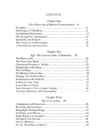
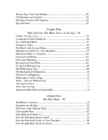
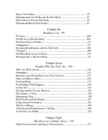
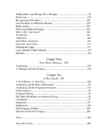





Kõik kommentaarid