A
century ago
communication across any
distance was
dependent upon
the telegraph or
letters . No
jets
crossed the
ocean , no television pictures enabled us
instantly
to see
events in any
part of the world,
there were no
worldwide telephone networks and no
computers . It is just a short
lifetime since humanity
first travelled into
space and
discovered how
fragile
our
planet looks .
FROM
FIREWORKS TO THE MOON At
first glance
you might think that there couldn’t possibly be
anything common
between a
13th century
festival in China and the
Apollo 11 moon landing in 1969.
However , there is a
link
and that is that they
both relied
on
the use of rockets.
The
Chinese first
developed rockets
by
filling bamboo tubes with an explosive made from
saltpetre,
charcoal , and
sulphur . The
sealed
tubes
would
be thrown
onto fires
during celebrations because it was
thought that the
loud explosions
would protect
them . It was not long
before the
ancient Chinese
realised the
military potential of
these devices
and
primitive
rockets were used
to
repel
a Mongol
invasion
in 1232 AD. Word of these new
amazing weapons
quickly
spread around the world
and soon rockets were being used in military operations in
North Africa and
Europe . During the 15th
and
16th centuries they were widely used in
naval battles
to
set fire on
enemy ships. Around this time they also
started being used for more
peaceful purposes
again. In the 16th
and
17th century Europe
fireworks
displays
using rockets
became a very
popular form of
public
entertainment.
In
the
late 18th century the
British army suffered
two serious
defeats
at battles in Seringapatam, in India. The main
reason for these
defeats was that the
Indian prince, Haidar Ali’s army
included a
corps
of rocket throwers. They used very large bamboo rockets which had a
range
of hundreds of metres .
The British were
determined
to learn from their mistakes and a British officer, William
Congrieve, began
work on developing even bigger and better rockets.
Within a few
years Congrieve had developed 14 kg
iron rockets that
could be fired over
3200 m. These rockets were successfully used against
Napoleon in the
battle of Waterloo and during the US
War
of Independence.
By
the 1889s
other applications
for rockets were being developed. They were used for signalling, for
whaling, and even for
rescuing
people
from
sinking
ships. If a
boat got into trouble
near to the
shore , a rocket with a
thin
rope tied to it would be fired out over the boat; survivors in
lifeboats could use the ropes to pull themselves ashore. These
traditional rockets are
still used as
distress signals
on boats and
planes .
However,
in the
1920s and 30s
a
great leap forward
in the use of rockets
took place with the
introduction
of
liquid
fuel.
This made rockets much more
powerful . The new rockets were so
impressive that for the first time people began to seriously think
about using rockets to take people to space.
The
development of the space rockets took place during World War II. It
was the Germans who
built the first
really big rockets,
as
a way of bombing
Britain
without needing to use aircraft. First the V1 was built and
then
later the V2 - a more powerful rocket which was
able to
carry
a large warhead of explosives
to Britain.
After
the war, the
Soviet Union and the United
States took
German rocket
technology
back to their countries. The main motive was to
build rockets
to launch nuclear missiles.
The
idea of using military rockets to launch a satellite was really
an
afterthought.
In
the 1950s the Soviet Union and the USA
invested large amounts of
money in their new space programmes. On 4 October 1957, an
announcement by the Soviet Union
took
the world by surprise.
‘
Sputnik ’, the first artificial satellite, which
literally means “
travelling companion“ had been launched and was in
orbit around the Earth. ‘Sputnik’
was
small, no bigger
in fact than a
football , and
compared
to today 's
technology, it was very primitive. All it could do was to bleep. But
its
impact
was enormous. After its launch, things began to
happen quickly. Less
than a
month later it was followed by ‘Sputnik 2’ which carried a
dog
Laika into orbit. The USA
sent its first satellite, ‘
Explorer 1’, into space
early the next
year . The next step,
putting a man in
space followed in 1961 when the
Russian pilot called Yuri
Gagarin orbited the Earth in ‘
Vostok 1’. In 1961,
President Kennedy announced that America would
begin a
programme to put a man on the
Moon.
Use
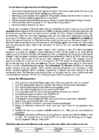
the Internet to get answers to the following questions:
When did the first man take the first steps on the Moon? What was the name of the first man on the Moon and what did he say? Was he walking on the Moon alone ?
How many Apollo missions were registered? What number mission was the first/last to land on the Moon? How many Apollo missions landed on the Moon?
What do you know about the following people: Harrison Schmitt; Alan Shephard; Eugene Cernan?
Which invention enabled the people on the Moon to travel long distances?
Have the Russians walked on the Moon?
Though
the exploration of Mars has taken place over hundreds of years, it
began in
earnest
with the invention
and development of the telescope in the 1600s. Increasingly detailed
views of the planet from the Earth inspired
speculation
about its environment and possible life, even intelligent
civilizations that might be found there. Probes sent from Earth beginning in the late 20th century have dramatically increased the
knowledge of
the Martian system. Engineering interplanetary journeys
is very complicated,
so roughly
two thirds of all spacecraft destined for Mars failed before
completing
their missions.
But since 6 August 2012, there have been two scientific rovers on the
surface of Mars beaming signals back to earth, and three orbiters
currently surveying the planet. Mars
is the only planet we know of that can currently feasibly support human life.
MARS
ONE,
a private non- profit space
company,
made
headlines
in June 2012 when the company announced its mission to establish a
human settlement on Mars. All the people in the world had the opportunity to be involved
in
the Mars One mission from the very beginning by participating
in
selecting the colonists. Mars One
plans to establish a permanent human settlement on Mars in the 2020s. And searching for life on Mars
will be part of the research
these colonists will conduct.
The company accepted
applications
to become a Mars One colonist until August 31, 2013. The number of
the people who wanted to get the one-way ticket to the Mars was well
over
200,000. The astronaut crews that go to Mars will be diverse in gender , cultural background, and age. This is intentional.
The diversity
will help each team bring greater resources to solving problems.
Before
carefully selected and trained crews will depart to Mars, several unmanned missions will be completed, establishing
a habitable settlement waiting for the first astronauts to arrive . The Mars One crews will
go to Mars not to simply visit , but to live , explore, and create a
second home for humanity. The first men and women to go to Mars are going there to stay .
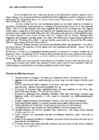
Answer the following questions:
What kind of rockets did the Chinese make in the 13th century and what were they used for?
How were these rockets used in the 15th and 16th century in North America and Europe?
What did the British learn from their defeat in Seringapatam, India?
What other fields of application the rockets had by the 1880s?
Which invention made the rockets even more powerful and where did it lead to?
How did the Germans use rockets in the World War II?
Speak about the first steps in conquering the space.
How long have people explored the Mars and which invention enhanced the exploration?
Find the main points about the Mars One mission.
What is the difference between a cosmonaut, astronaut and taikonaut?
Explain the difference between the words corps and corpse? How do you pronounce these words?
Translate the italicized expressions and bold words in the text. Make sure that your translation is appropriate!
Derivation is the process of forming a new word from an existing word, often by adding a prefix or suffix . For example, from the word HAPPY we can derive the following words: happen, happily, happiness , unhappy, unhappiness.
Make
derivations from the following words, using prefixes and suffixes
and
translate each word:
Able
Common
Entertain
Apply
Discover
Use
Invade
Success
EXERCISES
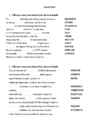
Fill in the correct word derived from the word in bold:
The
…………… with which surveillance cameras are used is FREQUENT
increasing
………….. all the time, and due to the STEADY ………….
of improved technology they are being INTRODUCE
used
in a ………….. of new and unusual ways . VARY CCTV
cameras improve public ……………, it is said, SAFE
because
they help the police to identify ……………, CRIME which makes the …………… of crime much easier . PREVENT Traffic cameras film those ……………of speeding or GUILT ……………. driving ,
so reducing the risk of accidents. DANGER Despite
the general ……………..of CCTV cameras. POPULAR Some people
…………….of their use, because they feel APPROVE
that
any surveillance is and invasion of privacy.
Fill in the correct word derived from the word in bold:
Thanks to the ease of …………… , YouTube allows pretty OPERATE
much anyone with a mild …………… about opera or CURIOUS
musical theatre to expand his frame of …………… REFER
without
spending a dime. All that is due to the compulsive
…………… of members with a desire to exhibit their GENEROUS
curatorial
…………… . COMPETENT
It
also offers the …………… enthusiastic a chance to FANATICAL
display
the colourful …………… of their passions. Spend VARIOUS
an
hour or two trolling through YouTube looking for high art,
…………… a path created with the help of the Web site’s own FOLLOW
…………… trailblazer,
and you come away amazed INTEGRATE
at
the volume of material available for instant viewing.
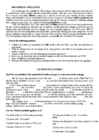
The
second half of the 18th century saw the start of the Industrial
Revolution, a period in which many machines were invented and
factories established which brought along significant changes in
Britain and beyond . The Industrial Revolution was the key to the
modern Western society – it made the European working class and middle -class.
By
1800 Britain was the most industrialised country in the world. Aided
by revolutions in agriculture, transportation, communications and
technology, England was able to become the “first industrial nation “. This is a fact that historians have long recognized. New
methods of farming meant that England could produce enough food to
feed itself and export as well. England was rich in coal, iron ore
and wool , and its aim was to supply two-thirds of the globe with cotton spun, dyed, and woven in the industrial centres of northern England. A vast network of canals was built, supplemented by
railways. Telegraph lines, magazines, and newspapers provided people
with steady flow of information. England proudly proclaimed itself to
be the “ Workshop of the World, “a position that the country held until the end of the 19th century when Germany, Japan and United
States overtook it.
However,
working conditions were brutal and unhealthy, safety was disregarded
– it all left an imprint on workers '
life expectancy. For the jobless there were poorhouses and debtors' prisons – the dark side of Dickens '
novels.
Between
the 1770 and 1821 , the population of Britain rose from 8.3 million to
14.2 million. London was the largest and richest city in Europe. In
1811 it was the first city in the world to reach a population of a
million. It was also an important financial centre: merchants could
borrow money from its banks , take out insurance , buy and sell shares.
The
19th century was generally a time of great social reform : the slave trade was abolished, the employment of women and children was
regulated by laws , primary schools were established, and men could no
longer be excluded from universities or politics because of their religion .
Translate
the following sentences.
Tööstusrevolutsioon sai alguse 1733.aasta paiku Inglismaal esimese ketrusvabriku sünniga.
Inglismaa tahtis hoida oma leiutisi saladuses ja keelas kõigil, kes olid tehases töötanud, maalt lahkuda.
Siiski õnnestus Samuel Slateril põgeneda Ameerikasse, mälu järgi ehitada ketrusmasin ja rajada omaenda tehas. Tööstusrevolutsioon oli jõudnud USA-sse
19.saj.algul oli Inglismaa kõige industrialiseeritum riik kogu maailmas ja alles 20,saj algul jõudsid Saksamaa, Jaapan ja USA talle järele ja möödusid.
Revolutsioon põllumajanduses võimaldas kasutusele võtta uued maaviljeluse meetodid ning Inglismaa suutis toota piisavalt, et toita ennast ja eksportida oma põllumajandussaadusi välismaale.
Kanalite võrgustiku loomine, mida täiendasid raudteed , viisid revolutsioonini transpordis .
Uued telegraafliinid, ajalehed ja ajakirjad varustasid inimesi pideva informatsioonivooluga.
Tehase omanikud , kes võtsid tööle kutseoskusteta naisi ja lapsi, said suuri kasumeid.
Töötingimused olid väga ebainimlikud, ebatervislikud ja turvameetmeid ignoreeriti.
Tööstusrevolutsioon oli võtmeks moodsale lääne ühiskonnale, mille käigus sündis Euroopa töölisklass ja kesk-klass
Charles Dickens oma romaanides kirjeldab revolutsiooni tumedamat poolt- vaestemaju ja võlavanglaid.
Londonist sai maailma finantskeskus. Kohalikest pankadest said kaupmehed laenata raha, osta ja müüa aktsiaid, teha kindlustus .
19.sajandil kaotati orjus , rajati algkoolid, seadusega reguleeriti naiste ja laste tööaeg, poliitikas kadus religioosne tagakiusamine .
HOUSEHOLD
APPLIANCES
The
technologies that created
the 20th century's
laboursaving
household appliances
were born due
to electrification,
which brought light and power into the home. Then two major engineering innovations ,
heat resistance
and small, efficient
motors, led to electric stoves and irons , vacuum cleaners, washers,
dryers, and dishwashers. In the second half of the century advances
in
electronics yielded
appliance s
that could be set
on times
and even programmed, further reducing the domestic workload
by allowing washing and cooking to go on without the presence of the
human launderer
or cook .
After
the World War II the United States had $26 billion
worth of factories that hadn't existed before the war, no bomb damage
and practically no competition. All that American companies had to do
was stop making tanks and battleships and start making cars and
household appliances. By 1950 almost 90% of American families had
refrigerators, and nearly three quarters had washing machines,
telephones, vacuum cleaners and gas or electric stoves – things
that most of the rest of the world could still only fantasize about.
The 5% of people on Earth who were Americans had more wealth
than the other 95% combined.
Answer
the following questions:
Translate the italicized expressions and bold words in the text. Make sure that your translation is appropriate!
Make derivations from the following words, using prefixes and suffixes and translate each word: wealth, compete .
Thanks to what do we have the laboursaving household appliances?
How come the Americans were so wealthy compared to the rest of the world after the WWII ?
Name 10 different household appliances.
Pick one of the household appliances and find out how it has evolved into the present day appliance.
THE
MICROWAVE MISHAP
Read
the text and think of the word which best fits each gap. Use only one
word in each gap.
Did
you know that microwaves were first used ……….the British Army
in the World War II to identify enemy warplanes? In fact, it was
………. accident that made people aware that microwaves could also
cook food.
In
1945, Percy LeBaron Spencer , .……..….. work involved the testing of radar waves, became the first person to ……….. this connection . …...…… day at work, Spencer was standing near a machine which was emitting radio waves. Later ………., when he felt like snack, he reached ………. the chocolate bar he had in
his pocket - ………. to find that it had melted! When he thought
about it, he realised ……… had happened . The radar waves coming from the machine ……… he had been standing next to had melted
his chocolate. Later, experiments showed that radar waves contain
microwaves that could heat food ………. faster than traditional
ovens.
His
company went ………. to develop and market the first microwave
ovens in 1954. They ……… huge, bulky and expensive , but since
………, microwave ovens have become smaller, giving ………. the
compact models we see in our kitchens today.
Exercise .
Which household appliance is it?
You wash clothes in it. It's a washing machine.
You clean with it. It's a patch .
You heat things very quickly in it. It's a iron.
You press clothes with it. It's an
You ring your friends and talk . It's a mobile phone .
It cleans your dirty plates , silverware and pans. It's a dish soap.
You boil water in it. It's a kettle .
It makes toast . It's a roaster.
It makes food very, very cold . It's a freezer.
It keeps your food cold. It's a ___
MODERN
TECHNOLOGY IN THE CLASSROOM
TASKS
Translate bold words in the texts. Make sure that your translation is appropriate!
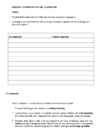
According to the two texts below, what are the pro and counter arguments of the use of high- tech devices by children?
Pro arguments
Counter arguments
Pro
arguments
Why
is it important to include computer classes in schools around the
world?
The use of technology in the classroom can enhance learning .
Learning how to use a computer can provide even the youngest students with early knowledge of necessary job skills , from typing and basic research, to learning graphic design, for example.
Computer skills allow a child to become exposed to new ways of thinking, using both their creative and logical thought processes . Math , science, art, and other subjects can be incorporated into lesson plans in fun and interesting ways for children of all ages and learning capabilities.
As
any teacher knows it is essential
to keep students engaged. With today’s tech-savvy
generation the key is using technology
like laptops, smartphones, and iPads in the classroom. Today’s
students have grown up with all this technology, so schools must change with the times and adapt to the way students learn best.
Classrooms all across the US have already or plan to implement
1:1 (1 device per 1 student ) and BYOD (bring your own device)
solutions to facilitate the use of all these great technological learning tools .
Technology
is a central part of our everyday lives now, so of course it should
be a key aspect
to education in order to prepare students for the real world and
their future careers where they will most likely be using mobile
devices.
With devices like iPads for example,
students are no longer confined
to a computer class. As soon as an assignment
is available students can work on it inside their classroom, at home, while waiting on the bus, in between classes, etc. Mobile classroom
technology can bridge the gap
between classroom and home learning.
In
the future the textbook is becoming extinct . One of the favourite pre-school activities for many children is making
book covers for the textbooks but this ritual will soon be unheard of
with the impending
extinction
of the textbook. With all these mobile devices in the classroom,
eBooks are becoming more popular. Which makes sense; they are cheaper , more up-to- date ,
quickly accessed, and more interactive.
Also,
with technology in the classroom the traditional student and teacher
roles have changed. The student has become a lot more active and
engaged. The teacher has become more of a facilitator
than just a dispenser of
information. With classroom technology students can collaborate
with other students and their teachers in and outside of the
classroom quickly and easily.
Finally,
lessons can be customized to fit each student’s
progress and learning style. Through
these learning tools
teachers can provide opportunities for students to be able to work
and excel
at their own level and pace .
These
are just a few examples of how mobile technology in the classrooms is
enhancing education. The list goes on and on and will only continue to grow . What an exciting future our kids have to look forward to!
Technology in the classroom is changing the face of education as we
speak.
Con
arguments
One
day I saw a little girl pointing at the sweets at
the checkout and her mother said: ‘No,
they’re bad for your teeth.’ So her daughter , who was no more
than two, did what small children often do at such times. She threw a tantrum. What
happened next horrified me. The embarrassed
mother found her iPad in her bag and
thrust it into her daughter’s hands . Peace was restored
immediately.
This
incident, which happened three years ago, was the first time I saw a tablet computer used as a pacifier.
It certainly wasn’t the last. Since then, I’ve seen many tiny
children barely
able to toddle
yet expertly swiping an iPad
– not to mention
countless teenagers , smartphone in hand , lost to the real world as
they tap out
texts.
It’s
ten years since the publication of my book, Toxic Childhood, which
warned of the dangers of too much screen -time on young people’s physical and mental health.
My fears have been realised. Though I was one of the
first to foresee how insidiously
technology would penetrate youngsters’
lives, even I’ve been stunned at how
quickly even the tiniest have become slaves to screens.
Indeed,
when my book came out, Facebook had just hit our shores and we were
more concerned with violent video games and children watching too much TV. Today, on average , children spend five to six hours a day staring at screens. And they’re often on two or more
screens at once – for example, watching TV while playing on an
iPad.
Because
technology moves so fast , and children have embraced
it so quickly, it’s been difficult
for parents to control it. And when it comes to spending a childhood
in front of a screen, this generation are like lab rats. The
long- term impact
is not known . Even before iPads hit
the market in 2010, experts were
warning that 80 per cent of children arrived at school with poor co-ordination, due to a sedentary
lifestyle.
Along
with colleagues in the field of child development, I’d seen a rise in prescriptions
for Ritalin, a drug for attention deficit and hyperactivity – a four - fold increase in less than a
decade. And we’d collected a mass of research showing links between
excessive screen-time and obesity ,
sleep disorders , aggression, poor social skills, depression and
academic under- achievement .
It’s little wonder, then, that the boom in iPads and smartphones
has coincided with further deterioration
in the physical and mental health of children of all ages.
Few
know that the
late
Apple boss Steve Jobs didn’t let his own children have iPads. I
wish he had gone public on this as other parents might have followed
suit .
Because
the earlier children are hooked on screens,
the more difficult it is to wean
them off.
This
is not the only worry. Today’s children have far fewer
opportunities for what I call ‘real play’. They are no longer
learning through first-hand experiences how to be human and are much
less likely
to play or socialize
outdoors
or with others . The change in children’s play has happened in
little more than a couple of decades. While many parents feel
uneasy
about all that screen-time, they haven ’t tackled
it as they’ve been so busy keeping
up with changes
in their own lives. But real play is a biological necessity. One
psychologist told me it was ‘as vital for healthy development as
food or sleep’. A whole generation can grow up without the mental
ability to create their own fun, devise their own games and enjoy
real friendships – all because of endless screen-time.
It’s getting out
and about
– running, climbing , making dens and so on – that allows little
children to gain physical skills. Playing ‘let’s pretend ’ is a
creative process requiring lots of personal input. Real play develops
initiative, problem-solving
skills
and many other positive traits ,
such as a can-do attitude , perseverance
and emotional
resilience.
It’s vital for social skills, too. By playing together, youngsters
learn to
get along with other people.
They discover how others’ minds work, developing empathy. And, as
real play is driven by an innate desire to understand how the world works , it provides the foundation for academic learning.
The
American Academy of Paediatrics recommends no screen-time for
children under two and a maximum two hours a day there-after. This is
not just due to a proven link between screen-time and attention
disorders,
but because it eliminates other activities essential for building healthy bodies and brains.
It’s
understandable parents feel unable to tackle their children’s
social media use. After all, it has spread
like a virus . But we can’t go on
letting our children ‘be like everyone else’ when it’s damaging
them. If the next generation is to grow up bright, balanced and
healthy enough to use technology wisely, parents need to
take action . And that means limiting
screen-time, spending time together as a family and making sure get
children out to play. Some say children need to use technology
because that’s the way the world is going. But there’s no need to
give little children high-tech devices.
Modern
technology develops at a phenomenal rate – any IT skills that
children learn before the age of seven will be long
past their sell-by date by the time
they reach their teens. But self-confidence, emotional
resilience, creative
thinking, social skills and the capacity for focused thought will stand them in good stead whatever the future brings.
(Psychologist
Sue Palmer ,
abridged)
And now, based on the above , write an essay by using con arguments and pro arguments (advantages and disadvantages ). Will you follow the essay rules described below.
Should
the future school become book and paper -free?
What
is an essay?
Essee
on väike kirjatükk. Essee peaks algama sissejuhatusega, kus antakse
taustinformatsiooni käsitletavast probleemist. Ära tuleks märkida
ka vaatenurk, millest probleemi hakatakse käsitlema. Kaks-kolm
lauset sobib hästi.
Essee
peaks koosnema umbes kolmest paragrahvist. Iga paragrahv peaks
käsitlema ühte aspekti ja algama taandreaga ning teemakohase
lausega. Järgnevalt tuleb seda teemat laiendada ja tuua näiteid.
Kui essee käsitleb näiteks eeliseid ja mitteeeliseid (advantages
and disadvantages),
tuleb rääkida kõigepealt ühtedest ja siis teistest, aga mitte
segiläbi. Üks paragrahv peaks rääkima ainult ühest asjast . Kui
tuleb uus mõte, tuleb alustada uue paragrahviga. Mõtteid ei tohi
korrata! Sama käib ka sõnade kohta –tuleb otsida sünonüüme.
Lõppsõna
peaks lühidalt kokku võtma kõik selle, mida eelnevalt käsitleti.
Kui räägiti nii poolt kui vastuargumentidest, siis just lõppsõna
on see koht, kus väljendada oma arvamust. Ühetegi uut ideed enam
välja käia ei tohi.
Essee
eeldab ametlikku stiili, seega lühendvorme ja slängi kasutada ei
tohi. Kui tahate väljendada sõna ’tema’, ega oska valida he ja
she vahel, kasutage s/he. Laused ei tohiks olla väga pikad ega ka
väga lühikesed. Hüüumärki essseedes ei kasutata. Iga üksik
lause peab olema tähendusrikas ja loogiliselt jätkama eelmises lauses väljendatud mõtet.
Jälgi
teemat! Kui teema ütleb: Mis on tähtis töö valikul ?, ei pea sa
mitte rääkima kuidas töökohta saada. Või: Miks reisida ? Sellest,
milliste vahenditega reisida. Seejärel pane kirja, millest sa
kirjutama hakkad –mustandit hindajad ei loe.
Essees
võiks kasutada järgmisi sõnu:
Teemat
sisse juhatades:
Firstly/To
begin with/In the first place;
One
point in favour of/against is/,
One
(dis) advantage of ... is
Et
lisada mõtteid:
Secondly/Thirdly/
What
is more/ Furthermore /Both....and/not only ....
But
also/ In addition/ Besides /A further advantage.... is/ not to mention
the fact that/Lastly;
Et
võrrelda:
However/
On the other hand/ Although /In spite of/Contrary to what most people
believe/As opposed to the above ideas/Some people argue that;
Lõpetuseks:
In conclusion /To sum up/All things considered
Write a LETTER OF COMPLAINT . Loe alljärgnevalt kirjakirjutamise põhinõuded. Täiuslikum konspekt Moodle; Inglise keele riigieksam ; Kirjutamisosa; Kirja kirjutamise näidis.
Alates
2013.aastast peab kiri koosnema 120 sõnast. Lubatud on kirjutada 10%
sõnu vähem. Sõnade ülemist piiri pole, kuid mida rohkem kirjutad,
seda suurem on võimalus eksida.
Kiri
peab olema kirjutatud ametlikus stiilis, keelatud on lühendid
(don’t, hasn’t) ja samuti slängisõnad.
Kirja
on võimalik vormistada kahel viisil, kas kasutades taandridu või
plokkida: (sel juhul on lõikude vahel taandrida). Paremale üles
kuupäev (viimastel eksamitel ei paluta enam aadressi kirjutada) ja
selle alla vasemale pöördumine. Kui
nimi teada, Dear Mr/Ms Brown , kui ei, siis Dear Sir/ Madam . Lühendite
taga punkte pole,
kui paned pöördumise lõppu koma ,
peab koma olema ka Yours faithfully/Yours sincerely taga kirja lõpus,
kui pöördumise taga koma ei ole, pole ka lõpus koma. Kiri tuleb
lõpetada
Yours
faithfully kui sa ei tunne inimest nimepidi (s.t. alustad kirja Dear
Sir/Madam), Yours sincerely kui tunneme (s.t. alustame kirja Dear Mr
Brown).
Vali kirjutamisstiil (plokkimine või taandread) ja kirjuta kiri, jagades see paari- kolme lõigu vahel.
Igat lõiku tuleb alustada sissejuhatava sõnaga.
Kõiki
ülesandes küsitud punkte PEAB
käsitlema! Muidu kaotad punkte.
Palun
kasutage iga erineva kirja juures just seda kirja puudutavaid
väljendeid! Alljärgnevalt kaebekirja terminoloogia:
Kirja
alustuseks:
I
am writing to complain about the iron I purchased from your shop last
week.
Seejärel
1 või 2 lõiku oma kaebuse õigustamiseks:
Firstly/Secondly/Thirdly/What is more/Furthermore/ But also/ In
addition/Besides.
Kirja
lõpetamiseks:
I
look forward to receiving your explanation of these matters .
I
look forward to receiving your payment .
I
look forward to hearing from you shortly.
TASK
You
recently bought some clothes from an online shop, but some issues occurred:
Write
a letter to the customer service representative of the shop,
complaining about the issues, saying exactly
what was wrong and requiring action.
Do the following exercise:
 50 punkti
Autor soovib selle materjali allalaadimise eest saada 50 punkti.
50 punkti
Autor soovib selle materjali allalaadimise eest saada 50 punkti.
 ~ 16 lehte
Lehekülgede arv dokumendis
~ 16 lehte
Lehekülgede arv dokumendis
 2018-04-18
Kuupäev, millal dokument üles laeti
2018-04-18
Kuupäev, millal dokument üles laeti
 18 laadimist
Kokku alla laetud
18 laadimist
Kokku alla laetud
 0 arvamust
Teiste kasutajate poolt lisatud kommentaarid
0 arvamust
Teiste kasutajate poolt lisatud kommentaarid
 jessuvol
Õppematerjali autor
jessuvol
Õppematerjali autor
 annaabi.ee









Kõik kommentaarid