C1 Advanced - Assessing writing for Cambridge English Qualifications
Assessing writing for
Cambridge English Qualifications:
A guide for teachers3
Contents
Who this guide is for ................................................................................................................................ 3
How to use this guide ............................................................................................................................. 3
Key terminology .......................................................................................................................................4
Understanding the Cambridge English Writing Assessment Scale ...................................................6
How to assess and develop learners’ writing skills in the classroom ............................................... 9
How to assess writing for C1 Advanced ..............................................................................................22
Sample tasks with examiner comments .............................................................................................33
Extra resources .......................................................................................................................................48
Who this guide is for
Just like official examiners, teachers also spend many hours evaluating learners’ writing. This guide
is for you. With lots of practical tips and real examples, it will help you to develop and assess
learners’ writing skills in preparation for the C1 Advanced exam.
About C1 Advanced
✔
Tests reading, writing, speaking and listening
skills, plus use of English
✔
Shows that learners can:
• follow an academic course at university level
• communicate effectively at a managerial
and professional level
• participate with confidence in workplace
meetings or academic tutorials and seminars
• express themselves with a high level
of fluency
✔
Comes after B2 First or B2 First for Schools and
before C2 Proficiency
✔
Tests learners at CEFR Level C1
✔
Can be taken on paper or on a computer
How to use this guide
To get the most from this guide:
• Try the practical ideas and reflect on how these techniques affect the processes of learning and
teaching in your classroom.
• Discuss different approaches with learners in order to understand their preferences and needs,
and to find out what approaches are most helpful to them.
• At the end of the guide, there are some real samples of assessed writing from the C1 Advanced
exam. A top tip before you look at the real examiners’ marks and comments: try applying the
official assessment criteria to the written samples by yourself! Make a note of whether you gave
similar marks or made similar comments.
• You can navigate the document by using the hyperlinks in the text and the buttons on each spread:
Previous page
Next page First page
Previous view
C
ontents
5
Key terminology
Language assessment is a specialist field and there is some common terminology which might be
unfamiliar to you. Learning to recognise these terms will help you to understand this guide.
Definition
Cambridge English writing
examiners say …
Teachers might say …
A person who is learning English, usually in
a classroom.
learner
student / learner / pupil
A person who takes an exam. (This is a more
formal word because it refers to work done in
the exam, not work done in the classroom.)
candidate
The things an examiner considers when
marking a piece of writing for an exam. For
the C1 Advanced exam, these are: Content,
Communicative Achievement, Organisation
and Language.
1. Writing Assessment Scale
2. Writing Assessment
subscales
1. Assessment criteria
2. Assessment categories
Each piece of writing gets four sets of marks
for each of the subscales, from 0 (lowest)
to 5 (highest).
Bands (0–5)
marks / scores / grades
These terms are commonly used to refer to Cambridge English Qualifications. There are also some
other terms in this guide which are more widely used in the field of assessment. When these terms
appear in this guide, you’ll find an explanation nearby in a glossary box like this:
CEFR scale
The
Common European Framework of
Reference (CEFR) is an international standard
for describing language ability. It uses a six-point
scale, from
A1 for beginners up to
C2 for those
who have mastered a language. This makes it
easy for anyone involved in language teaching
and testing, such as teachers or learners, to see
the level of different qualifications.
Key terminology
Key terminology
4
6
7
Understanding the Cambridge English Writing Assessment Scale
Every Cambridge English Qualification targets a specific level of the CEFR and includes a
range of tasks that are suitable for learners at this level.
The detailed
descriptors in the Writing Assessment subscales are slightly different for each exam
and are based on its target CEFR level. However, all Cambridge English Qualifications are designed
to test a learner’s ability to understand and use English effectively in real-life contexts, so the
descriptors for different exams have some things in common.
For example, candidates at every level are expected to demonstrate good organisation in their
written work, but examiners will expect to see progression and different levels of ability in
each exam:
B1 Preliminary for Schools
B2 First for Schools
C1 Advanced
Descriptor
The text is connected and
coherent, using basic linking
words and a limited number
of cohesive devices.
The text is generally
well organised and coherent,
using a variety of linking
words and cohesive devices.
Text is a well-organised,
coherent whole, using a
variety of cohesive devices
and organisational patterns
with flexibility.
Cambridge English examiners consider these points when marking a piece of work:
Content
✔
The candidate answered the task. They have done what they were asked to do.
✘
The candidate did not include everything they were asked to. They have written
something irrelevant.
Communicative
Achievement
✔
The writing is appropriate for the task. The candidate used a style which is
appropriate for the specific communicative context.
✘
They have written in a way that is not suitable – for example, using a very formal
style in an email to a friend or ending an article with ‘Best wishes’.
Organisation
✔
The writing is put together well. It is logical and ordered.
✘
It is difficult for the reader to follow. It uses elements of organisation which are not
appropriate for the genre, like beginning an email with a title or forgetting to use
headings for the sections in a report.
Language
✔
There is a good range of vocabulary and grammar. They are used accurately.
✘
There are mistakes that could make the text difficult or confusing for the reader.
Some mistakes are unproblematic. Examiners focus on whether the reader is still able
to understand the text.
A learner might be stronger in one area than another – for example, they might be good at fully
answering the question (Content) but not very accurate in their use of grammar and vocabulary
(Language). For this reason, examiners give each piece of writing a separate mark for each subscale,
from 0 to 5. Together, these indicate the learner’s areas of strength and weakness in the four
different areas of assessment.
For example, if a candidate scores Band 5 for Content and Band 2 for Language, this suggests that
they answered the question well and the reader would not feel that any information was missing,
but that the use of grammar or vocabulary was not very accurate.
If a candidate scores Band 3 or above in the C1 Advanced exam, this generally indicates an ability of
at least CEFR C1 level. Bands 1 and 2 indicate that the learner is still performing at B2 level.
Under
standing
the Cambridge
English
W
riting Assessment
Scale
Descriptors are detailed notes to help examiners
and teachers use the assessment subscales
effectively to evaluate and grade a learner’s
writing. Descriptors for Bands 1, 3 and 5 indicate
what a candidate is expected to demonstrate at
lower, average and higher levels of ability.
Key terminology
9
How to assess and develop learners’
writing skills in the classroom
It takes time and practice to develop good writing skills, and part of this development is
regular formative assessment. Teachers can do this assessment, but learners can also
assess their performance for themselves.
To prepare for the C1 Advanced exam, learners should:
• Read widely to familiarise themselves with the conventions and styles of different types of
writing (i.e. reports, proposals, reviews, letters and essays).
• Write 10-minute plans for a variety of questions in past papers, so that planning becomes
automatic and quick.
• Look at model answers, such as those featured in coursebooks, to see what is expected at
C1 level. This will help them to see how answers should be structured and to get an idea of
the variety of grammatical structures and range of vocabulary that are required.
• Have chances to practise exam tasks with clear time limits and word limits, just like in the
real exam.
• Make sure they can write clearly so that examiners can read their answers easily.
They must also understand:
• what they’re being assessed on in the exam
• their own strengths and weaknesses
• how they can improve any areas of weakness.
The key to this understanding is regular, effective assessment.
It’s a good idea to use a mix of teacher assessment,
peer assessment and self-assessment during an
exam preparation course. This variety can make
lessons more interesting and engaging, but it’s
also useful for learners to write for different
audiences and to get feedback from different
sources, as we all have different strengths and
notice different things.
8A
Cambridge English writing examiners are extensively trained to assess learners’ writing using these
assessment scales, bands and descriptors. The quality and consistency of their marks is closely
monitored by a team of senior examiners through an annual certification process and during live
testing sessions. This means that learners around the world can feel confident that their exam
results reflect their true ability to write in English.
Content
Communicative
Achievement
Organisation
Language
5
4
3
2
1
0
Subscales
Bands
Descriptors
Formative assessment is when a teacher
gives learners feedback on their progress
during a course, rather than at the end
of it, so that the learners can learn from
the feedback.
Key terminology
How
to assess and
dev
elop learner
s’
writing
skills
in the classr
oom
10
A
ctivities
Teacher assessment
Top tips
• Assessment isn’t just about correcting mistakes, and three of the four Writing Assessment subscales in
C1 Advanced are not about language accuracy. It’s important to respond to what learners write, not just
how they write it. This is particularly challenging at advanced levels, as learners may have studied for
many years and be very self-conscious about their common mistakes or feel they haven’t made much
progress recently. It’s easier to see your progress when you’re a beginner!
• Formative assessment is about learning from feedback and not just about correcting mistakes.
Encourage learners to use more sophisticated and complex language, as this is part of learning and
communicating effectively. Examiners give credit when learners attempt to use more complex language,
even if they make mistakes.
Activity 2 is one way that you could give feedback on such efforts.
• Hearing the teacher’s voice can feel more personal and supportive than receiving written feedback in
red pen. For example, you could make a short video or voice recording with your comments.
Adopting different approaches to giving feedback is particularly helpful to support learners with specific
learning needs, such as dyslexia.
12
13
A
ctivity 1/2
Activity 1
Assessment focus: Report writing (Part 2 task).
Aims: The Part 2 report is quite a challenging task, as little information is given in the prompt and
it may feel somewhat abstract or remote to learners’ real lives. This activity aims to help learners
generate ideas from limited information in the task prompt and to organise these logically into a
plan that will help them write their reports.
Steps:
1. Brainstorm with learners some recent changes at their school or workplace or in their local community.
For example:
• a new menu in the school/office cafeteria
• a charity fundraising event held by the local school, mosque, etc.
• a new playground for local children
• recent painting/decoration of their classroom/office.
2. In small groups, learners discuss and debate their feelings about these changes. In the first instance, all
ideas are valuable and welcome – get them to write each comment on a separate slip of paper.
3. After 10 to 15 minutes, learners should choose their best ideas and organise them into themes or
headings for their report (for example: the choice of date for an event, the choice of venue, the feedback
from attendees, etc.).
4. Learners now take a photo of the groups of ideas they made on the slips of paper, or write down a copy
in their notebooks to use as a plan later when writing their reports.
5. Learners write their reports individually and submit to the teacher. You can give individual marks and
feedback, but it’s a good idea to look at the reports in groups so you can see where different students
had different problems, such as forgetting to include section headings, including email/letter features or
including far too many short sections. As the class started with the same task and each group will have
agreed on the same group of ideas to include in the report, this can be a very useful opportunity for you
to see where individual students need specific help.
Activity 2
Assessment focus: Language range and accuracy.
Aims: Learners often ‘play it safe’ in the interests of accuracy and resist using new language. This
activity encourages them to try using new language to communicate more effectively and to
demonstrate that not all mistakes are ‘bad’, they are evidence of learning!
Steps:
1. Give learners
Sample answer 7 and the
corresponding task from this guide. Tell them first to read it
and respond to the ideas expressed in the text relative to the task.
2. Now they’ve thought about the ideas, it’s time to look at the language. Give them 10–15 minutes to
discuss in pairs:
• What examples of good language (more advanced vocabulary and grammar) is there?
• Are there any mistakes? Do they think these are errors or slips?*
• What band would they give this answer for the Language subscale?
3. Now reveal the examiner’s mark and commentary for this sample answer. Are the learners surprised?
Why? Invite them to discuss this in detail, because it’s very important they understand before the next
step that a few mistakes are not necessarily a bad thing, even at advanced level.
4. Draw learners’ attention to these important parts of the commentary and allow some time for them to
discuss their thoughts and impressions.
A range of vocabulary, including some less common lexis, is used effectively … although there are
occasional instances of less appropriate usage resulting from ambition … There are minimal slips … but
these do not impede communication.
5. Now give them this task, or any other C1 Advanced Writing task that you feel they need to practise, to
write for homework. Tell them that when you collect their work, you will only be giving specific feedback
on Language and the range and accuracy of the language choices they make. This will encourage them to
be more ambitious in their writing.
For step 2, get learners to write each idea on a sticky note. Then for step 3, they can stand up and do this step
by sticking the notes on a wall and moving them around as they decide on the groups of ideas. This adds some
physical energy to an otherwise quite simple activity, and is especially helpful for students with specific learning
difficulties who may struggle to put ideas or information into a sequence.
Adaptation – Activity 1
*
Errors are mistakes due to lack of knowledge.
Slips are the kind of mistake everybody makes
sometimes – we just forget something for a
moment, or perhaps we write too quickly and
not carefully enough!
Key terminology
14
15
A
ctivity 3
Top tips
• Remind learners to think of their reader. In the exam, this might be a newspaper editor, company director,
college principal, club members, etc. In class, it might be their teacher or fellow classmates. When
learners read each other’s work, they get a better understanding of the concept of ‘target reader’ which is
mentioned in the Communicative Achievement subscale.
3. At the college where you study English, you recently organised a special day to raise money for charity.
The Principal of the college has asked you for a report about the day. In your report you should outline what
activities were organised, evaluate the success of the day and make suggestions for future fundraising events.
Write your
report.
This task has a clear target reader: ‘the Principal of [your] college’.
• Some learners can feel nervous and uncomfortable about getting feedback from peers instead of a teacher.
This is especially common in accuracy-focused or exam-focused contexts. Talk to learners about the
benefits of peer assessment so they understand that it will help them develop their writing skills and that
they will have other opportunities to get feedback from the teacher.
• Peer feedback is most effective when it’s included as a regular part of a course. You could also consider
including teacher feedback as a final step, after learners have had a chance to revise their writing based
on peer feedback.
• Encourage learners to start with the ‘big picture’ before focusing on specific things to change or correct.
Learners often notice mistakes immediately and forget that the general purpose of writing is to communicate!
Invite them to think about content and organisation first, and to offer praise before criticism.
Peer assessment
Peer assessment is when learners give feedback
on each other’s language, work, learning
strategies, or performance. Research shows that
people who are similar to the learner in age,
gender, first language and learning goals are very
motivating as role models.
Key terminology
Activity 3
Assessment focus: Organisation.
Aims: To demonstrate how the Organisation subscale is assessed; to raise learners’ awareness of the
more subtle differences between bands at C1 Advanced level.
Steps:
1. In pairs, learners brainstorm elements of good organisation for a Part 1 essay task e.g. text is well
organised, ideas are easy to follow, ideas are linked using cohesive devices, well-developed argument.
2. Pairs review their best ideas and agree on a writing checklist that they can use to help them plan, write
and check their own work before submitting it.
3. Show learners the sample Part 1 essay task from
page 33 of this guide. Can they add anything more to
their writing checklist which is specific to this task?
4. Now show them
sample answer 1,
sample answer 2 and
sample answer 3. Tell them that one answer
received a Band 2 for Organisation, one received a Band 3 and one received a Band 4. Give them about
30 minutes to read all three essays and, in pairs, work with the writing checklist they created in step 2,
and discuss which band they would give to each essay and why.
5. Now give learners the examiner’s band and commentary for the Organisation subscale for each essay.
They should spend about 10–20 minutes discussing the following:
• Do they agree with the examiner? Why/why not?
• If they were the teacher, what feedback would they give each candidate in order to improve their
writing and get a higher mark for Organisation?
• Can they see any problems in the sample responses that they have also experienced in their own
writing? How will they improve these areas next time they write an essay?
6. Conduct feedback with the whole class, then agree and finalise the details of their writing checklist
before setting this task for homework. (See the Adaptation box for an idea of how to give feedback on
homework like this.)
This activity could also provide useful structure and simplicity for teacher assessment. After learners have
written a practice response for a Task 1 essay, ask them to give you their own checklist (like the one they
produced in step 2), or work with the class checklist from step 6. Tell them you’ll use this checklist when marking
their work and that you won’t give feedback on anything else. This helps them focus on developing just one of
the assessment subscales and they can take a temporary break from worrying about the others!
Adaptation – Activity 3
16
17
Activity 4
Assessment focus: Content for Part 2 review task.
Aims: To raise learners’ awareness of distinctive features of the genre; to identify useful language for
writing a review; to encourage learners to engage with authentic materials outside class.
Steps:
1. In pairs, learners choose two things from popular arts culture that they are familiar with but which they
are likely to have different opinions on, and for which they could easily find reviews online – for example,
a classic film and its recent remake, or two pieces of popular music, or two books by the same author.
(You could use the sample
Part 2 task from this guide as a prompt if your students have trouble thinking
of anything.)
2. Give the students time to discuss their opinions about these two things in their pairs. For example:
• Why did/didn’t they like it?
• Did it remind them of anything else they’ve read/seen/listened to? How?
• Which would they recommend to a friend and why?
• What adjectives could they use to describe it?
They should divide a piece of paper into two columns and take notes of useful ideas and language from
their discussion for each of the things they’ve chosen.
3. Now send them online to find authentic reviews of the things they’ve chosen. They can do this in class
if they have internet access, or they can find a review for homework and bring it to the next class. They
should compare these reviews with their own ideas and make a note in their notebooks of any useful
language the writers use which they’d like to incorporate into their own active vocabulary.
4. Bring the class back together and look at some typical features of reviews, such as:
• semi-formal style
• the functions of describing, explaining, giving positive/negative opinions and
making recommendations
• complex sentence structures
• use of appropriate adjectives
• directly addressing the reader
• references to the singer/author/artist’s other work, etc.
A
ctivity 4
Activity 4
5. For homework, learners write their own reviews individually,
comparing the two things they chose,
explaining their own preference and making a
recommendation to the reader. They should pay
attention to the genre features of a review (language and style) and consider editing their work, and, if
necessary, creating a second draft before the next class.
6. In the following class, learners swap reviews with their partner and give each other feedback on:
• how successfully they addressed the task (‘compare, explain, recommend’)
• any useful or interesting language
• whether these reviews have made them reconsider their original opinions and why!
Self-assessment
Top tips
• Include self-assessment as a regular part of your course. For example, circle mistakes in learners’ writing
and ask them to find the corrections themselves. Talk to learners about why it’s helpful to take personal
responsibility for their own learning.
• Get learners to count the number of words in their writing every time they do exam practice. It can
waste valuable time during the real exam if they stop to count all the words in what they’ve written, so
they need to know what 220–260 words typically looks like in their own handwriting. For some learners,
this will fill a whole page but for learners with smaller handwriting it could be only half a page!
• At advanced levels, learners should be using language they already know in new ways or contexts – for
example, less common expressions with high-frequency prepositions and adverbs like ‘around’ or ‘out
of’, or inversion structures used for emphasis in addition to more familiar question forms (‘Not only did
we …’, ‘little did they know …’).
Activity 6 includes more examples and will help support learners in
doing ‘new things with “old” language’.
Self-assessment is when learners decide for themselves if they think their progress or language use is
good or not. Developing good self-awareness is important for becoming an effective independent learner.
Key terminology
18
19
A
ctivity 5
Activity 5
Assessment focus: Content and Communicative Achievement subscales.
Aims: To practise planning and preparing for Part 1 Writing (essay task); to review recommended
advice for this part of the exam.
Steps:
1. Give learners the sample
Part 1 essay task from this guide and allow them 45 minutes to write a
response. Don’t discuss or advise any special preparation yet.
2. Collect the learners’ responses and tell them you’ll return them later.
3. Now give learners the following three ‘tips’ to evaluate:
• Read the opening paragraphs and instructions in Part 1 very carefully to make sure that you know
what your role is and who you are writing to.
• Plan your answer. Remember, you should use all the input information.
• Copy key information from the input. Copying this information will result in more marks than using
your own words.
Instruct learners to read and evaluate the three ‘tips’ very carefully (because some of the advice is not
good!). Allow them time to discuss what they would change and why. (A full list of tips is available online
in the
C1 Advanced FAQs.)
4. Give learners the sample Part 1 essay task again. They should now spend 10–15 minutes preparing their
ideas for the essay. Encourage them to read the task carefully and follow these four simple steps:
i. Circle
who they are writing to.
ii. Circle
which information they want to include.
iii. Make a
simple mind map of their ideas.
iv. Check they have
not copied the language from the input in their mind map.
Remind them that they should probably not spend 15 minutes planning in the exam, but that this is a
practice activity, so they can take more time. The more often they practise the planning phase, the more
quickly they will be able to plan in the exam.
5. Discuss the importance of planning and preparation for good Part 1 writing.
6. For homework, learners should re-write their essay, but this time using their plan.
7.
Follow-up: Collect learners’ essays and give them marks – but only for Content and Communicative
Achievement, since these were the specific focus areas of this activity.
• Read the opening paragraphs and instructions in Part 1 very carefully to make sure that you know what
your role is and who you are writing to.
• Plan your answer. Remember, you do not necessarily need to use all the input information. Usually, part
of the task is to select the appropriate information.
• Don’t copy the information from the input (Part 1) in the words given. Copying the information will not
result in more marks; instead you should write the information in your own words, or write your own
ideas in your own words.
Answer key to step 3
You could use this activity for peer teaching and peer assessment. Learners can make a plan in pairs, then write
their essays separately. In the following class, ask pairs to look again at their original essay plan before they swap
essays. Get them to read each other’s essays and:
1. Check how closely the essay answered the question and followed the original plan.
2. Identify points for their partner to improve next time, in terms of Content and
Communicative Achievement.
3. Identify something good in their partner’s work that they want to ‘steal’ for the next time they write a
Part 1 essay.
Adaptation – Activity 5
20
21
A
ctivity 6
Activity 6
Assessment focus: Language.
Aims: For learners to reflect on and expand their range of active vocabulary and grammatical structures.
Steps:
1. Discuss why keeping a reflective language journal can be very useful for language learning. Some ideas
might be:
• to maintain motivation over a long period
• to keep a record of things learners don’t see/hear very often, so they don’t forget them
• to identify common challenges that they face, so they can begin to think about how to overcome them
• to give them daily practice of writing so it becomes more natural and comfortable.
2. Get learners started with three to four examples of high-frequency vocabulary or grammar structures.
Invite them to write each one at the top of a clean page, leaving space to add notes and examples later.
(Ideally, these would be things that you know are coming up later in your course syllabus, which are
already familiar to your students but now appear in new or less familiar contexts.) For example:
Word/structure Common/familiar usage
Less common/advanced usage
never (adv.)
• I have never been skiing.
• I never drink coffee.
• ‘Never say never.’
• ‘Never in my wildest dreams did I imagine …’
• ‘Nevertheless, …’
• ‘Never (never, never, never) ever!’
open (adj./adv.)
• The shop is open.
• Keep an open mind.
• open access (adj.)
• open-ended (adj.)
• a tin opener
• to greet someone with open arms
• ‘Open as usual’ (during a crisis or construction)
Past participles
• loved
• learned
Adjectival use with different pronunciation:
• beloved (3 syllables)
• learned (2 syllables)
In participle clauses:
• ‘Frightened by the noise, he rushed behind
the sofa.’
• ‘A small cat, unseen and unheard by anyone,
crept into the classroom.’
Activity 6
3. Encourage learners to spend 15 minutes every day looking at the material they’ve studied and
identifying any examples of ‘old’ language appearing in a ‘new’ way, then record this in their journals.
They should include:
• the word/structure
in the context in which they heard/read it (a full example sentence)
•
how it is used (the surrounding language, such as dependent prepositions or gerund/infinitive
patterns, etc.)
• the
pronunciation of the word/structure (especially any stress or intonation features that are
different from how the word/structure is used in other contexts)
• a
translation(s) of the whole phrase in their L1, which may help them better appreciate the
infrequent or specific nature of this particular usage (compared to its everyday usage).
4. Invite learners to share their reflective diaries with you regularly, for example every Monday. Without
regular attention, diary projects may begin well but quickly get forgotten. Regular attention provides
three key opportunities:
• By keeping diaries, learners are effectively collecting a rich bank of vocabulary that could be exploited
as a resource for classroom warmers, fillers and vocabulary games.
• Learners are all keeping their own individual diaries, with vocabulary they personally find interesting
or important, which could support peer teaching.
• If you notice any efforts to use this more sophisticated language in their written work, you can praise
them for their ambition and creativity!
21
22
23
How to assess writing for C1 Advanced
The texts and tasks in Cambridge English Qualifications are designed to reflect real-world
communication and to test learners’ true abilities in English, so preparing learners for the
Writing test shouldn’t be very different from developing and assessing their writing skills
in general. But of course, the tasks, timings and assessment scales for an exam are very
specific and learners should have plenty of practice before they take the real exam.
The C1 Advanced Writing paper has two parts and lasts for 1 hour and 30 minutes in total.
Candidates have to show that they can write different types of text in English.
Part 1:
Writing an essay
Part 2:
Writing a letter/email, a
proposal, a report or a review
How many tasks are there?
One. The candidate must answer
this task.
Three. The candidate must choose
one task to answer.
How many marks are there?
20 (maximum)
20 (maximum)
What do candidates have to do?
Write an essay of 220–260 words.
They must base their essay on
two points given in the input text,
explaining which of the two points
is more important and giving
reasons for their opinion. They are
assessed on their language choices
and how they use the language to
express their opinion.
Write 220–260 words.
Candidates are expected to show
awareness of the style and tone
required by a task type. Depending
on the question, candidates
will have to describe, evaluate,
hypothesise, persuade, express
opinion, compare, give advice,
justify or judge priorities. There
is no right or wrong answer.
Candidates are assessed on
the appropriate use of language
according the genre of the
task type.
Writing Assessment subscales for C1 Advanced
As with other Cambridge English exams, candidates’ writing for C1 Advanced is assessed in
terms of Content, Communicative Achievement, Organisation and Language. The detailed band
descriptors are as follows:
C1 Content
Communicative
Achievement
Organisation
Language
5
All content is
relevant to the
task.
Target reader is
fully informed.
Uses the conventions of
the communicative task
with sufficient flexibility to
communicate complex ideas
in an effective way, holding
the target reader’s attention
with ease, fulfilling all
communicative purposes.
Text is a well-
organised,
coherent whole,
using a variety of
cohesive devices
and organisational
patterns with
flexibility.
Uses a range of vocabulary, including less
common lexis, effectively and precisely.
Uses a wide range of simple and complex
grammatical forms with full control,
flexibility and sophistication.
Errors, if present, are related to less
common words and structures, or occur
as slips.
4
Performance shares features of Bands 3 and 5.
3
Minor irrelevances
and/or omissions
may be present.
Target reader
is on the whole
informed.
Uses the conventions of
the communicative task
effectively to hold the
target reader’s attention
and communicate
straightforward and complex
ideas, as appropriate.
Text is well organised
and coherent,
using a variety of
cohesive devices
and organisational
patterns to generally
good effect.
Uses a range of vocabulary, including less
common lexis, appropriately.
Uses a range of simple and complex
grammatical forms with control and
flexibility.
Occasional errors may be present but do
not impede communication.
2
Performance shares features of Bands 1 and 3.
1
Irrelevances and
misinterpretation
of task may be
present.
Target reader
is minimally
informed.
Uses the conventions of
the communicative task
to hold the target reader’s
attention and communicate
straightforward ideas.
Text is generally
well organised and
coherent, using a
variety of linking
words and cohesive
devices.
Uses a range of everyday vocabulary
appropriately, with occasional
inappropriate use of less
common lexis.
Uses a range of simple and some
complex grammatical forms with a good
degree of control.
Errors do not impede communication.
0
Content is totally
irrelevant.
Target reader is
not informed.
Performance below Band 1.
How
to
assess
writing f
or
C1 A
dvanced
24
25
These subscales and descriptors were designed to be used by Cambridge English writing
examiners, so some of the specialist terminology may be unfamiliar to you. Below, you can
see what these descriptors mean in practice. For each subscale, there’s an explanation of the
descriptors, followed by a real example of an exam task, a candidate’s response and the comments
given by a Cambridge writing examiner.
At the end of this section, you can find seven sample responses written by real candidates in the
C1 Advanced exam, along with full examiner comments and band scores.
Content
Content
Look again at the descriptors for each band. You can see that they include similar sentences but with
slightly different words, such as minor irrelevances, irrelevances, totally irrelevant. This should help you to
compare the bands more easily when you’re looking at a piece of writing and trying to decide which mark
to give it. For example:
Did you notice?
The task requires the candidate to
discuss
two things in their answer,
state which is more important
and
give their reasons.
Look at Sample answer 3 on
page 38.
Although the candidate scored poorly on the other three subscales, they scored a Band 5 for Content
because the question was answered with all three points clearly addressed, so the target reader is
fully informed.
(You can read the examiner’s full comments below the candidate’s answer.)
Band
Content
What does this mean?
5
All content is
relevant to the task.
Target reader is fully informed.
The writer included everything that the task required
them to include.
Who would read this text? (For example: an
academic tutor, a boss or a peer.)
3
Minor irrelevances and/or omissions
may be present.
Target reader is on the whole
informed.
Would the reader have all the information they need?
The task always tells the candidate what information
to include. Some of these content requirements do
not need much development (for example, state
what … ) and some parts require more development
(for example, describe … or explain … ).
1
Irrelevances and
misinterpretation of task may be present.
Target reader is minimally informed.
The writer included something that wasn’t necessary
or related to the task.
The writer clearly didn’t understand something in the
task. (For example: a Part 1 task asked the candidate
to discuss the issue of local authorities giving money
to museums, sports centres and public gardens,
but instead they wrote about fundraising for such
organisations.)
0
Content is totally irrelevant.
Target reader is not informed.
How
to
assess
writing f
or
C1 A
dvanced
Writing Part 1
You
must answer this question. Write your answer in
220 –260 words in an appropriate style
on the
separate answer sheet.
1. Your class has listened to a discussion about the role of journalists in society. You have made the notes
below.
Aspects of the role of journalists in society:
• provide information
• influence opinion
• inspire action
Some opinions expressed in this session
‘A good journalist will simply set out the facts accurately.’
‘A good article won’t change my views on a subject.’
‘Many successful campaigns have resulted from stories in
the press.’
Write an essay for your tutor discussing
two of the aspects of the role of journalists in your notes. You
should
say which aspect of their role you think is more important, giving reasons for your opinion.
You may, if you wish, make use of the opinions expressed in the discussion, but you should use your own
words as far as possible.
26
27
Communicative Achievement
Band
Communicative Achievement
What does this mean?
5
Uses the
conventions of
the communicative task with sufficient flexibility to
communicate
complex ideas in an effective way, holding the
target reader’s attention with ease,
fulfilling all communicative
purposes.
These include genre, format, register and function. For
example, a personal letter should not look like a formal
report, and an email to a teacher would probably be
more formal and polite than an email to a close friend!
Complex ideas are abstract rather than
straightforward ideas, or cover a wider subject area.
The candidate uses more rhetorical resources in order
to bring them together, and express them.
The
communicative purpose of the piece of writing is
specified in the task, for example
make a complaint,
suggest alternatives, etc.
3
Uses the conventions of the
communicative task effectively
to
hold the target reader’s
attention and communicate
straightforward and complex ideas,
as appropriate.
This is a good thing! It means the reader is interested,
not distracted, and it’s not difficult for the reader to
understand the text.
1
Uses the conventions of the
communicative task to hold
the target reader’s attention and
communicate
straightforward ideas.
Straightforward ideas are usually concrete, limited
in subject and are expressed using simpler
language structures.
✔
A real example: Part 2 review
2. You see this announcement in an international music magazine:
Music of your homeland
We would like to know which pieces of music readers feel represent their country well. Send us a
review about two popular pieces of music from your country, comparing them, explaining which ways
they reflect the positive aspects of your country’s culture, and recommending which one a visitor to
your country should definitely listen to.
We will publish the best review.
Write your
review.
Music of my homeland: ‘The River’
Did you know that in China traditional music enjoys just as much popularity as modern Pop music?
As someone who usually listens to the younger generation-radio, I could hardly believe the parallel
success of the two completely different styles of music – until I listened to the traditional song
‘The River’ for the first time.
Unlike the current number one single ‘little red apple’ in the modern charts, which is full of positive
energy and easy to dance to, ‘The River’ provides a deep insight into the Chinese history and its
culture. Just by listening to this traditional and sentimental song one gets the feeling of being lifted
into another space and time, when thousands of years ago the Chinese farmers were working hard
in the rice fields, surrounded by the astonishing sound of massive river waves. If one closes the eyes,
one can almost see the idyllic nature of giant China, in front of oneself, long before the Industrial
Revolution and wars.
And if you are not a fan of traditional music, don’t be put off by its title. ‘The River’ provides more
than simply the description of nature, but it also throws an interesting light on the mentality of the
Chinese: the strong mind, the persistence, the never-ending motivation, that still can be seen today.
In conclusion, ‘little red apple’ is for me a good and popular song in China, which can easily cheer
you up, representing the positive attitude of the Chinese. But if you want to turn away from
Westernized music, ‘The River’ is definitely the Chinese song that I would recommend to anybody who
wants to visit my homeland and to learn about the Chinese culture from its earliest stages.
Examiner comments on Communicative Achievement:
The review is written in a natural, confident style and by addressing the reader directly, the tone
is engaging throughout: Did you know that …; one gets the feeling of; And if you are not a fan of.
Straightforward and complex ideas, for example when considering the connection between the
two pieces of music (first paragraph) and describing the effect of listening to ‘The River’ (second
paragraph) are communicated effectively.
Band: 4
How
to
assess
writing f
or
C1 A
dvanced
28
29
Organisation
Band
Organisation
What does this mean?
5
Text is a well-organised, coherent
whole, using a variety of
cohesive
devices and organisational patterns
with flexibility.
Cohesive devices include linking words and other
phrases that connect ideas and words within a text,
such as pronouns (she, theirs, etc.), substitution (the
last one, this, etc.), relative clauses (… which is why …)
and so on.
3
Text is well organised and
coherent,
using a variety of cohesive devices
and
organisational patterns to
generally good effect.
Easy to understand because the ideas and sentences
are generally well connected.
Organisational patterns are ways of connecting
sentences which help the reader understand the writer’s
intended meaning and flow of ideas. This includes things
like starting a new paragraph with a direct question to
the reader, arranging sentences in an order which leads
from simpler to more exciting ideas, etc.
1
Text is generally well organised and
coherent, using
a variety of linking
words and cohesive devices.
Linking words are used, rather than phrases,
pronouns and substitution etc. and show an explicit
connection between ideas and sentences, such as
for example, because, finally and so on.
✔
A real example: Part 2 report
3. At the college where you study English, you recently organised a special day to raise money
for charity. The Principal of the college has asked you for a report about the day. In your report,
you should outline what activities were organised, evaluate the success of the day and make
suggestions for future fundraising events.
Write your
report.
After the event I organised with the other school representatives, in order to raise funds for
charity, it can be said that it was a success. This even made a really good image for the school, even
because most of the students came.
The event took place last saturday afternoon, and every member of the school was invited
with the family and friends who desires to participate. Being close to the Christhmas period we
organised invited people to bring clothes, toys, books and everything they would like to donate to
less fortunate people. All those things were then given to me as a charity associati association that
help people of the city and even of other countries such as Romania and Brazil.
Af Beyond of this we even sold creative christhmas object that two classes made during a
workshop in the last month. For entertaining everybody with something useful two associations and
a society and the other one came to present themselves and their activities. After this people were
free to make offers and the amazing thing is that most of the participants gave us
donated something.
This day shoud to be considered a real success because of the high number of people who came,
which is around 500 five hundreds. The positive thing is that every b everyone participated actively
and happily in a way I have rarely seen. Many objects and money moneys were donated and this
improved the life of many people with little effort.
Concluding I suggest to do this event every year around the Christmas Christhmas period bea
because is a way of doing something positive in an easy and happy way. Not only because many people
came, but also because we helped many unlike families.
Examiner comments on Organisation:
The text is well organised and coherent. Although there are no headings, which are usually used to
organise a report, the sections are clearly introduced and focus on one aspect of the task at a time.
There is a variety of linking words and cohesive devices, but there is some awkwardness at times, for
example the first line of the text and even because; Beyond of this.
Band: 2
How
to
assess
writing f
or
C1 A
dvanced
This is a very good response to the task overall. To get a higher mark for Communicative Achievement, the
candidate could have used
genre conventions which are more suitable for a review (avoiding those which are
more suited to an essay, such as In conclusion) and better fulfilled the
communicative purposes of
comparing,
explaining and
recommending by making more direct links between the two pieces of music, instead of talking
mainly about one piece (‘The River’).
Why not Band 5?
?
30
31
Language
Band
Language
What does this mean?
5
Uses a range of vocabulary,
including less common lexis,
effectively and precisely.
Uses a wide range of simple
and complex grammatical
forms with
full control,
flexibility and sophistication.
Errors, if present, are related to
less common words and structures,
or occur as
slips.
This means the writer is clearly in control of their
grammar – they are not making lucky guesses! The
candidate consistently uses a variety of vocabulary
appropriately, as well as using simple and complex
grammar appropriately, throughout.
Errors are usually repeated mistakes, where it’s clear
the candidate is unable to be consistently accurate in
using a particular item of vocabulary or grammatical
structure. But a
slip is when the candidate has clearly
learned a vocabulary item or grammatical structure and
uses it accurately most of the time, but still makes an
occasional mistake.
3
Uses a range of vocabulary,
including
less common lexis,
appropriately.
Uses a range of simple and
complex grammatical forms with
control and
flexibility.
Occasional errors may be present
but do not impede communication.
Less common lexis is vocabulary which enables
the candidate to express ideas more succinctly and
precisely, but which is not common vocabulary because
it expresses quite specific ideas or concepts.
Flexibility means the writer can adapt their choice of
words and style, rather than using the same form over
and over. This allows a writer to communicate more
effectively and efficiently.
1
Uses a range of everyday
vocabulary
appropriately,
with occasional inappropriate
use of less common lexis.
Uses a range of simple and some
complex grammatical forms with
a good degree of control.
Errors do not
impede
communication.
Vocabulary is
appropriate when it fits the context of
the task and the other words around it. For example, if
a candidate writes Big snow makes getting around the
city difficult in an article, the expression getting around
the city suits the style of an article but big snow is not
appropriate, because the usual expression is heavy snow.
Big snow is a good example of an error which does
not impede communication. The reader can probably
understand what the writer means, but they might be
distracted for a moment while they think about it.
How
to
assess
writing f
or
C1 A
dvanced
✔
A real example: Part 2 essay
You
must answer this question. Write your answer in
220–260 words in an appropriate style
on the separate answer sheet.
1. Your class has listened to a discussion about the role of journalists in society. You have made the
notes below:
.
Write an essay for your tutor discussing
two of the aspects of the role of journalists in your notes. You
should
say which aspect of their role you think is more important, giving reasons for your opinion.
You may, if you wish, make use of the opinions expressed in the discussion, but you should use your
own words as far as possible.
It is clear for everyone that this century is the era of mass media. There are plenty of supporters of
the theory of media being „the forth power“. But we should discuss the role of a journalist in this world
of information.
First of all, the main purpose of journalism is to provide a society with the news. Mass media is able to
connect main social institutions, that is why without the news our society is not able to function. But at the
same time we should look after the quality of information : it should be reliable, trust-worthy and presented
in a neutral way. Nowadays at the golden age of tabloids, when this principle seems to be forgotten we need
to bring back to life the image of an honest journalist who is a servant of society.
Though today journalism is seen as an evil instrument of manipulation it has not always been like that. At the
beginning of the twentyeth century there was the start of the investigative journalism. The correspondents
tried to change the world, fighting against illegal or immoral actions of a government. With the help of these
brave soldiers of pen there were numerous cases when social catastrophies were prevented.
To sum up I would like to say that there is much more behind journalism than simply telling the news. In my
opinion journalists should inspire people to change the society for the better.
Examiner comments on Language:
A range of vocabulary, including some less common lexis appropriate to the topic, is used generally
effectively: the era of mass media; the golden age of tabloids; principle; servant of a society; an
evil instrument of manipulation; investigative journalism; immoral actions; brave soldiers of pen;
catastrophies, although there are occasional instances of less appropriate usage: look after the quality
of information; trust-worthy [information].
A range of simple and complex grammatical forms is used with control and flexibility. There are slips,
for example with the use of articles, but these do not impede communication.
Band: 4
Aspects of the role of journalists in society:
• provide information
• influence opinion
• inspire action
Some opinions expressed in this discussion:
‘A good journalist will simply set out the facts accurately.’
‘A good article won’t change my views on a subject.’
‘Many successful campaigns have resulted from stories in the press.’
33
32
Now, you’ll find seven sample answers from real C1 Advanced candidates, including the ones we looked
at above. These include the band scores and full comments given by real Cambridge English writing
examiners. Together, these will help you understand what to expect from learners with stronger, weaker
and average abilities.
But first, why not try marking these samples yourself using the Writing Assessment Scale? It’s a good idea
to practise, because using these scales when marking your own learners’ writing will help you to:
• analyse their strengths and weaknesses when they practise writing
• form an impression of how ready they are to take the Writing part of the C1 Advanced exam.
You’ll find a
blank, photocopiable teacher assessment template at the end of this guide which you can
print and use for assessing any of the samples below. You should also refer to the detailed C1 Advanced
band descriptors on
page 23.
Try it yourself!
Sample tasks with examiner comments
Part 1
Sample tasks
with
examiner comments
This is a very good response to the task overall. To get a higher mark for Language, the candidate would have
shown fewer
errors (such as forth, twentyeth) and
slips, used language in a consistently
appropriate way
and would have demonstrated
full control,
flexibility and
sophistication in their use of simple and complex
grammatical forms (for example, the second and third sentences in the third paragraph could be connected into
one longer sentence; and the clause beginning
that is why should be the start of a new sentence or changed to
which is why).
Why not Band 5?
?
You
must answer this question. Write your answer in
220–260 words in an appropriate style
on the
separate answer sheet.
1. Your class has listened to a discussion about the role of journalists in society. You have made the
notes below:
Write an essay for your tutor discussing
two of the aspects of the role of journalists in your notes. You
should
say which aspect of their role you think is more important, giving reasons for your opinion.
You may, if you wish, make use of the opinions expressed in the discussion, but you should use your
own words as far as possible.
Task: Part 1 – essay
Aspects of the role of journalists in society:
• provide information
• influence opinion
• inspire action
Some opinions expressed in this discussion:
‘A good journalist will simply set out the facts accurately.’
‘A good article won’t change my views on a subject.’
‘Many successful campaigns have resulted from stories in the press.’
Top tip
Before you read the examiner’s comments
below, try making your own assessment using
the official subscales. Then, compare your
assessment with the band scores and
comments given by the real examiners.
34
35
Task: Part 1 – essay
Sample answer 1
It is clear for everyone that this century is the era of mass media. There are plenty
of supporters of the theory of media being „the forth power“. But we should
discuss the role of a journalist in this world of information.
First of all, the main purpose of journalism is to provide a society with the news.
Mass media is able to connect main social institutions, that is why without the
news our society is not able to function. But at the same time we should look after
the quality of information : it should be reliable, trust-worthy and presented in a
neutral way. Nowadays at the golden age of tabloids, when this principle seems to be
forgotten we need to bring back to life the image of an honest journalist who is a
servant of society.
Though today journalism is seen as an evil instrument of manipulation it has not
always been like that. At the beginning of the twentyeth century there was the
start of the investigative journalism. The correspondents tried to change the
world, fighting against illegal or immoral actions of a government. With the help of
these brave soldiers of pen there were numerous cases when social catastrophies
were prevented.
To sum up I would like to say that there is much more behind journalism than simply
telling the news. In my opinion journalists should inspire people to change the society
for the better.
Subscale
Mark
Commentary
Content
5
All content is relevant to the task.
The target reader is fully informed about two aspects of the role of journalists
(providing information and inspiring action) and which of these the writer
considers most important: there is much more behind journalism than simply telling
the news. In my opinion journalists should inspire people to change the society for
the better.
Communicative
Achievement
3
The conventions of essay writing are used effectively. There is a clear development
of the topic from introduction through to conclusion and the style is consistently
appropriate, using an objective tone, which holds the reader’s attention throughout.
Straightforward and some more complex ideas, for example when discussing
people’s attitudes to journalism, are communicated.
Organisation
4
The text is well organised and coherent. The writer uses a variety of cohesive
devices with flexibility to connect ideas both within and across sentences: that is
why; Nowadays, when this principle seems to be forgotten; an honest journalist who
is a servant of a society; With the help of these brave soldiers of pen; To sum up, and
move the argument forward.
Organisational patterns are used to generally good effect, for example the use of
inversion for emphasis: that is why without the news our society is not able to function;
Though today journalism is seen as … it has not always been like that. However, more
attention to punctuation would improve the overall effect of the text.
Language
4
A range of vocabulary, including some less common lexis appropriate to the topic,
is used generally effectively: the era of mass media; the golden age of tabloids;
principle; servant of a society; an evil instrument of manipulation; investigative
journalism; immoral actions; brave soldiers of pen; catastrophies, although there are
occasional instances of less appropriate usage: look after the quality of information;
trust-worthy [information].
A range of simple and complex grammatical forms is used with control and
flexibility. There are slips, for example with the use of articles, but these do not
impede communication.
Sample tasks
with
examiner comments
36
37
Task: Part 1 – essay
Sample answer 2
When you read an article in the newspaper, you either want to inform yourself
about the issue or the title and topic seem interesting enough to warrant you to
read it. Clearly, newspapers or television news are our main source of information in
our society, which are written or presented by journalists. Journalists are people, as
we all are, and therefore have an opinion on everything they experience, especially
when they do research on the topic they are writing about.
The main goal of presenting valuable information to the public is often
overshadowed by the inability to exclude their own opinion on the matter. Surely,
the expression of opinion is often desired in some newspapers, but it should not be
done at the cost that some journalists deliberately exclude important facts on the
issue or change certain statements.
Naturally, no one can write any kind of text completely void of opinion. Though, it
is not necessary to push our society via articles or other means towards a singular
opinion, which can be considered wrong sometimes due to the lack of valuable
information.
A good article has to be something we can gather complete and correct information
from with little input on what the author thinks. Otherwise, people would be
inclined to believe that opinion completely and would instantly adept it without
establishing their own one.
Subscale
Mark
Commentary
Content
5
All of the content is relevant to the task.
The target reader is fully informed. There is information about two aspects of
the role of journalists: providing information and influencing opinion. The writer
supports the idea that providing information is more important as negative ideas
are put forward about how journalists sometimes influence opinions.
Communicative
Achievement
3
The conventions of an essay have been used effectively to hold the target reader’s
attention. The writer has taken a clear stance on the topic while conceding
that the issue is not straightforward, therefore expressing more complex ideas:
Journalists are people, as we all are, and therefore have an opinion; Surely the
expression of opinion is often desired in some newspapers, but it should not be done
at the cost that some journalists deliberately exclude important facts.
Organisation
3
The text is well organised and coherent, using a variety of cohesive devices and
organisational patterns to generally good effect. The writer uses concession to
support the argument, admitting first that there are pressures on journalists to
express opinions before insisting that the need for objective information overrides
these pressures: The main goal of presenting valuable information to the public is
often overshadowed by the inability to exclude their own opinion on the matter; A
good article has to be something … Otherwise …
Language
4
A range of vocabulary, including less common lexis, is used effectively and
precisely: do research; overshadowed by; deliberately exclude; completely void of;
gather complete and correct information. A range of grammatical forms is used
with control and flexibility: seem interesting enough to warrant you to read it;
people would be inclined to believe.
There are occasional errors, but these might be slips and they do not impede
communication: singular opinion; adept.
Sample tasks
with
examiner comments
38
39
Task: Part 1 – essay
Sample answer 3
There are a lot commonly known aspects about the role of a Journalist in Society.
In this Essay I will discuss two of them.
The first point is to provide Information. An Journalists job is it to provide
Informations as well as facts about a special topic. He has to do it in the way that
the reader will get no difficulties to understand it and build his own opinion. It
is also important to write from a neutral point of view to let the not influence
the readers opinion. The article should only be about the topic and nothing else
otherwise the reader could be distracted confused. The Journalist also has to in
include all the to known facts and Informations to let the reader know everything
about what he is reading.
The other point I want to talk about is the Journalists influence on the readers
opinion. A well written article about a Topic shouldn’t change the readers view
on the subject. Also significant is to give the consumer room to made up his own
opinion, the writer can do this with In the way he writes and with the formulation
of and construction of his article. Sometimes It is right essential that the writer
gives his own opinion about the topic he is writting and sometimes it is important
to influence the writers opinion, with facts the reader may not know for example.
Finally From my point of view providing Information is the more Important aspect.
A reason therefor is that even if the article influences the readers mind about it
the Journalist provides Informations and that’s the essential point. Another point
that lets me think this way is that providing to write about something includes
giving facts and Informations about it, and that’s why he writes the article and the
reader reads it.
Subscale
Mark
Commentary
Content
5
All content is relevant to the task.
The target reader is fully informed. Two roles of journalists in society are discussed,
providing information and influencing opinions, with the former being chosen as
the most important aspect of the role.
Communicative
Achievement
2
The conventions of an essay, such as setting out the parameters of the discussion
in the first paragraph and the use of an objective, neutral tone, are used effectively
to hold the target reader’s attention and communicate straightforward ideas.
There is an attempt to communicate more complex ideas, but this is sometimes
unsuccessful due to language slips: it is essential that the writer gives his own
opinion about the topic he is writting and sometimes it is important to influence the
writers [reader’s] opinion, with facts the reader may not know.
Organisation
2
The text is well organised and coherent. There is good structure to the text, which
develops logically, and a variety of linking words and cohesive devices are used to
connect the ideas within and across paragraphs: The first point; It is also; otherwise;
The other point; Sometimes; From my point of view; therefor; even if; Another point.
Language
2
There is a range of vocabulary, including some less common lexis and collocations,
which is used appropriately: commonly known aspects; neutral point of view;
influence … opinion; well written; give the consumer room to; formulation and
construction.
There is a range of simple and some complex grammatical forms used with a good
degree of control: should only be about; could be confused; can do this In the way he
writes.
However, there are errors with tenses, punctuation and spelling but these do not
impede communication: is it to provide; get no difficulties; readers; to made up;
writting; writers; informations.
Sample tasks
with
examiner comments
40
41
Sample tasks
with
examiner comments
Task: Part 2 – report
Subscale
Mark
Commentary
Content
5
All of the content is relevant to the task.
The target reader is fully informed about all aspects in the task: the activities
arranged, an evaluation of the day and suggestions for future events.
Communicative
Achievement
3
The conventions of a report, such as a neutral tone throughout and clear headings,
are used effectively to hold the target reader’s attention and clearly communicate the
specific aspects of the task, outlining the activities, evaluating the success of the day,
making suggestions for future events: The principle aim of this report is to; The purpose
of the event; Activities offered included; I must state that the event has been the most
successful fundraising action at our school this year; both dry and wet scenarios have to be
designed next time.
Organisation
3
The text is well organised and coherent. There is a variety of suitable cohesive devices
and organisational patterns such as sub-headings, punctuation and bullet points,
which are used to generally good effect: Introduction; What was happening there?;
Activities offered included; all the people who came; The most favoured activity; What was
successful?; Recommendations; However; when it began.
Language
3
A range of vocabulary, including less common lexis, is used appropriately: took place;
curling; fencing; allowing them to participate in the game; turn up.
A range of simple and complex grammatical forms is used with control and flexibility:
It was organized to support; adults accompanying their songs and daughters or children just
entering an elementary school; it seemed just a few people would turn up and have fun.
There are occasional errors, but these do not impede communication: Plans were not
thinking about.
Part 2
Sample answer 4
REPORT – THE CHARITY DAY
INTRODUCTION
The principle aims of this report is to provide information about The Chariety Day which took
place on the last Sunday. It was organized to support The Centre for parentless children in
Chicago.
^ (CPC)
WHAT WAS HAPPENING THERE?
The purpose of the event was to raise money for the CPC. Visitors could try numerous
activities they might not have a chance to try normally. Activities offered included:
• horseback riding
• curling
• golf
• fencing
and many other.
WHAT WAS SUCCESSFUL?
It made us very happy that all all the people who came could find something they liked. Either
adults accompanying their songs and daughters or children just entering an elementary
school had a lot of fun. The most favoured activity was definitely curling. Visitors of all ages
kept coming and purchasing tickets allowing them to participate in the game.
A group of people willing to donate money to the CPC is also hoeld for to be a great success
since The Charity Day’s aim was to support the CPC as much as possible.
3. At the college where you study English, you recently organised a special day to raise money for charity. The
Principal of the college has asked you for a report about the day. In your report, you should outline what activities
were organised, evaluate the success of the day and make suggestions for future fundraising events.
Write your
report.
RECOMMENDATIONS
Although As far as reaching the day’s target is concerned, I must state that the event was has
been the most successful fundraising action at our school this year. However, not everything went
well during the day. Plans were not thinking about the possibility of rain and when it began to rain
in the morning, it seemed just a few people would turn up and have fun in at the playground of
the school. Fortunately, it stopped 20 minutes later and the weather was pleasant for the rest
of the day. Therefore, both dry and wet scenarios have to be designed next time.
42
43
Task: Part 2 – report
Subscale
Mark
Commentary
Content
5
All content is relevant to the task.
The target reader is fully informed about the points in the task. There is
information about the activities which took place, an evaluation of the day and
suggestions about future similar events.
Communicative
Achievement
3
The conventions of a report, such as a neutral tone throughout, are used
effectively to hold the target reader’s attention. There is a reflective tone, and
functional language is used to describe and evaluate the events on the day.
Straightforward and some complex ideas are communicated: it can be said that it
was a success; This day shoud to be considered a real success because of; The positive
thing is that.
Organisation
2
The text is well organised and coherent. Although there are no headings, which are
usually used to organise a report, the sections are clearly introduced and focus on
one aspect of the task at a time. There is a variety of linking words and cohesive
devices, but there is some awkwardness at times, for example the first line of the
text and even because; Beyond of this.
Language
2
There is a range of vocabulary used appropriately for the task: donate; less
fortunate people.
A range of simple and complex grammatical forms is used with control: who
desires to participate; Being close to; those things were then given to; to be
considered; everyone participated actively and happily in a way I have rarely seen.
Errors are present, including tense control and plural agreement, but these do not
impede communication: object; This day shoud to be; many unlike families.
Sample answer 5
After the event I organised with the other school representatives, in order to raise
funds for charity, it can be said that it was a success. This even made a really good
image for the school, even because most of the students came.
The event took place last saturday afternoon, and every member of the school
was invited with the family and friends who desires to participate. Being close to
the Christhmas period we organised invited people to bring clothes, toys, books and
everything they would like to donate to less fortunate people. All those things were
then given to me as a charity associati association that help people of the city and
even of other countries such as Romania and Brazil.
Af Beyond of this we even sold creative christhmas object that two classes made
during a workshop in the last month. For entertaining everybody with something
useful two associations and a society and the other one came to present
themselves and their activities. After this people were free to make offers and the
amazing thing is that most of the participants gave us donated something.
This day shoud to be considered a real success because of the high number of people
who came, which is around 500 five hundreds. The positive thing is that every b
everyone participated actively and happily in a way I have rarely seen. Many objects
and money moneys were donated and this improved the life of many people with
little effort.
Concluding I suggest to do this event every year around the Christmas Christhmas
period bea because is a way of doing something positive in an easy and happy way.
Not only because many people came, but also because we helped many unlike families.
Sample tasks
with
examiner comments
44
45
Sample tasks
with
examiner comments
Task: Part 2 – review
Subscale
Mark
Commentary
Content
5
All content is relevant to the task.
The target reader is fully informed. There is information about two pieces of music
and how they relate positively to the country of origin, particularly in terms of the
characteristics of the people living in different regions. A clear recommendation is
made, referring to where the reader may want to visit.
Communicative
Achievement
3
The conventions of a review are used effectively to hold the target reader’s
attention and communicate straightforward and complex ideas. The tone is
positive and encouraging: It is a great description; is a great and strong message; how
special these are for their people; you should definitely listen.
Organisation
3
The text is well organised and coherent, using a variety of cohesive devices and
organisational patterns to generally good effect: At first; so I think it can be; even
though you can be tired … you can never give up; The second song; both of them.
There is a clear structure to the text through the use of paragraphing and each
paragraph has a clear focus and internal structure.
Language
2
A range of everyday vocabulary, and some less common lexis, is used
appropriately: my homeland; representative; make it to your objective.
A range of simple and some complex grammatical forms is used with a good
degree of control: Also it talks about how even though you can be tired and the path
can be hard you can never give up until you make it to your objective.
There are some errors: The first of it is; beautifull; wich is 1000km far away from; Also
talks about, but these do not impede communication.
2. You see this announcement in an international music magazine:
Write your
review.
Sample answer 6
At first I was doubting a lot about wich two songs should I pick for representing my
Spain, my homeland, but I have decided to select two regional ones.
The first of it is “Ikusi Mendizaleak”. It talks about the place where I was born the
Basque Country. The tradition of the song Almost all people here knows it so I think
it can be representative for this norther Spain teritor territory. The song talks
about a group of people that go to the mountains and see beautifull places with
green grass and a lot of forests. It is a great description of Basque Country wich is
full of precious, natural places and mountains so worthy to visit. Also it talks about
how even al though you can be tired and the path can be hard you can never give up
untill you make it to your objective, wich I think is a great and strong message.
The second song I have chosen for representing my homeland is about Seville wich
is 1000km far away from the Basque Country. I can’t remember the song title but
here in Spain we all know it. It starts with “Sevilla tiene un color espc especial” this
meaning Seville has a special colour. It describes the beautifull places the city has
and how special th these are for their people. Also talks about how the people there
locals are different from the rest of Spain and how happy and well they live.
To summarise if you ever wanted to go to the north of Spain you should definitely
listen to the first one and if you wanted to go South to the second, both of them
are marvelous places to visit and stay!
Music of your homeland
We would like to know which pieces of music readers feel represent their country well. Send us a review
about two popular pieces of music from your country, comparing them, explaining which ways they
reflect the positive aspects of your country’s culture, and recommending which one a visitor to your
country should definitely listen to.
We will publish the best review.
46
47
Task: Part 2 – review
Subscale
Mark
Commentary
Content
5
All content is relevant to the task.
The target reader is fully informed about the two pieces of music and there is a
clear recommendation of which one a visitor to China should listen to.
Communicative
Achievement
4
The review is written in a natural, confident style and by addressing the reader
directly, the tone is engaging throughout: Did you know that … ; one gets the
feeling of; And if you are not a fan of. Straightforward and complex ideas, for
example when considering the connection between the two pieces of music (first
paragraph) and describing the effect of listening to ‘The River’ (second paragraph)
are communicated effectively.
Organisation
3
The text is well organised and coherent. The ideas are connected within and across
sentences and paragraphs using a variety of cohesive devices: As someone who; of
the two completely different styles of music; And if you are not … ; don’t be put off by
its title; which can easily cheer you up.
Sentences are generally long and complex and there is some use of organisation
patterns, for example ordering information in sentences to create anticipation: As
someone who … until I listened to … ; Unlike the current number one … ‘The River’
provides …
Language
4
A range of vocabulary, including some less common lexis, is used effectively:
a deep insight into; sentimental song; idyllic; throws an interesting light on the
mentality; persistance; never-ending motivation, although there are occasional
instances of less appropriate usage resulting from ambition: parallel success;
astonishing sound; giant China.
A range of simple and complex grammatical forms is used with control and
flexibility. There are minimal slips, for example with the use of articles and the
incorrect spelling of persistance, but these do not impede communication.
Sample answer 7
Music of my homeland: ‘The River’
Did you know that in China traditional music enjoys just as much popularity as
modern Pop music? As someone who usually listens to the younger generation-radio,
I could hardly believe the parallel success of the two completely different styles of
music – until I listened to the traditional song ‘The River’ for the first time.
Unlike the current number one single ‘little red apple’ in the modern charts, which
is full of positive energy and easy to dance to, ‘The River’ provides a deep insight
into the Chinese history and its culture. Just by listening to this traditional and
sentimental song one gets the feeling of being lifted into another space and time,
when thousands of years ago the Chinese farmers were working hard in the rice
fields, surrounded by the astonishing sound of massive river waves. If one closes the
eyes, one can almost see the idyllic nature of giant China, in front of oneself, long
before the Industrial Revolution and wars.
And if you are not a fan of traditional music, don’t be put off by its title. ‘The
River’ provides more than simply the description of nature, but it also throws an
interesting light on the mentality of the Chinese: the strong mind, the persistance,
the never-ending motivation, that still can be seen today.
In conclusion, ‘little red apple’ is for me a good and popular song in China, which can
easily cheer you up, representing the positive attitude of the Chinese. But if you
want to turn away from Westernized music, ‘The River’ is definitely the Chinese
song that I would recommend to anybody who wants to visit my homeland and to
learn about the Chinese culture from its earliest stages.
Sample tasks
with
examiner comments
48
49
Extra resources
Lesson plans and resources for teachers
•
Free resources for preparing learners for Cambridge English Qualifications
•
Official preparation materials for the CEFR C1-level Cambridge English Qualifications
Webinar recordings about teaching writing and giving feedback
•
Preparing your students online for Writing papers in Cambridge English Qualifications
•
The ‘Write’ Criteria: Improving writing the right (and easy) way
•
Different ways to give useful feedback on writing
•
Writing at CEFR Level B2 and above
Write & Improve
•
For learners
•
For teachers and classes
Write & Improve uses technology developed at the University of Cambridge to mark English
writing accurately in seconds. Learners submit their work and Write & Improve will give it a mark
and show them the parts of their text that may need improvement.
Penfriends
Connect with another school and find English-speaking pen pals to start exchanging cards with
your learners.
Learn more about research into second language learning
Cambridge University Pr
ess has published over 20 free and easy-to-read research papers about
second language learning and teaching. Some papers which are especially relevant to this guide are:
•
Giving feedback to language learners
•
Motivational aspects of using near peers as role models
•
Test anxiety in adult learners
Blank teacher assessment template for assessing learners’ writing using the Writing
Assessment Scale
A4 and
US letter versions of this form are attached to this PDF, for you to print.
C1 Advanced Writing paper – teacher assessment
Task:
Candidate:
Content
Has the candidate answered the task? Have they done what they were asked to do? (Or have they missed anything
from the question which they should have included? Have they written something irrelevant?)
Band:
Comments:
Communicative
Achievement
Is the writing appropriate for the task? Has the candidate used a style which is appropriate for the specific
communicative context? (Or have they written in a way that is not suitable – for example, using a very formal style in
an email to a friend or ending an article with ‘Love’?)
Band:
Comments:
Organisation
Is the writing put together well? Is it logical and ordered?
(Or is it difficult for the reader to follow? Does it use elements of organisation which are not appropriate for the genre,
like beginning an email with a title or starting every sentence in an article on a new line instead of using paragraphs?)
Band:
Comments:
Language
Is there a good range of vocabulary and grammar? Are these used accurately? (Or are there mistakes? Do these cause
any confusion for the reader?)
Band:
Comments:
Extr
a r
esour
ces
We help people
learn English and
prove their skills
to the world
A few facts and figures about us:
• 5.5 million assessments taken every year
• Accepted by over 25,000 organisations worldwide
• 2,800 exam centres in over 130 countries
• Over 52,000 preparation centres
• Providing English language assessment since 1913
Cambridge Assessment English
The Triangle Building
Shaftesbury Road
Cambridge
CB2 8EA
United Kingdom
We are Cambridge Assessment English. Part of
the University of Cambridge, we help millions
of people learn English and prove their skills to
the world.
For us, learning English is more than just exams
and grades. It’s about having the confidence
to communicate and access a lifetime of
enriching experiences and opportunities.
With the right support, learning a language is
an exhilarating journey. We’re with you every
step of the way.
cambridgeenglish.org
/cambridgeenglish
/cambridgeenglishtv
/cambridgeeng
/cambridgeenglish
/cambridge-assessment-english
Copyright © UCLES 2020
All details are correct at the time of publication in October 2020.
Document Outline
- Contents
- Who this guide is for
- How to use this guide
- Key terminology
- Understanding the Cambridge English Writing Assessment Scale
- How to assess and develop learners’writing skills in the classroom
- How to assess writing for C1 Advanced
- Sample tasks with examiner comments
- Extra resources
 50 punkti
Autor soovib selle materjali allalaadimise eest saada 50 punkti.
50 punkti
Autor soovib selle materjali allalaadimise eest saada 50 punkti.
 ~ 26 lehte
Lehekülgede arv dokumendis
~ 26 lehte
Lehekülgede arv dokumendis
 2022-03-26
Kuupäev, millal dokument üles laeti
2022-03-26
Kuupäev, millal dokument üles laeti
 1 laadimist
Kokku alla laetud
1 laadimist
Kokku alla laetud
 0 arvamust
Teiste kasutajate poolt lisatud kommentaarid
0 arvamust
Teiste kasutajate poolt lisatud kommentaarid
 383616
Õppematerjali autor
383616
Õppematerjali autor
 annaabi.ee




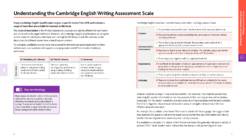
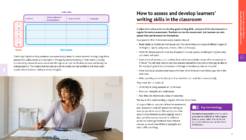

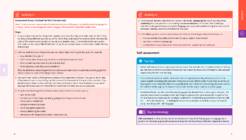


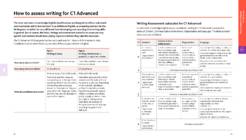
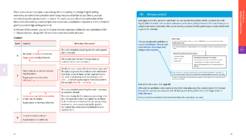
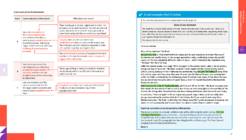
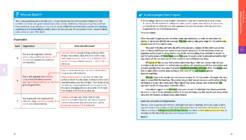
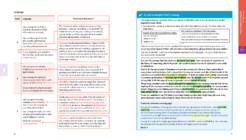
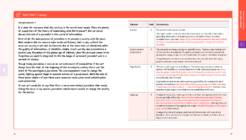







Kõik kommentaarid