ELT
Methodology (FLGR.01.041)
27.12.2012
Home Assignments .I Youtube clips:I
personally think that Estonian learners are also
digital learners.
They spend more time at the
computers or laptops or
iPads etc.
than read
books or
move outside . And
another thing is that teachers are
less capable in using technological appliances. But the
latter mentioned
fact is an advantage for us – teachers as well. It gives
us an
opportunity to
provide our students to
experience success . They
can help and
assist us if we need some technological help.
Another thing is that in
schools , in classes generally students are not
allowed to use their
appliances, so it
means they have to communicate verbally as well. I
think that teachers should be
creative to blend so-called digital
learning /teaching with old-
fashioned learning/teaching.
Sir Ken Robinson claims
in the clip that “ creativity in education is as important as
literacy, we should treat it with the same status .”
I totally agree with all what he
said. We have
very strict education
systems that don't allow a room for mistakes and they categorize
people based on their achievements in exams . There is nothing like
potentials, creativeness, possibilities or even 2nd chances. Families
put high expectations on academic achievements and they always compare their kids with other 's kids. A minority in each community
will be really dedicated to help their kids explore their horizons.
It is true that we
should re-think the
fundamental principles in which we educate our
children . Our
task is to educate the children so that they can
face this future.
II 10
effective classroom management techniques.
Set and agree the house rules and class regulations with the class.
Choose class activities that encourage any good relationships.
Be dedicated and care for your students.
Accept and even celebrate individual differences .
Realise that people learn in different ways
Create more student -centred activities.
Provide a diverse lesson with a variety of activities
Be always prepared for the lesson.
Let learners know about your teaching style, the course content and your reasons for doing some activities….
Offer feedback after oral or written assignments or pair-, group work .
References:
Kahny, Jim. Classroom dynamics : An interview with Jill Hadfield. Available at
http://ltprofessionals.com/journalpdfs/vol1no1/features/winter2000kahny.pdf
accessed 27.12.2012
ESOL Teaching Skills TaskBook. Classroom dynamics: unit 1 a).
Available at
http://akoaotearoa.ac.nz/download/ng/file/group-4/n2431-esol-teaching-skills-taskbook-unit-1-a---classroom-dynamics.pdf
accessed 27.12.2012
III Language teaching methods.
Youtube:
http://www.youtube.com/watch?v=XiQvG-fvzLM
Kids lesson (direct method)
Language
is primarily speech
Reading skills are developed through practice with speaking
Realia
is used to convey the meaning
Demonstration
instead of translation or explanation
Complete sentences instead of vocabulary lists
The purpose of language learning is communication
Pronunciation
Self- correction
The goals of the teacher are
communication, demonstration instead of translation (the teacher used
pictures and pointed to yourself….), they studied complete
sentences. It is a teacher-centred method. (T. was the leader , asked questions ). The teacher and students were sociable and easy - going .
Students´ presentations were approved for several times . When an error occurred the teacher encouraged students to correct it
themselves. No native language was used.
- Traditional: audio -lingual method
http://www.youtube.com/watch?v=Mqd7OdJoLn0
Audiolingual method
Communicative
language use
Automatic use ( habit formation)
Teacher
is a model for imitation
Dialogues, drills (substitution, transformation, chain , etc)
Right
answers are positively reinforced
Reading
and written work is based on oral work
Teacher-led
interaction
Simple forms (everyday language)
Focus on language structures
The goals are
drilling communicative skills, drilling and repeating simple forms
(everyday language). It was a teacher-led interaction, they focused on language structures: complete sentences: questions and answers. No
native language was used. The teacher encouraged students with
compliments: Good job! Well- done ! The teacher repeated yourself and
asked students to repeat the sentence or question when the error
occurred.
http://www.youtube.com/watch?v=ikZY6XpB214
TPR and Language Acquisition
The
students should enjoy the experience
Students
imitate the teacher non-verbally: physical
movement to react to verbal input
Students
get ready to speak after about 10-20 hours of instruction
Teaching
procedure: a) modelling, b) demonstration c) commands in random order to demonstrate comprehension, d) reading and writing commands, e)
students issuing commands
No
forcing to speak
Culture
is the lifestyle of people who speak the language natively
I agree that this method is perfect at the beginner
level. And it is pretty natural as well. The goals are having an
enjoyable lesson, understanding the instructions and following them .
In the beginning it is totally teacher-centred method. If a student
doesn´t understand the teacher repeats the instruction. This method
is similar to Dewey ´s learning technique:” learning by doing”.
This method emphasizes on listening skills and following the orders .
It is difficult to say how is evaluation accomplished but I think if
the student performs correctly then the task passed.
And once again no
native language was used.
- Humanistic methods: Community language learning
http://www.youtube.com/watch?v=JWn4DJgbGHM
Language Teaching Methods: Video 1c
http://www.youtube.com/watch?v=AZVoN-roMM0
The Community Language Learning by 3rd Year of English
Non-defensive
learning ( security , aggression, attention , reflection, retention )
The
teacher as a counsellor
From
dependent to independent learner , e.g. teacher-student- centeredness
Recorded
chunks of language (from mother tongue into the target language with
the help of the teacher)
Feelings are considered to be very important
Language
and culture are integrated
Instructions
in the native language, dealing with feelings in the native language
Integrative testing (write a paragraph/ oral interview)
Self-evaluation
Teacher
gives right versions in case errors appear
Student- designed syllabus
Comprehension
and speaking are of big importance
I had a look at several clips. In one of them native
language was used for explaining. The tape-recording was used.
Afterwards the teacher played the recordings and the students had to
write on the board what they heard. I enjoyed the clip where the
question about student´s feelings, opinions about the lesson and
method was asked. Students agreed that it was relaxed environment to study , no pressure . Errors were corrected in non-threatening manner .
Students could express their feelings and opinions freely and share their knowledge in the group. All the students were actively
involved. The main goals are speaking, active interaction, relaxing
learning environment.
- Humanistic methods: suggestopedia
http://www.youtube.com/watch?v=5yP_4-YOU6Q
Suggestopedia ( Production ) - Regiane
Language
learning is complicated because of psychological barriers
Relaxed and comfortable atmosphere
Mental powers should be released
Students
should trust and respect the teacher (infantilisation)
Peripheral
learning ( posters , grammar charts on the walls)
Students
get new identities
Lengthy
dialogues with the target language and native language side by side
(2 columns)
2
concert readings
Reading
I- students follow the mother text. Both right and left sides of the brain get activated
Reading
II- students relax and listen
Homework includes rereading the text before sleep and next morning
Language
should come naturally and easily
Everyday
culture (dressing, non-verbal language)
Focus
on vocabulary and speaking, creative writing
Meaning
with the help of the mother tongue
No formal tests
Errors
are not corrected immediately but afterwards
The goals are speaking and expressing
freely, fluently and naturally; relaxed and comfortable atmosphere.
It is more a student-centred method. Students are actively involved.
In this clip only some phrases in the native language were used for
helping the students who didn´t understand. The focus is on
vocabulary and speaking. Pictures, toys (on the desk ) were used for making it clearer. The teacher repeated the incorrect phrase or
sentence immediately. The teacher was positive and praised after the
successful performance.
- Humanistic methods: the silent way
http://www.youtube.com/watch?v=tvyoevK-dh0
TESOL Methods
http://www.youtube.com/watch?v=85P7dmPHtso
6 Dr. Gattegno's Silent Way Present Perfect Part 1
Teaching
should be subordinated to learning
Language
for self-expression
Students’
own inner criteria for correctness
Teacher
as a technician
Colour-coded
word/ sound charts, rods
Teacher
gives clues but does not model the language
Cooperativeness,
relaxed and enjoyable learning environment
Culture
and language are inseparable
The
syllabus develops according to the learning needs
Pronunciation
and structures are of utmost importance (but: no rules)
Building onto the native language
Evaluation
focuses on progress, not achievement
Errors
are part of the learning process , something to build on
Self-
correction
The goals are language for self-expression;
cooperativeness, relaxed and enjoyable learning environment;
self-correction. The students were actively involved, the teacher
provided silent guidance. The teachers in the both clips gave clues
but did not model the language. The teachers encouraged the students
themselves to teach the sounds and language structures. Practically
no native language was used again (only one explanation). The teacher
reacted when something was incorrect and asked the students to
correct it and repeat the sentence. The evaluation focuses on
progress, not achievement.
http://www.youtube.com/watch?v=jEsaTANIKAg
The Communicative Approach Part 1
http://www.youtube.com/watch?v=5bW15RpON9M
Communicative Language Teaching Activity Part 1
Functions over the forms
4
skills
Both accuracy and fluency are evaluated
Errors
of form are tolerated
The goals are fluency in
communication, the integration of different language skills,
authentic and meaningful communication. The teacher has two main
roles:
to facilitate the communication process in the classroom
to act as an independent participant within the learning-teaching group.
But the teacher talking
time (TTT) must be kept to a minimum. The classroom is
student-centred. The students share their knowledge, they brainstorm
together and present what they already know.
What are the goals of
teachers who use the method?
What is the role of
the teacher?
What are some characteristics of the teaching and learning process?
What is the nature of
teacher-student/ student-student interaction?
How are the feelings
of students dealt with?
How is language/
culture viewed?
What areas of
language/ skills are emphasized?
What is the role of
the student’s native language?
How is evaluation
accomplished?
How does the teacher
respond to students’ errors?
IV Summarising teachingenglish.org.uk articles about teaching
writing.
the article: Making Writing Communicative
In real life we write
e-mails, notes , covering letters , reports, curriculums and etc.
The main questions
that has put up in the article are:
1) Why do writing
tasks in the English classroom lack a communication purpose and a
target audience?
2) How to make the
writing more communicative?
Writing is difficult for students
because it involves physical effort and it takes a lot of time. At
the same time it is time-consuming and complicated task for teachers
as well. Teachers have to address both errors and the content. And
another point is that it is difficult to evaluate this competence. We need to give learners tasks that are intellectually satisfying,
especially when writing. We need materials that provide relevant ,
real and communicative practice.
Some solutions.
We need to make a distinction between writing to learn (other
things, like structures, spelling and vocabulary) and learning to
write. If we understand this distinction and make sure our
learners do too then the communicative purpose of writing will be
clearer. We need to work hard on developing ways of responding to the
content of what our learners write - the message - and not just the
level of language. Teachers
should help to find a real
audience for their students. We
need to use meaningful, realistic and relevant writing tasks, based
on our learners' needs and interests.
Another solution is to design individual tasks based on what
individual learners need to write. In addition we should talk about
writing with our learners:
- How we write well?
- Why we write?
- Who we write for?
- What makes it difficult?
Ideas for communicative writing tasks.
- Find ways to publish learners' writing, on websites such as
- The British Council site
The BBC site
- They can also publish in blogs, in newspapers , and on posters. Publish a class magazine of previous writing work.
- Encourage learners to write with a clear purpose and for a clear audience, for example in letters to newspapers, pen friends , to teachers and other students.
- Find challenging and rewarding tasks such as summarising, project work, translation, writing up notes from interviews, and preparing a briefing or talk.
- Use relevant and realistic tasks such as writing notes, recipes, e-mails, filling in forms and preparing signs for the class.
- Respond to the content of the work that your learners give you as well as correcting the errors they make, by adding your own comments to their homework or establishing a dialogue through e-mail and learner diaries.
- Make writing easier and more fun by doing group writing activities and group correction and editing of work.
- Support writing with reading.
2. the article: Planning a Writing Lesson
Writing skills have to be taught. Teaching writing is not just about
grammar or spelling etc. Learners need to be aware of and use the
conventions of the genre in the new language.
Pieces of writing of the same genre share some features , in
terms of layout , level of formality, and language. These features are more fixed in formal genre, for example letters
of complaint and essays , than in more 'creative' writing, such
as poems or descriptions. The
more formal genre often feature in exams, and may also be relevant to
learners' present or future 'real-world' needs, such as university study or business.
- Stages of a writing lesson.
- Generating ideas
- Focusing ideas
- Focus on a model text
- Organising ideas
- Writing
- Peer evaluation
- Reviewing
Stages of a writing lesson
You do not have to include all these
stages in every writing lesson, and it may differ according to the
genre of the writing and / or the time available. Learners work in pairs or groups as much as possible, to share ideas and knowledge,
and because this provides a good opportunity for practising the
speaking, listening and reading skills.
Generating ideas
This is often the first stage of a process approach to writing.
Before writing learners think about a situation, and tell a partner.
Give learners the essay title and pieces of scrap paper .
They have 3 minutes to work alone , writing one idea on each piece of paper, before comparing in groups.
Each group can then present their 3 best ideas to the class. It doesn't matter if the ideas aren't used in the final piece of writing, the important thing is to break through the barrier of ' I can't think of anything to write.'
Focusing ideas
This is another stage taken from a
process approach, and it involves thinking about which of the many
ideas generated are the most important or relevant, and perhaps taking a particular point of view.
Students in groups put the ideas generated in the previous stage onto a 'mind map'.
The teacher then draws a mind-map on the board, using ideas from the different groups. (At this stage he / she can also feed in some useful collocations - this gives the learners the tools to better express their own ideas).
Tell the students to write individually for about 10 minutes, without stopping and without worrying about grammar or punctuation.
Learners then compare together what they have written, and use a dictionary, the teacher or each other.
Organising ideas
Offer your learners typical examples of the genre then they can go about organising their own
ideas in a similar way.
- When preparing to write an essay, students group some of the ideas produced earlier into main and supporting statements.
Writing
In a pure process approach, the writer goes through several drafts before producing a final version . Those with access to a word processor can then use it, to facilitate the
redrafting process. The writing itself can be done alone, at home or
in class, or in pairs or groups.
Peer
evaluation
Peer
evaluation of writing helps learners to become aware of an audience
other then the teacher. The teacher can also respond at this stage by
commenting on the content and the organisation of ideas, without yet giving a grade or correcting details of grammar and spelling.
Reviewing
When
writing a final draft, students should be encouraged to check the
details of grammar and spelling. (The
teacher can use codes to help students correct their own writing and
learn from their mistakes).
Error
code Meaning
Sp Wrong spelling
WO Wrong
word order
VF Wrong
form of verb
WF Wrong
form of word
Pr Wrong preposition
WW Wrong
word
C Wrong collocation
A Article
error
/ Missing
word
// Start
new paragraph here
? Meaning
or handwriting unclear
!! You
should know what’s wrong here
Planning a writing lesson
©
BBC | British Council 2005
BBC
| British Council Think. Planning a writing lesson – Page 1
Genre analysis form
Look
at the 3 letters. Use the categories given below to analyse them and
find the
key
characteristics. Give examples where possible, for
example,
of grammar structures or vocabulary used.
- Communicative purpose (What does the writer hope to communicate /achieve?)
- Expected audience (Who will read it?)
- Layout (general format – e.g. does it have a title? What appears where on the page?)
- Overall organisation (e.g. what type of information is included in each paragraph?)
- Level of formality (formal / informal / semi-formal? Give examples from the text)
- Sentence structure (e.g. complex or simple)
- Specific grammatical structures (e.g. do any specific tenses predominate?)
- Specific vocabulary (Are there any words / expressions that appear frequently in this type of text? In general, is everyday or more specific vocabulary used?)
Teaching
pronunciation according to Jeremy Harmer The Practice of
English Language Teaching (2005).
The main questions, that the article
tries to find answers for, are:
- How good ought to be our students’ pronunciation?
- Is it necessary to teach pronunciation?
One important point is to make
yourselves understood but is it enough? The ´perfect ` pronunciation
depends on our students´attitude how they speak and how well they hear .
If intelligibility is the goal then
it suggests that some pronunciation features are more important than others . Some sounds have to be right to get your message across . Stressing words and phrases correctly is vital.
Intonation is an important meaning carrier too.
Problems
There are 2 particular problems in
pronunciation teaching and learning.
1. What St-s can hear: some
St-s have difficulty hearing pronunciation features which we want
them to reproduce. How to deal with this problem?
- Show them how sounds are made (demonstration, diagrams , explanation)
- Draw the sounds to their attention every time they appear on a tape or CD or in the conversation .
When they can hear correctly they are able to speak correctly.
2. The intonation problem is
the most problematic area for many teachers. The teachers should
offer their students opportunities to recognise moods and intentions
on tape (CD) or through the way we ourselves model them. We can get
students to imitate the way these moods are articulated.
The key to successful
pronunciation teaching is to have our students to listen and notice how English is spoken – either on audio or video or from
teachers themselves. The more aware they are the chance that their
own intelligibility levels will rise .
The phonemic alphabet: to use or
not?
Many students have problems of sound
and spelling correspondence, so for them it is useful to introduce
different phonemes and different symbols .
Another thing is dictionaries usually give the pronunciation of the words in phonemic symbols. When both
teacher and students know the symbols it is easier to explain what
mistake has occurred and why it has happened ; we can use the symbols
for pronunciation tasks and games . Students should only recognise
the different symbols not to produce them.
When to teach pronunciation
- Whole lessons: It can make sense to work on connected speech concentrating on stress and intonation over some 45 minutes. It does not mean that every minute has to be spent on pronunciation work. Students may work on listening skills before or work on aspects of vocabulary before going on word stress, sounds, spelling.
- Discrete slots: some teachers insert short, separate bits of pronunciation work into lesson sequences. Such slots can be useful, and provide a welcome change of pace and activity during a lesson.
- Integrated phases: many teachers get St-s to focus on pronunciation issues as an integral of a lesson. When listening something we can draw their attention to pronunciation features.
- Opportunistic teaching: teachers deal with the pronunciation problem because it has `come up` because tackling a problem at the moment when it occurs can be a successful way of dealing with pronunciation.
Examples of pronunciation teaching
We need to draw our students’
attention to include individual sounds, word stress, and intonation
but they also need help with connected speech.
Working with sounds
We often ask our students to focus on
one particular sound. We demonstrate how it is made and show how it
can be spelt or show the position of the lips when this sound is made
and get St-s to make the sound and say words.
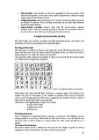
The phonemic chart is laid out in
relation to where in the mouth the forty - four sounds of southern
British English are produced.
Adrian
Underhill (Macmillan Heinemann)
What makes this chart special ? Each
sound has a separate square , the teacher or the student can point to
the square to ask students to produce that sound or recognise which
sound is being produced. The teacher might point 3 sounds to make a
word or vice versa. It can be left on the classroom wall .
There are several opportunities to
play with sounds:
- to play sound bingo
- noughts and crosses
- odd man out
Working with stress
Stress is important in individual
words, in phrases, in sentences. By shifting it we can change
emphasis or meaning. When students meet new words in class the
teacher will mark the stress of those words or to show where the weak vowel sounds occur in words.
Working with intonation
We need to draw our St-s’ attention
to the way we use changes in pitch to convey meaning, to reflect the
thematic structure, and to convey mood.
One simple way of doing this is to
show how many different meanings can be squeezes out of just one word
(such as yes).
The point of exercises is to raise the students’ awareness of the power of intonation and to encourage
them to vary their own speech.
There are other ways to teach
intonation:
- making dialogues without words – humming the ´ tune ´ of what they want to say
- using arrows on the board and arm movements which ´draw´ patterns in the air to demonstrate intonation
- exaggerating intonation patterns
Sounds and spelling
There is no complete one-to-one
correspondence between letters and phonemes and it causes many
problems for learners. Teachers can help students by giving them
typical spellings for sounds every time they work on them.
Connected speech and fluency
The sounds of words change when they
come into contact with each other. We can adopt a three-stage
procedure for teaching St-s about features such as elision and assimilation .
I stage – comparing: we show
learners sentences and phrases and have them pronounce the words
correctly in isolation. Then play them a recording of someone saying
the sentences in normal connected speech. We ask St-s what
differences they hear.
II stage – identifying: St-s
listen to recordings of connected speech, and they have to write out
a full grammatical equivalent of what they heard.
III stage – production: in
our modelling and teaching of phrases and sentences we will give St-s
the connected version, and get them to say the phrases and sentences
in this way.
Fluency is also helped by having St-s
say phrases and sentences as quickly as possible and then speeding
up. Getting St-s to perform dialogues and play extracts also make
them aware of speaking customs and help them to improve their overall
fluency.
References
Harmer, Jeremy. 2005. The Practice of
English Language Teaching, Longman
14
 50 punkti
Autor soovib selle materjali allalaadimise eest saada 50 punkti.
50 punkti
Autor soovib selle materjali allalaadimise eest saada 50 punkti.
 ~ 14 lehte
Lehekülgede arv dokumendis
~ 14 lehte
Lehekülgede arv dokumendis
 2013-06-02
Kuupäev, millal dokument üles laeti
2013-06-02
Kuupäev, millal dokument üles laeti
 11 laadimist
Kokku alla laetud
11 laadimist
Kokku alla laetud
 0 arvamust
Teiste kasutajate poolt lisatud kommentaarid
0 arvamust
Teiste kasutajate poolt lisatud kommentaarid
 kriim
Õppematerjali autor
kriim
Õppematerjali autor
 annaabi.ee











Kõik kommentaarid