Vajad kellegagi rääkida?
Küsi julgelt abi LasteAbi
Logi sisse

Võrdlev tööõigus - inglisekeelne (0)

1 Hindamata
Punktid
  • Social Policy aspects in EU Treaties
    Social and employment policy:
    Objectives:

    Treaty of Rome: belief that improved working and living conditions would arise from the functioning of the common marketcooperation in the areas of employment, labour law and working conditions, vocational training, social security , occupational health and safety , and social dialogue. Improved mobility and professional opportunities of employees and introduced the equal pay for men and women – directly applicable .
    Single European Act: harmonisation of health and safety conditions at work ; possibility for social partners at European level to negotiate collective agreements + Community policy for economic and social cohesion.
    Maastricht treaty: promotion of high level of employment and social protection was officially introduced as one of tasks conferred to the European Community.
    Amsterdam treaty: encourages cooperation between Member states in order to combat social exclusion.
    European Council – Lisbon: aimed to make the EU the most competitive economy in the world and achieving full employment by 2010.
    Treaty of Nice : adopted European social policy agenda up to 2005, converting the political commitments made at Lisbon into concrete action .
    Treaty of Lisbon: emphasizes EU’s social objectives, among which full employment (social employment policy), solidarity between generations and protection of the rights of the child are mentioned + Charter of Fundamental rights as having the same binding force as the treaties: recognizes the so-called “solidarity rights” such as workers ’ right to information and consultation and the right to collective bargaining and to fair and just working conditions as well as to social security and social assistance.
    Employment policy:
    Objectives:

    EURES: to encourage free movement and help workers to find a job in another Member State.
    The White Paper on Growth , Competitiveness and Employment: unemployment in European Union.
    The European Council of Essen : five key objectives were introduced: invest in vocational training; increase employment- intensive growth; reduce non- wage labour costs ; increase active labour market policies; fight youth and long- term unemployment.
    The contribution of the Amsterdam Treaty: coordinating Member States’ employment policies at Community level.
    The European Employment Strategy 1997-2004: employment guidelines ; national action plans; Joint Employment Report ; recommendations.
    The re- launch of the European Employment Strategy in 2005: focus on growth and jobs , and with the aim to simplify and streamline the Lisbon Strategy.
    The Employment Guidelines 2005-2008 and 2008-2010: devoted specifically to employment to boost the Lisbon Strategy. They aimed to contribute to fostering full employment, to improve quality and productivity at work and to strengthen social and territorial cohesion.
    Employees’ participation:
    Objectives:
    • The EU supports and complements Member States’ activities relating to employee involvement with a view to contributing to the achievement of the core objectives of the European social policy, which entail, among others , improved living and working conditions, proper social protection, lasting high employment and the combating of exclusion.
    • Flexicurity: an integrated strategy for enhancing, at the same time, flexibility and security in the labour market. It attempts to reconcile with workers’ need for security – confidence that they will not face long periods of unemployment

  • Social Policy aspects in EU strategy EU 2020
    Priority is “inclusive growth”. It introduced three initiatives under the areas of employment and social affairs:
    • An agenda for new skills and jobs, which aims at revamping flexicurity policies to make the labour market function better, help people develop the skills of tomorrow and improve job quality and working conditions.
    • Youth on the move , which will contribute to better education and training help/encourage young people to study abroad and make it easier to find a job ( access to other countries to improve their linguistic skills etc)
    • European platform against poverty and social exclusion, which helps disseminate best practices and makes funding available to support social inclusion and combat discrimination.

    Creating more and better jobs is one of the main goals of the EU 2020 Strategy.
    The integrated guidelines contain 3 EU headline targets on employment:
    • Labour market: increase the labour market participation of people aged 20-64 to 75% by 2020; through , inter alia, greater participation of young people, older workers and low-skilled workers and better integration of legal migrants.
    • Social inclusion and combating poverty: lift at least million people out of the risk of poverty and exclusion.
    • Improving the quality and performance of education and training systems: reduce drop-out rates to 10% and increase the share of 30-34 year-olds having completed tertiary or equivalent education to at least 40%.

  • Legal sources for Italian individual labour law
    The Italian Civil Code – contains a specific section that governs several employment related aspects (job category , employee’s duties, loyalty related obligations etc.)
    In addition – certain laws that contain provisions that govern specific employment related matters (e.g. laws on dismissals, social security contribution payment and other aspects of the employment relationship)
  • Working conditions in Italy :
    Working timecannot exceed 4 hours per week (Collective Agreements can set further restrictions on working hours); executives and middle managers are not subject to the regulation on working hours. Employees are entitled to a minimum period of paid annual holiday which is set forth by law and amounts to 4 weeks for each year of service (Collective Agreements may grant the employees with a longer period of holidays ). Employees cannot waive their right to the aforesaid holidays.
    Wages – the salary agreed upon the individual employment agreement cannot be lower than the salary contained in the applicable Collective Agreement, where applicable. Salary is usually paid in 12 months instalments. Additional instalments ( 13th and 14th instalment) may have to be paid pursuant to the applicable Collective Agreement. The employer must withhold the income tax and the social security contributions on behalf of the employee and pay the relevant sums to the competent Tax and Social Security authorities.
    Probationary period – under the individual employment contract a newly engaged employee may be subjected to probationary period. During this period each of the parties may terminate the contractual relationship at will without any burden to provide a prior notice. If a probationary term is agreed for a minimum term, the right of withdrawal cannot be exercised by either party before the expiry of such term. The probationary period – which successfully expired – is to be included in the employee’s length of service. The duties assigned to the employee must be described in detail.
  • Remedies in case of illegal dismissal in Italy
    • Discriminatory dismissal – the dismissal is deemed null and void and the employer has the obligation to rehire the workers. In alternative, the employee can decide to ask for payment of up to 15 months’ pay, considering their last salary ( decision has to be made in 30 days from the employer’s decision). Also, judge can offer this payment. To calculate the amount the judge considers the last salary paid to the worker from the date of dismissal up to the date of effective reinstatement, deducted the earnings resulting from working activities performed during the dismissal period.
    • Just cause or subjective justified reasons – in case of dismissal for those reasons, because there is no case to answer, or because the violation falls within those for which measures short of dismissal can be imposed on the employee, in line with what is laid down by collective agreements or codes of conduct, the judge nullifies the unfair dismissal. The employer must reinstate the employee, but the employee can request, in alternative, a compensation award amounting to 15 months’ pay. The employment contract is terminated whereas the worker fails to return to work within 30 days from the employer’s communication, or they do not claim for compensation. In addition, the employer must pay a compensation equal to the remuneration accrued from the date of dismissal to the date of effective reinstatement (never more than 12 months’ pay), deducted the earnings resulting from working activities performed during the dismissal period as well as potential wages earned if he had found a new occupation . Where the justified subjective reasons or just cause is put forward by the employer, the dismissal, if unjustified, is not regarded as null and void. The judge orders the termination of the employment contract from the date of dismissal and the employer has to pay compensation ranging from 12 to 24 months’ pay considering the last salary, and some other criteria (i.e. length of service, number of employees, and the size of the business). In case of a discriminatory dismissal that is null and void because of a violation of the requirement to provide justification or because of a procedural defect, which is typical of disciplinary dismissal, the judge declares it null and void and the employer must pay a compensation ranging from 12 to 24 months’ pay considering the last salary, depending on the seriousness of the violation of the employer.
    • Objective justified reasons – when the dismissal is unfair or unjustified because of the absence of objective reason : the employer must pay the employee an indemnity of between 12 to 24 months’ salary, depending on circumstances such as age, length of service, and number of employees and size of company. In other cases the court will order the employer to: reinstate the employee (in alternative, the employee can refuse reinstatements and accept an indemnity equal to 15 months’ salary); pay the employee and indemnity (equal to the salary due from the date of dismissal to the date of reinstatement, to a maximum of 12 months’ salary, deducted the earnings resulting from working activities performed during the dismissal period as well as potential wages earned if he had found a new occupation).

  • Termination of employment contract on initiative of an employer
    • Just cause: when an employee is dismissed as a result of his/her misconduct and the continuation of the employment relationship is impossible because there is a very serious breach of one of the employee’s duties (i.e. in case of a theft or when there is a serious insubordination).
    • Objective reasons: it’s related to the company’s organizational requirements , in case of economic reasons, reorganizational reasons or a role or department ceasing to exist.
    • Subjective reasons: in case of serious violation of the worker’s contractual obligations. In some cases dismissal for Just Cause has disciplinary nature. In this case the employer must respect special procedures provided by Italian law to first outline the disciplinary breaches committed by an employee and then impose disciplinary punishments, if any, including dismissal. Dismissal for discriminatory reasons – when the employees are dismissed on the grounds of religion, political and personal belief, age, disability , gender, sexual orientation, race , language and trade union affiliation; when the employee’s getting married or getting pregnant or after the request of maternity or parental leave. Dismissal for disciplinary reasons – in case of serious, culpable breach of the contract of employment by the worker; it’s the maximum sanction that can be imposed on the worker and is founded in the employer’s managerial authority .
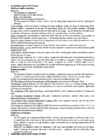
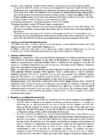
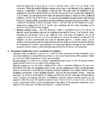
  • Võrdlev tööõigus - inglisekeelne #1 Võrdlev tööõigus - inglisekeelne #2 Võrdlev tööõigus - inglisekeelne #3
    Punktid 100 punkti Autor soovib selle materjali allalaadimise eest saada 100 punkti.
    Leheküljed ~ 3 lehte Lehekülgede arv dokumendis
    Aeg2015-06-10 Kuupäev, millal dokument üles laeti
    Allalaadimisi 24 laadimist Kokku alla laetud
    Kommentaarid 0 arvamust Teiste kasutajate poolt lisatud kommentaarid
    Autor minaolenliisu Õppematerjali autor
    Itaalia tööõigus ja EL tööõiguse põhisuunad

    Sarnased õppematerjalid

    Employee Relations
    78
    pdf

    Employee Relations

    Employee Relations 1 BSB50618 DIPLOMA OF HUMAN RESOURCES MANAGEMENT BSB51918 DIPLOMA OF LEADERSHIP AND MANAGEMENT BSBWRK510 Manage employee relations ii This workbook has been designed for use in conjunction with information and materials provided at lecture and tutorial sessions. Students should attend all timetabled sessions so they can obtain all subject information. Students should read and understand all materials provided. Information that is available in digital form is not included in this workbook in the interest of the environment. Publisher: Young Rabbit Pty Ltd

    Avalik juhtimine
    Õigusalase inglise keele sõnad väljendid eesti keelse tõlkega-units 12-18
    11
    docx

    Õigusalase inglise keele sõnad/väljendid eesti keelse tõlkega (units 12-18)

    233. material ­ important or relevant 234. labour law = employment law 235. employment contract ­ tööleping 236. employee ­ töötaja 237. employer ­ tööandja (person or company which has employees and pays them) 238. work under the supervision and control of the employer 239. remuneration ­ töötasu (payment of services) 240. individual and collective labour law ­ individuaalne ja kollektiivne tööõigus 241. individual labour relations ­ individuaalsed töösuhted 242. compulsory full-time schooling 243. consent of a legal representative ­ õigusliku esindaja luba 244. for an indefinite period ­ määramata ajaks 245. fixed-term employment contract ­ tähtajaline tööleping 246. replacement by another employee ­ asendaja 247. selection procedure ­ konkursi korras tööle võtma 248. notify the employee ­ töötajat teavitama 249

    Inglise keel
    Business peculiarities in Russia
    55
    pdf

    Business peculiarities in Russia

    TRADERUN MOODUL TRADERUN MODULE BUSINESS PECULIARITIES IN THE EU, RUSSIA AND EASTERN PARTNERSHIP COUNTRIES ÄRI ERIPÄRAD EUROOPA LIIDUS, VENEMAAL JA IDAPARTNERLUSRIIKIDES Lecturers: Ryhor Nizhnikau (responsible) Giorgi Gaganidze, Sergei Proskura, Andres Assor P2EC.00.202 (UT code), RIE 7044 (TLU code) Reading materials: Business peculiarities in Russia Lugemismatejal: Äri eripärad Venemaal Created by Sergei Proskura Tartu 2013 TABLE OF CONTENTS INTRODUCTION ....................................................................................................................................... 3 1. LEGALIZATION OF A COMPANY WITH A FOREIGN OWNER IN RUSSIA ....................................... 4 1.1. Laws ...............................................

    Inglise keel
    Investors Handbook-A Legal Guide to Business in Georgia
    133
    pdf

    Investors Handbook. A Legal Guide to Business in Georgia

    Investor's Handbook A Legal Guide to Business in Georgia · Start Up · Privatization · Labor Legislation February 2011 1st Edition 1 CYAN MAGENTA YELLOW BLACK 1 This brochure is a publication by the Georgian National Investment Agency (GNIA) and was prepared by Georgian law firm Mgaloblishvili, Kipiani, Dzidziguri (MKD). The Brochure is intended to be a general guidance on start up, privatization and labor relations. It is thus not expected to be a substitute for detailed research or exercise of professional judgment on above mentioned topics. Companies and individuals operating in Georgia or planning to operate, are strongly advised to obtain current and detailed information from experienced professionals. None of the organizations mentioned above, nor their members, employees or agents accept liability for the consequences

    Inglise keel
    Euroopa Liit
    14
    docx

    Euroopa Liit

    EL eksam European Institutions Council of the European Union – Euroopa Liidu Nõukogu (ministrid) - Legislative ja budgetary - Peab läbirääkimisi õigusaktide üle ja võtab need vastu (väga oluline otsustaja) otsustajaks vaja majorityt - Koordineerib liikmesriikide poliitikaid (majandus, haridus, kultuur, tööhõive jne) - Arendab EL ühist välis- ja julgeolekupoliitikat - Sõlmib rahvusvahelisi lepinguid (annab komisjonile volitused pidada EL nimel läbirääkimisi) - Võtab vastu eelarve (koos parlamendiga) - Liikmeteks valitsuse ministrid igast ELi liikmesriigist vastavalt arutamisele kuuluvale poliitikavaldkonnale st esindab riike; permanent representaties (COREPER) - Eesistuja!!! - Asutati 1958 ECSC raames Council of Europe – Euroopa Nõukogu - Rahvusvaheline organisatsioon; 47 riiki Euroopast ja Aasiast - Tegevusvaldkonnad: inimõigused, sotsiaalõigused, k

    Euroopa liit
    Õigus-teemalised Inglise keelsed õigusterminid
    13
    docx

    "Õigus" teemalised Inglise keelsed õigusterminid

    https://quizlet.com/388172484/inka-test-flash-cards/? i=25w06u&x=1jqY&fbclid=IwAR1qQksMLyeDlPJwkOTW_Fq18r1xJUkZrlbt6nX49ZocC _ojSaZoykYBJXk Prosecutor, judge, sworn advocate, notary NOTARY JUDGE PROSECUTOR SWORN ADVOCATE/ ATTORNEY-AT- LAW WHAT DO THEY A notary public of the A judge presides over The prosecutor has Attorney at law or DO? common law is a a courtroom, hearing three main tasks: attorney-at-law, public officer evidence, making

    Akadeemiline inglise keel
    Business peciliarities in Ukraine and Bealrus
    106
    pdf

    Business peciliarities in Ukraine and Bealrus

    TRADERUN MOODUL TRADERUN MODULE BUSINESS PECULIARITIES IN THE EU, RUSSIA AND EASTERN PARTNERSHIP COUNTRIES ÄRI ERIPÄRAD EUROOPA LIIDUS, VENEMAAL JA IDAPARTNERLUSRIIKIDES Lecturers: Ryhor Nizhnikau (responsible) Giorgi Gaganidze, Sergei Proskura, Andres Assor P2EC.00.202 (UT code), RIE 7044 (TLU code) Reading materials: Business peculiarities in Ukraine and Belarus Lugemismatejal: Äri eripärad Ukrainas ja Valgenenes Created by Andres Assor Tartu 2013 TABLE OF CONTENTS INTRODUCTION ................................................................................................................... 4 1. UKRAINE ...................................................................................................................... 5 1.1. General information .......

    Inglise keel
    Sissejuhatus erialasesse õiguskeelde-inglise keel
    12
    docx

    Sissejuhatus erialasesse õiguskeelde (inglise keel)

    descriptive law (kirjeldav õigus) - laws which simply describe how people or even natural phenomenas usually behave nation (riik) - country with its own goverment citizen (kodanik) - person native of a country; realationship between country and a person stranger (välismaalne) - person who is unfamiliar, from another country penalty (karistus) - punishment fixed by law, as for a crime or from any soical groups goverment (valitsus) - organization which controlls a stre or community System of Courts (kohtusüsteem) - organization applying law in the name of states to commit a crime (kuritegu läbi viima) - breaking a law, usually given out by the goverment fine (trahv) - certain sum of money person pays for breaking a law corruption (korruptsioon) - dishonest or unethincal conduct by a person entrusted with a position of authority suspension (kõrvaldamine) - form of punisment that people recieve for violating rules and regulations Civil Action (tsiviilhagi) - lawsuit between two privat

    Erialane õiguskeel


    Kommentaarid (0)

    Kommentaarid sellele materjalile puuduvad. Ole esimene ja kommenteeri


    Sellel veebilehel kasutatakse küpsiseid. Kasutamist jätkates nõustute küpsiste ja veebilehe üldtingimustega Nõustun