Gümnaasium
Prague
referaat
Autor:
Klass:
Juhendaja :
2010
Contents
1.
Contents
2.
Introduction 3. Compendium about Prague
4.
Important about
Czech Republic and Prague
5.-7. History
8. Independence
9. Main
sights 10. the Czech Republic
11. List of
famous people from Prague
12.
Geography 13.
Weather and climate
14. Population
15. Culture
Introduction
The
Czech Republic
lies at the
heart of Central
Europe and at its
center is the beautiful and
historic city of Prague. With a population of
some 1.3 million residents, the city lies on either side of the
Vltava River in the
middle of
Bohemia that is one of the three
historic Czech territories; the
others being Moravia and Silesia. The
city has
seven "
Chapter Divisions" or districts.
I
read one girl blog and she described Prague so beautifuly. She talked about her adventures. When
i was reading that it seemed so real , that i was there to.
The
city’s charms can occasionally be obscured by too many tourists,
congested traffic and tacky commercialism. Packed in among thousands
of other visitors, trying like crazy to see the city in three days and worrying about getting ripped off, it’s not surprising, may
think the city is overrated. Just relax, take a deep breath. While the city centre is a mélange of stunning architecture , from Gothic , Renaissance and baroque to neoclassical, art nouveau and cubist,
beyond the medieval lanes of the Old Town and the Castle District,
there’s an entire other cosmopolitan city to explore. Search out
the riverside parks , lively bars and beer gardens, music clubs, museums and art galleries. Harness Prague’s excellent
public-transport system to explore emerging suburbs such as Žižkov,
Vinohrady, Smíchov and Holešovice. You’ll be guaranteed cheaper
prices, a more local ambience, and an assured escape from any more
feelings of doubt ..
Instead
of summer practice i would like to go on trip to Prague. I think it
would be more educational then sita t school and trantslate story or
doing exercises. Because students can use language in their real life
and they will get experiences . We can see beautiful and attractive
Prague city and visit famous places . I think it rare opportunity to
write an essay and to get trip with your classmates. If i have chance
to go to Prague i would definitely vist an Old Town, Charles University Botanical Garden ,
Praguage
Compendium about
Prague
Prague
is the capital
and largest
city of the Czech
Republic. Nicknames for Prague have
included Praga
mater urbium/
Praha matka měst ("Prague –
Mother of
Cities") in Latin/Czech,
Stověžatá Praha ("City of a
Hundred Spires")
in Czech or Zlaté město/Goldene
Stadt ("
Golden City") in
Czech/
German .
Situated on the Vltava
River in central Bohemia,
Prague has been the
political , cultural and
economic centre of the
Czech state for more
than 1100
years . For many decades
during the
Gothic
and Renaissance
eras, Prague was the
permanent seat of two Holy
Roman Emperors and thus was also the capital
of the Holy
Roman
Empire .
Today , the city proper is
home to about 1.3 million people, while its metropolitan
area is
estimated to have a population of
over 1.9 million.
Since 1992, the extensive historic centre of
Prague has been included in the
UNESCO list of World
Heritage Sites , making the city one of the
most
popular tourist destinations in Europe, receiving more than
4.1 million international visitors annually, as of 2009[update].
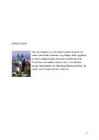
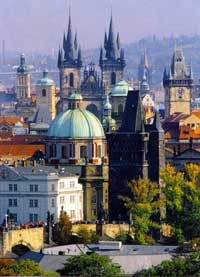
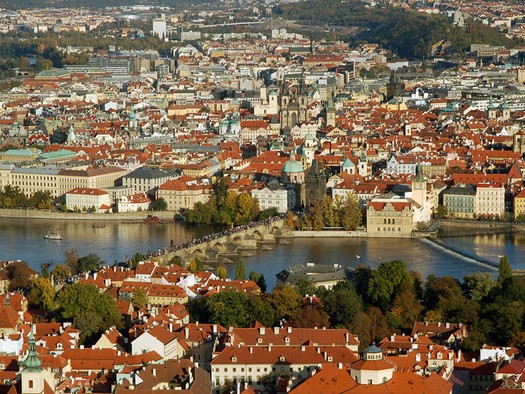
Figure1.
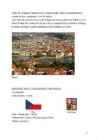
IMPORTANT ABOUT CZECH REPUBLIC AND PRAGUE
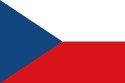
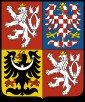
Czech Republic
Česká republika (Czech)Flag
Coat of arms
Motto: "Pravda
vítězí" (Czech)
"
Truth prevails"
Anthem : Kde
domov můj? (Czech)
"Where
is my home?"
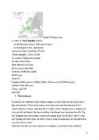
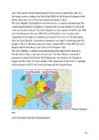
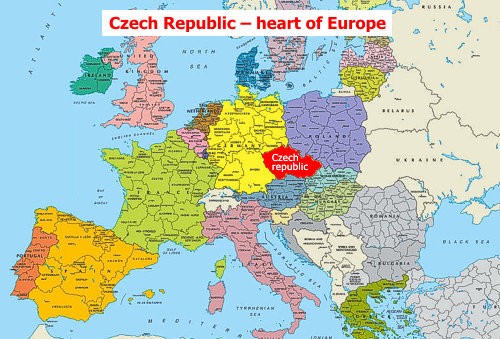
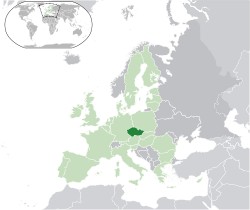
Figure2. European map.
Location of Czech Republic (
green )
- on the European
continent (
light green &
grey )
-
in the European
Union (light green).
Capital
(and largest city) Prague
(
Praha).
Official language(s) Czech,
Slovak.
Government Parliamentary
republic.
President Václav
Klaus .
Prime Minister Jan
Fischer.
EU
accession
1 May 2004.
Total
area- 78,866 km2 (116th).
30,450 sq mi.
Water 2%.
Population
2009 estimate 10,506,813 (78th)- 2001
census 10,230,060.
Density -132/km2 (77th). 341/sq mi.
Calling code +420.
History
Despite the city's turbulent history, Prague's progress in recent
years has been more stately than
revolutionary . The booming
tourism sector and a
solid industrial base have
left its citizens in better
economic
shape than the
rest of the
country .
Unemployment is
minimal ,
the shops are
full , and façades that were crumbling a decade ago
have been
given face-
lifts . Big new
shopping malls and
multiplex cinemas are
popping up all over the
place , there's a huge new
sporting and
events arena, the
metro system is being extended and a
new floodprotection system has been installed.
There are
downsides, of
course . Rumours of
corruption in City Hall are rife,
affordable
housing remains in short supply, the health system is
under strain, and traffic congestion and
crime rates are up. Despite
this, the mood of the city remains buoyant.
Václav
Havel 's 13
years as
president came to an end in
February 2003, when his place
was taken by
hard -nosed, right-
wing economist Václav Klaus. More
change was to
come : the
decision on whether the Czech
Republic should
join the European Union was
settled by a referendum - with 77% voting in favour - and on 1 May
2004 the Czech
Republic
became a
member of the EU.
However , the parliamentary elections of
June 2006
ended in
stalemate - it
looks like a
rocky road ahead for Czech politics in
the next few years.
The oldest evidence of human habitation in the Prague
valley dates from 600, 000 BC, but more numerous clues were left by hunters
during the last Ice Age, about 25, 000 years ago. Permanent communities were
established around 4000 BC in the northwestern parts of Prague, and
the area was inhabited continuously by various Germanic and
Celtic tribes
before the arrival of the
Slavs . The name Bohemia
came from a Celtic tribe called Boii, and is
still used today for the
western part of the Czech
Republic.
In the 6th
century , two
Slav tribes settled on opposite
sides of a
particularly appealing stretch of the Vltava River. The Czechs
built a
wooden fortress where the
residential area Hradčany stands today,
and the Zlíčani built theirs upstream at what is now Vyšehrad.
They had barely dug in when nomadic Avars thundered in, to
rule until the Frankish trader
Samo united the Slav tribes and drove the Avars
out. Samo
held on for 35 years before the Slavs reverted to
squabbling.
In the 9th century Prague was part of the short-lived
Great Moravian Empire. Under its second ruler, Rastislav (r 846-70),
emissaries were invited to come from Constantinople, and Christianity
took root in the
region . The Moravians (the
ancient lands of Moravia
now form the
eastern part of the Czech
Republic) were ultimately undone by internal
conflicts, especially with the Czechs, who
finally broke
away from
the empire.
Prague Castle (Pražský hrad, or just hrad
to the Czechs) was built in the 870s by
Prince Bořivoj as the main
seat of the Přemysl dynasty. Vyšehrad sometimes served as an
alternative in the
10th and
11th centuries .
Christianity became
the state
religion under the rule of the pious Wenceslas (Václav in
Czech),
duke of Bohemia
(r c 925-29), now the
chief patron saint of the Czech people.
Wenceslas was the '
Good King Wenceslas' of the well-
known Christmas carol written in
1853 by
English clergyman John Mason Neale. Neale, a
scholar of eastern European
church history, had read about St
Wenceslas' legendary piety, and
based his carol on the story of the
duke's page
finding strength and warmth by
following in the footsteps
of his master as they carried food,
wine and
firewood to a
poor peasant on a freezing
cold Boxing Day. The unfortunate Wenceslas was
murdered by his own
brother , Boleslav; the
Chapel of St Wenceslas in
St
Vitus Cathedral is decorated with scenes from the saint's life.
In
950 the German king Otto I conquered Bohemia
and
incorporated it into the Holy Roman Empire. By 993 Přemysl
princes had forged a genuine Slav alliance, and ruled Bohemia
on the Germans' behalf until 1212, when the pope
granted Otakar I the
right to rule as a king. Otakar bestowed
royal privileges on the
Staré Město (Old Town), and Malá Strana (
Little Quarter ) was
established in 1257 by Otakar II.
Přemysl lands stretched at one
point from modern-day Silesia
(a region on the Czech-Polish border) to the Mediterranean Sea. Their
Austrian and Slovenian domains, however, were
lost when Otakar II
died and his
army was thrashed at the
1278 Battle of Moravské Pole
(fought
near modern-day Dürnkrut in Austria)
by the Austrian Habsburgs.
The
late 14th and
early 15th centuries witnessed the Church-
reform movement led by Jan Hus. Hus' eventual conviction for heresy and his
death at the
stake in 1415 sparked a nationalist rebellion in Bohemia
led by the Hussite preacher Jan Želivský. In 1419
several Catholic councillors were flung from the
windows of Prague's New Town Hall by
Želivský's followers, thus introducing the word 'defenestration'
(the act of throwing someone or
something out of a
window ) to the
political lexicon.
After the death in 1419 of Holy Roman
emperor and king of Bohemia
Wenceslas IV, Prague was ruled by various Hussite committees. In
1420 combined Hussite forces led by
military commander Jan Žižka
successfully defended Prague against the
first anti-Hussite crusade,
launched by Sigismund, the Holy Roman emperor, during the Battle of
Vítkov
Hill .
In the 1420s a split
developed in the Hussite ranks
between radical Taborites, who advocated total war on Catholics, and
moderate Utraquists, who consisted mainly of nobles who were more
concerned with transforming the Church. In 1434 the Utraquists agreed
to
accept Sigismund's rule in return for
religious tolerance; the
Taborites kept fighting, only to be defeated in the
same year at the
Battle of Lipany.
Following Sigismund's death, George of Poděbrady
(Jiří z Poděbrad) ruled as Bohemia's
one and only Hussite king, from
1452 to 1471, with the backing of
Utraquist forces. He was centuries ahead of his time in suggesting a
European
council to solve international problems by diplomacy
rather than war, but he couldn't convince the
major European rulers or the
pope. After George's death two
weak kings from the Polish
Jagiellonian dynasty ruled Bohemia, though real
power lay with the
Utraquist nobles, the so-called Bohemian Estates.
Independence
Czechs had no
interest in fighting for their Austrian masters in WWI,
and neighbouring Slovaks
felt the same about their Hungarian rulers.
Many defected to renegade legions fighting against the Germans and
Austrians.
Meanwhile Tomáš Garrigue Masaryk, Edvard Beneš and the Slovak
Milan
Štefánik began to argue the
case - especially in the USA
with President
Wilson - for the Czechs' and Slovaks' long-cherished
dream of independence. Wilson's interest was in
keeping with his own
goal of closer ties with Europe
under the
aegis of the
League of Nations (the unsuccessful precursor
to the United Nations). The most workable
solution appeared to be a
single federal state of two equal republics, and this was spelled out
in agreements signed in Cleveland
in 1915 and then in Pittsburgh
in 1918.
As WWI
drew to a close Czechoslovakia declared its independence, with
Allied
support , on 28 October 1918. Prague became the capital, and
the popular Masaryk, a
writer and political philosopher, became the
republic's
first president.
On 1
January 1922
Greater Prague was established by the absorption of
several surrounding towns and villages,
growing to a city of 677,
000. Like the rest of the country, Prague
experienced an industrial
boom until the Great Depression of the
1930s . By 1938 the population
had
grown to one million.
Main sights
Since the
fall of the
Iron Curtain, Prague has become one of Europe's
(and the world's) most popular tourist destinations. It is the
sixth most-visited European city after London,
Paris,
Rome,
Madrid
and
Berlin .[20]
Prague suffered considerably less damage during World War II than
some other major cities in the region, allowing most of its historic
architecture to
stay true to form. It contains one of the world's
most pristine and varied collections of architecture, from Art
Nouveau to Baroque,
Renaissance,
Cubist,
Gothic,
Neo-
Classical and
ultra -modern. Some popular sights
include :
- Old Town (Staré Město) with its Old Town Square .
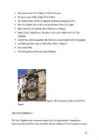
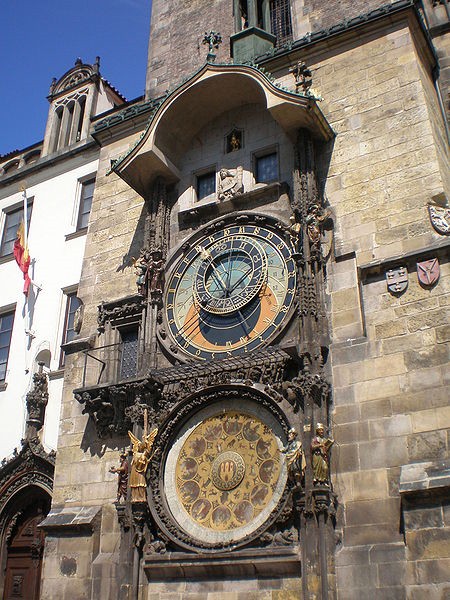
- The Astronomical Clock (Orloj) on Old Town Square.
- The picturesque Charles Bridge (Karlův Most).
- The vaulted Gothic Old New Synagogue (Staronová Synagoga) of 1270.
- New Town (Nové město) with its busy and historic Wenceslas Square.
- Malá Strana (Lesser Quarter) with its Infant Jesus of Prague.
- Prague Castle (Pražský hrad - the largest castle in the world) with its St. Vitus Cathedral.
- Josefov (the old Jewish quarter) with Old Jewish Cemetery and Old New Synagogue.
- Jan Žižka equestrian statue in Vítkov Park, Žižkov - Prague 3.
- The Lennon Wall .
- The Dancing House (Fred and Ginger Building ).
Figure3. The Astronomical Clock on Old Town Square.
The Czech Republic
The
Czech Republic made economic reforms such as
fast privatizations.
Annual gross
domestic product
growth has been around 6%
until the outbreak of the recent global
economic crisis. The country is the first
former member of the Comecon
to achieve the
status of a developed
country according to the World
Bank (2006) and the Human
Development Index (2009), which ranks it as
a "Very High Human Development"
nation .
The Czech
Republic Česká republika short form Česko
is a country in Central
Europe.The country borders
Poland to the northeast,
Germany to the
west and northwest, Austria
to the
south and
Slovakia to the
east . The Czech Republic has been a member of
NATO since 1999 and of the European
Union since 2004. The Czech Republic is also
a member of the Organization
for
Security and
Cooperation in Europe
(
OSCE ). As an OSCE participating State, the Czech Republic’s
international commitments are
subject to monitoring under the mandate
of the U.S.
Helsinki Commission. From 1 January 2009 to
1
July 2009, the Czech Republic held the Presidency
of the Council of the European Union.
The
Czech Republic is a pluralist
multi -
party parliamentary
representative
democracy. President
Václav
Klaus is the
current head of state. The
Prime
Minister is the head
of government (currently Jan
Fischer). The
Parliament has two
chambers :
the
Chamber of Deputies and the Senate.
It is also a member of the
Organisation for Economic Co-operation and Development
(OECD), the Council
of Europe and the Visegrád
Group.
Figure4. European map.
List
of famous people from Prague
There are a many famous people, who had
lived in Prague. There are
arts , monarchs, the
sciences and
sports .
The
arts:
Vladimír
Holan (1905–1980) — poet;
born, lived and died in Prague .
Bohumil
Hrabal (1914–1997) — writer;
lived and died in Prague .
Lída
Baarová (1914–2000) — actress;
lived and died in Prague.
Wolfgang Amadeus Mozart (1756–1791) — composer;
some of his
best opera
successes were during
his time in Prague.
Hans
Hampel (1822–1884) — composer.
The
sciences:
- Tycho Brahe (1546– 1601 ) — astronomer; spent end of life near Prague.
- Johannes Kepler (1571–1630) — astronomer.
- Albert Einstein ( 1879 –1955) — physicist, served as professor at the German part of the Charles University in Prague (1911–1912).
In
sports:
- František Plánička ( 1904 –1996) — football goalkeeper, captain of the Czechoslovakia national football team.
- Emil Zátopek (1922–2000) — athlete; lived and died in Prague.
Other
fields:
- Jan Žižka (circa 1360–1424) — general and Hussite leader ; participated in start of the rebellion in Prague, later defended it against Crusaders.
- Jan Hus ( 1369 –1415) — priest , philosopher, reformer; most-important preaching done in Prague.
GEOGRAPHY
The
Czech landscape is exceedingly varied. Bohemia,
to the west, consists of a basin drained by the Elbe
(Czech:
Labe)
and the Vltava
(or Moldau) rivers , surrounded by mostly low mountains , such as the
Krkonoše
range of the Sudetes.
The highest point in the country, Sněžka
at 1,602 m (5,256 ft), is located here. Moravia,
the eastern part of the country, is also quite hilly. It is drained
mainly by the Morava
River,
but it also contains the source of the Oder River
(Czech:
Odra).
Water from the landlocked Czech Republic flows to three
different seas: the
North Sea,
Baltic Sea and
Black Sea. The Czech Republic also leases the
Moldauhafen,
a 30,000-square-metre (7.4-acre) lot
in the middle of the
Hamburg Docks, which was awarded to Czechoslovakia by Article 363 of the
Treaty of Versailles, to
allow the landlocked
country a place where
goods transported down river
could be
transferred to seagoing ships.
Phytogeographically,
the Czech Republic belongs to the Central European
province of the
Circumboreal
Region,
within the Boreal
Kingdom. According to the World
Wide Fund for
Nature , the territory of the
Czech Republic can be subdivided into
four ecoregions:
the Central European mixed
forests , Pannonian mixed forests, Western
European broadleaf forests and Carpathian
montane conifer forests. There are four national
parks in the Czech Republic. The oldest is
Krkonoše
National Park (Biosphere
Reserve ), Šumava
National Park (Biosphere Reserve), National
Park Podyjí, České Švýcarsko National Park.
WEATHER AND CLIMATE
The Czech Republic has a temperate continental
climate, with relatively hot
summers and
cold, cloudy and snowy winters. Most rain
falls during the summer.
The temperature
difference between summer and
winter is relatively
high, due to the landlocked geographical
position .
Within the Czech Republic,
temperatures vary greatly , depending on
the
elevation .
In general, at
higher altitudes, the temperatures decrease and
precipitation
increases . The wettest area in the Czech Republic is
found around
Bílý
Potok in Jizera
Mountains and the driest region is the
Louny District to the northwest of Prague.
Another important
factor is the distribution of the mountains; therefore, the
climate is quite varied.
At the highest peak of Sněžka
(1,602 m/5,256 ft), the
average temperature is only −0.4 °C
(31.28 °F), whereas in the lowlands of the South
Moravian Region, the average temperature is
as high as 10 °C (50 °F). The country's capital, Prague,
has a
similar average temperature,
although this is influenced by
urban factors.
The coldest month is
usually January, followed by February and
December. During
these months, there is usually
snow in the mountains
and sometimes in the major cities and lowlands. During
March , April
and May, the temperature usually increases rapidly, especially during
April, when the temperature and weather tends to vary widely during
the day.
Spring is also characterized by high water levels in the
rivers, due to melting snow with occasional flooding.
The warmest month of the year is July, followed by August and June.
On average, summer temperatures are about 20 degrees higher than
during winter. Especially in the last decade, temperatures
above 30 °C (86 °F) are not
unusual . Summer is also
characterized by rain and storms.
Autumn generally begins in September, which is still relatively
warm and dry. During October, temperatures usually fall
below 15 °C
(59 °F) or 10 °C (50 °F) and deciduous
trees begin to shed their leaves. By the end
of November, temperatures usually range around the freezing point.
POPULATION
According to the 2001 census, the vast
majority of
the inhabitants of the Czech Republic are Czech
(94.24%). The most numerous national minorities are: Slovaks
(1.89%); Poles
(0.51%); Germans
(0.38%); Ukrainians
(0.22%); Vietnamese
(0.17%); Hungarians
(0.14%); Russians
(0.12%); Romani
(0.11%); Bulgarians
(0.04%); and Greeks
(0.03%).[27]
According to some estimates, there are actually more than 200,000
Romani
people in the Czech Republic.
There were 436,116
foreigners residing in the country in October
2009, according to the Czech Interior Ministry, with the largest
groups being Ukrainian (132,481), Slovak (75,210), Vietnamese
(61,102),
Russian (29,976), Polish (19,790), German (14,156),
Moldovan (10,315), Bulgarian (6,346), Mongolian (5,924), American
(5,803),
Chinese (5,314),
British (4,461), Belarusian (4,441),
Serbian (4,098), Romanian (4,021), Kazakh (3,896), Austrian (3,114),
Italian (2,580),
Dutch (2,553),
French (2,356),
Croatian (2,351),
Bosnian (2,240),
Armenian (2,021), Uzbek (1,969), Macedonian (1,787)
and
Japanese (1,581).
The Jewish
population of Bohemia and Moravia, 118,000 according to the 1930
census, was virtually annihilated by the Nazis during the
Holocaust.There were approximately 4,000
Jews in the Czech Republic in 2005. The Czech prime minister, Jan
Fischer, is of Jewish
origin and
faith .
The
fertility
rate is a low 1.50
children per
woman .
Immigration
increased the population by
almost 1% in 2007. About 77,000 new
foreigners settle down in the Czech Republic every year. Vietnamese
immigrants began settling in the Czech Republic during the Communist
period , when they were invited as guest
workers by the Czechoslovak government.
Today, there are an estimated 70,000 Vietnamese in the Czech
Republic. In
contrast to Ukrainians, Vietnamese come to the Czech
Republic to
live permanently.
At the
turn of the
20th century,
Chicago was the city with the third largest Czech population, after Prague
and
Vienna .
According to the 2006 US census, there are 1,637,218 Americans of
full or partial Czech
descent.
CULTURE
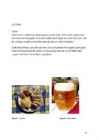
Cuisine .
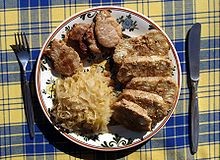
Czech cuisine is marked by a
strong emphasis on
meat dishes.
Pork is quite common; beef and
chicken are
also popular. Goose, duck,
rabbit and
wild game are served. Fish is
rare, with the occasional exception of
fresh trout
and
carp ,
which is served at Christmas.
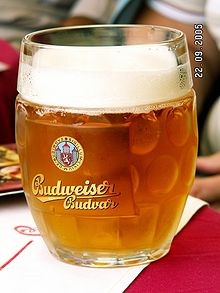
Aside from Slivovitz,
Czech
beer and wine,
Czechs also produce two uniquely Czech liquors, Fernet
Stock and Becherovka.
Kofola
is a non-alcoholic domestic
cola soft drink which competes with
Coca Cola and
Pepsi in popularity.
Figure5. Cuisine. Figure6. Czech beer.
Kasutatud
allikad:
www.google.com
http://www.lonelyplanet.com/czech-republic/praguehttp://www.tripadvisor.com/Travel-g274707-c1403/Prague:Czech-Republic:Introduction.html http://www.vse.cz/english/introduction.php Neil Wilson, Mark Baker. „Prague“. USA Lonely
Planet January
2009.
17
 50 punkti
Autor soovib selle materjali allalaadimise eest saada 50 punkti.
50 punkti
Autor soovib selle materjali allalaadimise eest saada 50 punkti.
 ~ 18 lehte
Lehekülgede arv dokumendis
~ 18 lehte
Lehekülgede arv dokumendis
 2010-04-25
Kuupäev, millal dokument üles laeti
2010-04-25
Kuupäev, millal dokument üles laeti
 10 laadimist
Kokku alla laetud
10 laadimist
Kokku alla laetud
 0 arvamust
Teiste kasutajate poolt lisatud kommentaarid
0 arvamust
Teiste kasutajate poolt lisatud kommentaarid
 Gloriell6
Õppematerjali autor
Gloriell6
Õppematerjali autor
 annaabi.ee







Kõik kommentaarid