Topic
– Australia Tallinn English College2006AustraliaThe
name Australia is derived from the
Latin Australis ,
meaning of
the south . In
land area, Australia is the
sixth largest
nation , its territory is
7,686,850 sq km and its population reaches
today over 20,5 million
people. It is the only nation to govern an entire
continent and its
outlying islands. Australia’s capital is
Canberra , the only city
with its own territory. It was
built in the
early 1900s just to be
the capital. The
official language is English and the official name
of Australia is the
Commonwealth of Australia. Australia is
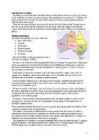
located on the
Southern Hemisphere (because of that Australia is also called
“A land down under”).
Australia
is an
island continent and it is located
between the
Indian and South
Pacific oceans south
east of Asia. From the
north it is bordered by
the Timor Sea and the
Torres Strait. From the east by the
Coral Sea
and the
Tasman Sea. Australia’s coastline is about 37,000 km long.
The Great
Australian Bight washes the southern coast. The Gulf of
Carpenteria and the
Cape York Peninsula surround it in the south.
3.
Relief
Australia
is the smallest continent in the world It is often called the island
continent because is too big for an island but
rather small for a
continent. Australia
is 1,800
miles from the mainland of Asia and
almost half way
round the world from
Europe . More
than 6,000 miles of
ocean separate in
from the America. Australia
is the only continent except for
Antarctica that
lies all south of
the equator.
The
natural zones of Australia are very various.
There are deserts, semi
deserts, grasslands, savannas, bushlands and rainforests.
The
wet
forests occupy the
narrow region in the east. Most of the
animals , birds and
insects live in that region, because there is
enough food. The savannas which are grasslands with some
trees are
mostly in the
west . Farther west are the bushlands. The
real deserts
occupy the
centre of the
Western Plateau. In the very south – west
there are
thin forests of evergreens trees.
Australia is the driest inhabited continent, the
flattest, and has the oldest and
least fertile soils. Only the
south-east and south-west corners of the continent have a temperate
climate. The
northern part of the
country , with a
tropical climate,
has vegetation consisting of
rainforest ,
woodland, grassland, mangrove
swamps and
desert . Climate is
highly influenced by ocean currents,
including the El
Niño
southern oscillation.
Mountains The
Great Dividing Range runs
along the Pacific ocean.
These mountains
are very old and much of worn down but the Australian Alps are the
highest of
them . The highest top
Mount Kosciusko is 2228
metres above sea level. It was
named by the Polish
explorer Count Paul
Strzelecki
in 1840 in
honour of the Polish national
hero General
Tadeusz Kościuszko.
Like many of Australia's highest peaks, Mount Kosciuszko is not
particularly difficult to
climb . There is a
road to Charlotte
Pass ,
from which it is a
seven kilometre walk up a
path to the
summit .
Anybody with a modest level of fitness should be
able to climb it.
Until the
1960s the road was
open to motor vehicles and it was possible to drive
close to the summit.
Uluru ,
also
known as
Ayers Rock,
is a large sandstone rock
formation
in central Australia,
in the Northern
Territory.
It is located in Uluru-Kata
Tjuta National Park. Uluru is 346 metres high, more than 8 km (5 miles)
around with a hard
exterior compared to most
other large rock formations which has
prevented formation of scree
slopes,
resulting in the
unusual steep faces down to
ground level.
It
is the
greatest tourist attraction in the Northen Territory but it
also is and awe – inspiring, huge monolith, 862,5 metres above sea
level, rising out of the desert in the centre of Australia. The
local Pitjantjatjara
people
call the landmark
Uluru
and the local Aborigines regarded it as a
sacred place .
Ayers
Rock was created a national park in 1950. Uluru is also
famous for
its rock paintings.
ReefOne
of the natural wonders of the modern world is the Great Barrier Reef.
The reef is located in the Coral
Sea,
off the coast of
Queensland in north-east Australia
It is the largest coral reef on earth, extending for 2000 km along
the
eastern coast. Some scientists estimate that the reef is 30
million
years old. The corals consist of
tiny animals known as polyps
that
protect themselves by forming and
external skeleton of
lime and
when the polyp dies its
shell hardens. When the number of these
little creatures
increases , fantastically beautiful shapes that we
know as corals are form. The Great Barrier Reef can be
seen from
outer space
and is sometimes
referred to as the
single largest
organism
in the world. More than 300
varieties of coral – ranging from
pale blue to
bright yellow – can be
found . Recently,
black coral, the
rarest type of all, was found on one of the reefs.
Lakes Most
of the lakes in Australia are
filled with water after
rains only.
Lake Eyre is,
on the
rare occasions that it fills, the largest lake
in Australia
and is the lowest point in Australia, at
approximately 15 m. The lake
is located in the deserts of central Australia, in northern South
Australia.
Even in the dry
season there is
usually some water remaining in Lake
Eyre,
Rivers The
Darling
River is the
longest river in Australia,
flowing 2,739km from northern New
South Wales
to its
confluence with the
Murray River
at Wentworth,
New South Wales. (Some geographers
treat the Darling and the
lower Murray as a single river, 3,000km long. This is largely a
matter of
semantics). Today the Darling is in
poor health, suffering from
overuse of its
waters , pollution
from pesticide
runoff and prolonged drought,
possibly the
result of manmade
global warming.
In some years it barely flows at all. The river has a high
salt content and declining water
quality DesertsDeserts
of Australia
cover a large portion of the land in Australia.
Most of the deserts lie in the central and north-western part of the
country. The Great
Victoria Desert
is a barren,
arid and sparsely populated desert
ecoregion
in southern Australia.
It
falls inside the
states of South
Australia
and Western
Australia
and
consists of many small sandhills,
grasslands
and salt
lakes.
It is over 700 kilometres
(435 miles)
wide (from west
to east)
and covers and area of 424,400
square kilometres. It is the
biggest desert in Australia. There are also Great
Sandy Desert,
Gibson Desert, and
Simpson Desert.
5.
ClimateRainfall
plays a very
important part in the
lives of the Australian people.
People mostly live in the south and east part of the country. The
climate in those parts is suitable for farming and ranching. In
Northern Australia there is a tropical climate. The
coastal areas have the biggest amount of rainfall. In most parts of Australia
rainfall is very low.
6.
AnimalsAustralia
is the only continent on earth where marsupials live; they are also
known as pouched mammals and egg-lying mammals. Ordinary mammals live
also in Australia and these mammals are mostly imported there.
Marsupials are kangaroos, wombats, koalas,
Tasmanian wolfs and
Tasmanian
devils .
The
Koala is found all along the eastern coast of Australia from
near Adelaide to the southern part of Cape
York Peninsula,
and as far into the hinterland
as there is enough rainfall to
support suitable forests. They are the
cutest and lovelies animals of Australia. Koala accepts
humans but if
you
really disturb them, they become aggressive. The Koala lives
almost entirely on eucalyptus
leaves. Koala has very long arms and very well
developed paws. It
eats about 2
pounds leaves a day. The koalas
never drink anything and
even their name koala
means “no water”. They are very sleepy and
their moves are
slow . The baby koalas
ride on their
mother ’s
backs.. Koala was a
spirit of lost
children to the Aborigines.
Kangaroos
are
native to the continent
of Australia
and are the main
symbol of Australia. There are more than 50
different kinds on kangaroos. Kangaroos have large,
powerful hind
legs , large
feet adapted for leaping, a long muscular
tail for
balance , and a small head. Like all marsupials,
kangaroos have a
pouch called a marsupium in which their young complete their development
after birth. When a little kangaroo is born, it has to climb to the
pouch itself
without mother’s help. When it doesn’t find the
pouch, it dies. But when it does, it stays there for 6 months.
Kangaroos
are the only large animals to use hopping as a means of locomotion.
The comfortable hopping
speed for Red Kangaroos is about 20–25
km/h,
but they can hop as
fast as 70 km/h over short distances.
Wombats
are
Australian
marsupials;
they are short-legged, muscular quadrupeds,
approximately one metre
in length and with a very short tail.
The name
wombat comes from the Eora
Aboriginal community who were the
original inhabitants of the
Sydney area. Wombats dig extensive burrow systems with rodent-like front
teeth and powerful claws.
Although mainly crepuscular
and
nocturnal ,
wombats will also
venture out to
feed on cool or overcast days. They
are not as easily seen as many animals,
but leave ample
evidence of their
passage , treating fences as a minor
inconvenience to be gone
through or under and leaving distinctive
cubic scats. Wombats are herbivores,
their
diet consisting mostly of grasses,
sedges,
herbs,
bark and
roots .
The
Tasmanian
devil and the Tasmanian wolf are the only carnivores
among marsupials and are almost extinct. Tasmanian devil is a
size of a
small dog,
but stocky and muscular, the Tasmanian Devil is the largest
carnivorous marsupial in the world. It is characterised by its black
fur, offensive odour
when stressed, extremely
loud and disturbing screech, and viciousness
when feeding. It is known to
both hunt prey and scavenge carrion
and although it is usually solitary, it sometimes eats with other
devils. It has a squat and thick
build , with a large head and a
short, stubby tail. The devil stores
body fat in its tail and an
unhealthy devil often has a thin tail. Unusually for a marsupial, its
forelegs are
slightly longer than its hind legs. Devils can run in
bursts at the impressive speed of 13 kilometres per
hour .
BirdsThe
Emu,
is the largest bird
native to Australia.
The soft-feathered,
brown , flightless
birds
reach up to 2 m in height. The Emu is common over most of mainland
Australia, although it avoids heavily populated areas,
dense forest and arid areas. Emus can
travel great distances at a fast, economical
trot and, if
necessary , can
sprint at 50 km/h
for some
distance at a time. They are opportunistically nomadic and
may travel long distances to find food; they feed on a variety of
plants and insects.
Kookaburras
are
best known for their unmistakable call which is uncannily like
loud, echoing human laughter.
The "Laughing Kookaburra" is known by its name for its
"laugh" which it uses to greet its mate after periods of
absences. It can be heard at any time of day but most frequently
shortly after
dawn and especially when the
colour drains from the
forest after sunset
ReptilesReptiles
of Australia
are a
diverse group of animals, widely distributed across the
continent. Three of the
four orders of reptiles are native to
Australia: Testudines,
Squamata
and Crocodilia.
The only missing extant
order are the tuataras,
which are endemic to New
Zealand .
Australia has a large
diversity of reptiles, with over 860
species .
The most diverse group are the
snakes and lizards.
The snakes and lizards are especially diverse in the arid areas of
Australia, where diversity of other
fauna is generally low. Spinifex
grass is a
major habitat which allows them to remain in a relatively
cool, moist area.
Australia
has a large array of reptiles which can be
dangerous to humans. All
of the top ten most venomous snakes are native to Australia,[2]
and the world's largest
reptile , the Saltwater
Crocodile is native to Australia. It is often
said to be the most dangerous to humans. This crocodile is an
opportunistic
predator capable of
taking animals up to the size of a
water
buffalo , either in the water or on dry land. The larger the
animal grows , the
greater the variety of items that it includes in
the diet. Saltwater
crocodiles can take monkeys,
wild boar, dingoes,
domestic livestock, water buffalo, sharks and sometimes humans. It
typically loiters in the water or basks in the sun through much of
the day, usually preferring to hunt at night. It is,
however , capable
of
moving with astonishing speed when
required .
Adult male saltwater crocodiles are typically 5 metres long, weigh around
680 kg. Females are much smaller than males, with
typical female body
lengths in the range of 2.5–3 metres.
Many
plant and animal species
became extinct soon after human settlement,
including the Australian
megafauna;
others have become extinct
since European settlement.
7.
PopulationThere
are about 20 million Australians but more than 50 per
cent of the
country is practically empty. Nearly all Australians live in the
south-east of the continent and in the south-western part of Western
Australia. In these parts the
soil and climate is suitable for
farming. 50% of Australians live in the biggest cities, 20% in other
towns and 30% in farms and stations. 98% of Australians are of
British descent but people from other parts of the world have
emigrated to Australia.
Such as: Greeks, Turks,
French , Italians,
Russians,
Chinese ,
Dutch ,
Poles etc.
8.
The Native AustraliansAboriginies
probably
came to Australia from Indonesia 50,000 years ago.
Aboriginies were nomads. They respected their ancestors, traditions
and sacred places. Some places like Uluru, were sacred because they
were associate with the „dreamtime“, the time when the Earth was
formed and cycles of life and
nature were
begun . There were more than
600
tribes who
spoke different dialects. The arrival of white people
gradually
brought an end to the
traditional Aboriginal way of life.
Nowadays there are about half a million aborigines
living in
Australia.
9.
PlantsThe
west of the continent give place to savannahs and
further west the
trees disappear and give place to bushlands. The real desert occupies
the
center of the Western Plateau. In the very south-west there are
thin forests of evergreen trees. Most of the Australian trees are
various kinds of eucalyptus and accacia. Some eucalyptuses are small
bushes in the semi-deserts, some are the main trees in the savannah
but the biggest grow as
tall as a
hundred metres and form forests in
the east. Eucalyptus trees give people timber and eucalyptus oil. Of
six hundred kinds of acacias the
golden wattle, the national flower
of Australia, is the best known.
10.
CultureThe
modern culture of Australia draws from many
sources including native
Australians, the United Kingdom and the
immigration of a different
range of people with the Australian
gold rushes of the 1850s and the
post WW II immigrants from
Britain and Europe. Nowadays Australian
culture is strongly influenced by western culture. Australia is one
of the most urbanised countries in the world. 70 per cent of its
population lives in the biggest cities.
Australian
Aboriginal culture is complicated and very diverse. It is one of the
world’s longest surviving cultures which
goes back at least 50, 000
years (but some think it’s closer to 150,000 years). Different
oral histories have been backed up by geological data such as the flooding
of Port
Philip Bay which happened about 10,000 years ago.
11. Sports Australians
are well-known sportsmen. They have achieved much recognition in
diving,
golf , skiing,
surfing , boating and especially in swimming.
They’ve won numerous
Olympic medals in that
category . Some of
Australia’s traditional
sporting events receive worldwide
attention . Probably the most famous event is the annual Melbourne Cup
which is a horse
race eagerly followed by Australians and attended by
racing
fans from
throughout the world.
The
Australian
economy
is dominated by its
services sector, yet it is the agricultural and
mining sectors that account for 65% of its exports.
Rich in natural
resources, Australia
is a major exporter of agricultural
products , particularly
grains and
wool , and minerals,
including various metals,
coal , and natural gas. A downturn in world commodity prices can thus
have a large impact on the economy.
Agriculture Agriculture
in Australia
is a major industry,
402 000 people are
employed in agriculture
and agriculture
related services. Until the
late 1950s
agriculture accounted for up to 80% of Australia's
export earnings.
That percentage has fallen with diversification of the economy.
Most
of the farmland in Australia is pasture for raising
cattle and
sheep .
Farmland covers about 65 per cent of Australia. However, most of this
land is dry grazing land. Crops are
grown on only about 5 per cent of
the farmland. But farmers use modern agricultural methods and so make
the cropland highly productive.
Australia's
leading farm products are cattle and calves,
wheat and wool.
Australia is the world's largest producer and exporter of wool and
leading producer and exporter of beef,
sugar and wheat. Fruits like
apples and
pears are grown in all the states. South Australia also
produces large quantities of grapes that are used for
making wine.
Sheep and cattle are raised in all the states and wheat is grown in
all areas of Australia that have
medium rainfall and moderate
temperature.
Natural
resourcesNatural
resources
include : bauxite,
coal,
iron
ore,
copper ,
tin,
gold,
silver,
uranium,
nickel,
tungsten ,
mineral
sands,
lead ,
zinc ,
diamonds,
natural
gas,
petroleum .
13.
The Biggest CitiesSydney
is the most populous city in Australia
with a metropolitan
area
population of over 4.2 million people (2006). Sydney is the state
capital
of New
South Wales
and is located on the country's south-east coast. The
first European
colony in Australia, Sydney was
established in 1788 at Sydney
Cove
by
Arthur Phillip
who led the First
Fleet
from Britain. Built around Port
Jackson,
which includes Sydney Harbour, the city of Sydney has been called the
"Harbour City". It is Australia's largest financial
centre
and is also an international tourist
destination,
notable for its
beaches and
twin landmarks: the Sydney
Opera House
and the Harbour
Bridge.
The river Paramatta flows through the city. Sydney is the centre of
commerce and trade.
The
largest economic sectors in Sydney, measured by
numbers of people
employed, include property and business services, retail,
manufacturing , and health and community services. Since the 1980s,
jobs have moved from manufacturing to the services and information
sectors. Sydney is also
popular for its
heading the Olympic
Games 2000.
Brisbane
is the capital
and most populous city of the Australian
state
of Queensland,
and is the third largest city in Australia, with a population of just
under 2 million. It is a city set close to the Pacific
Ocean,
and is
situated beside the Brisbane
River.
Named in honour of Sir
Thomas Brisbane.
It was chosen as the capital of Queensland when it was proclaimed a
separate colony in
1859 .. Brisbane staged a successful Commonwealth
Games in 1982
and World's
Fair in 1988.
In the new
millennium , it is Australia's fastest
growing city and the
second fastest in the developed world. From late
spring through to
early autumn, thunderstorms
are common over the greater Brisbane area. Brisbane has a thriving
live music scene, as well as museums and
theatres , performing
arts and
creative arts. It is the birthplace of internationally acclaimed
singers, music bands,
authors ,
artists and sculptors.
Perth
is
the capital
of the Australian
state
of Western
Australia.
A population of 1,477,800
makes Perth the largest city in Western
Australia and home to three-quarters of the state's residents. The
city is also the
fourth most populous urban area in Australia.
The
metropolitan area is located in the south west of the continent
between the Indian
Ocean
and a low coastal escarpment known as the Darling
Range.
The central
business
district and suburbs of Perth are situated on the
Swan River.
Founded in 1829 by
Captain James Stirling as the
political centre of
the free settler
Swan
River Colony,
Perth has continued to serve as the
seat of
Government for Western
Australia to the
present day. Traditionally, Perth and the Swan River
have usually been viewed and photographed from
Kings Park,
situated on a hill to the south-west of the city or from the South
Perth foreshore. The historical record of the view shows
clear river
banks close to the city and a low
skyline through to the 1960s. The
temperature usually never goes under the freezing level.
Darwin is the territorial
capital
and most populous city of Australia's
Northern
Territory.
It has a population of 109,478 and is located on Australia's far
northern coastline.
Darwin has a tropical
climate,
and is subjected to tropical thunderstorms
and cyclones.
Much of the city was destroyed by Cyclone
Tracy in 1974.
It is also the only Australian capital city to have come under
substantial attack
during any war. Darwin has the largest
proportional population of Indigenous
Australians
of any Australian capital
city,
and a significant percentage of its residents are
recent immigrants
from South
East Asia.
As such, Darwin is often called the "multicultural capital of
Australia" due to its additional mix of racial and
cultural groups. Darwin is an important port,
particularly for the live
export
of cattle,
minerals and gas. It is also the site of a large Australian
Army
base and a
naval facility supporting patrol
boat activity off
Australia's northern coastline.
Adelaide
is the capital
and most populous city of the Australian
state
of South
Australia,
and is the fifth largest city in Australia, with a population of over
1.1 million. Named in honour of
Queen Adelaide,
the consort
of King
William IV,
the city was founded in 1836 as the planned
capital
for the only freely-settled British province
in Australia. Colonel
William
Light ,
one of Adelaide's founding
fathers ,
designed the city and
chose its
location close to the River
Torrens.
Adelaide has a Mediterranean
climate,
where most of the rain falls in the
winter months. Of the Australian
capital cities, Adelaide is the driest. Adelaide's economy is
primarily
based around manufacturing, defence
technology and
research, commodity export and corresponding service industries.
Adelaide is sometimes referred to as the "City of Churches."
The
Torrens River flows through the city.
Hobart
is the state
capital
and most populous city of the Australian
island state of Tasmania.
Founded in 1804 as a penal
colony,
it is Australia's second oldest and twelfth largest city, with a
metropolitan population of 206,000. The city is the financial and
administrative
heart of Tasmania, and also serves as the home port
for both Australian and French Antarctic
operations. Hobart is a
busy seaport, notably serving as the home
port for the Antarctic
activities of Australia
and
France .
It supports
several other industries, including a high-speed
catamaran
factory and a zinc
smelter, as well as a vibrant tourist industry. Visitors come to the
city to explore its
historic inner suburbs, to visit the weekly craft
market in Salamanca
Place,
as well as to use the town as a base from which to explore the
rest of Tasmania.
Hobart is internationally famous among the yachting fraternity as the
finish of the Sydney
to Hobart Yacht Race
which starts in Sydney
on Boxing Day (the day after Christmas Day).
Melbourne
is the second most populous city in Australia
with a metropolitan
area
population of approximately 3.7 million. Founded in 1835,
some 47 years after the first European settlement of Australia, the
Victorian
gold
rush in the 1850s transformed the small pastoral
settlement into a growing metropolis.
By 1865, "Marvellous Melbourne" was Australia's most
populous and important city and served as the national capital from
the Federation
of Australia
until the
construction of Canberra
in 1927. Melbourne today is a major centre of commerce,
industry
and the
arts.
Often referred to as the "sporting
capital of Australia"
the
city has a rich sporting history and is home to most of Australia's
major annual sporting events. Melbourne is located in the
south-eastern
corner of mainland
Australia, and is the southernmost mainland capital city. Melbourne
is typical of Australian
capital cities in that it was built with the underlying notion of a
"
quarter acre home and
garden "
for every family, often referred to locally as the
Australian
Dream.
The
phrase "four
seasons in a day"
is part of popular culture and
observed by many visitors to the city.
Melbourne is a large commercial
and
industrial centre. Many of Australia's largest companies have their
headquarters there, and many multinational
corporations
(approximately one-third of the 100 largest multinationals
operating in Australia as of 2002), have their main Australian office there..
Melbourne is arguably Australia’s most vibrant arts
and cultural
centre. The city hosts the Melbourne
International Arts Festival
each year, as a
celebration of its arts culture.
Canberra
is the capital
city
of Australia
and with a population of just over 325,000 is Australia's largest
inland city. The city is located at the northern end of the
Australian
Capital Territory.
The site of Canberra was selected for the location of the nation's
capital in 1908 as a compromise between Sydney and Melbourne, the two
largest cities. It is unusual among Australian cities as an entirely
purpose-built, planned
city.
Following an international contest for the city's design, a design by
Chicago architect Walter
Burley Griffin
was selected and construction commenced in 1913. The city's design
was heavily influenced by the garden
city
movement and incorporates significant areas of natural vegetation that have
earned Canberra the title "
bush capital".
Because
of its latitude, elevation and distance from the coast, Canberra has
four
distinct seasons. The climates of most Australian coastal areas,
which include all the state capital cities, are moderated by the sea.
Canberra is home to many national monuments and
institutions such as
the Australian
War
Memorial ,
the National
Gallery of Australia,
the National
Portrait Gallery
currently housed at Old
Parliament House, the National
Library of Australia,
the National
Archives of Australia,
and the National
Museum of Australia.
Many Commonwealth government buildings in Canberra are open to the
public, including Parliament House, the High Court and the
Royal Australian
Mint 14.
HistoryThe
first human habitation of Australia is
estimated to have occurred
50,000 years ago. More than 6000 years
before the arrival of the
European settlers Aboriginal people inhabited most areas of the
Australian European settlement. There were estimated 300,000
Indigenous Australians living on the continent. By the end of
19th century, because of the white people who came to conquer the new
lands and mine the gold, there were only 60 000 native
Australians
left . Now there are about 160 000 Aborigines in
Australia. Most of them live in the cities but some of them
still try
to
follow the steps of their ancestors.
The
first undisputed recorded European sighting of the mainland of the
Australian continent was made by the Dutch navigator
Willem Janszoon,
who sighted the coast in 1606. Then Abel Tasman visited an island
near Australia in 1642 and the island was named after him Tasmania.
Up to that time the continent was called
Terra
Australis Incognita.
In 1770 British sailor James
Cook came to Australia and landed in
Botany Bay. He declared that Australia belonged to the Great Britain
and named it New South Wales. Britain had to
send their convicts to
the new country after loss in the American War of Independence to
replace the North Atlantic
colonies .
In
1787 the First Fleet with
eleven ships, more than 1000 convicts on
board were sent to Australia with Captain Phillip. They landed in
Port Jackson on
January 26th
in 1788 and that day is now called Australia day. It is the biggest
day of celebration in the country and in observed as a public
holiday in all the states and territories of Australia. Sydney grew out from
those first British penal settlements.
During
the 1850s, settlement was boosted by gold rushes. Gold was first
found at Bayhurst in 1851.
The
idea of unifying all the states first came to Earl
Grey in 1847. On
January 1, 1901 Australian colonies federated to become the
Commonwealth of Australia. At 1.00pm the first Governor General of
Australia read the Proclamation of the Act to form the Commonwealth
of Australia from a Pavilion. Then at Centennial Park, Sydney.
Australia had declared independence from the federation of UK
colonies.
As
neither Sydney nor Melbourne was acceptable new capital, a new city –
Canberra – was built for that.
Today
Australia has a global, non-discriminatory
policy and is home to
people from more than 200 countries.
15.
GovernmentThe
Commonwealth of Australia is a constitutional
monarchy
and has a parliamentary
system
of government. Queen Elizabeth II
is the Queen
of Australia,
a role that is distinct from her position as monarch of the other
Commonwealth
Realms.
The Queen is nominally represented by the Governor-General
at Federal level and by the Governors at State level.
The
federal parliament of Australia is democratically elected by all
Australian citizens. Voting is compulsory at elections, and citizens
who d not vote are fined . Voting is carried out at polling booths set
up around the nation. Often in local schools and community halls –
and ballot papers are completed in special little enclosed booths to
ensure privacy . No one watches over a person as they vote.
When
all the ballot papers have been counted, the local candidate who
gains most votes wins a seat in the state or federal parliament –
depending on whether the election is for a state or for the
whole nation. The political
party that has the most seats wins government.
Sometimes this is a coalition – an arrangement of
cooperation between two
parties . The largest political party that does not win
becomes the official Opposition. In Australia, governments are
usually formed by the Australian
Labor Party or by a coalition
between the liberal Party and the National Party.
There
are some political parties that
represent smaller groups of opinion
but, until now, they have not had the numbers to be serious
contenders
again the larger parties. Some smaller parties include the
Australian Democrats, One Nation and the
Greens .
The
federal parliament is
divided into two
Houses – the
upper house
(the Senate) and the lower house (the House of Representatives). The
party which gains the
majority of seats in the House of
Representatives
forms the government. The
leader of this party
becomes the
prime minister.
In
the Government
of Australia,
the Minister for
Foreign Affairs is
responsible for overseeing the
international diplomacy
section of the
Department of Foreign Affairs and Trade.
Prior to 1970,
the office was known as the Minister for External Affairs. The
minister is usually one of the most senior
members of Cabinet
— the position is
equivalent to that of Secretary
of State
in the United
States
or Foreign
Secretary
in the United
Kingdom
— as shown by the
fact that eleven Prime
Ministers of Australia
have also worked as the Minister for Foreign Affairs. The
current Minister for Foreign Affairs is
Alexander Downer,
who is the longest-serving Minister for Foreign Affairs in Australian
history.
Australia's
foreign
policy
can be
described by 3 words: multilateralism,
regionalism,
and
strong bilateral
relations with its
allies (e.g. the UK, New Zealand, Indonesia,
France, Japan,
China , the USA). Key
concerns include free
trade,
terrorism ,
integration with Asia and stability in the Asia-Pacific.
Australia is
active in the United
Nations
and the Commonwealth
of Nations.
16. Conclusion Australia
is the only continent which is all south of the equator. It was
discovered about 400 years ago by the Europeans and
already Australia
has over 20 million people living there but half of the continent is
scarcely populated. The animal life is also unique because the
animals living
here (called marsupials) can’t be found anywhere
else in the world.
 50 punkti
Autor soovib selle materjali allalaadimise eest saada 50 punkti.
50 punkti
Autor soovib selle materjali allalaadimise eest saada 50 punkti.
 ~ 10 lehte
Lehekülgede arv dokumendis
~ 10 lehte
Lehekülgede arv dokumendis
 2009-01-12
Kuupäev, millal dokument üles laeti
2009-01-12
Kuupäev, millal dokument üles laeti
 43 laadimist
Kokku alla laetud
43 laadimist
Kokku alla laetud
 3 arvamust
Teiste kasutajate poolt lisatud kommentaarid
3 arvamust
Teiste kasutajate poolt lisatud kommentaarid
 pisike
Õppematerjali autor
pisike
Õppematerjali autor
 annaabi.ee







Kõik kommentaarid