Australia Australia is a
country and also a
continent . If
someone wants to make
clear, that he is speaking of the country, he may
call it by its
full name of
Commonwealth of Australia. Australia’s name
means ”southland.”It is
south of the equator.
Sometimes it is also called the
island continent because it is an
island.
There are about
twenty million people in Australia.It is
1,800
miles from the mainland of
Asia and
almost half way
round the
world from
Europe . More
than 600 miles of
ocean separate it from
Americas .
Since Australia is south of the equator, its seasons are
just the opposite of ours. It has
summer while we have
winter , and
the
other way round.
States and Territories.
Australia
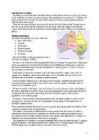
consists of six states, two territories and
eight external territories.
The six states are:
Western Australia (capital
Perth ), South
Australia (capital Adelaide), Queenslnd (capital Brisbane), New South
Wales (capital
Sydney ), Victoria (capital Melbourne) and Tasmania
(capital Hobert). The two territories are the
Northern territory
(capital Darwin) and the Capital territory (capital
Canberra ).
Politics The head of the state is the
queen of the United Kingdom. She is
represented by governor general. The head of the
government is the
prime minister. Australia’s
parliament consists of the Senate (77
members ) and the House of Representatives(148 members).
Australia’s Flag and
Coat of Arms.
Australia’s flag has a Brittish flag,
five stars that represent the
constellation Southern Cross and a large
star for the country’s
states and territories.
The coat of arms
features a kangaroo and an emu,
golden whattle
blossoms, a shield with the coats of arms of the six states of
Australia and a star for the states and territories.
Landforms
Only 5% of the
land is above 600 meters. Most of the land is empty.
Most of the people
live in the south and in
east . 2/3 of Australia is
a
desert with
hills and big saltlakes. The
biggest deserts are the
Great Sandy Desert, the
Gibson Desert, the
Simpson Desert, The Great
Victoria Desert. The biggest
mountain ranges are the Great Divining
Range, the
Australian Alps, the
Blue Mountains and the New
England Range.
The outback is flat and hot
centre of Australia. The nearest neighbor
may be a
hundred kilometers
away . The nearest city may be more than
one
thousand kilometers away. Many people in this area live on
sheep stations which are enormous farms.
Uluru One of the most beautiful things in Australia is Uluru (Ayers Rock)
in the outback. It is an enormous rock alone in the
middle of the
desert. It is three kilometers long and 348
metres high. There is
another 2000 meters under the
ground . Uluru is 600 000 000
years old and it is the largest rock in the world.
The Great Barrier Reef.
One of the natural wonders of the modern world is
the Great Barrier Reef. It is
located off the northeast coast of
Australia. It is the biggest
coral reef in the world extending 2000
kilometers
along the coast of Queensland. It consists of more than
600 coral
islands . Some of
them are true coral islands, other are the
tops of submerged mountain ranges covered with
lush tropical growth .
Most of the islands are inhabited and many of them have been
developed as
tourist resorts.
Scientists estimate that the reef is more than
thirty million years
old. It had its
beginning as a tiny
animal known as the polyp. It
protects itself by forming an external skeleton of
lime . When it
dies its
shell hardens. It has been
growing for thirty million years.
There are more than 300
varieties of coral with colours ranging from
pale blue to
bright yellow. Recently a black coral was
found .
Tourists
visit it because it is beautiful, relaxing and
interesting .
Lakes The big lakes of the desert area are dry most of the time.
Enormous Lake Eyre (70km
wide , 130km long) was dry for a hundred
years
until 1950. Lake Eyre is the lowest
place in Australia. It is
16 meters
below sea level. Other bigger lakes are Lake
Disappointment, Lake Mackay, and Lake Carnegie in the western
part .
Lake Torrens, Lake Gairdner and Lake Eyre in the southern part.
Rivers The biggest
river is the
Murray . The other biggest rivers are the
Mitchel and the
Flinders . Other rivers are short and have water only
after
rains .
The Climate
Australia stretches from the tropics to the temperature
region. It is a hot and dry country. The northern part has a hot
tropical climate with
heavy rainfall. It has two seasons - wet summer
and dry winter. The south and the east of Australia have warm
summers and winters. The southeastern coast
gets rains all
year around . The
southwest area has hot, dry summers and
mild moist winters. In the
west and in the outback the temperature is often 35 degrees in the
summer months. The outback receives almost no rainfall. Tasmania is
cooler and
wetter than the
rest of Australia. The only
places where
snow
falls are in the southeast and Tasmania.
History
Sixty million years ago Australia and its
nearby islands were separated from the rest of the world by a great
upheaval. They were cut off from Asia by the ocean. Almost no
animals and few people visited Australia
before the
English colonists.
The
first people in Australia were the Aborigines. They
came there more than 50,000 years ago. They were the only
inhabitants. They were
living in the
Stone Age. Their only weapons
were
simple spears and boomerangs. They raised no crops and had no
heards of tame animals. For food the hunted, fished and gathered
wild fruit and nuts. Their
tribes had very well worked – out customs.
Chinese sailors visited Australia 2,500 years ago. Australia
remained unknown for Europeans until 400 years ago and no European
settled there until 1788. Long before the seventeenth century, people
though there was land in the southern ocean, but
nobody had
seen it.
So it was called Terra
Australis Incognita - the Unknown South Land.
The first recorded European to see
Australia was a
Dutch -
Captain William Jansz who entered the Gulf of
Carpentaria in 1606. Another Dutch - Abel
Tasman sailed to the south
and
discovered Tasmania in 1642.
By the middle of the seventeenth century most of the
north , west
and south coasts had been charted. But the Dutch were disappointed
with their new discoveries.
The first
British captain who saw the new continent was William
Dampier who visited the north western coast in 1688 and 1689.
In 1770 the British sailor Captain James
Cook landed on the east coast at Botany bay, and said Australia now
belonged to
Britain . Of
course nobody
asked the Aborigines about this
- it was the beginning of a terrible time for them. Narrowly
escaping shipwreck on the Great Barrier Reef, Cook sailed home to England. He
reported a land with abundant fresh water and lush vegetation and
very suitable
settlers .
Britain soon
started to
send convicts to the new country. In May 1787
eleven ships
left England for Australia carrying about 1,500 people,
half of
whom were convicts and the other half their guards. They
reached Port Jackson - now Sydney - in
January 1787. Life was very
difficult and the convicts had to
work very
hard making roads,
buildings and farms.
In 1851
gold was found in New South Wales and Victoria. There was a
great gold
rush . Thousands of people came to Australia to find their
fortunes. In ten years the population grew from 400,000 to 1,200,000.
Forty years
later there was another gold rush. This time gold was
discovered in the west. With gold came new roads, railways and
growing cities. On 1 January 1901 all the six separate states of
Australia united into one country. Many people left Britain for a new
life in Australia.
After 1945 people from other European countries, like
Italy , Greece,
Germany and
Holland , began
coming to Australia. Since 1945 more than
three million people have moved there.
Economy Australia is extremely
rich in
mineral resources like
coal,
iron , copper,
nickel , lead, tin,
zinc and
others . The
forests have much
good timber . Along the seashores pearl shell and tortoise
shell can be gathered.
Australia is one of the biggest producers of
diamonds , apals,
sapphire, agates. Oil and natural gas have been found in western and
southern Australia. Australia has a wide range of industries. Most of
them are located in Australia’s largest cities which are also
ports. Australia produces
chemicals , machinnery,
motor vehicles,
electronic equiptment,
paper , textiles, household appliances and many
other things.
Most of the land has proved to be good for
wheat . Wheat is
grown in the Murray River
basin and
near Perth. New
types of wheat that resist
drought have been developed. The land is also good for sugarcane and
fruit orchards. Citruses, sugarcane and
cotton are grown. In
Queensland they
grow bananas; furter south, where it is less hot,
apples are grown. And in
recent years Australia has been making very
good
wine , too.
In Tasmania there are
apple orchards and
dairy farms.
Sheep have been
important since the earliest days. Most
Australian sheep are
Spanish merinos, which were first bought there
in 1797. Twenty per
cent of the world’s sheep live in Australia,
mainly in New South Wales and Victoria. Twenty-five per cent of the
world’s wool
comes from there.
Cattle are found mostly in the drier
parts of the north and centre and cattle stations
cover one-
quarter of Australia. The
meat from Australian cattle is
sold to countries
all over the world.
Most of its
workers do not work in factories or on farms. Two-thirds of them work in shops, offices, banks or
schools .
Animals,
birds and
plants .
A strange
thing happened when ocean
blocked off this island
continent. Appearently
none of the
mammals that survived in Australia
were of the sort that later changed into the familliar mammals of the
rest of the world. The ancestors of
cats and
tigers , of wolves and
dogs , of elephants and sheep just were not there. As a
result ,the
reptilelike mammals that have died out
everywhere else in the world
are
alive in Australia. The
higher groups of mammals that developed
in the rest of the world after Australia was cut off had to be
brought there
millions of years later by the colonists.
Australia is,in
fact , a continent-
sized museum of
ancient animals,
modernised along certain lines by their own separate evolution. Two
of the strangest animals in the world are the
spiny anteater and the
platypus. They are reptilelike mammals. They have
hair like cats and
dogs but they lay shelled
eggs like snakes and turtles. Their babies
are born from eggs but
drink milk from their mothers. The ecidna
(spiny anteater) eats ants which it catches with its long fat tongue.
The platypus has a wide bill like a duck and a wide flat
tail . It
swims well but it can only stay under water for a few minutes. First
it shuts its
ears and
eyes .
Another group of Australian mammals, the marsupials, are less like
reptiles than the spiny anteater and the platypus, but they are not
highly developed mammals either.
The kangaroo is born after seven weeks inside its
mother . It is
completly
blind and only an
inch or an inch a half long. It crawls
into its mother’s
pouch and attaches itself to a nipple there.
There it stays almost three months, when it
begins to stick its head
out. It is six months old before it is big and
strong to leave the
pouch.
The biggest of the fifty diffrent kinds is the red kangaroo. They
have big strong
back legs and
tails , and an
adult can
measure 2.4
metres high. They can
jump more than
four metres and
travel at
seventy kilometres an
hour . Kangaroos eat
grass and leaves and live
in groups about twelve.
Everyone loves the sleepy gray koalas. Like kangaroos, they have s
pouch on their fronts for their babies. After six months there, baby
koalas
ride on their mother’s back. They live in eucalyptus
trees ,
sleeping for eighteen hours, and
eating one kilo of leaves, each day.
They drink almost nothing. The word koala means ”no water.”
In the seas and rivers of northern Australia crocodiles can be found.
They are five or six metres long. They eat
fish , animals, kangaroos -
and sometimes people.
There are more than 800 kinds of birds in Australia. The emu,
which is two metres
tall , is the second largest
bird in the world. It
cannot fly at all, but it can run at fifty kilometres an hour.
Then there is the kookaburra, whose cry sounds like someone laughing,
and the budgerigar, a little blue or yellow bird that people keep in
their homes all over the world.
Eucalyptus trees are found everywhere in Australia, and one kind,
the great mountain anh, can grow to 120 metres.
These strong trees do
not die when there are
forest fires.
Australia has many other kinds of tree, and thousands of kinds of
wild flowers too. Animals, birds and plants - Australia has
everything.
Australian cities.
In each of Australia’s six states, there is a large city which is
near a river and near the sea. 60% of all Australians live in these
six cities. Many others live near to them. In fact, most people live
only a few kilometres from the sea.
Sydney is the oldest and biggest city with 3,7 million people. It is
a busy, modern city and its high-rise buildings are the centre for
much of Australian business. It is also an international city where
you can eat food from all over the world, or just visit some of the
thirty wonderful
beaches .
When we think of Sydney, we think of Sydney
Opera House. The
roof of
this beautiful
building looks like sails on Sydney Harbour. It was
opened in 1973 for music, theatre and
dance . Near the Opera House is
one of the
longest bridges of the world - the Sydney Harbour
Bridge .
Melbourne, the second largest city, was the capital of Australia
from 1901 to 1927. It has wide streets, some lovely old buildings,
and large parks. Melbourne’s theatres and pubs are
famous . It is
also an important place for
sport . Australians have their own kind of
football, called Australian
Rules . On the day of the
final match, in
September each year, everything stops in Melbourne.
Brisbane, Adelaide and Perth are all large modern cities. In
Brisbane you can
still find stilt
houses -
wooden houses on tall
posts which let cool air
underneath the house. Adelaide has a famous
festival of music, theatre and
film every two years. And in Perth
about one-third of the
families own a
boat .
Hobart is a smaller, quieter city. It began in
1803 with 433
people-281 of them convicts. Now it has about 170,000 people.
Darwin, in the north of Australia, has no tall buildings, only long
low
ones , because
during the summer storms the winds are sometimes
very strong. In 1974 a
storm killed sixty-seven people and destroyed
almost all the buildings in Darwin.
Canberra - an Aboriginal word
meaning ”
meeting place”- is the
newest city of all. It is also
different from the other cities
because it is 120 kilometres from the sea. It was
designed by an
American,
Walter Burley Griffin, in 1912, and
became the capital of
Australia on 1927. this beautiful city has thousands of trees, and a
big lake in its centre.
Culture
The oldest skeleton found in Australia was at Lake Mungo in New
South Wales. Archeologists believe it is 38,00 years old and it
carried traces of ceremonial paint.
Aborigines were nomads. Originally, they didn’t have a sense of
land ownership,
although Aboriginal
children were taught from an
early age that they belonged to the land and must repect tribal
boundaries. Tribes returned to
particular places to
bury their dead.
Some places, like Uluru, were
sacred because they were associated
with the ”Dreamtime”, the time when the earth was
formed and
cycles of life and
nature were
begun .
Aboriginal
legends , songs and dances tell of
powerful spirits
who created the land and peaople durin the Dreamtime. There was no
written Aboriginal
language . Most of the 600 tribes spoke different
dialects and rarely met except on ceremonial occasions. The
tradition of Dreamtime united the people. Rock
paintings showing this creation
period can be found all over the country. Some of the most spetacular
and
best preserved can be seen at rock galleries in Kakadu National
Park and other parts of nortehrn Australia.
The arrival of white people gradually brought an end to the
traditional Aboriginal way of life. People began to build and settle
on Aborigine tribal lands.
Today , most Aborigines live in cities and
towns or in isolated settlements near tribal lands. Few
continue the
old nomadic way of life.
In recent years, white Australians have been more
sensitive to the
Aborigines’ situation. The result has been an increase in health
and educational services,
greater recognition of Aboroginal land
rights and a growing appreciation of Aboriginal culture. Many museums
now
display Aboriginl art,
musical instruments and artefacts.
 50 punkti
Autor soovib selle materjali allalaadimise eest saada 50 punkti.
50 punkti
Autor soovib selle materjali allalaadimise eest saada 50 punkti.
 ~ 8 lehte
Lehekülgede arv dokumendis
~ 8 lehte
Lehekülgede arv dokumendis
 2010-05-12
Kuupäev, millal dokument üles laeti
2010-05-12
Kuupäev, millal dokument üles laeti
 16 laadimist
Kokku alla laetud
16 laadimist
Kokku alla laetud
 0 arvamust
Teiste kasutajate poolt lisatud kommentaarid
0 arvamust
Teiste kasutajate poolt lisatud kommentaarid
 kukupai123
Õppematerjali autor
kukupai123
Õppematerjali autor
 annaabi.ee








Kõik kommentaarid