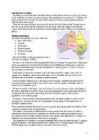
Australia Fact file:Australia comprises a
land area of 7 686 850
square kilometres. Its population is about 21,3 million people. Australia’s
capital is
Canberra . The national language is
English . The
official name of it is the
Commonwealth of Australia. It’s
divided into six
states and two territories: New
South Wales ,
Queensland , South
Australia,
Western Australia, Tasmania, Victoria,
Australian Capital
Territory (ACT) and
Northern Territory.
Symbols :Australia had the
British flag as their official flag
until 1901,
when the Commonwealth of Australia was
formed . Over 30 000
entries attracted the official
competition .
Five of
them , which
contained
almost identical designs, were placed equally
first . The
Australian flag symbolises Australia’s historical links with
Britain, because it has British flag on it, and Australia’s
location in the
southern hemisphere, because it has
stars of the
Southern Cross on it. The large
seven -pointed
star represents the six
original states and the territories of Commonwealth.
There is also the Indigenous Australian flag, which represents the
Aboriginal Australians. The flag with its
colours of red
(representing the land),
black (representing the people) and the
yellow in the
middle (representing the sun) is a source of pride for
Indigenous Australians.
The
present coat of arms was
granted by
King George V in 1912. It
consists of a
shield containing the badges of six Australian states,
enclosed by an ermine border. The shield is a symbol for the
federation of the states, which
took place in 1901. The crest, which
is
above the shield, is a seven-pointed
gold star on a
blue and gold
wreath. The seven points of the star represent exactly the
same thing
that they do on the flag. The supporters of the shield are
native Australian
animals : the red kangaroo and the emu.
Usually the coat of
arms is depicted on the background of sprays of
golden wattle with a
scroll beneath it containing the word ‘Australia’.
Australia’s national
anthem is ‘Advance Australia
Fair ’, which
replaced ‘God Save the
Queen ’ in 1984. It was written by a
Scottish -born composer, Peter Dodds McCormick. The unofficial anthem
of Australia is ‘Waltzing
Matilda ’. It tells a story about a
swagman, who has
named his sleeping blanket Matilda. He is chased by
police for stealing a sheep which he wanted to eat. The swagman
doesn’t want to be punished, so he
jumps into a billabong and
drowns.
The golden wattle was proclaimed the official national floral emblem
in 1988. It is a spreading shrub or a small tree, which
grows in the
under storey of
open forest,
woodland and open scrub in South
Australia, Victoria, New South Wales and the Australian Capital
Territory.
Green and gold were proclaimed Australia’s national
colour by the
Governor-General in 1984.
Before the proclamation, Australia had no
official colour,
although three colour combinations traditionally had
a
claim to be Australia’s national colours: red, white and blue;
blue and gold; and green and gold.
Head of State:The Head of State is the Queen of United Kingdom,
who is also the Queen of Australia. In practise, Governor-General
performs her
functions in queen’s absence (now, Governor-General is
Quentin Pryce and she is the 25th.)
Government :The form of the government is constitutional monarchy, in practice,
parliamentary democracy. The
Parliament consists of two
houses : the
76-
member Senate and the 148-member House of Representatives. The
Prime Minister is elected by the House of Representatives and the
Cabinet. The
current Prime Minister is
Kevin Rudd.
History, discovery :Though
nobody had
seen it,
people
thought long before the seventeenth
century , that there was a
land in the southern
ocean . It was called the Unknown South Land. But
more
than 60 000
years before the arrival of the European
settlers ,
Aboriginal people inhabited most
areas of the
nowadays Australian
European settlement. There were
estimated 300,000 Indigenous
Australians
living on the
continent .
The
Dutch navigator
Janszoon
was the first to find the South Land. He sighted the coast in 1606.
Then Abel
Tasman visited an
island off the southern coast of
Australia in 1642 and the island was named Tasmania after him. In
1770 British sailor James
Cook came to Australia and landed in Botany
Bay. He declared that Australia was very suitable for settlers.
Britain had to
send their convicts to the new
country after loss in
the American War of Independence to replace the
North Atlantic
colonies .
In 1788 the First Fleet with
eleven ships, with 1500 people on
board were
sent to Australia with
Captain
Phillip . They landed in Port
Jackson on
January 26th
in 1788 and that day is now called Australia Day. It is the
biggest day of
celebration in the country and in
observed as a public
holiday in all the states and territories of Australia.
During the 1850s, settlement was boosted by gold rushes. Gold was
first
found at Bayhurst in 1851.
The
idea of unifying all the
states first came to Earl
Grey in 1847. On the 1st
of January, in1901, Australian colonies federated to become the
Commonwealth of Australia. Australia had declared independence from
the federation of UK colonies.
As neither
Sydney nor
Melbourne was an acceptable new capital, a new city – Canberra –
was
built as a
result of an architectural competition.
Geographical position:Australia is
located in the
Southern Hemisphere and it’s the smallest continent in the world.
It’s the only continent except for
Antarctica that
lies all south
of the equator. It is surrounded by the
Indian Ocean and the
Pacific Ocean; the Gulf of Carpentaria, the
Coral Sea, the Tasman Sea, the
Australian Bight, the Timor Sea and
Shark Bay.
The Great Barrier Reef is
one of the natural wonders of the modern world. It is located off the
northeast coast of Australia. It’s the largest coral reef on earth,
extending for 2000 kilometres
along the coast of Queensland. It
consists of more than 600
islands . Most of the islands are
uninhabited, but some have been developed as tourists resorts.
Scientists estimate that the Reef is more than 30 millions years old
and it had it
beginning in a
tiny animal known as polyp. There are
more than 300
varieties of coral, which is a ultimate
dream of every
shell -collector. There are undersea observations,
glass -bottomed
boats and water scopes for undersea viewing, as well as
skin -diving
equipment . The Great Barrier Reef is and
ideal place for a
sunny holiday.
The relief:Australia is an old and low continent with
simple relief. Plains
cover the
greater part of the land. Most of the rocks have turned
into
sand and there are big sand deserts on the Western Plateau. In
the
centre of Australia are lowlands which are covered with
sedimentary rocks.
Deserts cover most of the land in Australia.
Most of the deserts lie in the central and north-western part
of the country. The deserts in Australia occupy 18% of the continent.
The biggest deserts are the Great Victory
Desert , the Great Sandy
Desert, the Tanami Desert, the
Simpson Desert and the
Gibson Desert.
Although Australia is a low continent, there are a few
mountain rangers there, too.
The biggest is the Great Dividing Range. It
stretches more than
3500 km from the north-
eastern tip of Queensland,
running the
entire length of the eastern coastline
through New South
Wales, then into Victoria and
turning west , before finally
fading into the central plain at the Grampians in western Victoria. It
consists of a
complex of mountain
ranges , plateaus, upland areas and
escarpments.
One part of the Great
Dividing Range is the Australian
Alps .
It’s
highest point is
Mount Kosciuszko,
which is 2,228
metres high. The
Snowy Mountains in New South Wales are also part of the Alps.
The most
famous land mark of Australia is the
Uluru . It’s a large
sandstone rock
formation in the southern part of the Northern
Territory. It lies 335 km south west of the nearest large town,
Alice
Springs ; 450 km by
road . Kata Tjuta (The Olgas) and Uluru
are the two
major features of the Uluru - Kata Tjuta National Park.
Uluru is
sacred to the Aboriginal people of the area. It has many
rock caves and
ancient paintings .
Water bodies:Australia is a very dry continent. There are very few
rivers and no
big
lakes in Australia. Most of the lakes of Australia have water in
them only after rain.
The biggest lake of Australia is Lake
Eyre and it is also the lowest
point in Australia, at approximately 15 metres
below the sea level.
The lake is located in the deserts of central Australia.
Even in dry
season there is usually some water remaining in Lake Eyre.
Australian temporary rivers are called creeks. The biggest rivers of
Australia are in the eastern part of the country. The
Murray River is
the largest but the second longest river, only its tributary the
Darling river is longer than it. The Murray rises in the Australian
Alps and flows north-west. It
makes up much of the border of the New
South Wales and Victoria. The Murray-Darling river system is one of
the largest river systems in the world.
There are predominantly dry
salt lakes in the
flat desert
regions of
the country lacking in organised drainage.
The Australians can get most of their
underground water from the
Great Artesian
Basin , which is the largest and deepest artesian basin
in the world. Iti is
near Lake Eyre, the Great Dividing Range and the
Simpson Desert.
An artesian well
is a confined aquifer containing groundwater that will flow upwards
through a well
without the need for pumping. Water may even spurt out
of the
ground if the natural
pressure is high enough. An aquifer
provides the water for an artesian well. An aquifer is a layer of
soft rock, like limestone or sandstone that absorbs water from an
inlet
path . Porous
stone is confined
between impermeable rocks or
clay. This keeps the pressure high, so when the water finds an
outlet , it overcomes gravity and
goes up instead of down.
Natural zones :Although most of Australia is barren and
arid or covered with
deserts, there are five distinguishable natural zones in Australia.
The winds from the oceans bring
rains to the western and eastern
coast of Australia. So, the rainforests occupy the
space between the
Great Dividing Range and the eastern coast and also the northern
coast. In the west they give place to beautiful grasslands with some
trees called the savannas.
Further west the trees disappear and the
savannas are replaced by the
bush lands. The
real desert occupies the
centre of the Western Plateau and in the very south-west there are
thin forests of evergreen trees.
Most of the Austrian trees are various kinds of
eucalyptus and
acacia . Some eucalyptuses are small bushes in the semi
deserts, some are the main trees in the savannas, but the biggest
eucalyptuses
grow as
tall as
hundred metres. Eucalyptuses give the
people timber and eucalyptus oil.
Of 600 kinds of acacias, the golden wattle is the
best know because
it is the national flower of Australia. Of the
other trees there are
bottle trees in the savannas and tree-ferns in the
tropical forests
and many
others .
Most of the animals which
live in Australia are
marsupial or pouched
mammals . There are 150
different species of
them. The babies of there animals are too small to start their
lives on their own. After birth, they
move to the
pouch on the stomachs of
their mothers and live there for
several months.
The kangaroo is the most numerous
among marsupials. There are
more than 50 species of them. It’s a
furry animal that hops on its
hind
legs . An
adult can
measure 2,4 metres high. They can
jump more
than 4 metres and
travel 70 km/h. The biggest are red kangaroos, grey
kangaroos and wallaroos. The smallest are the kangaroos that belong
to the group called rat kangaroos. They eat
grass and leaves and live
in groups of about twelve.
The
koala is one of the best loved Australian animals. The
aboriginals named it “the animal that does not
drink ”. They live
in eucalyptus trees, sleeping for 18
hours , and
eating 1 kilo of
leaves and
bark each day. Baby koalas are about the
size of a bean
when they are born. They move into their
mother ’s pouch, which
opens to the
back . It
comes out at the age of 6 months.
The
wombat lives in burrows in grassland areas of Australia
and Tasmania. It has short
strong legs and claws for digging burrows.
They live in groups and
come out to
look for food at
night . To
counterbalance their
poor eyesight, they can smell and
hear very
well. Their nearest relatives are koalas.
The
possum is a furry animal that lives in the trees. This
good climber moves about at night. They live in groups and come out
to look for food in the night. Some of them are called gliders as
they have skin between their legs which they use like wings for
gliding from three to
another .
The egg-laying mammals are the strangest of all the Australia’s
animals. They lay
eggs like
birds and
feed their young with
milk as
mammals do.
The platypus lives mostly in the rivers of
East Australia. The
female lays two eggs in a
nest of leaves and grass at the end of a
burrow in a river
bank . When the young come out of eggs, they start
licking up the milk that comes from the mother’s stomach skin.
Platypus
gets its food mainly from the river. It has pouches in its
cheeks where it can
store food to eat
later . It has a strong flat
tail . It is a good swimmer.
However , it can
stay under water for a
few minutes only and it shuts its
eyes and
ears first.
The
echidna is a small mammal that is covered with
coarse hair
and spines. They have snouts which have the functions of both the
mouth and
nose . They have very short, strong
limbs with large claws
and are
powerful diggers. Echidnas have a tiny mouth and a toothless
jaw. They eat termites, which they catch which their long tongues.
There are only few ordinary mammals in Australia:
dingoes,
which are
wild grown
dogs and brumbies,
which are wild grown
horses .
The Englishmen brought rabbits
to Australia and soon they
became wild and numerous being the real
pests of the fields and pastures
today . That’s why
Rabbit Proof
fences were built. There are three fences; the original No. 1
Fence ,
which crosses the Western Australia from north to south, the No. 2
Fence, which is smaller and further west, and the smaller east-west
running No. 3 fence. The fences took six years to
build . When
completed in 1907, the Rabbit-Proof Fence (including all three
fences) stretched 2021
miles .
The Australian Lyre
Bird is the world’s best imitator,
it’s able to mimic the calls of 15 different species of birds in
their locality and
string the calls into a melody. It can also mimic
the
sound of
mobile phones .
Climate, especially rainfall has played the most important
role in
where Australians have chosen to live. People are clustered in the
regions of the south and east. The climates in
these parts of
Australia are well suited for ranching and farming.
The distribution of climates in Australia is
determined by the location of the continent. The tropical climates
are found in Northern Australia. Warm ocean winds near the equator
bring
heavy rain to there areas, especially in summer, so that
tropical rainforests grow there.
The
coastal areas, where the
majority of
Australians lives, have the most dependable rainfall in Australia.
Westerlies bring
winter rains to parts of Australia’s southern
coast. Australia’s east coast gets rain all
year round .
Between the tropical north and middle latitude
south, lie Australia’s dry
core -deserts. Deserts in that area
receive almost no rainfall. In most areas of Australia rainfall is
low and unpredictable.
In conclusion, Australia has three biomes: tropical, savannas and
desert.
States and territories:The Commonwealth of Australia is made up of 8 states and territories:
Western Australia, Southern Australia, New South Wales, Queensland,
Victoria, Northern Territory, the Australian Capital Territory and
Tasmania. The biggest of them is Western Australia, which is almost
one third of the
whole Australia.
The biggest towns are all in the eastern part of Australia. Sydney,
with the population of 4,3 million people and Melbourne, with 3,9
million people. The capital of Australia is Canberra, although it’s
not as populated, but only about 340 000 people living there.
Outback refers to remote arid areas of Australia. There are not very
many people living there, and those who do, are Aborigines.
Industry, minerals and power :Agriculture is the major industry in Australia. People grow grain and
bred sheep. The Australian wool industry is widely recognised as
producing the
finest quality Merino wool. Eastern Australia is the
biggest farming
region .
Australia is
rich in many minerals; mining has
been an important
branch of Australia’s industry. Minerals are
found and mined in most states, but Western Australia has become the
most important region of
mineral production . Gold,
manganese ore,
uranium and
nickel ore are mined there. Australia is also rich in
precious and semiprecious stones. Black opals and
pink diamonds are
though to be especially
valuable .
Australia is a very rich country because of its mineral sources.
People:The earliest humans living in Australia are called Aborigines, and
they are descended from among the earliest humans in the world. They
are native people who came from
Asia about 30 000 or 40 000
years ago. The word “aborigine”
means “from the beginning”.
For thousands of years Aborigines lived as
hunter -gatherers along the
coast and in the inland desert areas, following the same lifestyle as
their ancestors. They were
dark skinned people who lived in tribes of
about 500
distinct groups, speaking about 200 different languages.
Contact with British settlers began in 1788 when
Captain Phillip raised the union Jack at Sydney Cove. The British,
thinking that their culture was
superior , tried to
impose it on the
native Aborigines. The settles exploited the
traditional hunting land
of the Aborigines by intensive, large-scale agriculture, sheep
herding and cutting down the forests. The Aborigines began to
lose their hunting lands and watering holes and were forced to move from
place to place to place. As a result of contact with the European
settlers, many of the Aborigines died from diseases. In 1900, laws
were finally
passed in almost every Australian state to protect the
rights of the Aborigines. Improved living conditions in modern
times have increased, but it is
still lower than that of most Australians. The population of aborigines today is about 400 000 people.
Sports:Sport is very
popular in Australia. The most popular are water sports
–
surfing , swimming,
sailing and
fishing , but also cricket,
golf ,
Australian
Rules football, netball and
baseball .
One famous Australian
sprinter is Cathy
Freeman . She has won the Gold
medal for
400m at the Sydney Olympics.
Music:The Aboriginal
singing is
called chanting, which is the rhythmic speaking or singing of
words or sounds. There are many styles of Aboriginal music, for example
Bunggul,
Karma and Wangga. Most of the Aboriginal
songs speak about
the Dreamtime.
The most famous Aboriginal instrument is the
didgeridoo . It’s a
long
pipe , without
finger holes and it’s usually of eucalyptus. It
is traditionally played by men. Today it’s commonly
considered the
national instrument of Australia.
Yothu Yindi is an Aboriginal
band , although it has some
non-Aboriginal
members . The
band tries to combine both
musical cultures. They use
typical instruments , like drums and guitars, but
also Aboriginal instruments, like didgeridoo and clap sticks.
Sydney Opera House is one of the most
famous performing
arts venues in the world.
The most famous Australian singers are Kylie Minouge, Paul Kelly and
Kevin Johnson.
Art:The most famous Australian paintings are Aboriginal rock and dot
paintings.
The rock paintings can be found almost
everywhere in Australia. There are two
types of rock paintings. One
is petroglyphs – it means removing the rock, including
scratching, abrading, pecking, carving, drilling, incising and
sculpting. The other one is pictography – that means painting with
mineral pigments, for example clay and ochre.
The dot painting is when
patterns are created using
dots .
The paintings are also about the Dreamtime.
The most famous Aboriginal artist is
Albert Namatjira. He is best
known for his watercolour Australian outback landscapes.
Literature :Australian literature began soon after the settlement of the country
by Europeans. Common themes
include indigenous and settler identity,
alienation, exile and
relationship to place - but it is a varied and
contested area.
Patrick White was a
world-famous Australian writer. In 1973, he was awarded the
Nobel Prize in Literature.
He has published 12 novels, two
short-story collections and
eight plays .
Sally Morgan's “My
Place” was considered a breakthrough
memoir in terms of bringing indigenous Australians stories to wider
notice.
Alexis Wright and
Tara June Winch are also famous Aboriginal
writers.
Film :The film-making in Australia
started at the
beginning of the
20th century.
The most famous Australian actors are Mel Gibson, Nicole Kidman,
Russel Crowe, Cate Blanchett and
Heath Ledger.
Some famous
movies are, for
instance , “
Happy Feet ”, “The story of the Kelly Gang” and “
Moulin Rouge”.
Ned Kelly was an Australian bushranger, and, to some, a folk
hero for
his defiance of the colonial authorities.
 100 punkti
Autor soovib selle materjali allalaadimise eest saada 100 punkti.
100 punkti
Autor soovib selle materjali allalaadimise eest saada 100 punkti.
 ~ 6 lehte
Lehekülgede arv dokumendis
~ 6 lehte
Lehekülgede arv dokumendis
 2010-04-25
Kuupäev, millal dokument üles laeti
2010-04-25
Kuupäev, millal dokument üles laeti
 10 laadimist
Kokku alla laetud
10 laadimist
Kokku alla laetud
 0 arvamust
Teiste kasutajate poolt lisatud kommentaarid
0 arvamust
Teiste kasutajate poolt lisatud kommentaarid
 Hannamanna15
Õppematerjali autor
Hannamanna15
Õppematerjali autor
 annaabi.ee







Kõik kommentaarid