Tallinna Inglise Kolledž Australia ReferaatTallinn
Table
of contents:Introduction 3
Geographical
Position 3
Relief 4
Climate & Time
Zones 5
Plants 5
Animals 6
Population 6
The
Native Australians 6
The
Biggest cities 7
Economy 8
Sports 9
Culture 9
History 9
Government 10
Conclusion 11
Materials 11
Australia Introduction
Australia
is the one and only
country in the world which
fills the
whole continent . The continent it fills is called Australia too. So,
Australia is
both a country and a continent. If you want to make
clear that you are speaking about the country, you may
call it the
Commonwealth of Australia. It’s the
official name of the country.
Australia is the smallest continent, but one of the largest countries
on Earth. It’s 6th largest country. Its area is about
7.6 million sq km. One third of it is occupied by deserts. It’s
both the flattest and, except for
Antarctica the driest.
Neighbouring
countries
include Indonesia ,
East Timor and Papua
New Guinea in the
north , the Solomon
Islands , Vanuatu
in the northeast, and New
Zealand in the
southeast.
Its
capital is
Canberra .
Other big cities are Melbourne,
Sydney , and
Brisbane. National language in Australia is
English . Monetary
unit is
Australian dollar . Their national
holiday is on the 26th
of
January . In 1788 on the 26th of January the
first fleet arrived at Botany Bay and
established a penal
colony near modern-day
Sydney.
Geographical
Position
Australia
is
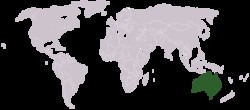
located in the
Southern Hemisphere. It’s the only continent
except for Antarctica that is all
south of equator. Sometimes
Australia is called the
island continent.
There is a great
reason why. It
really is an island. It is 2880 km from the mainland of
Asia and is
almost half way
round the world from
Europe . More
than 9 600
km separates it from America. Australia
lies between the
Pacific and
Indian oceans. The Timor Sea and the Arafura Sea separate Australia
from Indonesia. In the north the coast is washed by Great Australian
Bight and the Indian
Ocean . In the northeast the
Coral Sea washes the
coasts and in the southeast
there is the
Tasman Sea which also
separates Australia from New Zealand.
The
biggest island is Tasmania which is located to the south of the
country.
Relief
Australia
is a
flat and old continent. Its
average height is 274 m above sea
level. Its relief is
pretty simple – plains
cover the
greater part of it. Basically one third of its area is covered by deserts and
plains. Biggest deserts and plains are: the Great Sandy
Desert , the
Gibson Desert, the Great Victoria Desert and the Nullarbor Plain.
They are also called as the
Western Australian
Shield . The Nullarbor
Plain is an uninhabited limestone plateau. It is characterized by
amazing cave and
tunnel systems, which contain
valuable information
about
ancient Australia.
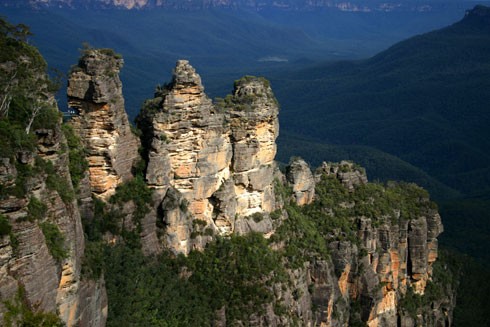
The
east is the mountainous part of the country. There is The Great
Dividing Range. It runs
along the Pacific coast and finds it end in
Tasmania. The
mountains are old and worn down. The
highest mountains
on the Australian mainland are in an area
known as the Australian
Alps. They are a small part of the Great Dividing Range. The Highest
Peak on the mainland is 2228m high – Mt Kosciusko.
One
of the largest monoliths – Ayers Rock, also known as Uluru, can
also be
found in Australia. It’s located in the
middle of the
country. The monolith is 348 m high.
The
flat hot
centre of Australia is called the outback. The Outback is
more then two thirds of Australia, but less than 100 000 people
live there.
Between
the Western Australian Shield and the Great Dividing Range is the
Great Artesian
Basin region . It is an area of vast plains. It
includes three
major basins: The Carpentaria, the
Eyre and the
Murray basins. Lake Eyre is one of the largest
salt lakes and also the
lowest point of the country (15 m below seal level). The permanent
rivers can be found in
eastern Australia, in southwestern Australia
and in Tasmania .The biggest
river is the Murray River.
Approximately 3,370 km in
length . It is fed by melting snows. Other rivers are
seasonal.
The
coastline of Australia is generally regular – with few bays and
capes. The largest inlets are the Gulf of Carpentaria and the Great
Australian Bight.
In
the northeast of the country a few km off the coast there is the
Great Barrier Reef. It extends about 2000 km along the coast of
Queensland . Made of coral, it is the world’s largest structure
created by
living organism.
Climate
& Time Zones
Australia
is the driest continent in the world except Antarctica. It has low
average rainfalls. About 70 per
cent of the country is arid or semi
arid and
cannot support
agriculture . The north part of the country
gets about 300 mm of rain a
year . Much of the rain soaks into the
ground and does not form any rivers or lakes. Monsoon winds bring
moist air
during summer . This is the time of high rainfall. It’s
known as “the wet “
season . High temperature also
means hat a lot
of moisture evaporates or is used by plants. In the southern two
thirds of the country the climate is temperate to cool.
Winter temperatures can be low but not freezing. There are
four seasons. The
seasons are the opposite of our seasons. When we have summer then in
Australia is winter. In Australia droughts and
floods are pretty
usual. The draught is caused by El Nino, a
weather pattern which
happens when the Southern Pacific Ocean heats up. This causes the
wind direction to reverse. An El Nino occurs every four or
five years , causing
drought and bushfires. Droughts are followed by
floods.
Australia
has three time zones. In Western Australia is equal to
Greenwich Mean Time
plus 8
hours . In New South Wales, Victoria, Queensland, and
Tasmania and in Australian Capital Territory time is equal to
Greenwich Mean Time plus 10 hours. In South Australia,
Northern Territory,
Broken Hill , NSW time is equal to Greenwich Mean Time plus
9 ½ hours.
Plants
A
rich variety of plants can be found in the natural landscapes of
Australia. A lot of
species can be found in wet
tropical forests in
the north and in temperate rainforests in the south.
The
biggest family of native plants is the myrtles. They include more
than 500 species of eucalyptus, or gum
trees . Only the big river red
gum is
seen nearly everywhere.
These can be found beside rivers and
dry riverbeds. Some gum trees are valuable
timber species and have
been cut down for many years. Gum tree leaves are
full of oils, which
evaporate easily.
Another big family of native plants is the acacias. They are also known as
wattles. There are about 900
wattle species. The
golden wattle is
Australia’s native
flower . Its
gold flowers and
green leaves
inspired the colours worn by many Australian
sporting teams.
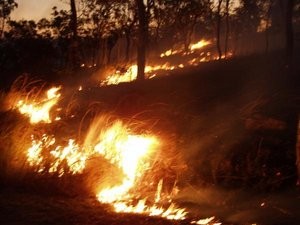
In
Australia bushfires are very often to
happen . Because the trees and
shrubs do not
lose their leaves in winter, but
grow throughout the
year. But when the dry leaves and branches
fall down, then there is a
lot of dry
material and that helps bushfires to burn.
Animals
Scientists
estimate that the continent is home to more than one million
plant and
animal species. Many of these are found nowhere else on the
planet .
Among these animals are kangaroos, wombats, koalas. They
carry their babies in pouches. There are platypuses and tiny
anteaters (echidna) too, which are the only mammals in the world that
lay eggs. Among the
birds are emus, lyrebirds and
black swans. When a
platypus specimen first reached to Europe people
thought it was a
fake, sewn together from bits of other animals. The platypus, the
strangest of Australia’s animals, is a living reminder of ancient,
extinct creatures. The
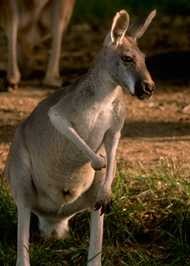
best known animal that
lives in Australia is
the kangaroo of
course . There are about 50 species of kangaroo,
ranging in size from the big red kangaroo of the outback to wallabies
and smaller rat-kangaroos. Kangaroos are marsupials too. Their babies
develop inside their
mother ’s
pouch .
About
half of Australia’s 230 mammal species are marsupials. As well as
the
meat -
eating Tasmanian devil, possums, bandicoots and of course
kangaroos, wombats and koalas. The large meat eating marsupial, the
Tasmanian tiger is probably extinct.
Most
of Australian native animals
move around at
night . But the birds
which are very colourful are easy to see. There are about 750 species
of birds in Australia.
Two
types of crocodiles, the saltwater and the freshwater crocodile can
be found in the north.
The
dingo or the native dog is not really an Australian native. It was
brought from Asia around 3500 years ago. The dingo is an efficient
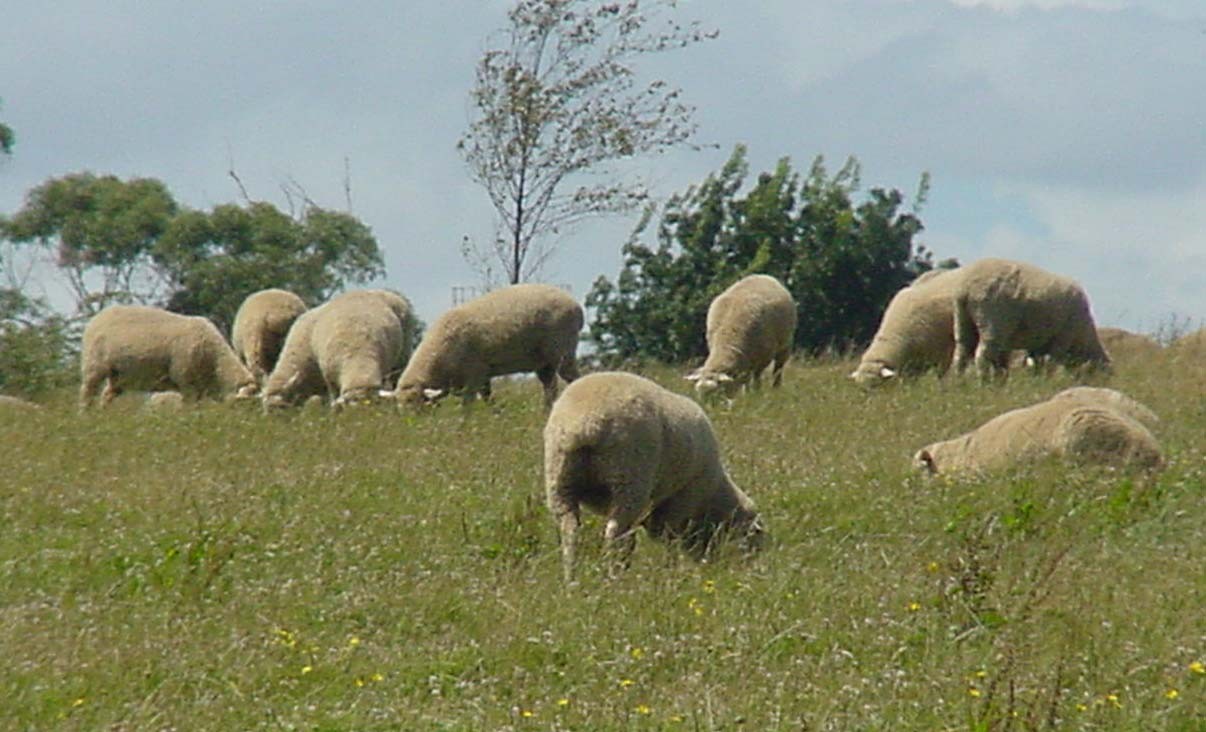
sheep hunter. To protect sheep The Dog
fence was
built in 1946.
Population
About
20, 2 million people live in Australia. Mainly they live on in the
eastern and southeastern part of the country, because the middle part
of the country is mainly plains and deserts. The eastern part is the
place where the big cities are like Sydney, Melbourne, Brisbane etc.
In Sydney and Melbourne together live about 8 million people.
The
Native Australians
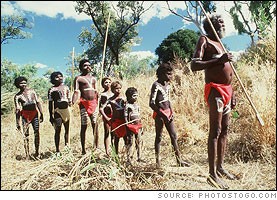
The
first people who arrived to Australia were the Aborigines. They
arrived there about 50 000 years ago. The word
aboriginal
means
the first or
earliest known. The word was first
used in Italy and
Greece to describe people who live there.
More
than 30 000 years ago the population of the world was small.
People lived in family groups. There were no cities or
anything like
that. There were no cultivated crops, animals were not herded for
food and metalworking was yet to be
discovered . It is not known from
where the aboriginals bean their journey, but it is certain that they
used some kind of a craft to
cross the water between the islands to
the north and
reach the southern continent. This voyage is the
earliest evidence of sea travel by prehistoric man.
The
firs Aboriginals found an Australia with a better environment than
today . Large animals now extinct provided more meat than the animals
which we are familiar with. Some parts of the continent were richer
in vegetable food, but there were no cultivated crops or animals that
could be domesticated
such as
cattle and sheep.
As
Australia was isolated from the
rest of the world, Aboriginals had
very
little contact with other people from whom to borrow techniques,
to trade
good , to acquire crop seeds, or animals.
Each
clan grouping occupied a well-defined area of
land . The group
belonged with, or to, the land - as well as the animals and plants.
They had no idea of being
able to buy or sell land. The land was
given long ago, in the Dreamtime. Aborigines were limited to the
food, which they had
growing naturally in their area. But they knew
when, where and how to
find anything edible. But food was not
obtained
without effort. Inland, the search for water was a life and
death
matter . Aborigines survived where the
others would have died.
They drained dew, and obtained water from certain trees and roots.
They
even squeezed frogs, which store water in their bodies.
The
Biggest cities
The
biggest cities are Sydney,
Melbourne,
Brisbane,
Perth ,
and
Adelaide .
Sydney
is the most populous city in Australia
with a population of over 4.2 million people. Sydney is the state
capital of New
South Wales and is located on the country's
south-east coast. Sydney was established in 1788 as the first
European colony. It is Australia's largest financial
centre and is also an international
tourist destination, notable for its
beaches and twin landmarks: the Sydney
Opera House and the Harbour
Bridge .
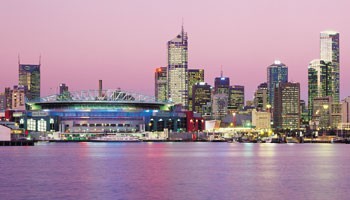
Melbourne
is the second largest city in Australia
with a population of approximately 3.7 million people. Melbourne is
also located in the country's south-east coast. The city is the state
capital of Victoria
and home for over 70% of the people who live in Victoria.
Founded in
1835,
some 47 years after Sydney was built. Often
referred to as the
"sporting
capital of Australia", the city has a rich sporting history and
is home to most of Australia's major annual sporting events. Both
Sydney and Melbourne have
held the
Olympic Games . Melbourne hosted in
1956 and Sydney in 2000.
Brisbane
is the capital
of Queensland,
and is the third largest city in Australia, with a population of just
under 2 million. It is a city set
close to the Pacific
Ocean. It is
Named in
honour of Sir
Thomas Brisbane. It was established in 1824.
In the new millennium, it is Australia's fastest growing city and the
second fastest in the developed world.
Perth
is the capital
of Western
Australia. A population of 1,477,800 people
makes Perth the largest city in Western Australia. The city is also
the
fourth most populous urban area in Australia. Its area is
5,386 km².
Adelaide
is the capital
of South
Australia, and is the fifth largest city in
Australia, with a population of over 1.1 million. It is named in
honour of
Queen Adelaide
Canberra
is the capital
city of Australia
and with a population of just over 325,000 people. The city is
located at the northern end of the Australian
Capital Territory, Canberra was selected for
nation 's capital in 1908 as a compromise between Sydney and
Melbourne, the two largest cities. It is an entirely
purpose -built,
planned
city. Canberra is the
seat of the government
of Australia.
Economy
Australia
is an outstanding producer of
primary products . The country doesn’t
import almost any
foods . Australia produces food itself. Australia is
a major exporter of wheat, meat, dairy products and of course
wool .
The country produces more than 25
percent of the world’s yearly
output of wool.
Australia
is also very rich in minerals. Coal, bauxite, gold,
iron ore,
diamonds , natural gas,
nickel can be found in Australia. Western
Australia has become the most
important region of mineral
production Mining is an important branch of Australia’s industry too. The
famous mining area is Broken Hill in New South Wales. It‘s one of
the largest
producers of
lead , zinc
copper and uranium. Australia is
also rich in precious and semi precious stones. Black opals, pink
diamonds are thought to be very valuable.
Tourism is also very important to Australia’s economy. It gives
work to
half a million people.
Most
of Australia’s oil and natural gas
comes from fields found in the
Bass Strait. Oil has been found in South Australia and in Western
Australia.
Agriculture
of Australia depends totally on climate. In the eastern part of the
Northern Territory peanuts, sugarcanes and
fruits re frown. Cattle
are raised in all of Australia’s
states and territories.
About
7 per cent of the
total area of Australia is under crop. Oats,
barley, rye, oil seeds and tobacco are
grown there.
Tasmania
is famous for its fruits, especially apples. Special varieties of
grapes are grown in the Murray Valley for the production of raisins.
Sports
In
Australia outdoor sports are very
popular . Many people enjoy surfing,
swimming or boating. Many people play
golf and
tennis . Australians
begin to play
team sports in primary school and many continue to play
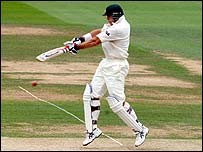
them throughout life. The most popular team sports are cricket,
Australian football, rugby and
soccer .
Australia
has produced many world – famous athletes, especially in tennis,
golf and swimming. Australians have won numerous Olympic medals in
swimming, athletics,
cycling and yachting.
The
world famous swimmer Ian James Thorpe was also born in Australia. He
has won 5 golden, 3 silver and one bronze medal from the Olympic
Games in Sydney and Athens. This is more than any other Australian.
Culture
Since its
discovery by Europeans more than 200 years ago, Australia has
seen
lots of changes. Just like all other countries in the world,
Australia has its own
unique culture and lifestyle. People from every
corner of the world have moved to Australia and contributed their
diversity to the Australian culture. For
a long time, Australia was thought to be a country of sheep farmers
and gold miners. But today's Australia is one of the most urbanized
countries in the world. For many years, Australia was a part of the
British Empire , and the Anglo-Celtic
heritage has greatly influenced
the country's lifestyle. The
traditional British supper is
still very
common, and barbecues ("the barbies", as Australians call
it) are a typical Australian pastime. There is also the traditional
Aboriginal cooking in Australia. It consists of such unique foods as
kangaroo, wombat, turtle, eel, emu, and snake meat. Almost all
Australians love sports. Soccer, rugby, cricket, cycling, bush
walking (hiking), tennis, and golf are very popular among Australians
of all
ages . Australians love to celebrate their national holidays.
Along with New Year's Day,
Easter , and
Christmas , they celebrate the
Australia Day on January 26, the Queen's birthday, and they also have
several festivals during a year. Two of the most important festivals
are for Easter and Christmas.
Australia
has a long history of
film production. Notable production includes
the
matrix and the
star wars Episode 2 and 3. Many USA
producers have moved their productions to Australian studios.
History
Australia
was
once part of the giant continent – Gondwana. It included
Africa, South America, and Antarctica. First Antarctica and Australia
split from Gondwana. Then Australia broke
away from Antarctica and
began to move north. Aborigines arrived there about 50 000 years
ago. They had occupied the whole continent by 30 000 years ago.
At that time Tasmania was still part of the mainland. About 20 000
years ago the ice began to melt and the rising water level cut
Tasmania off from the mainland.
Traders
from what is now Indonesia are thought to have been visiting
Australia well before the
17th century .
Chinese , Malaysian
and Arab sea captains may also have landed in northern Australia
after the 15th century. Still Australia remained
unexplored
until 17th century. One of the
reasons Australia remained undiscovered was that it was located off the
trading corridor of the Indian and South Pacific.
The
first recorded European contact with Australia was in March 1606,
when
Dutch explorer Willem Janszoon charted the
west coast of
Cape York Peninsula, Queensland. The Dutch called it New
Holland . In 1642
Abel Tasman discovered Tasmania. The first English explorer was
William Dampier in 1688.He was followed by James
Cook . In 1768,
Captain James Cook
left England on a three-year expedition to the
Pacific that also
took him to Australia. Cook landed at Botany Bay on
the eastern coast. He charted the region and named it New South
Wales.
Britain decided to use its new outpost as a penal colony; the First
Fleet of 11 ships carried about 1500 people - half of them convicts.
The fleet arrived at Port
Jackson , the site of modern Sydney, on 26th
January 1788, and it is on this day every year that Australia Day is
celebrated. In all, about 160 000 men and women were brought to
Australia as convicts from 1788 until penal transportation
ended in
1868.By this time there were established many settlements.(At Hobart,
in Queensland, Melbourne)In 1901 all the separate parts of Australia
were united into one country.
In
1851 gold was discovered in eastern Australia. This brought along the
Great Gold Rush. Thousands of people
went to the new land to find
fortune. Forty years later again gold was discovered. This time in
the west. The gold miners of the east had a
hard time. Water was very
scarce and the roads were bad. But then a railway was built. The west
was joined with the east. In 1903 a water-main was built to support
the gold-mining centre with water.
Some of the
early settlers had been sheepmen in Britain. They saw
that the grasslands
would be a wonderful place for raising sheep. Hey knew that wool
stands shipping well,
so many
started sheep farms. In some
cases cattle were raised on the
grassland instead of
sheep.
Many of the people who came to Australia to find gold stayed on to do
other kinds of
work. They found that Australia has other riches too, such as coal,
copper, lead, iron ore,
nickel, natural gas etc. The forests have good timber. Along
seashores pearls and tortoise
shells can be gathered. Other land proved to be good for growing
sugar canes and fruit
orchards. Of course they needed to buy and sell what was raised.
Others needed to
manufacture such things as butter, cheese, shoes, and
clothing .
Cities grew.
Government
Australia
is
divided into 2 territories and 6 states. The territories are
Northern Territory and Australian Capital Territory. The sates are
South Australia, Queensland, New South Wales, Victoria, Tasmania and
Western Australia which is the biggest of them. The official name of
the country is the Commonwealth of Australia. Type of government in
federal parliamentary democracy. The Head of State is the Queen of
the United Kingdom. The head of the government is the
prime minister.
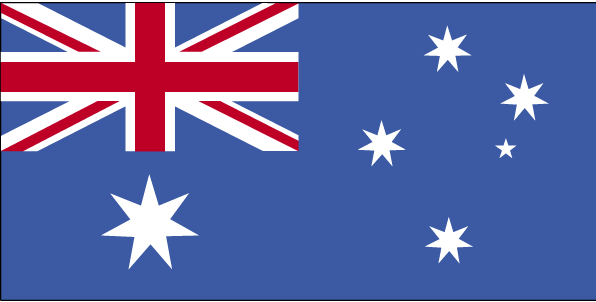
Australia has a British Union flag. It is red, white and
blue . Five
small stars
represent the constellation Southern Cross. The big star
represents the country’s states and territories On January 1-s 1901
this flag was chosen from about 30 000 entries in a public
contest. It was officially adopted as the Australian flag in 1953.
Australia’s
monetary unit is Australian dollar.
Australia’s
national
anthem is “Advance Australia
Fair ”. This replaced “God
save the Queen” in 1984. The unofficial anthem is called “Waltzing
Matilda”.
Conclusion
Overall Australia is a very big and very beautiful country. It is famous of
its great athletes, the production of merino wool and of course the
amazing animals. It’s the only continent which is located all south
of equator. It’s a dry country and about one third of it is covered
by plains and deserts. It has an
interesting history about the
aborigines and how the Englishmen got there.
Materials
Internet :http://www.australia.gov.au/about-australia-13time https://www.cia.gov/cia/publications/factbook/geos/as.html http://en.wikipedia.org/wiki/Australia http://www.dfat.gov.au/aib/history.html http://www.nationalparks.nsw.gov.au/npws.nsf/Content/Native+plants+and+animals http://www.edhelper.com/ReadingComprehension_Geography_14_1.html Books Sotter , L. Hone - “English
step 7”
“ENE” (1)
11
 50 punkti
Autor soovib selle materjali allalaadimise eest saada 50 punkti.
50 punkti
Autor soovib selle materjali allalaadimise eest saada 50 punkti.
 ~ 11 lehte
Lehekülgede arv dokumendis
~ 11 lehte
Lehekülgede arv dokumendis
 2010-02-08
Kuupäev, millal dokument üles laeti
2010-02-08
Kuupäev, millal dokument üles laeti
 24 laadimist
Kokku alla laetud
24 laadimist
Kokku alla laetud
 2 arvamust
Teiste kasutajate poolt lisatud kommentaarid
2 arvamust
Teiste kasutajate poolt lisatud kommentaarid
 liisu2702
Õppematerjali autor
liisu2702
Õppematerjali autor
 annaabi.ee






Kõik kommentaarid