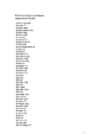
Practical- praktiline Prudent- mõistlik Magnanimous- suuremeelne Exuberant- ülevoolav Warmhearted- südamlik Broad-minded- avatud mõtlemisega, uuenduslik Caring- hooliv affectionate- hell intuitive-terviklikult nägev, intuitiivne unworldly- ebamaine receptive- vastuvõtlik selfless- isetu, omakasupüüdmatu Straight- forward- otsekohene Ethical- eetiline, moraalne Intellectual- mõistuslik challenging- väljakutusv progressive- edumeelne Inquisitive - uudishimulik, küsiv, päriv Nocturnal - öine, aktiivne öösiti Independent - iseseisev Inventive - leidlik enthusiastic - innukas, entusiastlik passionate - kirglik quick-witted - kiire taibuga pioneering - teedrajav courageous julge Determined- otsusekindel, kindlameelne Persistent- püsiv Placid- rahulik Patient- kannatlik Sensuos- meeleline
pears, false mesquite, sotol, ephedras, agaves and brittlebush. The spiny nature of many plants in semiarid deserts provides protection in a hazardous environment. Many plants have silvery or glossy leaves, allowing them to reflect more radiant energy. These plants often have an unfavourable odor or taste. Semiarid plants include: Creosote bush, bur sage, white thorn, cat claw, mesquite, brittle bushes, lyciums, and jujube. Animals In hot and dry deserts the animals include small nocturnal (active at night) carnivores. The dominant animals are burrowers and kangaroo rats. There are also insects, arachnids, reptiles and birds. The animals stay inactive in protected hideaways during the hot day and come out to forage at dusk, dawn or at night, when the desert is cooler. In semiarid deserts many animals find protection in underground burrows where they are insulated from both heat and aridity. These animals include mammals such as
It accumulates in the ponds, runs in the streams or tumbles in the cascades. It contributes to the expression of nature and symbolizes renewal, calm, wonder and continuity in the hereafter. Stones. They are laid out in accordance with strict rules, depending on their shapes and sizes; they often are twinned by pairs. The type of stone to use is one of the most important element, in the design of a Japanese garden. Lantern. Originally intended to guide the visitors during nocturnal celebrations, its light was also considered as the light of knowledge clearing away the clouds of ignorance. Placed near water it provides an architectural element which contrasts with the natural components of the garden. Bridges. They may be built of wood, bamboo, earth or stone. Whether they are rounded, arc-shaped or in zigzags, they always remain in harmony with the surrounding nature. Carps. Indispensable inhabitants in the pond of any Japanese garden, carp bring a
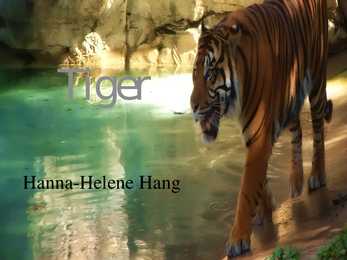
Other colour variations: there are also unconfirmed reports of a "blue" or slate coloured tiger, the Maltese Tiger, and largely or totally black tigers, and these are assumed, if real, to be intermittent mutations rather than distinct species. Biology and behaviour Tigers are essentially solitary and territorial animals. In the wild, tigers mostly feed on larger and medium sized animals. Tigers are thought to be nocturnal predators, hunting at night. Even with their great masses, tigers can reach speeds of about 4965 kilometres per hour (35 40 miles per hour). References http://en.wikipedia.org/wiki/Tiger
27) To summon koguma 28) Chant kirikulaul 29) Grouch iriseja, õelutseja 30) Ruefully kahetsevalt 31) To disembark maabuma 32) Hookah vesipiip 33) Corral koppel 34) Odor lõhn 35) Rifle vintpüss 36) To sling/slung - rippu viskama 37) Bugle jahisarv, signaalpasun 38) Hoof kabi, sõrg 39) Freight vedu, laadung 40) Treacherous reetlik, ebausaldav, ohtlik 41) Boulder kaljurahn 42) Orchard viljapuuaed 43) Detour ringsõit, ümbersõit 44) Nocturnal öine 45) Sentinel vahimees 46) Obscure selgusetu 47) Chieftain sugukonnapealik 48) Exultant juubeldav 49) Vessel - nõu, anum, alus 50) Ravine jäärak, kuristik, org 51) Seer ennustaja, prohvet 52) Twig oks 53) Dungeon vangikoobas 54) Falcon pistrik 55) Kerchief pearätt 56) To flee põgenema 57) Grove salu 58) Echoing kaikuv 59) Steed ratsu 60) To embrace embama 61) Chariot tõld, sõjavanker 62) Beetle - mardikas
colours. I NTERESTI NG FACTS Ø There are 1500 species of Australian spiders. Ø The Sydney Opera House roof weighs more than 161,000 tons. Ø Australia is considered to have one of the highest degrees of urban concentration in the world. Ø Koalas are furry animals that live only in Australia they live only in certain types of trees, called eucalyptus trees where they can eat the leaves. Koalas are nocturnal, they spend at least 1618 hours a day sleeping. Ø Christmas is the biggest event in the Australian calendar, it is the beginning of summer month. It marks the end of the school examinations and the start of long summer holidays. Ø In 1987, it was calculated that there were about 150 million sheep in Australia, about 10 sheep for every person living in the country. No wonder that Australia is the world's largest exporter of lamb and wool. FUN FACTS
on its edge. The tail is long, and ends with a dark tuft of hair. Both sexes have tightly spiralled horns, which are relatively straight. In males the horns form a wide "V" and can grow to 120 cm (4 ft) in length, slightly longer than on females. Ontogeny and Reproduction Gestation Period: 9 months Young per Birth: 1 Weaning: After 6 months. Sexual Maturity: Females at 15-36 months, males at 4-5 years. Life span: Up to 25 years. Primarily nocturnal, Giant Elands are highly nomadic, with large home ranges and seasonal migration patterns. During the day, herds often rest in sheltered areas. A gregarious species, Giant Eland herds usually consist of twenty or more animals and do not disband during the wet season, suggesting that social rather than ecological factors are responsible for herding. There is no evidence of territoriality, and males rarely display aggression, even during the breeding season. Giant Eland are alert and wary,
Animals Due to its isolation New Zealand has unique wildlife. Most of New Zealands land animals have been introduced from other countries. Deer and rabbits as well as cattle, sheep and pigs were all brought by the European settlers. Two species of bats ar the only native mammals. There are no snakes in New Zealand. New Zealand has many native birds including the kakao parrot, the kea, the weta and the kiwi. A kiwi is a flightless nocturnal native bird, and the national bird of New Zealand. It has nostrils at the end of its beak and a good sense of smell. It is now endangered, and difficult to see in the wild. It lives in undergorund burrow and it can be quite fierce. The kea, or the mountain parrot, is the only alpine parrot in the world to live on the snow. It can live up to 20 years. Many species of animals are endangered. Culture The people of New Zealand have a high standard of living
They are about 60 cm long and have a third "eye" on the top of heir heads; tuataras sleep during the winter, and they use the third eye to wake themselves up in spring. New Zealand's moa was the only wingless bird ever known. The giant moa, one of eleven species of moa, was also the tallest known, standing up to 3 metres. Maori hunted moa, and it is believed the birds became extinct around 400 years ago. A kiwi is a flightless nocturnal native bird, and the national bird of New Zealand. It is now endangered, and difficult to see in the wild. However, there are a number of `kiwi houses' at zoos and wildlife parks. While they may look cute, kiwi can be fierce and highly territorial. However, over the years, New Zealanders have become known as `Kiwis' as well. Just to confuse you, the kiwifruit is often called a `kiwi' in Europe and America. Maori culture is a rich and varied one, and includes traditional and contemporary arts.
" them. When he selected "his card" (Pushkin does not say ace, but "svoiu kartu"), the alleged ace must have been before Ger- mann's very eyes. Yet, when he turned the card over, the "queen of spades screwed up her eyes and grinned. At one point Pushkin confides to the reader that "the Countess had by no means a bad heart." Trusting Pushkin, I would like to suggest that Germann was ruined not because of the Countess's ill will but rather in spite of her goodwill. During her nocturnal visit, the Countess made it clear that she came to Germann against her will ("ia prishla k tebe protiv svoei voli"). She also reveals the three cards to him against her will: "mne veleno ispolnit' tvoiu pros'bu." In both cases the Countess seems to act on behalf of some other involved party. But then comes the unexpected move: "I willforgive you my death, under the condition that you marry my ward, Lizaveta Ivanovna. "49
moody (adj) moorland (n) mortality (n) mosquito (n) motivational (adj) mould (v) mountain range (n) mouth-watering (adj) moving (adj) mug (v) multiply (v) mumble (v) murmur (v) 18 mussel (n) mutual (adj) naked (adj) nanny (n) napkin (n) narrow-minded (adj) nationwide (adj) native people (n) natural habitat (n) nerve-racking (adj) network (n) neuroticism (n unc) news bulletin (n) next to worthless (phr) nickname (n) no mean achievement (phr) no trace of (idm) nocturnal (adj) nod off (phr v) nomadic (adj) notably (adv) notion (n) nourishing (adj) novel (adj) novelty (n) nursery rhyme (n) object (v) obsession (n) occur (v) occur (v) odd (adj) odour (n) odyssey (n) offend (v) offended (adj) official (n) olive (n) on all fours (phr) on balance (phr) on duty (phr) on the cards (idm) on the contrary (phr) on the spur of the moment (idm) on top of the world (phr) ongoing (adj) onlooker (n) open-minded (adj) open-plan (adj) 19
Wombats are Australian marsupials; they are shortlegged, muscular quadrupeds, approximately one metre in length and with a very short tail. The name wombat comes from the Eora Aboriginal community who were the original inhabitants of the Sydney area. Wombats dig extensive burrow systems with rodentlike front teeth and powerful claws. Although mainly crepuscular and nocturnal, wombats will also venture out to feed on cool or overcast days. They are not as easily seen as many animals, but leave ample evidence of their passage, treating fences as a minor inconvenience to be gone through or under and leaving distinctive cubic scats. Wombats are herbivores, their diet consisting mostly of grasses, sedges, herbs, bark and roots. The Tasmanian devil and the Tasmanian wolf are the only carnivores among marsupials and are almost extinct
Sense of timelessness (relationship between the experience of past and this day). Balance presentation of different emotional states. Both parties are to exercise their judgement. In 17th C retreat to Nature meant retirement from practical business to ideal contemplation. In 18th C turning from ambotion to usefulness. Emphasis on the varied hues of nature. British countryside attuned to the ideals of a new urban bourgeoisie, patriotic, pastoral, classical and sentimental. Winchilsea: A Nocturnal Reverie James Thomson: The Seasons – appreciate colour in the universe, it is scientific and descriptive. To The Memory of Sir Isaac Newton John Denham: Cooper’s Hill – established the exact standard of good writing, obedience to decorum and correctness of form, imagery and vocabulary, pattern for English poetry of place (celebration of place etc... ) John Dyer: Grongar Hill, from the Fleece, Book III Akenside: Pomfret: The Choice
6 Citizens 4 1 recall 5 anonymous 2 1 forecast 4 anticipate 7 state 2 seek 6 sharp 2 expected 5 prophesied 8 tangible 3 endeavour 7 chase 3 projected 4 revelation 8 nocturnal 2 It helps students to travel abroad to 3 1 I can't see myself getting study. Challenge! Students' own answers married ... 2 He's set his sights on ... 3 1 of 9 with 6E Reporting structures 3 I'm not pinning my hopes on 2 make 10 for page 52 getting ... 3 as 11 for
A p p e n d i 2x naturally. T h e 1 1 ) . . . . . . . . . . .i.s. . t h a t , u n l i k et h e then particles, correct human owls can't claim that a nocturnal 25 Fillinthe Theyare pr( lifestyle. their12).......... explain thePhrasalverbs' thed
A p p e n d i 2x naturally. T h e 1 1 ) . . . . . . . . . . .i.s. . t h a t , u n l i k et h e then particles, correct human owls can't claim that a nocturnal 25 Fillinthe Theyare pr( lifestyle. their12).......... explain thePhrasalverbs' thed
A p p e n d i 2x naturally. T h e 1 1 ) . . . . . . . . . . .i.s. . t h a t , u n l i k et h e then particles, correct human owls can't claim that a nocturnal 25 Fillinthe Theyare pr( lifestyle. their12).......... explain thePhrasalverbs' thed
A p p e n d i 2x naturally. T h e 1 1 ) . . . . . . . . . . .i.s. . t h a t , u n l i k et h e then particles, correct human owls can't claim that a nocturnal 25 Fillinthe Theyare pr( lifestyle. their12).......... explain thePhrasalverbs' thed
 annaabi.ee