Society
and culture of
english -sspeaking countries
Introduction 1.
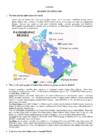
The countries of the world where the English
language is spoken.
2.
Approximate number of
mother tongue speakers of English
approximately
350-400 million
native speakers.
Which
place does English occupy in the world by its number of
speakers?After which
language ?
English
occupies second place by its number of speakers after Mandarin
Chinese .
3.
What is the
difference between English as a Second Language, English
as a
Foreign Language and English for
Specific Purposes ? Give
examples of situations where they are used.
English
as a Second Language (ESL or TESL) is a
traditional term for the use
or
study of the English language by non-native speakers in an
English-speaking environment. That environment may be a
country in
which English is the mother tongue (e.g.,
Australia , the U.S.) or one
in which English has an
established role (e.g., India, Nigeria)
English
as a foreign language A traditional term for the use or study of the
English language by non-native speakers in countries where English is
generally not a
local medium of
communication .
English
for specific purposes - a sphere of teaching English language
including Business English, Technical English,
Scientific English,
English for
medical professionals, English for waiters, English for
tourism , English for Art Purposes, etc
4.
What is the difference between settlement
colonies and the trading
empire (dependencies)?
Settlement
colonies were
regions colonized by the UK that
later established
governments and
became dominions and independent.
Dependencies
were regions in the world that became trading
partners and where
English became a second language.
5.
Which
British colonies became dominions? What was their
status ? Is
the name
dominion
used for
these countries
nowadays ?
The
first dominions were
Canada (1867), Australia (1901), and New
Zealand (1907)
The
name "dominion" is not used anymore.
6.
Which
organisation unites Britain and most of its
former colonies
nowadays?
The
Commonwealth unites Britain with its former colonies.
Ireland 1.
Who were the
early inhabitants of Ireland?
Seafarers,
fisheremen and
hunter -gatherers from mainland
Europe arrived around 8000 BC
2.
When was Christianity established in Ireland?
432
AD Saint
Patrick arrived in Ireland and began converting the
Irish to
Christianity.
Who
is Ireland's patron saint? Saint Patrick is Ireland's patron saint. When is his feast day? His feast day is on 17
March 3.
When did the English conquest of Ireland begin?
Henry II, with
permission from tha Pope, sought to
conquer Ireland. In 1171
he became the first English
monarch to set
foot on the
isle .
4.
Who were settled in the
province of Ulster by
King James I?
James
I settled English and
Scottish Protestants in
Munster and Ulster.
What
has this resulted in? It has resulted in an
amount of English people
in Ireland.
5.
What is meant by Home
Rule ?
Home
Rule was a
movement that sought to repeal the
Acts of Union 1800. The
Home Rule Act, was meant to permit Ireland self-
government within the
UK.
6.
Changes in the number of population
since the 1840s.
1841 :
6.5M in Ireland, 8.2M on the
island 1901:
3.2M in Ireland, 5M on the island
1951:
3.0M in Ireland, 4.4M on the island
2011:
4.6M in Ireland, 6.4M on the island
Causes of
emigration from Ireland.
The
Irish Famine caused some 150,000 people to leave the island. The
Great Famine (1845-52)
killed roughly a million and prompted
another million to emigrate.
In
1890, 40 % of Irish people were
living abroad
"Exodus
in reverse" has been used to
describe Irish people returning to
Ireland, especially from the US.
Immigration from many countries, but mostly from
Poland , the UK,
Lithuania ,
Latvia, Nigeria and Romania.
Is
Ireland
still an emigration country? No
7.
What is the difference between the Irish Free State and the
Republic of Ireland?
All
three names
refer to the
same country (
Northern Ireland was
part of
the Irish Free State for one day, if you want to be
really pedantic).
The
Irish Free State was established in 1922. It
was part of the British Commonwealth, and a dominion of the UK, with
which it shared a monarchy.
Before this, all of Ireland was a part of
the UK.
In
1937, Irish voters backed a plebiscite which voided the Anglo-Irish
Agreement (which created the Irish Free State), changed
the country's name to Ireland, and set in
motion the
formal transition of Ireland into a fully sovereign republic.
This
state still exists
today , and is still officially called Ireland. It
is
commonly known as the Republic of Ireland, to
avoid confusion with
the
entire island.
Some
people use the term "Irish Republic", interchangeably with
"Republic of Ireland", to refer to this modern state of
Ireland.
However ,
the original Irish Republic declared independence from the UK in
1919.
8.
What are the
official languages of Ireland?
Irish
(first official language) and English(second official language).
English is the
dominant language
What
is the situation of the Irish language at
present ?
Irish
is compulsory in all those
schools that receive public
money .
In
2007, Irish was recognized as an official language of the EU.
Road signs are
usually bilingual.
According
to the 2011 Census, 41% of the population
claim to be
able to
speak Irish
77,000
people speak Irish
daily outside the education system
9.
What languages is the Irish language
related to?
Irish
is a
Celtic language.
Other Celtic languages include
Breton , Cornish,
Manx, Scottish Gaelic and
Welsh .
In
what
alphabet were the earliest
sources written?
The
Ogham alphabet was used tp write the Irish language in C4-C9.
10.
Which is the most
famous medieval manuscript?
The
Book of Kells from C9
11.
Which famous
writers are of Irish
origin ?
W.B.
Yeats George
Bernard Shaw
Samuel Beckett Seamus Heaney
Oscar
Wilde 12.The
Irish people outside Ireland. Who of the US presidents
come from
Irish
families ?
J.F.
Kennedy The West Indies1.
Where are the West Indies
situated ?
The
West Indies is an archipelago around the Carribean Sea. The name is
derived from its geographical
position and its relation to
Columbus '
original voyage to the area. 'West' differentiates from the 'Indies'
in
South and Southeast
Asia .
2.
Who were the original inhabitants of the area?
After
500 BC, the Saladoid people migrated from present-day Venzuela to the
Lesser Antilles.
Around
650 AD, the Saladoid people were replaced by the Arawak Indians
Around
1200 AD, the Arawaks were in
turn succeeded by the Caribs.
3.
When and by
whom were most of these
islands discovered for the
Europeans?
1490s
Christopher Columbus
4.
Which countries colonised this area?
The
Spanish and Portuguese arrived in C16.
England ,
France , and the
Netherlands began their conquests in C17.
Denmark only
acquired a few
islands.
5.
Which languages are spoken in the West Indies? What is the origin of
the people who
live there ?
Pidgin is a simplified language that is born out of contact (e.g. trade)
between speakers who do not speak the same language. The
elements of
two or more languages coalesce.
Creole
is a pidgin language that has become the native language of a
community. Usually it was a mix of a European and another language.
6.
When did most West
Indian countries
gain independence?
In
1804,
Haiti became the first Carribean
nation to gain independence.
In 1844, the Dominician Republic declared its independence from
Haiti.
Cuba became independent in
1902 . Subsequently, the British
West Indies became independent, starting with Jamaica, as well as
Trinidad and Tobago.
7.
What are the main branches of
economy in the West Indies?
Sugar industry
8.
Which styles of music and
dance originate in the West Indies?
Syncopation
and percussion are
direct manifestations of African heritage.
Limbo was born in Trinidad in mid-C19.
9.
Which religions are
spread in the West Indies?
Voodoo ,
Rastafarianism, Santerua, Christianity, Catholicism,
Protestantism ,
small minority are Hindus, Muslims, or
Jews , many worship the
Christian God and African
gods at the same time.
Why
are
there so many
different religions?
many
people
came with their beliefs
Who
are Rastafarians?
The
Rastafari use
marijuana for
spiritual and ritual purposes. Dreadlocks
were inspired by biblical admonitions against cutting
hair and the
Rastafari are likewise forbidden to cut their hair.
Canada1.
Which place does it occupy in the world by its area?
Canada
is the second-
biggest country in the world, after Rusiia, so second
place. Its area is 9.9M km2
2.
The main geographic landforms
Significant
landforms include the Appalachian
Mountains ; St.
Lawrence River;
Canadian Shield; Canadian Arctic Archipelago; Great
Lakes ; Hudson
Bay; Great Plains; Lake Winnipeg;
Columbia , Fraser,
Mackenzie and
Yukon Rivers; Great Bear Lake; Great
Slave Lake;
Rocky Mountains;
Canadian Cordillera and the dozens of volcanoes
along the
Pacific Ring of
Fire .
3.How
is the population distributed on the territory of Canada?
Population
density: 4 residents/km2
Densely
and sparsely populated
areas . Canada is one of the
least densely
populated countries in the world.
4.
Who are the native
peoples of Canada?
Métis
(mixed-race decendants of the indigenous peoples)
Inuit (also
referred to as Eskimos)
The
First Nations (various indigenous peoples who are neither of the
above )
5.
The
discovery of Canada by Europeans (St Brendan, Scandinavians, John
Cabot ,
Jacques Cartier).
St
Brendan the Navigator (C6) was an Irish monk.
Tradition holds that he
reached
North America on one of his voyages.
Leif
Eriksson (C11) was a Norseman who likely landed in North America
around 1000 AD.
John
Cabot was an
Italian explorer who reached North America in 1497.
Jacques
Cartier was a
French explorer who landed in modern-day
Newfoundland on 10 May 1534
6.
From which countries did most
immigrants arrive in Canada in the
following periods: before the 1760s - The French
founded New France
and Québec City in
1608 .
1760s
to the end of the
19th century The
French and Indian War (
1754 -1763) was the North American
theater of
the
Seven Years ' War. The British colonies in America defeated New
France, forcing France to cede
almost all of its territory to Britain
and
Spain .Subsequently, most immigrants arrived from Britain, either
directly or via US
Chinese
immigration to British Columbia was extensive in the
latter half of
C19.
In
the
beginning of
20th century, most immigrants were from Central and
Eastern Europe, as
well as Scandinavia
After
World War II,Canada accepted many immigrants from war-torn countries
(e.g. Estonia, the Netherlands, and
Italy ).
Since
the 1970s, immigrants have mainly been visible minorities from the
developing world. Most immigrants currently arrive from South Asia,
China , and the Carribean.
7.
Which province has the
highest percentage of population of British
origin?
Newfoundland
of
French origin?
New
France and
One
more province that has a large French-speaking population.
Québec
City
8.
Compare the roles of the Governor General and the
Prime
Minister
in Canada.
The
Governor General is the representative of the monarc and carries out
most of the monarch's constitutional and ceremonial duties. The
Governor General is appointed by the
queen on advice from the
Canadian Prime Minister
The
Prime Minister is the head of government
10.
Who were the Loyalists, why and when did they
move to Canada?
Loyalists
were American colonists, of different
ethnic backgrounds, who
supported the British
cause during the American Revolution (1775–83).
Tens
of thousands migrated to British North America during and after the
revolutionary war — boosting the population and heavily influencing
the
politics and culture of what would become Canada.The vast
majority of Loyalists were neither well-to-do nor
particularly high
in
social rank; most were farmers, labourers, tradespeople and their
families. They were of varied
cultural backgrounds, and many were
recent immigrants. White Loyalists
brought large
numbers of slaves
with
them .
Until 1834, slavery was
legal in all British North
American colonies but
Upper Canada, where the institution was being
phased out.
The
main waves of Loyalists came to what is now Canada in 1783 and
1784 .
11.
In which province is Scottish culture preserved?
In
1910 an incredible 62,000
Scots emigrated to Canada. Tens of
thousands of Scots men,
women and
children boarded ships to make the
journey to Canada in the first half of the 20th century.
Nova
Scotia Gaelic is still spoken in Nova Scotia, hundreds of years after
the first Scots settlement was founded.21st century Scots Canadians
celebrate their Scots origins and
share their
traditions with people
from around the world. Scots culture is not a
museum piece; it is a
living
thing that grows and thrives as it is touched by
other cultures and other traditions.
In
2006, in the Canadian Census, 4.7 million Canadians
reported that
they were of Scottish origin. Today, there are almost as many Scots
Canadians as there are people in the
whole of
Scotland .
12.
Which
important minerals are
found in Alberta?
Canada
is abundant in many mineral resources —
mined in every province and territory — and a world
leader in the
production of potash, aluminum,
nickel ,
salt ,
sulphur and uranium,
among others .
Today,
Canada is the
leading producer of potash and is
estimated to rank in
the top
five global producers of aluminum,
diamonds , cobalt, nickel,
platinum,
tungsten , uranium and sulphur
Alberta
is the country's largest producer of
crude oil and gas
products (especially natural gas)
13.
Which is the main crop
grown in the
Prairie Provinces?
The
main crop is
wheat , but barley, brassica, canola, and oats are also
cultivated.
14.
The
political and language situation in
Quebec . Why do the Quebecois
want to be called a distinct society?
French
is the official language of Quebec
15.
What is
Nunavut ?
Nunavut
is a territory in Northern Canada. Its' capital is Iqaluit
It
is Inuits' territory
The
USA1.
According to J. F. Kennedy, which were the three
strong forces that
made people migrate to the US?
religious persecution, political oppression, and
economic hardship
2.
Which were the first
permanent British colonies in America?
Jamestown,
VA(1607) and Plymouth, MA (
1620 )
3.
From which countries did most immigrants arrive in the US in the
following periods: before the mid-19th
century
Colonial
era (C17-C18): the English, the Irish, the Scots, continental
Europeans, and the Scandinavians
the
second half of the 19th
century
C19
- WWI: The British, the Irish, the Germans, the Italians, the
Poles ,
the Jews, and the Scandinavians
and
the early 20th
century, at present?
Post-WWI
era: Latinos and Asians
In
2013, most residence permits were
given to people from
Mexico , China,
India, the
Philippines , The Dominican Republic, and Cuba
4.
Native
AmericansCountry
of origin
America,
Alaska ,
status
in present-day American society
reservation
Natives have the highest levels of
poverty and
unemployment in the
US.
Hispanic and Latino AmericansCountry
of origin
They
descend from the peoples of the Iberian Peninsula and
Latin America.
Spanish colonization of the
Americas began with Columbus's
voyages.There are 55M Hispanic and Latino Americans in the US. They
constitute the largest ethnic minority group and
account for 17% of
the whole population. They are less wealthy and less educated
than other Americans
African
Americansan
estimated 42M African Americans in the US. They are the biggest
racial minority and the second-largest ethnic minority.
African
Americans
attend college at half the rates that whites do, but more
than Natives and Hispanics. Home ownership rates are
lower and
single mother households more common.
Asian Americans
descend
from peoples in the Far
East , Southeast Asia, and the Indian
subcontonent. There are an estimated 15M Asian Americans in the US.
They are the third-largest ethnic minoritu, but the fastest-growing
one. Most Asian Americans have come from China, India, the
Philippines,
Vietnam , Korea, and
Japan their
countries of origin, their status in present-day American society.
Asian Americans are sometimes referred to as the "model
minority" because of their socioeconomic success.
Overall , they
are more educated and more wealthy than other Americans, but they
also have bigger property rates than White Americans.Asian Americans
have a strong
work ethic.
5.
Why are the metaphors
Melting
Pot
(
named after a play,all the
races of Europe are melting and
re-
forming ) and
Mosaic / Salad Bowl / Pot of Stew
used about the US?
What
is the difference between them?
6.
What are the three branches of government?
legislative
(
Congress ),
executive (The
President )
judicial (the federal courts,
incl . the Supreme
Court )
7.
What is the
Bill of
Rights ?
In
1791, ten supplemental amendments were made to the Constitution. They
largely
protect the
individual from the federal government.
9.
How is the
President elected?
Presidential
elections
occur every
four years. Presidents are elected indirectly,
as the
winner is
determined by the electors of the Electoral College
10.
How are Senators and Representatives elected?
Congressional
elections every two years, half of them are midterm elections.
11.
Whose birthdays are celebrated as federal
holidays ?
Martin
Luther King, Jr. Day
18th January leader of the
Civil Rights
Movement, preached nonviolence, got a
Nobel Peace
Price Washington's
birthday 1st president of the US
Columbus
day
Abraham Lincoln's birthday 16th President of the US
12.
Origin of Thanksgiving Day
In
1620, Pilgrims -
Puritan separatists - landed in Plymouth, MA.
The
Pilgrims celebrated the "First Thanksgiving" in1621, after
their first harvest
Traditional
foods eaten that day
large
roast
turkey , side dishes - cranberry
sauce , stuffing or gravy, sweet
or mashed potatoes, pumpkin or peach pie.
Black Friday - the day after Thanksgiving Thursday
The
beginning of
Christmas season shopping
13.
Who were the first European explorers in the area of present-day New
York ?
Giovanni
de Verrazzano - first European to
reach the area of New York Bay
Henry
Hudson - in 1609, he explored the New York City area,
while in the
service of the
Dutch East India Company
India1.
Which is the most widely spoken Indian language? Which
classical language is it
based on?
Hindi ,
it is based on
Sanskrit .
2.
Which company played a significant role in British colonization of
India?
The
EIC - The east indian Company
3.
What was meant by the Orientalist-Anglicist
controversy ?
The
East Indian Company
required its officers to have extensive
knowledge of Asian languages,
laws and customs. In the early 19th century, a
discussion
developed over what kind of education to disseminate in
India. Anglicicsts
preferred Western
learning and the use of English.
Orientalists preferred Hindu and Oriental learning, as well as the
use of classical languages (e.g. Arabic, Persian and Sanskrit).
When
did India become independent of Britain? Into which countries was the
former British
colony divided?The Indian Independence Act 1947
partitioned India into independent India and East and West
Pakistan 4.
What is meant by the term ‘subcontinent’?
5.
Why are
both Hindi and English used as the official languages of
India?
Because
of
Lord Thomas Macaulay's
winning of the debate between the
Anglicists and the Orientalists. English was
supposed to be phased
out and to become the national language, but the non-Hindi areas
protested and it failed.
6.
What is meant by the Three Language
Formula ?
The
Indian government regulated the teaching of languages in India. The
policy requires children in Hindi-speaking areas to study Hindi,
English and one of the local languages.In non-Hindi areas, children
study the regional language, Hindi and English.
7.
What is
Bollywood ?
Bollywood
refers to the Hindi-language
film industry based in Mumbai. It is one
of the largest centers of
film production in the world.
8.
What does business
process outsourcing
mean ? Business process
outsourcing (BPO) is the contracting of a specific business
task ,
such as payroll, to a third-
party service provider. Usually, BPO is
implemented as a
cost -
saving measure for tasks that a company
requires but does not
depend upon to
maintain their position in the
marketplace.
What
are
call centres and which problems do they
face in India?
Australia1.
Densely and sparsely populated areas in Australia.
Population
density: 3 residents/km2
2.
Discovery of Australia.Aborigines were the first people to discover
Australia.
3.
Where and when was the first colony established? Who were the first
settlers?Aborigines 60000 years ago
4.
What changes have taken place in Australia's immigration policy since
World War II?
The
White Australia policy, in
force from 1901 until the 1970s, favoured
immigrants from other English-speaking countries. The policy banned
immigration from China and the Pacific Islands.In the years after the
war, Australia accepted some 2M European
migrants and displaced
persons. In 1973. race was disregarded as a
component for
immigration. In 1975, racial
selection criteria were made
illegal .
Currently, people from China, India, and South Africa make up the
majority of immigrants.
5.
Recent changes in Australia's economic
relations .Australia has
plans to diversify its exports to Asia: education, financial
services ,
food, health care, and
wine .
6.
In what way is the
Australian government a mixture of American and
British
forms ?Australia is a federal constitutional monarchy. The
Parliament is comprised of the House of Representatives and the
Senate. The British monarch is the head of state.
The
Governor-General is the representative of the monarch and carries out
most of the monarch's constitutional and ceremonial duties. The
Governor General is appointed by the monarch on advice from the
Australian Prime Minister. The term length is usually around five
years. The Prime Minister is the head of government.
7.
The Australian referendum in 1999? The 1999 referendum proposed
establishing a republic. 55% voted against the measure.
8.
Who are the native people of Australia? Where do most of them live?
The
Aborigines are the native people. In 2011, there were 670K Aboriginals in Australia, comprising 3% of the
total population.
Three-fourths of natives live in
urban areas, but some do live in
remote areas.
New
Zealand1.
The two large islands of New Zealand, their main geographic
landforms.
New
Zealand is a country of snowcapped mountains and
scenic landscapes -
north to south.
2.
Who are the native people of New Zealand? What is their origin? When
did they arrive in New Zealand?
Maori
are the indigenous Polynesian people who settled on New Zealand aroun
1300 AD. They did not have a word to refer to themselves. They
adopted maori, which
means 'normal, natural, ordinary', when they
encountered the colonizers, or pakeha, which means 'people of
European descent'.
3.
Discovery of New Zealand by Europeans.
In
1769 -70 James
Cook sailed around New Zealand, charting its entire
coastline.
4.
By which
treaty did the
Maoris cede their sovereignty?
By
the treaty of Waitangi.
5.
The status of the Maori language and Maori culture at present.
Maori
became an official language in 1987, New Zealand
Sign language became
an official language in 2006.
6.
The peculiarities of New Zealand’s
plant and
animal life. The
national
bird of New Zealand.
7.
The political system of New Zealand.
New
Zealand is a unitary constitutional monarchy. The Parliament is
comprised only of the House of Representative. The British monarch is
the head of state.
The
Governor-General is the representative of the monarch and carries out
most of the monarc's constitutional and ceremonial duties. The
Governor-General is appointed by the monarch on advice from the New
Zealand Prime Minister.
 100 punkti
Autor soovib selle materjali allalaadimise eest saada 100 punkti.
100 punkti
Autor soovib selle materjali allalaadimise eest saada 100 punkti.
 ~ 12 lehte
Lehekülgede arv dokumendis
~ 12 lehte
Lehekülgede arv dokumendis
 2016-12-12
Kuupäev, millal dokument üles laeti
2016-12-12
Kuupäev, millal dokument üles laeti
 6 laadimist
Kokku alla laetud
6 laadimist
Kokku alla laetud
 0 arvamust
Teiste kasutajate poolt lisatud kommentaarid
0 arvamust
Teiste kasutajate poolt lisatud kommentaarid
 monao
Õppematerjali autor
monao
Õppematerjali autor
 annaabi.ee






Kõik kommentaarid