Tallinn
Mustamäe College
G2K
Jaana -Kristiina
Jõgevest
The
Four oldest churches of Tallinn
Report Supervisor:
Ingrid Teigar
Tallinn
2009
The
Dome Church The
Danes began fortification of
Toompea after the conquest of Tallinn in
1219 and probably also
built the
first church
there . It was
presumably a wooden
building located at the site of the
present cathedral .
However , a serious conflict with the
Order of the
Brothers of the
Sword broke out soon as the
latter wanted to
gain control of
the
entire Estonia.
The
order succeeded in subordinating Tallinn and the
whole of
North Estonia to its
rule in 1227. The monks of the Dominican Order began
the
construction of a
stone church in Toompea in 1229. The
first written data on the cathedral
date back to 1233, the date of a
battle between the order and the pro-papal vassals, who attempted for the
last time to
turn Tallinn into the
centre of the ecclesiastical
state, and were defeated. According to the records, the battle had
spread to the
interior of the church and the bodies of the fallen
knights had piled at the
altar . The resettling of the Dominican monks
from Toompea to downtown was one of the
results of the battle.
Having
acquired North Estonia
again in 1238,
King Valdemar of Denmark
appointed the Toompea church the cathedral of the Tallinn bishopric,
which was
formed in 1240, and subordinated to the archdiocese of
Lund. The cathedral chapter was
established at the cathedral
consecrated to St.
Mary the
Virgin and a school was formed at the
church in 1319 at the latest.
The
reconstruction of the initally one-nave and relatively modest church
into a three-nave one
started at the
beginning of the 14th
century and lasted
approximately a
hundred years . This
period includes another
change of power, resulting in Tallinn's
subordination to the order one more time.
Although the main building
of the church
dates back to those
times , the
medieval cathedral was
quite different from the present appearance. For example, the tower
on the
western side of the church was built only in the
18th century, the annexes of the
southern side date back to the
16th -18th
centuries and those on the
northern side to the 15th
century.
While the Lutheran
reformation movement had
prevailed in the churches of
downtown Tallinn by
1524 , the Toompea cathedral
held Catholic services until 1561, when the Kingdom of
Sweden gained control over
Tallinn. A library was established at the church in 1641. The
copper roof was built thanks to the donation of Queen
Christina in 1651.
While
nearly the entire Toompea burnt down in a
fire in 1433, the fire of
1684 was
even more devastating. Only the walls of the church survived
– the whole wooden interior and the library burned down and even
the arches and carved stone
details suffered some damage. King
Charles XI held a nationwide
collection of donations in Sweden, the
nobility of Estonia added their
share and this enabled to
restore the
church in only two years.
T
ä h e p õ l d,
Kadri . 2005.
Giidi käsiraamat:
Vanalinn . Tallinn:
Ecce Revalia
LegendTallinn
also had a Don
Juan of its own
once ; his name was Otto Johann Thuve.
He was an
outgoing man, loved to eat and
drink , and his title of
nobility unlocked the hearts of many a
woman for him.
Before passing
away , he repented of his sinful life and
asked his kin to
bury him
next to the main portal of the church. All church-goers would then
step over his gravestone and his sins would be redeemed.
P
o r g a s s a a r, Kristina; A l j a s, Eva-
Grete ; K u u s k e m a a,
Jüri. Tallinn: Medieval capital. Tallinn: PhotoTour
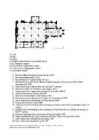
I
Choir II
Body
III
Vestry
IV
Chapel of the Freiherr von Güldenbandt
V
St. George's chapel
VI
The
Fersen 's sepulchar chapel
VII
Chancery of congregation
room IX
southwest chapel
Nicolaes Millich Epitaph of Johan Hastfer 1676
Box of the Mannteufels 1750s
Box of Patkuls 2nd quarter of the 18th cent.
Hermann Berents and Hinrik Martens Golgotha group on the transverse beam of the triumphal arch 1694
Arent Passer Grave slab of Otto von Uexküll 17th century
Arent Passer Perts of Carl Horn's sarcophagus 1601
Arent Passer Grave monument of Pontus de la Gardie 1589 -95
Christian Ackermann Reredos 1694-96
Hans von Aken Epitaph of Olaf Ryning 1594
Arent Passer Grave monument of Casper von Tiesenhausen 1599
Grave monument of Ferdinand von Tiesenhausen 1806
Christian Ackermann Pulpit 1686
Johann Gustav Stockenberg Grave monument of Fabian von Fersen Last decades of the 17th century
Johann Gustav Stockenberg Grave monument of Otto Reinhold von Taube Last decades of the 17th century
Ciacomo Quarenghi Grave monument of Samuel Greigh 1788
Johann Gottfried Exner Grave monument of Adam Johann von Krusestern 1848
Grave slab of the Toompea butcher's guild 1760
Grave slab of the shoemaker's guild 1760
T
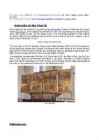
h e c a t h e d r a l o f S a i n t M a r y t h e V i r g i n i n T a l l i n n . http://www.eelk.ee/~eelk109/english.ht m
The Organ
The Tallinn Dome Church organ, that
was built in 1878 by an organ builder of Weissenfeld Friedrich Landegast , rebuilt in 1913/14 by a famous German organ–building
enterprise Orgelwerkstatt Wilhelm Sauer and renovated by Christian
Scheffler (Frankfurt/ Oder ), has an outstanding position in world
organ-history. The organ is a marvelous mixture of both Classicism and late Romanticism. During the intensive renovation in 1998´s
seven months the complete cleaning and restoration of the pipes, the creation of the missing registers and pipes, the renewing of the leather parts, the cleaning and renovation of the keyboard , the
control of the bellows and the intoning of the organ and the tuning
on the original pitch 435 Hz at the temperature 15 ´C was done . As
in 1914 the I World War cancelled the full accomplishment of the
organ and the following decades hurt the pipery, that is only now on
its 85
th anniversary that this instrument sounds on its highest . Tallinn Dome Church's days ´98, that were held from the 28
th to the 31th
of October, were dedicated to the Sauerorgel and its importance to
the parish's worshipping, the towns concert - and the Europe 's cultural life.
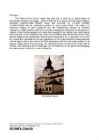
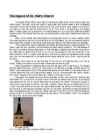
The
Dome Church
T
h e c a t h e d r a l o f S a i n t M a r y t h e V i r g i n i n T a l l i n n . http://www.eelk.ee/~eelk109/english.ht m
St
Olaf's Church
The
St. Olaf's Church is dedicated to King Olaf Haraldsson of Norway (995-1030), who adopted Christianity and established it in Norway.
The traditional faith was still strong, however; the king was
overthrown and killed in battle. He was canonised after death and the cult of his name spread all over Scandinavia.
The
earliest written record about the church date back to 1267, when
Queen Margarethe of Denmark granted the female Cistercian convent of
St. Michael the advowson over the St. Olaf's Church. But major reconstruction followed in the 14th
-15th
centuries. The tower standing separate from the church was completed
in 1364. The fire of 1433 claimed the St.Olaf's Church besides other buildings. It was consecrated for service again in a few years later ,
as well as decided to be reconstructed larger. The new church, whose
construction required the demolition of the old nave and chapels, was
completed as a three-nave basilica. The height of the central nave
was 31 metres , the height of the stone tower 57 metres, while the spire , completed in 1450 , reached the height of 159 metres. The St.
Olaf's Church was the tallest building of the world at that time.
The
present late Gothic St. Mary's Chapel was built at the beginning of
the 16th
century immediately before the Reformation, which also broke off its
completion. The cenotaph of the warden of the church and a supporter
of the chapel building, Hans Pawels, is built in the chapel wall ,
bearing the inscription: ''What I have given away , remains with me;
what I have owned has been lost for me; no one can consider himself
too high for the human life passes like smoke .''
The
Lutheran reformation in Tallinn started from St. Olaf's Church. The
new religious movement seized the masses and drove them against the
Religious fervour turned into a devastating force, which in turn ended up as iconoclastic movement. Thus the crowd destroyed the
artistically valuable interior of the St. Olaf's Church in 1524. The
church suffered no external damage. This church has a bitter record
regarding fire. Lighting has set the spire on fire eight timesa nad fires have consumed everything but the walls on three occasions.
The
unusually tall building was struck by lighting in 1625. The fire
destroyed the tower and the spire, the bells and the entire interior.
Although only the walls remained standing, the church was re-opened
in three years.
The
church burned completely down again in 1820 within only four hourd.
Only the St. Olaf's library was miraculously spared. The restoration took 20 years this time and received personal support of the Russian Emperors Alexander I and later Nicholas I. The presend altar by F.L.
Von Maydell and J.G.Exner (1835) ad the altar painting by W. Von
Kügelgen (1834) both date back to the period after that fire.
The
present height of the church spire, after the reconstruction, which
followed the numerous fires, is seemingly insignificant 123 metres,
compared to the previous figures , yet even so it is the second
tallest building in Tallinn after the TV tower. It is noteworthy that
the ball at the base of the cross at the top of the spire is 114
centimetres in diameter.
The
church building was turned over in 1950 to the united Tallinn St.
Olaf's Congregation of Evangelical Christians and Baptists.
P
o r g a s s a a r, Kristina; A l j a s, Eva-Grete; K u u s k e m a a,
Jüri. Tallinn: Medieval capital. Tallinn: PhotoTour
T
ä h e p õ l d, Kadri. 2005. Giidi käsiraamat: Vanalinn. Tallinn:
Ecce Revalia
The
legend of St. Olaf's Church
In
ancient times Tallinn was said to have been quite small, and it would
just now grow bigger. The town could not boast of any trade, and
farther away it was completely unknown. It even did not have its own
church. The townspeople were eager to make their own famous, but they
did not know how to do it. They tried in several ways, but always
failed. Finally a man had a good idea : he ordered that a church
should be built that existed nowhere else . The others liked the idea
as this way they could make double profit from the building.
After
great trouble and searching the townspeople found a clever master
called Olev, who agreed to take up church-building for a huge salary,
and he promised to build so tall a tower that nobody in the whole
world had seen before. He started work immediately.
The
construction work progressed extremely fast and was soon nearly finished . The church was big and beautiful, so that everybody who saw
it praised it. The tall steeple of the church aroused special admiration. It was already completed but for the cross at the top.
Olev did not want anyone else to do his job; he wanted to take the
cross up to the spire himself so that he could crown his work and all
the praises and gratitude would befall only him. He was promised to
be paid out his salary after he had put the cross on top of the
spire.
When
Olev went to do his final job on the church, his wife joyously cried
out at home, '' Today Olev will come home with a thousand barrels of
gold!''
Olev
succeeded in fastening the cross, but as soon as he had done it, he
slipped and fell down the spire. Whe he hit the ground , a frog and a snake jumped out of his mouth. Olev was buried right on the same spot
where he had fallen. On his grave they put a stone depicting Olev,
the frog and the snake. And to commemorate the clever master, the
church became to be called Olev's (St. Olaf's) or Oleviste Church.
The
more the people rejoiced at the beautiful church, the more the Old Nick got distressed. For a long time he tried to work out how to destroy the church. It would not have been hard for him if only he
had dared to approach the church. Finally he thought to have found a
good way for doing it from afar. Being in Pärnu, he took a mighty sling , found a solid rock with which he thought he could easily smash
the steeple of Oleviste Church, put the rock in the sling and pointed
it at the church tower. But while he was spinning the sling, it
snapped as the rock was too heavy . And even then the rock flew half the distance before it fell into the field of Ruila Manor by the side
of Pärnu-Tallinn road . This is where the sling rock can be seen even
today.
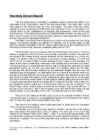
St.
Olaf's Church
R
e i d l a, Jana . 2006. Tallinn in legends . Tallinn: PhotoTour
The
Holy Ghost Church
The
Holy Ghost Church is situated in a strategic location of downtown
Tallinn, in the immediate vicinity of the historic seat of the town government – the Town Hall – at the main square of the medieval
town, the Town Hall Square. The order of the Holy Ghost, founded by
Pope Innocentius III (1198-1216) and headed by Rome, concentrated in
the Catholic World on the establishment of hospitals and poorhouses, known as the Holy Ghost hospices. There were already 180 such establishments in France as early as at the end of the 13th century. One hundred year later, Germany could boast with 130
hospices and their total number was approximately 900.
The
Tallinn Holy Ghost Church was built as a hospice church beside the
Holy Ghost hospice. The hospice operated successfully for centuries,
but its activity began to fade after the Lutheran reformation in the
16th
century, partly also due to the construction of the new hospice in
the vicinity, and was completely closed down in 1620.
The
first written records considerind the Holy Ghost Church date back to
1316 and mention a clergyman of the church in connection with a
monetary donation. Records from the middle of the century already concern donations for the construction of a church or a chapel. The
present church is considered a 14-century building; besides, it ise
the only one of the old churches of Tallinn to have retained its main shape through the ages . The shape of the church is defined by a
two-nave main building and a one-nave choir space . The two-nave
layout is explained with the fact that it combined the functions of a
town government church on the one hand and those of a hospice church
on the other. Accordingly, the services were attended by the
wealthiest burgers and the poor ; this provided a way of segregation.
An eight-sided tower is located at the western wall of the building,
which was fitted with a Baroque spire and a weather vane bearing the
date 1688 after the fire of 1684. The earliest records regarding the
tower date back to an old ledger and inform us that the painter Didrik had been paid in 1498 for gilding the top of the spire. The
spire was restored to its previous shape after the latest fire in
2002. Unfortunately, the fire claimed the hitherto oldest bell of
Estonia, which used to bear the inscriptions: ''The King of Glory, Christ , come in peace , be welcome the blessed. May Lord be with you.
In the year of Our Lord 1433.'' and ''I ring the same for the maid
and the farm hand, the lady and the master, no one can blame me for
that.'' The bell was cast by Merten Seifert.
The
year of the casting of the bell, 1433, is one of the saddest in
Tallinn's history. This was the year of a major fire, so devastating
that even the chronicles of the Russian town of Pskov recorded how
the whole Tallinn burnt down.
The
oldest of the existing church bells dates back to 1638 bears the
inscription: ''The Lord's word shall last forever.''
An
attravtive clock, the oldest public timepiece of Tallinn, can be seen
in the outside wall of the church; this dates back to the 17th
century. The main altar of the church was created by the famous
master Bernt Notke in 1483. It is a two- wing cupboard altar richly
decorated with carvings and paintings and one of the mos valuable
examples of medieval clerical art in Estonia. The church was also
fitted with numerous side altars before the reformation.
P
o r g a s s a a r, Kristina; A l j a s, Eva-Grete; K u u s k e m a a,
Jüri. Tallinn: Medieval capital. Tallinn: PhotoTour
Other
noteworthy items are the 17th
century pulpit and the carved wooden figures of the triumphal arch
together with the crucifix, the decoration of the balustrade of the balcony , the
17th-
century epitaphs to Bartholomeus Rottert and Michael Prosa, as well
as the church chandeliers. The earliest reports of the Holy Ghost
Church organ date back to 1511 . The present organ was made by organ
builder August Artur Terkmann in Tallinn in 1929.
Among the older churches in Tallinn, the Holy Ghost Church has been most
closely linked to the Estonians , even including claims by some
historians that the church had been built on the site of a chapel of
an Estonian congregation of the preconquest era of the 13th
century. In 2004, a piece of wall dating back to an older period than the 14th-century
church was discovered under the existing church wall, which raised
unanswered questions and provided further material for study .
The
pastors of the church have been remarkable individuals form the
Estonian national viewpoint and this must have been the reason why
the Estonians preferred the Holy Ghost congregation to the others since early times. The authors of the earliest preserved
Estonian- language printed book (only 11 pages have been found so far,
used as filling in the covers of another book) Simon Wanradt and
Johann Kõll worked here . They compiled an Estonian-language
catechism due to the reformation and the book was printed in 1535.
Estonian-language
services were held in the church until the middle of the 19th
century, but with the completion of the St.John's (1867) and
St.Charles' (1870) churches, the congregation left for the new ones and the Holy Ghost Church stayed empty for nearly a decade. The
present congregation was established in 1877 .
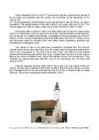
The
Holy Ghost Church
P
o r g a s s a a r, Kristina; A l j a s, Eva-Grete; K u u s k e m a a,
Jüri. Tallinn: Medieval capital. Tallinn: PhotoTour
T
ä h e p õ l d, Kadri. 2005. Giidi käsiraamat: Vanalinn. Tallinn:
Ecce Revalia
St.
Nicholas' Church
The
St.Nicholas' Church is one of the most important and oldest churches
of Tallinn. It was probably established by German merchants, who
settled in Tallinn from Gotland and the invitation of the Order of
the Brethren of the Sword in the 1240s. Not much information is available about the population of Tallinn in that period. Toompea was
the seat of vassals of the King of Denmark, while the port area –
between the present St.Olaf's Church and the Russian church destroyed
in the fire of 1433 – was probably settled by Scandinavian and
Russian merchants, respectively. The Town Hall Square, which later
became the heart of the medieval city, and the adjacent territory of
the Holy Ghost Church may have been occupied by Estonian residents.
This has been the explanation of the choice of the site for
St.Nicholas Church. In any case , the German merchants became decisive
in the further development of the city and the burgers of Tallinn.
The
first records of the church date back to 1315 and concern and
adjacent real estate plot. The oldest grave marker in the church
dates back to 1309. The church was probably originally built of
stone, since it performed a defensive function besides that of a place of worship – the Tallinn town wall had not yet been built.
This explains the thickness of the church walls, which reaches three
metres in some places. The building, initially planned as one-nave,
was completed at the end of the 13th
century at the latest as a three-nave basilica. The hewn portals of
the church also belong to the same early period.
The
church was relieved of the defensive functions by the middle of the
14th
century as the town wall was completed and the smaller annexes like
the St. Barbara , St.Matthew and St.George chapels, was started. The
15th
century was as time of major reconstruction with the building of the
tower becoming especially interesting. The Tallinn of that period
consisted of two relatively independent components : Toompea, the
centre of the ecclesiastical and state power, and the downtown, which
was ruled by the Tallinn town council and which observed the Lübeck
town bylaws. The relations were so hostile that the downtown was
forced to build defensive towers on the streets connecting Toompea
and downtown – the Long and Short Legs – and close the gates at night , so as to protect the burgers from attacks of the nobility
residing on Toompea.
The
iconoclastic movement accompanying the Lutheran reformation, unlike
the St.Olaf's and the Holy Ghost churches, never got past the doors of St.Nicholas. The raging mob, which had come to destroy the holy
images and vessels symbolising Catholicism, had to accept defeat: the
doors' locks had been poured full of molten lead and no one got in.
The
reconstruction, which began at the end of the 17th
century with the repair of the tower, gave St.Nicholas Church its
present appearance. World War 2 has a devastating effect – the
spire and the roof burned down together with most of the interior and
even some grave markers in the floor were destroyed. The most
valuable part of the church's art treasures were preserved, since
they had been evacuated from the building. The church remained in ruins for years and the restoration ended only as recently as in
1984. The church is presently used as a museum -concert hall, a
subsidiary of the National Art's Museum.
P
o r g a s s a a r, Kristina; A l j a s, Eva-Grete; K u u s k e m a a,
Jüri. Tallinn: Medieval capital. Tallinn: PhotoTour
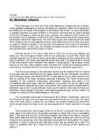
S
t. N i c h o l a s' C h u r c h. http://en.wikipedia.org/wiki/St._Nicholas%27_Church,_Tallinn
Artworks
in the church
Most
famous of the artworks is a painting Danse Macabre
( Dance of Death)
by the Lübeck
master
Bernt
Notke,
which depicts the transience of life, the skeletal figures of Death
taking along the mighty as well as the feeble ones. Only the initial
fragment of the original 30 metres (98.4 ft) wide painting
(accomplished at the end of the 15th century) can be seen in the St
Nicholas' Church.
Danse
Macabre by Bernt Notke
The
High Altar of the St Nicholas' Church was made between 1478 –1481 in
the workshop of Herman Rode ,
master from Lübeck.
Paintings on the outer flanks of this double-winged altar depict the
life of Saint Nicholas, the central part and the unfolded wings expose over thirty wooden sculptures forming the so-called gallery of
saints.
The
exposition contains also the Altar of St. Mary from 1500; the Altar
of the Holy Kin from about 1490 , made at Jan Borman ’s workshop in Brussels ;
The Altar of Christ's Passion was made at the beginning of the 16th
century by the Brugge
master Adrian
Isenbrandt
at the order of the powerful Brotherhood of the Blackheads Guild.
The
High Altar
References:
 50 punkti
Autor soovib selle materjali allalaadimise eest saada 50 punkti.
50 punkti
Autor soovib selle materjali allalaadimise eest saada 50 punkti.
 ~ 11 lehte
Lehekülgede arv dokumendis
~ 11 lehte
Lehekülgede arv dokumendis
 2009-09-28
Kuupäev, millal dokument üles laeti
2009-09-28
Kuupäev, millal dokument üles laeti
 23 laadimist
Kokku alla laetud
23 laadimist
Kokku alla laetud
 1 arvamus
Teiste kasutajate poolt lisatud kommentaarid
1 arvamus
Teiste kasutajate poolt lisatud kommentaarid
 jaanakr
Õppematerjali autor
jaanakr
Õppematerjali autor
 annaabi.ee







Kõik kommentaarid