Vajad kellegagi rääkida?
Küsi julgelt abi LasteAbi
Logi sisse

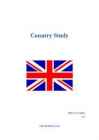
Topic - Great Britain (0)

5 VÄGA HEA
Punktid

Tallinn English College
Topic
Great Britain
2007
  • Introduction
    The official name of Great Britain is ‘the United Kingdom of Great Britain and Northern Ireland (or short United Kingdom)’ The population is about 60.4 million. The capital is London. Other biggest cities include Birmingham, Bristol, Portsmouth, Glasgow and Swansea. English is the main language of Great Britain, but Welsh is officially recognized in Wales and Gaelic in Scotland .
  • Geographical position
    The British Isles is the geographical term for a group of about 5000 islands off the coast of mainland Europe . The largest island is Great Britain, which is also the largest island in Europe. It consists of England , Wales and Scotland. The next largest island is Ireland, which is made up of Northern Ireland and the Irish Republic . Britain and Northern Island together form the United Kingdom. When referring to Britain or Great Britain in everyday life, the names are used to mean the United Kingdom.
    The English Channel (and best known : the Strait of Dover) separate Britain from mainland Europe and its closest neighboring countryFrance .
  • History
    Great Britain has a long and interesting history stretching back millennia’s. The Iberians brought their metal working skills and the first real civilization to Britain in the 3rd millennium B.C. And were then overrun by the various Celtic tribes that begun in the 8th century B.C. The Celts introduced the tribal organization and an early form of agriculture before they were forced westwards to Cornwall, where the Celtic language still exists in different forms , by the Roman invasion begun in 43. AD. The Romans ruled Britain for over two hundred years and left behind three things of importance : their roads, the sights of important cities notably London, and the seeds of Christianity. The Latin way of life – villas, arts , language and political organization – all vanished, however after the invasions from Northern Europe by the Anglo-Saxons and Jutes from the 5th century onwards. These pagan peoples ’ were easily converted to Christianity and the preachers from Rome brought with them learning and civilization. Christianity was an important factor in enabling the various kingdoms created by the Nordic invaders to be united in the 9th century.
    The Vikings first raided England to plunder it, then in the days of Alfred of Wessex . They began to win wide lands ‘to plow and rule ’. In the 10th century England fell under Danish rule with King Canute finally managing to unite the Anglo-Saxons and Danes at the beginning of the 11th century. After defeating the Anglo-Saxon king Harold at the battle of Hastings in 1066, William of Normandy introduced the Norman feudal system, with land in return for the continued support , and French remained the language of the upper classes and administration until the 14th century. The origins of Parliament are to be found in the region of John’s successor, Henry III. It was a meeting of the king and his barons and servants at which various administrative and financial problems were discussed. In order to make it easier to put the decisions taken into practice , each shire had to elect a number of knights to attend these meetings and report the decisions to the shires.
    The Hundred Year ’s War fought between France and England had a devastating effect on the English economy . The high taxation necessary to finance the war and the Black Death led to extreme hardships for the peasant class that there was a revolt. Although the peasants’ revolt was soon put down, it lead to improved conditions for the peasant class and was the first step towards the ending of the feudal system in England. No sooner was the Hundred Year’s War over than a long power struggle began for the English crown between two families the House of Lancaster and the House of York . The War of The Roses ended when Henry VII united the two rival houses , giving origin to the Tudor dynasty.
    The state began to take its present shape with the Acts of Union in 1707, which united the crowns and Parliaments of England and Scotland to create the Kingdom of Great Britain. A further Act of Union joined the Kingdom of Great Britain and the Kingdom of Ireland to create the United Kingdom of Great Britain and Ireland. In the 13th century, king Edward I finally conquered the last remaining counties in north and west Wales. To appease the Welsh, Edward’s son (the future Edward II), who had been born in Wales, was made Prince of Wales. So the tradition of giving the title ‘Prince(ess) of Wales’ to the heir of the British Monarch continues to the present day.
  • Relief
    The island is just under a thousand kilometers long and under five hundred kilometers wide. The most mountainous region is of course Scotland with its highland and highest peak : Ben Nevis – 1343 m. Scotland also has a wide lowland are between the Grampians and Southern Uplands, where most of the largest cities and population are located .
    Much of Wales is also mountainous and in England the Pennine Range extends 224 kilometres. The rest of England tends to be quite bumpy, for not even the large plains of East Anglia are perfectly flat . In Ireland all the highland areas are around the edge , but there are no peaks that surpass the height of one kilometer.
    The rivers are quite short, the longest being the Severn and the Thames . Their easy navigability has made them an important part of the inland transport network .
  • Population
    With 57 million people, the UK ranks about fifteenth in the world in terms of population, with England being the most populous part, followed by Scotland, then Wales and finally Northern Ireland. The population increases very slowly and somewhere between the ‘70s and ‘80s actually fell. Although there are more male births than female , the male mortality rate is rather high.
    6. Climate
    Britain generally has mild climate. The weather tends to be very changeable as a result of the influences of different air masses. The currents bring warm air in from across the Atlantic . There are few extremes. Southern Britain is warmer than Northern because of its latitude, but in winter the North Atlantic Drift keeps the west milder than the east. Wales and the southern peninsula have the most moderate climate and Eastern England the most extreme.
    Annual rainfall is fairly evenly distributed but the amount of precipitation varies greatly between the mountainous areas of the west and the central and eastern parts.
  • Animals , plants
    Animals – The diversity of animals is modest because of several factors: the size of the land area, seasonal changes and the age of habitats on the island. Because GB has a small area, it means that the number of species that can evolve is limited because there is not enough land mass to support the diversity of animals. The environment is very young due to the Ice Age, so there has not been enough time for such diversity to develop . The seasonal changes that occur across the country mean that the animals have less to eat. Since industrialization began in England in the mid eighteenth century, it has had a big impact on indigenous animal populations. Song birds in particular are becoming scarcer and habitat loss has affected larger mammalian species. Some species have however adapted to the urban environments, such as the Red Fox, which is the most successful urban mammal after the Brown Rat. Large mammals are not very numerous in GB. Many of the bigger species, such as the Grey Wolf and the Brown Bear were hunted to extinction many centuries ago. However, recently, many of these large mammals have been reintroduced to some areas of mainland Britain. The largest mammals that remain in Britain today are members of the Deer family (for example: the Red Deer)
    Plants – The mild climate, ample rain and long growing season support a great variety of plants, which grow exceptionally well. Sometimes plant growth is compared to the lush areas of the well-watered and mild coasts of the states of Washington and Oregon . Most of Britain was once covered with thick deciduous forests in which oak trees predominated. The impact of centuries of dense human population has massively altered the flora of Britain and only tiny remains of these forests remain today. Although 10 per cent of Britain is still forested, most of this area consists of commercially planted, fast -growing forests in Wales and northeastern Scotland. Before they were affected by centuries of clearing and human use, the great oak forests spread over the best soils in Britain. Forests were unable to establish themselves in the poorer soils of the mountains , wetlands, heath , and moorlands. The plants common to these areas are heather, gorse (astelhernes), peat moss (sammal), rowan (pihlakas) and bilberry (mustikas). These regions have been altered by heavy grazing of livestock and by controlled burning. Some wetland areas have been subjected to massive draining efforts for hundreds of years and are now covered by towns and farmland.
  • Agriculture, natural resources
    The open fields with their tiny strips of land worked by farmers were quickly replaced by compact farms, with large farms surrounded by hedges and ditches to prevent stray animals from ruining the crops or mixing with the new, improved breeds of sheep and cattle . This so-called agricultural revolution left large numbers of the rural population landless but also led to the massive increase in agricultural production necessary to feed the country’s growing non-agricultural population. Less than 3% of the working population is employed in agriculture in Britain, yet the industry produces about two-thirds of the country’s food requirements . Most of the farms are devoted to dairying or beef cattle and sheep. The majority of sheep and cattle are reared in the hill and highlands of Scotland. The farms devoted primarily to arable crops are found mainly in eastern and central southern England.
    Offshore natural gas is distributed through high-pressure pipelines and is one of the main natural resources Britain has to offer . It is used by industries which require a fine degree of accuracy, but, because it is easily transportable, it has not created industrial areas the way coal did. Britain is the world’s fifth largest oil producer and although production is expected to start declining, Britain should remain an important producer in the 21st century. Other natural resources include: petroleum , paper and paper products , textiles, clothing and other consumer goods .
  • Culture
    The official literacy rate is 99%, which is normal by developed country standards. Universal state education was introduced for the primary level in the end of the 19th century and secondary level at the beginning of the 20th. Education is mandatory from ages five to sixteen. (Except when you are born in late July of August)
    Britain is also rich in literature and the best known writers in the world have been born there, such as William Shakespeare , who is widely regarded as the greatest writer in the English language. Among the earliest writers are Geoffrey Chaucer, Thomas Malory, Jane Austen, Charles Dickens , Virginia Woolf and of course J.K. Rowling. Scotland’s contribution includes the detective writer A. C. Doyle , Sir Walter Scott, R. L. Stevenson and Robert Burns.
    Music from Britain and the UK has achieved great popularity since the 1960s , but one must not forget composers of classical music and folk music. Traditional music is a broad concept , as there is much variety between the different regions of England. Folk music varies from county to county and even within cities like London.
  • Sports
    A number of major sports originated in Britain including football , rugby, cricket, tennis and golf . The most popular sport of course is football. The country does not compete as a nation in any major football tournaments. Instead, the home nations compete individually as England, Scotland, Wales and Northern Ireland.
  • Government
    As part of the United Kingdom, Britain has constitutional monarchy and parliamentary democracy, with a queen and a parliament that has two houses: the House of Lords and the House of Commons. Supreme power is vested in parliament, which sits for five years unless dissolved sooner. The House of Lords was stripped of most of its powers in 1911, and now its main function is to revise legislation. In Nov. 1999 hundreds of hereditary peers were expelled in an effort to make the body more democratic . The executive power of the Crown is exercised by the cabinet, headed by the prime minister.
  • Conclusion
    Great Britain is a land consisting of interesting people, long history and rich culture. It has been a world leader in different parts of life, and continues to be still.
  • Topic - Great Britain #1 Topic - Great Britain #2 Topic - Great Britain #3 Topic - Great Britain #4 Topic - Great Britain #5
    Punktid 50 punkti Autor soovib selle materjali allalaadimise eest saada 50 punkti.
    Leheküljed ~ 5 lehte Lehekülgede arv dokumendis
    Aeg2009-01-12 Kuupäev, millal dokument üles laeti
    Allalaadimisi 27 laadimist Kokku alla laetud
    Kommentaarid 0 arvamust Teiste kasutajate poolt lisatud kommentaarid
    Autor pisike Õppematerjali autor
    TIKis 9. klassis vajaminev topic.

    Sarnased õppematerjalid

    Inglismaa
    9
    doc

    Inglismaa

    khTallinn English College The United Kingdom Topic Mari-Liis Pakats Tallinn 2008 2 Table of Contents Introduction..................................................................................................................4 Geographical Position .................................................................................................4 History .........................................................................................................................4

    Inglise keel
    The United Kingdom
    8
    doc

    The United Kingdom

    The United Kingdom The United Kingdom consists of England, Scotland, Wales and North Ireland and it is situated in the Atlantic Ocean near the mainland of Europe. The population of the UK is 58.6 million and area is 244,110 sq km. Britain has a temperate humid climate. Its characteristic features are mild winters, warm summer, no temperature extremes, abundant rain all year round and frequent changes of weather. The mild climate is partly due to the warm Gulf Stream and partly to the south westerly winds. Occasional winds from the east in winter may bring cold and dry weather. The distribution of rainfall is influenced by the Atlantic Stream. The mountainous areas of the north and west have more rain than the

    Inglise keel
    The UK
    5
    doc

    The UK

    THE U.K Different Parts The United Kingdom is a short way of saying the United Kingdom of Great Britain and Northern Ireland. The UK is the political name for those countries which share a parliament in London. All of them were at one time independent kingdoms with their own monarch. Now they are all part of the same kingdom and share the same monarch. The UK consists of Northern Ireland, Scotland, England and Wales. The peoples of these countries are British subjects; they hold British passports and therefore their nationality is British.

    Inglise keel
    Scotland
    6
    rtf

    Scotland

    Scotland ! Scotland (Gaelic: Alba) is a country in northwest Europe that occupies the northern third of the island of Great Britain. It is part of the United Kingdom, and shares a land border to the south with England. It is bounded by the North Sea to the east, the Atlantic Ocean to the north and west, and the North Channel and Irish Sea to the southwest. In addition to the mainland, Scotland consists of over 790 islands including the Northern Isles and the Hebrides. Edinburgh, the country's capital and second largest city, is one of Europe's largest financial centres. It was the

    Inglise keel
    Countrystudy Summary
    15
    docx

    Countrystudy Summary

    Atlantic Ocean in the west. The British Isles are shared by two separate and independent countries: the United Kingdom of Great Britain and Northern Ireland and the Republic of Ireland. All the islands have administrative ties with the mainland, except some islands which have their own legislative assemblies and systems of law, but the UK Government is responsible for their international relations and defence.

    British history (suurbritannia ajalugu)
    Suurbritannia üldkokkuvõte
    8
    doc

    Suurbritannia üldkokkuvõte

    1) General facts The UK: * the United Kingdom of Great Britain and Northern Ireland was formed in 1801 * it covers 243,610 sq km * everybody from the UK is called British * the capital city is London * is made up of four constituent countries: England, Scotland, Wales and Northern Ireland which in turn are divided into counties * the flag is called the Union Jack which is a combination of the flags of England, Scotland and Northern Ireland * the population is about 60,000,000 people, the population density is 242 people/sq km

    Inglise keel
    The U K--Suurbritannia
    4
    doc

    The U.K. / Suurbritannia

    The UK & London The United Kingdom (or the UK) is a short way of saying the United Kingdom of Great Britain and Norther Ireland. The UK is situated north-west of the European continent between the Atlantic Ocean and the North Sea. The UK consists of England, Wales, Scotland and Northern Ireland. Its highest point is Ben Nevis in Scotland followed by Snowdon in Wales. The Severn is the longest river in the United Kingdom. Other important rivers are the Trent, the Mersey, the Tyne, etc. Lough Neagh which lies in the centre of Northern Ireland is thr UK's largest freshwater lake.

    Inglise keel
    Suurbritannia ühiskond ja kultuur konspekt
    14
    doc

    Suurbritannia ühiskond ja kultuur konspekt

    In English the suffix is -ory: dormitory. *tas - it denotes an abstract notion, derives from the adjective: celebritas (celeber), libertas (liber), universitas (universus). In English the suffix is -ty: celebrity, liberty, university. *-tudo - characteristic or condition, derives from the adjective: longitudo (longus), fortitudo (fortis). In English -tude: longitude, fortitude. 5. The Angles, Saxons and Jutes. The Angles were one of the main groups that settled in Britain in the post-Roman period, founding several of the kingdoms of Anglo-Saxon England, and their name is the root of the name "England". The Saxons were a confederation of Old Germanic tribes. Their modern-day descendants are generally considered ethnic Germans, Dutch or English.. Saxons participated in the Germanic settlement of Britain during and after the 5th century The Jutes were a Germanic people who were one of the three most powerful Germanic peoples of their time

    Suurbritannia ühiskond ja kultuur


    Kommentaarid (0)

    Kommentaarid sellele materjalile puuduvad. Ole esimene ja kommenteeri


    Sellel veebilehel kasutatakse küpsiseid. Kasutamist jätkates nõustute küpsiste ja veebilehe üldtingimustega Nõustun