Leidsid 33 sarnast õppematerjali, mis on seotud failiga "Home Assignments". Need materjalid aitavad sul teemat sügavamalt mõista.
teach, student, teacher, students, language, learner, sound, work, method, learning, pronunciation, them, correct, teachers, class, idea, other, ideas, lesson, here, task, speak, kill, error, native, able, mean, skills, focus, words, thing, room, meaning, differ, unit, reading, sentences, part, real, structure, goal, intonation, important, classroomand education. In 1973, the late Ellis Page and colleagues at the University of Connecticut programmed the first successful automated essay scoring engine, "Project Essay Grade (PEG)" (1973). The technology was foretold some six years earlier in a landmark Phi Delta Kappan article entitled, "The Imminence of Grading Essays by Computer" (Page, 1966). At the time the article was provocative and a bit outrageous, though in hindsight, it can only be deemed prophetic. As a former high school English teacher , Page was convinced that students would benefit greatly by having access to technology that would provide quick feedback on their writing. He also realized that the greatest hindrance to having secondary students write more was the requirement that, ultimately, a teacher had to review stacks of papers. While PEG produced impressive results, the technology of the time was too primitive to make it a practical application. Text had to be typed on IBM
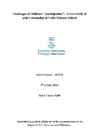
UNIVERSITY OF TARTU DEPARTMENT OF ENGLISH Using Blogs as a Platform in the Teaching of English as a Foreign Language Research paper Tartu 2010 ABSTRACT This work analyses the usefulness of blogging in teaching English as a foreign language. The definition of the term `blog' is provided along with the advantages and disadvantages of blogs' usage in practice. The analysis of language skills developed by students throughout the use of blogs for learning purposes is given in the paper with possible limitations that blogs have. Author of this paper also shares personal comments about the experience in the field. In this paper it is also described which research methods are planned to be employed for the conduction of research project. 2 ABSTRACT..............................
Art-based learning We can see that art-based learning is not a regular method in school. Although I barely can understand why. It seems to me, that it is rather interesting way of learning. I also would like to point out, that childrens emotional memory is strong and pleasant things will be understood and remembered more. Therefore I would like to discribe the method thoroughly. Only in the past few hundred years has reading been the primary way of teaching religion. For centuries, religious education relied on hearing and seeing. Religious education can benefit by returning to the ages-old methods of hearing and seeing to complement reading. This method enables you to make the old learning way-seeing available for the students nowadays.It is about deepening our understanding of faith. In times past, when people could not read, it was
My languages I love different languages. I mean, I really, really love different languages. I also believe and have been told that I pick them up rather easily. That might be true, although I did not pick any Greek up in Greece but that might have been because they spoke so damn fast that I could not tell if it was a word or an entire sentence. The first foreign language I learned was Russian. Considering I was ten when Estonia became a Republic, it makes sense. We began studying Russian in first grade, though it was simplified – "koška" instead of "kot", "medvešonok" instead of "medved", "saichik" etc. Did not make much sense and we mostly played some games in Russian (Tare-tareke etc). Learned as much playing outside, since we had Estonian-Russian kids around as well. Not that we played with them. It's sad
After I've said what I think about each topic, readers may have a fair comprehension of my philosophy. First comes sensitivity. If a person be insensitive, be it from numbing cold, exhaustion, drugs, genetic makeup, or upbringing, then the process of education is bogged down, and results come only after great efforts. Sensitivity in my integrated meaning is broad, covering literally the senses, so that deaf and blind people are less sensitive, as well as people whose senses work perfectly, but whose receptivity or thought processes are blunted for whatever reason. A person can be insensitive in one way, such as blind, and extraordinarily sensitive in another way, such as in hearing. It is also possible to be so ultra-sensitive that the result is disadvantageous. I expect no argument in asserting that a normal sensitivity is a healthy, indispensable ingredient for optimal education. Sensitivity can be heightened or blunted by education
Teaching By Principles Language Teaching requires connecting THEORY and PRACTICE. 12 Principles of Language Teaching Teaching By Principles Cognitive Principles Language Teaching requires 1. Automaticity connecting THEORY and Students absorb language PRACTICE. automatically. Students move toward fluency and “think” about language less as they There are three types of principles: progress. Cognitive – mental and intellectual Application – Don’t overwhelm Socioaffective – emotional students with language rules, balance
Education and learning Task 1. Underline the most suitable word or phrase. a) Jack decided to take a course/lesson in hotel management. b) Sheila always got good marks/points in algebra. c) After leaving school, Ann studied/trained as a teacher. d) Peter decided not to go in/enter for the examination. e) My sister learned/taught me how to draw. f) I can't come to the cinema. I have to read/study for a test. g) In history we had to learn a lot of dates by hand/heart. h) I hope your work will improve by the end of course/term. i) Martin failed/missed his maths exam and had to sit it again. j) If you have any questions, raise/rise your hand. Task 2. Complete each sentence with a word from the box. Use each word once only.
1 BASIC ENGLISH BASIC ENGLISH GRAMMAR GRAMMAR BASIC ENGLISH GRAMMAR Book 1 Book 1 Younger students at beginning to intermediate levels will greatly benefit from this step-by-step approach to English grammar basics. This is the ideal supplement to your language arts program whether your students are native English speakers or beginning English language learners. Skill-specific lessons make it easy to locate and prescribe instant reinforcement or intervention. · Illustrated lessons are tightly focused on core concepts of grammar · Nearly 70 practice exercises are included
Summary • Early history of translation studies – Cicero and St. Jerome (what did they do/how/why are they relevant to translation studies?) St. Jerome – Greek scholar, did some translation work. Lived during the 4th century. Jerome is best known as the translator of the Bible into Latin. A previous version (now called the Old Latin) existed, but Jerome's version far surpassed it in scholarship and in literary quality. Jerome was well versed in classical Latin (as well as Greek and Hebrew), but deliberately translated the Bible into the style of Latin that was actually spoken and written by the majority of persons in his own time. This kind
Maturita Solutions Advanced Workbook Key 2F Photo comparison 2G Review page 18 If necessary, in a weaker class, page 17 brainstorm ideas about both 1 1 all-time pictures before starting. Students 1 1 skipping 5 kicked 2 highly acclaimed work in pairs to do the task. 2 get 6 kick 3 divided · Writing: Read through and discuss 3 hanging 7 sleeping 4 story the task together, then refer
Students' own answers pointing to his sister's ice cream. 5 The thief grabbed my bag and ran The photos are connected with the 1B Past and perfect tenses off. topic of school. Both photos show page 4 6 He dropped a leaf into the water students in class. In the first photo I imagine that 1 1 ate and watched it drift under the they're about 13 years old. 2 have/'ve met bridge.
friend. · Logically Connected Ideas Finally, your ideas must be suitably connected so that the reader can identify related ideas while reading through and gradually understanding the message. Text 1 and Text 2 below clearly show these five aspects of writing in the business world. Evaluation Exercise 1 In the Field Services Department of the Melbourne Construction Company (MCC), a problem has arisen over the maintenance of company vehicles work which is carried out by a sub contractor, the Autocheck Maintenance Company (AMC). Several vehicles have been unavailable for use for long periods because of a deterioration in the quality of AMC's services, and this has caused considerable operational difficulties. When the MCC Transport Manager heard of the problem, he immediately telephoned the Transport Supervisor and asked him to write a short report detailing the background and
· salutation · Paragraph 1 reasons for writing · Paragraphs 2, 3 development · Final paragraph closing remarks · Name · Letters are divided into two categories, formal and informal. There are various types of formal and informal letters . · It is important to think about the person who you are writing to before you begin writing a letter. If the wrong style is used, the letter will look impolite, silly or odd. For example, if you used formal language to write to a close friend, the letter would look odd, or if you used informal language to write a letter to a company, the letter would look impolite. · There are certain characteristics which allow us to distinguish between formal and informal letters. These are: ~ The salutation (e.g. Dear Sir/Madam, Dear Bill) ~ The style or language (e.g. use of formal language for formal letters, or the use of slang and idioms for informal letters) ~ The closing remarks (e.g
form of public entertainment. In the late 18th century the British army suffered two serious defeats at battles in Seringapatam, in India. The main reason for these defeats was that the Indian prince, Haidar Ali's army included a corps of rocket throwers. They used very large bamboo rockets which had a range of hundreds of metres. The British were determined to learn from their mistakes and a British officer, William Congrieve, began work on developing even bigger and better rockets. Within a few years Congrieve had developed 14 kg iron rockets that could be fired over 3200 m. These rockets were successfully used against Napoleon in the battle of Waterloo and during the US War of Independence. By the 1889s other applications for rockets were being developed. They were used for signalling, for whaling, and even for rescuing people from sinking ships. If a boat got into trouble near to the shore, a
English structure revision for the exam 1. Terms Language → A systematic, conventional (tavakohane) use of sounds, signs or written symbols in a human society for communication and self-expression. Human language at all levels is rule- or principle- governed (valitsema) meaning that language corresponds to the grammar. Natural language is usually spoken, while language can also be encoded into symbols (such as letters, morse etc) For example: Estonian, English. Linguistics → The scientific study of human natural language. Broadly, there are three aspects to the study which are Pragmatics (studies the use of language → interested in the gap between the sentence’s meaning and the speaker’s meaning). Semantics (concerned with the meaning of the language aspects and the way they
Positive sides of outdoor learning Essay "Tell me and I forget. Teach me and I remember. Involve me and I learn." Benjamin Franklin In the last few years outdoor education has become more and more popular worldwide and in Estonia too. While there are many definitions for outdoor education, I think the best way to describe it would be outdoor education is a form of education, when learning takes place somewhere else than a classroom and the subjects are not only about the environment and
Test 16 1 Translate. 1 Mul olid varemalt pikad juuksed. I used to have long hair. 2 Kas see on teie kooli direktor? Is that the head teacher of your school? 3 Peaaegu igaüks räägib võõrkeelt aktsendiga. Almost everyone speaks a foreign language with an accent. 4 Ära muretse, sinu inglise keel on suurepärane. Don´t worry, your English is excellent. 5 Ma ei suuda taluda valju muusikat. I can´t stand loud music. 6 Kas sa tahaksid töötada ruumis või väljas? Would you like to work indoors or outdoors? 2 Complete the sentences with a job. 1 Vets look after sick animals. 2 Lifeguards work on the beach and help swimmers in danger. 3 Childminders look after small children when their parents are at work. 4 Teachers work at school.
One of the abts/the best was given by Jonathan Swift: ,,Proper words in proper places." In present- day english, the world style is used in about half a dozen basic meanings. 1. the characteristic manner in which a writer expresses his ideas. Some speak about the style of Hemingway, Dickens etc. 2. the manner of expressing ideas, characteristic of a literary movement or period. Style of symbolism, romanticism 3. the use of language to pick a literary genre-comedy, novel, drama, O.D (poetic form) etc. 4. the selective use of language that depends on spheres of human activity fiction, scientific prose, newspapers, official documents, business correspondenc etc. Style bears the stamp of indivual usage, that is every writer has a unique pattern/habit and abilities that form his style. This approach is best illustrated in the well-known victum of the french poet Georges-Louis
3) Experiment: Split-brain experiments by Gazzaniga & Sperry, brain plasticity experiments by Rosenzweig and Bennett. Neurotransmission experiment by Martinez and Kesner. 4) Case studies: Phineas Gage studied by Dr John Harlow and Oliver Sack's study on Dr P. Discuss how and why particular research methods are used at the biological level of analysis. Biological researchers often adopt a reductionist approach to the study of human behavior. They work on a micro-level of research, breaking down complex behavior into its smallest parts (e.g. genes, neurotransmitters or proteins). This approach is sometimes criticized for being overly simplistic, but it is important to have detailed information of the components of human behavior in order to understand the interaction of several factors. Kasamatsu and Hirai studied a group of Buddhist monks who went on a 72-hour pilgrimage to a holy mountain in Japan
Freedom of speech Freedom of speech is a wide speared conception. I can understand it in many different ways. For example in my state, Estonia, the freedom is a very important for every human. At least to me it is seemed to be like that. But at school is a little bit sad story with freedom of speech. Some teachers are not used that student expresses her own strong opinion. When another way some teachers are just waitening it. As well as people can not speak along with state public topics and express their opinion. Therefore freedom of speech is debateable. Already from the old times Estonians have been fighting for their own freedom, because they do not like to allow to another country or state, foreign public and foreign language.
12. Special literary vocabulary 13. Special colloquial vocabulary 14. Metre in English poetry. Modifications of metre ("Rhythm and Text") 15. Typically English stanzas ("Rhythm and Text") 16. Rhythm in poetry and in prose ("Rhythm and Text") Study independently 17. Varieties of language (I. Galperin "Stylistics") 18. Emotive prose (I. Galperin "Stylistics") 19. Scientific prose style (I. Galperin "Stylistics") 20. Language of the drama (I. Galperin "Stylistics") 21. Publicistic style (I. Galperin "Stylistics") 22. The style of official documents (I. Galperin "Stylistics") 23. Newspaper style (I
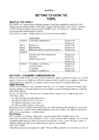
CHAPTER 1 GETTING TO KNOW THE TOEFL WHAT IS THE TOEFL? The TOEFL is a comprehensive English language examination required by more than 3,000 colleges and universities in the United States, Canada, and other parts of the world. In addition, foreign born professionals frequently need a TOEFL score for certification to practice their profession in the United States or Canada. The TOEFL is a timed test that consists of the three sections listed here. THE TOEFL Section 1 Listening Comprehension 50 questions
Tallinna Mustamäe Humanitargümnaasium Valeria Jefremenkova ENGLISH AS A GLOBAL LANGUAGE INGLISE KEEL KUI ÜLEMAAILMNE KEEL Research work Supervisor: Jevgenija Kozlova Tallinn 2016 1 Table of Contents СONTENT…………………………………………………………………………………...2 INTRODUCTION…………………………………………………………………………...3 CHAPTER I……………………………………………………………………………….....5
ancient people. Already in classical Latin the meaning was extended to denote the manner of expressing one's ideas in written or oral form. Jonathan Swift defined style as "proper words in proper places". In present day English the word "style" is used in about a dozen of principle meanings: 1. the characteristic manner in which a writer expresses his/her ideas (e.g. style of Byron) 2. the manner of expressing ideas, characteristic of a literary movement or period 3. the use of language typical of a literary genre (e.g. the style of a comedy, drama, novel). 4. the selective use of language that depends on spheres / areas of human activity (e.g. style of fiction, scientific prose, newspapers, business correspondence, etc.). STYLISTICS Stylistics is the study of style. The very term "stylistics" came in more common use in English only some 45 years ago.
1. Be ready to explain the terms (lecture 1): language, linguistics, synchronic approach to language, diachronic approach to language, linguistic competence, linguistic performance, what is grammar?, prescriptive grammar vs. descriptive grammar; phonology, phonetics, phone, allophone, phoneme; morphology, morphemes (types of morphemes), morphs, allomorphs, types of affixes, derivational affixes, inflectional affixes; open vs closed class words; syntax. Language: a systematic, conventional use of sounds, signs or written symbols in a human society for communication and self-expression.
The term ,,stylistics"came into more common use in English only some 35 years ago. It was recorded much earlier; in 1882 as "the study of literary style, the study of stylistic features" Stylistics is a branch of linguistics that studies principles of selecting different linguistic means for passing on thoughts and emotions. It studies: · Different functional styles, styles of genres, individual styles · Expressive, emotional features of different language units Stylist--a writer or a speaker skilled in a literary style Stylistition--a scholar who studies stylistics The word "style" is applied to many things. A linguistic style is a variety of subsystem of lg with its peculiar vocabulary, phraseology, grammatical and phonetic features that are used selectively and purposefully to express ideas in a given situation. The stylistics of language studies different styles, including registers, stylistic devices and shades of meaning.
My ideal job When I graduate university, I would like to become a teacher. I want to teach Estoninan language and literature. I want to teach highschool students. I’d like to teach in my hometown, Tartu. I want to become a teacher beacause I like kids. Also, I like to teach and explain. Literature was my favourite subject in school. I like almost all books from compulsory literature. Especially I like „Master and Margarita“ and „Dorian Gray“. I think it is very important to read books, especially young people should read. Literature improves their vocabulary and changes their picture of the world and maybe teach tolerance. I’d give enough time to read every book carefully. I wouldn’t just make a test with
Revising the essay Coming up with the final draft 1. BRAINSTORMING: Brainstorming is the process of coming up with ideas spontaneously from free flowing writing or talking. To brainstorm, you can simply sit down with a pen and jot down every idea that comes into your head. Another approach is to simply start writing and see where you end up. Record as much information as you can recall, such as schools attended, courses taken, jobs held, research projects undertaken. Work on taking yourself deeper into the introspection process by tackling more specific topics. Here are some questions you might want to consider: What am I like? How do my friends characterize me? What are my personality traits? Have I ever experienced a moment of epiphany? Why is (some color) my favorite color? Why is (some movie) my favorite movie? How have my favorites influenced my life? What have I done? What are my major accomplishments? Why do I consider them accomplishments?
Table of Contents Abstract 3 Introduction 4 Chapter 1: Citizenship, Children`s Rights and Participation: from the UN to the UK 6 Chapter 2: Citizenship Education in Wales………………………………………………14 Active Citizenship in Cadle Primary School: A Case Study 20 Conclusion 29 Bibliography 32 Appendices Appendix 1: The United Convention of the Rights of the Child Appendix 2: Interview with Jamie Richards, the Head Teacher of Cadle Primary School 2 Abstract: Children inherently have had a rather tenuous relationship with citizenship. Similarly to how women were once viewed, children have not been considered as subjects of rights due to their perceived incompetence and irrationality. Currently, children are not considered as being rational and capable of exercising responsibility until the age of majority, the age of 18.
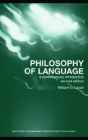
Philosophy of Language Philosophy of Language: a Contemporary Introduction introduces the student to the main issues and theories in twentieth and twenty-first-century phi- losophy of language, focusing specifically on linguistic phenomena. Topics are structured in four parts in the book. Part I, Reference and Referring, includes topics such as Russell's Theory of Descriptions, Donnellan's distinction, problems of anaphora, the description theory of proper names, Searle's cluster theory, and the causalhistorical theory. Part II, Theories of Meaning, surveys the competing theories of linguistic mean- ing and compares their various advantages and liabilities. Part III, Pragmatics
Each tendency was born by the influence of economic and political changes in the society. Those trends are known as the "hippies" the "punks" the "rockers". But certainly there are different traditional youth organizations in Great Britain. Among them -- the Scout Association, the Girl Guides Association, the National Union of Students, the Youth Club. The latter offers, for example, a wide range of sporting and social activities. The National Union of Students was founded in 1922. It operates through local branches in colleges and universities. It promotes the educational, social and general interests of students. But certainly the most numerous is the Scout Association, founded in 1908 for boys and in 1910 for girls by Lord Baden-Powel. The Scout movement is to encourage a sense of adventure and of responsibility for others among young people. The programme of training
Intercultural communication What is business English? Loosely defined, BE refers to the Engl lg used in international trade or business. Loosely defined, BE refers to the Engl lg used in international trade or business. It is a specialized area of the Engl lg learning and teaching largely attributed to non-native English speakers Aim to enhance their chances of doing business with companies from English speaking countries. BE can refer to the study of business Engl voc used in the fields of trade, business, finance, or international relations. If the study focuses on techniques on business presentations, negotiations, correspondence, writing and other skills needed for business
- the ability to classify it (grouping ability); - the ability to describe the material ("some say this ..., they are not wrong, but other say that ...." Etc.); - the ability to draw conclusions (on theoretical and practical materials); - your personal contribution (do something that no one has done before); - talking about the material (as if you are speaking to the first year student avoid sophistication in language, that may sound unnatural). Comment on examples (from where the example is taken how it is used explain all). NB! Comments everywhere. You have right to: · Supervisor discusses and specifies the topic with you; · Supervisor gives a tutorial where the supervisor sets general directions for your paper and recommends a book (source) for your study; · Supervisor reads your rough sketch (and if necessary checks faults); BUT! Supervisor does not have to correct your language.
 annaabi.ee