Vajad kellegagi rääkida?
Küsi julgelt abi LasteAbi
Logi sisse

Inglise keele ajalugu, essee "My languages" (0)

1 Hindamata
Punktid
Inglise keel - Kõik luuletused, mis on inglise keeles
My languages
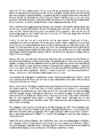
I love different languages. I mean , I really , really love different languages. I also believe and have been told that I pick them up rather easily. That might be true, although I did not pick any Greek up in Greece but that might have been because they spoke so damn fast that I could not tell if it was a word or an entire sentence.
The first foreign language I learned was Russian . Considering I was ten when Estonia became a Republic, it makes sense . We began studying Russian in first grade , though it was simplified – "koška" instead of "kot", "medvešonok" instead of "medved", "saichik" etc. Did not make much sense and we mostly played some games in Russian (Tare-tareke etc). Learned as much playing outside, since we had Estonian-Russian kids around as well. Not that we played with them. It's sad to say but it was not a nice time to be a Russian kid. We were mean to them, and we did not even know why. I think that's the only time I've ever been part of bullying someone , but there was this kid everybody called Vene-Russ and we spent a lot of time playing mean tricks on him. Well, there's that. And I also learned a lot of Russian from my mother 's lover who was a Russian military officer and pretty much my father figure at the time. I tried to teach him Estonian and learned some Russian instead. My Russian studies in school have always been very hectic and making very little sense. Teachers kept changing all the time, teaching methods kept changing as well and learning Pushkin by heart does not work wonders with one's speaking skills , really. (Although I still can recite one of his poems ...)
The point is, I actually really like Russian. I've never been good at it, but I like the language and I really wish I knew it better. I can speak some, but not read much. As soon as the characters stop talking to each other , I'm stuck and can barely understand anything . Most of my Russian skills my ten years younger mates envy come from my year of living in Narva ( literally starve or learn!) and talking to a variety of Estonian-Russian roleplayers I know. (But since they are also fluent in English and most in Estonian as well, it turns into a stew of languages very soon.)
Chronologically the second language I started to learn was French . That was because of the Descartes Lyceum. Don't remember much of that, except for half a dozen badly spelt childrens ' songs . Alouette is a really cruel song about tearing different body parts off a lark just to teach kids the names of those parts (and they are not even lark but human parts). I remember one of our young teachers used to play guitar in class and sing for us. That was really cool. Unfortunately we moved and my French studies took a long break, until my one but final school, but there I met a teacher who was anything but good at French, and not only because she was actually a German philologist. She was just plain stupid and envious of my pronounciation. She said so herself .
So how much do I know French? Just enough to sing a few songs, understand some simple written text and say a few sentences . Just enough to ask in correct French if the other party , please , speaks English .
English comes as my third language, and actually I met with it first almost at the same time they began teaching us French. But it was awkward and I'm not sure they themselves knew what they were doing or why. I can recall we cut out some pictures and glued them to a book and wrote some words up. I also recall the pronounciation was simplified for us, for example, they taught us "gööl" as the correct way to say "girl" etc. They never mentioned that it's not exactly correct...
But well, then I switched schools and met the most important man of my life – my English teacher. He had three masters – in English, in German and in Physical Education. He had also written the school hymn. He was very stern with us and made us study like crazy . You made one tiny mistake, and it was "4", two mistakes made a "3" and so on. He was an awesome teacher. He said we can talk in his class as much as we want provided we do it in English. He also had us count the passing train cars in English, instead of Estonian. He made up the books himself , because there were none at the time, because the old books were full of "Ann is a Pioneer " and there were no new ones , so he printed out materials from some Oxford text books and wherever he could find something suitable for us. Years later I learned he had died of heart attack, collapsing in his class. R.I.P.
Then I switched schools again and almost missed a year, because I met with the natural disaster that was the same teacher who sucked at French. Her English was even worse. In the end of my first class with her I tried to ask her as politely as possible if I'm supposed to take over her way of pronouncing things or can I maybe stay true to my own. We never got along after that brief conversation . PS. I got to keep mine.
Luckily, the next year we got a new teacher and she was awesome. Bright and intelligent, emotionally wise and very dedicated. We became good friends . I think I might have been her only friend . Her boy and husband had both died in a bike accident and she was still suffering from that trauma . We were both alone and we clung to each other. She worked part-time in the school library and when I skipped classes (which I did quite often) I could hide out there and have coffee and talks about English and books and life in general with her. She was the one who got me reading books in English. I've never stopped.
During a few final years they also tried getting some Latin into our soon-out-of-school heads, but the project failed miserably. Firstly, Latin is tough. The grammar part is crazy, to my not so humble opinion. Secondly, we had uni students to teach us, and each and every one of them had different ideas how it should be done and how to interest a big bunch of overgrown teenagers – especially since Latin classes were the 10th or 11th in a day, so everyone was dead tired and braindead by that time. So we got a taste of grammar – horrible! - a bunch of proverbs! - yay, something useful for a change ! - some texts – can't remember a damn thing et cetera et cetera.
This concludes the languages I've learned from school. University has added some Hebrew – pretty cool, especially how it's written and how they actually added letters to the Bible without actually changing a word; and some Greek.
Oh yes, there's Greek. The thing is, about ten years ago I hitch -hiked to Greece and we went around the northern parts of it, lived some time in Athens, travelled across (literally in cross -shaped) Peloponnesos peninsula and even made a short trip to Crete. Came back with very little knowledge of Greek language, though. (Although we did learn to read most of the signs). So when my course mates wanted me to impress the Greek teacher, I was not so very sure if the teacher would have been so very impressed being called a "mallaca". Which means "shit-head" and is used innumerously in all occasions. And there is also " ella !" which does not mean anything but you can make it mean everything.
I've managed to pick up some bits and pieces of other languages as well – bit of Spanish , some words of Italian, a tiny bit of Finnish , some German (blaming Rammstein and my Neuss friends for that!) and even some made-up languages. Ten or eight years ago I spoke a quite fluent Quenya – that is high-elvish made up by Tolkien . I've created a few languages as well, for either writing or roleplay purposes.
Lastly, I'd like to return to English. Like I said before , once I got into reading books in English, I never stopped. Unless it's Shakespeare or something I would not understand in Estonian, either, I can read everything. Unfamiliar words I either pick up from context or these days use my wonderful e-reader built -in English dictionary-thesaurus. (No Estonian words there, either.)
As to written English. Well, that began with me keeping a secret diary for years and years, and since I was the only one in the family to have any understanding of English, I wrote in English. I can honestly say I wrote in English before I knew how. But I learned by reading. I also learned by listening and watching very many movies. (Most subtitles are horrible anyhow.)
And some day somehow I started writing more than just a diary. I told stories in English. By now, I've been writing fantasy novels in English for six or seven years. I'm not perfect and I always need some good native speakers for my beta readers, and I have to explain editors that I'm not native and hence make some strange mistakes – and battle with some Estonians that no, I don't think Estonian is ugly and English is so cool and that's why I write my stuff in English. I think a part of it was because my first readers were my friends from abroad . And well, all the books I've read (I think this year I've read about 120 books, only a few of them in Estonian) have given their toll.
Working on some major publishing, though. Not even sure if the first book of the last series will come out first in Estonian or in English. Up to Fortuna!
Inglise keele ajalugu-essee-My languages #1 Inglise keele ajalugu-essee-My languages #2 Inglise keele ajalugu-essee-My languages #3
Punktid 50 punkti Autor soovib selle materjali allalaadimise eest saada 50 punkti.
Leheküljed ~ 3 lehte Lehekülgede arv dokumendis
Aeg2015-12-01 Kuupäev, millal dokument üles laeti
Allalaadimisi 4 laadimist Kokku alla laetud
Kommentaarid 0 arvamust Teiste kasutajate poolt lisatud kommentaarid
Autor Diana Ostrat Õppematerjali autor
Tegu on inglise keele ajaloo ühe kohustusliku esseega. Maha kirjutada siit otse muidugi ei saa, küll aga näha, et kuidas seda üles ehitada ja mis värk üldse on :)

Sarnased õppematerjalid

Superstar 1 tests
41
doc

Superstar 1 tests

Tests Superstar 1 Luke Prodromou Test 1 Name____________________ Class_______ Use your English 1 Complete these sentences using the correct form (present simple or present continuous) of the verb in brackets. _ 1 She is in a band and she _________________________________ (record) a CD at the moment. _ 2 She is an actress and often _________________________________ (appear) on television. _ 3 At the moment she _________________________________ (have) a rest because she is tired. _ 4 Mike is a doctor and he _________________________________ (live) in Manchester. _ 5 I _________________________________ (start) work at 8.30 every morning. _ 6 He is a good cook but she _________________________________ (prefer) to eat out. _ 7 English tests _________________________________ (get) more and more interesting. _ 8 They _________________________________ (have) a party because it's her birthday. _ 9 I sometimes ____________

Inglise keel
Solutions Advanced Workbook key
24
pdf

Solutions Advanced Workbook key

· In a weaker class, work on the first have a huge amount of luggage with representing the consonants of the statement together and then ask the him. I imagine he is planning to stay language. The first true alphabet was students to work individually. for a long time. He looks bewildered the Semitic alphabet which appeared and rather disorientated. It must feel · Use of English: Encourage the students to read the whole text around 1700 BC, followed, about 700

Inglise keel
Suhted laste ja vanematega
21
pdf

Suhted laste ja vanematega

page 19­20 of The Knight's Horses, which has the London Symphony Orchestra been published in the UK and is playing my latest piece. My parents · The Workbook Get ready for Maturita being translated into six foreign first took me to the opera when I was lessons can be used as extra languages at the moment. I'm not three. I've been living and breathing classroom lessons, as controlled unique ­ most young people have music ever since. For most people exam practice or as independent dreams and ambitions. But I'm lucky music is a hobby, something to study for homework. All the audio

Inimeseõpetus
Videvik kogu raamat Inglise keeles
274
docx

Videvik(kogu raamat Inglise keeles)

Color-- -1- -2- -3- -4- -5- -6- -7- -8- -9- Text Size-- 10-- 11-- 12-- 13-- 14-- 15-- 16-- 17-- 18-- 19-- 20-- 21-- 22-- 23-- 24 TWILIGHT By Stephenie Meyer Contents PREFACE 1. FIRST SIGHT 2. OPEN BOOK 3. PHENOMENON 4. INVITATIONS 5. BLOOD TYPE 6. SCARY STORIES 7. NIGHTMARE 8. PORT ANGELES 9. THEORY 10. INTERROGATIONS 11. COMPLICATIONS 12. BALANCING 13. CONFESSIONS 14. MIND OVER MATTER 15. THE CULLENS 16. CARLISLE 17. THE GAME 18. THE HUNT 19. GOODBYES 20. IMPATIENCE 21. PHONE CALL 22. HIDE-AND-SEEK 23. THE ANGEL 24. AN IMPASSE EPILOGUE: AN OCCASION twilight STEPHENIE MEYER LITTLE, BROWN AND COMPANY New York Boston Text copyright © 2005 by Stephenie Meyer All rights reserved. Little, Brown and Company Time Warner Book Group 1271 Avenue of the Americas, New York, NY 10020 Visit our Web site at www.lb-teens.com First Edition: September 2005 The characters and events portrayed in this book are fictitious. Any similarity to real persons, living or dead, is coincidental and not intende

Kirjandus
Inglise keele jaotusmaterjal
37
doc

Inglise keele jaotusmaterjal

50 9.15 10.45 19.05 6.15 7.45 20.15 19.40 14.30 16.29 23.25 5.49 8.02 13.55 17.09 18.22 Addresses Aadressidest rääkides kasutatakse eessõna at, kui öeldakse ka korteri või maja number, ning eessõna in, kui öeldakse ainult tänava nimi. They live at 5 Oxford Street. She got a job in Weston Road. Ameerika inglise keeles kasutatakse tänavatest rääkides eessõna on. He lives on Penn Street. What's the address? Do you know the address? Practise asking and saying addresses: Süda 1, 10118 Tallinn Akadeemia tee 311 Kentmanni 25-91 Saue, Harjumaa, 76402 Jõgisoo MODULE 5 Word order A Verb + object I like children very much. Did you see your friends yesterday? Ann often plays tennis.

Inglise keel
Golden Grammar rules
10
doc

Golden Grammar rules

) 92. Don't use the with society when it has a general meaning. We all have to live in society. (NOT We all have to live in the society.) Rousseau said that society makes people evil. (NOT Rousseau said that the society makes people evil.) 93. Use a toinfinitive after want. I want to go home. (NOT I want go home.) The children want to stay up late. (NOT The children want stay up late.) 94. Use make, not do, with mistake. I have made a mistake. (NOT I have done a mistake.) You can't speak a language without making mistakes. (NOT ... without doing mistakes.) 95. Don't repeat a relative pronoun with another pronoun. There's the man that I work for. (NOT There's the man that I work for him.) She saw a doctor who sent her to hospital. (NOT She saw a doctor who he sent her to hospital.) 96. After a superlative, use in with a place expression. Which is the biggest city in the world? (NOT Which is the biggest city of the world?) This is the best restaurant in the city

Inglise keel
Letters
38
doc

Letters

· salutation · Paragraph 1 reasons for writing · Paragraphs 2, 3 development · Final paragraph closing remarks · Name · Letters are divided into two categories, formal and informal. There are various types of formal and informal letters . · It is important to think about the person who you are writing to before you begin writing a letter. If the wrong style is used, the letter will look impolite, silly or odd. For example, if you used formal language to write to a close friend, the letter would look odd, or if you used informal language to write a letter to a company, the letter would look impolite. · There are certain characteristics which allow us to distinguish between formal and informal letters. These are: ~ The salutation (e.g. Dear Sir/Madam, Dear Bill) ~ The style or language (e.g. use of formal language for formal letters, or the use of slang and idioms for informal letters) ~ The closing remarks (e.g

Inglise keel
Me and languages
1
docx

Me and languages

Me and languages. To begin with, language is a congrecation of thoughts and feelings through a system of signals, such as voice sounds, gestures, or written symbols. Communication or language is a process every child learns from birth and during our life we will usually learn many different languages. Due to the fact that both of my parents are Estonians , my mother tongue is Estonian, therefore I can speak and write in it very fluently. I also prefer read the books in Estonian. I know that some people like to do it in some other languages, in English for instance. I am really amused by the Estonian literature. I like to read books and stories from Andrus Kivirähk and F.R

Inglise keel


Kommentaarid (0)

Kommentaarid sellele materjalile puuduvad. Ole esimene ja kommenteeri


Sellel veebilehel kasutatakse küpsiseid. Kasutamist jätkates nõustute küpsiste ja veebilehe üldtingimustega Nõustun