An
overview of
integrated care in the NHS
What is
integrated
care?
Research
report Sara
Shaw ,
Rebecca Rosen and
Benedict Rumbold
June 2011 Nuffield
Trust work on integrated care
This report is
part of the Nuffield Trust's extensive programme of work on
integrated care, which is
examining the potential of new
forms of care that are
intended to benefit patients and taxpayers.
Other related projects include :
·Integration in
action :
four international
case studies . A
study of four international organisations that have attempted to
improve integration
between health and care
services . Interviews, documentary
analysis and
literature review are used to identify the main stimuli for integration and the
issues that help or
hinder progress;
drawing out lessons for the NHS.
·Towards integrated care in Trafford. A
project that
looks at the
process of
change and lessons learned to
date in Trafford, where NHS organisations have been
working on the
development of an integrated care system
across the
whole health
economy .
Further details of our integrated care work can be
found at:
www.nuffieldtrust.org.uk/integratedcare
Acknowledgements
Our
thanks go to Richard Gleave, Diane Gray, George Kissen, Dennis Kodner,
Judith Smith and
Sarah Smyth for their comments, all of which have helped to
shape both the structure and content of this report. 3 What is integrated care?
`Integrated care' is a
term that reflects a
concern to improve
patient experience and achieve
greater efficiency and
value from health
delivery systems. The aim is to address fragmentation in patient services, and
enable better coordinated and more continuous care, frequently for an ageing population which has increasing incidence of chronic
disease . The search for
ways to
integrate care more effectively is a pressing
policy concern. But what do we actually
mean by `integrated care'? This research report examines what is meant by `integrated care'. It explores integrated care from an NHS perspective, identifies the concepts that underpin integrated care, suggests how
these can be used to inform
practical integration efforts both
within and
beyond the NHS, and
sets out how integration might be measured.
Key
points ·Under
current Government proposals , new GP commissioning consortia will take over responsibility for £60
billion of the NHS
budget . International experience suggests that the integration of
primary and secondary care is vital to the delivery of efficient and effective care. ·Current reforms emphasise the need to integrate care more effectively. This
emphasis reflects the long-standing concern in the NHS with how to address the
division of care across primary and secondary care in
particular . ·Integrated care is an organising principle for care delivery that aims to improve patient care and experience
through improved coordination. Integration is the combined set of methods,
processes and models that
seek to bring this about. ·Achieving integrated care
requires that those involved with
planning ,
financing and
providing services have a shared
vision , employ a combination of processes and mechanisms, and ensure that the patient's perspective remains a central organising principle
throughout . ·
There is an
urgent need for more
robust and high-
quality evidence to inform
decisions about how to
develop integrated care. There is no
single model of integrated care that is suited to all contexts, settings and circumstances. Researchers and policy-
makers need to work together with practitioners to develop, evaluate and
implement effective approaches.
Find out more online at: www.nuffieldtrust.org.uk/integratedcare 4 What is integrated care?
An overview of integration in the NHS The current
focus on integrated care reflects a long-standing concern in the NHS with the
organisation of care across three sectors of the health
service (primary, secondary and tertiary). This can be
thought of as `
internal ' integration and is the main focus of this report.
Furthermore , the organisational separation of health and
adult social care services (with the exception of
Northern Ireland ) has been a further
cause of service fragmentation for many
users ; representing a concern for `
external ' integration. Concern about fragmentation
typically focuses on a
lack of service coordination for
individual patients and,
particularly , the structural and
cultural isolation of generalist from
specialist medicine , or adult social care from health care, which often
results in patients experiencing discontinuity of care when they are transferred from home to
hospital , or
vice versa.
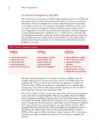
Table 1: Trends in integration
initiatives1980s
1990s 2000s · coordinated working ·
inter -
agency working · inter-professional working · shared planning ·
intermediate care · whole systems working · coordinated care · shared protocols · integrated delivery · care programmes ·
managed care
networks · case/care
management · disease management · patient-centred care · shared
decision -
making · integrated care pathways
The
desire for better integration of care has been expressed in
different ways. For example, multidisciplinary care was a particular concern in the
1960s ; partnership working in the 1970s; and shared care and disease management in the 1980s and 1990s (see Table 1). What we now
refer to as `integrated care' is an umbrella term, encompassing
diverse initiatives that seek to address fragmentation, but that differ in underlying scope and
values (
Stein and Reider, 2009). From 1997 to 2010, the
Labour Government emphasised a need for greater integration as part of the
drive for improved quality, efficiency and patient outcomes. Initiatives
such as `integrated care pathways', `patient-centred care' and `shared decision-making' are
examples of
attempts to
align clinical , managerial and service
user interests, and to improve coordination of care for patients, in particular those with long-term
conditions . New forms of health care organisation such as care trusts (Glasby and
Peck , 2005), managed clinical networks (
Woods , 2001), accountable care organisations in the US (Rittenhouse and
others , 2009) and
local clinical partnerships (Smith and others, 2009) are all examples of different attempts to reshape the way in which combinations of primary, secondary, community and adult social care services are organised and
delivered . 5 What is integrated care?
Case study
Integrated
mental health services in
Milton Keynes Milton Keynes is a new town with a
strong history of partnership working and a community identity that is characterised by wanting to ensure the
best for residents. Combined with
support from local politicians, this has
provided a strong foundation for
joint working. In 2001 the primary care trust (PCT) and local council in Milton Keynes launched their
first integrated service for mental health.
Since this time, joint services have
developed across mental health,
learning disability and intermediate care; employing some 500
staff , ranging from consultant psychiatrists to social
workers , nurses and
equipment services.
Health and social care agencies in Milton Keynes have developed a structured
approach to integrated care, maintaining their own organisational
structures and systems and, where appropriate, pooling resources. The emphasis has been on joint administrative systems. Those involved have
described themselves as `dancing
partners ', working within and across existing organisations in
order to better coordinate different services,
share information and
manage the transition of patients through
elements of their care. For an area such as intermediate care, this has meant starting with the
concept of rapid
access ,
developing coordinated
teams comprising nurses and social workers, and then, together, addressing problems of delayed discharge.
Across the local care economy, the focus on coordinating services is now
seen as a mutual responsibility driven by a common belief that, together, health and social care agencies and professionals can make the best use of limited funding, promote wellbeing and address health inequalities.
However , the policy drive for organisational integration of community services
means that Milton Keynes may be
required to more closely integrate with hospitals and/or general
practices ; health services that have not previously been involved in integrated care within Milton Keynes. 6 What is integrated care?
There is some
emerging evidence of the benefits of integration within the NHS, for example in improving access to care, managing demand and reducing delayed transfers (Ham and de
Silva , 2009). However, empirical research on the impact of integrated health systems in
respect of clinical outcomes and value for
money remains scarce (Armitage and others, 2009), with integration that is largely
focused on bringing organisations together unlikely to bring about improvements in care for patients (Alakeson, forthcoming).
Although there is some limited evidence that service integration improves clinical outcomes, the impact on
costs is more mixed (Ham and de Silva, 2009; Ovretveit and others, 2010). Current policy provides opportunities to
extend integrated care, working towards an NHS that is `less insular and fragmented' and facilitating working across health and social care boundaries, as well as between hospitals and practices (
Department of Health, 2010). Some integrated care initiatives
tend to focus on integration which brings together various providers of health care within the NHS. For example, the
introduction of National Service Frameworks (NSFs) in order to try and bring about more consistency and coordination of care for
specific conditions, and across different sectors. Other initiatives tend to be concerned with integration between health and other services.
Recent examples in the NHS in
England have
included merging regulators to facilitate joint inspection of health and social care providers; extending
incentive payments to providers to
encourage and reward joint working; and developing integrated mental health services across health and social care (see case study on page 5). To date, discussions about improving service integration have typically focused on breaking down barriers across service providers. Integration can also
involve coordination across commissioners and providers (
Lewis and others, 2010). Current policy has rejected this approach (Department of Health, 2010), however, the development of GP commissioning consortia provides an
opportunity to develop new forms of care and encourage increased integration via the involvement of secondary care clinicians alongside primary care teams (Ham and Smith, 2010). 7 What is integrated care?
What do we mean by integration and integrated care? A recent review of the literature on integrated care revealed some 175 definitions and concepts (Armitage and others, 2009). Such
diversity reflects what one commentator refers to as `the imprecise hodgepodge of integrated care' (Kodner, 2009). When considering integrated care, it is
important at the
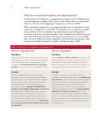
outset to distinguish between integration and integrated care (see Table 2). Integrated care is an organising principle for care delivery with the aim of achieving improved patient care through better coordination of services provided. Integration is the combined set of methods, processes and models that seek to bring about this improved coordination of care. Accordingly, where the
result of efforts to improve integration is
beneficial for patient groups, so the
outcome can be called integrated care (Kodner and Spreeuwenberg, 2002).
Table 2:
Perspectives on integration and integrated care
What is integrated care? What is integration?
Description Description
The patient's perspective is at the
heart of any discussion It is the processes, methods and
tools of integration that
about integrated care. Achieving integrated care requires facilitate integrated care. Integration involves
connecting those involved with planning and providing services the health care system (acute, community and primary
to `impose the patient perspective as the organising
medical ) with other service systems (such as long-term care,
principle of service delivery' (Lloyd and
Wait , 2005: p7). education or housing services) (Leutz, 1999: p7778).
Example Example
Take the example of Torbay, an area with a high In Torbay, the concern to deliver better and more
proportion of over-65s. Discussions driving integrated coordinated outcomes for patients led to the
establishment care have been characterised by "Mrs Smith", a fictitious of a care trust in 2005. The development of
five integrated
85-
year -old with a range of care
needs and requiring health and social care teams
aligned to general practice,
coordinated support across health and social care. single
assessment processes, and shared health and
Mrs Smith has
come to represent vulnerable local social care electronic records are processes that have
residents at risk of falling between gaps in the service. facilitated integration. The focus is on improving clinical,
By focusing on Mrs Smith, care has been reorganised satisfaction and efficiency outcomes (Leutz, 1999).
and better integrated
around needs such as hers. The result of integration includes a reduction in delayed
The patient perspective provided the foundation for transfers of care in acute hospitals, improved social services'
restructuring services.
Supply -driven models of care ratings and enhanced access to intermediate care services.
provision are now out-of-date. The result is local health For Torbay this not only means improved outcomes, but
and social care provision that is flexible, personalised also integrated care.
and seamless. 8 What is integrated care?
Connecting integrated care and integration A focus on integrated care can help policy-makers, managers and practitioners decide on the model of care they wish to develop. They can
draw upon a combination of processes and mechanisms that enable integrated care to develop. The term `integrative processes' provides a
link between the concept of integrated care (in
terms of the ambition to deliver services across providers with
minimal duplication and
disruption , and with high-quality outcomes and patient experience) and the concept of integration (in terms of the methods and approaches used to align
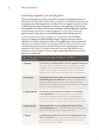
goals across professional groups, teams and organisations). In the literature five main
types of integration are typically described (see Table 3). Each type of integration is enabled through a range of integrative processes, some of which focus on systems and structures; others on less tangible aspects such as professional behaviour and
teamwork . However, commentators tend to use diverse terms and, in some cases, focus on
areas and processes of specific relevance to the integration project under consideration. For
instance , recent government policy has encouraged health and care providers to
consider integration in terms of aligned organisational structures and shared governance
arrangements .
Table 3: Description of the five main types of integration and allied integrative processes 1. Systemic Coordinating and aligning policies,
rules and regulatory frameworks for example, policy levers emphasising better coordinated care outside of hospitals, central impetus for diversity of providers, development of national incentive schemes (for example the Quality and Outcomes Framework) or financial incentives to promote downward
substitution .
2. Normative Developing shared values, culture and vision across organisations, professional groups and individuals for example, developing common integration goals, identifying and addressing
communication gaps,
building clinical relationships and trust through local events, or involving service users and the wider community.
3. Organisational Coordinating structures, governance systems and relationships across organisations for example, developing
formal and
informal contractual or cooperative arrangements such as pooled budgets or practice-
based commissioning; or developing umbrella organisational structures such as primary care federations or local clinical partnerships.
4. Administrative Aligning back-office
functions , budgets and financial systems across integrating
units for example, developing shared accountability mechanisms, funding processes or information systems.
5. Clinical Coordinating information and services and integrating patient care within a single process for example, developing
extended clinical roles, guidelines and inter-professional education, or facilitating the
role of patients in shared decision-making. 9 What is integrated care?
Of the five processes outlined in Table 3, Rosen and others (2011) focus on normative, organisational, administrative and clinical as being particularly relevant to how organisations operationalise integrated care. They also draw out two additional types of integration informational and financial. These are terms that have yet to
filter through to the wider literature, but highlight the specific importance of integrative processes that facilitate shared access to clinical information and aligned financial initiatives across the organisations studied.
Similarly , Kodner (2009) points to professional integration, drawing specific
attention to the process of coordinating relationships across care professionals. This varied use of
language and terminology is not
unusual : different commentators emphasise different aspects of integrated care and
hence the different integrative processes involved. This can be confusing, but is indicative of the multifaceted nature of integrated care. There is no hierarchy of integrative processes.
Rather , the goals of any integrated care initiative will
guide decisions about the processes that can best facilitate integrated care within any particular
setting . It is unlikely that all types of integration will be relevant to every project. Decisions about which are most relevant will be guided by, for instance, the goals of the project, the stakeholders involved, existing local arrangements for health (and social) care and the
available resources. However, there are additional points to
bear in mind when thinking about how to integrate: ·Some types of integrative processes will be more important
than others. For instance, where the
goal of integration is to develop joint working across health and social care, an important focus will be on establishing work groups as a way of engaging care professionals in the
operation of integrated care (Simoens and
Scott , 2005); developing structures and processes to enable teams and/or organisations to work collaboratively towards common goals (Rosen and Ham, 2008); and/ or building
leadership and management capacity to facilitate partnership(s) (Feachem and Sekhri, 2005). ·The interplay between different types of integration can
influence the value that can be secured. For instance, integrating administrative processes can significantly aid integration of clinical services into a single process (Shortell, 2000). Similarly, simply focusing on organisational integration in an attempt to integrate providers is unlikely to create improvements in care for patients (Ramsey and Fulop, 2008) and can fail to
alter the way in which doctors practise medicine and collaborate with other health care professionals (
Burns and Pauly, 2002), which also requires underpinning clinical and normative
changes in teamwork and care delivery. ·Integrative processes can have unintended
effects . For instance, whilst targeted financial incentives can
provide a valuable means of changing clinician behaviour, they can also increase bureaucracy, motivate unintended behaviours such as gaming or
cherry -picking (Oxman and others, 2008), and potentially counteract the development of shared values and working practices (Rosen and others, 2011). 10 What is integrated care?
Consideration needs to be given to the
pace of change required when employing one or more integrative processes. There are
fundamental ingredients of integration,
including : professional and organisational alignment around shared goals; a supportive (and centrally facilitated) information, communication and
technology environment; effective clinical leadership; and aligned financial incentives (Rosen and others, 2011). Taken together, all of these ingredients may not be
essential to the development of integrated care. They may, however, smooth or accelerate the process of integration. The interplay between integrative processes potentially enhances integration, however, evidence with respect to which bundle of processes produces the best results is less certain. There is a lack of evidence about which integrative processes are best suited to different settings. To support such decisions about how and where to integrate care, we now
describe the additional conceptual
features of integrated care, and provide a series of
questions to ask to
assist those involved in decision-making (see Table 4).
Understanding the key features of integrated care Many descriptions of integrated care pay
little attention to what constitutes this concept and hence make it difficult for people to be
clear about what is intended and how that might be realised. Recent descriptions of integrated care emphasise how `separate but interconnected parts play complementary roles in order to accomplish shared tasks' (Kodner, 2009: p8). These `interconnected parts' include the different features described in Table 4: the goals and
context of integration, types of integrative processes (see Table 3), and the breadth and intensity of integration. How these different elements interact will vary according to the specific integration initiative and setting in which it develops. Our description of the features of integrated care builds on existing literature including: a review of evidence on integration for health care delivery systems (Mowlem and Fulop, 2005; Fulop and others, 2005); a review of integrated health care for people with chronic conditions (Oxman and others, 2008); work concerned with organisational integration (Shortell, 2000; Rosen and others, 2011); and descriptions of various models, concepts and theories underpinning integration (Leutz, 1999; Grone and
Garcia -Barbero, 2001; Kodner and Spreeuwenberg, 2002; Simoens and Scott, 2005, Lloyd and Wait, 2005; Edgren, 2008;
Ehrlich and others, 2009; Kodner, 2009; Stein and Reider, 2009; Lewis and others, 2010). 11 What is integrated care?
Table 4: Key prompts to assist with developing integrated care
Feature Key questions to ask
Goal a) What are you seeking to achieve by pursuing integrated care? What is the problem that you are addressing? Is integrated care the `best' solution? b ) What is the initial target service user group? How will you ensure that service users
remain the organising principle for integrated care throughout? How will integrated care address inequalities for service user groups, as well as the wider community? c ) How will you ensure organisational support for the goals of the project (for example, a
senior officer responsible for delivery, a dedicated budget)?
Context d) Is the proposed integration project associated with any other improvement programmes? How will this impact on local integration? What competing national or local agendas do you need to consider? e) Which sectors are involved and what is their role in relation to integration (for example, patients/public, primary care, acute care, third
sector , private sector)? What are the potential consequences of integration on other parts of the health/social care economy? f) How will you bring in strong,
visible leaders from each integrating organisation or group to champion the change? How will you ensure dialogue and
consensus across stakeholders and/or organisations about the shared objectives of integration and about the need to spend resources differently?
Type g) What are the most important integrative processes for your project (for example, joint administrative processes, aligning financial incentives, coordination of clinical services, developing shared values)? What existing structures, partnerships and processes can you
build on? What will you need to start from scratch? h) How will commissioning arrangements support and
enhance integration rather than perversely incentivise it? i)How will you ensure effective data sharing and management of information, both of which are
crucial to the
success of integration?
Breadth j)How will
vertical or horizontal integration (i.e. integration across different levels and/or aspects of the care system) contribute to the success of your project? How might you
avoid a possible disconnect (for example, between horizontally integrated primary/community services and vertically integrated care pathways)? k) How will you address issues of
choice ,
competition and contestability? How will you
keep momentum and ensure a sustained focus on integrated care? l)How will you identify and align the incentives needed to support integration across professional groups, teams or organisations?
Intensity m) How does the
degree of integration (
full integration, coordination or
linkage )
relate to your goals and the local context in which you are working? n) How will you ensure that integration within one part of a health economy does not result in inappropriate and/or increased fragmentation elsewhere? 12 What is integrated care?
Table 4 sets out the main features of integrated care,
along with questions that are likely to be raised when addressing each. It is designed as a series of prompts for policy- makers, managers and practitioners. Starting with the goal of integrated care, it is important to be clear what a specific integration initiative seeks to achieve. Clarity of goals is essential, not only as a means of generating shared objectives, but also in providing ongoing momentum to integration (Rosen and others, 2011). Integration projects driven by a focus on reducing service fragmentation for a group of patients are often more successful than top-down attempts to integrate care (Ramsey and Fulop, 2008), reinforcing the patient's perspective as being at the heart of integrated care. It is now widely accepted that `one
size of integrated care does not fit all'. It is
therefore vital to consider the context (that is different care settings and perspectives) in which a specific integrated care initiative develops. This might involve exploring current policy initiatives and/or considering structures and processes at higher provider and financing levels (Ovretveit and others, 2010). It might also involve considering the
views of local practitioners, service users or managers (see
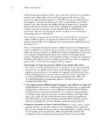
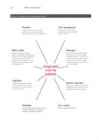
Figure 1). Taken together, the perspectives outlined in Figure 1 describe the main stakeholder
concerns about integrated care. The goals of a specific integrated care initiative will guide which of these perspectives are most relevant. 13 What is integrated care?
Figure 1: Perspectives
shaping integrated care
Provider Care professional Coordinate services, tasks and Advocate for service users; patient care across professional, provide and coordinate health organisational and system boundaries (and social) care
Policy-maker
Manager Design integration-friendly Build and
sustain shared culture policies, regulations and financing and values; maintain oversight arrangements; develop appropriate of pooled resources and funding care systems, processes and streams; coordinate joint targets; quality standards; support holistic
supervise diverse staff; manage evaluation of integrated systems
complex organisational structures and programmes and relationships Integrated care for patients Regulator
Register integrated providers; Service user/carer assess care provision; monitor Experience improved access and joined-up care; eliminate poor navigation across elements of care, quality and
safety including information-sharing
Evaluator Community
Measure integration against national Help to shape local services and local measures; contribute to evidence-informed integration 14 What is integrated care?
The extent of integration Horizontal and vertical integration There is a need to distinguish between horizontal and vertical integration. Horizontal integration focuses on competing or collaborating organisations, networks or groups in the health economy and might involve, for instance, grouping outpatient clinics within a geographic
network of providers. Vertical integration focuses on networks and groups at different stages of care within the health economy (what some commentators refer to as the supply chain or care pathway) and might involve, for instance, the drawing together of a hospital with local community services. Initiatives to integrate care have tended to focus on either horizontal or vertical integration rather than both at any one point in time. But this
could result in disruption between integrated primary and community services on the one
hand , and vertically integrated care pathways (that take patients from first contact to specialist to ongoing care) on the other (Goodwin, 2008; Lewis and others, 2010). The
English system provides a
good example of this, where there is an emphasis on streamlining services both vertically and horizontally, but at the expense of facilitating an effective integration of the two (Goodwin, 2008). For instance, rather than encouraging detachment of vertical and horizontal pathways by simply diverting referrals away from hospital-based clinics to community settings, it may be more beneficial to integrate generalists and
specialists via care networks. Competition and choice Discussions about integrated care have raised concerns over the role of markets and competition in health care, with initiatives to encourage competition across hospitals and greater patient choice potentially making vertical and horizontal integration more difficult to achieve. For instance, at its worst, integration can be interpreted as a takeover bid `in which the interests of the smaller or less
powerful group are
completely submerged' (
Jones , 1972: p345), raising questions over contestability. Questions remain over the role of competition in facilitating or impeding integrated working. Take the example of an emerging integrated care system in Trafford, where preserving choice between providers at different parts of the pathway is a major
challenge in the
face of current policy on choice and competition (Ham and Smith, 2010; Shaw and Levenson, forthcoming). The predominant focus in Trafford is to provide integrated services for the local community. However, with current policy emphasising choice for patients from any willing provider (Department of Health, 2010), similar integrated care systems or organisations may need to create access to alternative providers outside of the immediate network, in order to satisfy wider policy
requirements for choice and competition (Lewis and others, 2010). Emerging evidence indicates that integrated care provides opportunities for improving quality and increasing efficiency of care (see
above ), both of which are key elements of current policy. To achieve this, a
balance is
necessary between the need for competition in some areas of care and collaboration in others. 15 What is integrated care?
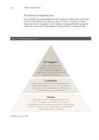
The intensity of integrated care It can be helpful to think of different levels of integration similar to the model drawn from the work of Walter Leutz (shown in Figure 2). Other commentators make a distinction between `integration' as what happens on organisational and managerial levels, and `coordination' as what happens on clinical and service delivery levels.
Figure 2: Intensity of integration*
Full integration Formally pooling resources, allowing a new organisation to be created alongside development of comprehensive services attuned to the needs of specific patient groups.
Coordination Operating through existing organisational units so as to coordinate different health services, share clinical information and manage transition of patients between different units (for example chains of care, care networks).
Linkage
Taking place between existing organisational units with a view to referring patients to the right
unit at the right time, and facilitating communication between professionals involved in order to promote continuity of care. Responsibilities are
clearly aligned to different groups with no
cost shifting .
*Adapted from Leutz, 1999 16 What is integrated care?
Whatever the focus, integrated care initiatives rarely move smoothly along a continuum in a linear
fashion from linkage, through coordination to full integration. As with any structural, organisational or behavioural change, the process of integrating care may involve complete transformation, for example creating new organisations and shared governance arrangements, or more limited shifts, such as building on a strong history of communication across health professionals to establish a clinical network supported by shared clinical information. The
former is rare and, as a result, a small number of `
boutique pilots' tend to be frequently cited. Examples in the UK include: ·Lanarkshire where the elderly people's mental health day unit has developed a single line of management, shared governance, pooled budgets and fully integrated health and social care (see Rosen and others, 2011, for a detailed description). ·Trafford where NHS organisations have come together to develop a new `integrated health system' across primary, community and hospital care involving development of a new `integrated care organisation' combined with innovative models of care supported by new technologies (see Shaw and Levenson, forthcoming, for a detailed description). More common are initiatives involving coordination and linkage with, for instance, integrated care initiatives enabling alignment of goals and joined-up working. It is essential to understand that
movement between the different `levels' shown in Figure 2 can
happen both ways, in terms of more fully integrating as well as potentially fragmenting services. As Leutz points out: `one man's integration is another's fragmentation' (Leutz, 1999). In other
words , integration within one part of a health system may well facilitate movement along the continuum, but it can also result in fragmentation elsewhere. The intensity of integration that is sought must relate to the goals and context in which those concerned with integrated care are working, including those of patients. However, there can be substantive disparity in the integrative aims of different stakeholders or organisational units. Seeking consensus about the potential intensity of integration is therefore an important first
step . Situations where the goals are driven by top-down attempts to integrate care (for instance, through mergers of service providers) are often less successful (Ramsey and Fulop, 2008). Successful integration projects are driven more by a focus on how to improve service fragmentation for a group of patients. The focus is likely to be on long-term conditions and care for older people due to the challenges of coordinating care for these groups. Internal factors can therefore have a key role to play with, for instance, the motivations and goals of individual health care professionals potentially an important catalyst (Simoens and Scott, 2005). 17 What is integrated care?
Evaluating integrated care This report has highlighted the practical value of gaining greater conceptual clarity about integrated care. Along with greater conceptual clarity, there is a need for more robust and high-quality evaluation of integrated care. This would help address the lack of evidence available to inform decisions about integrated care. Further work is needed to identify: ·the specific problems of fragmentation that integrated care initiatives seek to
resolve ·the impact of integrated care on patient experience and improved processes of care ·how integration changes
patterns in the use of services (especially inpatient care) ·the impact on costs and outcomes (Ramsey and Fulop, 2008). It is therefore vital that those pursuing integrated care consider how development and impact will be evaluated and measured. Evaluations of integrated care initiatives tend to focus on the processes and outcomes involved. Any such examination also needs to
account for the context in which integrated care develops, and the diverse perspectives (service user, provider and so on) and levels of health care provision involved. Traditional research methods (such as randomised controlled trials) are often not feasible as they fail to capture the context and evolutionary processes allied to integration (Vrijhoef, 2010).
Novel measurement approaches are being used to evaluate the integrated care pilots established by the Department of Health for England (
Ling and others, 2010). The plan is to track the hospital use of a set of individuals receiving integrated care both before and after the individual started to receive the care using
linked , administrative datasets. Since a robust comparator is essential, but randomisation is not possible, controls are selected retrospectively from within the large datasets. There has been a tendency for evaluation of integrated care to focus on `boutique pilots' (indeed, given the current lack of available evidence, some of the examples within this
paper are drawn from such sources), which has made it difficult to generalise findings to other health and care settings (Ouwens and others, 2005). The challenge for managers, clinicians and service users is to propose and support an evaluative
component at the outset of any integrated care initiative. The aim should be to make a robust contribution to the emerging evidence
base for integrated care, encouraging users, planners and decision-makers to become more directly involved in shaping evaluation, and appreciating where the big gains are to be made in developing better integrated care. Those evaluating integrated care must be clear about the comparator used within any study. Appropriate choice of comparator is vital in reaching a view on the effectiveness of integrated care. For instance, the
association between the features of integrated systems and high-
performance systems may not imply causation. Evaluators therefore need to ensure clarity about whether they are comparing integrated against fragmented care; more against less integrated care; or a newly integrated model against a
previous less integrated model. 18 What is integrated care?
Measuring the extent of integrated care A key challenge for policy-makers and planners pursuing evaluation is to develop more suitable approaches to measuring and
assessing integrated care. Such work requires
sound theoretical underpinnings in order to guide evaluation and measurement, and the use of both quantitative and
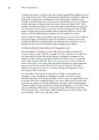
qualitative methods. Such an approach might help measure integration, for instance, not only in relation to the impact on health outcomes, but also improved quality of care, service user satisfaction, and effective relationships and systems. To date, a limited range of methods has been used to measure integrated care (see Table 5). Typically, these focus on organisational and administrative integration (that is on structures and processes), with little assessment of outcomes. Indeed, few studies clearly describe the measurement tools and indicators that can be used to assess both the implementation and impact of integrated care (Armitage and others, 2009; Strandberg-Larsen and Krasnik, 2009). In
addition , many evaluations of specific integrated care
interventions fail to describe the previous model of service delivery and hence are unable to describe fully the potential additional benefits of integration (Vrijhoef, 2010). Further work is needed to develop appropriate measures, tools and approaches. Drawing on the work of a number of commentators (Leutz, 1999; Kodner and Spreeuwenberg, 2002; Ahgren and Axelsson, 2005; Lloyd and Wait, 2005; Armitage and others, 2009; Strandberg-Larsen and Krasnik, 2009; Vrijhoef, 2010), this includes: ·Approaches to evaluating integrated care that: situate it within wider health and care systems acknowledge the level and combination of strategies used based on the challenges faced in obtaining appropriate quality care for local communities and user groups consider the contextual factors that
affect development and delivery. ·Standardised, validated tools and indicators that measure integration across different settings relative to a set of models, structures and processes. ·Focused, `off-the-
shelf measures' that suit a specific purpose or aspect of integrated care which can be applied by decision-makers and planners across diverse health and care systems and settings. ·Qualitative and mixed methods approaches (such as
comparative case study research and/or realistic evaluation) that facilitate understanding of which integrative processes work, for
whom , and in what circumstances. ·Longitudinal methods that move beyond simple snapshots of integrated care and
follow integrative processes through time, allowing evaluators to assess not only the long-term implications for integrated delivery, organisation and outcomes, but also the way in which planned change is actually
experienced for those with long-term conditions. 19 What is integrated care?
Table 5: Examples of existing methods for evaluating the extent of integrated care and its impact*
Method Measuring Example
Audit of medical records Clinical integration To explore the coordination of care for patients visiting a setting involving multiple providers
Analysis of register data on Coordination and inter-sectoral To assess the extent to which patients'
hospitalisation rates integration hospital journeys take place in a coordinated way
Analysis of administrative datasets Organisational, administrative To assess the extent to which changes
on hospitalisation rates compared and clinical integration affect the hospital use of patients
to individually matched controls compared to matched controls
Self-assessment form for managers Administrative processes supporting To evaluate the degree of integration service coordination across local health care settings
Annual surveys and disclosure Administrative integration To examine the relationships between
reports, and financial data and intensity a hospital's structural clinical integration and
average total discharge cost per patient
Questionnaire
survey for managers Clinical and administrative To measure
perceived levels of clinical
and clinical leaders integration and administrative integration, along with perceived effectiveness of these activities
Qualitative interviews with Organisational and normative To examine the degree to which the
hospital executives integration processes of integrating doctors and hospitals are closely linked to the structure and content of integrated delivery systems
Interviews, web forms and Organisational and clinical To produce a new measure of integration
workshops with service coordinators integration quantifying the extent, scope and depth of integration within and across organisations, sectors and services
Questionnaires, interviews and focus Normative and organisational To investigate the
experiences of front-line
groups with staff and managers integration staff working in integrated health and social care organisations
* Adapted from Strandberg-Larsen and Krasnik, 2009 20 What is integrated care?
Four key lessons This report has examined what is meant by `integrated care', clarifying the underpinning concepts and identifying the features relevant to integration across care settings. It concludes with four key lessons for those pursuing integrated care: 1Integrated care is best understood as a
strategy for improving patient care. Integrated care is concerned with improving patient care through better coordination. A decision about the intensity of integration is essential, starting with links across services, coordinating teams or pooling resources. Where there is a strong history of partnership working, further steps to amalgamate into a single integrated organisation may be more feasible (although integration that is focused largely on bringing organisations together is unlikely to create improvements in care for patients). 2The service user is the organising principle of integrated care. Careful analysis of the goals of integration is
critical in order to establish what might help or hinder progress. There is a need for a shared vision in which the service user perspective and patient experience is central. This will then shape how, when and where to integrate services in order to improve patient care. Policy-makers and practitioners should use the prompts provided in Table 4 to inform discussion and decision- making about when to integrate, how and why. 3One form of integrated care does not fit all. There is no one model of integrated care that is suited to all contexts, settings and circumstances. Careful analysis is needed about the different integrative processes that can support integration within a particular care setting. Decisions about which approaches are most relevant to a particular setting will be guided by the goals of the project, the needs of service users and other stakeholders involved, existing provision and available resources. 4It is only possible to improve what you measure. There is a shortfall in evidence of the impact of integrated care. What evidence there is tends to be drawn from a limited range of settings and initiatives, which focus on structures and processes, and involve limited assessment of outcomes or costs. Further work is urgently needed to identify what integrated care initiatives work best for whom, and in what circumstances. As integration is an ongoing process, evaluation can facilitate continual refinement. Find out more online at: www.nuffieldtrust.org.uk/integratedcare References
Ahgren B and Axelsson R (2005) `Evaluating integrated Ling T, Bardsley M,
Adams J, Lewis J and
Roland M (2010)
health care: a model for measurement', International
Journal `Evaluation of UK integrated care pilots: research
protocol ',
of Integrated Care 5(31). International Journal of Integrated Care 10.
Alakeson V and others (forthcoming) Integrated Care and Lloyd J and Wait S (2005) Integrated Care: A guide for policymakers.
Efficiency (working title). London: Nuffield Trust. London:
Alliance for Health and the Future.
Armitage GD, Suter E, Oelke ND and Adair C (2009) `Health Mowlem A and Fulop N (2005) Integration of Health Care Delivery
systems integration: state of the evidence', International Journal Systems: A review of the evidence. London:
King 's College London.
of Integrated Care 9(17), 111. Ouwens M, Wollersheim H, Hulscher M and Grol R (2005)
Burns LR and Pauly MV (2002) `Integrated delivery networks: `Integrated care programmes for chronically ill patients: a review
a detour on the
road to integrated health care?' Health Affairs of systematic reviews', International Journal of Quality in Health
(Millwood) 21(4), 128143. Care 17(2), 141146.
Department of Health (2010) Equity and Excellence: Liberating Ovretveit J, Hansson J and Brommels M (2010) `An integrated
the NHS. London: Department of Health. health and social care organisation in Sweden:
creation and structure of a unique local public health and social care system,'
Edgren L (2008) `The
meaning of integrated care: a systems Health Policy 97, 113121.
approach', International Journal of Integrated Care 8(e68). Oxman AD, Bjorndal A, Flottorp SA, Lewin S and Lindahl AK
Ehrlich C,
Kendall E, Muenchberger H and
Armstrong K (2009) (2008) Integrated Health Care for People for Chronic Conditions.
`Coordinated care: what does that really mean?', Health and Social Oslo:
Norwegian Knowledge Centre for the Health Services.
Care in the Community 17(6), 619627. Ramsey A and Fulop N (2008) The Evidence Base for Integrated
Feachem RG and Sekhri NK (2005) `
Moving towards true Care. London: King's Patient Safety and Service Quality
integration', BMJ 330(7494), 787788. Research Centre.
Fulop N, Mowlem A and Edwards N (2005) Building Rittenhouse DR, Shortell SM and
Fisher ES (2009) `Primary care
Integrated Care: Lessons from the UK and elsewhere. London: and accountable care two essential elements of delivery-system
NHS Confederation. reform', N Engl J Med 361(24), 23012303.
Glasby J and Peck J (2005) Partnership Working Between Health Rosen R, Mountford J, Lewis R, Lewis GHL, Shand J and
and Social Care: The impact of care trusts. Birmingham: Health Shaw S (2011) Integration in Action: Four international case studies.
Service Management Centre,
University of Birmingham. London: Nuffield Trust.
Goodwin N (2008) `Diagnostic delays and referral management Rosen R and Ham C (2008) Integrated Care: Lessons from evidence
schemes: how "integrated" primary care might damage your and experience. London: Nuffield Trust.
health', International Journal of Integrated Care 8(e78). Shaw S and Levenson R (forthcoming) Towards Integrated Care in
Grone O and Garcia-Barbero M (2001) `Integrated care: a position Trafford. London: Nuffield Trust.
paper of the WHO European Office for Integrated Health Care
Services', International Journal of Integrated Care 1(e21). Shortell SM (2000) Remaking Health Care in America: The
evolution of organised delivery systems. San
Francisco : Josey
Bass .
Ham C and de Silva D (2009) Integrating Care and
Transforming Community Services: What
works ? Where next? Simoens S and Scott A (2005) `Integrated primary care
(Policy Paper). Birmingham: Health Service Management organizations: to what extent is integration occurring and why?',
Centre, University of Birmingham. Health Services Management Research 18(1), 2540.
Ham C and Smith J (2010) Removing the Policy Barriers to Smith J,
Wood J and
Elias J (2009) Beyond Practice-based
Integrated Care in England. London: Nuffield Trust. Commissioning: The local clinical partnership. London: Nuffield Trust.
Jones K (1972) A History of the Mental Health Services.
London: Routledge. Stein KV and Reider A (2009) `Integrated care at the
crossroads defining the way
forward ', International Journal of Integrated Care
Kodner D (2009) `All together now: a conceptual exploration 9, 17.
of integrated care', Healthcare Quarterly 13(Sp), 615. Strandberg-Larsen M and Krasnik A (2009) `Measurement
Kodner DL and Spreeuwenberg C (2002) `Integrated care: of integrated delivery: a systematic review of methods and
meaning, logic, applications, and implications a discussion paper', future research directions', International Journal of Integrated
International Journal of Integrated Care 2(e12). Care 8, 110.
Leutz WN (1999) `Five
laws for integrating medical and social Vrijhoef B (2010) Measuring the Impact of Integrated Care.
services: lessons from the United States and the United Kingdom', London, Nuffield Trust
seminar , 26
March .
Milbank Quarterly 77(1), 77110. Woods K (2001) `The development of integrated health
Lewis R, Rosen R, Goodwin N and Dixon J (2010) Where care models in Scotland', International Journal of Integrated
Next for Integrated Care Organisations in the English NHS? Care 1, 110.
London: Nuffield Trust. About the
authors Sara Shaw
Sara Shaw is a Senior Lecturer in Health Policy Research at
Queen Mary, University
of London and Visiting Senior Fellow at the Nuffield Trust. Her background is in
medical sociology and policy studies. She has published widely on topics including
the organisation of primary care, shaping health research policy and critical approaches
to policy analysis. Her current research interests focus on health care commissioning
and integrated care.
Rebecca Rosen
Rebecca Rosen is a Senior Fellow at the Nuffield Trust. She has a background in
policy analysis and public health. She also works as a GP within a multi-site practice
where she has led work to improve care continuity and quality for people with
complex chronic health conditions.
Benedict Rumbold
Benedict Rumbold is a Fellow in Health Policy at the Nuffield Trust. He joined the
Nuffield Trust in November 2008
having undertaken a PhD in ethics at Birkbeck
College, where he also worked as a Sessional Lecturer. His current interests include
rationing and
priority -setting in health care. He is particularly interested in how
health reforms seek to incorporate modern theories about justice and fairness. For more information about the Nuffield Trust,
including details of our latest research and analysis,
please
visit www.nuffieldtrust.org.uk
Download further copies of this research report from www.nuffieldtrust.org.uk/publications
Subscribe to our newsletter: www.nuffieldtrust.org.uk/newsletter
Follow us on
Twitter : Twitter.com/NuffieldTrust
59 New
Cavendish Street
Nuffield Trust is an authoritative London W1G 7LP
and independent source of
Telephone : 020 7631 8450 Facsimile: 020 7631 8451
evidence-based research and
Email :
[email protected]policy analysis to improve www.nuffieldtrust.org.uk
health care in the UK Published by the Nuffield Trust. © Nuffield Trust 2011. Not to be reproduced
without permission .
 100 punkti
Autor soovib selle materjali allalaadimise eest saada 100 punkti.
100 punkti
Autor soovib selle materjali allalaadimise eest saada 100 punkti.
 ~ 23 lehte
Lehekülgede arv dokumendis
~ 23 lehte
Lehekülgede arv dokumendis
 2012-08-24
Kuupäev, millal dokument üles laeti
2012-08-24
Kuupäev, millal dokument üles laeti
 13 laadimist
Kokku alla laetud
13 laadimist
Kokku alla laetud
 0 arvamust
Teiste kasutajate poolt lisatud kommentaarid
0 arvamust
Teiste kasutajate poolt lisatud kommentaarid
 ose4ka
Õppematerjali autor
ose4ka
Õppematerjali autor
 annaabi.ee















Kõik kommentaarid