Creole
Culture
Report Table
of contents
Introduction 2Family life 3Historical Creole Gender Role 4Creole Customs 5
Creole culture 5People 6United
States 6
Africa 7
Brazil 8
Spanish -speaking countries 9
Caribbean 10
Indian Ocean 10
Languages 11The Flag 11 Conclusion 12Used literature 13Introduction
I
chose this
theme because I am really into all kinds of
different cultures . What most exited me in this theme was that I had absolutely
no idea who creoles were. Now I now that
there were three general
groups that made up Creole society:
1)
whites who were Creoles, Americans, and inhabitants of European
origin made up the
highest class ;
2)
free Blacks, emancipated slaves and their descendants made up the
middle class; and
3)
slaves who were household property, were the lowest class.
The
Creoles were the
majority of the white population. They had a
complex social organization, which
included foreign groups
such as Germans,
Irish, and Spaniards whose
names were
given a
French accent. The
people who
could trace their noble ancestors called themselves
“Creole.”
Others were “chacas” or tradesmen, “chacalatas”
or
country folk (peasants), or “chacumas” for
anyone with
Black blood . All Creoles, no matter what level of society they were in,
including slaves, looked down on the Americans.
3
Family
life
In
the Creole family the
father was
dominant . His word was law. He was
not always a
faithful
spouse , but he was an indulgent
parent . If he was a planter, he ruled
his
estate like
a
king . He had a large house, large crops, and a large family. He was a
dutiful
husband and
accompanied his
wife to balls, the
theatre , and social
events . He
would go to the
cafes
to discuss business, play dominoes, and have a drink.
Historical
Creole Gender Role
Young
men were given their own quarters for entertainment purposes. They
had
mistresses
who were Black or mulatto, but they couldn’t
marry them .
Having a
mistress
was
an accepted custom because marriages were
usually business
arrangements , not for
love,
and the men
expected their wives to be passive and
innocent lovers.
Men
took fencing lessons,
went horseback riding, dancing, or played
cards. He would
fight duels if
necessary and
preferred to die
rather than be dishonored.
Girls
needed a dowry and had to marry
before they were
twenty -
five years old. They
usually
had a “
coming out”
during an evening at the Theatre d’
Orleans ,
which marked
the
beginning of their search for a husband. The
whole family attended
the
performance and
sat in a box. Young men who were interested in the girl stopped by
the box to pay
their
respects. They had intermediaries talk to the father and ask if they
would be
permitted
to
call on the girl at home. The
first formal
visit was
brief , with
the girl’s
mother and
perhaps other relatives in attendance who would
find out the
young man’s
intentions.
After
four home visits the father
asked the young man if he was
serious about
his
daughter . If the young man
wanted to marry the girl the two
fathers negotiated the
dowry.
A notary
came to write a list of the couple’s possessions and
drew up the
marriage contract.
Once the contract was
signed , the
families announced the
engagement.
The
girl’s family
gave a big
dinner at her house where the young man
gave her an
engagement
ring. As a fiancée the young man could visit the girl whenever he
wanted
and
take her out, but they were always chaperoned. A few
days before the
wedding , the young man gave his fiancée a wedding
basket with
lacework (handkerchiefs, mantilla, fan), a cashmere shawl, gloves,
and jewelry. She could not wear the jewelry before the wedding, nor
could she leave the house for three days before the wedding. 4
The
Creoles liked to have weddings on Mondays or Tuesdays in Saint Louie
Cathedral in New Orleans in the
late afternoon.
The
bride wore a
silk dress with pearls and
lace . The
veil was
held in
place with a crown of orange blossoms. The bride carried the
same flowers in her bouquet.
Later she
left the bouquet in the
church , put
it on a relative’s grave, or
sent it to the
convent where she
studied. After the ceremony the
members of the family signed the
register . The guests then went to the
bride’s
home for the banquet. The bride cut the
cake and gave pieces of it to
single girls
to
put under their pillows. When the guests began to
dance , the bride
and her mother went
to
the bridal
chamber where she took off her wedding clothes and changed
into her nightgown. The bride and groom spent their honeymoon in her
parents ’ house. They were
expected
to
stay in the bedroom for five days or more.
Creole
Customs
Creole
customs can be
divided into two kinds:
religious and non-religious.
Religious
customs
focus on
holidays : All Saints Day,
Mardi gras and
Easter , for
example. On All
Saints
Day Creoles bring flowers made of white, black, or
purple tissue
paper to place on
graves in the cemetery. The week before this
holiday shops display crowns
and crosses
with
black beads. Mardi Gras or Fat Tuesday is celebrated on the Tuesday
before Ash
Wednesday ,
which is the beginning of
Lent . At Easter, rabbits
come out at
night .
The
children try to stay up as late as possible, but they don’t see
the rabbits. The
rabbit ’s nests are
found filled with colored
eggs both outside and inside the house. When the children find all the
eggs, they have a contest of egg breaking. The
child who breaks the
egg
takes it. The child with the most eggs at the end of the
game is
the
winner .
Non-religious
customs of the Creoles can be illustrated by two
activities : 1)
lagniappe,
which
comes from the Spanish word la napa
meaning a sweetening. Grocery
stores in
Louisiana give a small addition to one’s
purchase , such as
candy or small
cakes as a
token of appreciation to a customer; and 2) chiavari, which is a kind of
cerebration of the
remarriage
of a widow or widower.
5
Creole
culture
It
has been handed down
through the years that Creoles are both BLACK
and FRENCH in
heritage . Creoles are
among a
rich cultural heritage of people. For many
centuries , the word Creole has had as
many as 30
known definitions. It is a
fact that the word Creole had
its origin in Africa, citing the countries of
Senegal and
Mali . In
these areas , it is believed that in the
11th century is when Creolism
began. In search of new lands,
ideas , riches, knowledge and to
dispute the philosophers and historians, men
became brave explorers.
It is through their discoveries that these varying cultures
co-existed in harmony to form the structure of Creolism. It is
documented in the records of history that Creoles of Senegal, whether
as freemen or as slaves,
traveled directly from Senegal and Mali to
Louisiana.
People
The
term Creole
and its cognates in other languages — such as crioulo,
criollo,
créole,
kriolu,
criol,
kreyol,
kriulo,
kriol,
krio,
kreol,
etc. — have been applied to people in different countries and
epochs, with rather different meanings. Those
terms are
almost always
used in the general area of
present or
former colonies in other
continents , and originally
referred to locally born people with
foreign origin.
United
States
Louisiana
In
the United States, the word "Creole" refers to people of
any
race or mixture thereof who are descended from
settlers in
colonial French Louisiana before it became
part of the United States
in
1803 with the Louisiana Purchase. Some writers from other parts of
the country have mistakenly assumed the term to
refer only to people
of mixed racial descent, but this is not the
traditional Louisiana
usage . Originally it referred to people of French and then Spanish
descent who were born in Louisiana, to distinguish them from
immigrants . Later Creole was sometimes used as well to refer to
people of African descent born in Louisiana. Later the terms were
differentiated, by French Creole (European ancestry) and Louisiana
Creole (meaning someone of mixed racial ancestry).
6
Current
usage has broadened the meaning of Louisiana Creoles to
describe a
broad cultural group of people of all
races who
share a French or
Spanish background. Louisianans who identify themselves as "Creole"
are most
commonly from historically
Francophone communities, with
some ancestors who came to Louisiana either directly from
France or
via the French colonies in the Caribbean. They generally are
Roman Catholic and
influenced by the traditional French culture of the
early part of the state. The term is also often used to
mean simply
"pertaining to New Orleans". Louisiana's Creole People
(Creoles of
Color ) are of mixed (mainly) French, Spanish, African
American, and
Native American heritage.(Those Louisianans descended
from the Acadians
Chesapeake Colonies
During
the early settlement of the colonies, children born of immigrants in
the colonies were often referred to as creole. This is found more
often in the Chesapeake Colonies.
Africa
Portuguese Africa and the origins of "Creole"
The
English word creole
derives from the French créole,
which in turn came from Portuguese crioulo.
This word, a derivative of the
verb criar
("to
raise "), was coined in the 15th century, in the
trading and
military outposts
established by Portugal in
West Africa
and
Cape Verde . It originally referred to descendants of the
Portuguese settlers who were born and "raised" locally. The
word then
spread to other languages, probably adopted from Portuguese
slave traders who supplied most of the slaves to
South America
through the
16th century.
While the Portuguese may have originally
reserved the term crioulo
for people of strictly European descent, the crioulo
population came to be dominated by numerous people of mixed
Portuguese and African ancestry. This mixing
happened relatively
quickly in most Portuguese colonies of the time. The
growth of a
mixed population was due to both the
lack of Portuguese-born
women in
the settlements, and to the Portuguese Crown
policy of encouraging
mixed marriages in the colonies to create more stable populations.
7
Ethnic groups in Africa of African-American
descent
Sierra Leone ,
founded by the
British to
serve as a
colony for freed slaves,
has a Creole ethnic group whose ancestors migrated from Canada, where
many were Americans who had fought with the
British and settled there
after the American Revolutionary War; the British West Indies, and
various parts of West Africa. Their offspring (born in the Freetown
colony) came to be known as Creoles
or its
similar Krio.
Some of these Creoles or Krios
were of mixed ancestry.Similarly, the United States established a
colony for freed slaves in what became
Liberia . Descendants of
African-American immigrants were often called Creoles. Many of the
African-American immigrants and their descendants were of mixed
ancestry.Creoles from these two nations emigrated to other African
countries, such as Equatorial
Guinea , where they were known as Krios;
or Nigeria, where they were known as Saros.
Some scholars report that a new
wave of Krio
immigrant descendants of freed slaves of Sierra Leone and Liberia are
known as Fernandinos (see
Fernando Po).An additional sub-group of
African descent from the Americans in Equatorial Guinea were
descendants of native Bubi and freed Cuban slaves
brought to the
islands during the 1800s. People of this
specific ancestry were part
of the
emancipado
population which included other distinct groups assimilated into the
local colonial society.
Brazil
In
Brazil, the word crioulo
came to mean "
dark skinned
person ", that is, a
person of
mostly African ancestry. In the Colony it was common to refer to a
slave born in Brazil as a crioulo
and to a slave from Africa as an "African". Thus crioulo
came to refer to slaves born and raised in Brazil. Later, crioulos
was used to refer to all people of African ancestry.African slaves
were imported into the country from the
17th century
until the first
half of the
19th century. Due to their multiple ethnic roots and to
the
wide geographic expanse of the country, the slaves and their
descendants did not constitute a organized ethnic group. On the other
hand , as in the Portuguese colonies in Africa, people of mixed
Portuguese and African ancestry soon came to constitute a large
segment of the population. There were no sharp class divisions
based on degrees of African heritage. As a consequence, the term crioulo
never became the name of an ethnic group. Instead it is simply a
racial label, and is now
considered highly offensive.
8
Spanish-speaking
countries
In
regions that were formerly colonies of
Spain , the Spanish word
criollo
historically referred to class of the colonial caste system,
comprising people born in the colonies with unmixed Spanish descent.
People with at most 1/8th of Amerindian ancestry, were also
considered criollos;
but this rule did not
apply to black African ancestry. The
criollos
ranked strictly
lower than Spanish-born peninsulares
(
literally "born in the Iberian Peninsula"), who occupied
the top military, administrative, and religious offices in the
colonies. The word criollo
is a similar of English Creole,
and often translated by it;
even though many other Creole
peoples never were historically connected to Spain or to the colonial system,
and were never defined in terms of racial purity.
Spanish America
The
racially-based caste system was in
force throughout the Spanish
colonies in the
Americas ,
since the 16th century. By the 19th
century, this discrimination and the example of the American
Revolution and the
ideals of the Enlightenment eventually led the
Spanish American criollo
elite to
rise up against the Spanish rule. With the
support of the
lower
classes , they engaged Spain in the Mexican War of Independence
(1810–
1821 ) and the South American
Wars of Independence
(1810–1826), which ended with the break-up of former Spanish Empire
in America into a number of independent republics.
The
Spanish caste system based on racial ancestry was enforced in the
Philippines during the Spanish colonial
period , with
minor differences. The terms criollo
was used with the same sense as in Spanish America, namely for a
person born in the Philippines with entirely Spanish ancestry, or in
many
cases in
Latin America, mostly Spanish and some Amerindian.
However , those with Asian blood were not regarded as Criollo in the
Philippines. Criollos were more commonly called
filipinos ("from the Philippines") or insulares
("from the islands") according to the
original meaning of
the word. The criollo
class was
below that of the
peninsulares
born in spain, but out-ranked the people of mixed
Austronesian-Spanish descent, and the Christianized native
Austronesian peoples.
9 The
meaning of
filipino
changed drastically during the Philippine Revolution for Independence
against Spain in 1896. It was adopted by nationalist movements and
transformed into a national designation that encompassed the
entire population of the Philippines, especially the descendants of the
native Austronesian peoples. In fact, the meaning of
Filipino today is the opposite of its colonial meaning, since it tends to
refer only to the predominantly native Austronesian population and
excludes the mestizos
of mixed Spanish descent, as well as the non-mixed criollos,
who are
seen as foreigners despite the fact that they are Filipino
like
everybody else.
This
has to do with the American colonization of the Philippines after the
Spanish-American war, as racial labels were applied to non-white
peoples, and the term "Filipino" was mistakenly used by
Americans in U.S.
newspapers and magazines as a racial label (instead
of as a
nationality ) to refer to those in the islands of
pre-dominantly Austronesian descent — a sense that is the
complete opposite of its original definition, and persists to this day.
Caribbean
In
the Caribbean
region , the term
Creole
is sometimes used to describe anyone, regardless of race or
ethnicity, who was born and raised in the region. It is sometimes
used to refer to persons of European, African, or mixed
Afro-European
descent such as mixed race people of Guadeloupe, Martinique,
Dominica,
Haiti , Jamaica,
Barbados and Suriname, or in
contradistinction to other ethnicities such as
East Indians in
Trinidad and
Guyana , or Mestizos & Creoles (African &
European Decent) in
Belize . It also refers to the syncretism of the
various cultures which influenced the area. This is also referred to
as the creolization of society "due to its
ability to suggest
some of the complex sociocultural
issues also involved in the
process ". Creole, 'Kreyol' or 'Kweyol' also refers to languages
in the Caribbean that are derived from a mixture of African and
European languages, dialects and
grammar . In parts of the
Southern Caribbean the term "Creolean" is used to refer to a
French-speaking person of Caucasian ethnicity. Especially if they are
from the smaller islands belonging to Saint Vincent.
Indian
Ocean
In Mauritius, in the Indian
ocean, the term denotes anyone with African/Malagasy and French
origin, but is also a
language derived from French. In the
Seychelles, the term includes all ethnic groups, regardless of
background. In Réunion, creole
is a more inclusive term that denotes all those born on the
island .
However, those of African/Malagasy and French origin are the
ones usually classified as being ethnically Creole. 10
Languages
A
creole
language,
or simply a creole,
is a stable language that originated from a mixture of various
languages. The
lexicon of a creole language consists of cognates from
the parent languages, though there are often
clear phonetic and
semantic shifts. On the other hand, the grammar often has original
features and may
differ substantially from those of the parent
languages. Some
examples : Arabic-based creole languages,
Dutch -based
creole languages, English-based creole languages, French-based creole
languages, Singdarin,
Chinese -based creole languages,
German -based
creole languages, Malay-based creole languages, Ngbandi-based creole
languages, Portuguese-based creole languages, Spanish-based creole
languages and some specific creole languages.
The
Flag
The
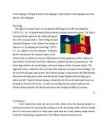
flag of Louisiana Creoles was
designed by
Pete Bergeron in 1987 and
adopted by C.R.E.O.L.E., Inc. a Lafayette based African-American
heritage preservation group. The Flag of Louisiana Creoles
represents the cultural melting pot that is the Louisiana Creoles.
The first flag was hand stitched by Bergeron's
sister , Delores Kay
Conque of Carencro, La. By adopting the Creole flag, C.R.E.O.
L.E.,
Inc. upholds its
mission statement, "to identify, preserve and
promote the numerous aspects of the Creole culture in southwest
Louisiana. Today there are Creole populations in New Orleans, St.
James Parish, Isle Brevelle, Cane
River , Opelousas, Lafayette and
other Louisiana towns. The Creole flag celebrates the mixed
lineage, culture and
religion of these Louisiana Creoles. The
upper left
section , a white
fleur de lis on a
blue field , represents
Louisiana's French heritage. On the lower left and upper right
sections, West African heritage is represented by the Mali
Republic National tricolor flag (
green ,
yellow and red) and the Senegal
Republic National flag (green, yellow and red). Spanish
Colonial heritage is depicted by the Tower of Castile (
gold tower on
a red field) on the lower left section. A white
cross dividing
the four symbols represents the
Christian faith accepted by the
Muslim and Islamic from Senegal and Mali in Louisiana.
11
Conclusion
I
have learned that creoles are just not a
little culture with a few
thousand people in a community but there are many branches coming out
of this fascinating culture. And even though most of us have
never heard of a culture name creole there are so many
famous people
who are creoles like
Johnny Depp , Angelina Jolie, Steve Martin,
Beyonce and many more.
12
Used
literature
http://centralacadianatourism.com/CreoleCulture.html http://en.wikipedia.org/wiki/Creole The
man-of-
words in the West Indies: performance and the emergence of
Creole Culture By
Roger D. Abrahams
http://creoleneworleans.typepad.co m
13
 50 punkti
Autor soovib selle materjali allalaadimise eest saada 50 punkti.
50 punkti
Autor soovib selle materjali allalaadimise eest saada 50 punkti.
 ~ 13 lehte
Lehekülgede arv dokumendis
~ 13 lehte
Lehekülgede arv dokumendis
 2011-01-19
Kuupäev, millal dokument üles laeti
2011-01-19
Kuupäev, millal dokument üles laeti
 2 laadimist
Kokku alla laetud
2 laadimist
Kokku alla laetud
 0 arvamust
Teiste kasutajate poolt lisatud kommentaarid
0 arvamust
Teiste kasutajate poolt lisatud kommentaarid
 Liisaolen123
Õppematerjali autor
Liisaolen123
Õppematerjali autor
 annaabi.ee









Kõik kommentaarid