American
Art Revision MaterialsPortraiture.
The
first typically American
paintings were illustrated maps but
painting remained scarce
during C17.
There were 4
reasons :
settlers came from backgrounds where art was
unusual , Protestant attitudes was
averse to
imagery and painting, the
English were not yet
distinguished in
visual arts and
religious art was non-existent. The
colonial period is
almost entirely limited to portraiture (deemed as
‘useful’ by settlers).
These first paintings were made by limners
and artisans
without formal training and were based on what was
popular in England during the Tudors. The paintings are technically
unskilled, strongly patterned,
flat and
linear . Spanish painting in
America was mostly religious.
In C18,
painting was a
luxury and necessitated wealth that had by then become
available . Portraitures remained at the forefront because the
rich could thusly display their status and because it was less “frivolous”
than other forms of painting. In
early -C18,
Baroque was imitated
(handsome settings, rich chiaroscuro, rich
color and painterly
execution). Paintings
became gradually more elaborate. During
mid-C18, the new
immigrants introduced the style of Rococo (gracious,
charming and
pretty ).
Exemplary
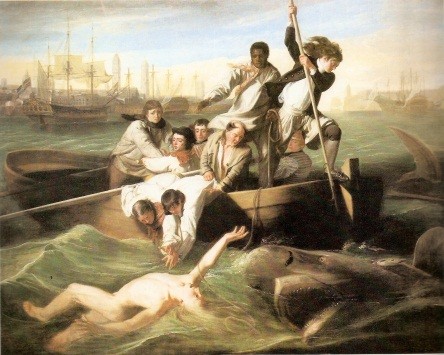
artist. John Singleton Copley
( late -C18).
He was self-taught and pursued truth in the
characters of his sitters
and their surroundings. He emphasized the
hands of his sitters. After
moving to England, he adopted history paintings.
Subsidiary
artists :
Thomas Smith, the Gansevoort Limner, John Smibert, Robert
Feke, John Wollaston, Joseph Blackburn, Benjamin
West .
Republican Period
Portraiture.
The
Revolutionary War sparked the
interest in portraits of national
heroes and statesmen. Portraiture remained “practical”, was
official and private. The first
museums were
established and first
art exhibitions
held .
Realism persisted. Peale employed
trompe-l’oeil
(“deception”, giving the
impression of three dimensions). Peale,
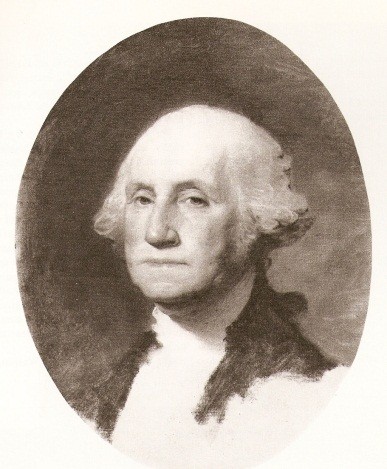
Stuart and Trumbull all painted George Washington’s portraits which
were demanded and worshipped by the public. Military was romanticized
by scenes of
battle and theatrical postures.
Artists:
Charles Willson Peale,
Gilbert Stuart, John Trumbull, Thomas Sully,
Rembrandt Peale.
History.
History painters had to create a demand for their paintings. History
paintings encapsulated the
patriotic duty to memorialize the
country ’s struggle for independence and human rights. Allston was
America’s first truly
Romantic artist and expressed the
themes of
mystery,
terror and poetic daydreaming.
Artists:
John Trumbull, John Vanderlyn, Washington Allston.
Landscape , Genre and Still Life.
In late-C18, these were almost entirely neglected. Guy painted city
life, Birch painted the seascape. The “Peale formula” was adhered
to: objects
along tableware against a
dark background. Also,
trompe-l’oeil
persisted via Charles Willson’s Peale’s sons.
Artists:
Ralph Earl , Francis Guy, Thomas Birch, James Peale, Raphaelle Peale.
Mid-C19
Landscape.
In C19, landscape painting became
dominant and
provided many
unexplored
subjects . The
tradition of landscape art emerged in the
1820s
through the
work of the so-called Hudson
River School. The
school of “luminism” is also distinguished, it is interested in
the
phenomenon of
light .
Exemplary
artists.
Thomas
Cole (early-C19).
He painted more in the Romantic
mold than his contemporaries. He was
inspired by the valleys of Catskill
Mountains . He depicted lonely
wilderness and apocalyptic visions.
Albert Bierstadt (late-C19).
He painted the last
frontier , the heroic landscape of the country. He
compiled a
portfolio of sketches during the
mapping of a trail
across the
Rocky Mountains to
California which became the
basis for the
gigantic paintings of
western scenery.
Subsidiary
artists: Thomas Doughty,
Asher B. Durand,
Samuel F. B. Morse, John F.
Kensett, Thomas W. Whittredge, Robert Salmon,
Fritz H. Lane, Martin
J. Heade,
Frederic E. Church, George Inness.
Genre.
Genre painting arose during the
rule of
Andrew Jackson (1829–
1837 ).
Its appeal depends on recognizing ordinary life
experience and in
appreciating the reproduction of reality. It was concerned with city
life, country folk and people on the frontier. Genre painting was
spurred by the
growth of publications and the illustrations within
them .
Hand -colored lithographs were the most characteristic art form
of the era. Genre painting depicts people’s common
social relations and
activities in a general
sense .
Exemplary
artists. William Sidney Mount (early-C19).
He depicted the environment of Long
Island . He creates
stories and
invested pictures with warmth and
humor . He represented blacks as
dignified human beings.
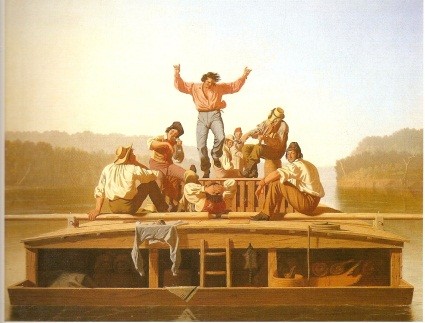
George
Caleb Bingham (early-C19).
He depicted the
everyday life of the frontier. He depicted river life
and
politics . His West is pleasant,
sunny and free of civilized
constraints . His
manner is grand and his
figures are precisely
placed. He selected subjects
both singular and
typical . He displayed
his
faith in the
democratic process with his series of paintings on
elections.
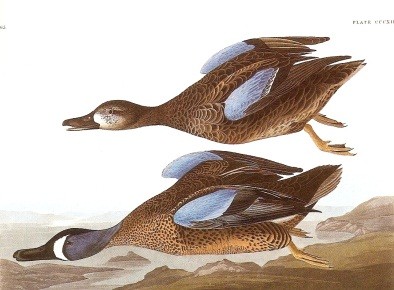
John
James Audubon
(early-C19).
He studied American
birds . His
works are both records and
masterpieces, thus his achievements are dually great. He was
self-taught. He had a sense of design and an
ability to render the
characteristics of the
bird .
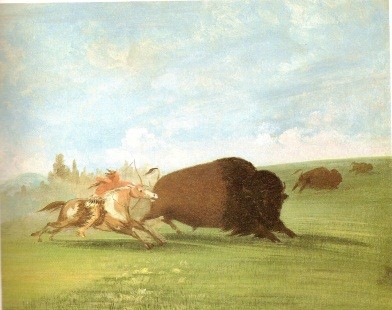
George
Catlin
(early-C19).
He painted Indians and their life. The paintings are authentic and
lively . He spent some
eight years living with them. His style is
sketchy, free and more graphic than painterly.
Among his works are
portraits.
Subsidiary
artists:
Richard C. Woodville, John Quidor.
History
and Portraiture. In
mid-C19, few were concerned with history paintings.
Romanticism was
intensified. Nudity became a freshly
observed experience. Portraiture
remained the most stable source of income for most artists but
interest and technique withered.
Artists:
William Page, Emanuel Leutze.
General Trends .
Borrowing from
Europe gave late-C19 American art an eclectic
appearance. Art
activity was strengthened after the Civil War by way
of museums, institutions and art
schools ; also in the
increase of
artists, collectors and dealers. Two styles arose, namely Realism and
Romanticism. The
former was dominant. Many artists studied and lived
abroad. Some of Whistler’s work has an
abstract nature. In
late-C19, Munich became the attraction for artists. Still-life was
barely accepted but
trompe-l’oeil
still-life painting bloomed after the war.
Realism.
Exemplary artists. Mary Cassatt
(late-C19).
She was
influenced by Degas’
Impressionism and
Japanese art. She
was self-taught. She often painted her
figure groups from
above ,
objects run out of the edges of the
composition (similar to
photography). She also displayed the
theme of
woman -and-
child and
with warmth and tenderness.
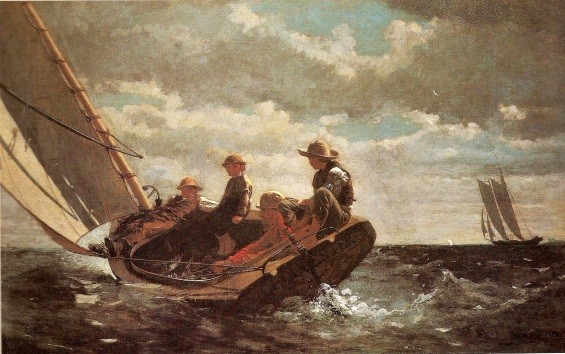
Winslow Homer (late-C19).
He is
considered the most “American” of American artists. He
worked as an illustrator
before painting. His technique is comparable
to Impressionism in its simplicity. He told stories, displayed
multiple figures in scenes, captured
gestures and characterized
individuals. He had a
feeling for light. He was also influenced by
photography.
Later in his
career he turned to watercolors. Among his
themes are pleasant holiday activities, blacks, heroism, seascape,
adventure pictures and battle of the
elements .
Thomas
Eakins (late-C19).
He painted in the mold of both the American style and the luminist
style. He painted outdoor
sporting pictures and indoor genre pictures
and portraits. He unified Realism and
science to exhibit preliminary
perspective, anatomical accuracy and photographic evidence as
reinforcement for visual experience. He
managed to juxtapose
realistic detail with affective impression. He also touched
upon heroic realism and
focused on portraiture later in his career. He
depicted the visual world without emotion.
Subsidiary
artists: James A. M. Whistler, John S. Sargent,
Eastman Johnson,
Frank Duveneck, William M. Chase, Thomas P. Anshutz, John F. Weir,
William M. Harnett, John F. Peto.
Romanticism.
Romanticism persisted but was altered after the Civil War.
Spiritual essence and mood stood above story and
idea .
Artists:
William M. Hunt, John La Farge, Albert P. Ryder, Ralph A. Blakelock.
Impressionism.
Direct reaction to Impressionism occurred during the 1880s. Hassam
painted
urban scenes which were an innovation in American painting.
An
informal alliance, “The Ten”, emerged who by way of
Impressionistic paintings that refreshed the
image of America
(cityscapes, gardens, parades, society,
landscapes ).
Artists:
Theodore Robinson,
Frederick C. Hassam.
C20 till WWI
General
Trends.
In early-C20, national consciousness
started to develop. Sympathy was
expressed for the oppressed workers. Before photography became
preeminent, there was a
brief period of
newspaper illustrators and
artist-reporters. By 1908, a new generation of artists had emerged
who were not
afraid to dabble in abstact art, Fauvism, Cubism,
Futurism , Der
Blaue Reiter and Orphism. The Armory Show of 1913 is
the general birthdate of American modernism.
“
The
Eight”/”The Aschan School”.
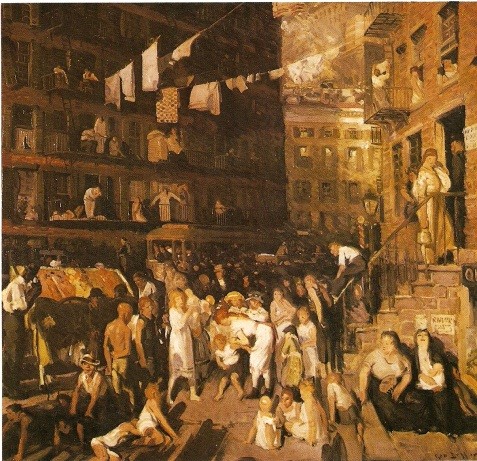
These artists
explored the everyday life of ordinary people in large
cities. They represented the transition to modernism. Art had
previously supposed to have been representational and realistic.
These artists emphasized the artist’s involvement with actual life
and its reflection in the painting. Content and viewpoint superseded
style. They painted more in the
spirit of good-natured reporting, not
social protest. The
attitude towards life was altered. Their unifier
was the opposition to the
feeble academic art of the time. Vibrant
and life-oriented paintings impressed the public and their realism
was endowed with the name “The Ashcan School”. They revived a
protestant mood in art by attacking urban ugliness and breaking from
academia. Among the themes are urban life,
physical action , manly
virtue, human sorrow, solitude, common man and landscapes. Pendergast
is considered the first true American
modernist .
Exemplary
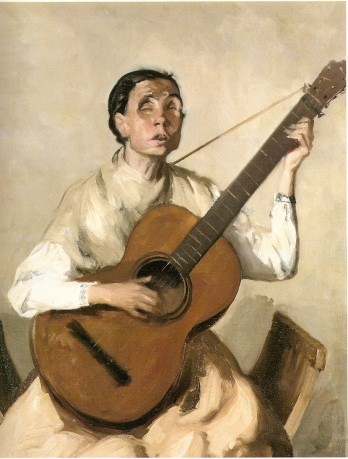
artist. Robert Henri (early-C20).
He is considered the
leader of “The Eight”. He
preferred older
European masters over the moderns like
Monet , Cézanne and
Renoir .
His style has been called “dark Impressionism”. His paintings are
sharply observant.
Subsidiary
artists: John Sloan, George Luks, William Glackens, Everett Shinn,
Maurice Pendergast,
Ernest Lawson,
Arthur B. Davies.
The Stieglitz Group.
In early-C20, the influx of immigrants variegated the art
scene .
Alfred Stieglitz introduced
avant -garde European art to Americans in
his
gallery . Stieglitz supported “art for art’s sake”, not for
social significance. Dove is considered one of the earliest
abstractionists and tried collage.
Exemplary
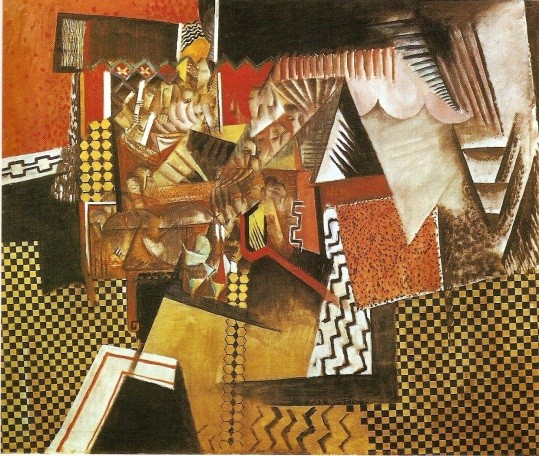
artists. Max Weber (early-C20).
He combined the
influences of Cézanne,
Matisse , Rousseau and Cubism.
He later approached Futurism. He exploited
violent and kaleidoscopic
effects . He was largely experimental.
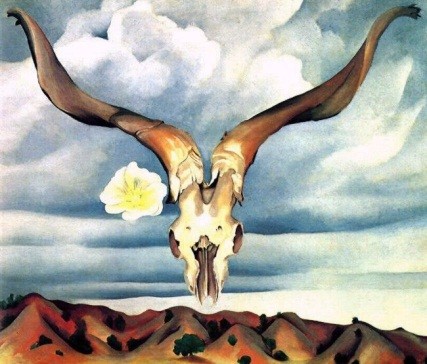
Georgia O’Keeffe (early-C20).
She painted experimental pictures in watercolors. She
married Stieglitz. She later began to isolate images, especially flowers and
enlarging them. She magnified details
until they
lost recognizability. She then displayed severe edges, rigorous formality
and austere paint surfaces, often in her landscape paintings. Later
in her career, she painted romantic essence of New
Mexico , displaying
skulls, bones and flowers and veered towards the abstract.
Subsidiary
artists: Gertrude
Stein , Joseph
Stella , John
Marin , Arthur G. Dove,
Marsden
Hartley .
The
Armory Show.
Held in 1913, this was the most influential art
exhibition ever held
in America. The revolutionary Europeans
drew more
attention than the
American painters. The show was held to present the
evolution of
modern art
since Romanticism. The exhibition became a
subject of
headlines and
controversy . The prices of pieces of art surged after
1913 and the
market for modern art boomed.
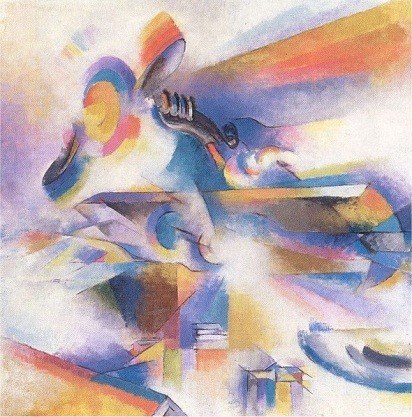
Synchromism. Definition : shapes and volumes of
pure color. The style was more
directed
toward free and pure-colored abstraction. The style name
suggests harmonized
colors . It is closely
related to abstraction.
Artists:
Morgan
Russell , Stanton MacDonald-Wright.
Dada.
Definition:
incongruous effects. It
received a short-lived enthusiastic
welcome thanks to Stieglitz. Dada was nihilistic as it was anti-esthetic in
its creations and in its protest against
bourgeois values and despair
over WWI.
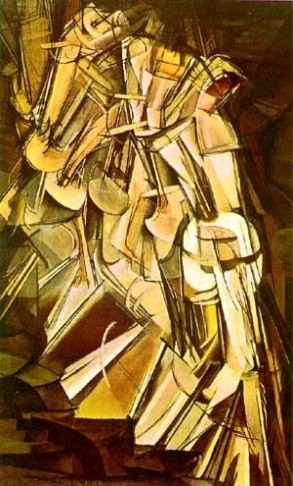
Exemplary
artist. Marchel Duchamp (early-C20).
He managed to convey everyday American experience in a pseudo-Cubist
style. He asserted that the
mental activity of the artists was more
important than the
object created. He condemned the mechanistic
environment of modern life. He also produced “
ready -mades”, which
were common manufactured objects intentionally devoid of esthetic
interest.
Subsidiary
artists: Francis
Picabia , Man Ray.
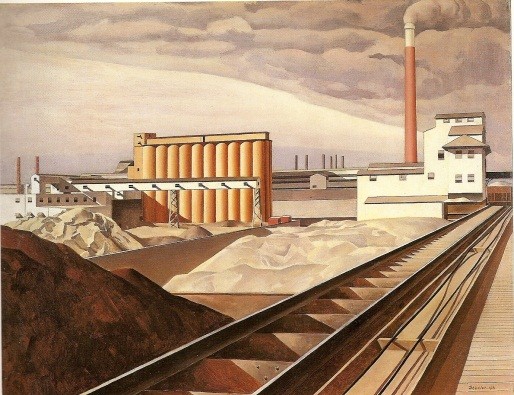
Precisionism.
Definition:
clinically precise and
clean -edged. The modernist impulse lay the
groundwork for more realist trends. Precisionism (or the art of the
“Immaculates” or Cubist-realists) is an art of stillness focused
on buildings and
machines . Human figures are of
minor importance. The
paintings are peopleless, emotionless and
lack involvement with
social
issues . Geometric
patterns of Cubism are combined with the
environment. Drawings are meticulous, design is
clear and the colors
are low-keyed.
Exemplary
artists. Charles Sheeler (early C-20).
His background lay in the analytical methods of Cubism. He worked in
photography which were concerned with abstract patterning that he
later transferred to his paintings. He painted skyscrapers,
factories,
rural and urban life. His work is marked by illusionistic
clarity,
sharp objectivity, structural design, idealistic mood and
temporal stillness. He
incorporated abstraction, realism and
classicism .
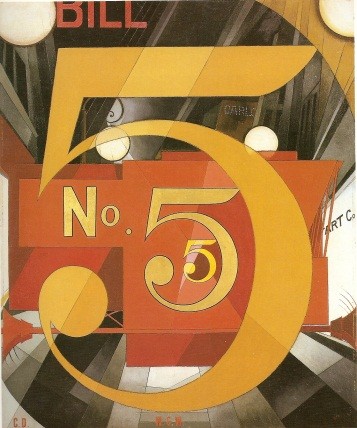
Charles
Demuth (early-C20).
He started with watercolors, especially watercolor illustrations. His
art is fragile and
cold . His style is one of “
hard ” geometric
abstraction (akin to Cubism), flattened prismatic shapes,
intersecting diagonals, shafts of light. Urban architecture in his
paintings is simplified.
Subsidiary
artists: Rawlston Crawford, George Ault, Niles Spencer, Peter Blume,
Joseph Stella, Stuart Davis, Preston Dickinson.
American
Scene.
Between the wars, American artists focused more on a style that would
express political ,
cultural and social problems. This art form is
socially
conscious . It grew from the tradition of Realism and revived
it. The American scene was interpreted as a way of life and the
cities were communicated through gloomy endurance. It also expressed
an emotional reaction to the effects of the Great Depression.
American Scene painting was cheerless, romantically nostalgic and
grotesque. The pictures are
laden with shadows and the
oppressive atmosphere of desolation. The subjects concerned landscape,
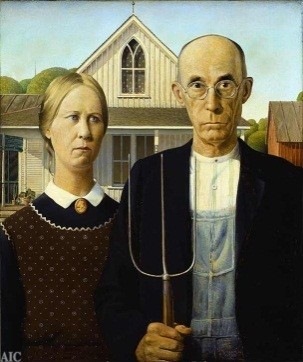
architecture and urban scenes. The “Regionalists” displayed
false optimism and tried to rejuvenate the values of the heartland of the
Mid-West. Their pictures were an art of the country (hillbillies,
folksingers, farms etc.). There is marked
influence of xenophobia and
Puritanic elements.
Exemplary
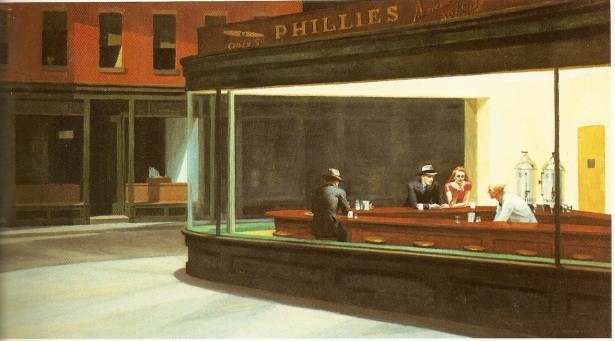
artist. Edward Hopper (early-C20).
He focused on large cities. He was influenced by “The Eight”.
Typical to him is
bleak light,
loneliness , detachment,
beauty in
ugliness and monotony. He suggests non-existent or uneasy relations
between human figures. He emphasizes light to suggest the time of
day. The sense of location is perseveres in his pictures.
Thomas Hart Benton (early-C20).
He was a proponent of
Regionalism . He was disappointed with the lack
of narrative content in modernism art. He was influenced by
Renaissance art. His paintings exhibit human warmth, energy, power
and dynamism. His cultural viewpoint is simplistic.
Subsidiary
artists: Charles Burchfield,
Grant Wood .
Social
Realism.
Social Realism arose as a reaction to the political and
economic crisis. This drove artists to seek a new cultural
identity .
Hopelessness and
government sponsorship spurred an art which was
primarily concerned with social themes. The process of
democratization of the arts resurfaced
again after the Civil War. The
government employed artists to decorate municipal building,
banks and
other public edifices. Variations on primitive expression also
returned to the
fore .
Black artists gained self-confidence.
Artists:
Ben Shahn, Jack
Levine , Romare Bearden, Jacob
Lawrence .
Expressionism .
Expressionism is distinguished by
strong subjectivity,
brilliant colors and
violence . Mysticism was one source of inspiration.
Artists:
Morris Graves , Mark Tobey.
Abstraction.
Geometric
abstraction continued to develop under the influence of European
immigrants. In 1936, the American Abstract Artists organization was
established. Members of this were precise, used sharp-edged
rectilinear shapes, geometric curves and flat colors.
Artists:
George L. K. Morris, Ad Reinhardt, Stuart Davis.
Abstract
Expressionism. American
art was maturing. Abstract Expressionism (or Action Painting or the
New
York School) sometimes renounced representational content. The
three currents that produced Abstract Expressionism were abstraction
(“
plastic ” values), Expressionism (emotional intensification) and
Surrealism (automatism). The catalyst for this
movement was the
presence of European artists in New York. The mid-1940s are now
considered the
golden era in modern American art.
Focus shifted to
the act of painting itself and expressing the artist’s own being.
Canvases tended to be enormous which encouraged
full body movement.
Some were also labeled “gesture” painters to differentiate them
from subsequent artists.
Exemplary
artists.
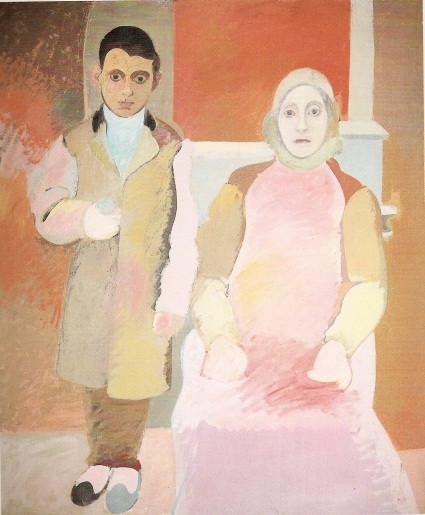
Arshile Gorky (early-C20).
He focuses on the theme of self-identity. He used the form of
biomorphism. He sought to synthesize the flatness and
geometry of
Cubism with the fluidity and improvisation of Surrealism. His
pictures often have billows of
exotic color mixed with linear
effects.
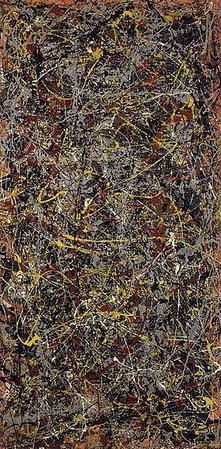
Jackson
Pollock
(mid-C20).
His work is abstract, violent and expressive. He poured and
spray painted canvases in repeated rhythmic gestures. A vortex of swirling
lines, spatters and drips were
cast on the
canvas . He used commercial
enamels and metallic paints to
pour and
drip .
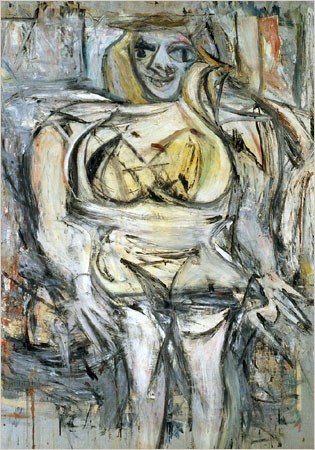
Willem de Kooning (mid-C20).
His paintings retained figural images. His style was influenced by
Cubist
structures , Expressionist
handling and Surrealist automatism.
The foreground and background are constantly interchanged.
Subsidiary
artists: Franz Kline, Hans Hoffman.
Color- Field .
Simply composed paintings became prevalent. Paintings
appeared as
unified optical textures and increased in
scale . Various shapes were
united into dominant
islands , zones and boundless fields of
intense and homogenous color. Expanses of bright hues produced unbroken
“color fields” and did not
stress sequential linear detail and
formal diversity. The mood is one of mystic quietude. The transition
period from action painting to color-field has been termed
“post-painterly abstraction”. Chromatic expression reduced to
monochromes and
rigid geometrics.
Exemplary
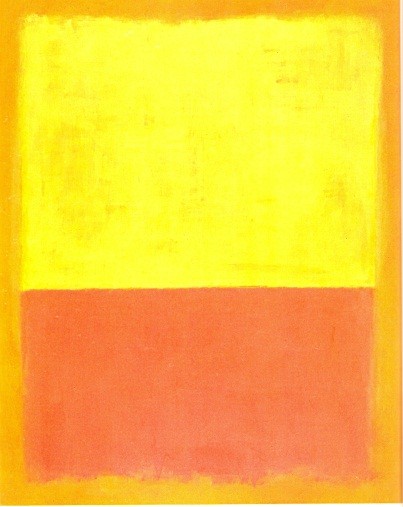
artist. Mark Rothko (mid-C20). He
combined Surrealist automatism with human, animal and
plant forms
into inventive biomorphs. His compositions are
soft , luminous and
rectangular. The boundaries between forms and
grounds are
deliberately hazy. His works evoke a meditative mood.
Subsidiary
artists: Clyfford Still, Sam Francis, Barnett Newmann, Adolph
Gottlieb , Ad Reinhardt.
Realist
Trends.
Realism declined due to political climate (isolationism produced
Regionalism, Depression produced social realism). Cultural agencies
promoted Abstract Expressionism as a
symbol of America’s
leadership in fine arts. The impression of Soviet Union’s Socialist Realism
weakened realist art
even more. Contemporary realism was no longer
the academic realism of C19. Abstraction increased the
role of formal
structure, Expressionism stimulated free and emotional manner and
Surrealism widened the
sources of inspiration. “
Magic Realists”
opposed abstract art by a realism of style, not of content.
Exemplary
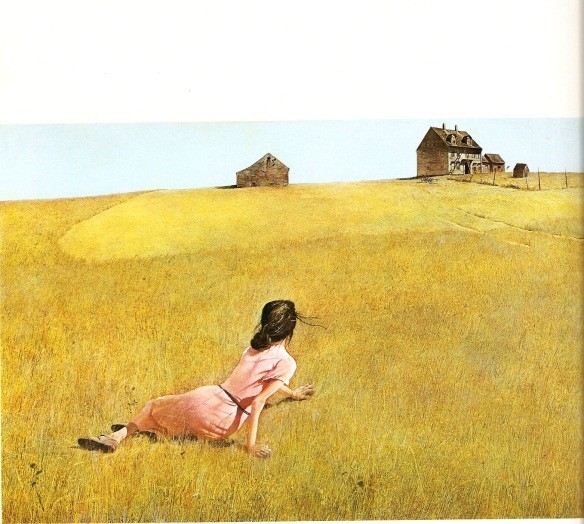
artist. Andrew Wyeth (mid-C20).
He worked in dry-
brush watercolor and
tempera . His themes
included loneliness in nature and the outdoors, and
nostalgia . His technique
was meticulous and clinically direct. He strived for the
verisimilitude of the
photograph . His paintings display social and
psychological tension and the savagery of the life during the era. He
reduced his compositions to their
bare essence.
Subsidiary
artists: Paul Cadmus,
Jared French, George Tooker, Ivan Albright.
Post-1960
General
Trends. Critics searched
something to re-establish a
connection with the
past. The borders between painting and sculpture became blurred.
Concept art stressed the idea of the artist over
material execution
to transform art from physical objects to mental images.
Pop Art.
Pop Art emerged as an
original and irreverent parody of the vulgar
imagery and artifacts of the commercial culture. It grew from Action
Painting towards objectivity. Use of repetition and the elimination
of dramatic climax were favored by the composer John
Cage .
Rauschenberg and
Johns introduced “popular” materials into their
art by depicting them or actually incorporating
real objects. Pop Art
debuted in 1962. The works spanned painting, sculpture and objects of
daily use. “Happenings” (improvised semi-dramatic visual
spectacles with audience participation) contributed to the Pop
culture of the
1960s . The art form is based on the
anonymous ,
mechanized and mass-produced images of
advertisements , billboards,
comic
books and TV. Mass culture is the source of inspiration but it
is neither critical nor sympathetic.
Similarly to Regionalism, it
stressed that which was generically American but
concentrated on
urban culture. By the late-1960s, Pop had lost its novelty but had
turned artists from abstraction
back towards recognizable imagery.
Exemplary
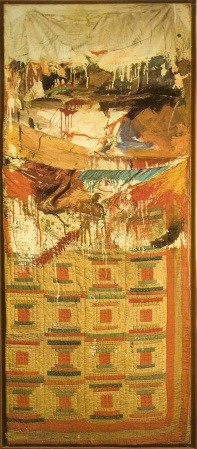
artists. Robert Rauschenberg (late-C20).
He loaded his paintings with rags and tatters of cloth,
reproductions, fragments of comic strips and other collage elements
of discarded materials. He worked similarly to Action painters. His
paintings produce the
effect of confusion of
sights , sounds, debris
and movements. His work bridges the gap between Action Painting and
Pop Art.
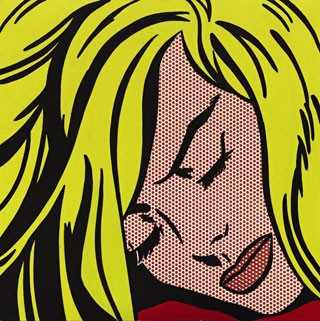
Roy Lichtenstein (late-C20).
He drew inspiration from comic books and newspaper comic strips. He
essentially cast a magnifying
glass over the
symbols of mass culture
and enlarged them. He later made parodies of all the
chief Modernist
art styles.
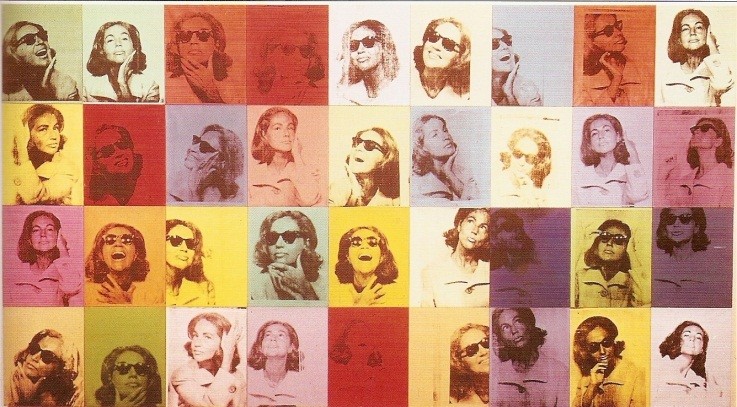
Andy Warhol (late-C20).
He presented repeated images of car crashes, singers, movie stars,
soup cans,
Coca -Cola bottles and
dollar bills. Some different
views should
reveal various aspects of the
person ’s character. His works
display a
delight in the
surprise and
shock of nonart but he is still
rooted in the mechanized, standardized and mass-produced culture. He
emphasized the mass-consumer society in which everyone uses the
same products. Through this, he may be considered a modern history
painter.
Subsidiary
artists:
Larry Rivers,
Jasper Johns, Claes Oldenburg, James
Rosenquist, Tom Wesselmann, Robert
Indiana .
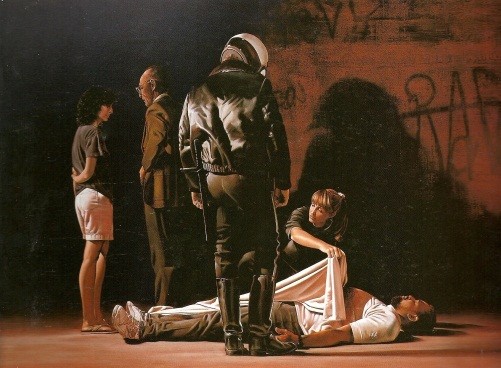
Super-Realism.
It
has also been called Photorealism and Hyperrealism, and draws on
photographic sources and commercial
advertising for imagery but
makes trompe-l’oeil
illusion
viable again without the fantastic invention or satirical commentary
of Pop Art. These artists also considered the work of earlier
American art and even C17
Dutch still-life and genre painting.
Exemplary
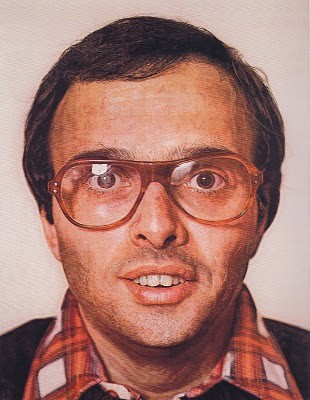
artists. Chuck Close (late-C20). He
did enlargements of snapshot photographs, often painted painstakingly
with acrylic. He deliberately reproduces the distortions of a
photograph (blurriness and focus). He reduces his humongous images to
visual information about surface, depth of field, focus and scale,
sans psychological factors.
Richard
Estes (late-C20).
He produced flawlessly elegant townscapes of New York. He painted
storefronts and urban panoramas. Glass in its reflections and
transparency plays an important role in his works. He used
photographs as the basis for his paintings but
modified them. He also
painted views of Paris,
Florence and Venice (comparable to
Canaletto ).
Subsidiary
artists: Philip Pearlstein, Ralph Goings, Robert Bechtle.
Post-Painterly
Abstraction.
Post-Painterly Abstraction was
another reaction to Abstract
Expressionism. It was to some extent a continuation of its important
aspects. There was an interest in symmetry, clear definition of
shape , immaculate surface and formal order. This was opposed to the
unrestricted and spontaneous character of Action Painting.
“Hard-edge” was associated with this style. Chromatic abstraction
spread wide in the late 1950s.
Exemplary
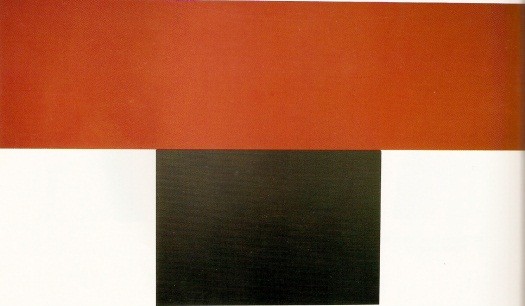
artist. Ellsworth Kelly (mid-C20). His
hard-edge forms were scrupulously clean of any detail and surface
irregularity. He established relationships between large and
bold shapes in a
simple format, in their “shaped canvases”
(unconventional shapes). He created a mode of painting in three
dimensions which was opposed to Expressionism and Action Painting.
Subsidiary
artists: Sam Francis, Helen Frankenthaler, Morris Louis, Kenneth
Noland.
Op Art.
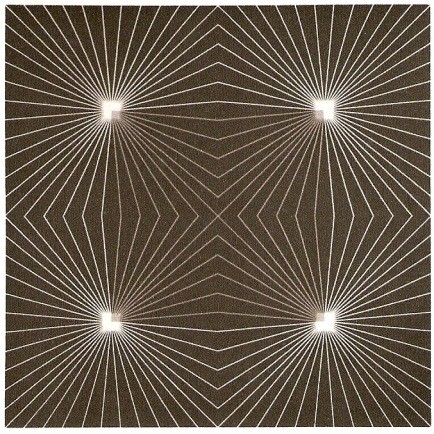
Op Art spread during the 1960s. It was a revolt against the
reign of
Abstract Expressionism. These artists drew upon scientific materials
from optics and psychology to create illusions of movement and
distortions of form.
Artists:
Larry Poons, Richard Anuszkiweicz, Julian Stanczak.
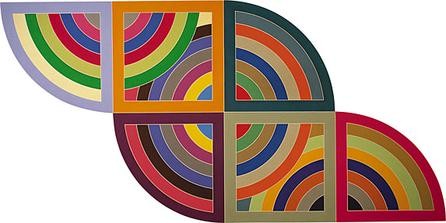
Minimal Art.
Minimal art continued the tradition of abstraction. “Minimal”
attitude was antipathetic to composition, hierarchy, “beauty”,
“sentiment” and “personal emotion”.
Previous artists had
developed methods to eliminate the “hand of the artist”.
Paintings stressed the
relationship between
single images and the
frame , instead of the interrelations between
internal parts of the
composition. Even the simplest forms turned out to be
highly complex,
especially when
seen against its
total environment,
lighting conditions and the
position of the spectator.
Artists:
Agnes Martin, Robert Ryman, Brice Marden, Frank Stella, Cy Twombly.
Graffiti .
Graffiti’s prevalence was ordained by the aerosol can. The subway
of New York became a popular venue during the 1970s. Some
basic forms
of graffiti are
tags and
trains (“worms”). By the 1980s, graffiti
had been driven out of the subways, as the trains were covered with
special easy-to-clean paint. Soon, the art was dismissed. Some
artists offered advertisements for a fee which led to stores, shops,
garages and the like to being decorated with
fancy and colorful
drawings.
Apartment buildings became the preferred choice of canvas.
Spray-can memorials emerged, these were the murals in the
memory of
young Latinos and African Americans who were dying on the streets.
The newer generation of graffiti artists is older than the original
generation. There is a strong presence of Latino artists.
Exemplary
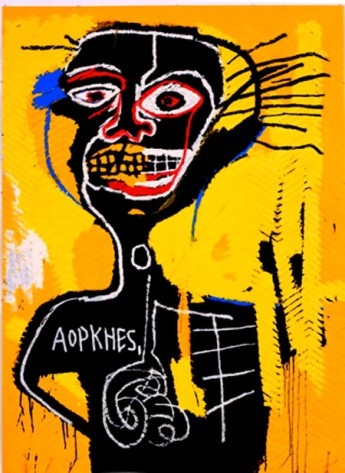
artists. Jean-Michel Basquiat
(late-C20).
He was self-taught who worked himself up to elitist galleries. He
painted on paper,
doors , refrigerators, scrap metal and made
assemblages from junk. His paintings are flat, primitive and
childlike. He depicted angry images with heads, grimacing skulls,
words , arrows etc.
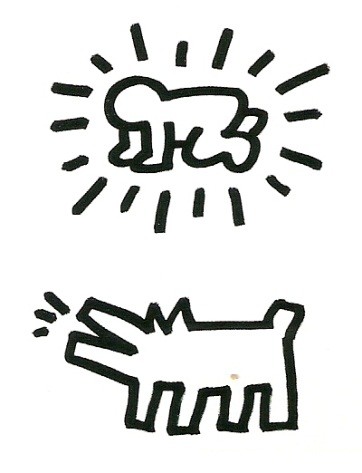
Keith Haring (late-C20).
He had formal training in art. He drew cartoon-like images on
advertising spaces in New York subway. The basis of his art is the
drawn line. His imagery included
sexual elements,
flying saucers,
running figures,
instruments of communication and crawling babies. He
painted on paper, fiberglass, canvas, enameled steel squares, badges,
T-shirts, vases and
plaster casts. He used thick black lines. He
broke the barrier between high art and low art.
Newer
Realist Trends.
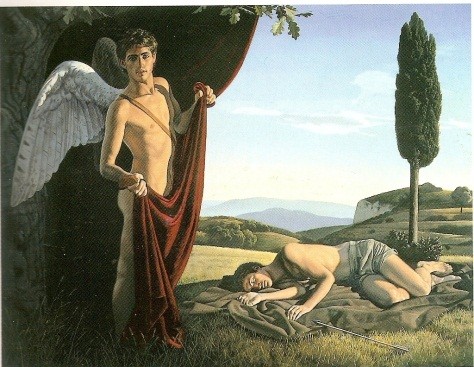
A plurality of trends has been embraced. Some realists tried to learn
from the immediate past,
others from the Old Masters. Baroque and
Classic realism were re-examined.
Artists:
Alice
Neel , Alfred Leslie, Jack Beal, William Beckman, Martha M.
Erlebacher, Steve Hawley, David Ligare, Vincent Arcilesi, John Nava,
Delmas Howe, Leon Golub, Eric Fischl, Jeff Koons.
Exemplary
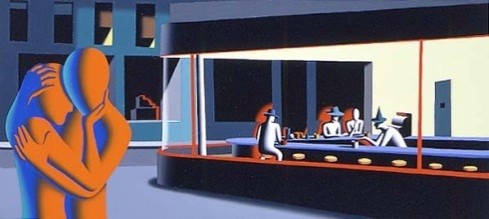
artist. Kalev Mark Kostabi (late-C20).
He neither paints nor conceives of most of the works that
bear his
name. He employs an assistant-base mode of artistic
production . Teams
produce his paintings and there is an intricate
division of labor
(painters, canvas stretchers, idea persons, color theorists,
rhetoricians,
creative consultants etc.). His figures are faceless.
He quotes imagery from art history (especially those of Edward
Hopper). This is associated with the theme of American alienation. He
considers the titles of his paintings of the utmost importance. He
uses poet and
translator Joachim Neugroschel as his “titling
person”. He was born to Estonian
parents and has included elements
of Estonia in some of his works (e.g. the flag).
Native American Art.
Native Americans might not have a term for “art” but
certainly knew of the concept. They too drew pleasure from things made well and
imaginatively. Some works were made with
functional utility and
ritual correctness in mind. Collecting of Native art was spurred by
curiosity (craftsmanship of the
savage ), anthropology (artefacts of a
‘vanishing culture’ by C19 sentiment) and non-Western concepts
(
traits not expressed in Western art). Now, many communities request
that
museum collections be returned to them. They regard some works
as being intended to be seen only by knowledgeable people that are
able to control the powers that the work expresses.
Exemplary Works
Colonial
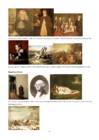
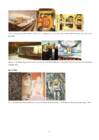
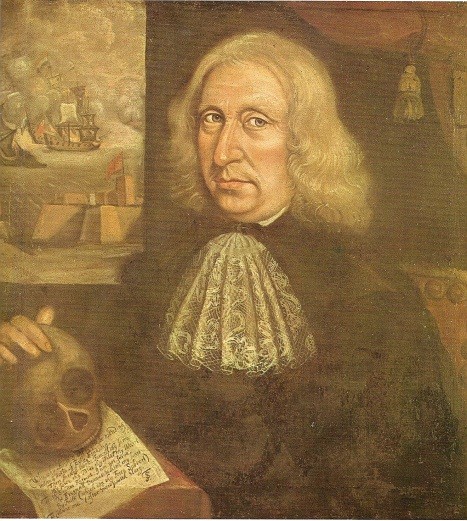
Period.Self-Portrait by
Thomas Smith (c. 1690)
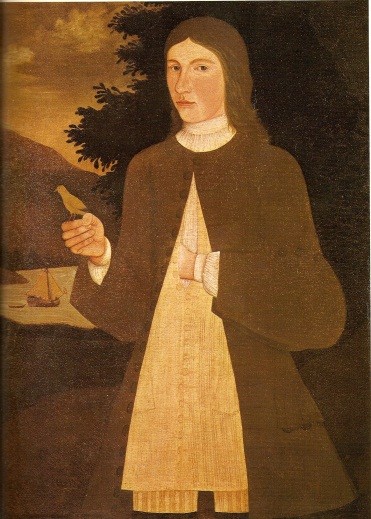
Pau de Wandelaer
by Gansevoort Limner (c. 1730)
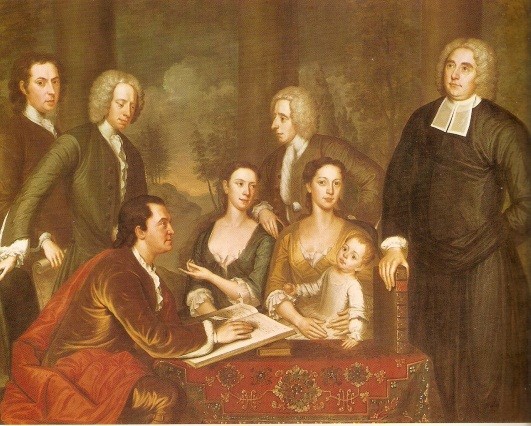
The Bermuda Group by John Smibert (1729)
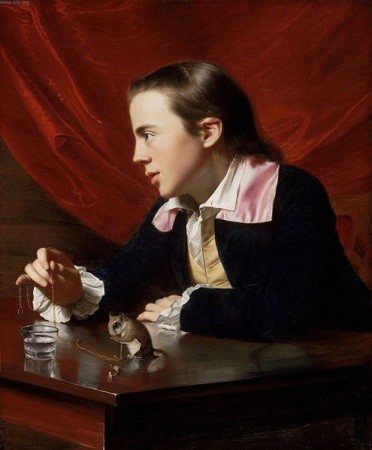
Boy with Squirrel
by John S. Copley (c.
1765 )
Watson and
the Shark by John S. Copley (1778)
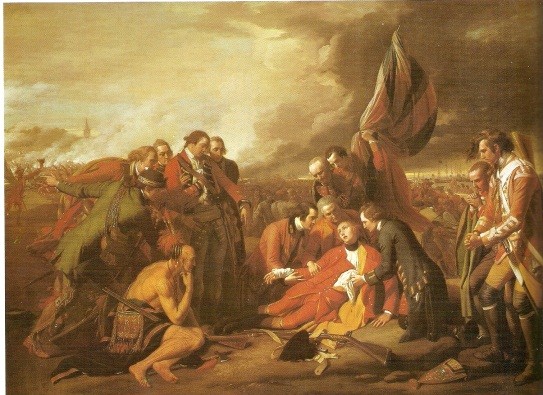
Death of Wolfe by Benjamin West (1770)
Republican
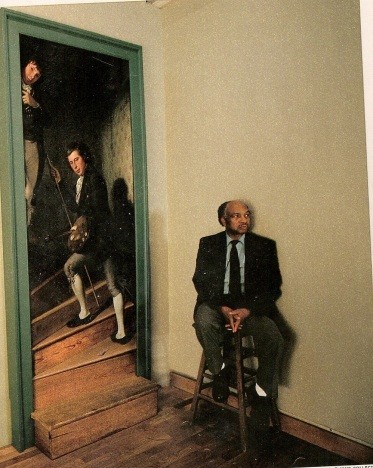
Period.The Staircase Group by
Charles W. Peale (1795)
George
Washington by Gilbert Stuart (1796)
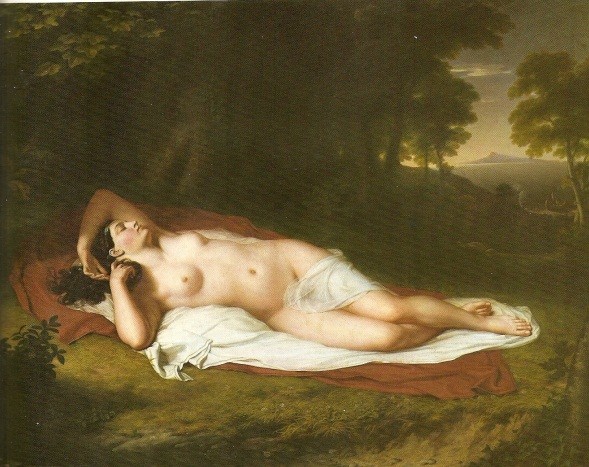
Ariadne Asleep on the Island of Naxos
by John Vanderlyn (
1812 )
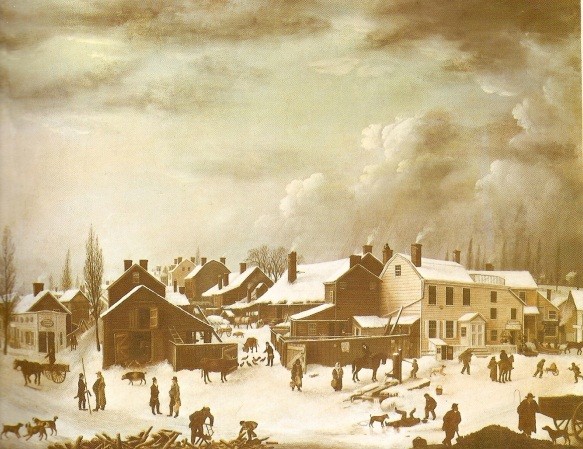
Winter Scene in Brooklyn
by Francis Guy (c. 1820)
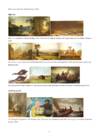
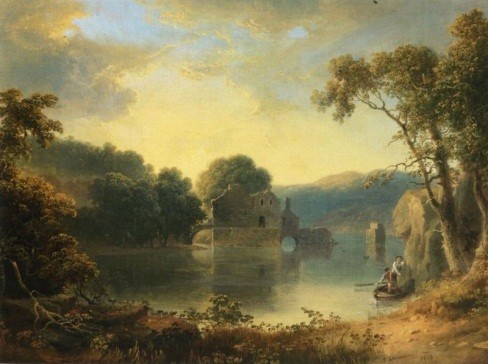
Mid-C19. Ruins in a Landscape by
Thomas Doughty (1828)
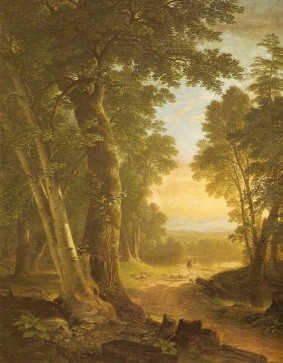
The Beeches
by Asher B. Durand (1845)
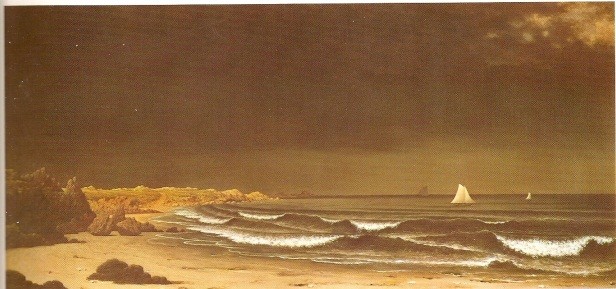
Approaching Storm by Martin J. Heade (c. 1860)
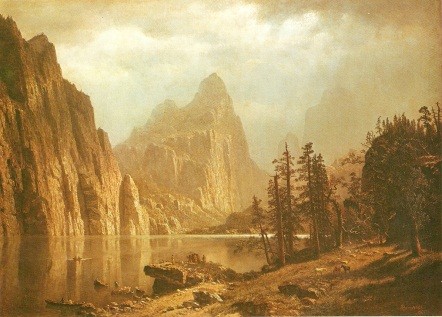
Merced River, Yosemite Valley
by Albert Bierstadt (1866)
The
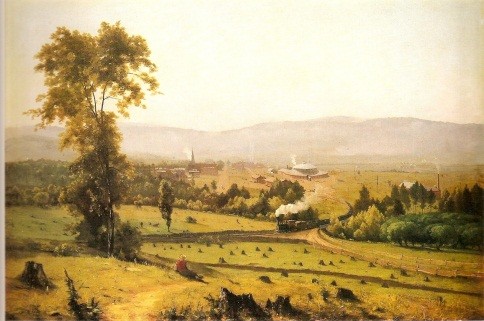
Lackawanna Valley by George Inness
(1855)
Jolly Flatboatmen
by George C. Bingham (1846)
Blue -Winged Teal
by John J. Audubon
A Single Death
by George Catlin
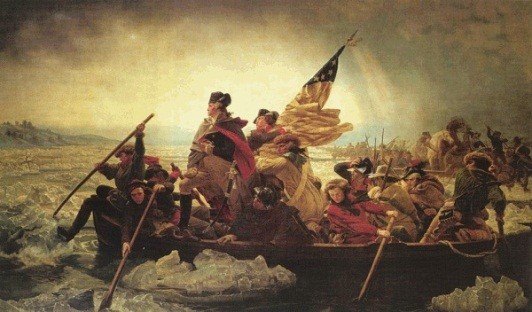
Washington Crossing the Delaware by Emanuel Leutze (1851)
Civil
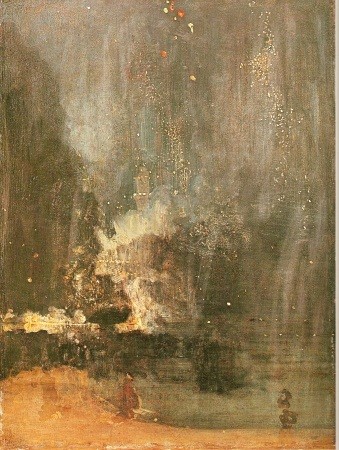
War to C20.The Falling Rocket
by James A. M. Whistler (
1874 )
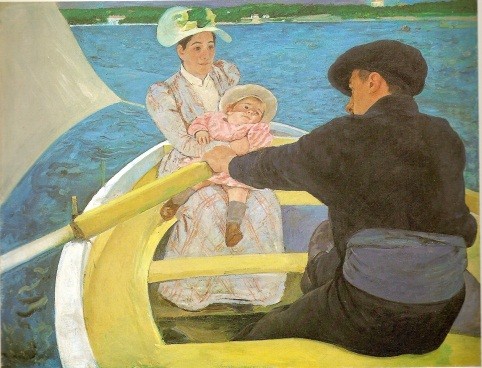
The
Boating Party by Mary Cassatt (1893)
Breezing Up (A Fair Wind)
by Winslow Homer (c. 1876)
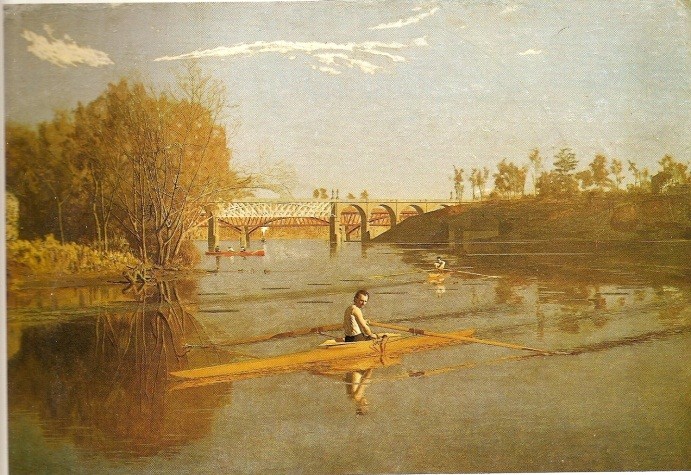
Max Schmitt in a Single Scull
by Thomas Eakins (1871)
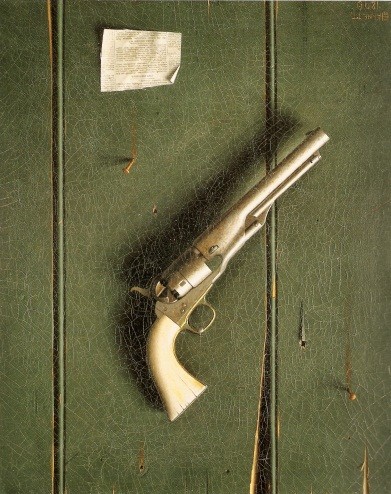
The Faithful
Colt by William M. Harnett (1890)
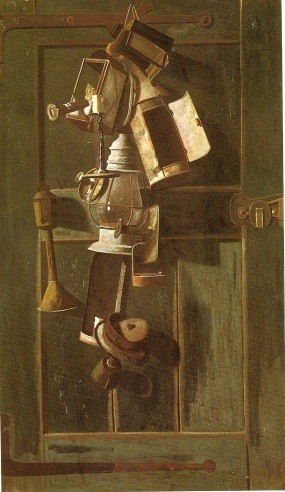
Still
Life with Lantern by John F. Peto (c.
1890)
C20 till
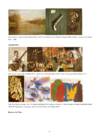
WWI. Blind Spanish Singer
by Robert Henri (1912)
Cliff Dwellers
by George Bellows (1913)
Chinese Restaurant by Max Weber (1915)
Nude Descending a Staircase, No. 2 by
Marcel Duchamp (1912)
Airplane Synchromy
in Yellow -Orange by Stanton
MacDonald-Wright (1920)
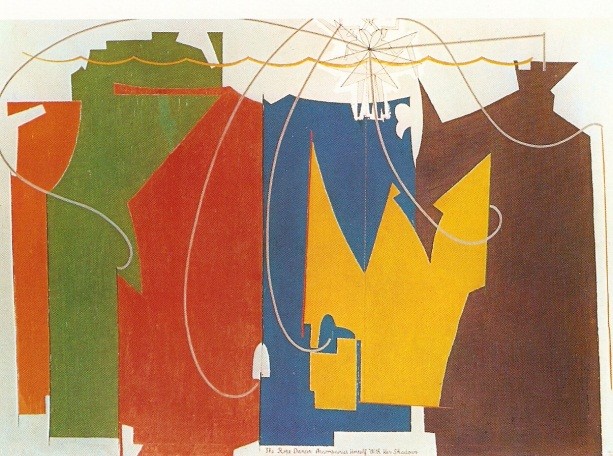
The Rope Dancer Accompanies Herself with Her Shadows by
Man Ray (1916)
Between
the Wars.Classic Landscape
by Charles Sheeler (
1931 )
I Saw the
Figure Five in Gold by Charles Demuth
(1928)
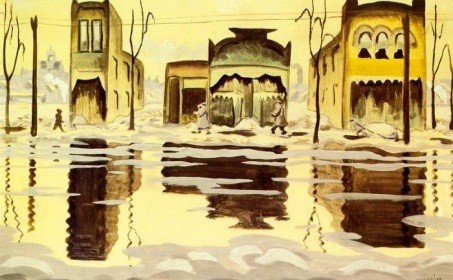
February Thaw
by Charles Burchfield
Nighthawks by
Edward Hopper (1942)
American Gothic
by Grant Wood (1930)
Ram's Head White
Hollyhock and Little Hills by Georgia
O’Keeffe (1935)
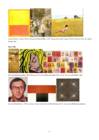
Post-WWII.No. 5, 1948 by
Jackson Pollock (1950)
The Artist and
His Mother by Arshile Gorky (c. 1929)
Woman III
by Willem de Kooning (c. 1953)
Untitled (Yellow, Orange, Red on Orange)
by Mark Rothko (1954)
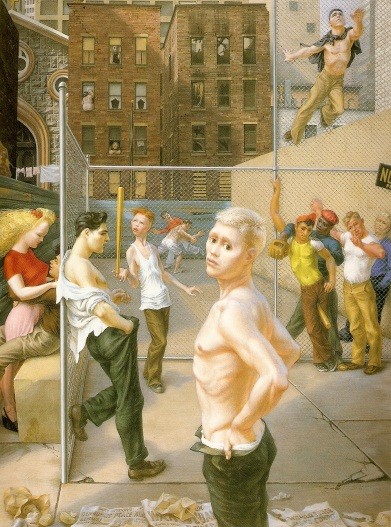
Playground
by Paul Cadmus (1948)
Christina ’s
World by Andrew Wyeth (1948)
Post-1960.Bed by Robert
Rauschenberg (1955)
Sleeping Girl
by Roy Lichtenstein (1966)
Ethel Scull
36 Times by Andy Warhol (1963)
Mark by Chuck
Close (c. 1979)
Two Panels: Black with
Red Bar by Ellsworth Kelly (
1971 )
Coruscate
by Richard Anuszkiewicz
Harran II by
Frank Stella (1967)
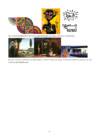
Cabeza
by Jean-Michel Basquiat
Drawing from
Sketchbook by Keith Haring
Landscape with Eros and Endymion
by David Ligare (c. 1991)
2nd
of May, Los Angeles by John Nava (1992)
Greenwich Avenue
(with Cynthia)
by Kalev Mark Kostabi
 50 punkti
Autor soovib selle materjali allalaadimise eest saada 50 punkti.
50 punkti
Autor soovib selle materjali allalaadimise eest saada 50 punkti.
 ~ 15 lehte
Lehekülgede arv dokumendis
~ 15 lehte
Lehekülgede arv dokumendis
 2016-01-10
Kuupäev, millal dokument üles laeti
2016-01-10
Kuupäev, millal dokument üles laeti
 1 laadimist
Kokku alla laetud
1 laadimist
Kokku alla laetud
 0 arvamust
Teiste kasutajate poolt lisatud kommentaarid
0 arvamust
Teiste kasutajate poolt lisatud kommentaarid
 kirsskaru
Õppematerjali autor
kirsskaru
Õppematerjali autor
 annaabi.ee






Kõik kommentaarid