Vajad kellegagi rääkida?
Küsi julgelt abi LasteAbi
Logi sisse

Styles in interior design (0)

1 Hindamata
Punktid

kool


Research work
Styles in interior design
nimi
TALLINN2010
Interior design is a multi –faceted profession in which creative and technical solutions are applied within a structure to achieve a built interior environment.
The interior design process follows a systematic and coordinated methodology, including research, analysis , and integration of knowledge into the creative process, whereby the needs and resources of the client are satisfied to produce an interior space that fulfills the project goals.
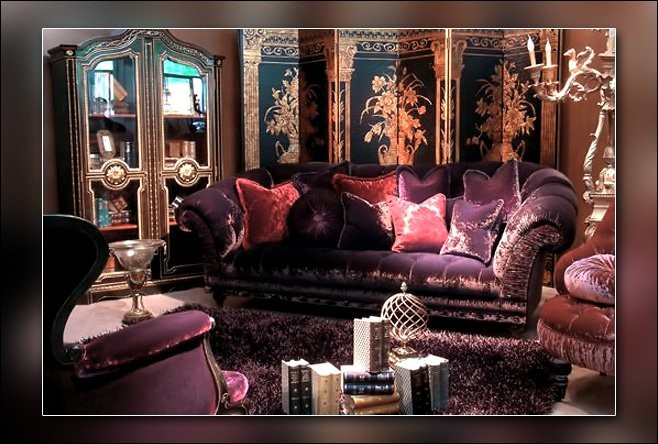
Baroque
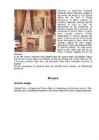
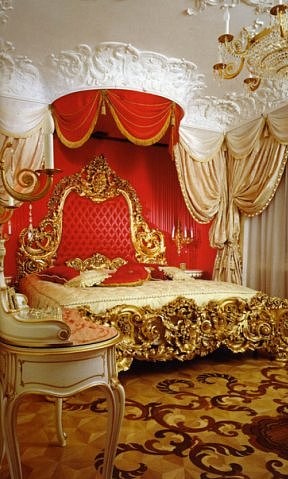
Baroque (pronounced /bəˈroʊk/ bə- rohk in American English or /bəˈrɒk/ in British English) is an artistic style prevalent from the late 16th century to the early 18th century in Europe .[1] It is most often defined as "the dominant style of art in Europe between the Mannerist and Rococo eras, a style characterized by dynamic movement , overt emotion and self-confident rhetoric".
The popularity and success of the Baroque style was encouraged by the Roman Catholic Church , which had decided at the time of the Council of Trent, in response to the Protestant Reformation, that the arts should communicate religious themes in direct and emotional involvement. The aristocracy also saw the dramatic style of Baroque architecture and art as a means of impressing visitors and expressing triumphant power and control . Baroque palaces are built around an entrance of courts, grand staircases and reception rooms of sequentially increasing opulence.
Baroque architecture
The Baroque style is noted as first being developed by Seljuk Turks, according to a number of academics like John Hoag. In Baroque architecture, new emphasis was placed on bold massing, colonnades, domes, light-and- shade (chiaroscuro), 'painterly' color effects , and the bold play of volume and void. In interiors, Baroque movement around and through a void informed monumental staircases that had no parallel in previous architecture. The other Baroque innovation in worldly interiors was the state apartment, a processional sequence of increasingly rich interiors that culminated in a presence chamber or throne room or a state bedroom. The sequence of monumental stairs followed by a state apartment was copied in smaller scale everywhere in aristocratic dwellings of any pretensions.
Baroque architecture was taken up with enthusiasm in central Germany (see, e.g., Ludwigsburg Palace and Zwinger Dresden), Austria and Russia (see, e.g., Peterhof ). In England the culmination of Baroque architecture was embodied in work by Sir Christopher Wren, Sir John Vanbrugh and Nicholas Hawksmoor, from ca. 1660 to ca. 1725. Many examples of Baroque architecture and town planning are found in other European towns, and in Latin America. Town planning of this period featured radiating avenues intersecting in squares, which took cues from Baroque garden plans.In Sicily, Baroque developed new shapes and themes as in Noto, Ragusa and Acireale "Basilica di San Sebastiano".
Another example of Baroque architecture is the Cathedral of Morelia Michoacan in Mexico. Built in the 17th century by Vincenzo Barrochio, it is one of the many Baroque cathedrals in Mexico.
Francis Ching described Baroque architecture as "a style of architecture originating in Italy in the early 17th century and variously prevalent in Europe and the New World for a century and a half , characterized by free and sculptural use of the classical orders and ornament , dynamic opposition and interpenetration of spaces, and the dramatic combined effects of architecture, sculpture, painting, and the decorative arts."
Minimalism
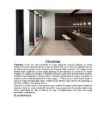
Minimalism describes movements in various forms of art and design, especially visual art and music, where the work is stripped down to its most fundamental features . As a specific movement in the arts it is identified with developments in post-World War II Western Art, most strongly with American visual arts in the late 1960s and early 1970s. Prominent artists associated with this movement include Donald Judd , John McLaughlin, Agnes Martin, Dan Flavin, Robert Morris , Anne Truitt, and Frank Stella. It is rooted in the reductive aspects of Modernism , and is often interpreted as a reaction against Abstract expressionism and a bridge to Postmodern art practices .
The terms have expanded to encompass a movement in music which features repetition and iteration, as in the compositions of La Monte Young, Terry Riley , Steve Reich , Philip Glass , and John Adams. (See also Postminimalism).
The term "minimalist" is often applied colloquially to designate anything which is spare or stripped to its essentials. It has also been used to describe the plays and novels of Samuel Beckett , the films of Robert Bresson, the stories of Raymond Carver, and even the automobile designs of Colin Chapman. The word was first used in English in the early 20th century to describe the Mensheviks.
Minimalist design
The reconstruction of Ludwig Mies van der Rohe's German Pavilion in Barcelona
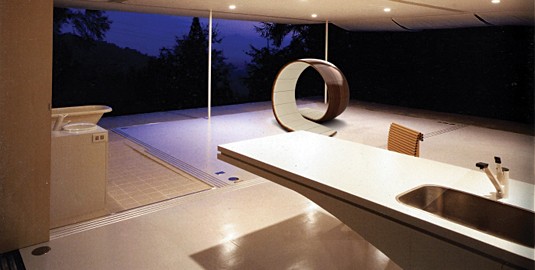
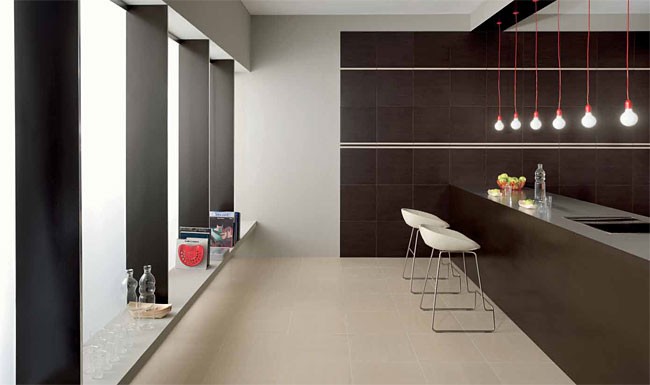
The term minimalism is also used to describe a trend in design and architecture where in the subject is reduced to its necessary elements . Minimalist design has been highly influenced by Japanese traditional design and architecture. In addition, the work of De Stijl artists is a major source of reference for this kind of work. De Stijl expanded the ideas that could be expressed by using basic elements such as lines and planes organized in very particular manners.
Architect Ludwig Mies van der Rohe adopted the motto "Less is more" to describe his aesthetic tactic of arranging the numerous necessary components of a building to create an impression of extreme simplicity, by enlisting every element and detail to serve multiple visual and functional purposes (such as designing a floor to also serve as the radiator , or a massive fireplace to also house the bathroom ). Designer Buckminster Fuller adopted the engineer 's goal of "Doing more with less", but his concerns were oriented towards technology and engineering rather than aesthetics . A similar sentiment was industrial designer Dieter Rams' motto, "Less but better" adapted from van der Rohe. The structure uses relatively simple elegant designs; ornamentations are quality rather than quantity[dubious – discuss]. The structure's beauty is also determined by playing with lighting , using the basic geometric shapes as outlines, using only a single shape or a small number of like shapes for components for design unity, using tasteful non-fussy bright color combinations, usually natural textures and colors , and clean and fine finishes . Using sometimes the beauty of natural patterns on stone cladding and real wood encapsulated within ordered simplified structures , and real metal producing a simplified but prestigious architecture and interior design. May use color brightness balance and contrast between surface colors to improve visual aesthetics. The structure would usually have industrial and space age style utilities (lamps, stoves, stairs, technology, etc.), neat and straight components (like walls or stairs) that appear to be machined with machines, flat or nearly flat roofs, pleasing negative spaces, and large windows to let in lots of sunlight. This and science fiction may have contributed to the late twentieth century futuristic architecture design, and modern home decor. Modern minimalist home architecture with its unnecessary internal walls removed may have led to the popularity of the open plan kitchen and living room style.
Another modern master who exemplifies reductivist ideas is Luis Barragán. In minimalism, the architectural designers pay special attention to the connection between perfect planes, elegant lighting, and careful consideration of the void spaces left by the removal of three-dimensional shapes from an architectural design. The more attractive looking minimalist home designs are not truly minimalist, because these use more expensive building materials and finishes, and are relatively larger.
Contemporary architects working in this tradition include John Pawson, Eduardo Souto de Moura, Álvaro Siza Vieira, Tadao Ando, Alberto Campo Baeza, Yoshio Taniguchi, Peter Zumthor, Hugh Newell Jacobsen, Vincent Van Duysen, Claudio Silvestrin, Michael Gabellini, and Richard Gluckman.
Classicism
Classicism, in the arts, refers generally to a high regard for classical antiquity, as setting standards for taste which the classicists seek to emulate. The art of classicism typically seeks to be formal and restrained: of the Discobolus Sir Kenneth Clark observed , "if we object to his restraint and compression we are simply objecting to the classicism of classic art. A violent emphasis or a sudden acceleration of rhythmic movement would have destroyed those qualities of balance and completeness through which it retained until the present century its position of authority in the restricted repertoire of visual images." [1] Classicism, as Clark noted, implies a canon of widely accepted ideal forms, whether in the Western canon that he was examining in The Nude (1956), or the Chinese classics.
Classicism is a force which is often present in post- medieval European and European influenced traditions ; however, some periods felt themselves more connected to the classical ideals than others, particularly the Age of Reason , the Age of Enlightenment, and some classicizing movements in Modernism.
In architecture
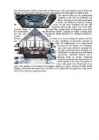
Classicism in architecture developed during the Italian Renaissance , notably in the writings and designs of Leon Battista Alberti and the work of Filippo Brunelleschi . It places emphasis on symmetry, proportion , geometry and the regularity of parts as they are demonstrated in the architecture of Classical antiquity and in particular, the architecture of Ancient Rome, of which many examples remained. Orderly arrangements of columns, pilasters and lintels, as well as the use of semicircular arches, hemispherical domes, niches and aedicules replaced the more complex proportional systems and irregular profiles of medieval buildings. This style quickly spread to other Italian cities and then to France, Germany, England, Russia and elsewhere.
In the 16th century, Sebastiano Serlio helped codify the classical orders and Palladio 's legacy evolved into the long tradition of Palladian architecture. Building off of these influences, the 17th-century architects Inigo Jones and Christopher Wren firmly established classicism in England.
For the development of classicism from the mid-18th-century onwards, see Neoclassical architecture.

Rococo

Interior design


Solitude Palace in Stuttgart and Chinese Palace in Oranienbaum, the Bavarian church of Wies and Sanssouci in Potsdam are examples of how Rococo made its way into European architecture.
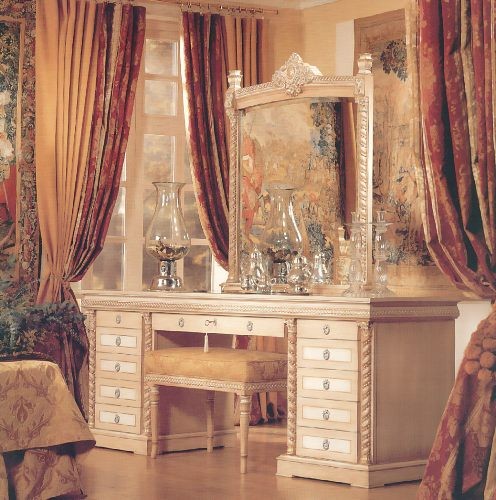
In those Continental contexts where Rococo is fully in control, sportive, fantastic, and sculptured forms are expressed with abstract ornament using flaming, leafy or shell-like textures in asymmetrical sweeps and flourishes and broken curves; intimate Rococo interiors suppress architectonic divisions of architrave, frieze and cornice for the picturesque, the curious, and the whimsical, expressed in plastic materials like carved wood and above all stucco (as in the work of the Wessobrunner School). Walls, ceiling, furniture, and works of metal and porcelain present a unified ensemble. The Rococo palette is softer and paler than the rich primary colors and dark tonalities favored in Baroque tastes.
A few anti-architectural hints rapidly evolved into full -blown Rococo at the end of the 1720s and began to affect interiors and decorative arts throughout Europe. The richest forms of German Rococo are in Catholic Germany (illustration, above).
Rococo plasterwork by immigrant Italian- Swiss artists like Bagutti and Artari is a feature of houses by James Gibbs , and the Franchini brothers working in Ireland equalled anything that was attempted in Great Britain .
Inaugurated in some rooms in Versailles , it unfolds its magnificence in several Parisian buildings (especially the Hôtel Soubise). In Germany, French and German artists (Cuvilliés, Neumann, Knobelsdorff, etc.) effected the dignified equipment of the Amalienburg near Munich, and the castles of Würzburg, Potsdam, Charlottenburg, Brühl, Bruchsal, Solitude (Stuttgart), and Schönbrunn.
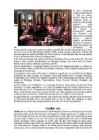
In Great Britain, one of Hogarth 's set of paintings forming a melodramatic morality tale titled Marriage à la Mode, engraved in 1745, shows the parade rooms of a stylish London house, in which the only rococo is in plasterwork of the salon 's ceiling. Palladian architecture is in control. Here, on the Kentian mantel, the crowd of Chinese vases and mandarins are satirically rendered as hideous little monstrosities, and the Rococo wall clock is a jumble of leafy branches.
In general, Rococo is an entirely interior style, because the wealthy and aristocratic moved back to Paris from Versailles. Paris was already built up and so rather than engaging in major architectural additions, they simply renovated the interiors of the existing buildings.

Gothic art

Gothic art was a Medieval art movement that developed in France out of Romanesque art in the mid-12th century, led by the concurrent development of Gothic architecture. It spread to all of Western Europe, but took over art more completely north of the Alps , never quite effacing more classical styles in Italy. In the late 14th century, the sophisticated court style of International Gothic developed, which continued to evolve until the late 15th century. In many areas , especially Germany, Late Gothic art continued well into the 16th century, before being subsumed into Renaissance art. Primary media in the Gothic period included sculpture, panel painting, stained glass, fresco and illuminated manuscript. The easily recognisable shifts in architecture from Romanesque to Gothic, and Gothic to Renaissance styles, are typically used to define the periods in art in all media, although in many ways figurative art developed at a different pace .
The earliest Gothic art was monumental sculpture, on the walls of Cathedrals and abbeys. Christian art was often typological in nature (see Medieval allegory), showing the stories of the New Testament and the Old Testament side by side. Saints' lives were often depicted. Images of the Virgin Mary changed from the Byzantine iconic form to a more human and affectionate mother, cuddling her infant , swaying from her hip, and showing the refined manners of a well-born aristocratic courtly lady .
Secular art came in to its own during this period with the rise of cities, foundation of universities, increase in trade, the establishment of a money- based economy and the creation of a bourgeois class who could afford to patronize the arts and commission works resulting in a proliferation of paintings and illuminated manuscripts. Increased literacy and a growing body of secular vernacular literature encouraged the representation of secular themes in art. With the growth of cities, trade guilds were formed and artists were often required to be members of a painters' guild —as a result, because of better record keeping, more artists are known to us by name in this period than any previous; some artists were even so bold as to sign their names .
Vasakule Paremale
Styles in interior design #1 Styles in interior design #2 Styles in interior design #3 Styles in interior design #4 Styles in interior design #5 Styles in interior design #6 Styles in interior design #7 Styles in interior design #8
Punktid 100 punkti Autor soovib selle materjali allalaadimise eest saada 100 punkti.
Leheküljed ~ 8 lehte Lehekülgede arv dokumendis
Aeg2011-01-17 Kuupäev, millal dokument üles laeti
Allalaadimisi 9 laadimist Kokku alla laetud
Kommentaarid 0 arvamust Teiste kasutajate poolt lisatud kommentaarid
Autor marina petrikila Õppematerjali autor
Research work

Sarnased õppematerjalid

Art Museum of Estonia
10
docx

Art Museum of Estonia

Most of the Russian rulers, from Peter's daughter Elizabeth, to the last Romanov emperor Nicholas II, have visited this imperial summer residence. From 1921 the Estonian Museum in Tallinn was situated in the palace. In 1928 it was reorganized into the Art Museum of Estonia. From 1929 the palace served as the residence of the Estonian head of state (from 1938 president). The building was renovated in 1933-34. The banqueting hall after the design of the architect Aleksander Vladovsky was constructed at the back of the palace. Some rooms were refurnished in Estonian national romantic style after the designs of the architect Olev Siinmaa. From 1946 until 1991 the palace housed the main building of the Art Museum of Estonia. Due to the deterioration of the building, large restoration works were started. The government of Sweden supported the works that lasted over 9 years, with 21 million Swedish kronor.

Inglise keel
English literature from the Baroque to the Romanticism
21
docx

English literature from the Baroque to the Romanticism

Burlington realized that in order to achieve the Palladian revival, originality of invention was also needed. For example, in 1717, he turned his own house into a palazzo. Its most striking feature was the graceful Doric colonnade which linked its courtyard. The most visited became Chiswick, which was something completely new to the people, since it is essentially a unique synthesis of both antique and modern precedents. Chiswick’s most daring feature was its employment of interior space, a combination of different shapes, niches, apses, columns and screening. In Palladianism, the importance of the land that surrounds the villa is also emphasized. It is evident that Burlington’s campaign for a reformed architecture achieved its culmination in the decades between 1720 and 1750. The style spread widely, and underneath it all was a strong feeling for Roman antique severity without concealing the gilded splendour within. (Course book, pp. 96-100) 18

Inglise kirjanduse ajalugu
US-ART - American Art Revision Materials-I
15
docx

US-ART - American Art Revision Materials, I

He depicted river life and politics. His West is pleasant, sunny and free of civilized constraints. His manner is grand and his figures are precisely placed. He selected subjects both singular and typical. He displayed his faith in the democratic process with his series of paintings on elections. John James Audubon (early-C19). He studied American birds. His works are both records and masterpieces, thus his achievements are dually great. He was self-taught. He had a sense of design and an ability to render the characteristics of the bird. George Catlin (early-C19). He painted Indians and their life. The paintings are authentic and lively. He spent some eight years living with them. His style is sketchy, free and more graphic than painterly. Among his works are portraits. Subsidiary artists: Richard C. Woodville, John Quidor. History and Portraiture. In mid-C19, few were concerned with history paintings. Romanticism was intensified.

Inglise keel
American Art Revision Materials
15
docx

American Art Revision Materials

He depicted river life and politics. His West is pleasant, sunny and free of civilized constraints. His manner is grand and his figures are precisely placed. He selected subjects both singular and typical. He displayed his faith in the democratic process with his series of paintings on elections. John James Audubon (early-C19). He studied American birds. His works are both records and masterpieces, thus his achievements are dually great. He was self-taught. He had a sense of design and an ability to render the characteristics of the bird. George Catlin (early-C19). He painted Indians and their life. The paintings are authentic and lively. He spent some eight years living with them. His style is sketchy, free and more graphic than painterly. Among his works are portraits. Subsidiary artists: Richard C. Woodville, John Quidor. History and Portraiture. In mid-C19, few were concerned with history paintings. Romanticism was intensified.

Inglise keel
The Most Important Buildings in Lai Street in Tallinn
17
odt

The Most Important Buildings in Lai Street in Tallinn

of a nun or a sister. After the Reformation, the monastery was eliminated and in 1631 a gymnasium was founded in its rooms, but the street name remained in the form of Süsterstrasse and Cisternstrasse. It was not until the 18th century that the name Lai also started to appear. In 1872, when the street names were being fixed, Lai remained the sole name of the street. 4 1 Lai Street / 4 Nunne Street A good example of Neo-Renaissance and early Art Nouveau styles combined is Lai Street 1, the present Youth and Puppet Theatre, erected at the beginning of the 20th century as the Nobility Club. The three-storey building replaces two medieval properties. In 1784 an amateur theatre began playing in a house situated in the same place and soon became a professional German City Theatre. The famous German writer August von Kotzebue (1761-1819), the life and soul of the theatre, lived in Tallinn for several long periods. (Otto von Kotzebue, the son of

Inglise keel
EXAM - English literature 2
24
doc

EXAM - English literature 2

to people. Climax in Rome. Greatest prize: classical antiquities – scuplture, vases, cameos, gems, coins, medals. Purchase-obsessed. Result: publications (what seen). Changed people’s perception of classical past. Returned minds enriched, into culture cosmopolitan influence, refinement of manner, intellectual curiosity -> lasting change in English art, architecture, music, manners. Collecting, works of art, sculpture collections, change in architecture and interior design (neo-classicism), obsession with classical antiquity. 21. Augustan journalism (Addison, Steele) Richard Steele’s Tatler, Joseph Addison’s and Steele’s Spectator – mixes of short pieces, letters, essays, poems commenting on contemporary matters, morals and events. Religious bigotry and division of previous century should be put aside, replaced by mutual tolerance and understanding. New balance in society <- new way of life <- understanding oneself and world.

British literature
Tallinn town hall
2
odt

Tallinn town hall

entrance was moved to the middle of the building, characteristic of the baroque age, and the main portal was closed. The arcade that earlier enhanced the stateliness and individuality of the Town Hall as well as the windows of the basement and the ground floor were walled up. Partitions were built into the Citizens' Hall, turning its space into several separate rooms. A lot of the medieval architecture of the Town Hall was destroyed or distorted in the course of that reconstruction. In 1667 the interior decor of the Council Chamber was modernised. Lunette paintings to themes of the Bible were ordered from painter Johann Aken and carved wooden friezes beneath them from Elert Thiele and Joachim Armbrust. In the 19th century both the windows of the Town Hall and its eastern façade were rebuilt in the Gothic Revival style. The structure stepped into the 20th century with big changes in its exterior and interior decoration, and smaller changes followed in the first half of the 20th century.

Inglise keel
Anglo - Saxon
5
doc

Anglo - Saxon

Occasionally two gowns were worn, with the inner gown having longer, tighter sleeves, and the outer one having shorter, looser sleeves. Under this might be worn a linen underdress. A mantle might be worn over the outer dress, along with a cloak. After the introduction of Christianity, all women (except for very young girls and occasionally slaves) would wear some kind of headcovering, usually a draped couvrechf, the ancestor of the later wimple. Like men, free women would also carry a seax as a sign of their freedom. Weddings The modern engagement is rooted in the Medieval customs of publishing the banns and handfasting. The handfasting ceremony usually took place when the couple was very young, often many years before the actual wedding. It was this ceremony, not the wedding, that produced the exchange of vows which are now part of the Anglican wedding ceremony . This was also time for bride price and dowry to be exchanged. The ceremony was sealed with a drink and a kiss.

Inglise kirjandus


Meedia

Kommentaarid (0)

Kommentaarid sellele materjalile puuduvad. Ole esimene ja kommenteeri


Sellel veebilehel kasutatakse küpsiseid. Kasutamist jätkates nõustute küpsiste ja veebilehe üldtingimustega Nõustun