Introduction Estonia,
officially the
Republic of Estonia (Estonian: Eesti or Eesti
Vabariik) is a
country in the
Baltic region of
Northern Europe . It is
bordered to the
north by
Finland across the Gulf of Finland, to the
west by
Sweden across the Baltic Sea, to the
south by Latvia (343
km), and to the
east by the
Russian Federation (338,6 km). The
territory of Estonia covers 45,227 km² and is
influenced by a
temperate seasonal climate.
The
Estonians are a
Finnic people closely related to the
Finns , with the
Estonian
language sharing many similarities to Finnish. The modern
name of Estonia is thought to originate from the
Roman historian
Tacitus , who in his book Germania (ca. AD 98)
described a people
called the
Aestii . Similarly,
ancient Scandinavian sagas refer to a
land called Eistland,
close to the
German term
Estland for the
country.
Early Latin and
other ancient versions of the name are Estia
and
Hestia .
Until the
late 1930s, the name was often written as
Esthonia in most
English speaking countries.
Estonia
is a
democratic parliamentary republic and is
divided into
fifteen counties. The capital and largest city is Tallinn. With a population
of only 1.4 million, it is one of the
least -populous
members of the
European Union. Estonia was a
member of the
League of Nations from 22
September 1921, has been a member of the United Nations
since 17
September 1991, of the European Union since 1 May 2004 and of
NATO since 29
March 2004 Estonia has also signed the
Kyoto protocol.
Economy Estonian economy was one of the fastest growing in the world until
2006 with
growth rates
even exceeding 10% annually. Despite some
concerns
both in and
outside of the country, the Estonian economy and
its
currency remained
highly resilient and
solvent .
Until
recent years the Estonian economy continued to grow with
admirable rates. Estonian GDP grew by 6.4% in the
year 2000 and with
double speeds after accession to the EU in 2004. The GDP grew by 7.9%
in 2007
alone . Increases in
labor costs ,
rise of taxation on tobacco,
alcohol, electricity, fuel, and gas, and also external pressures
(growing prices of oil and food on the
global market ) are
expected to
raise inflation just
above the 10% mark in the
first months of 2009.
In
the first
quarter 2008 GDP grew only 0,1%. The
government made a
supplementary
negative budget , which was
passed by Riigikogu. The
revenue of the budget was decreased for 2008 by EEK 6.1
billion and
the expenditure by EEK 3.2 billion.
Estonia joined the World Trade Organization in 1999. A sizable
current account deficits remains, but
started to shrink in the last
months of 2008 and is expected to do so in the
near future.
In
the
fourth quarter of 2008, the
average monthly gross wage in Estonia
was 13,117 kroons (€838, US$1,066.5).
Estonia is nearly energy independent supplying over 90% of its
electricity needs with locally mined oil
shale . Alternative energy
sources
such as wood, peat, and
biomass make up
approximately 9% of
primary energy
production . Estonia imports needed petroleum
products from
Western Europe and
Russia . Oil shale energy, telecommunications,
textiles, chemical products,
banking , services, food and
fishing ,
timber, shipbuilding, electronics, and transportation are key sectors
of the economy. The ice-free port of
Muuga , near Tallinn, is a modern
facility featuring
good transshipment capability, a high-
capacity grain elevator, chill/
frozen storage, and
brand -new oil
tanker off-loading capabilities. The railroad serves as a conduit
between the
West , Russia, and other points to the East.
After
a long
period of very high growth of GDP, the GDP of Estonia
decreased by a
little over 3% on a
yearly basis in the 3rd quarter of
2008. In the 4th quarter of 2008 the negative growth was
already -9,4%. Some international experts and journalists, who like to view
the three Baltic
States as a
single economic identity, have failed to
notice that Estonia has constantly performed better
than Lithuania and Latvia on many
fundamental indicators. The current account
deficit and inflation is lower than in Latvia, the GDP
higher than in
Latvia and Lithuania, Estonia's public debt is a very low 3.8% of GDP
and government reserves are close to 10% of GDP. The
difference is
exemplified by the
fact that in December 2008 Estonia
became one of
the
donor countries to the IMF
lead rescue
package for Latvia.
The central bank uses a currency
board system and has independent
reserves, which are big enough to buy
back all the currency in
circulation.
Estonia
today is mainly influenced by developments in Germany,
Finland and Sweden - the three main trade partners. The government
recently increased greatly its spending on innovation. The
prime minister of Estonian
Reform Party has
stated its
goal of bringing
Estonian GDP per
capita into the TOP 5 of EU by
2022 .
Ireland is
sometimes seen as a model for Estonian economic future. However, the
GDP of Estonia decreased by 1.4% in the 2nd quarter of 2008, over 3%
in the 3rd quarter of 2008, and over 9% in the 4rd quarter of 2008.
HistoryThe Estonians, an ancient people, originally
came from a region just
west of the Ural
Mountains . Historical references to Estonia begin in
the 1100's. At that time the region was divided into small pagan
states.
Beginning in 1202, an
order of German crusading knights from
Livonia (Latvia) joined with the Danes to conquer and Christianize
the Estonians. By 1227 the Danes controlled northern Estonia; the
Livonian Knights,
southern Estonia. The Teutonic Knights,
another German crusading order, gained
control of southern Estonia in
1237 and
later conquered all of Estonia.
The Teutonic Knights
withdrew from Estonia in 1560. Sweden and
Poland then fought for
control of Estonia; in 1629, Sweden won and annexed
the region. Peter I of Russia conquered Estonia in 1710, and in 1721
Sweden formally recognized Russian possession of the region.
Russia
remained in control of Estonia until shortly after the Bolshevik
revolution of 1917. At the
treaty of Brest-Litovsk the
following year, which brought an end to Russian involvement in World War I,
Estonia was ceded. The new
Soviet government at first refused to
recognize Estonian independence but
gave way in
February 1920. The
new state – along with its Baltic neighbors, Lithuania and Latvia –
enjoyed just two decades of independent statehood
before the Soviet
Union
took control under the 1939 Nazi-Soviet Pact. Soviet ownership
lasted barely 12 months before Estonia was conquered in the German
invasion of the Soviet Union. It was retaken by the Red
Army in 1944,
after which Estonia was constituted as one of the 15 Soviet Socialist
Republics.
Four decades passed until Mikhail Gorbachev who, as
Communist Party General Secretary, offered the
prospect of
change for
the Baltic States. A key
part of the
perestroika (economic
reform) program was the devolution of
power to the republics. Estonia
led the way
among the Baltic States,
assisted by the collaboration
between nationalist groups and the Communist Party, who joined
together in a People’s Front (analogous bodies emerged in Latvia
and Lithuania) to orchestrate change.
Having asserted the right to make their own
legislation , measures to
establish an Estonian currency – preparatory to
full economic
autonomy – and to
restore Estonian as the
official language quickly
followed. In March 1990, the Estonian Communist Party voted in
favor of full independence from the Soviet Union but
allowed for a
six-
month transitional period before
making the
final decision.
President Gorbachev was powerless to
prevent Estonia to become
independent.
Rapid international recognition of Estonia as a
sovereign state, followed by
admission to the United Nations. In
June 1992, Estonia got its own currency, the Kroon, and a new post-Soviet
constitution. The constitution was first put to the test in September
1992. The legislative elections produced an inconclusive
result .
Isamaa (Fatherland Alliance)
formed a coalition government with two
other parties; party
leader Mart Laar became premier. Laar is
acknowledged as probably the most successful Politian in Estonia,
taking much
credit for guiding Estonia
through major political and
economic changes.
CultureThe
culture of Estonia incorporates indigenous
heritage , as represented
by the country's
rare Finno -Ugric national language Estonian and the
sauna, with mainstream Nordic and European
cultural aspects. Due to
its history and
geography , Estonia's culture has been influenced by
the
traditions of the adjacent area's various Finnic, Baltic and
Germanic peoples as well as the cultural developments in the
former dominant powers Sweden and Russia.
Estonian
holidays are mostly based on the Western
Christian calendar and
Protestant traditions.
Notable
among
these is Jaanipäev, the Estonian
Midsummer which involves
seeking one's way to non-
urban environments and
burning large
bonfires and drunken revelry of Jaaniõhtu. The midsummer traditions
also include
different versions of pairing magic, such as collecting
a number of different kinds of flowers and
putting them under one's
pillow , after which one is meant to see the future spouse in one's
dreams.
The
Estonian
Christmas , Jõulud, is generally in line with the
North and
Middle European traditions of Christmas
trees and
Advent calendars
and
traditional meals, involving a number of dishes which are
typically only eaten on Christmas. Christmas is the most extensive
and appreciated and commercialized holiday in Estonia. Holidays start
from the
23rd December and
continue through Christmas Eve (24th),
Christmas Day (25th). In
schools and in many workplaces, the vacation
continues until the New Year.
The
Estonian independence day is the 24th of February and a national
holiday.
Cinema in Estonia started in 1896 when the first "moving pictures"
were screened in Tallinn. The first movie
theater was opened in 1908.
First local
documentary was made in 1908 with the production of a
newsreel about Swedish
King Gustav V’s
visit to Tallinn. The first
Estonian documentary was created by Johannes Pääsuke in 1912 that
was followed by a short
film Karujaht Pärnumaal (
Bear Hunt in
Pärnumaa) in 1914.
The
first full
length feature
film was made in 1924
Shadow of the Past
directed by
Konstantin Märska.
Theodor Luts Noored kotkad (Young
Eagles) (1927) is generally regarded as the cornerstone of Estonian
cinema.
In
1960's a story of Prince Gabriel by Estonian
writer Eduard Bornhöhe
was turned into a movie
script by
Arvo Valton.
Grigori Kromanov was
named to be the
director of Viimne
reliikvia (The Last Relic) ,
released in 1969 by Tallinnfilm.
Estonian
Television Eesti
Televisioon or ETV is the national public television
station of Estonia. Its first broadcast was on
July 19, 1955, and it
celebrated the 50th anniversary on July 19, 2005.
Despite
its relatively short history of art music, Estonia today is well
respected for its musicianship, with a
quality education of
classical musicians having produced a high proportion of world-
class conductors
and singers. Estonian art music came to the forefront as a part of
the national romantic
movement .
Modern
Estonian popular music has
received attention also in foreign
countries, especially on the rock and
metal scenes, with such bands
as Vanilla
Ninja , Metsatöll and Arvo Pärt gaining international
acclaim.
ClimateAs in other northern countries, seasons vary widely in Estonia. The
length of the
longest day in
summer is over 19
hours ,
while the
shortest winter day lasts only six hours. It is not
completely dark
at
night from the beginning of May until the end of July. Estonia, on
the coast of the Baltic Sea, is at the
same latitude in Europe as
central Sweden and the northern tip of
Scotland . The temperature in
the summer months (June–September) is typically 15…18ºC; in
winter, –4…–5ºC. Estonian weather
offers many surprises.
Temperatures may fluctuate by 20º C; in the early
morning the
thermometer might read –12ºC and by afternoon it may already be
10ºC. Although it doesn't always
snow in winter,
there tends to be
about 10 cm of snow on the
ground consistently from late December
through to the beginning of March.
The
sky over Estonia is
cloudy for about half the year, and the
hilly southeast region experiences up to 750 mm of precipitation due to
Estonia's maritime climate.
NatureWhile seven
thousand rivers and streams carry
rainwater to the sea, bogs and wooded swamplands of different types
cover over one fifth of the country — a world index topped only by
the northern neighbour, Finland. Various kinds of
forests comprise slightly under half of Estonia's territory. Wetlands, together with
primeval forests, represent preserved communities which have for the
most part been destroyed in Europe. More than 1000
lakes (5 per
cent of the Estonian territory) dot the
countryside , which is relatively
flat —
almost two thirds of the territory lies less than 50 m above
sea level. The
highest point is Suur Munamägi, 317 m above sea
level, in the southeast of the country.
Estonia is the home of several
mammals as well as
plant species that are
extinct or very rare in other parts of Europe.
The most numerous species of the large mammals are the roe deer, elk,
and
wild boar.
Beaver , lynx,
wolf , brown bear,
grey seal, and
ringed seal are relatively common as well. Of the 333 recorded bird species,
222 breed in Estonia,
including the capercaillie,
black stork, and
all together at least 400
pairs of eagles. At least 10 per cent of
the Estonian territory is
subject to the environment
protection . The
most
important protection areas are resting and recreation areas for
migratory birds, mainly seashore wetlands, and chaste woodland and
wetland areas. The preservation of traditional cultural landscapes is
important as well.
Political
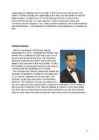
structureWith the proclamation of Estonia's national independence in 1918, a
parliamentary republic was formed. The constitution of 1920 was
clearly one of the most democratic for that time. The
Parliament elected a
Riigivanem (president) who acted as the leader of
the government and head of state. In 1991 the Republic of Estonia was
restored on the basis of continuity with the constitution prior to
1938.
The contemporary Estonian government follows the principles of
separation of power and its people elect a 101-member parliament
every four years. Only Estonian citizens may participate in
parliamentary elections. The Parliament chooses a president, who can
be in office for a
five year period for a
maximum of two
terms . The
President is the Supreme Commander of the National Defense of
Estonia. A party must gather 5% of the votes in order to become part
of the Parliament. As a rule, the President asks the party leader who
has collected the most votes to form the new government.
7
 100 punkti
Autor soovib selle materjali allalaadimise eest saada 100 punkti.
100 punkti
Autor soovib selle materjali allalaadimise eest saada 100 punkti.
 ~ 6 lehte
Lehekülgede arv dokumendis
~ 6 lehte
Lehekülgede arv dokumendis
 2009-12-01
Kuupäev, millal dokument üles laeti
2009-12-01
Kuupäev, millal dokument üles laeti
 47 laadimist
Kokku alla laetud
47 laadimist
Kokku alla laetud
 1 arvamus
Teiste kasutajate poolt lisatud kommentaarid
1 arvamus
Teiste kasutajate poolt lisatud kommentaarid
 Kristjan K
Õppematerjali autor
Kristjan K
Õppematerjali autor
 annaabi.ee






Kõik kommentaarid