ESTONIA
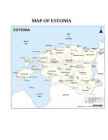
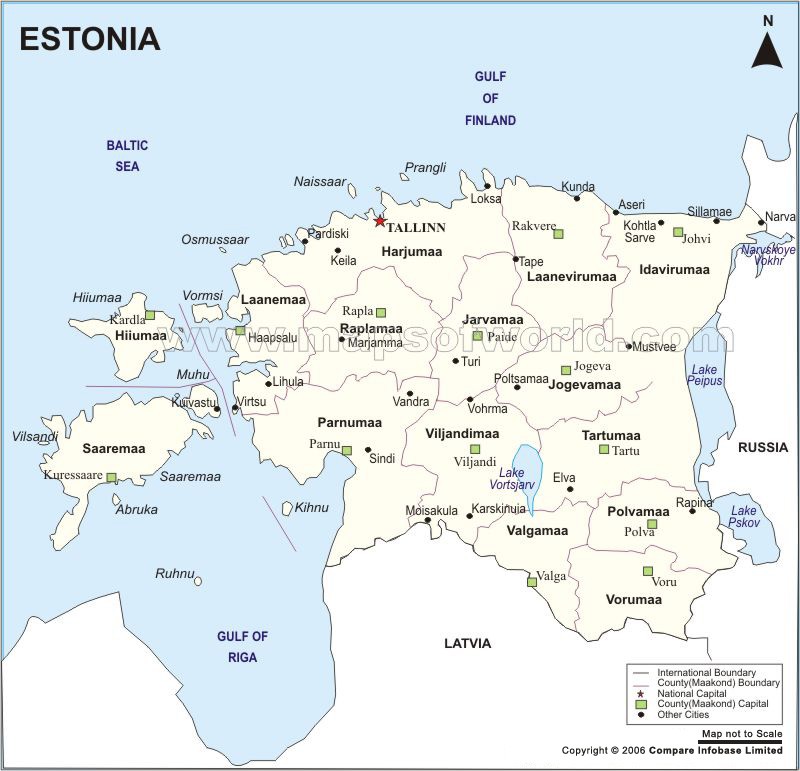
MAP OF ESTONIAThe southern
part of Viljandi county catches the eye with its sublime
scenery. The area
today lies in the very
heart of the historical
Mulgimaa – the home of hills,
deep valleys and
lakes brought
together by a beauty
spot Halliste primeval
valley . According to
several folk tales, it is also in these valleys, woods and bogs that
Old
Nick found refuge.The great variety displayed in the
nature is
also
reflected in the
local cultural heritage . At the
beginning of
the
19th century growing linen spread and
became the
basis of the
legendary wealth of
Mulgi farms. The
ancient barn -dwellings and
decaying manor
houses are the
mute witnesses of those times. The
riches and cultural heritage of Mulgimaa owe to the diligence and
tenacity of the local people.
Village handicraftsmen and masters have
always been honoured. Mulgikapsad (stewed sauerkraut with barley
groats), Estonian cheesecakes and
kama (a roasted
meal -mixture) have
not
lost their
popularity .
However , linen growers have now been
replaced by cereal
grains growers and many farms have specialised on
raising sheep or
horses . And as the
song goes: "Mulgimaa –
it’s a place where life is
good . It’s a
land of vast woods,
fertile fields and nature’s charms, the home of prosperous Estonian
farms..."
Tourism and handicraft in Lõuna-Viljandimaa
Lõuna- Viljandimaa captivates senses with its beautiful landscapes.
Lõuna- Viljandimaa as we know it today stays in the heart of the
historic Mulgimaa. Mulgimaa is the home of mountains, deep valleys
and lakes, its natural axis is the beautiful old valley of Halliste. Southern Viljandimaa has been the homeplace of
mulgi inhabitants
who
spoke their own
dialect called
mulgi language. The
speakers of
mulgi language can
still be found in Southern
Viljandimaa and in the past
years people have
started to pay more
attention to
learning and
developing the dialect. The
mulgi
inhabitants have always been characterised by
strong connection
to their old-
established traditions and customs. At the
same time,
the way of life of the local people is characterised by strong
families , marriage,
children and
respect and love for fellow men. The
local cultural heritage offers as much variety as the nature. Many
rare work and mythological motives are
retained in folk
songs . The
flax-growing that spread rapidly in the beginning of the 19th century
was the basis of the prosperous
Mulgi family farms in Southern
Viljandimaa. 19. The second half of the 19th century and the
beginning of the
20th century constituted the
golden age for many
local families. The
mulgi inhabitants were actually the
first farmers in Estonia who bought the farms for their families after
being
released from the servitude. The farming was
developed rapidly
thanks to flax-growing. The wealthiest farmers gained
even so much
money that for the first time in history Estonian farmers became
owners of mansions. The wealthy mulk were the first of Estonian
farmers to build manses,
until then the farmers all over Estonia
lived in farmhouses that included a barn so that people and
animals lived under one
roof . The old farmhouses and mansions can still be
seen in many
places in Southern Viljandimaa. As a
result of the
hard work and the tenacity of the local inhabitants, Mulgimaa developed
into an area
known as prosperous and
rich by its cultural heritage. The masters working in the villages played an
important role in the
development . The local foods
such as sauerkraut
stew , curd
cake and
„kama“ (a meal made with
sour milk and a mixture of ground
grains) are
popular even
nowadays .
There is even a song that says:
"It is good to live in Mulgimaa / The nature is beautiful and
the land is fructuous/ There are glorious groves and large wealthy
Estonian farms". As for now, the large-scale industry has become
more and more dominating in
agriculture . After thorough reforms in
Estonian
economy the people living in villages and small towns are
searching for new possibilities for self-realisation and one of the
outputs is tourism. This can also be seen in Southern Viljandimaa as
there are continuously more establishments providing accommodation,
caterers and organisers of active
holidays . Many tourism maps have
been put beside the
road as well as many hiking
trails have been
built and marked.
History of EstoniaHuman settlement in Estonia became possible 11,000–13,000 years
ago, when the ice from the last glacial era melted away. The oldest
known settlement in Estonia is the
Pulli settlement, which was
located on the
banks of the
river Pärnu,
near the town of Sindi, in
southern Estonia. According to radiocarbon dating, it was settled
around 11,000 years ago, at the beginning of the 9th
millennium BC.
Evidence has been found of
hunting and
fishing communities existing
around 6500 BC near the town of Kunda in
northern Estonia. Bone and
stone artifacts
similar to those found at Kunda have been
discovered elsewhere in Estonia, as well as in Latvia, northern
Lithuania and in
southern Finland. The Kunda culture belongs to the
middle stone age,
or mesolithic
period . The end of the
Bronze Age and the
early Iron Age were marked by great cultural
changes . The most significant was
the transition to farming, which has remained at the
core of Estonian
economy and culture. From
approximately the 1st to 5th
centuries AD,
resident farming was widely established, the population grew, and
settlement expanded. Cultural influences from the
Roman Empire
reached Estonia, and this era is
therefore also known as the Roman
Iron Age. A more troubled and war-ridden middle Iron Age followed
with
external dangers
coming both from the
Baltic tribes, who
attacked across the southern land border, and from overseas. Several
Scandinavian sagas refer to
campaigns against Estonia. Estonian
pirates conducted similar raids in the
Viking age and
sacked and
burned the Scandinavian capital of
Sigtuna in 1187. By the early
13th century, Estonia was
divided into
eight large counties —
Saaremaa, Läänemaa, Rävala, Harju, Viru, Järva, Sakala, and
Ugandi. Annual consultations were
held by representatives of several
counties and developments took the direction of establishing a state.
Estonia until this time retained a
pagan religion centered around a
deity called Tharapita. Estonia was christianised when the
German "Livonian
Brothers of the
Sword " invaded southern Estonia
as part of the Northern Crusades in the early 13th century. At the
same time,
Denmark attempted to take possession of northern Estonia.
Estonia was consolidated under the two forces by 1227. Northern
Estonia remained a possession of Denmark until 1346. Tallinn (known
as Reval at the time) was
given its Lübeck Rights in
1248 and joined
the Hanseatic League at the end of the 13th century. In 1343, the
people of northern Estonia and Saaremaa rebelled against the
rule of
the Germans in the St. George's Night Uprising, which was put down by
1344. There were unsuccessful
Russian invasions in 1481 and 1558.
After
1524 ,
during the Protestant Reformation, Estonia converted to
Lutheranism.
Estonia regained its independence on August 20,
1991, with the
Singing Revolution during the
Soviet military coup
attempt in
Russia and the
following collapse of the Soviet Union. The
first
country to diplomatically recognize Estonia's reclaimed
independence was
Iceland closely followed by Denmark. The last
Russian troops left on August 31, 1994, and Estonia joined
NATO on
March 29, 2004 and the European Union on May 1, 2004.
Karksi - Nuia Karksi – Nuia is small town located in
south of Viljandimaa. It has
population of 2200 people. In Karksi – Nuia is on gymnasium ,
kindergarten, few shops and big cultural centre. In culture centre
there are café, library, parish
government etc. There take places
acting lessons, theatres,
parties and
other activities. There is
music school also. This is for children’s, but older people can
learn there too. Karksi – Nuia has many interesting places to
visit and
look . One of
them is Maies
farm , few kilometers from city centre.
There you can visit the
birth place of A.
Kitzberg , famous Estonian
writer. There is skiing
mountain too, it is opened in
winter when
there is a lot of
snow . Near Karksi – Nuia are many lakes, capes,
nice
parks and mansions, Near the Karksi is beautiful
ruins of
castle, what was built in 13 century and destroyed by wars and
attacks many years later. There is and
church too. It is Karksis
Peters Church. If you want to relax and enjoy summer, then you should
go camping to lake Mäeküla, what is about 10km from Karksi –
Nuia. There you can
fish , have sauna, and etc. There are many other
lakes and
rivers too.
Karksi – Nuia is one of the most
beautiful small towns in Estonia.
It is a place you must visit.
Geography and climate of Estonia
Estonia lies on the
eastern shores of the Baltic Sea immediately
across the Gulf of Finland from Finland on the level northwestern
part of the rising east European platform
between 57.3° and 59.5° N
and 21.5° and 28.1° E.
Average elevation reaches only
50
metres (164 ft), and the country's
highest point is the
Suur Munamägi in the southeast at 318 metres (1,043 ft).
Oil
shale (or kukersite) and
limestone deposits,
along with
forests which
cover 47% of the land, play key
economic roles in this
generally
resource -poor country. Estonia boasts over 1,400 lakes.
Most are very small, with the largest, Lake Peipus, (Peipsi in
Estonian) being 3555 km²; 1372 sq. mi. There are many rivers in
the country. The largest are the Võhandu (162 km), Pärnu (144 km),
and Põltsamaa (135 km). Estonia also boasts numerous bogs, and 3794
kilometers (2,357 mi) of coastline marked by numerous bays,
straits, and inlets. The number of islands and islets is estimated at
some 1,500. Two are large enough to constitute their own counties:
Saaremaa and
Hiiumaa . Estonia lies in
the northern part of the temperate climate zone and in the transition
zone between maritime and continental climate. Because Estonia (and
entire Northern
Europe ) is continuously warmed by the Gulf
Stream it
has a milder climate despite its northern latitude. The Baltic Sea
causes differences between the climate of coastal and inland
areas .
The average annual temperature in Estonia is 4.5 degrees
Celsius . The
average temperature in
February , the coldest month of the
year , is
negative 5.2 degrees Celsius. The average temperature in
July , which
is
considered the warmest month of the year, is 17 degrees Celsius.
The climate is also
influenced by the
Atlantic Ocean, the
North -Atlantic Stream and the Icelandic Minimum, which is an area
known for the
formation of cyclones and where the average air
pressure is lower
than in neighbouring areas. Estonia is located
in a humid zone in which the
amount of precipitation outnumbers total
evaporation. There are about 160 to 180 rainy days a year, and
average precipitation is
biggest on the
western slopes of the Sakala
and
Haanja Uplands. Snow cover, which is deepest in the south-eastern
part of Estonia,
usually lasts from mid-December to
late March.
Economy of EstoniaAs a
member of the European Union, Estonia is part of the world's
largest economic zone. In 1999, Estonia
experienced its worst year
economically since it regained independence in 1991, largely because
of the impact of the August 1998 Russian financial
crisis . Estonia
joined the WTO in November 1999. It was the second Baltic state to
join. With assistance from the European Union, the World
Bank and the
Nordic Investment Bank, Estonia completed most of its preparations
for European Union
membership by the end of 2002 and now has one of
the strongest economies of the new member states of the European
Union, which it joined on 1 May 2004. The Estonian economy is growing
quickly,
partly due to a number of Scandinavian
companies relocating
their routine operations to the country and Russian oil
transit using
Estonian ports. Estonia has a strong information
technology (IT)
sector. Its GDP PPP per
capita is at $17,802, the highest of the
Baltic states,
while its
unemployment rate was 4.2% in July 2006, one
of the lowest in the European Union. The north-west coast of Estonia
near Nõva, Lääne county In 1994, Estonia became one of the first
countries in the world to adopt a
flat tax, with a uniform rate of
26% regardless of personal
income . In
January 2005 the personal
income tax rate was reduced to 24%. A subsequent
reduction to 23%
followed in January 2006. The income tax rate will be decreased by 1%
annually to
reach 20% by January 2009. Since January 1, 2000,
companies have not had to pay income tax on re-
invested income.
However, tax is due on
profit distributions (
including hidden distributions) at a rate of 24%. Despite the
fact that only the
moment of taxation was shifted from
earning profits to their
distribution, leaving the
rest of the
corporate taxation system
mostly unchanged, the
current legislation is said to be in violation
of one of the
fundamental freedoms of the European Union — free
movement of capital. Estonia is to
remove this hindrance by January
2009 when the temporary derogation expires. In June 1992, Estonia
replaced the ruble with its own freely convertible
currency , the
Kroon (EEK). A currency board was created and the new currency was
pegged to the German Mark at the rate at 8 EEK for 1 DEM. When
Germany introduced the Euro, the peg was changed to 15.6466 Kroon for
1 Euro. The Estonian government is intending to adopt the Euro as the
country's currency on 1 January 2008 due to continued high inflation,
and
finalised the design of Estonia's Euro coins in late 2004.
 50 punkti
Autor soovib selle materjali allalaadimise eest saada 50 punkti.
50 punkti
Autor soovib selle materjali allalaadimise eest saada 50 punkti.
 ~ 8 lehte
Lehekülgede arv dokumendis
~ 8 lehte
Lehekülgede arv dokumendis
 2009-04-23
Kuupäev, millal dokument üles laeti
2009-04-23
Kuupäev, millal dokument üles laeti
 20 laadimist
Kokku alla laetud
20 laadimist
Kokku alla laetud
 0 arvamust
Teiste kasutajate poolt lisatud kommentaarid
0 arvamust
Teiste kasutajate poolt lisatud kommentaarid
 a22t
Õppematerjali autor
a22t
Õppematerjali autor
 annaabi.ee







Kõik kommentaarid