Vajad kellegagi rääkida?
Küsi julgelt abi LasteAbi
Logi sisse

Estonia (0)

1 Hindamata
Punktid
Estonia.
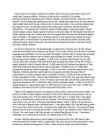
Estonia, officially the Republic of Estonia is a country in Northern Europe . It is the smallest of the three Baltic countries. Estonia has land borders with Latvia (339 km) to the south and Russia (229 km) to the east . It is separated from Finland in the north by the narrow Gulf of Finland and from Sweden in the west by the Baltic Sea. Estonia has been a member of the European Union since May 1, 2004 and of the NATO since March 29, 2004.
The area of Estonia is about 45000 square kilometres and the population is about 1.4 million people. The capital of Estonia is Tallinn and the official language is Estonian. The currency is Eesti kroon. The main religion is Lutheran. Anniversary of the republic is celebrated on February 20. The national flower is cornflower, national bird is barn swallow and national stone is limestone .
It is a land of great natural beauty with a long and varied history and rich culture. It has served as a junction of international trade routes for centuries .
History. The oldest marks of habitation on the territory of Estonia date from the 8th millennium BC. Fortified settlements were established in the 1st century BC. The ancestors of Estonians formed several independent states headed by elected elders.
Until the beginning of the 13th century Estonia was politically independent. Then began a long chain of occupation and control by foreign powers. In the 1200s the German crusaders converted Estonia into a Christianity by force and took control over South Estonia.
In 1219 Denmark conquered Northern Estonia. About a century later , in 1346 Denmark sold its territory to Germany. By the 1500s German nobles owned much of Estonia’s land. After the Livonian War (1558-1583) the northern part of Estonia went under Swedish control, the southern part belonged to Poland and the islands to Denmark. Only in1629 the whole mainland Estonia became subject to Sweden.
Under Swedish rule the University of Tartu was founded in 1632 and also the oldest school working on the same premises was founded in Tallinn (GAG).After the Northern War (1700-1721) Estonia became a province of Russia. During that period the gentry of Baltic-German origin prevailed in Estonia. They kept estates in Estonia until 1919.
Under Russian rule the Palace of Kadriorg was built and the park was laid out. The National Awakening in the middle of the 19th century brought rapid advances in the Estonian education system, general living conditions and culture. The national epic “Kalevipoeg” was published, theatre and music societies appeared and the 1st Song Festival was held in Tartu in 1869. Since then the Song Festivals have become a national tradition , being held every 4-5 years . This all lead to Estonia’s independence on 24 February 1918. In June 1940 Estonia became a part of the Soviet Union. On 20 August 1991 the Republic of Estonia was restored without any bloodshed.
CULTURE?
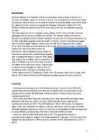
National emblems. The Estonian blue - black -and-white national flag was originally the flag of the Estonian Students’ Society, consecrated in Otepää Church in 1884. Today there is a memorial plaque on the church wall commemorating the event. The Flag Museum was opened in 1996.
During the Soviet time the flag was prohibited. But many people hided their flags somewhere and the flag was seen again in 1988 in public. A meeting was held in Tartu and elderly people were carrying the flags, nationalistic speeches were told and patriotic songs were sung . Tears were rolling down people’s cheeks.
The Estonian flag is hoisted every morning at sunrise and lowered at sunset.
The national anthem of Estonia is called My Native Land, My Pride and Joy. It was composed in 1848 by Friedrich Pacius. The words were written by Johann Voldemar Jannsen . It was performed in 1869 in the first Song Festival in Tartu and it gained popularity during the national movement. It was adopted as the national anthem in 1920, after the World War I. The melody of the anthem is the same as the Finnish have.
During the Soviet time the anthem was banned and My Native Land, My Dearest Love was the unofficial anthem but people carried the real anthem in their hearts.
Lions were first used as Estonia’s heraldic emblem in the 13th century when they appeared on the large coat of arms of Tallinn. A similar motif was used on the coat of arms of the Province of Estonia under Swedish rule. In 1925 they were adopted officially.
The current coat of arms is a golden shield charged with three blue lions with a golden oak branch on each side. The small coat of arms is identical but without oak branches.
Parliament , government and president . Estonia is a constitutional democracy , with a president elected by its unicameral parliament (elections are held every four years). The government or the executive branch is formed by the prime minister, nominated by the president, and a total of 14 ministers. The government is appointed by the president after approval by the parliament.
The legislative power lies with the unicameral parliament, the Riigikogu or State Assembly , which consists of 101 seats . Members are elected by popular vote to serve four- year terms . The supreme judiciary court is the National Court or Riigikohus , with 19 justices whose chairman is appointed by the parliament for life on nomination by the president.
Internet voting has been used in local elections in Estonia. The lawmakers in Estonia have authorized internet voting for parliamentary elections as well.
The current president is Toomas-Hendrik Ilves. Before him there have been three presidents in Estonia – Arnold Rüütel, Lennart Meri and Konstantin Päts.
Currency and taxes . In June 1992, Estonia replaced the ruble with its own freely convertible currency, the Kroon (EEK). A currency board was created and the new currency was pegged to the German Mark at the rate at 8 EEK for 1 DEM. When Germany introduced the Euro, the peg was changed to 15.6466 Kroon for 1 Euro. The Estonian government is intending to adopt the Euro as the country's currency on 1 January 2008 due to continued high inflation, and finalised the design of Estonia's Euro coins in late 2004.
Some people try to avoid paying taxes. But the situation has changed positively from 1991 and now about 25% of the people don’t pay them . Personal income tax in Estonia is 26% and it is the same for all the people with different incomes. Corporate income tax is also 26% but comes only from profit so nothing is deducted from wages/salaries. Value added tax is the country’s main income. It is not noticeable as it is already added to prices and no papers have to be filled .
Economy . Estonia is not rich in mineral resources. The main natural resources are: building materials such as clay, sand , gravel, dolomite, oil shale , phosphorite and peat. Oil shale is mined in the northeast (Kohtla-Järve) and it is used as fuel in thermal power stations. Dolomite is found in Saaremaa.
Economy is primarily based on light industry and the service sector i.e. tourism , banking, trade, textile and sewing industries give work to many people. Paper and timber industries also employ many workers. Paper was first produced in Estonia in 1677 and it has retained its important role. Estonian furniture industry has also a long tradition. The electronics industry is one of the most promising branches in Estonia.
One tenth of the population receives income from agriculture , fishery and forestry . Food industry is largely based on local agriculture. The production of meat and milk products is the main branch. In the countryside people breed dairy cattle , raise pigs and grow grain, potatoes and vegetables. The main grain crops are rye, oats, barley, wheat , potatoes, fodder crops. Many farms have specialized in vegetable growing . Strawberries are also widely grown and there are many apple orchards in Estonia. The soils are more fertile in the central part and poorer on the islands.
Climate and weather . Estonia lies in the northern part of the temperate climate zone and in the transition zone between maritime and continental climate. Estonia has no climate extremes. Because Estonia (and entire Northern Europe) is continuously warmed by the Gulf Stream it has a milder climate despite its northern latitude. The Baltic Sea causes differences between the climate of coastal and inland areas .
The average annual temperature in Estonia is 4.5 degrees Celsius . The average temperature in February, the coldest month of the year, is negative 5.2 degrees Celsius. The average temperature in July , which is considered the warmest month of the year, is 17 degrees Celsius.
Estonia is located in a humid zone in which the amount of precipitation outnumbers total evaporation. There are about 160 to 180 rainy days a year, and average precipitation is biggest on the western slopes of the Sakala and Haanja Uplands. Snow cover, which is deepest in the south- eastern part of Estonia, usually lasts from mid-December to late March.
Flora and fauna . Estonia is a small country and areas of unspoiled nature are very rare . Our plants and animals have been developing only for 10000 years, since the last Ice Age, and they are not represented in a great variety.
Once Estonia was almost totally covered with forests . In the middle of the 20th century only about 20% of the land was covered with forests but now the number has increased to 50%. The most common trees are pine , birch, spruce, aspen and oak. Some of the territory of the forests is protected.
Forests are the home for many animals. The most common mammals in our forests are the elk, roe deer, wild boar, hare, hedgehog, fox etc. Some endangered species like the brown bear , lynx and wolf are represented in smaller numbers . All in all Estonia is believed to have 40000 living species, but only about 23500 have been so far discovered .
Compared to other northern countries Estonia has one of the most richest diversities of plants and animals in the world. Its vegetation includes 5000 plants and 3500 different mushrooms.
Saaremaa yellow rattlebox only grows in Saaremaa. Sosnovski hogweed is poisonous and is even dangerous to people and it spreads very fast .
Landscape . Estonia’s landscape is quite even. The last Ice Age made a big impact on the current relief and also the sea that covered the country once. The southern and central part of Estonia is hillier than the northern and western part. The northern and western parts are quite low.
50% of Estonia is covered with forests and 30% is covered with wetlands. Estonian landscape features numerous meteorite craters.
The Endla Nature Reserve in Central Estonia is an uninhabited wetland covered in a variety of vegetation and fauna. It covers seven ancient bogs, zix slow -flowing rivers , five shallow lakes and over 30 springs.
Pärnumaa means sun, sean and holidays . Pärnu is the summer capital of Estonia. It is rich in sandy beaches, forests, bogs and marshes. It is in the South-West of Estonia. Its area is about 32 square kilometres. About 45000 people live in Pärnu, 80% of them are Estonians. Pärnu is the 5th biggest city in Estonia. It’s an important harbour-city.
Pärnu was founded in 1241. It was then known by the German name of Pernau. Sweden took control of town during the 16th century Livonian War. It was taken by the Russian Empire in 1721 following the Great Northern War. The town became part of independent Estonia following World War.
Pärnu is a health resort of international stature. Tourists from around 50 countries come to Pärnu. Most of them are Estonians and Finnish. Pärnu is a member of European Spas Association. The hotel Pärnu Mud Baths is very popular. Hotel and restaurant staff speak English and some Finnish in addition to Estonian. Pärnu beach is the most beautiful beach in Estonia. About 30000 people come to Pärnu beach when the weather is good .
Estonia #1 Estonia #2 Estonia #3 Estonia #4 Estonia #5 Estonia #6
Punktid 5 punkti Autor soovib selle materjali allalaadimise eest saada 5 punkti.
Leheküljed ~ 6 lehte Lehekülgede arv dokumendis
Aeg2013-09-06 Kuupäev, millal dokument üles laeti
Allalaadimisi 4 laadimist Kokku alla laetud
Kommentaarid 0 arvamust Teiste kasutajate poolt lisatud kommentaarid
Autor wounk Õppematerjali autor

Sarnased õppematerjalid

Topic - Estonia
8
doc

Topic - Estonia

Tallinn English College Topic Estonia Tallinn 2008 1. Introduction Estonia is a small country about the size of Switzerland, or New Hampshire and Massachussetts combined. Estonia is named after the people called "Ests" who lived in the region in the 1 st century AD. The Republic of Estonia is one of the three countries commonly known as the "Baltic States". The other Baltic States are Latvia and Lithuania. 2. Geographical position Estonia is situated in northeastern Europe. Estonia is bounded on the north by the Gulf of Finland, on the east by Russia, on the south by Latvia and on the west by the Baltic Sea. In the north it borders on Finland. The coastline of the Baltic Sea in Estonia is characterized by numerous gulfs and bays, the biggest of them

Inglise keel
Eesti referaat
8
doc

Eesti referaat

Tallinna Inglise Kolledz Estonia Topic Alice Tärk, 9b Tallinn 2007 FACTFILE Area: 45 228 sq km Poplulation: under 1.4 million Capital: Tallinn Language: Estonian Currency: Eesti kroon (EEK) Main religion: Lutheran National holiday: 24 February (anniversary of the republic) National flower: Cornflower National bird: Barn Swallow National stone: Limestone LOCATION The Republic of Estonia is the northernmost and smallest of the three Baltic States. It is located on the eastern shores of the Baltic Sea in the north east of Europe. To the east the country borders Russia. Latvia is the countries neighbour to the south. From the west the coast of Estonia is washed by the Baltic Sea and from the north by the Gulf of Finland. The length of the coastline is approximately 3 800 km. The longest distance from east to west is 350 km, while north to south Estonia stretches 240 km.

Inglise keel
Estonia topic
9
doc

Estonia topic

Estonia Topic Tallinn 2007 2 List of Contents page Facts and figures 3 Geography 3 Climate 3 Nature 4 History 5 Economy 6 Culture 6 Biggest towns 7 Language 8 3 Facts and figures The Republic of Estonia is a small country. Covering only 45, 228 sq km it is slightly bigger than Denmark, Belgium or Switzerland. Estonia's population is under 1.4 million. The official language is Estonian but since very many Russians live here Russian is also wide spread. The capital of Estonia is Tallinn. The currency used in Estonia is Eesti kroon. The Estonian national flag is blue-black-white. It was originally the flag of the Estonian Students' Society. The flag was first consecrated in Otepää Church in 1884

Inglise keel
inglise keeles Eesti tutvustus-Project-Estonia
8
doc

inglise keeles Eesti tutvustus: Project: Estonia

The local cultural heritage offers as much variety as the nature. Many rare work and mythological motives are retained in folk songs. The flax-growing that spread rapidly in the beginning of the 19th century was the basis of the prosperous Mulgi family farms in Southern Viljandimaa. 19. The second half of the 19th century and the beginning of the 20th century constituted the golden age for many local families. The mulgi inhabitants were actually the first farmers in Estonia who bought the farms for their families after being released from the servitude. The farming was developed rapidly thanks to flax-growing. The wealthiest farmers gained even so much money that for the first time in history Estonian farmers became owners of mansions. The wealthy mulk were the first of Estonian farmers to build manses, until then the farmers all over Estonia lived in farmhouses that included a barn so that people and animals lived under one roof

inglise teaduskeel
Estonia topic
6
doc

Estonia topic

Introduction Estonia, officially the Republic of Estonia (Estonian: Eesti or Eesti Vabariik) is a country in the Baltic region of Northern Europe. It is bordered to the north by Finland across the Gulf of Finland, to the west by Sweden across the Baltic Sea, to the south by Latvia (343 km), and to the east by the Russian Federation (338,6 km). The territory of Estonia covers 45,227 km² and is influenced by a temperate seasonal climate. The Estonians are a Finnic people closely related to the Finns, with the Estonian language sharing many similarities to Finnish. The modern name of Estonia is thought to originate from the Roman historian Tacitus, who in his book Germania (ca. AD 98) described a people called the Aestii. Similarly, ancient Scandinavian sagas refer to a land called Eistland, close to the German term Estland for the country.

Inglise keel
Estonia
3
doc

Estonia

Estonia Estonia is a small country in Northern Europe with an area of about 45 000 sq km. As a part of the East-European Plain, the country has a rather flat surface. The highest and most diverse region in Estonia is in the south-eastern part of the country. At 318 metres, Suur Munamägi is not only the highest point in Estonia, but of all the Baltic countries. There are about 1500 islands in Estonia, the biggest of which being Saaremaa and Hiiumaa. Sixty-four species of mammals have been recorded in Estonia, three of them have been introduced: the racoon dog, the American mink and the muskrat. A couple of species have been re-introduced ­ The European beaver, who was hunted to extinction by the end of the 19th century. A vital population of them now exists in Estonia once again. Another re- introduced species is the red deer.

Inglise keel
Estonia Topic
3
doc

Estonia Topic

Estonia lies on the eastern shores of the Baltic Sea on the level northwestern part of the rising east European platform. Estonia is a flat country covering 46 226 square kilometers.Estonian's neighbours are Finland, Sweden, Latvia and Russia. Estonia is rich in islands. The two largest are Saaremaa and Hiiumaa . Saaremaa is famous for its big meteorite crater called Kaali and Hiiumaa is famous for its nature and plants. The countries highest point Big ­Egg hill ( Suur- Munamägi) reaches 318 meters above sea level. Estonia has many uplands too. The uplands are: Pandivere upland, Otepää upland, Vooremaa upland, Karula upland Haanja upland, Sakala upland. Estonia is covered by about 18 000 square kilometers of forest

Inglise keel
Finland
11
odt

Finland

10. History..........................................................................................................8 11. Conclusion....................................................................................................9 12. References....................................................................................................10 Introduction I chose finland because there are friendly people and beautiful nature. Finland is bigger than Estonia. There lives over 5 milj. people. Finland capital is Helsingi and there lives about 2 milj. people. Highest top is 1328m. Finland is bordersed with Sweden to the west, Russia to the east and Norway to the north. It is the eight largest city in Europe. Most Finns speak Finnish. The second language is Swedish. Finland is rated the sixth most peaceful country in the World. In Finland there are more than 60000 lakes. Capital: Helsinki

Majandus


Kommentaarid (0)

Kommentaarid sellele materjalile puuduvad. Ole esimene ja kommenteeri


Sellel veebilehel kasutatakse küpsiseid. Kasutamist jätkates nõustute küpsiste ja veebilehe üldtingimustega Nõustun