tutvu lausearvutuse keskkonnaga:
http://logik.phl.univie.ac.at/~chris/gateway/formular-uk-zentral.html
Millistel muutuja väärtustel on lause (Av(B&A))v(-A&(Cv(B&-C)))
väär? Panna tuleb results only, 0 on väär 1 on õige
Tutvu ajalooga saidis kuni II
maailmasõda:
http://www.maxmon.com/history.ht m
Loe läbi jutt ja proovi andmetega
mängida:
http://math.hws.edu/TMCM/java/DataReps/index.html
Kahend süsteemi arvu(101101001) ->kümnend süsteemiks. Nr sisse
ja bianarile punkt, ja
vaatan base ten integeri
kümnendarvudest annab
Ecki appletis juuresoleva graafilise kujutise,
teen kujundi ja vaatan base integeri
mis vastab kahendsüsteemi arvule 1110001
ASCII tabelis? Nr sisse ja
punkt bianari, vaatan ...teksti
Kümnendsüsteemi arv 33 on kahendsüsteemis? 33 kirjutan ja Base-ten
integer , vaatan bianary
Loe läbi jutud Atbashi ja Caesari šifri (Caesar cipher)
kohta:
http://www.wikipedia.org 2
Tutvu ajalooga kuni
1970ndad:
http://www.islandnet.com/~kpolsson/comphist/
47-68 inglise keelne
http://www.epemag.com/zuse/ konrad Zusest
http://en.wikipedia.org/wiki/Harvard_Mark_I räägib The
IBM Automatic Sequence Controlled CalculatorTee läbi Ecki
laborid:
http://math.hws.edu/TMCM/java/labs/xTuringMachineLab.html Noo ei saa aru
Tähtsamad loengus käsitletud isikud otsi üles
ka
http://www.wikipedia.org 3
Loe ajalugu kuni 1999:
http://www.maxmon.com/history.ht mAjalugu, palju
http://www.computerhistory.org/ arvuti muuseum
http://cs.ttu.ee/kursused/itv0010/elcomphist/index.ht mmicroprotsessorite ajalugu 47-99
Tutvu tehnika
laborite ja nende ajalooga:
http://www.sri.com/ http://www.bell-labs.com/ http://www.research.ibm.com/about/history.shtml 4
Tee läbi laboritest paar
ülesannet:
http://math.hws.edu/TMCM/java/labs/xLogicCircuitsLab1.html
mingi
masin
http://math.hws.edu/TMCM/java/labs/xLogicCircuitsLab2.html sama peaaegu
Loe
riistvarast:
http://www.karbosguide.com/books/pcarchitecture/start.ht m
PC Architecture http://computer.howstuffworks.com/ riistvara , kaabel jms
http://www.intel.co m
http://www.amd.co m
5
Loe läbi allolevates laborites kõik Ecki näited ja proovi mõlemas
laboris teha ka vähemalt kaks harjutust omal valikul:
-
http://math.hws.edu/TMCM/java/labs/xComputerLab1.html -
http://math.hws.edu/TMCM/java/labs/xComputerLab2.html
6
Tutvu veebidega:
http://www.w3schools.com/ http://www.w3c.org/
http://www.papermountain.org/demos/live/ #
http://java.sun.com/docs/books/tutorial/
Vaata näited ja proovi ka
muuta:
http://math.hws.edu/TMCM/java/labs/xTurtleLab3.html http://math.hws.edu/TMCM/java/xTurtle/index.html Tutvu
Tanel Tammeti
näidetega:
http://www.lambda.ee/images/7/77/Itsissejuhatus_calc.html
http://www.lambda.ee/images/6/61/Itsissejuhatus_xmcssjscriptnaited.zip
Tutvu e-Government Academy´ga:
http://www.ega.ee/?lang=ee
kuula helisalvestisi:
http://www.tehnokratt.net/2006/06/09
Kas JavaScript on W3C standard?
Student Response Value Correct Answer Feedback1.
Jah
0%
2.
Ei
100%
Score :
0/10
2.
Milline allolevatest tagidest defineerib tabeli välja?
Student ResponseValueCorrect AnswerFeedback1.
100%
2.
0%
3.
0%
4.
0%
Score:
0/10
3.
Mitu muudatust HTML failis tuleb teha selleks, et Tanel Tammeti näidiskalkulaator mitte ei liidaks vaid korrutaks
Student ResponseValueCorrect AnswerFeedback1.
0
0%
2.
1
100%
3.
3
0%
4.
5
0%
Score:
0/10
4.
Millised vahendid on XML keeles endas väljundi kujundamiseks?
Student ResponseValueCorrect AnswerFeedback1.
Paremad kui HTML´s
0%
2.
Sarnased HTML´ga
0%
3.
Primitiivsed
0%
4.
Puuduvad
100%
Score:
0/10
5.
Kui joonistada 0 taseme lumehelves (snowflake) Ecki
xTurtle laboris, siis mis kujund see on
Student ResponseValueCorrect AnswerFeedback1.
Ringjoon
0%
2.
Punkt
0%
3.
Ruut
0%
4.
Kolmnurk
100%
1.
Milline järgnevatest käskudest peatab Ecki xComputer´i?
Student ResponseValueCorrect AnswerFeedback1.
11131
0%
2.
11264
100%
3.
12522
0%
4.
1023
100%
5.
10037
0%
Score:
0/10
2.
Kuidas nimetatakse mälupesa, mis hoiab infot mälupesa kohta, kus asub programmi jaoks oluline informatsioon?
Student ResponseValueCorrect AnswerFeedback1.
Direct address
0%
2.
Count 0%
3.
Flag
0%
4.
Pointer
100%
5.
Loop 0%
Score:
0/10
3.
Kui palju mälu on Ecki xComputer´l?
Student ResponseValueCorrect AnswerFeedback1.
512 B
0%
2.
1KB
0%
3.
2KB
100%
4.
4KB
0%
Score:
0/10
4.
Kas
register ja mälupesa on samad asjad?
Student ResponseValueCorrect AnswerFeedback1.
Jah
0%
2.
Ei
100%
Mis on BIOS?
Student ResponseValueCorrect AnswerFeedback1.
Bootable Initial
Operating System
0%
2.
Basic Input/Output System
100%
3.
Bridged
Interface On System
0%
Score:
0/10
2.
Millised allolevatest on
tüüpiliselt töötavalt emaplaadilt leitavad arvuti osad?
Student ResponseValueCorrect AnswerFeedback1.
HDD
0%
2.
CPU
50%
3.
Mälupesa
50%
4.
toiteblokk
0%
5.
CD-ROM
0%
Score:
0/10
3.
Millise "
bridge "´i üle suhtlevad allolevad seadmed?
USB
RAM
HDD
AGP video card
Southbridge
Northbridge
StatementResponseValue Correct Match USB
not answered
Incorrect
Southbridge
RAM
not answered
Incorrect
Northbridge
HDD
not answered
Incorrect
Southbridge
AGP video card
not answered
Incorrect
Northbridge
Score:
0/10
4.
Mitu taset "Cache"´i on tänapäevaste protsessorite juures kasutusel?
Student ResponseValueCorrect AnswerFeedback1.
1
0%
2.
2
50%
3.
3
100%
4.
4
0%
5.
5
0%
Score:
0/10
5.
Kas on võimalik luua AND ja OR
gate ´i kasutades komponente, mis suvalise sisendi peale ei väljastaks signaali?
Student ResponseValueCorrect AnswerFeedback1.
Jah
100%
2.
Ei
0%
- Mis on BIOS?-----Basic Input/Output System
- Millised allolevatest on tüüpiliselt töötavalt emaplaadilt leitavad arvuti osad?Mälupesa,CPU
- Millise "bridge"´i üle suhtlevad allolevad seadmed?-----USB Southbridge; RAM Northbridge; HDD Southbridge; AGP video card Northbridge
- Kas on võimalik luua AND ja OR gate´i kasutades komponente, mis suvalise sisendi peale ei väljastaks signaali?-----JAH
- Mitu taset "Cache"´i on tänapäevaste protsessorite juures kasutusel?----3
- Milline järgnevatest käskudest peatab Ecki xComputer´i?—11264 ja ka 1023
- Kuidas nimetatakse mälupesa, mis hoiab infot mälupesa kohta, kus asub programmi jaoks oluline informatsioon?—Pointer
- Kui palju mälu on Ecki xComputer´l?--- 2KB
- Kas register ja mälupesa on samad asjad?—EI
- Kas JavaScript on W3C standard?---- EI
- Milline allolevatest tagidest defineerib tabeli välja?---
- Mitu muudatust HTML failis tuleb teha selleks, et Tanel Tammeti näidiskalkulaator mitte ei liidaks vaid korrutaks-----1
- Millised vahendid on XML keeles endas väljundi kujundamiseks?—Puuduvad
- Kui joonistada 0 taseme lumehelves (snowflake) Ecki xTurtle laboris, siis mis kujund see on----Kolmnurk
Sissejuhatus informaatikasseTTÜ eksam: 20. jaanuar 2003
ülesanded ja kontroll: Tanel
Tammet Variant 1Täida ära oma nime, kursuse ja koodi lahtrid: Need lahtrid
täidab
õppejõud:
Nimi: Arvestatud / e
i:
Kursu s /rühm:Punkte:
Kood: Lisainfo:
Iga allpool olev küsimus annab kokku 10 punkti. Poolikud/ v e idivigased vastused annavad samuti punkte, kuid vähem. Küsimusealla suurde lahtrisse kirjuta vastus. Ära kirjuta midagi punktidelahtrisse või üldse väljapoole vastuse lahtrit!NR Punkte Küsimus
1 Teisenda kahendsüs teemis arv 11011 kümnendsüs teemi
1+2+0+8+16=27
ja kümnendsüs teemis arv 79 kahendsüs teemi.
1111001=1001111
2 Kuidas nimetas Aristoteles järgmist tüüpi arutlusi:
“
1. eeldus: iga koer on imetaja.2. eeldus: mõned neljajalgsed on koerad.järeldus: mõned neljajalgsed on imetajad .
“
Kirjuta sama arutlus välja üldisemal kujul, kasutades
muutujaid!
Iga
A on B
Mõni
c on a
Mõni
c on b
süllogism
3 Millal loodi programmeerimiskeel
Fortran (pluss - miinus
kolm aastat on OK)? Mille poolest on Fortran eriline?
Esimene kõrgprogrammeerimiskeel võimaldas loop`da loodi aastal
1957
4 Mis aastal hakati müüma arvutit nimega Commodore PET
(pluss - miinus kaks aastat on OK)?1968
5 Arvuta valemi väärtus kõigil muutujate väärtustus tel.
Selleks täida lüngad muutujate väärtuste tulpades ja
täida keskmine tulp järeldussümboli all kogu valemi
väärtusega antud väärtustusel
.A B C
(
A
v
B)
(B
& C)V V T v T
V V
T
T V
V T
T V V
T V
T V
T T
6 Esita elektroonikaskeem, mis liidab kahte bitti: sisendiks
kaks juhet, väljundiks samuti kaks juhet.
7
Mis on
Oracle põhitoode? Mis aastal loodi Oracle firma
(esialgu teise nimega)? Pluss miinus kolm aastat on OK.
Andmebaasid loodi 1980 relative software?
8 Milleks kasutatakse CSS- i? Saab teha võrgulehekülgi
Milleks kasutatakse Javascripti?
9
On antud järgmine programm:
foo(0)
= 1
foo(1)
= 1
foo(x)
= foo(x-1)+foo(x-2)
map(f,[])
= []
map(f,[h|t])
= [f(h) | map(f,t)]
Mis on avaldise map(foo,[4,2,1])
arvutamise
tulemuseks?
Mis
tüüpi keeles on programm kirjutatud?
10
Greenspun toob ühe manageerimise artikli alguses välja
viis
erinevat põhjust, miks “software engineering” on
teistsugune
kui muu “engineering”. Loetle üks - kaks
põhjus t Greenspuni loetelust. Mis oli tuntuima
Greenspuni
loodud firma nimi?
Sissejuhatus informaatikasseTTÜ eksam: 10. jaanuar 2002
ülesanded ja kontroll: Tanel Tammet
Variant 1Täida ära oma nime, kursuse ja koodi lahtrid: Need lahtrid
täidab
õppejõud:
Nimi: Arvestatud / e
i:
Kursus /rühm:Punkte:
Kood: Lisainfo:
Iga allpool olev küsimus annab kokku 10
punkti. Poolikud/ v e idivigased vastused annavad samuti punkte, kuid vähem. Küsimusealla suurde lahtrisse kirjuta vastus. Ära kirjuta midagi punktidelahtrisse või üldse väljapoole vastuse lahtrit!NR Punkte Küsimus
1 Teisenda kahendsüsteemi s arv 10110kümnendsüste emi16+0+4+2+0=22ja kümnendsüs teemi s arv 78 kahendsüsteemi.0111001=10011102 Millal sündis Leibniz (pluss miinus 30 aastat on OK) jamida suutis teha tema ehitatud arvuti?1647 liitis lahutas korrutas jagas3 Nimeta vähemalt üks oluline teooria- alane tulemusAlan Turingilt. Millisel aastakümnel see tulemussaadi?Turingu
test 19404
Millal loodi programmeerimiskeel Fortran? Plussmiinus kolm aastat on OK. Selgita, mida oli Fortraniserilist või (alternatiivina), milleks teda peamiseltkasutatakse.1957
loopida sai programmeerimiseks5 Arvuta valemi väärtus kõigil muutujate väärtustustel.Selleks täida lüngad muutujate väärtuste tulpades jatäida keskmine tulp järeldus sümboli all kogu valemiväärtusega
antud väärtustus el.A B C
(A v
B)
(B
& C)V Vv
V V
T
T Vv
V T
T V V
T Vv
T Vv
T Tt
6 Esita elektroonikaskeem, mis arvutab küsimuses 5toodud loogikavalemi tulemus e, kasutades ainult ja- ,või - ning ei- lülitusi ehitusblokkidena!
Skeemisisendiks on A, B ja C juhtmed ning väljundiks
valemitulemus
e juhe.7
Millisel aastal loodi Mosaic Communications(pluss /mi inus üks aasta on OK). Nimeta
vähemalt üksselle firma asutajatest!Mosaic
st arenes netscape 19878 Milleks kasutatakse CSS- i? Milleks
kasutatakseJavascripti?9
On antud järgmine funktsionaalne programm:foo(0)
= 1
foo(1)
= 1
foo(x)
= foo(x-1)+foo(x-2)
map(f,[])
= []
map(f,[h|t])
= [f(h) | map(f,t)]
Mis on avaldise map(foo,[3,2,0])
arvutamisetulemus eks?10 Millist tarkvara soovitab Joel Spolsky projekti plaanikoostami
seks tarvitada?Sissejuhatus informaatikasseITK arvestus: 16. detsember 2003
ülesanded ja kontroll: T.Tammet ja
A.Andreimann
Täida
ära oma nime, kursuse ja koodi lahtrid Need
täidab õppejõud:
Nimi:
Arvestatud
/ ei:
Kursus/rühm:Punkte:
Kood:
Lisainfo:
Iga allpool olev küsimus annab kokku 10 punkti. Poolikud/ v e idivigased vastused annavad samuti punkte, kuid vähem. Küsimusealla suurde lahtrisse kirjuta vastus. Ära kirjuta midagi punktidelahtrisse või üldse väljapoole vastuse lahtrit!NR Punkte Küsimus
1 Teisenda kahendsüs teemis arv 10101 kümnendsüs teemi
16+0+2+0+1=19
ja kümnendsüs teemis arv 81 kahendsüs teemi.
1000101=10100012 Millisel sajandil elas saksa
filosoof Leibniz? Milliseid
tehteid suutis teha Leibnizi ehitatud arvuti?
17 liitis korrutas jagas lahutas3
Millal loodi Intel
Corp (pluss miinus kaks aastat on OK)?
Mida ütleb Inteli
asutaja ja kauaaegse presidendi
sõnastatud “
Moore law”?
1963
Mikroprotsessorite jõudlus kasvab kahekordseks iga 2 aasta tagant
4 Mis firma ehitas arvutit PDP? Too vähemal t üks põhjus
või viis, kuidas PDP oluliselt mõjutas edasist
arvuti / tarkvara
tehnoloogia arengut.
DecOli soodsa hinnaga
5 Arvuta valemi väärtus kõigil muutujate väärtus tus tel.
Selleks täida lüngad muutujate väärtus te tulpades ja
täida keskmine tulp järeldussümboli all kogu valemi
väärtusega antud väärtustusel
.A B C (
(A v
B)
C)
&
(B
& C)V
V T
T V
V
V V
T
V
T T
6 Esita elektroonikaskeem, mis liidab kolme bitti: sisendiks
kolm juhet (igaühes üks bitt), väljundiks kaks juhet
(summa
kaks bitti).
7
Mis on GPL litsentsi põhiidee(d)? Mis on GPL litsentsi
eesmärgid? Loetle vähemalt kaks tarkvarasüs teemi, mida
levitatakse GPL litsentsiga.
Levitada tasuta tarkvara
Unix linux8 To välja vähemalt üks TCP põhierinevus võrreldes IP
protokolliga. Too välja vähemal t üksXML põhierinevus
võrreldes
HTML- ga.
Xml
on primitiivsem kui html htmlil on võimalusi rohkemTcp
kontrollib kas paketid on ka kohale jõudnud9 On antud
järgmine programm:
bar(0)
= 1
bar(x)
= 2*bar(x-1)
map0([],g)
= [0]
map0([h|t],g)
= [g(h) | map(t,g)]
Mis on avaldise map0([2,3,2],bar)
arvutamise
tulemuseks?
Mis
tüüpi keeles on programm kirjutatud?
10 Millist tarkvaraüs teemi soovitab Joel Spolsky
projektiplaani
koostamiseks kasutada?
Sissejuhatus Iga nformaatikasse Loeng 1
Van Neuman 'i arvuti:
Esimesed arvutid 17 sajandil.
Loeng 2
Deduktsioon
Induktsioon
Aristoteles: väidete struktuur kui iseseisev uurimisobjekt
Süllogismide näited:
1. eeldus: iga koer on imetaja.
2. eeldus: mõned neljajalgsed on koerad.
järeldus: mõned neljajalgsed on imetajad.
Süllogism on väitlus, kus mingitest etteantud väidetest
(eeldustest) järeldub paratamatult uus väide.
Stoikud: lausearvutus
Stoikud uurisid, kuidas saab loogiliste sidesõnade (ja, ei, või,
kui...siis) abil lihtsamatest lausetest keerulisemaid kokku panna ja
kuidas näidata selliselt moodustatud lausete õigsust.
Leonardo da Vinci - ~1500 kalkulaatori joonis
Schickard 1625: väitis ehitanud olema liitva, lahutava,
korrutava, jagava masina
Kristlik filosoof Blaise Pascal 1640:
aritmeetiline masin: ainult liitis ja lahutas.
Leibniz
Saksa filosoof 1646-1716
Leibnizi arvuti(1671) liitis, lahutas, korrutas, jagas
Leibniz lõi Boole ’ga sarnaneva loogikasüsteemi, mis vajus
unustusse. Leibniz püüdis luua universaalset sümbolkeelt (lingua
characteristica universalis) ja seda keelt kasutava nn ``arutlemise
aritmeetika'’ (calculus rationator)
Kirjutusmasin
Inglise patent , Henry Mill, 1714, ei ehitatud.
Ameerika patent: 1829 William Austin Burt Detroidis
1867, Christopher Latham Sholes, Carlos Glidden, Samual W.
Soule leiutis: “Type-Writer“
Remington: 1874 (jalgpedaaliga!)
Sholes’ klaviatuur ca 1874 (qwerty)
Dvoraki klaviatuur ca 1936
Perfokaardid - ca 1800, Jacquard.
Charles Babbage
1822: Difference Engine , jäi pooleli
Idee: Analytical Engine
esimene programmeerija: Ada Lovelace
Telegraaf - Morse 1837: elektritelegraaf, Wheatstone 1857:
perfolint
George Boole, de Morgan
Loogika (lausearvutuse) alused 1847-1854. Matemaatilise algebra ideede kasutamine loogika jaoks:
Loogika algebra: 1A = A, 0A = 0, A+0 = A, A+1 = 1, A+B = B+A, AB =
BA, AA = A
Loogikatehted on funktsioonid tõeväärtustel T ja V.
Enimkasutatud tehted on
& (ja e. konjunktsioon)
V (või e. disjunktsioon)
- (ei e. eitus)
=> (järeldus e. implikatsioon)
== (samasus e. ekvivalents)
A & B A V B - A A => B
-------- -------- ---- --------
T T T T T T V T T T T
T V V T T V T V T V V
V V T V T T V T T
V V V V V V V T V
Kaasaegse loogika alus: Gottlob Frege
1879: Kontseptuaalne notatsioon ("Begriffsschrift") loob
kaasaegse predikaatarvutuse
Näide: Isa(Jaan,Mihkel), Isa(Jaan,Ants), Isa(Ants,Peeter).
Iga x, y, z jaoks: Isa(x,y) & Isa(y,z) => Vanaisa(x,z).
Tõesta, et eksisteerivad z, u nii et Vanaisa(z,u).
Frege filosoofina: logitsist
Hollerith’i perfokaardid
1890: Herman Hollerith: perfokaartidega masin USA rahvaloenduse
andmete töötlemiseks
Hollerith’i firmast tekkis IBM.
Vaakumtorud- 1900: vaakumdiood, Lee de Forest: 1906:
vaakumtriood.
Hulgateooria: Georg Cantor
Elas 1845-1918. Hulgateooria rajaja. Paradokside avastamine
matemaatikas. Matemaatika alused korraga ebakindlad.
Russell & Whitehead
1910-1913: massiivne loogikatraktaat. Principia Mathematica:
Paradoksid -> tüüpide teeoria.
Filosoofilised vaated: logitsism.
Formalism; Hilbert
Loogik ja matemaatik : 1862 -1943. Filosoofilistelt vaadetelt
formalist. “Hilberti programm” matemaatikale kindlate aluste
rajamiseks:
Matemaatika alused tuleb esitada loogika keeles, range
aksiomaatikana. Tuleb tõestada, et nimetatud aksiomaatika ei ole
vastuoluline, st temast ei ole võimalik tuletada korraga mingit
väidet A ja sellesama väite eitust -A.
Intuitsionism: Brouwer & Heyting
Ei aktsepteeri näiteks: A v -A, - -A A, (((A => B) =>
A) => A).
Formaalne süsteem - Tarski ja Carnap: Süntaks,
Tuletamisreeglite süsteem, Semantika .
Täielikkus ja mittetäielikkus
Kurt Gödel (1906-1978)
1930: loogika baaskeel predikaatarvutus on täielik
1931: formaalne aritmeetika ei ole täielik, seda ei saagi lõpliku
formaalse süsteemiga kirjeldada
Tõestuse idee:
Tõestuse alusidee on tuntud valetaja paradoks: kas väide ``ma
praegu valetan'' on tõene või mitte? Lihtne arutlus näitab, et ta
ei saa olla kumbagi. Koostame nüüd sellise aritmeetilise väite A,
mis ütleb, et seesama A ei ole tõestatav (see väide ei ütle, et A
ei ole tõsi!). Siis ei saa väide A ise
olla vale. Tõepoolest, kui A oleks vale, siis A sisu kohaselt peaks
A olema tõestatav. Kuna me valesid väiteid tõestada ei saa, siib
peabki A olema õige. Kuna A on õige, peab kehtima see, mida A
väidab: A pole tõestatav. Tõepoolest, kui A oleks tõestatav, siis
oleks A sisu ("A ei ole
tõestatav") vale, see on aga, nagu näidatud, võimatu.
Kokkuvõtteks, A on õige, aga ei A ega A eitus pole tõestatavad.
Turingi masin & Churchi lambda -arvutus
1935-1937: artikkel Turingi masinast: Universaalsus, mittelahenduvus.
1936: Churchi lambda-arvutus, Churchi tees.Universaalsus,
mittelahenduvus.
Vannevar Bush
MIT: 1930-1935-1937: Differential Analyzer dif. Võrrandite
lahendamiseks. Viimane versioon :
kaalus 100 tonni, 2000 elektronlampi, 150 mootorit, tuhanded releed.
Ludwig Wittgenstein
1889-1951, Analüütilise filosoofia juhtkuju. Innustas loogilise
positivismi ja Viini ringi teket:
- Mõtestatud tekst koosneb kas (a) loogika ja matemaatika formaalsetest väidetest või (b) konkreetsete teadusharude fakte esitavatest lausetest.
- Igasugusel fakti esitaval väitel on sisu ainult siis, kui on võimalik öelda, kuidas selle väite kehtivust kontrollida.
- Metafüüsilised väited, mis ei lange punktide 1 ja 2 alla, on sisutud.
- Kõik moraali, esteetikat ja religiooni käsitlevad väited on mittekontrollitavad ja mõttetud.
Claude Shannon
MIT, 1938, Shannon’i magistritöö sidus: Boole algebra,
Elektrilülitid ja -skeemid, Bitid ja info kodeerimise, Info otsimise algoritmid .
Atanasoff’i arvuti - John Vincent Atanasoff, 1939-1942:
esimene elektronarvuti?
Zuse arvuti - Konrad Zuse; 1941-1944: Z3, Z4; Releedega
digitaalarvuti. 1936-1938 Z1 Esimene programmeeritav, kahendarvudega
masin. Mehaaniline arvuti: metall -lehed, hoovad, elektrimootor.
Colossus vs Geheimfernschreiber
Londonis 1943: saksa allveelaevade salakirja dekodeerimiseks: 1800
elektronlampi
Ideoloogia ja matemaatika töötas välja Alan Turing , kes varem
juhtis lihtsama ENIGMA dekodeerimist.
Mark I - Howard Aiken, IBM’i elektriline (releed) digitaalne
arvuti MARK I, 1939-1944, 750.000 komponenti, 5 tonni.
Loeng 3
Ludwig Wittgenstein
1889-1951, Analüütilise filosoofia juhtkuju
Innustas loogilise positivismi ja Viini ringi teket:
Mõtestatud tekst koosneb kas (a) loogika ja matemaatika
formaalsetest väidetest või (b) konkreetsete teadusharude fakte
esitavatest lausetest. Igasugusel fakti esitaval väitel on sisu
ainult siis, kui on võimalik öelda, kuidas selle väite kehtivust
kontrollida. Metafüüsilised väited, mis ei lange punktide 1 ja 2
alla, on sisutud. Kõik moraali, esteetikat ja religiooni käsitlevad
väited on
mittekontrollitavad ja mõttetud.
1945
Konrad Zuse began work on Plankalkul (plan Calculus).
The first algorithmic programming language , with an aim of creating
the theoretical preconditions for the formulation of
problems of a general nature.
John von Neumann wrote "First Draft of a Report on the
EDVAC."
Grace Hopper recorded the first actual computer "bug."
1946
In February, the public got its first glimpse of the ENIAC, a machine built by John Mauchly and J. Presper Eckert that improved by 1,000 times on the speed of its contemporaries.
Fully programmable (Turing complete ) all-electronic computer Initial
versions required rewiring to reprogram. Used for ballistic
calculations for the military & for calculations for the
thermonuclear bomb.
START OF PROJECT : 1943
COMPLETED: 1946
PROGRAMMED: plug board and switches
SPEED: 5,000 operations per second
INPUT/OUTPUT: cards, lights, switches, plugs
FLOOR SPACE : 1,000 square feet
PROJECT LEADERS: John Mauchly and J. Presper Eckert.
1947
Three scientists at Bell Telephone Laboratories, William Shockley , Walter Brattain, and John Bardeen demonstrate their new
invention of the point-contact transistor amplifier.
Kordamine: raadiolambi tööpõhimõte
V Anood
Võrk
acuum Tube (1906, Lee Deforest) Three elements device used as
electronic switch and amplifier: two electrodes separated by a grid
in a vacuum glass enclosure.
Principle
Cathode - emits electrons;
Plate (anode) - receives the electrons;
G Katood
rid - with negative bias voltagerepels some of the electrons
and prevents them from reaching the plate, resulting in less current flow. A changing negative charge on the grid modulates the plate
current. (vt. Joonis 2)
Joonis 2
Transistori tööpõhimõte
Transistor:
Three elements solid-state device for amplifying, controlling
electrical signals.
Principle.
Current
flows from emitter through base into collector;
Switching - Base current on, collector current flows - Switching;
Amplification - Base current regulates large amount of collector
current.
1948
John Bardeen, Walter Brattain, and William Schockley of Bell Labs file for a patent on the first transistor.
The Mathematical Theory of Communication . Claude Shannon's "The
Mathematical Theory of Communication"showed engineers how to code data so they could check for accuracy after transmission between computers . Shannon identified the bit as the fundamental unit of data
and, coincidentally, the basic unit of computation.
Norbert Wiener published "Cybernetics," a major influence
on later research into artificial intelligence. He drew on his World
War II experiments with anti-aircraft systems that anticipated
the course of enemy planes by interpreting radar images.
1949
Maurice Wilkes assembled the EDSAC, the first practical stored - program computer, at Cambridge University . His ideas grew out
of the Moore School lectures he had attended three years earlier. For
programming the EDSAC, Wilkes established a library of short programs
called subroutines stored on punched paper tapes.
TECHNOLOGY : vacuum tubes
MEMORY : 1K words, 17 bits , mercury delay line
SPEED: 714 operations per second
1950
Engineering Research Associates of Minneapolis built the ERA 1101,
the first commercially produced computer; the company's first
customer was the U.S. Navy. It held 1 million bits on its magnetic
drum, the earliest magnetic storage devices . Drums registered
information as magnetic pulses in tracks around a metal cylinder.
Read/write heads both recorded and recovered the data. Drums
eventually stored as many as 4,000 words and retrieved any one of
them in as little as five-thousandths of a second.
1951
The UNIVAC I delivered to the U.S. Census Bureau was the first
commercial computer to attract widespread public attention. Although
manufactured by Remington Rand , the machine often was mistakenly
referred to as the "IBM UNIVAC." Remington Rand eventually sold 46 machines at more than $1 million each.
SPEED: 1,905 operations per second
INPUT/OUTPUT: magnetic tape, unityper, printer
MEMORY SIZE : 1,000 12-digit words in delay lines
MEMORY TYPE: delay lines, magnetic tape
TECHNOLOGY: serial vacuum tubes, delay lines, magnetic tape
FLOOR SPACE: 943 cubic feet
COST : F.O.B. factory $750,000 plus
Early AI programs: checkers, chess (in Britain)
Strachey wrote a checkers program for the Ferranti Mark I at
Manchester (with Turing's encouragement and utilising the latter's
recently completed Programmers' Handbook for the Ferranti computer).
By the summer of 1952 this program could, Strachey reported, "play
a complete game of Draughts at a reasonable speed".
Prinz's chess program, also written for the Ferranti Mark I, first
ran in November 1951. It was for solving simple problems of the
mate-in-two variety. The program would examine every possible move until a solution was found . On average several thousand moves had to
be examined in the course of solving a problem, and the program was
considerably slower than a human player.
Turing started to program his Turochamp chess-player on the Ferranti
Mark I but never completed the task. Unlike Prinz's program, the
Turochamp could play a complete game and operated not by exhaustive
search but under the guidance of rule -of-thumb principles devised by
Turing.
Early AI programs: checkers (in USA)
The first AI program to run in the U.S. was also a checkers program,
written in 1952 by Arthur Samuel of IBM for the IBM 701.
Samuel took over the essentials of Strachey's program (which Strachey
had publicised at a computing conference in Canada in 1952) and over
a period of years considerably extended it.
In 1955 he added features that enabled the program to learn from experience , and therefore improve its play. Samuel included
mechanisms for both rote learning and generalisation. The program
soon learned enough to outplay its creator. Successive enhancements
that Samuel made to the learning apparatus eventually led to the
program winning a game against a former Connecticut checkers champion
in 1962 (who immediately turned the tables and beat the program in
six games straight).
1952
Heinz Nixdorf founded Nixdorf Computer Corp. in Germany . It remained
an independent corporation until merging with Siemens in 1990.
A complaint is filed against IBM, alleging monopolistic practices in
its computer business, in violation of the Sherman Act.
G. W. Dummer, a radar expert from Britain's Royal Radar Establishment
presents a paper proposing that a solid block of materials be used to
connect electronic components , with no connecting wires .
1953
IBM shipped its first electronic computer, the 701. Speedcoding: John
Backus.
1954
Texas Instruments announces the start of commercial production on
silicon transistors. [110]
Herbert Simon and Allen Newell unveiled Logic Theorist software that
supplied rules of reasoning and proved symbolic logic theorems.
The Logic Theorist, as the program became known , was the major
exhibit at a conference organised in 1956 at Dartmouth College, New
Hampshire, by John McCarthy, who subsequently became one of the most
influential figures in AI.
Newell, Simon and Shaw went on to construct the General Problem
Solver, or GPS. The first version of GPS ran in 1957 and work
continued on the project for about a decade. GPS could
solve an impressive variety of puzzles, for example the "missionaries
and cannibals" problem.
1955
William Shockley founds Shockley Semiconductor in Palo Alto, California .
However , the venture did not go well, partly because of Shockley's
managerial style, and partly because he diverted resources away from
transistor technology and into the creation of a 4- layer switching
diode, a device which he had conceived whilst still at Bell.
1956
A U.S. District Court makes a final judgement on the complaint
against IBM filed in January 1952 regarding monopolistic practices. A
"consent decree" is signed by IBM, placing limitations on
how IBM conducts business with respect to "electronic data processing machines".
IBM develops the first hard disk , the RAMAC 305, with 50 two-foot
diameter platters. Total capacity is 5 MB. (350 Disk Storage Unit)
The first transistorized computer is completed, the TX-O
(Transistorized Experimental computer), at the Massachusetts
Institute of Technology.
The Nobel Prize in physics is awarded to John Bardeen, Walter
Brattain, and William Shockley for their work on the transistor.
1957
A new language, FORTRAN (short for formula translator),
enabled a computer to perform a repetitive task from a single set of
instructions by using loops. The first commercial FORTRAN
program ran at Westinghouse, producing a missing comma diagnostic. A
successful attempt followed.
A group of eight engineers leaves Shockley Semiconductor to form Fairchild Semiconductors.
Kenneth Olsen founds Digital Equipment Corporation.
1958
At Texas Instruments, Jack St. Clair Kilby comes up with the idea of
creating a monolithic device ( integrated circuit ) on a single
piece of silicon.Later (in 2000) Kilby receives Nobel price in
physics. Jack Kilby completes building the first integrated
circuit, containing five components on a piece of germanium half
an inch long and thinner than a toothpick.
SAGE -- Semi-Automatic Ground Environment -- linked hundreds
of radar stations in the United States and Canada in the first
large-scale computer communications network .
1959
Fairchild Semiconductor files a patent application for the planar process for manufacturing transistors. The process makes
commercial production of transistors possible and leads
to Fairchild's introduction , in two years, of the first integrated
circuit.
Texas Instruments announces the discovery of the integrated circuit.
At Fairchild Semiconductor, Robert Noyce constructs an integrated
circuit with components connected by aluminum lines on a
silicon-oxide surface layer on a plane of silicon.
Fairchild Semiconductor announces their independent discovery of the
integrated circuit.
1960
IBM develops the first automatic mass-production facility for
transistors, in New York.
AT&T designed its Dataphone, the first commercial modem,
specifically for converting digital computer data to analog signals
for transmission across its long distance network.
A team drawn from several computer manufacturers and the Pentagon developed COBOL, Common Business Oriented Language. Project leader:
Grace Hopper.
LISP made its debut as the first computer language designed for
writing artificial intelligence programs. Inventor: John McCarthy.
1961
Fairchild Semiconductor releases the first commercial integrated
circuit.
According to Datamation magazine, IBM had an 81.2-percent share of
the computer market in 1961, the year in which it introduced the 1400
Series.
1962
Teletype ships its Model 33 keyboard and punched-tape terminal, used
for input and output on many early microcomputers. Ivan Sutherland
creates a graphics system called Sketchpad.
1963
Douglas Engelbart receives a patent on the mouse pointing device
for computers.
ASCII -- American Standard Code for Information Interchange --
permitted machines from different manufacturers to exchange data.
Digital Equipment sells its first minicomputer, to Atomic Energy of
Canada..
1964
Ian Sharp and others found I.P. Sharp Associates, in Canada. IBM
announced System/360, a family of six mutually compatible computers
and 40 peripherals that could work together.
Gordon Moore suggests that integrated circuits would double in
complexity every year. This later becomes known as Moore's Law. “Each
new chip contains roughly twice as much capacity as its predecessor,
and is released within 18- 24 months of the previous chip.”
CDC's 6600 supercomputer, designed by Seymour Cray,
performed up to 3 million instructions per second -- a
processing speed three times faster than that of its closest
competitor, the IBM Stretch.
John Kemeny and Thomas Kurtz develop the BASIC programming
language at Dartmouth College. BASIC is an acronym for Beginners
All- purpose Symbolic Instruction Code.
Texas Instruments receives a patent on the integrated circuit.
1965
Digital Equipment Corp. introduced the PDP-8, the first commercially
successful minicomputer. The PDP-8 sold for $18,000, one-fifth the
price of a small IBM 360 mainframe. The speed, small size, and
reasonable cost enabled the PDP-8 to go into thousands of
manufacturing plants, small businesses, and scientific laboratories.
1966
Steven Gray founds the Amateur Computer Society, and begins publishing the ACS Newsletter. Some consider this to be the
birth-date of personal computing.
International Research Corp. is incorporated by Wayne Pickette
as a one man, California corporation. Purpose, to research
educational resources and technological improvements for education.
1967
The first Consumer Electronics Show is held in New York City.
International Research applies for a patent for a method of
constructing double sided magnetic tape utilizing a MU-Metal Foil
Inter layer. Legal problems with a professor at the University of North Carolina, cause Wayne Pickette to drop the quest for that
patent. Wayne Pickette makes acquaintence with the famous
entrepreneur Arthur Rock of San Francisco.
IBM builds the first floppy disk. Seymour Papert designed LOGO as a computer language for children.
1968
Edsger Dijkstra's "GO TO considered harmful" letter ,
published in Communications of the ACM, fired the first salvo in the
structured programming wars.
International Research Corp., in San Martin, California, develops the
architecture for a computer-on-a-chip modeled on an enhanced PDP-8/S
concept.
Wayne Pickette proposes to Fairchild Semiconductor that they develop
his design for a computer-on-a-chip. Fairchild turns down his offer .
Wayne Pickette works for IBM during the Summer as a Logic Designer on
Project Winchester, the enclosed flying-head disk drive . Wayne
Pickette subsequently declines the IBM offer to finance his
education.
Robert Noyce and Gordon Moore leave Fairchild Semiconductors. Robert
Noyce and Gordon Moore found Intel Corporation.
Ed Roberts and Forest Mims found Micro Instrumentation Telemetry
Systems (MITS).
IBM scientist John Cocke and others complete a prototype scientific
computer called the ACS. It incorporates some RISC concepts, but the
project is later canceled due to the instruction set not being
compatible with that of IBM's System/360 computers.
Douglas C. Engelbart, of the Stanford Research Institute,
demonstrates his system of keyboard, keypad, mouse, and windows at
the Joint Computer Conference in San Francisco's Civic Center . He
demonstrates use of a word processor, a hypertext system, and remote
collaborative work with colleagues.
1969
AT&T Bell Laboratories programmers Kenneth Thompson and Dennis
Ritchie developed the UNIX operating system on a spare DEC
minicomputer.
Advanced Micro Devices Incorporated is founded. [141]
Intel's Marcian (Ted) Hoff designs an integrated circuit chip that
could receive instructions, and perform simple functions on data. The
design becomes the 4004 microprocessor.
Intel announces a 1 KB RAM chip, which has a significantly
larger capacity than any previously produced memory chip.
Bill Gates and Paul Allen, calling themselves the "Lakeside
Programming Group" sign an agreement with Computer Center
Corporation to report bugs in PDP-10 software, in exchange for
computer time.
Microsystems International is incorporated to manufacture microchips.
The company was formerly the Advanced Devices Centre of Northern
Electric and Manufacturing Company (Canada).
Jerry Sanders and seven others leave Fairchild Semiconductor to form
Advanced Micro Devices.
Gary Starkweather, at Xerox's research facility in Webster, New York,
demonstrates using a laser beam with the xerography process to create
a laser printer.
Digital Equipment hires David Ahl as a marketing consultant.
Loeng 4
1970
Xerox opens the Palo Alto Research Center ( PARC ). Intel
creates the 1103 chip, the first generally available DRAM memory
chip. Wayne Pickette takes his computer-on-a-chip design to
Intel, and is hired, began working for Dr. Ted Hoff. At Intel,
Wayne Pickette proposes to Ted Hoff the idea of building a
computer-on-a-chip for the Busicom project.
Gilbert Hyatt files a patent application entitled "Single Chip
Integrated Circuit Computer Architecture", the first basic
patent on the microprocessor.
Work begins at Intel on the layout of the circuit for what would be
the 4004 microprocessor. Federico Faggin directs the work. Intel
creates the first 4004 microprocessor. (1971 The first commercial
4- bit microprocessor 4004 (2,300 transistors; 10 µm features; 10
mm2 die; 108 kHz kHz))
Relational database software: theory and first research groups.
In 1970 an IBM researcher named Ted Codd published the first article
on relational databases.
Codd envisaged a system where the user would be able to access information with English like commands, and where information would
be stored in tables. Due to the technical nature of the article, and
the reliance on mathematics to support its case , the significance of
it was not
realized immediately. However, it did lead to IBM starting a research
group known as 'System R'.
Eventually System R evolved into SQL/DS which later became DB2. The
language created by the System R group, SQL. (Structured Query
Language) has become the industry standard
for relational databases and is now an ISO standard.
First commercial SQL database created by Honeywell Information
Systems Inc., which released a commercial product in June of 1976.
1971
Computer-to-computer Communication expanded when the Department
of Defense established four nodes on the ARPANET: the
University of California-Santa Barbara and UCLA,
SRI International, and the University of Utah.
Intel ships copies of the 4004 microprocessor to Busicom.[556.10]
Gary Boone, of Texas Instruments, files a patent application
relating to a single-chip computer.
The newly developed device, the EPROM, is integrated with the
4004 to Enhance Development Cycles of microprocessor product.
Intel introduces its 4-bit bus, 108-KHz 4004 chip - the first
microprocessor. Initial price is US$200. Speed is 60,000 operations
per second. It uses 2300 transistors, based on 10- micron technology.
It can address 640 bytes. Documentation manuals were written by Adam Osborne . The die for the chip measures 3x4 mm. The chip is introduced
to the public in Las Vegas by Wayne Pickette.
Intel announces the first microcomputer , the MCS-4 system. It
uses the 4004 microprocessor, 4001 ROM chip, 4002 RAM chip, and 4003 shift register chip.
Electronic News publishes an ad from Intel promoting the 4004
chip.
The National Radio Institute introduces the first computer kit,
for US$503.
Steve Wozniak and Bill Fernandez build a computer with lights and
switches, from parts rejected by local companies. They call it the
Cream Soda Computer.
The Kenback Corporation introduces the Kenback-1 computer, for
US$750. It uses a 1KB MOS memory made by Intel.
Niklaus Wirth invents the Pascal programming
language.
Texas Instruments develops the first microcomputer-on-achip,
containing over 15,000 transistors.
IBM introduces the "memory disk", or "floppy
disk", an 8-inch floppy plastic disk coated with iron oxide.
Wang Laboratories introduces the Wang 1200 word processor system.
Intel introduces the 1101 chip, a 256-bit programmable memory,
and the 1701 chip, a 256-byte erasable read-only memory (EROM).
1972…
Intel introduces its 200-KHz 8008 chip, the first 8-bit
microprocessor. It accesses 16KB of memory. The processor was
originally developed for Computer Terminal Corporation (later called
Datapoint). It uses 3500 transistors, based on 10- micron technology.
Speed is 60,000 instructions per second.
Researchers at PARC begin work on a prototype Alto personal
computer.
At Xerox PARC, Alan Kay proposes they build a portable personal
computer, called the Dynabook, the size of an ordinary notebook. PARC
management does not support it.
Texas Instruments introduces the TMS1000 one-chip microcomputer.
It integrates 1KB ROM and 32 bytes of RAM with a simple 4-bit
processor.
National Semiconductor introduces the IMP-16 microprocessor.
Steve Wozniak develops “ blue box” to make free phone calls
and sells the boxes to fellow students at UC Berkeley
Nolan created his own company: Atari in 1972.
Atari ships Pong, one of the first really successful commercial
video games .
In 1977 Atari enters the home computer market among others
1972: Colossal Cave: a text-based adventure game. Written by Will
Crowther: Will worked on developing the assembly language program for
the original routers used in creating the ARPAnet. In their spare
time the Crowthers, both avid cavers, explored and mapped portions of
the Mammoth and Flint Ridge cave systems in Kentucky for the Cave
Research Foundation. Crowther wrote a computer simulation based on
the maps, for a Digital Equipment Corporation PDP-10 computer, in
FORTRAN. His first version included caver jargon, and many of the names of rooms in this version came from actual features in the caves
Will had been exploring. Unfortunately, it was during this period
that Crowther's marriage ended . Feeling estranged from his two
daughters and wanting to be closer to them, he decided to write a
program that they might enjoy.Crowther's daughters enjoyed the game,
and it was passed from friend to friend during the early days of the Internet , appearing on countless computers on and off the fledgling
network.
Canada's Automatic Electronic Systems introduces the world's
first programmable word processor with a video screen, the AES 90.
The computer system uses magnetic disks for
storage, and a custom-built microprocessor.
Gary Kildall implements PL/I on the Intel 4004 processor.
The People's Computer Company is founded.
Bill Gates and Paul Allen form the Traf-O-Data company.
Traf-O-Data develops a primitive microcomputer based on Intel's
8008 microprocessor for recording automobile traffic flow on a
highway.
5 1/4 inch diskettes first appear.
Xerox decides to build a personal computer to be used for
research. Project "Alto" begins.
In 1971 Ray Tomlinson of BBN invents email program to send
messages across a distributed network.
In 1972 Ray Tomlinson modifies email program for ARPANET where it
becomes a quick hit. The @ sign was chosen from the punctuation keys
on Tomlinson's Model 33 Teletype for its "at"
meaning.
First computer-to-computer chat takes place at UCLA, and
is repeated during ICCC, as psychotic PARRY (at Stanford) discusses
its problems with the Doctor (at BBN)
Two important programming concepts introduced:
The first object-oriented language Smalltalk
developed at XEROX PARC, bsaed on ideas by Alana Kay.
The first logic programming language Prolog developed by
Alan Colmerauer at University of Marseilles
Hewlett -Packard introduces a programmable calculator with a
magnetic stripe memory for storing programs.
Users could write programs up to 100 lines in length and record them on blank cards, or they could buy pre-programmed cards.
In 1975 it is used on Soyuz-Apollo mission for calculating
critical course-correction maneuvers.
1973
Intel files a patent application for a "memory system for a
multichip digital computer".
The first prototype Alto workstation computer is turned on at
Xerox' Palo Alto Research Center. Its first screen display is a
bitmapped image of the Sesame Street character Cookie Monster.
The first operational Alto computer is completed at Xerox PARC.
Traf-O-Data shuts down. It made about US$20,000.
Design work is completed on the Micral, the first non-kit
computer based on a microprocessor (the Intel 8008). Built in France,
the Micral is advertised in the U.S., but is not successful there .
The term "microcomputer" first appears in print , in
reference to the Micral.
Gary Kildall writes a simple operating system in his PL/M
language. He calls it CP/M ( Control Program/ Monitor ).
Stephen Wozniak joins Hewlett-Packard.
Gary Kildall creates PL/M for the Intel 8008, based on PL/I.
IBM develops a cheap disk and drive.
IBM introduces the IBM 3340 hard disk unit, known as the
Winchester, IBM's internal development code name. The recording head
rides on a layer of air 18 millionths of an inch
thick. It uses four 8-inch diameter platters, giving it a capacity of
70 MB.
Gary Kildall begins consulting work at Intel.
Scelbi Computer Consulting Company offers the first computer kit
in the U.S. using a microprocessor, the Intel 8008-based Scelbi-8H,
for US$565, with 1KB programmable memory. An additional 15KB is
available for US$2760.
Bob Metcalfe invents the Ethernet connectivity system.
1974
Intel releases its 2-MHz 8080 chip, an 8-bit microprocessor. It
can access 64KB of memory. It uses 6000 transistors, based on
6-micron technology. Speed is 0.64 MIPS .
In a desperate act to save his failing calculator company, MITS
company owner Ed Roberts begins building a small computer based on
Intel's new 8080 chip, with plans to sell it for the unheard-of price
of US$500.
MITS completes the first prototype Altair 8800 microcomputer.
Bravo is developed for the Xerox Alto computer. It is the first
WYSIWYG program for a personal computer.
Altair
Altair was one of the first successfully sold personal computer kits
for do-it-yourself computing fans. No monitor, no keyboard. Keyboard
and cassette drive can be added. Oscilloscope can be
attached to be used as a display.
Railway Express loses Ed Robert's only prototype Altair computer,
en route to New York for review and photography for publishing by
Popular Electronics.
Les Solomon, publisher of Popular Electronics, receives Altair
number 0001.
Lauren Solomon, 12 year old daughter of Les Solomon, publisher of
Popular Electronics, suggests the name "Altair" for Ed
Robert's new microcomputer. Altair was the name of where Star Trek's
Enterprise was going that night on TV.
Popular Electronics publishes an article by MITS announcing the
Altair 8800 computer for US$439 in kit form. It uses the Intel 8080
processor. The Altair pictured on the cover of the magazine is
actually a mock-up, as an actual computer was not available.
Paul Allen sees the Popular Electronics issue with the Altair,
and tells Bill Gates that the microcomputer revolution is just
beginning.
Gary Kildall, of Microcomputer Applications Associates, develops
the CP/M operating system for Intel 8080-based systems.
Motorola introduces its 6800 chip, an early 8-bit microprocessor
used in microcomputers and industrial and automotive control devices.
The 6800 was designed by Chuck Peddle and Charlie Melear.
Brian Kernighan and Dennis Ritchie develop the C programming
language.
RCA releases the 1802 processor, running at a blazing 6.4 Mhz. It
is considered one of the first RISC chips. It is used on a variety of
devices, from video games to NASA space probes.
Engineer David Ahl suggests Digital Equipment produce an
inexpensive version of its PDP-8 minicomputer, for US$5000. Top
management call the idea foolish.
Gary Kildall and John Torode begin selling the CP/M disk
operating system for microcomputers.
Alto
Xerox releases the Alto computer. A personal computer to be used for
research. Cost: $32,000. Never produced for profit. First serious
machine to feature a modern user interface: windows, mouse, etc.
Invented by Engelbart in 1964. Great influence on Macintosh. Great
influence on Microsoft .
1975
Paul Allen meets with Ed Roberts to demonstrate the newly written
BASIC interpreter for the Altair. Despite never having touched an
Altair before , the BASIC works flawlessly.
Bill Gates and Paul Allen license their newly written
BASIC to MITS, their first customer. This is the first computer
language program written for a personal computer.
The Xerox PARC-developed Gypsy word-processing system is first field -tested by end-users. Gypsy is one of the first word processors
termed "WYSIWYG", meaning what you see is what you get.
Gypsy runs on the PARC-developed Alto personal computer.
Fred Moore and Gordon French hold the first meeting of a new
microcomputer hobbyist's club in French's garage, in Menlo Park,
California. 32 people meet, including Bob Albrect, Steve Dompier, Lee
Felsenstein, Bob Marsh, Tom Pittman, Marty Spergel, Alan Baum, and
Steven Wozniak. Bob Albrect shows off an Altair, and Steve Dompier
reports on MITS, and how they had 4000 orders for the Altair.
Stephen Dorsey, founder of Automatic Electronic Systems, sells
his 25% of the company for $135,000.
The second meeting of Fred Moore/Gordon French's computer
hobbyists group is held at the Stanford AI lab. 40 attend. The name
for the group is chosen: Bay Area Amateur Computer Users Group -
Homebrew Computer Club.
Bill Gates and Paul Allen found Micro- Soft (the hyphen is
later dropped).
MITS delivers the first generally-available Altair 8800, sold for
US$375 with 1KB memory.
MOS Technology announces the MC6501 at US$20 and the MC6502 at
US$25. At this point, the Intel 8080 costs about US$150.
Bob Marsh delivers the first Processor Technology 4KB memory
boards for the Altair.
At Xerox, John Ellenby proposes they build the Alto II, a
modified Alto, making it easier to produce, more reliable, and more
easily maintained. His request is approved.
Bill Gates and Paul Allen sign a licensing agreement with MITS,
for their implementation of the BASIC language.
Bill Gates and Paul Allen ship 4K and 8K version of BASIC v2.0.
Dick Heiser opens Arrow Head Computer Company, subtitled "The
Computer Store ", in Los Angeles, selling assembled Altairs,
boards, peripherals, and magazines. This is the first retail
computer store in the USA.
Micom Data Systems ships its first product, the Micom 2000 word
processing computer.
(summer) IMSAI announces the IMSAI 8080 microcomputer.
IBM's Entry Level Systems unit unveils "Project Mercury",
the IBM 5100 Portable Computer. It is a briefcase-size
minicomputer with BASIC, 16KB RAM, tape storage, and built-in 5-inch
screen. Price: US$9000. Weight: 55 pounds. (Price over US$10,000 )
The first issue of Byte magazine is published.
MITS releases a version of MicroSoft BASIC 2.0 for its Altair
8800, in 4K and 8K editions.
Paul Terrell opens the Byte Shop, in Mountain View, California,
one of the first computer stores in the US.
Bill Gates writes an open letter to microcomputer hobbyists,
complaining about software piracy, to be published in an Altair
newsletter.
Lee Felsenstein and Bob Marsh begin work on a complete computer,
8080-based with a keyboard and color video display capabilities
built-in.
To date, MITS has sold 2,000 Altair 8800 systems.
Wavemate releases the Jupiter II computer kit.
Southwest Technical Products releases the M6800 computer kit.
Canadian microchip maker Microsystems International shuts down,
after accumulating losses of over $50 million.
IBM's John Cocke begins work on project "801", to
develop a scaleable chip design that could be used in small computers
as well as large.
Zilog is founded.
MITS begins work on a Motorola 6800-based Altair.
MITS sales of Altair computers hits US$1 million.
Sphere Corporation introduces its Sphere I computer kit,
featuring a Motorola 6800 CPU, 4KB RAM, ROM monitor, keyboard, and
video interface, for US$650.
Cromemco is founded, by Harry Garland and Roger Melen. The
company is named after the Crowthers Memorial dorm at Stanford.
1976
David Bunnell publishes in his Altair newsletter an open letter
from Bill Gates to the microcomputer hobbyists, complaining of
software piracy.
Bill Gates writes software routines for BASIC on the Altair to
use diskettes for storage.
Steve Wozniak and Steve Jobs finish work on a computer circuit
board, that they call the Apple I computer.
By the end of its first year in business, Micom Data Systems
ships 180 Micom 2000 computers, worth $2 million.
Paul Terrell incorporates Byte, Inc
Intel introduces the 5-MHz 8085 microprocessor. Speed is 0.37
MIPS. It uses 6500 transistors, based on 3-micron technology. It
supports an 8-bit bus. Operates on a single 5-volt power supply.
Bill Gates writes a second open letter to computer hobbyists,
condemning software piracy. Again it is published in the Altair
newsletter.
Microsoft hires its first employee , Marc McDonald.
National Semiconductor releases the SC/MP 8-bit microprocessor,
providing early advanced multiprocessing.
Digital Research copyrights CP/M, its industry-standard
microcomputer operating system, created by company founder Gary
Kildall.
Texas Instruments introduces the TMS9900, the first 16-bit
microprocessor. The microprocessor implemented Texas Instrument's
16-bit architecture on the TI 990 minicomputer.
Wang Laboratories announces a word-processing system using
advanced computer technology, rather than traditional
electromechanical devices. The price is US$30,000, more than twice
that of the most expensive competitor's word-processor.
Steve Jobs and Steve Wozniak form the Apple Computer Company,
on April Fool's Day.
The Apple I computer board is sold in kit form, and delivered to
stores by Steve Jobs and Steve Wozniak. Price: US$666.66.
Paul Terrell orders 50 Apple computers from Steve Jobs, for his
Byte Shop.
Zilog releases the 2.5-MHz Z80, an 8-bit microprocessor whose
instruction set is a superset of the Intel 8080.
Micom Data Systems ships its first product, the Micom 2000 word
processing computer.
Paul Terrell receives his order for 50 Apple computers.
iCOM advertises their "Frugal Floppy" in BYTE magazine,
an 8-inch floppy drive, selling for US$1200.
Several computer hobbyist clubs hold their first convention at
the Personal Computing Festival, in Atlantic City, New Jersey.
Steve Wozniak begins work on the Apple II.
Computer Shack is incorporated. The name is later changed to
ComputerLand, due to objections from Radio Shack. (ComputerLand is
incorporated )
Commodore International buys MOS Technology.
Mike Markkula, ex-marketing wizard at Intel, visits Steve Jobs'
garage, to see the Apple computers.
Steve Wozniak decides to remain at Hewlett-Packard, but is soon
convinced that he should leave and join Apple Computer permanently.
The tradename "Microsoft" is registered.
ComputerLand opens a pilot store in Hayward, California, as a
retail outlet and a training facility for franchise owners.
Paul Allen resigns from MITS.
Paul Allen joins Microsoft full time
Bill Gates drops out of Harvard, to devote his full
attention to Microsoft.
Don French and Steve Leininger are given official approval to
develop and sell a microcomputer for Radio Shack.
Steve Wozniak and Randy Wigginton demonstrate the first prototype
Apple II at a Homebrew Computer Club meeting.
To date, MITS has shipped over 10,000 Altair 8800 kits.
Hewlett-Packard begins Project Capricorn, to build a computerlike
calculator.
At Xerox, the Display Word Processing Task Force recommends that
Xerox produce an office information system like the Alto. Code name
for the project is Janus.
Advanced Micro Devices and Intel sign a patent cross-license
agreement, giving Advanced Micro Devices the right to copy Intel's
processor microcode and instruction codes.
Xerox management rejects two proposals to market the Alto
computer.
Fairchild introduces the Channel F, the first programmable (via
plug-in cartridges) home video game system. Price: US$170
At Xerox, John Ellenby proposes they build the Alto III, to be
marketed as an advanced word processing system. The proposal is
shelved.
Processor Technology releases VDM, a video display module. It
works on the Altair, IMSAI, Sol, Polymorphic computers, and any other with an S-100 bus.
Dynalogic of Canada creates its own advanced microcomputer.
Gary Kildall founds Intergalactic Digital Research.
Gary Kildall grants a license to CP/M to GNAT Computers for
US$90.
Gary Kildall grants a license to CP/M to IMSAI for US$25,000.
Kentucky Fried Computers is founded.
John Martin sells Bill Millard on the idea of a chain of computer
stores. Bill promises John shares in the company in exchange for the
idea. The chain later becomes ComputerLand.
U.S. Robotics is founded, in Skokie, Illinois
MOS Technology ships the 6502 microprocessor. The 6502 was
developed by Chuck Peddle.
MOS Technology Inc. announces the KIM-1 Microcomputer System,
with 1-MHz 6502 CPU, 1KB RAM, 2KB ROM monitor, 23-key keypad, LED
readout, cassette and serial interfaces.
Chuck Peddle designs the Commodore PET.
MITS unveils the Altair 680, based on the Motorola 6800
microprocessor.
Steve Wozniak proposes that Hewlett-Packard create a personal
computer. Steve Jobs proposes the same to Atari. Both are rejected.
Warner Communications buys Atari from Nolan Bushnell for US$26
million.
The first issue of Dr. Dobbs is published
IMSAI begins shipping the IMSAI 8080.
Polymorphic Systems introduces the Poly morphic 8800. It is the
first microcomputer with an interface for a video monitor, a
connection for a cassette tape recorder, and its basic operating
system in ROM.
Cray Research introduces the Cray-1 vector-processing computer.
Bill Joy writes “vi”: a simple visual text editor for UNIX.
Vi is a follow -up to the line editors ed and em
Joy later became:
Main author of the Berkeley UNIX (BSD) version
One of the founders of Sun Microsystems
One the main authors of Java
Loeng 5
1977
The Commodore PET (Personal Electronic Transactor) – the first
of several personal computers released in 1977 -- came fully
assembled and was straightforward to operate.
The Apple II became an instant success when released in 1977 with
its printed circuit motherboard, switching power supply, keyboard,
case assembly, manual, game paddles, A/C
powercord, and cassette tape with the computer game "Breakout.“
In the first month after its release , Tandy Radio Shack's first
desktop computer -- the TRS-80 -- sold 10,000 units , well more than
the company's projected sales of 3,000 units for one year.
The Apple Computer Company is incorporated.
Apple employees move into an office on Stevens Creek Boulevard in
Cupertino, California.
A working model of the first Radio Shack computer is demonstrated
to company president , Charles Tandy.
Commodore first shows a prototype PET computer at the Winter
Consumer Electronics Show.
Apple Computer moves from Jobs' garage to an office in Cupertino.
Bill Gates and Paul Allen sign a partnership to officially create
the Microsoft company.
Commodore Business Machines Inc. shows its PET 2001 computer at
the West Coast Computer Faire. The PET includes a 6502 CPU, 4KB RAM,
14KB ROM, keyboard, display, and tape drive, for US$600.
Apple Computer introduces the Apple II at the West Coast
Computer Faire. The computer features a 6502 CPU, 4KB RAM, 16KB ROM,
keyboard, 8-slot motherboard, game paddles, graphics/text interface
to color display, and built-in BASIC, for US$1300. It is the first
personal computer with color graphics.
Apple Computer delivers its first Apple II system.
May-August
10 months after its introduction, 175 Apple I kits have sold.
Pertec buys MITS and the Altair line for US$6 million in stock.
Microsoft ships "Microsoft FORTRAN" for CP/M-based
computers
Radio Shack (a division of Tandy Corp.) announces the TRS-80
microcomputer, with Z80 CPU, 4KB RAM, 4KB ROM, keyboard,
black-and-white video display, and tape cassette for US$600.
September
One month after launching the TRS-80, 10,000 are sold, despite
sales projections of only 3,000 in the first year.
November
Apple Computer releases Applesoft, a version of BASIC with
floating-point capabilities. It is licensed from Microsoft
Heath Schlumber Company introduces its first microcomputer kit,
the H-8 personal computer kit, based on the Intel 8080.
December
At an executive board meeting at Apple Computer, president Mike
Markkula lists the floppy disk drive as the company's top goal.
Steve Wozniak writes the floppy disk controller software for use
with the Apple II.
Dan Bricklin conceives the idea for the VisiCalc
spreadsheet program.
IMSAI licenses use of CP/M for its microcomputers for US$25,000.
Atari introduces the Atari Video Computer System (VCS), later
renamed the Atari 2600.
1978
The VAX 11/780 from Digital Equipment Corp. featured the ability to address up to 4.3 gigabytes of virtual memory, providing hundreds
of times the capacity of most minicomputers.
The 5 1/4-inch floppy disk became the standard medium for
personal computer software after Apple Computer and Tandy Radio Shack
introduced disk drives for this format.
January
Apple Computer demonstrates its first working prototype Apple II
disk drive at the Consumer Electronics Show, in Las Vegas.
May
Intel begins production of the 8086 microprocessor.
It is created by two engineers in just three weeks. Work on the
processor began when it was realized that the i432 project was in
trouble.
June
Intel introduces the 4.77-MHz 8086 microprocessor.
It uses 16-bit registers, a 16-bit data bus, and 29,000 transistors,
using 3-micron technology. Price is US$360. It can access 1 MB of
memory. Speed is 0.33 MIPS. Later speeds included 8-MHz (0.66 MIPS)
and 10-MHz.
Microsoft ships Microsoft COBOL.
Apple Computer introduces the Disk II, a 5.25 inch floppy disk
drive linked to the Apple II by cable. Price: US$495, including
controller card.
Pertec ceases production of the Altair.
August-December
MicroPro introduces WordMaster.
Digital Equipment opens a retail store in a shopping mall , for
selling small computer systems priced below US$10,000.
Epson announces the MX-80 dot matrix printer, which established a
new standard in high performance with low price for printers.
Atari announces the Atari 400 and 800 personal computers, using
the 6502 microprocessor.
Microsoft's sales for the year reach US$1 million.
(early) Dan Bricklin completes a BASIC program demonstrating his
proposed spreadsheet application.
(summer) Apple Computer hires Chuck Peddle, designer of the 6502
microprocessor and Commodore's PET.
( fall ) Personal Software company software publisher Dan Fylstra
loans an Apple II to Dan Bricklin to create his spreadsheet program.
(fall) Microsoft begins developing BASIC for the Intel 8086
processor.
Apple Computer begins work on a supercomputer with a bitsliced
architecture, code-named Lisa.
Taito releases the Space Invaders game to arcade centers.
Bally begins shipping its Bally Professional Arcade game.
Cinematronics releases Space Wars to arcades.
IBM scientist John Cocke produces the 801 computer, a RISC
prototype named after the laboratory building it was built in.
Tandy opens its first dedicated computer center.
Apple Computer begins research and development on what would
become the Lisa.
Xerox donates 50 Alto computers to Stanford, Carnegie-Mellon, and
MIT.
Hermann Hauser founds Acorn Computers, in England.
1979
Harvard MBA candidate Daniel Bricklin and programmer Robert
Frankston developed VisiCalc, the program that made a business
machine of the personal computer, for the Apple II.
The Motorola 68000 microprocessor exhibited a processing speed
far greater than its contemporaries.
In development since 1967, the Stanford Cart successfully crossed
a chair-filled room without human intervention in 1979.
California Institute of Technology professor Carver Mead and
Xerox Corp. computer scientist Lynn Conway wrote a manual of chip
design, "Introduction to VLSI Systems."
January
Xerox president replies to John Ellenby's proposal to market the
Alto, turning down his proposal.
Microsoft moves its offices from Albuquerque, New Mexico to
Bellevue, Washington.
Taito first shows the Space Invaders game, in Japan .
May
Software Arts demonstrates VisiCalc at the 4th West Coast
Computer Faire. Dan Bricklin and Bob Frankston wrote it during
1978-79, under the company name Software Arts, under contract to
Personal Software.
Apple Computer introduces the Apple II Plus, with 48KB memory,
for US$1195.
Apple Computer introduces its first printer, the Apple Silentype,
for US$600. It is a Trendcom Model 200, released under the Apple
name.
Intel introduces the 4.77-MHz 8088 microprocessor. It was created
as a stepping stone to the 8086, as it operates on 16 bits
internally, but supports an 8-bit data bus, to use existing 8-bit
device-controlling chips. It contains 29,000 transistors, using
3-micron technology, and can address 1MB of memory. Speed is 0.33
MIPS. A later version operates at 8-MHz, for a speed of 0.75 MIPS.
Bob Metcalfe founds 3Com Corporation.
Texas Instruments introduces the TI-99/4 personal computer, for
an initial price of US$1500. It uses the TI 9940 16-bit
microprocessor.
MicroPro releases the WordStar word processor, written by Rob
Barnaby. It is made available for Intel 8080A Zilog Z-80 based
CP/M-80 systems. written by Seymour Rubenstein
Microsoft announces Microsoft BASIC 8086 at the National Computer
Conference.]
July
CompuServe begins a service to computer hobbyists called
MicroNET, offering bulletin boards, databases, and games.
Clive Sinclair creates Sinclair Research.
August
Microsoft releases its Assembler language for 8080/Z80
microprocessors.
Wayne Ratliff develops the Vulcan database program (Ashton- Tate later markets it as dBase II).
September
Motorola's 68000 16-bit microprocessor appears. It uses 68,000
transistors, giving it its name.
October
2.5 years after the introduction of the Apple II, 50,000 units
have been sold.
Personal Software releases VisiCalc for the Apple II, for US$100.
Atari begins shipping the Atari 400 and Atari 800 personal
computers. The 400 comes with 8KB, selling for US$550. The 800 sells
for US$1000.
Radio Shack begins shipping the TRS-80 Model II to users.
November
Xerox Office Products Division president, Don Massaro, decides to
champion the Star office system (based on the Alto).
Texas Instruments begins shipping the TI 99/4.
December
A group of Apple Computer engineers and executives is given a demo of Xerox Palo Alto Research Center's Alto computer system, in
exchange for Xerox buying 100,000 Apple Computer shares for US$1
million.
Atari develops the Asteroids computer game.
Microsoft completes work on BASIC for the Intel 8086 processor.
The first Comdex show is held, in Las Vegas. Approximately 150
companies show products to some 4,000 visitors.
Microsoft begins developing an 8086 version of FORTRAN.
Apple Computer's Trip Hawkins negotiates a deal with Dan Fylstra
of Personal Software to buy his company and VisiCalc for US$1 million
in Apple stock. Apple's president refuses to approve
the deal.
Ross Perot asks Bill Gates about buying Microsoft. Gates recalls
asking US$6-15 million. Perot recalls Gates asking US$40-60 million.
Alan Shugart founds Seagate Technologies (hard disk
maker), in Scotts Valley,
Apple Computer begins work on "Sara", the code name for
what will be the Apple III.
Apple Computer releases the word processing program AppleWriter
1.0.
Schlumberger Ltd. sells Heath Company to Zenith Radio Corp. for
US$64.5 million.
Automated Simulations releases Temple of Apshai for
microcomputers.
Niklaus Wirth invents the Modula-1 programming language.
NEC releases its NEC PC 8001 microcomputer in Japan, the first
for that country.
Xerox shows its Alto personal computer in TV commercials.
After airing a TV commercial for the Alto several times, Xerox
decides not to market the Alto.
79-80: USENET : varane “web” : tekstiuudised
USENET on hiiglaslik kogus uudisgruppe. Tekstid liiguvad masinast
masinasse.
USENET: Unix Users Network founded late 1979.
Info liikus algselt: UUCP protolli abil (Unix to Unix
communications protocol, enamasti moodemi abil sissehelistamisega).
V7 Unix with UUCP. Two Duke University grad students in North
Carolina, Tom Truscott and Jim Ellis , thought of hooking computers
together to exchange information with the Unix community. Steve
Bellovin, a grad student at the University of North Carolina, put
together the first version of the news software using shell scripts
and installed it on the first two sites: "unc" and "duke."
At the beginning of 1980 the network consisted of those two sites and
"phs" ( another machine at Duke), and was described at the
January Usenix conference.
1986 murrang: Network News Transfer Protocol (NNTP) . Uudised
liiguvad TCP/IP (interneti) kaudu.
1980
Symbolics founded.
Seagate Technology created the first hard disk drive for
microcomputers. The disk held 5 megabytes of data, five times as much
as a standard floppy disk, and fit in the space of a
floppy disk drive.
The first optical data storage disk had 60 times the capacity of
a 5 1/4-inch floppy disk.
John Shoch at the Xerox Palo Alto Research Center invented the
computer "worm," a short program that searched a network
for idle processors
Spetsiaalkeelte protsessorid:
sünd 1980 ja surm ca 1990
Symbolics founded 1980. Created special hardware for running LISP
programs (mostly AI) efficiently.The whole system written in LISP.
21 founders: mostly from MIT AI lab.
Revenue 35 millions by 1986, then decreases rapidly.
Cost of a Symbolics machine in 1988 was between 36.000$ and
125.000$.
Sun-X computer at that time started at 14.000$
Another Lisp machine company created at the same time: LMI LISP
machine died even faster than Symbolics
January
Sinclair Research announces the ZX80 computer in the North
American market. It uses a 3.25-MHz NEC Technologies 780-1 8-bit
microprocessor, and comes with 1KB RAM and 4KB ROM.
March
Microsoft Corp. announces its first hardware product, the Z-80
SoftCard for the Apple II. This card gives the Apple II CP/M
capability, contributing greatly to Apple Computer's success. The
card includes CP/M and Microsoft's Disk BASIC, all for US$349.
Satellite Software International ships WordPerfect 1.0 for Data
General minicomputers.
May
Apple Computer introduces the Apple III at the National Computer
Conference, in Anaheim, California. The Apple III uses a 2-MHz 6502A
microprocessor, and includes a 5.25-inch floppy drive. Price ranges
from US$4500 to US$ 8000 .
1980: planning for IBM PC
IBM's Corporate Management Committee gives William Lowe approval
to begin Project Chess, by recruiting 12 engineers, and building a
prototype microcomputer.
IBM representatives meet with Microsoft's Bill Gates and Steve
Ballmer to talk about Microsoft products, and home computers. IBM
asks Bill Gates to write the operating system for their coming PC.
IBM's Project Chess task force contacts Digital Research about
using CP/M-86 for IBM's upcoming microcomputer. Gary Kildall is not
interested, for a variety of reasons.
IBM meets with Microsoft again, and shows plans for Project Chess,
a personal computer. The code name for the computer is "Acorn".
Bill Gates argues that IBM should use the 16-bit 8086, rather than
the 8-bit 8080 processor.
QDOS 0.10 (Quick and Dirty Operating System) is shipped by
Seattle Computer Products. Even though it had been created in only
two man-months, the DOS worked surprisingly well. A week
later, the EDLIN line editor was created. EDLIN was supposed to last
only six months, before being replaced.
Hal Lashlee and George Tate form Software Plus. The company later changes its name to Ashton-Tate.
Microsoft announces the Microsoft XENIX OS, a portable and
commercial version of the UNIX operating system for the Intel 8086,
Zilog Z8000, Motorola M68000, and Digital Equipment PDP-11.
September
Microsoft decides to propose to IBM that they provide the
operating system for IBM's microcomputer.
William Lowe assembles the members of "Project Chess",
known as the "Dirty Dozen", the 12 engineers assembled to
design and build the IBM PC, in Boca Raton, Florida.
Apple Computer sells over 78,000 Apple II computers during the
fiscal year.
Software Publishing ships the pfs:File database program.
IBM meets with Microsoft again, to formalize plans to work
together in creating a new microcomputer.
October
Microsoft's Paul Allen contacts Seattle Computer Products' Tim
Patterson, asking for the rights to sell SCP's DOS to an unnamed client (IBM). Microsoft pays less than US$100,000 for the right.
Bill Gates, Paul Allen, and Steve Ballmer meet with IBM in Boca
Raton, Florida, to deliver a report to IBM. They propose that
Microsoft be put in charge of the entire software development
process for IBM's new microcomputer, including converting Seattle
Computer Products' SCP-DOS to run on the computer.
November
Microsoft and IBM sign a contract for Microsoft to develop
certain software products for IBM's microcomputer.
December
IBM delivers the first PC prototype to Microsoft, so they can
begin developing BASIC and the machine's operating system.
Apple Computer becomes a publicly held company, selling 4.6
million shares at US$22 per share. More than 40 Apple employees and
investors become instant millionaires.
Seattle Computer Products renames QDOS to 86-DOS, releasing it as
version 0.3. Microsoft then bought non-exclusive rights to market
86-DOS.
Logo Computer Systems is formed in Montreal, Canada, to market
the public domain language LOGO.
Microsoft begins work on its first microcomputer application, a
spreadsheet program initially called Electronic Paper.
Digital Research releases CP/M-86 for Intel 8086- and 8088-based
systems.
Intel announces the iAPX-432 32-bit microprocessor. Intel later
builds the 80286 as a step between the 8086 and the 432.
The term RISC (reduced instruction set computer) is coined
by Professor David Patterson of the University of California in
Berkeley. He designs a microprocessor called RISC I.
Intel introduces the 8087 math coprocessor.
1981
IBM introduced its PC, igniting a fast growth of the personal
computer market
The MS-DOS, or Microsoft Disk Operating System, the basic
software for the newly released IBM PC, established a long
partnership between IBM and Microsoft, which Bill Gates and Paul
Allen had founded only six years earlier
Apollo and Silicon Graphics: first workstation companies
Big portable
Adam Osborne completed the first portable computer, the Osborne
I, which weighed 24 pounds and cost $1,795. Used Z80 (NOT IBM-PC
clone (yet)!)
Apollo Computer
Apollo Computer unveiled the first workstation, its DN100,
offering more power than some minicomputers at a fraction of the
price. Used a Motorola 68000 microprocessor.
Silicon Graphics
College professor James Clark found Silicon Graphics,
Incorporated. The 1000 and 1200 computers used a Motorola 68000
microprocessor with 8 Mhz and were sold as diskless systems intended
for use as a terminal.
January
Radio Shack ceases production of the TRS-80 Model I, and recalls
units from the US market, due to failure to meet new FCC
radio-frequency interference regulations.
Commodore announces the VIC-20, with full-size 61-key plus four function key keyboard, 5KB RAM expandable to 32KB, 6502A CPU, 22
character by 23 line text display, and color graphics, for US$299.
During its life, production peaks at 9,000 units per day.
February
Steve Wozniak's private plane crashes, leaving him with a
temporary loss of short-term memory, lasting for over a month.
MS-DOS runs for the first time on IBM's prototype microcomputer.
Intel begins shipping evaluation sets of the iAPX432
microprocessor. Performance is claimed as 2 MIPS.
March
Sinclair unveils the ZX81 in the UK, based on the Z80A
microprocessor, for under US$200.
Mike Markkula takes over as president and chief executive officer
at Apple Computer. Steve Jobs remains as chairman of the board.
April
Tim Patterson quits Seattle Computer Products, and joins
Microsoft.
Adam Osborne, of Osborne Computer Corporation, introduces the
Osborne 1 Personal Business Computer at the West Coast Computer
Faire. It features a Z80A CPU, 5-inch display, 64KB RAM, keyboard,
keypad, modem, and two 5.25-inch 100KB disk drives for US$1795.
Weight: 24 pounds. It also includes US$1500 worth of software,
including CP/M, BASIC, WordStar, and SuperCalc. Osborne anticipated
selling 10,000 in total, but sales quickly reached 10,000 in a single
month.
Mike Scott is forced out as Apple Computer president.
IBM PC
IBM announces the IBM 5150 PC Personal Computer, in New
York. The PC features a 4.77-MHz Intel 8088 CPU, 64KB RAM, 40KB ROM,
one 5.25-inch floppy drive (160KB capacity), and PCDOS 1.0
(Microsoft's MS-DOS), for about US$3000. Also included is Microsoft
BASIC, VisiCalc, UCSD Pascal, CP/M-86, and Easywriter 1.0. A fully
loaded version with color graphics costs US$6000.
IBM announces the CGA graphics card for the PC, giving 640x200
resolution with 16 colors.
Microsoft as a main IBM PC software provider
The MS-DOS, or Microsoft Disk Operating System, the basic
software for the newly released IBM PC, established a long
partnership between IBM and Microsoft, which Bill Gates and Paul
Allen had founded only six years earlier
Microsoft buys all rights to DOS from Seattle Computer Products,
and the name MS-DOS is adopted.
November
Novell Data Systems ships the Novell Data Management Computer,
with the ability to share its hard drive space with other computers
through software control and network cards.
Ashton-Tate ships dBase II, the early industry-standard database
program.
December
Intel ships the 8087 math coprocessor. [446.504]
Sinclair Research reports that it has shipped 250,000 ZX81
personal computers.
National Semiconductor announces the 32000 chip, the first
commercial 32-bit microprocessor. The 32000 family
includes CPUs and peripheral chips.
Month unknown
David Bunnell starts PC Magazine, in San Francisco.
Hayes Microcomputer Products advertises the Smartmodem 300, which
becomes the industry standard.
Apple marketing ideas, logos etc
Apple Computer signs a secret agreement with Apple Corps Limited
(the record company started by the Beatles), allowing Apple Computer
to use the "Apple" name for its business. Apple Computer
agrees not to market audio/video products with recording or playback
capabilities.
1982
Sun Microsystems founded: most influential workstation
company so far
Mitch Kapor developed Lotus 1-2-3, writing the software
directly into the video system of the IBM PC.
The use of computer-generated graphics in movies took a step
forward with Disney's release of "Tron“.
SUN Microsystems
Sun Microsystems is founded. "SUN" originally stood for
Stanford University Network. Motto “Network is the computer”.
Four employees. Khosla, McNealy, Joy, Bechtolsheim.
First workstation introduced. It includes TCP/IP, now known as
the Internet protocol suite (NOT invented by Sun)
The SUN-2 features a Motorola 68010 processor and uses a
Multibus. This one has 4MB of memory installed and a 400MB Fujitsu
M2351 Eagle disk.
The SUN-2 can be used diskless when booted from a server . In 1982
the Network File System (NFS) was a new invention by Sun.
The US Justice Department throws out the antitrust lawsuit filed
against IBM 13 years ago.
Microsoft signs an agreement with Apple Computer, for Microsoft
to develop applications for the Macintosh.
IBM splits its Personal Computer development team into three
groups: one to work on the PC XT, one to develop the PCjr, and one to
start work on the PC AT.
Compaq Computer Corporation is founded by Rod Canion, Jim Harris,
and Bill Murto, all former senior managers of Texas Instruments.
Intel introduces the 6-MHz 80286 microprocessor. It
uses a 16- bit data bus, 134,000 transistors (1.5 microns), and
offers protected mode operation . Initial price is US$360 each, in
quantities of 100. It can access 16 MB of memory, or 1 GB of virtual
memory. Speed is 0.9 MIPS. Later versions operate at 8-MHz, 10-MHz
(1.5 MIPS), and 12-MHz (2.66 MIPS).
January
Kazuhiko Nishi, Microsoft's representative in Japan, shows Bill
Gates a drawing of a prototype for a portable computer, using a new
liquid crystal display developed by Hitachi. Gates and Nishi begin
designing the details of the computer, which Kyocera Corporation in
Japan had agreed to manufacture.
In the first 10 months of sale , 250,000 Sinclair ZX81
microcomputers have been delivered.
Apple Computer gives Microsoft its first Macintosh prototype, for
Microsoft to develop applications on.
February
The first issue of PC Magazine is released.
Compaq Computer Corporation is founded by Rod Canion, Jim Harris,
and Bill Murto, all former senior managers of TexasInstruments.
March -May
Microsoft releases FORTRAN for MS-DOS. [346.262]
Mitch Kapor founds Lotus Development Corporation.
Eight months after the introduction of the IBM PC, 50,000 units
have been sold.
Sun Microsystems begins shipping the Sun 1 workstation computer.
Microsoft releases MS-DOS 1.1 to IBM, for the IBM PC. It supports
320KB double-sided floppy disk drives. Microsoft also releases MS-DOS
1.25, similar to 1.1 but for IBM-compatible computers.
June
The first IBM PC clone, the MPC, is released by Columbia Data
Products.
July
Apple Computer releases the Apple Dot Matrix Printer, for US$700.
It is a modified C.Itoh printer.
Context MBA is the first integrated software package, with
spreadsheet, graphics, word processing, data management, and
communications.
August
IBM ships the 200,000th IBM PC.
Microsoft releases Multiplan for the Apple II and the Osborne I.
Hercules announces the Hercules Graphics Card (HGC or HGA), with
monochrome graphics at 720x348 resolution.
September - November
Lotus Development announces the Lotus 1-2-3 spreadsheet program
at Comdex in Las Vegas.
Corporate headhunter Gerry Rocke, of Heidrick & Struggles,
calls Pepsi-Cola president John Sculley, asking him to take the position of chief executive of Apple Computer.
Compaq Computer introduces the Compaq Portable PC: 4.77MHz 8088,
128KB RAM, 9-inch monochrome monitor, one 320KB 5.25-inch disk drive,
price US$3000. It cost Compaq US$1 million to create an
IBM-compatible ROM BIOS that did not violate IBM's copyright.
1983: Oracle corporation: SQL databases etc
1974-1979: IBM System/R project gives SQL language for database
manipulation and queries. SQL invented by IBM. Ideas: 70-72 Codd.
1977 Relational Software Inc. (RSI - currently Oracle
Corporation) established: Ellison and Miner.
1978 Oracle V1 ran on PDP-11 under RSX, 128 KB max memory.
Written in assembly language. Implementation separated Oracle code
and user code. Oracle V1 was never officially released.
1980 Oracle V2 released on DEC PDP-11 machine. Still written in
PDP-11 assembly language, but now ran under Vax/VMS.
1982 Oracle V3 released, Oracle became the first DBMS to run on
mainframes, minicomputers,
and PC's. Code was written in C.
1983 Relational Software Inc. changed its name to Oracle
Corporation.
Big machines:
AT&T announces UNIX System V.
AT&T Bell Labs designs C++.
Small machines:
Lotus Development ships Lotus 1-2-3 Release 1.0 for MS-DOS.
Functions: spreadsheet+database+graphics. US$1 million was spent on
promoting the release. It requires 256KB of RAM, more than any
microcomputer program at the time. Jonathan Sachs was the programmer,
with Mitch Kapor as the software designer.
Borland International is founded by Philippe Kahn. Borland
International releases Turbo Pascal for CP/M and 8086-based
computers.
AT&T announces UNIX System V.
Apple Computer introduces the Apple IIe. It features 64KB RAM,
Applesoft BASIC, upper/lower case keyboard, seven expansion slots,
40x24 and 80x24 text, 1-MHz 6502 processor, up to 560x192 graphics,
140KB 5.25-inch floppy drive, Apple DOS 3.3, for US$1400.
Lotus Development ships Lotus 1-2-3 Release 1.0 for MS-DOS. US$1
million was spent on promoting the release. It requires 256KB of RAM,
more than any microcomputer program at the
time. Jonathan Sachs was the programmer, with Mitch Kapor as the
software designer.
IBM announces the IBM PC XT. It adds a 10 MB hard drive, three
more expansion slots, and a serial interface. With 128KB RAM and a
360KB floppy drive, it costs US$5000.
Microsoft announces MS-DOS 2.0 for PCs. It was written from
scratch, supporting 10 MB hard drives, a tree-structured file system,
and 360 KB floppy disks.
Microsoft introduces XENIX 3.0.
Microsoft introduces Multi-Tool Word for DOS (later
renamed Microsoft Word) word processing program at Spring
Comdex in Atlanta, Georgia.
John Sculley is hired at Apple Computer as Chief Operating
Officer.
Microsoft gives a "smoke-and-mirrors" demonstration of
Interface Manager (later called Windows), which consists entirely of
overlapping windows, appearing to be running programs
simultaneously.
At the NCC, Jerry Pournelle (popular writer in Byte magazine)
gives his predictions about computer technology in the year 1988: RAM
would be 30 cents/KB, all microcomputers would have at least 1MB RAM,
10 MB hard drives would be common, operating systems would be in ROM
chips, hard drive space would cost under 5 cents/KB, letter quality
printers would cost US$1000-1500, combination laser printer/ copy
machines would be US$2000, full business-quality computers would cost
$1000, and all televisions would include computers.
The one millionth Apple II is made.
Microsoft, SpectraVideo, and 14 Japanese computer companies
announce the MSX specifications for low-end, 8-bit home computers
systems. The standard is Zilog Z80, TI TMS9918A video processor,
General Instruments AY-8910 sound processor, NEC cassette interface
chip, Atari joystick interface, 64 KB RAM, Microsoft's 32 KB
ROM-based extended BASIC.
AT&T Bell Labs designs C++.
Steve Wozniak returns to Apple Computer.
Microsoft formally announces Microsoft Windows, at the
Plaza Hotel in New York. It is promised for release in April,
1984.
Borland International releases Turbo Pascal for CP/M and
8086-based computers.
IBM announces the IBM PCjr, using Intel's 8088, for US$700 for
the bare configuration. Code name during development was Peanut.
Quote from Spinnaker Software chairman William Bowman:
"We're just sitting here trying to put our PCjrs in a pile and
burn them. And the damn things won't burn. That's the only thing IBM
did right with it - they made it flameproof."
Borland International is founded by Philippe Kahn.
Microsoft shows IBM a raw version of Windows. IBM is not
interested as they are already developing what would be called
TopView.
Novell introduces the NetWare network operating system for the
IBM PC.
Bjorne Stroustrup creates the C++ extension to the C programming
language.
1984
Apple Computer launched the Macintosh, the first successful
mouse-driven computer with a graphic user interface, with a
single $1.5 million commercial during the 1984 Super Bowl.
The 3 1/2-inch "microfloppy" diskette won widespread
acceptance, aided by Apple Computer's decision to integrate its use
into the new Macintosh.
IBM released its PC Jr. and PC-AT. The PC Jr. failed, but the
PC-AT, several times faster than original PC and based on the Intel
80286 chip, claimed success with its notable increases in performance
and storage capacity, all for about $4,000.
In his novel "Neuromancer," William Gibson coined the
term "cyberspace." He also spawned a genre of fiction known
as "cyberpunk" in his book, which described a dark, complex future filled with intelligent machines, computer viruses, and
paranoia.
GNU project launched
X- Window system started in MIT
Apple Macintosh
Apple Computer's Steve Jobs introduces the Apple Macintosh at the
Flint Center of DeAnza College in Cupertino, California. The
Macintosh uses the 8-MHz 32-bit Motorola 68000 CPU, builtin 9-inch
B/W screen, 512x342 graphics, 400KB 3.5-inch floppy disk drive,
mouse, 128KB RAM, and weighs 20 pounds. Price: US$2500.
Apple Computer launched the Macintosh, the first successful
mouse-driven computer with a graphic user interface, with a single
$1.5 million commercial during the 1984 Super Bowl.
” ….. On January 24th, Apple Computer will introduce
Macintosh. And you will see why 1984 won't be like "1984."
IBM ships the IBM PCjr. It uses the 8088 CPU, includes 64KB RAM,
a "Freeboard" keyboard, and one 5.25-inch disk drive, no
monitor, for US$1300.
74 days after the introduction of the Macintosh, 50,000 units
have been sold.
Apple Computer unveils the Apple IIc with an intense publicity
extravaganza, at the Moscone Center in San Francisco. Priced at
US$1300, 2,000 dealers place orders for more than 52,000 units
on the day of its introduction. The IIc uses a 65C02A microprocessor,
128KB RAM, weighs 7.5 pounds, includes a 3.5-inch floppy drive,
supports 40- or 80- column screens, and allows both QWERTY and Dvorak
keyboard layouts.
Apple Computer retires the Apple III and Apple III+, with only
65,000 units sold in total.
Microsoft's Bill Gates and Steve Ballmer write an internal
applications strategy memo on the company's commitment to the GUI, on
the Macintosh and for Windows.
Ashton-Tate ships dBase III.
Six months after its introduction, 100,000 Macintosh computers
have been sold.
IBM announces the PC AT, a 6MHz 80286 computer using PCDOS 3.0, a
5.25-inch 1.2MB floppy drive, with 256KB or 512KB RAM, optional 20 MB
hard drive, monochrome or color monitor. Price ranges from
US$4000-6700, depending on configuration.
IBM introduces PC/IX, based on UNIX System III from AT&T, for
the PC AT.
IBM announces TopView, a DOS multitasking program.
Apple Computer introduces the Macintosh 512K for US$3200. It uses
an 8-MHz 68000 processor, and comes with 512 KB RAM, and a 400 KB
3.5-inch floppy drive.
Microsoft gives a demonstration of the final version of Windows to
IBM. For the third time, IBM is not interested.
The number of hosts on the Internet reaches 1000.
Lotus Development officially announces Jazz for the Macintosh, an
all-in-one program incorporating a spreadsheet, database, graphics,
word processing, and communications.
The 2 millionth Apple II computer is sold.
Sierra On-Line releases the game King's Quest.
Apple Computer releases AppleWorks, one of the first integrated
software packages, with modules for word processing, database
management, and spreadsheet calculations. It was written by Rupert
Lissner.
Hewlett-Packard introduces the LaserJet laser printer, featuring
300dpi resolution, for US$3,600.
Foxbase releases Foxbase for MS-DOS.
MIPS Computer Systems is founded (a spinoff from SGI), and begins
developing its RISC architecture.
Sun Microsystems co-founder Vinod Khosla resigns.
Scott McNealy is appointed president of Sun Microsystems.
subLogic releases Flight Simulator for the Commodore 64.
Richard Stallman launches the GNU Project, to develop the
free operating system GNU (anacronym for ``GNU's Not Unix''), and
thereby give computer users the freedom that most of them have lost.
GNU is free software: everyone is free to copy it and redistribute
it, as well as to make changes either large or small.
The Massachusetts Institute of Technology (MIT) begins developing
the X Window System. X is the basic window system for almost
all UNIX machines nowadays.
1985
The modern Internet gained support when the National Science foundation formed the NSFNET, linking five supercomputer centers at
Princeton University, Pittsburgh, University of California at San
Diego, University of Illinois at Urbana-Champaign, and Cornell
University.
Able to hold 550 megabytes of prerecorded data, the new CDROMs
grew out of regular CDs on which music is recorded.
The C++ programming language emerged as the dominant
object-oriented language in the computer industry when Bjarne
Stroustrup published "The C++ Programming Language."
Free GNU Emacs 15.34 released by Richard Stallman
IBM announces that it will cease production and promotion of the
IBM PCjr.
The Macintosh XL (formerly called Lisa) is dropped from Apple
Computer's product line.
Apple Computer's board of directors approves John Sculley's
decision to remove Steve Jobs as head of the Macintosh division.
Apple Computer president John Sculley essentially fires Steve
Jobs at Apple Computer.
Microsoft introduces Microsoft Excel for the Macintosh, in
New York.
Lotus Development releases Lotus Jazz for the Macintosh, for
US$595.
Microsoft demonstrates Microsoft Windows at Spring Comdex.
Release date is set for June, at a price of US$95.
Apple Computer reports its first quarterly loss.
Microsoft and IBM sign a joint-development agreement to work
together on future operating systems and environments.
Apple Computer co-founder Steve Jobs resigns from Apple Computer.
Steve Jobs and five senior managers of Apple Computer Inc. Found
NeXT Incorporated.
Microsoft ships Microsoft Windows 1.0, for US$100. It is delivered
two years after the initial announcement of the product
Broderbund releases Karateka for the Commodore 64.
Steve Jobs sells 4 million shares of Apple Computer, netting about
US$70.5 million. If he had held them to the fall of 1987, they would
have brought US$481 million.
U.S. Robotics introduces the Courier 2400 modem.
Intel introduces the 80287 math coprocessor.
Microsoft purchases all rights to DOS from Seattle Computer
Products for US$925,000.
Sun Microsystems begins work on its SPARC processor.
Microsoft releases QuickBASIC 1.0.
1986
David Miller of AT/T Bell Labs patented the optical transistor, a component central to digital optical computing.
Daniel Hillis of Thinking Machines Corp. moved artificial
intelligence a step forward when he developed the controversial
concept of massive parallelism in the Connection Machine.
IBM and MIPS released the first RISC-processor-based
workstations, the PC/RT and R2000-based systems.
Compaq beat IBM to the market when it announced the Deskpro
386, the first computer on the market to use Intel's new 80386
chip, a 32-bit microprocessor with 275,000 transistors on each chip.
1987
Motorola unveiled the 68030 microprocessor.
Sun unveiled the Sparc microprocessor, based on RISC ideas.
IBM introduced its PS/2 machines, which made the 3 1/2-inch
floppy disk drive and video graphics array (VGA) standard for IBM
computers.
Apple engineer William Atkinson designed HyperCard, a software
tool that simplifies development of in-house applications. HyperCard
was one of the inspirations for the web browser, which came in 1990.
Side note : CISC vs RISC processor architectures
CISC: complex instruction set computer (Intel, motorola 68000
series, ..)
A large number of instructions, most are relatively slow
RISC: reduced instruction set computer (PowerPC, Sparc, ....)
A small number of instructions, all are very fast
In practice, CISC and RISC ideas converge in newer processors
GCC, the main C compiler nowadays
GCC version 1.0 released by Free Software Foundation founder
Richard Stallman.
GCC once stood for GNU C Compiler, since it was used to compile
programs written in the C programming language for Stallman's "GNU's
Not Unix" (GNU) effort to create a clone of Unix. Now, though,
because GCC accepts programs written in many other languages as well,
GCC stands for GNU Compiler Collection.
GCC is the main compiler used on all kinds of UNIX-es, and
several ports of GCC (cygwin, djgpp) are highly popular on MS Windows
as well
Ported to a very large number of processors
Compiles: C, C++, Objective C, Fortran, Java, Ada, (Pascal)
1988
Apple cofounder Steve Jobs, who left Apple to form his own
company, unveiled the NeXT workstation.
Compaq and other PC-clone makers developed enhanced industry
standard architecture -- better than microchannel and retained
compatibility with existing machine (ISA).
Pixar's "Tin Toy" became the first
computer-animated film to win an Academy Award, taking the Oscar for
best animated short film. Pixar was founded by Jobs.
Robert Morris' worm flooded the ARPANET. Then-23-yearold
Morris, the son of a computer security expert for the National
Security Agency, sent a nondestructive worm through the Internet,
causing problems for about 6,000 of the 60,000 hosts linked to the
network.
1989
Intel released the 80486 microprocessor and the i860
RISC/coprocessor chip, each of which contained more than 1 million
transistors.
Motorola announced the 68040 microprocessor, with about 1.2
million transistors.
Maxis released SimCity, a sophisticated video game that
helped launch a new genre, the simulation.
AOL (America Online) network service launched for Macintosh and
Apple II (MS Windows version appears in 1993). The company - Quantum
Computer Services – was created in 1985, by Steve Case, initially
running internet services (games, email, chat, news) for the
Commodore 64 machines using dial-up. AOL provided access to the
Internet, and, in addition , offered access to its own online
information and services tailored to average Americans. NB! In the
initial years of AOL there was no WWW or HTML.
Loeng 7
Peamine idee: transistorid kui “katkestusmootoriga” lülitid
Väikestest komponentidest ehitatakse suuremaid, millest omakorda
veel suuremaid.
Komponendid on kui mustad kastid: teame nende väljundit vastava
sisendi korral, aga enamasti mitte nende tehnilist sisu.
Komponendid (Eck)
Mälu
Tagasiside
Lülitatav tagasiside: triger
Ühebitine
mälukiip - Kaks sisend - ja üks väljundjuh.
Guarded 1-bitine mälukiip - Ekstra lüliti kiibi sisse või
väljalülimiseks.
RAM - Random -access memory
Ecki xComputer
Arvuti põhiosade (protsessor + mälu) simulatsioon väikese Java
programmiga.
Käsusüsteem sarnaneb väga esimeste päris-mikroprotsesoritega
Lihtsama arusaadavuse tõttu kasutab kahebaidiseid mälupesi (16
bitti), mitte ühebaidiseid, nagu harilik arvuti.
Mälu on 1024 pesa (1 K), seega 2 Kbaiti.
Aadressi jaoks kasutusel 10 bitti.
Esimestel koduarvutitel oli ka 4-16 Kbaiti (umbes sama hulk mälu)
Olulist: protsessori sees on väike hulk spetsiaal-mälupesi
(registrid)
Tehteid saab teha ainult nende registrite vahel.
Ei ole näiteks võimalik liita otse kahte mälus olevat arvu:
enne tuleb nad registritesse kopeerida, siis seal liita, siis
tulemusregistrist (nn akumulaator) mäll kirjutada.
Koha, kust mälust loetakse/kirjutatakse näitab ADDR register.
Koha, kust lugeda järgmine käsk, näitab PC (program counter )
register
Käskude täitmine
Kaks tsüklit üksteise sees:
Välimine tsükkel suurendab igal ringil PC-d (program
counterit), st igal ringil võetakse täidetav käsk järgmisest
mälupesast.
Sisemine tsükkel toimub iga käsu sees. Sisemise tsükli jooksul
täidetakse käsu sisemisi pisi-samme. Üks pisi-samm vastab mingile
juhtmele voolu peale andmisele, mispeale käivitub vastav
loogika-ahel protessoris ja selle tulemus salvestatakse mõnda
registrisse.
Masina taktsagedus on see sagedus, kui tihti pisi-samme
täidetakse. Iga järgmise pisi-sammu alustamise jaoks on masinas
kell, mis annab kindla sagedusega impulsse. Pisi-sammu number
saadakse nende impulsside kokkulugemisega.
xComputer-i põhiregistrid
The X and Y registers hold two sixteen-bit binary numbers that
are used as input by the ALU. For example, when the CPU needs to add
two numbers, it must put them into the X and Y registers
so that the ALU can be used to add them.
The AC register is the accumulator. It is the CPU's "working
memory" for its calculations. When the ALU is used to compute a result , that result is stored in the AC. For example, if the numbers
in the X and Y registers are added, then the answer will appear in
the AC. Also, data can be moved from main memory into the AC and from
the AC into main memory.
The FLAG register stores the "carry-out" bit produced
when the ALU adds two binary numbers. Also, when the ALU performs a
shift-left or shift-right operation, the extra bit that is shifted
off the end of the number is stored in the FLAG register.
... Registrid ...
The ADDR register specifies a location in main memory. The CPU
often needs to read values from memory or write values to memory.
Only one location in memory is accessible at any given time. The ADDR
register specifies that location. So, for example, if the CPU needs
to read the value in location 375, it must first store 375 into the
ADDR register. (If you turn on the "Autoscroll" checkbox
beneath the memory display, then the memory will automatically be
scrolled to the location indicated by the ADDR register every time
the value in that register changes.)
The PC register is the program counter. The CPU executes a
program by fetching instructions one-by-one from memory and executing
them. (This is called the fetch-and-execute cycle .) The PC specifies
the location in memory that holds the next instruction to be
executed.
The IR is the instruction register. When the CPU fetches a
program instruction from main memory, this is where it puts it. The
IR holds that instruction while it is being executed.
The COUNT register counts off the steps in a fetch-and-execute
cycle. It takes the CPU several steps to fetch and execute an
instruction. When COUNT is 1, it does step 1; when COUNT is 2, it
does step 2; and so forth. The last step is always to reset COUNT to
0, to get ready to start the next fetch-and-execute cycle. This is
easier to understand after you see it in action . Remember that as the
COUNT register counts 0, 1, 2,..., just one machine language program
is being executed.
VEEBIAADRESSID PRAKTIKUMIDEST
Eck'i koduleht: http://math.hws.edu/eck/
Praktikum 4
Tee läbi laboritest paar ülesannet:
http://math.hws.edu/TMCM/java/labs/xLogicCircuitsLab1.html
http://math.hws.edu/TMCM/java/labs/xLogicCircuitsLab2.html
Loe riistvarast:
http://www.karbosguide.com/books/pcarchitecture/start.ht m
http://computer.howstuffworks.com/
http://www.intel.co m
http://www.amd.co m
Praktikum 5
Loe läbi allolevates laborites kõik Ecki näited ja proovi mõlemas
laboris teha ka vähemalt kaks harjutust omal valikul:
- http://math.hws.edu/TMCM/java/labs/xComputerLab1.html
- http://math.hws.edu/TMCM/java/labs/xComputerLab2.html
Praktikum 6
Tutvu veebidega:
http://www.w3schools.com/ .
http://www.w3c.org/
http://www.papermountain.org/demos/live/ #
http://java.sun.com/docs/books/tutorial/
Vaata näited ja proovi ka muuta:
http://math.hws.edu/TMCM/java/xTurtle/index.html
http://math.hws.edu/TMCM/java/labs/xTurtleLab3.html
Tutvu Tanel Tammeti näidetega:
http://www.lambda.ee/images/7/77/Itsissejuhatus_calc.html
http://www.lambda.ee/images/6/61/Itsissejuhatus_xmcssjscriptnaited.zip
Tutvu e-Government Academy´ga:
http://www.ega.ee/?lang=ee
kuula helisalvestisi: http://www.tehnokratt.net/2006/06/09
PRAKTIKUMIDE VASTUSED:
Assessment 4
Mis on BIOS?
1. Bootable Initial Operating System 0%
2. Basic Input/Output System 100%
3. Bridged Interface On System 0%
2.
Millised allolevatest on tüüpiliselt töötavalt emaplaadilt
leitavad arvuti osad?
1. toiteblokk 0%
2. Mälupesa 50%
3. CPU 50%
4. CD-ROM 0%
5. HDD 0%
3.
Millise "bridge"´i üle suhtlevad allolevad seadmed?
USB Southbridge Correct
RAM Northbridge Correct
HDD Southbridge Correct
AGP video card Northbridge Correct
4.
Mitu taset "Cache"´i on tänapäevaste protsessorite
juures kasutusel?
1. 1 0%
2. 2 50%
3. 3 100% Õige!
4. 4 0%
5. 5 0%
5.
Kas on võimalik luua AND ja OR gate´i kasutades komponente, mis
suvalise sisendi peale ei väljastaks signaali?
1. Jah 100%
2. Ei 0%
Assessment 5
1.
Milline järgnevatest käskudest peatab Ecki xComputer´i?
1. 12522 0%
2. 1023 100%
3. 10037 0%
4. 11131 0%
5. 11264 100%
2.
Kuidas nimetatakse mälupesa, mis hoiab infot mälupesa kohta,
kus asub programmi jaoks oluline informatsioon?
1. Pointer 100%
2. Loop 0%
3. Count 0%
4. Direct address 0%
5. Flag 0%
3.
Kui palju mälu on Ecki xComputer´l?
1. 512 B 0%
2. 1KB 0%
3. 2KB 100% Suurepärane!
4. 4KB 0%
4.
Kas register ja mälupesa on samad asjad?
1. Jah 0%
2. Ei 100%
Assessment 6
1.
Kas JavaScript on W3C standard?
1. Jah 0%
2. Ei 100%
2.
Milline allolevatest tagidest defineerib tabeli välja?
1. 0%
2. 0%
3. 100%
4. 0%
3.
Mitu muudatust HTML failis tuleb teha selleks, et Tanel Tammeti
näidiskalkulaator mitte ei liidaks vaid korrutaks
1. 0 0%
2. 1 100%
3. 3 0%
4. 5 0%
4.
Millised vahendid on XML keeles endas väljundi kujundamiseks?
1. Paremad kui HTML´s 0%
2. Sarnased HTML´ga 0%
3. Primitiivsed 0%
4. Puuduvad 100%
5.
Kui joonistada 0 taseme lumehelves Ecki laboris, siis mis kujund
see on
1. Punkt 0%
2. Ruut 0%
3. Kolmnurk 100%
4. Ringjoon 0%
LOENGU MATERJALID:
i100 - arvuti ülesehitusest0
Arvuti ülesehitusest
Millest jutustame
•Transistorid
•Komponendid
•Von Neumanni mudel
•Inteli arhitektuur
•AMD arhitektuur
ITK 2007, Kalev Pihl
Sissejuhatus informaatikasse
2
Kordamine: Lausearvutuse alused
•Loogikatehted on funktsioonid tõeväärtustel T ja V.
•Enimkasutatud tehted on
.& (ja e. konjunktsioon)
.V (või e. disjunktsioon)
.-(ei e. eitus)
.=> (järeldus e. implikatsioon)
.== (samasus e. ekvivalents)
A &B A VB -A A =>B
----------------------------
T TT T TT VT T TT
T VV T TV TV T VV
V VT V TT V TT
V VV V VV V TV
Sissejuhatus informaatikasse
3
ITK 2007, Kalev Pihl
Transistor
•Transistori idee seisneb selles, et seda saab
kasutada, kui katkestusega lülitit.
ITK 2007, Kalev Pihl
Sissejuhatus informaatikasse
4
A
B
C
1: katkesta
0: ühenda
1: pinge
0: pole pinget
1: pinge
0: pole pinget
C=A &(-B)
Lausearvutuse alused
•Elementaartehetest saab kokku panna suvalisi avaldisi, mis
realiseerivad tõeväärtusfunktsioone
(-(A &B)) =>(B V C)
----------------------------
VT TT TT TT
TT VV TV TT
TV VT TT TT
TV VV TV TT
VT TT TT TV
TT VV VV VV
TV VT TT TV
TV VV VV VV
2 1 4 3
Sissejuhatus informaatikasse
5
ITK 2007, Kalev Pihl
(A and C) or (B and (not C))
Sissejuhatus informaatikasse
6
ITK 2007, Kalev Pihl
Komponendid
• Komponent on defineeritud väljundiga
defineeritud sisendi korral.
•Komponendi sisusse enamasti ei süübita vaid
neid käsitletakse “musta kastina”
•Suuremaid komponente saadakse väiksemate
kokku panekul jne.
Sissejuhatus informaatikasse
7
ITK 2007, Kalev Pihl
John von Neumann model
•Neumanni mudelis on riistvara jaotatud 5
gruppi:
.CPU
.Input
.Output
.Working storage
.Permanent storage
ITK 2007, Kalev Pihl
Sissejuhatus informaatikasse
8
http://upload.wikimedia.org/wikipedia/commons/thumb/d/d6/JohnvonNeumann-LosAlamos.jpg/180px-JohnvonNeumann-LosAlamos.jpg
John von Neumann mudel
ITK 2007, Kalev Pihl
Sissejuhatus informaatikasse
9
http://upload.wikimedia.org/wikipedia/commons/1/1c/Von_Neumann_architecture.png
http://www.karbosguide.com/books/pcarchitecture/images/946.png
http://www.karbosguide.com/books/pcarchitecture/start.ht m
Emaplaat
•Emaplaat ühendab endas von Neumanni mudeli
olulisemad komponendid.
ITK 2007, Kalev Pihl
Sissejuhatus informaatikasse
10
http://www.karbosguide.com/books/pcarchitecture/images/942.png
http://www.karbosguide.com/books/pcarchitecture/start.ht m
Mitme tuumaga CPU põhised
platvormid (AMD järgi)
ITK 2007, Kalev Pihl
Sissejuhatus informaatikasse
11
PCI-E
BRIDGE
SOUTH
BRIDGE
MEMORY
CONTROL
AND PCI-E
SOUTH
BRIDGE
Loe juurde!
• http://www.karbosguide.com/books/pcarchitecture/start.ht m
• http://computer.howstuffworks.com/
• http://www.intel.co m
. http://www.intel.com/museum/onlineexhibits.ht m
• http://www.amd.co m
ITK 2007, Kalev Pihl
Sissejuhatus informaatikasse
12
i100 - informaatika tulevik0
Informaatika tulevik
Millest juttu tuleb?
•Mis on informaatika?
•Milline võiks olla arvuti areng?
•Milles võiks seisneda informaatika tulevik?
ITK 2007, Kalev Pihl
Sissejuhatus informaatikasse
2
Paul Graham informaatikast:
•I've never liked the term "computer science." The main reason I don't like it
is that there's no such thing. Computer science is a grab bag of
tenuously
related areas thrown together by an accident of history, like
Yugoslavia. At
one end you have people who are really mathematicians, but call what
they're doing computer science so they can get DARPA grants. In the
middle you have people working on something like the natural history
of
computers--studying the behavior of algorithms for routing data
through
networks, for example. And then at the other extreme you have the
hackers,
who are trying to write interesting software, and for whom computers
are
just a medium of expression, as concrete is for architects or paint for
painters. It's as if mathematicians, physicists, and architects all
had to be in
the same department.
ITK 2007, Kalev Pihl
Sissejuhatus informaatikasse
3
Kordamine -Mis on informaatika?
•Informaatika on teadus, mille
jaotame tinglikult kolmeks
.arvutiteadus e teoreetiline
informaatika
. programmeerimine
. Infotehnoloogia
ITK 2007, Kalev Pihl
Sissejuhatus informaatikasse
4
Teoreetiline informaatika
•Uurib:
.Algoritme
.Andmestruktuure
.Keerukust
.Jagatud arvutusi
.Paralleelarvutusi
.Integraalskeemide ehitust
.Masinõppimist
.Krüptograafiat
ITK 2007, Kalev Pihl
Sissejuhatus informaatikasse
5
.Kvantarvutusi
.Juhuslikkust
.Automaate
.Programmi semanikat
.Informatsiooniteooriat
.Arvuteooriat
.Jms .
Programmeerimine
•Programmeerimine on eelkõige protsess, mis
vajab loogikat.
•Pidevalt tegeletakse koodi kirjutamise
automatiseerimisega, ehk “kirjelduse”
kompileerimisega, mis eeldab aga, et
programmeerimine on täielikult masina poolt
teostatav!
ITK 2007, Kalev PihlSissejuhatus informaatikasse
6
Infotehnoloogia
•Moore´i seadus on 40 aastat vastu pidanud,
kuid saabumas on keerukad ajad. AMD tee
tundub olema hetkel õigem.
•Superarvutite ehitamine jätkub veel mõnda aega
•Reaalse info hulk kahekordistub iga aastaga
•3D graafika on standard
•Turvariskid info hulga kasvades kasvavad koos
info väärtuse kasvuga
•jne...
ITK 2007, Kalev Pihl
Sissejuhatus informaatikasse
7
http://upload.wikimedia.org/wikipedia/en/3/31/BlueGeneL-600x450.jpg
Visioneerime pisut tulevikku
•Alljärgnev ei püüa olla tõde, pigem ennustus,
kuid see baseerub paljude tarkade inimeste
ennustustel .
ITK 2007, Kalev Pihl
Sissejuhatus informaatikasse
8
Oodates kvantarvutit
•Edukas piloot 2006 aasta sügisel, kus “gate” ehitati
sisuliselt ühe silikoonile lisatud aatomi abil. Delft
University of Technology
•Edukas piloot fosfori elektroni spinni suuna mõõtmiseks.
University of Utah
•Kvantarvutid on senini siiski ainult “teoreetilised”
mudelid
•Kvantarvuti ilmumine võib mõneti tähendada elu lõppu
kujul nagu me seda täna tunneme
ITK 2007, Kalev Pihl
Sissejuhatus informaatikasse
9
http://www.sciencedaily.com/images/2006/11/061123115722.jpg
DNA arvutid -molekulaarmasinad
•Aastast 1994 pärit idee kohaselt võiks just DNA olla arvutamises
järgmine tase.
•See eeldab suurt arengut ka bioloogia vallas, et me mõistaksime
paremini rakkude sisemist ja vahelist infovahetust
•DNA kompuuter oleks võimeline lisaks tohutule salvestatavale
andmemahule teostama ka paralleelseid arvutusi.
•Sellised masinad tekitavad suure probleemi ka Tehisintellekti
maailma jaoks. Kui intellektuaalset võimet omav masin on tegelikult
bioloogiline organism, kas ta siis on enam “tehist”?
ITK 2007, Kalev Pihl
Sissejuhatus informaatikasse
10
Seos teiste teadustega
•Infotehnoloogia on muutumas bioloogiale sama
väärtuslikuks nagu seda on matemaatika
füüsikale!
•On selge, et järjest rohkem huvitab
molekulaarbiolooge rakkude ja molekulide
vaheline infovahetus, selle võimalikud viisid
tõlgendused jne.
•Looduslike signaalide edastuse põhjalik
uurimine võib olla allikas uuteks ja paremateks
infovahetumeetoditeks ka informaatikas
ITK 2007, Kalev Pihl
Sissejuhatus informaatikasse
11
Andmete teaduslik töötlemine
•Seoses andmemahtude suurenemisega on
kasvav vajadus andmete kogumise, kasutamise,
töötlemise ja sidumise teaduslikuks
käsitlemiseks.
•Töödeldava info hulk kasvab selgelt kiiremini
kui seda Moore´i seadus lubab teha
tehnoloogial. Seega on vaja muuta tehnoloogia
kasutust , et informatsiooniga toime tulla!
ITK 2007, Kalev Pihl
Sissejuhatus informaatikasse
12
Bioloogiast infotehnoloogiasse
•Suur uurimis ja avastamisvaldkond on
isetaastuvad süsteemid
•Loodus on selliseid süsteeme täis, tänased
infosüsteemid tavaliselt seda ei ole.
ITK 2007, Kalev Pihl
Sissejuhatus informaatikasse
13
Uued vaated programmeerimisele
•Superkompuutreid tehakse järjest vähem, kuna nad enam ei vasta
teaduse nõuetele
•Programmeerimine peab järjestikuse ja paralleelse töötlemise
mudeli maha jätma ja võtma kasutusele paralleelse ja jagatud
mudeli
•Uus mudel peab sobima nii mitme tuumaga protsessorite eriti
väiksele latentsusele kui ka jagatud arvutuste eriti suurele
latentsusele
•RPC tuleb asendada millegi asünkroonse, veakindla ja
latentsustundetuga
•Võiks arvata, et selleks tuleks ka teadusmaailma tarbeks tekitada
uued programmeerimiskeeled
•Mittedetermineeritud algoritmid võivad osutuda tavapäraseks
ITK 2007, Kalev Pihl
Sissejuhatus informaatikasse
14
Andmete semantika
•Info tulva suurenedes on tekkimas nn Datamart
tüüpi andmestikud, mida läheb rohkem vaja
•See aga eeldab kirjeldust Datamart andmete
kohta, mis peab olema kergelt loetav
•Kuidas aga teha kindlaks mitmendat korda
agregeeritud ja distributeeritud andmete kohta
nende lähteallikad ja usaldusväärsus?
ITK 2007, Kalev Pihl
Sissejuhatus informaatikasse
15
Robot -teadlased
•Tehisintellektile antakse ülesandeks tegeleda
kogu teaduseksperimendiga:
.Andmete kogumine
.Hüpoteeside püstitus
.Eksperimentide koostamine nende kontrollimiseks
.Eksperimentide laboratoorne läbiviimine
•Selliseid projekte on juba edukalt sooritatud ja
robotid on mõnevõrra edukamad isegi olnud
inimteadlastest.
ITK 2007, Kalev Pihl
Sissejuhatus informaatikasse
16
Ja nii edasi !
ITK 2007, Kalev Pihl
Sissejuhatus informaatikasse
17
i100 - IT ettevõtted
Infotehnoloogia ettevõtted
IBM
•Loodud 1911 (juured aastast 1888).
•Saavutas monopoolse seisundi 1960’ndatel arvutiturul
•1990’ndatel orienteerus suuresti ümber riistavara tootmisest
teenustele ja kaotas turgu seal, kus ta enne domineeris
•Alates 2001 aastast on IBM teenuste käive olnud suurem kui
riistavara tootmise käive.
•Alates 1992 igal aastal kõige rohkem US patente saanud
ettevõte.
•Käive$91.4B(+0,3%)
•Kasum$9.5B(+ 19,6%)
•Töötajaid355 766
ITK 2007, Kalev Pihl
Sissejuhatus Informaatikasse
2
Intel ja AMD
1955 Shockley
Semiconductors
1957 Fairchild
Semiconductors (8
people from
Shockley)
1968 Intel (Noyce ja Moore):
Käive: $35,4B (-8,9%)
Kasum: $5 B (-41,8%)
Töötajaid: 90300
1969 AMD (Sanders + 7 ülejäänut)
Käive: $5,6 B (-3,4%)
Kasum: $-166 M (-200,6%)
Töötajaid: 16500
ITK 2007, Kalev Pihl
Sissejuhatus Informaatikasse
3
http://upload.wikimedia.org/wikipedia/en/thumb/c/c9/Intel-logo.svg/150px-Intel-logo.svg.png
Texas Instruments
•Loodud 1930 (GSI), Texas Instruments aaastast
1941
•Pooljuhtide tootmises number 3
•Käive: $14,26 B (15,6%)
•Kasum: $ 4,34 B (86,8%)
•Töötajaid: 31000
ITK 2007, Kalev Pihl
Sissejuhatus Informaatikasse
4
http://upload.wikimedia.org/wikipedia/en/thumb/9/95/Texas_Instruments_Logo.svg/280px-Texas_Instruments_Logo.svg.png
ITK 2007, Kalev Pihl
Sissejuhatus Informaatikasse
5
Rank2006
Rank2005
Company
Country of origin
Revenue
(million $ USD)
2006/2005
changes
Market
share
1
1
Intel
USA
31 542
-11.1%
12.1%
2
2
SamsungSemiconductors
South Korea
19 842
+12.0%
7.6%
3
3
Texas Instruments
USA
12 600
+17.3%
4.8%
4
4
ToshibaSemiconductors
Japan
10 141
+11.7%
3.9%
5
5
STMicroelectronics
Italy-France
9 854
+11.0%
3.8%
6
7
RenesasTechnology(merger of Mitsubishiand HitachiSemiconductors)
Japan
7 900
-2.6%
3.0%
7
11
Hynix
South Korea
7 865
+41.5%
3.0%
8
15
AMD(1)
USA
7 506
+91.6%
2.9%
9
10
Freescale(3)
USA
5 988
+7.0%
2.3%
10
9
NXP(spin-off from PhilipsSemiconductors) (2)
Netherlands
5 874
+4.0%
2.3%
11
8
NECSemiconductors
Japan
5 679
-0.5%
2.2%
12
Qimonda(4) (spin-off from Infineon)
Germany
5 413
N/A
2.1%
13
12
Micron Technology
USA
5 210
+9.1%
2.0%
14
6
Infineon(4)
Germany
5 119
-38.3%
2.0%
15
13
Sony
Japan
4 852
+6.1%
1.9%
16
16
Qualcomm
USA
4 529
+31.0%
1.7%
17
14
Matsushita Electric
Japan
4 022
-2.6%
1.5%
18
20
Broadcom
USA
3 668
+37.3
1.4%
19
28
Elpida Memory
Japan
3 527
+98.6%
1.4%
20
17
SharpElectronics
Japan
3 341
+2.3%
1.3%
21
19
IBMMicroelectronics
USA
3 172
+13.6%
1.2%
22
18
Rohm
Japan
2 882
-0.9%
1.1%
23
22
Analog Devices
USA
2 603
+7.2%
1.0%
24
24
Spansion
joint venture
2 579
+25.6%
1.0%
25
23
NVIDIA
USA
2 574
+24.4%
1.0%
Other companies
81 912
+7.3%
31.5%
TOTAL
260 194
+9.3%
100.0%
Flag of the United States
http://upload.wikimedia.org/wikipedia/commons/thumb/0/09/Flag_of_South_Korea.svg/20px-Flag_of_South_Korea.svg.png
Flag of the United States
Flag of Japan
Flag of Italy
Flag of France
Flag of Japan
http://upload.wikimedia.org/wikipedia/commons/thumb/0/09/Flag_of_South_Korea.svg/20px-Flag_of_South_Korea.svg.png
Flag of the United States
Flag of the United States
Flag of the Netherlands
Flag of Japan
Flag of Germany
Flag of the United States
Flag of Germany
Flag of Japan
Flag of the United States
Flag of Japan
Flag of the United States
Flag of Japan
Flag of Japan
Flag of the United States
Flag of Japan
Flag of the United States
Flag of Japan
Flag of the United States
Flag of the United States
Dell
•1984 alustatud Michael Delli poolt
•On turu võitnud eelkõige oma eristuva
müügitaktikaga
•PC turuliider?
•Käive: $57 B (2,1%)
•Kasum: $2,6 B (-26,8%)
•Töötajaid: 83300
ITK 2007, Kalev Pihl
Sissejuhatus Informaatikasse
6
http://img.dell.com/images/global/brand/ui/logo43.gif
Hewlett-Packard
•Loodud 1939
•1968 esimene personaalarvuti
•1989 ostis Apollo Computer
•1995 ostisConvex Computer
•2002 ostis Compaq
.1997 Tandem computers
.1998 DEC
•Käive: $91,7 B (5,7%)
•Kasum: $6,2 B (158,5%)
•Töötajaid: 156000
ITK 2007, Kalev Pihl
Sissejuhatus Informaatikasse
7
HP.com home
Apple
•Pärit aastast 1976
•iMac tõi Apple´i madalseisust välja
•Aastast 2001 on kasvamas iPod osa käibes
•Käive: 19,3 B (38,6%)
•Kasum: 1,99 B (49,8%)
•Töötajaid: 17800
ITK 2007, Kalev Pihl
Sissejuhatus Informaatikasse
8
http://upload.wikimedia.org/wikipedia/en/thumb/a/ab/Apple-logo.png/100px-Apple-logo.png
iMac
Microsoft
•Pärit aastast 1975
•Aastast 2001 on turul Xbox
•Aastast 2006 turul ka Zune
•Aastast 2008 (uudis aastast 2006) lõpetab
aktiivse tegevuse Microsoftis Bill Gates
•Käive: $ 51,1B (15,4%)
•Kasum: $ 14 B (11,6%)
•Töötajaid: 79000
ITK 2007, Kalev Pihl
Sissejuhatus Informaatikasse
9
http://upload.wikimedia.org/wikipedia/commons/thumb/0/0b/Xbox_1.jpg/220px-Xbox_1.jpg
http://upload.wikimedia.org/wikipedia/en/thumb/d/d2/Zune-colors.jpg/225px-Zune-colors.jpg
The Xbox 360, Microsoft's second console in the gaming console
market.
http://upload.wikimedia.org/wikipedia/en/3/35/Microsoft_logo.png
Google
•Loodud aastal 1998
•Juhtiv otsingumootori pakkuja, kuid täiendab
oma tootenimekirja pidevalt
•Käive: 10,6 B (72,8%)
•Kasum: 3,1 B (110%)
•Töötajaid: 10700
ITK 2007, Kalev Pihl
Sissejuhatus Informaatikasse
10
Google
SUN
•Loodud aastal 1982
•Java arendusplatvormi alusepanija ja eestvedaja
•Käive: $13,9 B (6,2%)
•Kasum: $0,5 B (154,7%)
•Töötajaid: 34200
ITK 2007, Kalev Pihl
Sissejuhatus Informaatikasse
11
Sun Microsystems Logo
EMC
•Asutatud 1979
•Juhtiv “storage” seadmete tootja
•2004 ostis VMWare
•2006 ostis RSA Security
•Käive: $11,2 B (15,4%)
•Kasum: $ 1,2 B (7,9%)
•Töötajaid: 31100
ITK 2007, Kalev Pihl
Sissejuhatus Informaatikasse
12
http://upload.wikimedia.org/wikipedia/en/4/4e/EMC_logo.png
EMC Centera
EMC Symmetrix DMX-3
Cisco
•Loodud 1984
•2003 aastal ostis Linksys´i
•Juhtiv ettevõte võrgu seadmete tootmises
•Käive: $34,9 B (22,6%)
•Kasum: $7,3 B (31,4%)
•Töötajaid: 61535
ITK 2007, Kalev Pihl
Sissejuhatus Informaatikasse
13
Golden Gate Bridge, with its approach arch over Fort Point at the San
Francisco terminus (right). Behind the arch is Angel Island, and to
the left of that, Tiburon, California, mostly obscuring the East Bay
hills.
Nokia
•Asutatud 1865
•1970 alustab elektroonika äris osalemist
•Uus suund on multimeedia
•Käive: $41,1 B (20,3%)
•Kasum: $4,3B (19,3%)
•Töötajaid: 109900
ITK 2007, Kalev Pihl
Sissejuhatus Informaatikasse
14
Nokia - Connecting people
Oracle
•Loodud aastal 1977
•Andmebaasi turu liider
•Käive: $17,996 B (25,1%)
•Kasum: $4,3 B (26,4%)
•Töötajaid: 77600
ITK 2007, Kalev Pihl
Sissejuhatus Informaatikasse
15
http://www.oracle.com/admin/images/ocom/oralogo_small.gif
RedHat
•Loodud 1993
•Tuntuim vabavarale pühendunud ettevõte
•2006 aastal ostis JBoss´i
•Käive: $0,4 B (43,9%)
•Kasum: $0,06B (-25,3%)
•Töötajaid: 1800
ITK 2007, Kalev Pihl
Sissejuhatus Informaatikasse
16
Red Hat logo
Novell
•Asutatud 1983
•2003 aastal ostis SUSE
•Käive: $0,97 B (-6,9%)
•Kasum: $0,018B (-95,2%)
•Töötajaid: 4549
ITK 2007, Kalev Pihl
Sissejuhatus Informaatikasse
17
Adobe
•Asutatud 1982
•Ostis 2005 aastal Macromedia
•Kaks tuntuimat toodet Acrobat Reader ja Flash
Player
•Käive: $2,6 B (+31%)
•Kasum: $0,5 B (-16,1%)
•Töötajaid: 6000
ITK 2007, Kalev Pihl
Sissejuhatus Informaatikasse
18
i100 - it juhtimine ja äri0
IT juhtimine ja äri
Millest juttu tuleb?
•IT ettevõtted
•IT ettevõttes
•Outsourcing
• Projektijuhtimine
• Arendusprotsess
ITK 2007, Kalev Pihl
Sissejuhatus informaatikasse
2
Juhtimine
•Juhtimine peab teenima ettevõtte eesmärke
•On ainult üks eesmärk, mille nimel muud tuleb vajadusel
ohverdada:
.Teenida võimalikult suurt kasumit omanikele.
•Riik kui ettevõte -eesmärk, mille nimel muud tuleb vajadusel
ohverdada:
.Teenida võimalikult suurt heaolu kodanikele.
•Komponente:
.Isikute juhtimine
.Strateegia väljatöötamine
.Finantsjuhtimine
.Personalipoliitika
.Projektide juhtimine
....
ITK 2007, Kalev Pihl
Sissejuhatus informaatikasse
3
IT ettevõtete ärimudelid
•Tänasel päeval on kasutusel kolm suuremat
rahastusskeemi IT maailmas:
.Raha saadakse riistvara või tarkvara müügist
.Raha saadakse teenuste müümisest riistvara või
tarkvara kasutamisel
.Raha saadakse “reklaami” eest kogu IT on tasuta
lõppkasutajale
•Vabavara arendamine on eraldi nähtus selles
kontekstis.
ITK 2007, Kalev Pihl
Sissejuhatus informaatikasse
4
IT ettevõtted Eestis
•Standardsete arvutite ja tarkvara müük ja korrashoid
•Arvutite kokkupanek tükkidest, müük ja korrashoid
•Standardse tarkvara kasutamise õpetamine ja korrashoid
•Keerulise standardtarkvara installeerimine, sättimine ja
kasutamise õpetamine (tüüpiliselt majandustarkvara)
•Erinevate standardtarkvara tükkide kokkupanemine,
tüüpiliselt omakirjutatud programmide abil
(integratsioon)
•Uue tarkvara tegemine vastavalt kliendi tellimusele
•Uue tarkvara tegemine laiemaks müügiks
ITK 2007, Kalev Pihl
Sissejuhatus informaatikasse
5
IT ettevõttes
•Milleks üldse IT ettevõttes vajalik on:
.Arvutiga töötamine on töökeskkonna osa sarnaselt
toolile ja lauale
.Arvutiga töötades saab mõne inimese lahti lasta
või mõne tööle võtmata jätta
.Arvuti aitab teha midagi, mida muidu üldse teha ei
saaks
ITK 2007, Kalev Pihl
Sissejuhatus informaatikasse
6
IT ettevõttes
•IT juhtimise positsioon on ettevõtetes väga
erinev:
.Strateegiline edufaktor
.Toetav struktuur
.Hädavajalik kulu
•Antud jaotus on paljuski tulenev
juhtimismeetoditest ja vähem firma
tegevusvaldkonnast
ITK 2007, Kalev Pihl
Sissejuhatus informaatikasse
7
IT ettevõttes
•IT paremaks toimimiseks on tekitatud suur hulk
parimaid praktikaid, millega peaks kursis olema:
.Arendusprotsess (waterfall, iteratsiooniline)
.Haldamine ( ITIL /COBIT)
.Järelevalve (COBIT)
•Kõigi nende juurutamisel palun rakendage neid
ärge sattuge nende rakendusse!
ITK 2007, Kalev Pihl
Sissejuhatus informaatikasse
8
ITIL –IT Infrastructure Library
•Algus 1980´ndatel
CCTA (Central
Computer and
Telecommunication
Agency) UK´s
•Baaskontseptsioon:
IT müüb kirjeldatud
teenuseid ja saab
selle eest raha
“äripoolelt”
•Dokumentatsioon on
ehitatud parimate
praktikate kogumina
ITK 2007, Kalev Pihl
Sissejuhatus informaatikasse
9
http://itil.technorealism.org/itil.jpg
COBIT (Control Objectives for Information
and related Technology)
•ISACA ja IT Governance
Institute lõid vastava
organisatsiooni 1992.
•Missioon on pakkuda
juhile ja audiitorile IT
jaoks kontrollimist
vajavaid parameetreid
•Kasvanud välja
auditeerimise
praktikatest.
ITK 2007, Kalev
Pihl
Sissejuhatus
informaatikasse
10
ITIL ja COBIT ühine vaade
Cobit ITIL.gif
ITK 2007, Kalev Pihl
Sissejuhatus informaatikasse
11
(IT) juhtimise tasandid
ITK 2007, Kalev Pihl
Sissejuhatus informaatikasse
12
Tavapärane IT tegevuste jaotus
•Haldus
.Tihti jäetakse nende kätte vaid operatsiooniline
juhtimine
.IT eelarvest kulutavad nad 60-85%
•Arendus
.Tihti just nemad tegelevad visiooni, strateegia ja
taktikaga
.IT eelarvest kulutavad nad 15-40%
ITK 2007, Kalev Pihl
Sissejuhatus informaatikasse
13
Outsourcing
•Hype-cycle tipp on suuresti möödas ja
mõistlikud mõtted võtavad võimust!
•Miks outsourcing võiks olla kasulik:
.Jagada kallist ressurssi
.Muuta eelarve ridasid
.Vähendada riske
ITK 2007, Kalev Pihl
Sissejuhatus informaatikasse
14
Projektijuhtimine
•Traditsioonilise juhtimise juures üks tülikamaid
asju
•Projektijuhtimine ei ole ühe_mehe_show
eesmärgi saavutamiseks
•Hea projektijuhtimine eeldab väga kindlat
keskkonda, milles ta saab toimida
•Eestis on hakanud projektijuhtimine viimasel
ajal rohkem traditsioonilist kuju võtma
ITK 2007, Kalev Pihl
Sissejuhatus informaatikasse
15
Projektijuhtimise tüüpilised etapid
ITK 2007, Kalev Pihl
Sissejuhatus informaatikasse
16
Allikas: PMBOK
Seos projekti ja toote juhtimise vahel
ITK 2007, Kalev Pihl
Sissejuhatus informaatikasse
17
Allikas: PMBOK
Arendusprotsess -Waterfall
ITK 2007, Kalev Pihl
Sissejuhatus informaatikasse
18
http://upload.wikimedia.org/wikipedia/en/5/51/Waterfall_model.png
Arendusprotsess -Iterative
ITK 2007, Kalev Pihl
Sissejuhatus informaatikasse
19
http://upload.wikimedia.org/wikipedia/en/a/ac/Iterative_development_model_V2.jpg
XP -rules
Planning
•User stories are written.
•Release planning creates the schedule.
•Make frequent small releases.
•The Project Velocity is measured.
•The project is divided into iterations.
•Iteration planning starts each iteration.
•Move people around.
•A stand -up meeting starts each day.
•Fix XP when it breaks.
Designing
•Simplicity
•Choose a system metaphor.
•Use CRC cards for design sessions.
•Create spike solutions to reduce risk.
•No functionality is added early.
•Refactor whenever and wherever possible.
Coding
•The customer is always available.
•Code must be written to agreed standards.
•Code the unit test first.
•All production code is pair programmed.
•Only one pair integrates code at a time
•Integrate often.
•Use collective code ownership.
•Leave optimization till last.
•No overtime.
Testing
•All code must have unit tests .
•All code must pass all unit tests before it
can be released.
•When a bug is found tests are created.
•Acceptance tests are run often and the score
is published.
ITK 2007, Kalev
Pihl
Sissejuhatus
informaatikasse
20
Loe juurde!
• http://www.itil.org/en/
•www.isaca.org/cobit/
• http://builder.com.com/5100-6315-1046507.html
• http://agilemanifesto.org/
• http://www.agilealliance.org/home
• http://www.paulgraham.com/bronze.html
• http://www.paulgraham.com/start.html
• http://www.joelonsoftware.com/articles/fog0000000245.html
• http://www.joelonsoftware.com/articles/fog0000000074.html
ITK 2007, Kalev Pihl
Sissejuhatus informaatikasse
21
i100 - programmeerimiskeeled0
Programmerimis-
keeled
Millest juttu tuleb?
•Programmeerimiskeeled
•Keelte klassifitseerimine
•Näited
ITK 2007, Kalev Pihl
Sissejuhatus informaatikasse
2
Definitsioon
•Programmeerimiskeel on:
1.süntaksi-ja semantikareeglite kogum arvutile
programmi kirjutamiseks.
2.algoritmikeel algoritmide esitamiseks arvutile
sobival kujul s.t. kergesti transleeritaval kujul
ITK 2007, Kalev Pihl
Sissejuhatus informaatikasse
3
Omadused
•Funktsionaalsus
•Sihtmärk
•Konstruktsioon
•Väljendusrohkus
•Universaalsus. Seni on kõik katsed luua
universaalset keelt ebaõnnestunud. Seda
eelkõige kasutajatest lähtuvalt.
ITK 2007, Kalev Pihl
Sissejuhatus informaatikasse
4
Süntaks ja semantika
•Süntaks:
.Keele reeglite kogum märkimaks, mida on lubatud
kirjutada
.Koosneb üldiselt “regular expressionitest”
(leksika) ja “Backus –Naur Form” (grammatika)
•Semantika:
.Keele tähenduslik osa
ITK 2007, Kalev Pihl
Sissejuhatus informaatikasse
5
Programmeerimiskeelte ajalugu
•1940´ndad –masinkeelte teke (UNIVAC I ja
IBM 701)
•1950´ndad –assemblerkeelte teke
•1957 –kompilaatorkeel (FORTRAN)
•1960 –COBOL, LISP
ITK 2007, Kalev Pihl
Sissejuhatus informaatikasse
6
Klassifikatsioonid I
• Programmeerimise paradigmad
.Imperatiivsed keeled
.Protseduursed (FORTRAN, Pascal, Ada, C)
.Objektorienteeritud (Smalltalk, C++, Java)
.Deklaratiivsed keeled
.Funktsionaalsed (Scheme, ML, Haskell)
.Loogilised (Prolog, Parlog, Gödel, Mercury )
ITK 2007, Kalev Pihl
Sissejuhatus informaatikasse
7
Klassifikatsioonid II
•Realiseerimismeetodi järgi:
.Interpreteeritavad
.Kompileeritavad
.Kompromiss
ITK 2007, Kalev Pihl
Sissejuhatus informaatikasse
8
Klassifikatsioonid III
•Mäluhalduse järgi:
.“Käsitsi” mäluhaldusega
.“Prügikoristusega”
•Tüübisüsteemi järgi:
.Dünaamiliselt tüpiseeritud
.Staatiliselt tüpiseeritud
ITK 2007, Kalev Pihl
Sissejuhatus informaatikasse
9
Tüüpilised võimalused, mida keel
pakub
•Primitiivsed andmetüübid:
.int, char etc (näiteks: 1 ja –3 on int-id, „c. ja „a. on
char-id)
.string (näiteks “aaa123bb”)
.massiiv (näiteks a[1]=2; a[2]=20; a[3]=15; y=2; x=a[y]+a[1]+3;)
•Avaldised:
.näiteks x = (y*2) –(5+x);
•Elementaarsed juhtkonstruktsioonid:
.valik: if ... then ... else
.tsükkel: while(x (järeldus e. implikatsioon)
.== (samasus e. ekvivalents)
A &B A VB -A A =>B
----------------------------
T TT T TT VT T TT
T VV T TV TV T VV
V VT V TT V TT
V VV V VV V TV
Sissejuhatus informaatikasse
3
ITK 2007, Kalev Pihl
Transistor
•Transistori idee seisneb selles, et seda saab
kasutada, kui katkestusega lülitit.
ITK 2007, Kalev Pihl
Sissejuhatus informaatikasse
4
A
B
C
1: katkesta
0: ühenda
1: pinge
0: pole pinget
1: pinge
0: pole pinget
C=A &(-B)
Lausearvutuse alused
•Elementaartehetest saab kokku panna suvalisi avaldisi, mis
realiseerivad tõeväärtusfunktsioone
(-(A &B)) =>(B V C)
----------------------------
VT TT TT TT
TT VV TV TT
TV VT TT TT
TV VV TV TT
VT TT TT TV
TT VV VV VV
TV VT TT TV
TV VV VV VV
2 1 4 3
Sissejuhatus informaatikasse
5
ITK 2007, Kalev Pihl
(A and C) or (B and (not C))
Sissejuhatus informaatikasse
6
ITK 2007, Kalev Pihl
Komponendid
•Komponent on defineeritud väljundiga
defineeritud sisendi korral.
•Komponendi sisusse enamasti ei süübita vaid
neid käsitletakse “musta kastina”
•Suuremaid komponente saadakse väiksemate
kokku panekul jne.
Sissejuhatus informaatikasse
7
ITK 2007, Kalev Pihl
John von Neumann model
•Neumanni mudelis on riistvara jaotatud 5
gruppi:
.CPU
.Input
.Output
.Working storage
.Permanent storage
ITK 2007, Kalev Pihl
Sissejuhatus informaatikasse
8
http://upload.wikimedia.org/wikipedia/commons/thumb/d/d6/JohnvonNeumann-LosAlamos.jpg/180px-JohnvonNeumann-LosAlamos.jpg
John von Neumann mudel
ITK 2007, Kalev Pihl
Sissejuhatus informaatikasse
9
http://upload.wikimedia.org/wikipedia/commons/1/1c/Von_Neumann_architecture.png
http://www.karbosguide.com/books/pcarchitecture/images/946.png
http://www.karbosguide.com/books/pcarchitecture/start.ht m
Emaplaat
•Emaplaat ühendab endas von Neumanni mudeli
olulisemad komponendid.
ITK 2007, Kalev Pihl
Sissejuhatus informaatikasse
10
http://www.karbosguide.com/books/pcarchitecture/images/942.png
http://www.karbosguide.com/books/pcarchitecture/start.ht m
Mitme tuumaga CPU põhised
platvormid (AMD järgi)
ITK 2007, Kalev Pihl
Sissejuhatus informaatikasse
11
PCI-E
BRIDGE
SOUTH
BRIDGE
MEMORY
CONTROL
AND PCI-E
SOUTH
BRIDGE
Loe juurde!
• http://www.karbosguide.com/books/pcarchitecture/start.ht m
• http://computer.howstuffworks.com/
• http://www.intel.co m
. http://www.intel.com/museum/onlineexhibits.ht m
• http://www.amd.co m
ITK 2007, Kalev Pihl
Sissejuhatus informaatikasse
12
Informaatika tulevik
Millest juttu tuleb?
•Mis on informaatika?
•Milline võiks olla arvuti areng?
•Milles võiks seisneda informaatika tulevik?
ITK 2007, Kalev Pihl
Sissejuhatus informaatikasse
2
Paul Graham informaatikast:
•I've never liked the term "computer science." The main
reason I don't like it
is that there's no such thing. Computer science is a grab bag of
tenuously
related areas thrown together by an accident of history, like
Yugoslavia. At
one end you have people who are really mathematicians, but call what
they're doing computer science so they can get DARPA grants. In the
middle you have people working on something like the natural history
of
computers--studying the behavior of algorithms for routing data
through
networks, for example. And then at the other extreme you have the
hackers,
who are trying to write interesting software, and for whom computers
are
just a medium of expression, as concrete is for architects or paint
for
painters. It's as if mathematicians, physicists, and architects all
had to be in
the same department.
ITK 2007, Kalev Pihl
Sissejuhatus informaatikasse
3
Kordamine -Mis on informaatika?
•Informaatika on teadus, mille
jaotame tinglikult kolmeks
.arvutiteadus e teoreetiline
informaatika
.programmeerimine
.Infotehnoloogia
ITK 2007, Kalev Pihl
Sissejuhatus informaatikasse
4
Teoreetiline informaatika
•Uurib:
.Algoritme
.Andmestruktuure
.Keerukust
.Jagatud arvutusi
.Paralleelarvutusi
.Integraalskeemide ehitust
.Masinõppimist
.Krüptograafiat
ITK 2007, Kalev Pihl
Sissejuhatus informaatikasse
5
.Kvantarvutusi
.Juhuslikkust
.Automaate
.Programmi semanikat
.Informatsiooniteooriat
.Arvuteooriat
.Jms .
Programmeerimine
•Programmeerimine on eelkõige protsess, mis
vajab loogikat.
•Pidevalt tegeletakse koodi kirjutamise
automatiseerimisega, ehk “kirjelduse”
kompileerimisega, mis eeldab aga, et
programmeerimine on täielikult masina poolt
teostatav!
ITK 2007, Kalev PihlSissejuhatus informaatikasse
6
Infotehnoloogia
•Moore´i seadus on 40 aastat vastu pidanud,
kuid saabumas on keerukad ajad. AMD tee
tundub olema hetkel õigem.
•Superarvutite ehitamine jätkub veel mõnda aega
•Reaalse info hulk kahekordistub iga aastaga
•3D graafika on standard
•Turvariskid info hulga kasvades kasvavad koos
info väärtuse kasvuga
•jne...
ITK 2007, Kalev Pihl
Sissejuhatus informaatikasse
7
http://upload.wikimedia.org/wikipedia/en/3/31/BlueGeneL-600x450.jpg
Visioneerime pisut tulevikku
•Alljärgnev ei püüa olla tõde, pigem ennustus,
kuid see baseerub paljude tarkade inimeste
ennustustel .
ITK 2007, Kalev Pihl
Sissejuhatus informaatikasse
8
Oodates kvantarvutit
•Edukas piloot 2006 aasta sügisel, kus “gate” ehitati
sisuliselt ühe silikoonile lisatud aatomi abil. Delft
University of Technology
•Edukas piloot fosfori elektroni spinni suuna mõõtmiseks.
University of Utah
•Kvantarvutid on senini siiski ainult “teoreetilised”
mudelid
•Kvantarvuti ilmumine võib mõneti tähendada elu lõppu
kujul nagu me seda täna tunneme
ITK 2007, Kalev Pihl
Sissejuhatus informaatikasse
9
http://www.sciencedaily.com/images/2006/11/061123115722.jpg
DNA arvutid -molekulaarmasinad
•Aastast 1994 pärit idee kohaselt võiks just DNA olla arvutamises
järgmine tase.
•See eeldab suurt arengut ka bioloogia vallas, et me mõistaksime
paremini rakkude sisemist ja vahelist infovahetust
•DNA kompuuter oleks võimeline lisaks tohutule salvestatavale
andmemahule teostama ka paralleelseid arvutusi.
•Sellised masinad tekitavad suure probleemi ka Tehisintellekti
maailma jaoks. Kui intellektuaalset võimet omav masin on tegelikult
bioloogiline organism, kas ta siis on enam “tehist”?
ITK 2007, Kalev Pihl
Sissejuhatus informaatikasse
10
Seos teiste teadustega
•Infotehnoloogia on muutumas bioloogiale sama
väärtuslikuks nagu seda on matemaatika
füüsikale!
•On selge, et järjest rohkem huvitab
molekulaarbiolooge rakkude ja molekulide
vaheline infovahetus, selle võimalikud viisid
tõlgendused jne.
•Looduslike signaalide edastuse põhjalik
uurimine võib olla allikas uuteks ja paremateks
infovahetumeetoditeks ka informaatikas
ITK 2007, Kalev Pihl
Sissejuhatus informaatikasse
11
Andmete teaduslik töötlemine
•Seoses andmemahtude suurenemisega on
kasvav vajadus andmete kogumise, kasutamise,
töötlemise ja sidumise teaduslikuks
käsitlemiseks.
•Töödeldava info hulk kasvab selgelt kiiremini
kui seda Moore´i seadus lubab teha
tehnoloogial. Seega on vaja muuta tehnoloogia
kasutust, et informatsiooniga toime tulla!
ITK 2007, Kalev Pihl
Sissejuhatus informaatikasse
12
Bioloogiast infotehnoloogiasse
•Suur uurimis ja avastamisvaldkond on
isetaastuvad süsteemid
•Loodus on selliseid süsteeme täis, tänased
infosüsteemid tavaliselt seda ei ole.
ITK 2007, Kalev Pihl
Sissejuhatus informaatikasse
13
Uued vaated programmeerimisele
•Superkompuutreid tehakse järjest vähem, kuna nad enam ei vasta
teaduse nõuetele
•Programmeerimine peab järjestikuse ja paralleelse töötlemise
mudeli maha jätma ja võtma kasutusele paralleelse ja jagatud
mudeli
•Uus mudel peab sobima nii mitme tuumaga protsessorite eriti
väiksele latentsusele kui ka jagatud arvutuste eriti suurele
latentsusele
•RPC tuleb asendada millegi asünkroonse, veakindla ja
latentsustundetuga
•Võiks arvata, et selleks tuleks ka teadusmaailma tarbeks tekitada
uued programmeerimiskeeled
•Mittedetermineeritud algoritmid võivad osutuda tavapäraseks
ITK 2007, Kalev Pihl
Sissejuhatus informaatikasse
14
Andmete semantika
•Info tulva suurenedes on tekkimas nn Datamart
tüüpi andmestikud, mida läheb rohkem vaja
•See aga eeldab kirjeldust Datamart andmete
kohta, mis peab olema kergelt loetav
•Kuidas aga teha kindlaks mitmendat korda
agregeeritud ja distributeeritud andmete kohta
nende lähteallikad ja usaldusväärsus?
ITK 2007, Kalev Pihl
Sissejuhatus informaatikasse
15
Robot-teadlased
•Tehisintellektile antakse ülesandeks tegeleda
kogu teaduseksperimendiga:
.Andmete kogumine
.Hüpoteeside püstitus
.Eksperimentide koostamine nende kontrollimiseks
.Eksperimentide laboratoorne läbiviimine
•Selliseid projekte on juba edukalt sooritatud ja
robotid on mõnevõrra edukamad isegi olnud
inimteadlastest.
ITK 2007, Kalev Pihl
Sissejuhatus informaatikasse
16
Ja nii edasi !
ITK 2007, Kalev Pihl
Sissejuhatus informaatikasse
17
IT juhtimine ja äri
Millest juttu tuleb?
•IT ettevõtted
•IT ettevõttes
•Outsourcing
•Projektijuhtimine
•Arendusprotsess
ITK 2007, Kalev Pihl
Sissejuhatus informaatikasse
2
Juhtimine
•Juhtimine peab teenima ettevõtte eesmärke
•On ainult üks eesmärk, mille nimel muud tuleb vajadusel
ohverdada:
.Teenida võimalikult suurt kasumit omanikele.
•Riik kui ettevõte -eesmärk, mille nimel muud tuleb vajadusel
ohverdada:
.Teenida võimalikult suurt heaolu kodanikele.
•Komponente:
.Isikute juhtimine
.Strateegia väljatöötamine
.Finantsjuhtimine
.Personalipoliitika
.Projektide juhtimine
....
ITK 2007, Kalev Pihl
Sissejuhatus informaatikasse
3
IT ettevõtete ärimudelid
•Tänasel päeval on kasutusel kolm suuremat
rahastusskeemi IT maailmas:
.Raha saadakse riistvara või tarkvara müügist
.Raha saadakse teenuste müümisest riistvara või
tarkvara kasutamisel
.Raha saadakse “reklaami” eest kogu IT on tasuta
lõppkasutajale
•Vabavara arendamine on eraldi nähtus selles
kontekstis.
ITK 2007, Kalev Pihl
Sissejuhatus informaatikasse
4
IT ettevõtted Eestis
•Standardsete arvutite ja tarkvara müük ja korrashoid
•Arvutite kokkupanek tükkidest, müük ja korrashoid
•Standardse tarkvara kasutamise õpetamine ja korrashoid
•Keerulise standardtarkvara installeerimine, sättimine ja
kasutamise õpetamine (tüüpiliselt majandustarkvara)
•Erinevate standardtarkvara tükkide kokkupanemine,
tüüpiliselt omakirjutatud programmide abil
(integratsioon)
•Uue tarkvara tegemine vastavalt kliendi tellimusele
•Uue tarkvara tegemine laiemaks müügiks
ITK 2007, Kalev Pihl
Sissejuhatus informaatikasse
5
IT ettevõttes
•Milleks üldse IT ettevõttes vajalik on:
.Arvutiga töötamine on töökeskkonna osa sarnaselt
toolile ja lauale
.Arvutiga töötades saab mõne inimese lahti lasta
või mõne tööle võtmata jätta
.Arvuti aitab teha midagi, mida muidu üldse teha ei
saaks
ITK 2007, Kalev Pihl
Sissejuhatus informaatikasse
6
IT ettevõttes
•IT juhtimise positsioon on ettevõtetes väga
erinev:
.Strateegiline edufaktor
.Toetav struktuur
.Hädavajalik kulu
•Antud jaotus on paljuski tulenev
juhtimismeetoditest ja vähem firma
tegevusvaldkonnast
ITK 2007, Kalev Pihl
Sissejuhatus informaatikasse
7
IT ettevõttes
•IT paremaks toimimiseks on tekitatud suur hulk
parimaid praktikaid, millega peaks kursis olema:
.Arendusprotsess (waterfall, iteratsiooniline)
.Haldamine (ITIL/COBIT)
.Järelevalve (COBIT)
•Kõigi nende juurutamisel palun rakendage neid
ärge sattuge nende rakendusse!
ITK 2007, Kalev Pihl
Sissejuhatus informaatikasse
8
ITIL –IT Infrastructure Library
•Algus 1980´ndatel
CCTA (Central
Computer and
Telecommunication
Agency) UK´s
•Baaskontseptsioon:
IT müüb kirjeldatud
teenuseid ja saab
selle eest raha
“äripoolelt”
•Dokumentatsioon on
ehitatud parimate
praktikate kogumina
ITK 2007, Kalev Pihl
Sissejuhatus informaatikasse
9
http://itil.technorealism.org/itil.jpg
COBIT (Control Objectives for Information
and related Technology)
•ISACA ja IT Governance
Institute lõid vastava
organisatsiooni 1992.
•Missioon on pakkuda
juhile ja audiitorile IT
jaoks kontrollimist
vajavaid parameetreid
•Kasvanud välja
auditeerimise
praktikatest.
ITK 2007, Kalev
Pihl
Sissejuhatus
informaatikasse
10
ITIL ja COBIT ühine vaade
Cobit ITIL.gif
ITK 2007, Kalev Pihl
Sissejuhatus informaatikasse
11
(IT) juhtimise tasandid
ITK 2007, Kalev Pihl
Sissejuhatus informaatikasse
12
Tavapärane IT tegevuste jaotus
•Haldus
.Tihti jäetakse nende kätte vaid operatsiooniline
juhtimine
.IT eelarvest kulutavad nad 60-85%
•Arendus
.Tihti just nemad tegelevad visiooni, strateegia ja
taktikaga
.IT eelarvest kulutavad nad 15-40%
ITK 2007, Kalev Pihl
Sissejuhatus informaatikasse
13
Outsourcing
•Hype-cycle tipp on suuresti möödas ja
mõistlikud mõtted võtavad võimust!
•Miks outsourcing võiks olla kasulik:
.Jagada kallist ressurssi
.Muuta eelarve ridasid
.Vähendada riske
ITK 2007, Kalev Pihl
Sissejuhatus informaatikasse
14
Projektijuhtimine
•Traditsioonilise juhtimise juures üks tülikamaid
asju
•Projektijuhtimine ei ole ühe_mehe_show
eesmärgi saavutamiseks
•Hea projektijuhtimine eeldab väga kindlat
keskkonda, milles ta saab toimida
•Eestis on hakanud projektijuhtimine viimasel
ajal rohkem traditsioonilist kuju võtma
ITK 2007, Kalev Pihl
Sissejuhatus informaatikasse
15
Projektijuhtimise tüüpilised etapid
ITK 2007, Kalev Pihl
Sissejuhatus informaatikasse
16
Allikas: PMBOK
Seos projekti ja toote juhtimise vahel
ITK 2007, Kalev Pihl
Sissejuhatus informaatikasse
17
Allikas: PMBOK
Arendusprotsess -Waterfall
ITK 2007, Kalev Pihl
Sissejuhatus informaatikasse
18
http://upload.wikimedia.org/wikipedia/en/5/51/Waterfall_model.png
Arendusprotsess -Iterative
ITK 2007, Kalev Pihl
Sissejuhatus informaatikasse
19
http://upload.wikimedia.org/wikipedia/en/a/ac/Iterative_development_model_V2.jpg
XP -rules
Planning
•User stories are written.
•Release planning creates the schedule.
•Make frequent small releases.
•The Project Velocity is measured.
•The project is divided into iterations.
•Iteration planning starts each iteration.
•Move people around.
•A stand-up meeting starts each day.
•Fix XP when it breaks.
Designing
•Simplicity
•Choose a system metaphor.
•Use CRC cards for design sessions.
•Create spike solutions to reduce risk.
•No functionality is added early.
•Refactor whenever and wherever possible.
Coding
•The customer is always available.
•Code must be written to agreed standards.
•Code the unit test first.
•All production code is pair programmed.
•Only one pair integrates code at a time
•Integrate often.
•Use collective code ownership.
•Leave optimization till last.
•No overtime.
Testing
•All code must have unit tests.
•All code must pass all unit tests before it
can be released.
•When a bug is found tests are created.
•Acceptance tests are run often and the score
is published.
ITK 2007, Kalev
Pihl
Sissejuhatus
informaatikasse
20
Loe juurde!
• http://www.itil.org/en/
•www.isaca.org/cobit/
• http://builder.com.com/5100-6315-1046507.html
• http://agilemanifesto.org/
• http://www.agilealliance.org/home
• http://www.paulgraham.com/bronze.html
• http://www.paulgraham.com/start.html
• http://www.joelonsoftware.com/articles/fog0000000245.html
• http://www.joelonsoftware.com/articles/fog0000000074.html
ITK 2007, Kalev Pihl
Sissejuhatus informaatikasse
21
Keerukusteooria ja lahenduvus
Millest räägime
•Keerukusteooria mõiste
•Kasutusvaldkonnad
•Lahenduvusest
ITK 2007, Kalev Pihl
Sissejuhatus informaatikasse
2
Matemaatikast
–Vanad “vist ekslikud” oletused:
1.Mathematics isconsistent. Roughly this means that we cannot
prove a statement and its opposite; we cannot prove something
horrible like 1=2.
2.Mathematics is complete. Roughly this means that every true
mathematical assertion can be proven i.e. every mathematical
assertion can either be proven or disproven.
3.Mathematics is decidable. This means that for every type of
mathematical problem there is an algorithm that, in theory at
least, can be mechanically followed to give a solution. We say “in
theory” because following the algorithm might take a million
years and still be finite
ITK 2007, Kalev Pihl
Sissejuhatus informaatikasse
3
Algoritmide omadusi
•Algoritmid on kindlasti:
.Determineeritud: sisendi peale tekitatakse väljund
.Lõplik: koosneb lõplikust hulgast sammudest
.Määratud: igal sammul on selge eesmärk
•Algoritmid võiksid olla:
.Korrektsed: annavad õige vastuse
.Ajaliselt piiratud: lõpetavad tegevuse kunagi
.Kiired: peatuvad kiiresti
ITK 2007, Kalev Pihl
Sissejuhatus informaatikasse
4
Algoritmide uurimine
•Soovituslike omaduste uurimisvaldkonnad:
.Korrektsed –testimine, verifitseerimine
.Ajaliselt piiratud -lahenduvus
.Kiired - keerukus
ITK 2007, Kalev Pihl
Sissejuhatus informaatikasse
5
Keerukusteooria mõiste
•Keerukusteooria on informaatika ja
matemaatika ühisosas paiknev teadusharu, mis
tegeleb arvutuse “hinna” arvutamisega.
.Hind koosneb tüüpiliselt kahest aspektist: aeg ja ruum
.Aeg väljendatakse tavaliselt realiseeritavate sammude
arvuna. Aga võib kasutada ka elementaartehete arvu.
.Ruum on salvestatava info hulk
ITK 2007, Kalev Pihl
Sissejuhatus informaatikasse
6
Näide
•Leonardo Pisast (aka Fibonacci) huvitus
mitmetest matemaatilistest probleemidest,
sealhulgas populatsioonide dünaamikast.
•Akadeemiliste jäneste populatsioon:
.igal jänesepaaril on igal aastal kaks järeltulijat
.jäneste lapsed ei saa lapsi esimesel eluaastal
.jänesed ei sure kunagi
Kui palju on jäneseid naasta pärast?
ITK 2007, Kalev Pihl
Sissejuhatus informaatikasse
7
Näide
•F(n) -jänesepaaride arv aastal n
F(1) = 1kõik algab ühest paarist
F(2) = 1esimeste jäneste muretu lapsepõlv
F(3) = 2esimene paar järeltulijaid
F(4) = 3teine paar järeltulijaid
F(5) = 5esimesed lapselapsed
. . .
•Üldkujul F(n) = F(n-1) + F(n-2):
–Kõik senised paarid on elus F(n-1)
–Iga vähemalt kahe aasta vanuse paari kohta tuleb
uus paar F(n-2)
ITK 2007, Kalev Pihl
Sissejuhatus informaatikasse
8
Näide jätkub
•Näide
int fib(int n)
if( n 1000000000
•Samu tegevusi korratakse ja see võtab aega, elik
on kallis!
ITK 2007, Kalev Pihl
Sissejuhatus informaatikasse
12
Näite lõpp läheneb
int fib(int n)
int f[n+1];
f[1] = f[2] = 1;
for (int i = 3; i
 50 punkti
Autor soovib selle materjali allalaadimise eest saada 50 punkti.
50 punkti
Autor soovib selle materjali allalaadimise eest saada 50 punkti.
 ~ 555 lehte
Lehekülgede arv dokumendis
~ 555 lehte
Lehekülgede arv dokumendis
 2012-12-10
Kuupäev, millal dokument üles laeti
2012-12-10
Kuupäev, millal dokument üles laeti
 160 laadimist
Kokku alla laetud
160 laadimist
Kokku alla laetud
 1 arvamus
Teiste kasutajate poolt lisatud kommentaarid
1 arvamus
Teiste kasutajate poolt lisatud kommentaarid
 kavoron
Õppematerjali autor
kavoron
Õppematerjali autor
 annaabi.ee









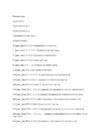

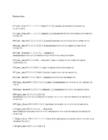





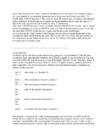
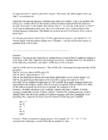
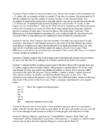
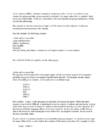
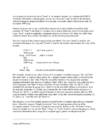























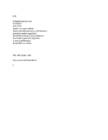
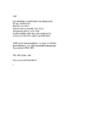

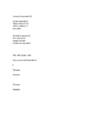
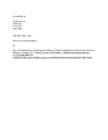






Kõik kommentaarid