Harjutustöö nr 2
Töökeskkond
ja ergonoomika
Üliõpilase
eesnimi ja prk nimi AprahimovRühma
nr. XXXX11Õppejõud Virve Siirak
Ülesanne:
Leida
Euroopa Liidu töötajate kaitset (
protection of workers )
käsitlevates direktiivides iga direktiivi kohta tööandja
(
employer )
kohustused:
Ülesanne: lahendamiseks kasutada linki:
http://europe.osha.eu.int/legislation/ Vaadata üle direktiivid A. 1 – 1.2.15. Mitte tõlkida. Kuna infot on palju,
siis kirjutada kõige olulisem. Töö vormistada ja saata mulle elektrooniliselt [email protected]
- Töö lõppu lisada oma isiklik arvamus tööandja osast töötajate kaitsel Euroopa Liidu direktiivides
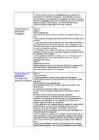
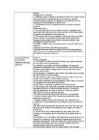
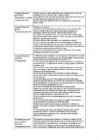
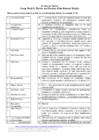
Direktiivi number ja nimetus
Tööandja kohustused
Council Directive 90/270/EEC
Work with
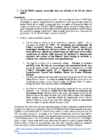
display screen equipment 1. Employers
shall be obliged to
perform an
analysis of workstations in
order to evaluate the
safety and health
conditions to which they give rise for their workers,
particularly as regards possible risks to eyesight,
physical problems and problems of mental
stress .
2. Emyployers shall take appropriate
measures to remedy the risks found, on the
basis of the evaluation
referred to in paragraph 1,
taking account of the additional and/or combined
effects of the risks so found.
Employers must take the appropriate steps to ensure that workstations
first put into
service after 31 December 1992 meet the minimum
requirements laid down in the Annex.
Employers must take the appropriate steps to ensure that workstations
already put into service on or
before 31 December 1992 are adapted to comply with the minimum requirements laid down in the Annex not
later than four years after that
date .
1.
Without prejudice to Article 10 of Directive 89/391/EEC, workers shall receive information on all aspects of safety and health relating to their workstation, in
particular information on
such measures
applicable to workstations as are implemented under
Articles 3, 7 and 9.
In all
cases , workers or their representatives shall be informed of any health and safety measure taken in compliance with this Directive.
2. Without prejudice to Article 12 of Directive 89/391/EEC, every
worker shall also receive training in use of the workstation before commencing this type of work and whenever the organization of the workstation is substantially
modified .
The employer must plan the worker's
activities in such a way that daily work on a display screen is periodically interrupted by breaks or
changes of
activity reducing the workload at the display screen.
Consultation and participation of workers and/or their representatives shall take
place in
accordance with Article 11 of Directive 89/391/EEC on the
matters covered by this Directive,
including its Annex.
2. Workers shall be entitled to an ophthalmological examination if the
results of the test referred to in paragraph 1 show that this is
necessary .
3. If the results of the test referred to in paragraph 1 or of the examination referred to in paragraph 2 show that it is necessary and if normal corrective appliances
cannot be used, workers must be
provided with special corrective appliances appropriate for the work concerned.
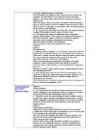
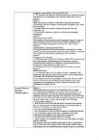
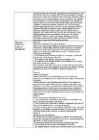
Council Directive 89/654/EEC
Workplaces
Article 3
Article 6
General requirements
To
safeguard the safety and health of workers, the employer shall see to it that:
- traffic routes to
emergency exits and the exits themselves are
kept clear at all
times ,
- technical
maintenance of the workplace and of the equipment and
devices , and in particular those referred to in Annexes I and II, is carried out and any faults found which are liable to
affect the safety and health of workers are rectified as quickly as possible,
- the workplace and the equipment and devices, and in particular those referred to in Annex I, point 6, and Annex II, point 6, are regularly
cleaned to an adequate level of
hygiene ,
- safety equipment and devices intended to
prevent or eliminate
hazards , and in particular those referred to in Annexes I and II, are regularly maintained and checked.
Article 7
Information of workers
Without prejudice to Article 10 of Directive 89/391/EEC, workers and/or their representatives shall be informed of all measures to be taken concerning safety and health at the workplace.
Council Directive 89/656/EEC
Use of personal protective equipment
Article 4
General provisions
1. Personal protective equipment must comply with the
relevant Community provisions on design and
manufacture with
respect to safety and health.
All personal protective equipment must:
(a) be appropriate for the risks involved, without itself
leading to any increased risk;
(b) correspond to existing conditions at the workplace;
(c) take account of ergonomic requirements and the worker's state of health;
(d) fit the wearer correctly after any necessary adjustment.
2. Where the presence of more than one risk makes it necessary for a worker to wear simultaneously more than one item of personal protective equipment, such equipment must be compatible and
continue to be effective against the risk or risks in question.
3. The conditions of use of personal protective equipment, in particular the
period for which it is worn, shall be
determined on the basis of the
seriousness of the risk, the
frequency of
exposure to the risk, the
characteristics of the workstation of each worker and the
performance of the personal protective equipment.
4. Personal protective equipment is, in principle, intended for personal use.
If the circumstances require personal protective equipment to be worn by more than one
person , appropriate measures shall be taken to ensure that such use does not create any health or hygiene problem for the
different users.
5. Adequate information on each item of personal protective equipment,
required under paragraphs 1 and 2, shall be provided and made
available within the undertaking and/or
establishment .
6. Personal protective equipment shall be provided free of
charge by the employer, who shall ensure its
good working order and satisfactory hygienic
condition by
means of the necessary maintenance,
repair and replacements.
However,
Member States may
provide , in accordance with their national
practice , that the worker be asked to contribute towards the
cost of certain personal protective equipment in circumstances where use of the equipment is not exclusive to the workplace.
7. The employer shall first
inform the worker of the risks against which the wearing of the personal protective equipment protects him.
8. The employer shall arrange for training and shall, if appropriate, organize demonstrations in the wearing of personal protective equipment.
9. Personal protective equipment may be used only for the
purposes specified, except in
specific and exceptional circumstances.
It must be used in accordance with instructions.
Such instructions must be understandable to the workers.
Article 5
Article 6
(8)
Rules for use
1. Without prejudice to Articles 3, 4 and 5, Member States shall ensure that general rules are
established for the use of personal protective equipment and/or rules covering cases and situations where the employer must provide the personal protective equipment, taking account of Community
legislation on the free movement of such equipment.
These rules shall indicate in particular the circumstances or the risk situations in which, without prejudice to the
priority to be
given to collective means of protection, the use of personal protective equipment is necessary.
Annexes I, II and III, which constitute a
guide ,
contain useful information for establishing such rules.
2. When Member States adapt the rules referred to in paragraph 1, they shall take account of any significant changes to the risk, collective means of protection and personal protective equipment brought about by technological developments.
3. Member States shall consult the employers' and workers' organization on the rules referred to in paragraphs 1 and 2.
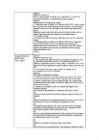
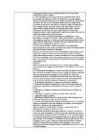
Council Directive 90/269/EEC
Manual handling Article 3
General
provision 1. The employer shall take appropriate
organizational measures, or shall use the appropriate means, in particular mechanical equipment, in order to
avoid the need for the manual handling of loads by workers.
2. Where the need for the manual handling of loads by workers cannot be avoided, the employer shall take the appropriate organizational measures, use the appropriate means or provide workers with such means in order to
reduce the risk involved in the manual handling of such loads,
having regard to Annex I.
Article 4
Organization of workstations
Wherever the need for manual handling of loads by workers cannot be avoided, the employer shall organize workstations in such a way as to make such handling as
safe and healthy as possible and:
(a) assess, in advance if possible, the health and safety conditions of the type of work involved, and in particular examine the characteristics of loads, taking account of Annex I;
(b) take care to avoid or reduce the risk particularly of
back injury to workers, by taking appropriate measures, considering in particular the characteristics of the working environment and the requirements of the activity, taking account of Annex I.
Article 5
Reference to Annex II
For the implementation of Article 6 (3) (b) and Articles 14 and 15 of Directive 89/391/EEC, account should be taken of Annex II.
Article 6
Information for, and training of, workers
1. Without prejudice to Article 10 of Directive 89/391/EEC, workers and/or their representatives shall be informed of all measures to be implemented, pursuant to this Directive, with regard to the protection of safety and of health.
Employers must ensure that workers and/or their representatives receive general indications and, where possible, precise information on:
- the
weight of a load,
- the
centre of gravity of the heaviest side when a package is eccentrically loaded.
2. Without prejudice to Article 12 of Directive 83/391/EEC, employers must ensure that workers receive in
addition proper training and information on how to
handle loads correctly and the risks they might be open to particularly if these tasks are not performed correctly, having regard to Annexes I and II.
Article 7
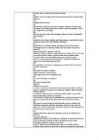
Council Directive 90/394/EEC
Carcinogens
Article 4
Reduction and replacement
1. The employer shall reduce the use of a carcinogen at the place of work, in particular by replacing it, in so far as is technically possible, by a substance, preparation or
process which, under its conditions of use, is not
dangerous or is less dangerous to workers' health or safety, as the
case may be.
2. The employer shall,
upon request,
submit the findings of his investigations to the relevant authorities.
Article 5
Prevention and reduction of exposure
1. Where the results of the
assessment referred to in Article 3 (2) reveal a risk to workers' health or safety, workers' exposure must be prevented.
3. Where a closed system is not technically possible, the employer shall ensure that the level of exposure of workers is reduced to as low a level as is technically possible.
4. Wherever a carcinogen is used, the employer shall
apply all the
following measures:
(a) limitation of the quantities of a carcinogen at the place of work;
(b)
keeping as low as possible the number of workers exposed or likely to be exposed;
(c)
design of work
processes and
engineering control measures so as to avoid or minimize the
release of carcinogens into the place of work;
(d)
evacuation of carcinogens at source, local extraction system or general ventilation, all such methods to be appropriate and compatible with the need to
protect public health and the environment;
(e)
use of existing appropriate procedures for the measurement of carcinogens, in particular for the
early detection of abnormal exposures resulting from an unforeseeable event or an
accident ;
a)
(f)
application of
suitable working procedures and methods;
(g)
collective protection measures and/or, where exposure cannot be avoided by
other means,
individual protection measures;
(h)
hygiene measures, in particular
regular cleaning of
floors , walls and other surfaces;
(i)
information for workers;
(j)
demarcation of risk
areas and use of adequate warning and safety signs including 'no smoking' signs in areas where workers are exposed or likely to be exposed to carcinogens;
(k)
drawing up
plans to deal with emergencies likely to
result in abnormally high exposure;
(l)
means for safe
storage , handling and transportation, in particular by using sealed and
clearly and visibly labelled
containers ;
(m)
means for safe collection, storage and disposal of
waste by workers, including the use of sealed and clearly and visibly labelled containers.
Article 6
Information for the competent authority
Where the results of the assessment referred to in Article 3 (2) reveal a risk to workers' health or safety, employers shall, when requested, make available to the competent authority appropriate information on:
(a) the activities and/or
industrial processes carried out, including the
reasons for which carcinogens are used;
(b)
the quantities of substances or preparations manufactured or used which contain carcinogens;
(c)
the number of workers exposed;
(d)the
preventive measures taken;
(e)the type of protective equipment used;
(f)
the
nature and
degree of exposure;
(g)
the cases of replacement.
Article 7
Unforeseen exposure
1. In the event of an unforeseeable event or an accident which is likely to result in an abnormal exposure of workers, the employer shall inform the workers thereof.
2.
Until the situation has been restored to normal and the
causes of the abnormal exposure have been eliminated:
(a) only those workers who are
essential to the carrying out of repairs and other necessary work shall be permitted to work in the
affected area;
(b)
the workers concerned shall be provided with protective
clothing and individual respiratory protection equipment which they must wear; the exposure may not be
permanent and shall be kept to the strict minimum of time necessary for each worker;
(c)
unprotected workers shall not be
allowed to work in the affected area.
Article 9
Access to risk areas
Appropriate measures shall be taken by employers to ensure that access to areas in which the activities in respect of which the results of the assessment referred to in Article 3 (2) reveal
a risk to workers' safety or health take place are accessible solely to workers who, by
reason of their work or duties, are required to enter
them .
Article 10
Hygiene and individual protection
1. Employers shall be obliged, in the case of all activities for which
there is a risk of contamination by carcinogens, to take appropriate measures to ensure that:
(a) workers do not eat,
drink or smoke in working areas where there is a risk of contamination by carcinogens;
(b)
workers are provided with appropriate protective clothing or other appropriate special clothing;
separate storage
places are provided for working or protective clothing and for
street clothes;
(c)
workers are provided with appropriate and adequate washing and toilet
facilities ;
(d)
protective equipment is properly
stored in a well-defined place;
it is checked and cleaned if possible before, and in any case after, each use;
defective equipment is repaired or replaced before
further use.
2. Workers may not be charged for the cost of these measures.
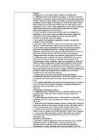
Directive 2000/54/EC
Biological agents Article 5
Replacement
The employer shall avoid the use of a harmful biological
agent if the nature of the activity so permits, by replacing it with a biological agent which, under its conditions of use, is not dangerous or is less dangerous to workers' health, as the case may be, in the
present state of
knowledge .
Article 6
Reduction of risks
1. Where the results of the assessment referred to in Article 3 reveal a risk to workers' health or safety, workers' exposure must be prevented.
2. Where this is not technically practicable, having regard to the activity and the risk assessment referred to in Article 3, the risk of exposure must be reduced to as low a level as necessary in order to protect adequately the health and safety of the workers concerned, in particular by the following measures which are to be applied in the
light of the results of the assessment referred to in Article 3:
(a) keeping as low as possible the number of workers exposed or likely to be exposed;
(b) design of work processes and engineering control measures so as to avoid or minimise the release of biological agents into the place of work;
(c) collective protection measures and/or, where exposure cannot be avoided by other means, individual protection measures;
(d) hygiene measures compatible with the aim of the prevention or reduction of the
accidental transfer or release of a biological agent from the workplace;
(e) use of the biohazard sign depicted in Annex II and other relevant warning signs;
(f) drawing up plans to deal with accidents involving biological agents;
(g)
testing , where it is necessary and technically possible, for the presence, outside the
primary physical confinement, of biological agents used at work;
(h) means for safe collection, storage and disposal of waste by workers including the use of secure and identifiable containers, after suitable treatment where appropriate;
(i)
arrangements for the safe handling and transport of biological agents within the workplace.
Article 7
Information for the competent authority
1. Where the results of the assessment referred to in Article 3 reveal risk to workers' health or safety, employers shall, when requested, make available to the competent authority appropriate information on:
(a) the results of the assessment;
(b) the activities in which workers have been exposed or may have been exposed to biological agents;
(c) the number of workers exposed;
(d) the name and capabilities of the person responsible for safety and health at work;
(e) the protective and preventive measures taken, including working procedures and methods;
(f) an emergency plan for the protection of workers from exposure to group 3 or a group 4 biological agent which might result from a loss of physical containment.
2. Employers shall inform forthwith the competent authority of any accident or incident which may have resulted in the release of a biological agent and which
could cause severe human infection and/or
illness .
3. The list referred to in Article 11 and the
medical record referred to in Article 14 shall be made available to the competent authority in cases where the undertaking ceases activity, in accordance with national
laws and/or practice.
Article 8
Hygiene and individual protection
1. Employers shall be obliged, in the case of all activities for which there is a risk to the health or safety of workers due to work with biological agents, to take appropriate measures to ensure that:
(a) workers do not eat or drink in working areas where there is a risk of contamination by biological agents;
(b) workers are provided with appropriate protective clothing or other appropriate special clothing;
(c) workers are provided with appropriate and adequate washing and toilet facilities, which may
include eye washes and/or
skin antiseptics;
(d) any necessary protective equipment is:
- properly stored in a well-defined place,
- checked and cleaned if possible before, and in any case after, each use,
- is repaired, where defective, or is replaced before further use;
(e) procedures are specified for taking, handling and
processing samples of human or animal
origin .
2. Working clothes and protective equipment, including protective clothing referred to in paragraph 1, which may be contaminated by biological agents, must be removed on leaving the working area and, before taking the measures referred to in the second subparagraph, kept separately from other clothing.
The employer must ensure that such clothing and protective equipment is decontaminated and cleaned or, if necessary, destroyed.
3. Workers may not be charged for the cost of the measures referred to in paragraphs 1 and 2.
Article 12
Consultation and participation of workers
Consultation and participation of workers and/or their representatives in
connection with matters covered by this Directive shall take place in accordance with Article 11 of Directive 89/391/EEC.
Article 13
Notification to the competent authority
1.
Prior notification shall be made to the competent authority of the use for the first time of:
(a) group 2 biological agents;
(b) group 3 biological agents;
(c) group 4 biological agents.
The notification shall be made at least 30
days before the commencement of the work.
Subject to paragraph 2, prior notification shall also be made of the use for the first time of each subsequent group 4 biological agent and of any subsequent new group 3 biological agent where the employer himself provisionally classifies that biological agent.
2. Laboratories
providing a diagnostic service in relation to group 4 biological agents shall be required only to make an initial notification of their
intention .
3. Renotification must take place in any case where there are substantial changes of
importance to safety or health at work to processes and/or procedures which
render the notification out of date.
4. The notification referred to in paragraphs 1, 2 and 3 shall include:
(a) the name and address of the undertaking and/or establishment;
(b) the name and capabilities of the person responsible for safety and health at work;
(c) the results of the assessment referred to in Article 3;
(d) the
species of the biological agent;
(e) the protection and preventive measures that are envisaged.
Council Directive 92/58/EEC
Safety signs
Article 3
General rules
1. Employers shall provide safety and/or health signs as laid down in this Directive where hazards cannot be avoided or adequately reduced by techniques for collective protection or measures, methods or procedures used in the organization of work, or ensure that such signs are in place.
Employers shall take into account any risk evaluation made in accordance with Article 6 (3) (a) of Directive 89/391/EEC.
2. Without prejudice to the provisions of Annex V, the signs used for
road , rail, inland waterway, sea and air transport shall be installed, wherever appropriate for such forms of transport, inside undertakings and/or
firms .
Article 4
Safety and/or health signs used for the first time
Without prejudice to Article 6, a safety and/or health sign used at work for the first time on or after the date referred to in Article 11 (1) first subparagraph must fulfil the minimum requirements set out in Annexes I to IX.
Article 5
Safety and/or health signs already in use
Without prejudice to Article 6, a safety and/or health sign which was already in use at work before the date referred to in Article 11 (1) first subparagraph must fulfil the minimum requirements set out in Annexes I to IX by no later than eighteen months after that date.
Article 6
Exemptions
1. Taking account of the
types of activity and/or
size of the undertakings concerned, Member States may
specify categories of undertakings allowed to
replace totally, partially or temporarily the illuminated signs, and/or acoustic signals provided for in this Directive by
alternative measures which afford the
same level of protection.
2. Member States may derogate, after consulting both
sides of industry, from the application of Annex VIII, section 2 and/or Annex IX, section 3, whilst laying down alternative measures guaranteeing the same level of protection.
3. Member States shall consult, in accordance with national laws and/or practice, employers' and workers' organizations when implementing paragraph 1.
Article 7
Information and instruction for workers
1. Without prejudice to Article 10 of Directive 89/391/EEC, workers and/or their representatives shall be informed of all the measures to be taken concerning the safety and/or health signs used at work.
2. Without prejudice to Article 12 of Directive 89/391/EEC, workers must be given suitable instruction, in particular in the form of specific directions concerning the safety and/or health signs used at work.
In particular, the instruction referred to in the first subparagraph shall cover the
meaning of the signs, especially signs incorporating
words , and the general and specific behaviour to be adopted.
Article 8
Consultation of workers and workers' participation
Consultation and participation of workers and/or their representatives shall take place in accordance with Article 11 of Directive 89/391/EEC on the matters covered by this Directive, including Annexes I to IX.
Council Directive 92/91/EEC
Mineral-extracting industries (drilling)
Article 3
General obligations
1. To safeguard the safety and health of workers, the employer shall take the necessary measures to ensure that:
(a) workplaces are
designed , constructed, equipped, commissioned, operated and maintained in such a way that workers can perform the work assigned to them without endangering their safety and/or health and/or those of other workers;
(b) the
operation of workplaces when workers are present takes place under the supervision of a person in charge;
(c) work involving a special risk is entrusted only to competent
staff and carried out in accordance with the instructions given;
(d) all safety instructions are comprehensible to all the workers concerned;
(e) appropriate first-aid facilities are provided;
(f) any relevant safety
drills are performed at regular intervals.
2. The employer shall ensure that a
document concerning safety and health, hereinafter referred to as 'safety and health document`, covering the relevant requirements laid down in Articles 6, 9 and 10 of Directive 89/391/EEC, is drawn up and kept up to date.
The safety and health document shall demonstrate in particular:
- that the risks incurred by the workers at the work place have been determined and assessed,
- that adequate measures will be taken to attain the aims of this Directive,
- that the design, use and maintenance of the workplace and of the equipment are safe.
The safety and health document must be drawn up prior to the commencement of work and be revised if the workplace has undergone
major changes, extensions or conversions.
3. Where workers from
several undertakings are present at the same workplace, each employer shall be responsible for all matters under his control.
The employer who, in accordance with national laws and/or
practices , is in charge of the workplace, shall coordinate the implementation of all the measures concerning the safety and health of the workers and shall state, in his safety and health document, the aim of that coordination and the measures and procedures for implementing it.
The coordination shall not affect the responsibility of the individual employers as provided for in Directive 89/391/EEC.
4. The employer shall, without delay,
report any
serious and/or
fatal occupational accidents and situations of serious
danger to the competent authorities.
If necessary, the employer shall
update the safety and health document recording measures taken to avoid any repetition.
Article 6
Communication , warning and
alarm systems
The employer shall take the requisite measures to provide the necessary warning and other communication systems to enable assistance,
escape and rescue operations to be launched immediately if the need arises.
Article 7
Keeping workers informed
1. Without prejudice to Article 10 of Directive 89/391/EEC, workers and/or their representatives shall be informed of all measures to be taken concerning safety and health at workplaces, and in particular of those relating to the implementation of Article 3 to 6.
2. The information must be comprehensible to the workers concerned.
Article 8
Health surveillance
1. To ensure that workers receive health surveillance appropriate to the health and safety risks they incur at work, measures shall be introduced in accordance with national law and/or practices.
2. The measures referred to in paragraph 1 shall be such that each worker shall be entitled to or shall undergo health surveillance before being assigned to duties
related to the activities referred to in Article 2 and subsequently at regular intervals.
3. Health surveillance may be provided as part of a national health system.
Article 9
Consultation of workers and workers' participation
Consultation and participation of workers and/or of their representatives shall take place in accordance with Article 11 of Directive 89/391/EEC on the matters covered by this Directive.
Council Directive 92/104/EEC
Mineral-extracting industries
Article 3
General obligations
1. To safeguard the safety and health of workers, the employer shall take the necessary measures to ensure that:
(a) workplaces are designed, constructed, equipped, commissioned, operated and maintained in such a way that workers can perform the work assigned to them without endangering their safety and/or health and/or those of other workers;
(b) the operation of workplaces when workers are present takes place under the supervision of a person in charge;
(c) work involving a special risk is entrusted only to competent staff and carried out in accordance with the instructions given;
(d) all safety instructions are comprehensible to all the workers concerned;
(e) appropriate first-aid facilities are provided;
(f) any relevant safety drills are performed at regular intervals.
2. The employer shall ensure that a document concerning safety and health, hereinafter referred to as 'safety and health document`, covering the relevant requirements laid down in Articles 6, 9 and 10 of Directive 89/391/EEC, is drawn up and kept up to date.
The safety and health document shall demonstrate in particular that:
- the risks to which workers at the workplace are exposed have been determined and assessed,
- adequate measures will be taken to attain the aims of this Directive,
- the design, use and maintenance of the workplace and of the equipment are safe.
The safety and health document must be drawn up before work starts and be revised if the workplace has undergone major changes, extensions or conversions.
3. Where workers from several undertakings are present at the same workplace, each employer shall be responsible for all matters under his control.
The employer who, in accordance with national laws and/or practices, is in charge of the workplace, shall coordinate the implementation of all the measures concerning the safety and health of the workers and shall state, in his safety and health document, the aim of that coordination and the measures and procedures for implementing it.
The coordination shall not affect the responsability of the individual employers as provided for in Directive 89/391/EEC.
4. The employer shall report any serious and/or fatal occupational accidents and situations of serious danger to the competent authorities as soon as possible.
Article 4
Protection from
fire , explosions and health-endangering atmospheres
The employer shall take measures and precautions appropriate to the nature of the operation:
- to avoid, detect and
combat the starting and
spread of fires and explosions, and
- to prevent the occurrence of explosive and/or health-endangering atmospheres.
Article 5
Escape and rescue facilities
The employer shall provide and
maintain appropriate means of escape and rescue in order to ensure that workers have adequate opportunities for leaving the workplaces promptly and safely in the event of danger.
Article 6
Communication, warning and alarm systems
The employer shall take the requisite measures to provide the necessary warning and other communication systems to enable assistance, escape and rescue operations to be launched immediately if the need arises.
Article 7
Keeping workers informed
1. Without prejudice to Article 10 of Directive 89/391/EEC, workers and/or their representatives shall be informed of all measures to be taken concerning safety and health at workplaces, and in particular of those relating to the implementation of Articles 3 to 6.
2. The information must be comprehensible to the workers concerned.
Article 8
Health surveillance
1. To ensure that workers receive health surveillance appropriate to the health and safety risks they incur at work, measures shall be introduced in accordance with national law and/or practices.
2. The measures referred to in paragraph 1 shall be such that each worker shall be entitled to, or shall undergo, health surveillance before being assigned to duties related to the activities referred to in Article 2 and subsequently at regular intervals.
3
Council Directive 98/24/EC
Chemical agents
Article 4
Determination and assessment of risk of
hazardous chemical agents
1. In carrying out the obligations laid down in Articles 6(3) and 9(1) of Directive 89/391/EEC, the employer shall first determine whether any hazardous chemical agents are present at the workplace. If so, he shall then assess any risk to the safety and health of workers arising from the presence of those chemical agents, taking into
consideration the following:
- their hazardous properties,
- information on safety and health that shall be provided by the
supplier , (e.g. the relevant safety data sheet in accordance with the provisions of Directive 67/548/EEC or Directive 88/379/EEC),
- the level, type and duration of exposure,
- the circumstances of work involving such agents, including their amount,
- any occupational exposure
limit values or biological limit values established on the territory of the Member State in question,
- the
effect of preventive measures taken or to be taken,
- where available, the conclusions to be drawn from any health surveillance already undertaken.
The employer shall obtain additional information which is needed for the risk assessment from the supplier or from other readily available sources. Where appropriate, this information shall comprise the specific assessment concerning the risk to users established on the basis of Community legislation on chemical agents.
2. The employer must be in possession of an assessment of the risk in accordance with Article 9 of Directive 89/391/EEC, and shall identify which measures have been taken in accordance with Articles 5 and 6 of this Directive. The risk assessment shall be documented in a suitable form according to national law and practice, and may include a justification by the employer that the nature and extent of the risks related to chemical agents make a further detailed risk assessment unnecessary. The risk assessment shall be kept up-to-date, particularly if there have been significant changes which could render it out-of-date, or when the results of health surveillance show it to be necessary.
3. Certain activities within the undertaking or establishment, such as maintenance, in respect of which it is foreseeable that there is a potential for significant exposure, or which may result in deleterious effects to safety and health for other reasons,
even after all technical measures have been taken, shall be
included in the risk assessment.
4. In the case of activities involving exposure to several hazardous chemical agents, the risk shall be assessed on the basis of the risk presented by all such chemical agents in combination.
5. In the case of a new activity involving hazardous chemical agents, work shall only commence after an assessment of the risk of that activity has been made and any preventive measures identified have been implemented.
6.
Practical guidelines for the determination and assessment of risk, and for their review and, if necessary, adjustment, shall be developed in accordance with Article 12(2).
Article 5
General principles for prevention of risks associated with hazardous chemical agents and application of this Directive in relation to assessment of risks
1. In carrying out his obligation to ensure the health and safety of workers in any activity involving hazardous chemical agents the employer shall take the necessary preventive measures set out in Article 6(1) and (2) of Directive 89/391/EEC and include the measures set out in this Directive.
2. Risks to the health and safety of workers at work involving hazardous chemical agents shall be eliminated or reduced to a minimum by:
- the design and
organisation of systems of work at the workplace,
- the provision of suitable equipment for work with chemical agents and maintenance procedures which ensure the health and safety of workers at work,
- reducing to a minimum the number of workers exposed or likely to be exposed,
- reducing to a minimum the duration and intensity of exposure,
- appropriate hygiene measures,
- reducing the quantity of chemical agents present at the workplace to the minimum required for the type of work concerned,
- suitable working procedures including arrangements for the safe handling, storage and transport within the workplace of hazardous chemical agents and waste containing such chemical agents.
Practical guidelines for preventive measures to control risk shall be developed in accordance with Article 12(2).
3. Where the results of the assessment referred to in Article 4(1) reveal a risk to the safety and health of workers, the specific protection, prevention and monitoring measures laid down in Articles 6, 7 and 10 shall be applied.
4. Where the results of the risk assessment referred to in Article 4(1) show that, because of the quantities of a hazardous chemical agent present in the workplace, there is only a slight risk to the safety and health of workers, and the measures taken in accordance with paragraphs 1 and 2 of this Article are sufficient to reduce that risk, the provisions of Articles 6, 7 and 10 shall not apply.
Article 7
Arrangements to deal with accidents, incidents and emergencies
1. Without prejudice to the obligations laid down in Article 8 of Directive 89/391/EEC, the employer shall, in order to protect the safety and health of workers from an accident, incident or emergency related to the presence of hazardous chemical agents at the workplace, establish procedures (
action plans) which can be put into effect when any such event occurs, so that appropriate action is taken. These arrangements shall include any relevant safety drills which are to be performed at regular intervals, and the provision of appropriate first aid facilities.
2. In the case of the occurrence of an event such as is mentioned in paragraph 1, the employer shall immediately take steps to mitigate the effects of the event and to inform the workers concerned thereof.
In order to
restore the situation to normal:
- the employer shall
implement appropriate measures to remedy the situation as soon as possible,
- only those workers who are essential to the carrying out of repairs and other necessary work shall be permitted to work in the affected area.
3. The workers who are permitted to work in the affected area shall be provided with appropriate protective clothing, personal protective equipment, specialised safety equipment and
plant which they must use as long as the situation persists; that situation shall not be permanent.
Unprotected persons shall not be permitted to remain in the affected area.
4. Without prejudice to Article 8 of Directive 89/391/EEC the employer shall take the measures necessary to provide the warning and other communication systems required to
signal an increased risk to safety and health, to enable an appropriate response and to
launch remedial
actions , assistance, escape and rescue operations immediately if the need arises.
5. The employer shall ensure that information on emergency arrangements involving hazardous chemical agents is available. The relevant internal and
external accident and emergency services shall have access to this information. It shall include the following:
- advance
notice of relevant work hazards,
hazard identification arrangements, precautions and procedures, so that the emergency services can
prepare their own response procedures and precautionary measures; and
- any available information concerning specific hazards arising, or likely to rise, at the time of an accident or emergency, including information on procedures prepared pursuant to this Article.
Article 8
Information and training for workers
1. Without prejudice to Articles 10 and 12 of Directive 89/391/EEC the employer shall ensure that workers and/or their representatives are provided with:
- the data obtained pursuant to Article 4 of this Directive, and further informed whenever a major alteration at the workplace leads to a
change in these data,
- information on the hazardous chemical agents occurring in the workplace, such as the
identity of those agents, the risks to safety and health, relevant occupational exposure limit values and other legislative provisions,
- training and information on appropriate precautions and actions to be taken in order to safeguard themselves and other workers at the workplace,
- access to any safety data sheet provided by the supplier in accordance with Article 10 of Directive 88/379/EEC and Article 27 of Directive 92/32/EEC (20);
and that the information is:
- provided in a
manner appropriate to the
outcome of the risk assessment pursuant to Article 4 of this Directive. This may
vary from
oral communication to individual instruction and training supported by information in writing, depending on the nature and degree of the risk
Council Directive 92/57/EEC
Temporary or
mobile construction sites In order to preserve safety and health on the construction site, under the conditions set out in Article 6 and 7, employers shall:
(a) in particular when implementing Article 8, take measures that are in line with the minimum requirements set out in Annex IV;
(b) take into account directions from the coordinator(s) for safety and health matters.
Council Directive 89/391
Framework directive
Employers are obliged:
to ensure the health and safety of workers in every aspect related to the work, primarily on the basis of the specified general principles of prevention, without involving the workers in any financial cost;
to evaluate the occupational risks,
inter alia in the
choice of work equip ment and the
fitting -out of workplaces, and to make provision for adequate protective and preventive services;
to
keep a list of, and
draw up reports on, occupational accidents;
to take the necessary measures for first aid, fire-fighting, evacuation of workers and action required in the event of serious and
imminent danger;
to inform and consult workers and
allow them to take part in discussions on all
questions relating to safety and health at work;
to ensure that each worker receives adequate health and safety training
throughout the period of employment.
Council Directive 94/33/EC
Young people
1. Without prejudice to Article 4 (1), the employer shall adopt the measures necessary to protect the safety and health of young people, taking particular account of the specific risks referred to in Article 7 (1).
2. The employer shall implement the measures provided for in paragraph 1 on the basis of an assessment of the hazards to young people in connection with their work.
The assessment must be made before young people
begin work and when there is any major change in working conditions and must pay particular attention to the following points:
(a) the fitting-out and
layout of the workplace and the workstation;
(b) the nature, degree and duration of exposure to physical, biological and chemical agents;
(c) the form, range and use of work equipment, in particular agents,
machines , apparatus and devices, and the way in which they are handled;
(d) the arrangement of work processes and operations and the way in which these are combined (organization of work);
(e) the level of training and instruction given to young people.
Where this assessment shows that there is a risk to the safety, the physical or mental health or development of young people, an appropriate free assessment and monitoring of their health shall be provided at regular intervals without prejudice to Directive 89/391/EEC.
The free health assessment and monitoring may form part of a national health system.
3. The employer shall inform young people of possible risks and of all measures adopted concerning their safety and health.
Furthermore, he shall inform the
legal representatives of
children of possible risks and of all measures adopted concerning children's safety and health.
4. The employer shall
involve the protective and preventive services referred to in Article 7 of Directive 89/391/EEC in the
planning , implementation and monitoring of the safety and health conditions applicable to young people.
Amended
proposal for a Council
Decision Transport activities
The employer must ensure that employees' workplaces comply with the minimum requirements for health and safety as set out in Annex II, Part A, with effect from 31 December 1994. This
deadline is extended by two years in the case of workplaces on
board means of transport already in service on that date. Additionally, the employer must provide workers with sanitary facilities, rest
rooms and
living quarters as set out in Annex 2, Part B, with effect from 31 December 1994. Here too the deadline is extended by two years in the case of sanitary facilities, rest rooms and living quarters on board means of transport already in service on that date. The employer is responsible for ensuring the technical maintenance of installations, the regular cleaning of means of transport and the regular checking of safety, emergency, control and signalling equipment, as well as for devising suitable organisational measures and selecting the equipment intended to safeguard the health and safety of workers
during transport activities. Provision is made for the medical surveillance of workers, and the employer must inform workers of the health and safety measures taken during transport activities in accordance with article 10 of Directive 89/391/EEC. Workers must receive training, including emergency evacuation practice and rescue drills, designed to promote accident prevention measures relevant to transport activities.
Directive 1999/92/EC
Explosive atmospheres
Article 3
Prevention of and protection against explosions
With a view to preventing, within the meaning of Article 6(2) of Directive 89/391/EEC, and providing protection against explosions, the employer shall take technical and/or organisational measures appropriate to the nature of the operation, in order of priority and in accordance with the following basic principles:
- the prevention of the
formation of explosive atmospheres, or where the nature of the activity does not allow that,
- the avoidance of the
ignition of explosive atmospheres, and
- the mitigation of the detrimental effects of an explosion so as to ensure the health and safety of workers.
These measures shall where necessary be combined and/or supplemented with measures against the propagation of explosions and shall be reviewed regularly and, in any event, whenever significant changes
occur .
Article 6
Duty of coordination
Where workers from several undertakings are present at the same workplace, each employer shall be responsible for all matters coming under his control.
Without prejudice to the individual responsibility of each employer as provided for in Directive 89/391/EEC, the employer responsible for the workplace in accordance with national law and/or practice shall coordinate the implementation of all the measures concerning workers' health and safety and shall state, in the explosion protection document referred to in Article 8, the aim of that coordination and the measures and procedures for implementing it.
Article 7
Places where explosive atmospheres may occur
1. The employer shall classify places where explosive atmospheres may occur into
zones in accordance with Annex I.
2. The employer shall ensure that the minimum requirements laid down in Annex II are applied to places covered by paragraph 1.
3. Where necessary, places where explosive atmospheres may occur in such quantities as to endanger the health and safety of workers shall be marked with signs at their points of
entry in accordance with Annex III.
Article 8
Explosion protection document
In carrying out the obligations laid down in Article 4, the employer shall ensure that a document, hereinafter referred to as the "explosion protection document", is drawn up and kept up to date.
The explosion protection document shall demonstrate in particular:
- that the explosion risks have been determined and assessed,
- that adequate measures will be taken to attain the aims of this Directive,
- those places which have been classified into zones in accordance with Annex I,
- those places where the minimum requirements set out in Annex II will apply,
- that the workplace and work equipment, including warning devices, are designed, operated and maintained with due regard for safety,
- that in accordance with Council Directive 89/655/EEC(10), arrangements have been made for the safe use of work equipment.
The explosion protection document shall be drawn up prior to the commencement of work and be revised when the workplace, work equipment or organisation of the work undergoes significant changes, extensions or conversions.
The employer may combine existing explosion risk assessments,
documents or other equivalent reports produced under other Community acts.
Kirjutada lühidalt oma isiklik
arvamus tööandja osast töötajate kaitsel Euroopa Liidu
direktiivides:
Iga
tööandja huvides on oma töötajatele turvalise töökeskkonna
tagamine. Esmapilgul võib tunduda, et neid direktiive ja nõudeid on
palju ning tööandjal võib raske olla kõike täita ,kuid lähimal
uurimisel selgus ,et midagi üleloomulikku ei nõuta. Enamik nendest
kohustustest on minu arvates elementaarsed. Mulle isiklikult tundub
et Eestis pole kõiki neid direktiive veel rakendata jõutud, sest
siinne töötajate kaitse võrreldes nt.
Soomega on väga nõrk.
 5 punkti
Autor soovib selle materjali allalaadimise eest saada 5 punkti.
5 punkti
Autor soovib selle materjali allalaadimise eest saada 5 punkti.
 ~ 16 lehte
Lehekülgede arv dokumendis
~ 16 lehte
Lehekülgede arv dokumendis
 2008-12-26
Kuupäev, millal dokument üles laeti
2008-12-26
Kuupäev, millal dokument üles laeti
 170 laadimist
Kokku alla laetud
170 laadimist
Kokku alla laetud
 1 arvamus
Teiste kasutajate poolt lisatud kommentaarid
1 arvamus
Teiste kasutajate poolt lisatud kommentaarid
 s133p
Õppematerjali autor
s133p
Õppematerjali autor
 annaabi.ee







Kõik kommentaarid