Burger King (NYSE: BKC),
often abbreviated to
BK, is a
global chain of
hamburger fast food
restaurants. The
first restaurant was opened in Miami,
Florida in 1954 by James
McLamore and David
Edgerton, and has
since used
several variations of franchising
to expand its operations. Burger King Holdings
Corporation is the
parent company of Burger King; in the United
States it operates under
the Burger King
Brands title
while internationally it operates under
the Burger King Corporation banner. It is a publicly traded company
with investment firms of TPG
Capital, L.P., Bain
Capital, and Goldman
Sachs each owning about 25% of the company.
At the end of its fiscal
year 2007, Burger King reported that
there are more
than 11,300 outlets in 69 countries; 66% are in the United
States and 90% are privately
owned and operated. The company has more than 37,000 employees
serving
approximately 11.4 million customers daily. In
North America,
franchises are licensed on a per
store basis , while in several
international locations licenses are
sold on a regional basis with
franchises owning exclusive
development rights for the
region or
country .
These regional franchises are
known as master franchises,
and are
responsible for opening new restaurants, licensing new third
party operators, and performing standards oversight of all restaurant
locations in these countries. The largest example of a master
franchise is Hungry
Jack's, which
exclusively owns, operates or sub-licenses over 300
restaurants in
Australia .
As with
other multi -national
corporations, Burger King has been involved in several legal
disputes and
cases , as
both plaintiff and defendant, in the
years since its
founding in 1954. Situations involving a myriad of legal
topics have
affected all aspects of the company's operations.
Depending upon its ownership and
executive staff at the time, its
responses to these challenges have
ranged from a conciliatory dialog
with its
critics to a more
aggressive opposition with questionable
tactics and
negative consequences. How the company responded to these
various
issues has drawn praise, scorn, and accusations of political
appeasement.
The Burger
King
menu has evolved from a
basic offering of
burgers , fries,
sodas and milkshakes in 1954 to a larger, more
diverse set of
offerings that includes several variations of
chicken ,
fish ,
salads and
breakfast . The
Whopper, a
sandwich that has since become Burger King's signature product, was
the first
major addition to the menu by Mr. McLamore in 1957. Not all
introductions have had the
success of the Whopper; BK has introduced
many
products which failed to
catch hold in the marketplace. Some
products that have failed in the US have
seen success in foreign
markets , where BK has also tailored its menu for regional tastes.
The company's "
Golden Age" of
advertising was
during the 1970s when it introduced its mascot the
Magical Burger King, a memorable jingle, and several well known
and parodied slogans.
Beginning in the
early 1980s, its
advertising began to
lose focus ; a
series of less successful ad
campaigns created by various agencies
continued for the next two decades. In 2003, Burger King set about
resuscitating its moribund advertising with the
hiring of the
Miami-
based advertising
agency of Crispin
Porter + Bogusky (CP+B). They
completely reorganized Burger
King's advertising with a series of new
advertisements centered on a
resuscitated Magical Burger King
character .
History
Burger King's first restaurant,
originally called
Insta Burger King, was opened on December
4, 1954 in a
suburb of Miami,
Florida by James
McLamore and David Edgerton; both alumni of the
Cornell University School of
Hotel Administration. McLamore visited the
original McDonald's hamburger stand belonging to Dick
and Mac McDonald in San
Bernardino,
California ;
sensing potential in their innovative
assembly line-based production system, he decided to create a version of
his own. By
1959 , BK had
grown to
five regional stores in and
around the metropolitan Miami area. About this time, McLamore and Edgerton
decided to expand BK nationally by using a franchising system; a
popular
method for expansion due to its low capital
cost for the
parent company. They formed Burger King Corporation as the parent and
began
selling territorial franchise licenses to private owners across
the US.
In 1967, after
eight years of private
operation , the Pillsbury
Company
acquired Burger King and its parent company Burger King
Corporation. At the time of the
purchase , BK had grown to 274
restaurants in the United States.
Even though Pillsbury owned and
operated the company, BK was
still the
object of a series of failed
and successful acquisitions and divestitures. In 1973,
Chart House,
owner of 350 BK restaurants at the time and one of BK's largest
franchise groups, attempted to purchase the chain from Pillsbury for
$100 million (USD).
When Chart House's bid failed, its owners, Billy and
Jimmy Trotter,
suggested that Pillsbury and Chart House spin off their respective
Burger King holdings and merge the two entities into a separate
company, an
offer Pillsbury also declined. After the failed attempts
to acquire BK, the
relationship with Chart House and the Trotters
began to
sour ; in 1979 BK successfully sued Chart House for
improperly acquiring locations in
Boston and Houston. In 1984,
Pillsbury purchased Chart House's successor DiversiFoods for $390
million (USD) after a
separate, independent $525 million DiversiFoods
management -backed
leveraged
buy-out of the company failed.
BK, and
former corporate siblings, Bennigan's,
Steak and Ale,
Godfather 's
Pizza (
part of the DiversiFoods acquisition),
Quik Wok and Häagen
Dazs ice
cream shops, remained under the Pillsbury corporate
umbrella until Pillsbury divested its restaurant holdings in 1989 and
sold Burger King to British alcoholic
beverage manufacturer and
distributor Grand
Metropolitan PLC. In 1989, under the ownership of Grand Met,
Burger King acquired many locations of its major UK rival Wimpy
when the parent company bought the Wimpy's
brand from its
previous owner United
Biscuits and re-branded
them as Burger King,
giving it an even
greater presence in that country. While other "Wimpy"
locations are still in operation presently, they are now independent
from BK and no longer have the presence they
once did. In 1997, Grand
Metropolitan merged with Guinness
to form a company called Diageo.
Diageo maintained ownership of BKC until 2001 when Diageo decided to
focus
solely on their beverage products and divest itself of the
chain.
By the time of the
sale , Burger King's revenues and
market share had
declined significantly, Burger King had fallen to a
near tie for
second
place with rival Wendy's
in the US market for hamburger chain restaurants. For many years
leading into the early 2000s Burger King and its various owners
plus many of its larger franchises closed many under-performing stores.
Several of its largest franchises entered bankruptcy due to the
issues surrounding the
performance of the brand.
In 2002, a troika
of private
equity firms led by TPG
Capital, L.P with associates Bain
Capital and Goldman
Sachs Capital
Partners agreed to purchase BK from Diageo for $1.5
billion (USD), with
the sale becoming
complete in December of that year. The new owners,
through several new CEOs, have moved to revitalize and reorganize the
company, the first major
move was to re-name the BK parent as Burger
King Brands. The investment group initially planned to take BK public
within the two years of the acquisition, this was delayed until 2006.
On
February 1, 2006, CEO
Greg Brenneman announced TPG's
plans to
turn Burger King into a
publicly traded company by issuing an Initial
Public Offering (IPO). On February 16, the company announced it
had filed its
registration for the IPO with the Securities
and
Exchange Commission. On May 18, 2006, Burger King began
trading on the New
York Stock Exchange under the ticker symbol BKC and generated
$425 million in revenue, the largest IPO of a US-based restaurant
chain on record.
International expansion
While BK began its foray in to locations
outside of the continental
United States in 1963 with a store in San
Juan , Puerto
Rico , it did not have a large international
presence. This situation changed shortly after the acquisition when
Pillsbury opened its first international restaurant in Canada in
1969. Other international locations followed soon after: Oceania
in
1971 with Hungry Jack's and in
Europe in 1975 with a restaurant in
Madrid ,
Spain .
Beginning in 1982, BK and its franchisees began
operating stores in
several
East Asian countries,
including Japan ,
Taiwan ,
Singapore and
South Korea. Due to high competition, all of the
Japanese locations
closed by the end of 2001. BK reentered the Japanese market in
mid-2007. BK's Central
and South American operations began in
Mexico in the
late 1970s.
While Burger King lags
behind McDonald's in international locations
by over 12,000 stores, it has
managed to become the largest chain in
several countries including Mexico and Spain. To assist in its
international expansion, Burger King has
established several
subsidiaries to
develop strategic partnerships and alliances to
expand into new territories; in Europe, Burger King's subsidiary
Burger King Europe
GmbH is responsible for the licensing and
development of BK franchises in the that market,
Africa and
Western Asia . In Asia, the BK AsiaPac, PTE. Ltd. business unit handles
franchising for East Asia, the Asian subcontinent and all Oceanic
territories except Australia.
Over the ten year
period starting in 2008, Burger King sees 80% of
its market share to be driven by foreign expansion,
particularly in
the Asia-Pacific
and
Indian subcontinent regional markets. While the TPG-
lead group has
continued BK's international expansion by announcing plans to
open new franchise locations in
Eastern Europe, Africa and the
Middle East, and
Brazil ,
the company plans to focus on the three largest markets, India,
China and Japan.[18][19][20][21]
The company plans to add over 250 stores in these Asian territories,
as well as other countries
such as
Macau ,
by the end of 2012. Its expansion into the Indian market has the
company at a competitive disadvantage with other QSR vendors such as
KFC because the
country's large Hindu
majority's aversion to beef. BK
hopes to use their
recent non-beef
products, such as their TenderCrisp
and TenderGrill
sandwiches, as well as other products to help them overcome this
hurdle to expand in that country.
At the end of its fiscal 2008 year, Burger King is the second largest
chain of
hamburger fast
food restaurants in the world behind industry bellwether
McDonald's
(31,000 locations) and the
fourth largest fast food restaurant chain
overall after Yum!
Brands (34,000 locations), McDonald's and Subway
(28,400 locations).
Products
When the company began, its menu consisted predominantly of
hamburgers,
French fries,
soft drinks,
and desserts. In
1957, BK added its signature item, the Whopper.
This
quarter pound hamburger
was created by Burger King founders James
McLamore and David
Edgerton as a way to differentiate BK from other burger outlets
at the time. The sandwich
became famous enough that BK eventually
adopted the motto "Home of the Whopper".
One of
Donald N. Smith's first changes to the menu was the addition
of the Burger King Specialty sandwich line in 1979, which
significantly
expanded the breadth of the BK menu with many
non-hamburger sandwiches including new chicken and
fish offerings.
The new specialty sandwich line was one of the first attempts to
target a
specific demographic, in this
case adults 18-34,
members of
which would be willing spend more on a
higher quality product. One of
Smith's other significant contribution to the menu was the addition
of a breakfast product line, which until this time was not a market
Burger King had entered. Besides the addition of the
Croissan'Wich
in 1983, the breakfast menu remained
almost identical to the
McDonald's offerings until a menu revamp in 1985. This expansion
introduced BK's
Am Express product line which added new
products such as French
toast sticks and Mini-muffins.
As the company expanded both inside and outside the US, it introduced
localized
versions of its products that conform to regional tastes and
cultural or religious
beliefs . International variations add
ingredients such as teriyaki
or beetroot and
fried egg to the
Whopper,
beer in
Germany ,
Italy and Spain, and
halal or kosher
products in the middle East and Israel. To
generate additional
sales ,
BK will occasionally introduce limited time
offers (LTOs) that are
versions of its
core products or new products intended for either
long or short term sales.
Items such as the
Texas Double Whopper and
various sandwiches made with mushrooms
and
Swiss cheese
have been rotated in and out of its menu for several years while
products such as its 1993 offering, a Meatloaf
Specialty
Sandwich and limited table
service along with
special dinner platters, failed to generate
interest and were discontinued.
In
order to appeal to as many demographic groups as possible and
better compete with its QSR competitor Wendy's,
Burger King added a multi-tiered
value menu in 1993 with items priced at 99¢, $1.99 and $2.99 (USD).
The
project called, Operation Phoenix, was an attempt to add not only
a value menu but a line of value
meals . The tiered menu was replaced with a more standard value
menu in 1998, while the value meals were separated into their own
menu segemnt. This value menu featured
seven products: Whopper Jr., 5
piece Chicken Tenders, a
bacon cheeseburger,
medium sized french
fries, medium soft
drink , medium onion
rings and small shake. In 2002
and 2006, BK revamped its value menu
adding and removing several
different products such as chili
and its
Rodeo Cheeseburger. Many of these items have since been discontinued,
modified or relegated to a regional menu
option . To better appeal to
a more
adult palate and demographic, BK introduced several new
products to its menu in 2003, including several new or revamped
chicken products, a new
salad line and its BK Joe brand of coffee.
Some of the new products, including its Enormous
Omelet Sandwich line and the BK
Stacker line,
brought negative
attention due the large portion
size , amounts of unhealthy fats and trans-fats.[72][73][74]
Many of these products feature higher quality ingredients like
whole chicken breast, Angus beef, natural cheeses
such as
cheddar and
pepper jack.
Again , not all these products, such as the BK
Baguette line, have met corporate sales
expectations .
Advertising
Burger King has
employed varied advertising programs, both successful
and unsuccessful, since its foundation in 1954. During the 1970s,
output
included a memorable jingle, the inspiration for its
current mascot the
Burger King and several well known and parodied slogans
such as
Have it your way and
It takes two hands to hold a
Whopper. Burger King introduced the first attack
ad in the fast food industry with the help of then unknown Sarah
Michelle Gellar in 1981. The
television spot, which claimed BK
burgers were larger than competitor McDonald's, so enraged executives
at McDonald's parent company, they sued all
parties involved.
Starting in the early 1980s and
running through approximately 2001,
BK engaged a series of ad
agencies that produced many unsuccessful slogans and programs,
including its
biggest advertising
flop Where's Herb ?.[82][83]
Burger King was a
pioneer in the advertising practice known as the
product tie-in
with a successful partnering with George
Lucas' Lucasfilm,
Ltd. to promote the 1977 movie
Star Wars film Star
Wars (later renamed
Star
Wars Episode IV: A New Hope ) in which BK sold a set of
glasses featuring the main
characters from the
film . This
promotion was one of the first in the fast
food industry and set the pattern that continues to the
present .
BK's early success in the
field was overshadowed by a 1982 deal
between McDonald's and the
Walt Disney Company to promote Disney's animated
films beginning in
the mid 1980s and running through the early 1990s. In 1994 Disney
switched from McDonald's to Burger King, signing a ten film
promotional contract which would
include such top ten films as
Aladdin
(1992),
Beauty
and the Beast (1991),
The Lion King (1994) and
Toy
Story (1995). A partnership in
association with the Pokémon
franchise at the
height of its
popularity in 1999 was one of the most
successful in the industry, rivaled only by McDonald's/Ty Beanie
Babies
cross -promotion in 1999–2000.
Shortly after the acquisition of Burger King by TPG
Capital, L.P. in 2002, its newly hired CEO
Bradley (
Brad ) Blum
set about
turning around fortunes of the company by initiating an
overhaul its flailing advertising programs. One of the first moves by
the company was to reinstate its famous
Have it your way slogan as the corporate motto. BK handed the effort off to its new
advertising agency, Miami-based Crispin
Porter + Bogusky (abbreviated as CP+B). CP+B was known for
having a hip, subversive tack when creating campaigns for its clients,
exactly what BK was
looking for. One of CP+B
strategies was to revive
the Burger King character used during BKs 1970s/1980s Burger
King Kingdom
children 's advertising campaign as a caricatured
variation now simply called "the King". The farcical
nature of
the Burger King centered advertisements inspired an
internet meme where the King is photoshopped
into unusual situations that are either comical or menacing, many
times followed with the
phrase Where is your God now?.
Additionally, CP+B created a series new characters like the
Subservient Chicken and the
faux nu
metal band Coq Roq
featured in a series of viral
web-based advertisements on
sites such as MySpace
and various BK corporate pages to compliment the various television
and
print promotional campaigns. One of the more
unique promotions
that CP+B devised was the
creation of a series of three advergames
for the Xbox 360.
Featuring company
celebrity spokesman
Brooke Burke,
the
games sold more than 2 million copies, placing them as one of the
top selling games along with an
another Xbox 360 hit,
Gears
of War. These innovative ad campaigns, coupled with other new
promotions and a series of new
product introductions,
drew considerable positive and negative
attention to BK and helped TPG and its partners realize about $367
million in dividends.
Derivations
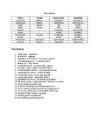
NOUN VERB ADJECTIVE ADVERB production
produce
productive
productivly
introduction
itroduce
introductery
introductevly
height
highten
high
highly depth
deepen
deep deeply
disaster
disastrous
disastrously
nature
natural
naturally
consideration
consider considering
considerly
privacy
private
privately
experiment experiment
experimental
experimentally
response
response
responsible
responsibly
Expressions spinal cord – seljakeelik
to level off – raugema
regardless of the amount – hoolimata kogusest
overwhelming power – ülekaalukas jõud
abrupt loss – järsk kaotus
emotional arousal – emotsionaalne virgutus
learning to cope – õppima koostööd tegema
environmental exposure – keskkonna haavatavus
comprehensive review – üldine ülevaade
conducted by other – teiste poolt juhitud
contributing factor – kaasa aitav faktor
modifiable risk factor – muutlikud riskifaktorid
the recovery rate is higher-taastmise võimalus on suurem
intense hunger- pingeline nälg
to prevent weight gain-ära hoidma kaalu kasvu
results will be gradual-tulemused on järjkjärgulised
can result in dependency-võib lõppeda sõltuvusega
buildup of fluid-vedeliku kogumine
salivary glands-süljenäärmed
distorted body -moondunud keha
 50 punkti
Autor soovib selle materjali allalaadimise eest saada 50 punkti.
50 punkti
Autor soovib selle materjali allalaadimise eest saada 50 punkti.
 ~ 6 lehte
Lehekülgede arv dokumendis
~ 6 lehte
Lehekülgede arv dokumendis
 2009-10-22
Kuupäev, millal dokument üles laeti
2009-10-22
Kuupäev, millal dokument üles laeti
 34 laadimist
Kokku alla laetud
34 laadimist
Kokku alla laetud
 0 arvamust
Teiste kasutajate poolt lisatud kommentaarid
0 arvamust
Teiste kasutajate poolt lisatud kommentaarid
 yolpa
Õppematerjali autor
yolpa
Õppematerjali autor
 annaabi.ee








Kõik kommentaarid