Leidsid 33 sarnast õppematerjali, mis on seotud failiga ""food" Homereading". Need materjalid aitavad sul teemat sügavamalt mõista.
burger, king, menu, products, rate, restaurant, several, franchise, such, success, advertising, donald, other, market, first, wich, year, these, sandwich, owner, part, lion, chain, fast, while, region, series, offer, asia, hamburger, parent, store, failed, expansion, owners, even, brand, east, value, expand, known, chicken, addition, operation, chartSexualisation of women in advertising Rationale of the Written Task (Part 2) The purpose of this written task is to provide a viewpoint concerning the sexualisation of women in Western media and to simultaneously inform the audience about the negative some of the negative aspects of sexist media. The opinion column evinces a critical view towards sexist media. The written task analyzes one Burger King’s advertisement and discusses in depth the reasons as to why the commercial is problematic and in specific sexist. The intended audience of the piece is teenagers and adults, as the purpose is to inform and provide an opinion on a troubling media phenomenon. However, the primary targeted demographic of the opinion column is women. The context of this written
near future become a wealthy free market democracy and a full member of the European and Euro-Atlantic communities. Ukraine never fulfilled those expectations. Instead, it is seen as an underachiever, sometimes as a sick man of Europe, and perhaps even as a potentially failed state thanks to its geopolitical situation, historical burdens, and the mistakes made in institutional development and policy. Economically, Ukraine has grown along with the region. As such, growth rates have not been low, but they come after the economically devastating 1990s and are not built on a 6 sustainable foundation. For years Russia provided Ukraine with underpriced gas while Ukraine's export prices increased rapidly. Over the decades Ukraine, however, grew dependent on oil and gas coming from Russia, at almost no cost. Today, 70 percent of gas consumed in the country is imported.
Tartu Kivilinna Gümnaasium Liis Viljak 10b Bodyshop Company The Body Shop International plc is a global manufacturer and retailer of naturally inspired, ethically produced beauty and cosmetics products. Founded in the UK in 1976 by Dame Anita Roddick, we now have over 2,100 stores in 55 countries, with a range of over 1,200 products, all animal cruelty free, and many with fairly traded natural ingredients. We were the first international cosmetics brand to be awarded the Humane Cosmetics Standard for our Against Animal Testing policy. And we have our own fair trade programme called Community Trade, making us the only cosmetics company with such an extensive commitment to trading fairly. Community Trade now works with 31 suppliers in 24 countries, providing over 15,000 people across the globe with
at that time. He is remembered mainly for his "Ecclesiastical History of the English People." This five volume work records events in Britain from the raids by Julius Caesar to the arrival of the first missionary from Rome. Bede's writings are considered the best summary of this period of history ever prepared. Some have called it "the finest historical work of the early Middle Ages." *The coming ofe the Angles, Saxons, Jutes, Frisians to Britain Very little is known about the first several hundred years of the Anglo-Saxon era, primarily because the invaders were an illiterate people. It is known that they established separate kingdoms: the Saxons settled in the South and West, the Angles in the East Anglia, Mercia, Northumbria and the Jutes in Kent. They probably thought of themselves as separate peoples, but they shared a common language and similar customs. *The 7 Anglo-Saxon kingdoms The first of the Anglo-Saxon kingdoms, which was
INTRODUCTION OF SUPPLY CHAIN MANAGEMENT (SCM) A supply chain is a network of facilities and distribution options that performs the functions of procurement of materials, transformation of these materials into intermediate and finished products, and the distribution of these finished products to customers. Supply chains exist in both service and manufacturing organizations, although the complexity of the chain may vary greatly from industry to industry and firm to firm. Supply chain management is typically viewed to lie between fully vertically integrated firms, where the entire material flow is owned by a single firm and those where each channel member operates independently. Therefore coordination between the various players in the chain is key in its effective management
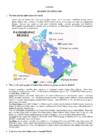
There are five biomes in Canada: the Arctic Biome, the Tundra, the Taiga Biome, the Prairies and the Deciduous Forests. The Arctic biome is cold, windy and the land is permafrost. There are long periods of darkness and light. The growing season is very short. The tundra is located near the Arctic region. It is cold and windy as well. The land is permafrost and desertlike. The growing season is 5060 days and that is why there grow plants such as mosses and lichens. 6. Animals Some typical animals are Arctic foxes, ermines, polar bears, Arctic terns, walruses and seals. Typical tundra animals are musk oxen, elks, moose, lemmings, wolves and foxes. The Taiga biome, also known as coniferous forests is located south of the Tundra region. Taigas are the largest biomes on Earth and they are a major source of oxygen. The climate is cold and harsh with low precipitation and a short growing season
Cuisine of South Africa has had a variety of sources and stages: · Cookery practised by indigenous people of South Africa such as the Khoisan and Xhosa- and Sotho-speaking people · Settler cookery introduced during the colonial period by people of Indian and Afrikaner and British descent and their slaves and servants - this includes the cuisine of the Cape Malay people, which has many characteristics of Malaysia and Java, and recipes from neighbouring colonial cultures such as Portuguese Mozambique. Indigenous cookery traditional South African cuisine
A.D. Romans occupied Britain for four centuries. The Roman way of life all vanished after the invasions from Northern Europe by the Angles, Saxons and Jutes from the 5th century onwards. They ruined Londinium, but they were easily turned into Christianity and religion became more and more important. The Vikings, who came in the 9th century, first raided England to plunder it, but then they decided to stay. In the 10th century England fell under Danish Rule, with King Canute finally managing to unite the Anglo-Saxons and Danes at the beginning of 11th century. Medieval England After defeating the Anglo-Saxon King Harold at the Battle of Hastings in 1066, William of Normandy (who became William I, also called William the Conqueror) introduced the Norman feudal system, rewarding his French-speaking followers with land in return for their continued support. French remained the language of the upper classes and administration until the 14th century.
Dutch emigration after World War II (1939-1945), and some 500,000 people left. But an even larger number of people entered the Netherlands--Europeans and Asians from the former Netherlands Indies dependency (now part of Indonesia); industrial workers from Turkey, Morocco, and other Mediterranean countries; and, more recently, residents of Suriname, also a former Dutch dependency and the Netherlands Antilles. Consequently, the country's population, particularly in the large cities, now includes several ethnic minorities. (3) 1.5 Language The official language is Dutch, but a second official language, Frisian, is spoken by approximately 500,000 people in the province of Friesland. Frisian bears some similarities to English and the Scandinavian languages. Dutch is the language of instruction in schools throughout the Netherlands. (6) 1.6 Interesting facts about Netherlands There are only 1,000 windmills left in Holland, one-tenth the original number.
These were subsistence societies that, although they did not establish prosperous settlements, did establish organized societies. Neolithic Portugal experimented with domestication of herding animals, the raising of some cereal crops and pluvial or marine fishing. Early in the first millennium BC, several waves of Celts invaded Portugal from central Europe and inter-married with the local populations, forming different ethnic groups, with many tribes. Chief among these tribes were the Calaicians or Gallaeci of northern Portugal, the Lusitanians of central Portugal, the Celtici of Alentejo, and the Cynetes or Conii of the Algarve. Among the lesser tribes or sub-divisions were the Bracari, Coelerni, Equaesi, Grovii,
Romans developed a number of towns and introduced schools, new language Latin large farms, baths. In AD 410 they had to leave. 11. The battle of hastings. Bayeux Tapestry. On I 4 October 1066 an invading army from Normandy defeated the English at the Battle of Hastings. The battle was close and extremely bloody. At the end of it, most of the best warriors in England were dead , including their leader, King Harold. On Christmas day that year the Norman leader, Duke William of Normandy, was crowned king of England. He is known in popular history as 'William the Conqueror'. The date is remembered for being the last time that England was successfully invaded. The Bayeux Tapestry is technically not a tapestry, but a huge band of embroidered linen, which describes the Norman invasion of England and the events that led up to it. The Tapestry contains
flogged Boudicca and raped her daughters 60-62 AD Iceni rebelled, Boudicca´s warriors defeated Roman Ninth Legion, destroied capital-Colchester Finally Boudicca was defetated, she poisoned herself to avoid capture Hadrian´s wall A defensive barrier builtin 122 AD by Roman emperor Hadrian to guard the northern part of Britain against barbarian invaders Most imposing frontier of Roman Empire, controlling peoples mobements Building took several years, builders kept changing minds about the size 119 km lenght, 5m high, 3m deep The Picts, Caledonia The painted ones, northern tribes, part of the Scots Inhabited an area known as eastern and th western Scotland, until 10 c Mysteriously disappeared Constantly fought with Romans Teir country- Caledonia- Pictland The Scots, Hibernia Raiders, Celts living in Ireland/Hibernia Migrated to Scotland
Columbus' voyage has even less meaning for North Americans than for South Americans because Columbus never set foot on our continent, nor did he open it to European trade. Scandinavian Vikings already had settlements here in the eleventh century, and British fisherman probably fished the shores of Canada for decades before Columbus. The first European explorer to thoroughly document his visit to North America was the Italian explorer Giovanni Caboto, who sailed for England's King Henry VII and became known by his anglicized name, John Cabot. Caboto arrived in 1497 and claimed North America for the English sovereign while Columbus was still searching for India in the Caribbean. Unable to celebrate Columbus' exploration as a great discovery, some apologists now want to commemorate it as the great "cultural encounter." Contrary to popular legend, Columbus did not prove that the world was round; educated people had known that for centuries
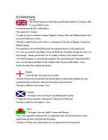
Northern Ireland * the population is about 60,000,000 people, the population density is 242 people/sq km * its coasts are washed by the Atlantic Ocean, the North Sea, the English Channel, the Celtic Sea, Saint George's Channel, and the Irish Sea. It is linked to France by the Channel Tunnel * the United Kingdom is a constitutional monarchy. The current monarch is Queen Elizabeth II, who is also the Queen and Head of State of fifteen other Commonwealth Realms, such as Canada, Australia, New Zealand and Jamaica. England: * it has 50 cities, the capital city is London * despite of the density of population and the high degree of urbanisation, England has many unspoilt rural and coastal areas which have been placed under protection * the flag is called the Saint George's Cross Scotland: * the biggest cities are Glasgow and Edinburgh (the capital)
constructed out of a diglossia situation as a top-down process in a partly multi-lingual environment. Over the last few centuries, the development of society and its political upshots have produced agendas for linguistic inquiry and discourse on language, some of which have had an impact on the development of Russian and contingent languages and their social functions, as well as on the development of linguistics as a global discipline. Six such agendas can be pinpointed: (1) the Orthodox emancipation agenda (1600-1700), (2) the Russian nation building agenda (1700-present), (3) the scientific agenda (1860-present), (4) the Marxist agenda (1917-1989), (5) the Eurasian agenda (1920-1935), (6) the cybernetic agenda (1953-1975). Russian language Russian language is an East Slavic language and an official language in Russia, Belarus, Kazakhstan, Kyrgyzstan and many minor or unrecognised territories. It is an unofficial but
Priests, deacons and lay ministers cooperate and assist their bishop(s) in shepherding a flock. Vicar/ priest is a representative, deputy or substitute; anyone acting "in the person of" or agent for a superior (compare "vicarious" in the sense of "at second hand"). Linguistically, vicar is cognate with the English prefix "vice", similarly meaning "deputy". Minister In Christianity, a minister is someone who is authorized by a church, or other religious organization, to perform functions such as teaching of beliefs; leading services such as weddings, baptisms or funerals; or otherwise providing spiritual guidance to the community. The term is taken from Latin minister ("servant", "attendant"), which itself was derived from minus ("less").[1] In Catholic churches, the concept of a priesthood is emphasised. In Protestant churches, the title usually refers to a member of the ordained clergy who leads a congregation or participates in a
boundaries, but the name "London" has long applied more to the whole metropolis that has grown up around it. London has been an important settlement for over two millenniums. It is also one of the world's leading business, financial and cultural centres and its influence in politics, education, entertainment and even fashion contribute to its status as a major global city. London is a major tourist attraction with four world heritage sites, several royal parks and numerous iconic landmarks such as the Houses of Parliament, Towe Bridge, the Tower of London, Westminster Abbey and the London Eye. 2. History Although there is some evidence of a permanent settlement before the Romans came in 43 A.D., it is more accepted by historians that the Romans were the first. The settlement was called Londinium. The first London lasted for just seventeen years, for around AD 61, a tribe of Celts led by Queen Boudica stormed London, burning it to the ground. The next heavily-planned London
from the 5th century onwards. These pagan peoples' were easily converted to Christianity and the preachers from Rome brought with them learning and civilization. Christianity was an important factor in enabling the various kingdoms created by the Nordic invaders to be united in the 9th century. The Vikings first raided England to plunder it, then in the days of Alfred of Wessex. They began to win wide lands `to plow and rule'. In the 10 th century England fell under Danish rule with King Canute finally managing to unite the Anglo-Saxons and Danes at the beginning of the 11 th century. After defeating the Anglo-Saxon king Harold at the battle of Hastings in 1066, William of Normandy introduced the Norman feudal system, with land in return for the continued support, and French remained the language of the upper classes and administration until the 14 th century. The origins of Parliament are to be found in the region of John's successor, Henry III
........................................ 6 REFERENCES.................................................................. 7 3 INTRODUCTION The present report is going to give a compendious review of the most fascinating subjects concerning Nokia in my perspective. This report contains general but essential information about Nokia's history and its strategy, vision, products today and Nokia's quality of products. Firstly I will give brief information about the history of Nokia. The text will not be very detailed, but it will give a basic knowledge about Nokia's way of getting to what it is today. Secondly I will give an overview of Nokia's present-day state. I will talk about Nokia's location today and the range of its business and products. Thirdly I will talk about Nokia's basic business tactics. I will give a brief description of its
Indians in everyday conversation. They are still legally categorized by the Canadian Government under the Indian Act as Status Indians. Those who have lost their legal status are called Non-Status Indians. Prime Minister Pierre Trudeau tried to get rid of the Indian Act, but First Nations political groups insisted on keeping it, because it defines their special status. The Inuit are the people who originally lived in the Arctic. Their language is Inuktitut, but it has several dialects the differ considerably from place to place. The Métis, are the group of people who resulted from the mixing of European and Native men and women. The Métis developed a unique culture that included elements of both European and Native ways and artifacts (clothes, tools, means of travel, etc.). They pride themselves on their distinctiveness from both the cultures from which they are descended. 3. From where have the Indians come to Canada? When?
Wilhelm) to informal retreats by the Royal Family. Three times a year there was a ball - for the gentry, for the farmer and for the servants. One of the main activities at Sandringham was shooting. The Prince of Wales liked to be outdoors as much as possible and he devised the idea of ST - Sandringham Time. The idea was to make the most of the winter daylight hours for his passion for shooting and so the clocks all over the Sandringham Estate were advanced by half an hour. King George V maintained this custom during his lifetime, but King Edward VIII abolished it on his accession in 1936. Sandringham was the setting for some dramatic events. Queen Victoria did not pay her first visit to Sandringham until 1871, when the Prince of Wales suffered an attack of typhoid fever (the illness of which his father had died) while staying there. Margus Maasik G1a To the relief of Queen Victoria and the nation, the Prince survived and made a slow recovery.
When they were freed after the Civil War, the Southerners were angry at them and showed a lot of prejudice. Some of them formed the Ku Klux Klan who beat and murdered black people. Until in 1870 the blacks didn't have civil rights or the right to vote. In the 20th century many blacks travelled to the North but even there they were treated as different and until 1954 black kids had to go to separate schools. In the 1950s a black churchman by the name Martin Luther King started to fight for black people and said that they were equal to whites. After 1963 when he held his famous speech "I have a dream...", in 1964 the blacks were given same rights as the white. In 1968 King was murdered. The 1950s are known as the time of Cold War because of the competition with the Soviet Union. After that in the 1960s and 1970s the Americans fought in the Korean and in the Vietnam War, and in the1990s in the Gulf War and now they are fighting in Iraq.
2) Submarine sandwich is ‘a large sandwich consisting of a long roll split lengthwise and filled with layers of meat, cheese, tomatoes, lettuce and condiments’ (www.ahdictionary.com). How did it get its name? It is difficult to say when the term submarine sandwich was first used for these types of large sandwiches. Although it is quite obvious that the sandwich got its name because of its long shape that resembles submarines, there are several myths around the origin of the term. The first theory is that at the beginning of World War II a sandwich was specifically created in a restaurant in Scollay Square in Boston to appeal to the mean serving at Charlestown Navy Yard. Because it resembled a submarine for its shape, people began to call them “submarine sandwiches”. According to another version, the sandwich was created during World War II by an Italian shopkeeper named Benedetto Capaldo in New London, CT
Kingdom of Great Britain and Ireland. After the Irish War of Independence most of Ireland seceded from the Union, which then became the United Kingdom of Great Britain and Northern Ireland. The relatively limited variety of fauna and flora on the island is due to its size and the fact that wildlife has had little time to develop since the last glacial period. The high level of urbanisation on the island has contributed to a species extinction rate that is about 100 times greater than the background species extinction rate. 2 The History of the Great Britain The island was first inhabited by people who crossed over the land bridge from the European mainland. Traces of early humans have been found (at Boxgrove Quarry, Sussex) from some 500,000 years ago and modern humans from about 30,000 years ago. Until about 10,000 years
former Phoenician colony. The island produced dye, salt, fish sauce (garum), and wool. History A shrinewith offerings to the goddess Tanit was established in the cave at Es Culleram, and the rest of the Balearic Islands entered Eivissa's commercial orbit after 400 BC. Ibiza was a major trading post along the Mediterranean routes. Ibiza began establishing its own trading stations along the nearby Balearic island of Majorca such as Na Guardis, from which large quantities of renowned Balearic slingers were hired as mercenaries who fought for Carthage. The island was reclaimed for Christendom by Aragonese King James I of Aragon in 1235. Since then, the island has had its own self- government in several forms but in 1715 King Philip V of Spain abolished the local government's autonomy. The arrival of democracy in the late 1970s led to the Statute of Autonomy of the Balearic Islands
BUSINESS PLAN MP CANNED FOOD LIMITED 2018 Business and owner details Business name MP CANNED FOOD LIMITED Owner(s) name MARTIN PÕLD Business address and postcode 12 CARLISLE STREET LEICESTER LE3 6AF Business telephone number +447726779223 Business email address [email protected] Home address and postcode (if different from the above) Executive summary 1.1 Business summary: My business idea is simple: MP CANNED FOOD LIMITED is importing canned food (meat products and ready meals) from Estonia to the United Kingdom. Unique products like "Wild Boar In Its Own Juice", "Elk In Its Own Juice" and "Venison In Its Own Juice" are hard to find in the United Kingdom. We are selling Rannarootsi and Frank Pott brands and sell them online, http://www.mpwildgame.co.uk Future plans are to start trading also in Leicester Market in November/December as a Market Stall, supplying deli shops (including North European and International),
Am I supposed to take delight in telling this story, which we as a people have done nothing to stop from happening again, and which is in fact even happening at greater frightening speed than the 17th century? The Black race is a slave – pure and simple – an economic slave. I am frightened and disgusted at the same time, at a people who produce nothing and consume everything that others produce. We are always ready to make excuses about the inventions and products our people have perfected in long gone eras, but which have been stolen from us, and the ones who stole them have gone on to become very rich. This is nothing but an excuse for our failures. In 1987, David Sun and John Tu, both immigrants, started their Kingston Technology Company in Fountain Valley, California with hardly much financing 3 other than their savings. Nine years later they sold 80 percent of the company to the Softbank
The traditional cuisine of Estonia has substantially been based on meat and potatoes, and on fish in coastal and lakeside areas, but is influenced by many other cuisines by now. In the present day it includes a variety of international foods and dishes, with a number of contributions from the traditions of nearby countries. German, Scandinavian, Russian and other influences have played their part. The most typical foods in Estonia have been rye bread, pork, potatoes and dairy products. Estonian eating habits have historically been closely linked to the seasons. In terms of staples, Estonia belongs firmly to the beer, vodka, rye bread and pork "belt" of Europe. The Cold Table Flounder The first course in traditional Estonian cuisine is based on cold dishes - a selection of meats and sausages served with potato salad or Rosolje, an Estonian signature dishes based on beetroot, meat and herring . Small pastries called pirukad ("pirukas" in the singular) - a
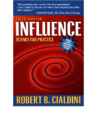
the influence process works is inte- Science and Practice, gra ted throughout. For instance, brain imaging research is presented, showing here are 5 good reasons! how the "Expensive = Good" heuristic o Updated coverage of social influence leads people to perceive more costly effects in popular culture, such as the items as better than (identical) less contagion of obesity among the young costly ones. and the contagion of violence in such tragedies as the Virginia Tech and North- o Enhanced coverage of "how to say no." New evidence is presented to ern Illinois mass killings. help readers identify their special
When they were freed after the Civil War, the Southerners were angry at them and showed a lot of prejudice. Some of them formed the Ku Klux Klan who beat and murdered black people. Until in 1870 the blacks didn't have civil rights or the right to vote. In the 20th century many blacks travelled to the North but even there they were treated as different and until 1954 black kids had to go to separate schools. In the 1950s a black churchman by the name Martin Luther King started to fight for black people and said that they were equal to whites. After 1963 when he held his famous speech "I have a dream...", in 1964 the blacks were given same rights as the white. In 1968 King was murdered.The 1950s are known as the time of Cold War because of the competition with the Soviet Union. After that in the 1960s and 1970s the Americans fought in the Korean and in the Vietnam War, and in the1990s in the Gulf War and now they are fighting in Iraq.
In longitude Canada extends from approximately 52° to 141° W, a distance that spans six time zones. In latitude it extends from approximately 42° to 83° N. With its vast Arctic and subarctic territories, Canada is often considered a country only of the far north; however, the peninsula of southern Ontario juts deeply south into the heartland of the United States, and its southernmost point, Middle Island in Lake Erie, is at the same latitude as northern California. The country also includes several major islands, including Baffin, Ellesmere, Victoria, Newfoundland, and Melville, and many small ones. Its border with the U.S., the longest border in the world not patrolled by military forces, extends 8,890 km. 3. Mountains, lowlands Canada's vast area means it has many varying types of terrain, much of which is mountainous. The Cordillera in the west, the Appalachians in the southeast, the mountains of northern Labrador and of Baffin Island in the northeast, and the
свои знания о стране, являющейся родиной английского языка, ставшего ведущим мировым языком, и парламентаризма, который переняли большинство стран мира. 6 INTRODUCTION Aspects of British History presents a brief outline of the most significant milestones in the long and eventful history of Great Britain, such as the five successful invasions of the island, the birth of Parliament and transformation of an absolute monarchy into a constitutional monarchy, the origin of the English language, the rise and fall of the British Empire. The units contain an informative reading text on an important issue, preceded by preparatory discussion questions and followed by notes offering some additional information, and a vocabulary with relevant language notes. The main reading text is
against peoples of the north (Picts & Scots). In the end they revolted & the process of invasion and settlement began. The first Saxon ,,kings" were Hengist & Horsa in Kent, Aelle in Sussex, Cerdic / Cynric in Wessex. So the first ,,English" became mainly from Northern Germany & Denmark. The resistance of the Celts was long. They were free at the time, not like other Roman provinces on the Continent. Around 500, the Britons seem to have won several victories. One of their leaders was Ambrosius Aurelianus and one of their victories was at the place called Mount Badon. The main leader of the Britons at this time may have been the warrior later called King Arthur. By the 7th cent. the invaders managed to conquer the greater part of the land. The invaders came from 3 powerful tribes: · The Saxons settled from the Thames Estuary westwards, in the south of England; they formed the kingdoms of Sussex, Wessex, Essex & Middlesex
 annaabi.ee