Misso Keskkool
New
Zealand Precis
Compiler:
Maiki Joakit
Instructor:
Mailis Teppo
Misso
2011
New
Zealand
is an
island country in the
south -western
Pacific Ocean
comprising two main landmasses (the
North Island
and the South
Island),
and numerous smaller
islands ,
most notably Stewart
Island/Rakiura
and the Chatham
Islands.
The indigenous Māori
language name for New Zealand is Aotearoa,
commonly translated as
land of the long white
cloud .
Population
(1998): 3,801,000.New
Zealand is notable for its
geographic isolation; it is
situated about
2,000 kilometres (1,200 mi) southeast of Australia
across the
Tasman Sea,
and its closest neighbours to the north are New
Caledonia,
Fiji
and
Tonga .
During its long isolation New Zealand developed a distinctive
fauna dominated by birds,
a number of which
became extinct after the arrival of humans and the
mammals they introduced.The
majority of New
Zealand's population
is of European
descent;
the indigenous Māori
are the largest minority. Asians and non-Māori Polynesians are also
significant minority groups, especially in urban
areas .
The most commonly spoken language is
English .New Zealand is a
developed country that ranks highly in international comparisons on
many topics,
including lack
of
corruption ,
high
educational attainment
and
economic freedom.
Its cities also consistently rank
among the world's most
liveable.
Elizabeth II,
as the
Queen of New Zealand,
is the country's head
of state
and is represented by a Governor-General,
and
executive political power is exercised by the Cabinet
of New Zealand.
Some Quick facts
Capital:
Wellington
Government :
Representative parliamentary democracy and Constitutional monarchy
Currency :
New Zealand dollar (NZD)
Area:
270,534 sq km
Population:
4,347,000 (
February 2009 est.)
Language:
English, Maori,
and New Zealand sign language
Religion:
unspecified/none 43%, Anglican 17%, Roman
Catholic 14%, Presbyterian
11%,
Methodist
3%, Pentecostal 1.7%, Baptist 1.3%,
other Christian 9%, other 3%
Culture
New
Zealanders have made a profound impact in the areas of art, poetry ,
music, film , and architecture . Not only have the artists reached local recognition, but also gained worldwide apperception. New Kiwi
self- confidence is revealed intensely in literature, film and theater . Opera diva Kiri Te Kanawa performs regularly nationally and
internationally. Writers such as Witi Ihimaera, Albert Wendt, Patricia Grace , and Keri Hulme are also international figures .
In
the past, Kiwis were hostile towards art. In 1982, the McDougall
Gallery in Christchurch planned to spend $10,000 on a painting by
Colin McCahon, arguably the country's most significant and
contentious painter, and this triggered ire among locals. At
present ,
however, McCahon's paintings are auctioned at very high prices in
many international collections.
A
contemporary of McCahon is Gordon Walters, an artist who examines the
relationship between a deliberately narrow range of forms, mostly the
koru or fern bud. The rendering of this local Maori
symbol in a
recognizable European abstract style, which is
almost similar to
Klee or Mondrian, gives Walters'
work a distinctively New Zealand flavor.
Housing many collections of modern New Zealand art is Auckland's Aotea
Centre . Many newcomers and
established international New Zealand
artists such as Sir
Toss Woollaston, Gretchen Albrecht, Pat Hanly,
and
Ralph Hotere have their
works displayed in art galleries
around the country.
Visual art is
another increasing art form in New Zealand. Most visual
artists
here are involved with
matters concerning political causes or
movements. Works of Maori women such as Robyn Kahukiwa, Kura Te Waru
Rewiri, and Shona Rapira
Davies illustrate a
concern for the land,
whanau (family), antiracism and antisexism, and reflect the revival
of Maori
pride and
values .
The
greatest expatriate artist of New Zealand was Len Lye (1901-80) who
won an international reputation as a
pioneer of direct film
techniques (scratching images directly on to celluloid) and kinetic
sculptor. His works can be viewed at the Govett-Brewster Gallery in
New Plymouth, which specializes in the works of New Zealand
sculptors.
Prose and Poetry
Novelist
Janet Frame realized her love for writing ever
since she was a mere
child
growing up in a poor South Island family. Born in 1924, Frame
has published over 20 novels, four collections of stories, poetry and
children 's books, and three volumes of autobiography - To the Island,
An Angel at My Table, and The Envoy From
Mirror City.
Other
Maori and Pacific Island post-colonial novelists include Witi
Ihmaera, Patricia Grace, and Albert Wendt. All have had an impact on
the New Zealand literary
scene in the 1980s and '90s.
Award winning novelist Keri Hulme achieved worldwide literary
status with her
Booker Prize winning novel, The Bone People, in 1985 and is
still writing from her home in the South Island.
New Zealand Food & Wine
New
Zealand producers some of the world's tastiest
fresh food.
Besides many restaurants offering dishes from a
wide variety of countries in
Europe and
Asia - France,
Italy , Germany, Austria, Greece,
China ,
Thailand, India and
Vietnam - as well as growing
numbers of
Middle Eastern and
Latin American restaurants,
there is a Pacific-style New
Zealand cuisine using the abundant fresh meats, fish, vegetables and
fruit in a creative
manner .
New
Zealand cuisine draws inspiration from Europe, Asia and Polynesia;
Pacific-Rim is a distinctive fusion using many of our excellent fresh
produce and seafood. Lamb,
pork and cervena (venison),
salmon ,
crayfish (lobster), oysters, kina, squid, paua (abalone), scallops,
tuatua and
pipi (New Zealand shellfish), mussels, kumara (a
native sweet
potato ), kiwifruit, New Zealand honey -
these are some of the
delicious fresh ingredients which make the food in New Zealand so
special. Chefs are world-class, with many
having worked in Europe and
around the world.
With
more mountains
than Switzerland and more than 25
scenic ski areas,
together with cheap
lift prices, New Zealand is increasingly becoming
a ski destination.
Day
lift passes for adults range from about $40-$75, and most of the
commercial fields have ski
schools . All ski
equipment can be rented
at the ski areas, ski
hire ranging from $29-$37 and
snowboard hire
from $35-$50. Besides commercial fields listed, there are a number of
club ski areas around the country that are
open to visitors.
Nordic skiing is
popular in the South Island. One such area can be
found near Wanaka. Growing numbers of mountains are being opened up for
ski-
planes and heliskiing. The Tasman Glacier, for
instance , has 13km
of deep
powder , as well as stunning
views .
Bungy jumping, parapenting & skydiving
New
Zealand is the home of bungy jumping, centred on Queenstown, though
it has
spread to numerous other sites, including Taupo and Hanmer
Springs. The
slightly less courageous can enjoy a
tandem hang -glide
or tandem parapenting,
taking in the views of Queenstown,
Nelson or
Christchurch as
someone else
takes the controls and steers the glider
or chute
back to earth. For the
ultimate thrill, though, there is the
free-fall skydive from 3500m. Harnessed to a tandem master, the
experience starts with a scenic
flight , then
comes the free fall at
200km per
hour . Tandem skydives operate at Taupo, Nelson, Queenstown,
Parakai, Bay of Islands and Wanaka.
Caving & Rafting
Over
recent years caving, black-water (underground) rafting and abseiling
trips have enabled thousands to explore the extensive cave systems
that riddle
both North and South Islands. The
best known of these is
the Waitomo Caves
region , but caving may also be enjoyed in the Bay
of Islands, on the
West Coast of the South Island in the Paparoa
National Park, and in the Takaka Hill area in Golden Bay.
The
politics of New Zealand
take
place in a framework of a parliamentary
representative
democratic monarchy.
The
basic system is closely patterned on that of the
Westminster System,
although a number of
significant modifications have been made. The head
of state is Queen
Elizabeth II, who is
represented by the Governor-General
and the head
of government is the
Prime Minister who chairs the
Cabinet
drawn from an elected
Parliament .
Head of State
New
Zealand's head
of state is the Queen of New
Zealand, currently Elizabeth
II. The New Zealand monarchy
has been distinct from the
British monarchy since the Statute
of Westminster Adoption Act 1947,
and all Elizabeth II's
official business in New Zealand is conducted
in the name of the Queen of New Zealand, not the Queen of the United
Kingdom. In
practice , the
functions of the monarchy are conducted by
the Governor-General,
appointed by the
monarch on the
advice of the Prime Minister. Under
Letters
Patent regulating the office of Governor-General, which are
granted by the Queen on the advice of the Prime Minister, when there
is a vacancy in the office of Governor-General, several of the duties
of the said office are exercised by a caretaker, known as the
Administrator of the Government. As of
2010[update],
the Governor-General is Sir Anand
Satyanand.The
Governor-General's powers are primarily symbolic and
formal in
nature. The Governor-General formally has the power to appoint and
dismiss Prime Ministers and to
dissolve Parliament; and also formally
signs legislation into law after passage by Parliament. The
Governor-General chairs the Executive
Council , which is a formal
committee consisting of all ministers of the
Crown . Members of the
Executive Council are
required to be Members of Parliament, and most
are also in Cabinet.
Energy
In
2008, oil, gas and
coal generated
approximately sixty-
nine percent of
New Zealand's gross energy supply and
thirty -one per
cent was
generated from renewable
energy,
primarily hydroelectric
power
and
geothermal power.
Agriculture
has been and continues to be the main
export industry in New Zealand.
In the
year to June 2009,
dairy products accounted for 21%
($9.1
billion ) of total merchandise exports,and the largest
company of the country,Fonterra,
a dairy cooperative, controls almost one-third of the international
dairy trade. Other agricultural items were meat 13.2%,
wool 6.3%,
fruit 3.5% and
fishing 3.3%. New Zealand also has a thriving wine
industry, which had a bumper
year in 2007; wine became New Zealand's "12th most valuable
export" in that year, overtaking wool exports.[Cows
and
sheep are rarely housed, but are sometimes fed supplements such
as hay and silage,
particularly in
winter . Pigs are
usually kept indoors, either in
gestation
crates, farrowing
crates, fattening pens, or
group housing.
Until
1987, English was New Zealand's only official language, and remains
predominant in most settings; Māori became an official language
under the 1987 Māori
Language Act and New
Zealand Sign Language under
the New
Zealand Sign Language Act 2006.
New Zealand Sign Language became an official language of New Zealand
the day after Royal Assent.The use of NZSL(New Zealand Sign Language)
as a valid
medium of instruction has not always
been accepted by the Government, the
Association of Teachers of the
Deaf , or many
parents . However, in
light of much research into its
validity as a language and much advocacy by deaf adults, parents of
deaf children (both hearing and deaf) and educationalists, NZSL has
since become — in tandem with English — part of the
bilingual/bicultural
approach used in public schools (including
Kelston
Deaf Education Centre and Van
Asch Deaf Education Centre)
since 1994.
Victoria
University of Wellington has courses in New Zealand Sign
Language, although it has yet to
develop a major
program for it. AUT teaches a diploma
course for NZSL
interpreting.The two official spoken languages are also the most
widely used; English is spoken by 98% of the population and Māori by
4.1%.Samoan is the most widely spoken non-official language (2.3%)
followed by French,
Hindi , Yue and
Northern Chinese.New Zealand has
an
adult literacy
rate of 99%,and 14.2% of the adult population has a
bachelor's
degree or
higher .For 30.4% of
the population, some form of secondary qualification is their
highest , while 22.4% of New Zealanders have no formal qualification
Cities
- Auckland - "The City of Sails" - largest and most populated conurbation, with over a million in the metropolitan area, making it the largest in New Zealand by far
- Hamilton - 128km south of Auckland, capital of the Waikato, home to the Chiefs (super 14 rugby) and the Magic ( ANZ cup netball). On the banks of the mighty Waikato River . Leafy.
- Rotorua - famous for Maori culture, geysers and beautiful hot pools.
- Napier - "Art Deco capital of NZ" The city was destroyed by an earthquake in 1931 . Rebuilt in the style of art deco. Also famous as a wine region especially Bordeaux style reds and Cape Kidnappers. Home to a renowned golf course and the gannet breeding grounds and wildlife sanctuary.
- Wellington - the national capital, also known as "The Windy City" - Parliament and the Beehive and the wonderful, free Te Papa museum.
- Nelson - Safe and friendly , with New Zealand's highest sunshine hours. Nelson is the geographic centre of the country and surrounded by incredible coastal and mountain scenary, three stunning national parks, vineyards and orchards. Nelson is also well known for its strong art culture and excellent cuisine.
- Christchurch - The Garden City and the Air Gateway to Antarctica as well as Gateway to the South Islands famous motorcycle rides.
- Queenstown - adrenalin and adventure capital of the world, where you can skydive, bungy jump , jet- boat , thrill yourself to your hearts content
- Dunedin - the Edinburgh of the South, proud of its Scots heritage, chocolate factory, Southern Albatross colony and its wonderful tramping tracks within a short drive from the CBD
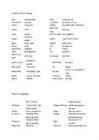
bach
holiday home
mate
buddy,
friend brassed off
annoyed
no worries
no need to worry
choice very
good pakeha
non-Maori New Zealander
crikey
wow!
rattle your dags
hurry up
crook
unwell
she’ll be right
not a problem
cuppa
cup of tea, coffee
stubby
small bottle of
beer dairy
corner
store stuffed
really tired
dunny
toilet
suss
to figure out
fizzy drink
soda pop
ta
thanks flash
looking good
tata
goodbye
good on ya, mate!
well
done take-aways
fast food
good as
gold affirmative
answer take a hike
go
away !
hard yakka
hard work
tea
dinner hunky dory
everything’s fine
tiki
tour scenic tour, roundabout way
jandal
thongs,
flip -flops
tramping
hiking
jersey sweater
tomato sauce
ketchup
Maori Language
Aotearoa
New Zealand: “Land of the Long White Cloud”
Tangata Whenua
Original people, people belonging to the land
Aroha
Love, compassion
Tangi
Funeral, mourn
E noho ra
Goodbye (from
person leaving)
Taonga
Treasured possession, anything precious
E haere ra
Goodbye (from person staying)
Tapu
Sacred, not to be touched
Haere mai
Welcome !
Tena koe
Formal greeting to one person
Haka
War
dance ,
challenge Tena koutou
Formal greeting to many people
Hapu
Clan, sub-
tribe Tena
tatou katoa
Formal inclusive greeting to everyone
Hui
Gathering ,
meeting Turangawaewae
A place to
stand , home
Iwi
People, tribe
Wahine
Woman
Kaumatua
Elders
Waiata
Song
Kia Ora
Hi!
Waka Canoe
Mana Authority, power
Whakapapa
Genealogy
Marae
Meeting house complex
Whanau
Extended family
Pakeha
Non-Maori, European
Whare nui
Meeting house
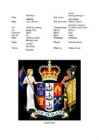
Coat
Of Arms
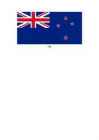
Flag
New
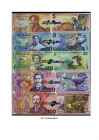
Zealand dollars
 100 punkti
Autor soovib selle materjali allalaadimise eest saada 100 punkti.
100 punkti
Autor soovib selle materjali allalaadimise eest saada 100 punkti.
 ~ 12 lehte
Lehekülgede arv dokumendis
~ 12 lehte
Lehekülgede arv dokumendis
 2011-01-16
Kuupäev, millal dokument üles laeti
2011-01-16
Kuupäev, millal dokument üles laeti
 5 laadimist
Kokku alla laetud
5 laadimist
Kokku alla laetud
 0 arvamust
Teiste kasutajate poolt lisatud kommentaarid
0 arvamust
Teiste kasutajate poolt lisatud kommentaarid
 MikiGirl
Õppematerjali autor
MikiGirl
Õppematerjali autor
 annaabi.ee






Kõik kommentaarid