Jüri
Gümnaasium
THE
GREAT PLAGUE IN LONDONResearch
paper Ervin Sagor 10.h Supervisor:
Kristel Kriisa
Jüri
2011
TABLE OF CONTENTSIntroduction 3
1Bubonic plague 4
1.1Symptoms 4
2Black
death in
England before the great plague 5
3City life before and
during the plague 6
3.1Spreading of the plague 6
3.2Bring out your dead 7
4Protection from the plague 8
4.1Plague
doctors 8
4.2Costume 8
5The
ending of the plague 9
5.1The Great
Fire of London 10
Conclusion 11
Literature used 12
Appendixes 13
Appendix 1 - London in the
17th century 13
Appendix 2 - A
newspaper release during the plague 14
Appendix 3 15
Appendix 4 16
Appendix 5 17
Introduction
The history of
England has always been fascinating for me and plague was one the
most horrifying
diseases in human history with
millions of deaths
across the world. That is why I
chose the Great Plague as the topic
of my research.
The
purpose of my
study is to educate myself and
gain more
knowledge on the history and
find out how people lived in England in the seventeenth century.
For a start, I will
give a short review what the bubonic plague is. Then I tell about
Black Death in England before the Great Plague, city life before and
during the plague. Secondly, I will examine how the plague reached
Great Britain. After that I will describe how people dealt with the
plague and what the
government decided to do with the corpses.
Subsequently I will
write about plague doctors, what they wore as a
protection against
the plague, how people invented
different techniques to
fight the
plague and what the City Corporation did with
cats and
dogs .
Finally, I will
share the
wisdom what I
acquired on the
fading point of the plague
and how people
thought that the Great Fire of London put an end to
the Great Plague.
Bubonic plague
Bubonic
plague also known has Black Death got its name from the symptoms
because the victim's skin turned black. The
plague spread from animals to humans by fleas.
Nowadays bubonic plague does not spread to advanced countries which are located in Europe .
Last greater plague outbreak was in Kongo Democratic Republic . (Wikipedia
homepage: http://et.wikipedia.org/wiki/Katk )
Symptoms
Buboes
are commonly found in the armpits, groin or neck. Due to its bite -based form of infection, the bubonic plague is often the first step of a progressive series of illnesses. Two other types are
pneumonic and septicemic. However, pneumonic plague, unlike the
bubonic or septicemic, induced coughing, and was also very infectious
and allowed person -to-person spread. Bubonic plague symptoms appear
suddenly, usually 2–5 days after exposure to the bacteria .
(Wikipedia homepage: http://en.wikipedia.org/wiki/Bubonic_plague )
Symptoms include : chills; general ill feeling (malaise); high fever (102
degrees Fahrenheit / 39 degrees Celsius); seizures; painful lymph
gland swelling called a bubo, commonly found in the groin, but may occur in the armpits or neck, most often at the site of the initial
infection (bite or scratch); pain may occur in the area before the
swelling appears. (Wikipedia homepage: http://en.wikipedia.org/wiki/Bubonic_plague )
Other
symptoms include heavy breathing, continuous blood vomiting,
urination of blood, aching limbs , coughing, and extreme pain. The
pain is usually caused by the decaying or decomposing of the skin
while the person is still alive . Additional symptoms include extreme
fatigue, gastrointestinal problems, lenticular (black dots scattered throughout the body ), delirium and coma . (Wikipedia
homepage: http://en.wikipedia.org/wiki/Bubonic_plague )
Black death in England before the great plague
First time when the
Black Death entered England was in 1348 it vanished in December
1349.
In 1361-1362 the plague returned to England.
The
pandemic known to history as the Black
Death entered England in 1348, and caused
the death of between a third and more than half of the nation 's
inhabitants. The Black Death was the first and most severe manifestation of the Second Pandemic, probably caused by the Yersinia
pestis bacteria. Originating from
Central Asia , it arrived on the British Isles from the English province of Gascony. Its first point of entry was the port of
Weymouth, where it was first reported in June 1348. It reached London
in the autumn of that year , and by the next summer it had covered the entire country . By December 1349 the outbreak was mostly over.
Though
accurate estimates of mortality are difficult to make, the recent trend has been to adjust the estimates upwards. This is the result of
recent scholarship's focus on the peasant society – which made
up around 90% of the population – rather than the greater
landowners and the clergy. While it was previously assumed that one
third or less of the population died, today a number around half is
generally accepted, though some have suggested an even higher mortality. (Wikipedia homepage:
http://en.wikipedia.org/wiki/Black_Death_in_England )
In
1361–62 the plague returned to England, this time causing the death
of around 20% of the population. After this the plague continued to return intermittently throughout the fourteenth and fifteenth centuries , in local or national outbreaks. (Wikipedia
homepage:
http://en.wikipedia.org/wiki/Black_Death_in_England )
City life before and during the plague
In the seventeenth
century London was a city with an impressive architecture. The
beauties of the city were the large castles, stunning churches and amazing abbeys. The gap between rich and poor was humongous. Common
people lived in houses which were made out of wood . The streets were
very narrow and buildings were built close together. Most of the
people were poor and the living conditions were unbearable. The city
was infested by rats because of the townspeople who would throw their
trash, out- dated food and
sewage out on the streets.
Spreading of the plague
The reason why Great Plague spread to England is that the merchants
travelled to Asia which already suffered from the plaque and when
they came back they gave a free ride to the rats. With the rats came
fleas which carried the deadly bubonic plague.
The more prosperous
residents of the city started moving their families to their country
homes and by June, everybody who could leave London did so. ( Historic UK’s
homepage: http://www.historic-uk.com/HistoryUK/England-History/GreatPlague.ht m)
Plague began in
London in the poor, overcrowded parish of St. Giles-in-the- Field .
It started slowly at first but by May of 1665, 43 had died. In
June 6 137 people died, in July 17 136 and at its peak in
August, 31 159 people died. In all, 15% of the population
perished during that terrible summer. (Historic
UK’s
homepage: http://www.historic-uk.com/HistoryUK/England-History/GreatPlague.ht m)
People
showing symptoms of the plague were locked in their home together
with their family for 40 days after the plague victim had either died
or recovered. Guards were set to stop people breaking out of the
locked houses. (All Info About London’s
homepage: http://london.allinfo-about.com/features/plague.html )
Thousands
of Londoners lived on boats on the River Thames during the height of
the plague and many of these survived. (All
Info About London’s
homepage: http://london.allinfo-about.com/features/plague.html )
Bring out your dead
A picture of
removing corpses from the city can be seen on page 15 (Appendix 3)
The city was full of
dead bodies. To solve the problem men who wore black robes were sent to the town. They used horse carts to carry the corpses out of the
city to the pits. One man walked on the streets and jingled his bell
and yelled: „Bring out your dead!”
People then carried the corpses out of their homes on the streets and
men who were dressed in robes threw them on to the carrier and
removed them from the city streets.
The
death toll mounted to such an extent that graveyards soon became full. Vacant land was used for 'plague pits' and quicklime was used
in them. In spite of grave diggers literally working night and day,
they could not keep up with deaths and so corpses were piled up
awaiting burial . (All Info About
London’s
homepage: http://london.allinfo-about.com/features/plague.html )
The
people who removed the dead bodies flagged the houses where the
deceased were found. They drew a red cross on the door and wrote
„Lord have mercy upon us” below
the cross. (Nuffield Foundation’s
homepage: http://www.primaryhistory.org/data/files/Great_Plague_resources-140.pdf )
Protection from the plague
To fight against the
plague:
The City Corporation
ordered a cull of dogs and cats - a poor decision , since those
animals - mostly the cats - kept the population of rats (the real culprits) in check . Authorities ordered fires to be kept burning night and day, in hopes that the air would be cleansed. Substances
giving off strong odours, such as pepper, hops or frankincense, were
also burned, in an attempt to ward off the infection. London
residents were strongly urged to smoke tobacco. (Wikipedia
homepage: http://en.wikipedia.org/wiki/Great_Plague_of_London )
Plague doctors
A picture of a
plague doctor can be seen on page 16 (Appendix 4)
Plague doctors were
also known as Beak doctors. They were not all qualified doctors many
of them were physicians. They were hired by the city officials.
Doctors belived if they wear their costume it will prevent them from getting sick and they can cure people from the plague.
Costume
The uniform consisted of a wide -brimmed black hat, a mask in the shape of a bird ’s beak, long, black overcoat, a wooden cane and leather breeches.
A
wide-brimmed black hat was worn close to the head. At the time, a
wide-brimmed black hat would have been identified a person as a
doctor, much the same as how nowadays a hat may identify chefs, soldiers , and workers . The wide-brimmed hat may have also been used
as partial shielding from infection. ( Grand Gallimaufry homepage: http://sylvaansuz.wordpress.com/2009/12/09/the-plague-doctors-garb/ )
They also wore a
primitive gas mask in the shape of bird’s beak. People thought that
the plague was spread by birds . There may have been a belief that if
they dressed in a bird mask, they will have the ability to draw the
plague away from the victim and onto the habiliment the plague doctor
wore. The gas helmet also included eyepieces which were made out of
red glass . People thought those who wore that mask would be safe from evil .
The
beak of the helmet was filled with aromatic herbs and spices to
overpower the miasmas or “bad air” which was also thought to
carry the plague. At the very least , it may have dulled the smell of
unburied corpses, sputum, and ruptured in plague victims. (Grand
Gallimaufry homepage: http://sylvaansuz.wordpress.com/2009/12/09/the-plague-doctors-garb/ )
The
overcoat worn by the plague doctor was tucked in behind the beak mask
at the neckline to minimize skin exposure. It extended to the feet ,
and was often coated head to toe in suet or wax. A coating of suet
may have been used with the thought that the plague could be drawn
away from the flesh of the infected victim and either trapped by the
suet, or repelled by the wax. The coating of wax likely served as
protection against respiratory droplet contamination, but it was not
known at the time if coughing carried the plague. It was likely that
the overcoat was waxed to simply prevent sputum or other bodily
fluids from clinging to it. (Grand
Gallimaufry homepage: http://sylvaansuz.wordpress.com/2009/12/09/the-plague-doctors-garb/ )
A
wooden cane was used to both direct family members to move the patient , other individuals nearby, and possibly to examine patients
without directly touching them. (Grand
Gallimaufry homepage: http://sylvaansuz.wordpress.com/2009/12/09/the-plague-doctors-garb/ )
Similar
to waders worn by fishermen, leather breeches were worn beneath the
cloak to protect the legs and groin from infection. Since the plague
often tended to manifest itself first in the lymph nodes, particular attention was paid to protecting the armpits, neck, and groin. It is
not known how often or widespread plague doctors were, or how
effective they were in treatment of the disease . It’s likely that
while offering some protection to the wearer, they may have actually
contributed more to the spreading of the disease than its treatment,
in that the plague doctor unknowingly served as a vector for infected
fleas to move from host to host. (Grand
Gallimaufry homepage: http://sylvaansuz.wordpress.com/2009/12/09/the-plague-doctors-garb/ )
The ending of the plague
Great
Plague killed up to 100 000 people which is 20 % of the
population.
Records
state that deaths in London crept up to 1 000 people per week, then
2 000 people per week and, by September 1665, to 7 000 people
per week. By late autumn, the death toll began to slow until , in
February 1666 , it was considered safe enough for the King and his
entourage to return to the city. By this time, however, trade with
the European continent had spread this outbreak of plague to France ,
where it died out the following winter . (Wikipedia
homepage: http://en.wikipedia.org/wiki/Great_Plague_of_London )
The Great Fire of London
The
Great Fire of London was an unofficial end of the Black Death. The
fire started at the bakery of Thomas Farriner on Pudding Lane . It
spread quickly west across the city of London because the houses were
made out of timber .
Plague cases continued at a modest pace until September 1666. On 2 and 3
September, the Great Fire of London destroyed much of the centre of
London. At about the same time, the plague outbreak tapered off. Although , it is now thought that the Plague had died off before the
Great Fire of London and also the majority of plague cases were found
in the suburbs of the city and not in the centre of London that was affected by the Fire. (Wikipedia
homepage: http://en.wikipedia.org/wiki/Great_Plague_of_London )
Conclusion
During my research I
had a taste of life in London during the plague. How people struggled
when there was no hope left. How the city was packed with dead
rotting bodies and people bulled the corpses of their family members
onto carts. When there was no room left in the cemetery and lots of
corpses were buried in one hole. I cannot imagine the pain that
people felt during the plague, how much tears they shed and how many
family members and friends they lost .
The largest problem
in making of my research was how to divide the information. I wrote
very little about the previous outbreaks of the plague. There was a
lot of information but I decided to include more details about the
Great Plague in London 1665 because this was the latest attack of the
plague, after that there were no plague outbreaks in developed
countries and I felt that it was more important that I write more
about the Great Plague in London than Black Death in general.
Unfortunately I read
only one book to do this research and mostly relied on the correction of the sources from the internet .
Black Death was an
unforgettable disaster which stroke England many times . Fortunately
the Great Plague in London was the last bubonic plague in modern
countries and I hope there will be no more.
Literature used
Oldfield, P. 2008. My Story: The Great Plague.
London: Scholastic (18.02.2011)
Wikipedia
homepage: http://en.wikipedia.org/wiki/Bubonic_plague (21.02.2011)
Wikipedia
homepage: http://en.wikipedia.org/wiki/Great_Plague_of_London (22.02.2011)
Historic UK’s
homepage:
http://www.historic-uk.com/HistoryUK/England-History/GreatPlague.ht m
(02.03.2011)
London All Info homepage: http://london.allinfo-about.com/features/plague.html (05.03.2011)
Grand Gallimaufry homepage:
http://sylvaansuz.wordpress.com/2009/12/09/the-plague-doctors-garb/ (04.03.2011)
Appendixes
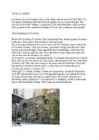
Appendix 1 - London in the 17th century
Blueprint 1. London in the 17th century
Appendix 2 - A newspaper release during the plague
Blueprint
2. A newspaper release during the plague
Appendix 3
Blueprint
3. "Bring out your dead!"
Appendix 4
Blueprint
4. Plague doctor
Appendix 5
Blueprint
5. Comparison of the deaths between Great Plague and other diseases
 100 punkti
Autor soovib selle materjali allalaadimise eest saada 100 punkti.
100 punkti
Autor soovib selle materjali allalaadimise eest saada 100 punkti.
 ~ 15 lehte
Lehekülgede arv dokumendis
~ 15 lehte
Lehekülgede arv dokumendis
 2011-06-14
Kuupäev, millal dokument üles laeti
2011-06-14
Kuupäev, millal dokument üles laeti
 5 laadimist
Kokku alla laetud
5 laadimist
Kokku alla laetud
 0 arvamust
Teiste kasutajate poolt lisatud kommentaarid
0 arvamust
Teiste kasutajate poolt lisatud kommentaarid
 ervin
Õppematerjali autor
ervin
Õppematerjali autor
 annaabi.ee


















Kõik kommentaarid