Vajad kellegagi rääkida?
Küsi julgelt abi LasteAbi
Logi sisse

London’s early history. (1)

5 VÄGA HEA
Punktid

Contents
  • Introduction ...................................................3
  • London’s early history.....................................4-5
  • The people of London......................................6
  • Buildings and bridges......................................7

Intruduction
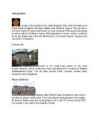
London is the capital of the united kingdom (UK), which is made up of Great Britain ( England , Scotland, Wales ) and Northern Ireland . The city lies in the south- east of England and covers an area of about 1,578 square kilometres on either side of the River Thames . With population of seven million, London is by far the largest city in the UK. Birmingham, the second largest, has just over one million inhabitants.
Cultural life
London is the world-class centre . It has more than40 theatres , where audiences enjoy everything from musicals to William Shakespeare ’s plays. The city also contain many cinemas, concert halls , museums and art galleries.
Royal residence
English ( later British) kings and queens have lived in London for almost 1,000 years . There are several royal palaces in the capital. St James’s Palace was built by King Henry VIII in the 16th century . Since 1837 the monarch has lived in Buckingham Palace
LONDON’S EARLY HISTORY
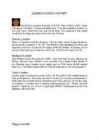
The Romans invaded England in 43 AD. They landed in Kent, made their way to the River Thames and sailed up it. Then they settled in a place on the north bank, where the river was not to wide . This settlement was called Londinium. A bridge was later built across the Thames.
Roman London
Tribes in England fought the Romans. The Iceni tribe, led by Queen Boudicca, burned down Londinium in 61 AD. The Romans later defeated the tribes and restored Londinium. It became the capital of Roman Brittan. A Basilica, forum and fort were built, plus a wall around the city. The Romans ruled until 410.
Medieval London
After Edward came King Harold in1066. Later that year he was defeated by William, Norman duke. William I was crowned king in Westminster Abbey. In the following years London grew rapidly and by 1300 about 80,000 people lived there. The Black Death killed of 1348-50 killed about half this population.
Tudor London
London grew in importance under Tudor rule . King Henry VIII created palaces such as St James’s. He is also famous for closing the country ’s monasteries in 1536 , after the Catholic Church refused to grant him a divorce . During the reign of Elizabeth I, London was a wealthy and successful city. Theatre became popular , helped by the arrival of playwright William Shakespeare some time between 1584 and 1593 .
Plague and fire
London suffered two disasters in later Stuart years. In 1665 the Great Plague killed about 70,000 people. In the 1666 the Great Fire destroyed almost all of the City and a large area to the west . Thousands of new houses were built, and Christopher Wren constructed St Paul’s Cathedral as well as many churches.
Stuart London
The first Stuart king, James I, came to the throne in 1603. In 1605 a group of men tried to blow up both him and the Houses of Parliament. This Gunpowder Plot failed. In 1625 Charles I came to the throne. Civil war broke out in1642 between supporters of the king and the parliamentary forces, led by Puritan called Oliver Cromwell. Charles I was beheaded in1649 and Britain became a republic known as the Commonwealth . In 1660 the monarchy retuned.
Saxons and Vikings
Later in the 5th century, Saxons settled just west of Londinium and formed the town of Lundenwic. It was raided by Danish Vikings in the 9th century. Alfred the Great defeated the Vikings in 886 and rebuilt the Roman city. In 1016 the Vikings triumphed again ruled until 1042, when Edward the Confessor took over.
THE PEOPLE OF LONDON
London is a growing city with a populatsion of more than seven million. It is also a multicultural city, as it been since Roman times . Now about a quarter of the capital’s inhabitans are members of ethnic minorities.
The Irish community
The largest non-English group in London is the Irish community. People from Ireland first went to London in large numbers in 1845, when disease killed their potato crops, leading to famine . Many still emigrate there. The city’s Irish population in over 250,000, and there are also many people who were born in London but have Irish parents .
Pakistanis and Bangladeshis
Thousands of Pakistanis and Bangladeshis live in London, mostly in the east. The inner London borough of Tower Hamlets is home to about half the city’s Bangladeshis. The heart of the community is a street called Brick Lane , lined with inexpensive restaurants that attract Londoners and tourist alike.
Indian communities
Indians are London’s largest ethnic minority, with a population of about 411,000. Many came to the city after India became independent from Britain in 1947. Thousands more arrived from Uganda and Kenya in the 1960s , when these countries forced them to leave. Most settled in Outer London boroughs. Many Punjabi Sikhs, for example, live in Hounslow.
Caribbeans and Africans
Black Caribbeans are London’s second largest ethnic minority. They come from islands such as Jamaica and from Guyana. Caribbeans firs arrived in large numbers after the Second World War. Most now live in Inner London boroughs such as Lambeth. Black Africans from countries such as Nigeria are London’s third largest ethnic minority.
BUILDINGS AND BRIDGES
London lost many buildings in the Great Fire and the Blitz. But the city still contains magnificent architecture from the past as well as some dazzling new structures .
London’s bridges
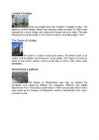
Thirty- five bridges span the Thames in Greater London. The oldest is London Bridge. Which was originally made of wood ? In 1209 it was replaced by a stone bridge with shops and houses along its sides . This was followed by a granite bridge in 1831 and the present concrete bridge in 1973.
The Tower of London
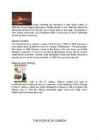
The Tower of London contains 20 towers. The White Tower at its centre, built by William the Conqueror, is the oldest. The Tower of London is home to the Crown Jewels, and is where two of Henry VIII’s wives were beheaded.
Westminster’s palaces
The Palace of Westminster was built by Edward the Confessor and rebuilt by William the Conqueror. William’s son added Westminster Hall. The palace burned down in 1834, but was later rebuilt and is now known as the Houses of Parliament. Inside is Westminster Hall, which survived the fire.
London’s early history #1 London’s early history #2 London’s early history #3 London’s early history #4 London’s early history #5 London’s early history #6
Punktid 50 punkti Autor soovib selle materjali allalaadimise eest saada 50 punkti.
Leheküljed ~ 6 lehte Lehekülgede arv dokumendis
Aeg2008-12-15 Kuupäev, millal dokument üles laeti
Allalaadimisi 28 laadimist Kokku alla laetud
Kommentaarid 1 arvamus Teiste kasutajate poolt lisatud kommentaarid
Autor nuki-muki Õppematerjali autor

Sarnased õppematerjalid

London
10
doc

London

unsuccessful. They made their way to the river Thames and sailed up it. The Romans knew it was important to control a crossing point at the river Thames, so they decided to build a settlement on the north bank. Although small settlements had been built on the banks of the Thames, the Romans were the ones who built the first city. They called their city Londinium. The Roman engineers noticed that the point where the swampy river narrowed would make an ideal crossing point, they built London Bridge. Less than 20 years later the native Iceni tribe, led by Queen Boudicca, rose up against the Romans in revenge for mistreatment and burnt Londinium to the ground. The well disciplined Roman army defeated her forces and Londinium was rebuilt. By AD 100 it had also become the capital of the Roman province. A massive wall was built to protect the city from further attacks. The Roman Empire came under increasing attack across Europe and in AD 410 they retreated.

Inglise keel
Topic - London
5
doc

Topic - London

Topic ­ London Tallinn English College Tallinn 2007 1. Introduction London is the capital city of the United Kingdom and the largest urban area in England. The ancient City of London, to which the name originally belonged, still maintains its medieval boundaries, but the name "London" has long applied more to the whole metropolis that has grown up around it. London has been an important settlement for over two millenniums. It is also one of the world's leading business, financial and cultural centres and its influence in politics, education, entertainment and even fashion contribute to its status as a major global city. London is a major tourist attraction with four world heritage sites, several royal parks and numerous iconic landmarks such as the Houses of Parliament, Towe Bridge, the Tower of London, Westminster Abbey and the London Eye. 2. History

Inglise keel
London topic
4
doc

London topic

London Topic Tallinn 2008 2 General information London is the capital of the United Kingdom. It covers the area of about 1000 square kilometres and its population is about 7 million. London is located on the river Thames. It is divided into 32 boroughs and the City. Currency used in London is British Pound. London is one of the most popular tourist destination in the world. It is also world's leading business, financial and cultural centre. Subway is commonly used to move around in London. Climate London has a temperate marine climate. It has daily high temperatures during summer. The warmest month is July. The coolest month is January. Winders are seldom below freezing. Rainfall is regular, but most often in the form of drizzle occurring throughout the year. Snow

Inglise keel
London - sillad-tornid-ajalugu
4
doc

London - sillad, tornid, ajalugu

THE CITY OF LONDON History The City of London occupies one square mile in the middle of the capital. It once made up entire town of London, surrounded by the wall first built by Romans. The Romans also built a bridge over the Thames and there has been one in the same area ever since. The Roman Londinium grew up on the northern side of the bridge. In AD 61 the native Celtic tribe, led by Queen Boudicca, rose up against the Romans. They burnt down Londinium to the ground and killed most of its inhabitants. Roman armies eventually defeated Boudicca and Londinium was rebuilt.

Inglise keel
The City on London
5
doc

The City on London

The City of London History The City of London occupies one square mile in the middle of the capital. It once made up the entire town of London, surrounded by the wall first built by the Romans. The Roman Londinium grew up on the northern side of the "London Bridge" in the past. Products such as olive oil, wines and fruit were brought by ships from different parts of the Roman Empire and unloaded onto wooden quays along the river. In AD 61 the native Celtic Iceni tribe, led by Queen Boudicca, rose up against The Romans. They burnt Londinium to the ground but Roman armies eventually defeated Boudicca

Inglise keel
The U K--Suurbritannia
4
doc

The U.K. / Suurbritannia

in Wales. Belfast is the capital of Northern Ireland, it is also the most important port and industrial and commertial centre. Oxford is the home of the oldest university in England. Most of the oldest colleges are situated just a short walk from each other in the centre of the town. Birmingham is one of the largest industrial cites in England. York was the capital of Northern England. It is one of the best preserved medieval cities in Europe. London is the capital of England and also the capital of the United Kingdom. It is situated on the river Thames, in southeast England. London is made up of two ancient cities which are now joined together: the City of London, known simply as ´the City` which is the business and financial heart of the United Kingdom, and the City of Westminister, where the Parlament and most of the government offices are located. Also the Buckingham Palace, the official London residence of Queen and the

Inglise keel
Short overview of London
2
doc

Short overview of London

London London is one of the world's great cities. Located in the southeast of England, on the River Thames, it is the capital of the United Kingdom and has been the heart of its political, cultural and business life for centuries. London has always been the centre of the world. The origin of the city may be dated around the beginning of the 1st century when a Celtic tribe settled near the Thames. The Romans founded London about 50 AD

Inglise keel
London - inglise keeles kokkuvõte
1
doc

London - inglise keeles kokkuvõte

Although the site was not important during the Celtic period (400 BC ­ 43 AD) During the Roman occupation Londinium, as it was called then, was not influential politically, but was, however an important crossing point for the romans over the river Thames. Londinium was at a very good place, so it soon became a trading centre. In AD 61 the city was devastated by Boudicca, who led a revolt againt the Roman conquest of Britain. The city was burned down and its inhabitants massacred. London was rapidly rebuilt, becoming the capital of the province Britannia. AD 122 Roman walls were built around it as a Around AD 400 the Anglo-Saxons invaded Britain. They destroyed the roman towns and formed many kingdoms that were hostile to one another. London fell into ruins. King Egbert united all the small kingdoms and formed one kingdom named Englad. Later king Alfred the Great chose London to be the capital of the country.

Inglise keel


Meedia

Kommentaarid (1)

jannu1995 profiilipilt
jannu1995: Normaalne, kuid liiga vähe materjali
14:02 25-02-2011


Sellel veebilehel kasutatakse küpsiseid. Kasutamist jätkates nõustute küpsiste ja veebilehe üldtingimustega Nõustun