Leidsid 33 sarnast õppematerjali, mis on seotud failiga "The Great Plague In London". Need materjalid aitavad sul teemat sügavamalt mõista.
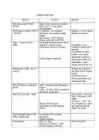
plague, death, doctor, black, land, gland, england, doctors, spread, during, though, fire, appendix, first, dead, before, thought, historic, them, grand, there, protect, wore, known, victim, found, often, other, include, even, wide, mask, deaths, gain, protection, neck, person, days, than, nation, return, poor, houses, features, cross, bird, worn, moveGreat Plague of London. The Great Fire of London. Samuel Pepys's diary . The Great Plague of London (1665-1666) The Great Plague was a massive outbreak of disease in England that killed an estimated 100,000 people The plague arrived with a merchant carrying a parcel of cloth sent from London, although this is a disputed fact It was the last major outbreak of the plague in England The English outbreak is thought to have originated from the Netherlands By July 1665, plague was in the city of London itself Though concentrated in London, the outbreak affected other areas of the country A bill of mortality for the plague People at the plague King Charles II of England, his family and his court left the city for Oxfordshire The aldermen and the the majority of the other city authorities opted to stay at their posts - The Lord Mayor of the city, Sir John Lawrence quarantined himself in a specially-built
The Middle Ages are so called as the middle period between the decline of the Roman Empire and the Renaissance. The Middle Ages started in 1066. with the Battle of Hastings and the Norman Conquest. William the Conqueror took all the lands from the Saxon English and gave these to French nobles. Normans were known as great builders. This is assured by the fact that many great castles and other buildings, including the Tower of London, were built during the Norman Conquest. In 1086. Domesday Book was compiled. It is a detailed survey of England ordered by William the Conqueror. The reign of King William Rufus who was the son of William started in 1087 and lasted until 1100. Next king was Henry I who was the brother of William Rufus. His reign was from 1100-1135. In 1135 Henry I nephew Stephen got to the throne of England and reigned the country for 19 years. He was the last Norman king of England and his reign ended in 1154.
What is London? London is one of the largest cities in the world, with an area of 1706,8 km2. It is the capital of England and The United Kingdom. It is in Central Europe. The city lies on the river Thames. London has 7,556,900 inhabitants, which is more than a quarter of the countries in Europe! For one city, London is very special. The beginning of London Before the founding of London, there had already been smaller groups of people in the area. There aren't any records on who they were. The first mayor settlement of London was in 43 AD. Romans came to the banks of the river Thames
The black Death(1340s) Laura Runthal Overview Originated in 1338 in Kyrgyzstan. It spread by way of the Silk Road or by ship to Europe. By the end of 1346 it had reached the seaports of Europe. In 1348 the disease spread northwest across Europe, including England. It killed between 75 and 200 million people by current estimates. The Black Death was one of the most devastating pandemics in human history, peaking in Europe between 1347 and 1350. The speed with which the disease could kill was terrifying to population of the medieval world. Infected people can spread the disease through the air by coughing, sneezing, or just breathing! When there was a infected in the house, a red cross was painted on the door. Because of black spots, the disease was called the black death.
Contents Introduction...................................................3 London's early history.....................................45 The people of London......................................6 Buildings and bridges......................................7 Intruduction London is the capital of the united kingdom (UK), which is made up of Great Britain(England, Scotland, Wales) and Northern Ireland. The city lies in the southeast of England and covers an area of about 1,578 square kilometres on either side of the River Thames. With population of seven million, London is by far the largest city in the UK. Birmingham, the second largest, has just over one million inhabitants. Cultural life London is the worldclass centre. It has more than40 theatres, where audiences enjoy everything from musicals to William Shakespeare's plays
It covers the area of about 1000 square kilometres and its population is about 7 million. London is located on the river Thames. It is divided into 32 boroughs and the City. Currency used in London is British Pound. London is one of the most popular tourist destination in the world. It is also world's leading business, financial and cultural centre. Subway is commonly used to move around in London. Climate London has a temperate marine climate. It has daily high temperatures during summer. The warmest month is July. The coolest month is January. Winders are seldom below freezing. Rainfall is regular, but most often in the form of drizzle occurring throughout the year. Snow occurs sometimes in winter but rarely settles more than a few millimetres deep. History The origin of London may be dated around the beginning of the 1st century AD, when a Celtic tribe settled near a fordable point of the Thames.
The Renaissance Between 14th and 16th century in Europe From French word rebirth It was an age of growth in Europe. New, powerful city states emerged. A new middle class had more and more money to spend. Great artists, writers and thinkers lived during this time. During the Middle Ages many people who lived in the countryside worked on the land that they got from the noblemen. In return, they were protected by them Between the middle and the end of the 14th century, the plague, also called "Black Death" killed almost half of Europe's population. It spread most rapidly in the larger cities where many people lived. This led to economic depression. When the plague slowly decreased in the 15th century, the population in Europe began to grow. A new middle class emerged --bankers, merchants and trades people had a new market for their services. People became wealthier and had more than enough money to spend
Topic London Tallinn English College Tallinn 2007 1. Introduction London is the capital city of the United Kingdom and the largest urban area in England. The ancient City of London, to which the name originally belonged, still maintains its medieval boundaries, but the name "London" has long applied more to the whole metropolis that has grown up around it. London has been an important settlement for over two millenniums. It is also one of the world's leading business, financial and cultural centres and its influence in politics, education, entertainment and even fashion contribute to its status as a major global city
- AD 410) politically. An important trading the Roman conquest centre. Devastation AD 61. Rebuilt. Roman walls built in AD 200. Anglo Saxons (AD 400 Destroyed the Roman towns. Many 1066) kingdoms. London in ruins. King Egbert one Flourishing. Attacks by Vikings. kingdom England (the 9th century) King Albert the Great London is the capital Edward the Confessor London began to develope
Paul's Cathedral in 604. The Vikings 8th and 9th century By the 9th century, London was a very prosperous trading centre, and its wealth attracted the attention of Danish Vikings. The Danes periodically sailed up the Thames and attacked London. In 851 some 350 longboats full of Danes attacked and burned London to the ground. King Alfred the Great totally defeated the Danes in 878 and they split the country between them. The Danes took eastern England including London while Alfred took the South and West. Alfred's men took London in 886 and repaired the walls of the old Roman city. In 1016 the Vikings attacked London again but the Saxons fought them off. The attacks ceased when the Danish king Cnut came to power in 1017. Cnut managed to unite the Danes with the Anglo-Saxons, and invited Danish merchants to settle in the city. London prospered under Cnut, but on his death the city reverted to Anglo-Saxon control under Edward the Confessor
1: When was London founded, and by whom? London, England was founded in A.D. 43 by the Romans 2: What was its original name? Londinium 3: What happened to London in 61 AD? 61 AD Boadicea, the queen of a tribe of Britons, led a rebellion against the Romans 4: What was the population of London in the second century AD? Around 60,000 5: What happened in 851 AD? 6: What did Alfred the Great do? He defended Anglo-Saxon England from Viking raids, formulated a code of laws, and fostered a rebirth of religious and scholarly activity. His reign exhibits military skill and innovation, sound governance and the ability to inspire men and plan for the future, piety and a practical commitment to the support of religion, personal scholarship and the promotion of education. 7: What did Ethelred do at London Bridge? King Ethelred burnt down the bridge to split apart the invading forces of the Dane Svein Haraldsson
law, Roman baths, language and advanced civilization. They also built Hadrian's Wall in 122 A.D. Romans occupied Britain for four centuries. The Roman way of life all vanished after the invasions from Northern Europe by the Angles, Saxons and Jutes from the 5th century onwards. They ruined Londinium, but they were easily turned into Christianity and religion became more and more important. The Vikings, who came in the 9th century, first raided England to plunder it, but then they decided to stay. In the 10th century England fell under Danish Rule, with King Canute finally managing to unite the Anglo-Saxons and Danes at the beginning of 11th century. Medieval England After defeating the Anglo-Saxon King Harold at the Battle of Hastings in 1066, William of Normandy (who became William I, also called William the Conqueror) introduced the Norman feudal system, rewarding his French-speaking followers with land in return for
LONDON The history of the town is very closely linked with the history of the country itself. The name probably comes from the celtic words Llyn, which means a lake, and Dun, which means a fort or a strong place. Although the site was not important during the Celtic period (400 BC 43 AD) During the Roman occupation Londinium, as it was called then, was not influential politically, but was, however an important crossing point for the romans over the river Thames. Londinium was at a very good place, so it soon became a trading centre. In AD 61 the city was devastated by Boudicca, who led a revolt againt the Roman conquest of Britain. The city was burned down and its inhabitants massacred. London was rapidly rebuilt,
1. What were the two institutions that Henry VII establised? Explain. Henry VII established the Court of Star Chamber to make the barons give up their private armies and overall restored finances by collecting taxes. Also Henry VII extended royal control over local government through the local magistrates called justice of peace. 2. What was the idea of the Act of supremacy? With passing the Act of Supremacy, Henry VIII was made the head of the Church of England and he was now free to divorce Catherine and marry Anne Boleyn. 3. Why did Henry VIII get the title Fidei Defensor? The title was given to him by the pope because Henry VIII was against Protestantism and other religious reforms by J. Calvin and M. Luther. For that, the pope named Henry VIII the Fidei Defensor, meaning Defender of the Faith 4. Why did Mary I get the nickname Bloody Mary? Because during her reign, England became officially a Roman Catholic country,
☾ The church was restored. However, the conflict between monarch and Parliament soon re-emerged ☾ Prince William and Mary became the king and the queen so this way it was established that a monarch could rule only with the support of Parliament. ☾ Bill of Rights, which limited some of the powers of the monarch 1666 The Great Fire of London destroys most of the city's old wooden buildings. It also destroys bubonic plague, which never reappears. Most of the city's finest churches, including St Paul's Cathedral, date from the period of rebuilding which follows. 1688 The Glorious Revolution 1690 The Presbyterian Church becomes the official Church of Scotland" The Battle of the Boyne, in which William III and the Ulster Protestants defeat James II and the Irish Catholics. EIGHTEENTH-CENTURY ✿ Politically, this century was stable. Monarch and Parliament got on quite well together.
London is the UK's largest and most populous metropolitan area and the largest urban zone in the European Union by most measures. In July 2007 it had an official population of 7,556,900 within the boundaries of Greater London, making it the most populous municipality in the European Union. History: The first major settlement was founded by the Romans in 43 AD. Canute took control of the English throne in 1016, controlling the city and country until 1035, when his death resulted in a reversion to Saxon control under his pious stepson Edward the Confessor, who refounded Westminster Abbey and the adjacent Palace of Westminster. By this time, London had become the largest and most prosperous city in England, although the official seat of government was still at Winchester. In the 16th century William Shakespeare and his contemporaries lived in London at a time of hostility to the development of the theatre.
Table of contents 1. Introduction 2. History 2.1. Early Hospitals 2.2 Recent developments 3. The National Health Service 4. Diseases 5. First Aid 6. Medicine and elements of medical care 7. Doctors 8. Ways of keeping health 9. Conclusion 10.Used materials 1. Introduction The human body is just like a machine with many parts. Each part has a special job, and all the parts work together to keep you alive and healthy. Good health is one of the most important things in life. There are certain things we can do to stay healthy. We should eat a balanced diet that includes the right kinds of food and drink plenty of clean, fresh water
11 b The Inchcape Rock by Robert Southey The Inchcape Rock is a poem about Sir Ralph the Rover, an evil man, who wants to sink other ships, so he could use his own ship to blunder villages and towns. He removes a warning bell that warns sailors about a secret underwater rock. By doing this, he signs his own death sentence. At a dark night, he crashes his ship to the Rock, because there was no bell to warn him. In the first stanza of the poem Southey describes the surroundings. The tone of the poem is set, at the begging it is very serene and relaxed. The weather and sea are calm, the ship stands, undisturbed, in the water. The reader is supposed to feel joy and relax when this description is given, it brings to mind a sunny and warm summer-day, when everything is just perfect. The point
Siret: "Prince Albert" Born in 1819 in Germany. He had unhappy childhood (parents divorced when he was little), mother left them, met Victoria at age 17, they were introduced by Uncle Leopold, they fell in love. They got married and got 9 children, 40 grandchildren. At first he was unpopular, after he made many great changes he became popular. He was the president of the Royal Society of Arts for 18 years. After his death Victoria built many memorials and Royal Albert Hall in 1871, there are more than 350 performances every year. The Albert medal, the Prince Consort´s Library. Lisanna: "Yoko Ono" She was born in 1933 in Tokyo, Japan in a wealthy family. In 1953 she moved to the USA, she was an excellent student and studied music and philosophy. She has studied in 4 schools, her art is influenced by avant-garde. She has won many awards. She has been married 3 times. In 1975 she got a son Sean
continued, the period that followed is known as the good old Swedish era': foundations were laid for the Estonian school system, the privileges of the nobility were curtailed, local peasants were granted the right to own property, and so on. Meanwhile, different countries fought for domination in the Baltic region. Russia started the Northern War in 1700. Peter the Great had made it his aim to conquer Estonia and `open a window onto Europe' Together with the Russian troops, the plague came again and thousands of people died. A Russian general described the time after the war as follows: "Between Narva and Riga one can hear neither a dog barking nor a rooster crowing" Estonia remained under Russian rule and the Baltic- German nobility vowed allegiance to the Tsar., the barons were restored their former privileges. Life changed for the better thanks to the opening of a railway line from St. Petersburg to Tallinn in 1870
I am Legend One of my favorite movies is the film i am legend. Its starring Will Smith as the sole survivor in the dead city of new york. He place a character named Robert Neville who is a doctor. Most of the people have been killed or transformed into monsters who have high speed and superhuman strentgh. They were turned into those monsters by a medicent that was suppose to cure cancer but it did not. Now the doctor is lookeing for a cure to fix that problem and to survive in the destroyd landescape of New York. His wife and son were killed when the military did the extraction of the city. Now he wonders with his dog. Most of the film about 30 min is all calm. Around 40 min mark they chase a deer wich allmost got them killed. The following days they were chased by the strongest of the monsters. The Alpha male who was played by Dash Mihok. Roberts dog gets bitten and infected with the plague while trying to
1) General facts The UK: * the United Kingdom of Great Britain and Northern Ireland was formed in 1801 * it covers 243,610 sq km * everybody from the UK is called British * the capital city is London * is made up of four constituent countries: England, Scotland, Wales and Northern Ireland which in turn are divided into counties * the flag is called the Union Jack which is a combination of the flags of England, Scotland and Northern Ireland * the population is about 60,000,000 people, the population density is 242 people/sq km * its coasts are washed by the Atlantic Ocean, the North Sea, the English Channel, the Celtic Sea, Saint George's Channel, and the Irish Sea. It is linked to France by the Channel Tunnel * the United Kingdom is a constitutional monarchy. The current monarch is Queen Elizabeth II, who is also the Queen and Head of State of fifteen other Commonwealth Realms, such as
o The normans imposed a strict feudal system (anglo-saxons were the peasants who were under the norman nobles and barons) o Built castles, cathedrals Three facts about the history of parliament It was in the medieval period that Parliament began its gradual evolution into the democratic body which it is today. The word 'parliament', which comes from the French word parler (to speak), was first used in England in the thirteenth century to describe an assembly of nobles called together by the king. It was divided into two houses during the reign of Henry VII: the House of Commons and the House of Lords. The class system o After the norman invasion, a strict feudal system was imposed: norman soliders who had inavaded were given the ownership of land and of the people living on it
Medieval England 1066-1485 Eva Asper Anna Pohlak 11.c The Norman Dynasty The Norman Conquest In the 11th century, Normans conquered England - The Battle of Hastings 14.10.1066 The Anglo-Saxon forces had more soldiers but the Normans had better military tactics and won in the end thanks to a clever strategy William I, also known as William the Conqueror, replaced King Harold on the throne The invasion was completed by 1071 - The Norman invasion is depicted on the Bayeux Tapestry a long embroidered cloth The death of King Harold embroidered on the Bayeux Tapestry
poem’s meaning To the Noblest & best of Ladyes, the Countesse of Denbigh Henry Vaughan: many obvious borrowings, striking opening lines. The World Andrew Marvell: many strands of 17thC thought, feeling and style, created the tradition of garden poems The Definition of Love, To His Coy Mistress, The Garden Ben Jonson: IX: Song: To Celia, II: To Penshurst; Hymn to Cynthia. 4. The arrival of classicism in England. The impact of the art collections of the Earl of Arundel and Charles I Inigo Jones, travel with Thomas Howard, Earl of Arundel. Purpose: in-depth study of ancient and modern architecture. Italy, Venice, Vicenza, Rome, Naples. New cultural scene, looked back to early Roman Empire. Arundel: influential, new ideal for gentleman’s life. Promotion of foreign culture, Renaissance Italy, world of classical antiquity. Virtue: civility, grace, elegant manners, interest in learning
Liis Toomsalu QUESTIONS part 2 1: How many people died in the Great Fire of 1666? The death toll from the fire is unknown and is traditionally thought to have been small, as only a few verified deaths were recorded. This reasoning has recently been challenged on the grounds that the deaths of poor and middle-class people were not recorded anywhere, and that the heat of the fire may have cremated many victims, leaving no recognizable remains. 2: How was the fire finally mastered? The battle to quench the fire is considered to have been won by two factors: the strong east winds
The majority of those accused were women. Current scholarly estimates of the number of people executed for witchcraft vary between about 40,000 and 100,000. The total number of witch trials in Europe which are known for certain to have ended in executions is around 12,000. In Early Modern European tradition, witches have stereotypically, though not exclusively, been women. Witch-hunts first appeared in large numbers in southern France and Switzerland during the 14th and 15th centuries. The peak years of witch-hunts in southwest Germany were from 1561 to 1670. One writer has estimated the number of executions at an avarage of 600 a year for certain German cities or two a day. Nine-hundred witches were put to deathh in a day. In the Bishopric of Trier, in 1585, two villages were left with only one female inhabitant each. Many writers have estimated the total number killed to have been in the millions.
........... 8 Population and Ethnicity..............................................................................................9 3 Introduction The official name of the country is the United Kingdom. The United Kingdom is an island country. It consists of the island of Great Britain and Northern Ireland. Great Britain can be divided into three parts England, Wales and Scotland. Each of them has their own capital city. Glasgow in Scotland, Cardiff in Wales and London in England. The country is situated in the north-western Europe. The territory of the United Kingdom is about 244,000 square kilometres and about 60 million people live there. The UK contains a number of small islands. The largest islands that belong to the United Kingdom are the Isle of Man in the Irish Sea and the Isle of Wight which lies off of England's southern coast
He is often called England's national poet and the "Bard of Avon". His surviving works, including some collaborations, consist of about 38 plays, 154 sonnets, two long narrative poems, and several other poems. His plays have been translated into every major living language and are performed more often than those of any other playwright. POEMS · In 1593 and 1594, when the theatres were closed because of plague, Shakespeare published two narrative poems on erotic themes, Venus and Adonis and The Rape of Lucrece. He dedicated them to Henry Wriothesley, Earl of Southampton. In Venus and Adonis, an innocent Adonis rejects the sexual advances of Venus; while in The Rape of Lucrece, the virtuous wife Lucrece is raped by the lustful Tarquin. Influenced by Ovid's Metamorphoses, the poems show the guilt and moral confusion that result from uncontrolled lust
History exam *Stonehenge - is a monument located in England. It is one of the most famous prehistoric sites in the world and is composed of earthworks surrounding a circular setting of large standing stones. The surrounding circular, earth bank and ditch, have been dated to about 3100 BC. Stonehenge was produced by a culture with no written language. Many aspects of Stonehenge remain subject to debate. There is little or no direct evidence for the construction techniques used by the Stonehenge builders.
Henry's coolly detached character; second, the incident occurs in a setting that robs it of its moral import --the complicity of Henry's fellow soldiers legitimizes the killing. The murder of the engineer seems justifiable because it is an inevitable by-product of the spiraling violence and disorder of the war. Nevertheless, the novel cannot be said to condemn the war; A Farewell to Arms is hardly the work of a pacifist. Instead, just as the innocent engineer's death is an inevitability of war, so is war the inevitable outcome of a cruel, senseless world. Hemingway suggests that war is nothing more than the dark, murderous extension of a world that refuses to acknowledge, protect, or preserve true love. The Relationship between Love and Pain - Against the backdrop of war, Hemingway offers a deep, mournful meditation on the nature of love. No sooner does Catherine announce to Henry that she is in
exposure. Smoking also has short term consequences like your breath, clothes, hair, skin, and home smell of tobacco. You do not notice the smell if you smoke, but to non-smokers the smell is obvious and unpleasant. Your sense of taste and smell are dulled. Enjoyment of food may be reduced. Smoking is a serious problem, about 100,000 people in the UK die each year due to smoking. It is very hard to quit smoking but luckily there are things like nicotine patches and gums to help you during the process. But those things won't help you if you lack of two most important things - willpower and determination. 3 Narcotics Narcotics are dangerous and illegal. Narcotics also known as drugs have several forms. You can consume drugs in a shape of a pill, by injecting it with a needle, smoking it and even baking it into a food and then eating it
laws to a new province of the Roman Empire and started to build good roads. Officials were appointed (governors, procurators to collect taxes, look after the estates and mines and se that the gold, silver, iron and lead were exported back to Rome). Introduced schools,a new language Latin, large farms (villas), baths. In AD 410 they had to leave . roman occupation lasted nearly 400 years. They left behind very little. Roman province of Britannia covered most of present-day England and Wales. 4. Latin influence on English *The influence of Latin is noticeable also in the names of European cities: the Latin noun colonia (settlement, colony) may be found in numerous place-names: Lincoln, Colchester, Cologne ; from Latin word castrum (military camp) were derived English affixes -chester and -castle: Manchester, Lancaster, Newcastle; Latin word portus (seaport) in Portsmouth *-tor - person, doer, masculine form
 annaabi.ee